19 Terracotta Kitchen Ideas That Feel Fresh
Terracotta scared me for years. Every time I saw it in a magazine it looked like a villa in Tuscany, not a normal kitchen with a washing machine in the corner. Then a friend painted one wall of her galley kitchen a dusty clay colour and I couldn’t stop thinking about it — it was warm without being loud, cosy without being dark. I started small, with a runner and some pots, and ended up going much further. These terracotta kitchen ideas are grouped so you can pick your commitment level, from a £15 textile swap to a full weekend paint job, and every one is priced for a real budget.
Pin this to your kitchen board — the paint colours alone are worth saving for later.
Paint & Colour
1. Dusty Terracotta Feature Wall
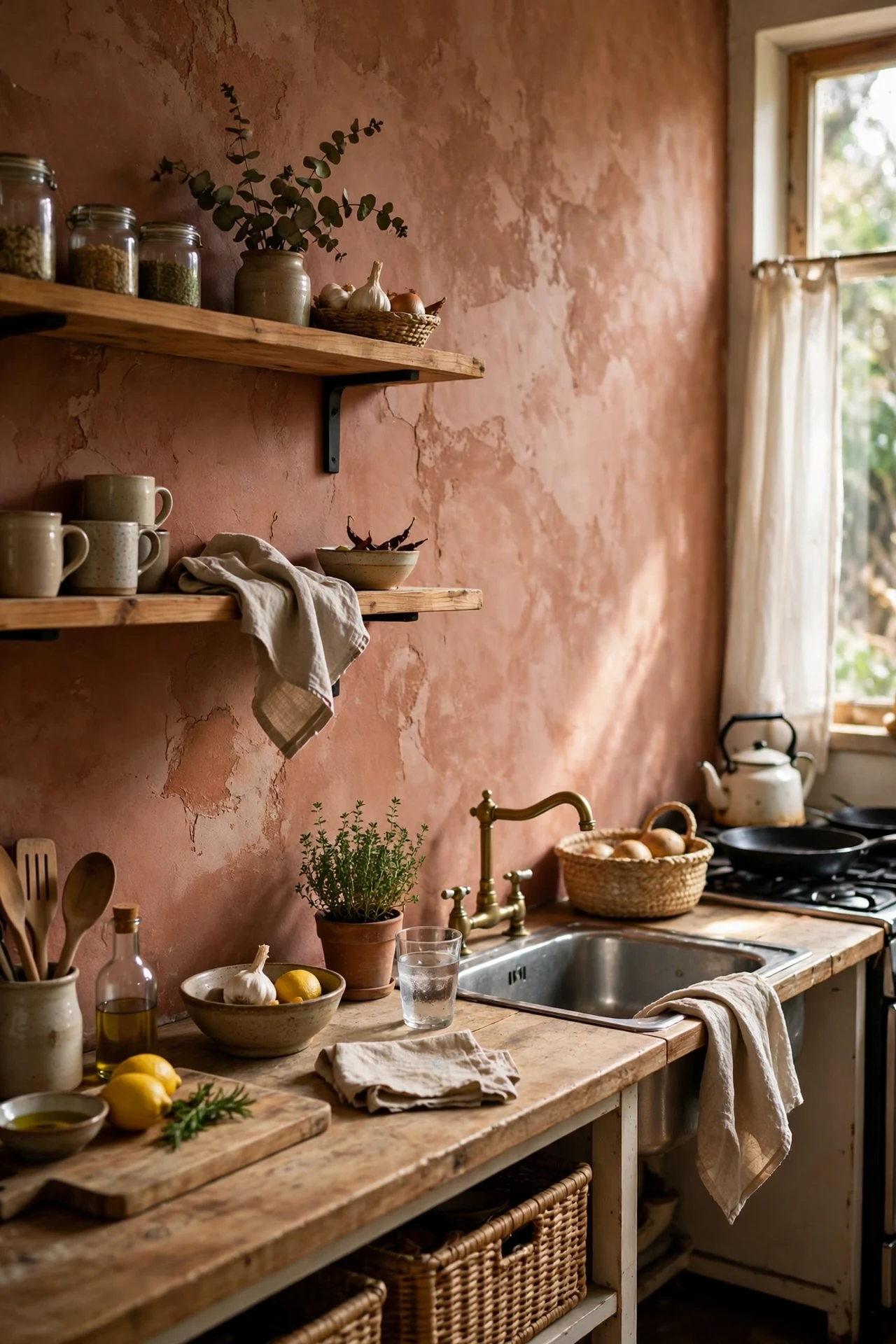
The wall behind my table was plain white and completely dead, so I painted it a dusty terracotta — the muted, clay kind, not bright orange. I tested three shades first because terracotta shifts dramatically in different light, and the winner was one with a brown base rather than a red one. Two coats of matt emulsion, cut in carefully at the ceiling, and the whole eating area felt like a different room. I tried painting the full kitchen at first in my head and I’m glad I didn’t — one wall gives you all the warmth without overwhelming a small space. Keep the other walls warm white so the terracotta has room to breathe.
Cost: ~$38 | Time: half a day
2. Burnt-Orange Lower Cabinets
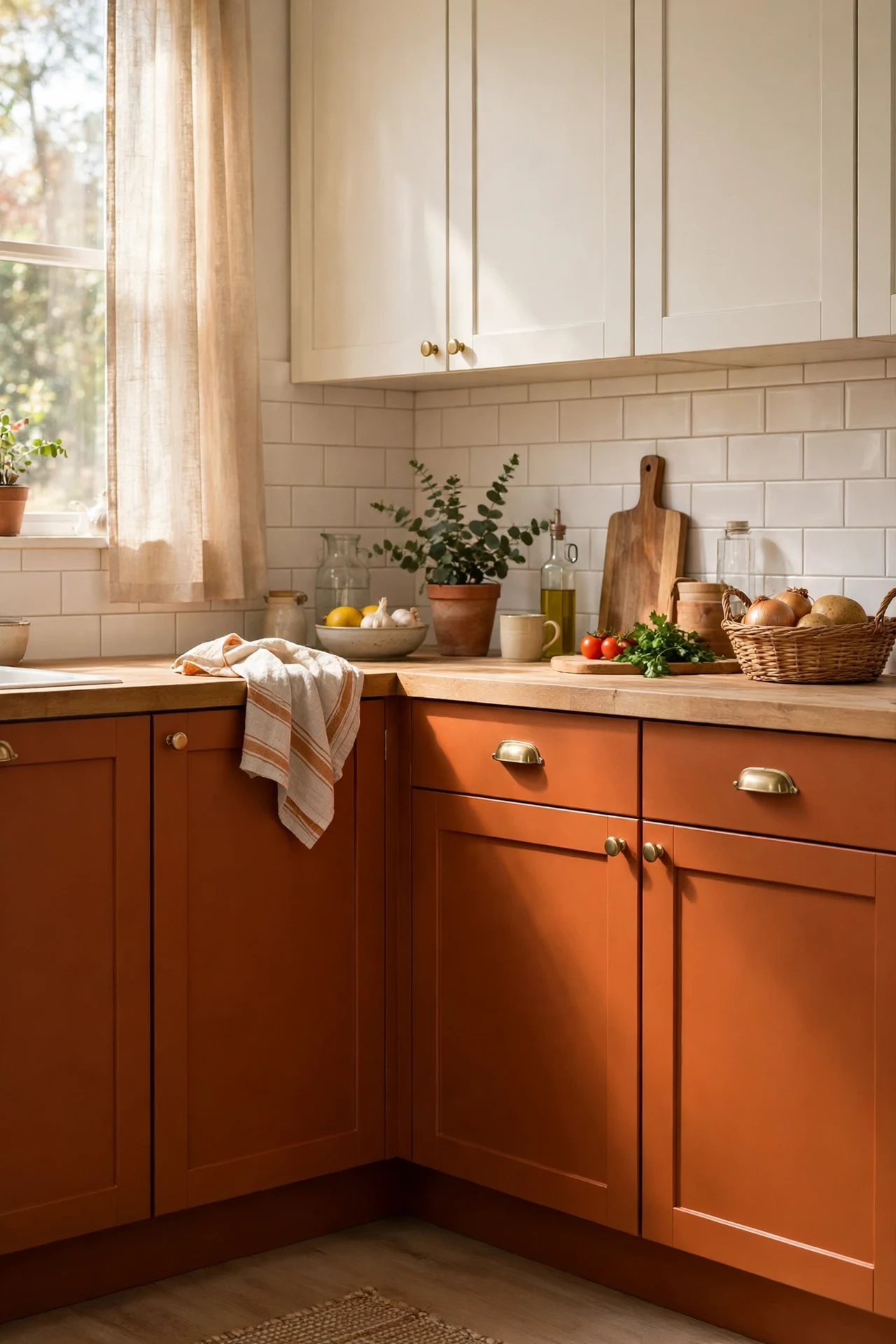
Painting just the lower cabinets in a burnt-orange terracotta is the boldest move on this list and honestly my favourite. I cleaned and sanded the doors, primed with a grip primer, then rolled on two coats of satin cabinet paint. The uppers stayed warm white, which keeps the room from feeling heavy. I took the doors off and painted them flat in the garden — it takes longer but the finish is miles better than painting in place. The mistake to avoid is skipping the primer on laminate doors; the paint will scratch off within weeks. With primer, mine has survived two years of knees, dogs, and mops.
Cost: ~$55 | Time: one weekend
3. Clay-Coloured Splashback Tiles
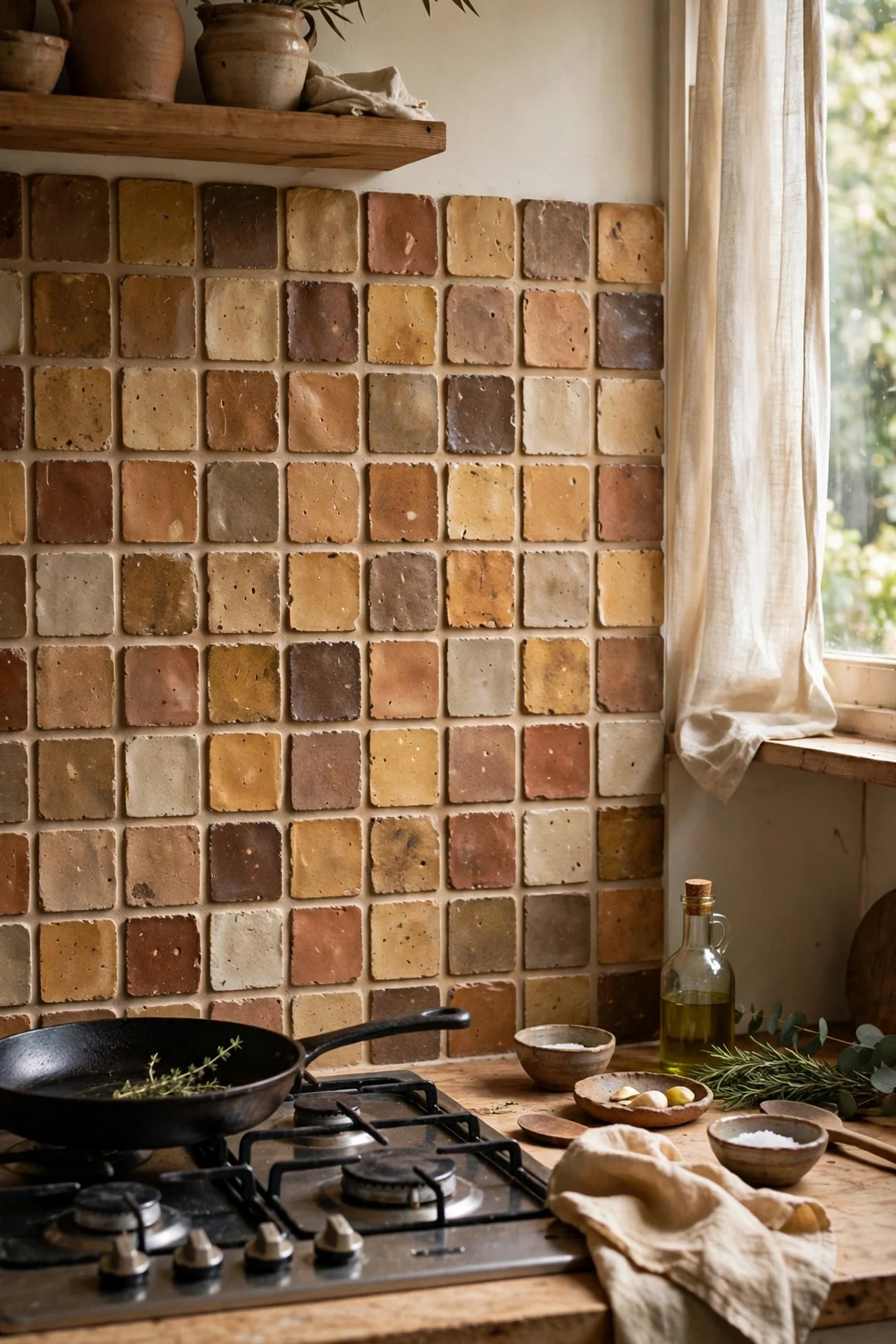
My splashback was the dullest part of the kitchen until I tiled it with handmade-look tiles in mixed clay tones. I used the peel-and-stick kind because I was nervous about adhesive, and they went up in an afternoon with a craft knife and a level. The slight colour variation between tiles is what makes it look expensive — flat, uniform terracotta can read a bit flat, but the mixed tones catch the light. I started tiling from the middle outward so the cut pieces landed at the edges. Seal around the hob with heat-resistant silicone and wipe the tiles with a damp cloth after frying; they clean up easily.
Cost: ~$60 | Time: half a day
4. Terracotta Painted Window Frame
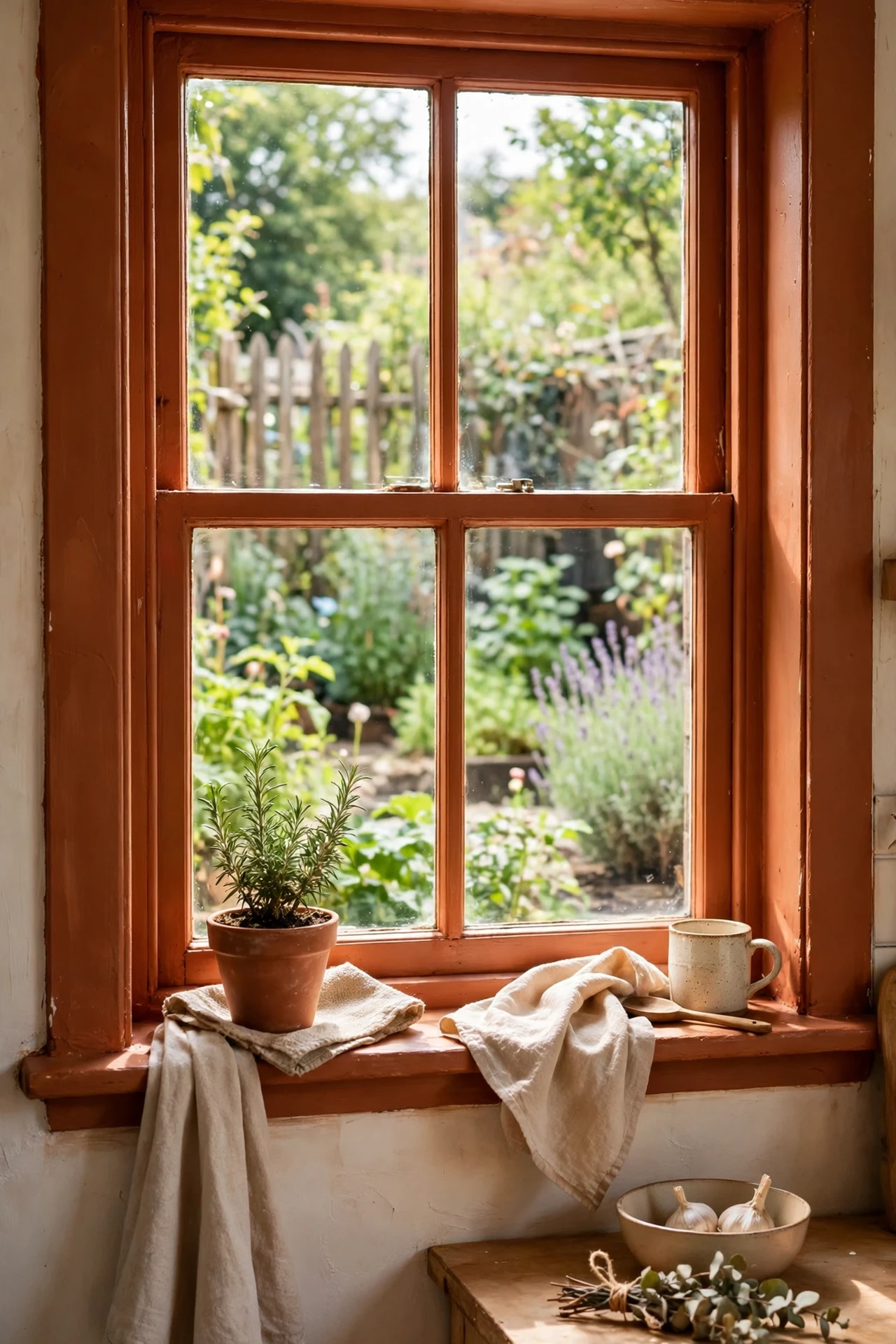
Nobody expects a terracotta window frame, which is exactly why it works so well. Mine was tired white uPVC-effect paint, so I sanded it lightly and applied two coats of a clay-toned satinwood. It frames the view like a picture frame now and ties the whole warm palette together. I masked the glass with real care — twenty minutes with painter’s tape saves an hour of scraping later. I tried a brighter orange first on a tester patch and it clashed with everything, so go dustier than you think. The muted shade sits beautifully against both white walls and green plants.
Cost: ~$18 | Time: 2 hours
Pro tip: Terracotta paint always dries darker and duller than the wet colour suggests — judge your tester patch only once it’s fully dry, ideally the next morning in daylight.
5. Limewash-Effect Terracotta Alcove
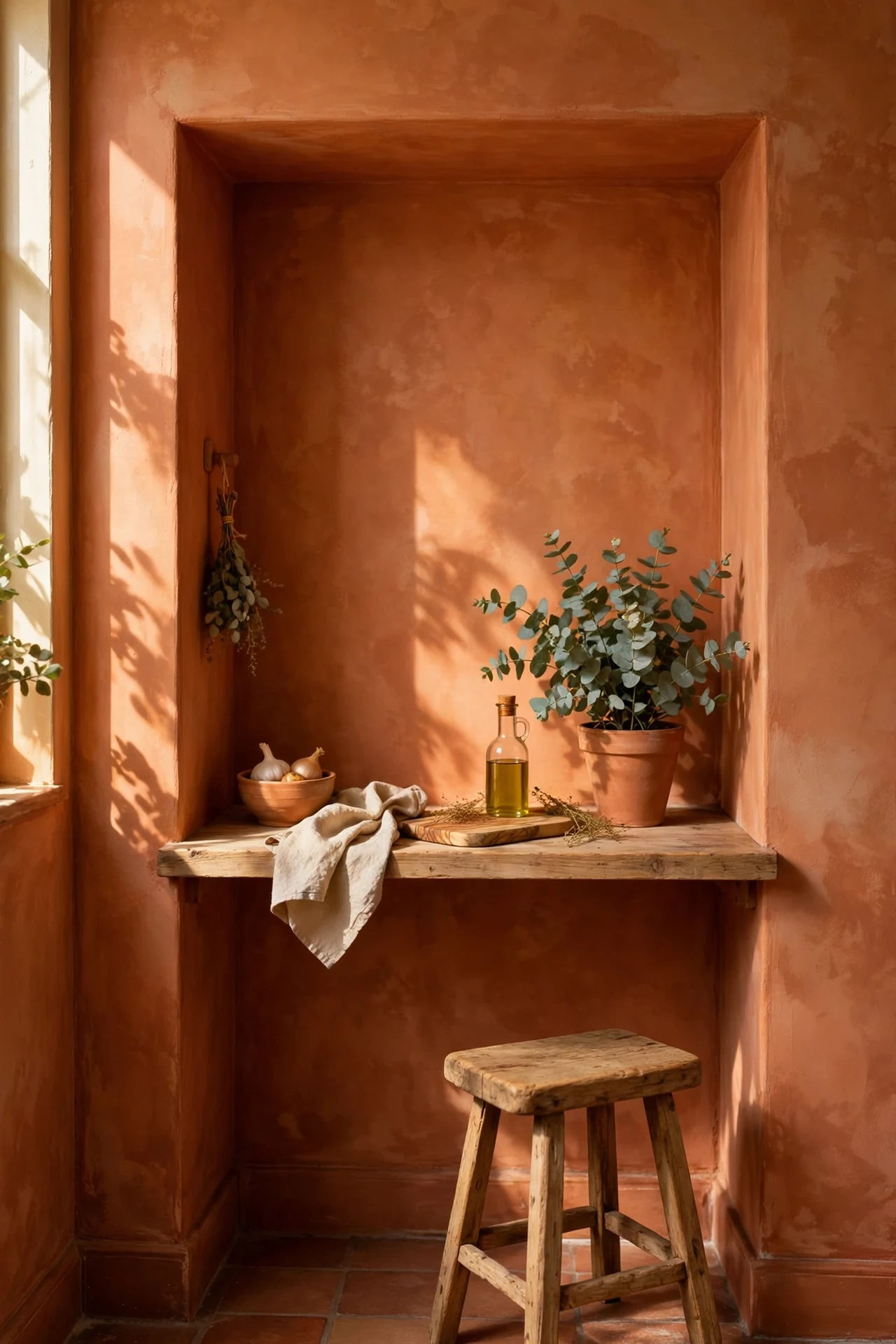
The awkward alcove next to my fridge was a dumping ground until I gave it a limewash-effect finish in terracotta. I used a textured paint and applied it in loose criss-cross strokes with a big brush, which gives that soft, cloudy Mediterranean look. It took one tin and an afternoon, and the alcove went from eyesore to feature — I now keep a wooden stool and a big plant there. I tried to make the strokes neat on the first pass and it looked streaky, so embrace the messiness; the random texture is the whole point. Two coats, letting the first dry fully, builds the depth.
Cost: ~$32 | Time: half a day
Textiles & Soft Touches
6. Terracotta Striped Kitchen Runner
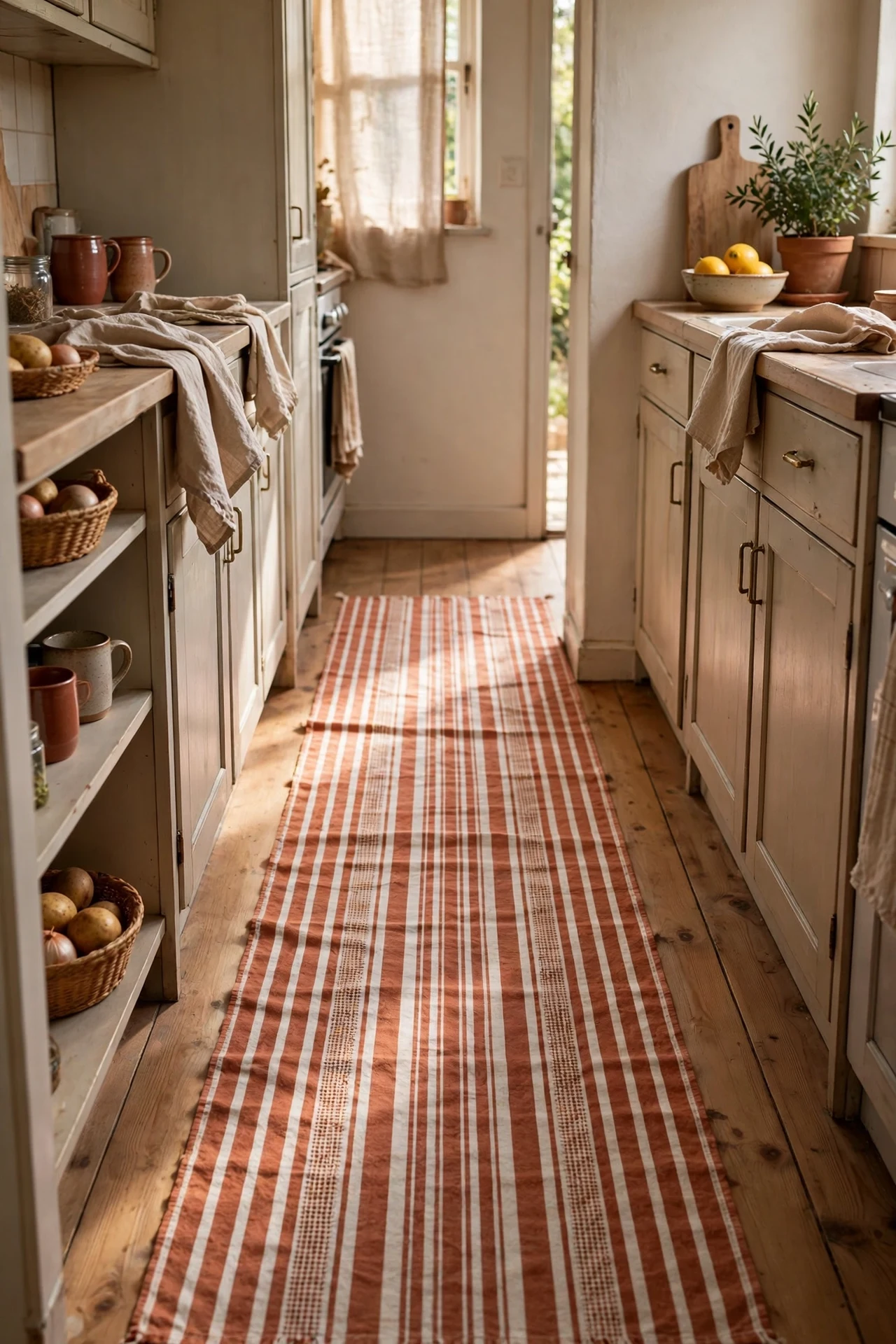
If paint feels like too much commitment, start with a runner. I found a flatweave cotton runner in terracotta and cream stripes that cost less than a takeaway for two. It runs the length of my galley, warms up the cold tiles, and I can roll it up and wash it when it gets grubby. I put a non-slip pad underneath after it migrated across the floor on day one — learn from my mistake. Measure your walkway before ordering and leave a border of floor showing on each side; a runner that’s wall-to-wall looks like fitted carpet and loses all its charm.
Cost: ~$30 | Time: 15 minutes
7. Rust-Linen Café Curtains
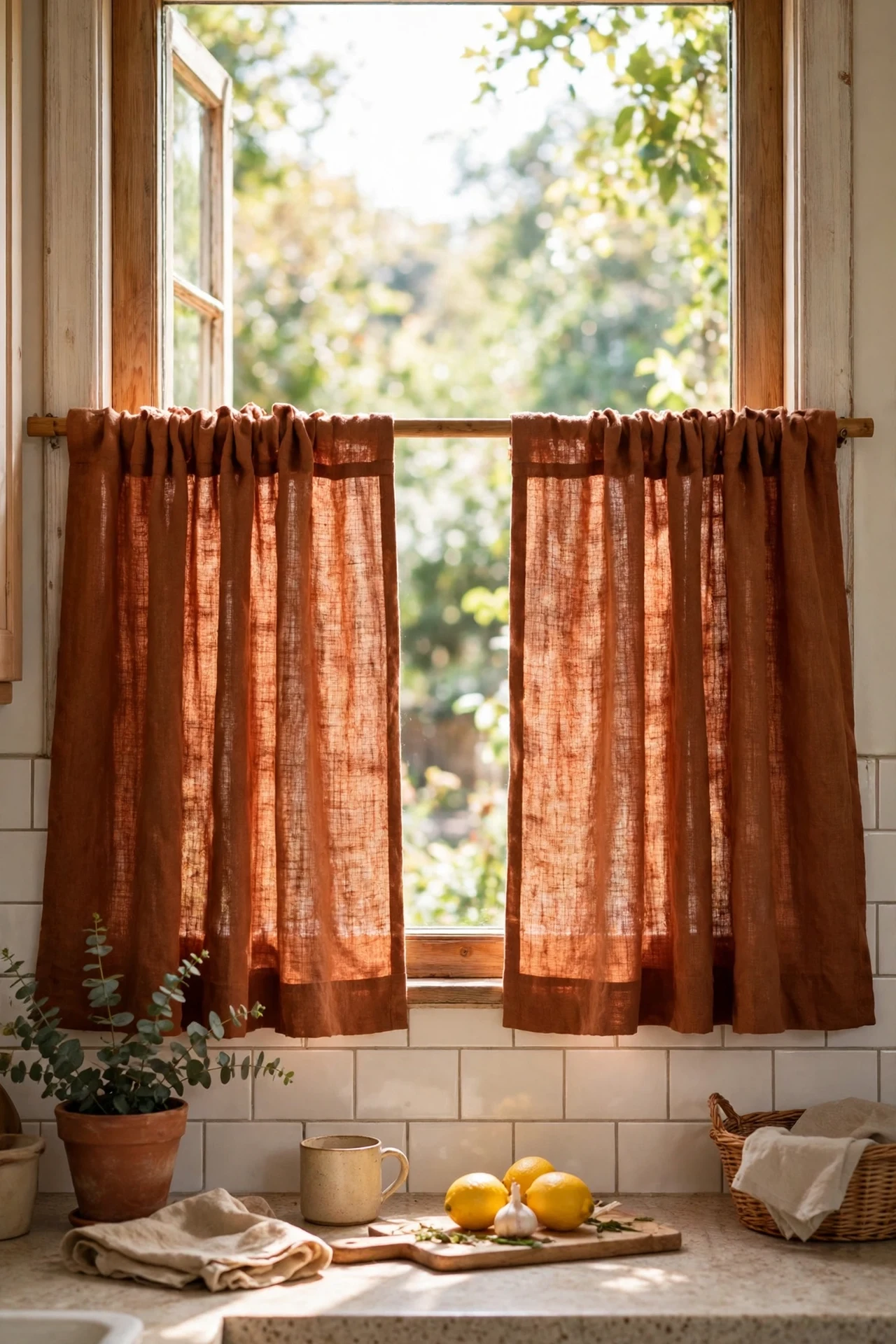
Half-height café curtains in a rusty terracotta linen transformed my window from stark to snug. I hung them on a tension rod at mid-window so the light still floods over the top while the lower half gets privacy and colour. I washed the panels once before hanging so they’d drape softly instead of looking stiff and new. I tried full-length curtains first and they blocked too much light and got splashed at the sink — the café length is the practical sweet spot. If you’re refreshing on a tight budget overall, (see also: budget-kitchen-decor-ideas) has more low-cost swaps like this one.
Cost: ~$25 | Time: 20 minutes
8. Terracotta Seat Cushions, No-Sew
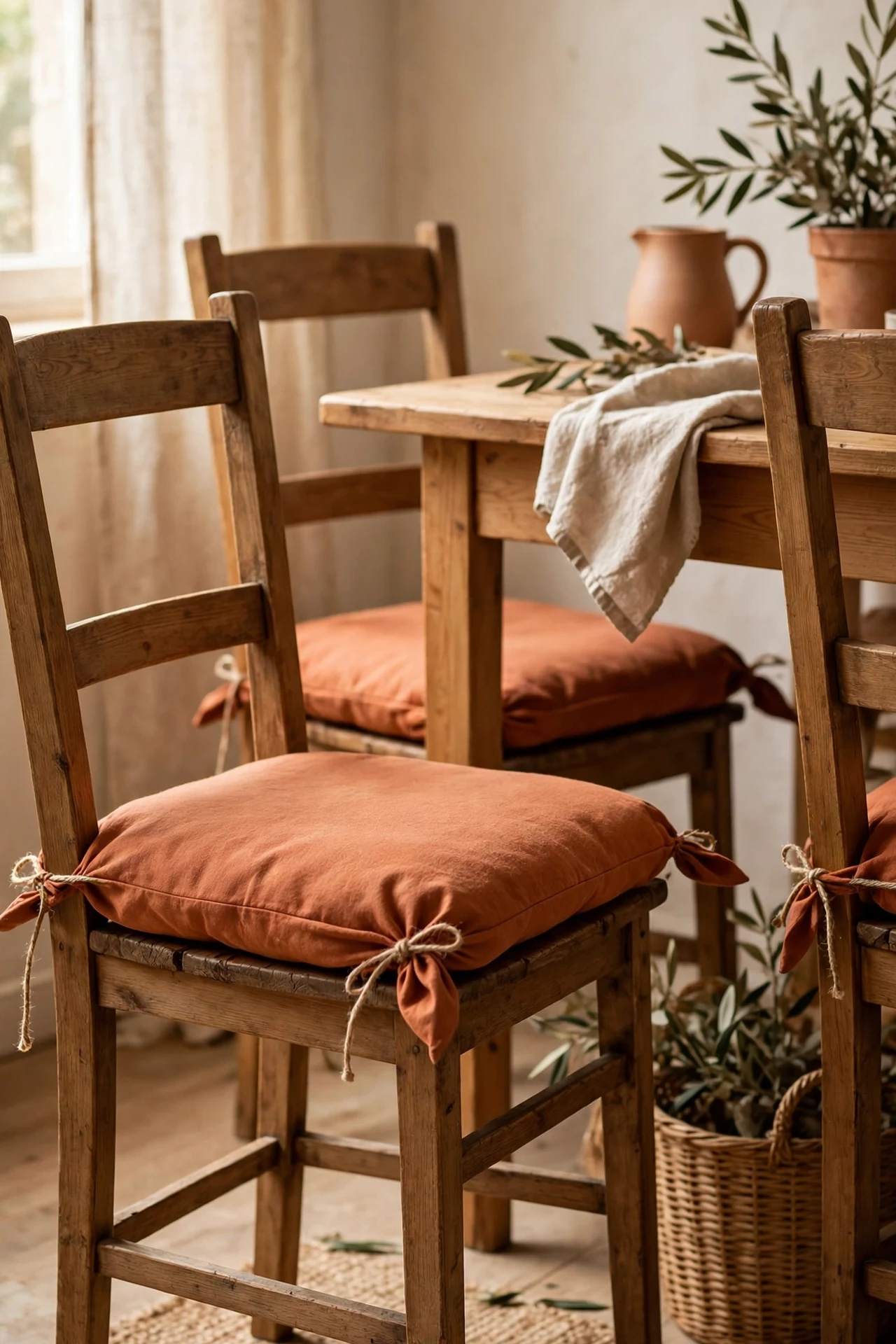
My wooden dining chairs were handsome but brutal to sit on, so I made no-sew cushions in a terracotta cotton twill. I cut foam to fit each seat, wrapped it in fabric like a parcel, and stapled the underside — no sewing machine involved. I added simple ties from the same fabric so they don’t slide. I tried hot glue on the first cushion and it peeled within a month, so staples are the reliable route. The terracotta fabric picks up the wall colour and makes the whole eating corner feel pulled together. Two cushions took me under an hour once I got the folding rhythm.
Cost: ~$22 | Time: 1 hour
9. Clay-Toned Tea Towel Collection
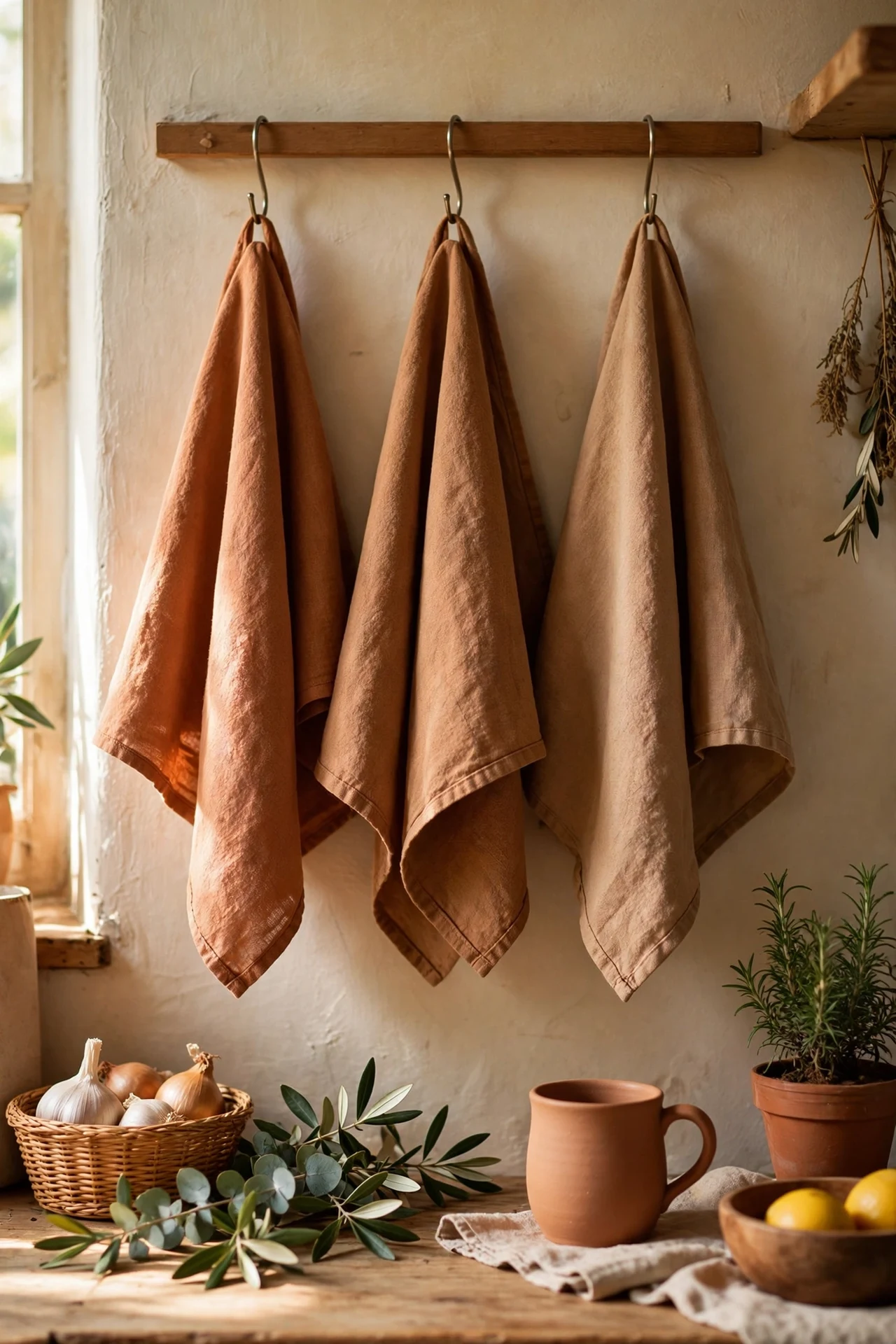
Tea towels are my favourite nearly-free styling trick. I replaced my mismatched collection with five towels in clay, rust, and cream tones and hung them on a rail inside the cupboard door. Every time I open it, it looks like a styled shelf instead of chaos. I keep two strictly for display and let the others do the actual drying — the display ones stay crisp that way. I tried mixing in patterned towels once and it looked busy, so I keep the palette tight now. For a few pounds, nothing else changes the feel of the kitchen this fast.
Cost: ~$15 | Time: 15 minutes
Pro tip: When buying terracotta textiles, hold them against your wall colour in the shop if you can — terracotta has pink, orange, and brown variants, and mixing undertones is what makes a scheme look “off” without you knowing why.
10. Terracotta Tablecloth for the Kitchen Table
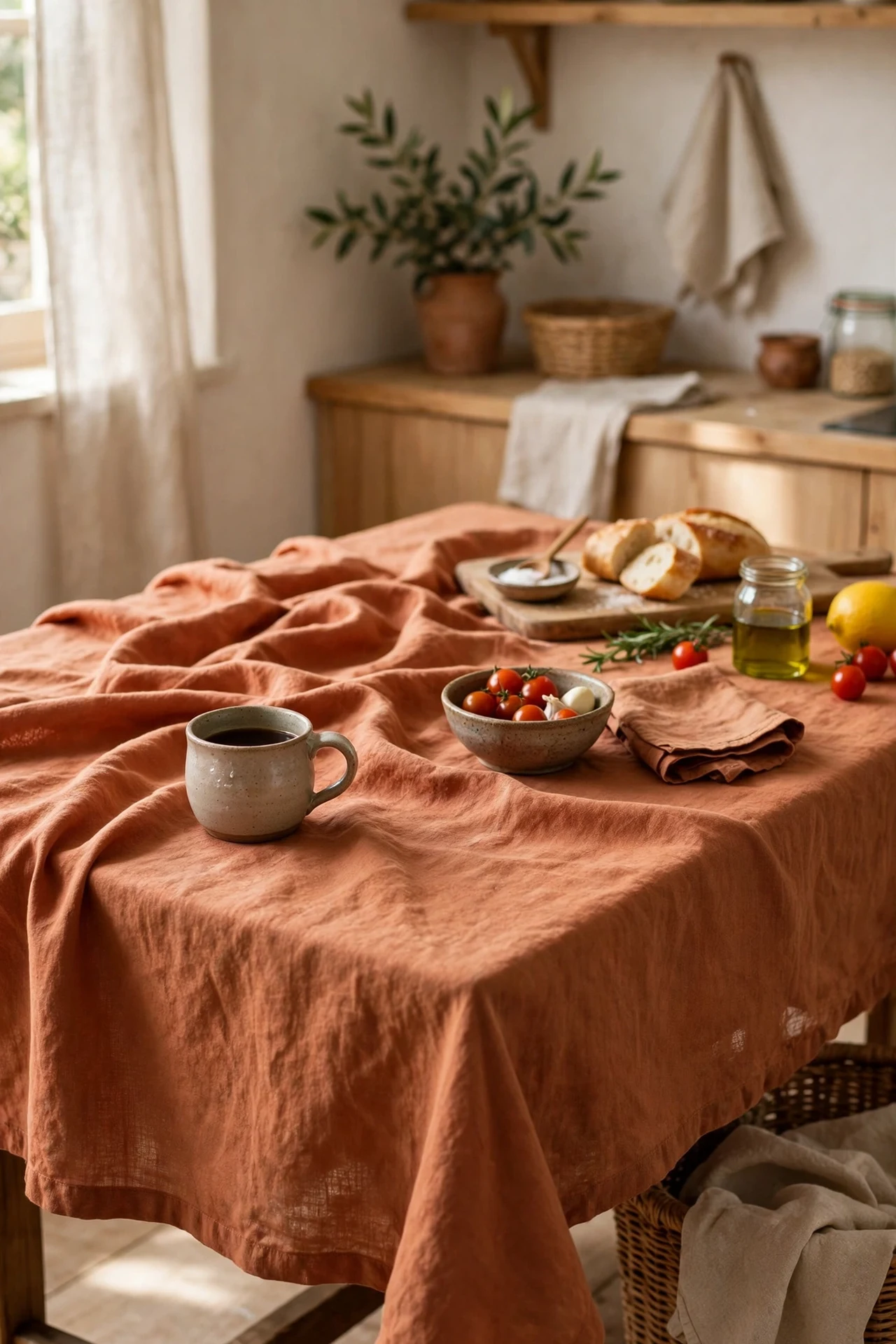
My kitchen table was scratched and I couldn’t afford to replace it, so I dressed it in a terracotta washed-linen tablecloth. It hides every mark, adds instant warmth, and makes weeknight dinners feel a bit more special. I bought one slightly oversized so it pools just a little at the corners — too short looks stingy. I tried a plastic wipe-clean cloth first for practicality and it looked cheap within a week, so washable linen won despite the ironing. A quick shake outside and a warm wash keeps it fresh, and the colour hides tomato stains far better than white ever did.
Cost: ~$28 | Time: 10 minutes
Hardware & Details
11. Aged Copper Handles on Neutral Doors
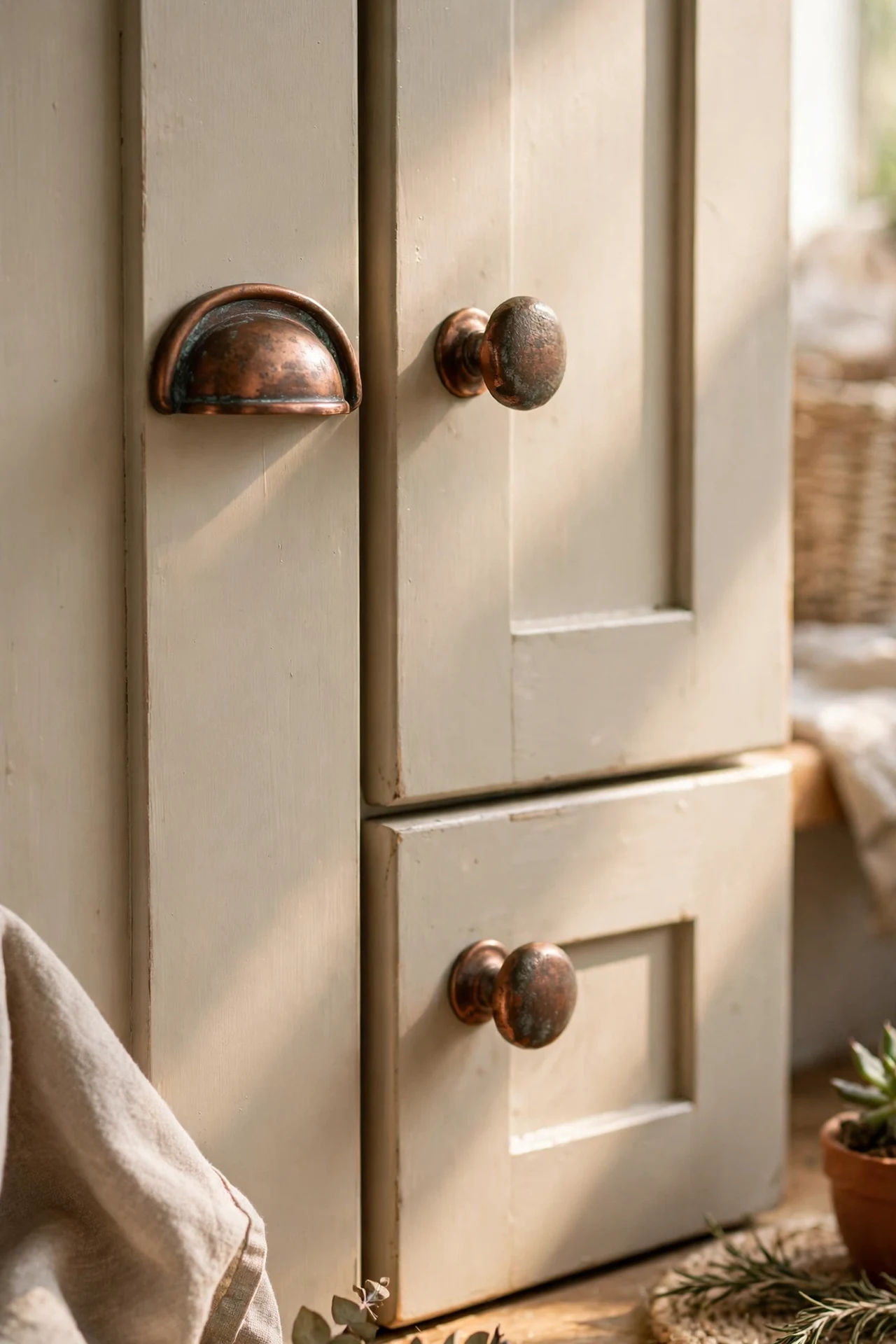
Swapping handles is the fastest way to pull terracotta tones through a kitchen without touching the paint. I replaced my silver bar handles with aged copper cup pulls and knobs — copper sits in the same warm family as terracotta and catches the light beautifully. I measured the existing hole spacing before ordering so I didn’t have to drill new holes, which kept it a genuinely ten-minute job per door. I tried the cheapest copper-finish handles first and the coating chipped within months, so spend slightly more on solid-feel ones. They’ve aged gracefully and look better now than the day I fitted them.
Cost: ~$40 | Time: 1 hour
12. Terracotta Ceramic Pendant Shades
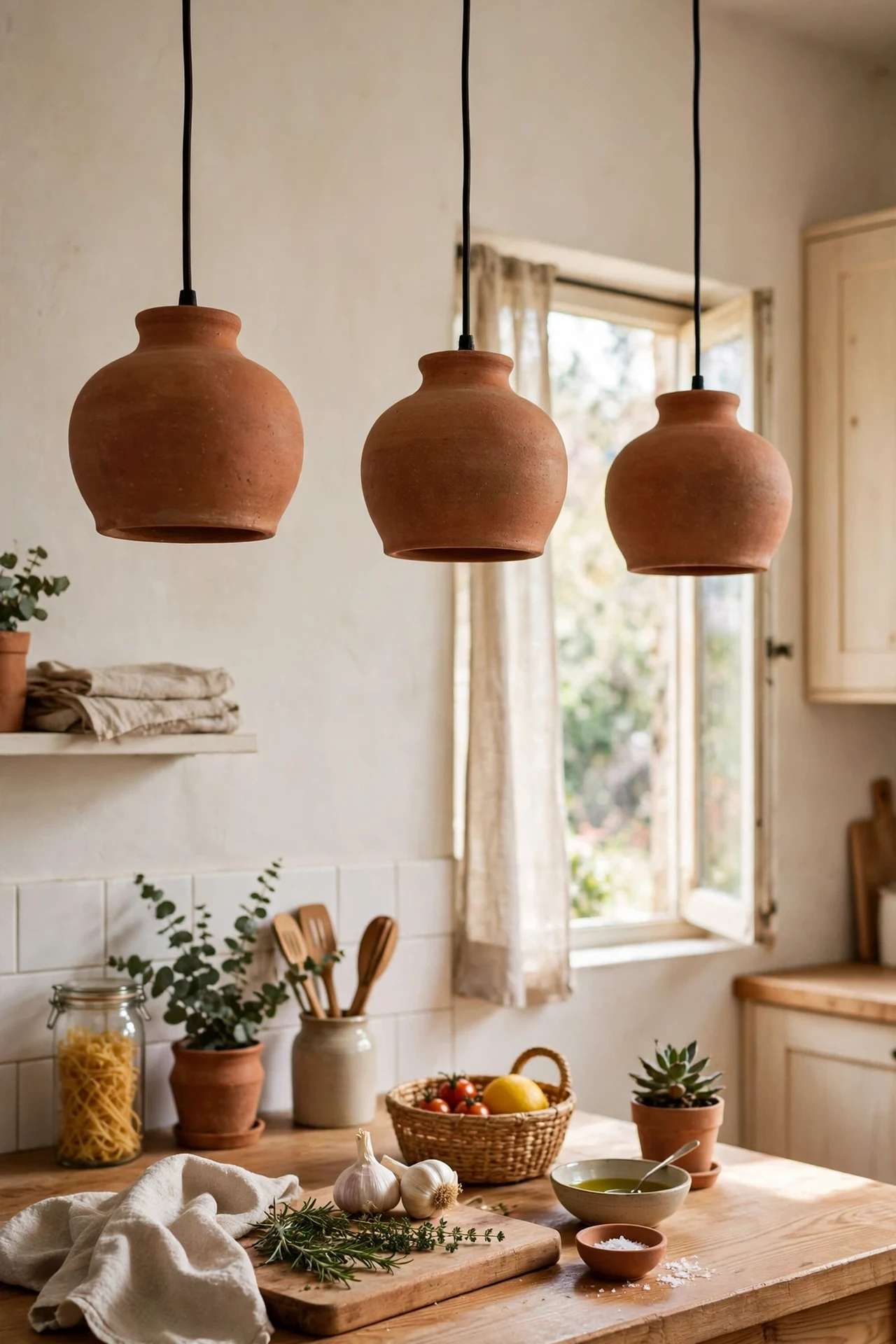
The old fluorescent fitting had to go, so I hung two terracotta ceramic pendant shades over the worktop. I used plug-in pendant kits to avoid any wiring — just ceiling hooks and neatly clipped cords. The glazed ceramic glows warmly when lit and looks sculptural when it’s off. I hung them too high initially and the light pooled on the ceiling, so I lowered them until the shades sat about 75cm above the surface. Warm-white bulbs are essential; a cool bulb against terracotta looks jarring. It’s the cosiest the kitchen has ever felt after dark.
Cost: ~$55 | Time: 1 hour
13. Wooden Utensil Rail With Clay Pots
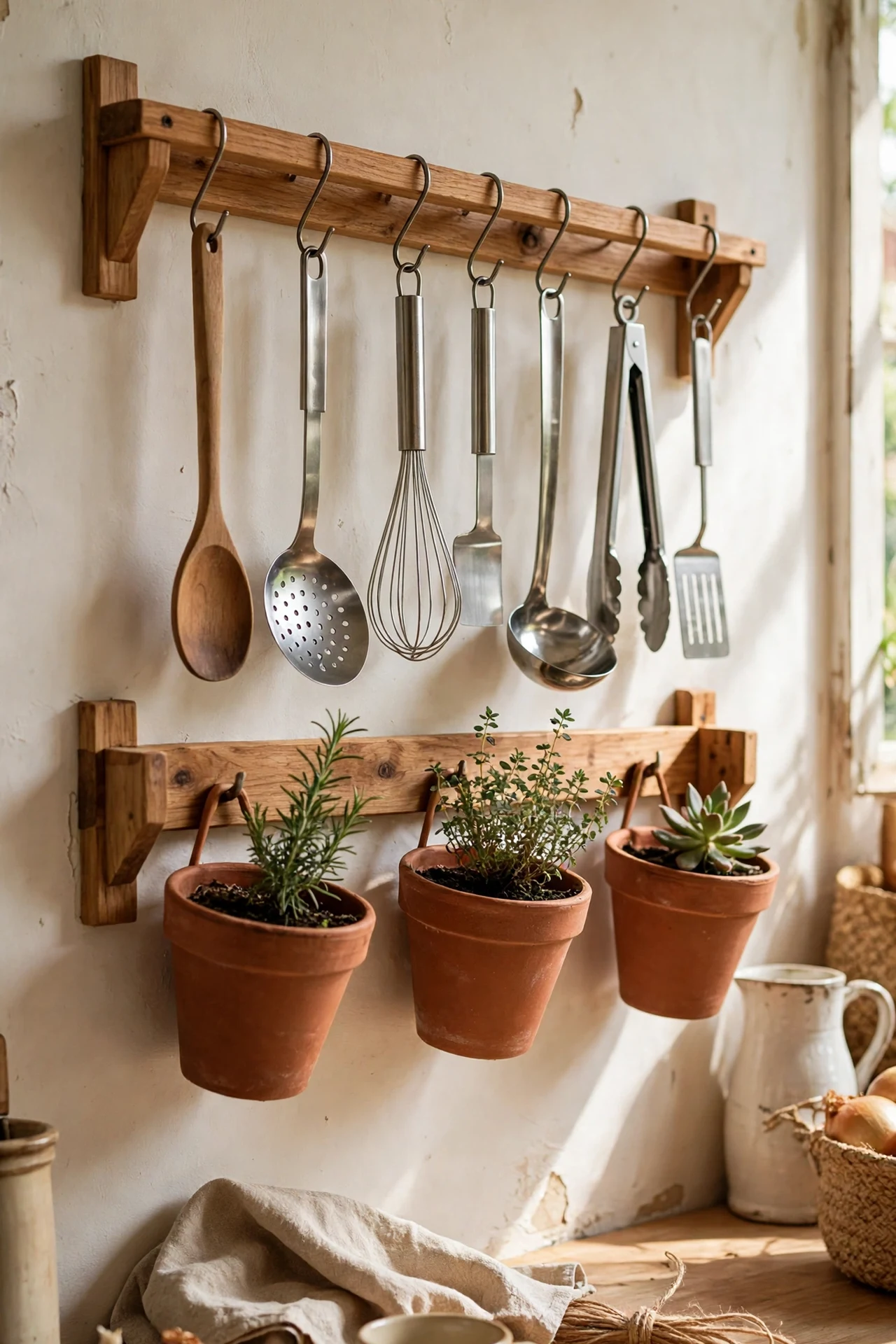
Drawer space was tight, so I mounted a wooden rail by the cooker and hung utensils alongside two small terracotta pots holding wooden spoons. The pots are just cheap plant pots repurposed, and the warm clay colour repeats the palette at eye level. I fixed the rail into proper wall plugs, spaced everything evenly, and kept the hanging items to wood, clay, and brass so it reads as curated. I tried hanging every utensil I owned and it looked cluttered, so I edited down to the daily-use pieces. Wipe the rail monthly — cooking grease settles on everything near the hob.
Cost: ~$24 | Time: 30 minutes
Pro tip: Terracotta pairs best with materials that have visible texture — wood grain, woven fibres, rough linen. Against too many smooth glossy surfaces it can look flat, so keep at least one tactile element nearby.
14. Open Shelves Styled With Terracotta Stoneware
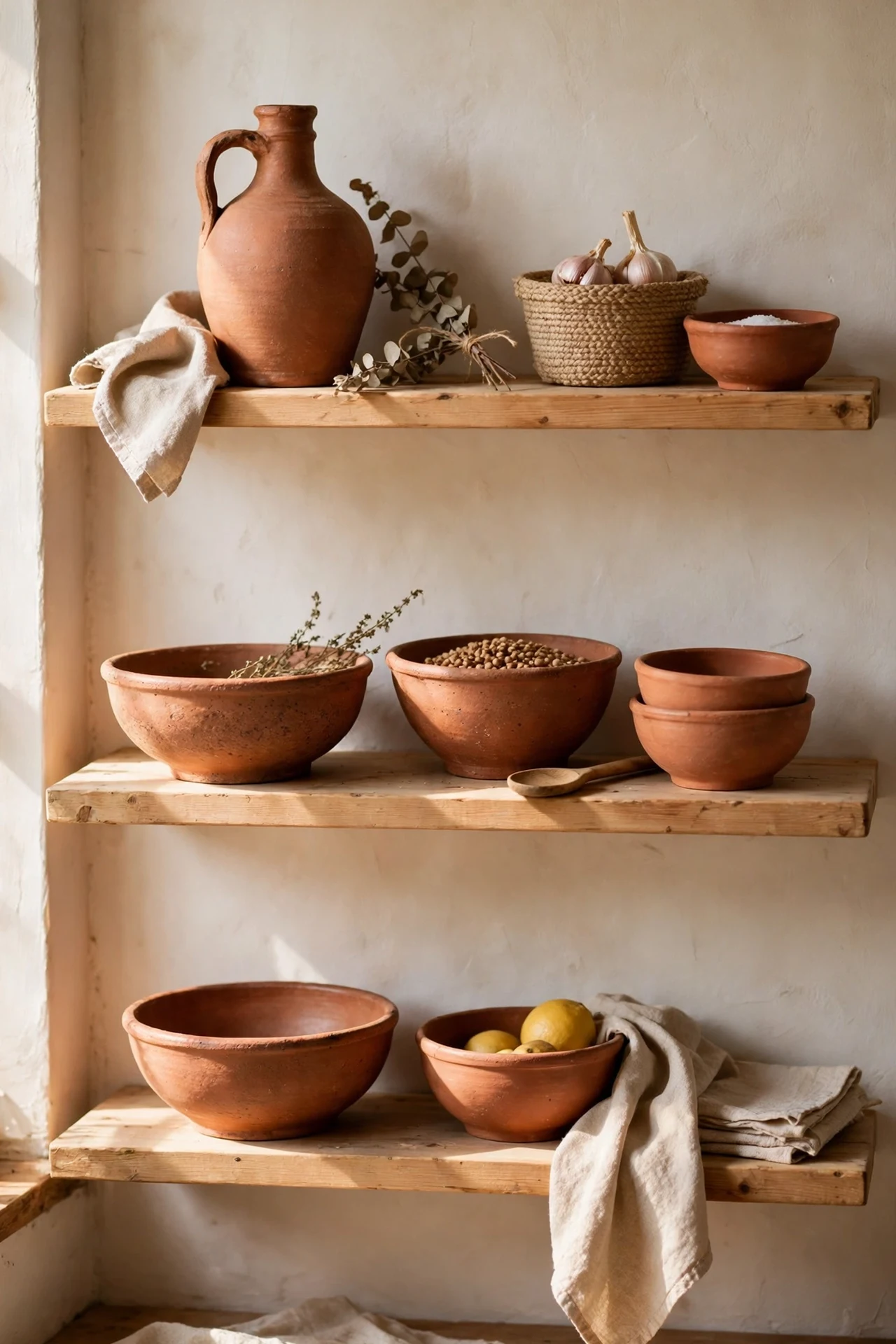
I took the doors off one wall cabinet and styled the shelves with terracotta stoneware — bowls, a jug, a couple of mugs in graduated clay tones. Against a warm white wall, the terracotta pieces practically glow. I keep it to items I use daily so nothing gathers dust, arranged in loose odd-numbered groups. I tried cramming the shelves full at first and it looked like a charity shop, so I edited hard: one row per shelf, breathing room between pieces. If your kitchen storage needs a rethink alongside the styling, (see also: small-kitchen-organization-ideas) pairs well with this open-shelf approach.
Cost: ~$35 | Time: half a day
Big Touches on a Budget
15. Terracotta-Look Vinyl Floor Tiles
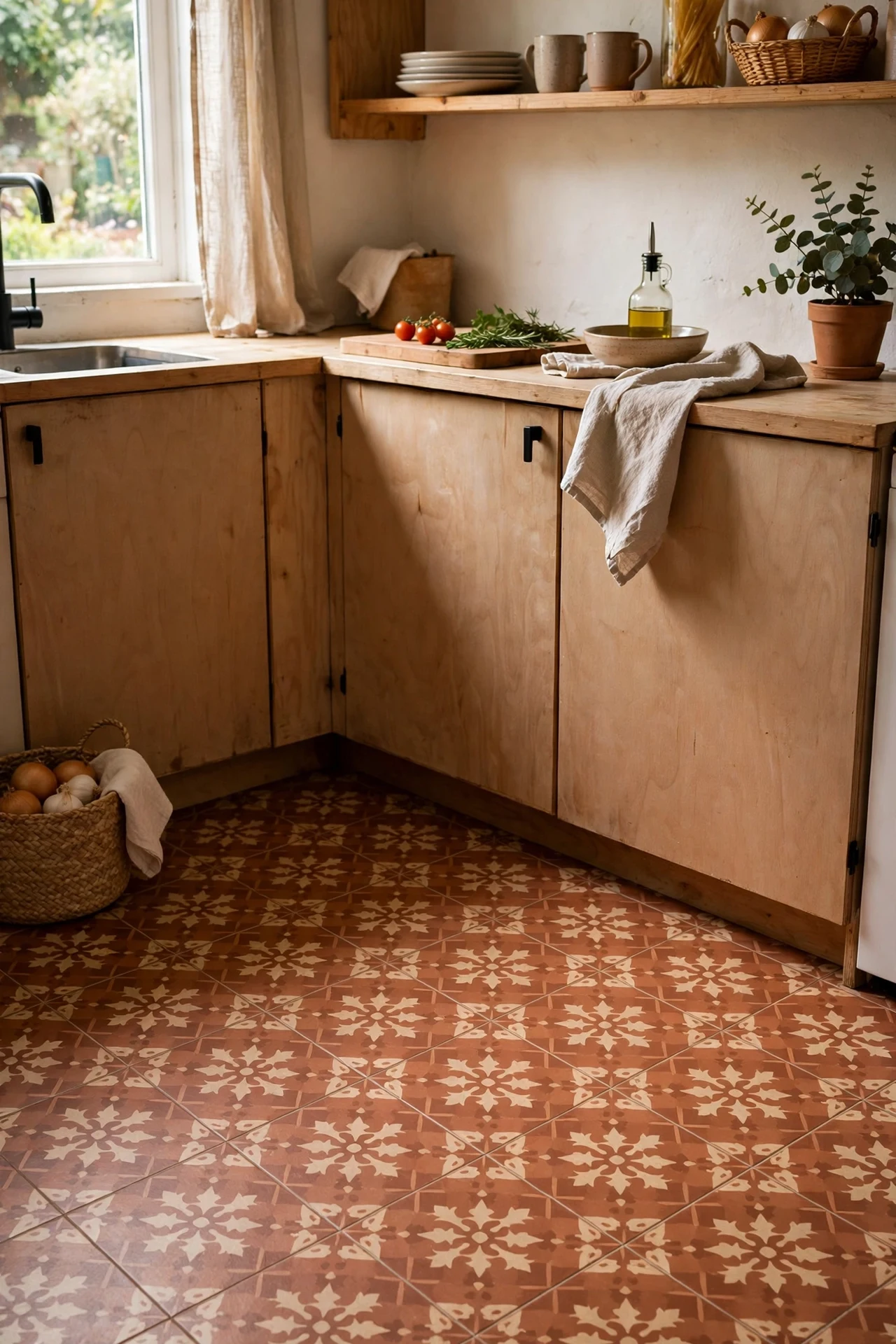
Ripping up my floor was out of the question, so I laid terracotta-look vinyl tiles over the old lino. The thick peel-and-stick kind in a warm encaustic pattern went down in a single Saturday — I started from the centre, pressed each tile with a vinyl roller, and cut edges with a utility knife. The pattern hides dirt brilliantly, which matters in a real kitchen. I mopped the old floor twice and let it dry completely first, because any grit underneath shows through within weeks. A year later, visitors assume it’s real tile until I tell them.
Cost: ~$95 | Time: one day
16. Kitchen Island Painted in Burnt Sienna
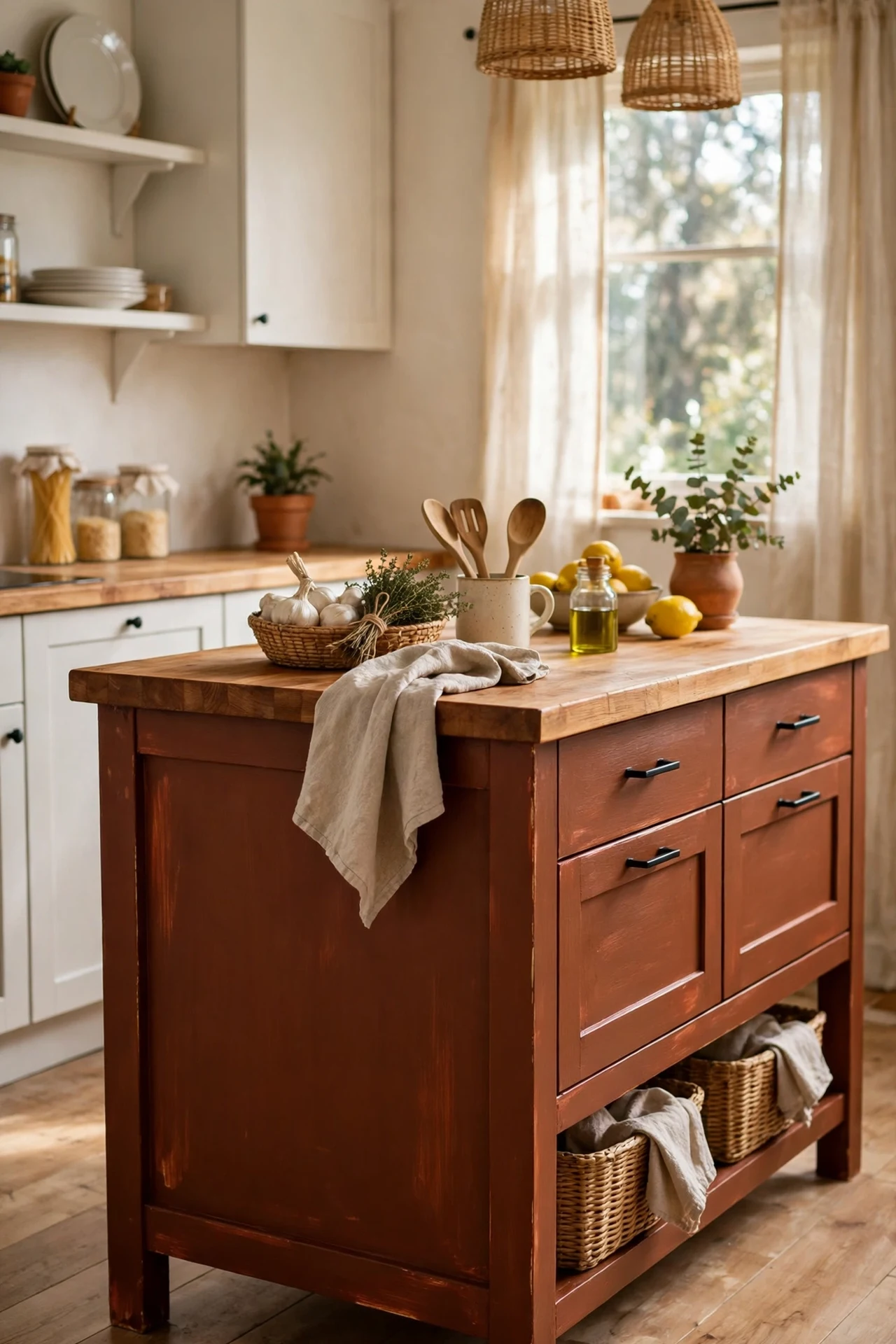
My freestanding island unit was plain pine and slightly sad, so I painted it burnt sienna — a deep, earthy terracotta. One small tin of cabinet paint, a foam roller, and a weekend transformed it into the statement piece of the room. I sanded it back first, primed the knots so they wouldn’t bleed through, and finished with two coats of satin. I tried skipping the knot primer on a test patch and the resin bled through within days, so don’t skip it on pine. The deep colour grounds the whole kitchen and makes everything around it look more expensive.
Cost: ~$30 | Time: one weekend
17. Terracotta Coffee Corner
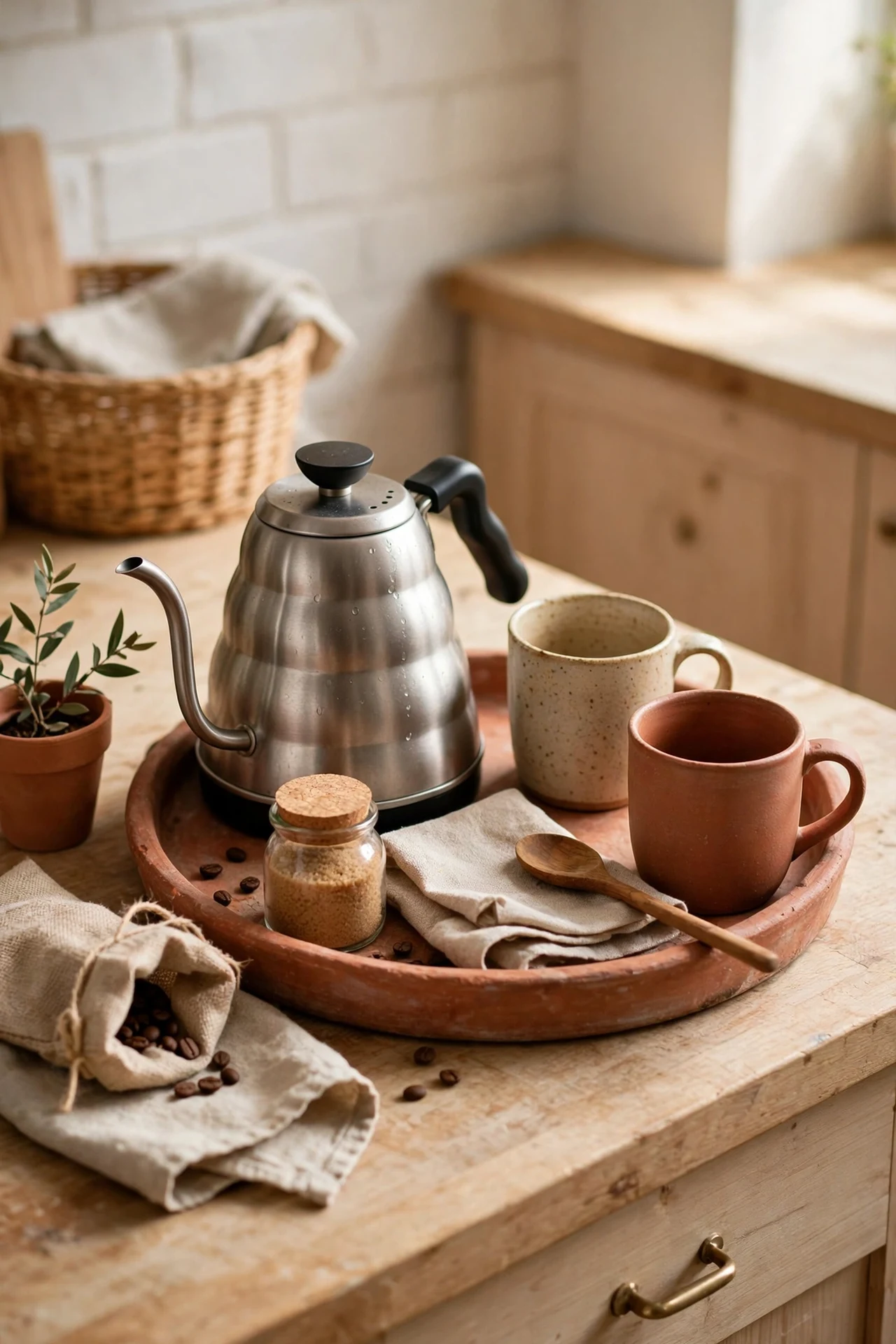
I turned one cluttered worktop section into a coffee corner anchored by a terracotta tray. The tray corrals the kettle, French press, and mugs into a single vignette, and the warm clay colour makes even a cheap kettle look considered. I added a small jar of beans and a tiny plant to finish it. Without the tray, the bits drifted across the counter within days — I learned that the hard way. The whole corner cost less than a week’s worth of café coffees, and making my morning brew there genuinely feels like a small ritual now.
Cost: ~$22 | Time: 30 minutes
Pro tip: A single terracotta accent in an otherwise neutral kitchen — one tray, one pot, one cushion — often has more impact than going all-in. If in doubt, start with one piece and live with it for a week.
18. Terracotta Pantry Door
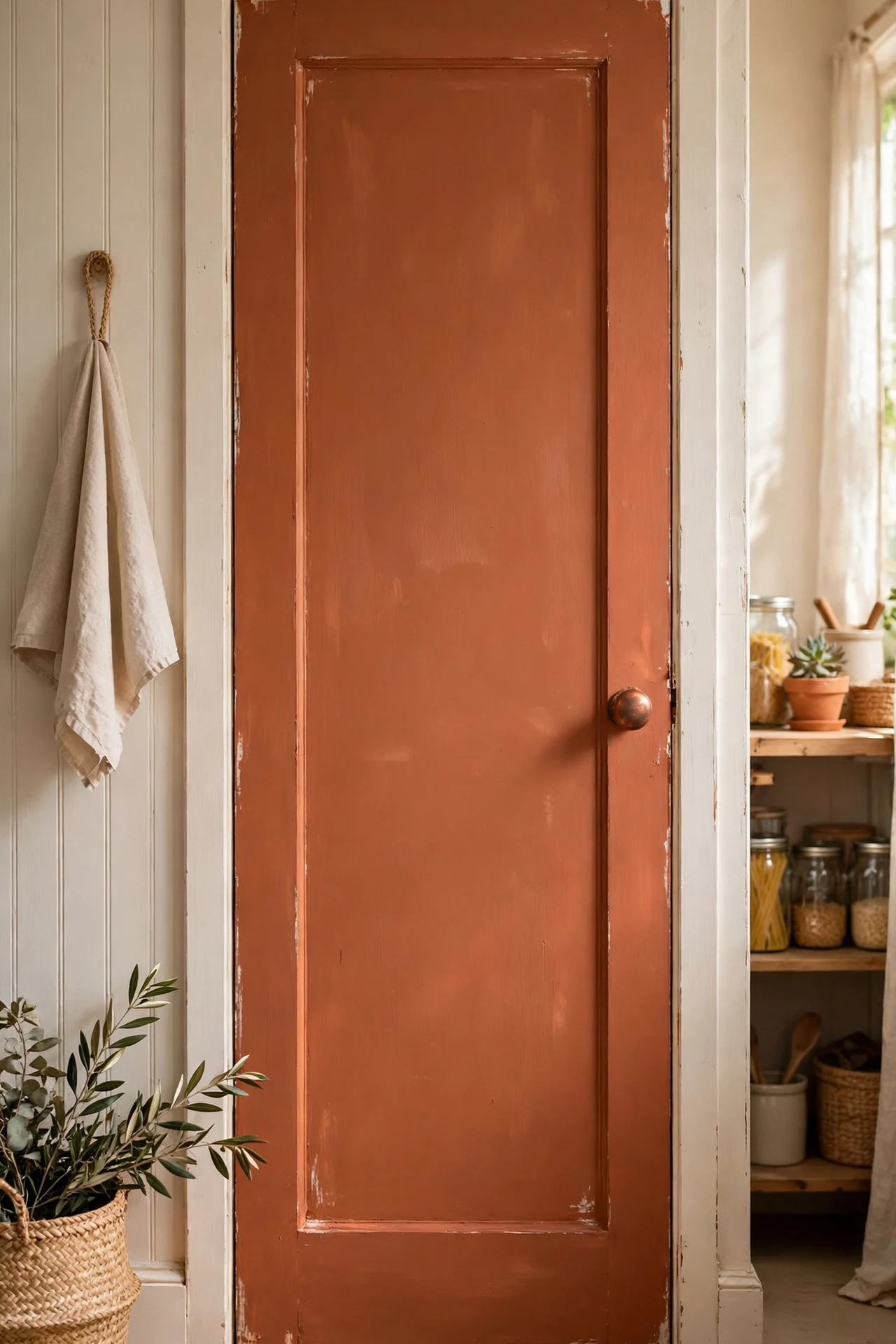
The pantry door was white, scuffed, and invisible until I painted it terracotta. One door, one small tin of paint, and suddenly there’s a focal point that ties the whole warm scheme together. I took it off its hinges, laid it flat on sawhorses, and rolled on two thin coats — flat painting beats painting in place every time, with no drips or brush marks. I swapped the knob for an aged copper one to echo the cabinet handles. Guests always comment on it, which is funny for something that cost less than a pizza.
Cost: ~$25 | Time: half a day
19. Clay Herb Pots Lining the Windowsill
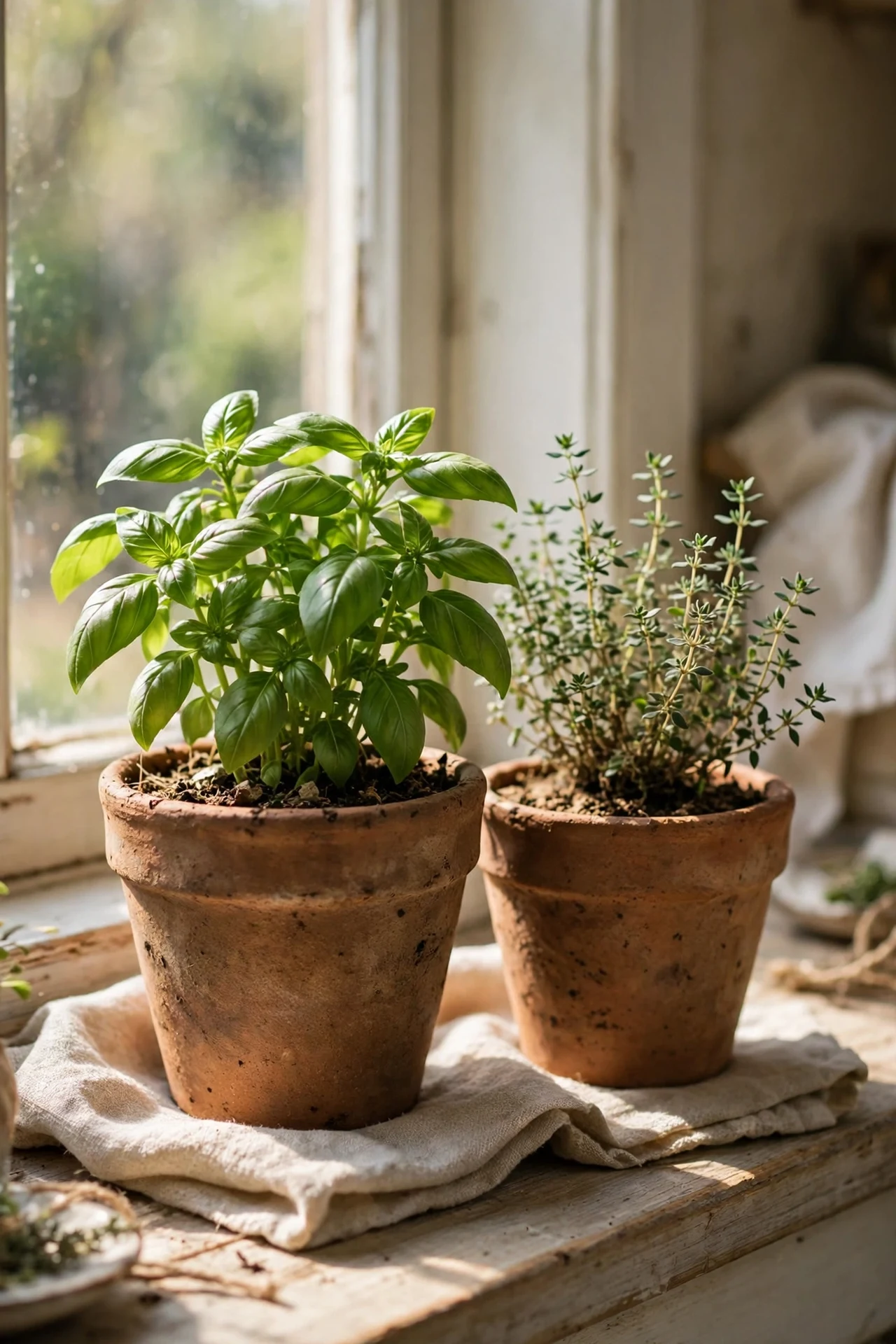
The simplest idea saved for last: a row of natural clay pots on the windowsill, planted with basil, thyme, and rosemary. The unglazed terracotta is the real thing, not a paint match, and its earthy texture is the perfect finish for the whole scheme. I added gravel at the bottom of each pot for drainage and little wooden labels so I can tell the seedlings apart. I lost my first basil to root rot by skipping drainage, so consider this your warning. They cost pennies, smell wonderful, and I cook with them constantly — the most useful décor in the room.
Cost: ~$18 | Time: 45 minutes
Terracotta isn’t the scary colour I thought it was — start with a textile or a pot, and let the warmth convince you before you reach for the paintbrush. For the full low-spend playbook, (see also: budget-kitchen-decor-ideas) rounds up every purse-friendly refresh in one place.
