15 Olive Green Kitchen Ideas on a Dime
I used to think olive green was a brave colour for a kitchen, the kind you admire in magazines and never touch yourself. Then my neighbour painted her island olive for the cost of a single tin of paint, and my whole opinion flipped in an afternoon. If you are collecting olive green kitchen ideas that stay firmly in pocket-money territory, this list is exactly where I would start. Everything below costs less than forty dollars, most of it far less, and each idea is a weekend project at most. Olive green is forgiving, earthy, and weirdly good at hiding crumbs — the perfect budget colour, honestly.
Cheapest picks if money is tight:
- Olive green dish towels — ~$9 for a set of four
- Chalkboard herb labels with olive frames — ~$7 total
- Olive green plant pots on the sill — ~$10 for three
- Thrifted frames painted olive — ~$12 with a sample pot
- Olive utensil holder by the stove — ~$11
Big-Paint Moves That Change Everything
1. Paint the Lower Cabinets Olive Green
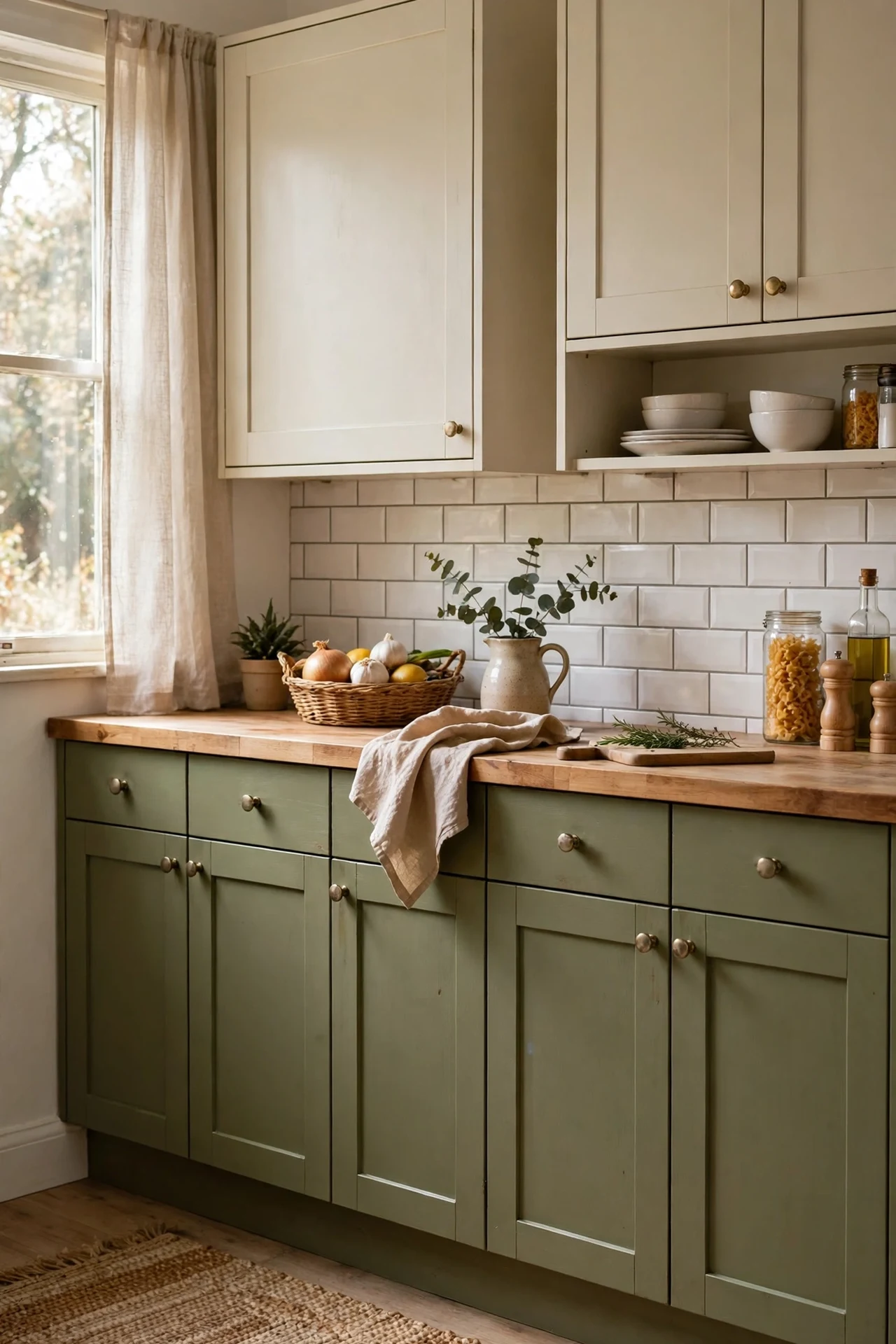
Olive green lower cabinets with light uppers give you the two-tone designer look for the price of one tin of paint. I tried this after getting a quote for a full kitchen respray that made my eyes water. Degrease every door with sugar soap first, then sand lightly with 120-grit paper so the paint grips. Roll on two thin coats of cabinet paint in a muted olive, letting each coat cure overnight before rehanging the doors. Keep the handles you have or swap to black for contrast. The mistake to avoid is painting in humid weather — the doors will stay tacky for days, so pick a dry weekend.
Cost: ~$30 | Time: 1 weekend
2. Give the Kitchen Island an Olive Makeover
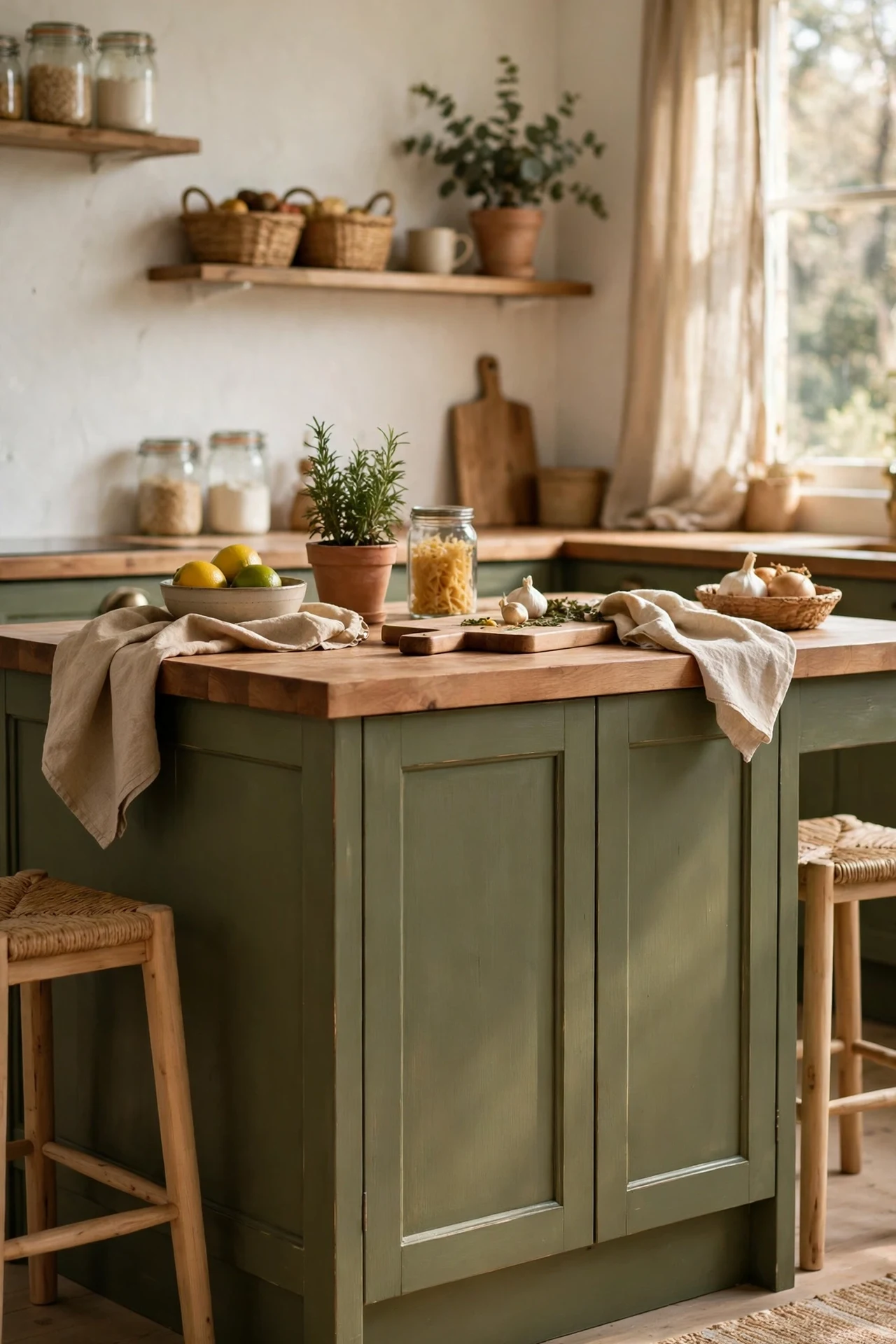
An olive green island turns a plain box of a kitchen into something with a clear focal point. My neighbour did exactly this, and it took her one Saturday and a single tin of furniture paint. Clear everything off the island first, then clean and sand the panels the same way you would cabinet doors. Brush the paint into any grooves first, then roll the flat panels smooth. Two coats is usually enough over a grey primer. Style the top with a wooden board and a small plant so the olive base stands out. The mistake to avoid is leaving the island bare afterward — an unstyled island reads unfinished, not minimal.
Cost: ~$24 | Time: 5 hours
3. Paint One Olive Accent Wall
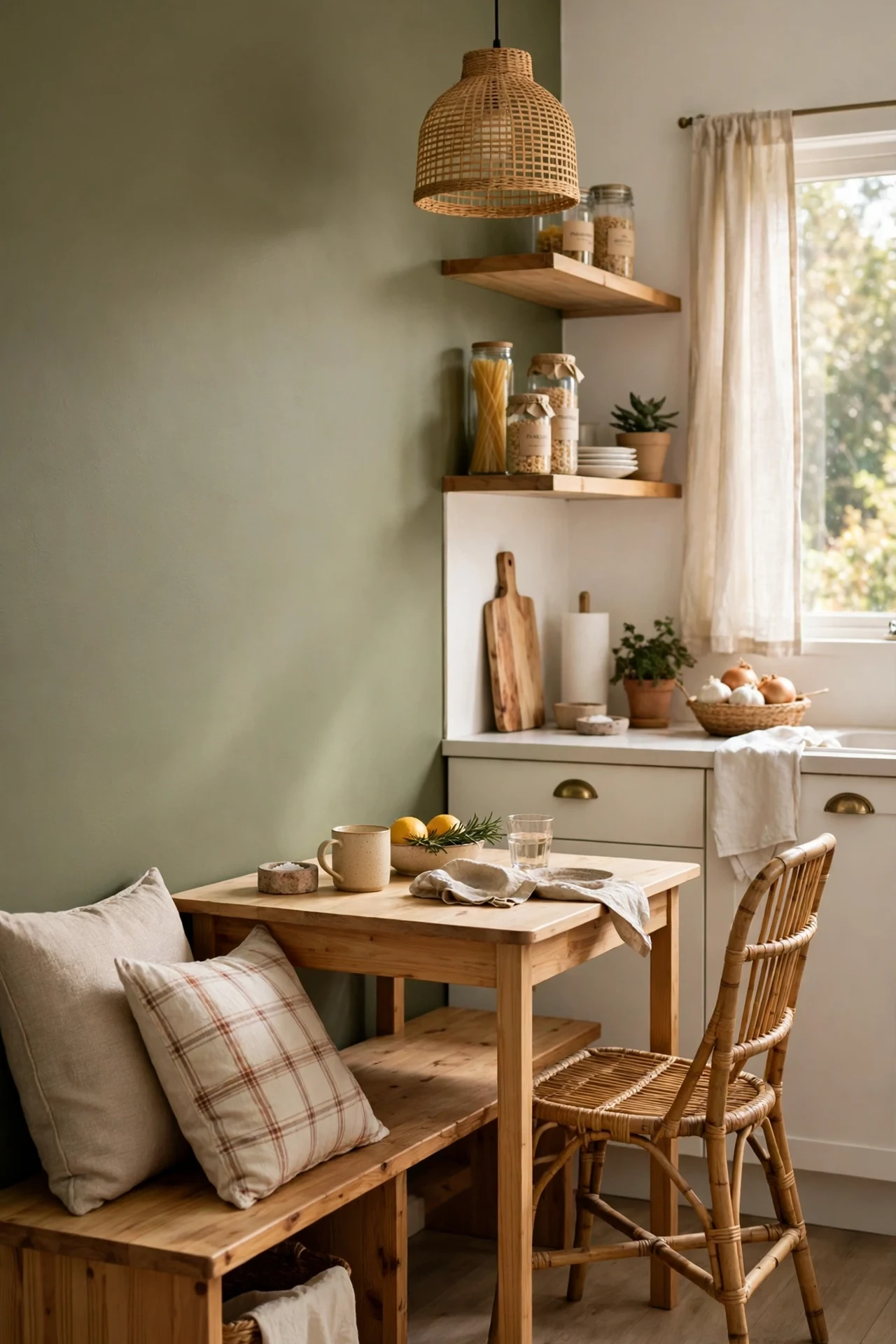
A single olive green wall behind the dining nook or open shelves adds depth without swallowing the room. I painted the wall behind my kitchen table and the whole corner suddenly felt intentional. Choose the wall that gets the most daylight so the olive reads rich rather than muddy. Cut in with an angled brush, then roll in long strokes keeping a wet edge, and plan on two coats over a tinted primer. Hang one piece of art with warm wood tones against it for contrast. For more ways to stretch a paint tin, see these (see also: budget-kitchen-decor-ideas). The mistake to avoid is picking a neon-bright olive — muted, greyed olives flatter small kitchens far more.
Cost: ~$28 | Time: 4 hours
4. Stick Up an Olive Peel-and-Stick Backsplash
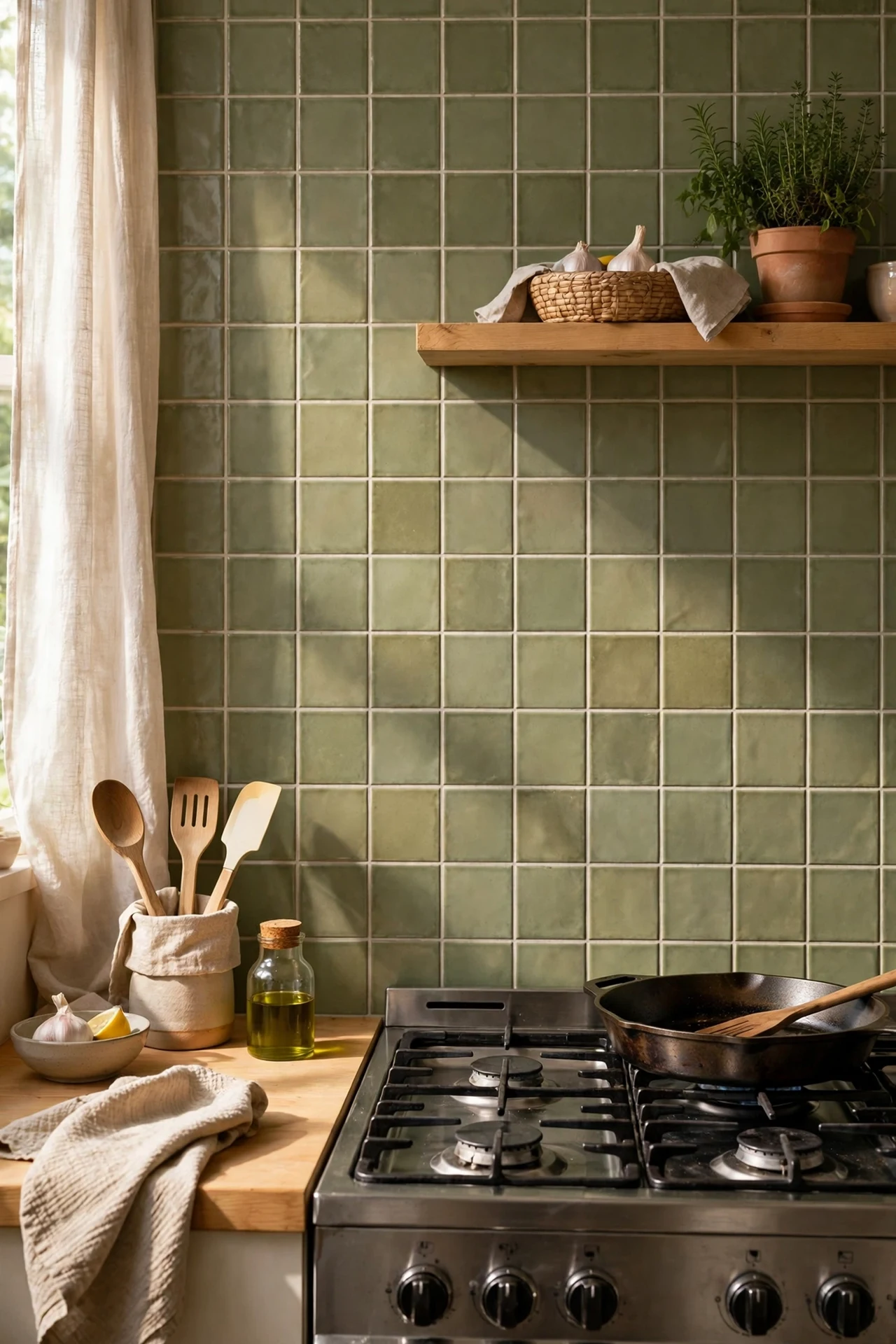
Peel-and-stick tiles in olive tones fake a hand-glazed backsplash for a tenth of the real thing. I put these behind my range when real tiles quoted at thirty dollars a square foot. Wipe the wall with degreaser, then start at the centre of the stove and work outward so your cuts land evenly at both ends. Press each tile firmly and roll the seams with a dry roller to push out bubbles. Wipe splashes off with a damp cloth — most quality peel-and-stick tiles handle kitchen steam fine. The mistake to avoid is applying them over bumpy orange-peel texture; sand the glossy high spots first so they grip.
Cost: ~$32 | Time: 3 hours
5. Paint the Pantry Door Olive Green
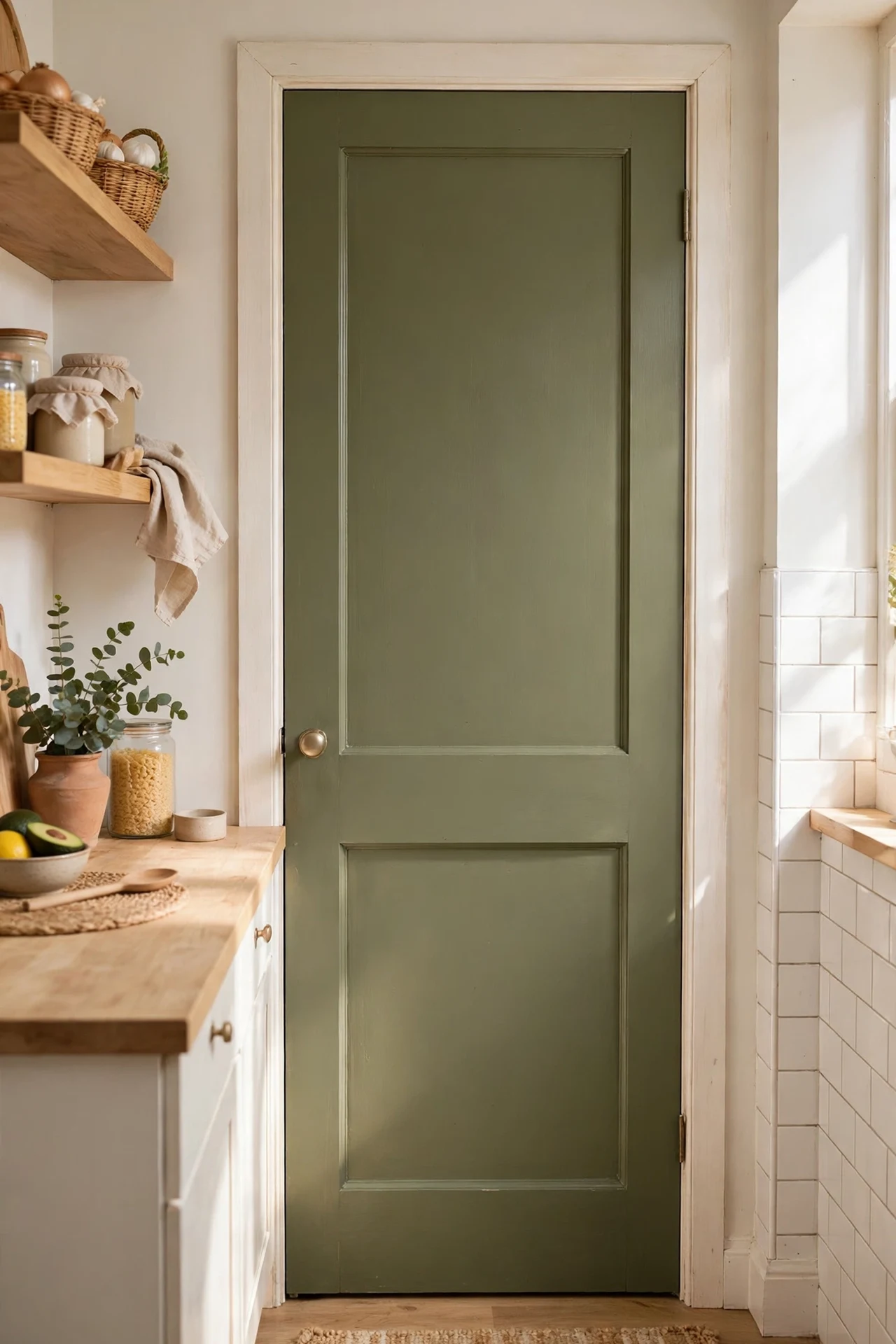
The pantry door is the most overlooked canvas in the kitchen, and olive green turns it into a feature. I painted mine after realising it was the first thing you see from the hallway. Take the door off its hinges and lay it flat on sawhorses so the paint levels out. Sand, prime, then apply two coats of olive furniture paint, letting it cure a day before rehanging. Add a simple black knob if yours is dated. Chalkboard paint on the upper panel is a fun bonus for shopping lists. The mistake to avoid is painting the door while it hangs — drips gather at the bottom edge every time.
Cost: ~$16 | Time: 3 hours
Soft Textile Touches
6. Hang Olive Linen Cafe Curtains
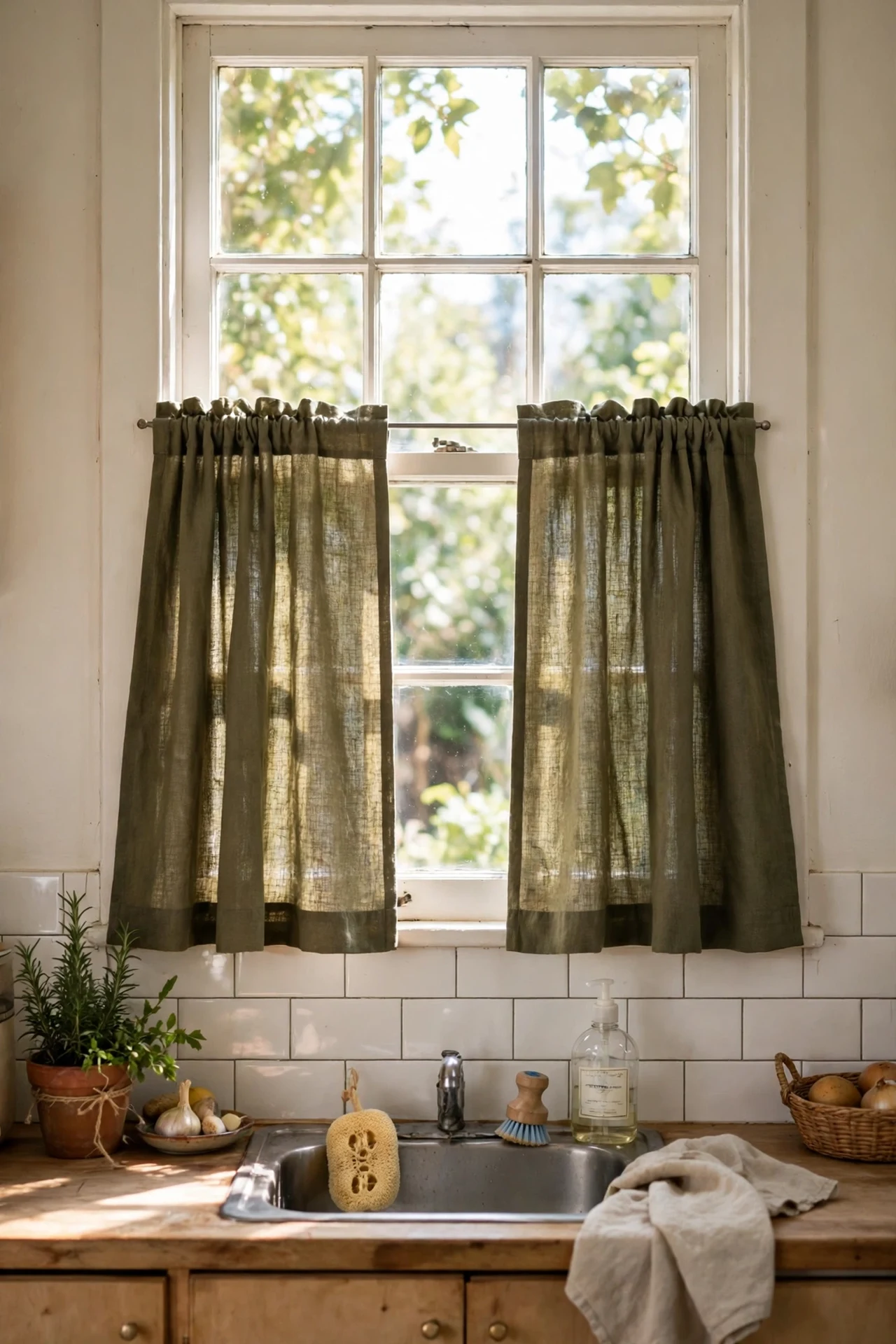
Olive linen cafe curtains soften a kitchen window and cost far less than full-length drapes. I hung a pair on a tension rod at the midpoint of my kitchen window and the harsh afternoon light turned golden. Buy panels about one and a half times the window width so they gather in soft folds. Steam or iron them once to relax the creases, then slide them onto a slim rod that fits inside the frame. The bottom half of the glass stays clear for light while you keep your privacy. The mistake to avoid is buying synthetic olive fabric — it shines under kitchen lights, while linen stays matte and rich.
Cost: ~$19 | Time: 30 minutes
7. Lay an Olive Table Runner Down the Centre
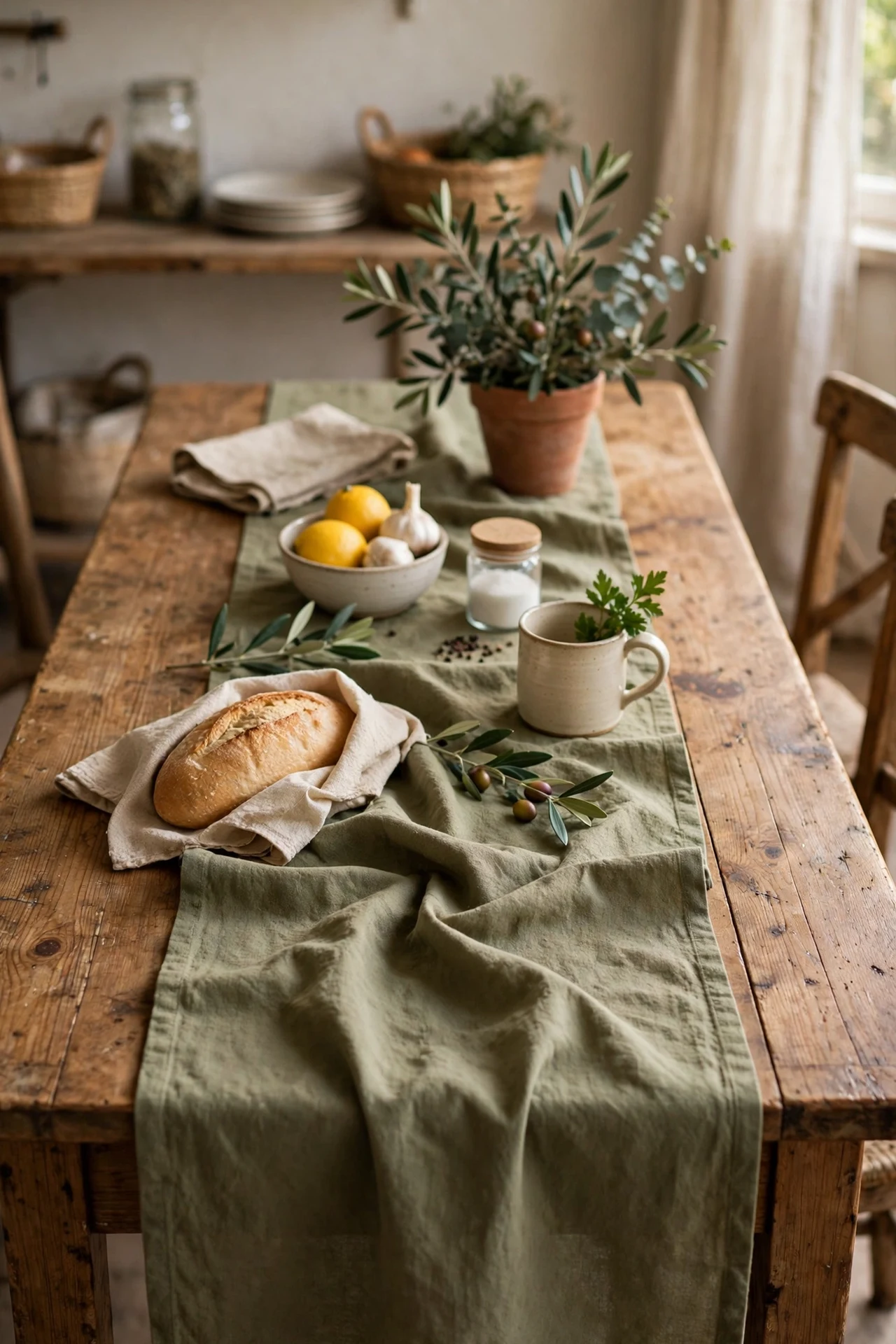
An olive table runner grounds a wooden or white table and ties in the green accents around the room. I cut mine from a length of olive cotton twill when ready-made runners were all the wrong size. Measure your table and add a twelve-inch drop at each end for a relaxed look. Hem the raw edges with iron-on tape if you don’t sew — it holds through plenty of washes. Layer a wooden board and a small vase on top so the runner reads as styling, not just cloth. The mistake to avoid is a runner that pools past the chair line; it catches on chairs every single meal.
Cost: ~$12 | Time: 40 minutes
8. Stack Up Olive Dish Towels
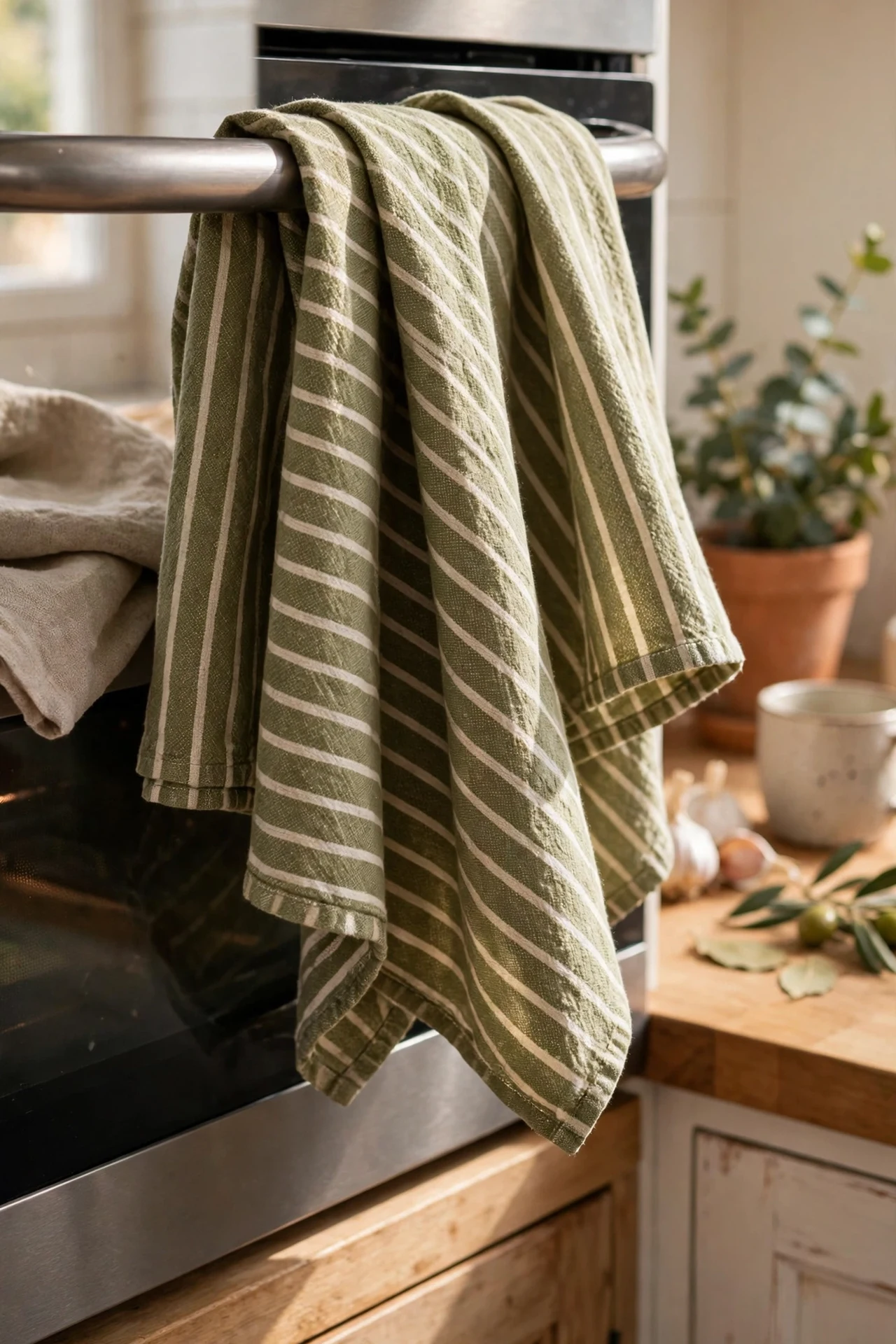
Olive dish towels folded on the oven handle are the cheapest colour injection on this list. I replaced my mismatched greys with a four-pack of olive-striped cotton towels and the stove corner looked deliberately styled. Choose 100% cotton for absorbency, fold each towel in thirds lengthwise, and drape two over the handle with the stripes lined up. Rotate them through the laundry so one doesn’t fade ahead of the others. Keep a plain white set for messy jobs so the olive ones stay crisp. The mistake to avoid is ironing them stiff — soft, slightly rumpled linen-cotton looks far more natural.
Cost: ~$9 | Time: 10 minutes
9. Add Olive Seat Cushions to Plain Chairs
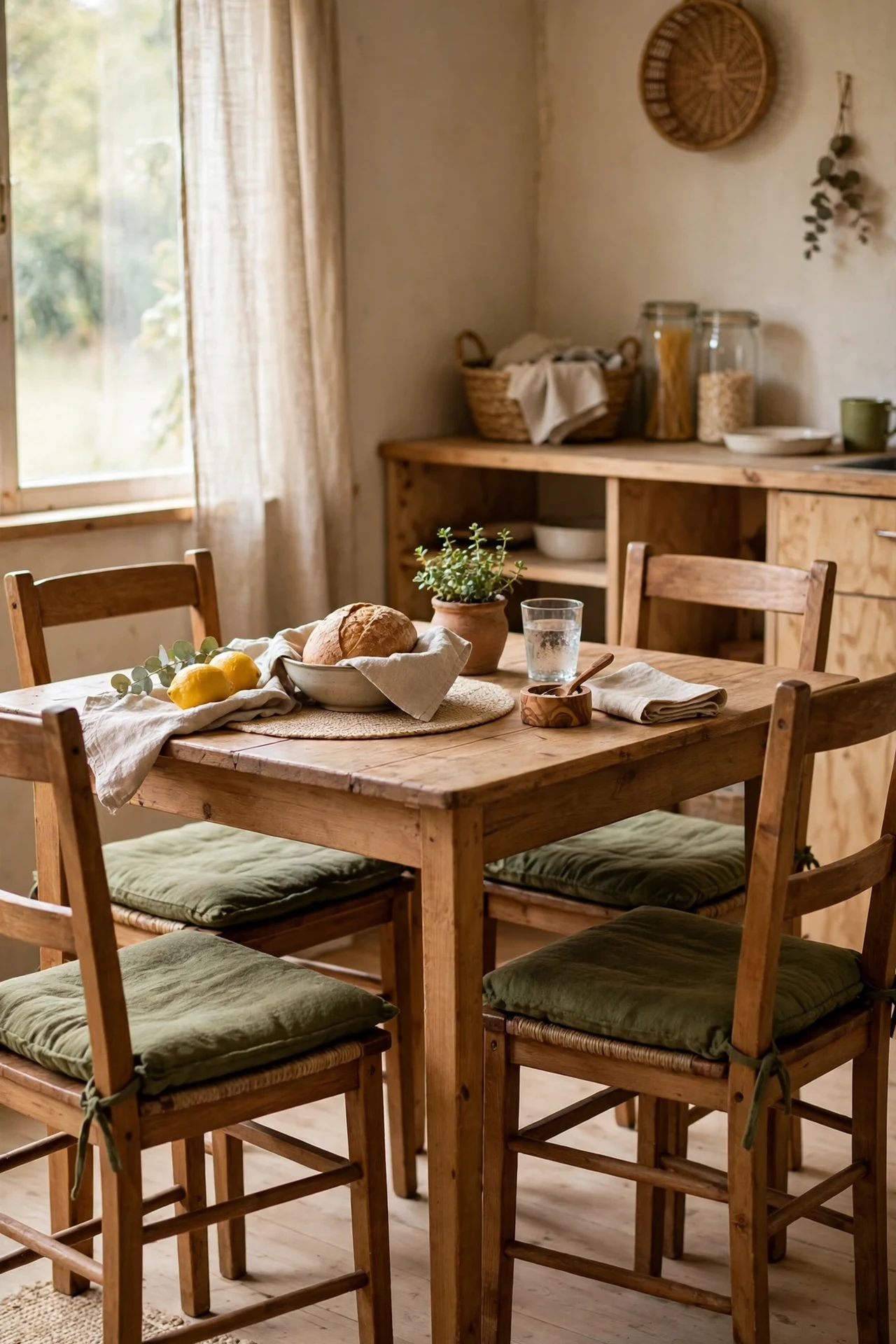
Olive seat cushions make hard dining chairs comfortable and pull the colour scheme right up to the table. I bought four plain foam cushions and covered them with olive canvas using a staple gun. Cut the fabric with two extra inches on every side, centre the cushion face-down, and staple the fabric taut, folding the corners like wrapping a parcel. Tie-on versions work if you’d rather skip the staple gun entirely. Fluff and rotate them monthly so the filling wears evenly. If your dining corner needs a fuller refresh, these (see also: small-kitchen-organization-ideas) pair well with it. The mistake to avoid is thin, cheap foam — it flattens in weeks, so buy the densest you can afford.
Cost: ~$22 | Time: 1 hour
10. Roll Out an Olive Braided Rug
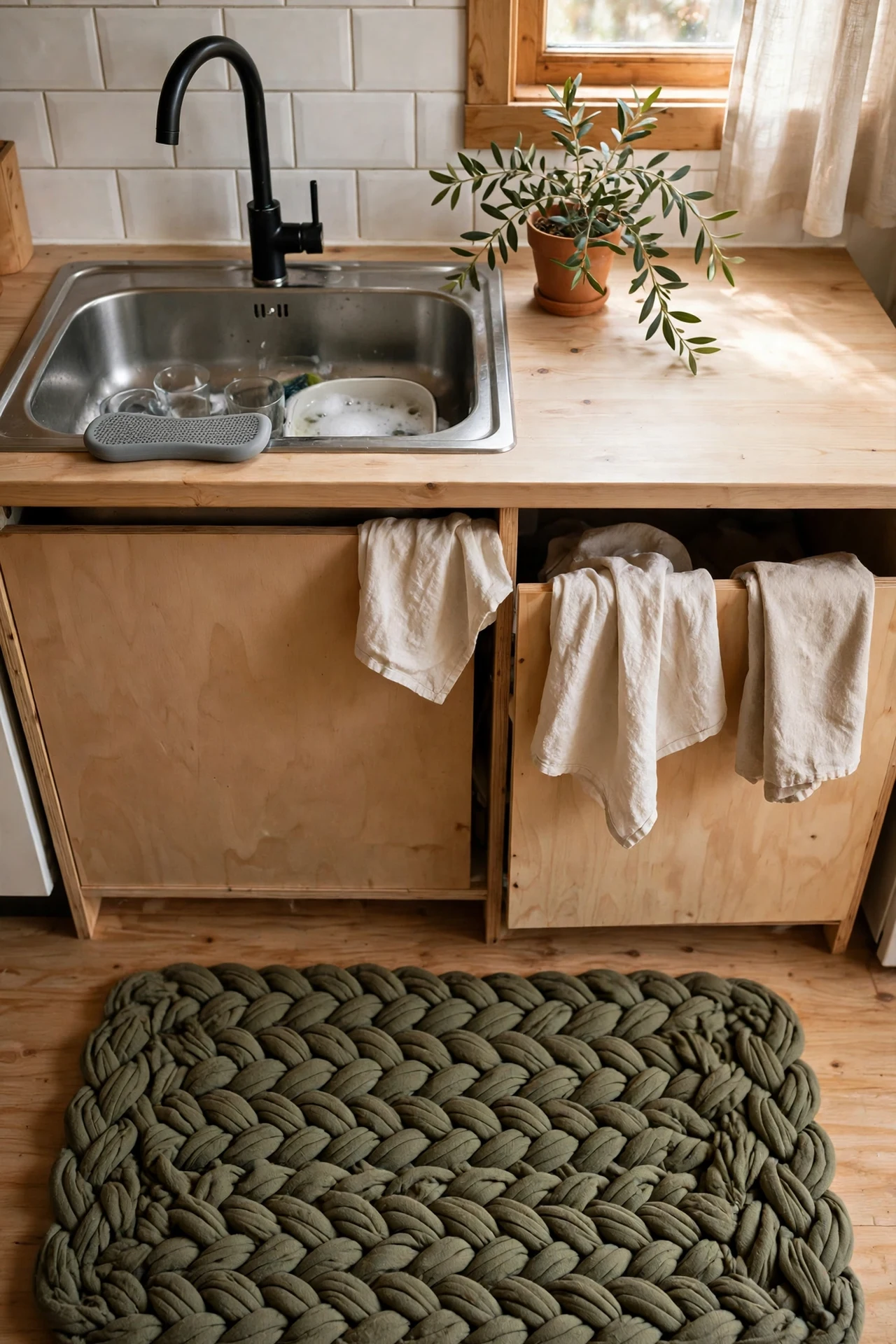
An olive braided rug in front of the sink softens the hardest-working spot in the kitchen. I laid a washable cotton braided rug there and it stopped my feet aching during long cooking sessions. Measure the space first and pick a rug that sits fully flat — curled edges are a trip hazard. Choose machine-washable cotton because kitchen rugs meet flour, oil, and everything in between. Wash it monthly and it will keep its colour for years. The mistake to avoid is skipping the non-slip pad; braided rugs wander on tile, and repositioning it daily gets old fast.
Cost: ~$25 | Time: 15 minutes
Styling Details That Finish the Look
11. Pot Herbs in Olive Green Planters
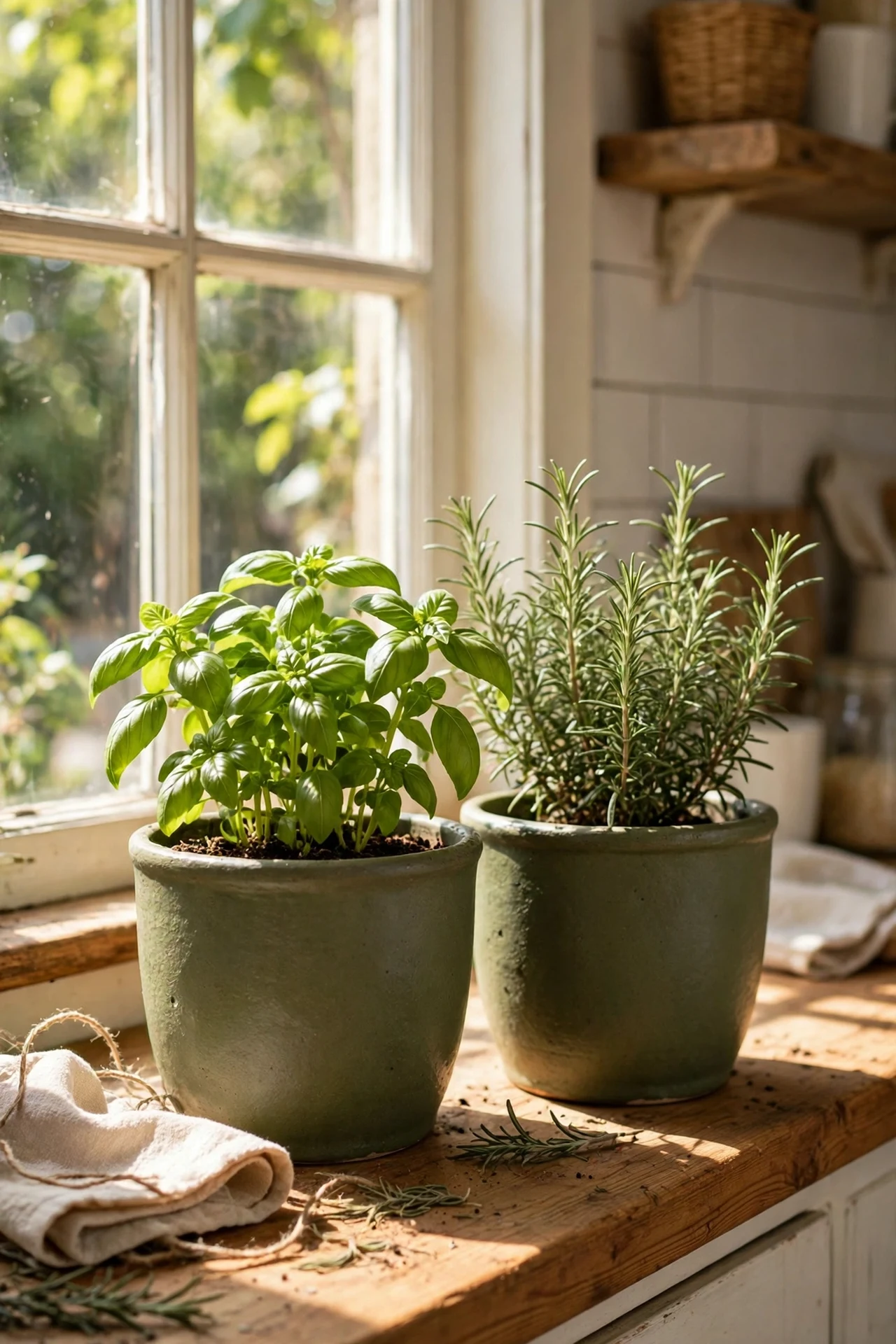
Olive green planters on the windowsill double as decor and a working herb garden. I potted basil, rosemary, and mint in matching olive pots and the sill went from bare to beautiful in twenty minutes. Buy pots with drainage holes and set a small saucer under each to protect the sill. Use a light potting mix and water only when the top inch feels dry — herbs hate soggy roots. Turn the pots weekly so the plants grow evenly toward the light. The mistake to avoid is planting mint in a shared pot; it bullies every other herb out within a month, so give it its own.
Cost: ~$10 | Time: 20 minutes
12. Paint Thrifted Frames Olive for Kitchen Art
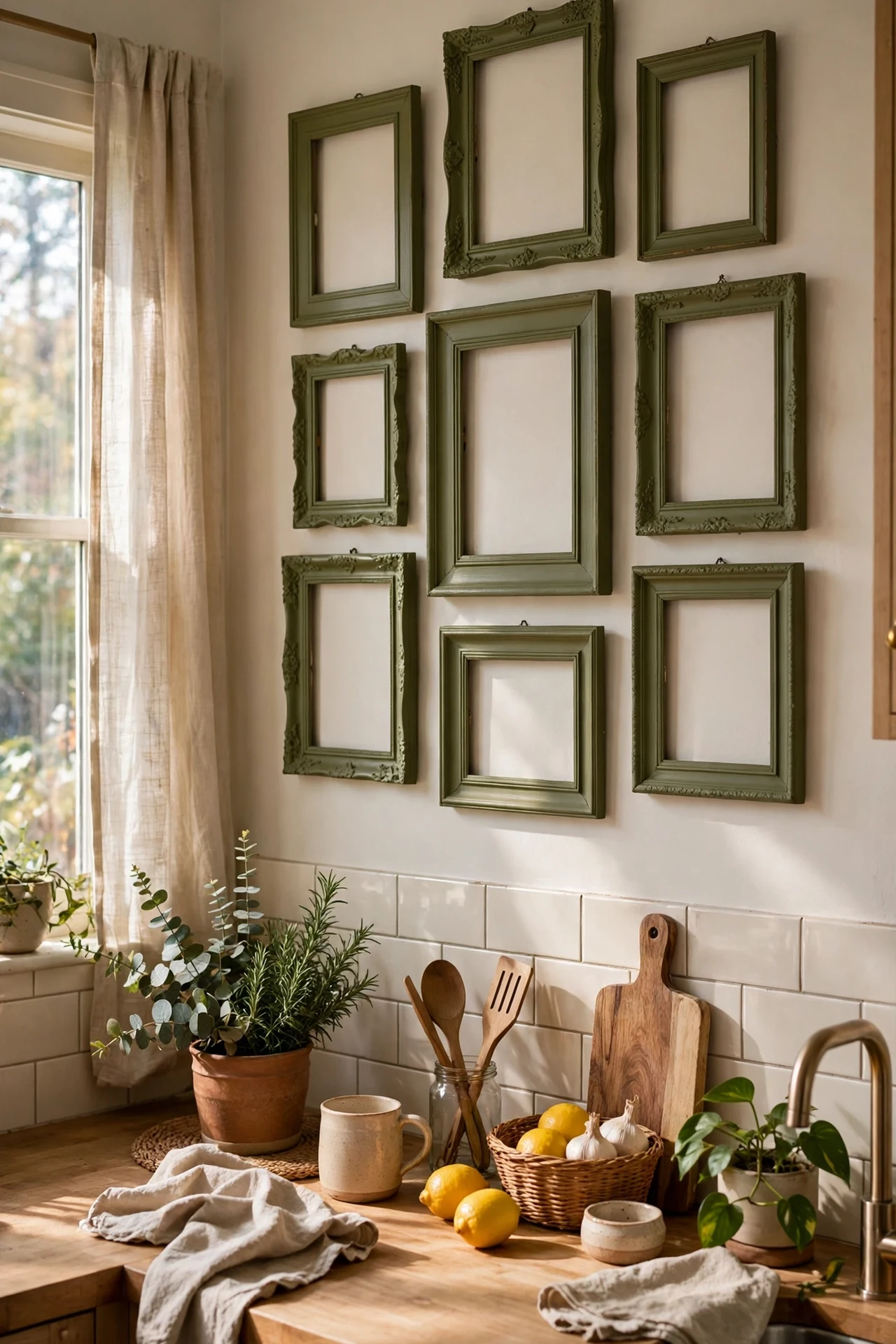
Thrifted frames painted olive green turn random prints into a coordinated gallery wall. I grabbed five mismatched wooden frames for a dollar each and a sample pot of olive paint unified them completely. Remove the glass and backs first, sand lightly, then brush on two thin coats of paint. Print free botanical illustrations at home or use pages from old cookbooks as the art. Hang them in a loose grid above the coffee station for an instant focal point. For the bigger picture of a cheap kitchen refresh, see these (see also: cheap-kitchen-makeover-ideas). The mistake to avoid is painting over ornate gilt without priming — the gold bleeds through in patches.
Cost: ~$12 | Time: 1 hour
13. Set an Olive Utensil Holder by the Stove
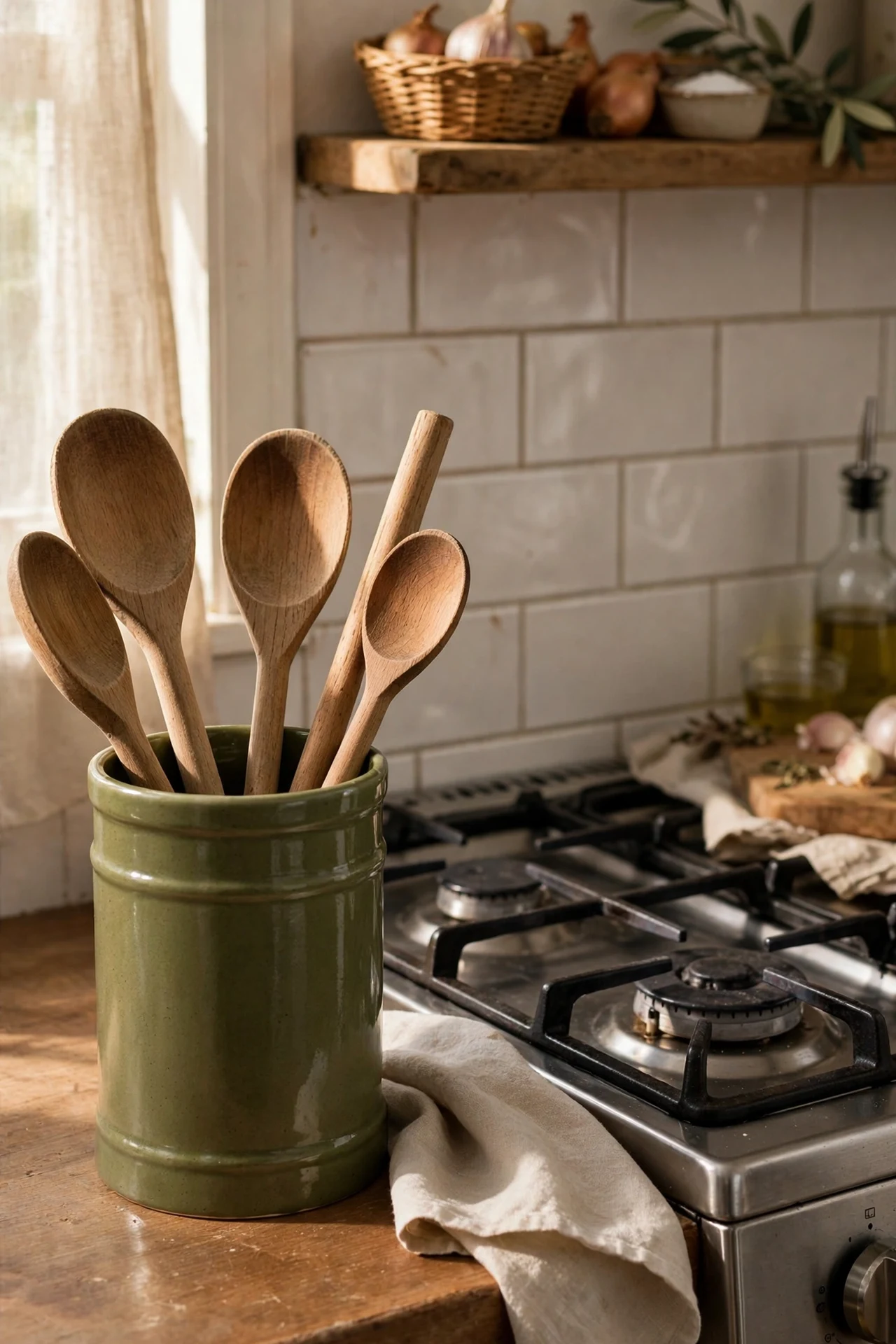
An olive utensil holder keeps wooden spoons and spatulas within reach while adding a hit of colour to the cooking zone. I swapped a chipped white holder for a matte olive one and the whole stove area felt more pulled together. Choose a wide, heavy base so it never tips when you yank out a whisk mid-cook. Fill it with wooden and silicone tools only — the warm materials sit beautifully against the green. Wipe it down monthly since cooking grease settles on everything near the hob. The mistake to avoid is cramming in every gadget you own; five well-chosen tools look styled, fifteen look like clutter.
Cost: ~$11 | Time: 10 minutes
14. Spray a Plain Pendant Shade Olive
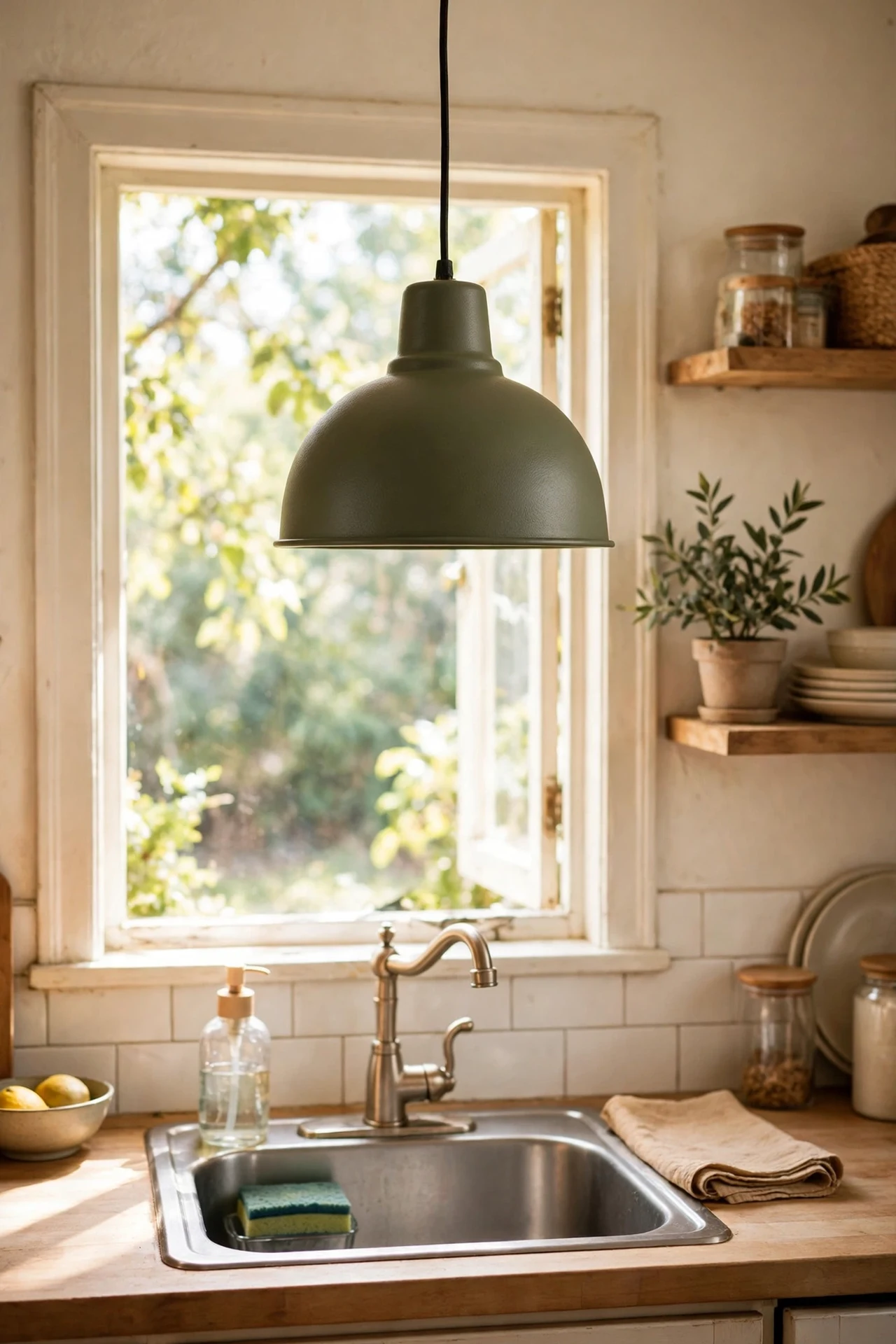
A matte olive pendant shade over the sink looks custom-made for the price of a can of spray paint. I transformed a boring white metal shade from a discount store in one afternoon. Switch the power off at the breaker and take the shade down so you can paint it outdoors. Sand it lightly, apply two thin coats of olive enamel, and leave it to cure for a full day before rehanging. Keep the inside white so it still throws light downward where you need it. The mistake to avoid is regular wall paint on metal — heat and handling chip it fast, so enamel is non-negotiable.
Cost: ~$14 | Time: 1 hour
15. Label Jars With Olive Chalkboard Tags
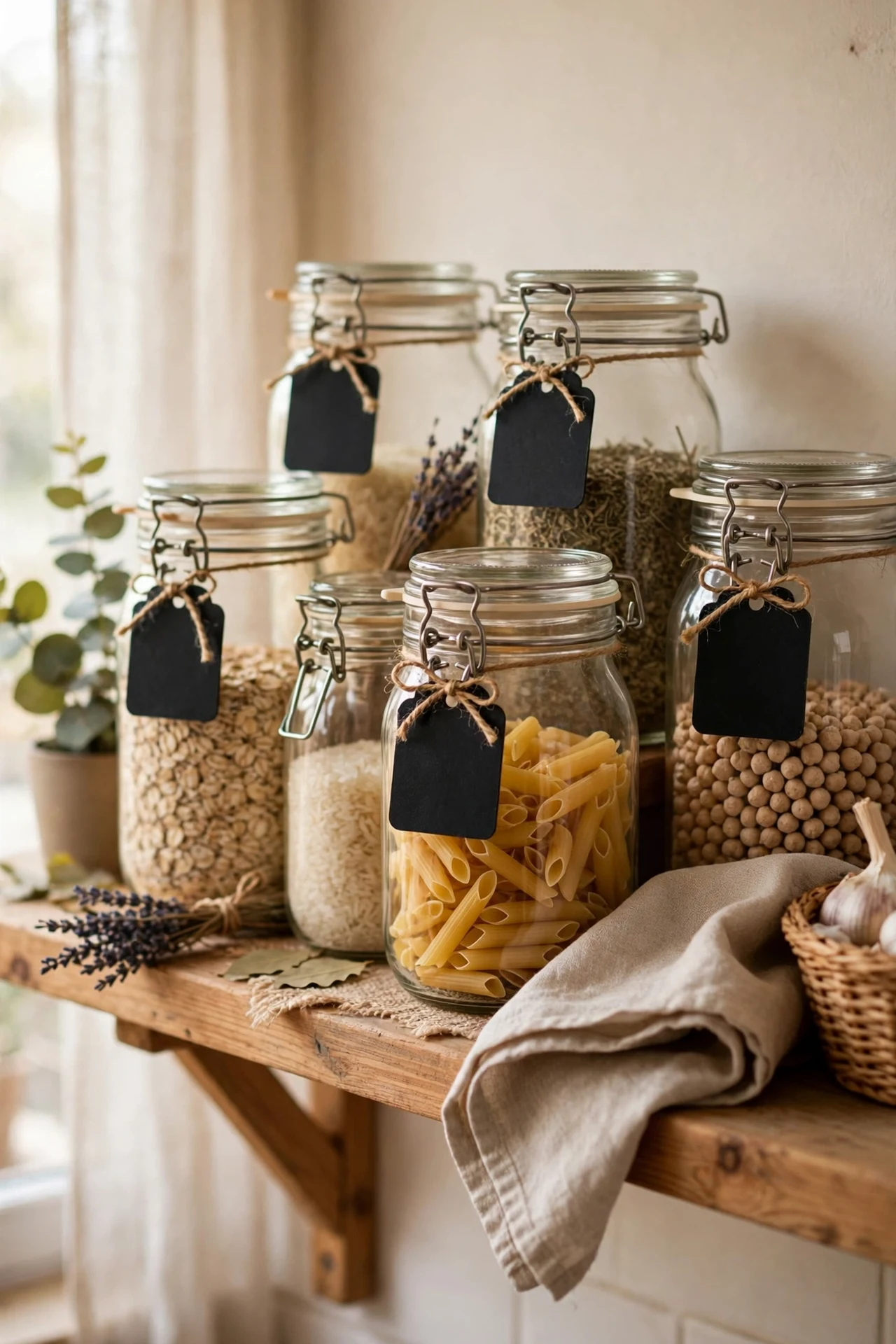
Olive chalkboard tags tied onto jars and canisters add a farmhouse touch for almost nothing. I tied them onto my flour, sugar, and coffee jars with natural twine and the pantry shelf suddenly looked curated. Buy a pack of blank chalkboard tags and write each label with a chalk pen, which wipes clean when the contents change. Punch-hole twine through the tag and loop it around the jar neck, knotting it at the back. Season each tag with a chalk rub first so the first label doesn’t ghost. The mistake to avoid is using permanent marker on the tags — the whole point is rewriting them when jars get repurposed.
Cost: ~$7 | Time: 25 minutes
Save this one to your kitchen board — you’ll want it when you repaint.
Olive green rewards the brave and the thrifty in equal measure, so pick the idea that made you smile and start there this weekend. Your kitchen will feel calmer, warmer, and far more expensive than it was.
