17 Charcoal Gray Kitchen Ideas That Feel Fresh
I’ll be honest — I used to think charcoal gray kitchens would feel like cooking inside a cave. Then I stayed with my sister last winter, and her tiny charcoal gray kitchen felt anything but gloomy: warm wood, brass handles, and morning light bouncing off pale counters. Charcoal gray kitchen ideas have this strange magic of looking both dramatic and calm at the same time. Here are seventeen ways to get the look, from full cabinetry commits to small touches that only whisper gray.
1. Two-Tone Cabinets: Charcoal Below, White Above
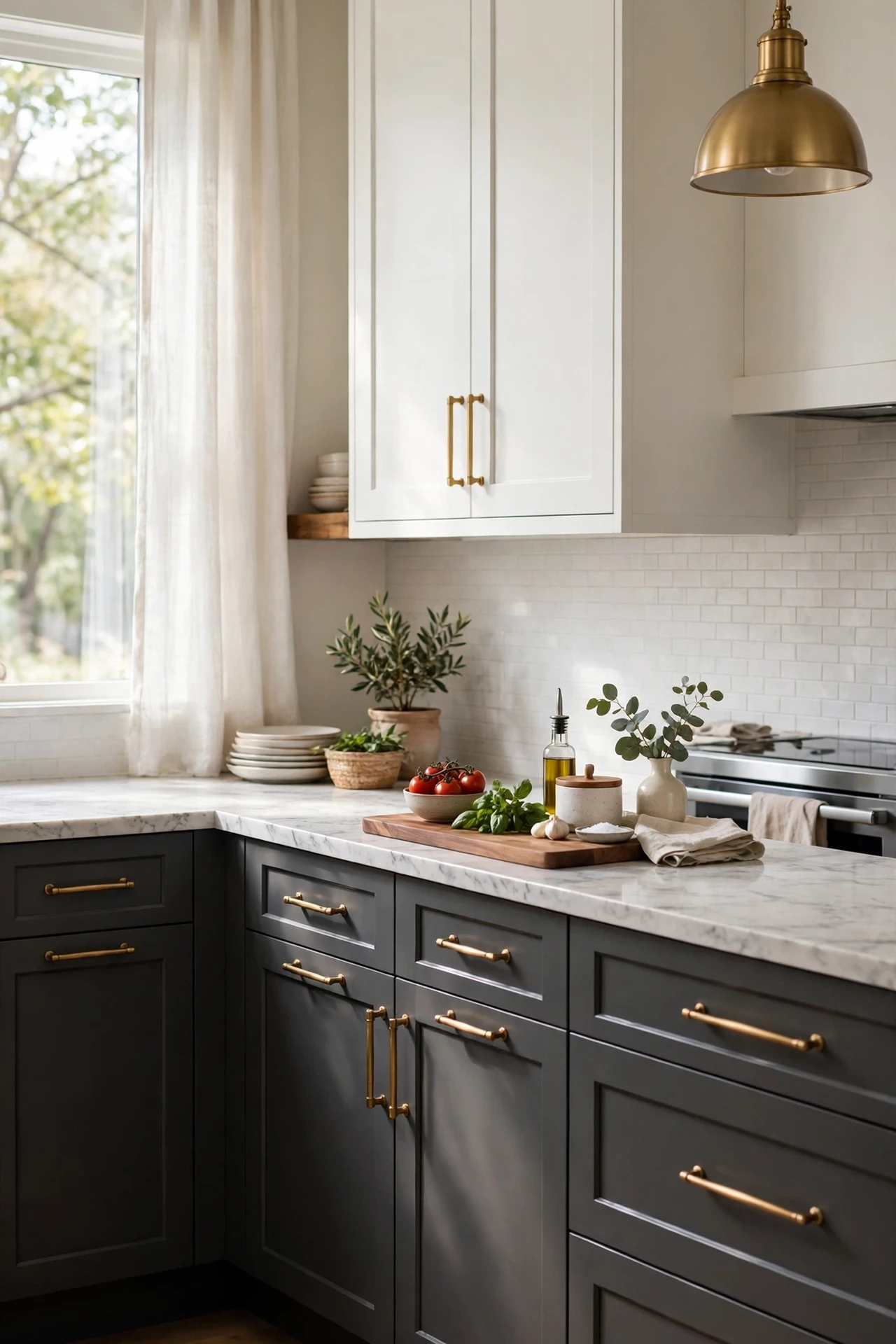
If painting everything dark feels too bold, split the difference. Charcoal lower cabinets ground the room and hide every splash and scuff, while white or cream uppers keep the eye-level space bright and open. Start by choosing a charcoal with warm undertones so it sits happily next to your existing whites, then paint just the lower boxes and doors first — you can always extend the colour later. Add simple brushed-brass or matte-black pulls and the whole kitchen looks designed rather than improvised. I tried this exact split in a rental-friendly way with peel-and-stick panels on the lowers first. The mistake to avoid is picking a charcoal that’s nearly black with blue undertones — it can look cold and flat under warm kitchen lighting.
Cost: ~$60 | Time: 1 weekend
2. Charcoal Gray Walls with Open Wooden Shelves
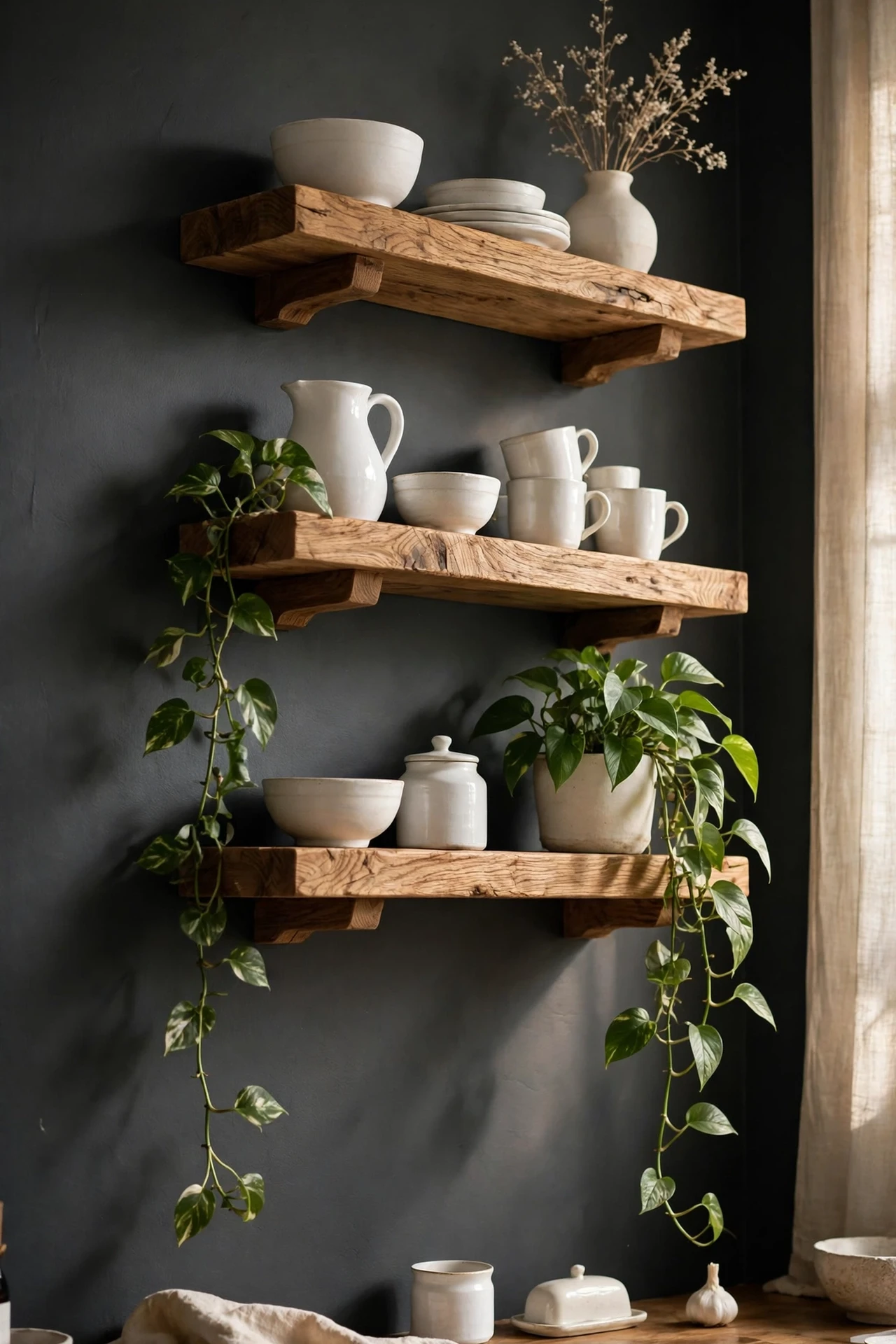
Paint is the cheapest way to test-drive charcoal, and one accent wall behind open wooden shelves is pure drama. Sand and clean the wall first, roll on two coats of a matte charcoal, then mount chunky oak or pine shelves and style them with white ceramics and a trailing plant. The pale wood warms the gray instantly, and the open shelves stop the dark wall from feeling heavy. I painted a single wall in my old flat’s kitchen and visitors assumed I’d hired a designer. The mistake to avoid is using glossy paint — flat or eggshell absorbs light softly, while gloss bounces it around and makes charcoal look harsh.
Pro tip: Test your charcoal swatch next to the shelves’ wood tone first — gray can pull green or blue against certain oaks.
Cost: ~$45 | Time: 1 day
3. A Charcoal Gray Island as the Room’s Anchor
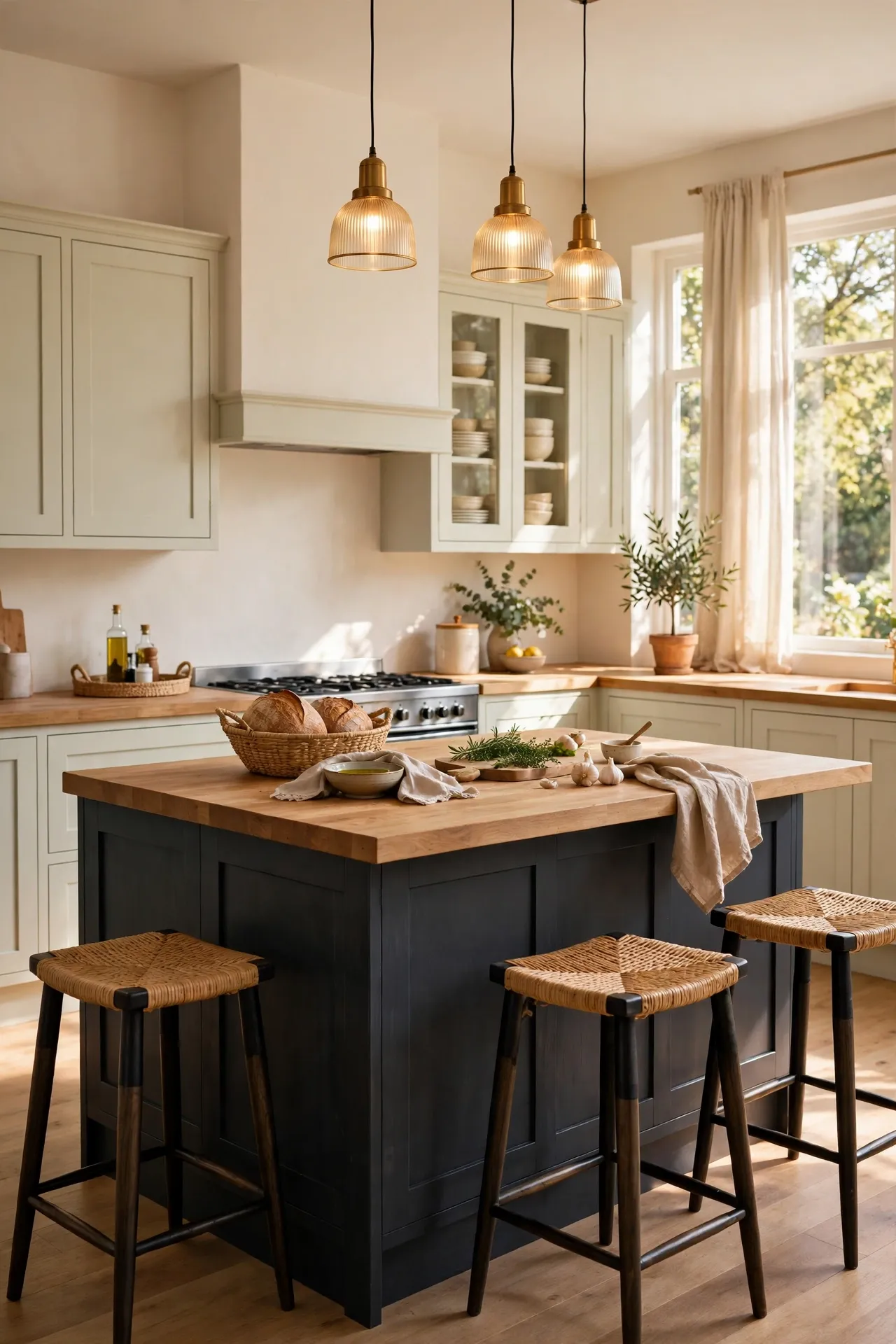
When the whole kitchen in charcoal feels like too much, let the island carry the colour alone. Paint or order the island in a deep charcoal while the perimeter cabinets stay light, and the island becomes a natural focal point that draws the eye without overwhelming the room. Work a waterfall edge or a chunky wooden top to make it feel like furniture, and choose bar stools in a pale timber or cream to keep it balanced. I helped a friend paint her island charcoal on a Sunday and it changed the entire kitchen’s personality overnight. The mistake to avoid is stopping at the paint — unpainted island sides look unfinished, so take the colour all the way round, including the back panels.
Cost: ~$50 | Time: 1 weekend
4. Charcoal Cabinets with Butcher-Block Counters
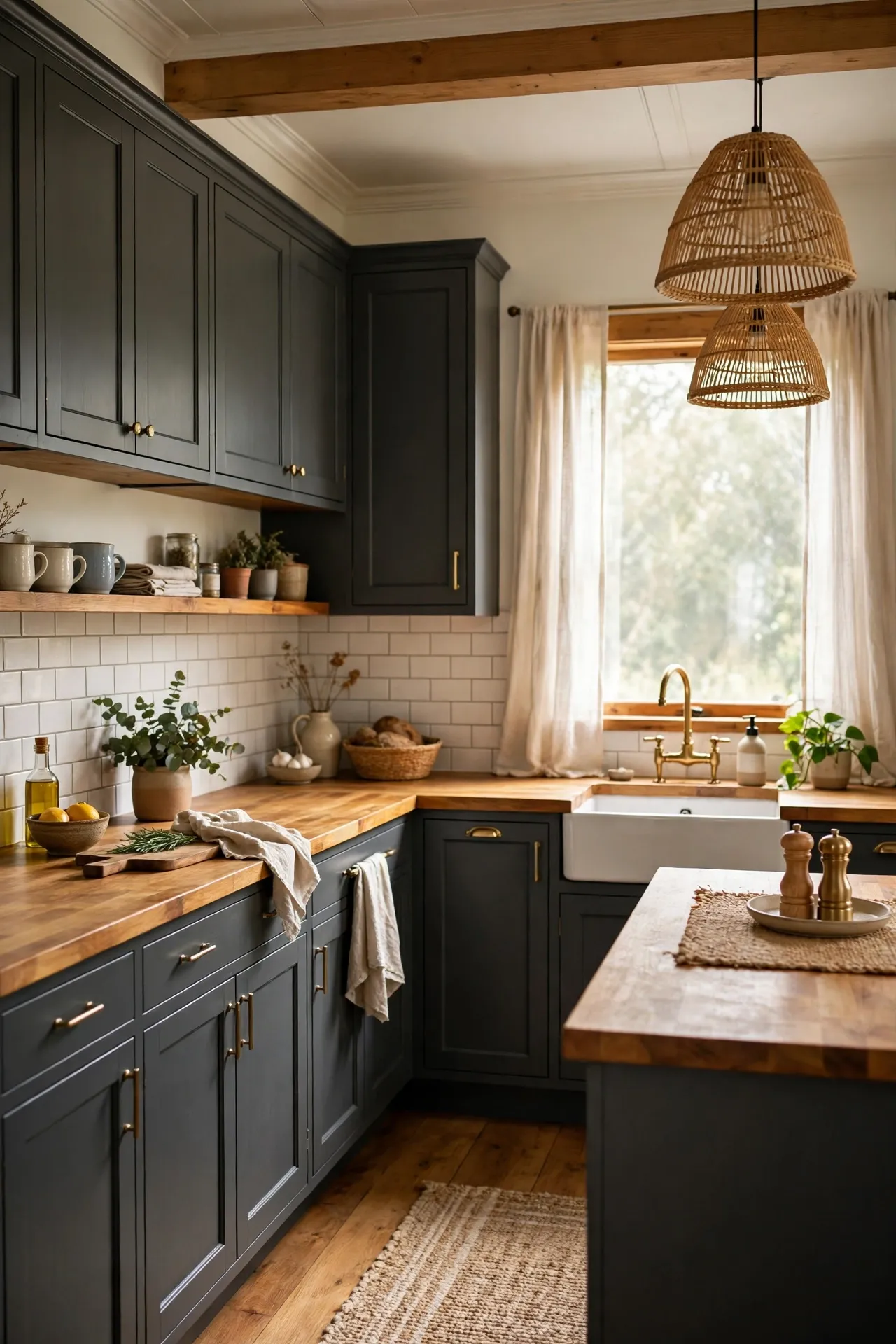
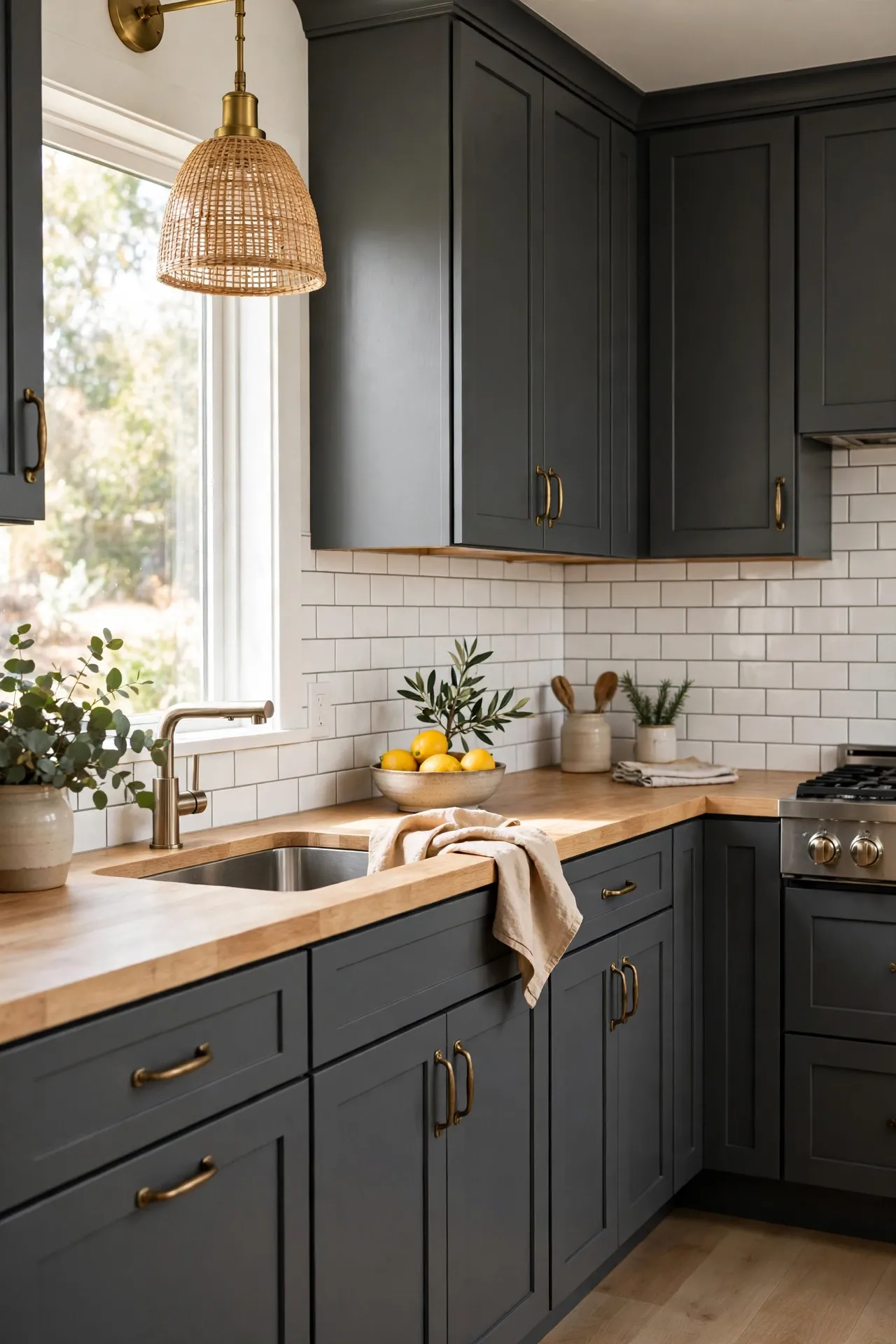
There’s something about warm timber against dark gray that never misses. Pair full charcoal cabinetry with butcher-block counters and you get a kitchen that feels both modern and cottage-warm. Seal the wood properly with food-safe oil before it sees a single onion, then maintain it with a monthly re-oil so it stays honey-toned rather than drying gray. Keep the splashback simple — pale tile or beadboard — so the two star materials have room to breathe. I oiled a friend’s block counter for her and watched it go from dull to glowing in ten minutes. The mistake to avoid is letting water sit on the wood; wipe spills promptly or you’ll get dark rings that take serious sanding to remove.
Cost: ~$180 | Time: 1 weekend
5. Brass Handles and Taps on Charcoal Cabinetry
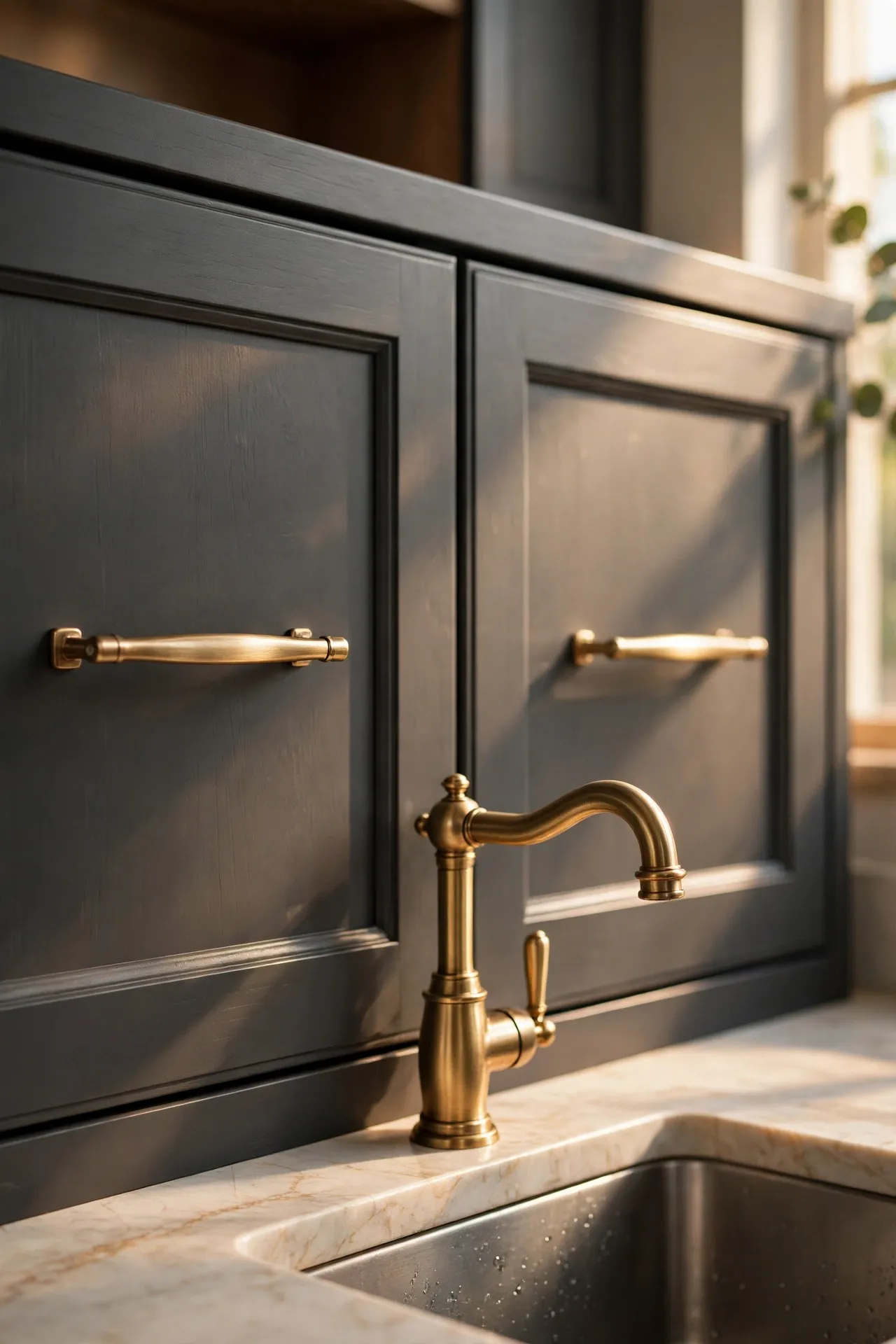
Brass against charcoal is one of those pairings that looks expensive at any budget. Swap out tired chrome handles for brushed-brass bar pulls, and if the budget stretches, add a brass-look tap — even the affordable ones photograph beautifully. Measure your existing handle centres before ordering so everything lines up with the old holes, then change handles first and live with them a week before committing to the tap. I did this swap in under two hours and it was the single biggest glow-up of my kitchen. The mistake to avoid is mixing metals carelessly — pick brass as your one warm metal and keep everything else, like hinges and shelf brackets, in matching tones. For more budget hardware wins, these (see also: 23-farmhouse-kitchen-ideas-that-dont-break-the-bank) have a whole section on it.
Pro tip: Brushed and aged brass hides fingerprints far better than polished brass — worth it in a busy family kitchen.
Cost: ~$40 | Time: 2 hours
6. Marble-Look Laminate Counters with Gray Cabinets
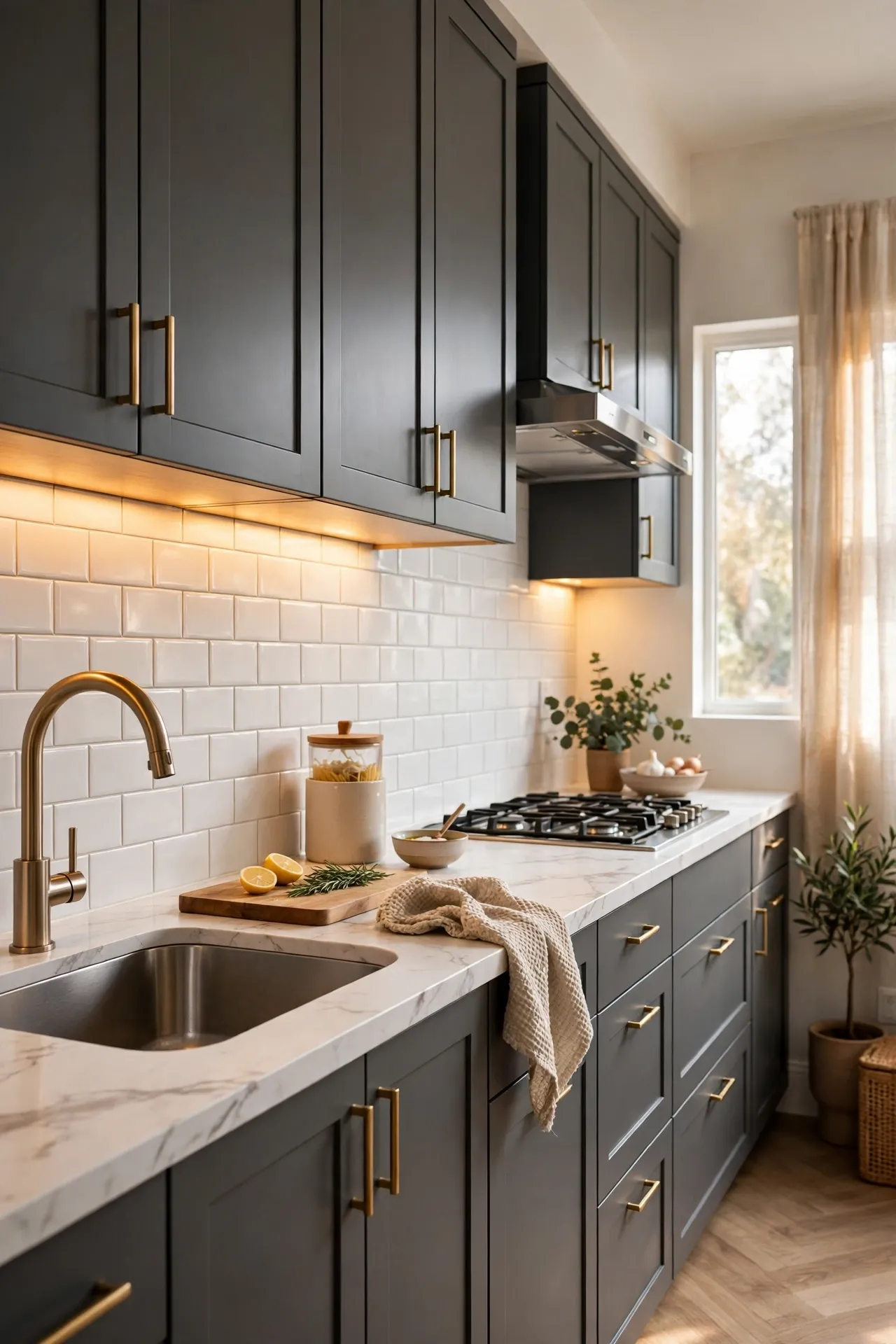
Real marble and a budget rarely share a sentence, but marble-look laminate gets you 90% of the drama for a fraction of the price. The soft veining lights up charcoal cabinets beautifully, especially under warm under-cabinet lighting. Order the laminate with a square or eased edge so it reads modern rather than dated, and keep the colourway cool-toned to match the gray. I once covered a truly grim laminate with a marble-effect overlay for a landlord special and nobody believed it wasn’t new. The mistake to avoid is choosing a pattern with huge dramatic veining for a small kitchen — it can look busy fast; smaller, softer veins suit compact spaces better.
Cost: ~$150 | Time: 1 day
7. White Subway Tile Splashback Against Charcoal
Some combinations are classics for a reason, and white subway tile against charcoal cabinets is one of them. The crisp white grout lines add texture and rhythm that stops the dark cabinetry from feeling flat, while the pale tile bounces light exactly where you chop and prep. Run the tile to the ceiling behind the hob for extra drama, or keep it at a standard height for a calmer look. I helped tile a friend’s splashback over a long weekend and the contrast with her charcoal units was genuinely stunning. The mistake to avoid is bright white grout on the worktop-adjacent rows — it stains faster than you’d think, so choose a light gray grout there and save the crisp white for above eye level.
Cost: ~$90 | Time: 1 weekend
8. Charcoal Gray with Sage Green Accents
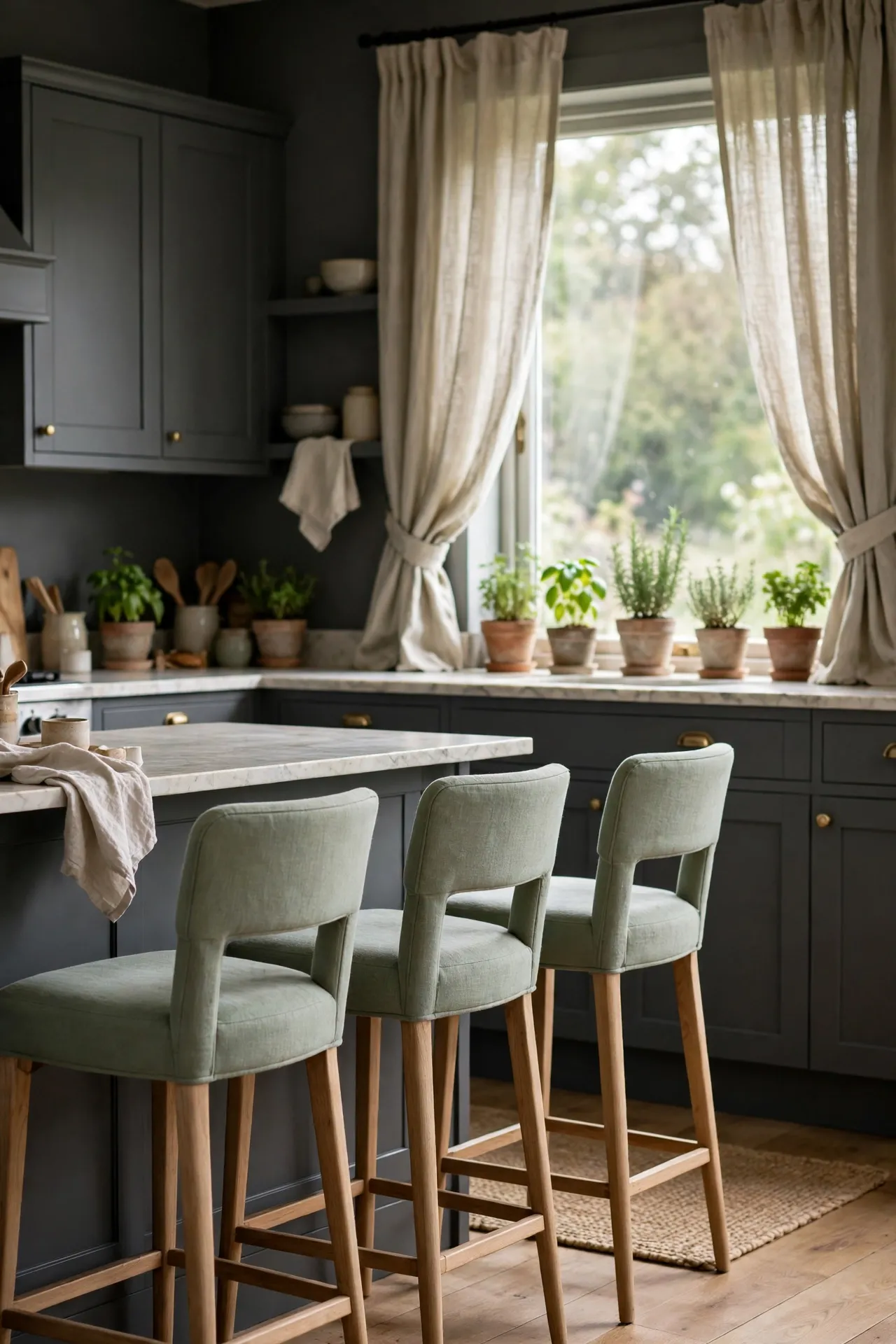
Gray and sage are the quiet couple of the kitchen world — neither shouts, but together they hum. Keep the charcoal as your base on cabinets or walls, then layer sage through bar stools, a painted dresser, Roman blinds, or even just a row of potted herbs on the sill. The green stops the gray from feeling industrial and brings a soft, gardeny calm to the room. I added sage linen curtains to my sister’s charcoal kitchen and the whole space exhaled. The mistake to avoid is going half-hearted — one tiny sage plant won’t register, so repeat the green in at least three spots for it to feel intentional.
Pro tip: Sage looks best in natural fabrics and matte finishes — shiny sage plastic is the fastest way to cheapen the whole scheme.
Cost: ~$70 | Time: 1 afternoon
9. Warm Wood Floors to Balance the Cool Gray
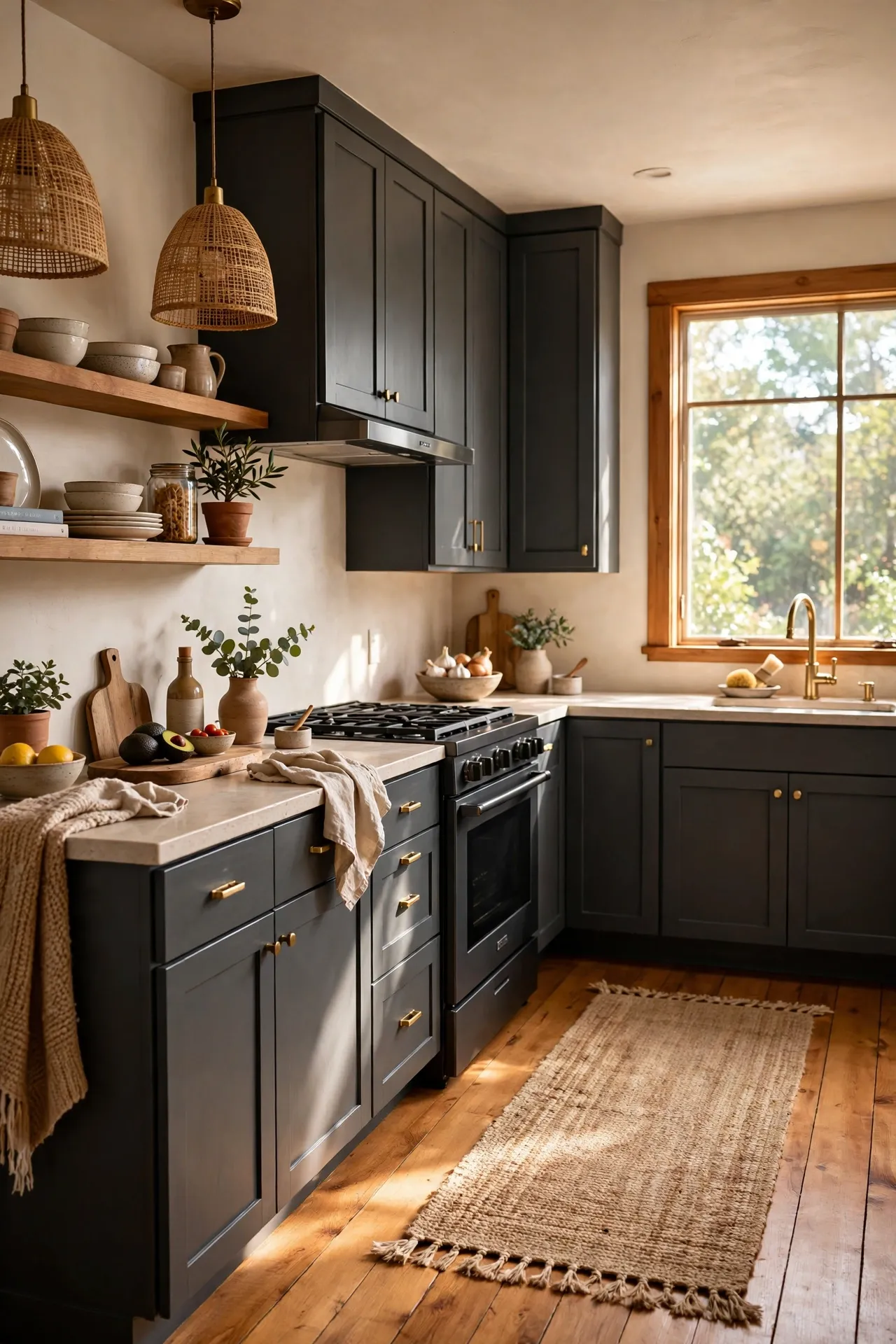
Charcoal kitchens live or die by their floors. Pale or honey-toned wood underfoot warms the whole room and keeps the gray feeling cosy rather than stark, while the dark cabinetry makes the wood grain look richer by contrast. If replacing floors is out of budget, a large jute or flatweave runner in natural tones does a surprisingly good job of warming things up. I laid a secondhand jute runner in a friend’s gray galley kitchen and it pulled the entire scheme together. The mistake to avoid is pairing charcoal with gray-washed or ashy floors — gray on gray can turn the room monochrome and lifeless instead of layered.
Cost: ~$80 | Time: 2 hours
10. A Charcoal Range Hood as the Focal Point
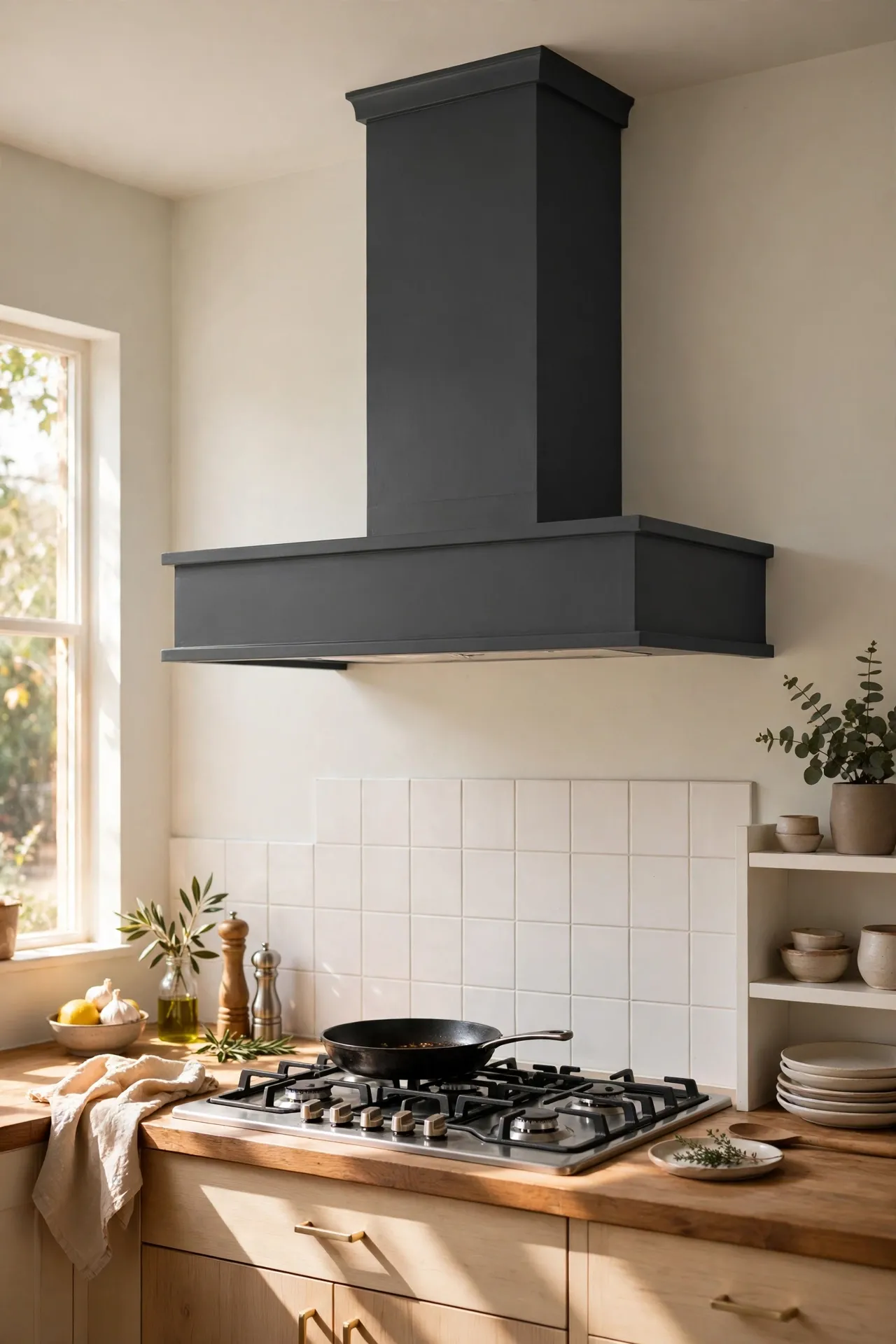
Even if your cabinets stay pale, a charcoal range hood gives you the drama of dark gray in one confident gesture. Paint a standard hood in heat-safe charcoal paint, or clad a boxy extractor in MDF panels painted to match, and it becomes the kitchen’s exclamation mark. Keep everything around it quiet — pale walls, simple tile — so the hood owns the spotlight. I saw this done in a farmhouse-style kitchen and it looked like something from a magazine. The mistake to avoid is forgetting ventilation clearance; check your extractor’s manual for minimum distances before you box anything in, because paint and panels can’t block airflow.
Cost: ~$55 | Time: 1 day
11. Charcoal Open Shelves Styled with White Dishes
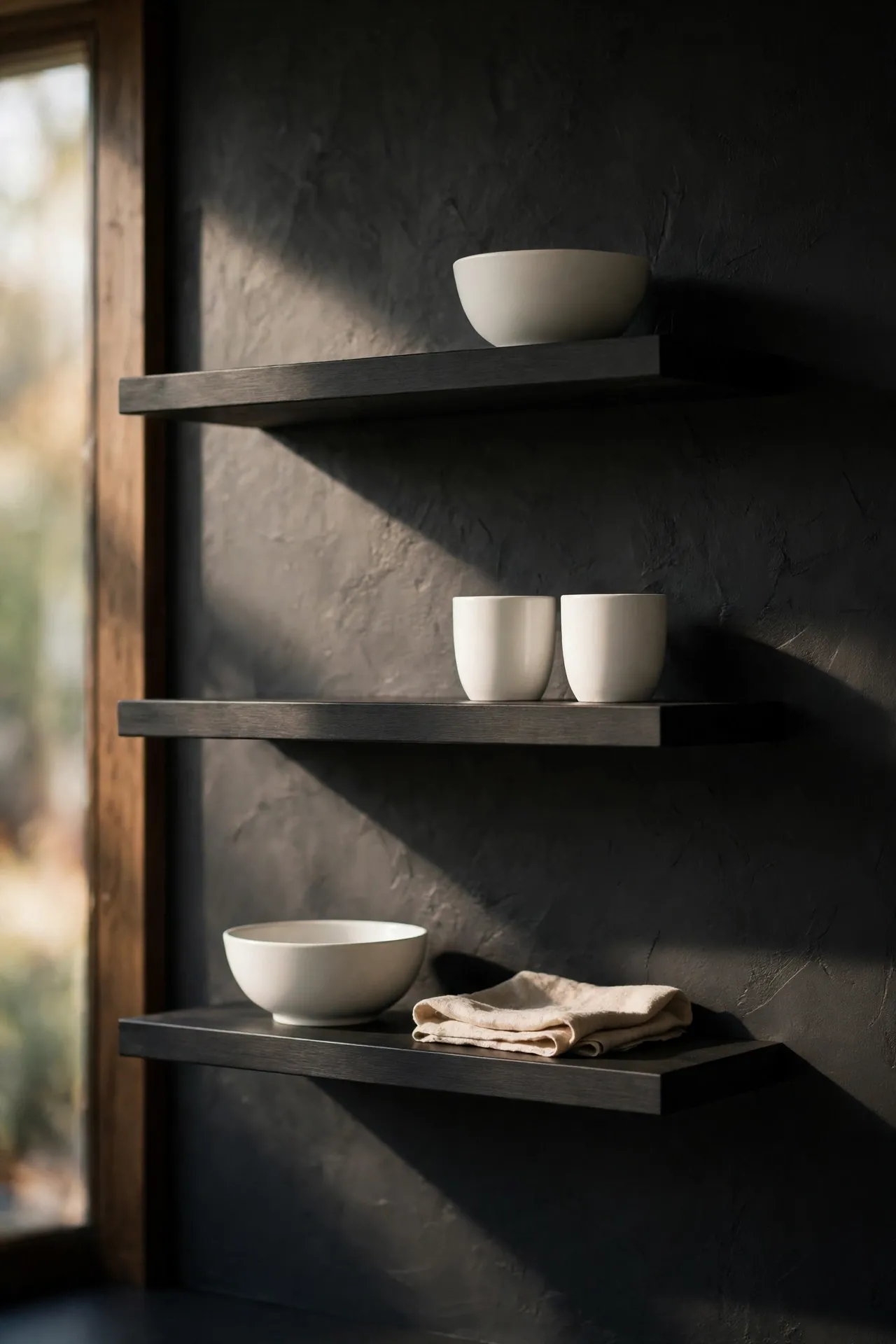
Dark shelves with pale dishes are pure contrast magic. Paint floating shelves charcoal or buy dark-stained timber, then style them with nothing but white and cream ceramics so the shelves read as shadow and the dishes as light. Keep the styling sparse — a stack of bowls, a row of mugs, one small plant — because dark shelves show dust and clutter more honestly than pale ones. I restyled my own shelves this way after years of mismatched everything and the difference was startling. The mistake to avoid is overloading them; crowded dark shelves look heavy fast, so leave generous breathing room between groups.
Pro tip: Wipe dark shelves with a damp microfibre weekly — dust shows on charcoal within days, and a quick pass keeps them looking sharp.
Cost: ~$35 | Time: 3 hours
12. A Single Charcoal Accent Wall in a Small Kitchen
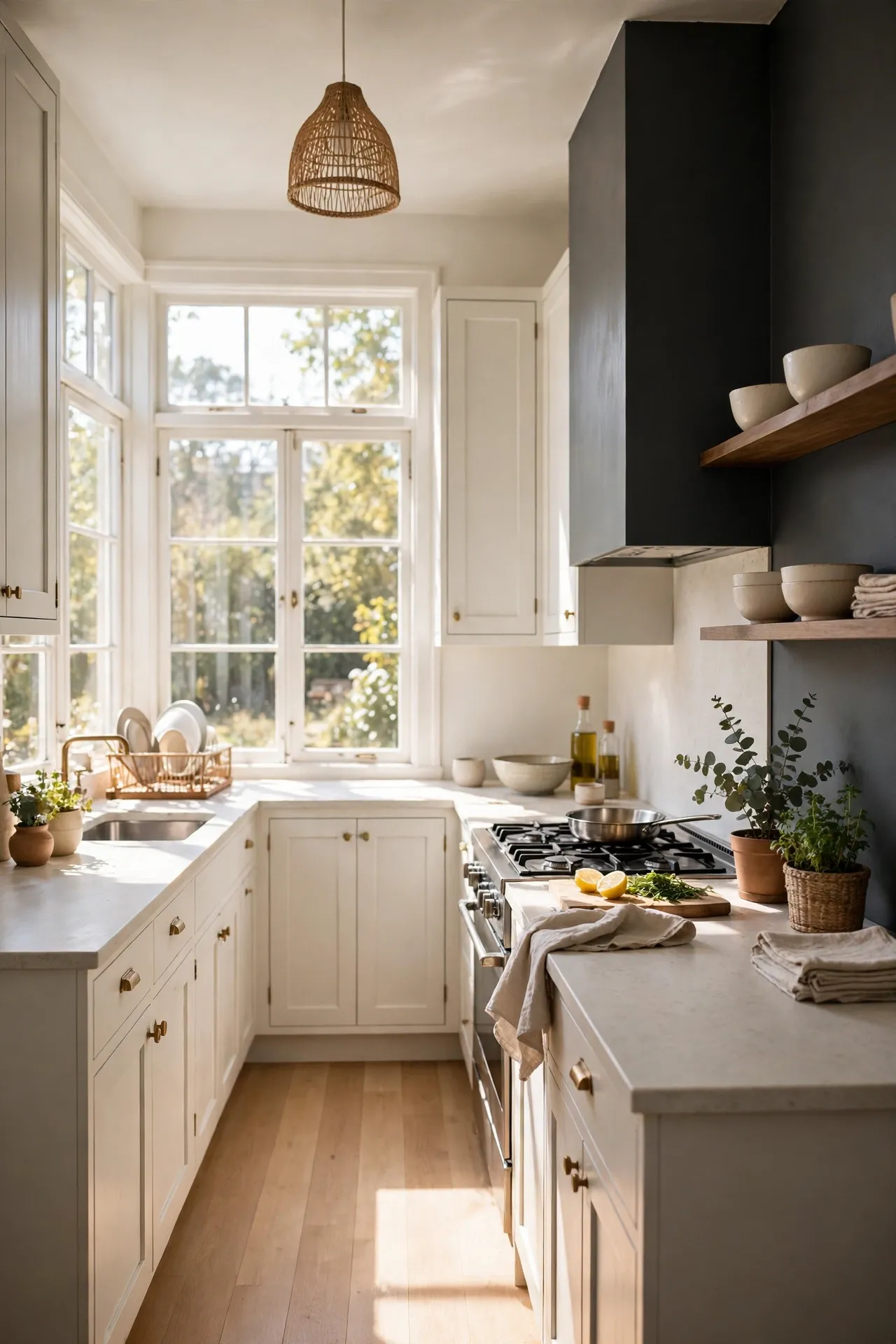
Small kitchens and dark colours can absolutely coexist — the trick is restraint. Paint just one wall charcoal, ideally the one furthest from the window so the light still floods in, and keep every other surface pale. The dark wall adds depth and makes the room feel intentionally designed rather than cramped. Pair it with pale counters, light flooring, and a mirror or glossy tile to bounce the daylight around. I painted the far wall of my first tiny kitchen charcoal and guests always asked if I’d knocked a wall out. The mistake to avoid is painting the window wall — it swallows the light before it enters and the room will feel smaller, not deeper. For more small-space tricks, see (see also: 15-small-kitchen-ideas-that-feel-twice-as-big).
Cost: ~$30 | Time: 1 afternoon
13. Black and Brass Pendants Over a Charcoal Island
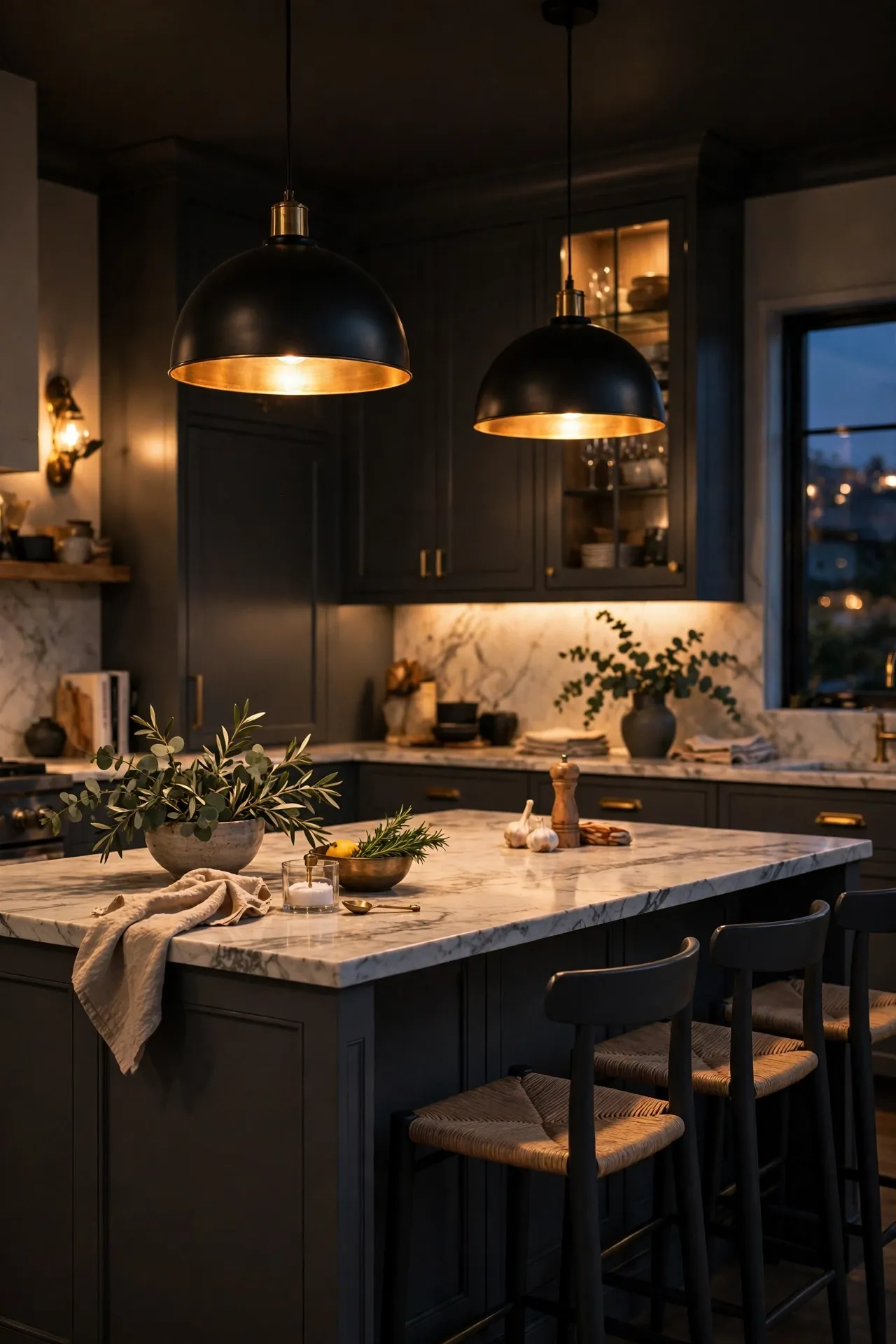
Lighting is where a charcoal kitchen earns its evening glow. Hang two or three black pendants with brass interiors over the island and they become jewellery for the room — the dark exteriors blend into the gray while the brass insides throw warm pools of light onto the worktop. Keep the shades simple: domes, cones, or classic factory shapes all work. Hang them low enough to feel intimate but high enough to see under — about 75–90 cm above the worktop is the sweet spot. I swapped plain flush lights for pendants in my own kitchen and suddenly wanted to cook dinner every night. The mistake to avoid is going too small; undersized pendants look lost over a big island, so size up rather than down.
Cost: ~$90 | Time: 2 hours
14. Charcoal Textiles: Runners, Curtains, and Seat Pads
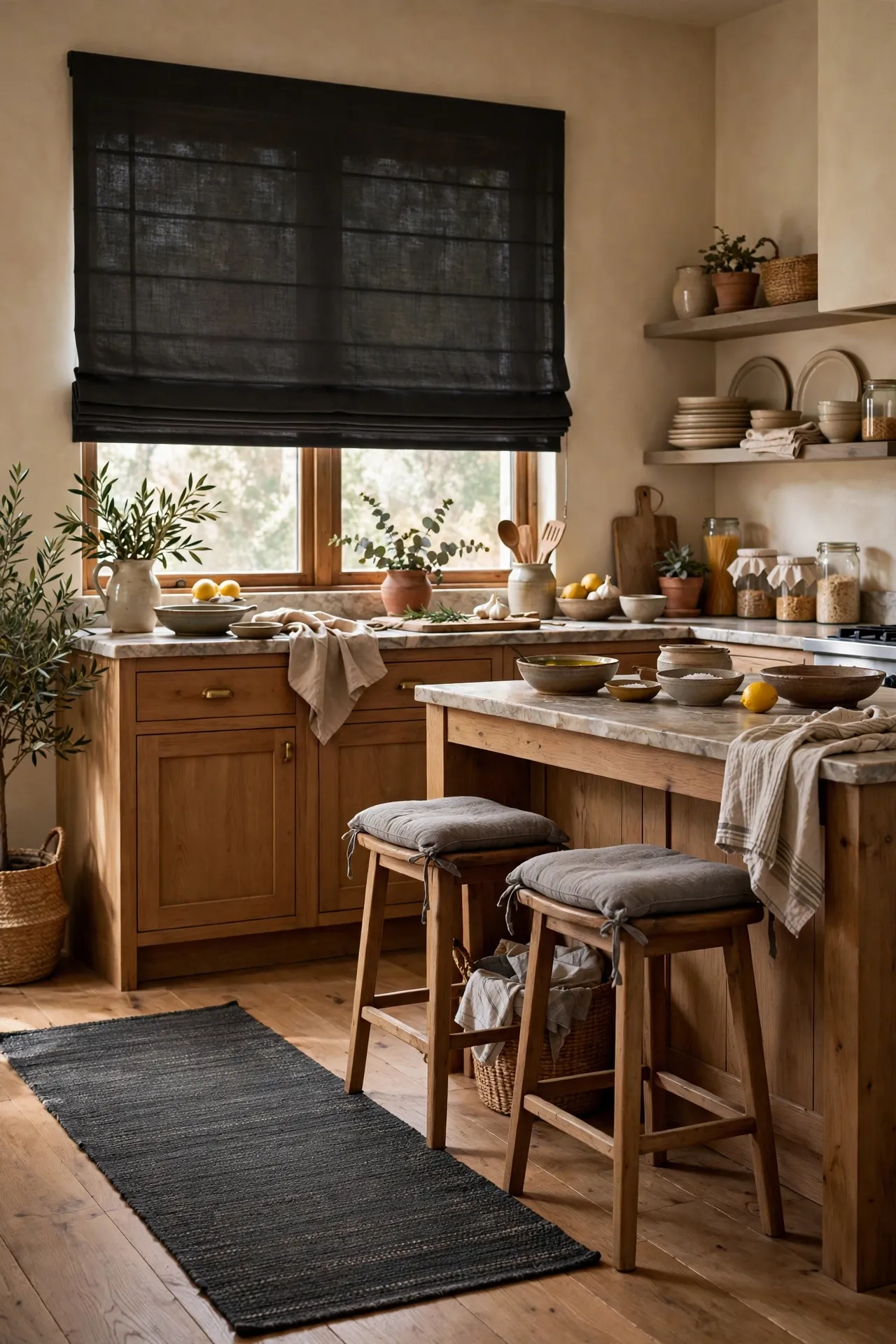
Not ready to paint a thing? Charcoal textiles give you the colour in the most commitment-free form. A dark runner softens hard floors, charcoal Roman blinds frame the window without blocking light, and dark seat pads on bar stools tie everything together. Because fabric is easy to swap, you can test whether the gray suits your light before touching a paintbrush. I started with just a runner and blinds, and they stayed — the kitchen felt instantly more pulled together. The mistake to avoid is buying everything in the exact same shade; mix two or three charcoal tones so the textiles look layered rather than matchy-matchy. Pair with (see also: 19-kitchen-counter-decor-ideas-that-look-styled-not-cluttered) styling for the full effect.
Pro tip: Washable charcoal runners are worth every penny — kitchen floors see spills daily and being able to throw the runner in the wash is a lifesaver.
Cost: ~$65 | Time: 1 hour
15. Charcoal Gray Shiplap or Beadboard Splashback
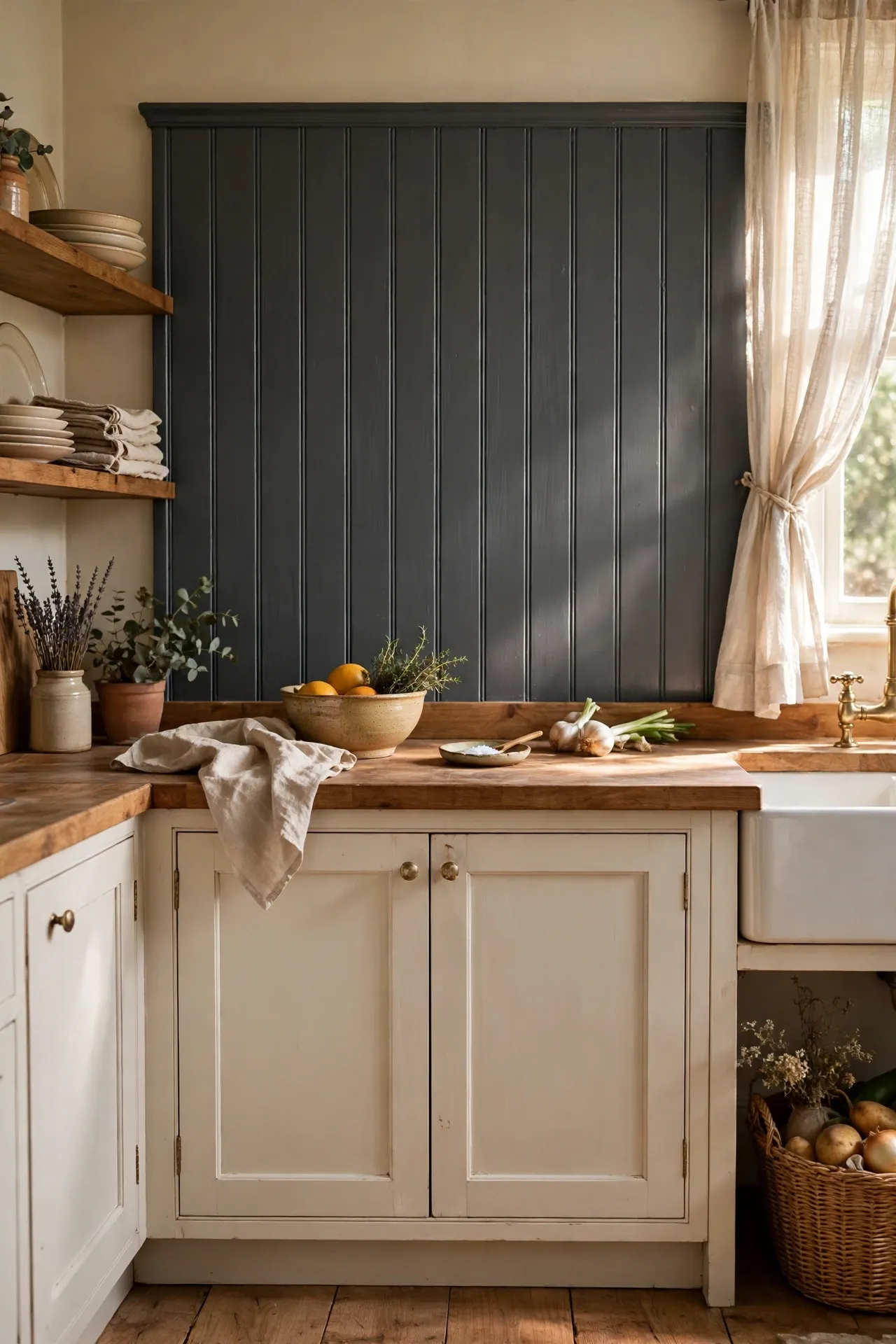
Painted beadboard or shiplap in charcoal makes a splashback with real texture and cottage charm. Fix the panels to the wall behind the worktop, caulk the seams, and paint in a wipeable eggshell charcoal so splashes clean off easily. The vertical lines add rhythm that flat paint can’t match, and it costs a fraction of real tile. I did this in a rental kitchen using lightweight MDF panels and got my deposit back with no questions. The mistake to avoid is using it directly behind the hob without protection — fit a small stainless splash panel there, since even wipeable paint takes a beating from hot oil.
Cost: ~$70 | Time: 1 day
16. Copper Accessories Against Charcoal Cabinets
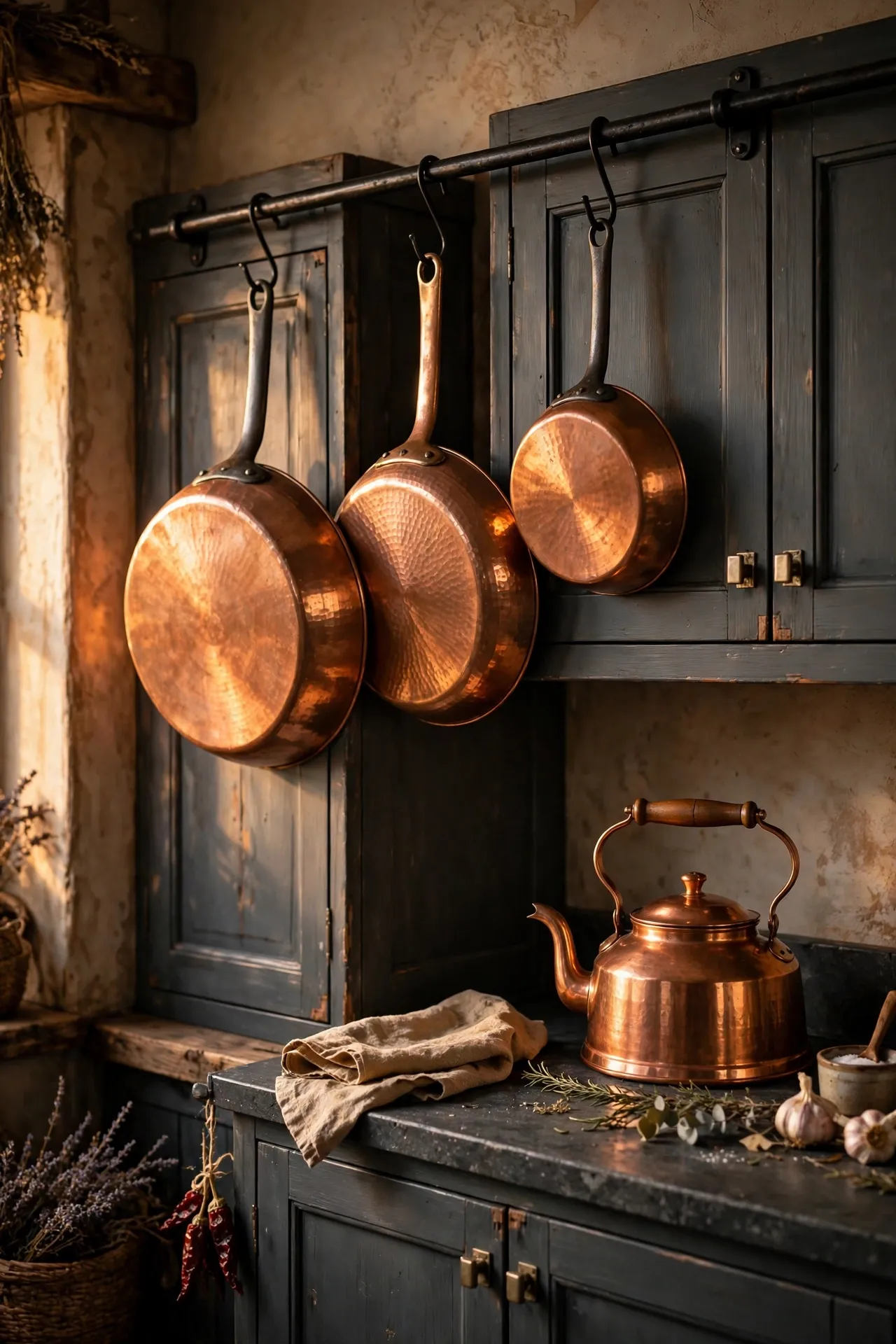
If brass feels too polished, copper brings the same warmth with a more rustic soul. Hang copper pans on a rail against charcoal cabinetry, line up copper canisters on the worktop, or simply swap in a copper kettle — each piece glows against the dark background like embers. You don’t need much; three or four copper pieces scattered through the kitchen is enough to change the whole mood. I hung two copper pans on a dark wall and they became the most complimented things in the room. The mistake to avoid is letting real copper go dull and streaky if that bothers you — a quick polish with lemon and salt brings it back, or embrace the patina and let it age gracefully.
Cost: ~$45 | Time: 1 hour
17. Charcoal Pantry Wall for a Hidden Pop of Drama
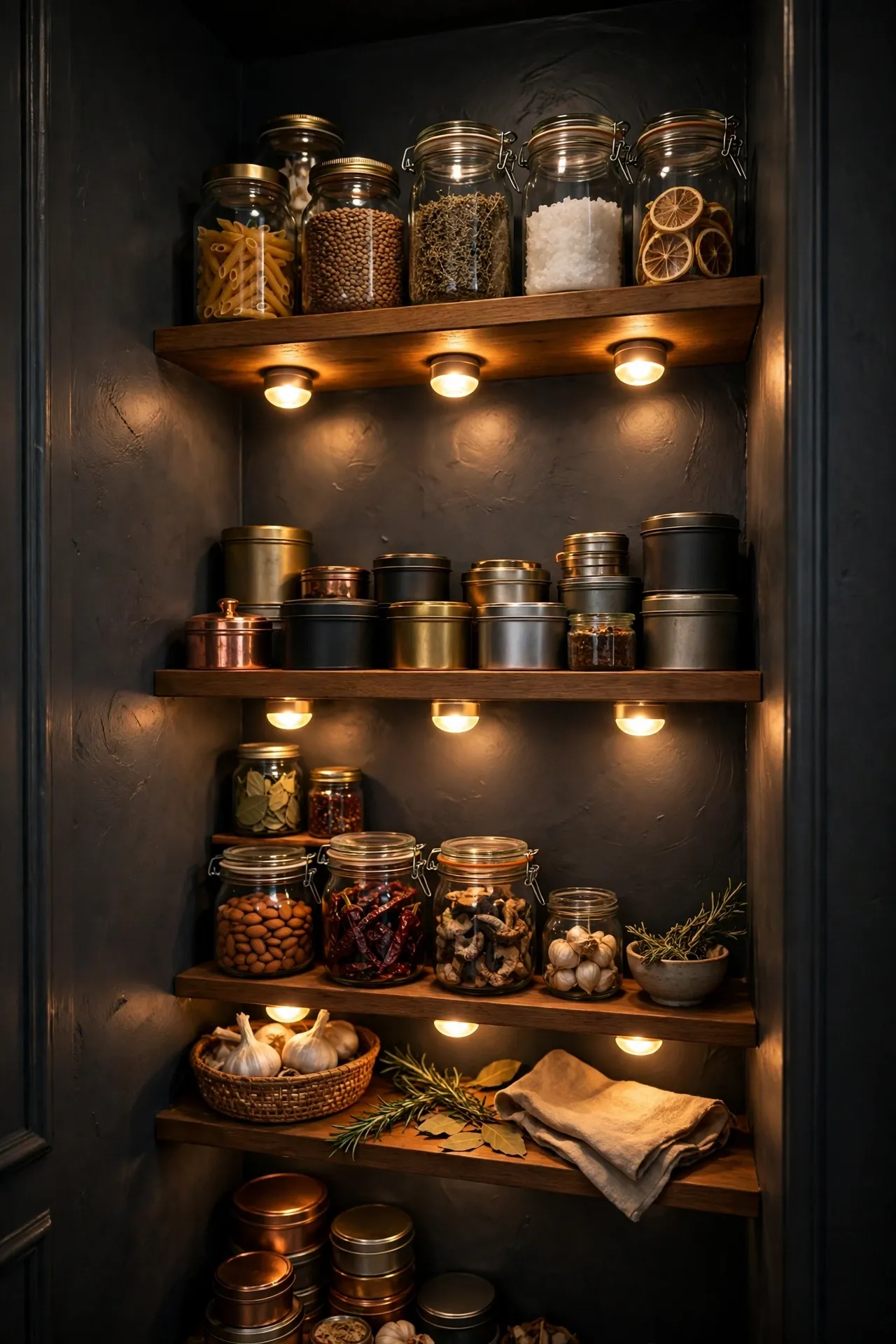
Save your boldest move for the space only you see daily: the inside of the pantry. Painting pantry walls or the back of the door charcoal makes every jar and tin pop like products on a shop shelf, and it’s the lowest-risk place to go dark since guests rarely see it. Add battery puck lights on the shelves and the effect is genuinely luxurious. I painted my pantry interior on a whim and now opening the door is my favourite tiny moment of the day. The mistake to avoid is forgetting the lighting — charcoal pantry walls in a dark corner need those little lights, or you’ll be squinting at labels.
Pro tip: Paint just the back wall first and live with it a week — in tiny pantries that’s often all the drama you need.
Cost: ~$25 | Time: 1 afternoon
📌 Like this one? Save it to your kitchen board before you forget.
Charcoal gray works because it’s a neutral with backbone — it holds a room together without shouting. Pick the one idea that fits your budget and your nerve, start there, and let the rest of the kitchen catch up at its own pace.
