25 Renter-Friendly Kitchen Upgrades With Zero Damage
Every kitchen I’ve ever rented came with the same starter pack: beige tiles, a wobbly tap and a landlord who said “no drilling, no painting, no changes.” It took me three flats to learn that renter friendly kitchen ideas aren’t about settling — they’re about upgrades that peel off, unscrew or walk out with you on moving day. Every one of these 25 upgrades leaves zero damage behind, and most of them cost less than a weekly shop. Your deposit stays safe and your kitchen finally feels like yours.
Walls & Splashbacks
1. Peel-and-Stick Subway Tile Splashback
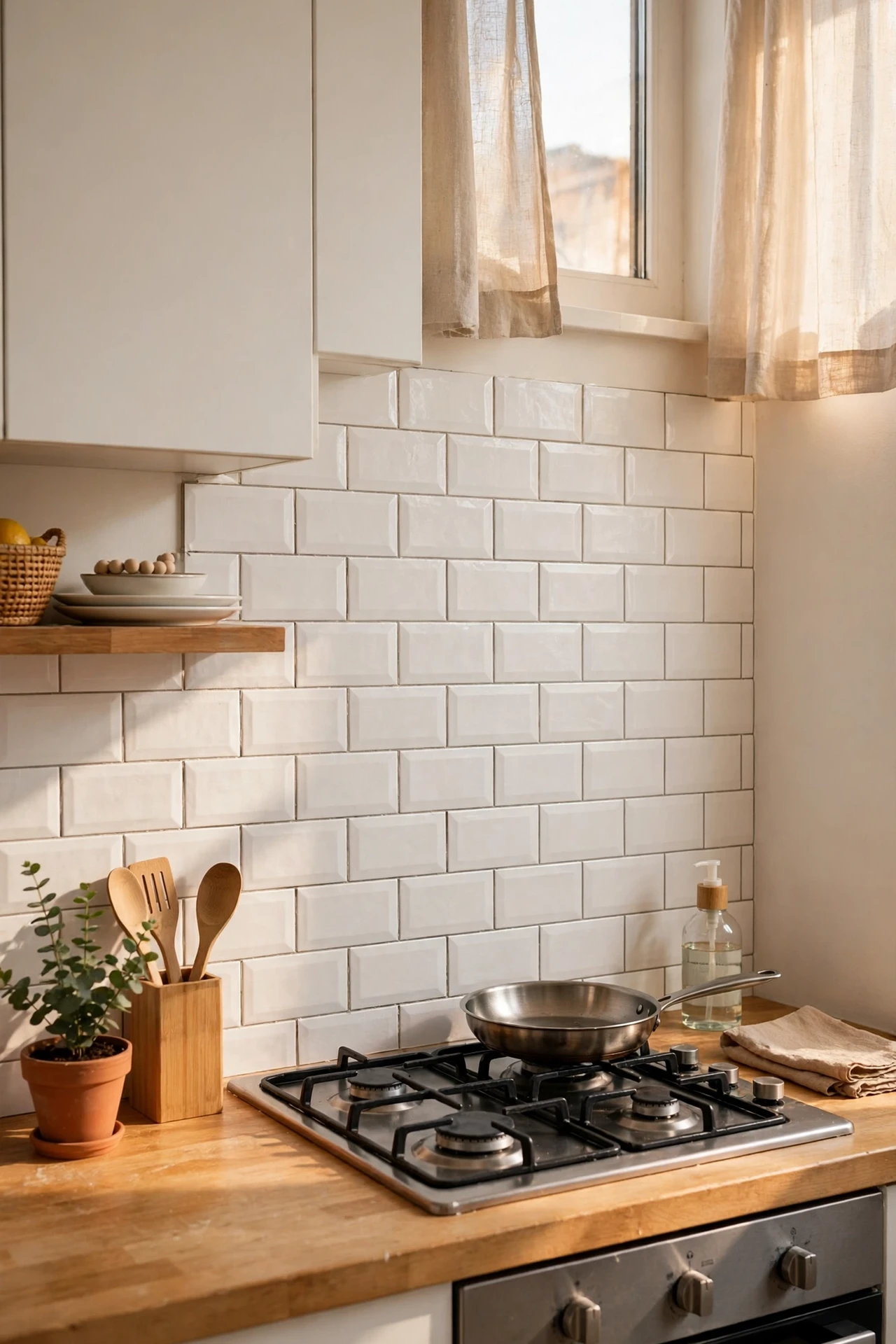
The classic rental rescue: adhesive subway tile sheets that go straight over the existing tiles and peel off cleanly when you leave. Clean the old tiles with sugar soap, cut the sheets to fit with scissors, and press them on firmly from the centre outwards. White gloss reads fresh and bright; a soft sage or warm grey adds personality. Seal the bottom edge with clear silicone so steam and splashes don’t creep underneath. I did my entire splashback run in one evening for about twenty quid. I tried this — the mistake to avoid is cheap no-brand sheets that yellow in six months. Read the reviews first.
Cost: ~$22 | Time: 2 hours
2. Removable Wallpaper Accent Wall
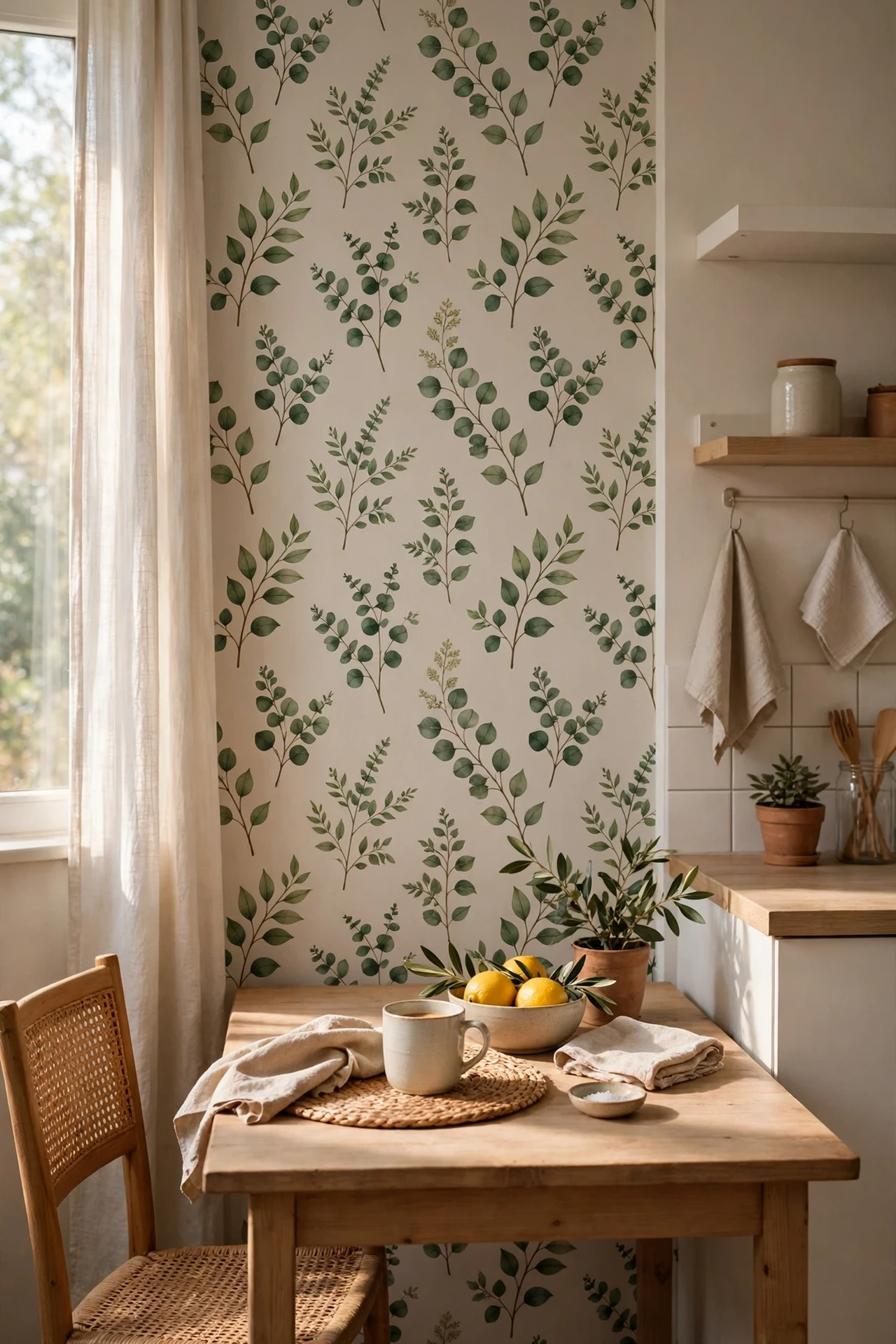
One wall of peel-and-stick wallpaper behind the dining table or along the breakfast bar turns a bland rental kitchen into a designed space. Pick a pattern with breathing room — small-scale prints feel busy in a kitchen, while a soft botanical or subtle stripe reads calm. Start at the top, smooth downwards with a credit card, and peel back immediately if you get a bubble; it repositions endlessly. The trick is choosing the wall you see first when you walk in. Mine took two rolls and an afternoon, and the landlord genuinely complimented it on inspection day.
Cost: ~$30 | Time: 3 hours
3. Ask First, Then Paint One Warm Wall
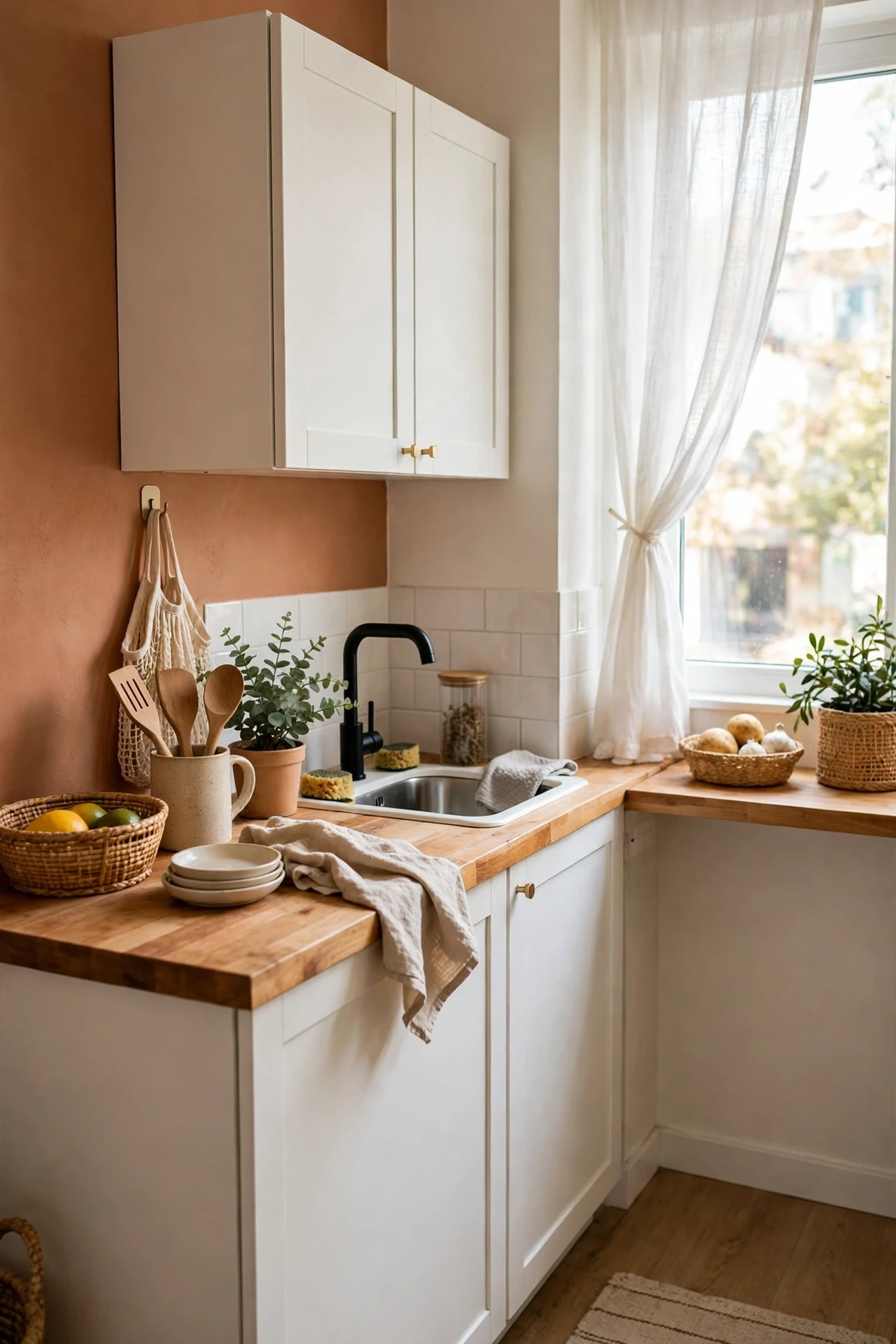
Not all landlords say no — many will agree to paint if you promise to return it to magnolia at the end. One warm wall in clay, soft terracotta or warm white costs a tester tin and changes the whole room’s temperature. Get the agreement in writing (a text counts) before you buy the paint, and photograph the wall before and after. A single feature wall is far easier to repaint at move-out than a whole kitchen. I negotiated this in two of my four rentals just by offering to repaint on the way out. Always worth the ask.
Cost: ~$12 | Time: 3 hours
4. Peel-and-Stick Beadboard Panels
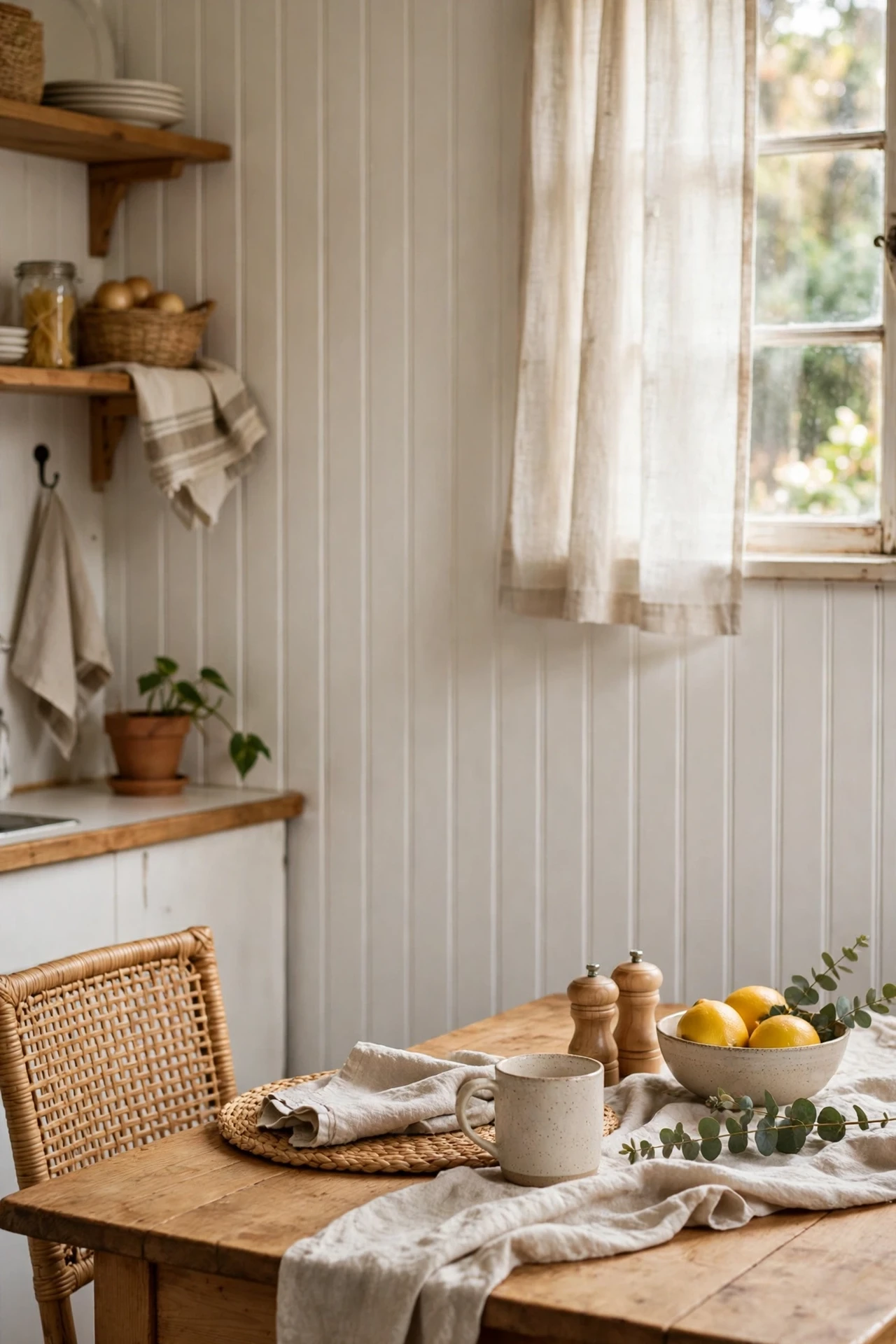
Adhesive beadboard or shiplap panels give you that cottage-kitchen panelling look with zero nails and zero damage. They come as lightweight PVC or foam boards that stick to the wall with removable adhesive strips. Use them on a small section — behind the table, or as a wainscot-height run along one wall — rather than wrapping the whole room. Paint them the same colour as the wall for a subtle texture, or a soft white for contrast. I put a run behind my dining table and it became the backdrop for every dinner photo. For more wall transformations, see the (see also: budget-kitchen-makeover-ideas) guide.
Cost: ~$25 | Time: 2 hours
5. A No-Drill Art Gallery Wall
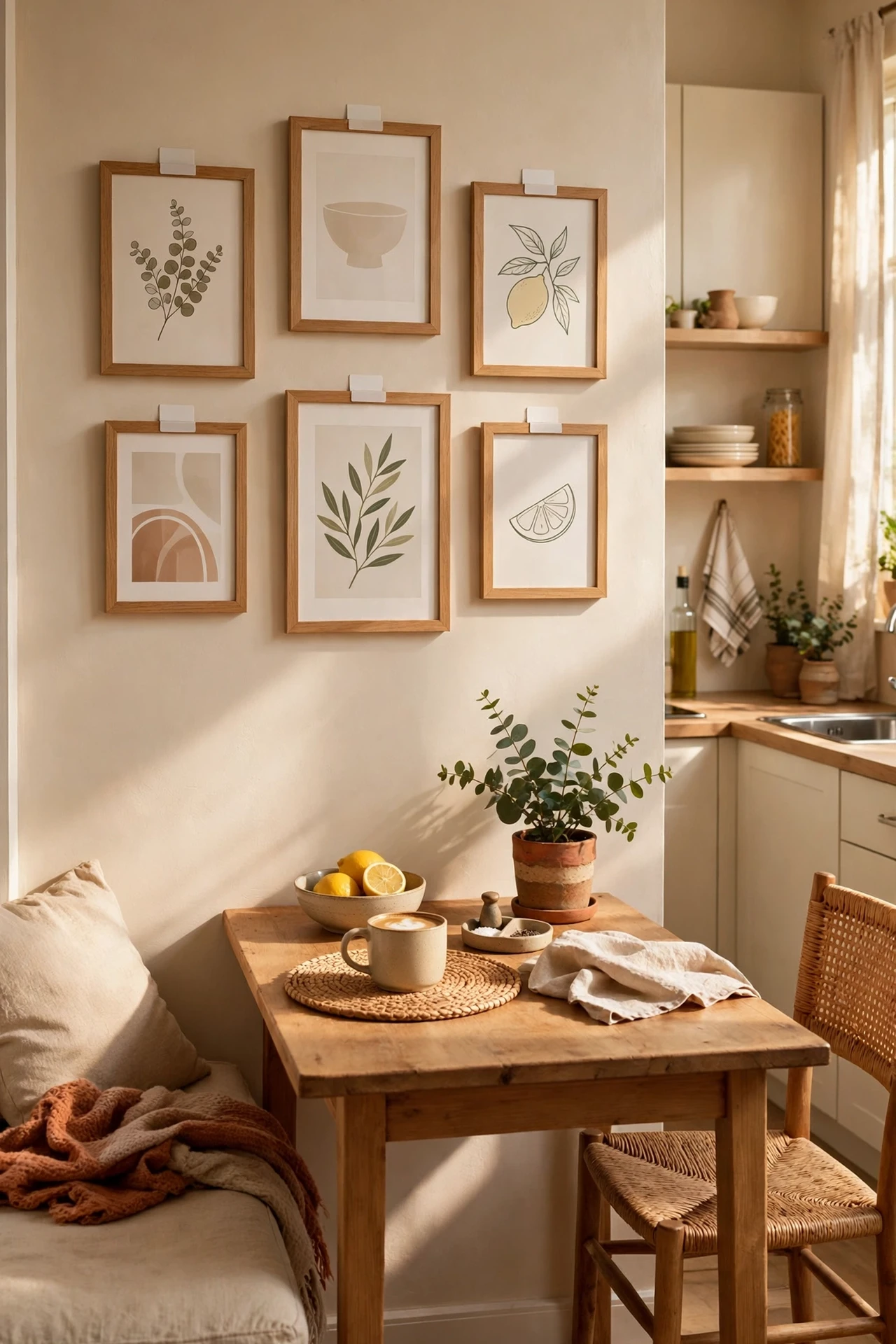
Removable picture-hanging strips have changed the rental game — they hold proper framed prints and come off without a mark. Plan your layout on the floor first, then hang three to seven frames in a loose grid above the dining spot or along a bare wall. Charity-shop frames painted one colour unify charity-shop art into something that looks deliberate. Kitchens rarely get art, so even a small grouping feels surprising and personal. Save this one for later — it’s the upgrade guests always ask about, and it moves with you to the next flat.
Cost: ~$18 | Time: 60 minutes
Storage & Organisation
6. Over-the-Door Pantry Rack
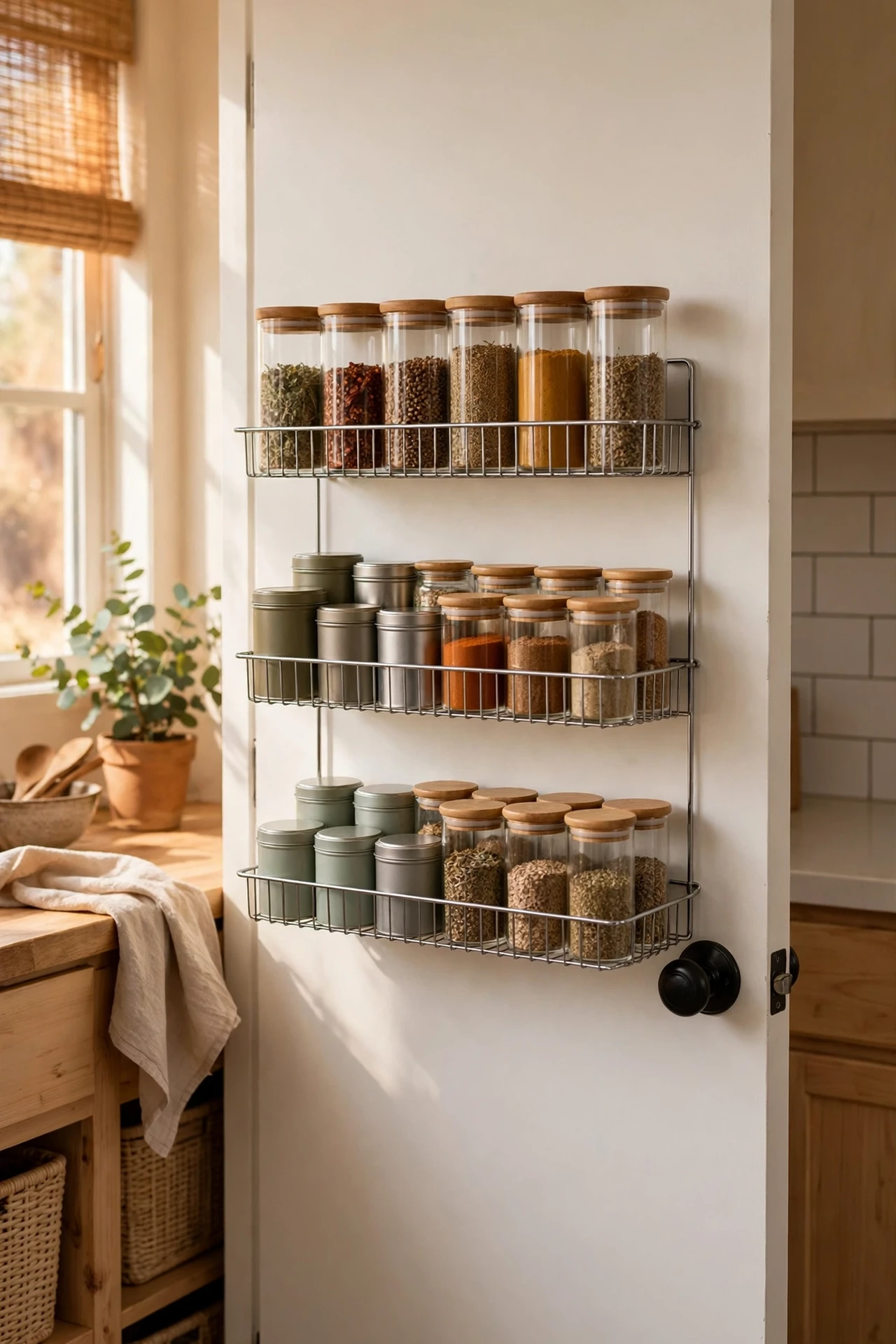
The back of the pantry door is dead space in almost every rental kitchen, and an over-the-door rack turns it into a full spice and tin library. The hooks just hang over the top of the door — no screws, no marks. Choose a slim wire version so the door still closes, and check the door’s clearance at the top first. I loaded mine with spices, stock cubes and baking bits, which freed an entire shelf inside. Anchor the bottom with a removable adhesive strip if it swings when you open the door. It’s the single best storage-per-pound upgrade in this list.
Cost: ~$16 | Time: 10 minutes
7. Tension Rod Under the Sink
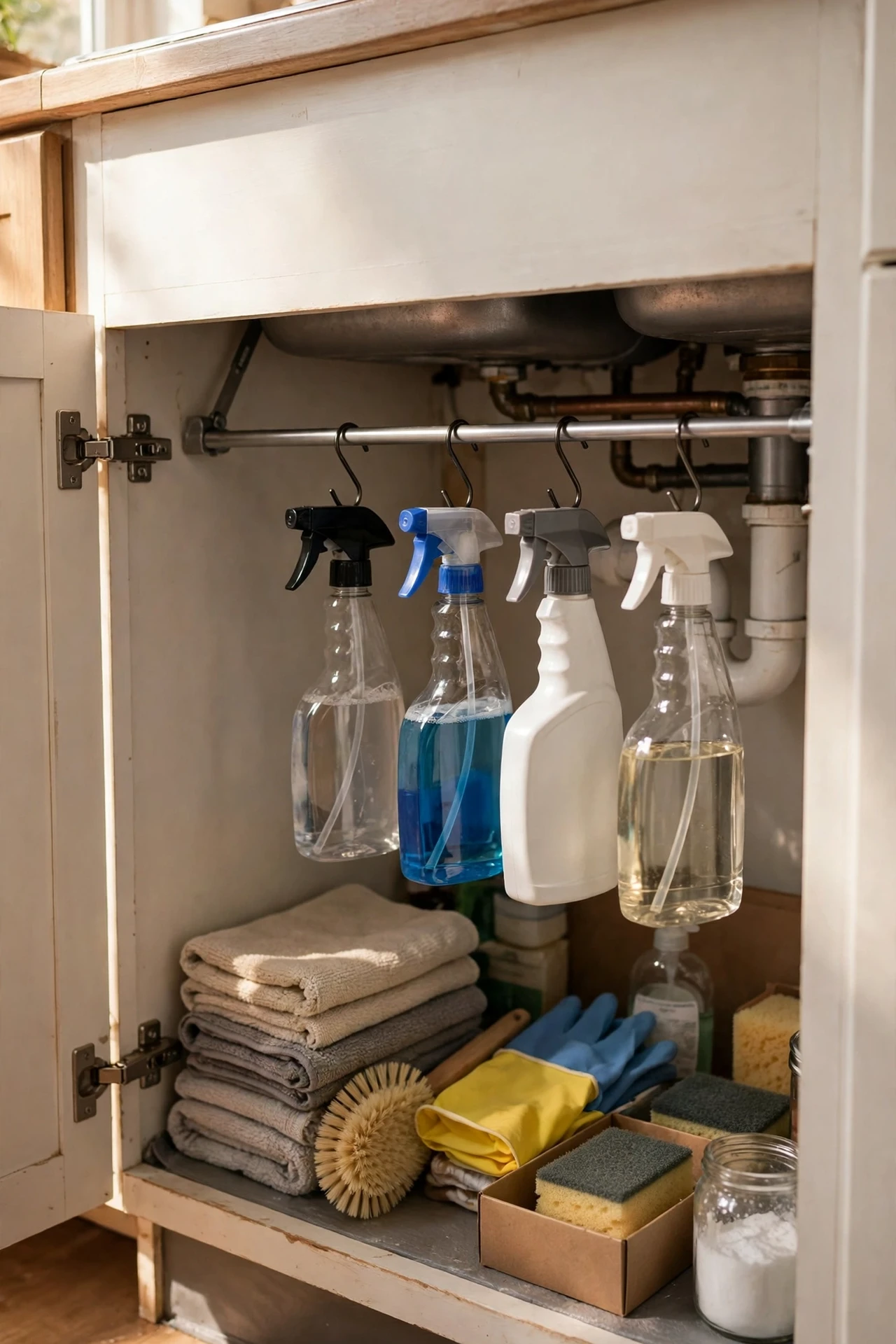
A cheap tension rod wedged across the under-sink cabinet creates hanging storage for spray bottles out of thin air. Twist to fit — no tools, no holes — and hang bottles by their triggers so the floor of the cabinet stays clear. Put the rod high enough that bottles dangle free, and keep the heaviest bottles in the middle where the rod is strongest. It’s possibly the best-value upgrade in any rental kitchen: two pounds, three minutes, done. I tried this — the mistake to avoid is wedging it too low, where bottles drag and knock the rod loose.
Cost: ~$3 | Time: 5 minutes
8. Under-Shelf Hanging Baskets
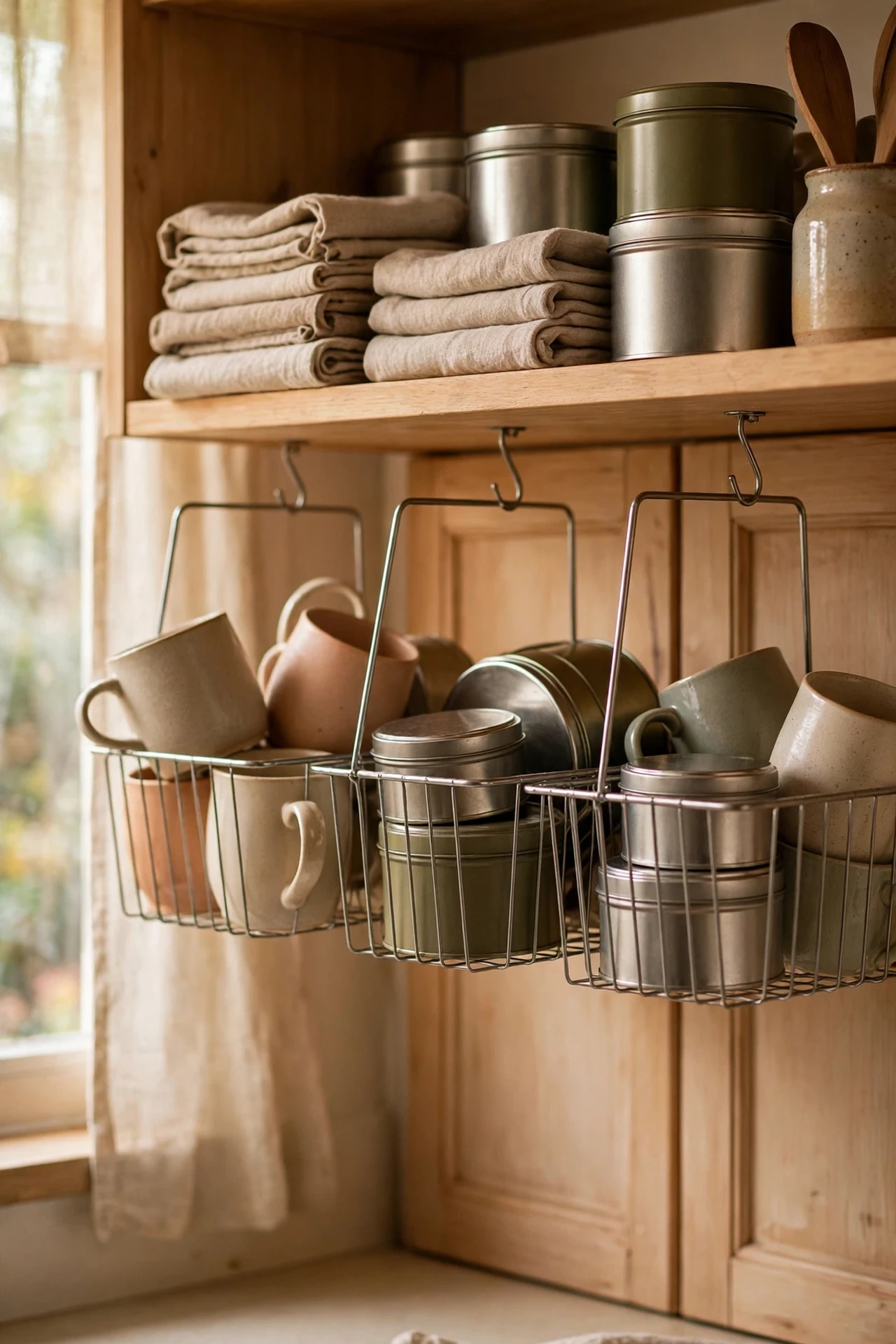
Wire baskets that hook onto existing shelves instantly double your cupboard capacity. Slide the arms over any shelf and you get a second layer underneath for mugs, tins or packets — perfect for those tall rental cupboards where the top half is wasted air. They lift off in seconds at move-out with nothing to show they were ever there. Use them for the everyday stuff so you’re not rummaging. I fitted four in my crockery cupboard and gained the equivalent of a whole extra shelf. They also work brilliantly inside a pantry for crisps and snack packets.
Cost: ~$12 | Time: 15 minutes
9. A Rolling Kitchen Cart
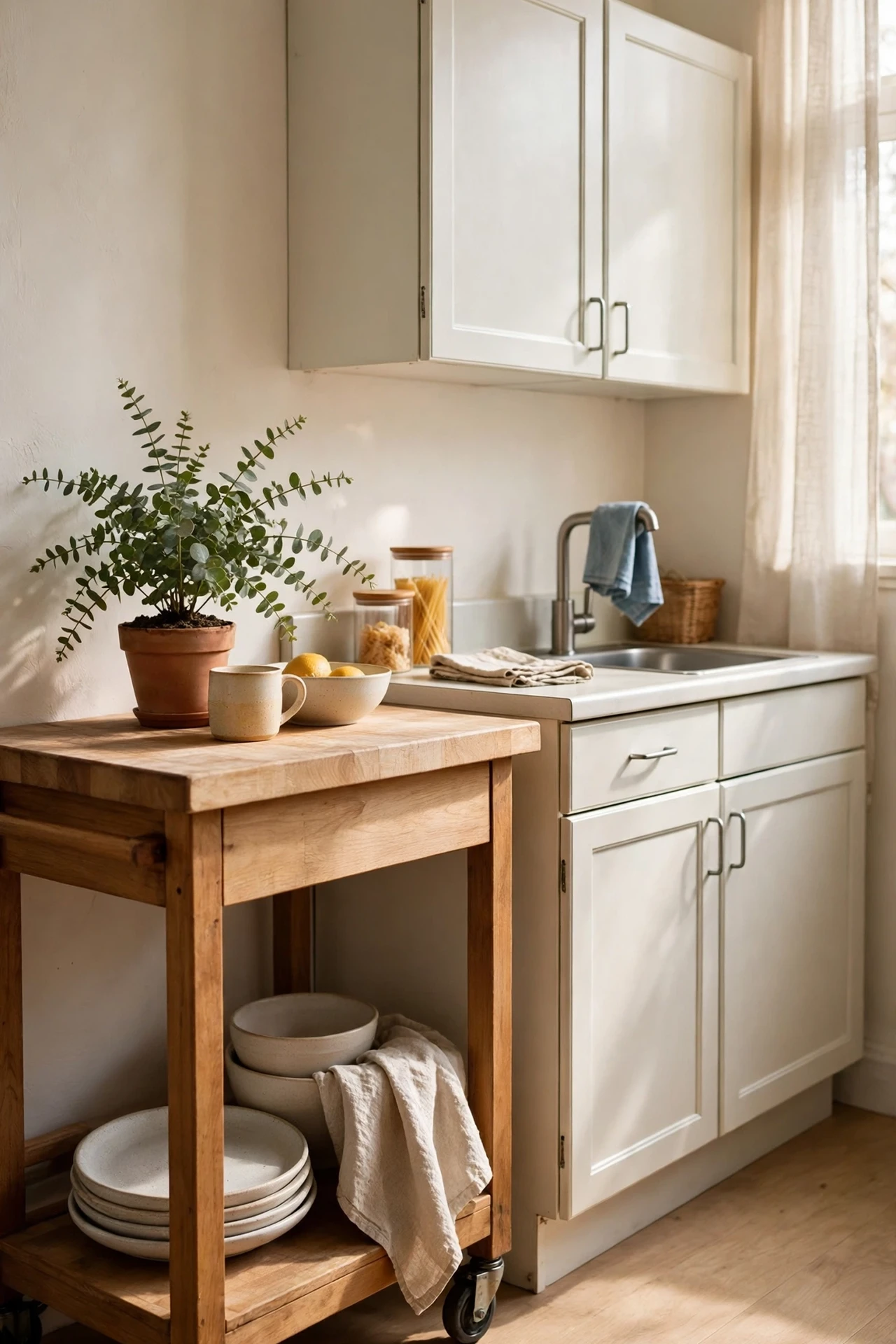
When the rental kitchen has no worktop space, don’t fight the landlord — buy a rolling cart. A butcher’s block or metal utility cart adds prep surface, storage shelves and moves wherever you need it: against the wall daily, beside the hob when cooking, out of the way for parties. Top it with a wooden board for a warmer look. It also works as a coffee station, a bar cart or extra pantry. Mine has survived three flats and four kitchens. For small-kitchen layout tricks, my (see also: small-kitchen-ideas-to-make-every-inch-count) post pairs well with this one.
Cost: ~$45 | Time: 30 minutes
10. Magnetic Strips on the Fridge Side
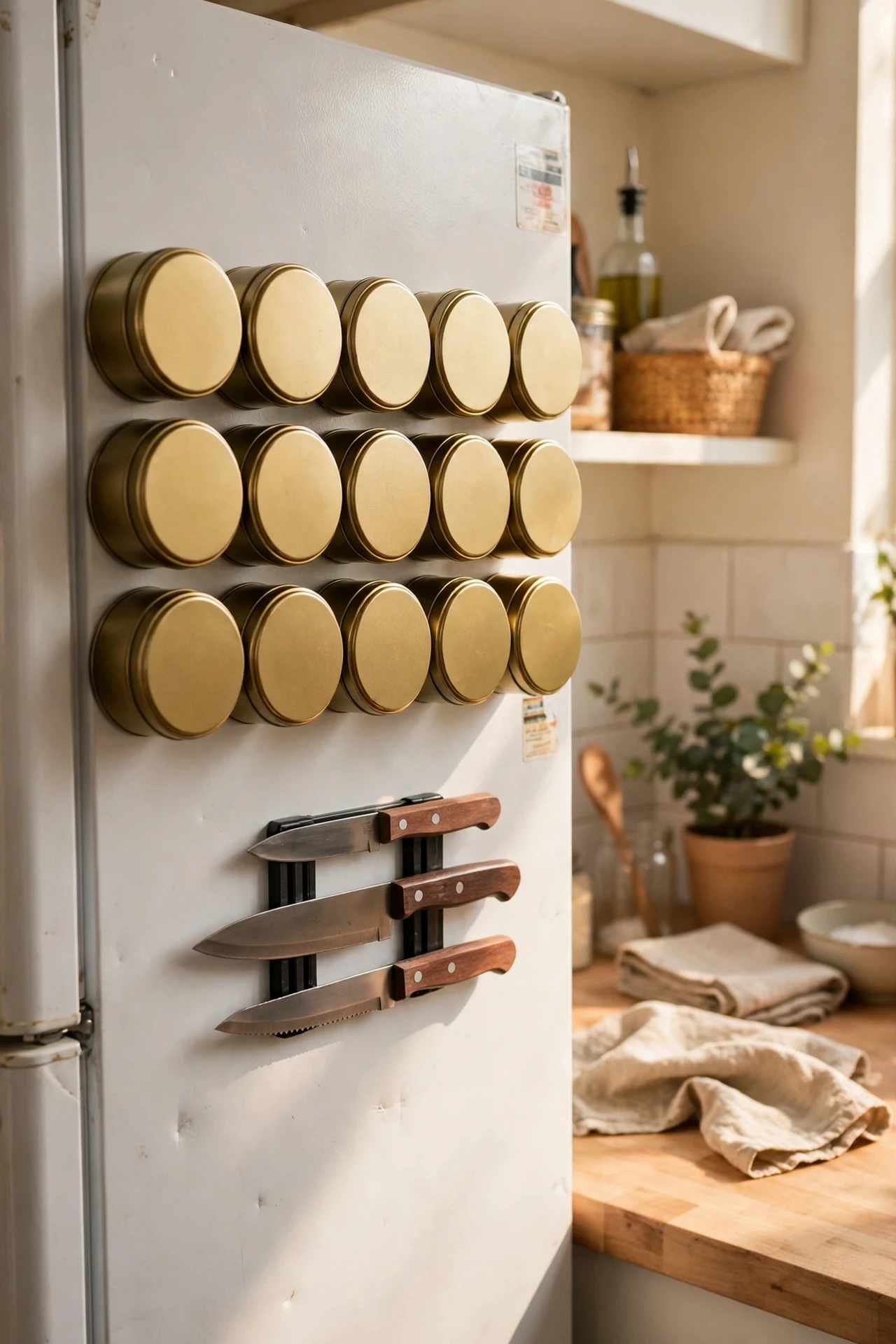
The side of the fridge is prime rental real estate and it’s almost always bare. Heavy-duty magnetic strips hold spice tins, a knife rack or small magnetic baskets without a single screw. Check the fridge side is actually magnetic first — some stainless-steel finishes aren’t — then load it up. A row of matching magnetic spice tins looks sharp and keeps everything at eye level. I keep my most-used spices and the kitchen scissors there. Everything lifts straight off on moving day, and the fridge never knew.
Cost: ~$14 | Time: 15 minutes
Lighting & Ambience
11. Battery Puck Lights Under the Cabinets
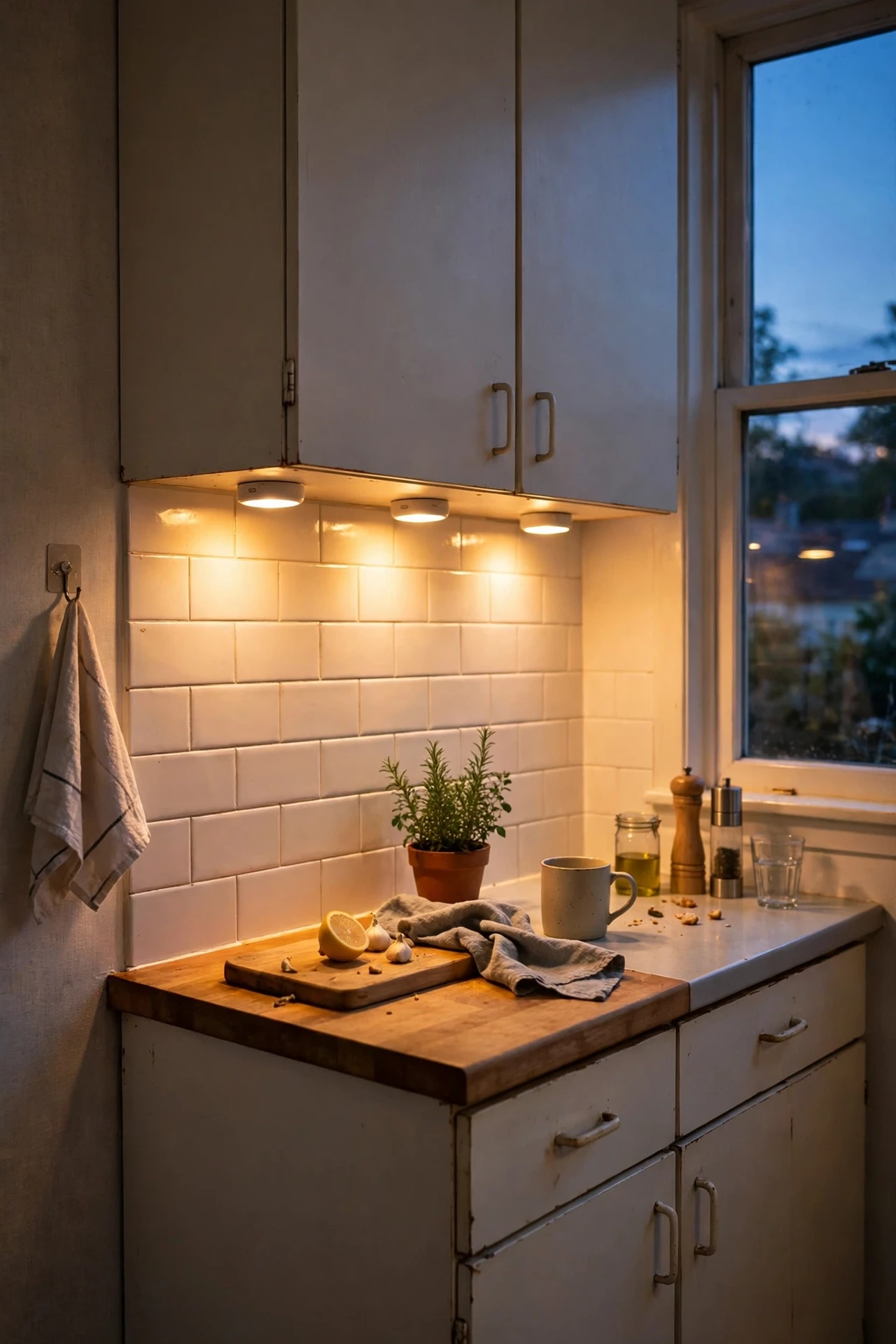
Rental kitchens are lit like interrogation rooms: one harsh ceiling bulb. Stick-on battery puck lights under the wall cabinets fix it in minutes — tap them on for warm task lighting over the worktop, tap them off when you’re done. The adhesive pads hold well and peel off cleanly. Place them towards the front edge of the cabinet so light washes down the splashback rather than pooling at the back. Rechargeable ones cost a bit more but pay for themselves in batteries within months. I put six along my galley run and evening cooking finally felt pleasant.
Cost: ~$15 | Time: 20 minutes
12. A Plug-In Pendant Over the Table
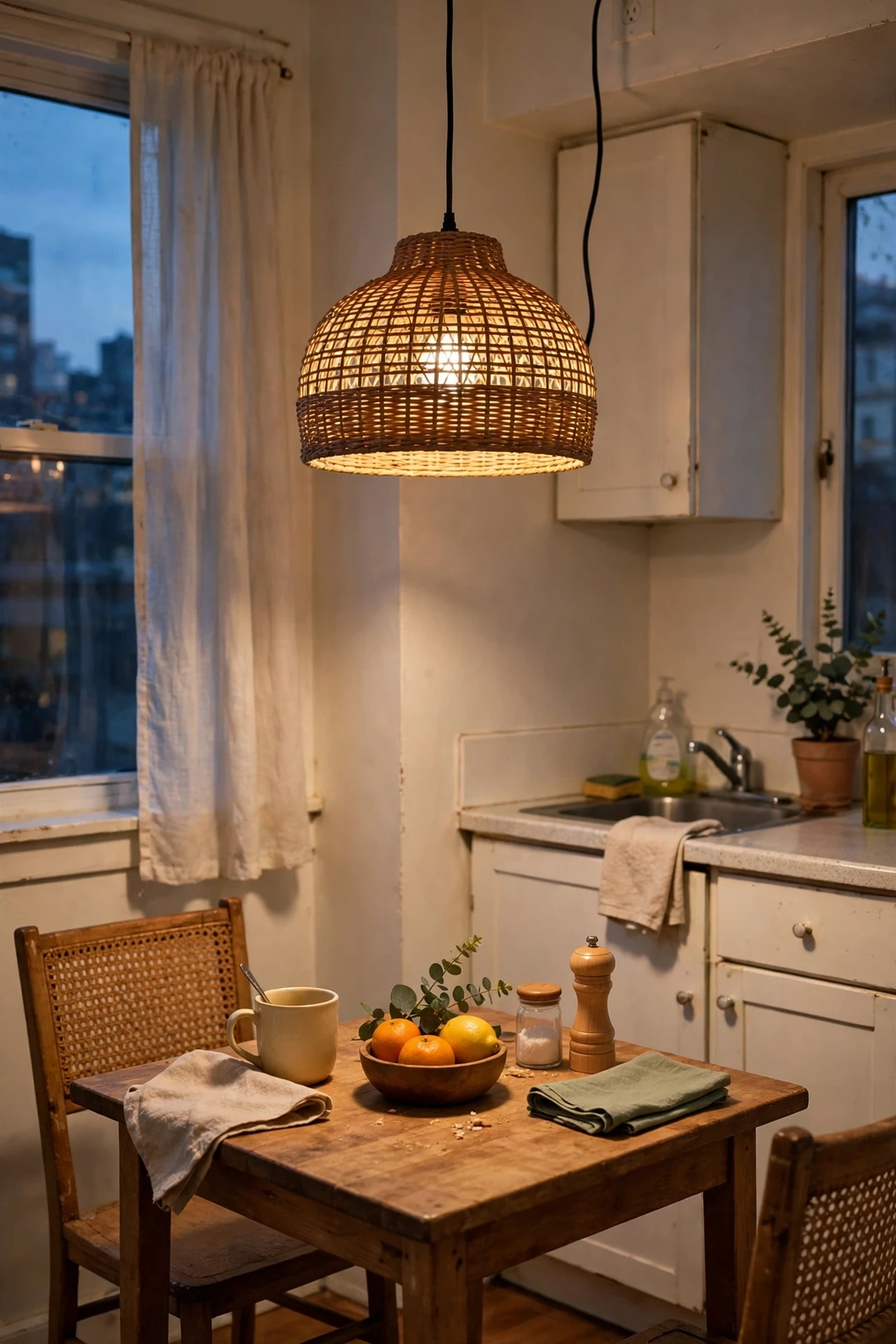
You don’t need an electrician for a pendant light — swag-style plug-in pendants hang from a ceiling hook (removable adhesive) with the cord draped to the nearest socket. The cord becomes part of the look if you choose fabric-covered cable. Hang it low over the dining table, around 75cm above the surface, for that cosy restaurant-pool-of-light feeling. Pick a rattan or paper shade for warmth. When you move, it unscrews, unhooks and comes with you. Pin this one to your kitchen board — it’s the single upgrade that makes a rental dining corner feel like a real room.
Cost: ~$35 | Time: 45 minutes
13. LED Strip Along Open Shelves
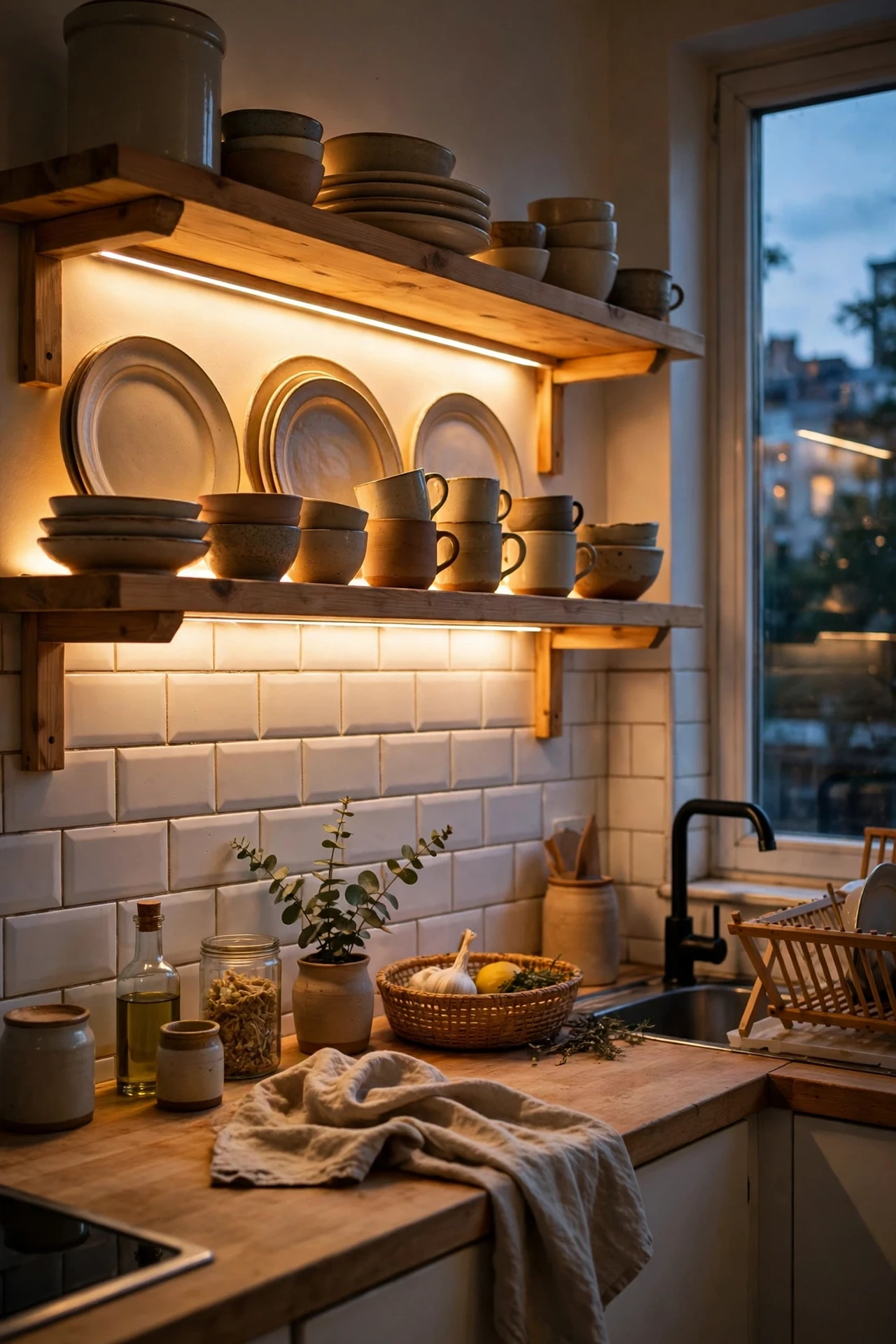
If your rental has open shelving — or you’ve created some — a warm LED strip along the underside of each shelf turns crockery into a display. The adhesive backing sticks to the shelf edge and peels off without damage; cut to length with scissors at the marked points. Warm white (2700K) is non-negotiable — cool white makes everything look like a petrol station. Plug into a socket with a timer so they glow at dusk automatically. The shelves become the prettiest thing in the room for about fifteen pounds. I run mine every evening and it never gets old.
Cost: ~$14 | Time: 30 minutes
14. A Flameless Candle and Lantern Cluster
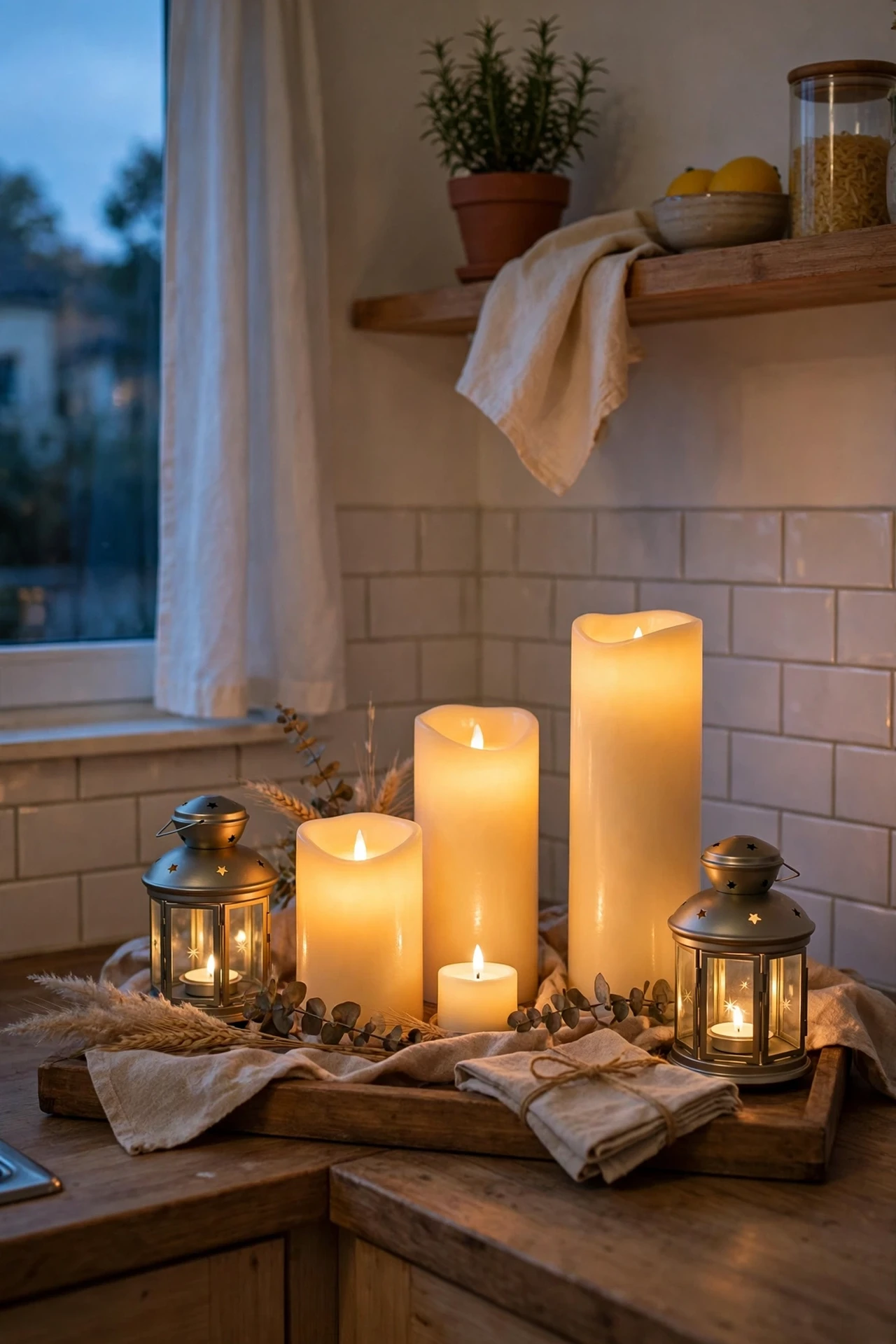
Real candles in a rental kitchen are a fire-risk lecture waiting to happen; good flameless ones give you the glow without the landlord’s anxiety. Cluster three or four on a wooden tray in the corner of the worktop or on the dining table — mixed heights, warm-toned “flame” — and the kitchen feels completely different after dark. Timer versions switch themselves on at dusk, which means the kitchen greets you with candlelight when you get home. I tried this — the mistake to avoid is the cold-blue cheap ones. Warm white only, or it looks like a hospital corridor.
Cost: ~$12 | Time: 10 minutes
15. Swap the Ceiling Light Shade
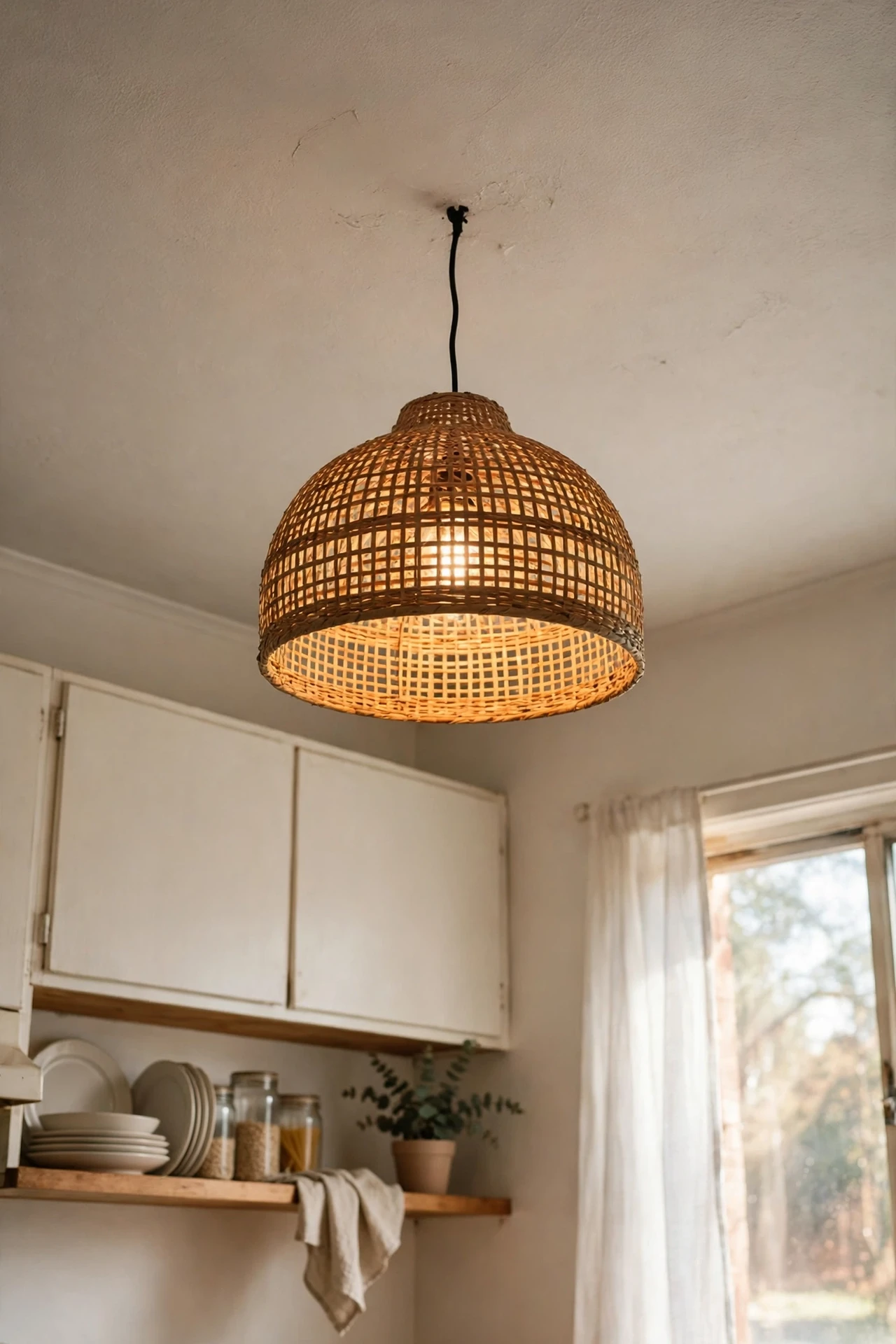
Most rentals come with the dreaded bare bulb or a cracked plastic shade. Swapping the shade is usually a two-minute job — unscrew the old, screw on the new — and it transforms the room’s personality. A paper lantern, rattan shade or simple fabric drum costs little and diffuses the harsh bulb into something warm. Keep the original shade in a bag for move-out day. Check the fitting type (most are standard bayonet or screw) before you buy. This is the fastest ambience upgrade in the whole list, and landlords never object because the original goes straight back on.
Cost: ~$18 | Time: 10 minutes
Textiles & Soft Touches
16. A Washable Runner Rug
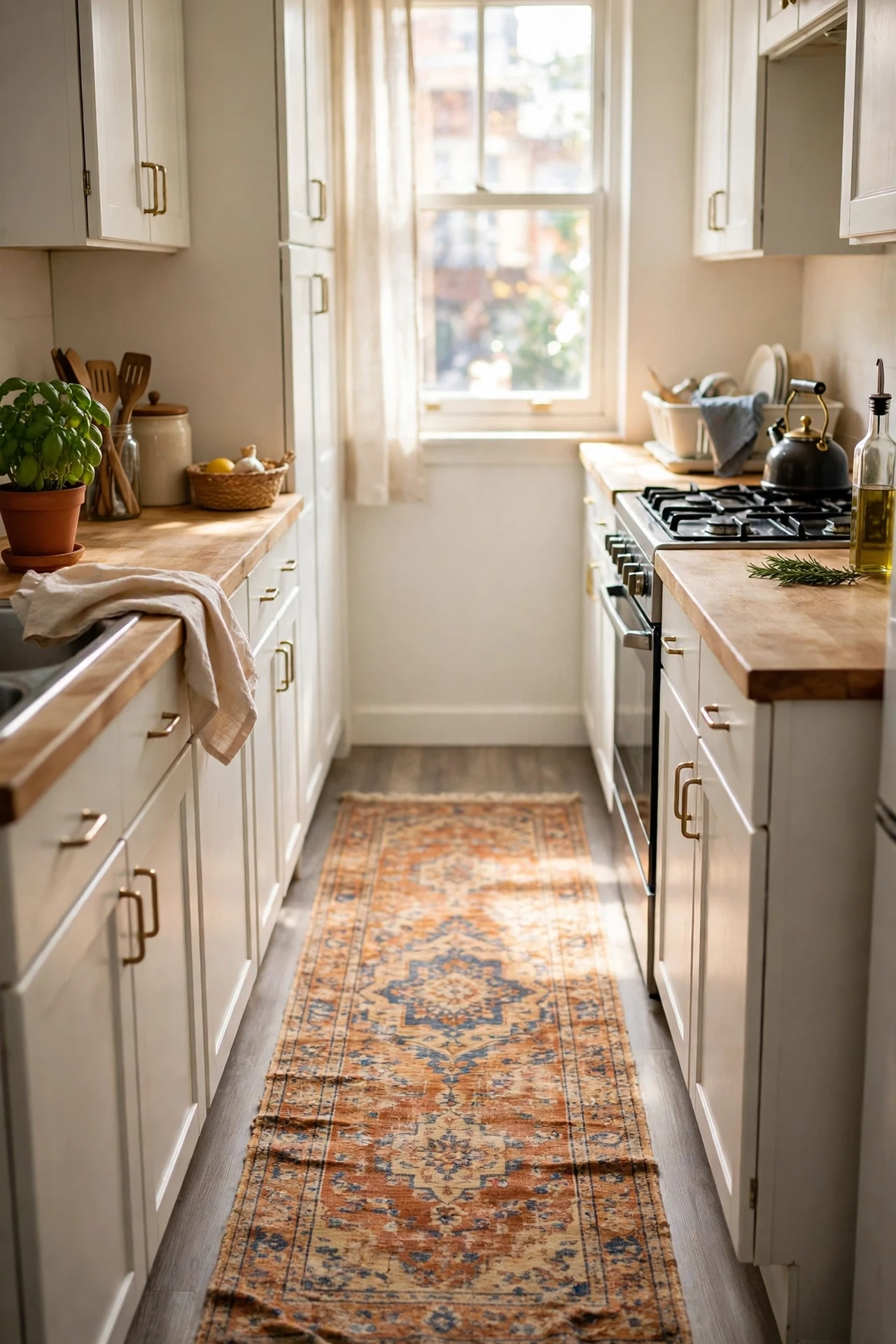
Cold rental lino is nobody’s friend. A washable runner along the galley or in front of the sink adds warmth, pattern and cushioning underfoot — and when it gets filthy, it goes in the washing machine, not the bin. Machine-washable rugs have got genuinely good: flat-weave styles that look like vintage kilims for very little money. Size it to the run of units, leaving a few centimetres clear at each end. Use a thin rug grip underneath so it doesn’t wander. Mine has survived two years of cooking spills and still looks decent. For more soft-touch ideas, see the (see also: budget-kitchen-makeover-ideas) textiles section.
Cost: ~$28 | Time: 10 minutes
17. Cafe Curtains on the Window
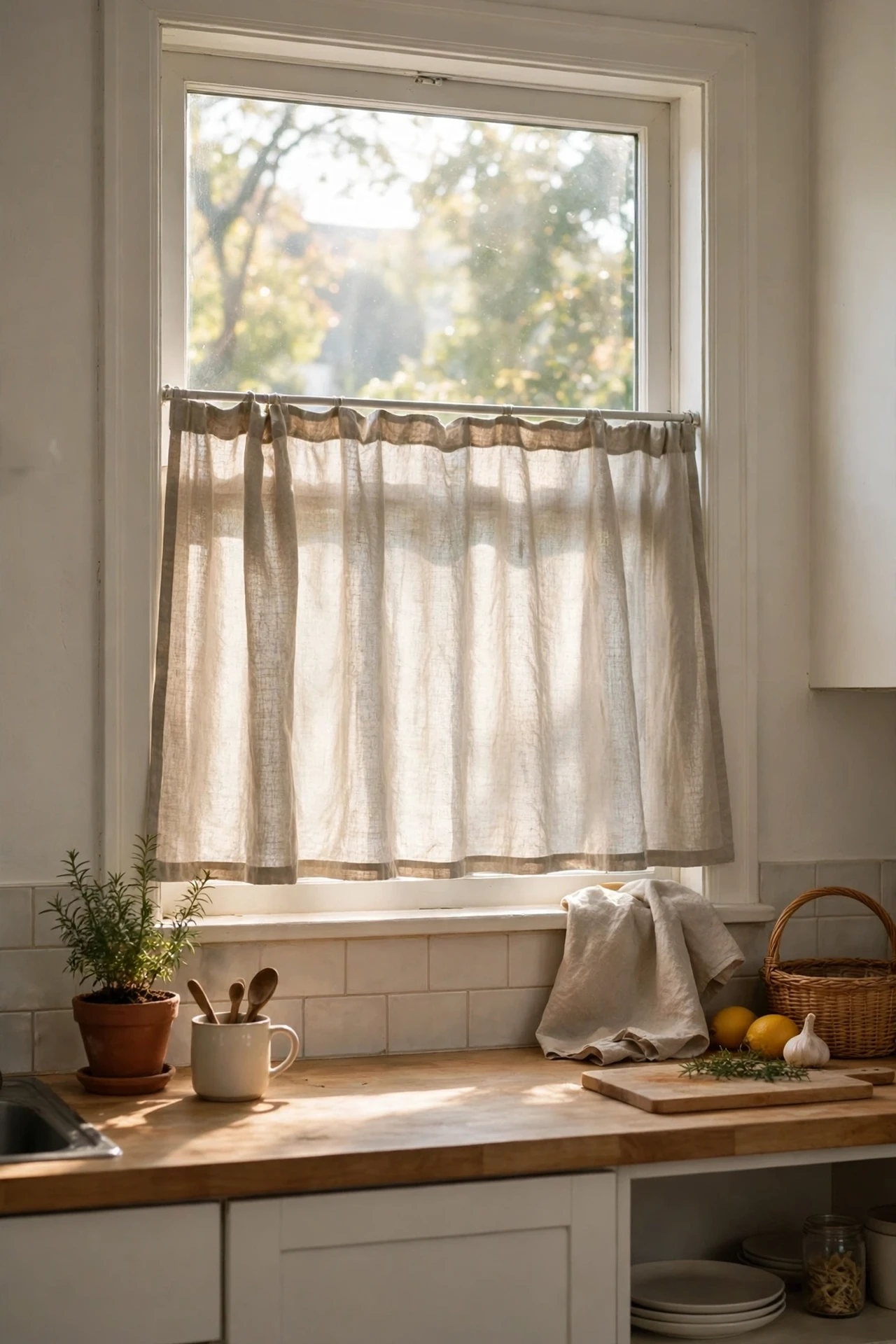
A half-height curtain on a tension rod softens the window, adds privacy and brings in texture — with zero drilling. Washed linen or a linen-look cotton in a neutral tone works in almost any kitchen. The tension rod wedges inside the window frame and comes down in seconds at the end of the tenancy. Hem to just below the sill so it doesn’t dangle into the sink. I made mine from a charity-shop tablecloth in under an hour, and the morning light through it is genuinely lovely. It’s the textile equivalent of a warm hug for the room.
Cost: ~$12 | Time: 60 minutes
18. Seat Pads for Hard Dining Chairs
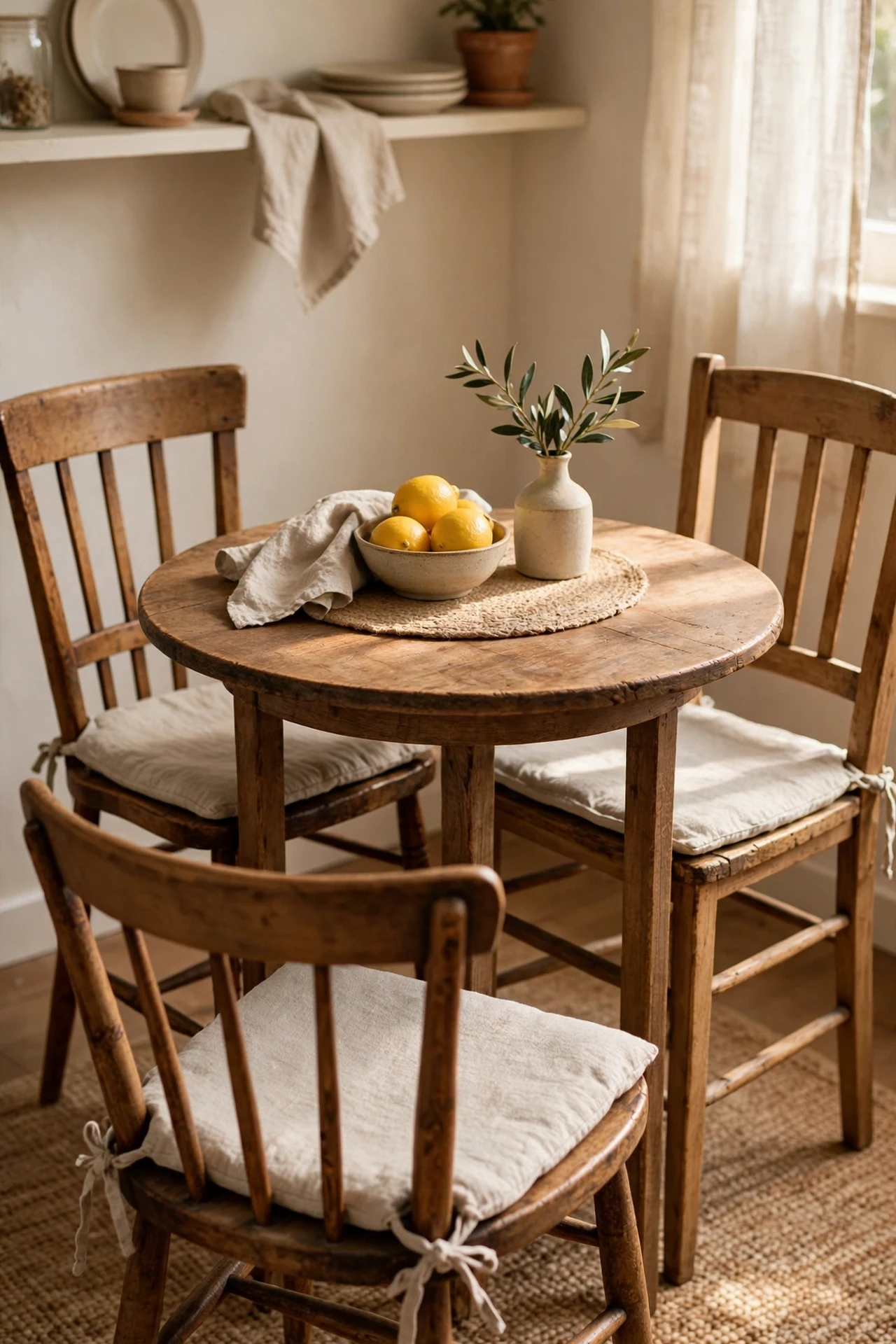
Rental dining chairs are invariably hard, cold and ugly. Tie-on seat pads in a natural fabric — ticking stripe, plain linen, washable cotton — make them comfortable and coordinated in one move. The ties mean no damage and no slipping if you tie them properly. Choose a washable fabric because kitchen chairs take a beating. Four matching pads unify a mismatched set of charity-shop chairs into something that looks intentional. I bought a set for less than a takeaway and dinner guests stopped perching and started lingering.
Cost: ~$16 | Time: 10 minutes
19. A Tablecloth or Runner for the Table
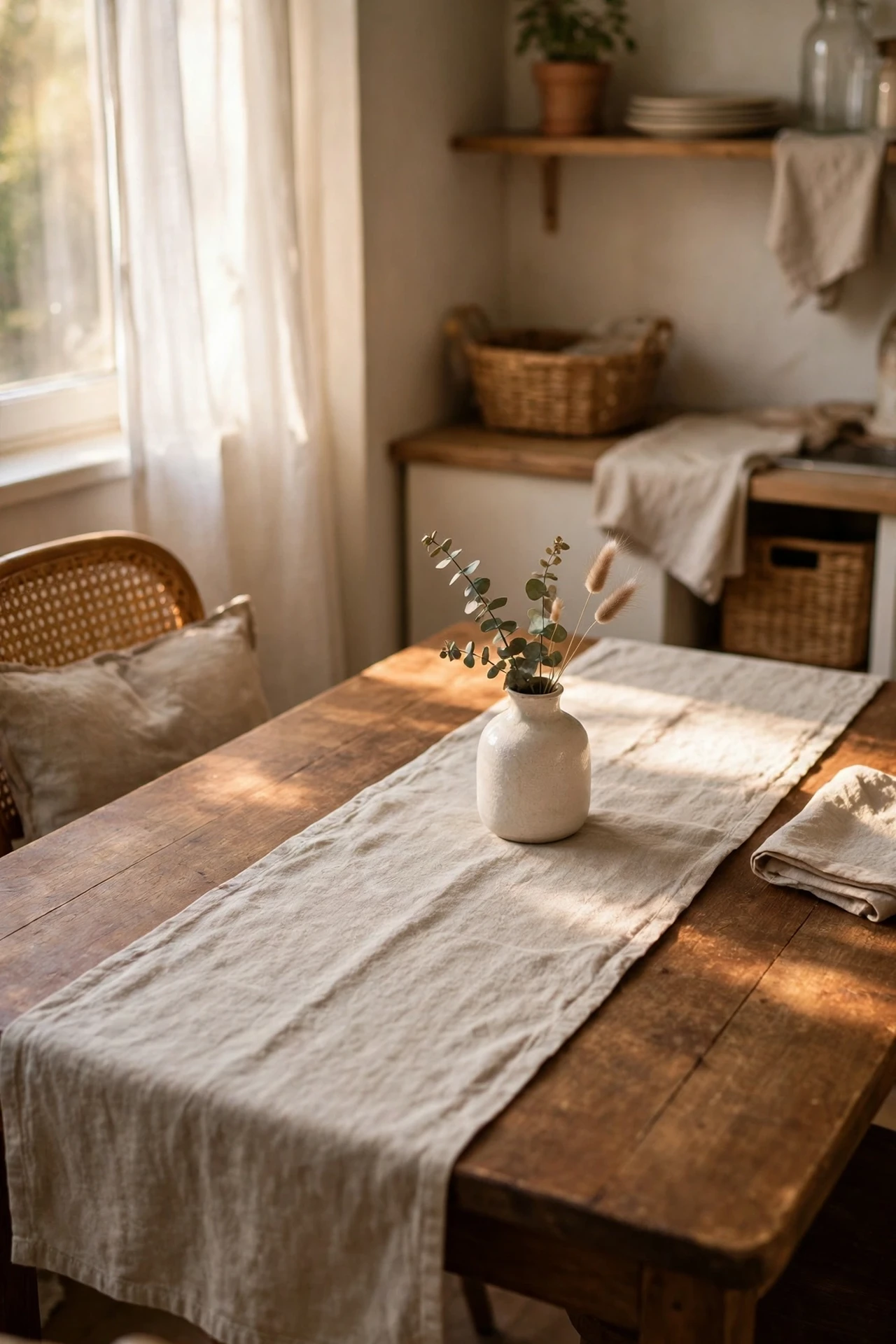
If the rental came with a scarred, wobbly dining table you can’t replace, cover it. A good tablecloth or a simple runner down the centre hides a multitude of sins and sets the whole tone of the eating corner. Linen-look in a natural tone reads calm; a wipeable oilcloth in a nice print survives family life. Size it to drape properly — too short looks like an afterthought. This is also the cheapest way to change the room seasonally: swap the runner and the whole corner feels different. I keep three and rotate them.
Cost: ~$14 | Time: 5 minutes
20. A Coordinated Tea Towel Set
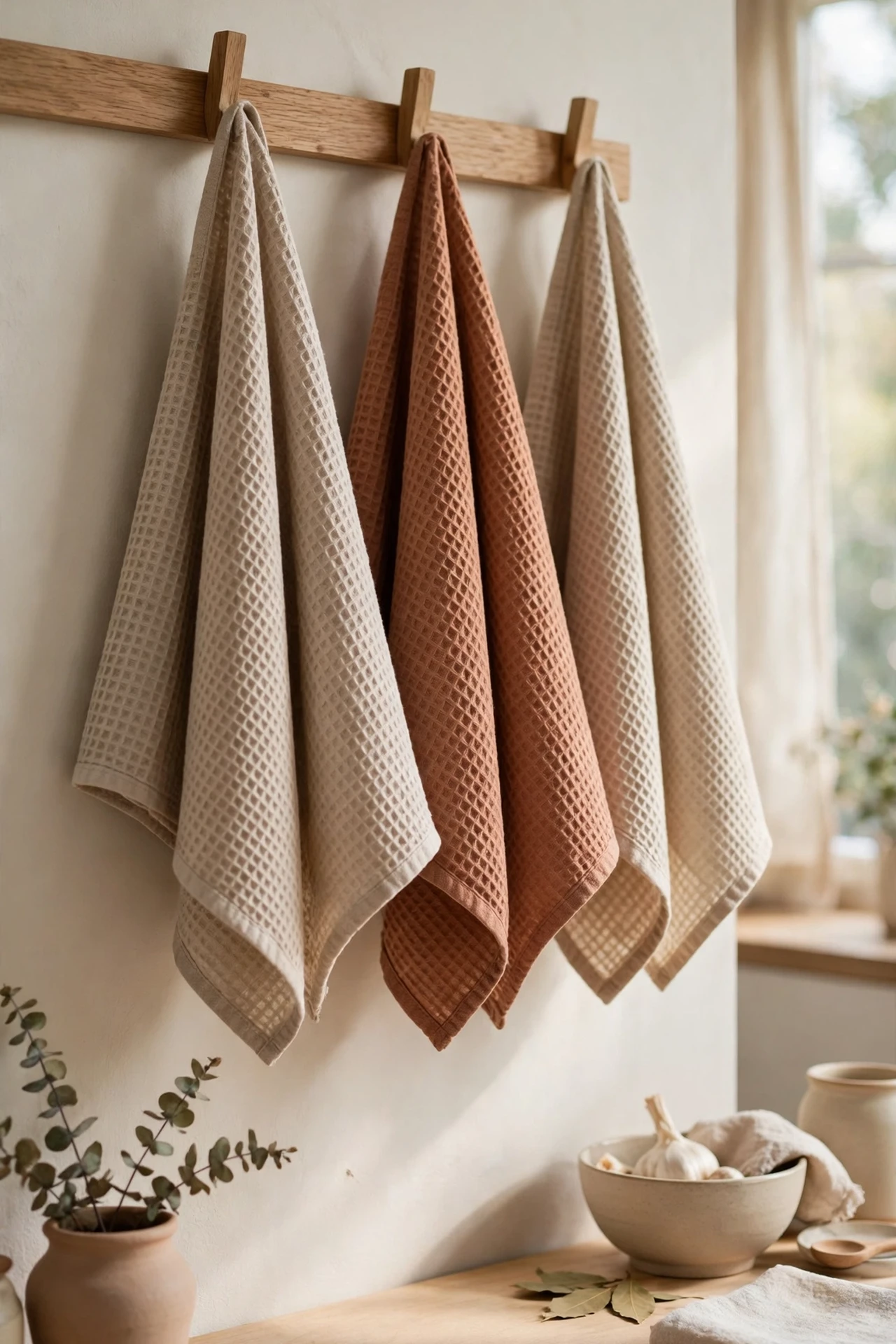
Mismatched novelty tea towels quietly cheapen a kitchen. A set of plain ones in one palette — oat, clay, warm grey — costs little and makes the whole room look considered, because textiles are everywhere your eye lands. Waffle weave dries better than the thin ones anyway. Hang them on a removable hook rather than draped over the oven handle. Save this one for later — it’s the five-minute, ten-pound upgrade that makes the kitchen photograph like a showroom, and it works in every single rental you’ll ever live in.
Cost: ~$10 | Time: 5 minutes
Small Swaps, Big Impact
21. Swap the Cabinet Knobs and Handles
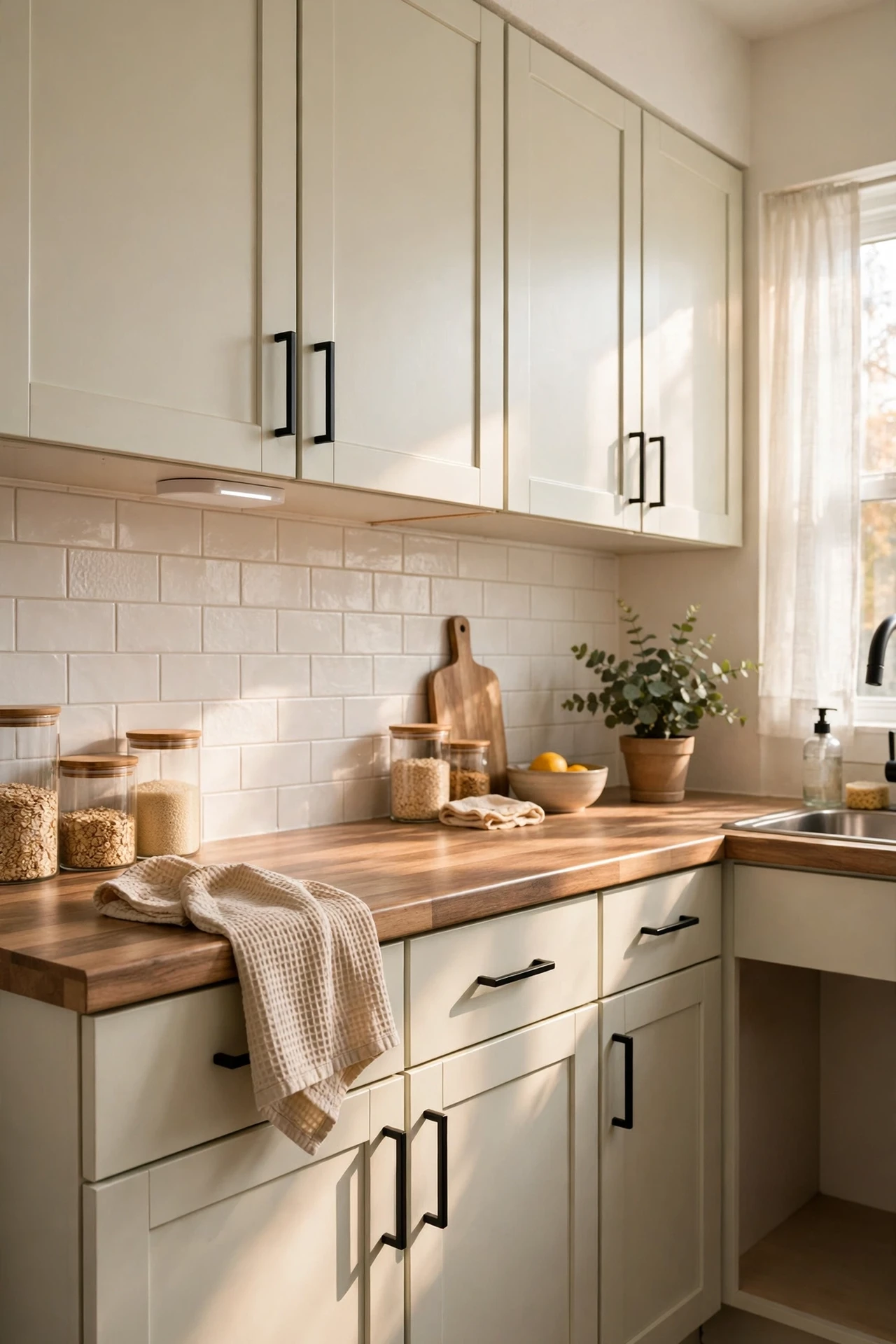
Dated cabinet hardware is the fastest tell of a tired rental kitchen, and swapping it is fully reversible. Unscrew the existing knobs, fit your own — matte black, brushed brass or simple wood — and bag the originals with a label for move-out day. Measure the hole spacing on bar pulls before ordering; knobs are universal. Fourteen doors took me one evening with a screwdriver, and the kitchen looked like it had been refitted. For the full hardware-swap method, my (see also: small-kitchen-ideas-to-make-every-inch-count) post walks through it step by step.
Cost: ~$15 | Time: 90 minutes
22. Contact Paper Countertop Refresh
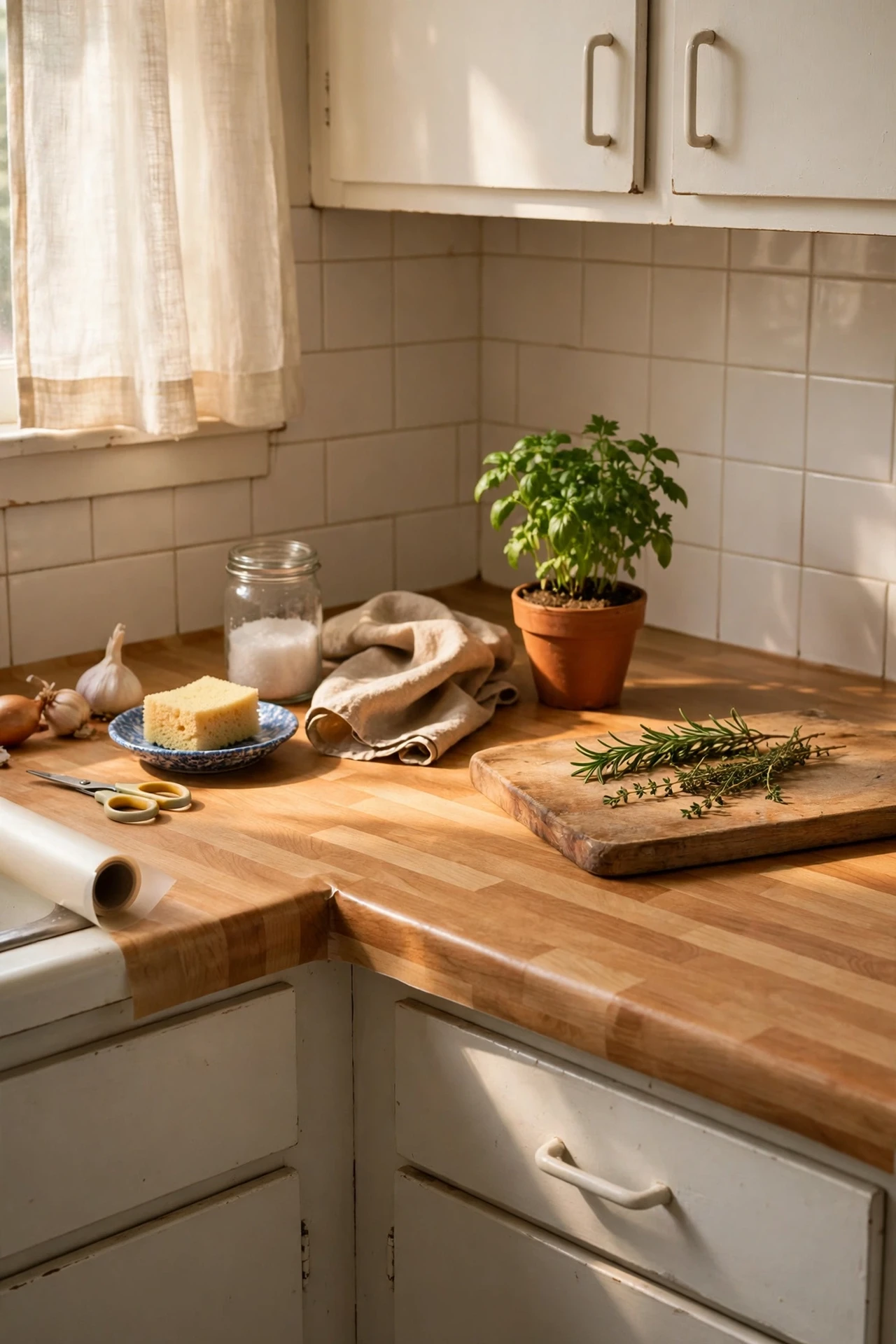
Tired laminate worktops get a full refresh from marble-look or butcher’s-block contact paper — and it peels off when you leave. Clean and dry the surface, cut generous pieces, and apply slowly with a credit card to chase out bubbles. The butcher’s-block pattern is the most forgiving for beginners; marble shows every wrinkle. Seal the edges and the strip by the sink with clear silicone. It’s not indestructible — use trivets for hot pans — but it buys you a beautiful worktop for the price of lunch. I tried this — the mistake to avoid is rushing the corners. Slow down there and it looks professional.
Cost: ~$18 | Time: 2 hours
23. Peel-and-Stick Floor Tiles
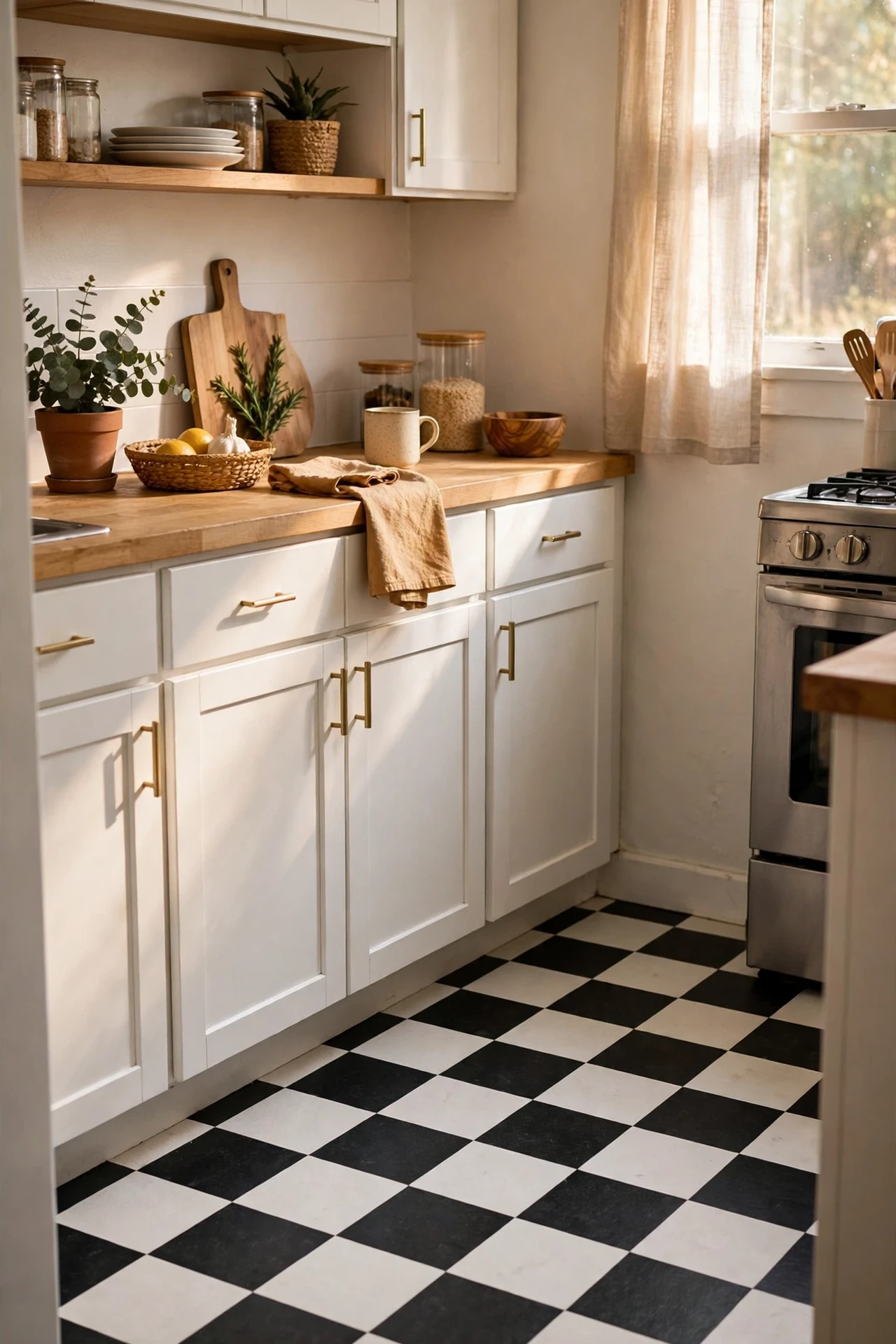
Vinyl peel-and-stick floor tiles go straight over ugly rental lino and lift off cleanly at the end of the tenancy. The checkerboard and encaustic-look patterns are everywhere for good reason — they make a rental kitchen look designed rather than tolerated. Start from the centre of the room and work outwards for the most even pattern. They’re waterproof, wipeable and far more forgiving underfoot than they look. Do the whole floor in a weekend, or just a rug-sized section in front of the units for the effect at half the cost. Measure twice, order once.
Cost: ~$40 | Time: 4 hours
24. Upgrade the Tap Aerator and Soap Setup
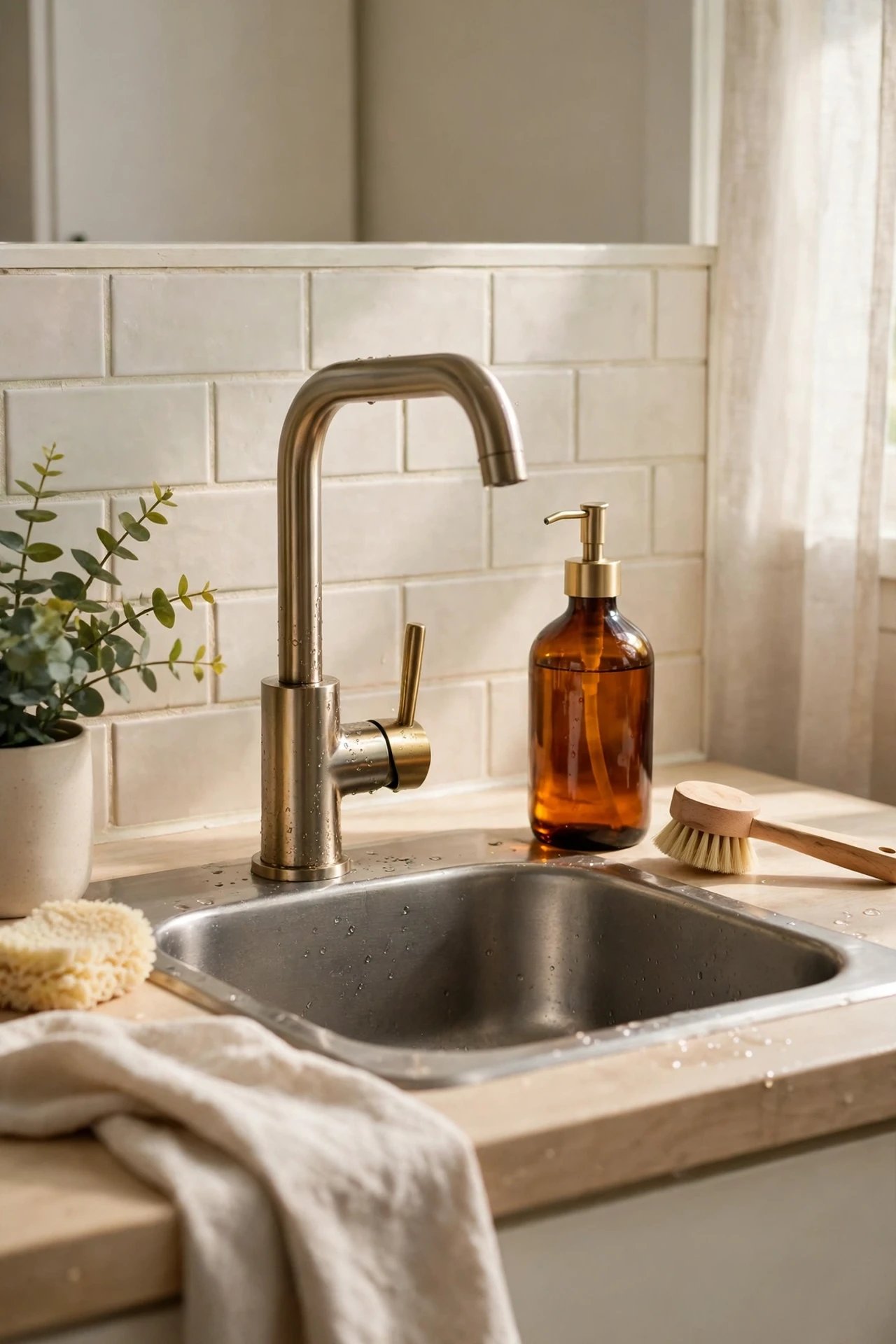
The rental tap usually has a crusty old aerator that dribbles. Unscrew it (by hand, usually), screw on a new water-saving aerator, and the tap feels brand new — better pressure, less splash, lower bills. Keep the original in a bag for move-out. While you’re there, decant the washing-up liquid into a matching dispenser and add a wooden dish brush: the whole sink zone goes from grim to boutique in ten minutes. It’s the smallest spend on this list with one of the biggest daily payoffs, since you use the tap about forty times a day.
Cost: ~$10 | Time: 15 minutes
25. Build a Plant Corner
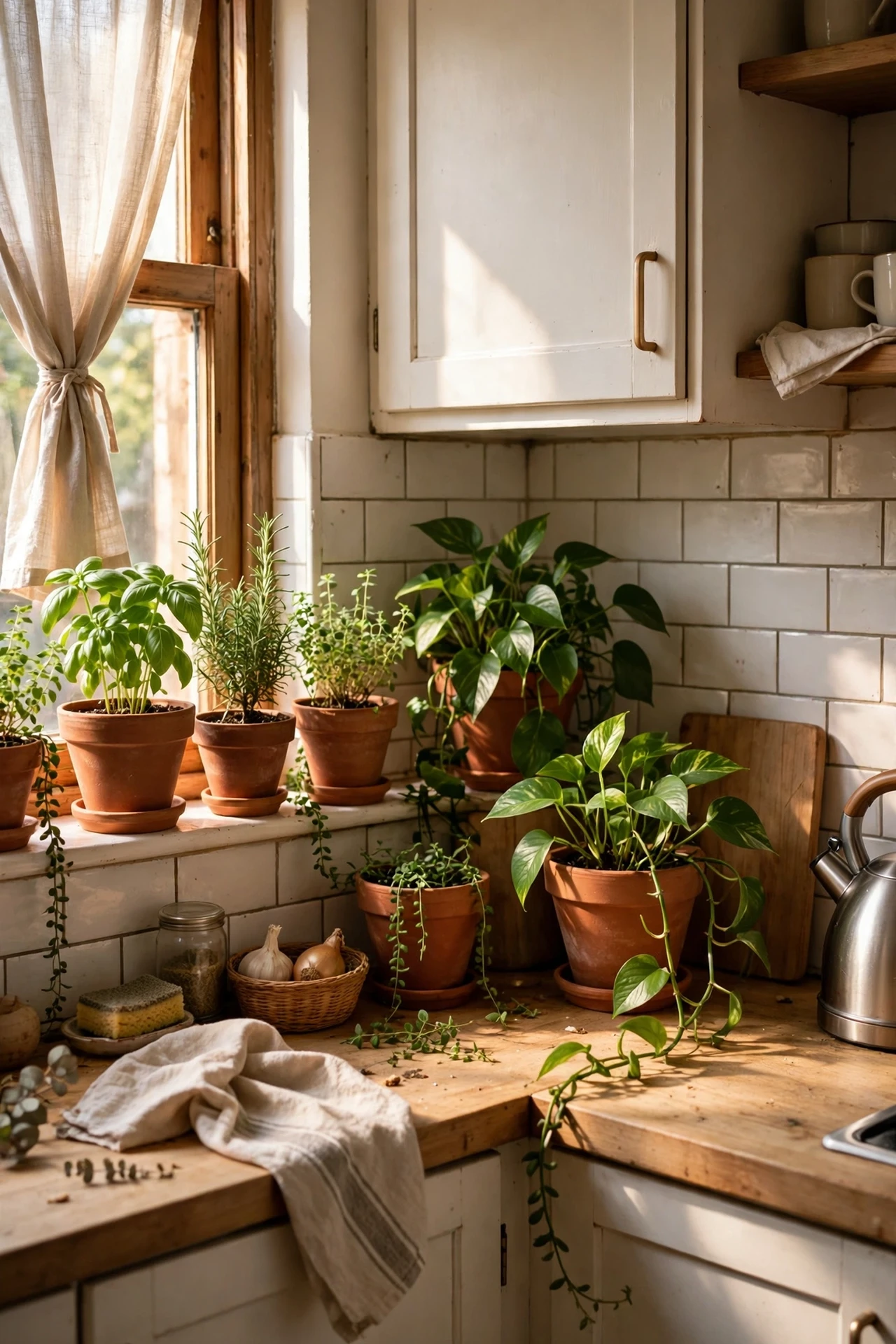
Plants are the ultimate renter’s decor: they cost little, need no permission and move with you. Group three to five in one corner — a trailing pothos on a shelf, a sturdy snake plant on the floor, herbs on the sill — and the kitchen instantly feels alive. Terracotta pots unify charity-shop plants into a deliberate collection. Herbs earn their keep: basil, mint and chives are nearly indestructible on a bright sill. I tried this — the mistake to avoid is scattering single plants around the room. Grouped together they read as a designed corner; spread out they read as clutter.
Cost: ~$15 | Time: 30 minutes
None of these touch the landlord’s property, and all of them come with you — or peel off cleanly — when the tenancy ends. Start with the five-minute wins this weekend and work up to the weekend projects. A rental kitchen can absolutely feel like home.
