21 Warm White Kitchen Ideas on a Dime
Three years ago I painted my kitchen what the tin called “brilliant white,” and it looked like a dentist’s waiting room. Cold, flat, slightly blue in the morning light. I lived with it for a miserable month before a friend leaned against my counter, looked around, and said, “You know the problem? It’s not white. It’s the wrong white.” She was right. A few weeks later I’d repainted in a creamy warm white, and suddenly the same kitchen felt like somewhere you wanted to linger with coffee. These 21 warm white kitchen ideas are everything I learned the expensive way, minus the expensive part.
1. Buttery Cabinet Paint Instead of a Full Replacement
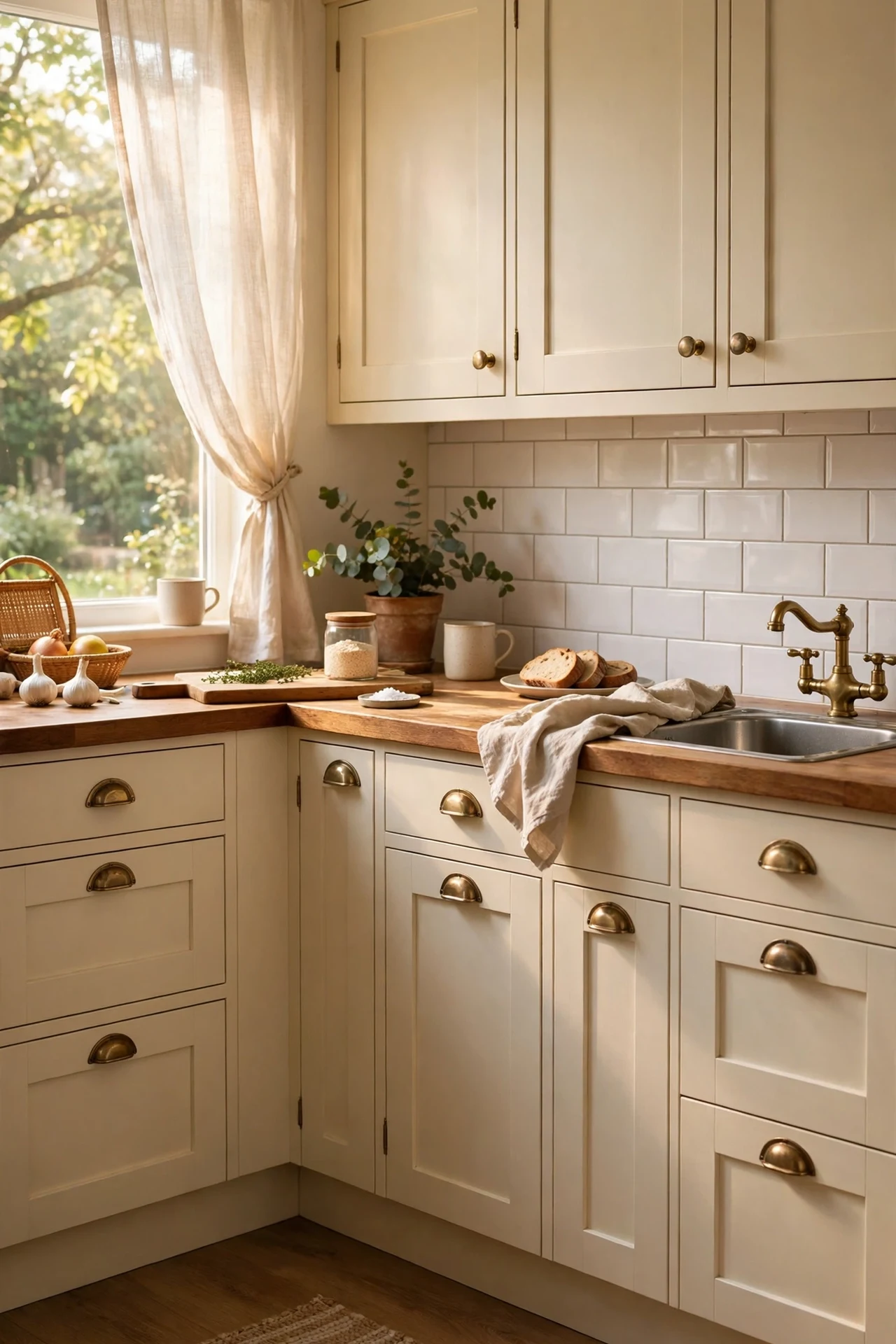
New cabinets cost thousands; a tin of warm white cabinet paint costs about the same as a nice dinner out. I used a shade with yellow-beige undertones on my oak cabinets, and the grain still peeks through just enough to keep them from looking plastic. Clean the doors with a degreaser first, then sand lightly with 120-grit so the paint actually sticks. Two thin coats beat one thick one every time, and I learned that by doing the opposite on my first door. The mistake to avoid is painting in humid weather, because the finish stays tacky for days. If you want more paint-before-you-replace inspiration, check our guide to (see also: kitchen-decor-ideas-under-50-without-renovating).
2. Warm White Peel-and-Stick Backsplash Behind the Stove
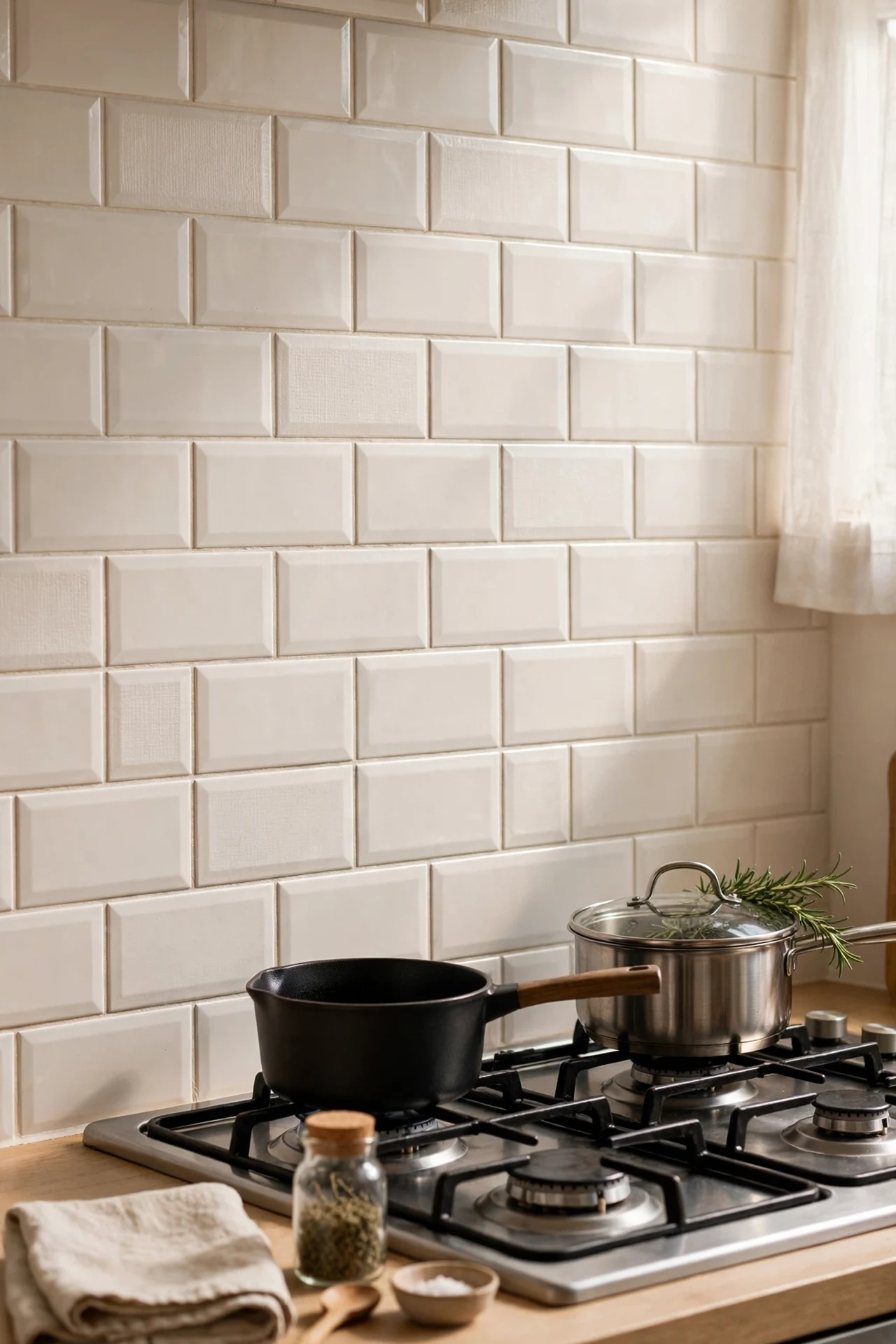
The wall behind my stove was a grease-spattered mess of plain drywall, and real tile felt wildly out of budget. Warm white peel-and-stick subway tiles changed the whole story in an afternoon. I measured the space, cut the sheets with a craft knife, and worked from the middle outward so the pattern stayed even. A hairdryer on low heat helps the adhesive bond around outlets, which is a trick I wish I’d known before my first sheet started peeling at the corner. I tried this on a rental stove wall first and got my full deposit back, so renters can do it with confidence. Wipe them down monthly and they stay bright for years.
3. Cream Chalk Paint for Tired Wooden Chairs
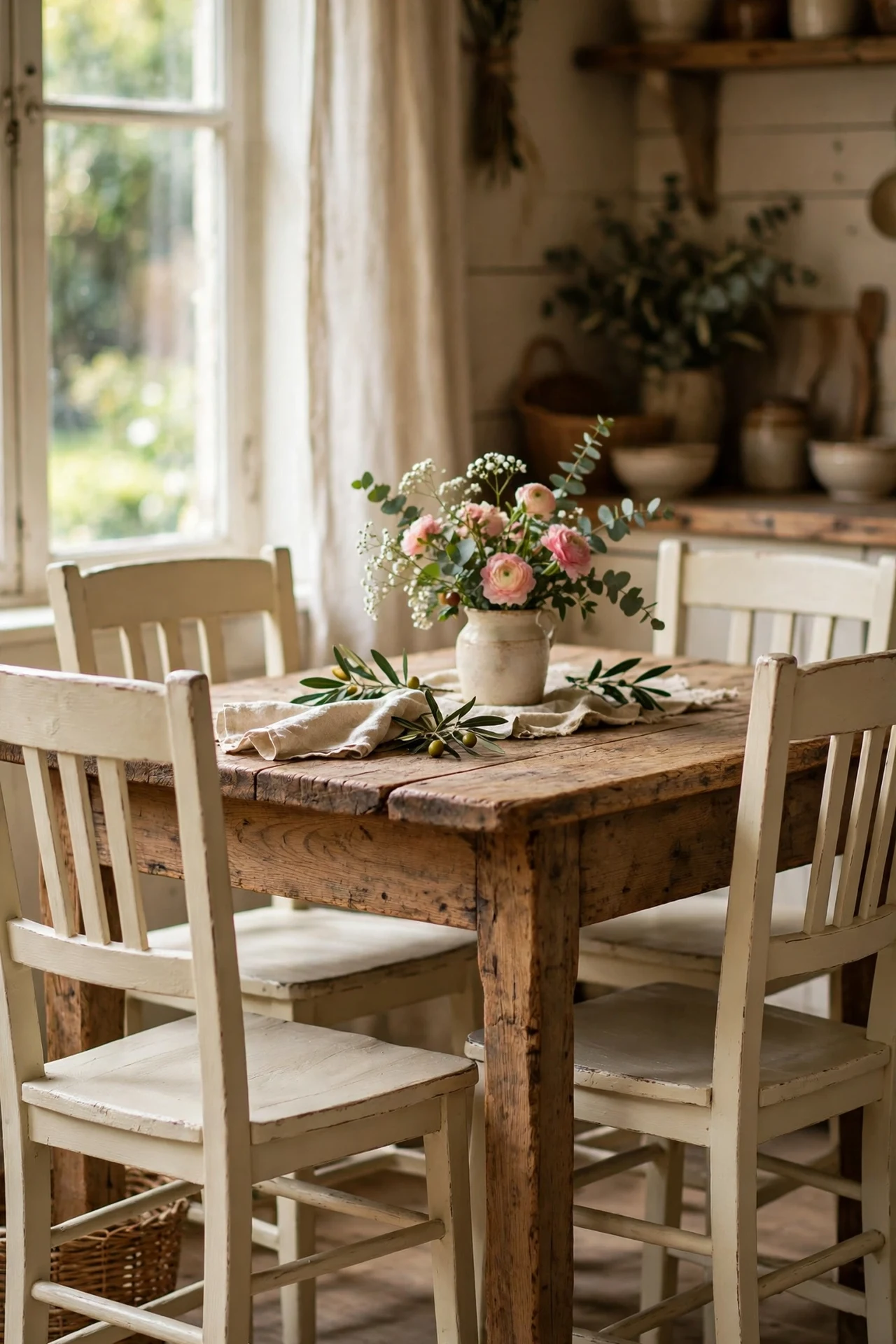
My kitchen chairs were solid but scratched down to bare wood in places, and replacing four of them wasn’t happening. A pot of cream chalk paint fixed them in a weekend for the price of two coffees. I skipped the sanding entirely, just wiped them down and brushed on two coats, then sealed with clear wax so spills wipe off. Distress the edges lightly with sandpaper if you like a lived-in look, or leave them clean for something more polished. The mistake to avoid is skipping the wax, because unsealed chalk paint soaks up tomato sauce like a sponge. My chairs have survived two toddlers and a pasta night since.
4. Ivory Floating Shelves Instead of Heavy Uppers
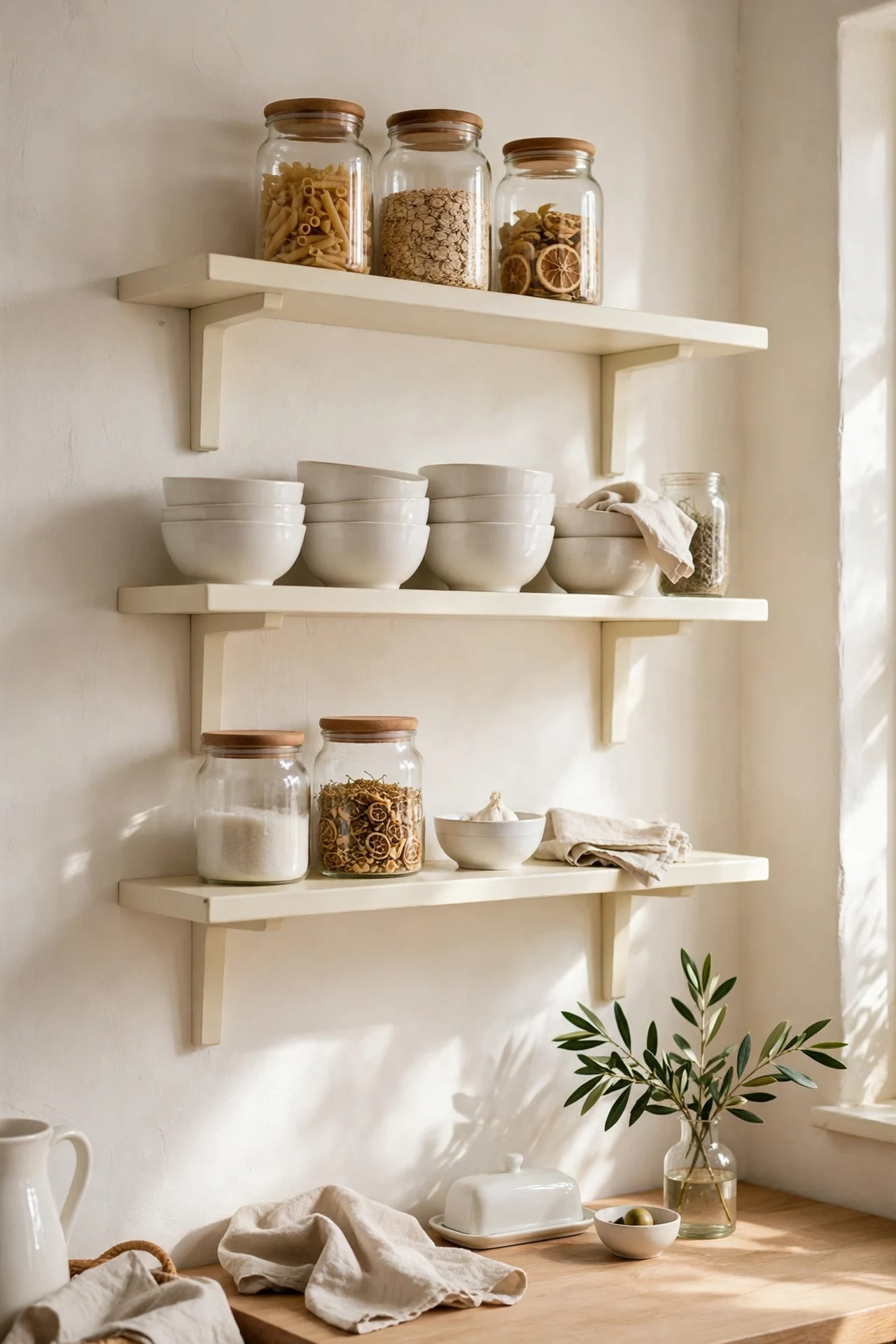
My kitchen felt cramped with all the upper cabinets, so I pulled two down and replaced them with ivory floating shelves made from a single hardware-store plank. Find the studs first with a cheap detector, cut the board to fit the gap, and paint it to match your trim for a built-in feel. I keep everyday bowls and glasses up there, which means they’re always within reach and always look tidy because there’s nowhere to hide clutter. I tried this and the room genuinely felt six inches wider the same evening. Leave breathing room between items, because packed shelves read as storage, not style.
Pro tip: when you’re matching warm white paint, hold the swatch flat against the cabinet in daylight, not under the shop’s fluorescent tubes. Store lighting lies.
5. Milk-Glass Pendant Shades That Flatter Everything
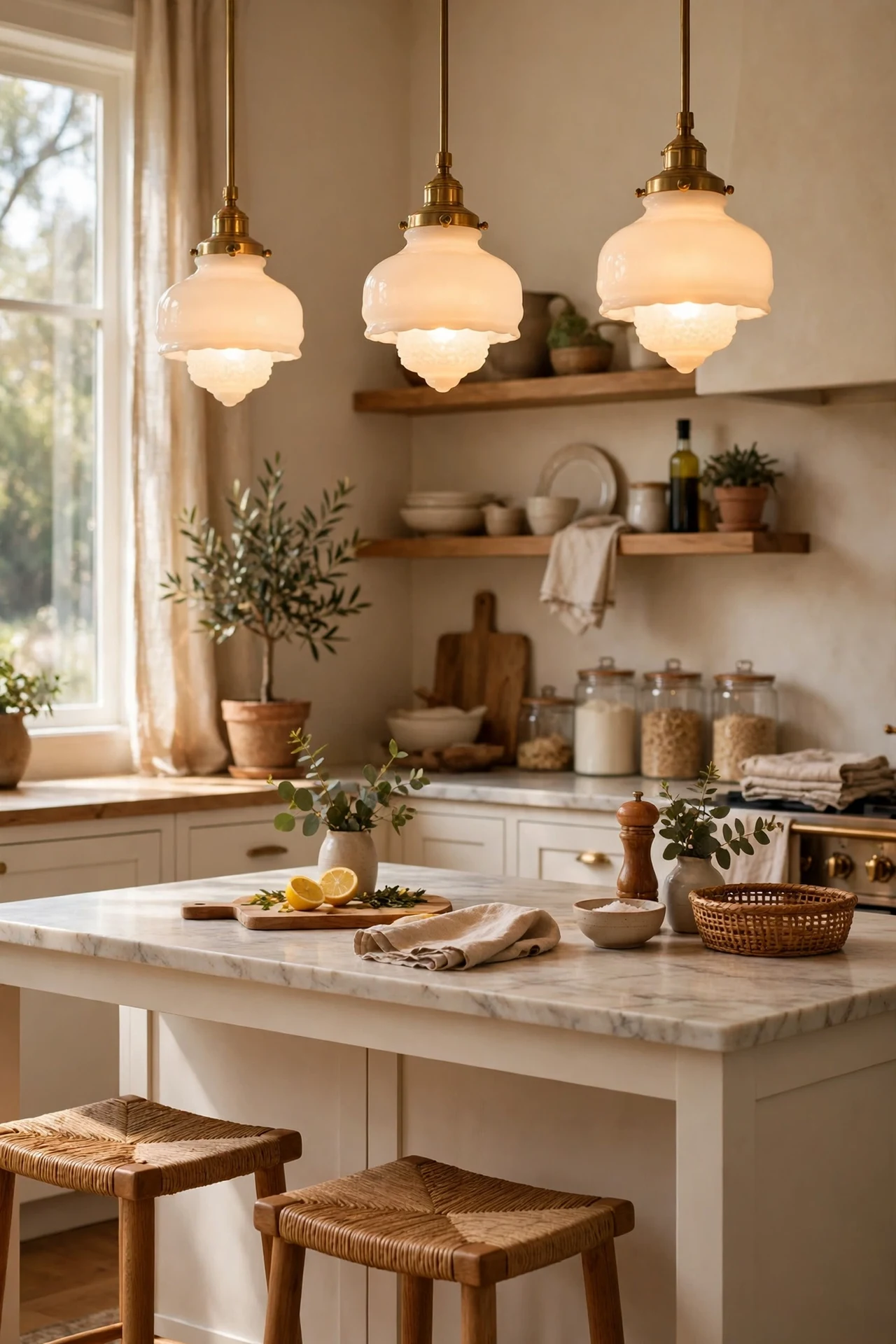
The bare-bulb pendants I inherited made everyone look like they hadn’t slept since 2019. Swapping them for milk-glass shades softened the light instantly and warmed up the whole room. You can find them secondhand for next to nothing, and most screw onto standard pendant kits, so you only need a screwdriver and ten minutes per light. I grabbed two mismatched ones from a flea market and painted the fitters the same warm white so they read as a set. The mistake to avoid is buying shades before checking the fitter size, because there are two common diameters and they are not interchangeable.
6. Off-White Linen Curtain Panels for the Window
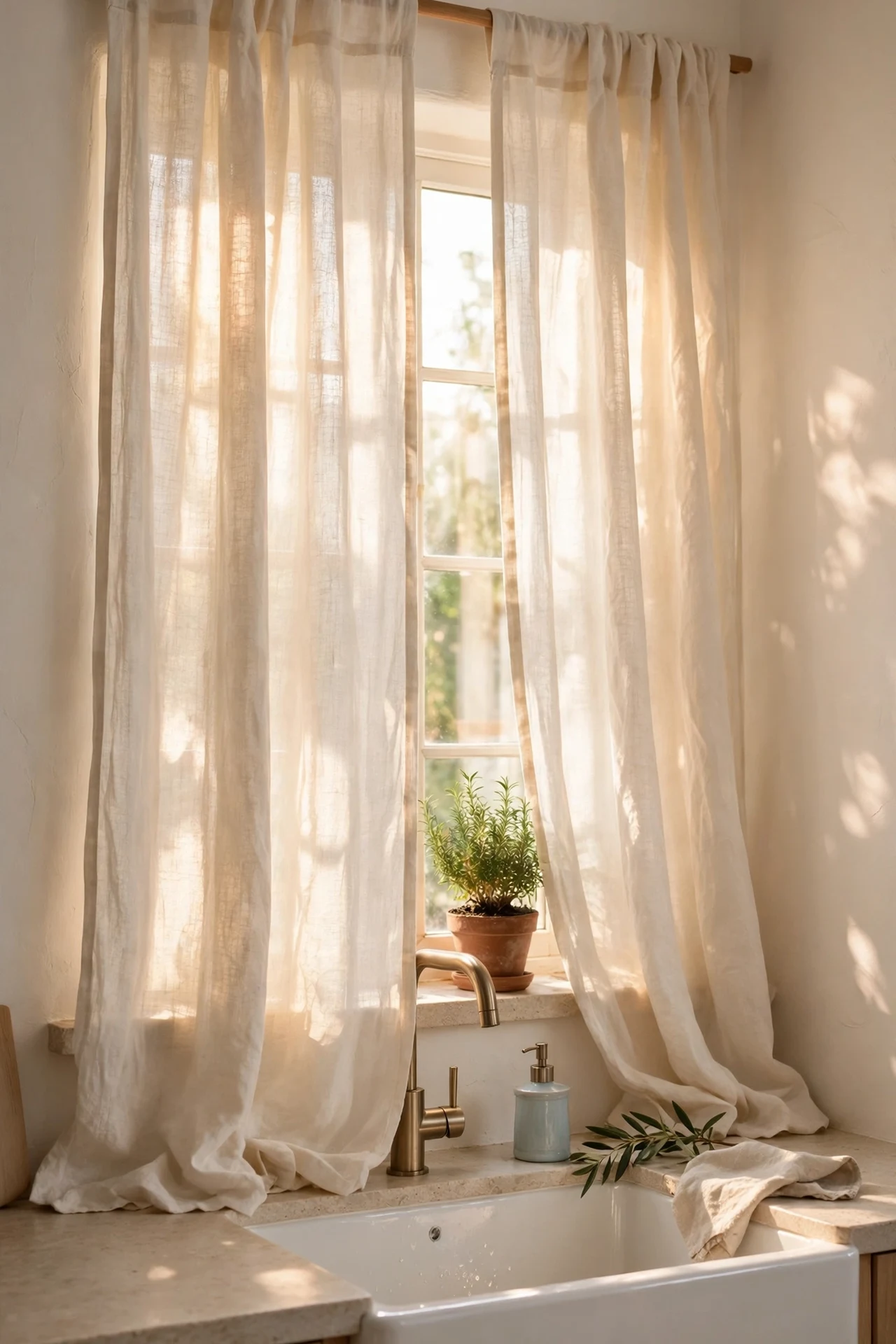
My kitchen window had a sad plastic blind that yellowed every summer, and linen panels made the whole room feel finished. I hung them high and wide on a cheap tension rod inside the frame so no drilling was needed. Wash the fabric first to get the shrinkage out, then hem to just kiss the sill so they don’t drag into dishwater splashes. I tried café-length panels first and they looked stingy, so full drops to the sill genuinely matter. The linen lets daylight through while hiding the view of my neighbour’s bins, which might be the best money I’ve spent all year.
7. A Cream Rug Runner Along the Galley
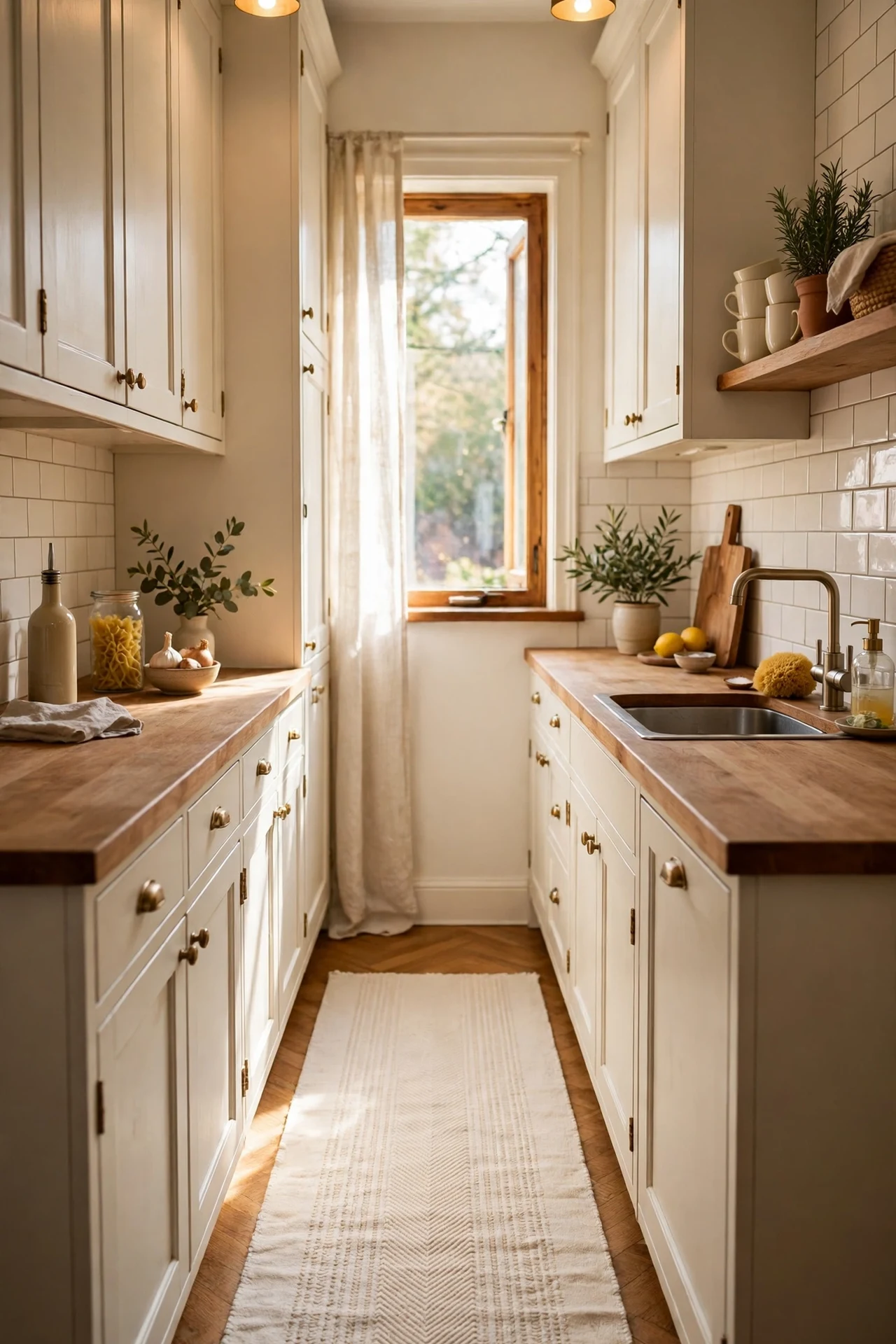
Cold tile underfoot made my galley kitchen feel like a corridor, so I laid a washable cream runner down the middle. Get one you can toss in the machine, because a kitchen rug gets more abuse in a month than a hallway rug gets in a year. Measure your walkway and leave a few inches of floor visible on each side so it reads as intentional, not wall-to-wall. I tried a white cotton one first and it greyed within weeks, so cream with a subtle pattern is far more forgiving. It also quiets the clatter of dishes, which my downstairs neighbours appreciate more than they’ll admit.
8. Fresh Cabinet Knobs on Old Doors
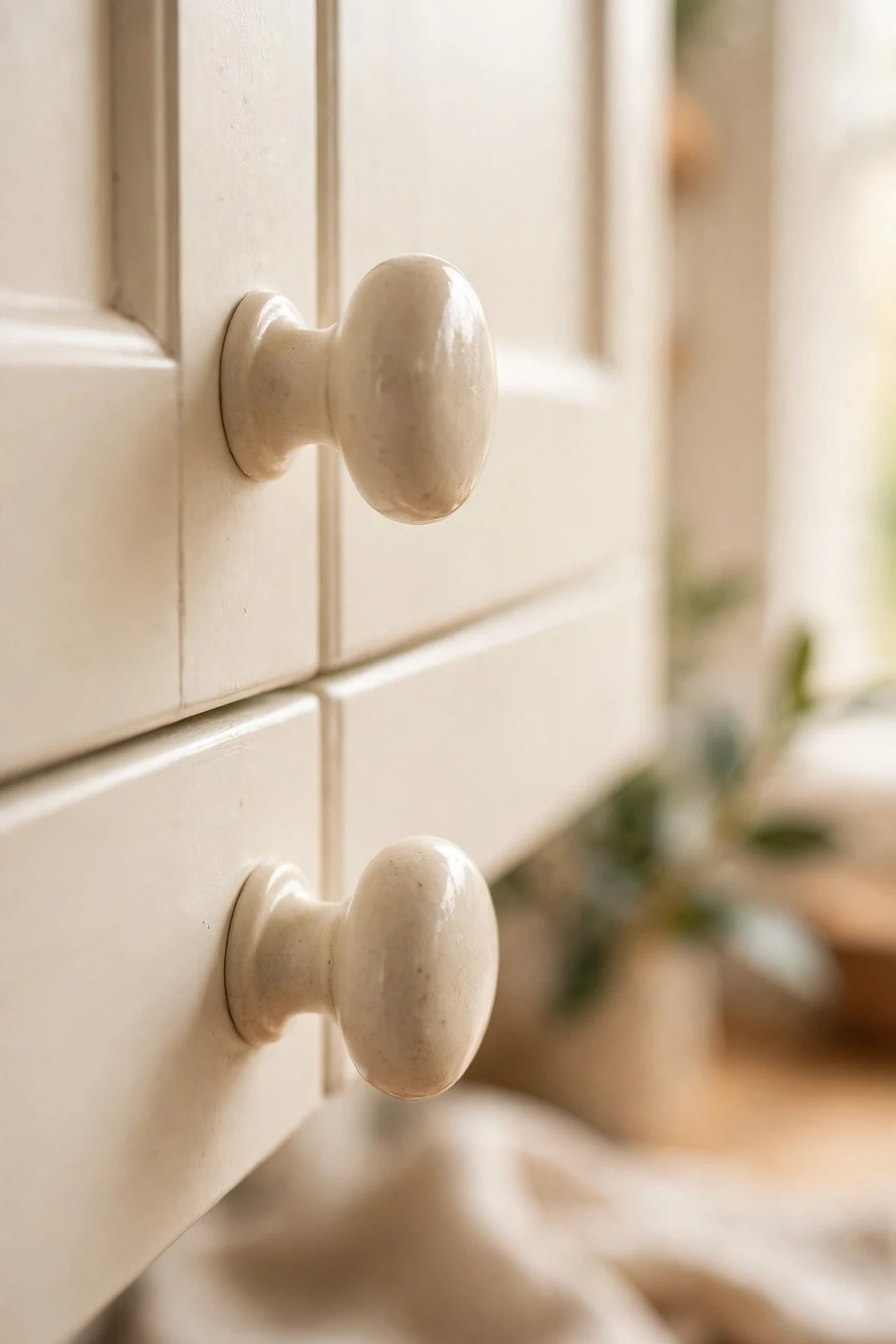
Sometimes the cheapest change is the one you touch a hundred times a day. My brass 90s knobs dated the kitchen more than anything else, so I swapped them for simple cream ceramic ones at about a pound each. Unscrew the old, pop in the new, and you’re done in under an hour for the whole kitchen. If the screw holes are stripped, fill them with a toothpick and wood glue, let it dry, and re-drill. I tried this on a Sunday morning and stood back genuinely surprised at how much newer the cabinets looked. When your kitchen feels tired, details like this deserve a look at (see also: small-kitchen-ideas-that-feel-twice-as-big) for the bigger picture.
Pro tip: keep one old knob in a drawer as a paint reference. When you touch up chips later, you’ll thank yourself for having the exact colour on hand.
9. Grout-Pen Magic on Tired Tile
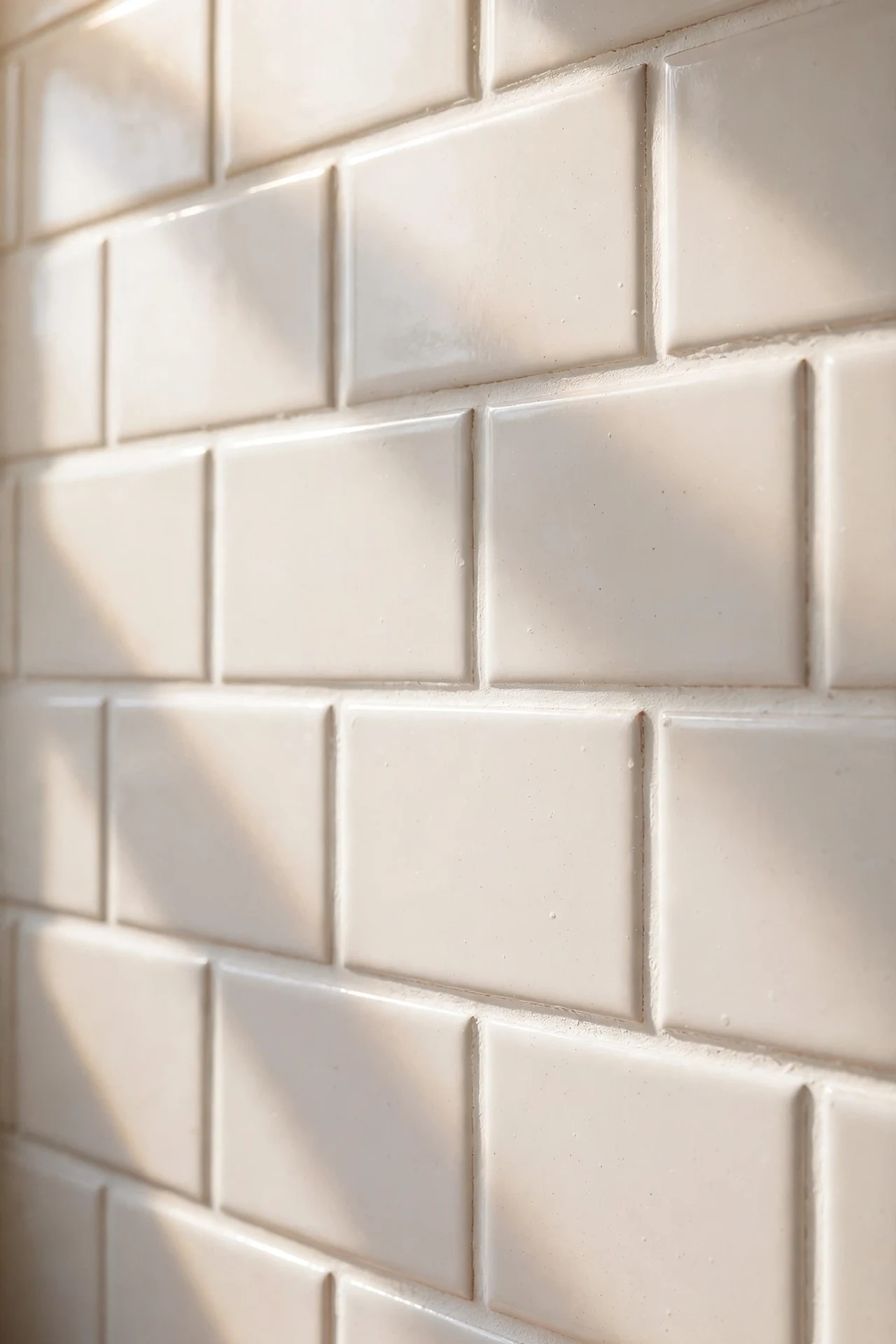
My backsplash grout had gone the colour of weak tea and no amount of scrubbing fixed it. A warm-white grout pen, basically a felt-tip marker for grout lines, made the tile look freshly laid in about forty minutes. Shake the pen well, draw along the grout lines, and wipe any wobbles off the tile with a damp cloth before it sets. I did my whole backsplash during one podcast episode. The mistake to avoid is pressing too hard, which floods the line and takes ages to dry. It won’t last forever in a steamy spot, but at this price you can redo it yearly and still be ahead.
10. Warm White Contact Paper Inside Glass Cabinets
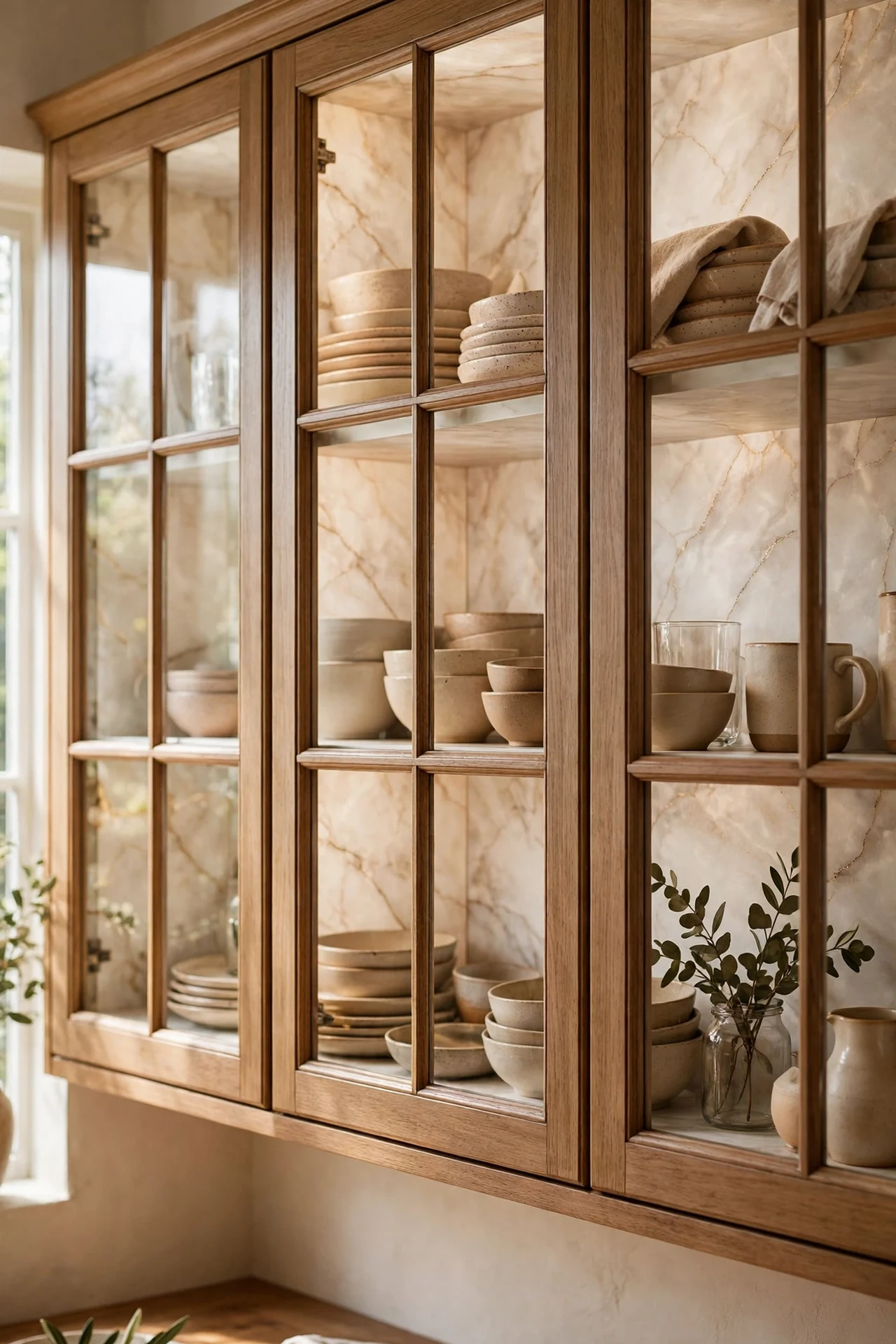
The insides of my glass-front cabinets were dingy beige, which made even nice dishes look dull. I lined the backs with warm-white marble-effect contact paper, and suddenly the shelves looked like a boutique display. Cut the paper slightly oversized, stick it from the top down, and smooth bubbles out with a credit card as you go. A sharp craft knife trims the edges clean. I tried this on one cabinet first as a test and ended up doing all three the same afternoon. It’s completely reversible, so it’s one of the safest experiments on this list.
11. Beige Stoneware Crocks for Utensils
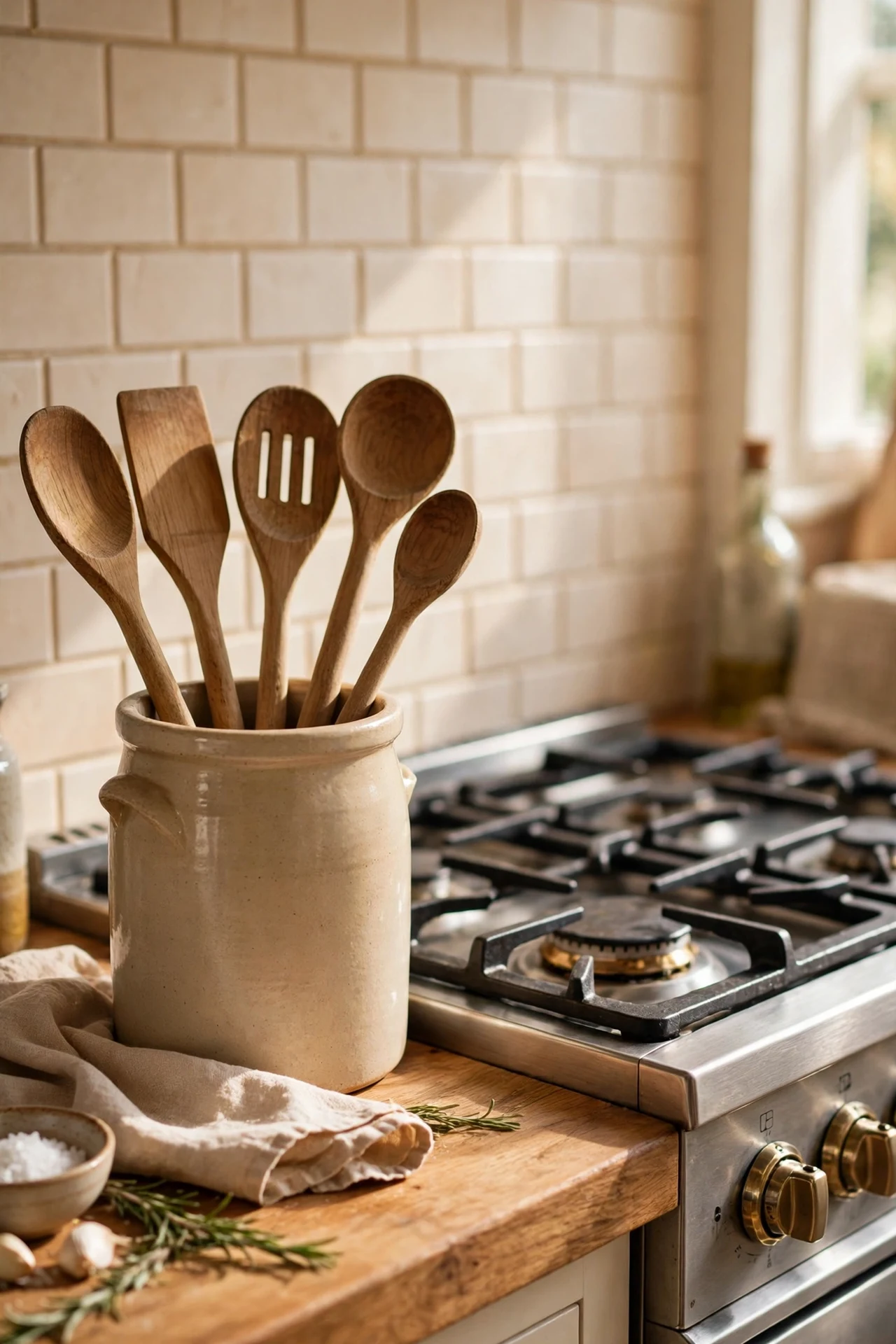
My utensil drawer was a jammed-up nightmare, so I moved the daily tools into a big beige stoneware crock beside the stove. Charity shops are full of them for pocket change, and the warm tone fits the palette without matching anything exactly. Put the crock within arm’s reach of the hob, keep only what you actually use weekly, and the rest can stay in the drawer. I tried this and cooking felt faster because I wasn’t digging for the spatula every time. A squat wide crock won’t tip when you yank out the ladle, which is the detail that matters.
12. Matching Cream Canisters Across the Counter
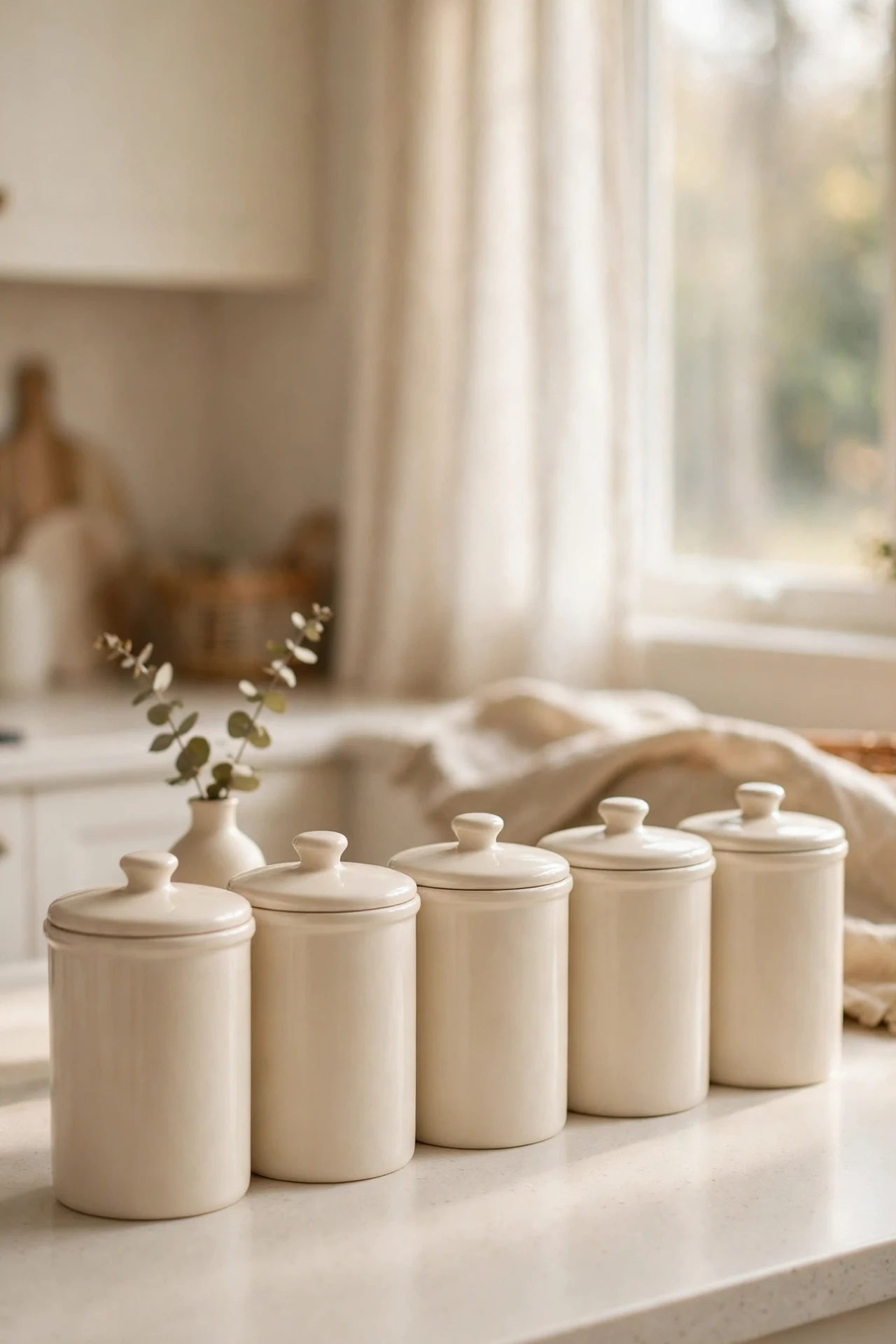
Three clashing canisters made my counter look messy even when it was clean. I replaced them with a matching cream set from a discount store, decanted the flour, sugar, and coffee, and the whole counter calmed down. Measure your shelf height before buying, because a tall canister under low uppers is a daily annoyance. Label the lids if you ever mix up salt and sugar, and I say that from experience. Loved this one? Pin it for later so you remember the set when you spot it in the shops. Matching storage reads as intentional, which is half of what makes a kitchen feel styled.
Pro tip: decant dry goods into your canisters the day you buy them, not “later.” Later never comes, and half-open bags are where the clutter creeps back in.
13. A Painted Pantry Door in Cream
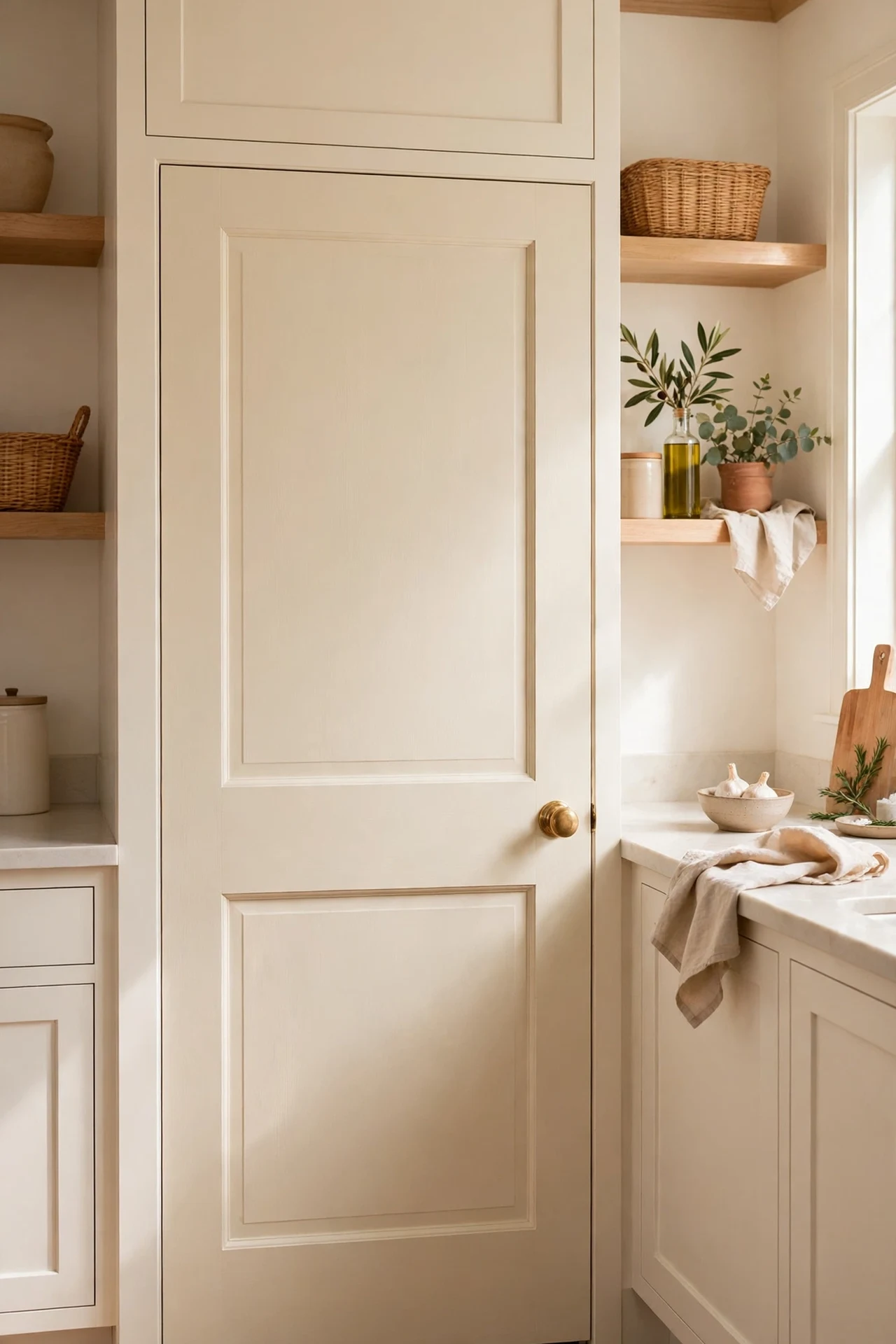
My pantry door was the only thing in the room I hadn’t touched, and it stuck out like a sore thumb. One coat of cream paint, a new knob, and it folded into the design instead of fighting it. Remove the door to paint it flat so you don’t get drips, and paint the edges too, because you see them every time you open it. I painted mine in the garden on a dry afternoon and had it back up by dinner. The mistake to avoid is painting over greasy fingerprints without degreasing first, or the paint will peel exactly where your hand grabs. For more small-kitchen wins, see (see also: peel-and-stick-kitchen-backsplash-ideas-renters-swear-by).
14. Woven Baskets Filling the Dead Space Above Cabinets
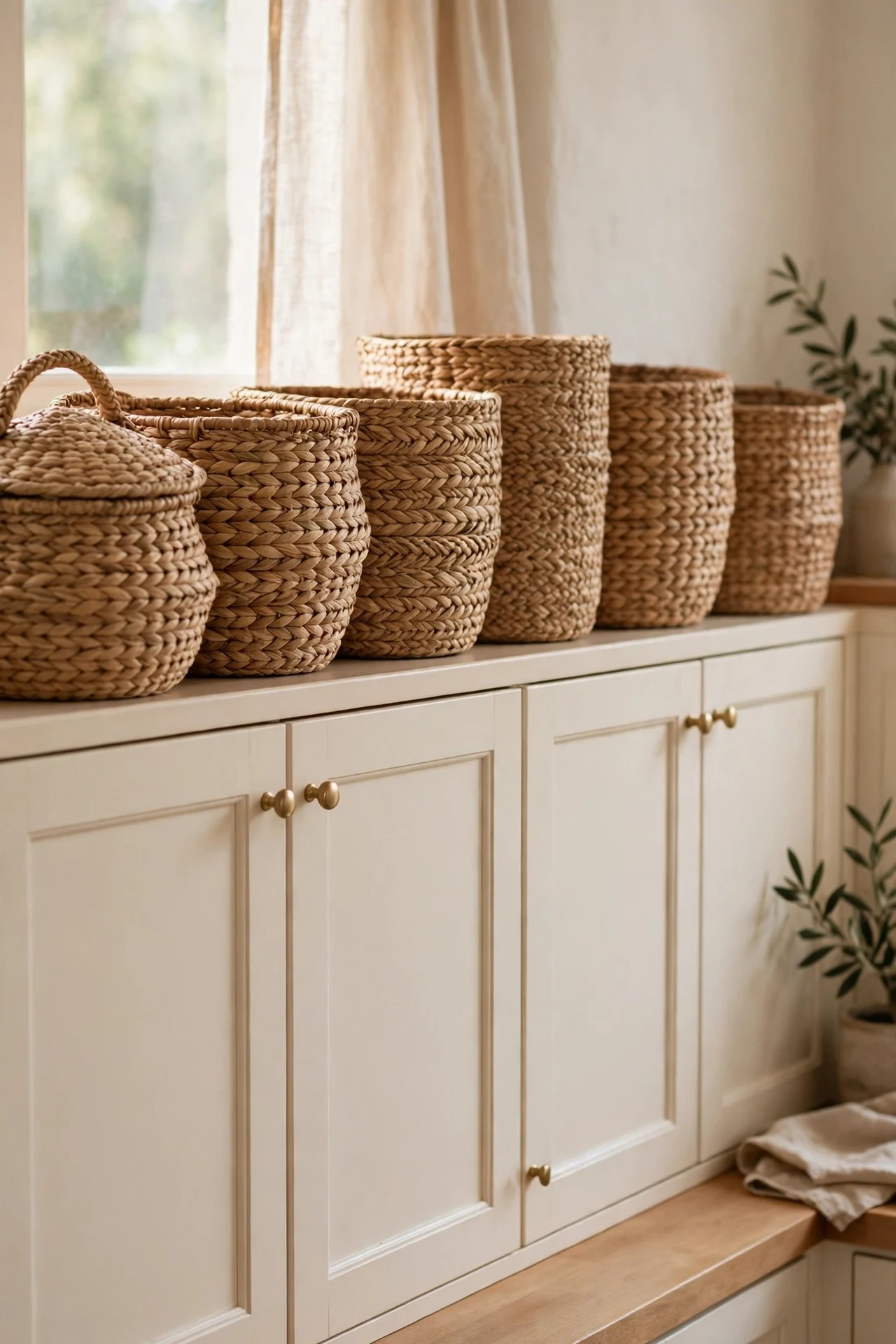
The gap above my cabinets collected dust and looked unfinished, so I lined it with woven seagrass baskets. They hide the rarely used stuff like the turkey roaster and the fondue set I pretend I’ll use. Buy baskets slightly narrower than the gap so you can slide them out, and label the bottoms so you remember what’s inside. I tried this and the kitchen instantly looked more finished, like someone meant it to look that way. Dust them with a damp cloth twice a year and they’ll outlast most of your furniture.
15. Chalkboard Labels on Cream Pantry Jars
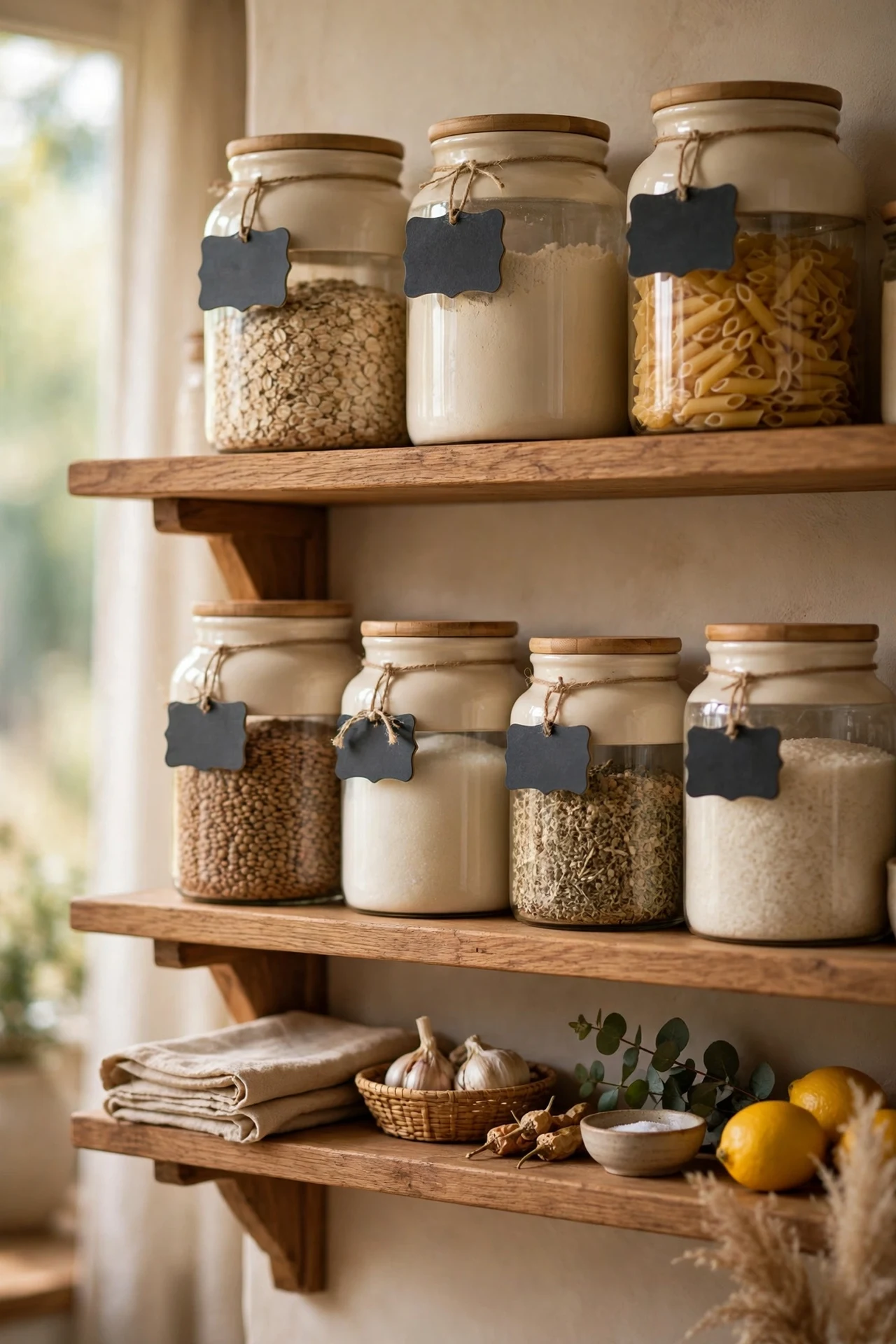
Decanting into matching cream jars looked great until nobody could tell the rice from the couscous. Little chalkboard labels with white chalk pen solved it and added a homely touch. Stick the labels at the same height on every jar so the shelf reads as one tidy row, and write in your neatest hand, because you’ll read these daily. I tried this and my partner stopped asking “what’s in this one” within a week. Rewritable labels mean you can rotate what’s inside without buying new jars, which keeps the system flexible.
16. Warm White Painted Ceiling, the One-Coat Wonder
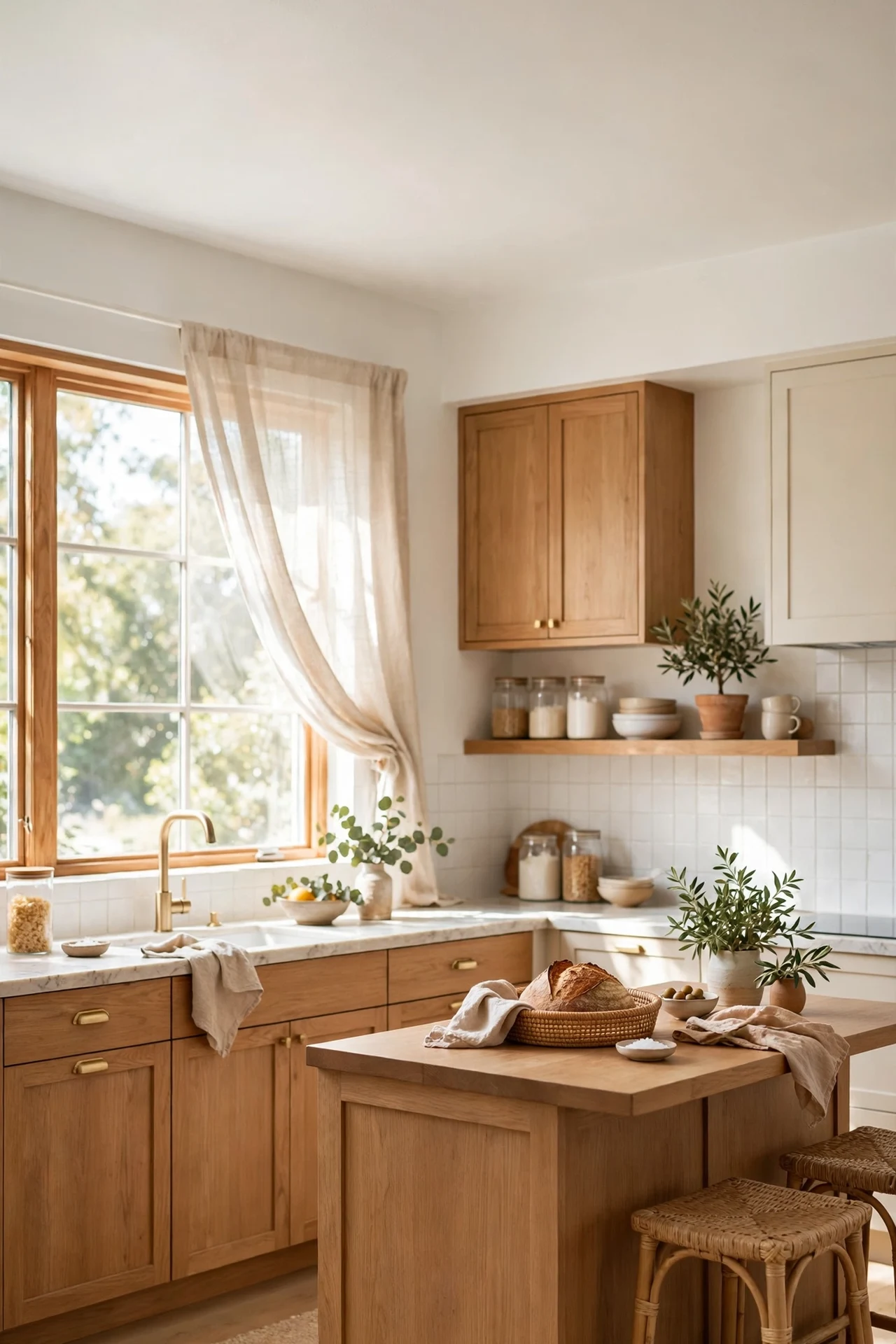
Nobody looks at the ceiling until it’s dingy, and then it’s all you can see. Mine had yellowed from years of cooking steam, so one coat of warm-white ceiling paint lifted the whole room. Roll it on in overlapping W shapes, work in sections, and don’t go back over half-dry paint or it streaks. I did this on a Saturday morning and the kitchen felt brighter before I’d even finished the first wall’s worth. The mistake to avoid is using wall paint on the ceiling, because it drips and flashes. Flat ceiling paint hides a multitude of sins.
Pro tip: paint the ceiling before the walls if you’re doing both. Any drips land on unpainted walls, not on your finished work.
17. Vintage Brass Hooks for Mugs and Towels
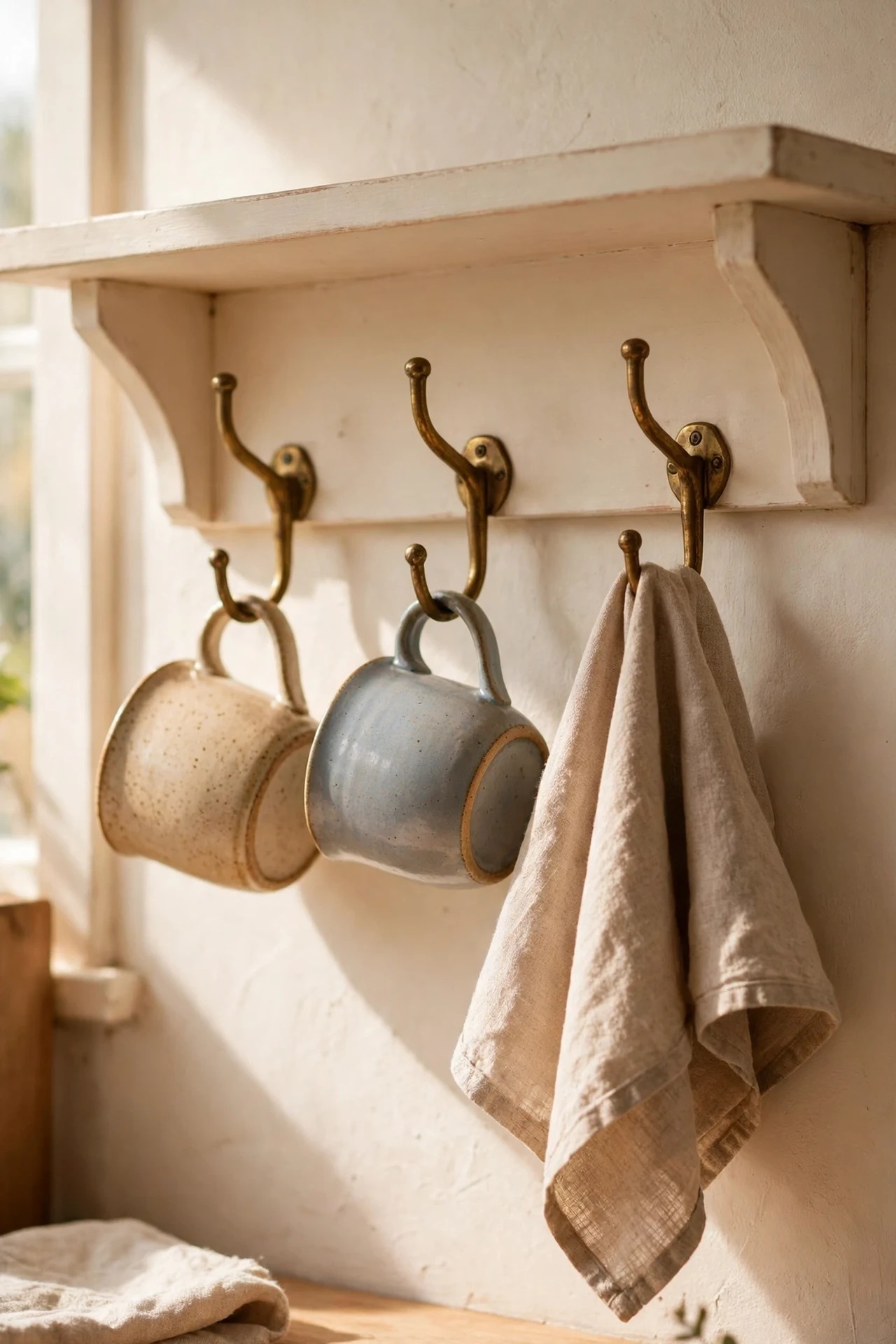
Warm brass against warm white is one of those combinations that just works, and hooks are the cheapest way to get it. I screwed a row of vintage-style brass hooks under a shelf for mugs and hung the tea towel on the end one. Pre-drill the holes so the shelf doesn’t split, and space the hooks wide enough that chunky mugs don’t clink. I tried this with plain steel hooks first and they looked cold, so brass genuinely makes the difference here. Flea markets sell them by the bagful for almost nothing if you don’t mind a little patina.
18. A Soft White Pendant Hung Over the Island
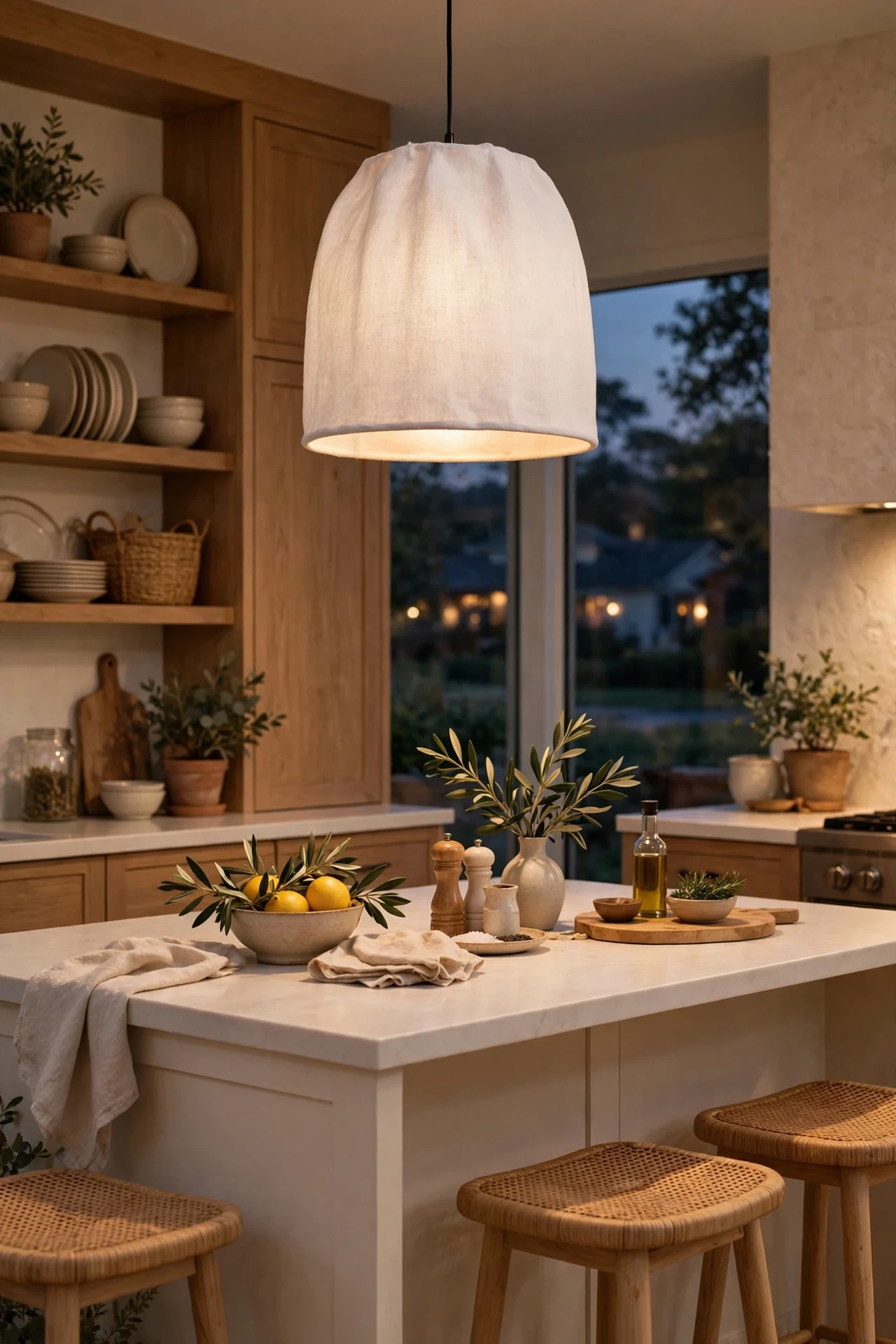
My island sat in a pool of harsh downlight that made it a workspace, not a gathering spot. Hanging one soft white pendant over it, on a longer cord, turned it into the place everyone leans. Turn off the power at the breaker before you touch anything electrical, hang the pendant about 75cm above the surface, and use a warm bulb around 2700K. I tried this and evening cooking suddenly felt cosy instead of clinical. If your ceiling is high, a second pendant down the island’s length keeps the light even.
19. Cream Dish Towels Hung Like Decor
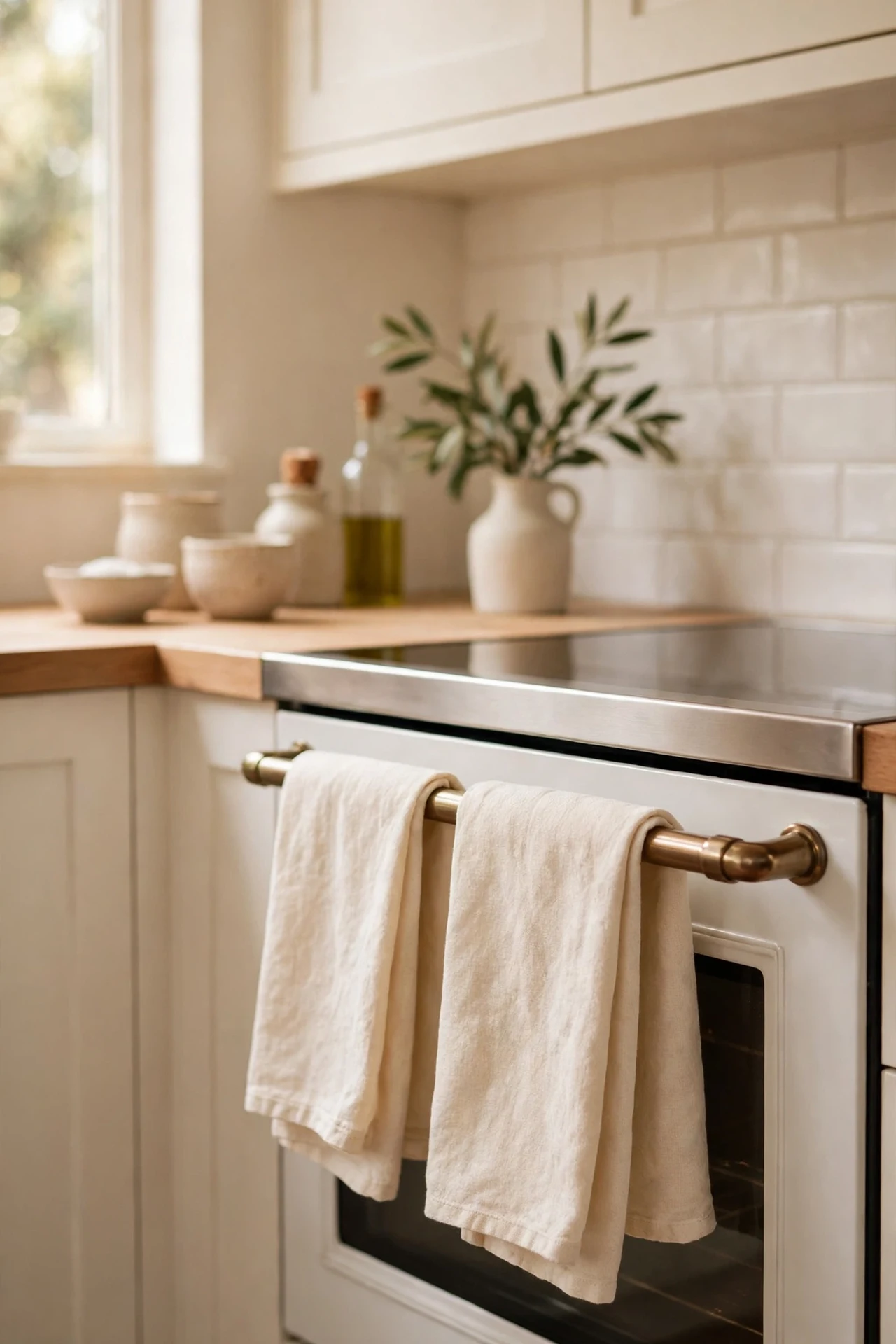
It sounds silly, but matching cream dish towels folded over the oven handle genuinely styled my kitchen. I bought a pack of plain ones, folded them in thirds, and suddenly the oven looked intentional. Keep two in rotation and wash weekly, because a grimy towel undoes the whole effect. I tried patterned towels first and they clashed with everything, so plain cream won. It’s the smallest change on this list and possibly the cheapest, which is why it deserves its spot.
20. Butcher Block Left Bare and Oiled
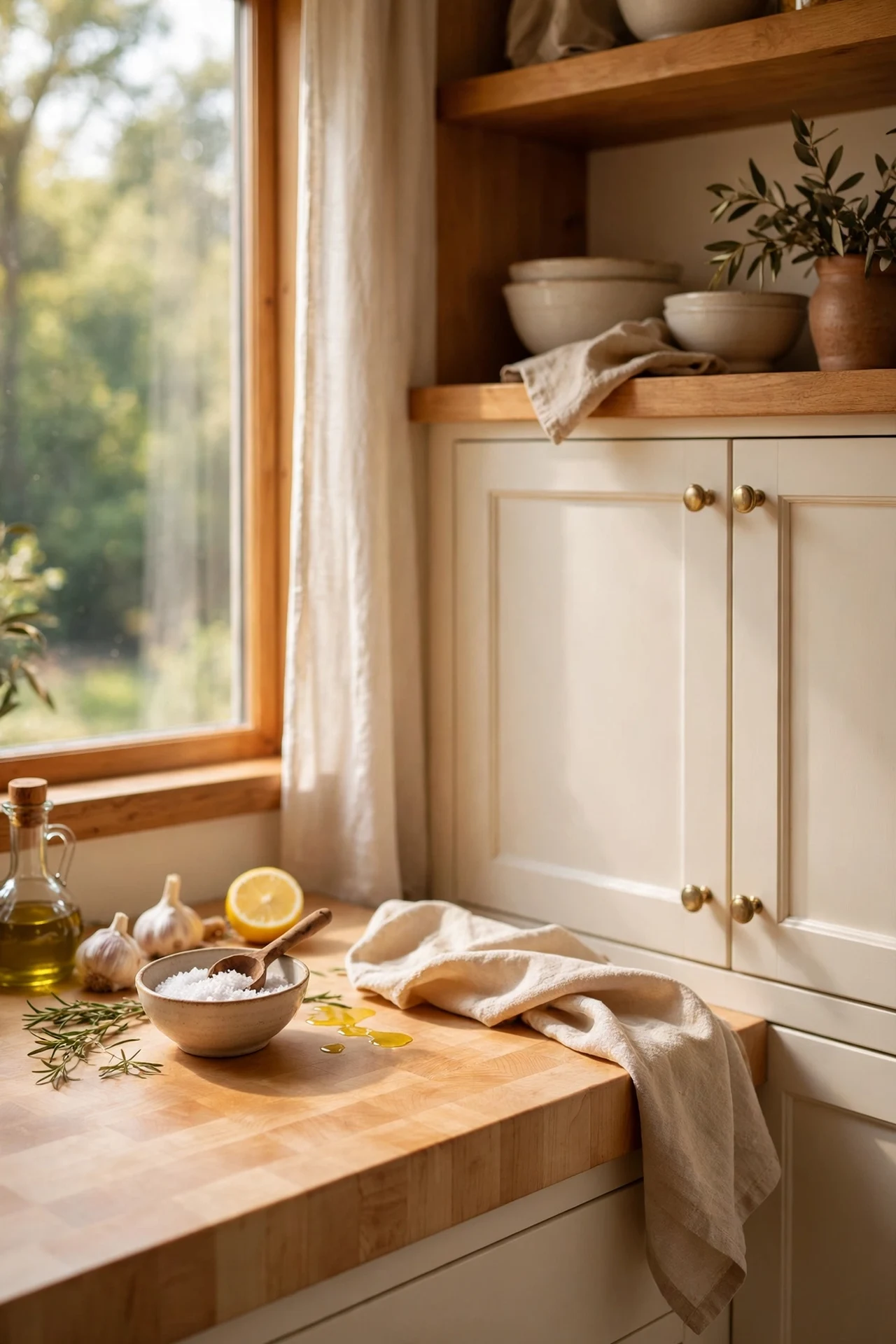
My butcher block counter was stained a dark walnut that swallowed all the light, so I sanded it back and oiled it instead. Food-safe mineral oil, rubbed in with a rag, gives that pale honeyed tone that glows against warm white cabinets. Sand with the grain through progressively finer grits, wipe the dust off, and apply two thin coats of oil a day apart. I tried this and the counter looked brand new, warmer, and somehow more expensive. The mistake to avoid is using cooking oil, which goes rancid; mineral oil stays neutral forever.
Pro tip: re-oil the butcher block whenever water stops beading on it. Five minutes with a rag, and it looks freshly done every time.
21. Battery Tea Lights in Frosted Glass for Evening Glow
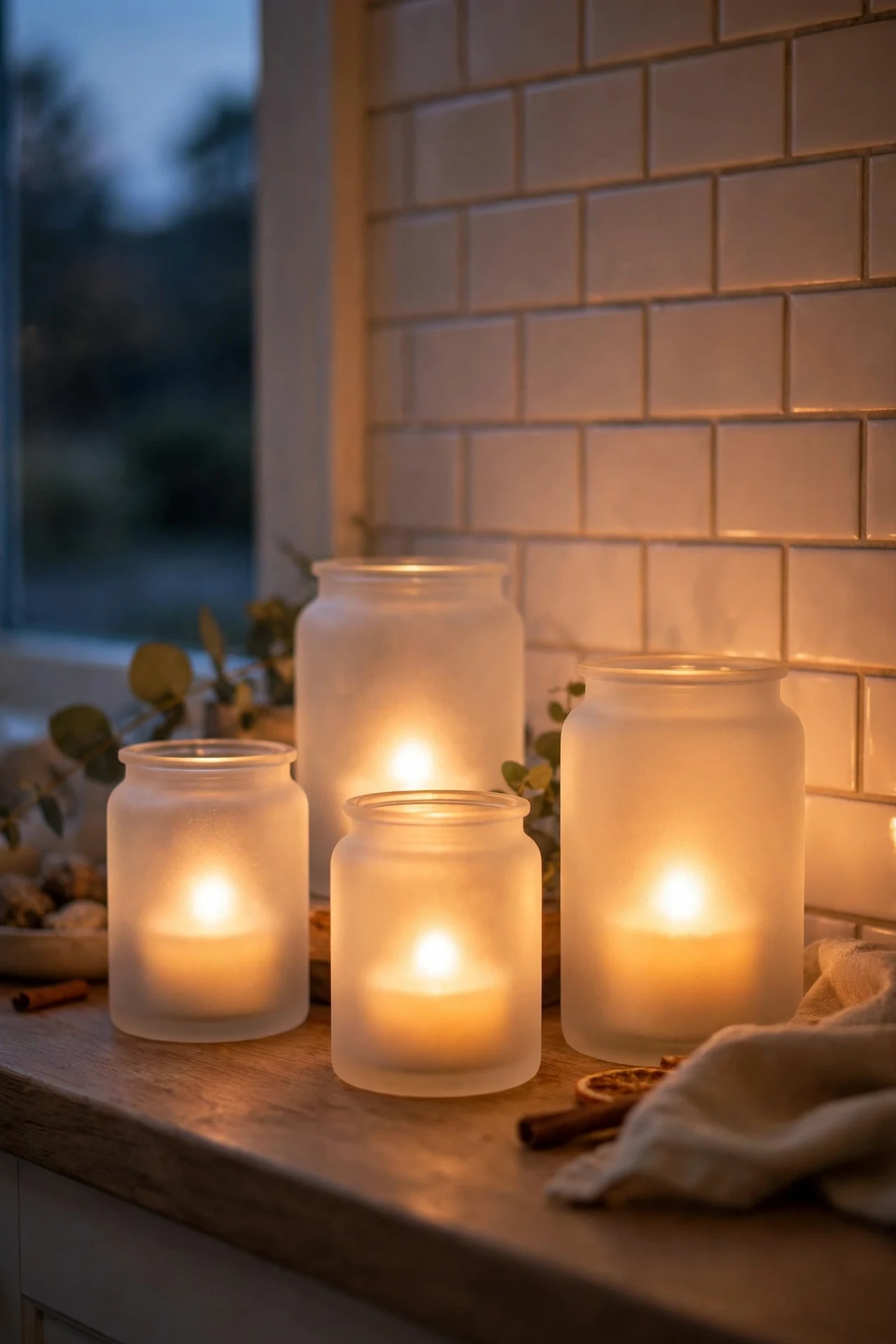
The cheapest atmosphere on this list is a handful of battery tea lights dropped into frosted glass jars along the backsplash. At dusk they throw a warm shimmer across the warm white surfaces that candles can’t match without the fire risk. Cluster them in odd numbers, three or five, and put them on a timer so you don’t have to remember. I tried this before a dinner party and guests asked what I’d “done” to the kitchen, which was nothing but light. Keep spare batteries in the drawer so the magic doesn’t run out mid-evening.
A warm white kitchen isn’t about spending more, it’s about choosing the right warmth everywhere it counts. Pick three ideas from this list, do them this weekend, and notice how the room feels on Monday morning.
