23 Kids Room Organization Ideas for Small Spaces
Small kids rooms fill up fast, because toys, books, and clothes all arrive faster than the room grows. These Kids Room organization ideas are built for real family life, not show homes, and every one uses cheap bins, shelves, or hooks you can fit in a weekend. You do not need a bigger room, you need a place for everything and a routine your child can actually follow.
1. Labelled Low Bins for Everyday Toys
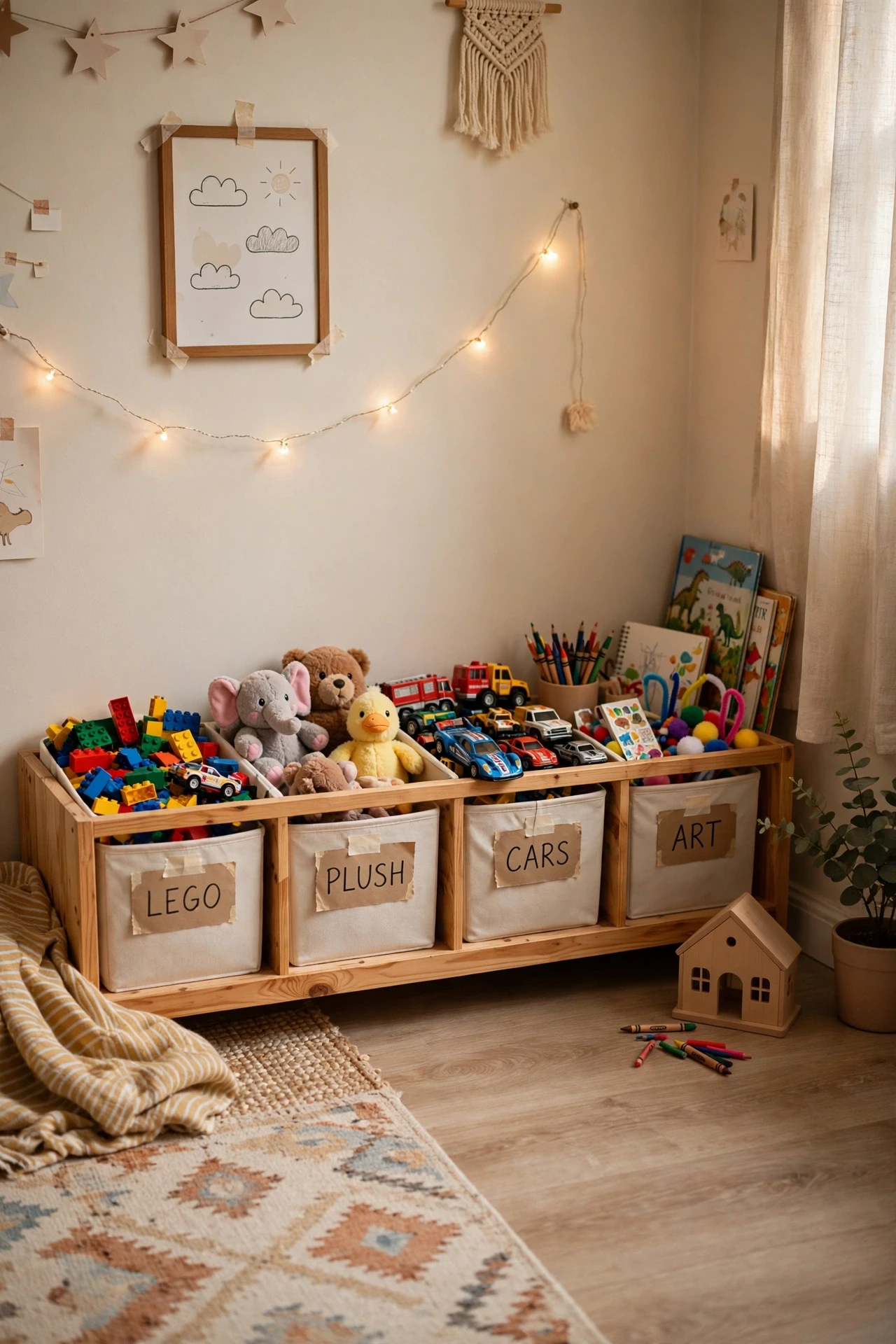
I tried this first in my daughter’s room because the toy box had become a black hole where nothing was ever found twice. Low bins on an open shelf let kids see everything at once, so they can pick one bin, play with it, and put it back without my help. Buy three or four matching bins, stick a picture label on the front for younger kids, and keep the bins at knee height. Sort toys by type first, then give each bin one job only, because a mixed bin fills up and stops working within a week. I made the mistake of using bins without labels at first, and the blocks ended up in the doll bin every single day.
Cost: ~$12 | Time: 30 minutes
2. Rolling Boxes Under the Bed
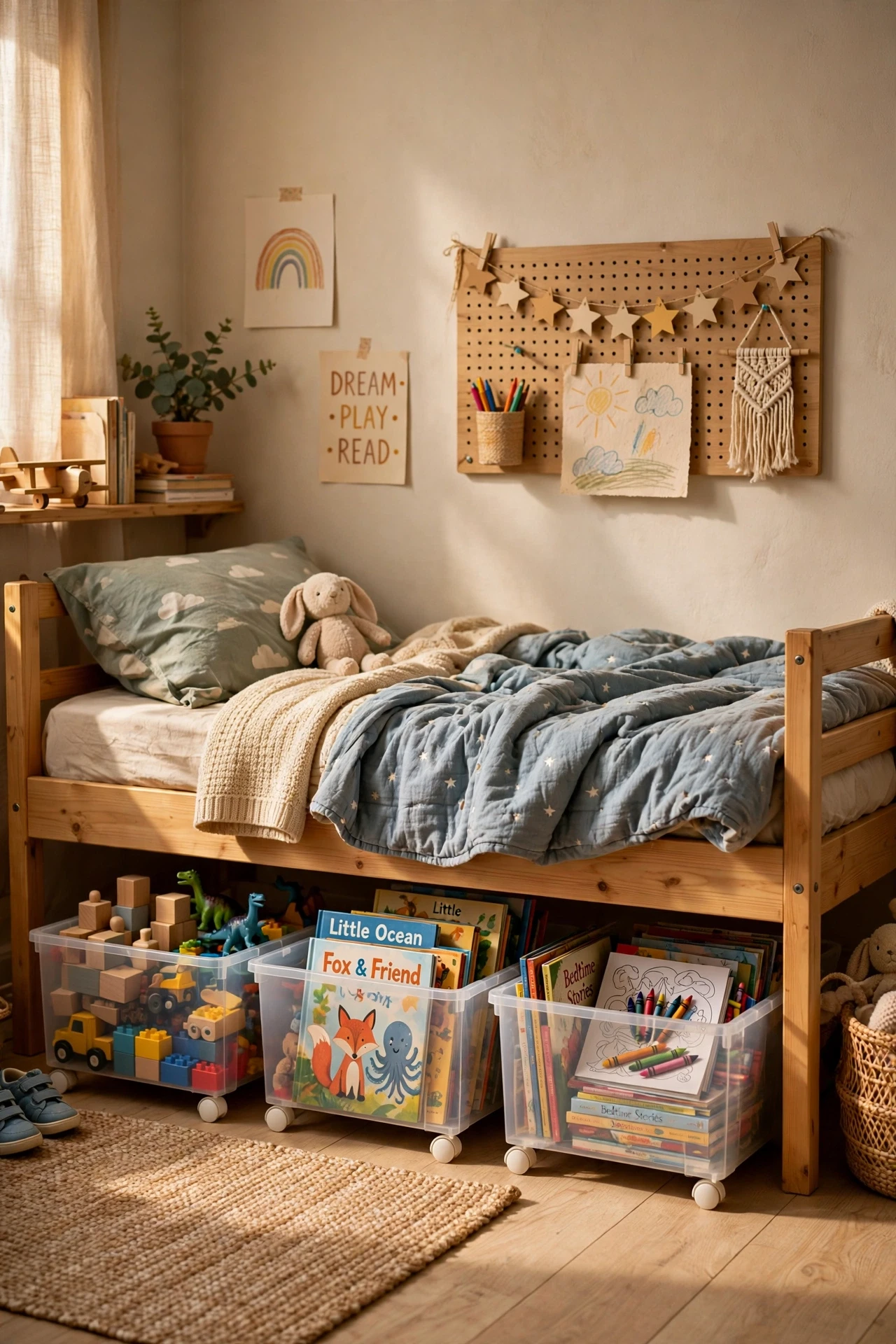
The space under a bed is often wasted in a small room, and rolling boxes turn it into hidden storage kids can actually reach. Measure the clearance under the bed first, then buy shallow boxes with wheels that slide out smoothly on your floor type. Fill one box with board games, one with building sets, and one with dress-up clothes, then push them back under the bed. I tried this with my son’s LEGO sets, and clean-up finally took five minutes instead of twenty because the box rolled right to where he was playing. Avoid boxes without lids if your floor is dusty, since open boxes collect fluff and crumbs fast.
Cost: ~$15 | Time: 20 minutes
3. Wall Ledges for Picture Books
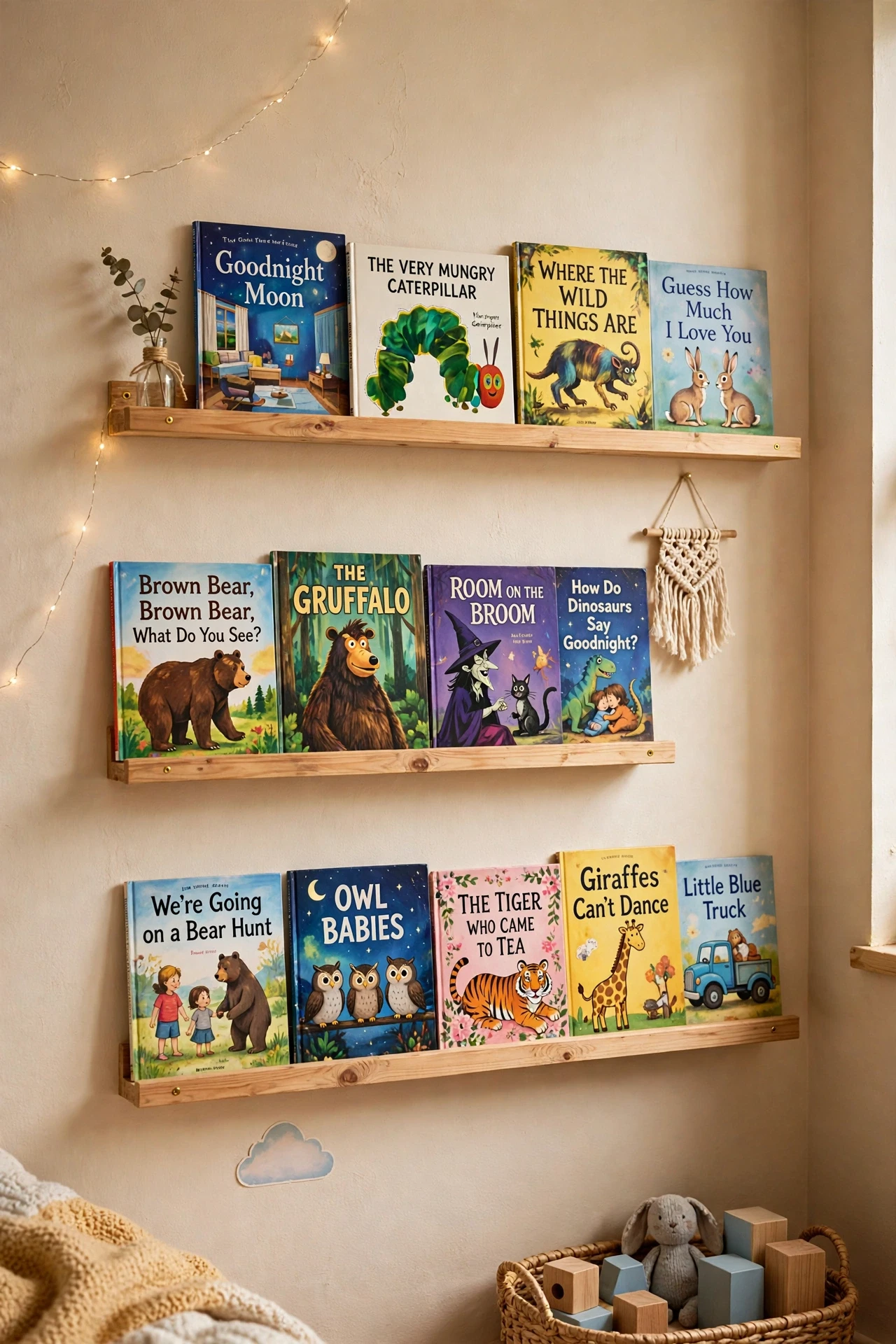
Picture books stored spine-out in a box never get picked, but books facing out on a wall ledge act like a little shop display. Fix two or three narrow ledges at your child’s eye level, space them about twelve inches apart, and stand the books with their covers showing. I tried this beside my daughter’s bed, and she started choosing her own bedtime story instead of asking me to dig through a pile. Keep the ledges shallow so books lean safely, and anchor them into studs because a row of books is heavier than it looks. I learned that lesson when a ledge full of hardbacks pulled loose from drywall anchors.
Cost: ~$18 | Time: 40 minutes
4. Over-Door Pockets for Small Toys
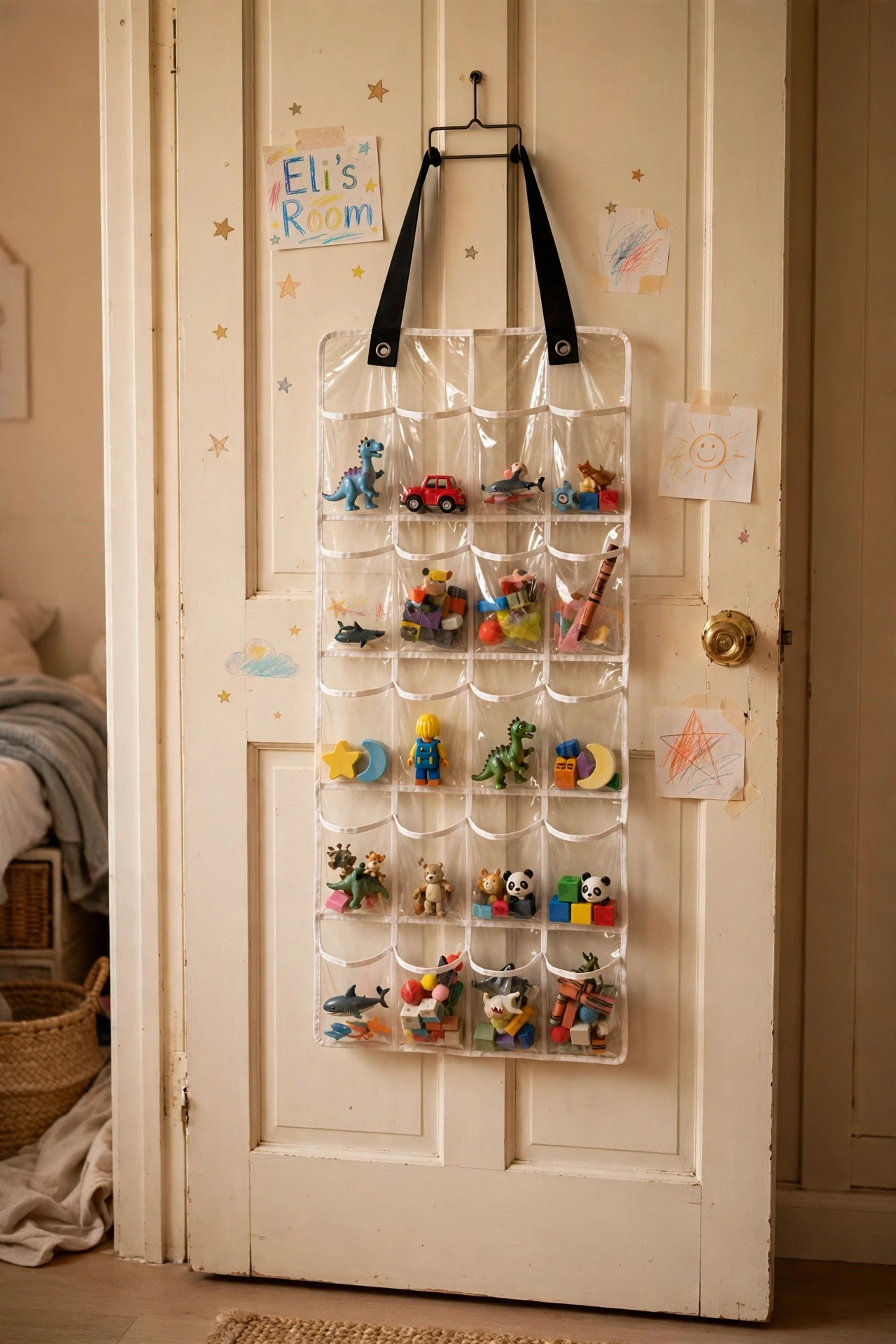
Small toys like figures, cars, and craft bits are the hardest things to store, because they scatter across every surface in the room. An over-door pocket organizer gives each little thing a visible home without taking up a single inch of floor space. Hang it on the inside of the bedroom or closet door, sort the pockets by toy type, and let your child fill the lower pockets themselves. I tried this for my son’s action figures, and the morning hunt for his favourite one finally stopped. Skip the very top pockets for daily toys, since kids cannot reach them and they just become dead storage.
Cost: ~$8 | Time: 15 minutes
5. Cube Shelving with Fabric Bins
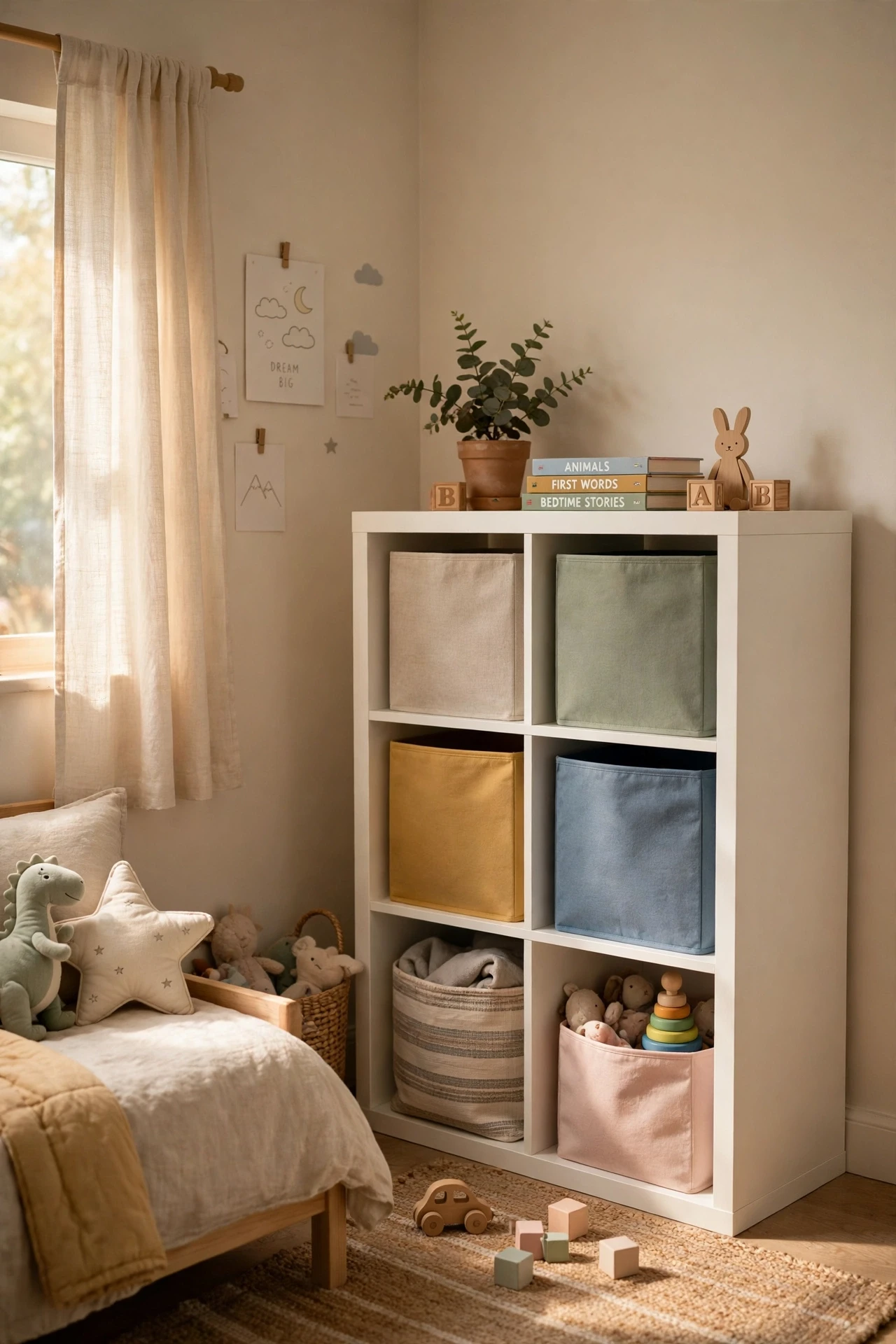
Cube shelving works so well in small kids rooms because it grows with the child and hides mess behind a tidy front. Buy a six or eight cube unit, add fabric bins in two colours, and assign one cube to each category like soft toys, cars, art, and games. I tried this in a room barely bigger than a closet, and the wall of cubes made the room look calmer the same afternoon. Keep one cube empty on purpose, because new toys arrive constantly and a full system has nowhere to put them. I made the mistake of filling every cube on day one, and the next birthday present ended up back on the floor.
Cost: ~$35 | Time: 45 minutes
6. A Second Closet Rod at Kid Height
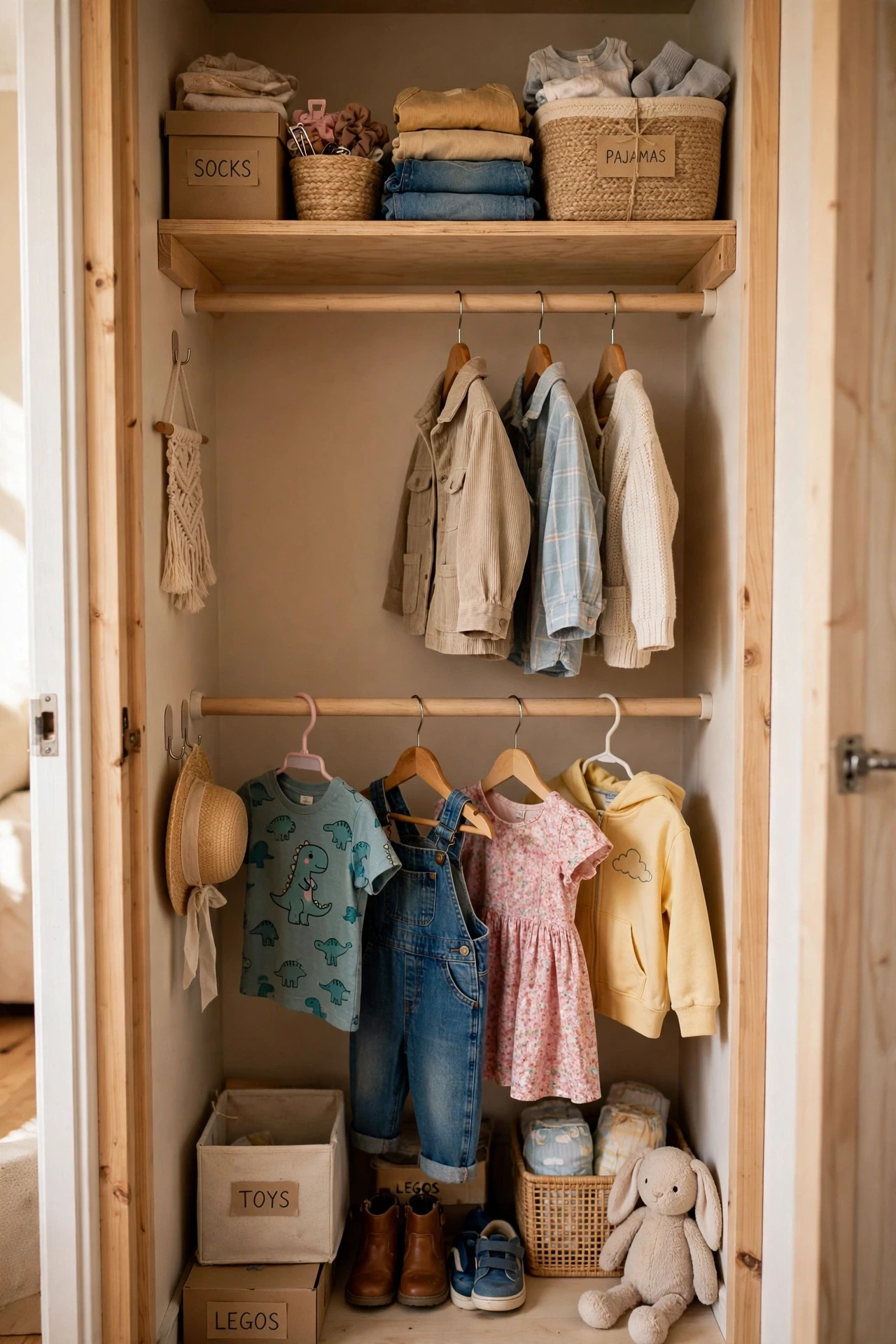
Kids cannot hang up clothes they cannot reach, so a second rod at their height changes the whole morning routine. Hang a tension rod or a short fixed rod about three feet high below the main rail, then move daily clothes down to it. I tried this with my daughter, and she started picking her own outfit and hanging her jacket up without being asked twice. Keep the top rod for out-of-season clothes and special outfits, so the low rod never gets crowded. Measure twice before you drill, because a rod hung too low leaves clothes dragging on the closet floor.
Cost: ~$10 | Time: 25 minutes
7. Bedside Caddy for Bedtime Reads
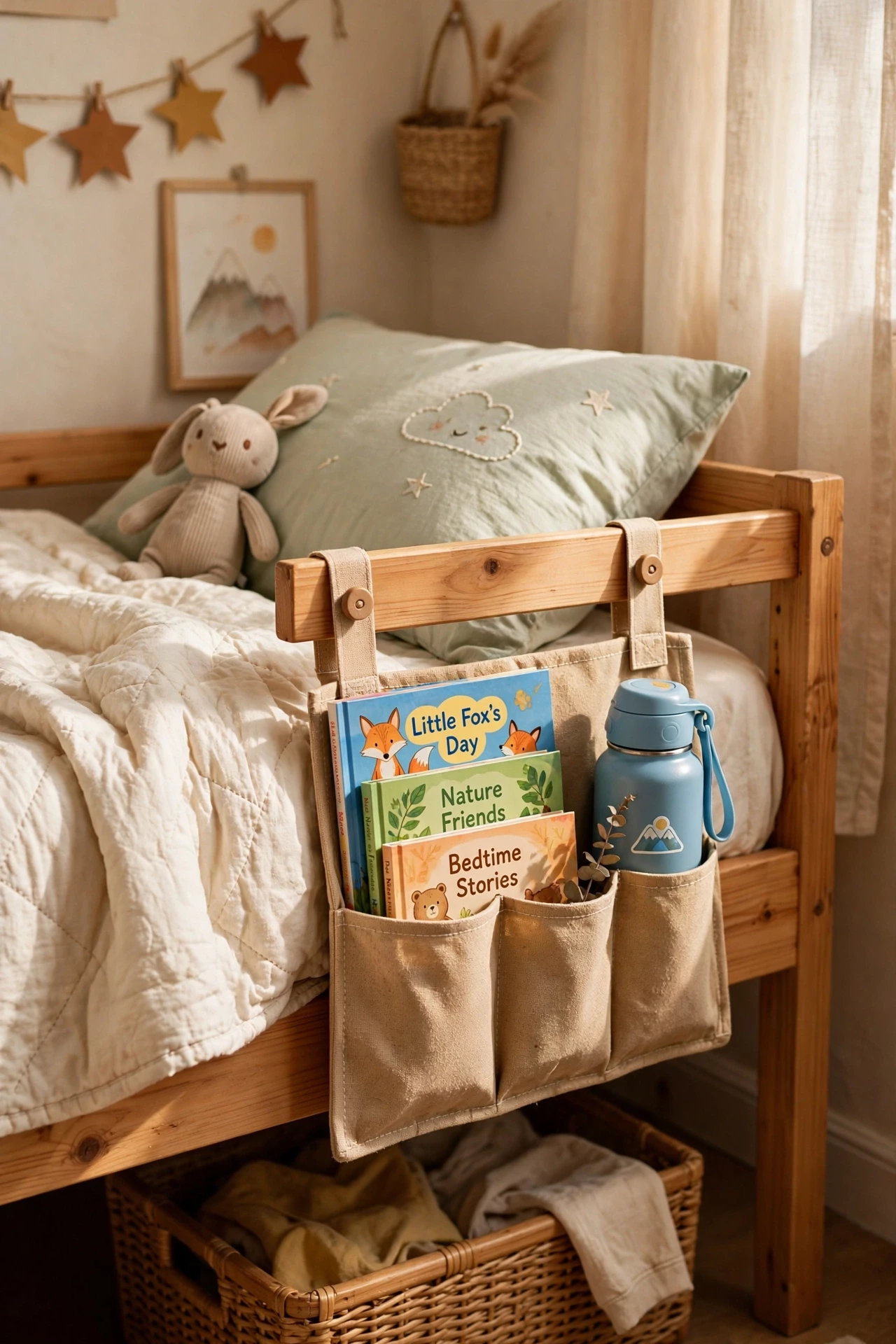
Books left on the floor beside a bed get stepped on, lost under the bed, and forgotten by morning. A fabric bedside caddy that slips under the mattress gives books, a torch, and a water bottle a safe pocket right where they are needed. Slide the flap under the mattress, hang the pockets on the side facing the bed, and let your child load it with that week’s reads. I tried this after finding three library books under my son’s bed, and none have gone missing since. Keep the caddy light, because an overloaded pocket pulls the flap out and slides onto the floor overnight.
Cost: ~$12 | Time: 10 minutes
See also: toy storage ideas for small spaces
8. Pegboard for Art Supplies
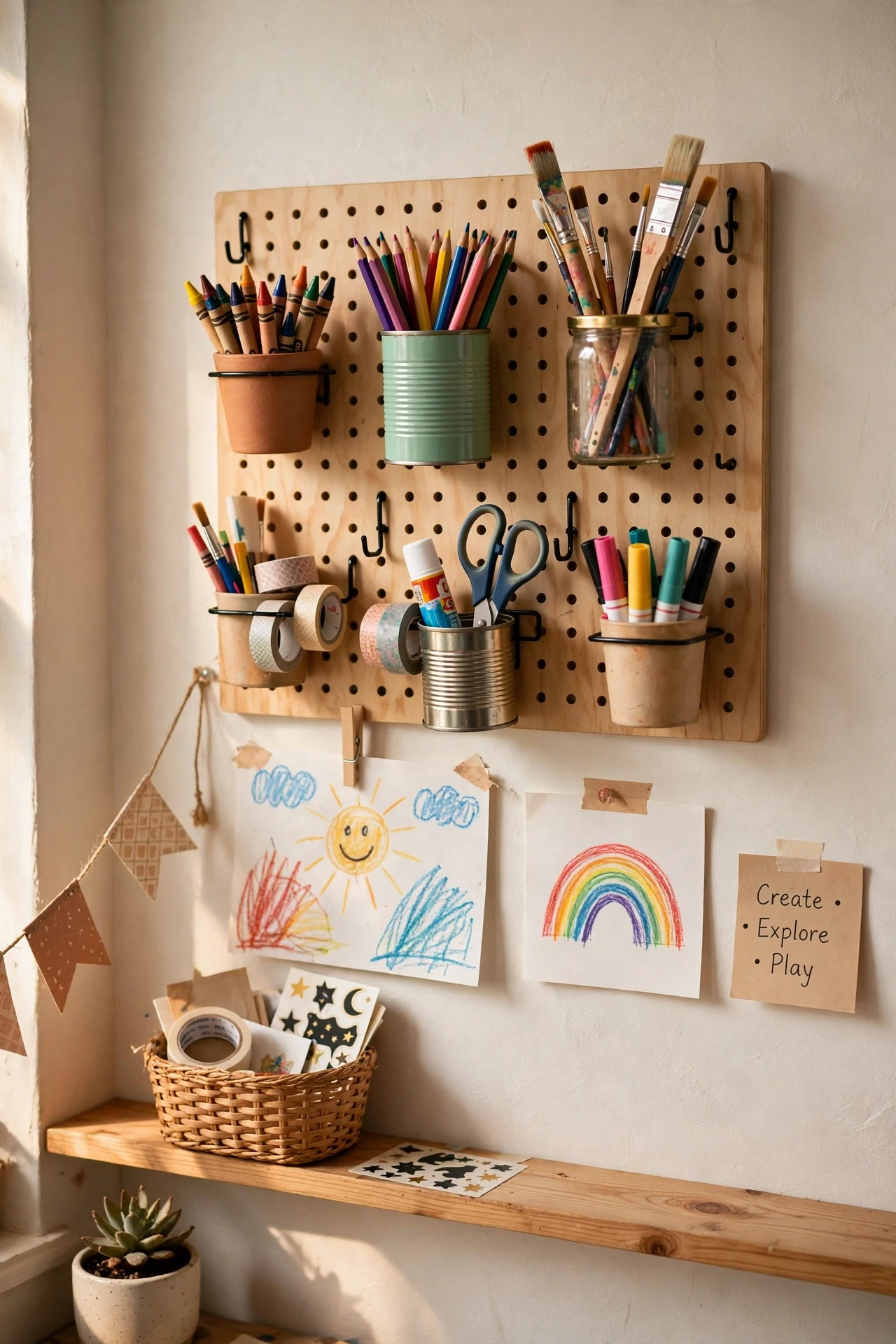
Art supplies in a drawer become a tangled mess of dried markers and broken crayons, but a pegboard puts every tool in plain sight. Mount a small pegboard above the desk or table, add hooks and little cups, and sort markers by colour and brushes by size. I tried this for my daughter’s craft corner, and she stopped dumping the whole pencil case out just to find a green marker. Label each cup if more than one child shares the supplies, since shared art tools vanish fast without clear homes. I learned to keep scissors on a high hook, because little hands grab them before I notice.
Cost: ~$20 | Time: 35 minutes
9. Clear Stacking Bins for Building Blocks
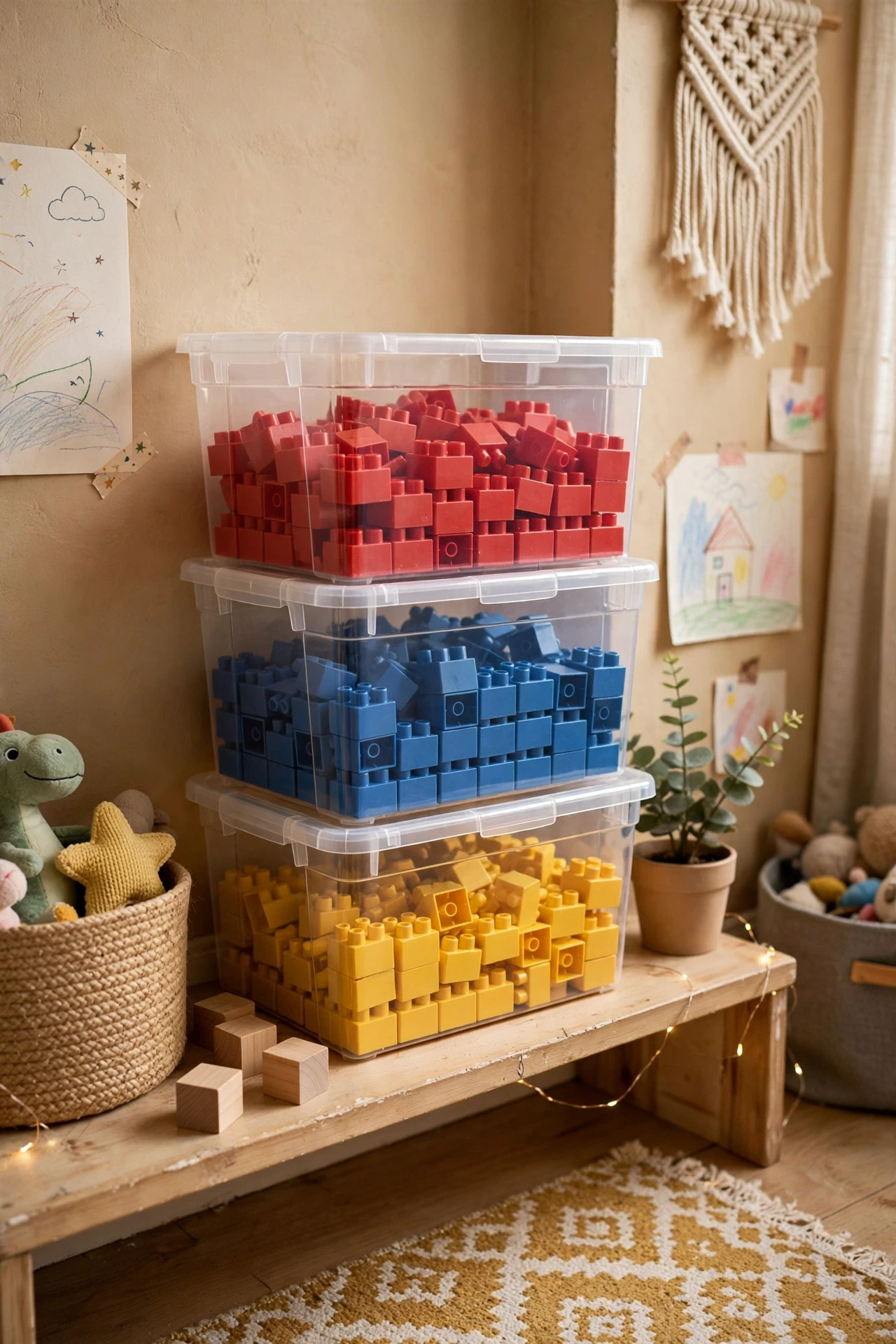
Building blocks sorted by colour or set in clear bins stay playable, while a mixed tub turns every build into a long hunt for one piece. Buy three clear bins that stack neatly, sort the blocks once with your child, and label each bin with a picture of what lives inside. I tried this on a rainy Sunday, and my son built twice as much that week because he could actually find the pieces he wanted. Keep one bin for loose odd pieces, since a strict sorting system breaks the first time a new set arrives. I made the mistake of sorting too finely at first, and nobody kept it up for more than a week.
Cost: ~$14 | Time: 30 minutes
10. A Toy Rotation Basket on the Shelf
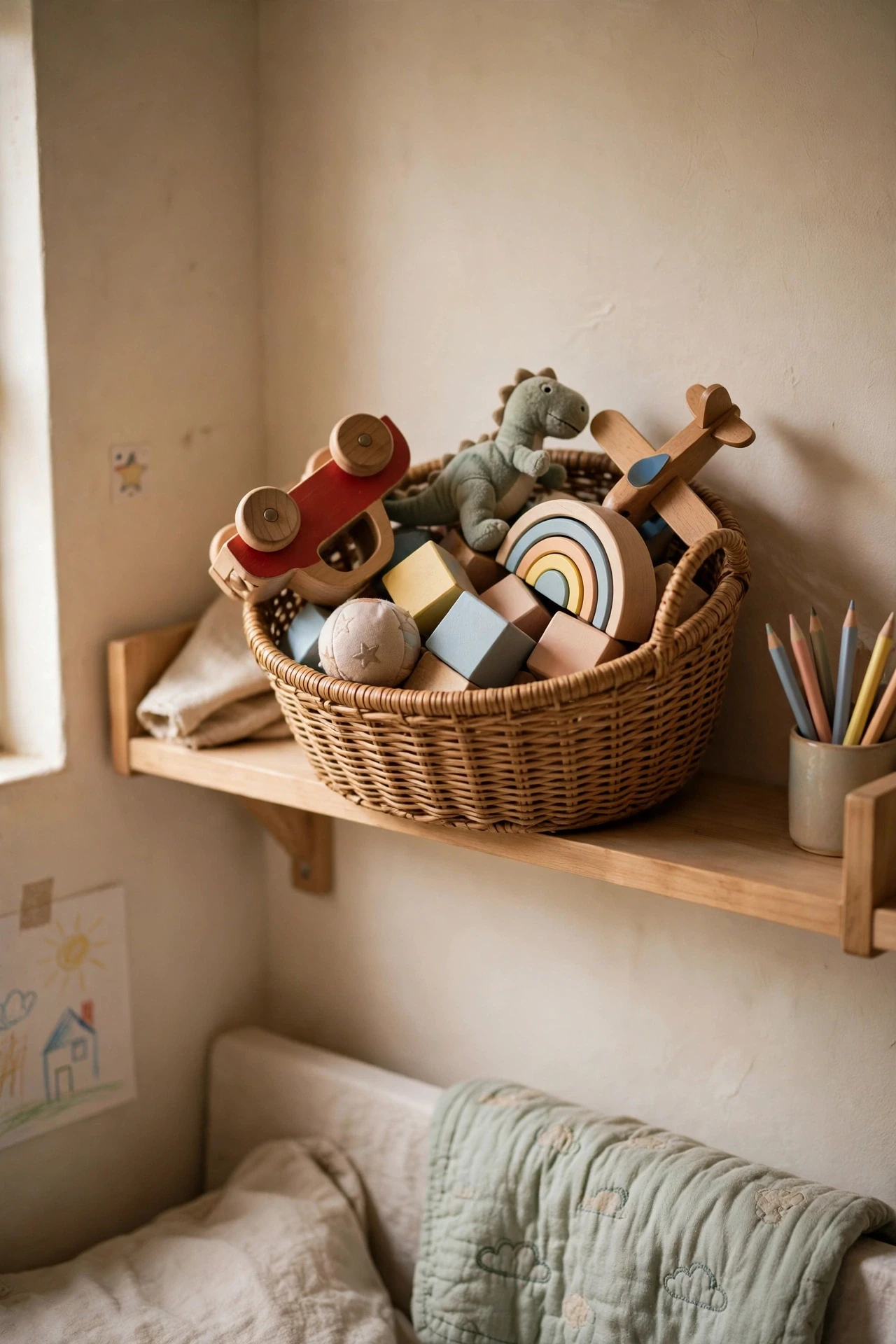
Too many toys out at once overwhelms a small room and makes every toy boring at the same time. Toy rotation fixes both problems by keeping most toys in a basket on a high shelf and swapping a few down each week. Pack the spare toys into one labelled basket, store it where kids cannot reach it, and swap five or six toys every Sunday night. I tried this when my daughter stopped playing with anything, and the old toys felt brand new when they came back down. Keep a note of what is in the basket, because an unlabelled box of spare toys is just clutter on a shelf.
Cost: ~$6 | Time: 20 minutes
11. Hooks at Kid Height by the Door
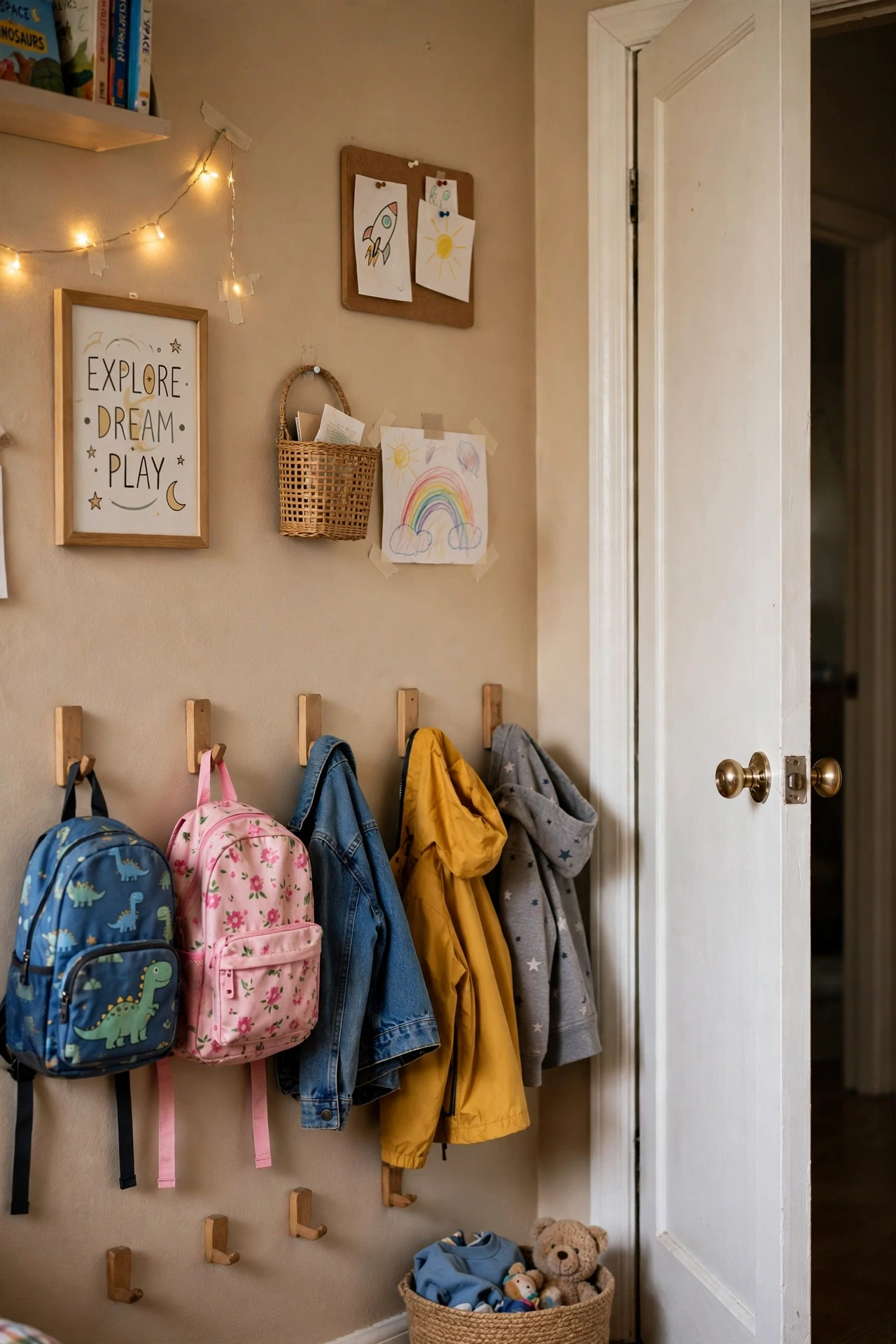
Coats and bags dumped on the floor by the door are usually a height problem, not a behaviour problem. Hooks fixed at your child’s shoulder height let them hang their own bag and coat the moment they walk in. Screw three sturdy hooks into a wall stud near the door, leave space between them so bags do not overlap, and show your child the routine once. I tried this after years of tripping over school bags, and the hallway finally stayed clear most days. Avoid adhesive hooks for heavy school bags, since they peel off the wall and take paint with them when they fail.
Cost: ~$9 | Time: 20 minutes
12. A Rolling Cart for Homework Supplies
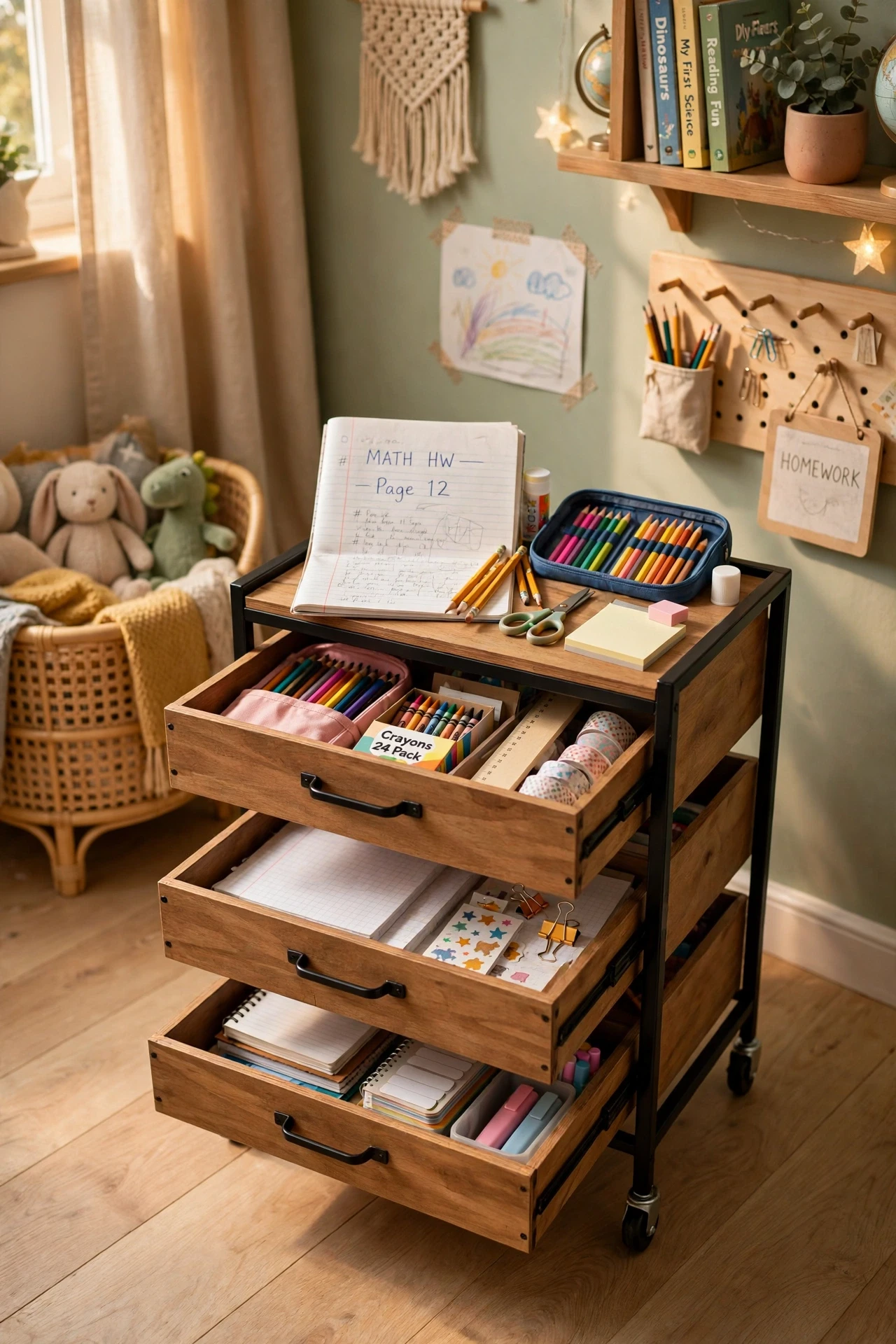
A rolling cart keeps homework supplies together and lets the work happen wherever there is space, which matters in a small room. Load the top tier with pencils and rulers, the middle with notebooks, and the bottom with craft paper, then roll it to the table when homework starts. I tried this because our desk was too small for everything, and the cart tucked beside the wardrobe when it was not needed. Keep the cart stocked on Sunday nights, since a cart with missing supplies just moves the hunt from room to room. I learned to keep one spare pencil pot on the cart, because pencils disappear faster than any other supply.
Cost: ~$25 | Time: 20 minutes
13. Divided Drawer Trays for Small Clothes
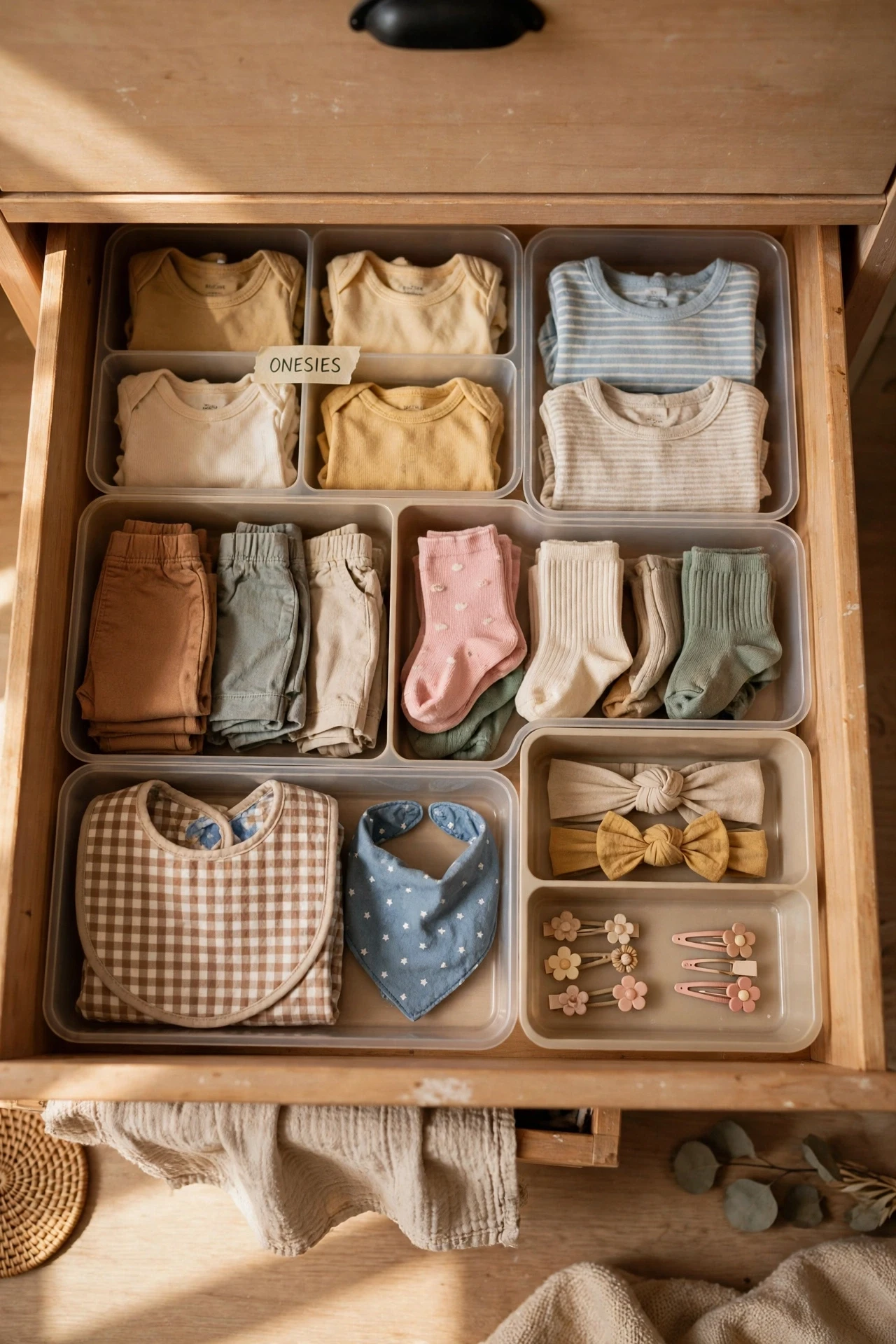
Kids drawers turn into a jumble because small clothes slide around in a big empty space. Divided trays or small boxes inside the drawer give socks, underwear, and tops their own sections that stay put. Measure the drawer first, buy trays that fit snugly without gaps, and fold clothes so they stand upright in each section. I tried this in my son’s dresser, and getting dressed got faster because he could see every top at a glance. Keep one tray for odd socks, since every kids drawer grows a collection of singles that need a home of their own.
Cost: ~$10 | Time: 25 minutes
14. A Hanging Shoe Organizer for Dolls and Figures
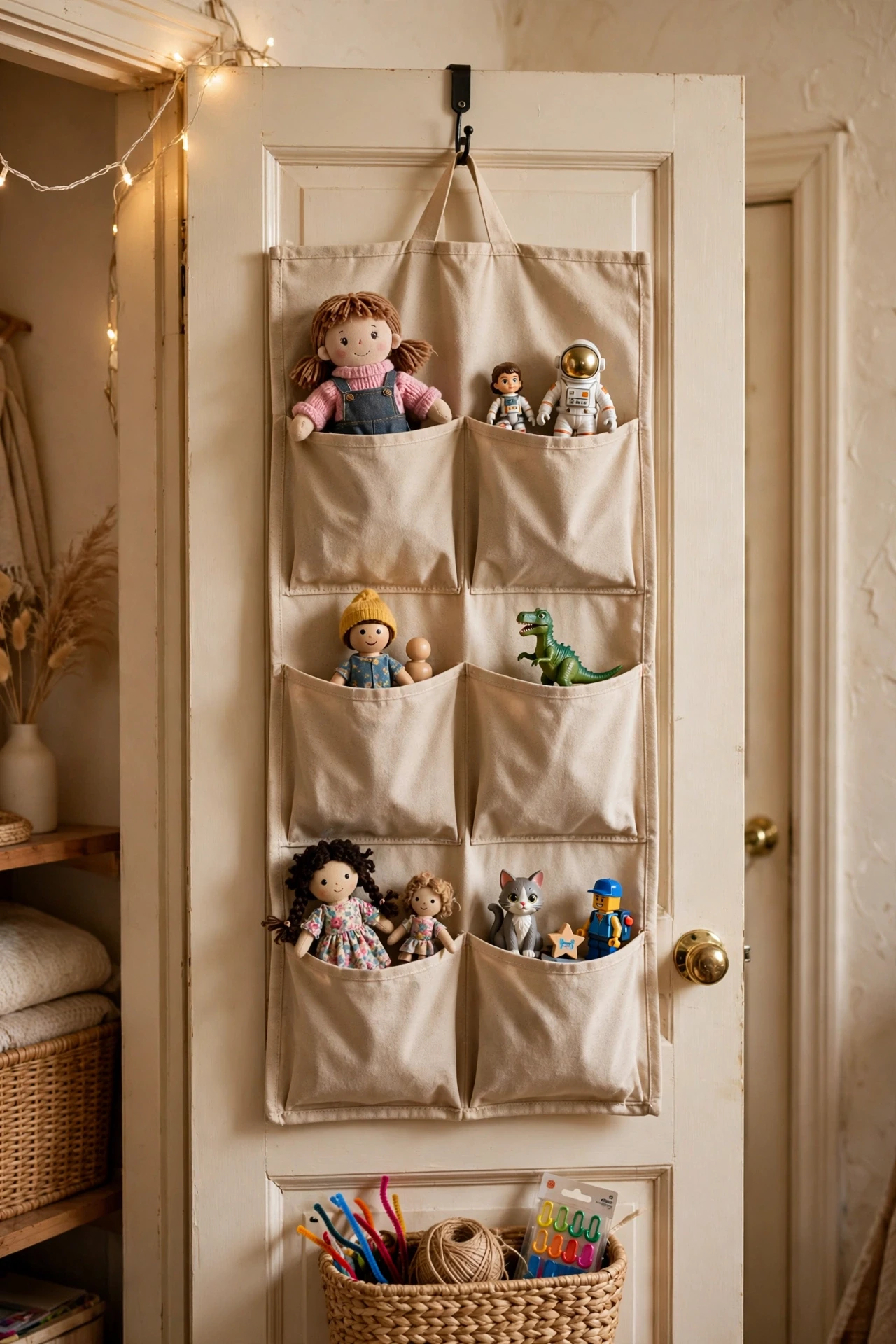
A hanging shoe organizer is not just for shoes, because its clear pockets are perfect for dolls, figures, and small playsets. Hang it on the closet door, give each pocket one doll or one set, and let your child see the whole collection at once. I tried this for my daughter’s dolls, and the dolls stopped living in a tangled pile at the bottom of the wardrobe. Keep heavier dolls in the lower pockets, since a top-heavy organizer swings every time the door moves. I made the mistake of overfilling the pockets at first, and the dolls kept popping out onto the floor.
Cost: ~$8 | Time: 15 minutes
15. Corner Shelves for Stuffed Animals
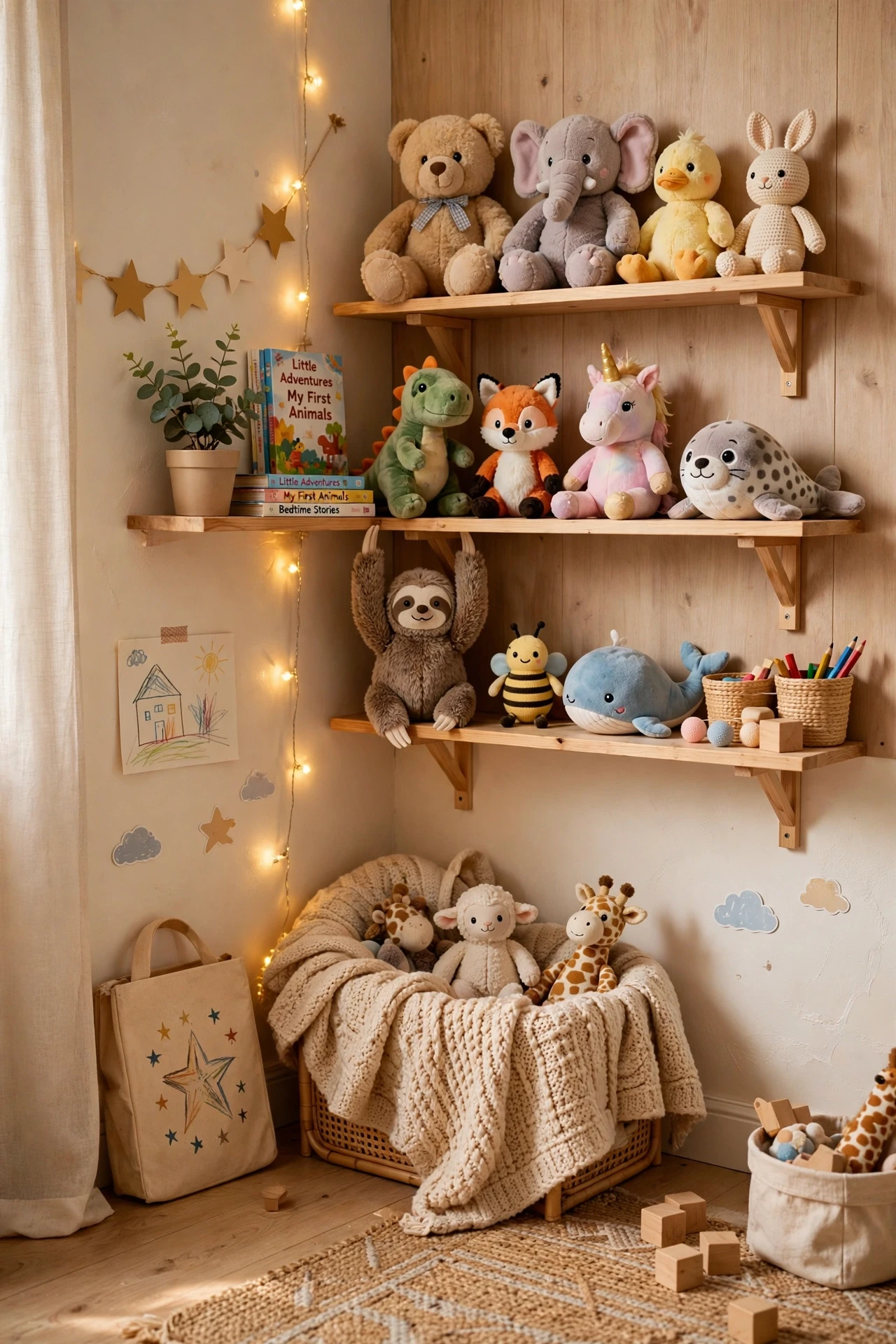
Stuffed animals multiply fast and end up covering the bed, the floor, and every chair in the room. Corner shelves turn that collection into a display instead of a mess, using wall space that would otherwise stay empty. Fix two or three triangular shelves in one corner, place the favourites where they can be reached, and keep the rest up high as decoration. I tried this after counting twenty-seven soft toys in one small room, and the bed finally became visible again. Set a limit with your child before you start, since shelves fill up again quickly if new soft toys keep arriving unchecked.
Cost: ~$16 | Time: 30 minutes
16. A Zip Pouch System for Puzzle Pieces
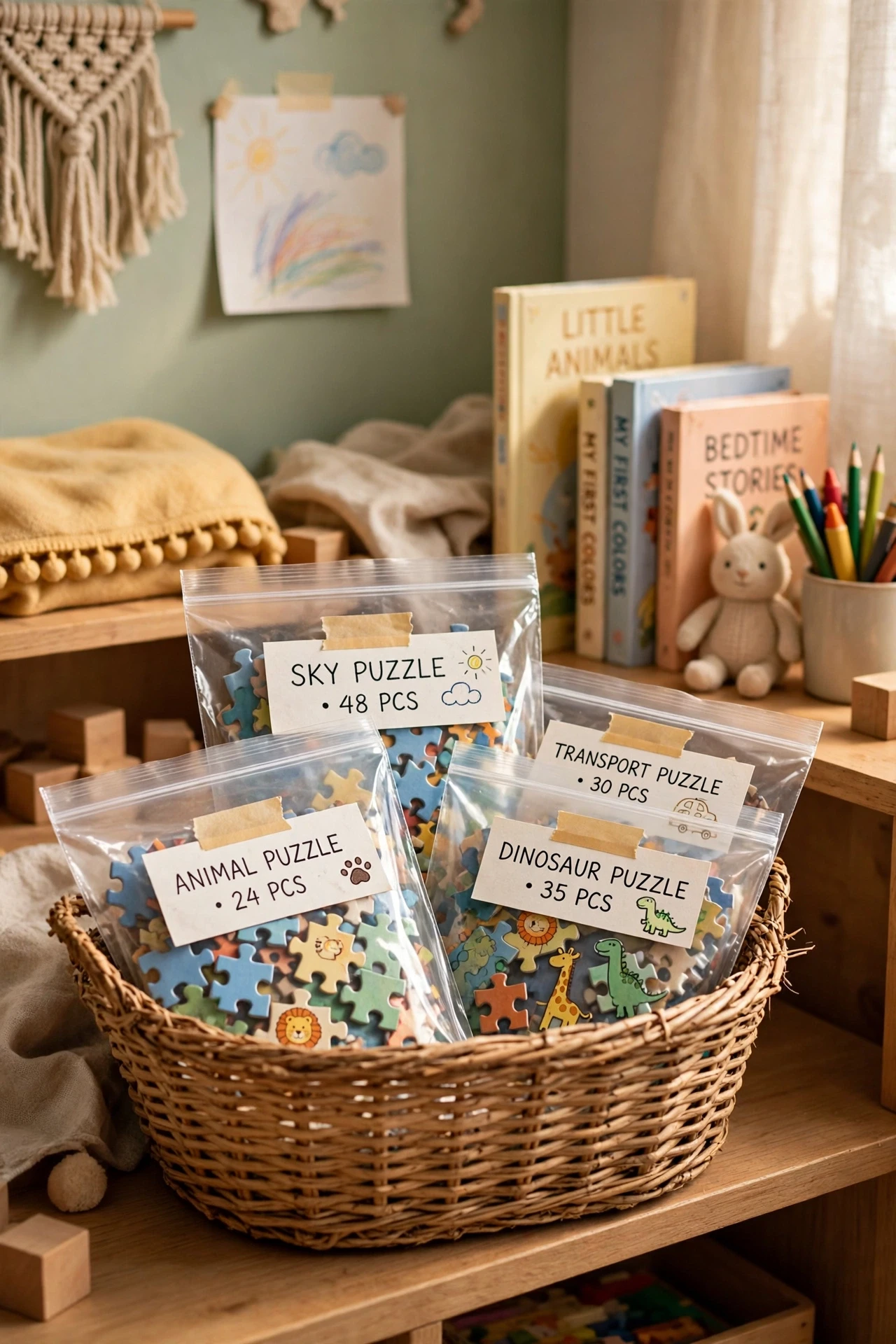
Puzzle boxes break, pieces go missing, and a half-finished puzzle ends up abandoned on the floor. Zip pouches fix this by holding each puzzle’s pieces in a labelled bag that fits inside one basket. Pour each puzzle into its own pouch, tape a photo of the finished puzzle to the front, and store all the pouches upright in a basket. I tried this after losing pieces from three puzzles in one month, and we have not lost a piece since. Keep the basket on a low shelf, because puzzles stored out of reach simply never get played with at all.
Cost: ~$5 | Time: 20 minutes
See also: kids room organization ideas on a budget
17. A Wall File for School Papers
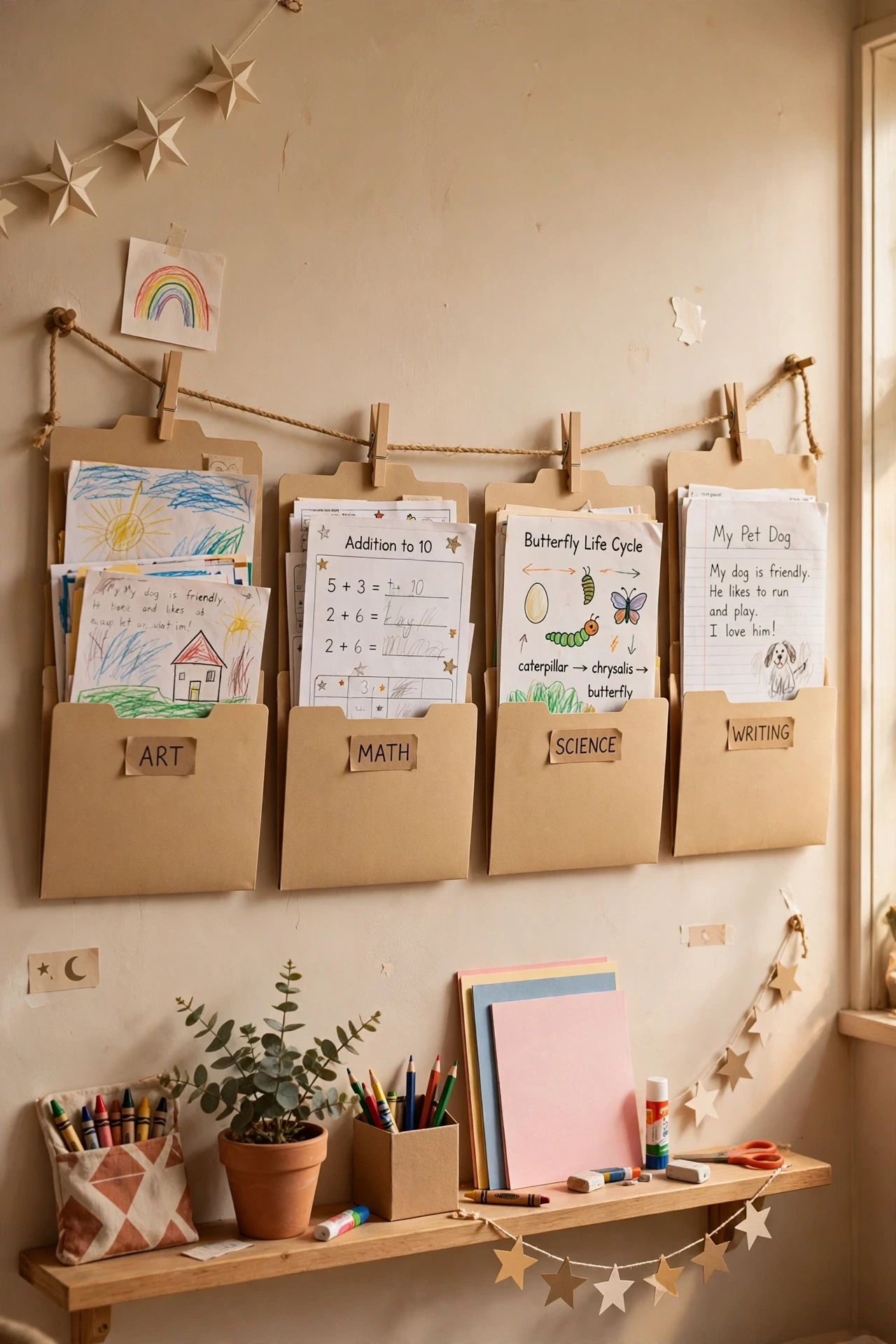
School papers pile up on every flat surface because they arrive daily and have nowhere official to go. A wall file with one pocket per child, or per subject, catches letters, homework, and artwork before they spread. Hang it near the door or desk, empty it every Friday, and file anything worth keeping in a box at the end of term. I tried this after finding a permission slip three days late, and nothing important has been missed since. Keep the pockets shallow, since deep pockets hide papers at the bottom and defeat the whole point of the system.
Cost: ~$11 | Time: 15 minutes
18. A Small Dress-Up Rail in the Corner
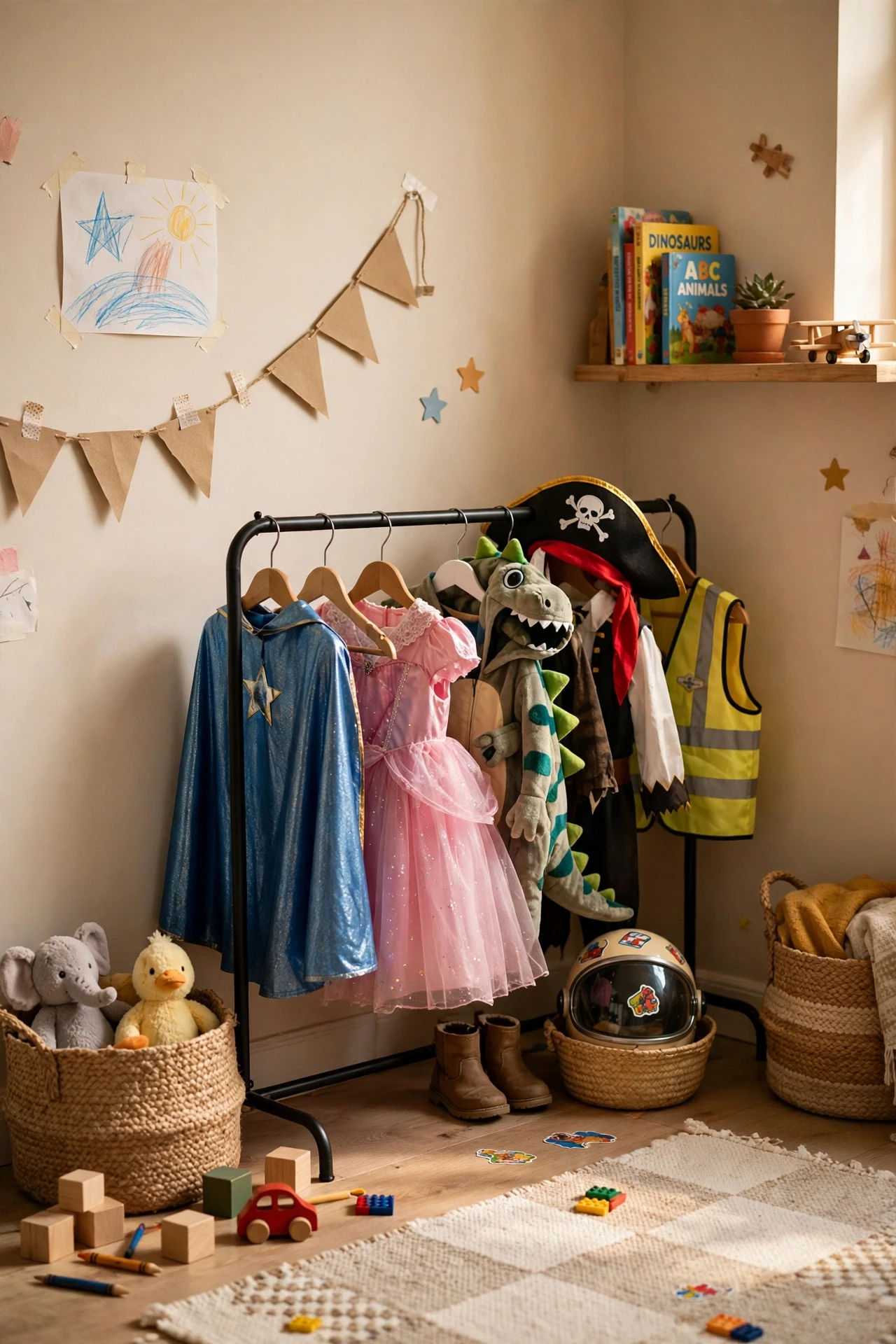
Dress-up clothes stuffed in a box get wrinkled, tangled, and forgotten, but a small rail in a corner turns them into a shop kids love to browse. Buy a short garment rail that fits the corner, hang costumes on small hangers, and add a basket underneath for hats and wands. I tried this with my daughter’s costumes, and dress-up play doubled because she could see every outfit without digging. Keep the rail low and stable, since a tall rail in a small room tips over when an excited child pulls at it. I bolted ours to the wall after it fell once, and it has stayed put ever since.
Cost: ~$18 | Time: 20 minutes
19. Stackable Crates for Sports Gear
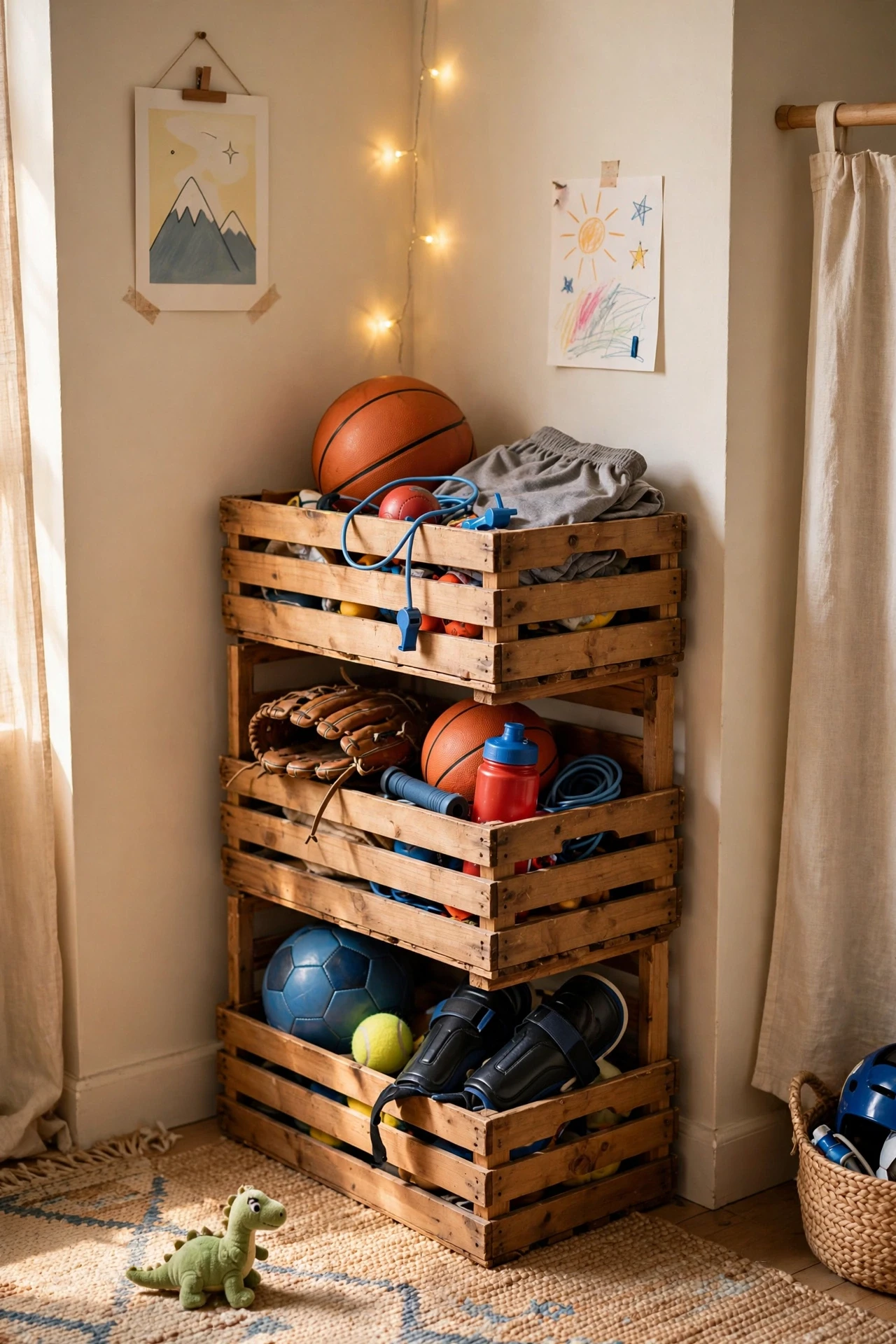
Sports gear is bulky, oddly shaped, and usually dumped by the door after practice, which clogs a small room fast. Stackable crates by the door or in the closet give balls, helmets, and kits a proper home that can be grabbed in one trip. Label one crate per sport, keep the most-used crate on top, and empty wet kit the same evening. I tried this for my son’s football and swimming gear, and the hallway stopped looking like a sports shop. Avoid crates without handles if your child carries them alone, since a crate with no grip gets dropped and everything spills.
Cost: ~$14 | Time: 25 minutes
20. A Magnetic Board for Artwork and Reminders
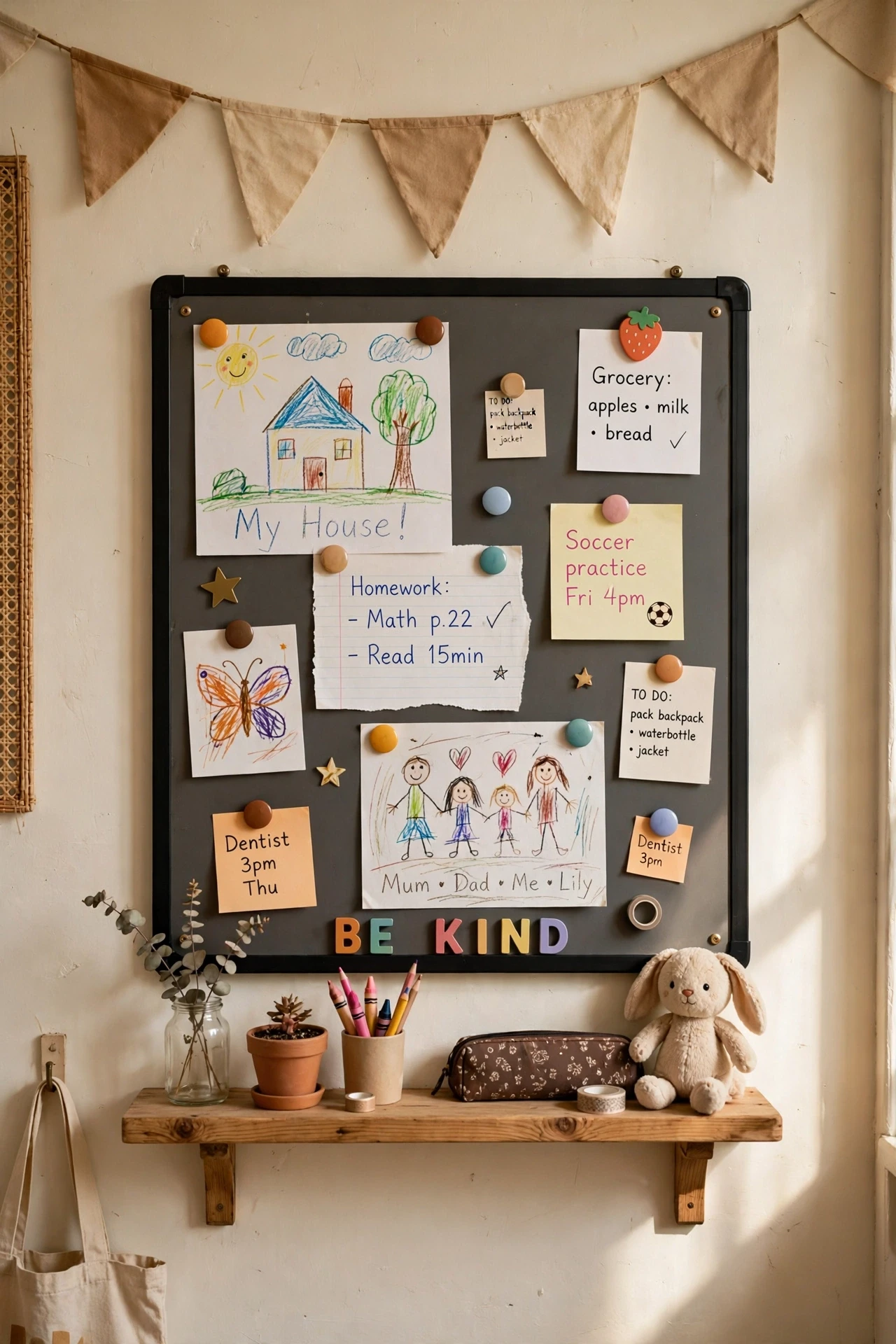
Artwork taped to walls falls down, damages paint, and ends up in a pile nobody looks at. A magnetic board lets kids display their latest pictures and swap them easily without tape or pins. Hang the board at child height, add strong magnets, and let your child choose which pieces go up each week. I tried this in my daughter’s room, and she started talking about her pictures again because they were actually visible. Rotate the display every Sunday, since a board that never changes becomes wallpaper that nobody notices anymore.
Cost: ~$15 | Time: 20 minutes
21. A Bedside Pocket Organizer for Small Treasures
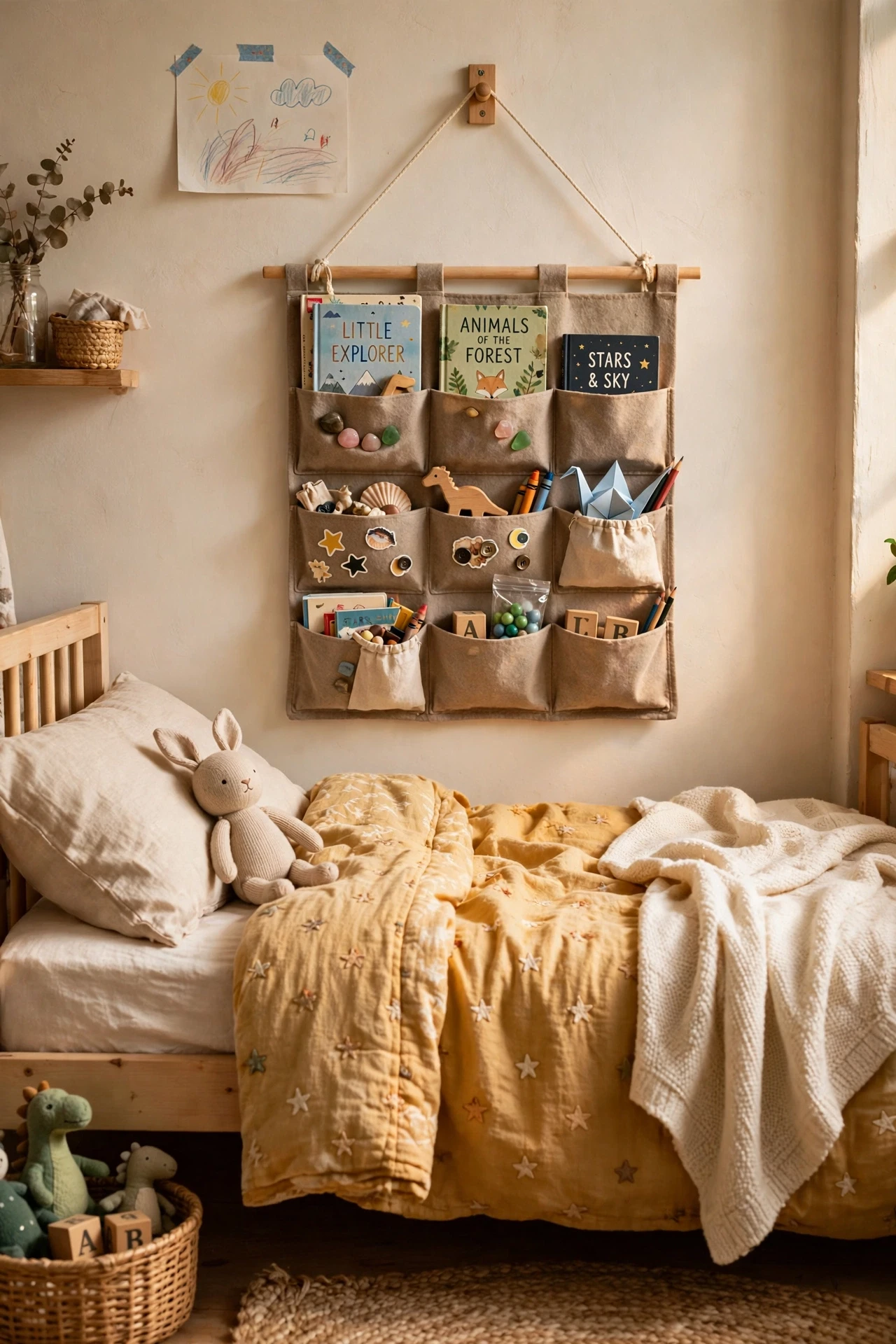
Small treasures like rocks, cards, and tiny toys end up under pillows and inside beds because they have no proper home. A pocket organizer that hangs on the side of the bed gives each treasure a visible pocket that your child can reach from bed. Hang it on the bed frame, sort the pockets loosely by type, and check it together once a month for broken bits. I tried this after finding a pocketful of stones in the washing machine, and the treasures finally stayed in one place. Keep the pockets small, since big pockets turn into junk drawers that hide everything inside them.
Cost: ~$10 | Time: 15 minutes
22. A Weekly Outfit Shelf with Five Slots
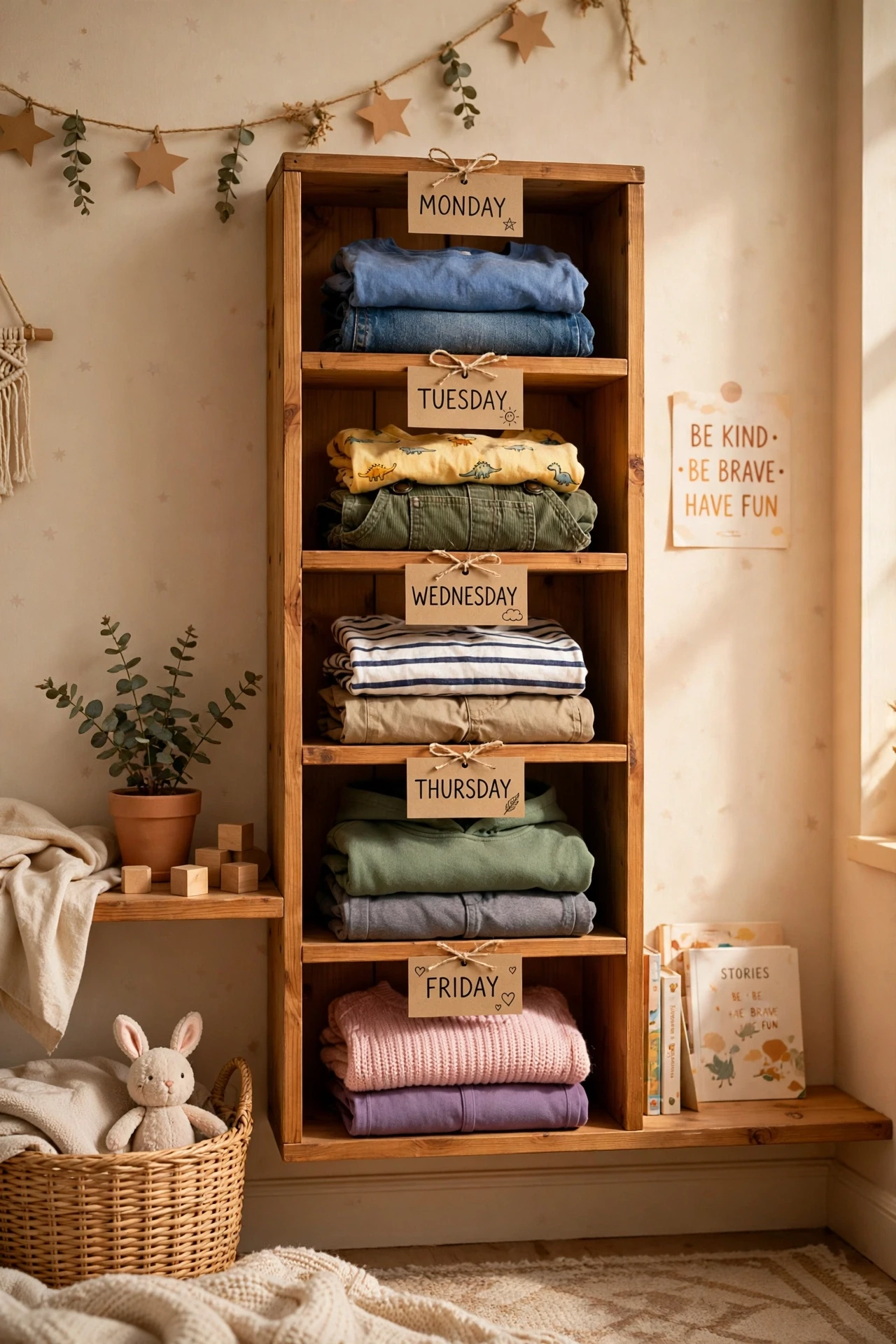
Morning arguments over clothes disappear when the week’s outfits are picked on Sunday and laid out in five labelled slots. Use a small shelf or five fabric bins labelled Monday to Friday, pick outfits together on Sunday night, and let your child dress from that day’s slot only. I tried this with my daughter, and school mornings got calmer within a week because the decision was already made. Keep Friday’s slot flexible, since dress-down days and sports days change the plan. I learned to include socks and hair ties in each slot, because a missing sock undoes the whole system.
Cost: ~$12 | Time: 20 minutes
23. A Ten-Minute Nightly Tidy Basket
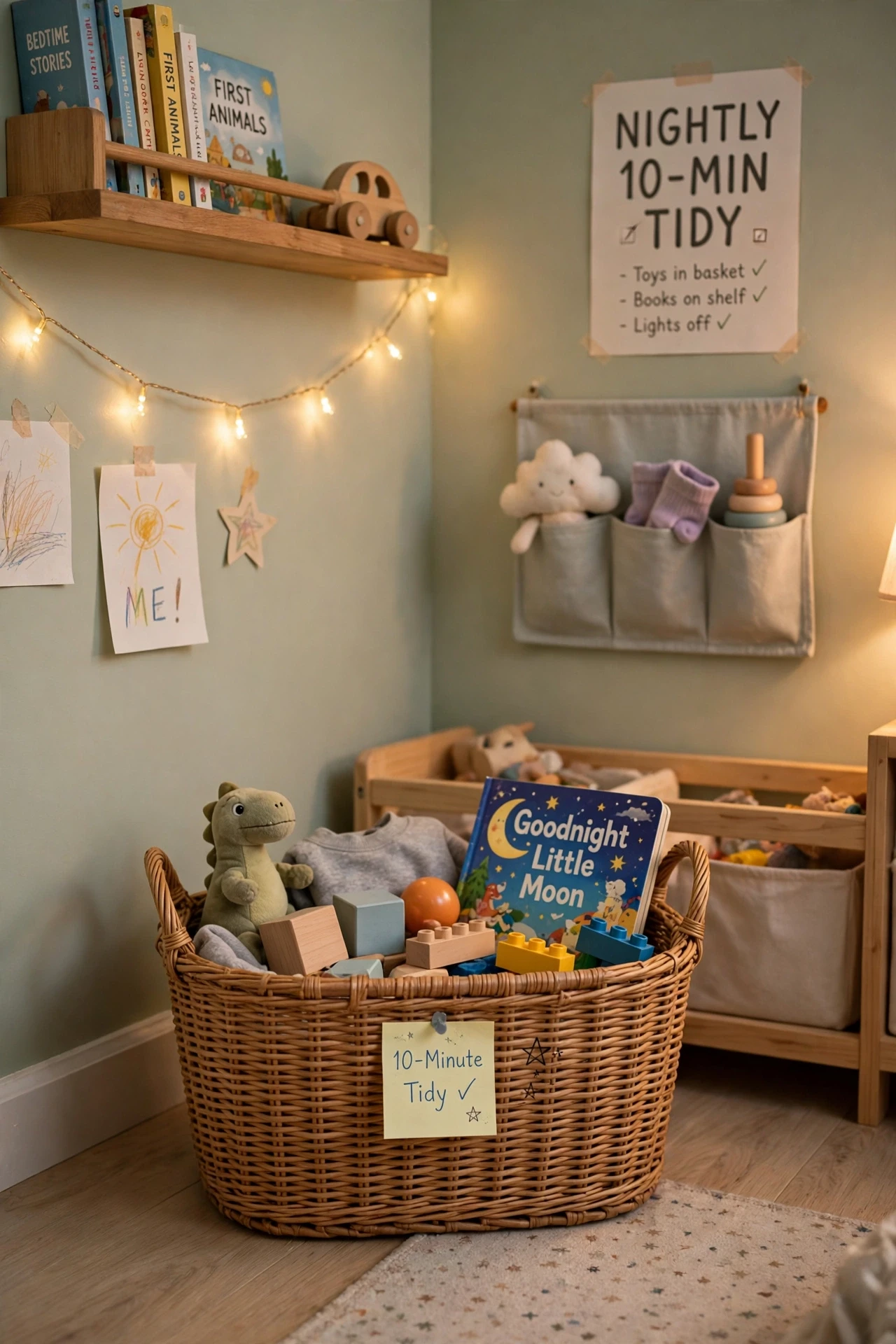
The best storage system still fails if tidying feels like a huge job, so a nightly tidy basket makes it small and doable. Keep one basket in the room, set a timer for ten minutes before bed, and race to return everything to its home before the timer ends. I tried this with both my kids, and the room stayed reasonable all week because mess never had a full day to build up. Keep the basket empty to start each night, since a basket that is already full cannot collect anything new. I made the mistake of skipping weekends at first, and Monday mornings showed exactly why the habit matters.
Cost: ~$7 | Time: 10 minutes
Your One-Week Plan
Do not try all twenty-three ideas in one day. Spread them across a week instead, so the room improves a little each day and the new habits actually stick.
- Monday: Sort toys into labelled low bins and rolling under-bed boxes (ideas 1 and 2).
- Tuesday: Fix wall ledges, corner shelves, and the magnetic board (ideas 3, 15, and 20).
- Wednesday: Hang the over-door pockets, kid-height hooks, and dress-up rail (ideas 4, 11, and 18).
- Thursday: Set up cube shelving, the closet rod, and divided drawer trays (ideas 5, 6, and 13).
- Friday: Sort art supplies, building blocks, puzzles, and sports gear (ideas 8, 9, 16, and 19).
- Saturday: Add the bedside caddy, homework cart, school file, and outfit shelf (ideas 7, 12, 17, and 22).
- Sunday: Start toy rotation and the nightly tidy basket, then enjoy a room that finally stays tidy (ideas 10 and 23).
Save this idea for your next weekend sort-out if the toys have taken over the floor again.
A small kids room stays tidy when everything has a low, visible home and tidying takes ten minutes, not an hour. Start with the bins and hooks, add the wall storage next, and let your child own the nightly tidy. The room will not stay perfect, but it will stay liveable, and that is a win worth keeping.
