23 Pantry Organization Ideas for Small Pantries
My first pantry was barely deeper than a coat cupboard, and I swear things went in there to disappear. I’d buy a second jar of cumin because the first was hiding behind a tower of cereal boxes, and the “system” was just shoving tins wherever they’d fit. Then one rainy Saturday I pulled everything out onto the kitchen table, sorted it into piles, and rebuilt the whole thing with a few cheap organisers — and the pantry organization ideas below are everything I learned. You don’t need a walk-in pantry or fancy cabinetry; a small space actually forces smarter choices, and most of these fixes cost less than a takeaway.
Door & Wall Zones
The back of the pantry door and the narrow wall strips most people ignore are prime real estate in a small pantry. Stealing this vertical space means your shelves stay breathable instead of stacked three deep.
1. Over-the-Door Wire Spice Rack
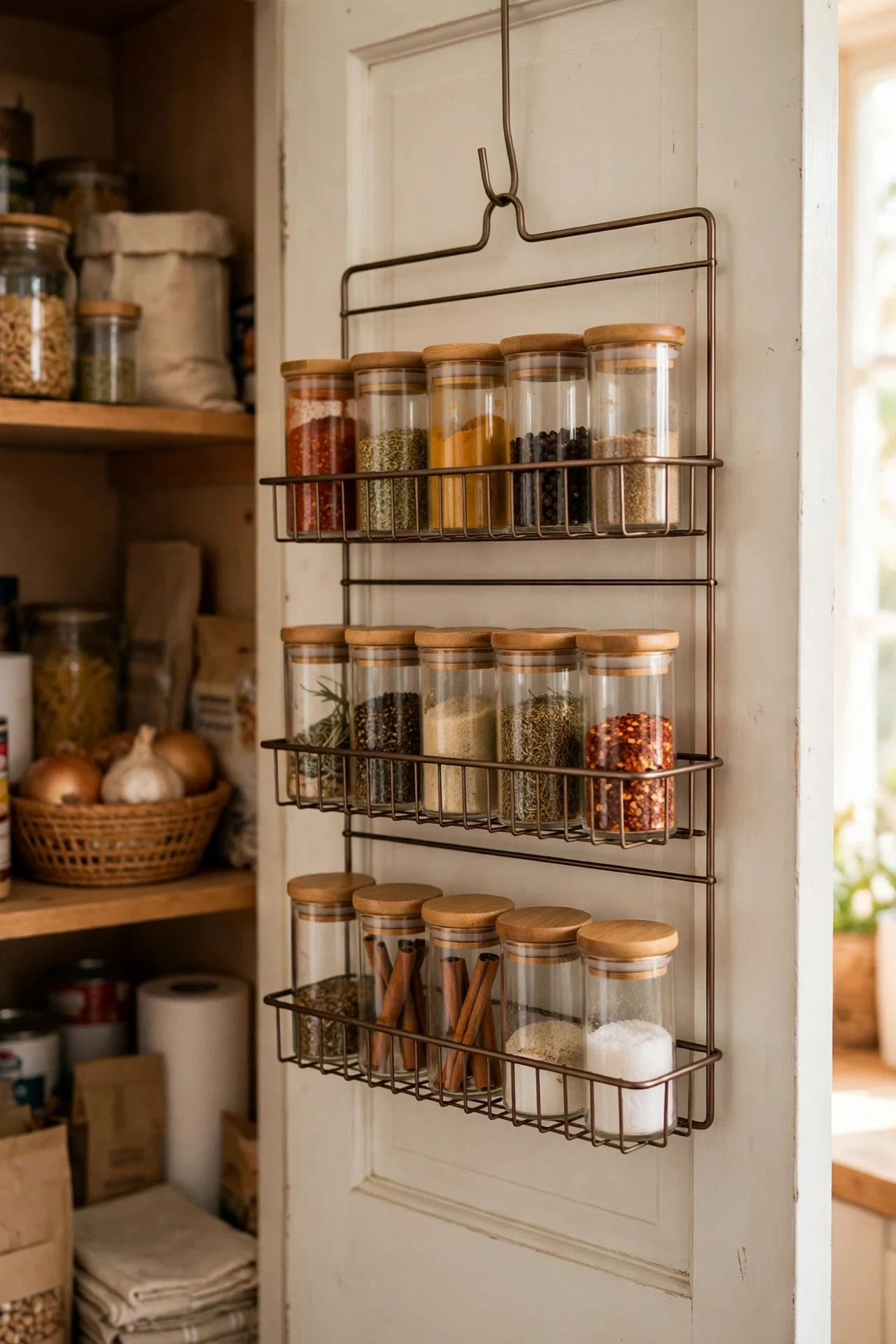
An over-the-door rack turns the inside of your pantry door into a whole extra shelf for spices, sauces and small jars. Measure your door’s clearance first — you need the door to still shut — then hang a two or three-tier wire rack with adjustable hooks. Group spices alphabetically or by cuisine so you grab without scanning, and keep the heaviest bottles on the lowest tier so the door doesn’t rattle. I tried this with a cheap rack that wobbled every time I closed the door; the mistake to avoid is skipping the foam bumpers that stop the sway, which cost pennies and make it feel solid.
2. Slim Wall-Mounted Can Shelves
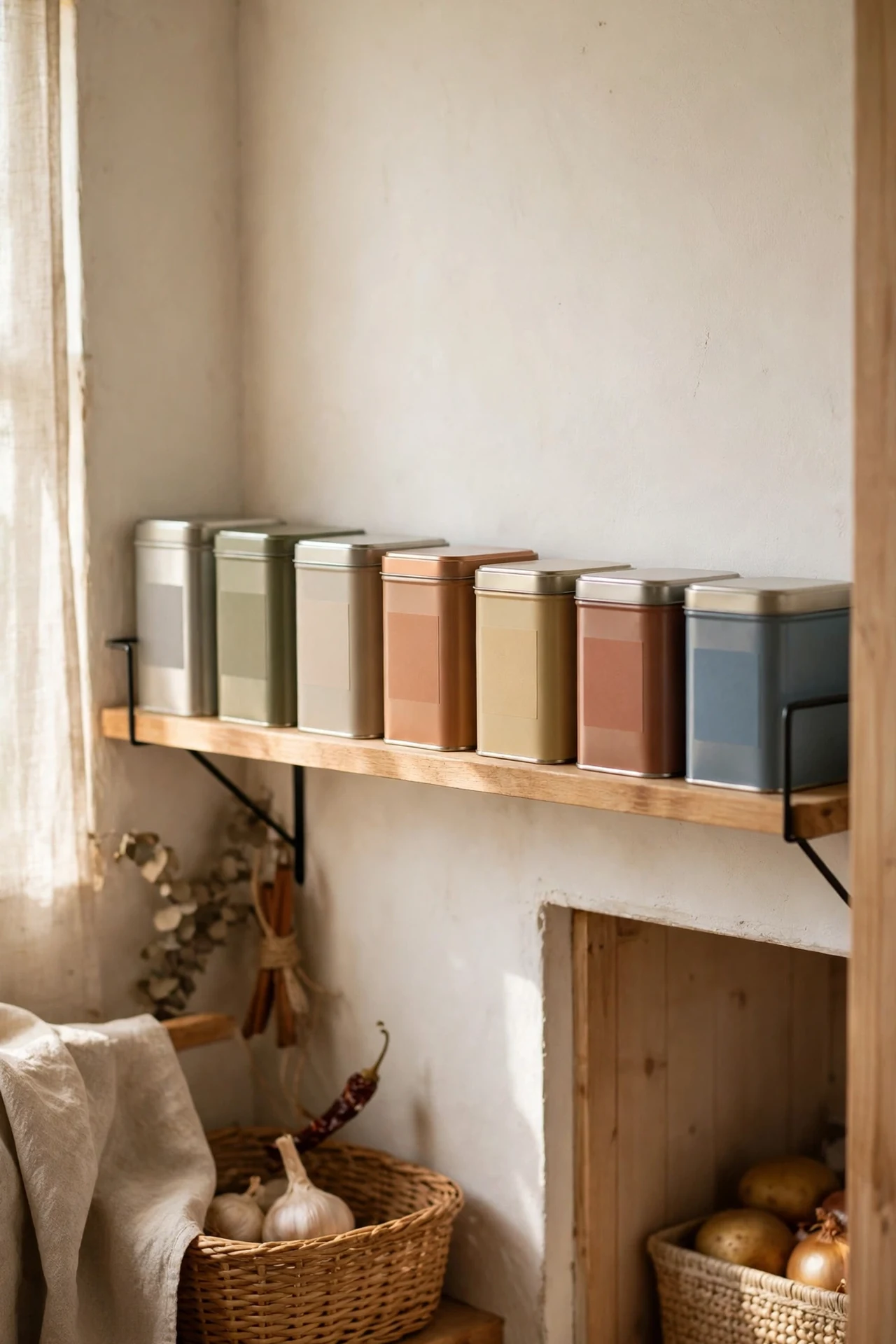
Tins are the worst shelf-hoggers because they’re short and vanish behind taller items, so give them their own shallow wall shelf. Mount one or two narrow picture-ledge-style shelves on a side wall or the door, spaced to fit a single can height. Arrange tins in one row, labels facing out, and you’ll spot at a glance what you’re low on instead of buying doubles. I tried this in my old flat and discovered three identical tins of chickpeas I’d been “out of” for months — the mistake to avoid is stacking tins two deep, because the back row becomes invisible again and you’re back where you started.
3. Pegboard Side Wall for Odd Bits
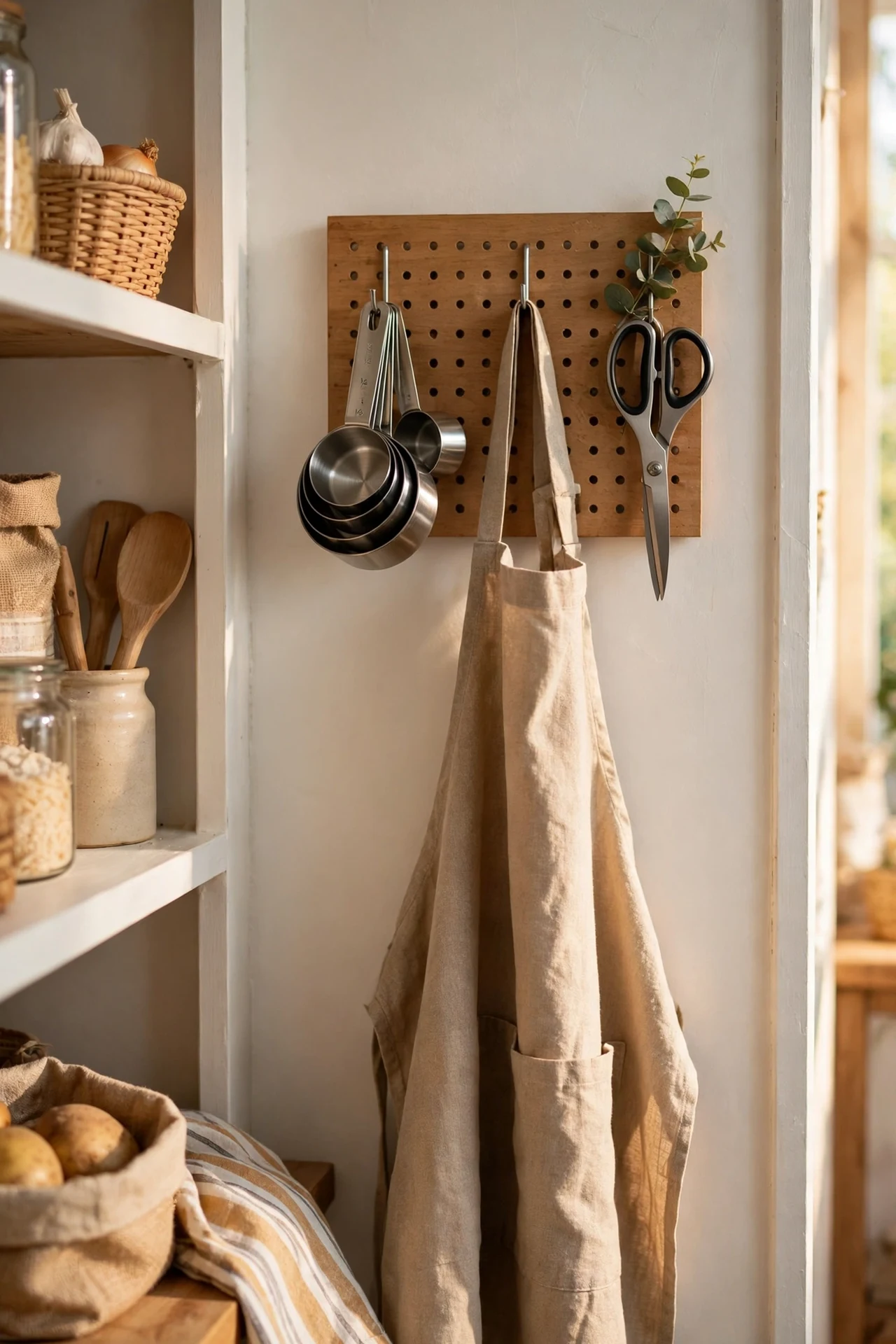
A small pegboard panel on a pantry side wall corrals the awkward bits — measuring cups, aprons, scissors, tea strainers — that eat shelf space for no reason. Cut the board to fit, fix it with standoff screws so hooks sit proud of the wall, and hang everything on moveable hooks. Outline a few hook positions with a marker so things go back to the same spot after use. I tried this and hung my measuring spoons on a regular nail first; they tangled into a knot every single time. The mistake to avoid is hanging without enough board — give each tool its own hook with breathing room or you’ll never bother returning them.
4. Magnetic Strips for Spice Tins
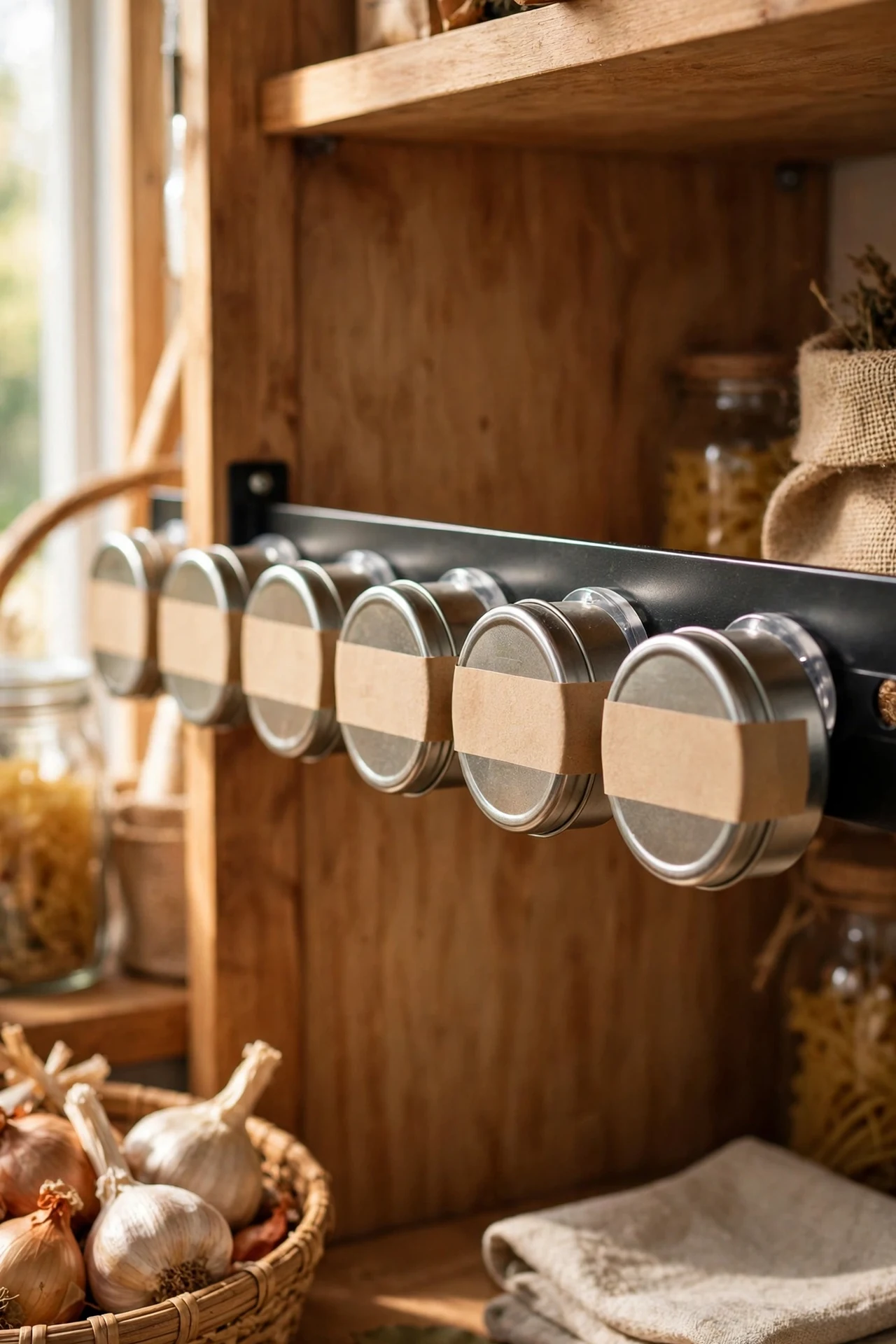
Decant spices into small magnetic tins and stick them on a metal strip screwed inside the pantry wall or door, and suddenly your spice collection floats in zero shelf space. Fill each tin with a funnel, add a handwritten or printed label on the lid, and line them up in two columns. A strip that holds a dozen tins costs next to nothing and frees an entire shelf tier. I tried this with tins that had weak magnets and woke up to a paprika avalanche on the floor — the mistake to avoid is buying the cheapest tins; test one tin’s grip on your strip before you commit to the whole set.
5. Door-Mounted Wrap & Foil Dispenser
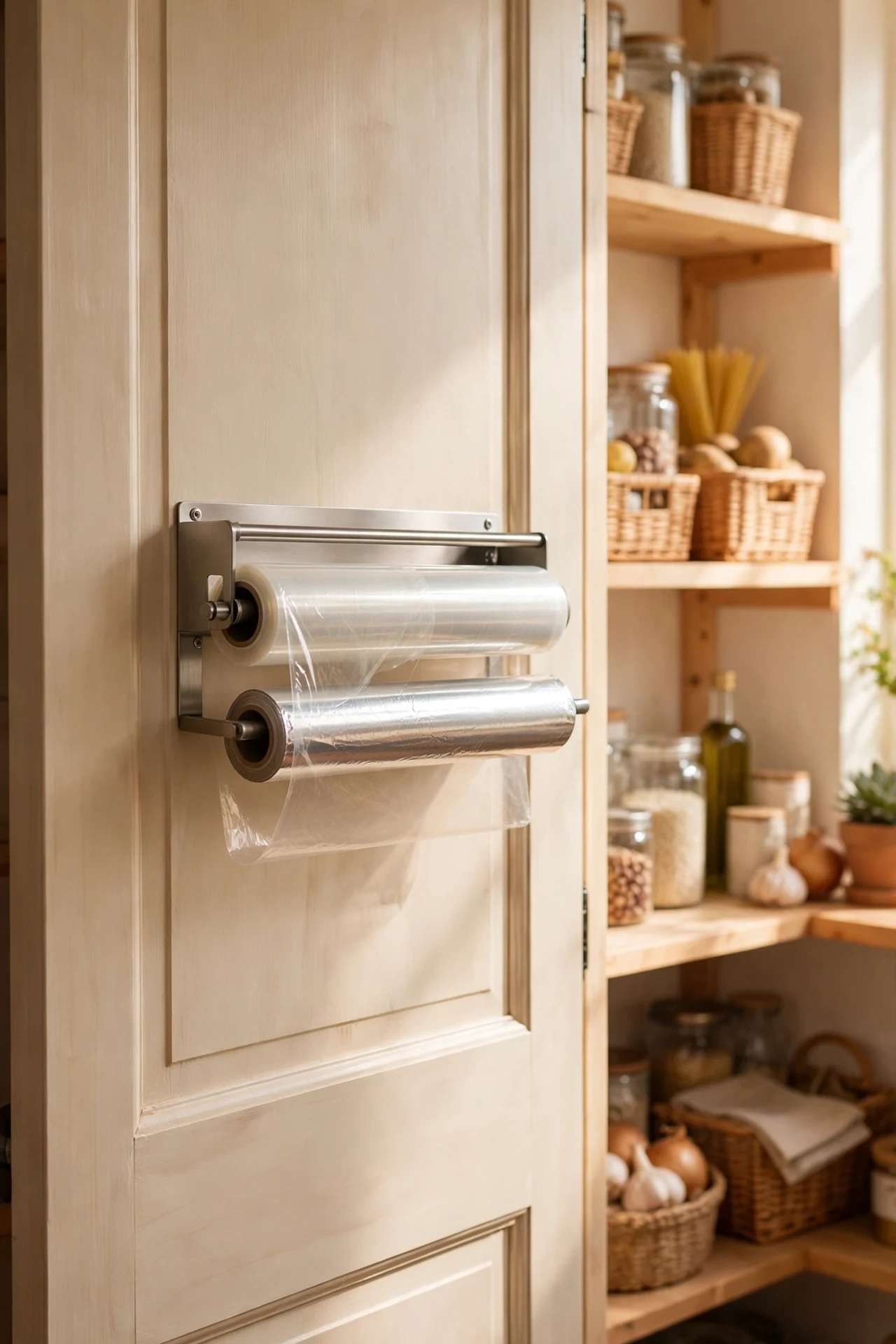
Cling film, foil and baking paper boxes are long, floppy and impossible to stack, so mount a dispenser on the door and get them off the shelf entirely. A simple holder with a cutter edge screws into the door’s inner panel — check there’s no recessed panel in the way — and the rolls thread through ready to tear. One-handed tearing is the small luxury you didn’t know you needed. I tried balancing these boxes upright on a shelf for a year and they fell like dominoes every time; the mistake to avoid is mounting the dispenser too high, or shorter arms will be reaching and yanking, which defeats the whole tidy idea.
6. Command-Hook Measuring Cup Station
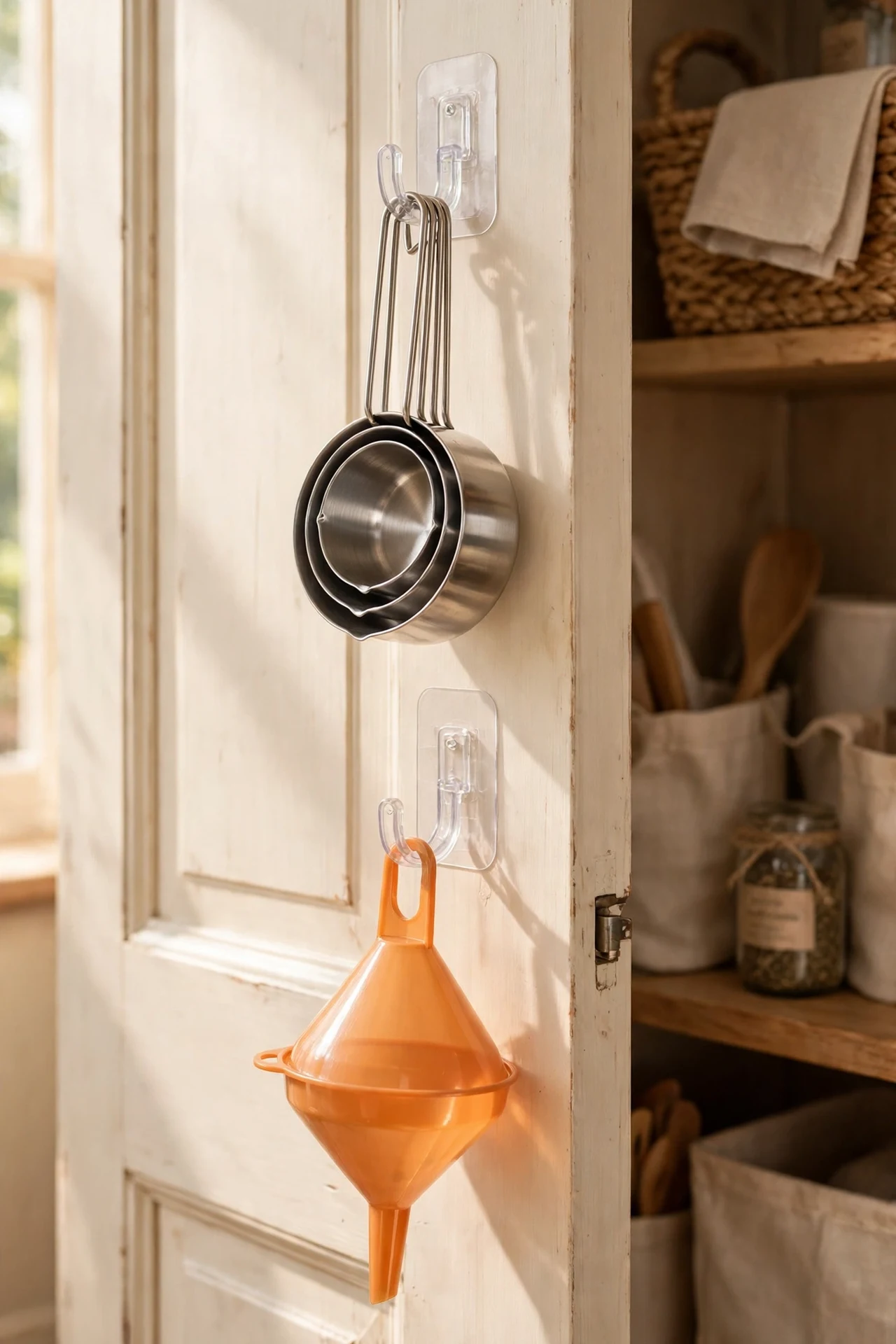
Removable adhesive hooks on the pantry door create a hanging station for measuring cups, funnels and the sieve that never has a home. Stick up four or five hooks in a column, hang cups by their handles, and you’ve reclaimed the shelf corner where they used to topple. Because the hooks are removable, this is perfect for renters too. I tried this in a rental and pulled the first hook off wrong — straight out instead of the stretch-down release — and took paint with it. The mistake to avoid is rushing removal; follow the tab direction slowly and the wall stays perfect.
Shelf-by-Shelf Fixes
Once the door is working hard, attack the shelves themselves. These ideas make every shelf level more visible and reachable, so nothing hides at the back until it expires.
7. Tiered Shelf Risers for the Back Row
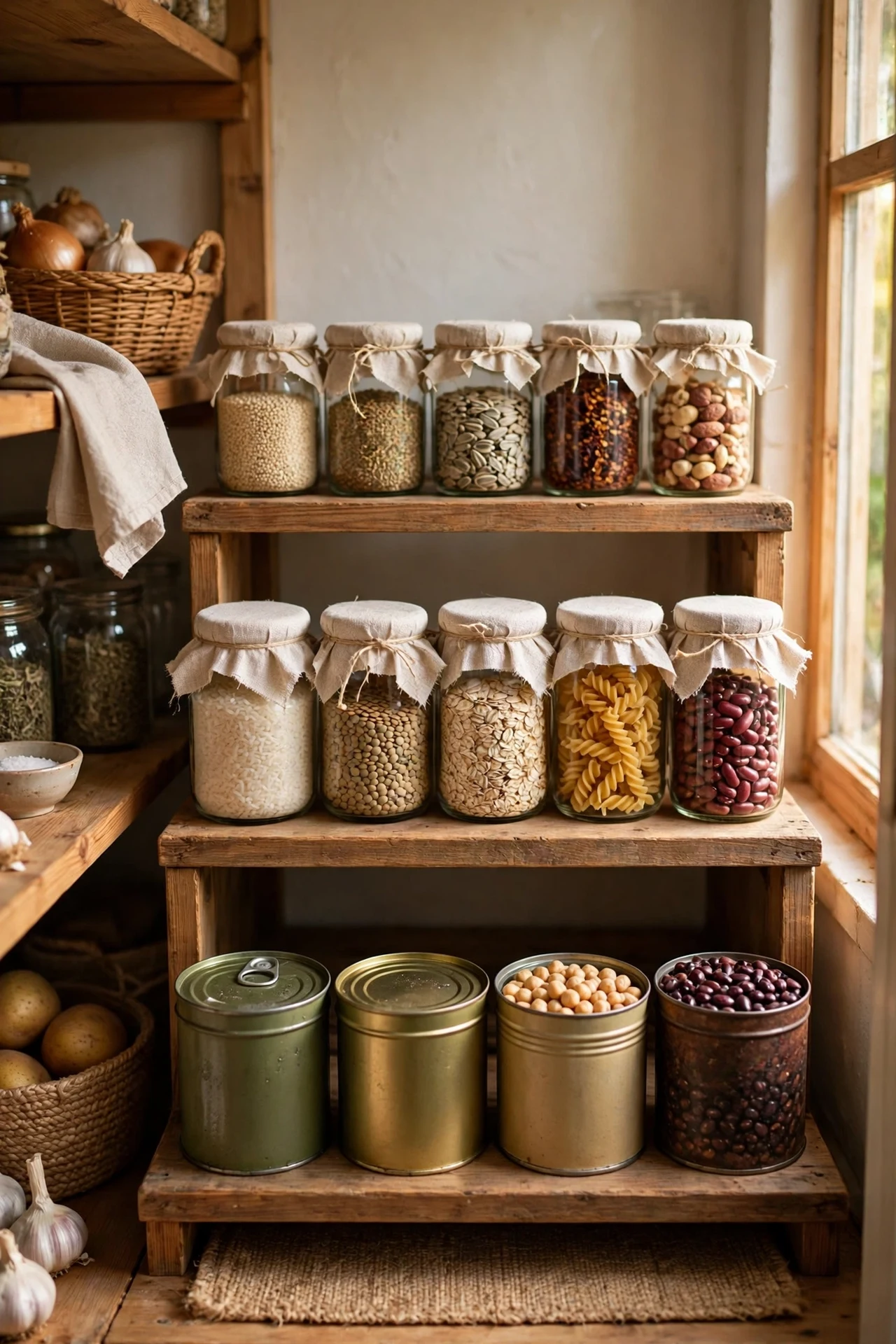
A tiered riser turns one flat shelf into stadium seating, so the tins and jars at the back stop being invisible. Slot an expandable bamboo or wire riser onto your deepest shelf, then load the tallest items at the back step and shortest at the front. You can suddenly see every label without moving a thing. I tried a fixed-width riser first and it left a weird four-inch gap on one side that just collected crumbs — the mistake to avoid is skipping the measurement; an expandable riser fills the full shelf width and looks intentional instead of wedged in.
8. Turntable “Lazy Susan” for Corners
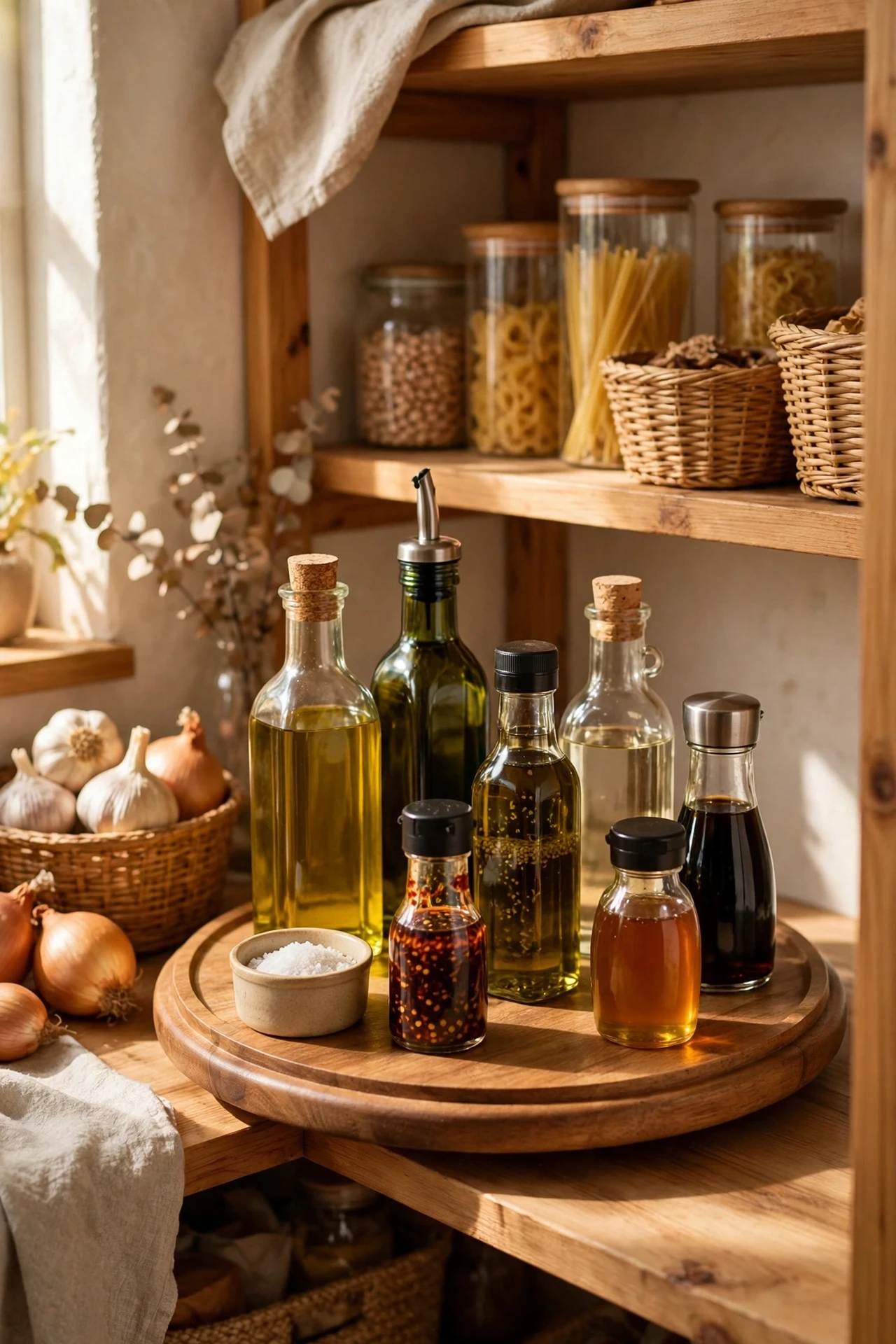
Deep pantry corners are where condiments go to be forgotten, so park them on a turntable and spin instead of dig. Choose a turntable with a raised lip so bottles don’t fling off mid-spin, and dedicate one to oils and vinegars and another to sauces and dressings. A single spin shows you everything, which means fewer mystery bottles bought twice. I tried a cheap flat turntable that stuck every rotation because it couldn’t handle the weight — the mistake to avoid is overloading it; keep it to medium bottles and the spin stays smooth for years.
9. Under-Shelf Hanging Baskets
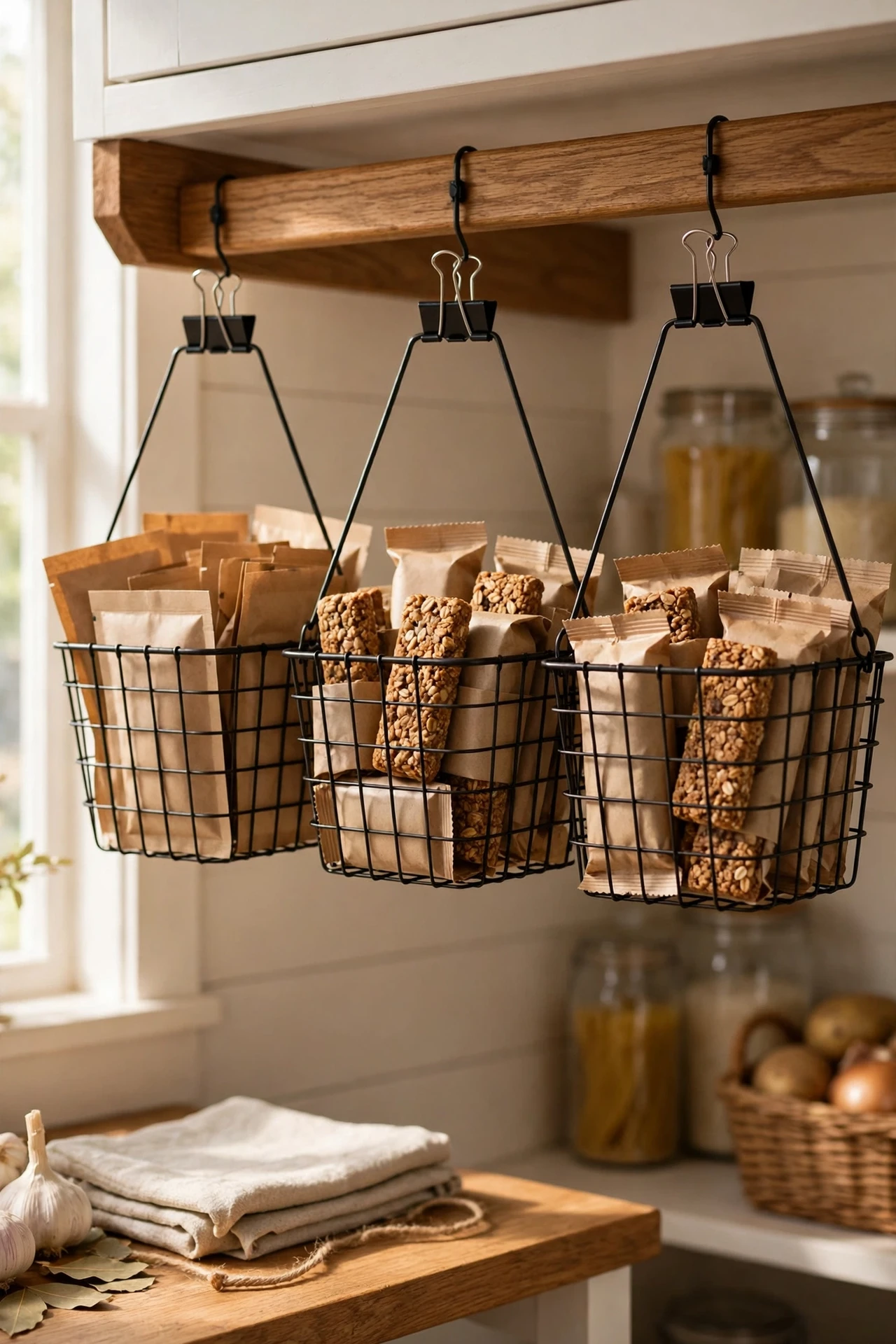
The dead air beneath each shelf is free storage if you clip on hanging baskets that slide over the shelf edge. These wire baskets are brilliant for packets of seasoning, gravy sachets and snack bars that otherwise pile up in a drawer. Slide two onto one shelf, sort by category, and the shelf below keeps its full height. I tried cramming them with heavy jars once and the clips bent — the mistake to avoid is treating them like load-bearers; keep them to lightweight packets and they’ll stay put without sagging.
10. Clear Stackable Canisters With Scoops
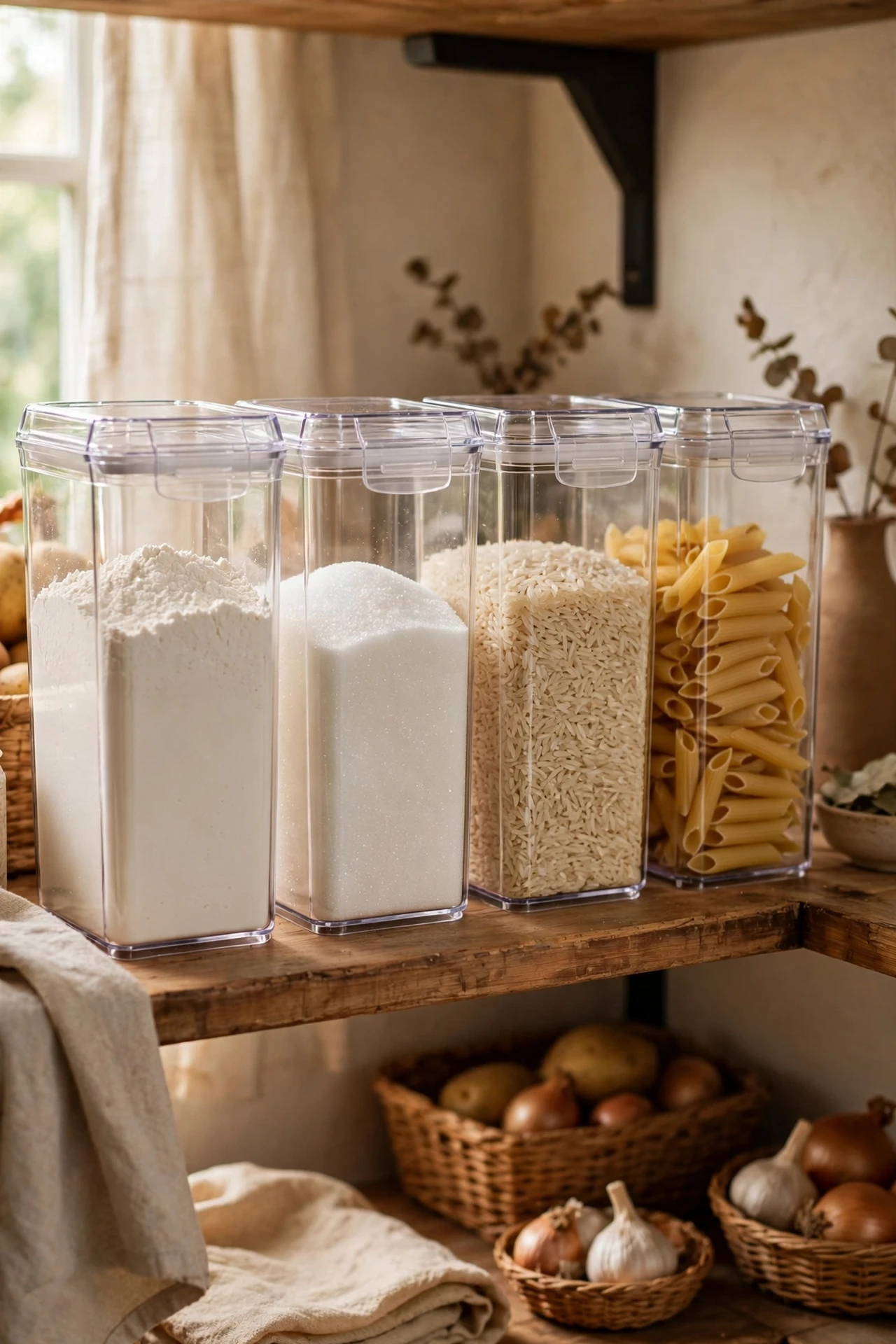
Decanting flour, sugar, rice and pasta into matching clear canisters makes a small pantry look twice as tidy and stops the avalanche of half-open bags. Choose square canisters so they tile together with no wasted gaps, add a small scoop in the dry goods, and label the front with a chalk pen. Uniform shapes genuinely change how spacious the shelf feels. I tried decanting everything at once and ran out of canisters mid-flour with a bag split open — the mistake to avoid is the grand reveal; decant one shelf a week and it never feels like a chore.
11. Shelf Liners That Actually Grip
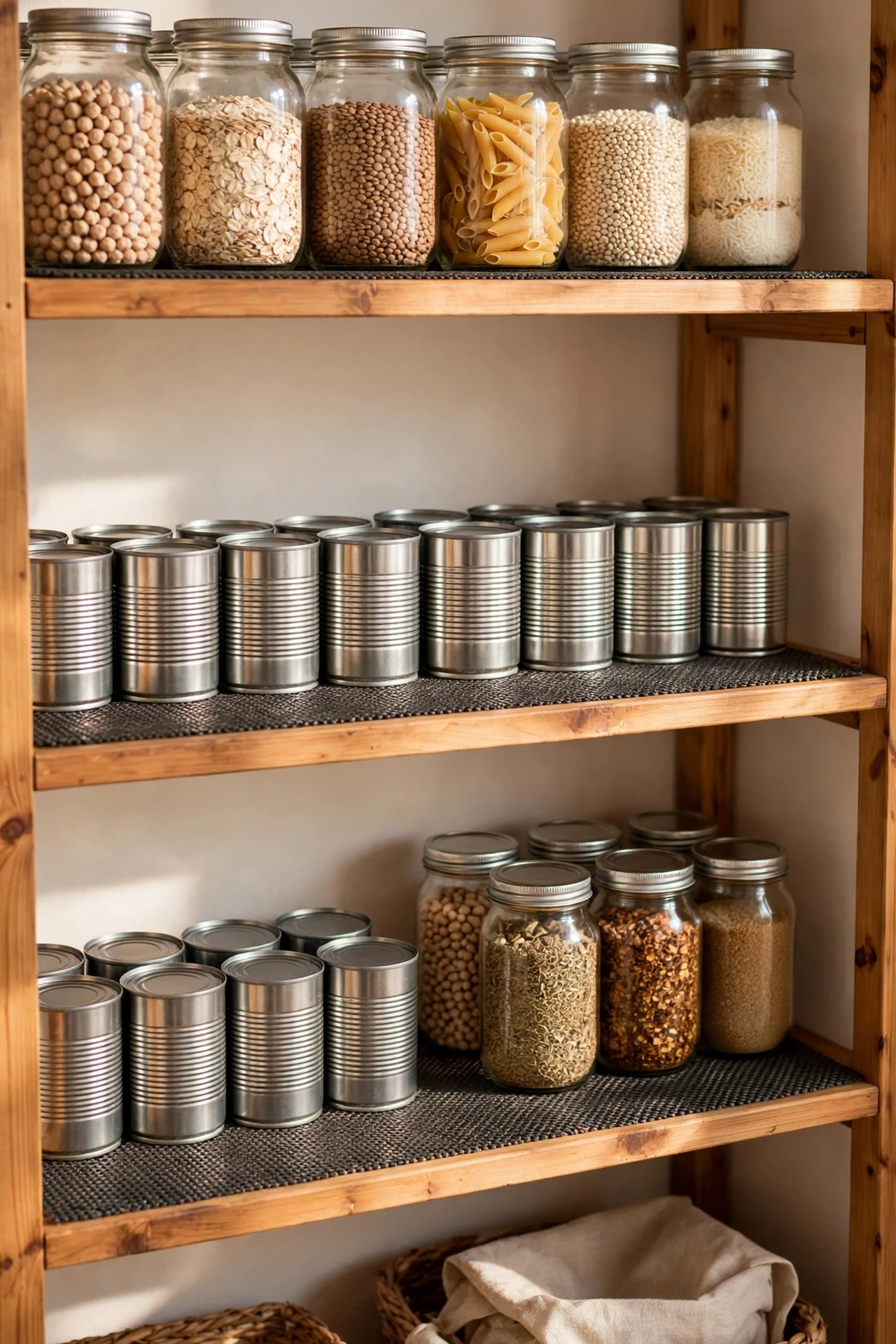
Grippy shelf liners keep jars from sliding and protect shelves from sticky drips, which matters more in a small pantry where everything gets nudged. Measure each shelf, cut the liner slightly short so it doesn’t curl at the edges, and lay it flat — the rubberised mesh type works best. It also dampens the clatter when you slide cans around early in the morning. I tried a decorative paper liner first and it tore within a month; the mistake to avoid is choosing looks over grip — the plain rubber mesh outlasts every pretty paper version and wipes clean in seconds.
12. Adjustable Shelves, Not Fixed Ones
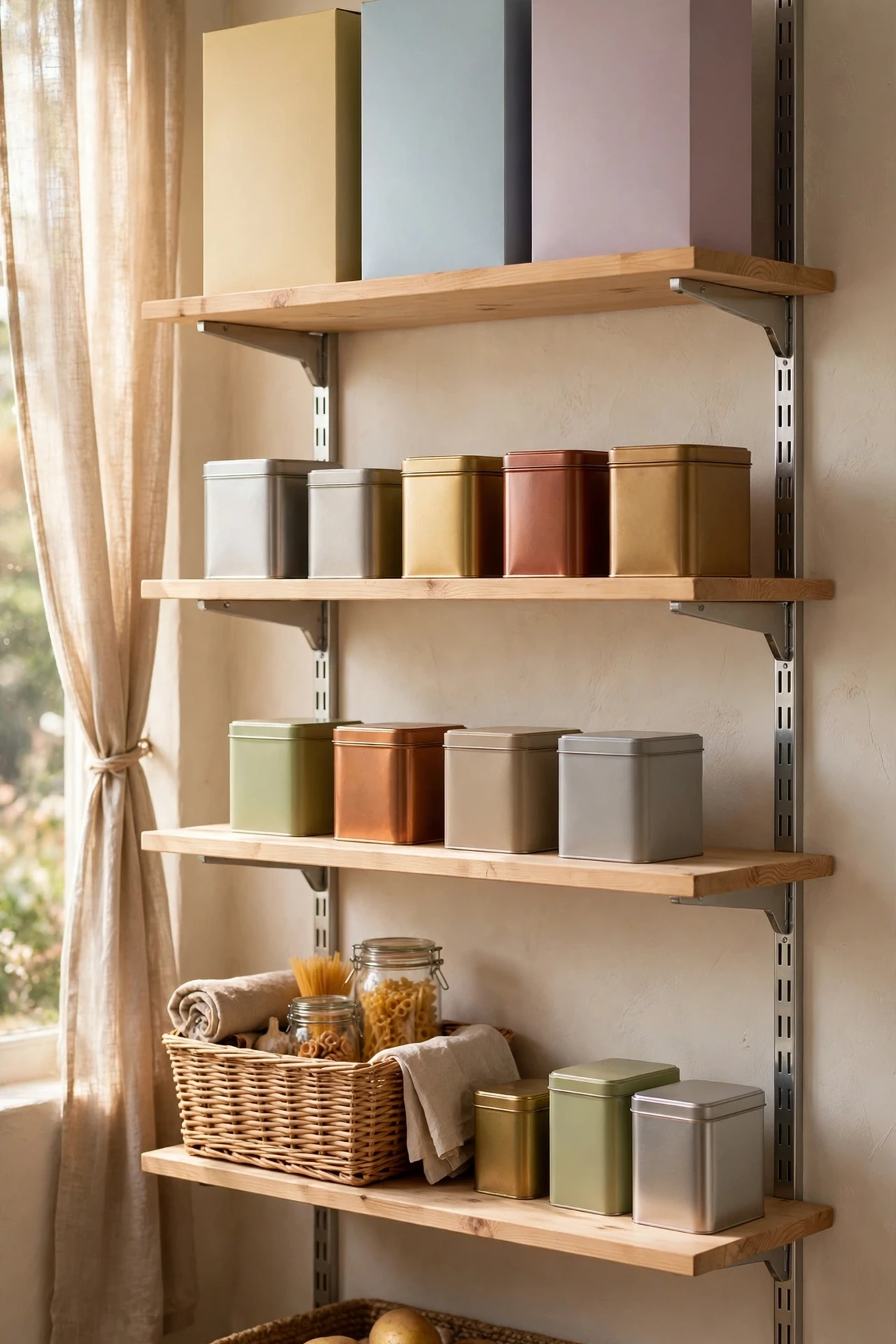
If your pantry shelves are fixed, you’re wasting vertical inches between items — re-drill for adjustable brackets and tailor each gap to what’s stored there. Move the brackets so cereal boxes get tall slots and tins get short ones, leaving almost no dead air. Most wire and melamine shelving already has the holes; you just need a level and ten minutes. I tried living with fixed shelves for ages and lost nearly a foot of usable space to empty air — the mistake to avoid is setting gaps “by eye”; stack the actual tallest item for that shelf, add an inch, and set the bracket there.
Bins, Jars & Labels
Containers and labels are the quiet engine of a small pantry. They group the chaos into grab-and-go categories, and they make restocking almost automatic.
13. Category Bins With Handle Cutouts
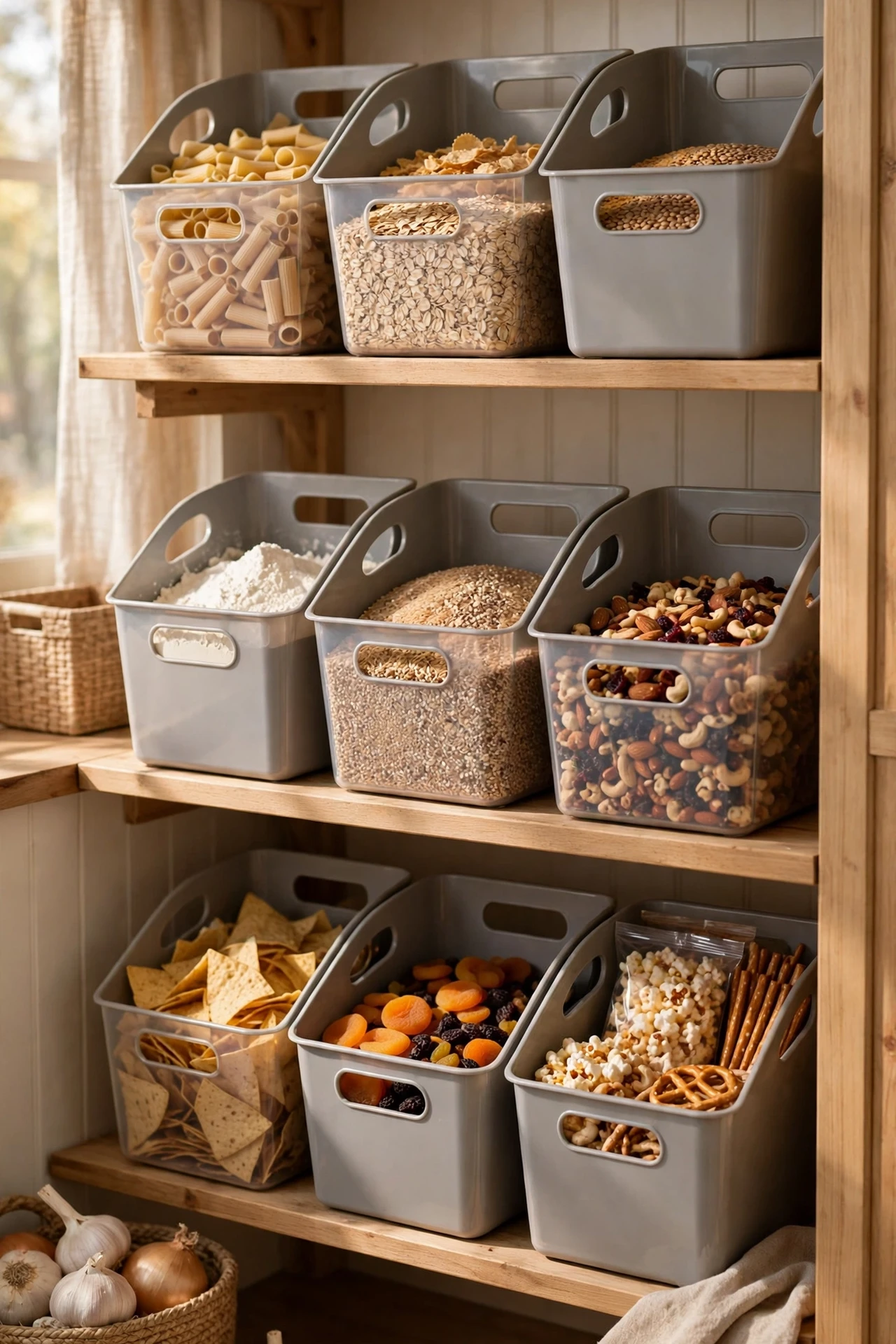
Open-top bins with handle cutouts turn your shelves into pull-out drawers for categories like baking, snacks, breakfast and pasta. Buy bins that span the shelf depth so nothing hides behind them, drop in a handwritten label, and train the household to grab the whole bin rather than rummaging. Restocking becomes a two-minute job: pull bin, refill, slide back. I tried lidded boxes first and the lids lasted about a week before living on the floor permanently — the mistake to avoid is anything with a lid in daily-use zones; open bins get used, closed ones get abandoned.
14. The “Eat Me First” Basket
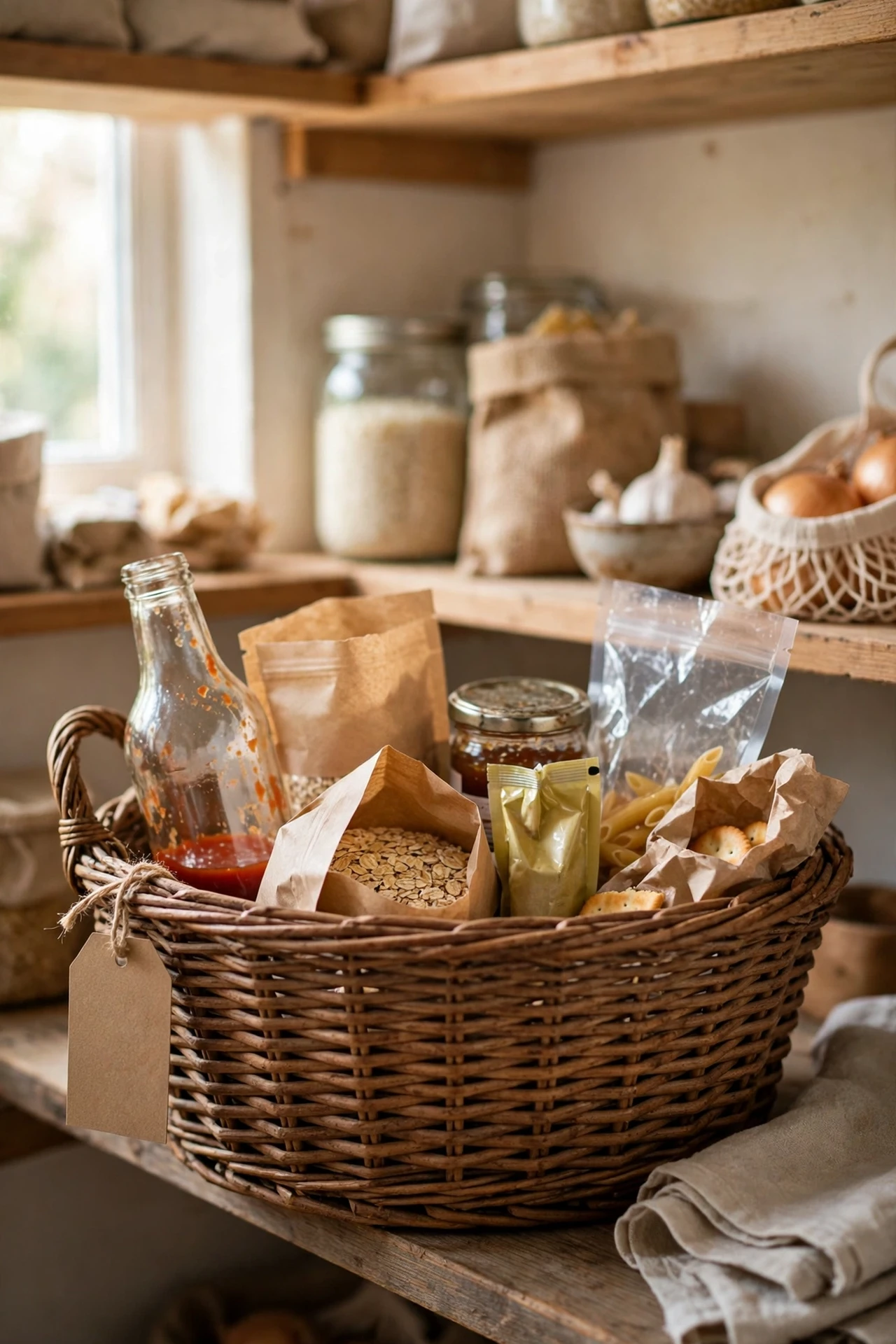
One basket labelled “eat me first” at eye level catches the half-used packets, about-to-expire tins and leftovers that otherwise vanish until they’re bin-worthy. Toss anything opened or nearing its date into it during the weekly shop-put-away, and check it before you cook. It genuinely cuts food waste because the candidates are visible instead of buried. I tried this and my family ignored it for a fortnight until I moved it to the most-used shelf — the mistake to avoid is tucking it somewhere noble but unused; it has to live where your eyes land every single day.
15. Uniform Label Maker System
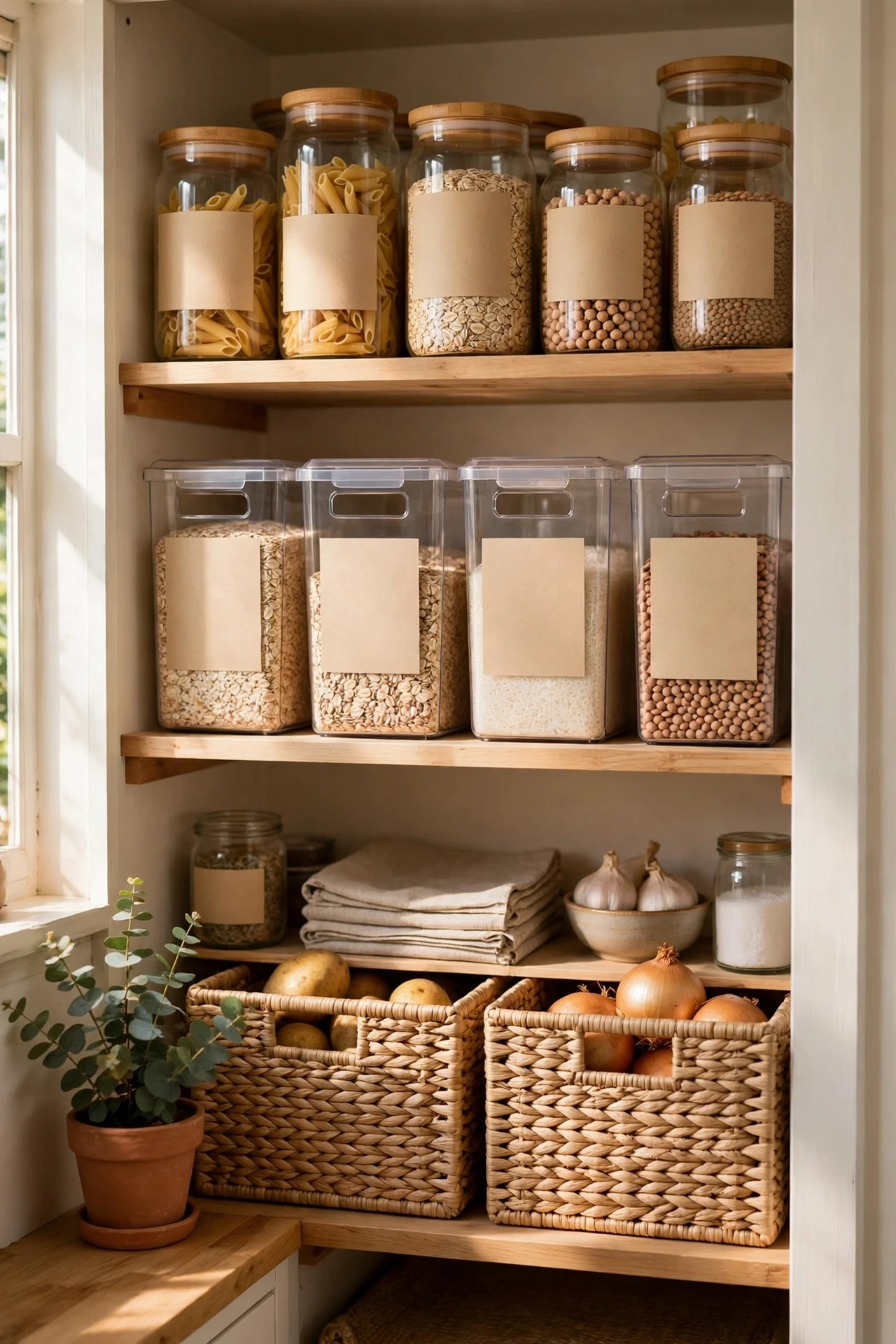
A cheap label maker — or even neat handwritten tags — gives every bin and jar the same voice, which is what makes a pantry feel calm instead of cluttered. Label the contents and, where it helps, the use-by month; keep the wording short and consistent, like “Pasta”, “Baking”, “Snacks”. Print a few spares so new bins match instantly. I tried fancy script fonts on day one and couldn’t read them from two feet away — the mistake to avoid is decorative lettering; a plain bold font you can read at arm’s length is the whole point of a label.
16. Slim Pull-Out Trolley for Gaps
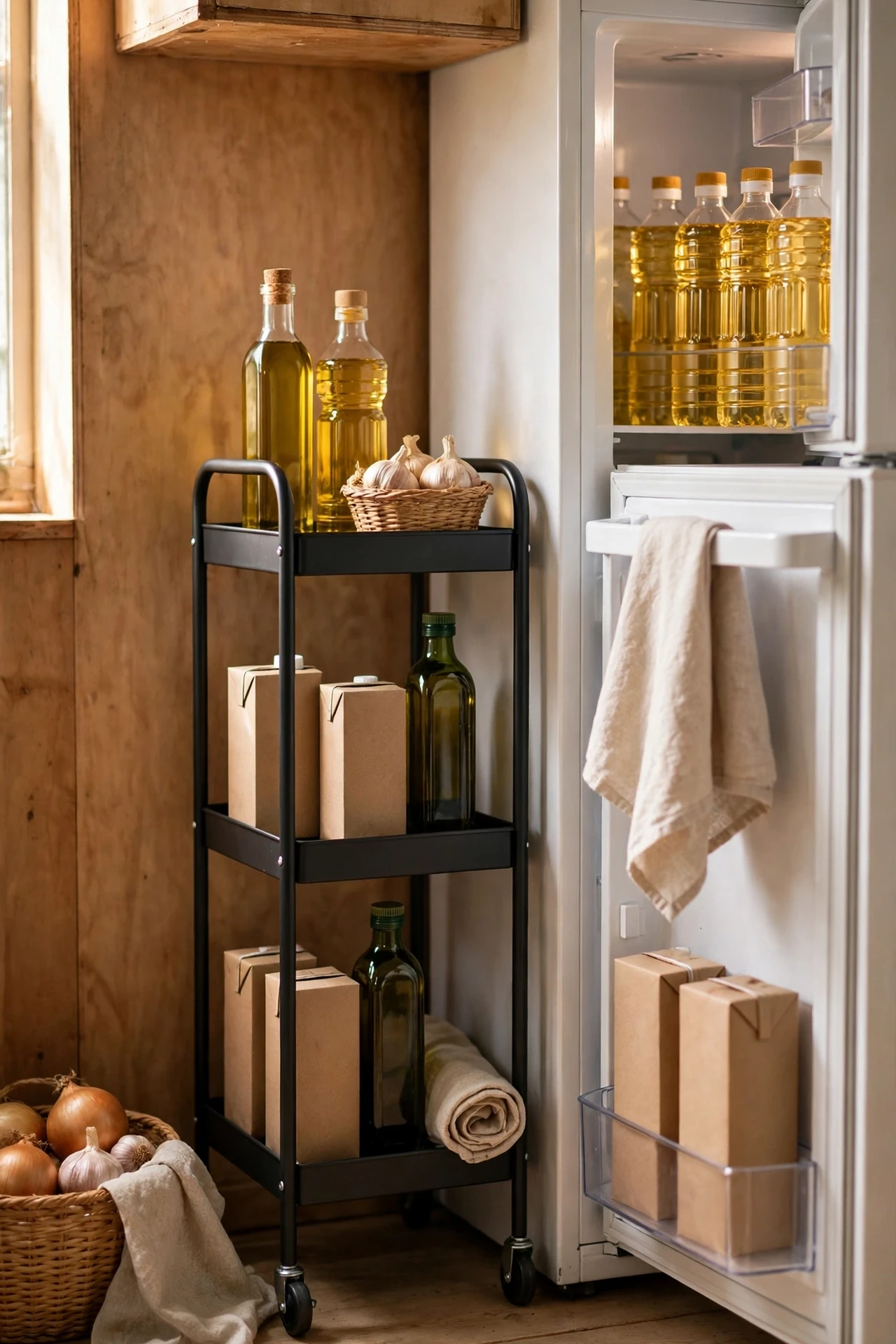
That six-inch gap between the fridge and the wall, or beside the pantry shelves, fits a slim rolling trolley perfectly — instant narrow shelving for bottles and packets. Measure the gap, buy a trolley on castors, and stock it with the tall thin things: cooking oils, stock cartons, cling film spares. It rolls out for full access and tucks away invisibly. I tried guessing the width and ordered one centimetre too wide, which was genuinely heartbreaking — the mistake to avoid is eyeballing; measure the gap at top, middle and bottom, because walls are rarely straight.
17. Glass Jars for the Pretty Stuff
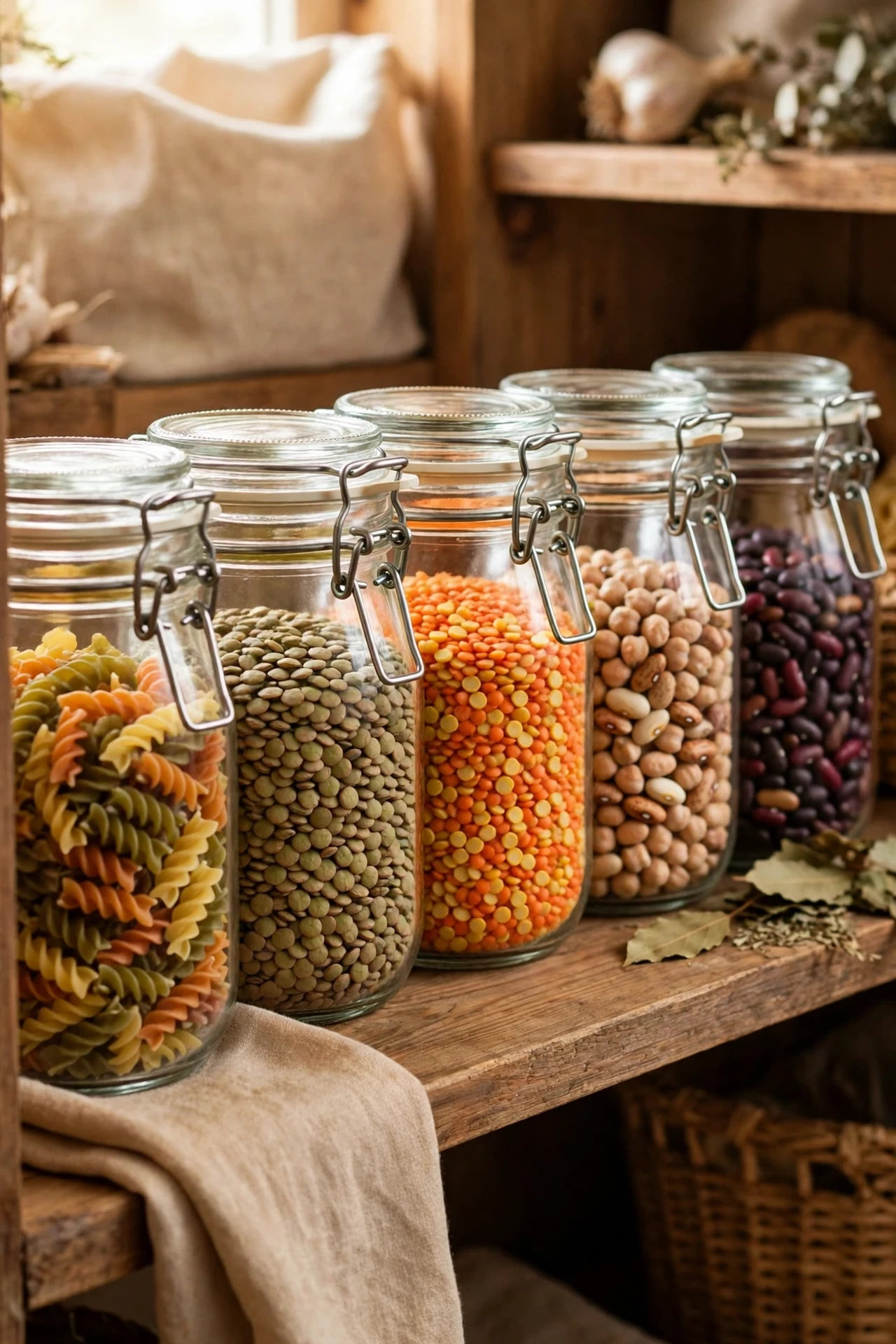
Decant the colourful dry goods — lentils, chickpeas, colourful pastas, dried beans — into glass jars and line them on one visible shelf, and your pantry gets a free display. Use airtight clip-top jars to keep things fresh, keep the jars uniform in shape, and put the prettiest colours at eye level. It looks styled but it’s pure function: you see quantities at a glance. I tried mismatched jars from the charity shop and it looked more jumble sale than Pinterest — the mistake to avoid is mixed shapes; one matching set, even the cheapest, reads as intentional design.
18. Snack Zone Bin for Grab-and-Go
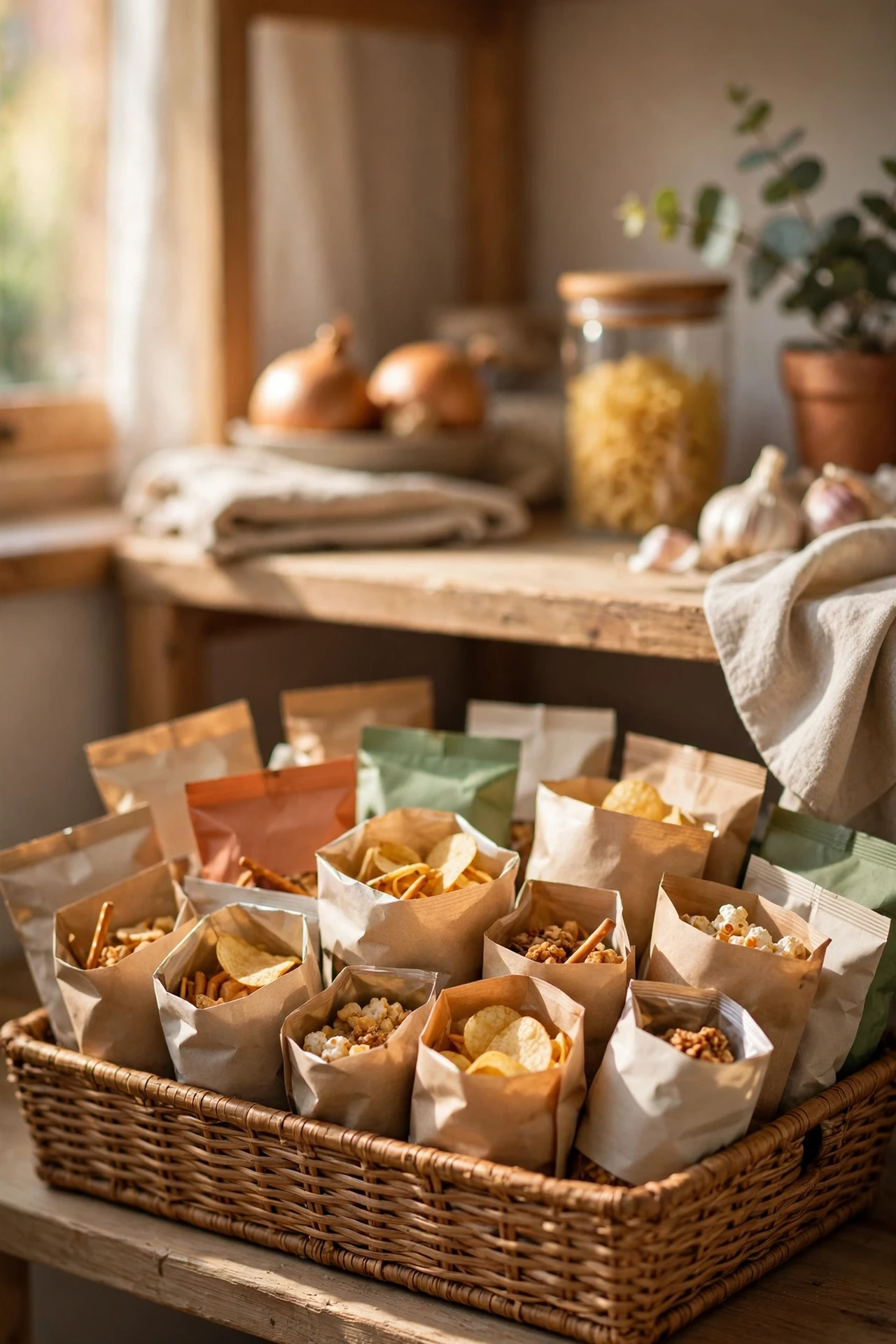
A single low bin at kid-height (or the shelf you reach for most) becomes the snack zone, and it ends the daily “where are the crisps” excavation. Decant multipacks out of their bulky boxes into one open bin, keep it at the front of the lowest shelf, and top it up weekly. Small kids can serve themselves, and guests stop rummaging your whole pantry. I tried scattering snacks across two shelves “by type” and nobody ever found anything — the mistake to avoid is over-sorting; one bin labelled snacks beats five perfect categories nobody maintains. If you want more small-kitchen storage tricks that work beyond the pantry, these (see also: small-kitchen-ideas-that-feel-twice-as-big) ideas are worth a look.
Small-Pantry Systems That Stick
The containers only work if the system around them is simple enough to keep. These last five ideas are the habits and cheap fixes that keep a small pantry organised long after the first tidy-up.
19. The One-In-One-Out Rule
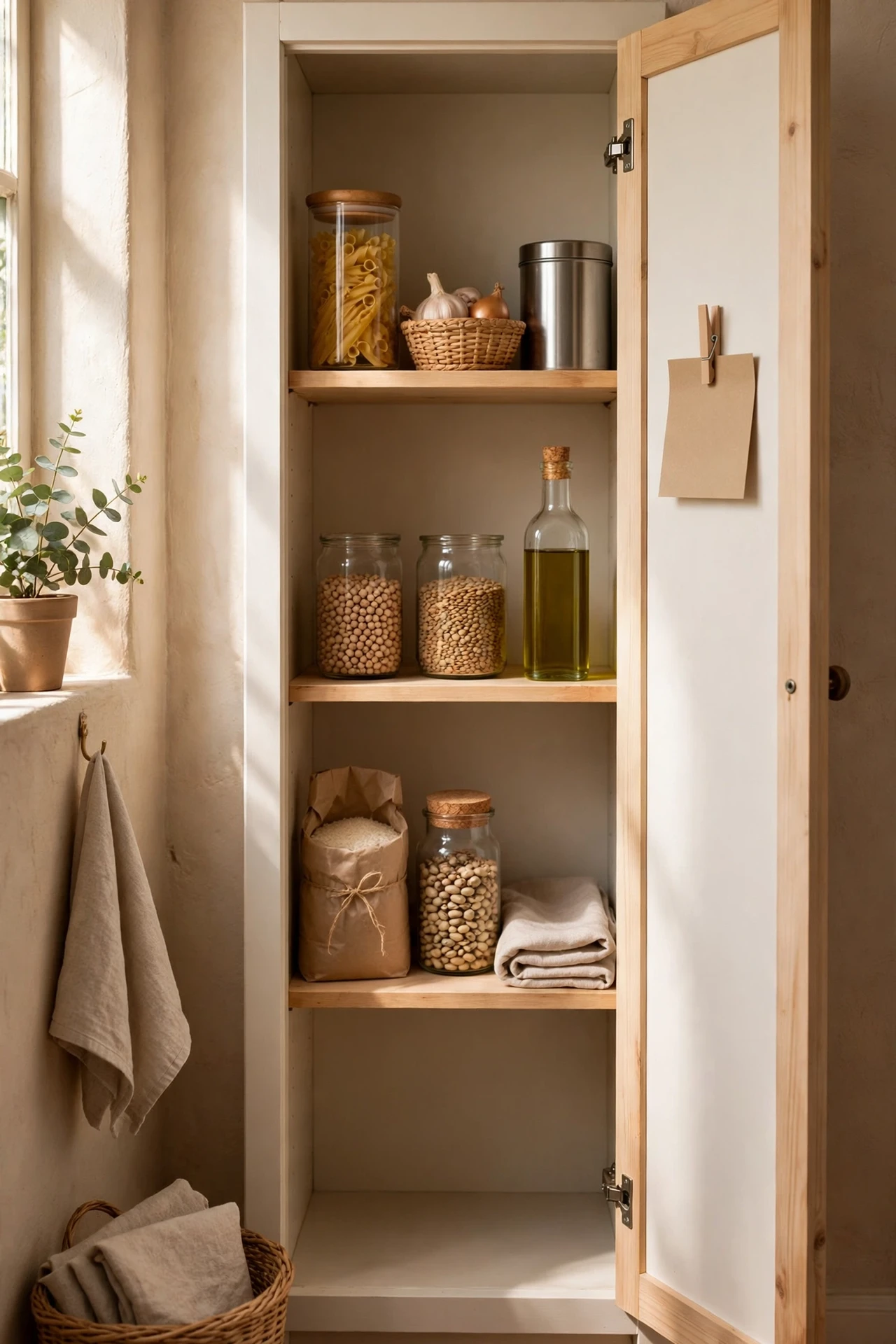
A small pantry has a hard capacity, so adopt a one-in-one-out rule: every new packet that enters means something gets used up, donated or binned first. Stick a tiny note inside the door as a reminder, and enforce it hardest after big shops when doubling-up is most tempting. It sounds strict but it becomes automatic within a month. I tried organising without this rule and every system collapsed within weeks because there was simply too much stuff — the mistake to avoid is treating it as a one-off declutter; it’s a buying habit, not a cleaning event, and that’s what makes it stick.
20. Weekly Five-Minute Pantry Reset
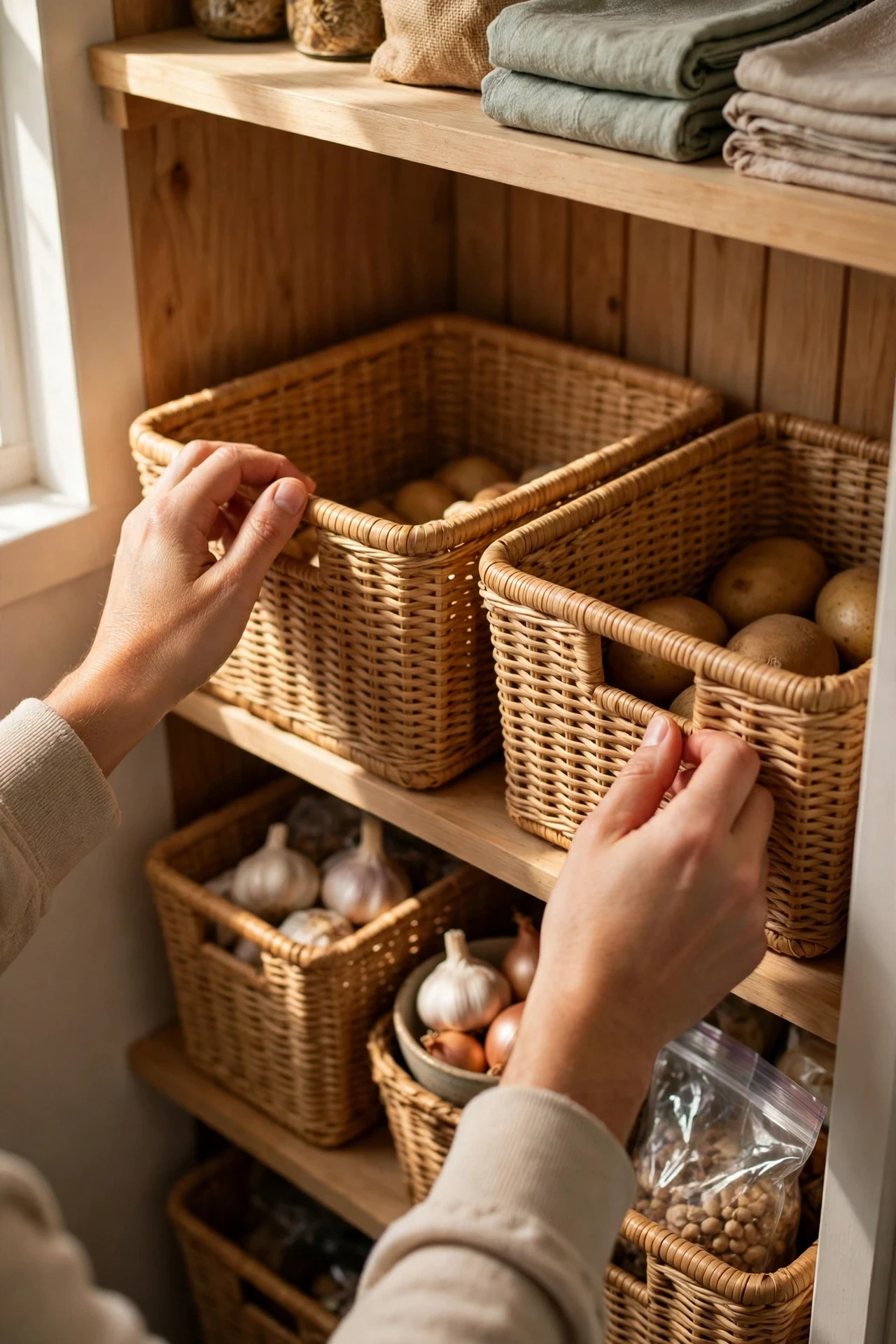
Set a recurring five-minute reset — I do mine while the kettle boils on Sunday — where you straighten bins, toss anything expired and note what’s running low. Pull each bin forward, push everything to the front, and wipe any sticky shelf in seconds. Five minutes is short enough that you’ll actually do it, and it stops the slow slide back into chaos. I tried a monthly “big tidy” instead and dreaded it so much I skipped three in a row — the mistake to avoid is scheduling a heroic clean; tiny weekly maintenance beats a dreaded monthly overhaul every time.
21. Inventory List on the Door
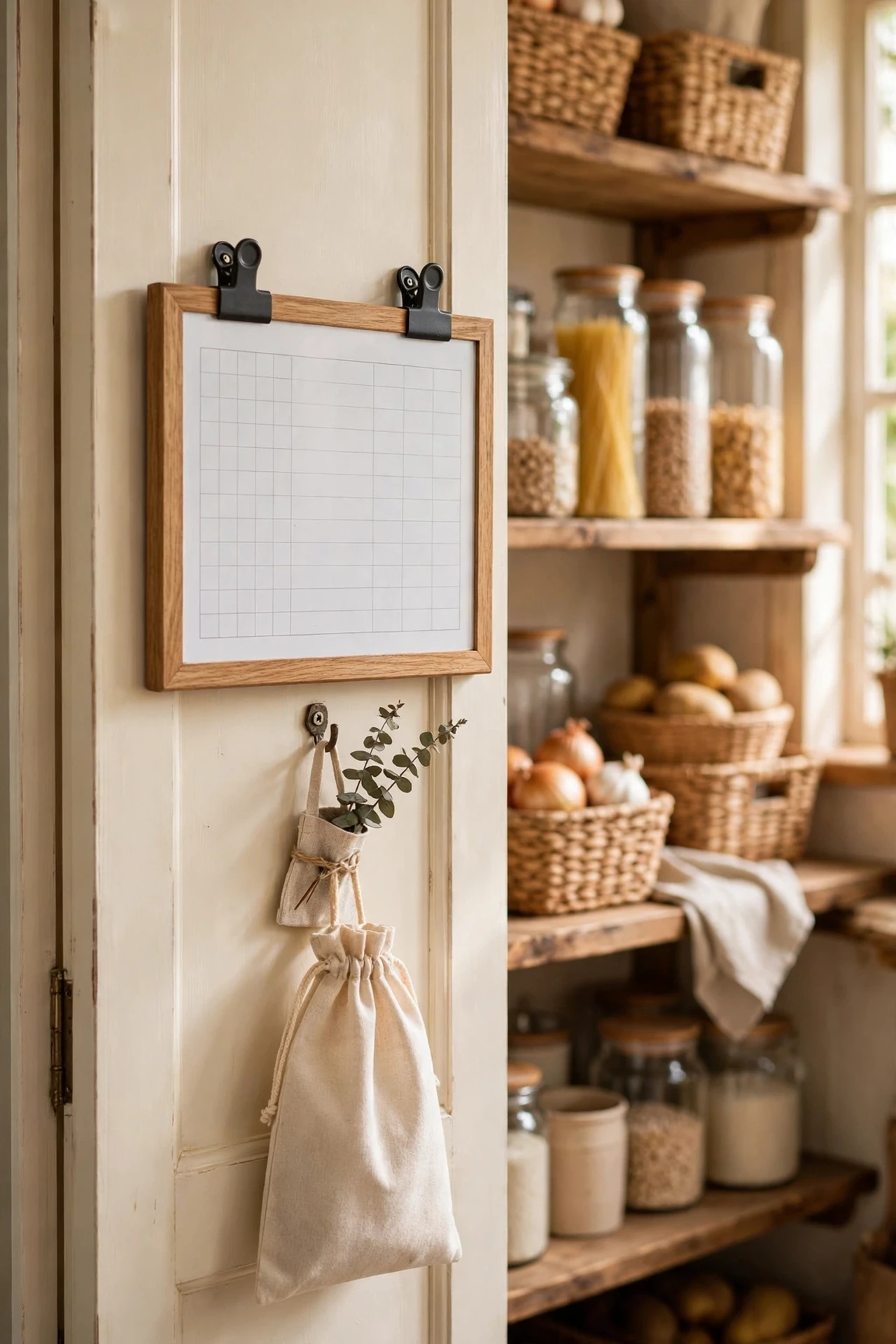
A wipe-clean inventory list on the inside of the door ends duplicate buying forever. Stick up a small whiteboard or laminated sheet divided into staples — flour, tins, pasta, spices — and mark a tick when you’re running low; wipe it when you shop. It takes ten seconds during put-away and saves real money. I tried a phone note instead and never opened it in the shop — the mistake to avoid is putting the list anywhere that isn’t the pantry door itself; if checking it adds even one step, you’ll skip it.
22. Dollar-Store Baskets for Deep Shelves
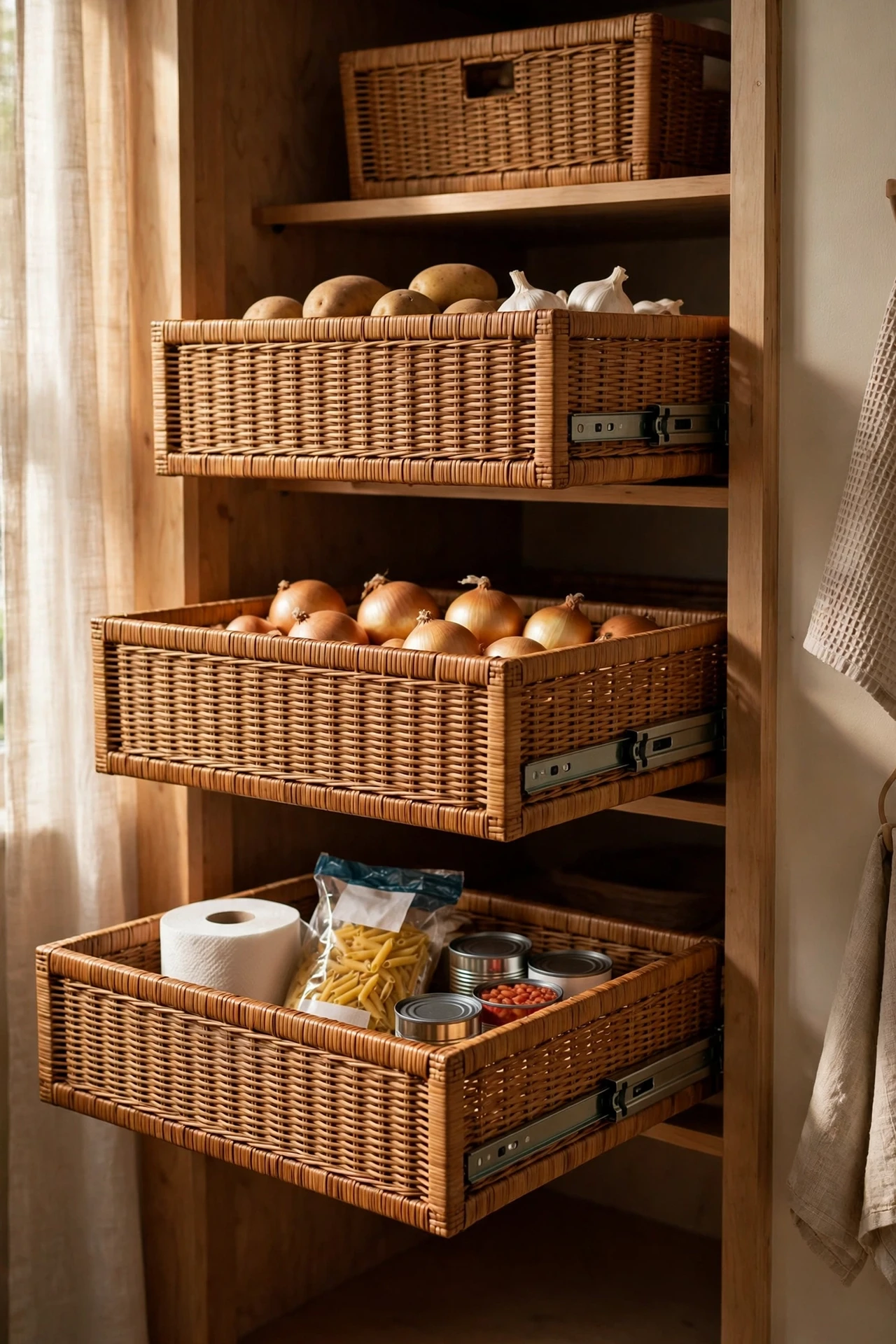
Deep shelves swallow small items whole, so line them with cheap dollar-store baskets that slide out like drawers. Buy baskets that match your shelf depth, one category per basket, and suddenly the back of a deep shelf is reachable without emptying the front. It’s the cheapest fix in this whole list and the most dramatic. I tried this and bought baskets that were two inches too short, leaving a dead strip at the back — the mistake to avoid is guessing the depth; measure shelf front to back and get baskets that use every inch. For more budget-friendly organising wins, these (see also: dollar-store-kitchen-organization-ideas-worth-every-penny) dollar-store ideas are genuinely worth every penny.
23. Lighting Strip So You Can See It All
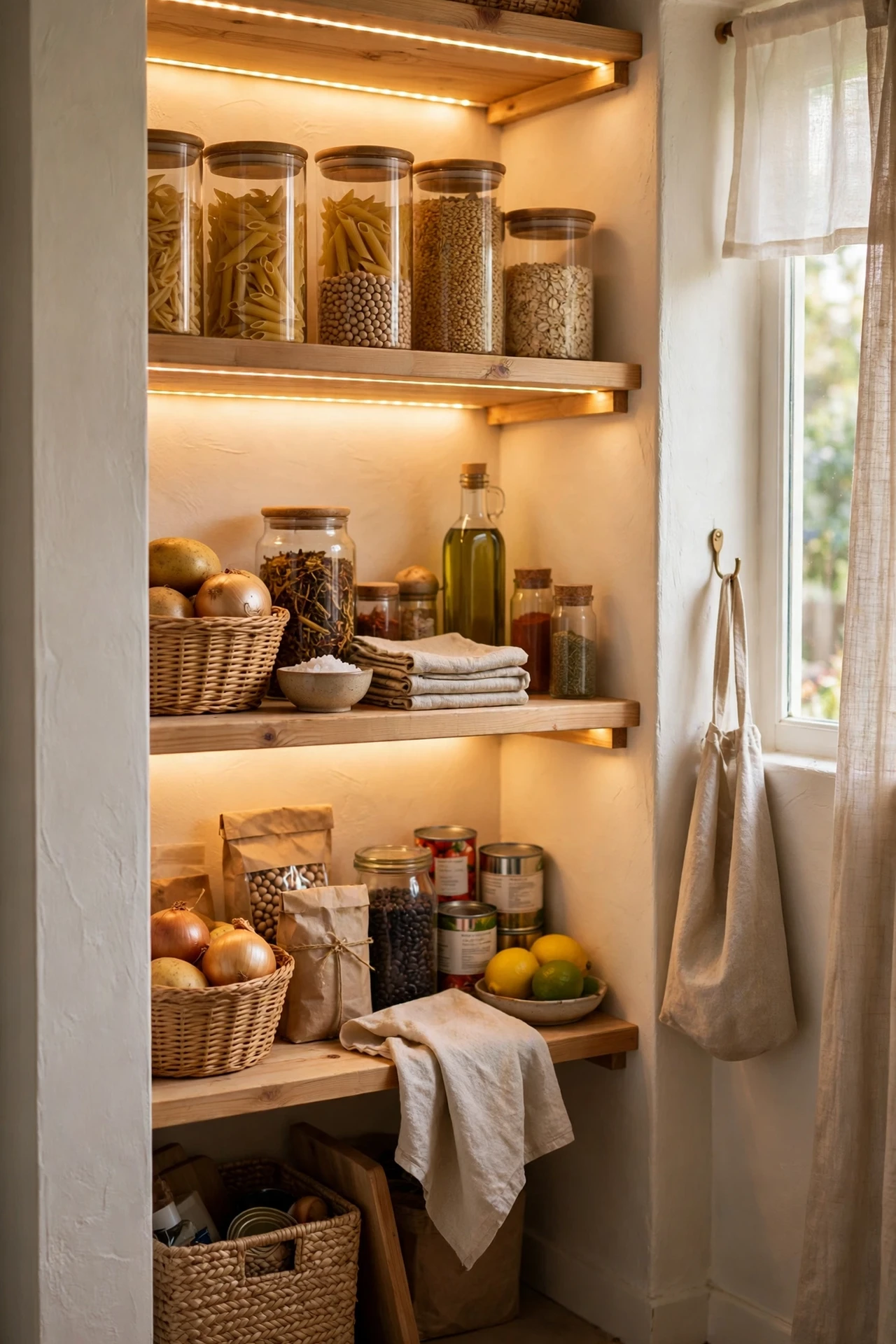
A battery-powered LED strip along the top of the pantry frame makes the whole space feel bigger and ends the phone-torch hunt for the back row. Stick the motion-sensor type so it lights when you open the door, run it the full width of the opening, and replace the batteries twice a year. Good light is the difference between a pantry you use and a cupboard you avoid. I tried a plug-in light first and the cable was an instant trip hazard — the mistake to avoid is anything mains-powered in a pantry; battery motion-sensor strips are cheaper, safer and take two minutes to fit.
Save this idea list to your kitchen board before your next big shop — even three or four of these will make your small pantry feel twice as useful. I redid mine with under twenty pounds of organisers and it still makes me weirdly happy every time I open the door.
