25 Warm White Kitchen Ideas That Feel Fresh
My kitchen walls were painted a blue-white that made everything look cold, and I couldn’t figure out why the room felt chilly even in July. Then a decorator friend told me the fix wasn’t new cabinets — it was warmer white paint. These Warm White kitchen ideas are all about that soft, creamy glow that makes a kitchen feel sunlit at any hour. I repainted, swapped a few textiles, and changed my lightbulbs, and the room finally feels like somewhere you want to linger with a cuppa. Here’s every budget-friendly way to warm up your white kitchen.
1. Repaint Cabinets in a Warm White Like Swiss Coffee
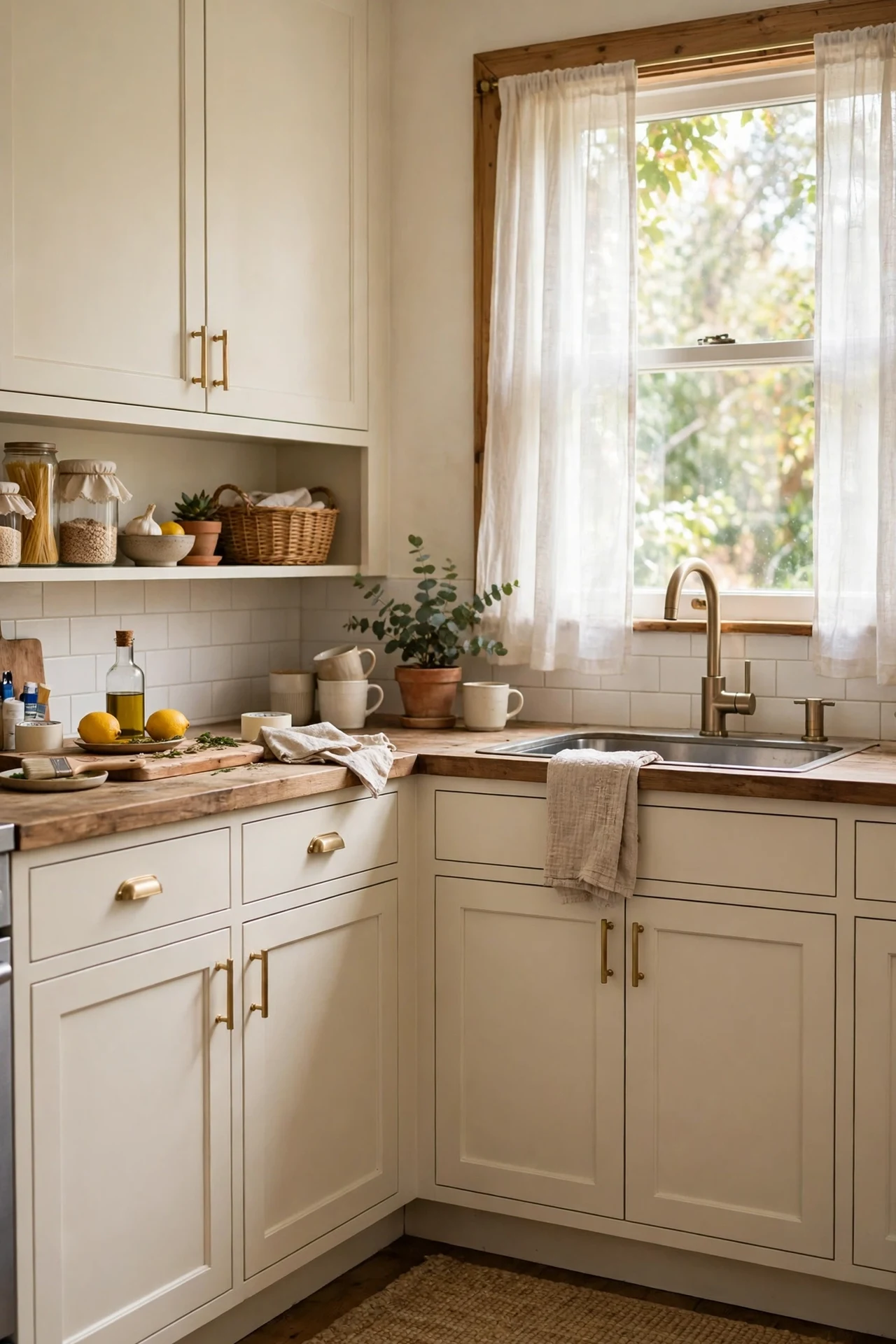
The fastest way to warm a cold kitchen is repainting cabinets in a creamy white — think Swiss Coffee, White Dove, or any white with a whisper of yellow. Clean doors with a degreaser, sand lightly, prime with a bonding primer, then apply two coats of satin cabinet paint with a small foam roller for a smooth finish. Keep the room’s undertones consistent so the new white doesn’t clash with the worktops. I tried a bright white first and the kitchen glowed blue at night; one coat of warm white over it fixed everything. The mistake to avoid is painting in poor light — colours shift dramatically, so check your shade at noon and again in the evening.
Cost: ~$45 | Time: 1 weekend
2. Butcher-Block Open Shelves on Warm White Walls
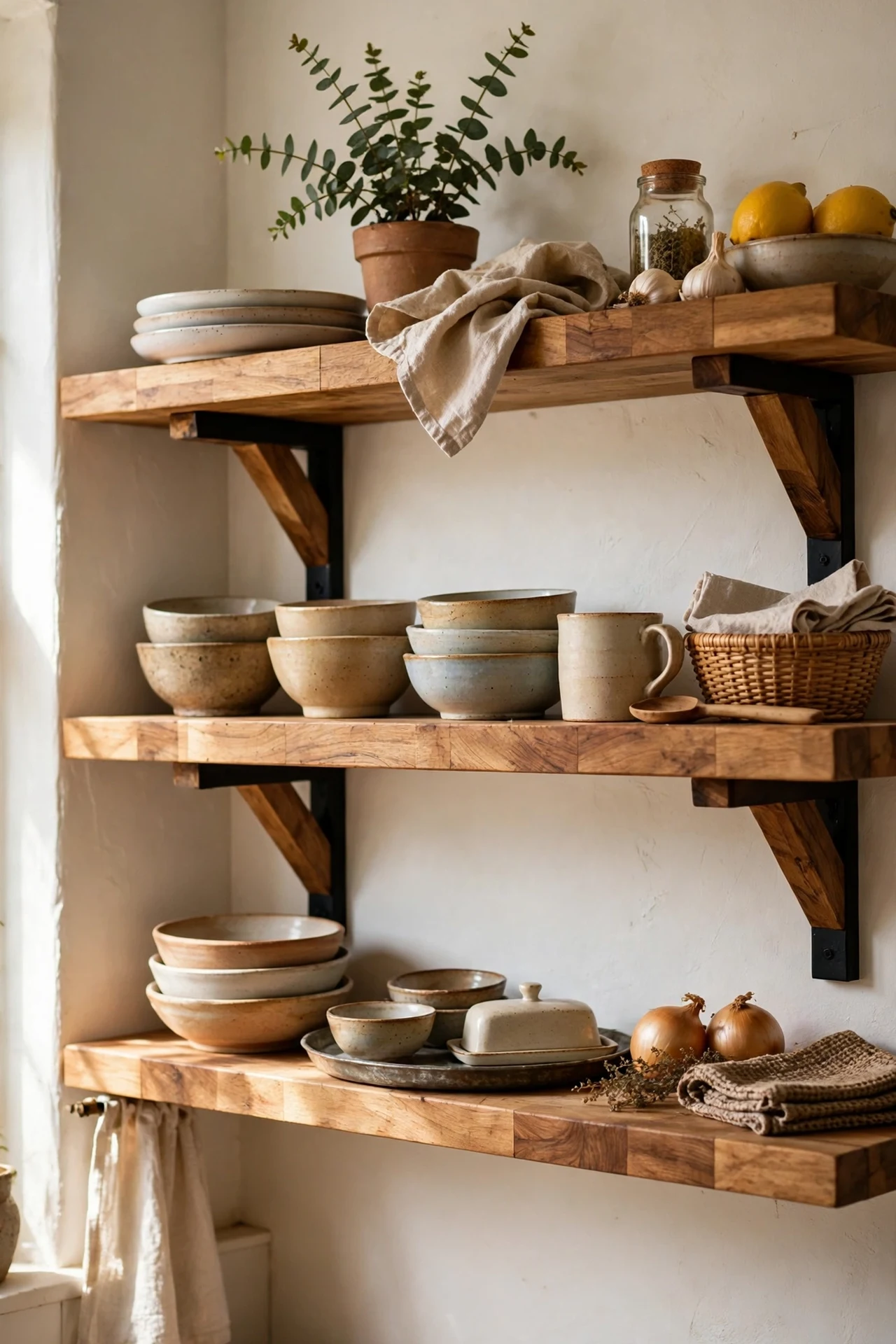
Chunky wooden shelves against warm white walls add instant farmhouse warmth. Cut pine or oak boards to length, sand them smooth, and finish with food-safe oil so they glow honey-toned. Fix heavy-duty brackets into studs, checking with a spirit level as you go. Style the shelves with everyday dishes so they earn their keep. I tried staining mine dark first and it fought the warm white; a clear oil finish let the wood’s natural warmth do the talking. The mistake to avoid is shelves that are too deep — anything past 25cm becomes a dust trap at the back where you can’t reach.
Cost: ~$35 | Time: 2 hours
3. Warm White Beadboard Backsplash
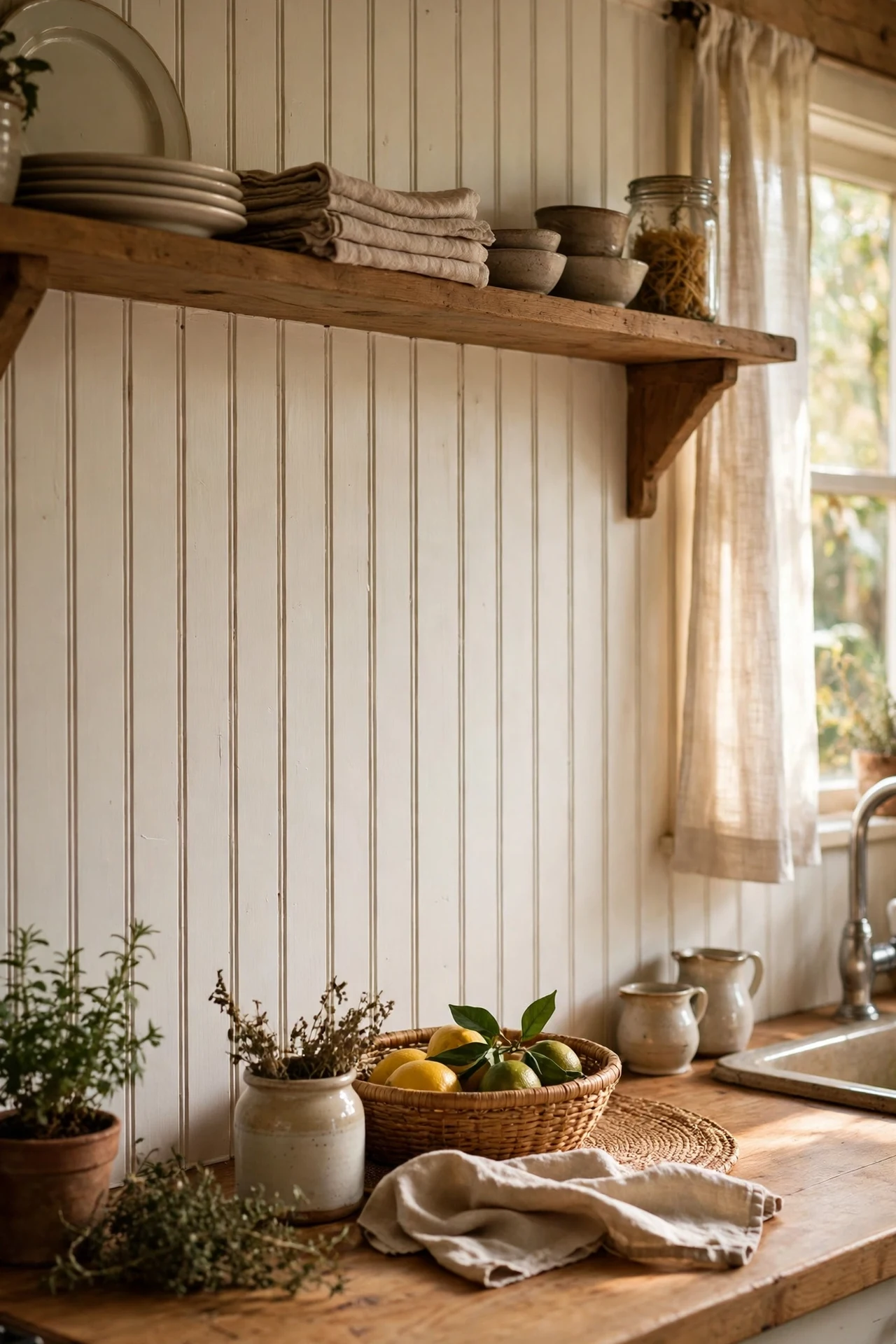
Beadboard panelling painted warm white gives a backsplash cottage texture for the price of a few boards. Cut panels to fit between worktop and cabinets, fix with construction adhesive and a few pins, then caulk the seams and paint two coats of scrubbable satin. It wipes clean and hides imperfect plaster beautifully. I tried this in my old rental and the landlord actually asked to keep it when I moved out — that’s how good cheap beadboard looks painted properly. The mistake to avoid is using flat matt paint here — cooking splatter stains it permanently, so satin or eggshell is the only sensible finish behind a hob.
Cost: ~$30 | Time: 3 hours
4. Cream Linen Café Curtains
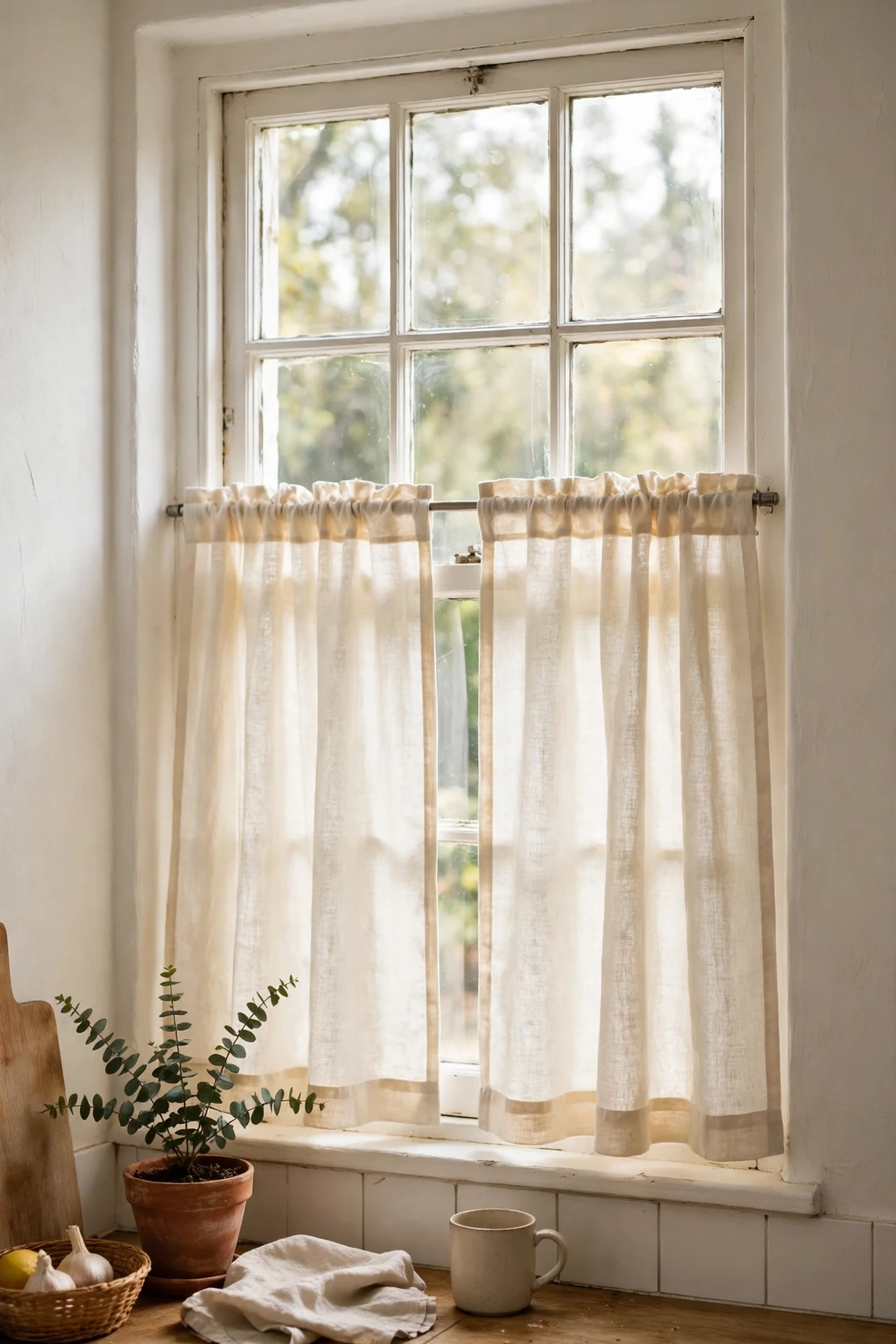
Cream linen café curtains soften the window while keeping the daylight that warm white walls love. Hem two panels, thread them on a tension rod at sill height, and let them gather loosely — linen looks better slightly rumpled than pressed. Wash them twice before hanging so they shrink before you cut. I tried bleached white curtains first and they looked stark against the creamy walls; unbleached linen blended perfectly. The mistake to avoid is hanging them too high — café curtains should sit at the middle of the window, not the top, or they read as regular curtains that shrank.
Cost: ~$22 | Time: 1 hour
Pro tip: Hold paint swatches against your worktops and floor in both daylight and lamplight before committing — warm whites can turn pink or yellow under the wrong bulbs, and a £3 tester pot saves a £40 mistake.
5. Warm White Subway Tile with Warm-Toned Grout
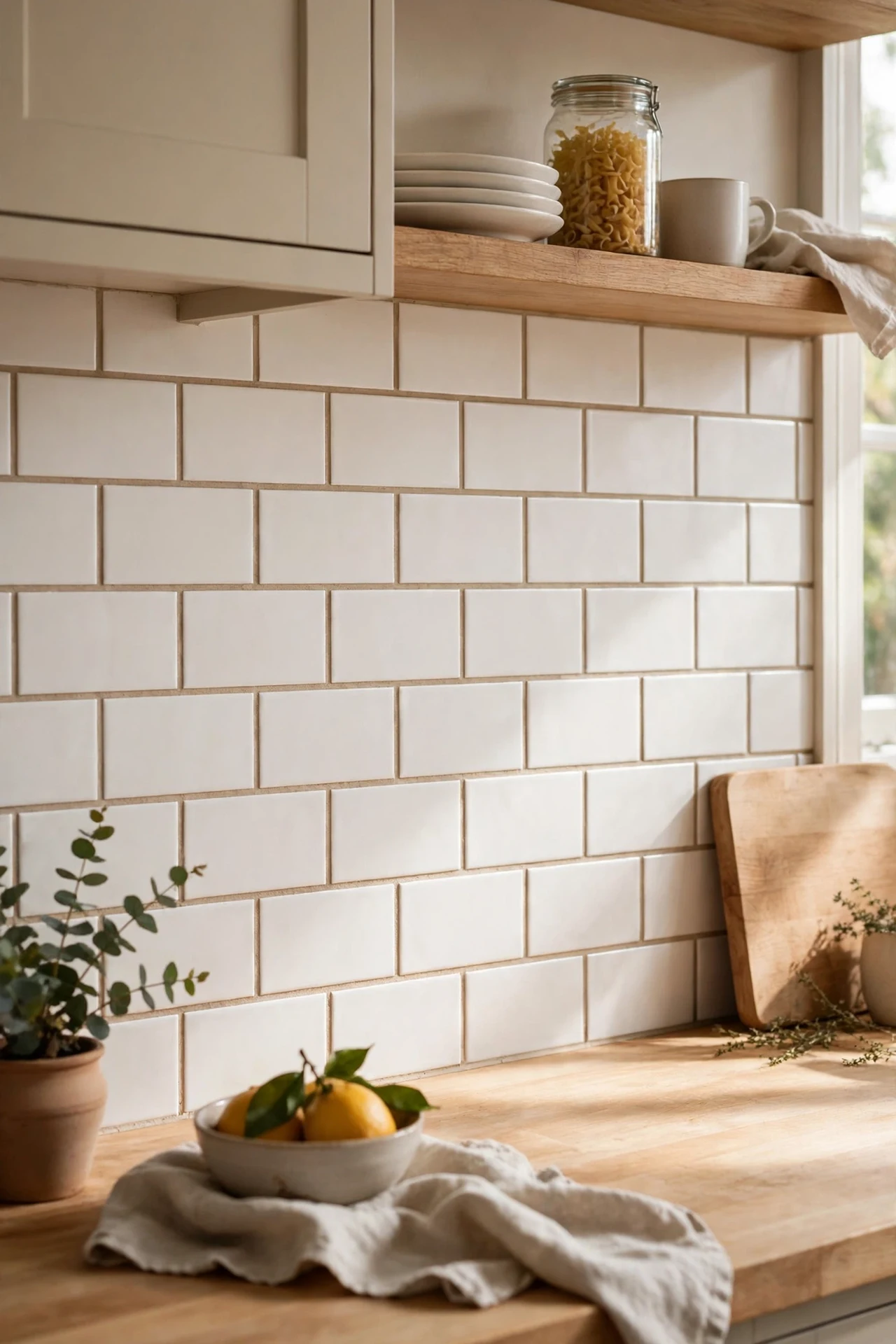
White subway tiles lean cold, but pair them with a warm greige grout and the whole wall softens. Stick up self-adhesive tile sheets from the centre outward, pressing firmly as you go, or grout real tiles with a warm-toned mix. Seal afterwards for stain resistance. I tried bright white grout with mine and the grid looked clinical; switching to a warm greige made the kitchen feel like it had always been that way. The mistake to avoid is grout that’s too dark — one shade warmer than the tile is the limit, or the pattern overwhelms the calm you’re after.
Cost: ~$30 | Time: 3 hours
6. Brushed Brass Cabinet Pulls
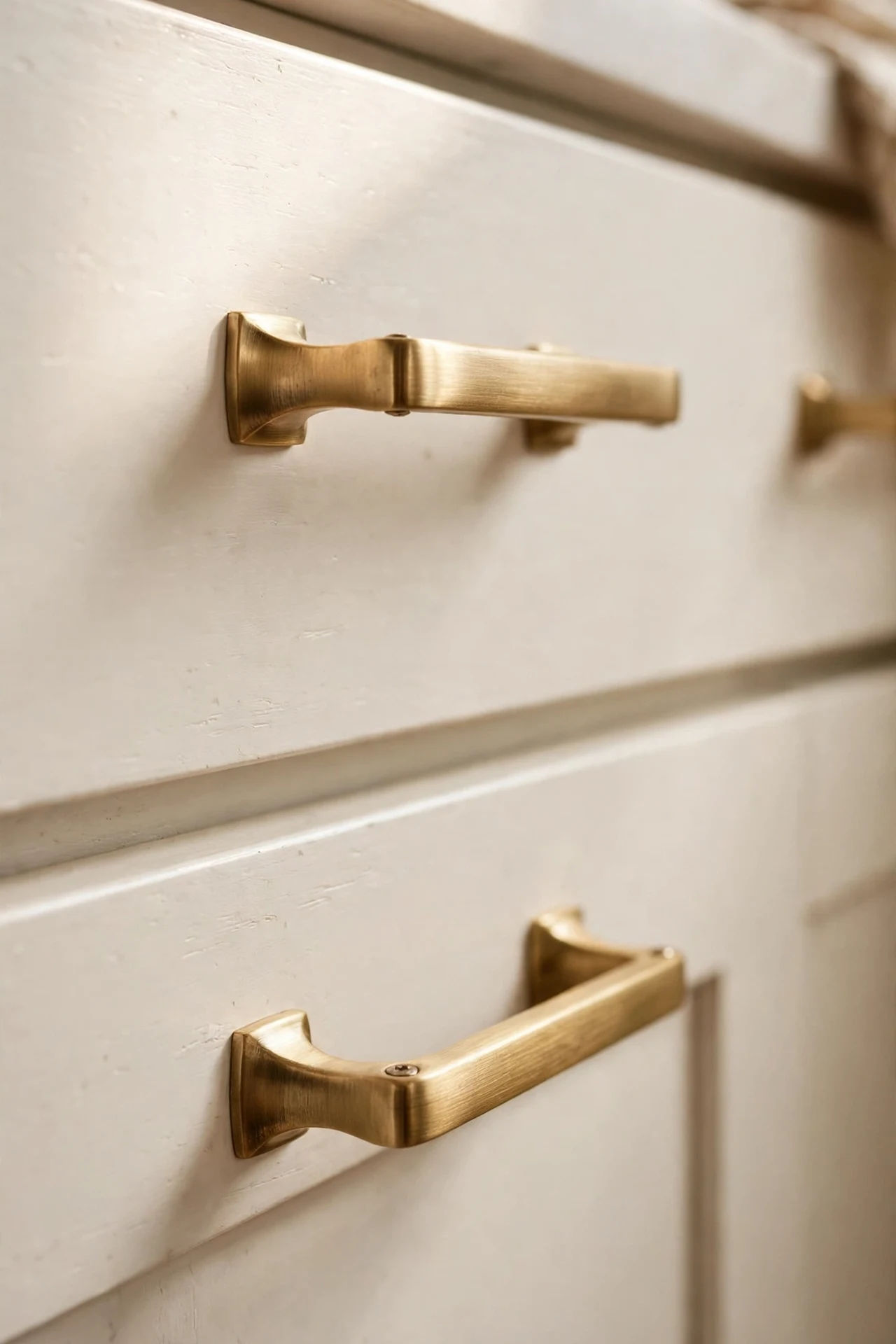
Brass hardware glows against warm white cabinets like candlelight. Unscrew the old handles, fill any mismatched holes with wood filler if the new pulls differ in size, then fit the brass ones with the screws supplied. Keep the finish consistent — brushed or satin brass everywhere, no mixing with chrome. I tried mixing brass and black in my kitchen and it looked indecisive; all brass felt calm and deliberate. The mistake to avoid is lacquered brass in a hardworking kitchen — it chips and shows wear, while unlacquered brass develops a lovely patina that suits the warm scheme.
Cost: ~$25 | Time: 1 hour
7. Rattan Pendant Shades for a Soft Glow
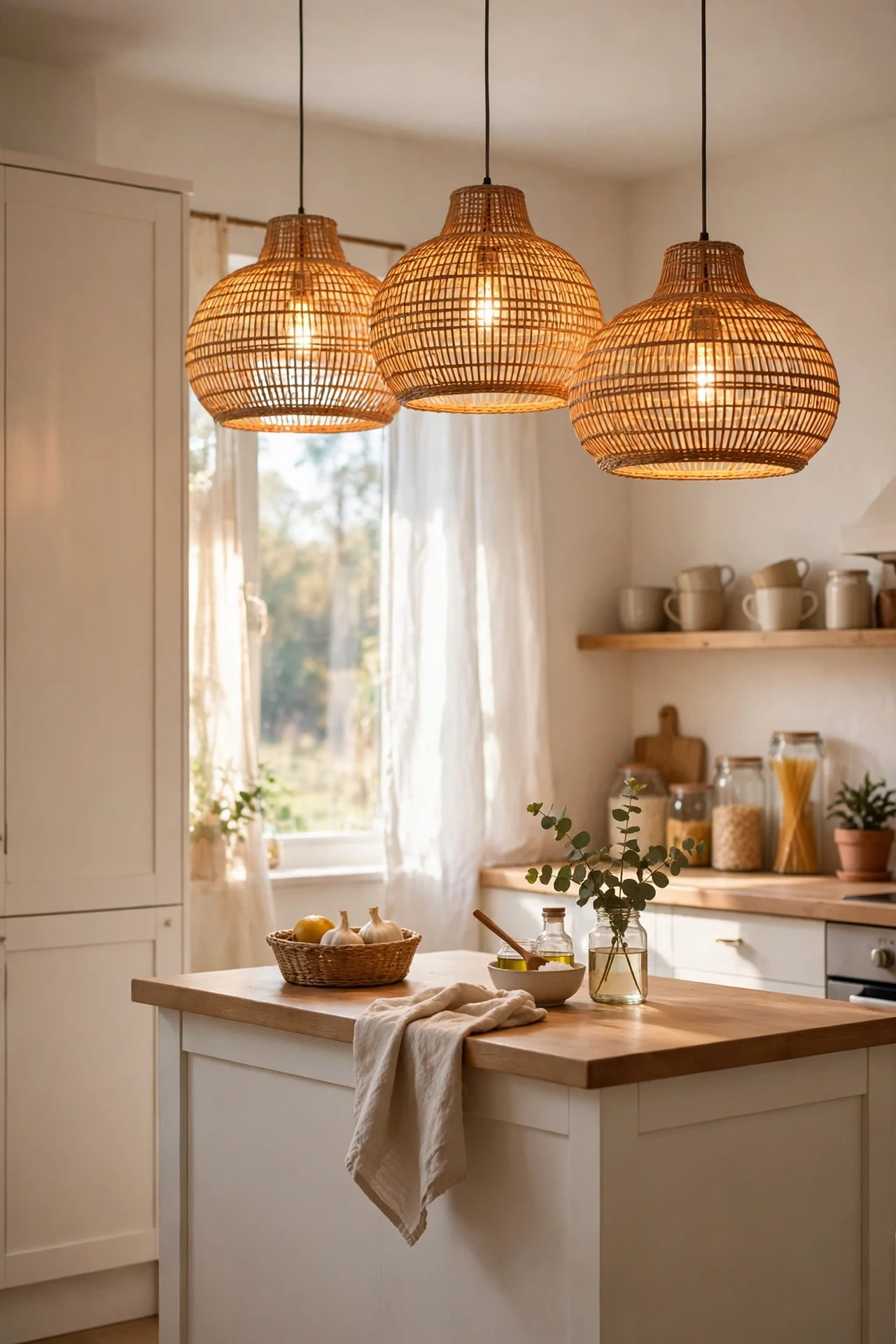
Rattan pendants scatter light in warm pools and add texture that flat white ceilings lack. Hang two over the island at equal heights, wiring them in place of old fittings with the power off at the breaker. Choose natural rattan rather than dark stain to keep the palette light. I tried oversized shades that hung too low and kept bumping my head while cooking; raising them to 75cm above the worktop fixed it. The mistake to avoid is rattan directly over the hob — rising grease coats the weave and it’s miserable to clean, so keep them over the island or table instead.
Cost: ~$60 | Time: 1 hour
8. Cream Runner Rug by the Sink
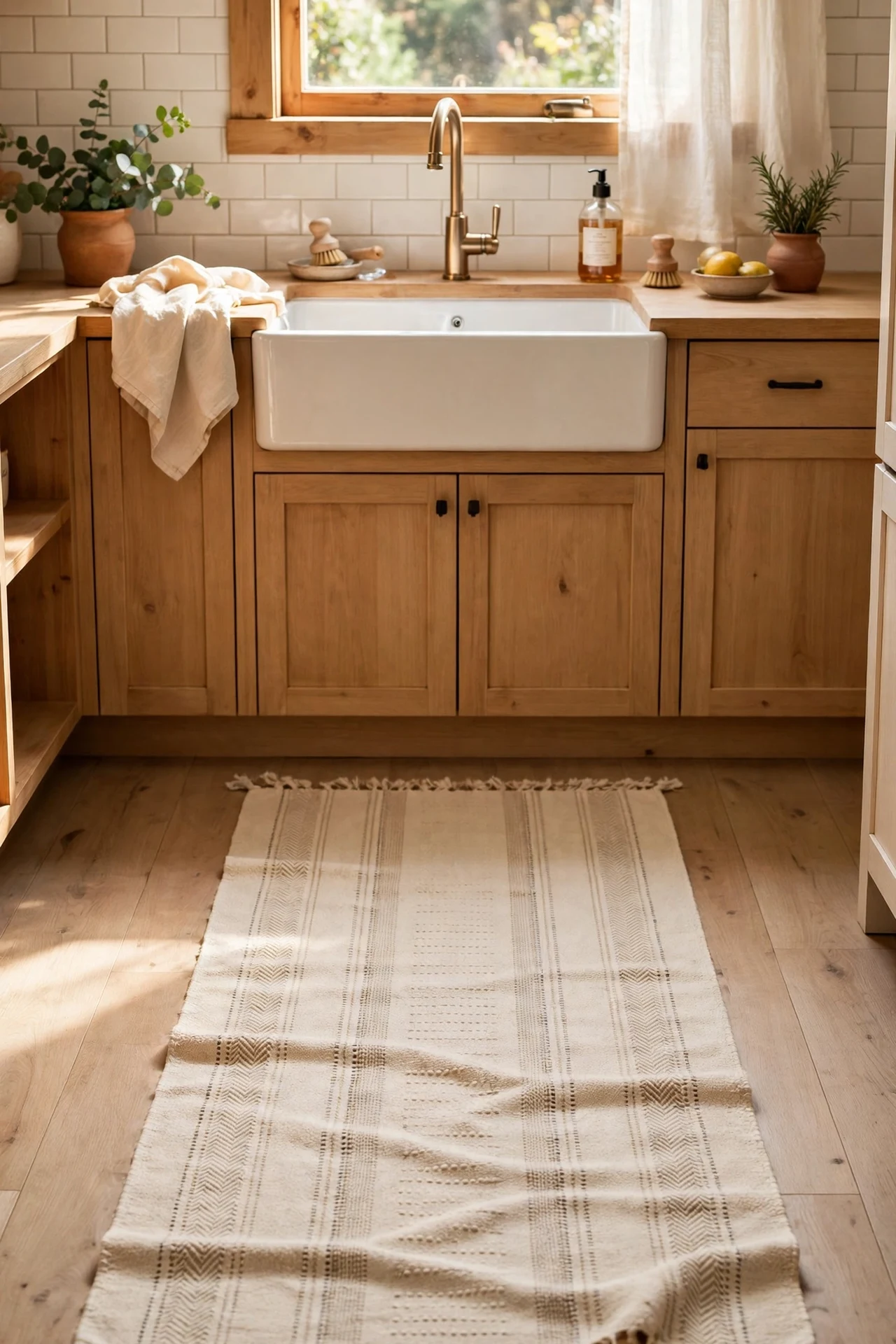
Cold tile floors undo all your warm wall work, so lay a cream runner where you stand most. Pick a washable low-pile rug in a warm ivory — cotton flatweaves go straight in the machine when spills happen. Size it to run nearly the full worktop length without sliding under doors. I tried a beautiful wool runner that wasn’t washable and it lasted one spaghetti night; washable has survived two years of daily cooking. The mistake to avoid is a rug with a stark white base — it shows every crumb, while cream and oatmeal tones hide a multitude of sins between washes.
Cost: ~$35 | Time: 10 minutes
9. Wooden Cutting Board Display Wall
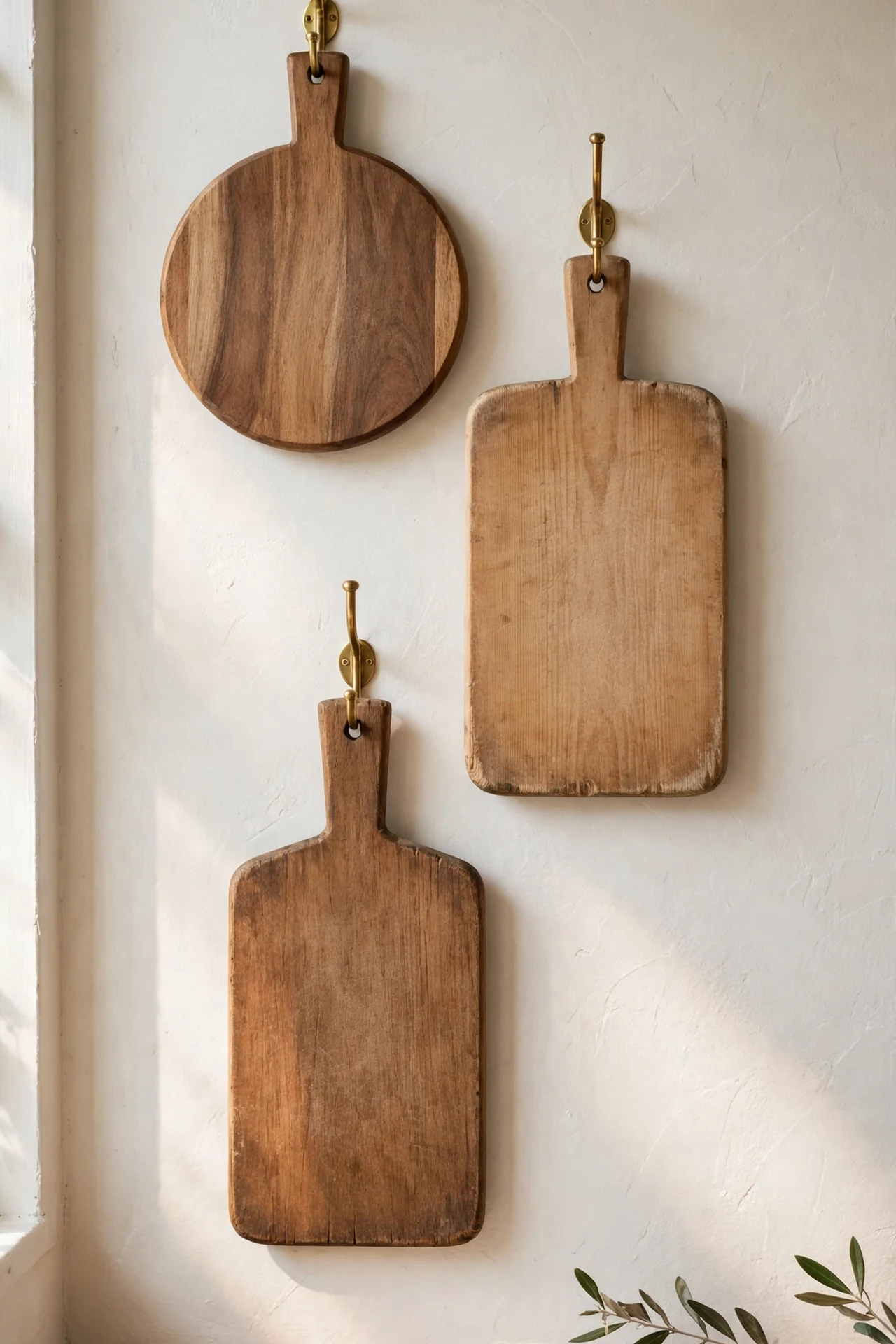
A row of wooden cutting boards hung on warm white walls is functional art. Collect boards in different woods and shapes — charity shops are goldmines — then hang them on small brass hooks or a picture ledge. Vary the heights slightly for a collected look. I tried lining mine up in perfect rows and it looked like a shop display; staggering them felt like a real kitchen. The mistake to avoid is hanging boards you actually use daily behind other boards — keep the workhorses at the front or you’ll stop using the display altogether.
Cost: ~$20 | Time: 1 hour
10. Warm White Roman Blind
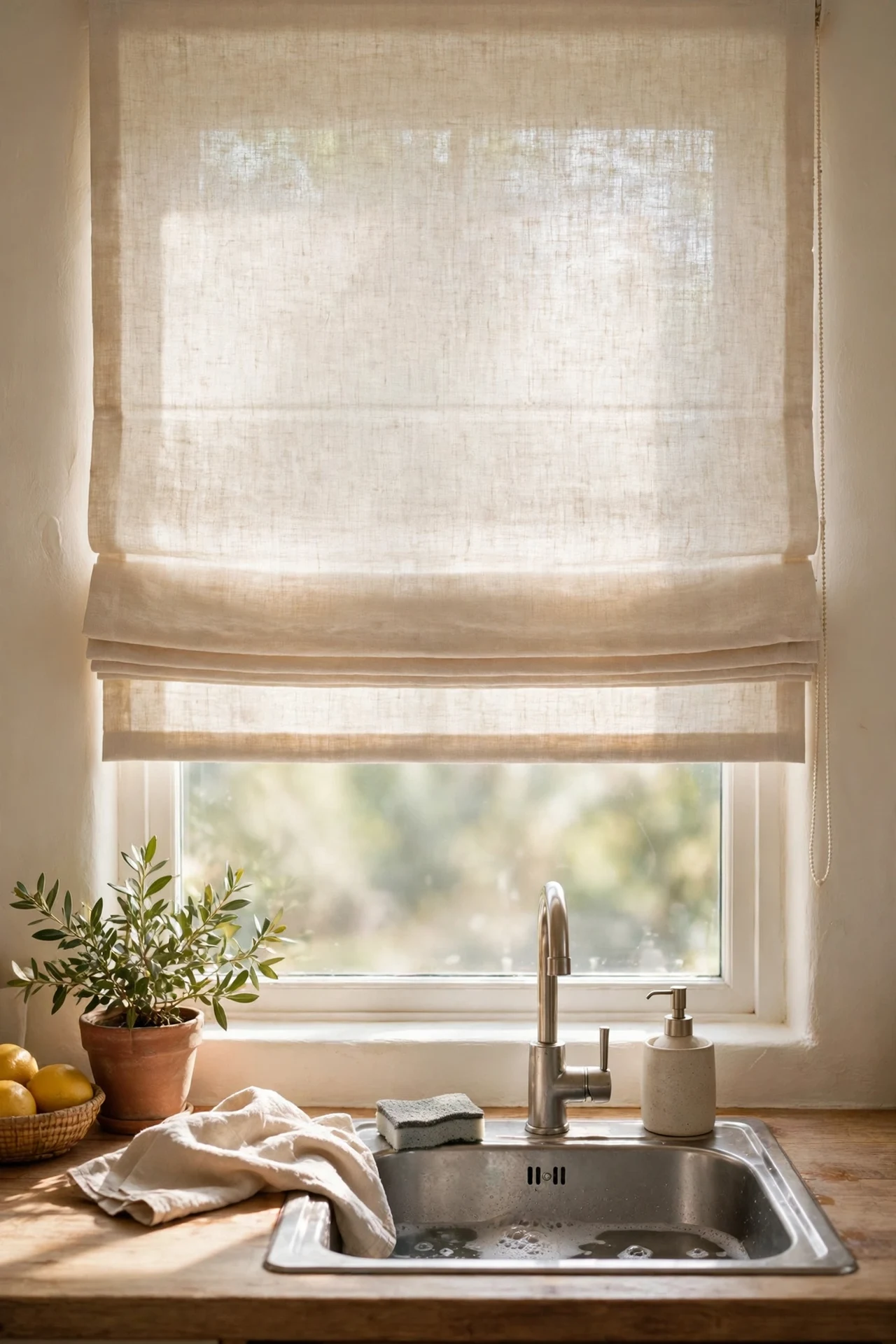
A warm white roman blind softens the sink window without blocking the light your creamy walls need. Measure the recess, order a thermal-lined blind for extra cosiness, and fit the brackets with two screws — most blinds hang in under half an hour. Choose a fabric with a subtle slub or weave so it doesn’t read as flat. I tried a plain cotton blind first and it looked like a bedsheet; a linen-look weave transformed it. The mistake to avoid is a blind that pools on the sill — measure twice, because a blind cut too long wrinkles and collects dust along the bottom fold.
Cost: ~$28 | Time: 30 minutes
11. Open Shelves of Cream Ceramics
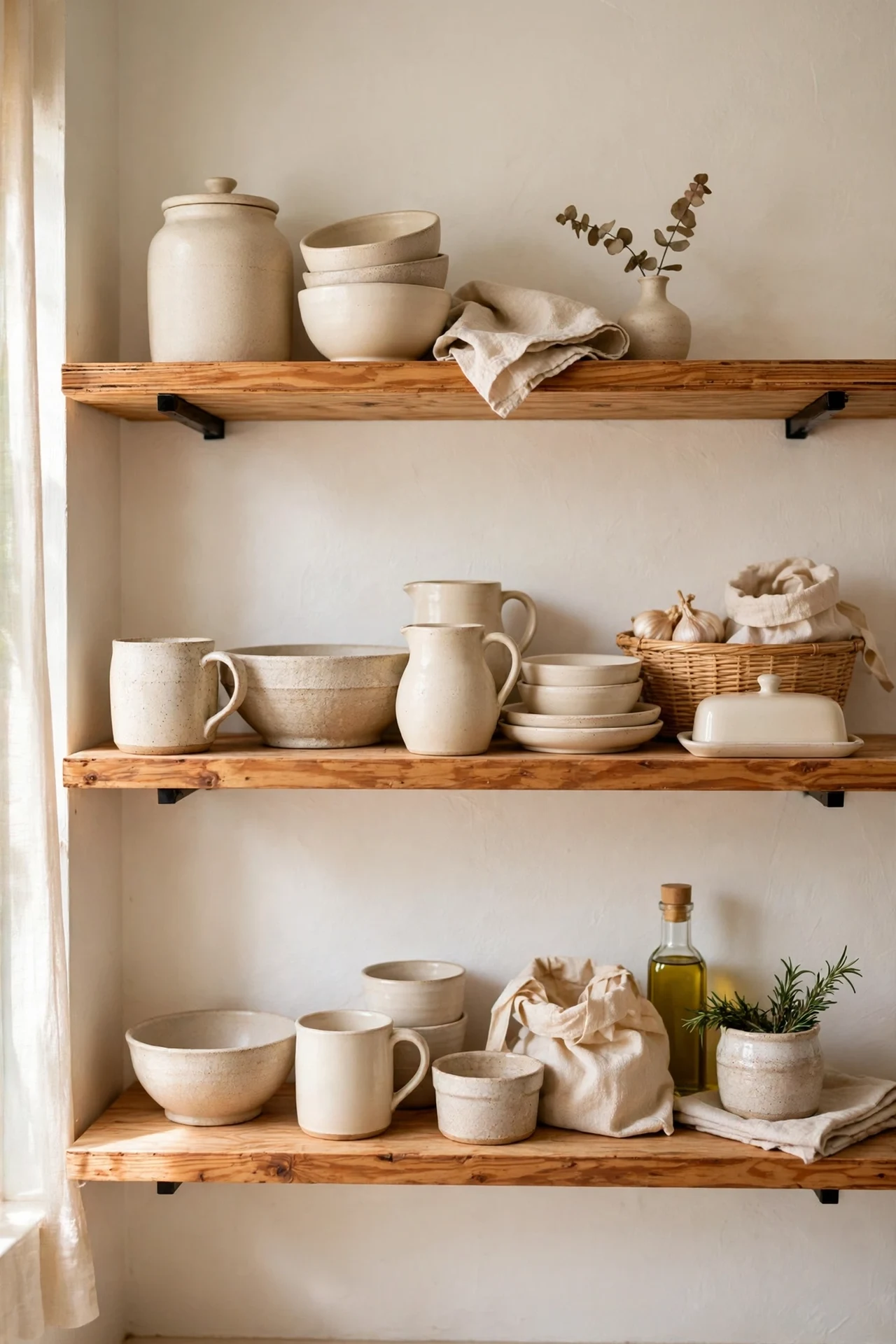
Grouping cream and oatmeal ceramics on open shelves builds a warm white story without repainting anything. Pull together mugs, bowls, and jugs in similar tones — they don’t need to match, just harmonise. Leave space between groups so the shelf breathes. I tried displaying every cream thing I owned and the shelf sagged under the clutter; editing down to the prettiest dozen made the rest look intentional. The mistake to avoid is mixing in cool grey or blue-white pieces — one cold item in the group throws the whole warm palette off, so be ruthless with the edit (see (see also: small-kitchen-organization-ideas) for shelf styling help).
Cost: ~$0 | Time: 30 minutes
12. Painted Brick Backsplash in Warm White
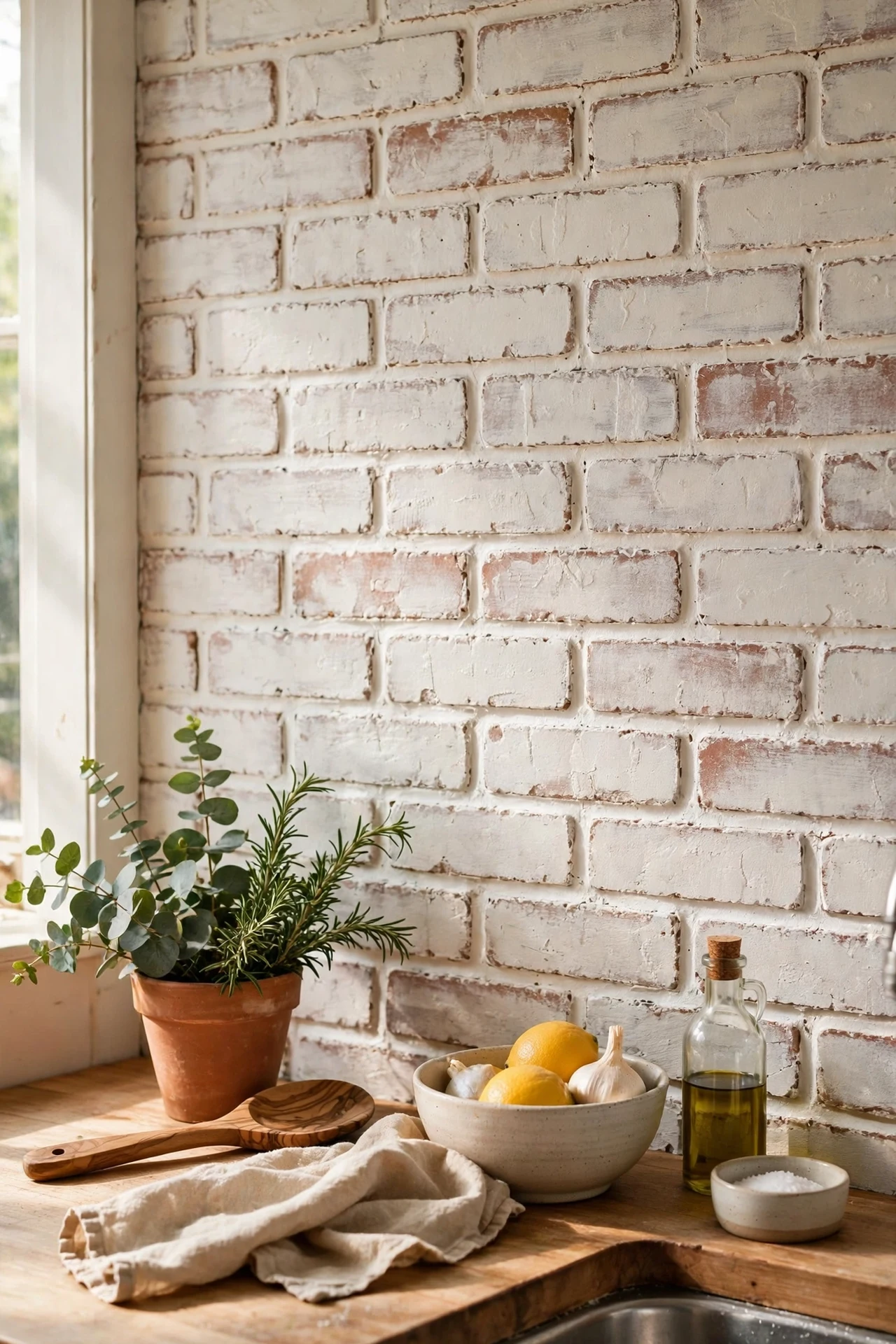
If your kitchen has an exposed brick wall, painting it warm white keeps the texture while lifting the light. Brush off loose dust, apply a masonry primer, then roll on two coats of warm white masonry paint — the texture drinks paint, so buy more than you think. The result is rustic but bright. I tried this on a soot-stained chimney breast and one wall changed the whole room’s temperature. The mistake to avoid is standard emulsion on brick — it flakes within months, while proper masonry paint bonds and stays put for years.
Cost: ~$35 | Time: 1 afternoon
13. Wooden Counter Stools
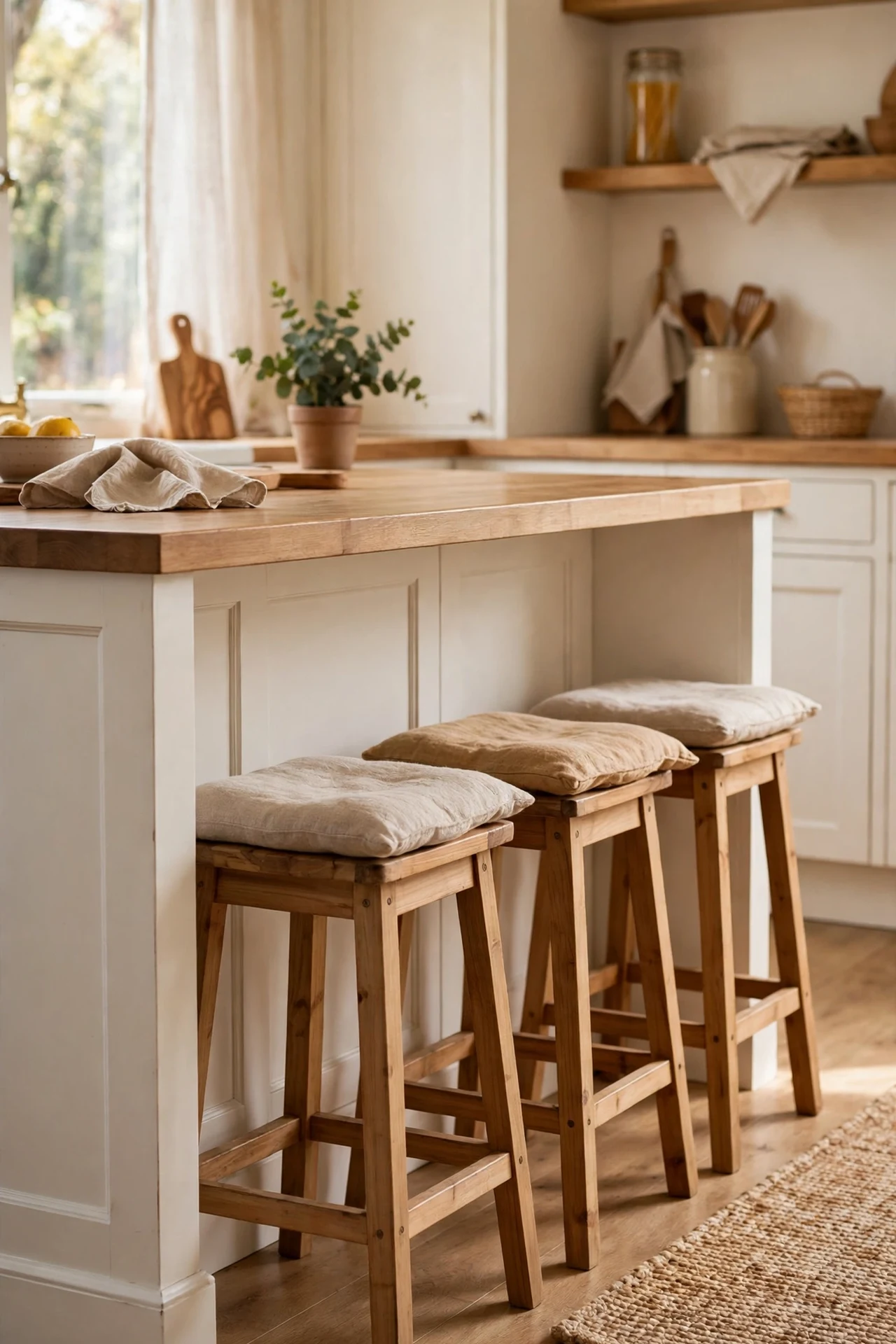
Swapping metal or plastic stools for wooden ones warms the whole island area. Look for solid wood or bentwood stools secondhand — a light sand and a coat of clear oil revives tired ones beautifully. Keep the wood tone honey or oak rather than dark walnut to stay in the warm white family. I tried painting my stools white to match and they disappeared into the background; the natural wood became the room’s favourite feature. The mistake to avoid is stools without footrests — guests’ feet dangle, they fidget, and nobody lingers at your lovely island.
Cost: ~$40 | Time: 1 hour
14. Cream Canisters on the Worktop
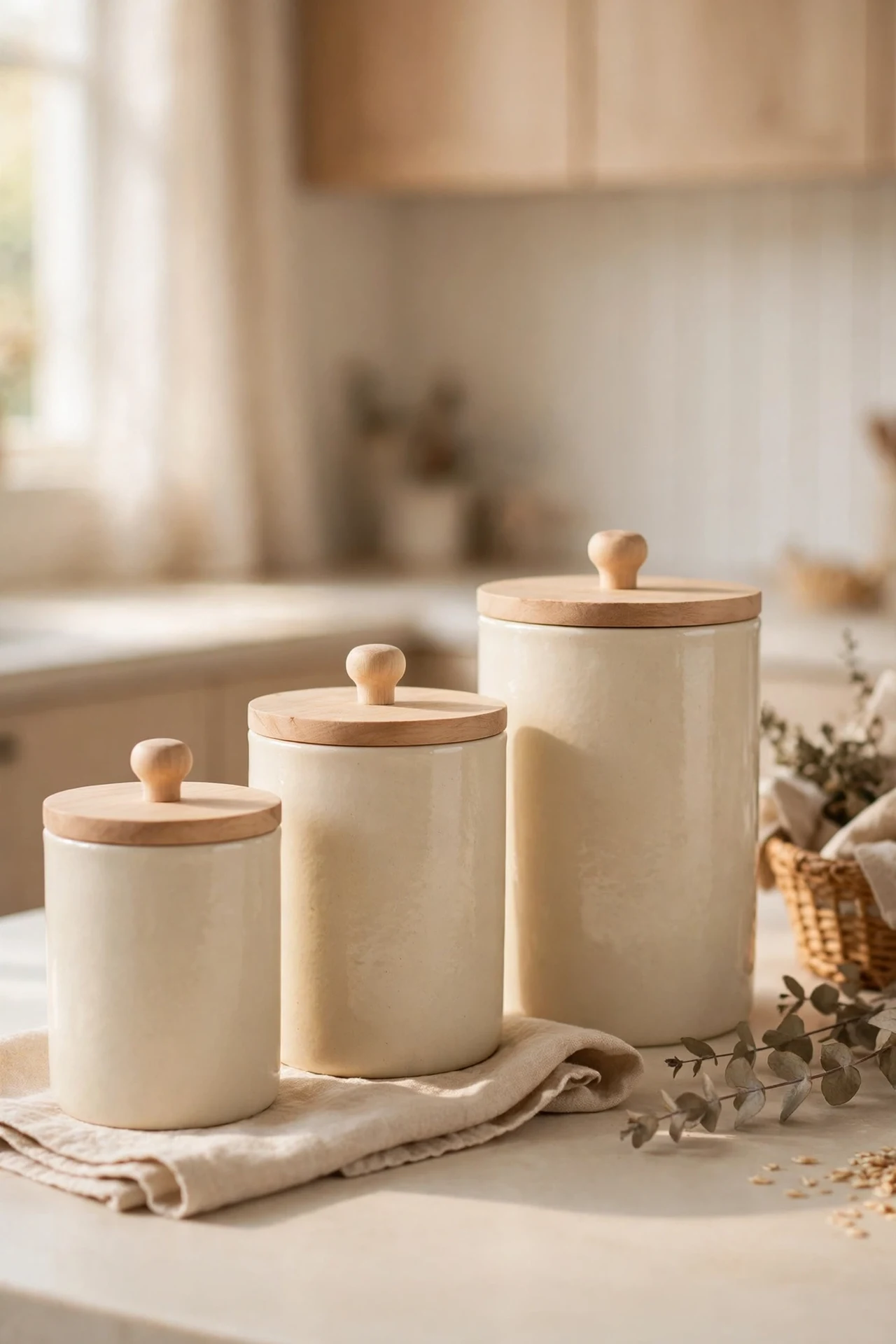
A row of cream canisters turns everyday storage into decor. Decant flour, sugar, and pasta into matching ceramic or glass jars with wooden lids — charity shops and discount stores sell them cheap. Label them with a chalk pen if your household mixes things up. I tried mismatched jars for years and the worktop always looked messy; three matching canisters made the same corner look styled. The mistake to avoid is canisters you can’t open one-handed — if the lid needs two hands while you’re cooking, you’ll stop using them within a week.
Cost: ~$25 | Time: 15 minutes
15. Soft Sage Accent Wall with Warm White
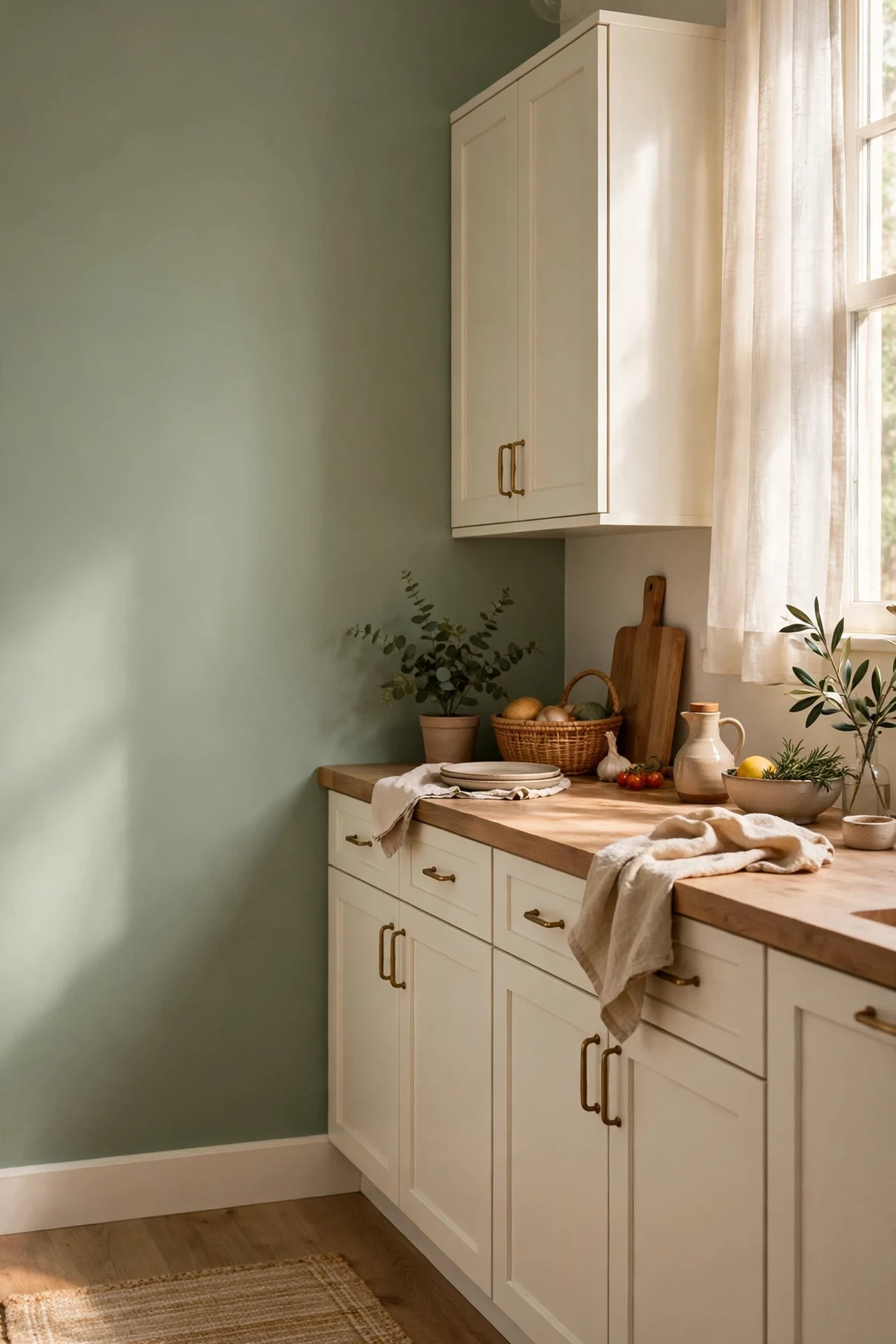
Warm white loves a gentle partner, and soft sage is the perfect one. Paint a single wall — the one behind the table or the chimney breast — in a muted sage green, keeping the rest warm white. The green makes the white look creamier by contrast and brings a garden freshness indoors. I tried a bold forest green first and it swallowed the light; softening two shades made the room glow. The mistake to avoid is painting the accent wall the one with the window — the light washes the colour out, while an opposite wall shows it at its best (more colour ideas in our (see also: warm-white-paint-colors) guide).
Cost: ~$30 | Time: 1 afternoon
16. Warm LED Strips Under the Cabinets
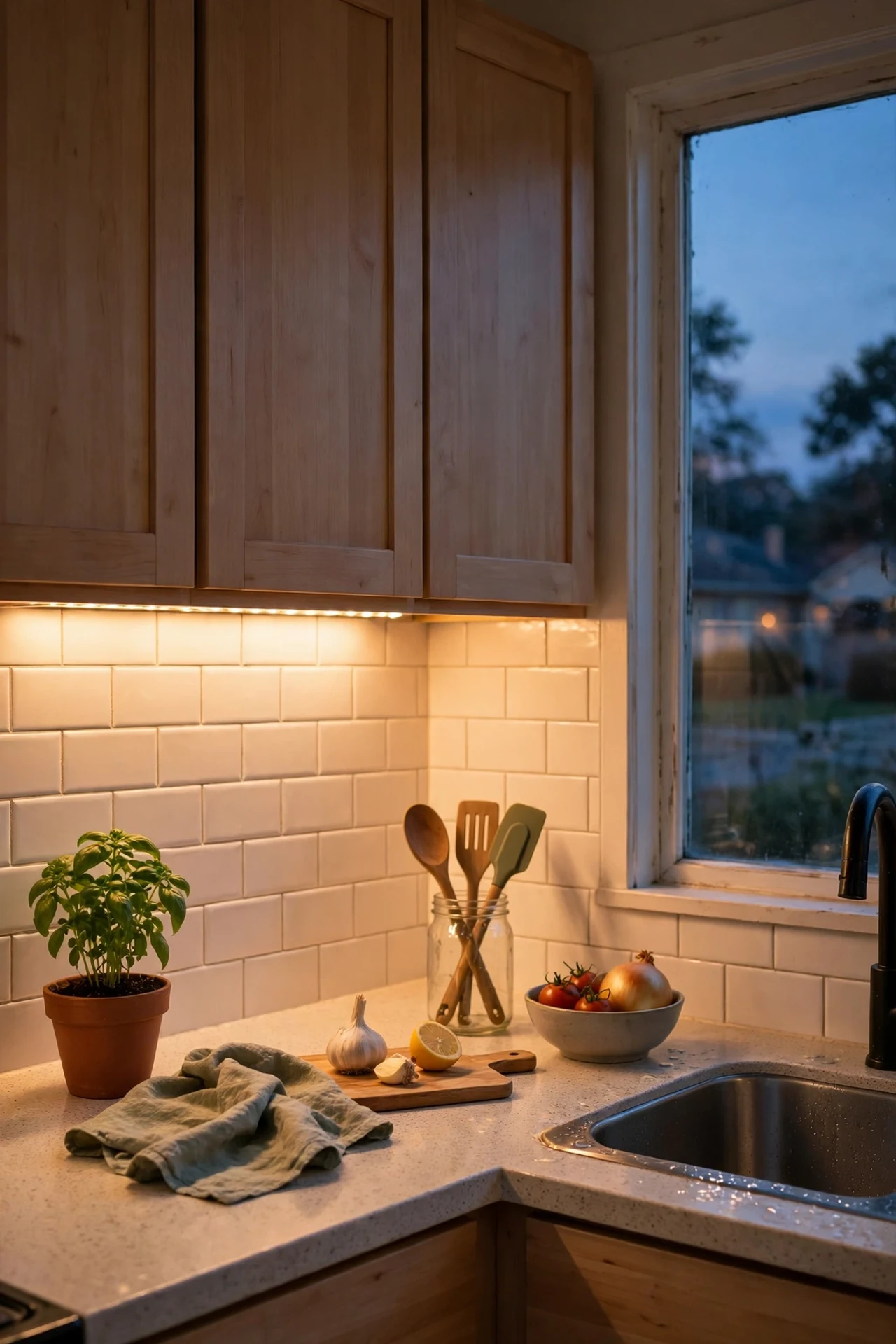
Under-cabinet lighting in a warm 2700K tone makes worktops glow like a café at dusk. Stick self-adhesive LED strips to the underside of wall cabinets, hiding the strip behind the cabinet lip so you see light, not hardware. Plug into a switched socket or add a remote dimmer. I tried cool white strips first and my warm white walls looked grey under them; swapping to warm white LEDs fixed the whole room in one evening. The mistake to avoid is visible sticky strips and dangling wires — spend ten minutes tucking cables with clips and the result looks professionally installed.
Cost: ~$20 | Time: 1 hour
17. Wicker Baskets Above the Cabinets
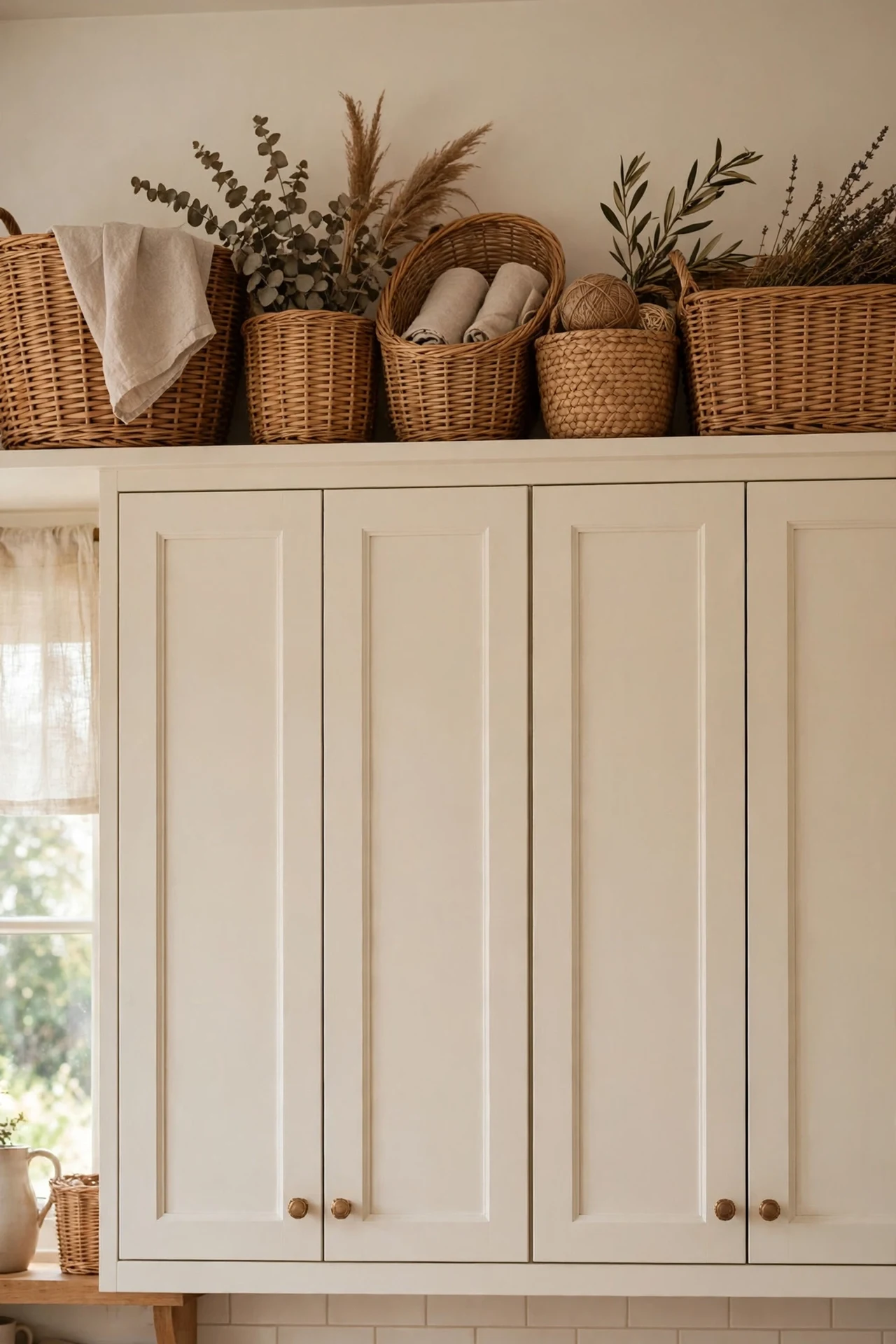
The dusty gap above wall cabinets is perfect for warm texture — line it with wicker baskets. Buy a run of similar baskets in natural seagrass or rattan, dust them first, and arrange the tallest in the middle for rhythm. They hide the awkward void and add honey tones that echo wooden accents below. I tried fake plants up there first and they collected grease-dust that was horrible to clean; baskets just need a quick shake outside twice a year. The mistake to avoid is overfilling them — visible clutter above eye level makes the ceiling feel lower, so keep them mostly empty.
Cost: ~$30 | Time: 20 minutes
18. Fresh Herbs in Cream Pots on the Sill
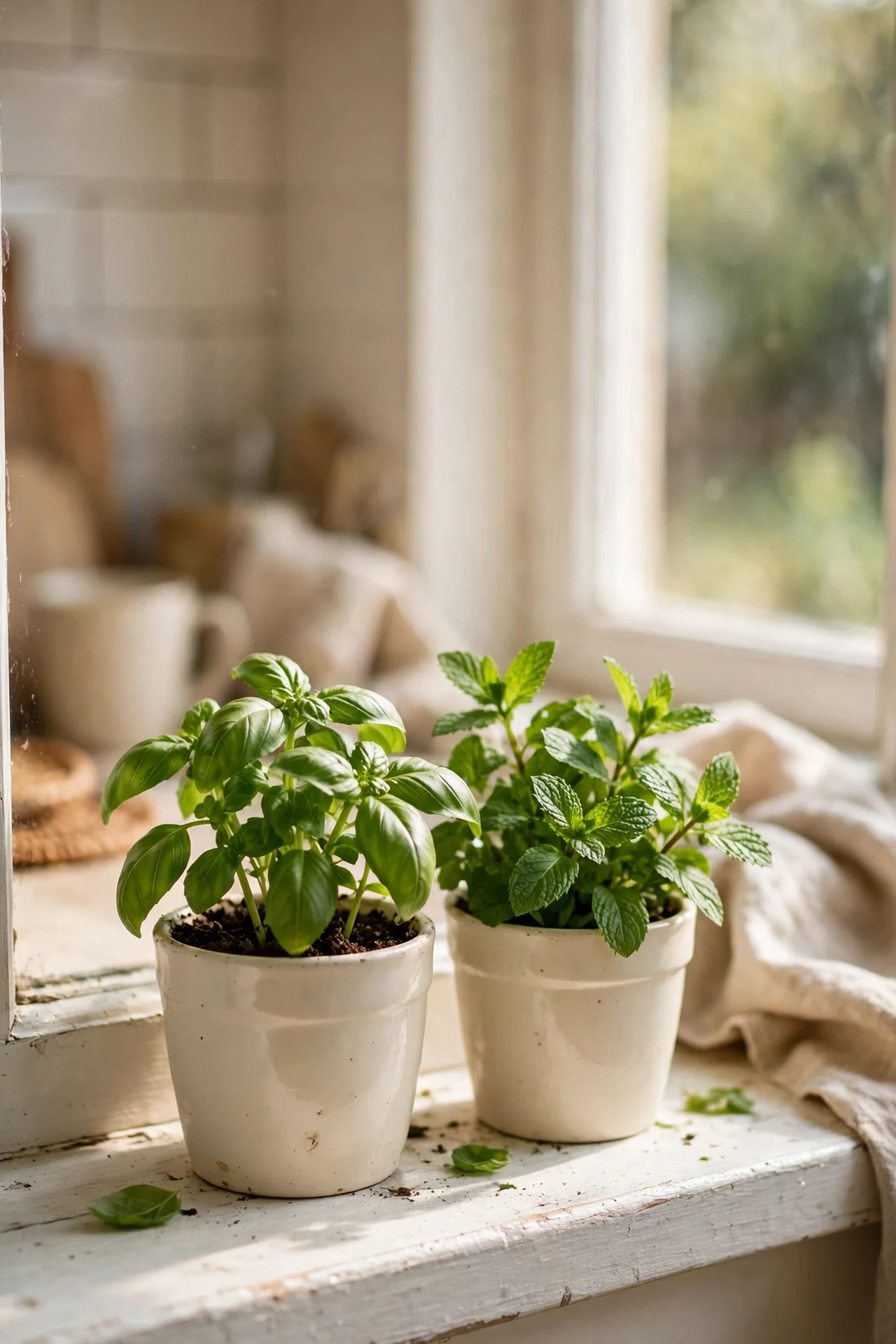
Living green against warm white is unbeatable, and herbs earn their place. Pot basil, thyme, and mint in small cream ceramic pots and line them along the windowsill where they’ll get light. Water from the saucer so the leaves stay dry and the plants last months. I tried one giant basil plant that died in a fortnight; three small pots rotated from a supermarket multipack have lasted all year. The mistake to avoid is mint in a shared planter — it bullies everything else out, so give mint its own pot and let the polite herbs share.
Cost: ~$15 | Time: 20 minutes
19. Warm White Grout Refresh on Old Tiles
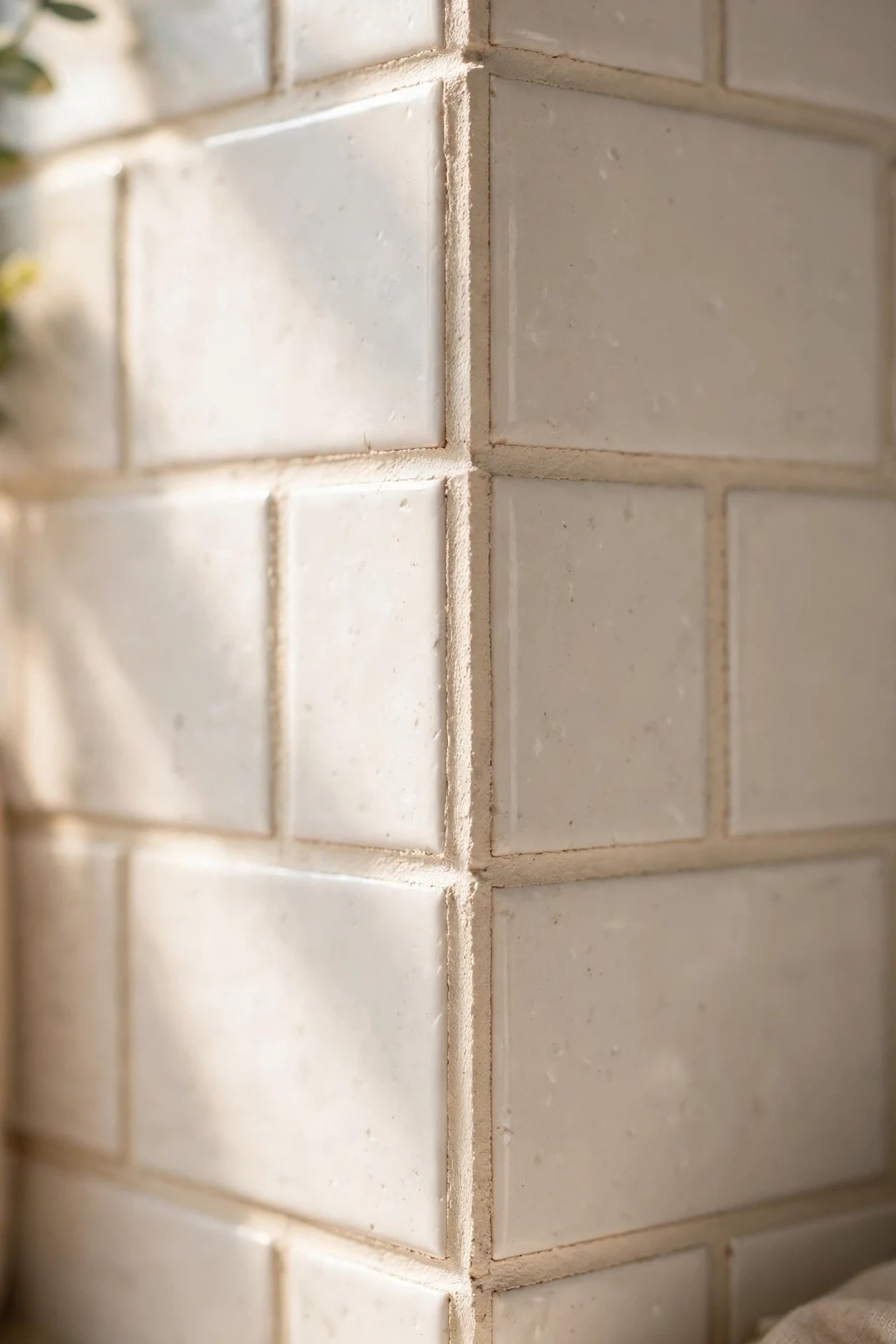
If your tiles are fine but the grout has gone grey and tired, a grout refresh pen in warm white works miracles. Clean the grout lines first with an old toothbrush and bicarbonate paste, let them dry fully, then draw the pen along each line. It takes an evening for a standard splashback but the tiles look brand new. I tried bleaching my grout first and it came back patchy; the warm white pen gave an even finish that lasted over a year. The mistake to avoid is painting over damp grout — it seals moisture in and peels within weeks, so wait a full dry day after cleaning.
Cost: ~$8 | Time: 1 evening
20. Cream Tea Towels on the Oven Handle
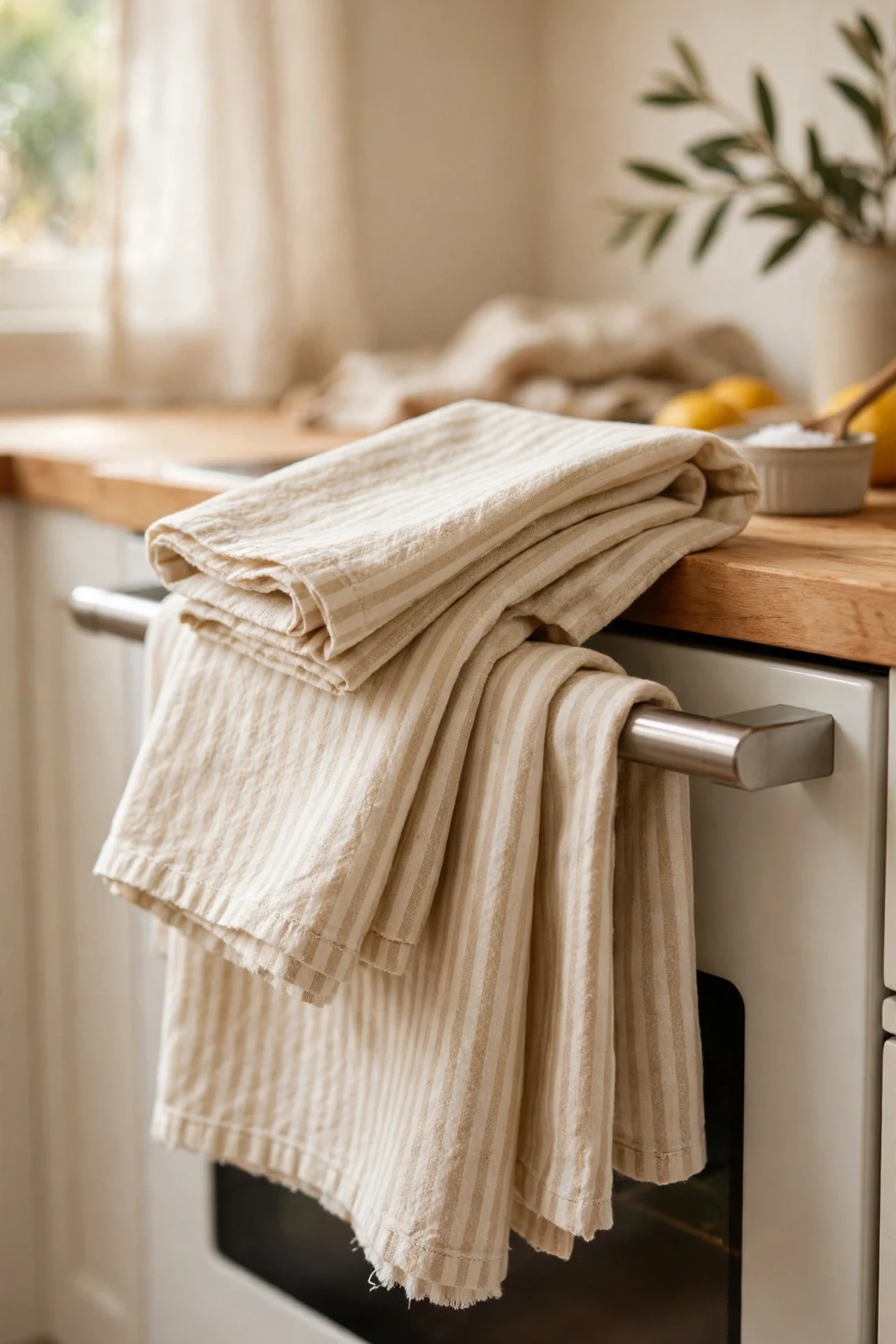
The oven handle is prime display real estate — drape it with cream tea towels instead of the stained freebie from the estate agent. Buy a stack of thick cotton towels in warm ivory with a woven stripe, fold them in thirds, and hang two at a time so one is always clean. They soften the big black or steel oven front beautifully. I tried patterned towels that clashed with everything; plain cream with a subtle stripe works with any scheme. The mistake to avoid is towels that are too thin — they go limp and grey after three washes, while heavyweight cotton stays crisp.
Cost: ~$18 | Time: 5 minutes
21. Botanical Prints in Natural Wood Frames
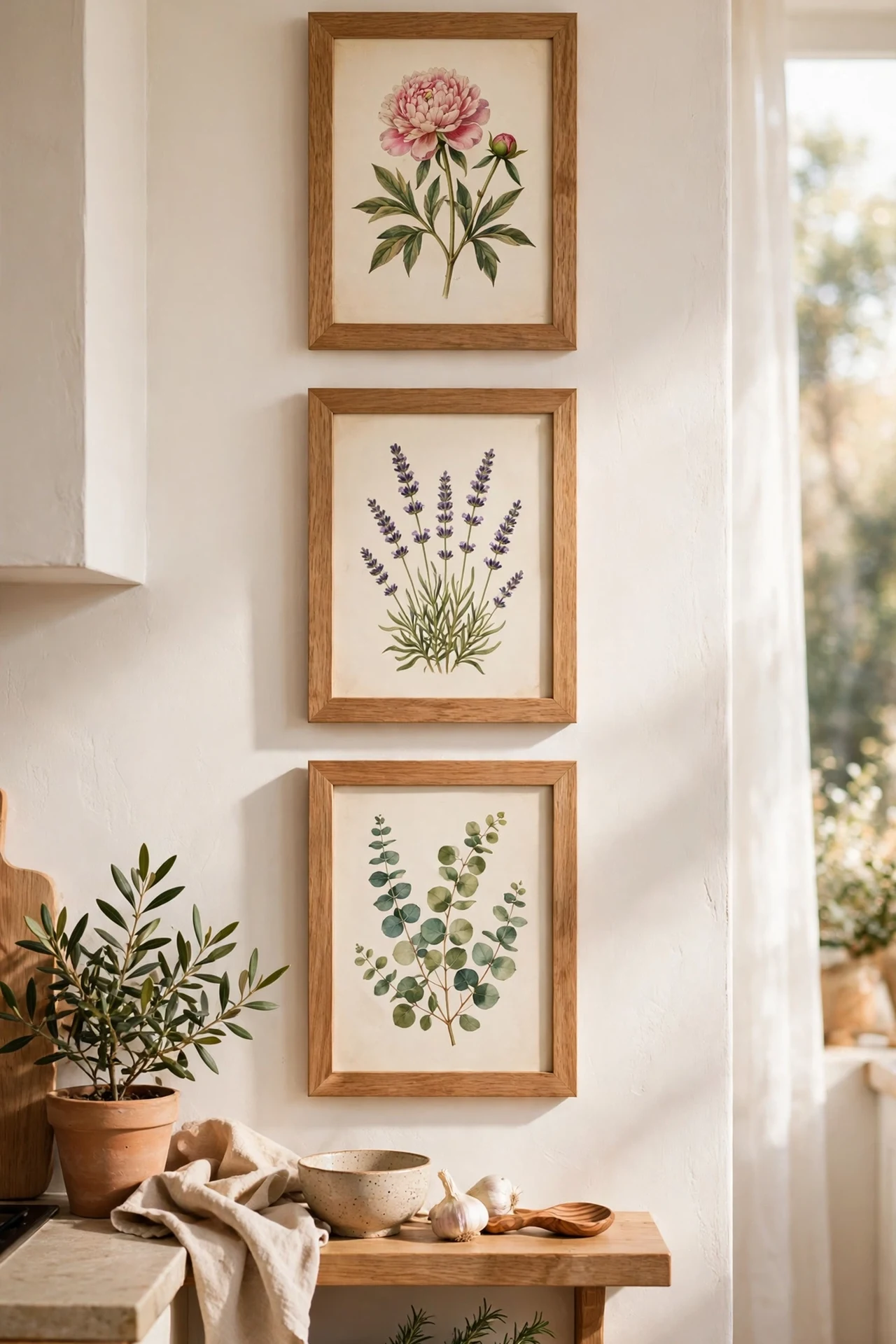
Bare warm white walls still need art — botanical prints in light wood frames keep the palette soft. Print free vintage herb illustrations at a copy shop, or buy inexpensive sets online, then frame them in oak or pine. Hang a pair flanking the window or a trio above the table. I tried black frames first and they punched holes in the calm; pale wood frames disappeared into the warmth. The mistake to avoid is hanging prints where the kettle steams — moisture warps paper fast, so keep art on drier walls and let the splashback zone stay bare (more wall ideas in our (see also: budget-kitchen-decor-ideas) roundup).
Cost: ~$20 | Time: 1 hour
22. Warm White Ceiling Repaint
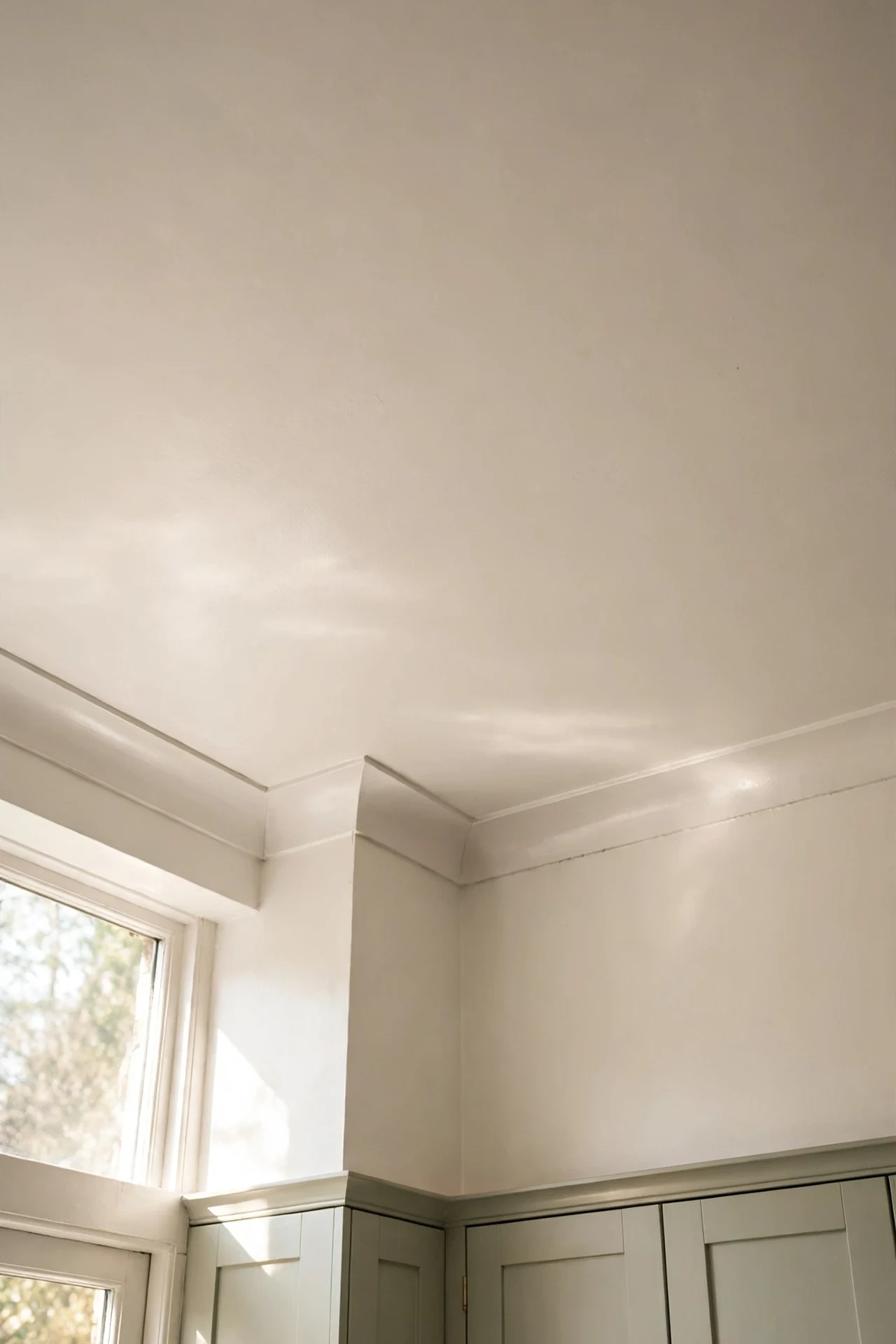
Ceilings get forgotten, but a dingy ceiling casts grey light over everything. Roll the ceiling in a warm white flat emulsion — flat hides imperfections that satin would spotlight. Cut in carefully around coving with a brush, then roll in overlapping W patterns for even coverage. I tried skipping the ceiling because it looked ‘fine’ and the new warm walls made it look yellow-grey by comparison; one coat unified the whole room. The mistake to avoid is painting the ceiling after the walls — drips and roller spray will ruin fresh wall paint, so ceiling always comes first.
Cost: ~$30 | Time: 1 day
23. Wooden Utensil Holder by the Hob
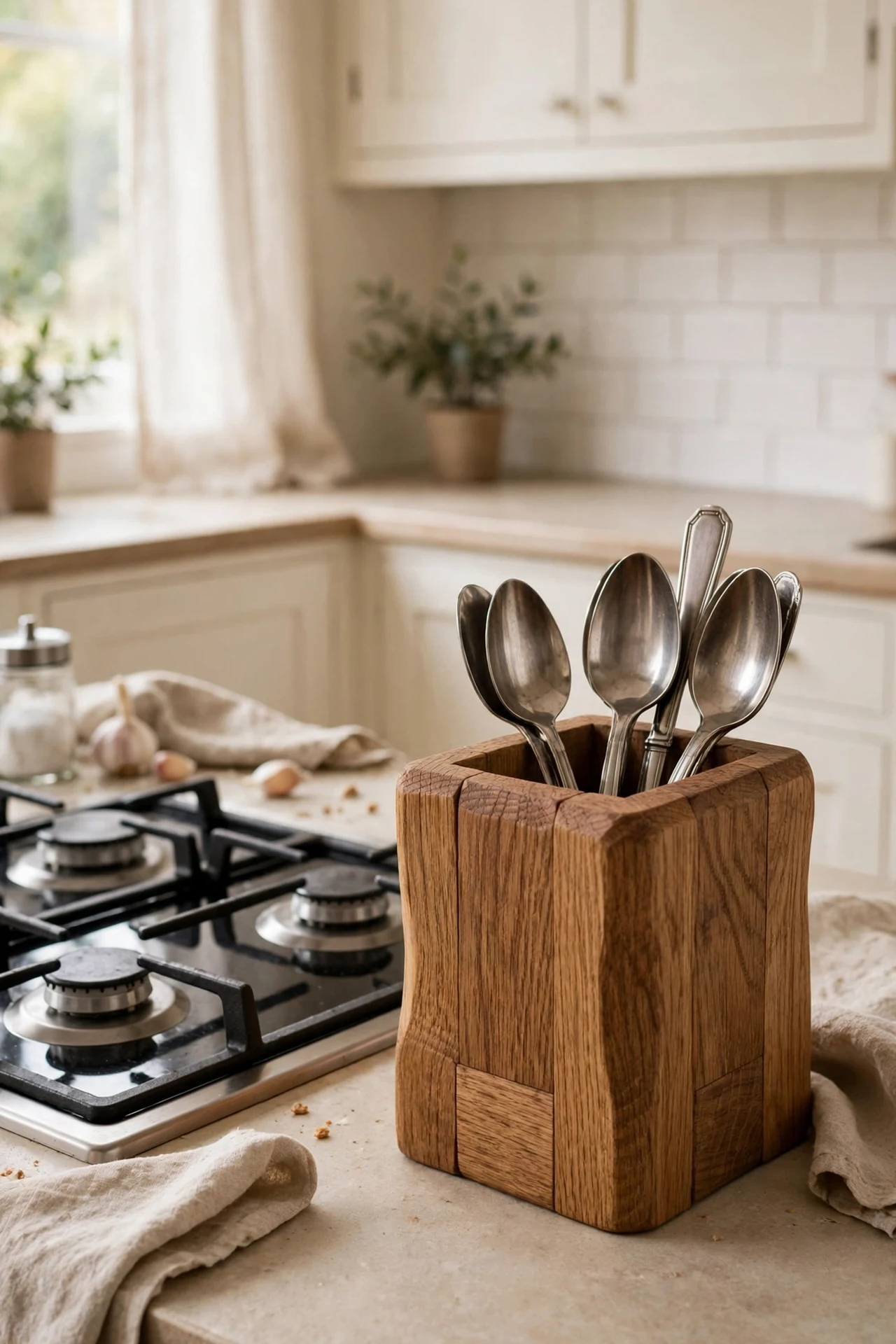
A chunky wooden utensil crock by the hob adds warmth exactly where you work. Choose a wide oak or acacia holder so spoons and spatulas stand upright without toppling, and keep only the tools you use weekly — the rest can live in a drawer. Wipe it down monthly as cooking film builds up. I tried a ceramic holder that cracked when a heavy ladle fell in; solid wood just shrugs it off. The mistake to avoid is overstuffing it — crammed utensils trap moisture and go musty, so if you can’t see the bottom, it’s time to declutter.
Cost: ~$15 | Time: 5 minutes
24. Swap Bulbs to Warm 2700K
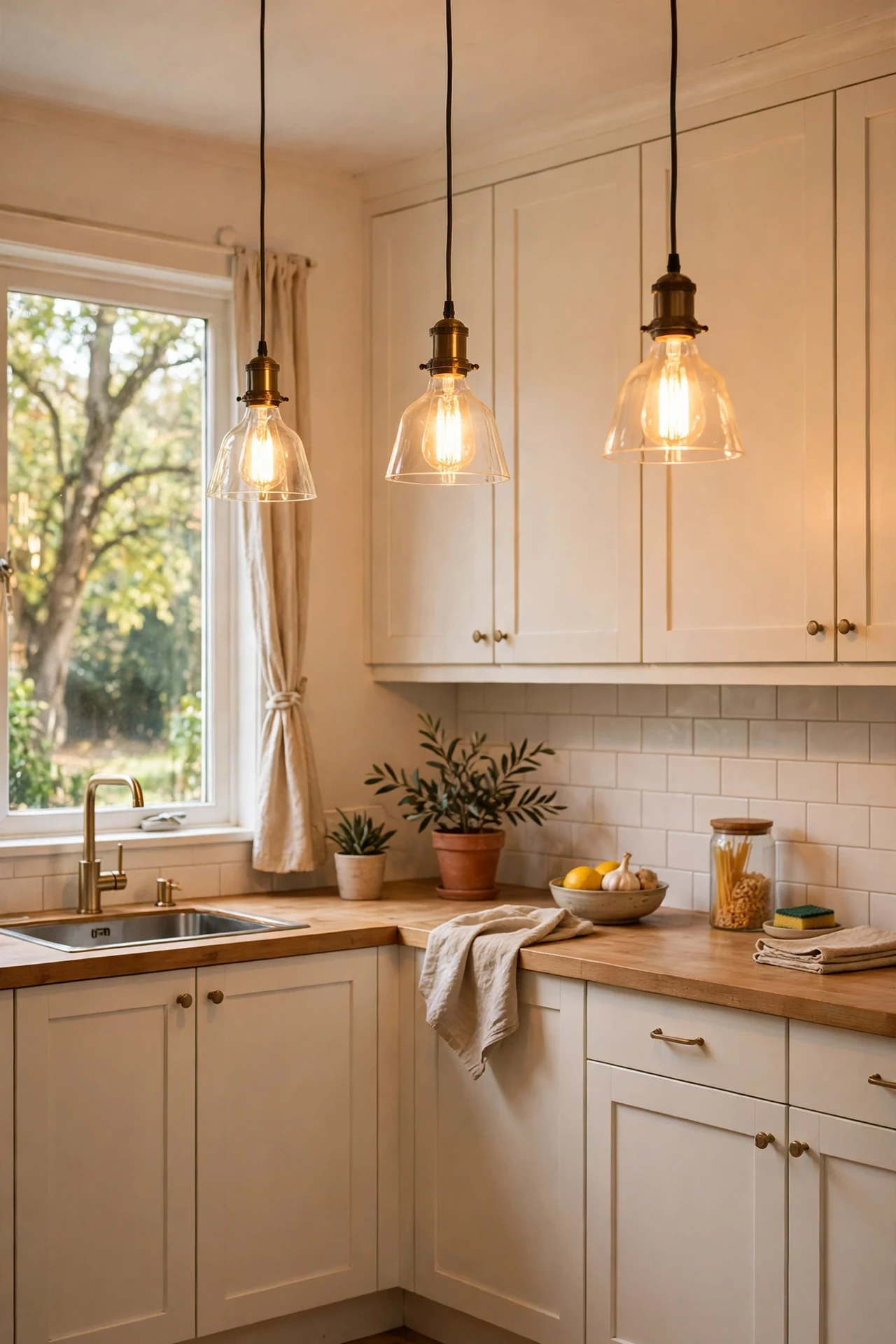
The cheapest warm white kitchen trick costs less than a fiver — swap every bulb to 2700K warm white. Cool daylight bulbs fight creamy paint and make it look dingy; warm bulbs make the same walls glow golden. Change them all at once so no cold stragglers remain, including the extractor hood and under-cabinet lights. I tried changing just the pendants and the mixed temperatures looked worse than before; doing the whole kitchen took twenty minutes and transformed evenings. The mistake to avoid is ‘warm white’ bulbs from bargain multipacks that flicker — spend a little more on a decent brand and they’ll last years.
Cost: ~$15 | Time: 20 minutes
Save this one to your kitchen board — you’ll want it when you repaint.
25. Cream Tablecloth for the Breakfast Table
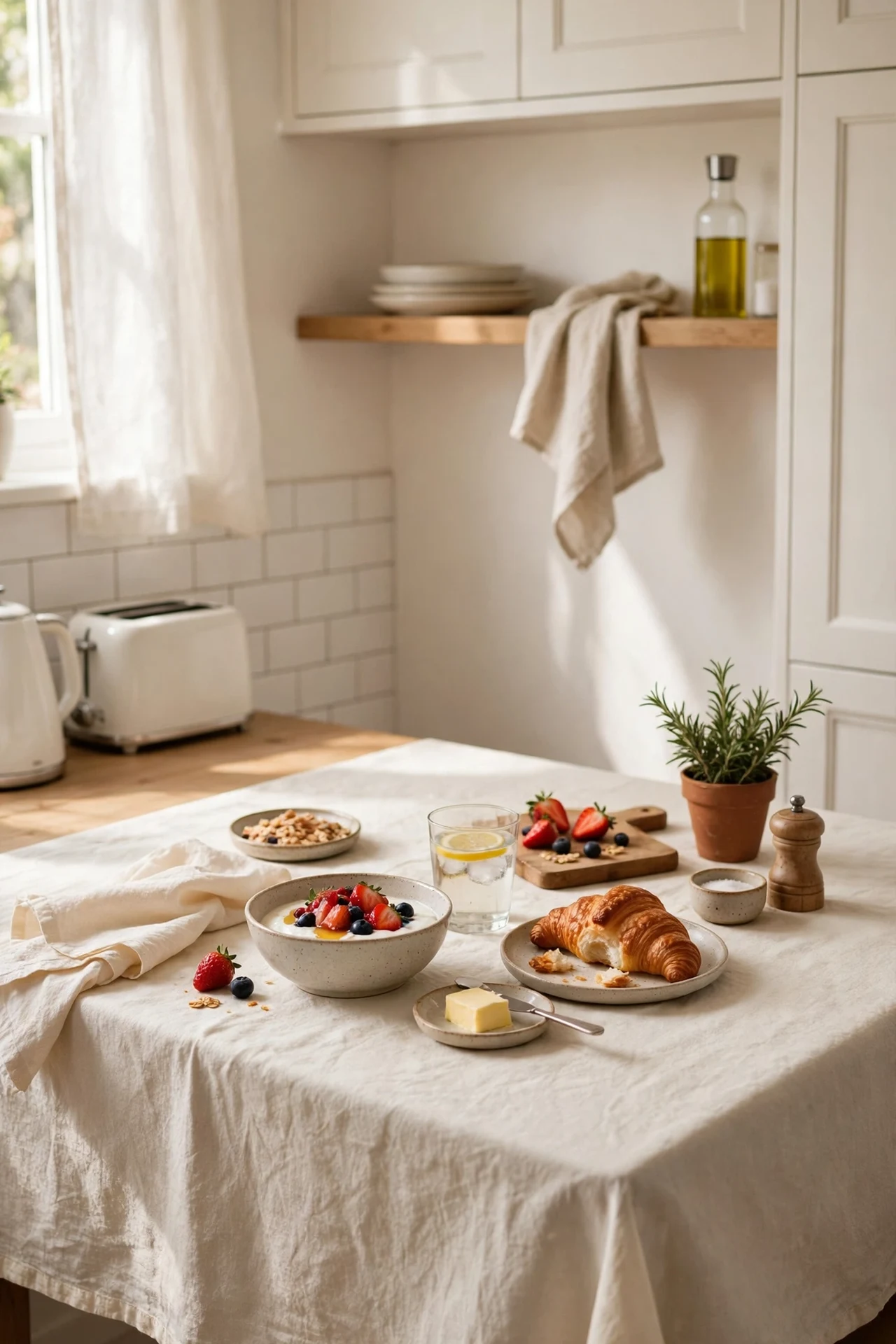
A washable cream tablecloth dresses the breakfast table in seconds and ties the whole warm scheme together. Choose a heavyweight cotton or linen-blend cloth that drapes rather than floats, sized to hang about 20cm over each edge. Wash it before first use so it softens. I tried a cheap polyester cloth that crackled and slid off; a proper cotton one stays put and looks better every wash. The mistake to avoid is a cloth that’s too long — trailing fabric catches chair legs and pulls dishes, so measure the drop and hem it if needed.
Cost: ~$25 | Time: 5 minutes
Quick Answers
Q: What is the best warm white paint for kitchen cabinets?
A: Look for whites with yellow or beige undertones rather than blue — popular picks include Swiss Coffee, White Dove, and Pointing. Always test a swatch on your actual cabinets in both daylight and evening light before committing.
Q: Will warm white make my small kitchen look smaller?
A: No — warm white reflects plenty of light, so small kitchens still feel bright. The cosy tone actually makes compact spaces feel more inviting than cold blue-whites, which can feel stark and clinical.
Q: How do I stop warm white looking yellow?
A: Balance it with natural textures like wood and rattan, and use 2700K warm bulbs rather than daylight ones. If walls still read yellow, your white’s undertone is too strong — go one shade cooler next time.
Warm white is the kindest kitchen colour — it forgives old cabinets, flatters every wood tone, and makes morning coffee taste better. Pick the idea that costs you least, try it this weekend, and enjoy the glow.
