15 Charcoal Gray Living Room Ideas That Feel Calm and Collected
Charcoal grey is the colour I reach for when a living room feels busy and I want it to exhale. Of all the Charcoal Gray living room ideas I have tried, the calmest ones share a simple formula: one deep, grounding shade, softened with light neutrals and warm texture. It is dramatic without being loud, and it makes a room feel held together.
What I love most is how forgiving charcoal is. It hides the everyday marks of real life, pairs with almost any wood tone, and costs nothing extra to get right. Here are my 15 favourite ways to use it, each one gentle, practical, and easy to live with.
A Charcoal Sofa Anchored by a Cream Rug
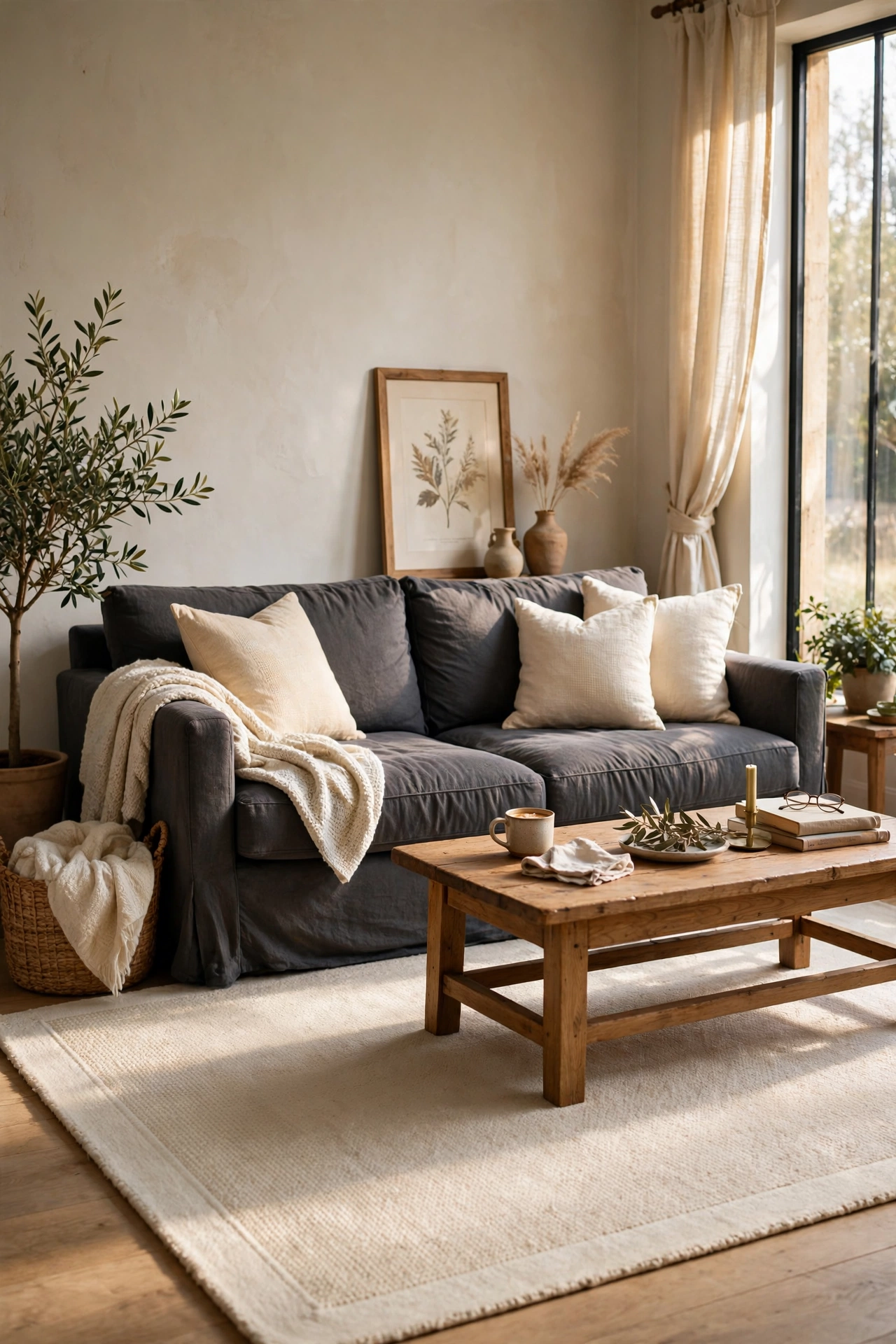
A charcoal sofa is the easiest commitment to this colour, and a cream or ivory rug underneath keeps it from feeling heavy. The pale rug acts like a frame, lifting the dark upholstery and defining the seating zone. Step one: choose a sofa in a mid-charcoal rather than near-black so it reads soft. Step two: pick a rug at least 20 cm wider than the sofa on each side. I tried this in my own living room, and my mistake was tucking a small rug halfway under the front legs, which made the sofa look like it was floating. A generously sized rug is what makes the whole arrangement feel calm and grounded.
Cost: ~$60 | Time: 30 minutes
One Charcoal Accent Wall Behind the Sofa
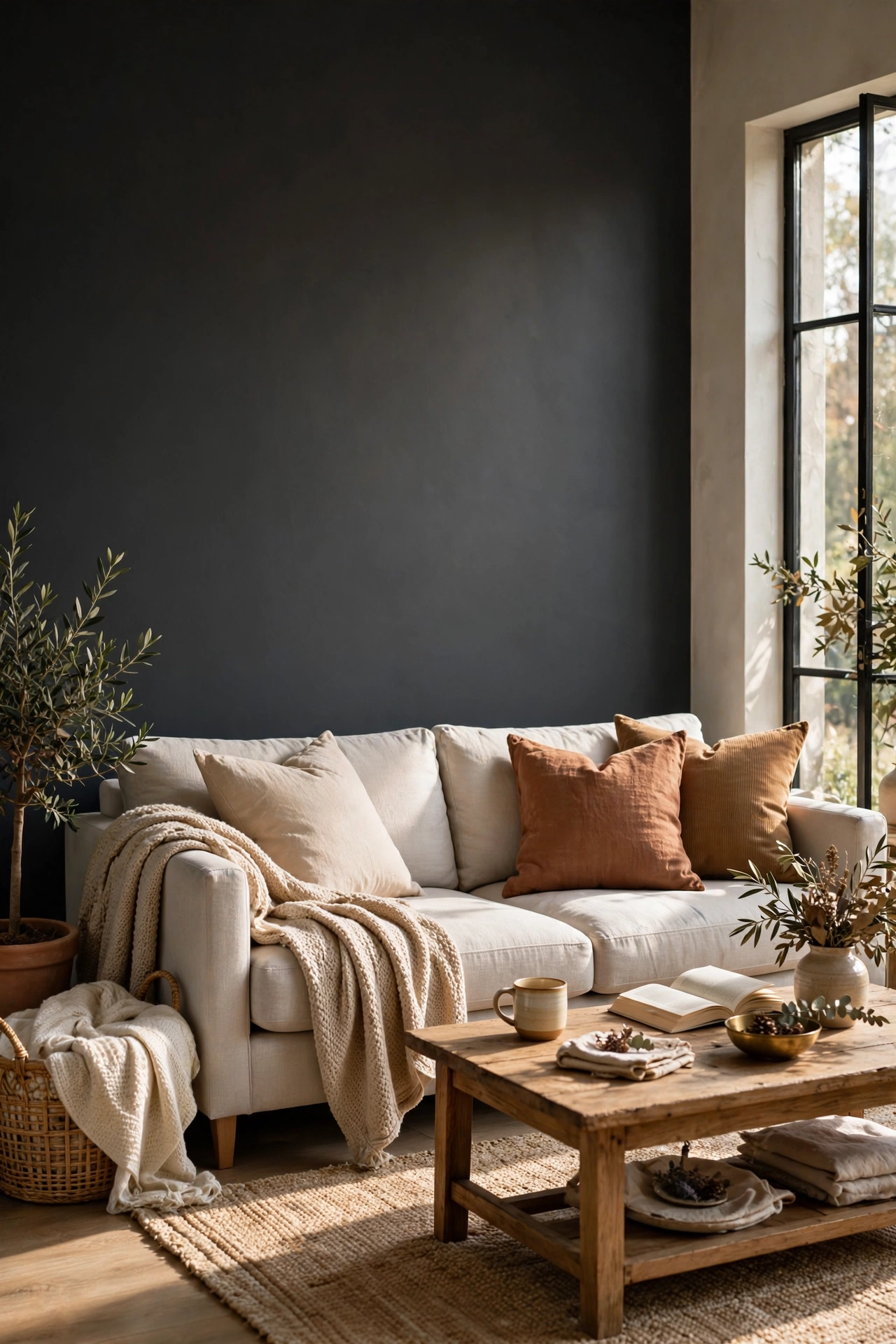
If a full charcoal room feels like too much, one accent wall behind the sofa gives you the drama in a single tin of paint. It creates depth and makes lighter furniture stand out beautifully. Step one: test two or three charcoal samples on the wall and check them at night under lamplight. Step two: paint in long, even roller strokes and do two coats for full coverage. I tried this on the wall facing my window, and my mistake was picking a shade with blue undertones that looked cold after dark. A charcoal with warm grey undertones stays cosy in every light, which is what you want in a calm space.
Cost: ~$32 | Time: 3.5 hours
Charcoal Curtains Softened With Sheer Linen
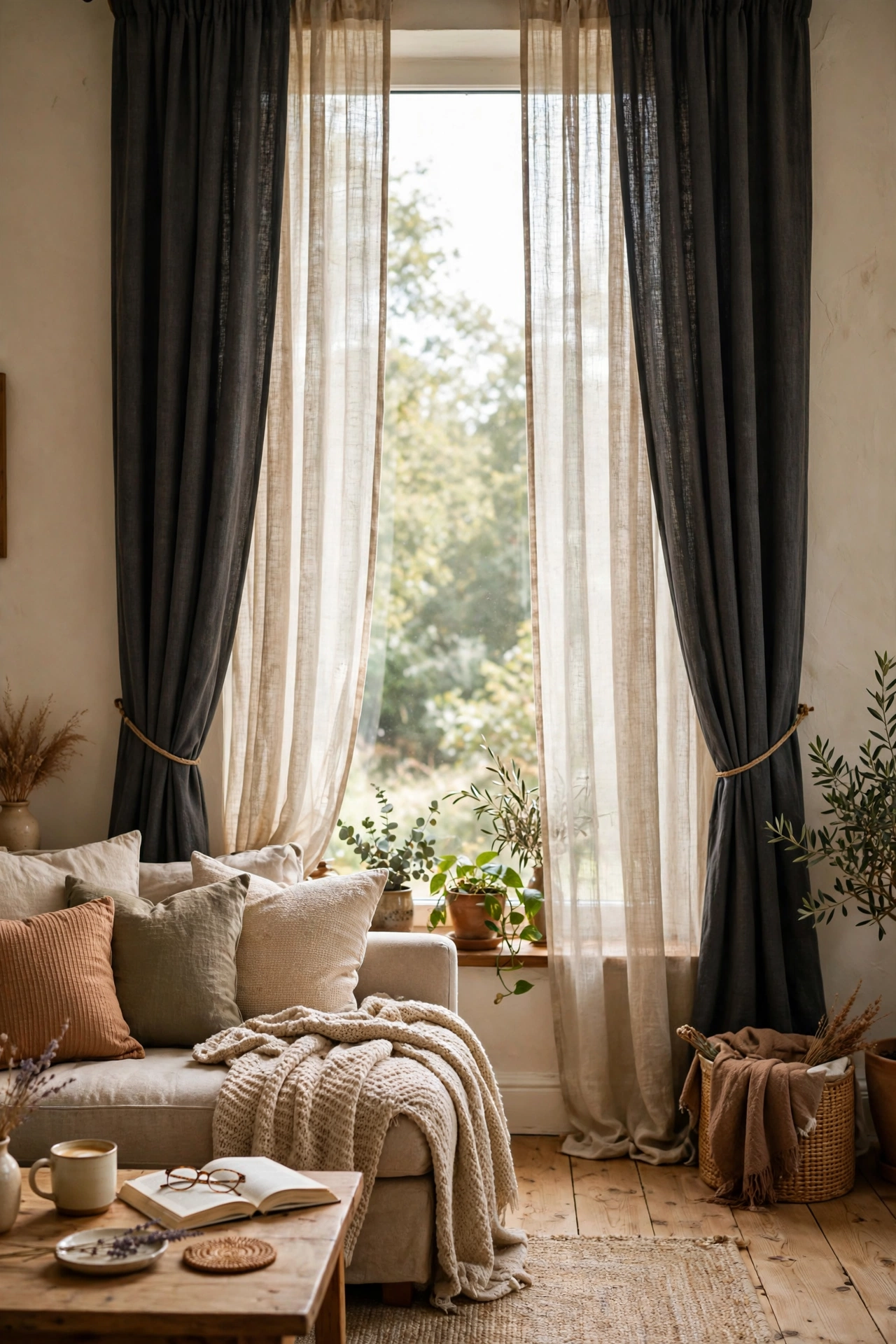
Charcoal curtains bring instant calm to a bright room, and layering a sheer linen panel behind them keeps the light soft during the day. It is a hotel-style trick that costs very little. Step one: hang a double rod or two slim rods, one for the sheer and one for the charcoal panels. Step two: let the charcoal panels sit at the sides in daylight and draw them at night. I tried this in my living room, and my mistake was buying curtains that just skimmed the sill, which looked abrupt. Panels that kiss the floor give the window a quiet, tailored finish that suits the charcoal mood perfectly.
Cost: ~$45 | Time: 1 hour
Charcoal Upholstery Paired With Warm Oak Wood
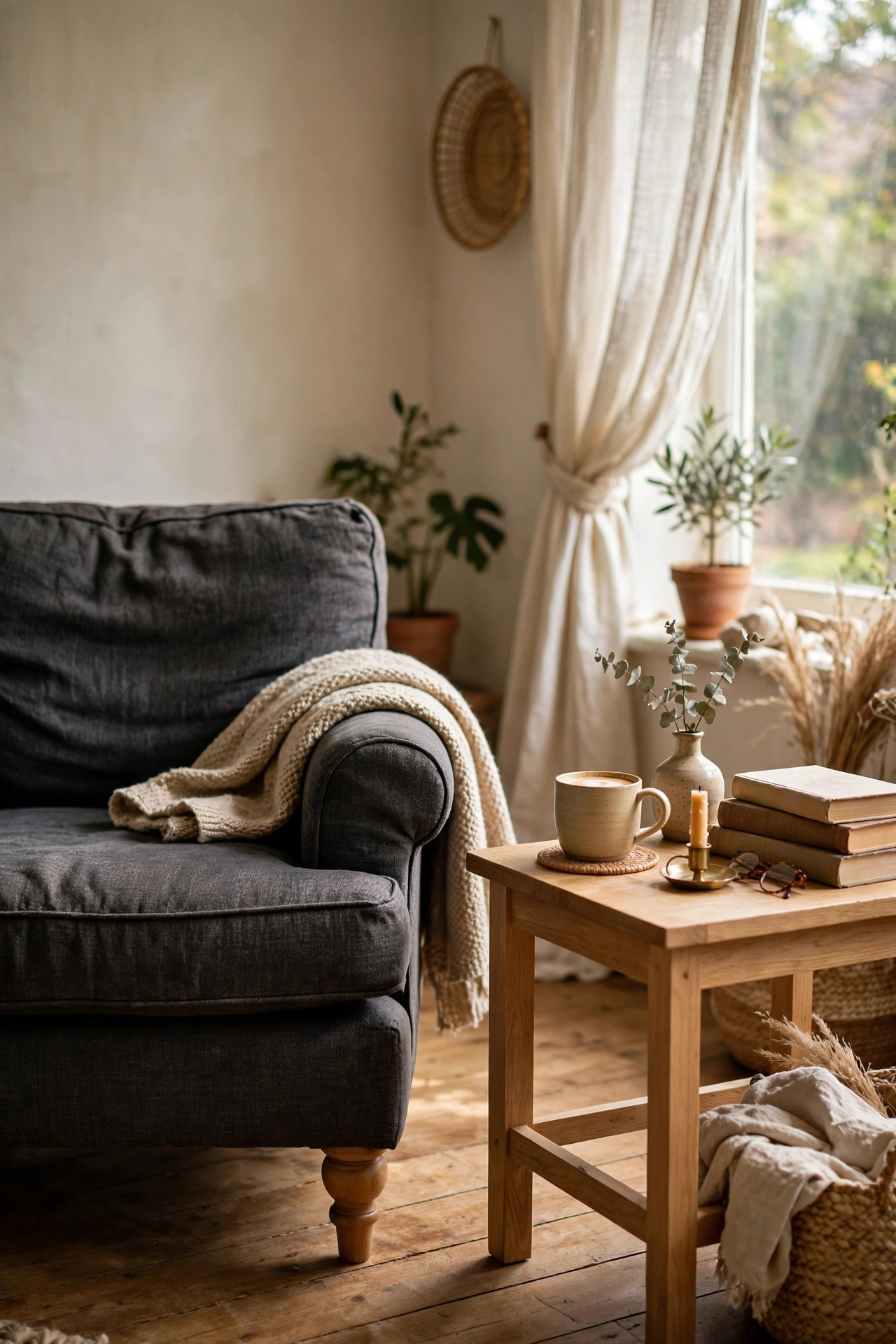
Charcoal can feel cool on its own, so warm oak is its perfect partner. A pale wooden coffee table or oak sideboard next to charcoal seating adds the warmth the colour needs to feel welcoming. Step one: introduce wood in at least two spots so it feels intentional, like a coffee table and a picture ledge. Step two: keep the wood finish light and natural rather than dark stained. I tried this pairing with my charcoal armchair and an oak side table, and my mistake was adding a dark walnut shelf too, which pushed the room back toward gloomy. Light oak against charcoal is the combination that stays balanced and serene.
Cost: ~$55 | Time: 45 minutes
Brass Accents That Glow Against Charcoal
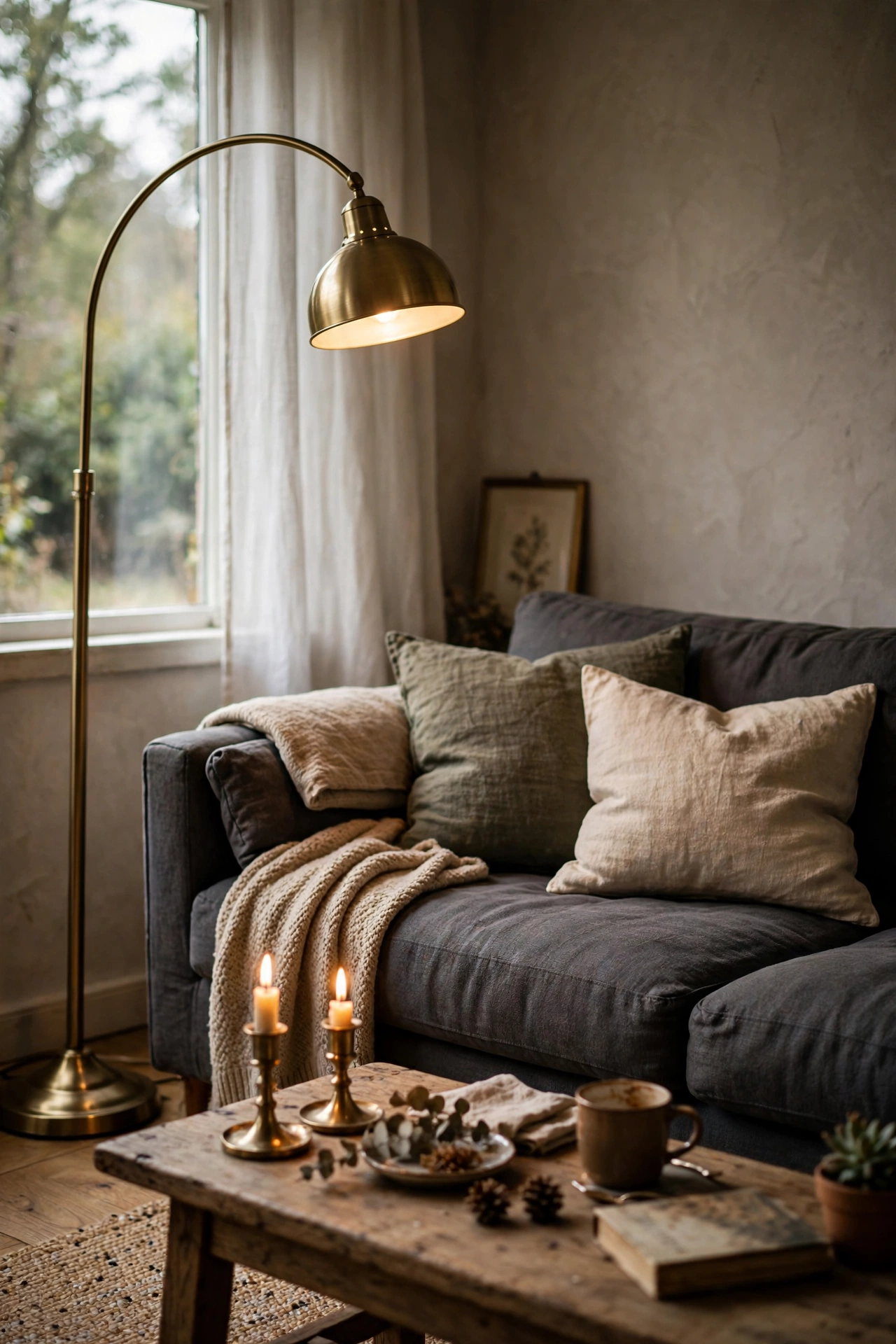
A little brass goes a long way against charcoal: a floor lamp, a tray, or a pair of candlesticks catch the light and stop the dark tones from feeling flat. The warm metal is like candlelight built into the decor. Step one: pick three brass pieces in different heights for one area, like the mantel or a sideboard. Step two: keep the brass unlacquered or brushed so it glows softly rather than glaring. I tried this with a brass arc lamp behind my charcoal sofa, and my mistake was scattering brass everywhere, which diluted the effect. Concentrating it in one vignette is what creates that collected, calm glow.
Cost: ~$38 | Time: 25 minutes
Pro tip: Charcoal looks calmest when the room’s lighting is warm. Swap any cool-white bulbs for 2700K warm white before you judge the colour.
Layered Charcoal and Ivory Cushions
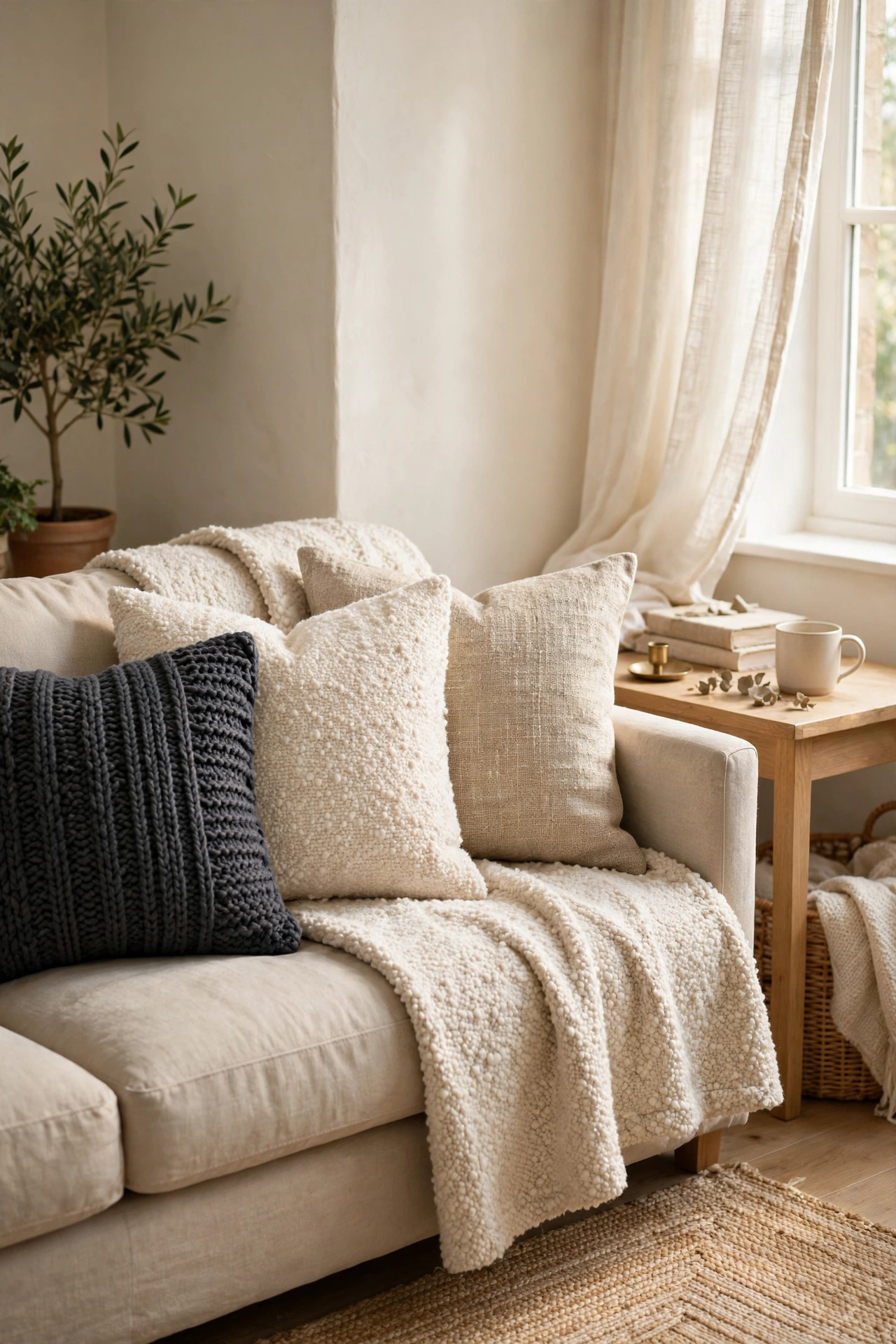
Cushions are the gentlest way to work charcoal into a room you already own. Layering charcoal cushions with ivory and oatmeal ones on a neutral sofa builds depth without any big purchases. Step one: start with your existing light cushions at the back. Step two: add two charcoal cushions in front, mixing one smooth and one textured fabric. I tried this on my old beige sofa, and my mistake was using only flat charcoal cotton, which looked a bit stark. Adding one charcoal cushion in a nubby boucle changed everything; the texture is what makes dark cushions feel soft and inviting rather than severe.
Cost: ~$24 | Time: 20 minutes
Charcoal Walls Balanced With Crisp White Ceilings
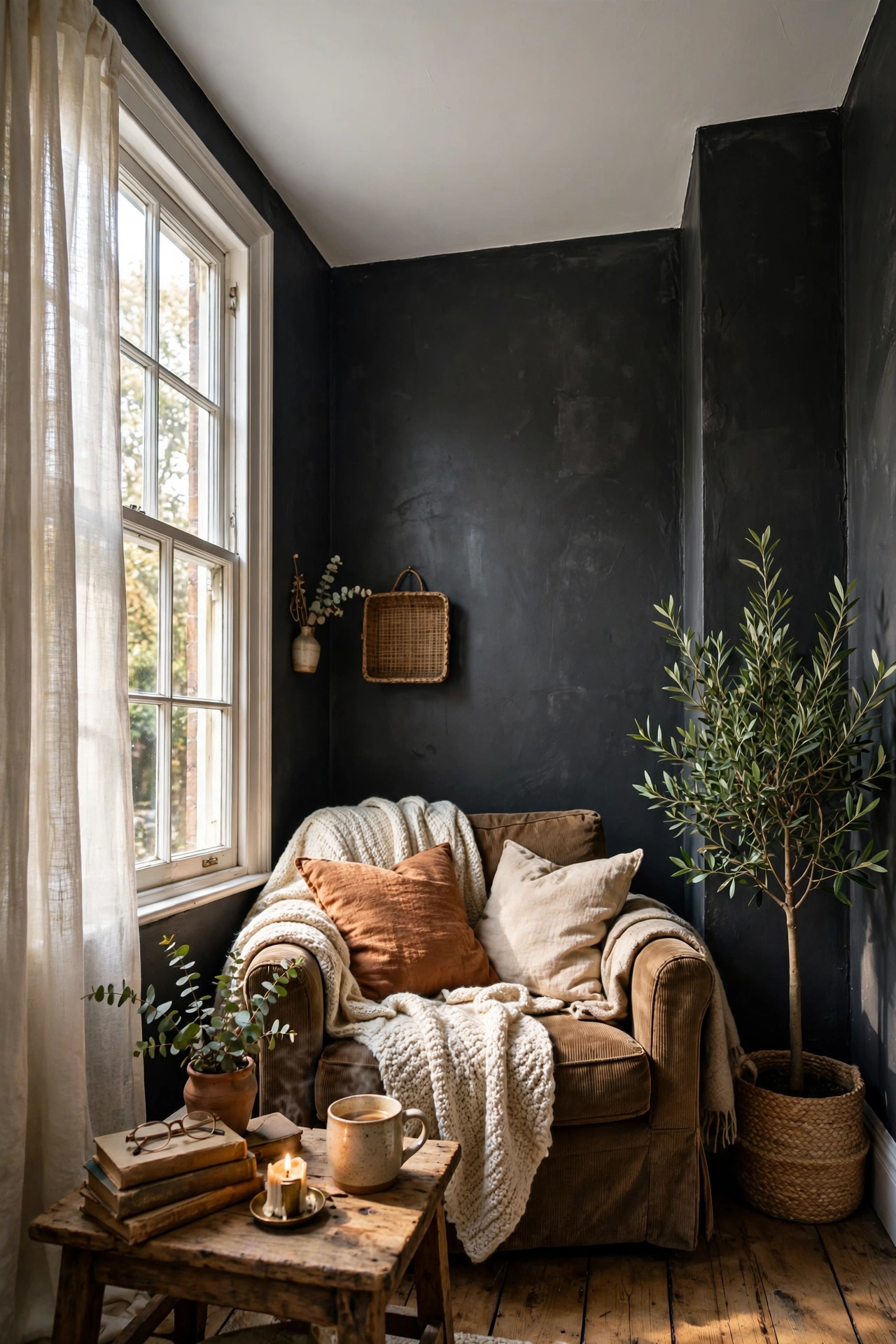
If you are painting more than one wall charcoal, a crisp white ceiling is what keeps the room feeling airy. The contrast draws the eye upward and stops the dark colour from pressing down. Step one: paint the ceiling first in a clean white with a flat finish. Step two: cut a sharp line where wall meets ceiling using painter’s tape. I tried this in a small snug, and my mistake was leaving the ceiling its old off-white, which made the charcoal look muddy by comparison. A fresh white ceiling made the same walls look intentional and the room feel taller, which is exactly the calm effect I wanted.
Cost: ~$40 | Time: 5 hours
A Charcoal Reading Corner With a Soft Throw
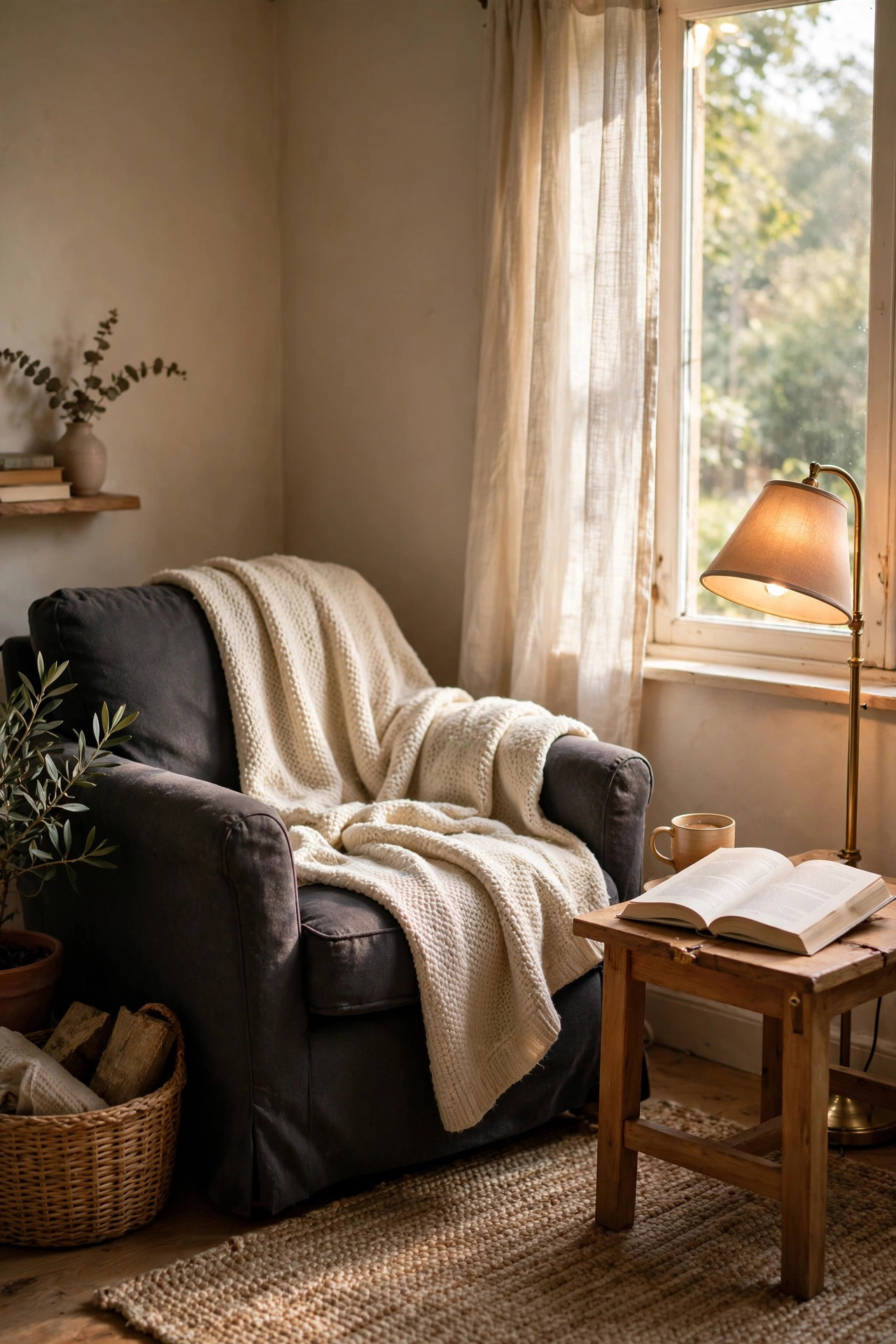
A charcoal armchair in a quiet corner, dressed with a soft cream throw, becomes the spot everyone gravitates toward. It feels like a little retreat within the room. Step one: angle the chair toward the light but away from the television so it reads as a reading spot. Step two: add a small side table for a book and a cup of tea, plus a floor lamp with a warm bulb. I tried this in the corner of my living room, and my mistake was pushing the chair flat against the wall, which made it feel banished. Pulling it out just 30 cm and angling it slightly is what turned it into an invitation.
Cost: ~$48 | Time: 35 minutes
Charcoal and Beige: The Calmest Palette
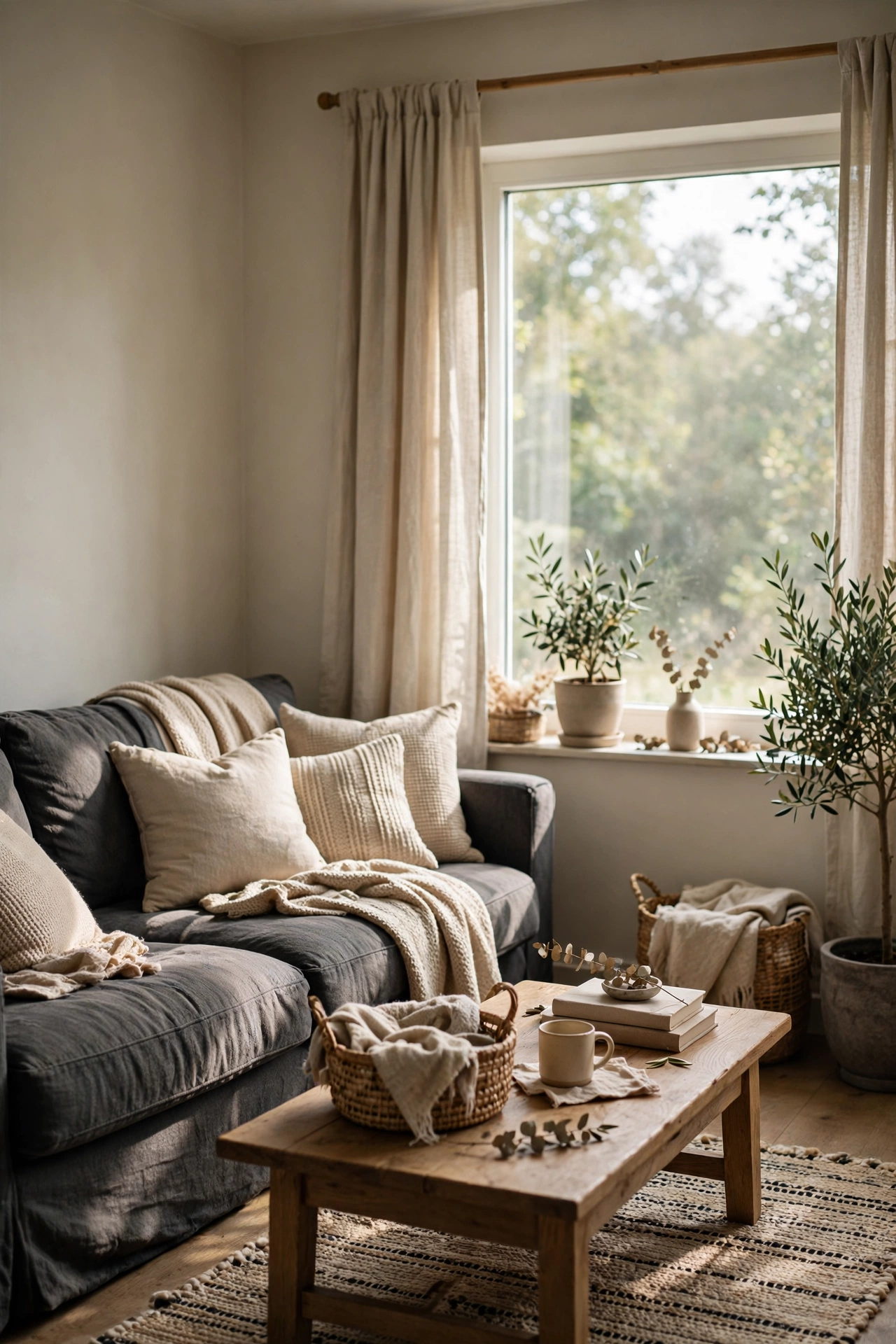
Charcoal and beige together are the definition of calm: the dark grounds the room while the beige keeps it warm and breathable. It is a palette that never shouts and suits almost any style of furniture. Step one: let charcoal take about a third of the room, through the sofa or the rug. Step two: let beige and oatmeal fill the rest in curtains, throws, and cushions. I tried this combination after years of brighter schemes, and my mistake was adding too many mid-tone greys in between, which blurred the contrast. Keeping it to just the two tones, dark and light, is what gives the palette its quiet confidence.
Cost: ~$30 | Time: 50 minutes
A Charcoal Rug Grounding a Light Room
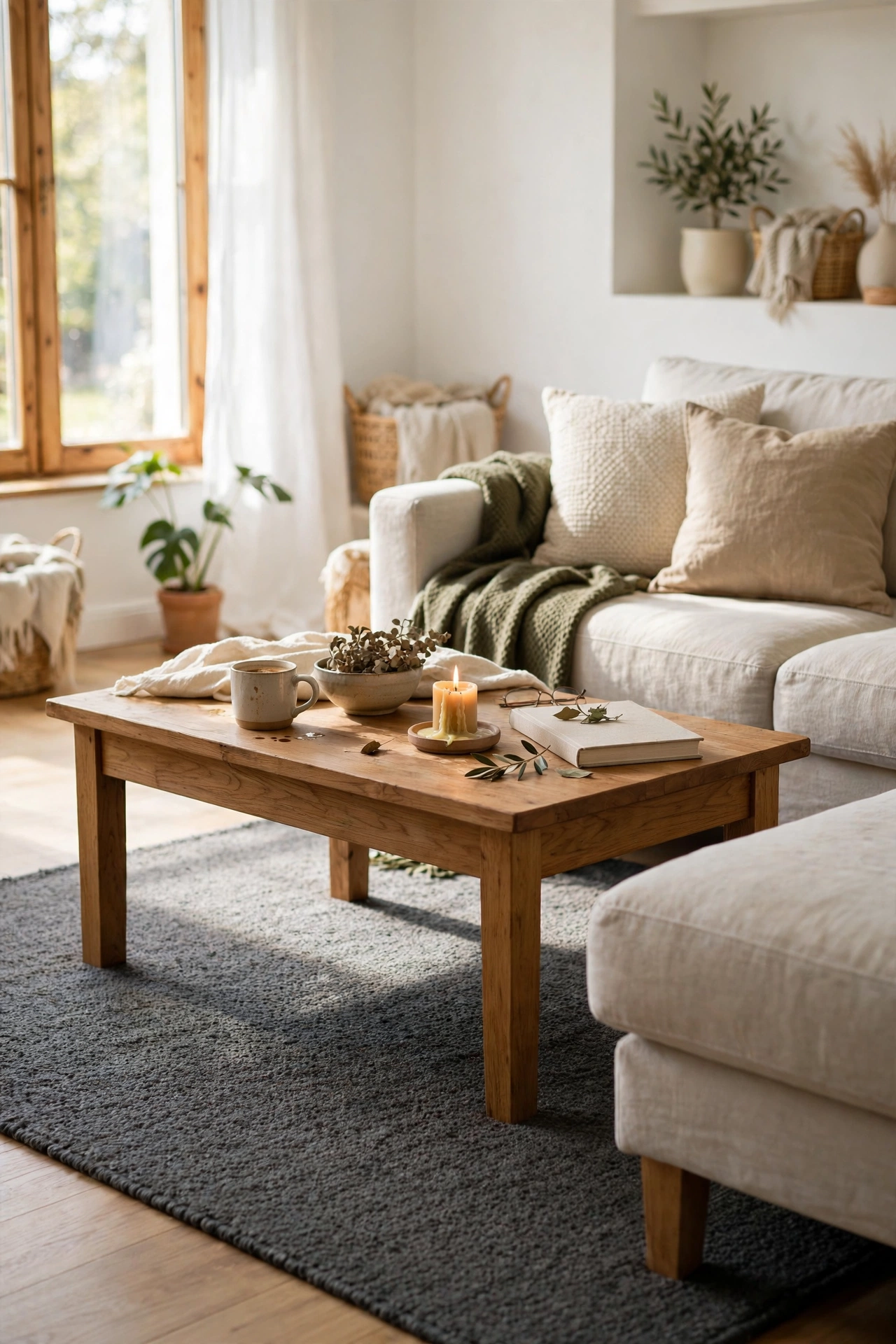
In a mostly light living room, a charcoal rug under the coffee table adds just enough weight to stop the space feeling washed out. It anchors everything without darkening the walls. Step one: choose a low-pile charcoal rug so the room still feels easy to move through. Step two: make sure the front legs of the sofa and chairs sit on it to connect the seating. I tried this in my bright front room, and my mistake was picking a rug with a busy pattern, which fought the calm I wanted. A plain or subtly textured charcoal rug gives you the grounding effect with none of the visual noise.
Cost: ~$52 | Time: 20 minutes
Pro tip: If your charcoal rug sheds, vacuum it twice before laying it down and always use a rug pad underneath; it stops slipping and adds softness underfoot.
Greenery Popping Against Charcoal Walls
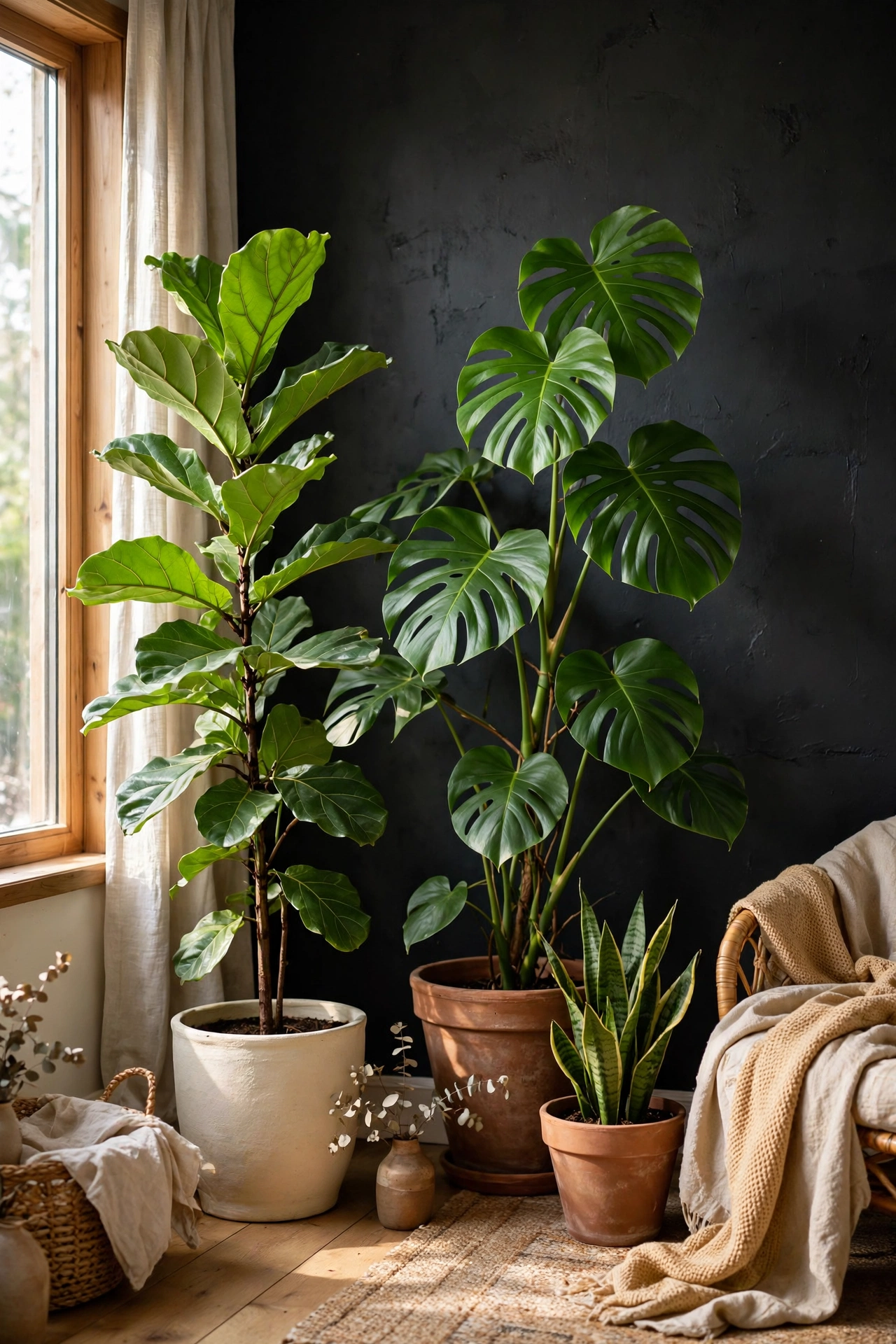
Green leaves look electric against charcoal, and plants are the liveliest, cheapest way to soften dark walls. A tall fiddle leaf or a trailing pothos adds life and movement. Step one: place one large plant where it catches natural light, and a couple of smaller ones at different heights. Step two: use light-coloured pots so the plants stand out from the wall. I tried this against my charcoal accent wall, and my mistake was choosing dark ceramic pots, which swallowed the plants visually. Cream and terracotta pots frame the greenery and let the leaves do the talking against the deep background.
Cost: ~$34 | Time: 30 minutes
Charcoal TV Wall That Hides the Screen
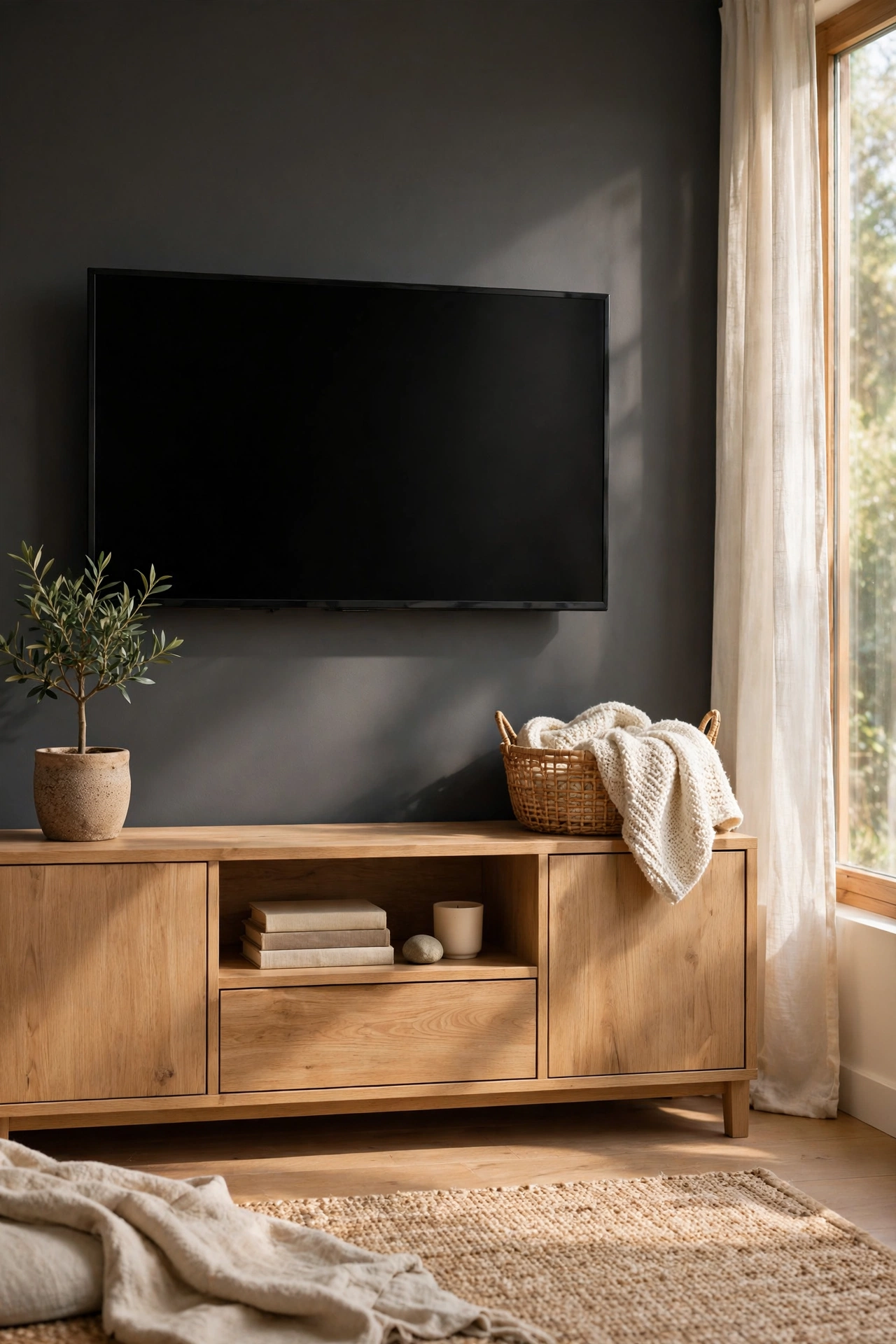
A television is a big black rectangle that disrupts a calm room, but painting the wall behind it charcoal makes the screen visually disappear when it is off. It is a designer trick that costs one tin of paint. Step one: paint the full wall, including around any media unit, in a flat charcoal. Step two: keep the shelving and frames on that wall minimal and light so the wall stays quiet. I tried this in my living room, and my mistake was leaving the glossy black media console, which still drew the eye. Swapping it for a light oak unit let the whole wall recede into calm.
Cost: ~$28 | Time: 3 hours
Soft Blush Accents Warming Up Charcoal
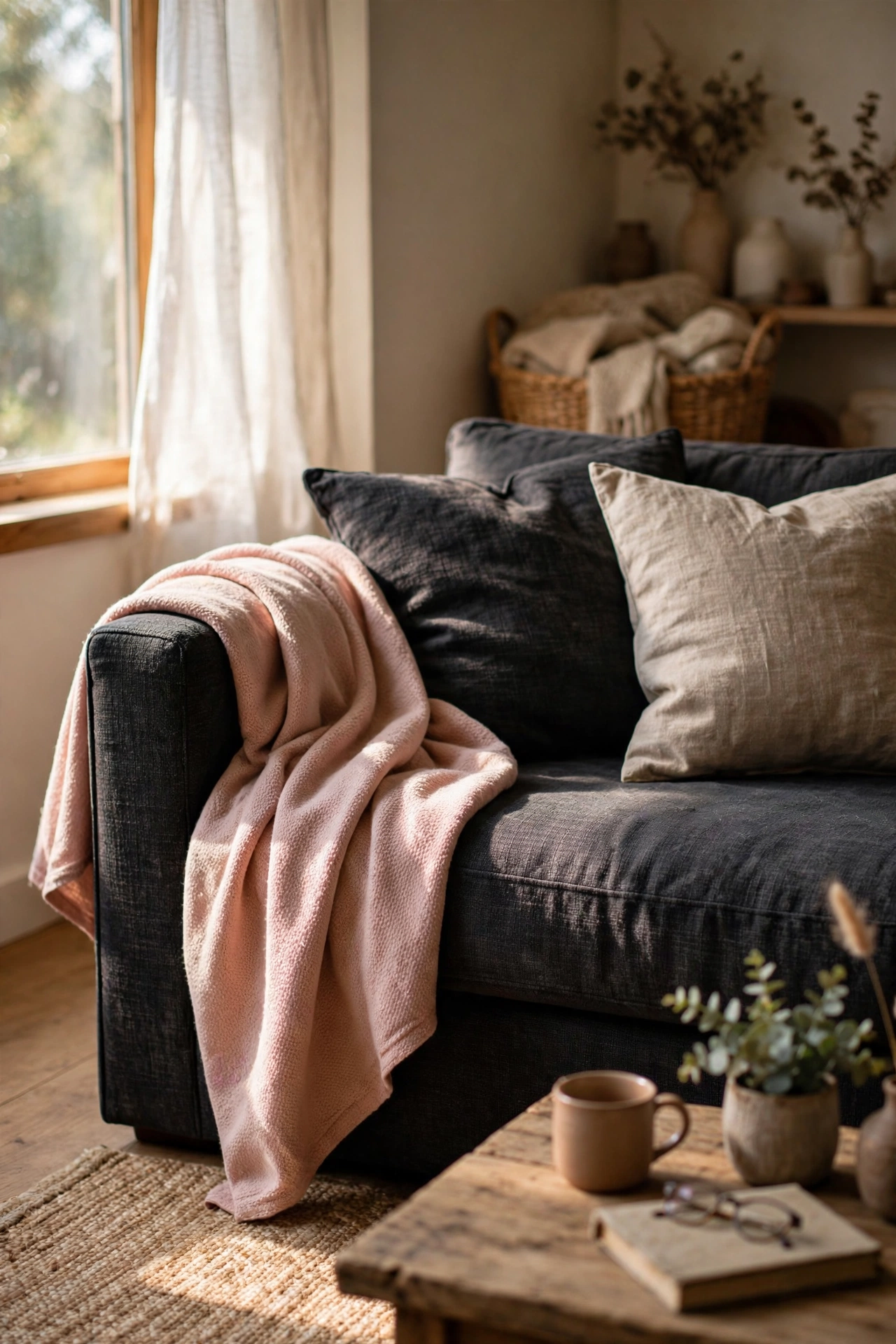
A whisper of blush pink is the gentlest way to warm charcoal without breaking the calm. One blush cushion, a small vase, or a piece of art is all it takes. Step one: keep blush to about ten percent of the room so it stays an accent. Step two: choose muted, dusty blush rather than bright pink. I tried this with a blush throw on my charcoal sofa, and my mistake was adding a bright pink cushion too, which tipped the room from serene to sweet. One dusty blush piece against charcoal feels sophisticated; two starts to change the whole mood.
Cost: ~$18 | Time: 15 minutes
Charcoal in a Small Living Room, Done Right
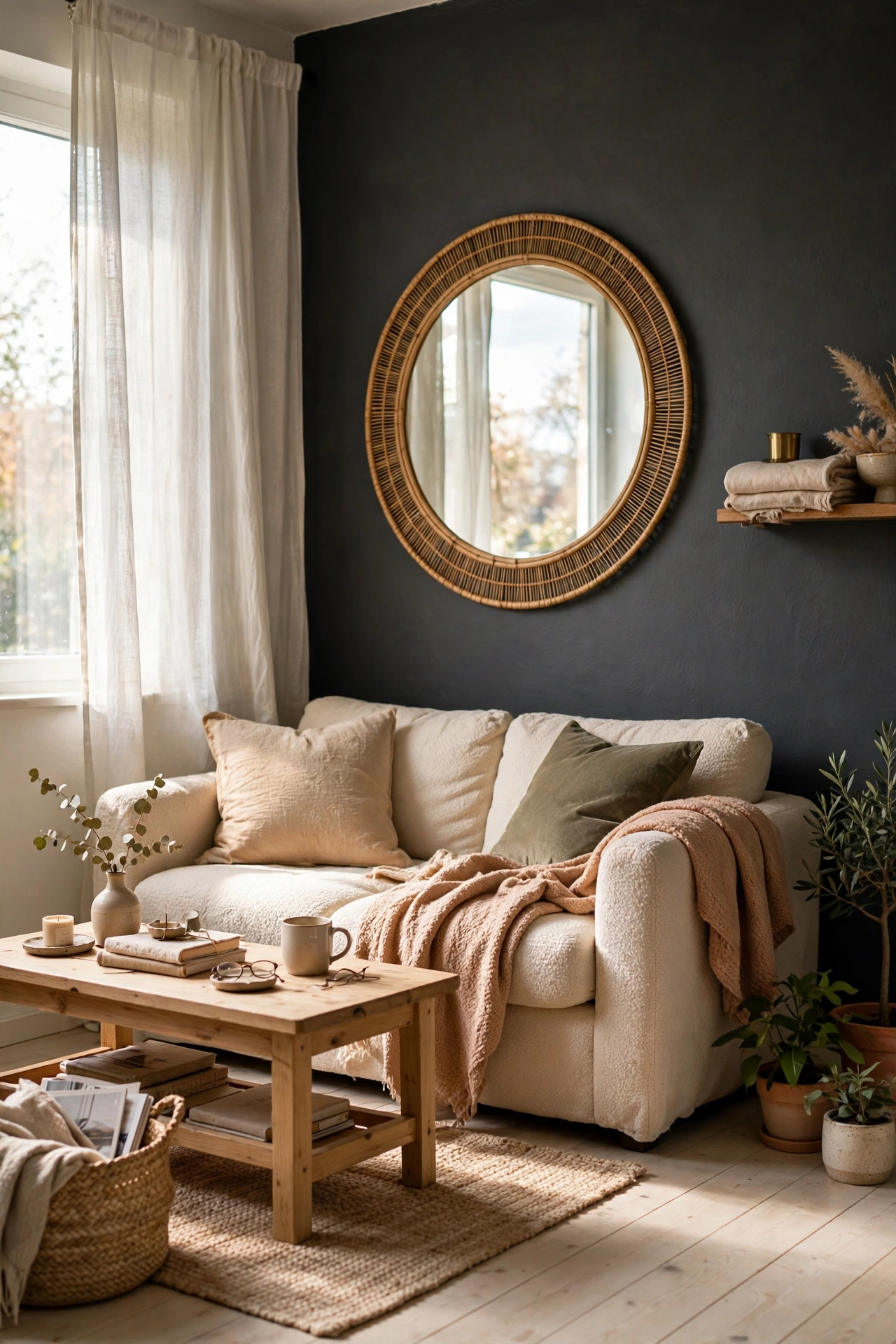
People assume dark colours shrink small rooms, but charcoal actually blurs the boundaries and can make a small living room feel cocooning rather than cramped. The key is keeping everything else light. Step one: use charcoal on the sofa or one wall, never all four walls in a small space. Step two: keep the floor, ceiling, and curtains pale, and add a mirror to bounce light. I tried this in my compact second sitting room, and my mistake was painting two walls charcoal, which did feel enclosing. One charcoal wall with pale everything else gave me the cosy den feeling without losing the light.
Cost: ~$36 | Time: 2.5 hours
Textured Charcoal Throws for Instant Cosiness

If you are nervous about committing to charcoal, a textured throw is the smallest possible step, and it still transforms how a sofa feels. Chunky knits and waffle weaves in charcoal add depth you can fold away. Step one: drape the throw diagonally across one corner of the sofa rather than spreading it flat. Step two: pair it with a lighter cushion so the dark texture has something to sit against. I tried this as my very first charcoal experiment, and my mistake was choosing a thin, smooth throw that slid off constantly. A heavyweight knit stays put and the texture catches the light beautifully.
Cost: ~$22 | Time: 10 minutes
FAQ
Does charcoal make a living room feel dark and gloomy? Not if you balance it. Pair charcoal with pale floors, white ceilings, and warm lighting, and it feels cosy and cocooning rather than gloomy. The gloom only arrives when every surface goes dark at once.
What colours go best with a charcoal sofa? Cream, oatmeal, and beige keep it calm; warm oak and brass add warmth; and a touch of greenery or dusty blush brings it to life. Avoid pairing it with lots of other dark tones, which can flatten the room.
Is charcoal hard to keep clean with kids or pets? Charcoal is actually one of the most forgiving colours for real life. It hides everyday marks far better than cream or light grey, and a quick vacuum or lint roll keeps upholstery looking fresh.
Want more living room inspiration? (see also: 25-beige-living-room-ideas-that-feel-calm-and-collected), (see also: 21-grey-living-room-ideas-for-small-spaces), (see also: 18-cosy-neutral-living-room-ideas).
If one of these caught your eye, save this idea to your Pinterest board so you can find it later.
