25 Small Living Room Ideas With Big Style
My first apartment living room was 10 by 12 feet, and I spent a year bumping into furniture before I learned the truth: small living room ideas aren’t about having less style. They’re about being smarter than the square footage. A small room done well feels cozy and intentional; a big room done badly just feels empty. I’ve lived small for years, and these 25 ideas are the ones that actually work — the furniture choices, the visual tricks, and the layout moves that make a tiny living room feel like it has big style.
1. Furniture With Legs
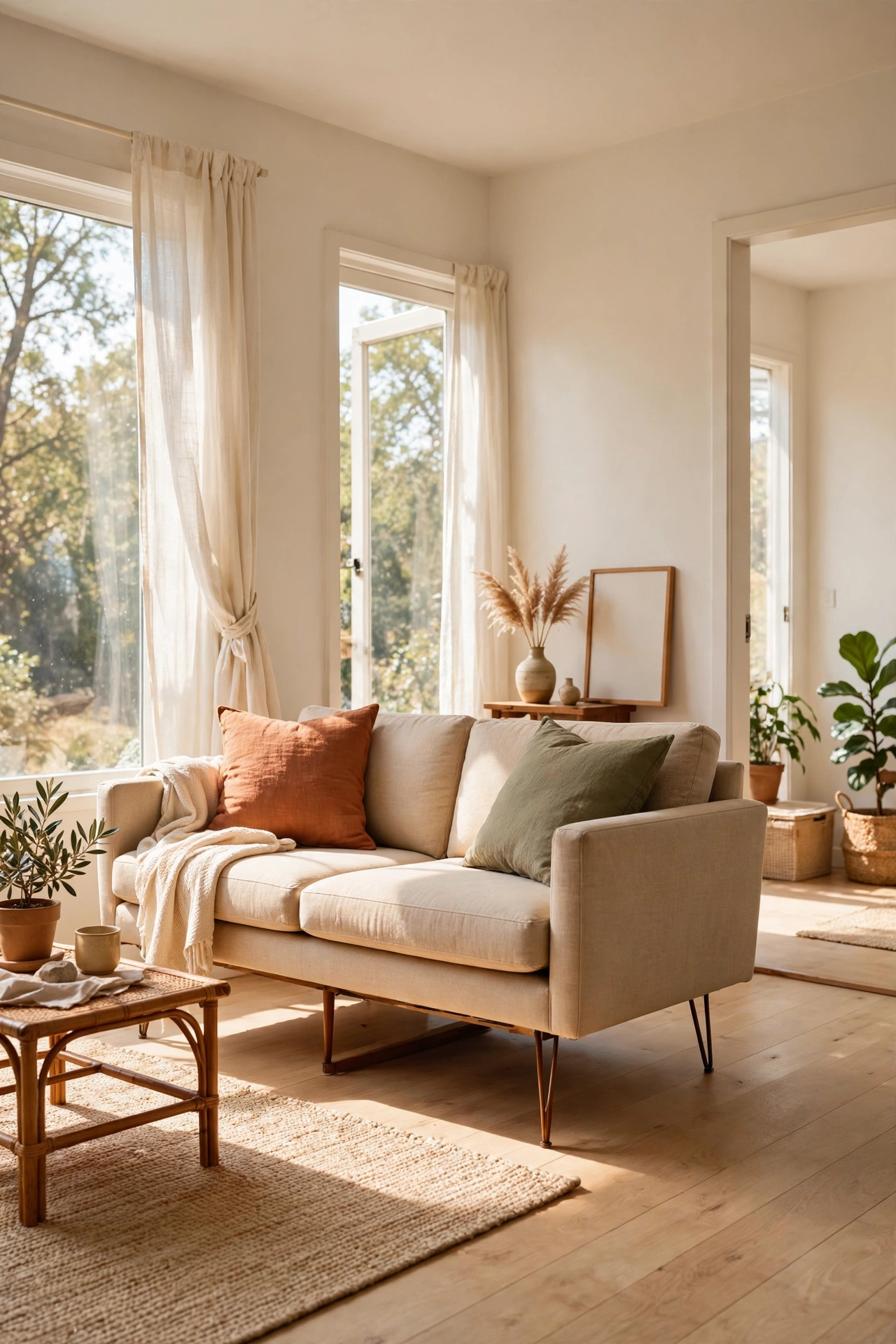
Visible floor underneath furniture is the oldest small-space trick there is — your eye reads the continuous floor as more space. I swapped a skirted sofa for a leggy mid-century style one (thrifted, $80), and the room instantly breathed. Look for sofas, chairs, and consoles on tapered legs at least 4 inches tall. The airier the silhouette, the bigger the room feels.
Mistake to avoid: Pushing leggy furniture against the wall anyway. Pull it out even two inches — the shadow line behind it adds depth.
2. Mirror Opposite the Window
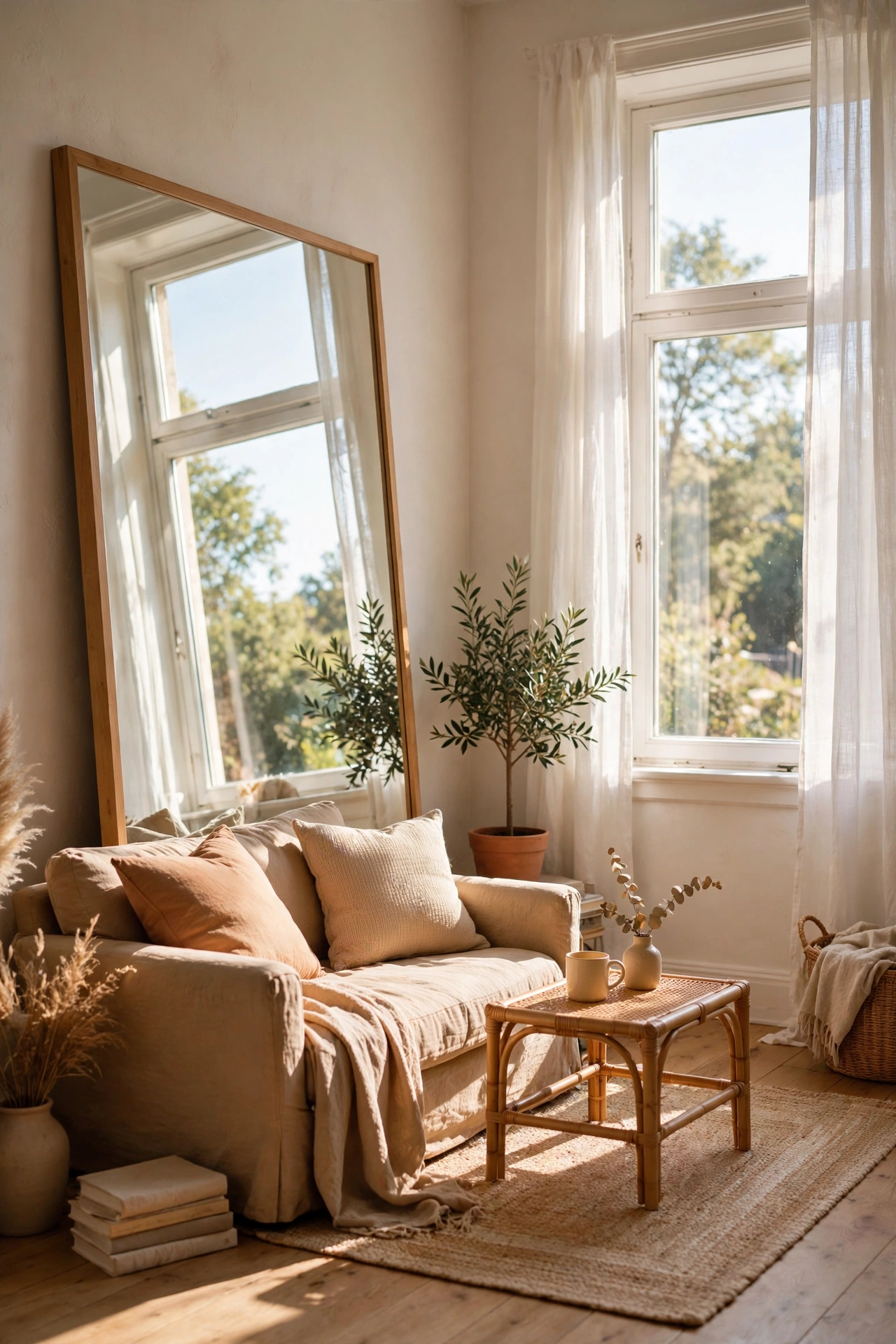
A large mirror directly across from your window doubles the light and the view — it’s the closest thing to adding a second window. I leaned a $15 thrifted full-length mirror opposite mine, and the room went from dim to glowing. Lean it rather than hanging if you’re renting; just secure the top so it can’t slide.
Pro Tip: Angle the mirror slightly to catch the brightest part of the sky, not the neighbor’s brick wall.
3. Right-Size Light Rug
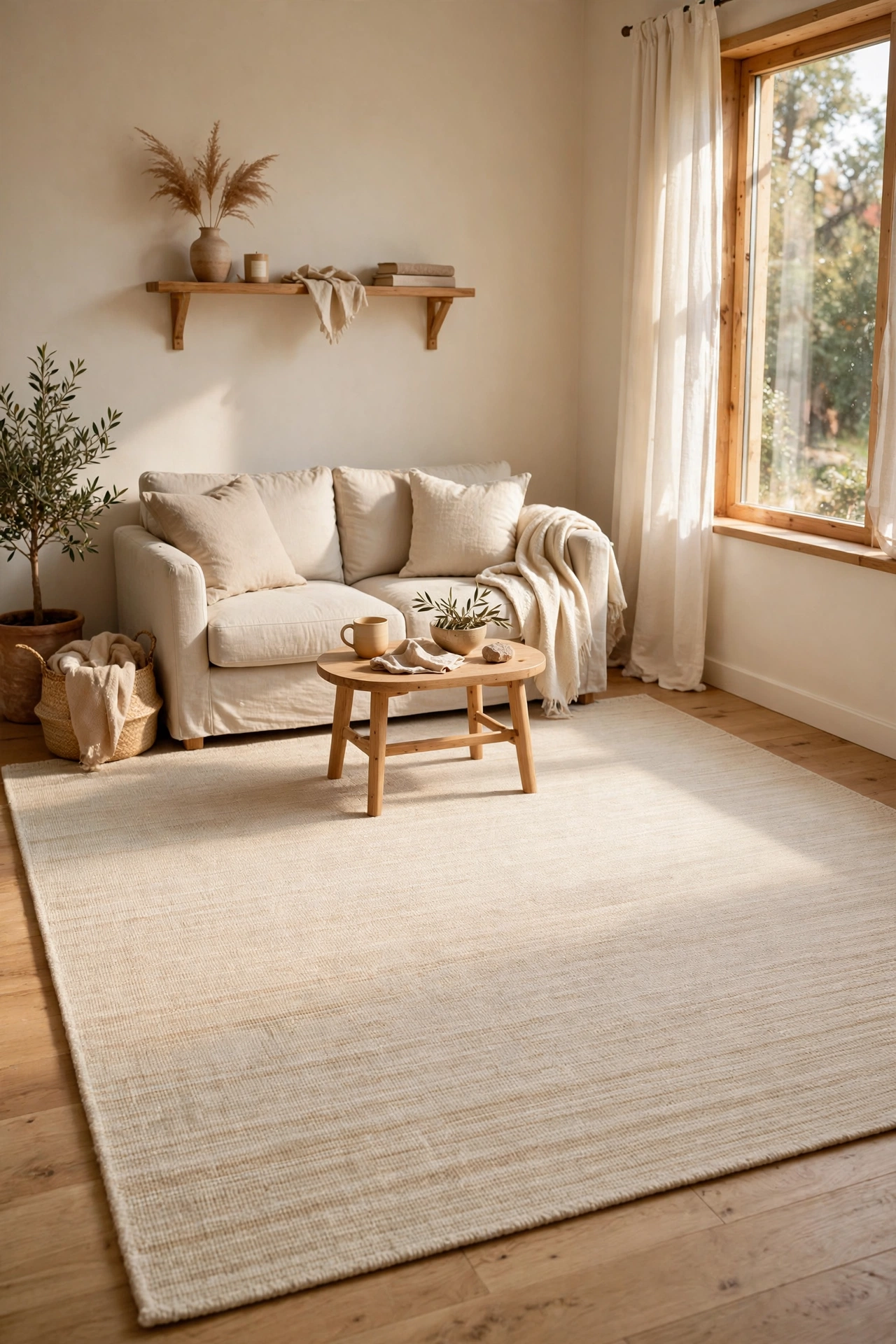
In a small room, the rug should nearly fill the seating area — wall-to-wall-ish, with just a border of floor showing. A too-small rug chops the room into pieces; a generous one unifies it. Mine is a light flatweave that runs almost to the walls, $60 on clearance. Light colors reflect light; dark rugs visually shrink the floor.
Mistake to avoid: The 5×7 “postage stamp” in a 12×14 room. Measure your seating zone and buy the rug that covers it.
4. Wall-Mounted Shelves
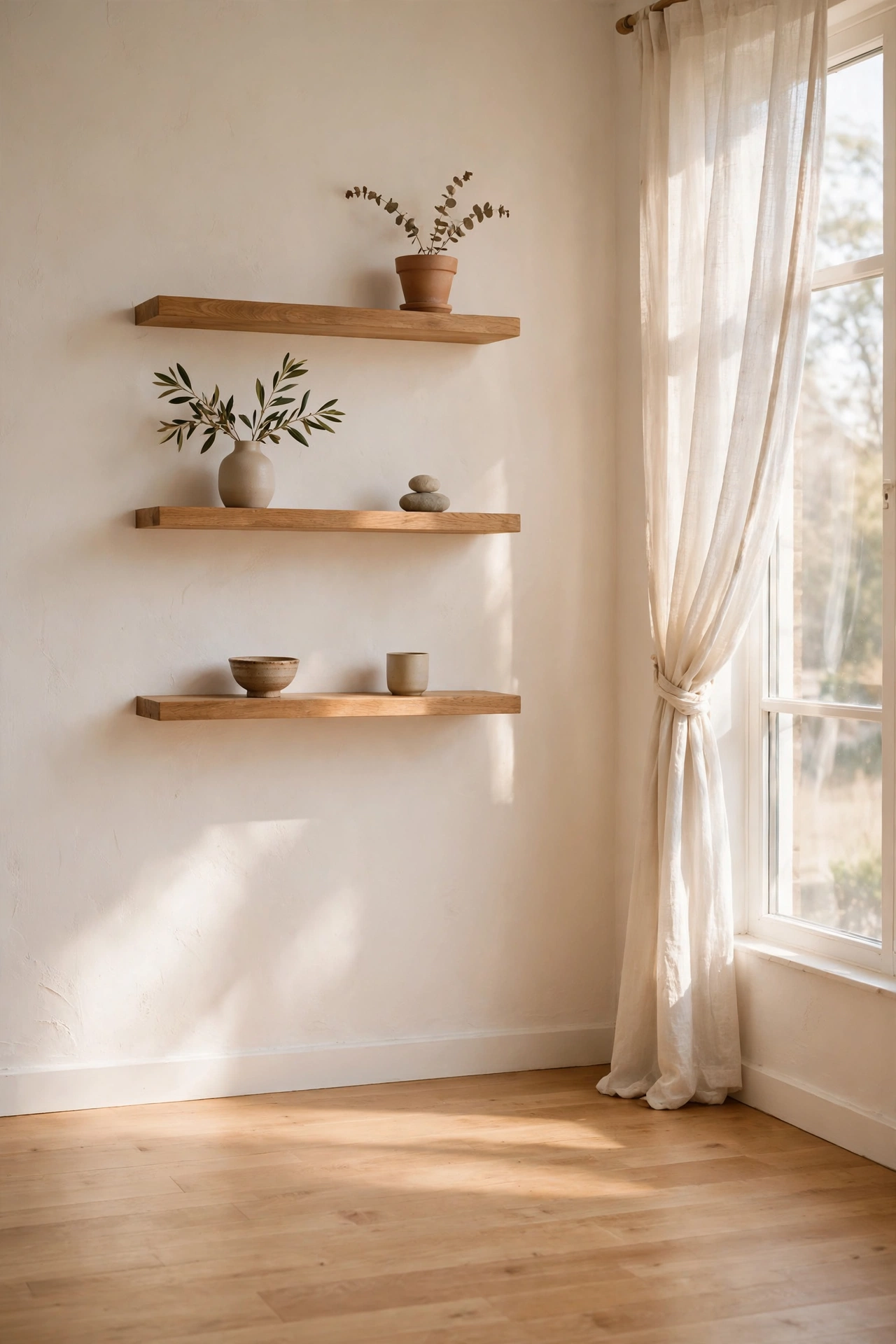
Every square foot of floor matters, so move storage up. I replaced a bulky bookcase with three floating shelves ($15 each at IKEA) and gained back two square feet of floor — which doesn’t sound like much until you live in 120 square feet. Style them sparsely; crowded shelves in a small room feel claustrophobic. Use a stud finder for at least one bracket per shelf — books are heavy and adhesive-only mounting is a disaster waiting to happen. My shelves hold forty books because two brackets hit studs.
Pro Tip: Renters: use the heavy-duty adhesive picture ledges instead. They hold books and small objects with zero holes.
5. Nesting Side Tables
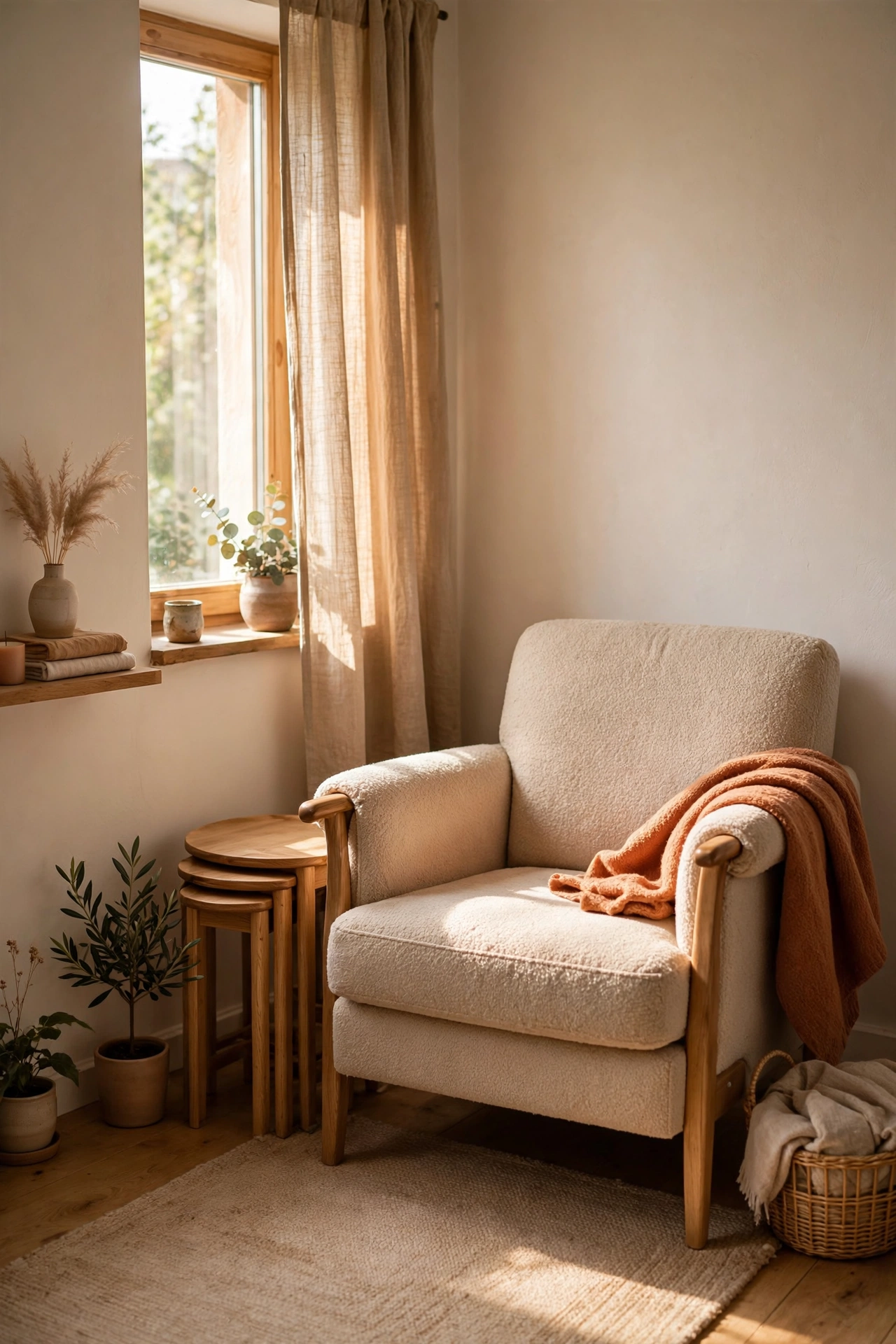
Nesting tables are small-space magic: one table most days, two or three when guests come. I found a set of two for $25 at Target — the small one tucks completely under the big one. Pull them out for game night, tuck them back after. It’s like having extra furniture that doesn’t exist until you need it.
Mistake to avoid: Buying nesting tables that don’t actually nest flat. Test the tuck in the store — some “nesting” sets barely overlap.
6. Go Vertical With Storage
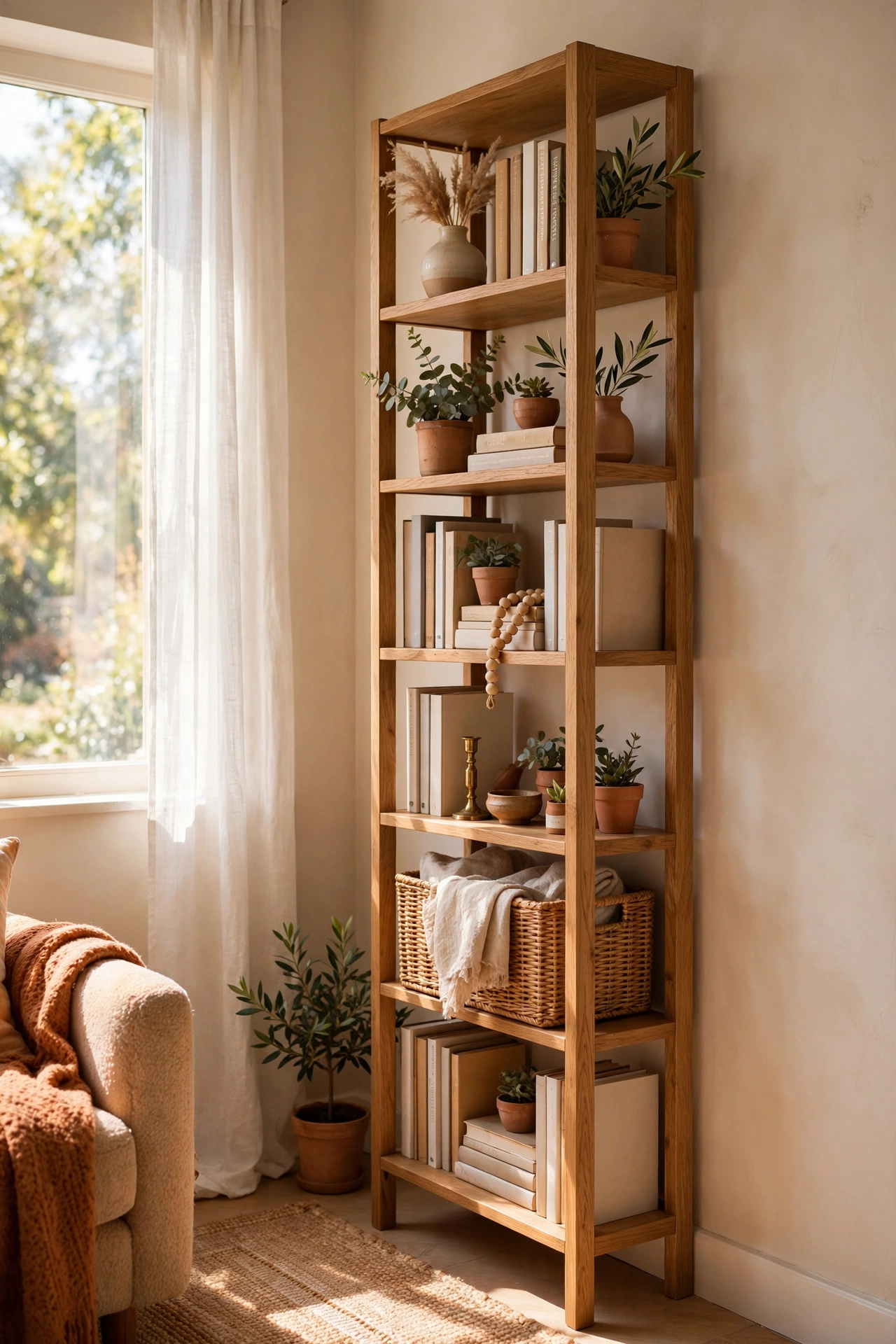
Small rooms have the same wall height as big ones — use it. I put a tall, narrow bookcase ($50 at IKEA) in the one dead corner, and it holds what used to sprawl across two surfaces. Tall and narrow beats short and wide every time in a small room. Anchor it for safety; tall furniture in small rooms gets bumped.
Pro Tip: Paint or paper the back panel a shade darker than the wall. The depth makes the unit look built-in, not bulky.
7. Glass and Lucite Pieces
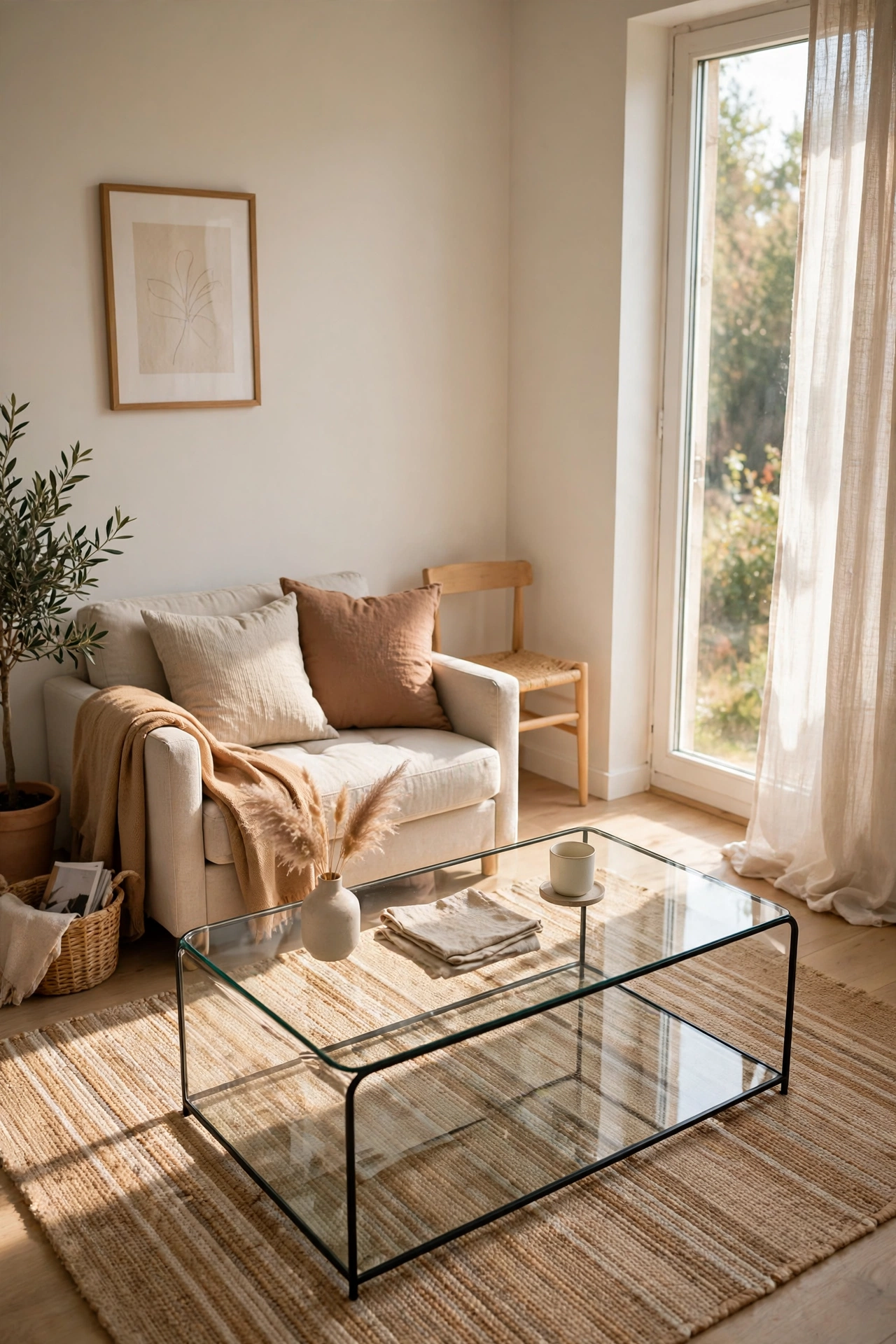
Furniture you can see through takes up zero visual space. My glass coffee table ($20 thrifted) and a lucite side table disappear into the room — the floor and rug show straight through. In a small room, visual weight matters as much as actual size. One or two transparent pieces is plenty; a whole room of glass feels like a showroom.
Mistake to avoid: Glass with kids or clumsy pets. Be honest about your household — a scratched, smudged glass table looks worse than a wood one.
8. Curtains Hung High and Wide
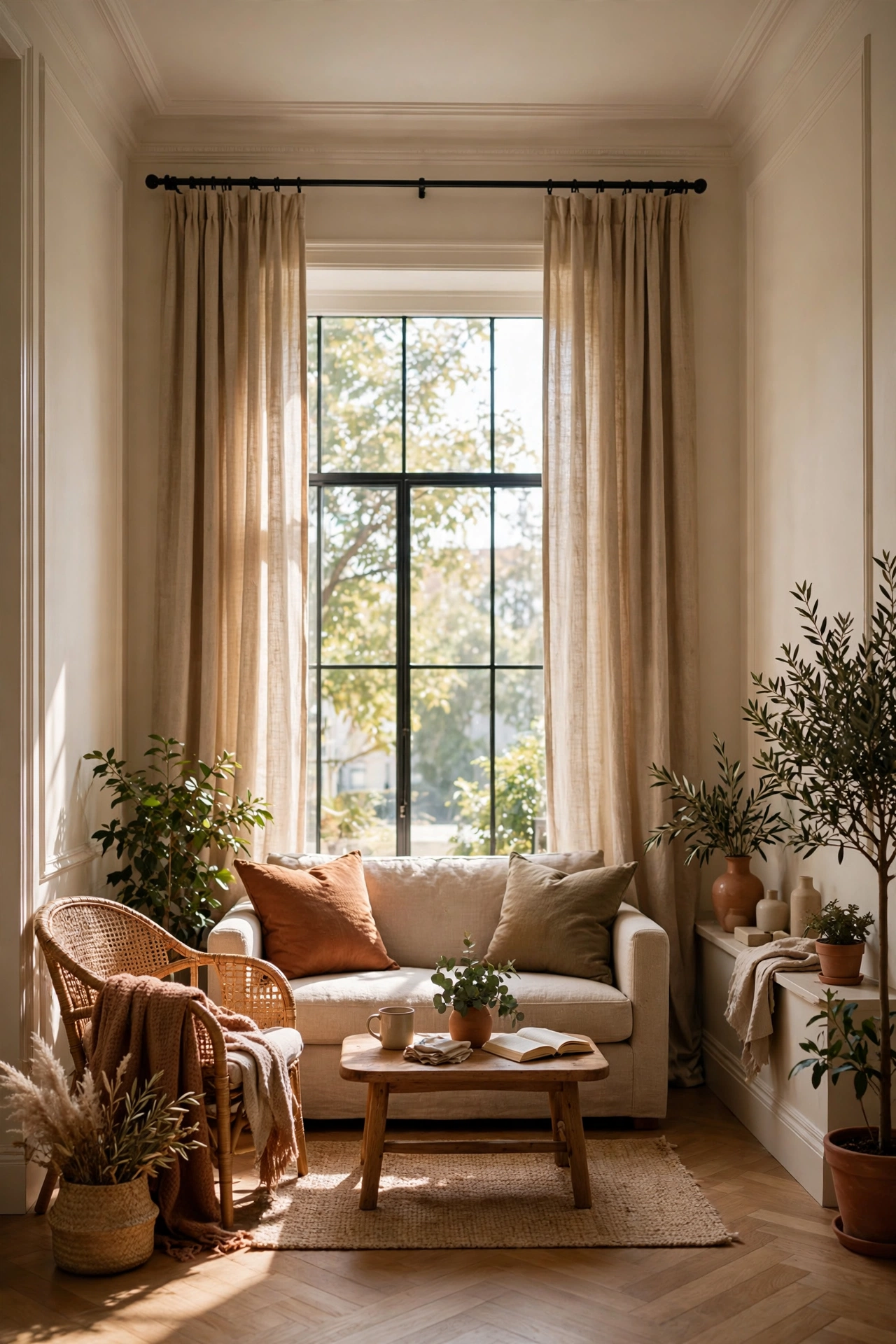
Mount the curtain rod 4 inches below the ceiling and 8 inches wider than the window on each side. The window looks twice as big, the ceiling looks higher, and the walls look longer — all from moving a $18 rod. I did this in my 10×12 room and visitors guessed the windows were custom. They’re not. They’re just dressed well.
Pro Tip: When the curtains are open, they should just cover the wall beside the window, not the glass. That’s how you know the rod is wide enough.
9. Storage Ottoman Double Duty
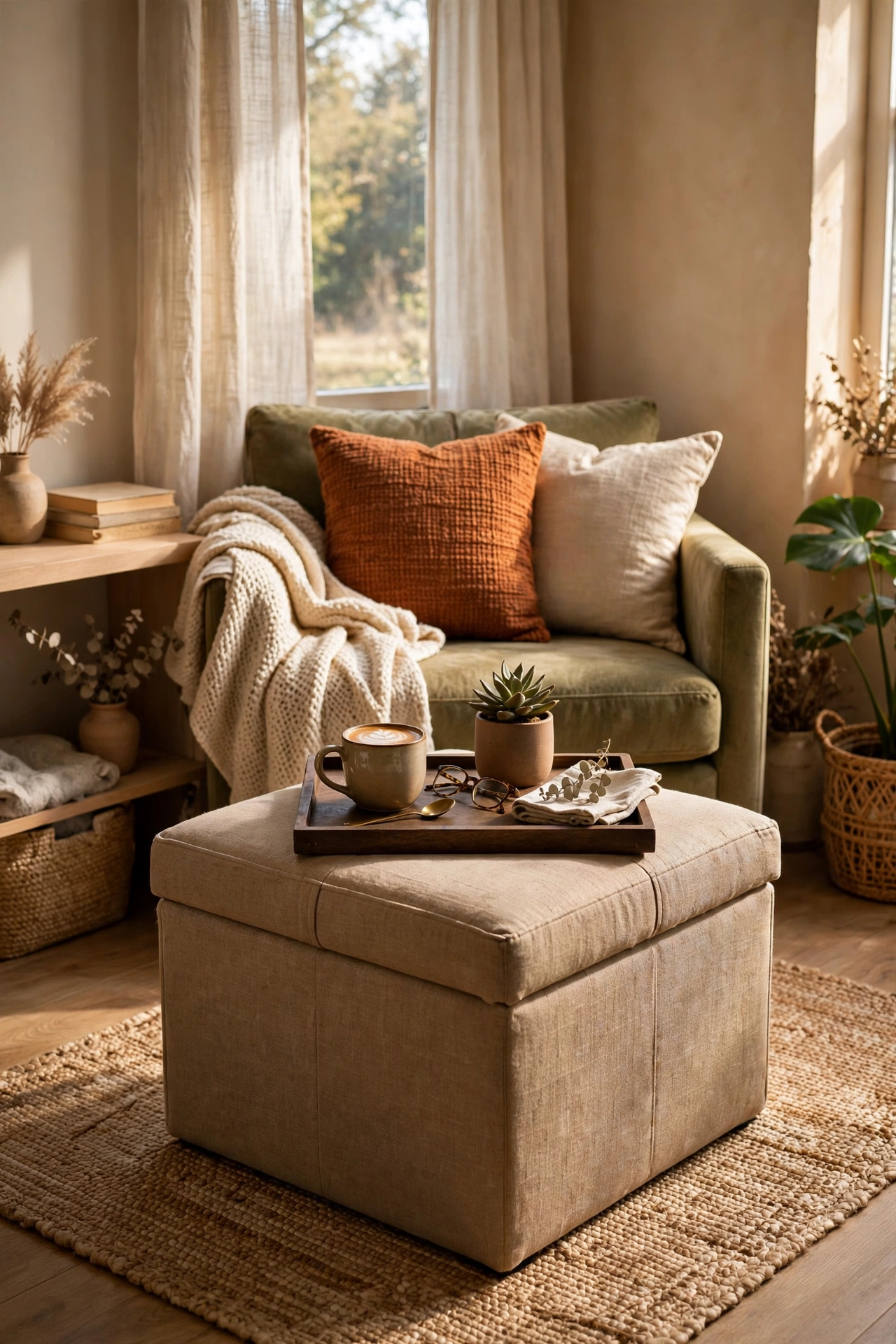
In a small living room, every piece should do two jobs. My $40 storage ottoman is a footrest, extra seat, coffee table (with a tray on top), and it hides two throw blankets plus the board games. That’s four jobs in 4 square feet. When floor space is precious, single-purpose furniture is a luxury you can’t afford.
Mistake to avoid: An ottoman so big it blocks traffic. Leave 18 inches of walkway around it — measure, don’t guess.
10. Apartment-Size Sofa
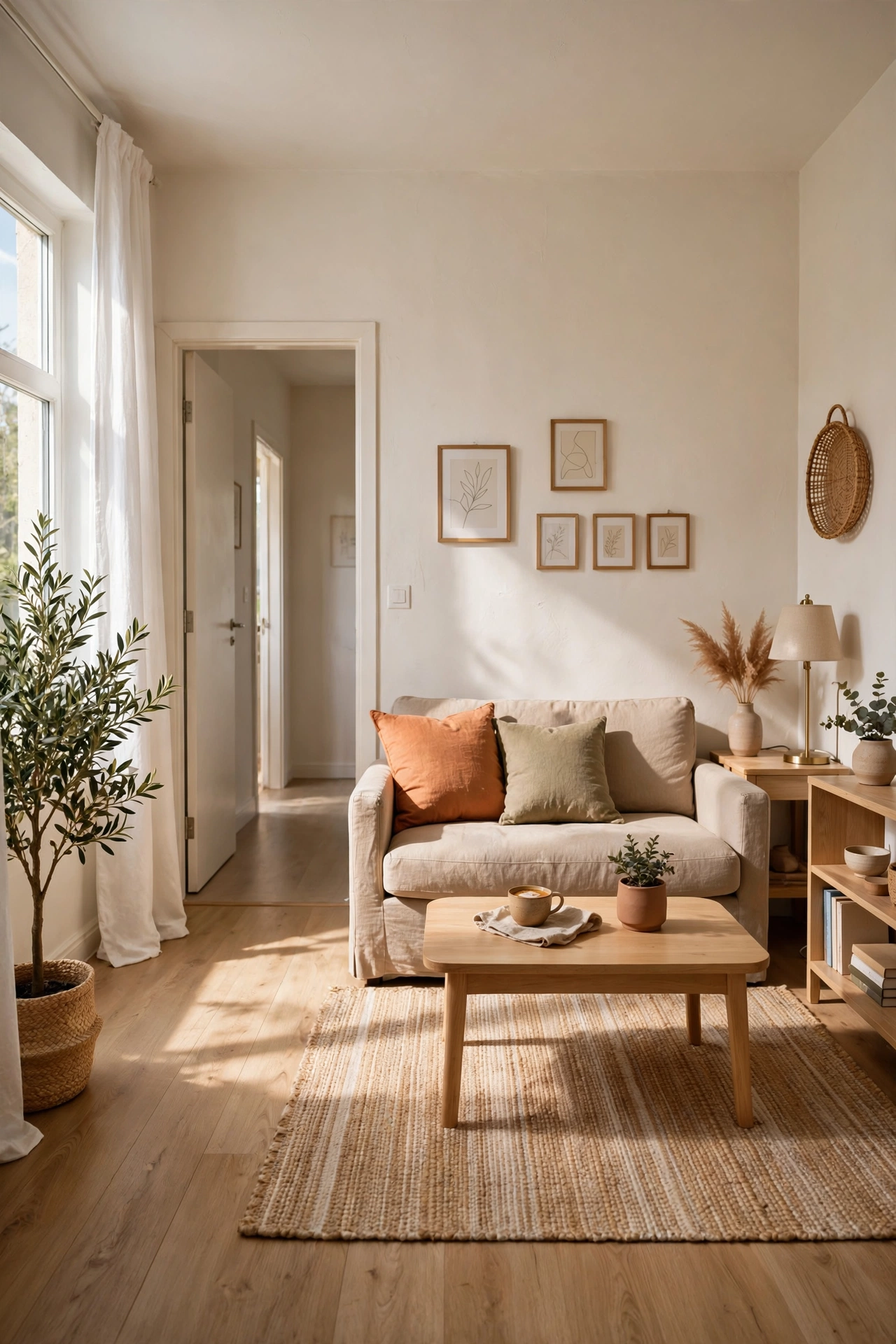
A standard 84-inch sofa overwhelms a small room; a 72-inch apartment sofa fits the scale. I downsized from a hand-me-down behemoth to a $300 apartment-size sofa, and the room gained a walkway I didn’t know I was missing. Two people fit fine — the “need” for a giant sofa is mostly habit. Your room will thank you.
Pro Tip: Tape the sofa’s footprint on the floor with painter’s tape before buying. Walk around it for a day. You’ll know instantly if it fits your life.
11. Round Coffee Table
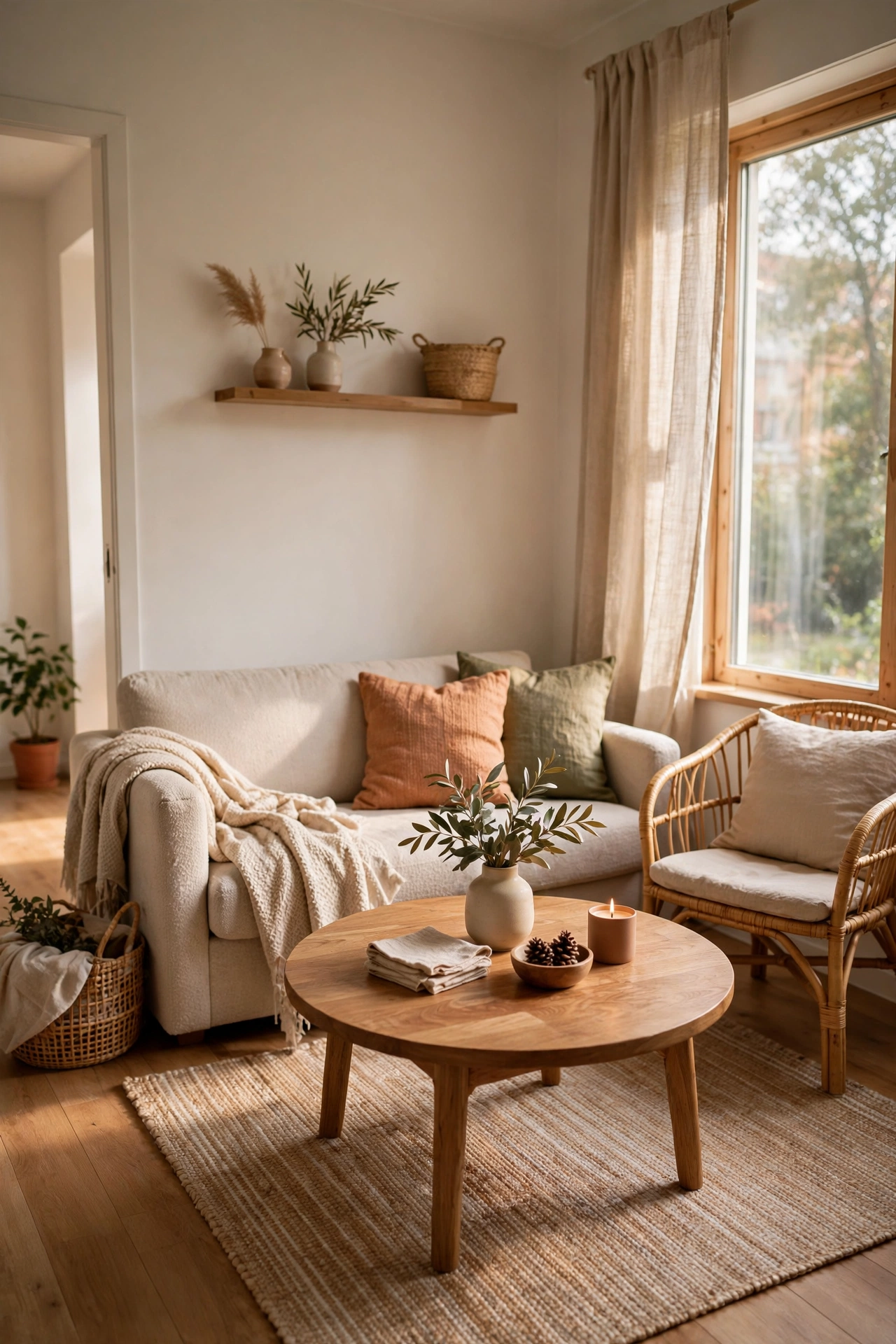
Round tables have no sharp corners to bruise your shins in tight quarters, and the curved shape improves traffic flow — you glide around it instead of navigating corners. Mine is a $30 thrifted round top on simple legs. In a small room, the circle also contrasts nicely with all the room’s rectangles.
Mistake to avoid: A round table that’s too tall. Coffee table height should be within 2 inches of your sofa seat height, or it looks off.
12. Sconces Instead of Table Lamps
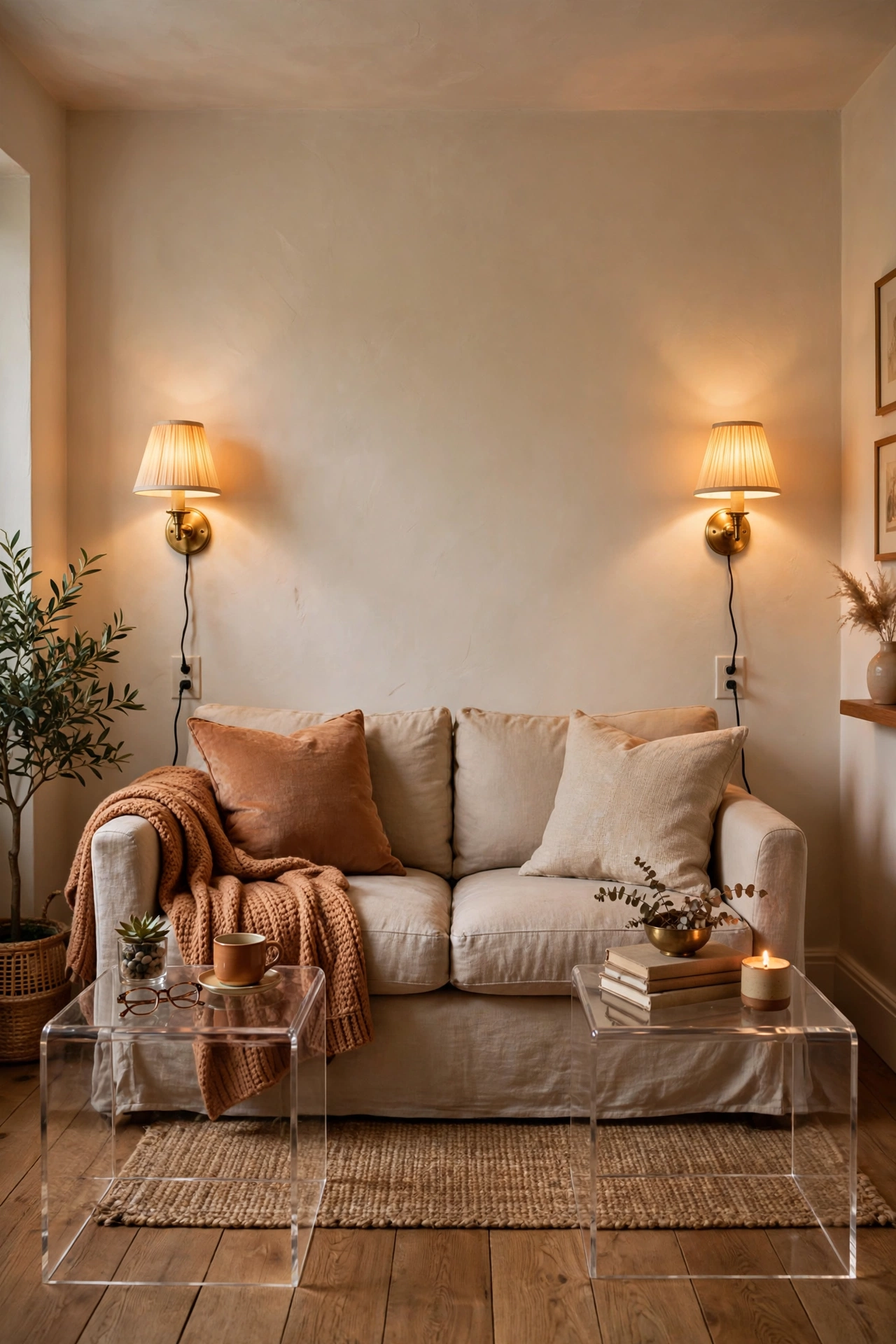
Table lamps eat surface space you don’t have. Plug-in wall sconces ($25 each) with cord covers give you reading light with zero footprint — the side table stays clear for your coffee. I flanked my sofa with two, and gaining back those two table surfaces felt like adding furniture. Warm bulbs only; the light is close to your face.
Pro Tip: Mount sconces at 60 inches from the floor — roughly eye level when seated. Too high and they glare; too low and they’re in your lap.
13. One Large Art Piece
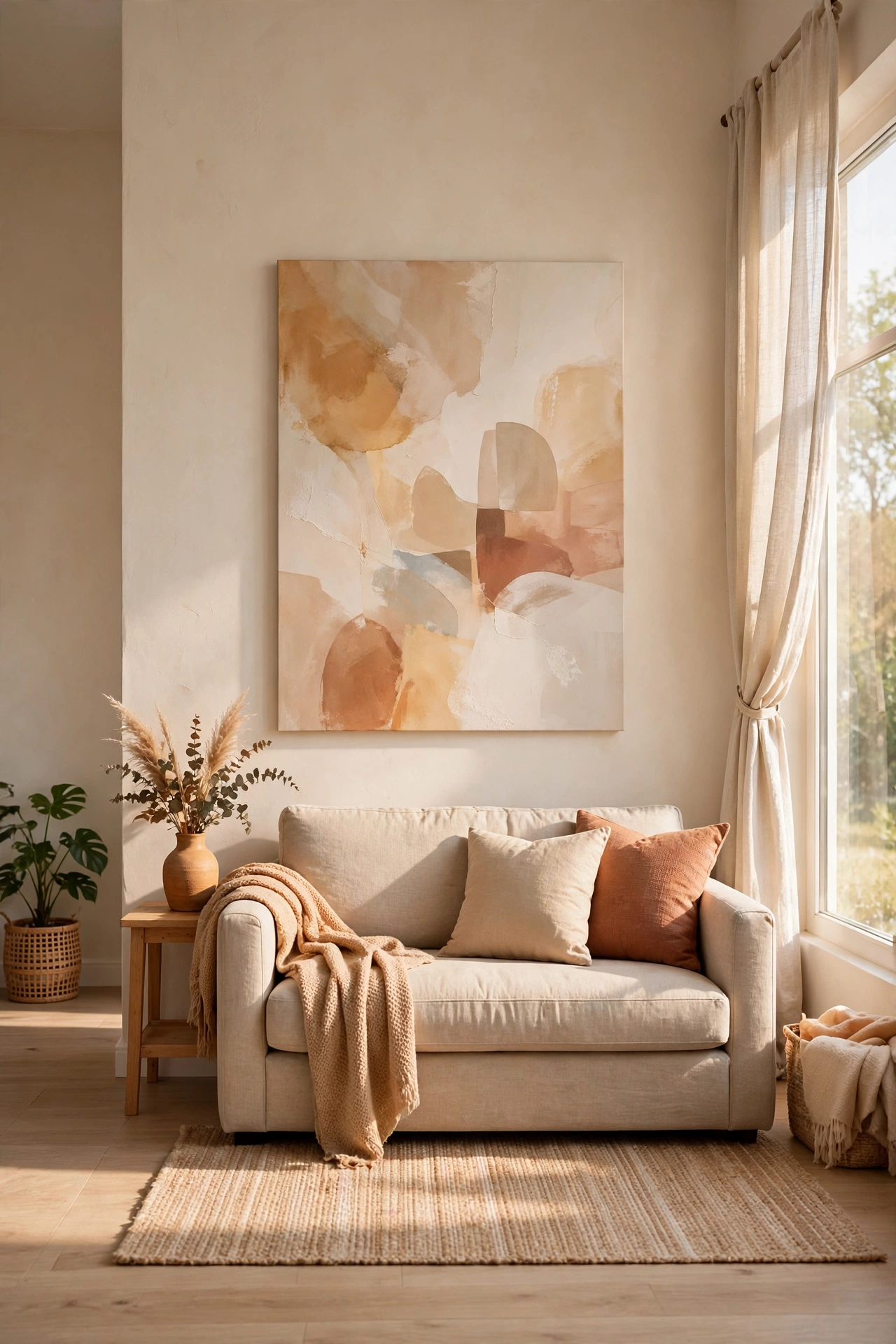
Counterintuitive but true: one big piece of art makes a small room feel bigger than many small pieces. A wall of tiny frames chops the space up; one 36-inch canvas gives the eye a single calm place to rest. I painted my own for $20 in supplies. Big art in a small room reads as confident, not crowded.
Mistake to avoid: Hanging it too high. Center at 57 inches — small rooms punish high-hung art because you’re always close to it.
14. Fold-Down Desk Nook
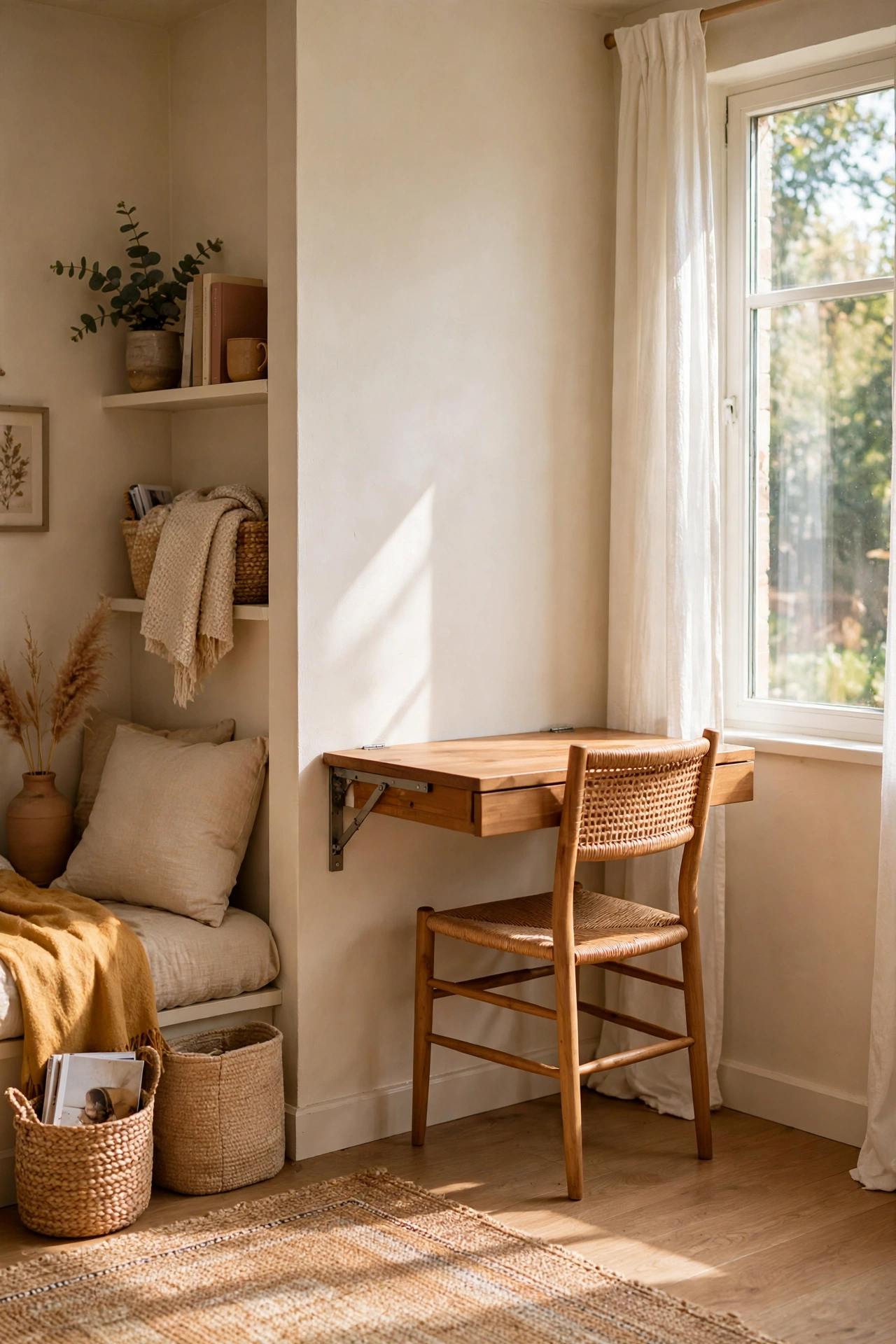
If your living room doubles as an office, a wall-mounted fold-down desk ($60 at IKEA) gives you a workspace that vanishes after hours. Mine folds to 4 inches deep — the room is a living room again in ten seconds. Pair it with a chair that tucks completely underneath. Work-life balance, but make it furniture.
Pro Tip: Mount it near an outlet and run a small power strip underneath. A floating desk with cords dangling defeats the purpose.
15. Light, Airy Color Palette
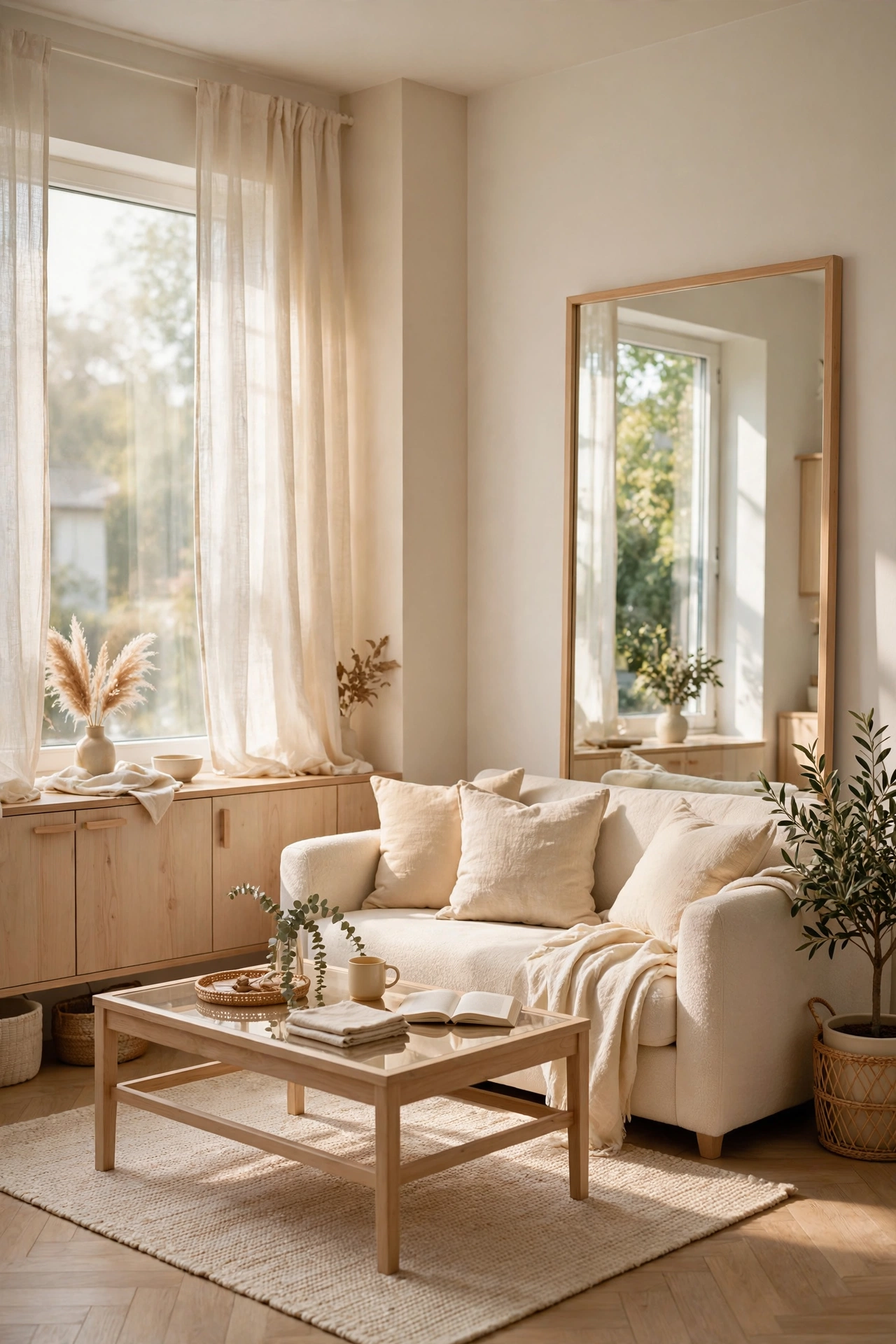
Light walls, light rug, light upholstery — the all-light palette reflects every bit of available light and makes walls recede. My small room is warm white, cream, and light wood, and it feels twice its size. This doesn’t mean boring: texture does the talking when color stays quiet. Linen, wool, jute, oak — all light, all interesting.
Mistake to avoid: All-white without warmth. Add wood tones and at least one warm accent or the room feels sterile, not spacious.
16. Striped Rug Length Trick
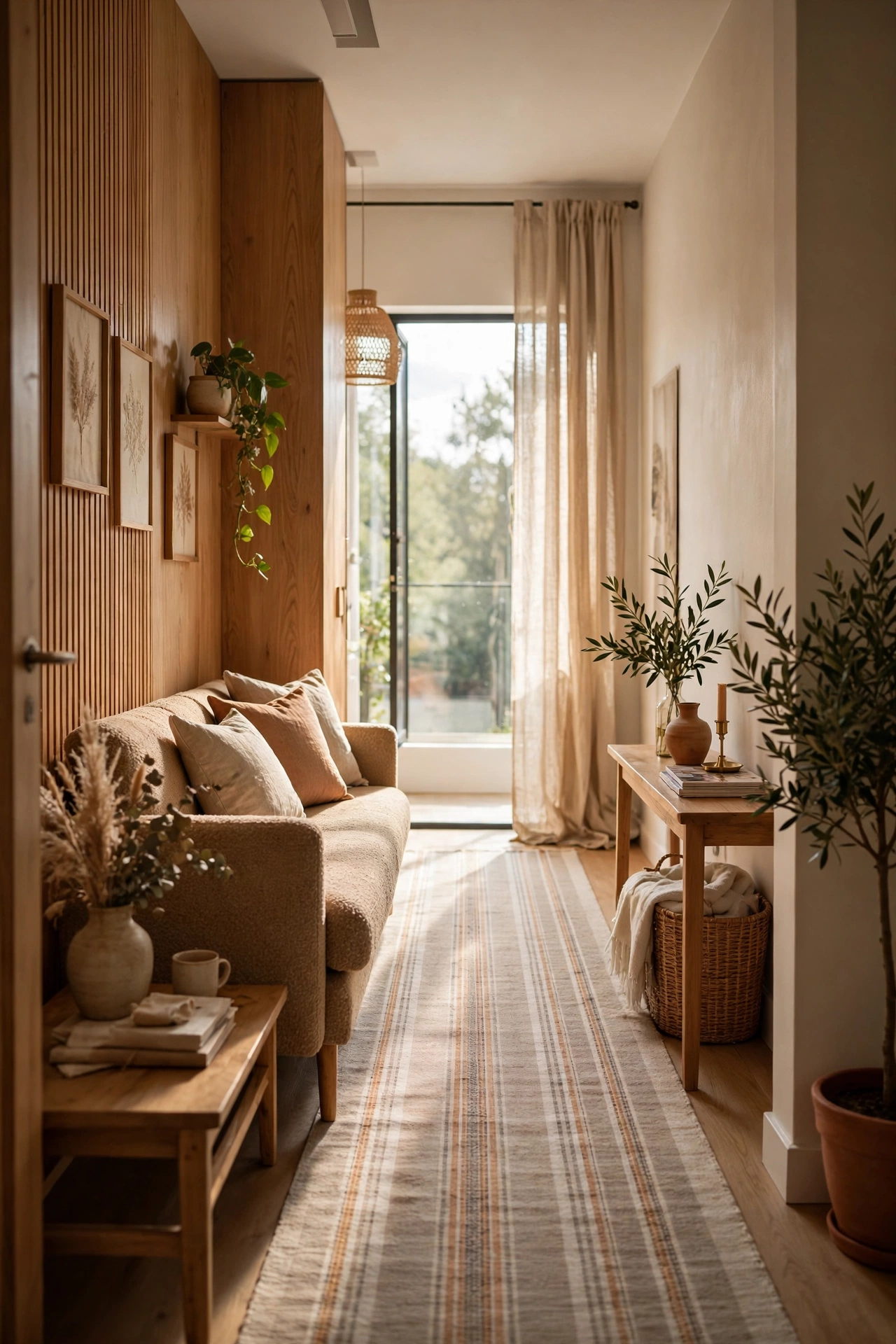
Stripes running the length of a room draw the eye forward and make the space feel longer — it’s the same trick as vertical stripes on clothing. I laid a $45 striped runner-style rug lengthwise in my narrow room, and the floor suddenly had direction. Keep the stripes subtle (tone-on-tone) so the trick works quietly. Keep the stripe colors close to your wall color — high-contrast stripes in a small room create visual noise. Tone-on-tone gives you the lengthening effect without the busy.
Pro Tip: Run the stripes toward the window or the focal point, not across the traffic path. Direction matters.
17. Corner Reading Chair
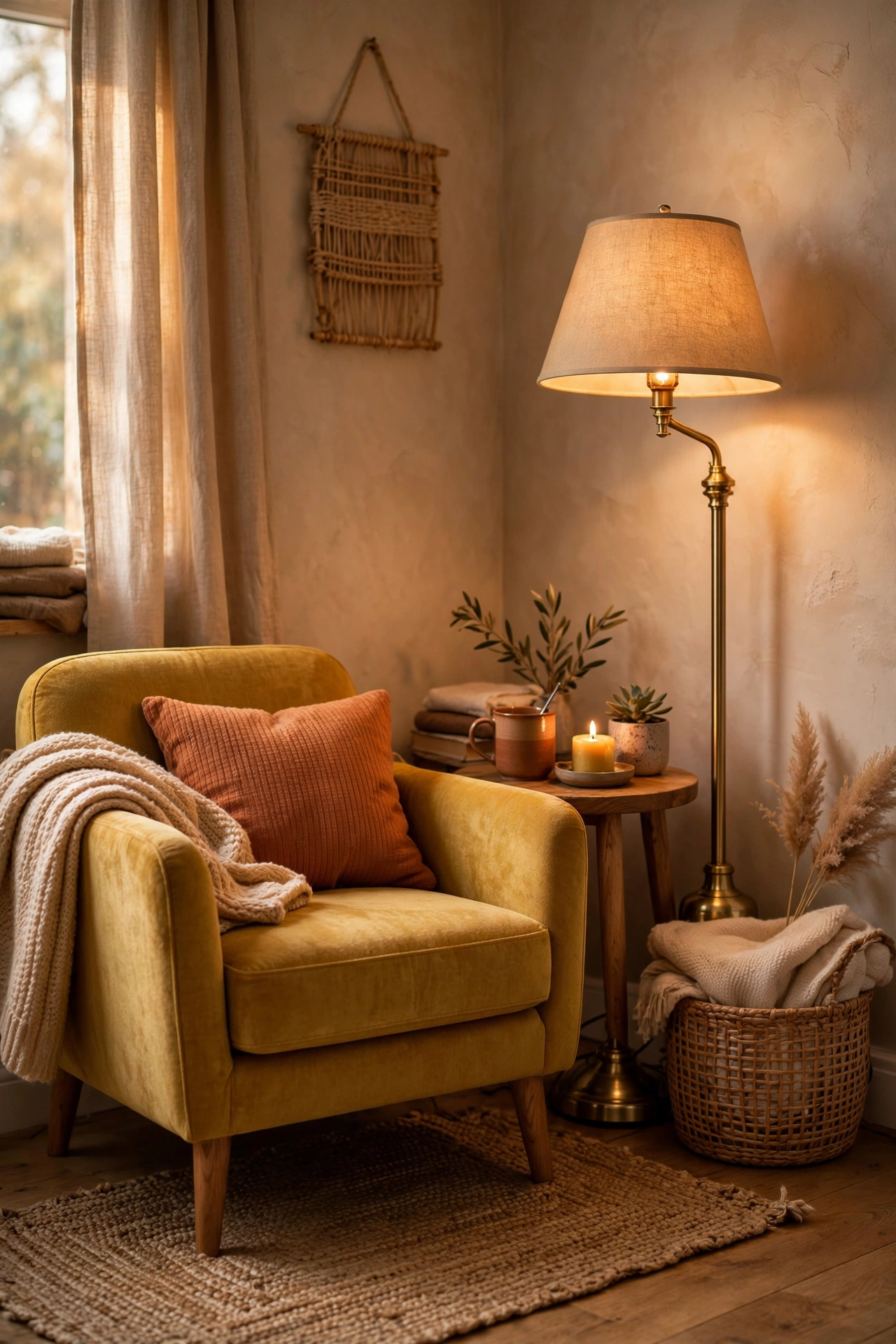
That dead corner? It’s a reading nook waiting to happen. A compact armchair ($30 thrifted), a small side table, and a floor lamp turn wasted space into the best seat in the house. Angle the chair diagonally — it breaks up the room’s boxiness and makes the corner feel intentional. Every small room has one dead corner; this is its purpose.
Mistake to avoid: A full-size recliner. Scale the chair to the corner — a petite armchair, not a La-Z-Boy.
18. Under-Sofa Baskets
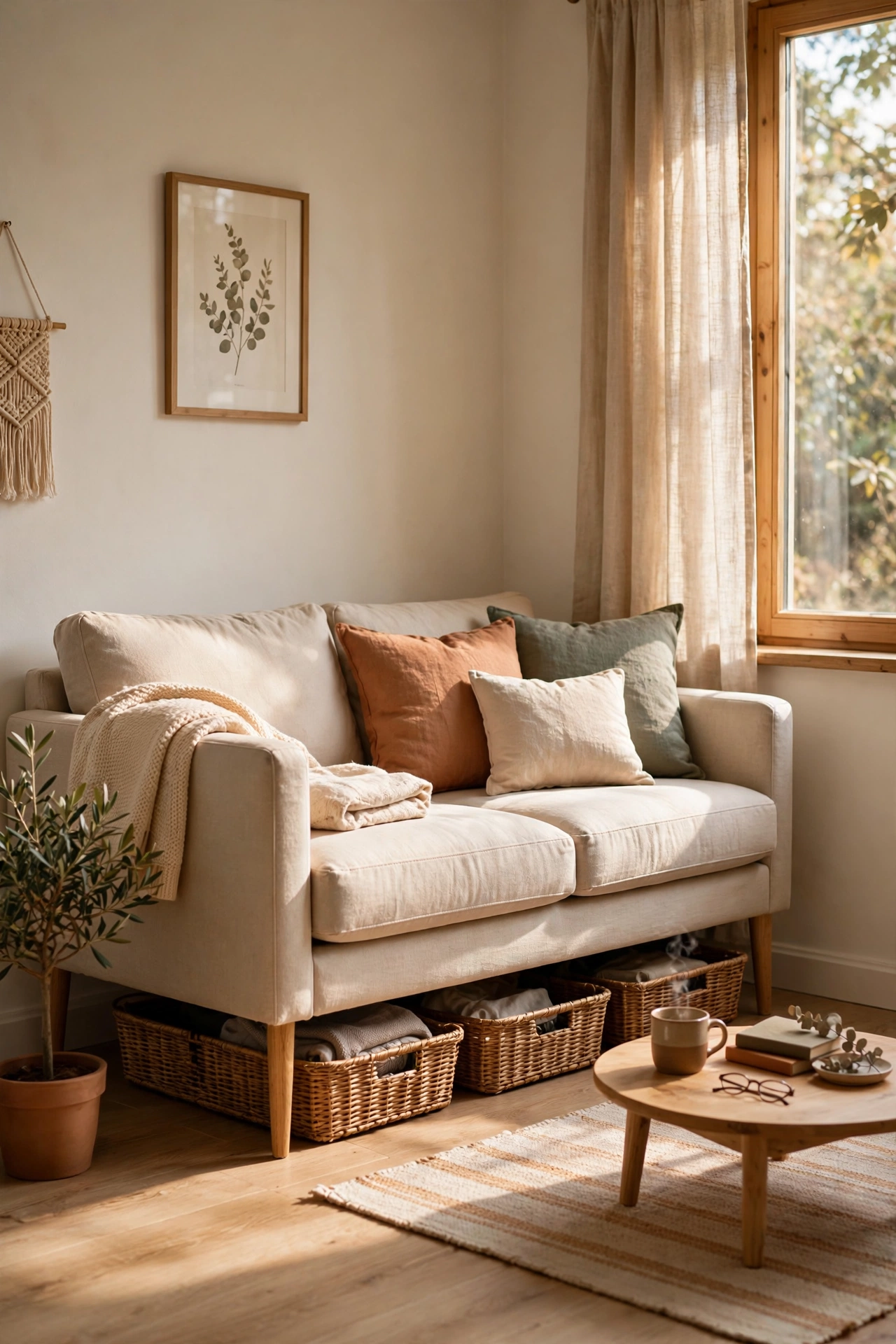
The space under a leggy sofa is hidden storage — low baskets ($8 each) slide underneath holding magazines, chargers, and the clutter that otherwise lives on surfaces. I keep two under mine, and my coffee table stays clear. Measure your sofa’s clearance before buying; baskets that stick out look messy, not clever. Choose baskets shorter than your clearance by at least an inch — a basket that scrapes the floor every time you pull it out gets abandoned within a week. Measure twice, buy once.
Pro Tip: Baskets with lids or dark interiors hide contents better. Open light baskets under a sofa just display your mess.
19. Clear the Clutter Weekly
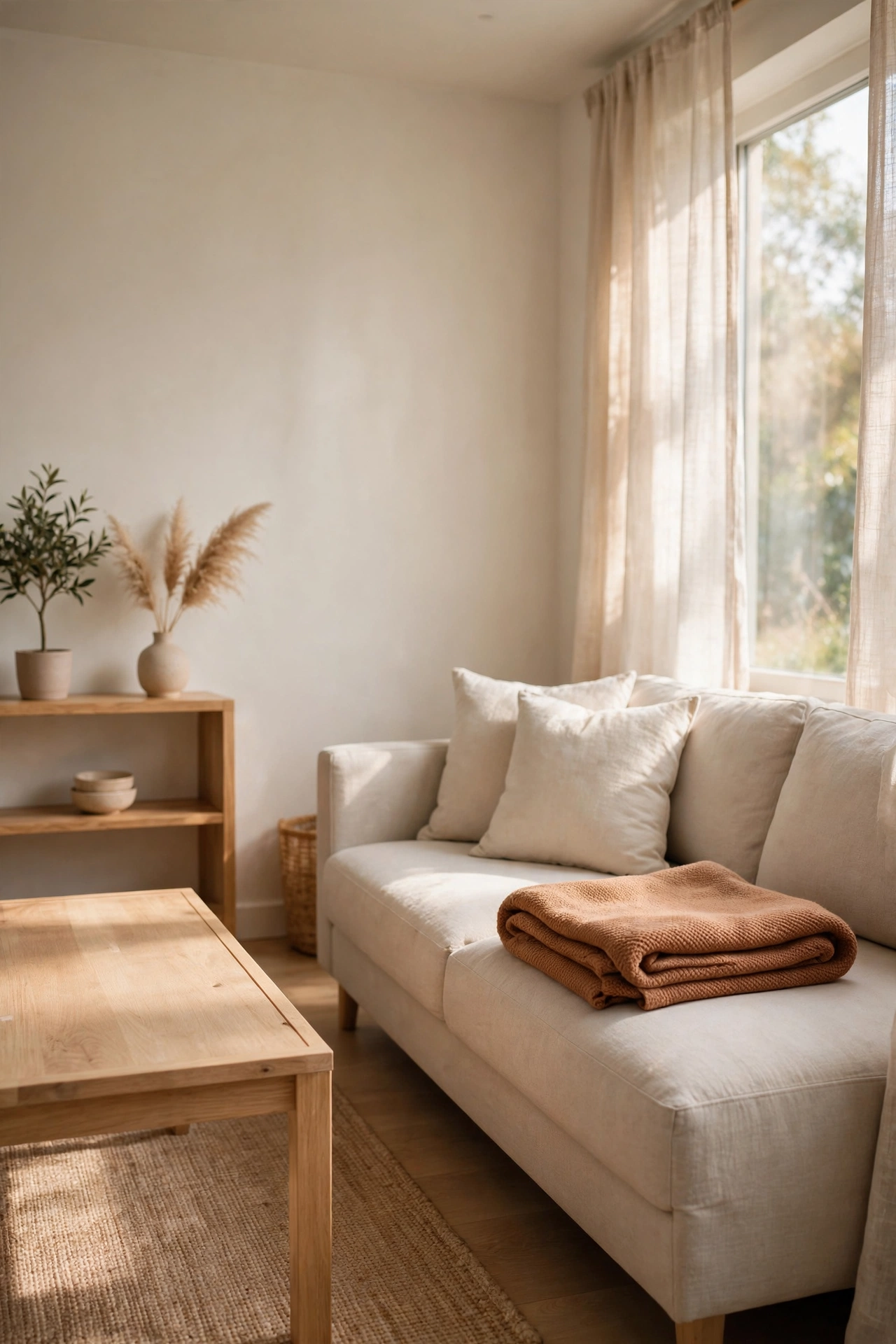
Small rooms show clutter faster — there’s nowhere for it to hide. I do a five-minute reset every evening: remotes in the tray, blankets folded, cups to the kitchen. It’s not about perfection; it’s about the baseline. A tidy small room feels spacious; the same room cluttered feels like a storage unit. Five minutes. That’s the whole system.
Mistake to avoid: The “one in, one out” guilt spiral. Just do the nightly reset — systems beat rules.
20. Poufs Instead of Chairs
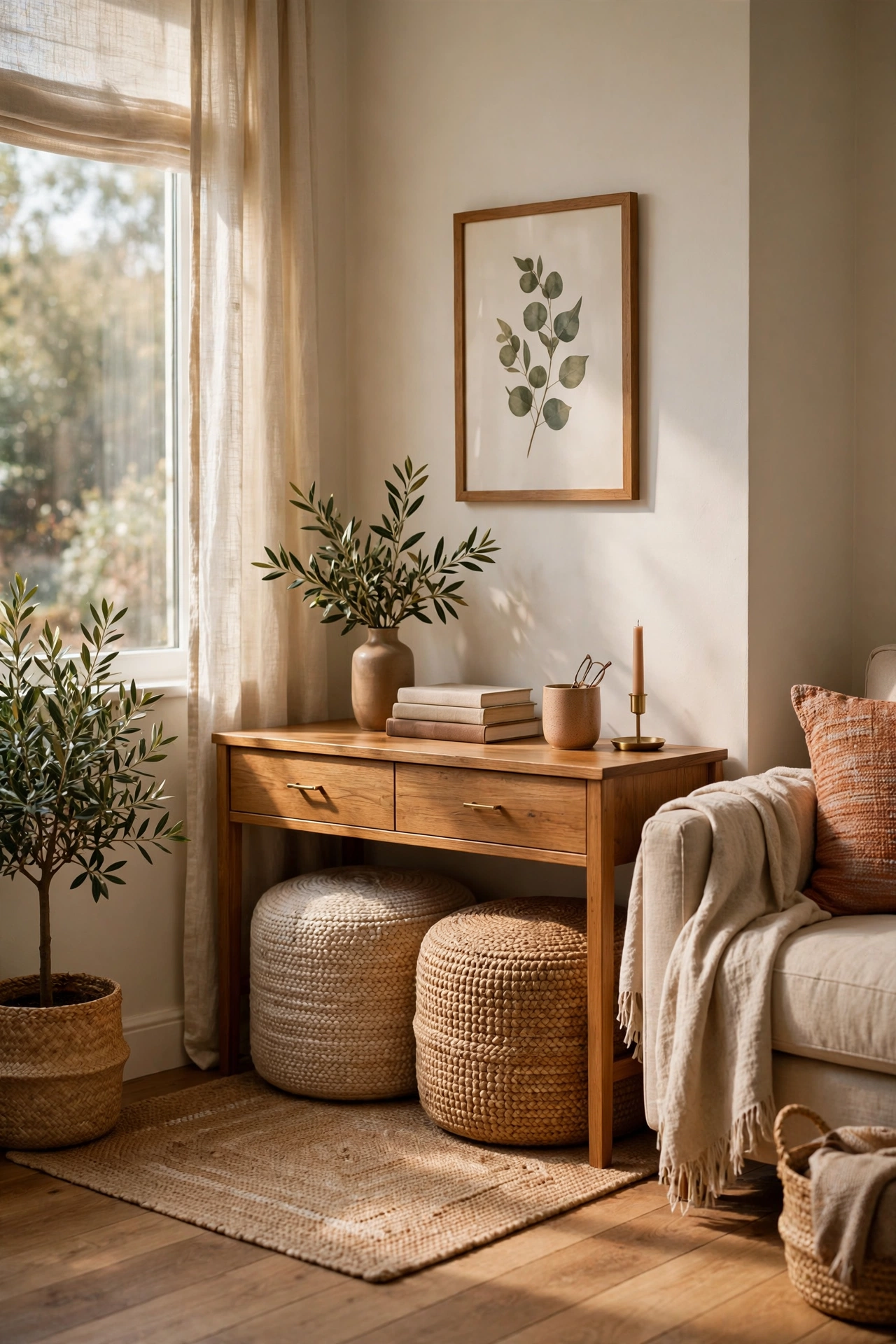
Extra chairs eat floor space permanently; poufs ($25 each) provide seating that tucks away. I keep two poufs that live under the console table and come out for movie night — footrests, kid seats, side tables with a tray. When the room needs to feel big, they disappear. Try that with an armchair. Weigh them in the store — a pouf that is too light slides around when you sit, and one that is too heavy never gets moved. You want the Goldilocks middle: stable but portable.
Pro Tip: Get poufs with removable, washable covers. Floor-level seating takes abuse, and being able to wash the cover doubles their life.
21. Low-Profile Media Setup
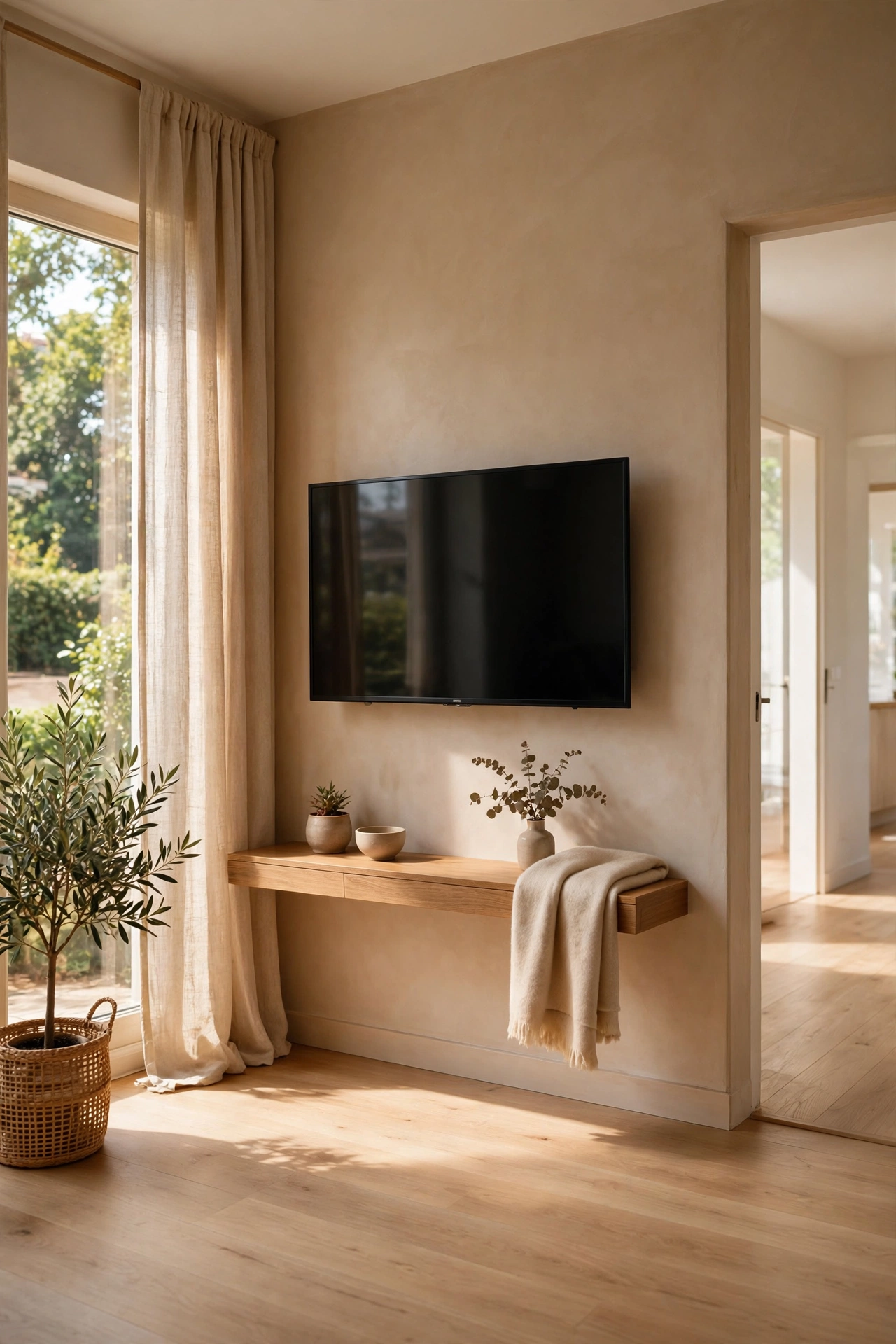
A wall-mounted TV with a slim floating console keeps the floor clear and the sightlines open — the room feels bigger when you can see wall all the way down. I mounted my TV ($25 mount) and used a 12-inch-deep floating shelf as the console. All the components, none of the bulk. Renters: a low narrow console gives 80% of the effect with zero holes.
Mistake to avoid: Mounting the TV too high. Eye level when seated — a high TV in a small room gives everyone a neck ache and looks wrong.
22. Plants That Climb, Not Sprawl
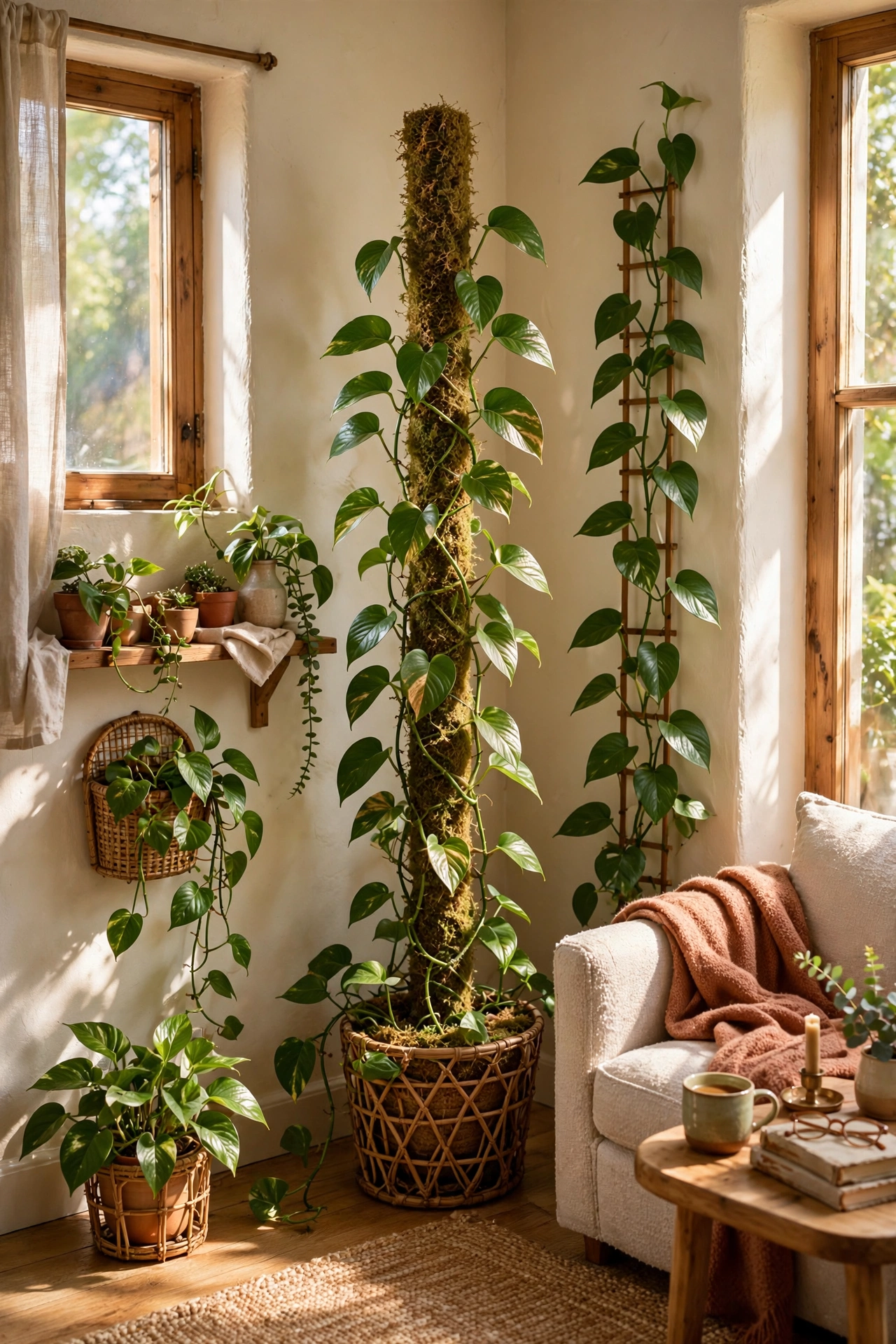
In a small room, choose plants that go up, not out — a snake plant, a pothos trained up a moss pole, a tall cactus. I have a pothos climbing a $8 moss pole in the corner; it gives me six feet of green in one square foot of floor. Sprawling plants eat precious surface space; vertical plants decorate the air.
Pro Tip: Hang one trailing plant high. It draws the eye up, which makes the ceiling feel higher — free vertical footage.
23. Loveseat Instead of Sofa
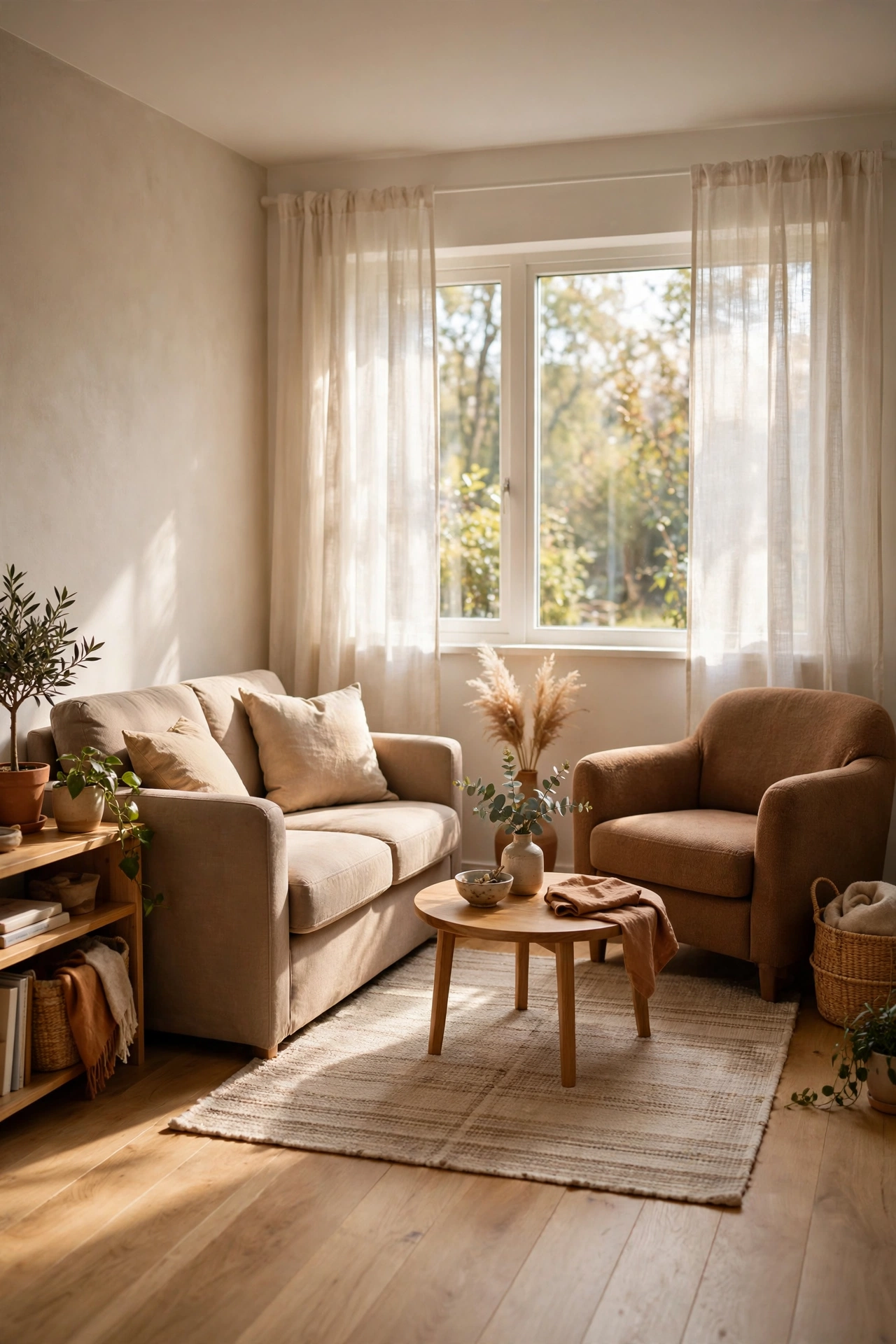
Two people don’t need 84 inches. A loveseat (around 60 inches) seats two comfortably and frees up two feet of room — enough for a side table, a plant, or just breathing space. Mine was $200 on clearance, and the room layout finally worked. Pair it with a good armchair and you have more seating options, not fewer. Check the seat depth before you commit — apartment sofas sometimes cheat by going shallow, and a 19-inch seat feels like a church pew. Twenty-two inches is the comfort minimum.
Mistake to avoid: A loveseat plus a giant coffee table. Scale everything down together — small sofa, small table, small rug pattern.
24. Reflective Metallics
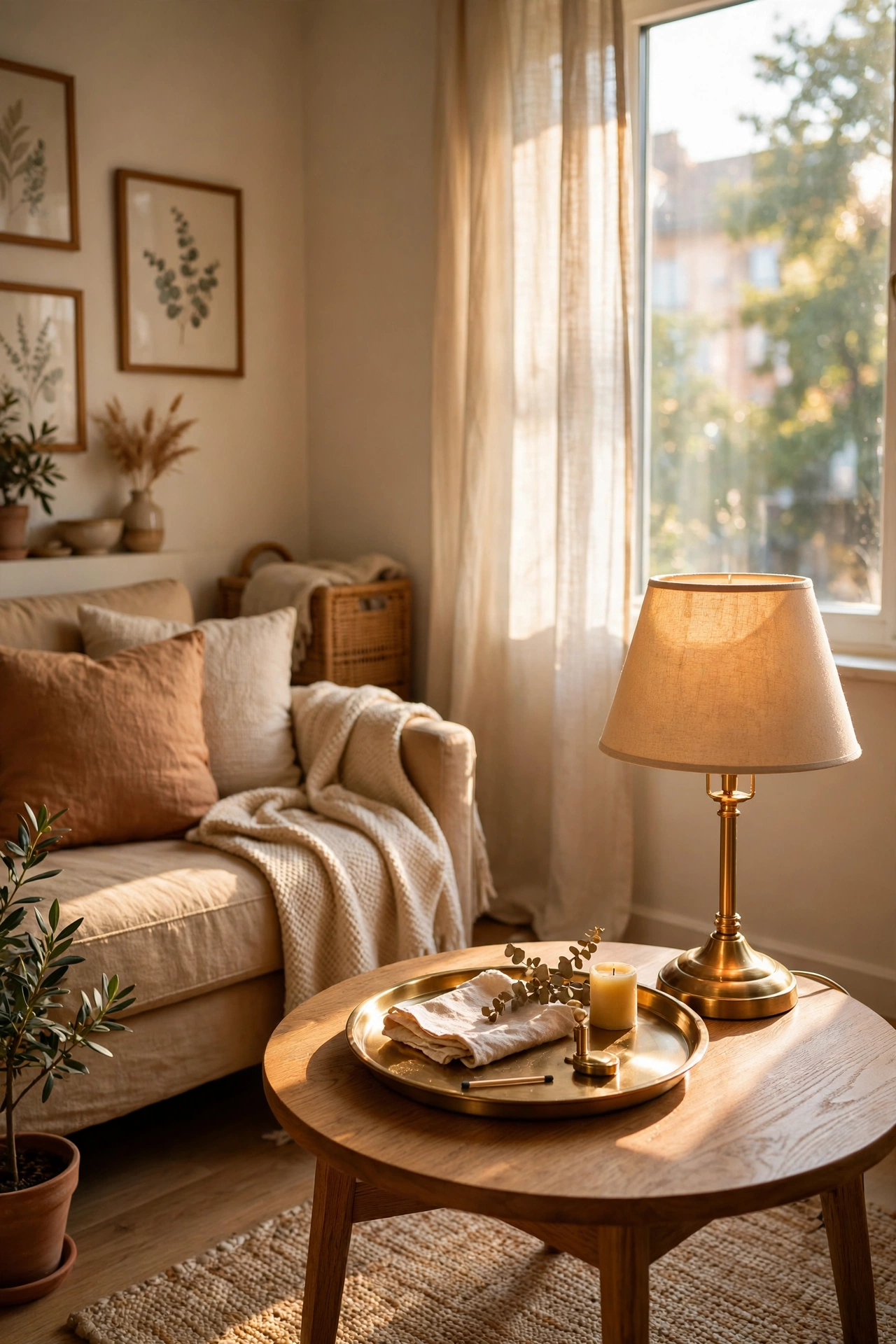
A little shine bounces light around a small room — a brass tray, a mirrored side table, metallic picture frames. I added a $10 mirrored tray to my coffee table and a brass lamp, and the room picked up a subtle glow. Keep metallics to accents; a whole mirrored wall in a small room feels like a funhouse. One metallic per sightline is the rule — brass tray here, brass lamp there, but never both in the same glance. Spread the shine around and each piece gets its moment.
Pro Tip: Place metallics where they’ll catch window light. A brass object in a dark corner is just a brass object.
25. Define Zones With Rugs
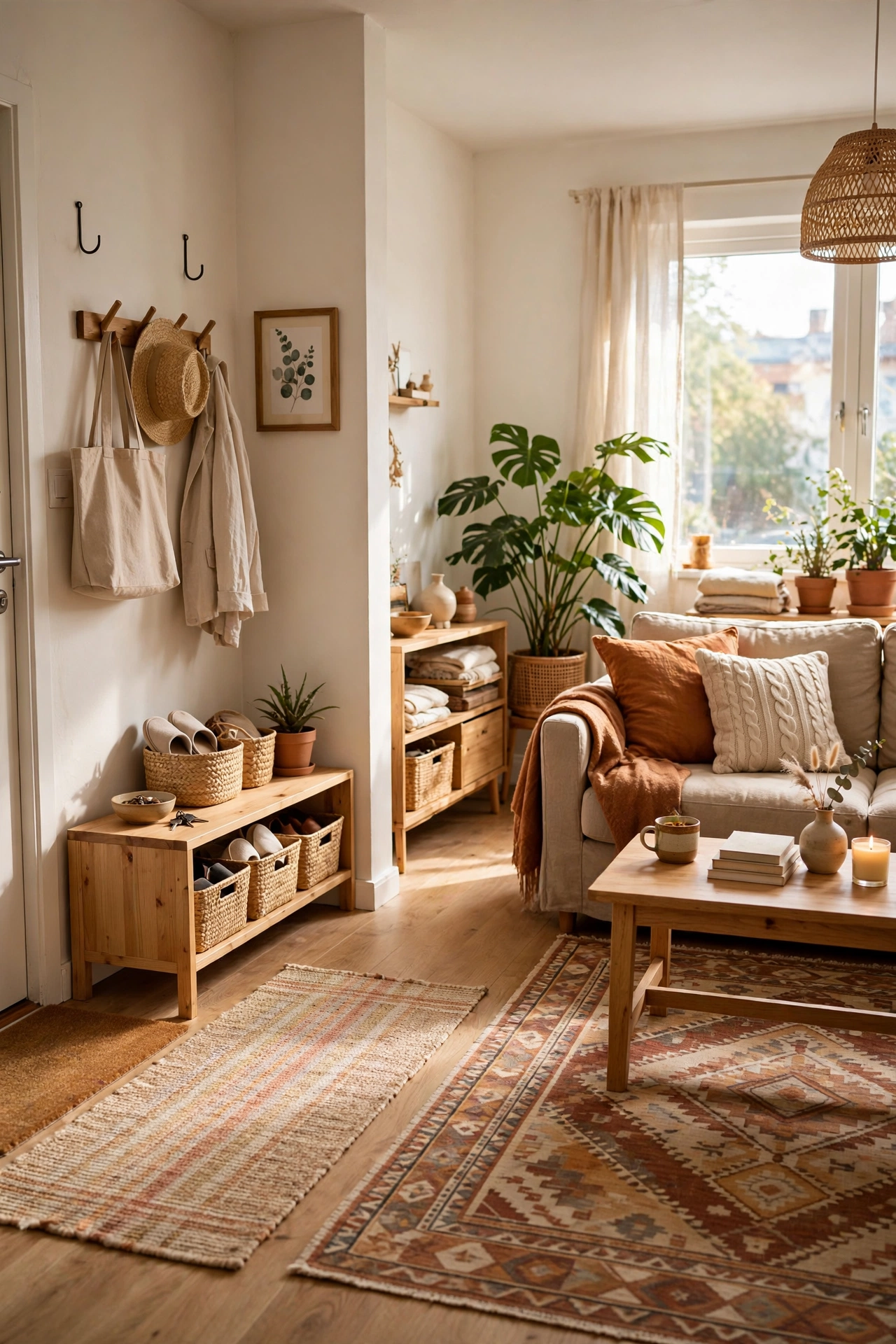
In a studio or open small space, rugs create rooms without walls. I used one rug for the seating area and a small runner for the “entryway” — suddenly my studio had a living room and a foyer. The rugs don’t need to match, but they should share a color so the zones feel related. Boundaries make small spaces feel organized, and organized feels bigger.
Mistake to avoid: Rugs that touch or overlap. Leave a strip of bare floor between zones — the gap is what defines them.
📌 Pin your favorite idea before you go — small-space tricks are the most-saved pins for a reason.
More small-space help: (see also: 19-renter-friendly-living-room-ideas-with-zero-damage) for damage-free tricks, and (see also: 25-thrifted-living-room-decor-worth-every-penny) to furnish it all for less.
Small rooms aren’t a limitation — they’re an editor. Every piece has to earn its place, and that discipline creates rooms with more character than spaces three times the size. Start with the mirror and the curtains this weekend; those two moves alone will change how your room feels. Big style was never about square footage. It was always about decisions.
