23 Eclectic Living Room Ideas on a Budget
My living room used to be the most boring space in the house, beige on beige, and nothing in it made me smile. Then I fell down the rabbit hole of Eclectic living room ideas and realised the whole point is breaking rules on purpose. An eclectic room is not random clutter; it is a collection of things you love, layered until the space feels like you.
I built my version almost entirely on a budget, with charity shops, flea markets, and a paintbrush doing most of the heavy lifting. What follows are my 23 favourite tricks, grouped into five loose mixes so you can steal the sections that suit your room. Start wherever the urge hits first.
The Textile Mix (Ideas 1–5): soft layers first, because fabric is the cheapest way to add personality.
Layer Two Mismatched Rugs Instead of One Big One
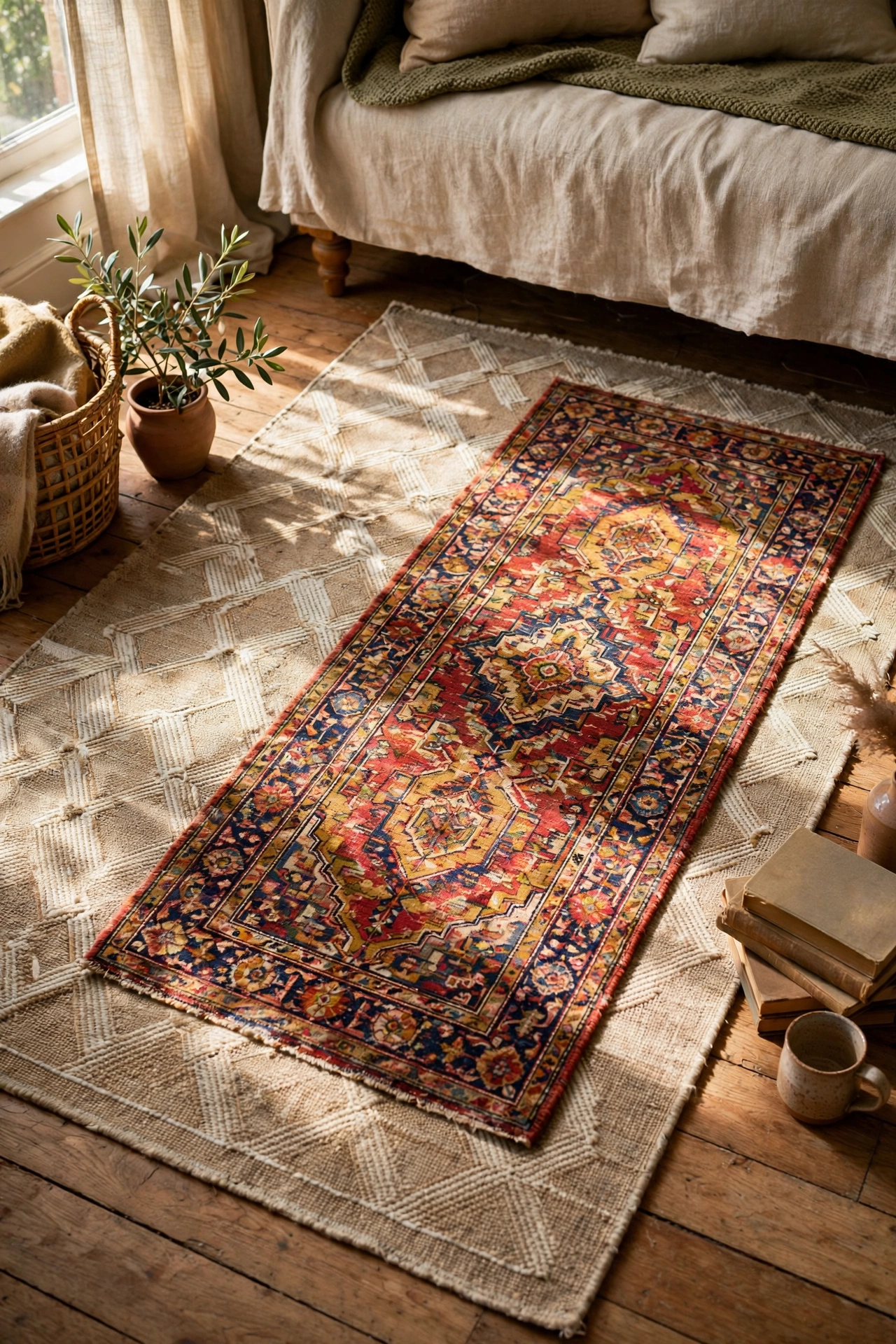
A single new rug big enough for a living room costs a fortune, so I stopped trying to buy one. Two charity-shop rugs layered with a slight offset give you more pattern, more texture, and more story for half the price. Look for different scales of pattern so they don’t fight, like a Persian-style runner under a flat-weave with a looser print. Step one: hoover and measure your seating area. Step two: lay the larger rug straight and angle the smaller one a few degrees off centre. I tried this with a £6 wool rug and a jute one from a car boot sale, and my mistake was placing them edge to edge, which looked stiff. Overlapping them by about 30 cm is what makes it feel collected.
Cost: ~$12 | Time: 20 minutes
Mix Pattern Clashing Cushions in Odd Numbers
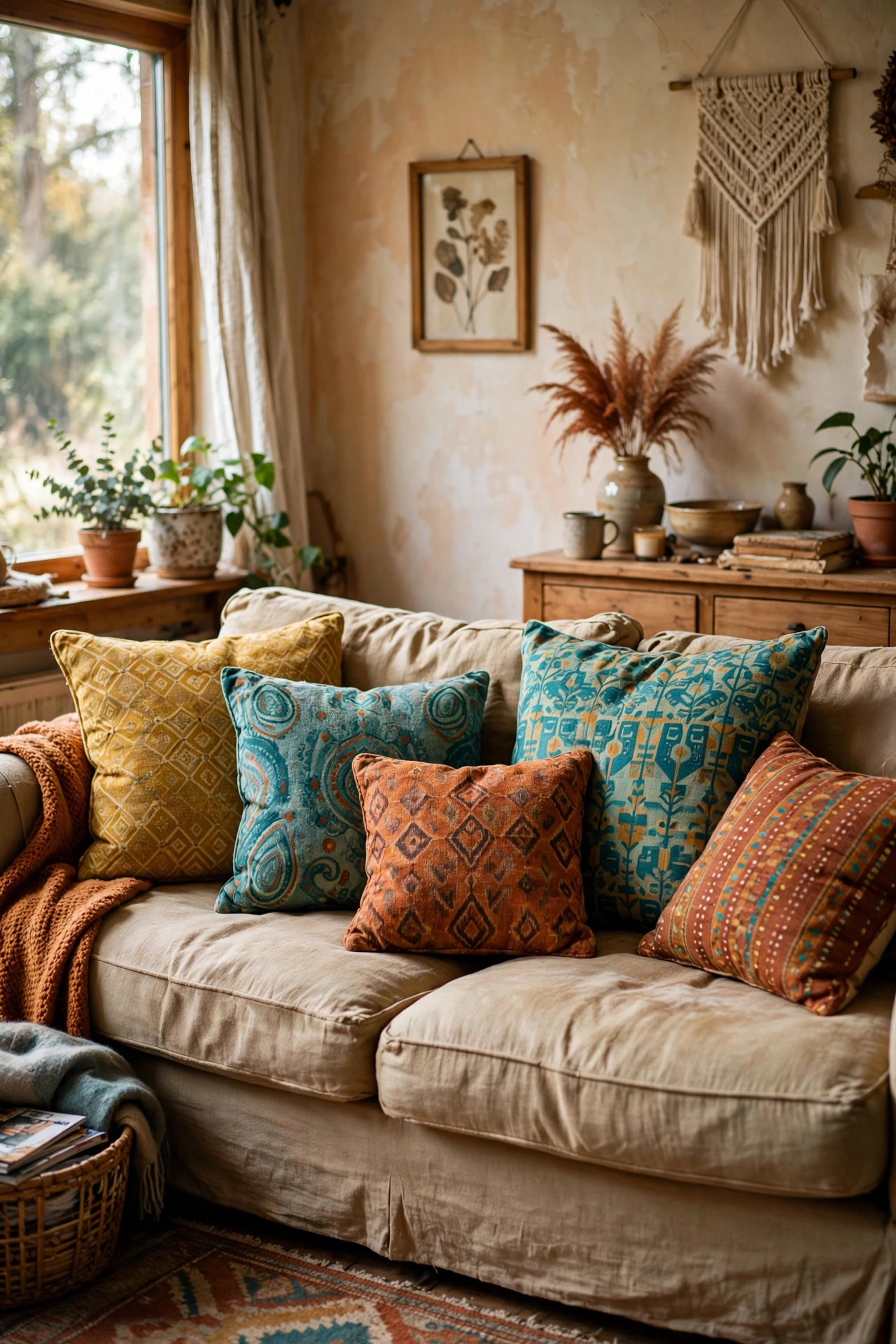
Cushions are where eclectic style forgives everything, and odd numbers look deliberately styled. Aim for five or seven on a standard sofa, pulling in at least three patterns that share one colour so the clash feels planned. Step one: pick a thread colour, mine was mustard, and hold every cushion against it in the shop. Step two: arrange largest at the back, smallest in front, and let stripes sit next to florals. Step three: squeeze each cushion so it looks plump, not flat. I tried this with four covers from a charity bundle and one new one, and my mistake was buying them all the same size, which looked like a hotel lineup. Varying sizes from 40 to 55 cm fixed it instantly.
Cost: ~$18 | Time: 30 minutes
Drape a Thrifted Kantha Quilt Over the Sofa
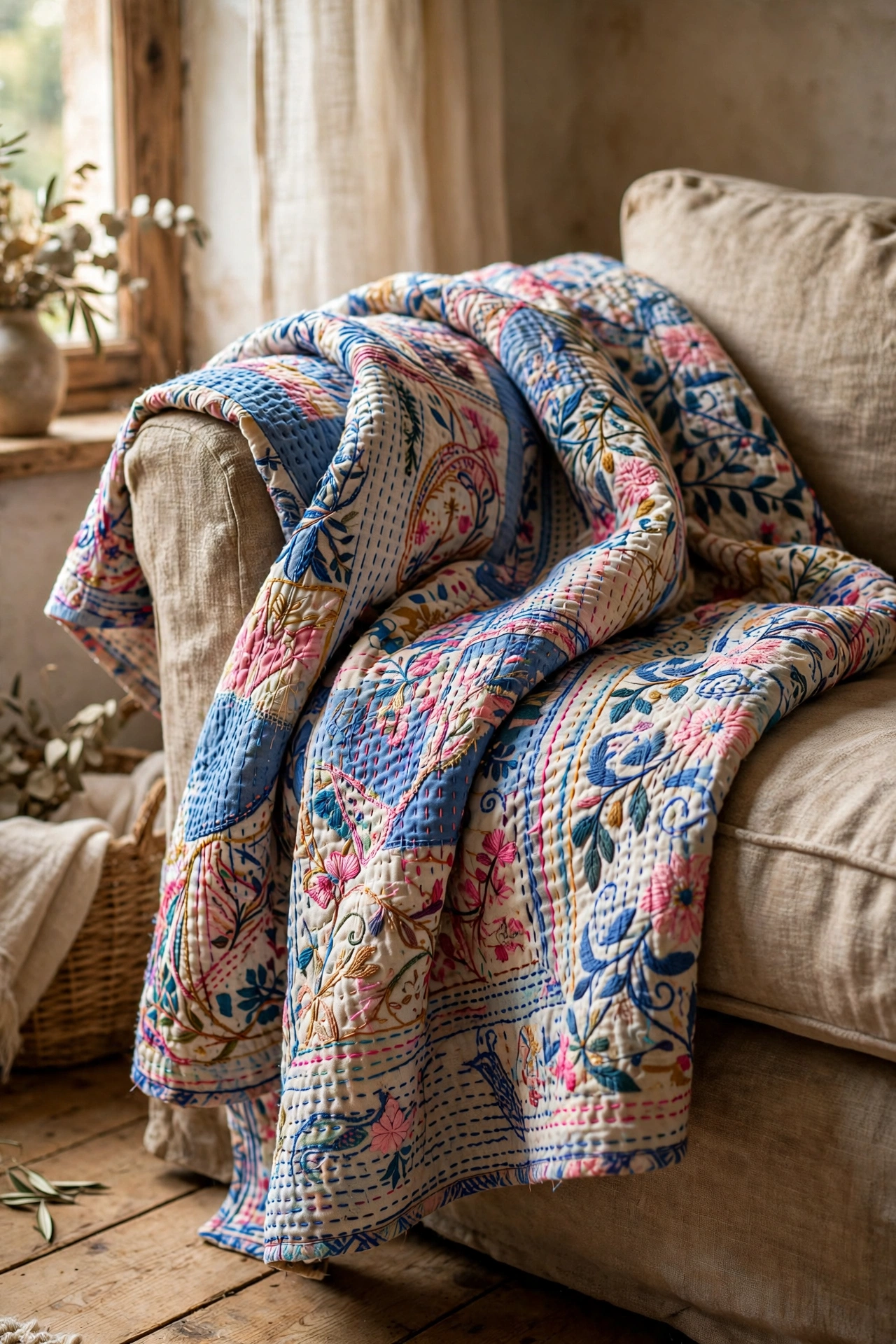
A kantha quilt is the eclectic decorator’s secret weapon: hand-stitched, reversible, and usually under a tenner at vintage fairs. Draped over one sofa arm or folded across the back, it adds colour, softness, and a handmade feel in one move. Step one: wash it on a cool cycle and line dry so the colours stay bright. Step two: fold it lengthwise and let it cascade over the armrest rather than spreading it flat. I tried this in my living room with a blue and pink one, and my mistake was using it as a throw tucked into the cushions, where it disappeared. Letting it hang long and loose shows off the stitching and makes the sofa look inviting from the doorway.
Cost: ~$8 | Time: 15 minutes
Scatter Floor Cushions in Global Prints
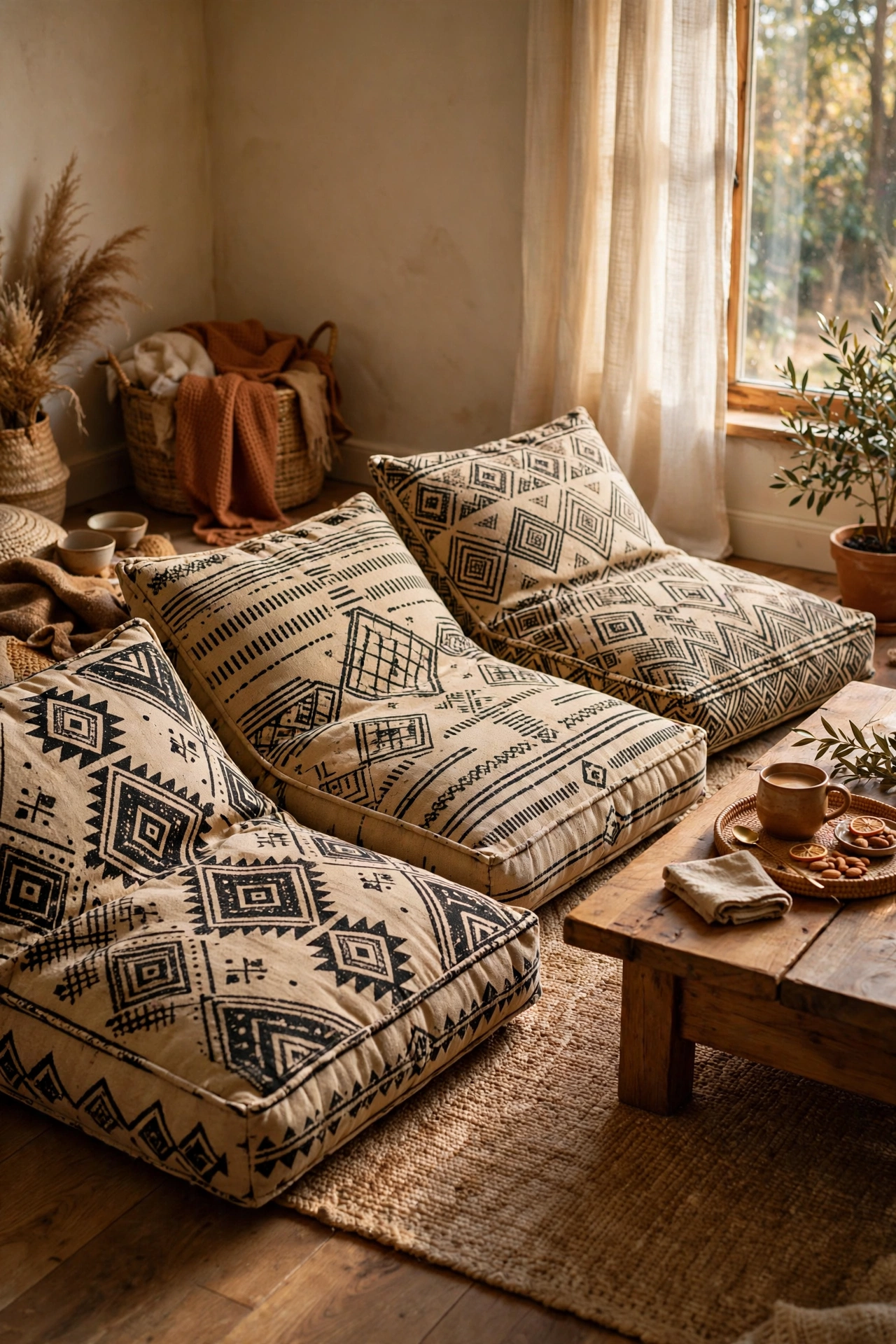
Floor cushions are extra seating, a footrest, and a style statement in one, and the global-print ones look far more expensive than they are. I keep two large ones by the coffee table for film nights and they get more compliments than my sofa. Step one: buy firm square cushions, 60 cm is the sweet spot, or stuff old pillowcases with spare duvet filling. Step two: group them in twos or threes with a small tray between them so they read as a little corner. I tried this with mudcloth-style covers I found at a market, and my mistake was choosing floppy ones that slumped. Adding a cheap foam insert from a craft shop gave them shape and made people actually sit on them.
Cost: ~$22 | Time: 45 minutes
Hang Mismatched Curtains, One Panel Each Side
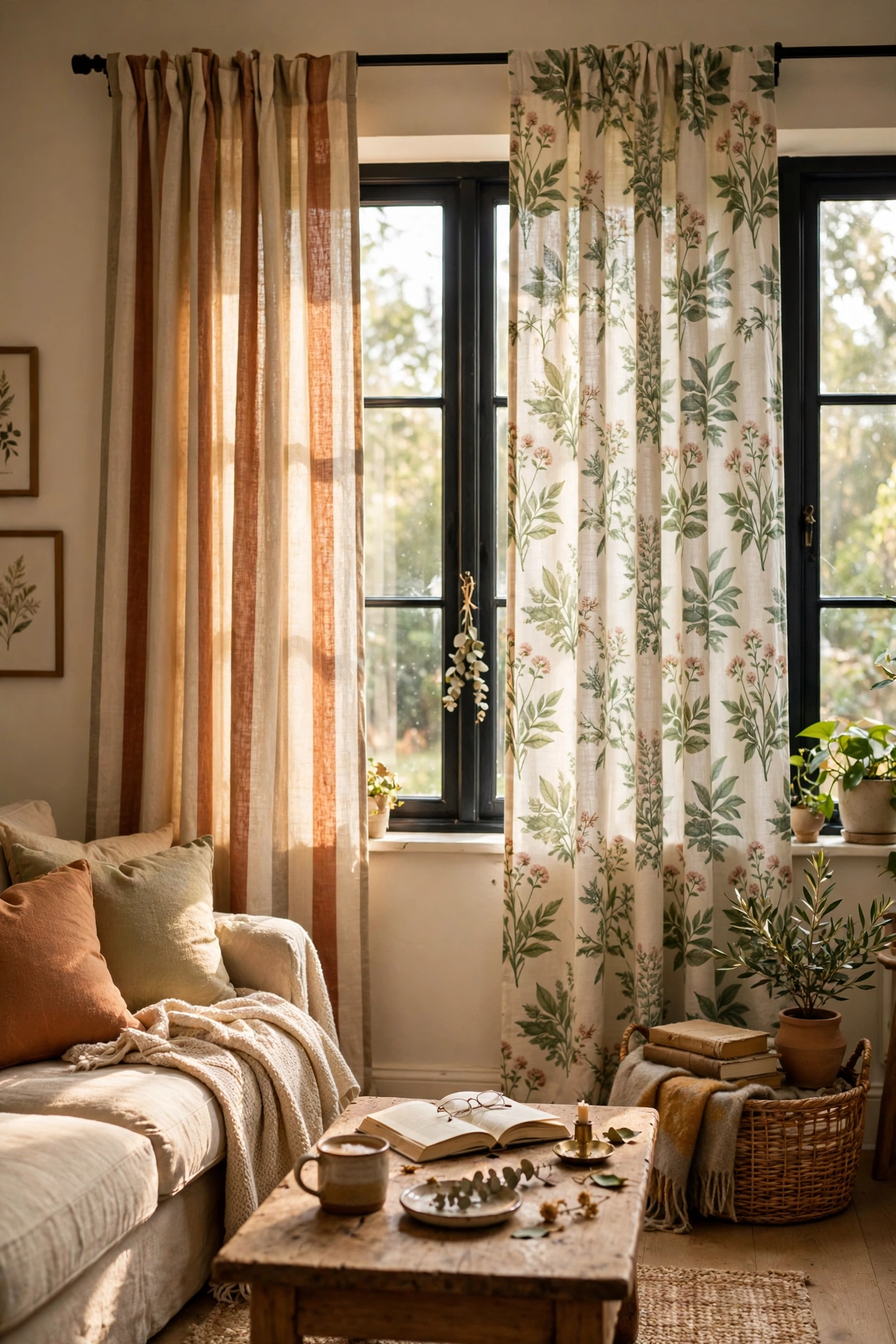
Matching curtains are for showrooms, and buying two identical budget panels rarely looks right anyway. One patterned panel each side of the window, hung high and wide, frames the light beautifully and costs nothing extra if you shop singles. Step one: mount the rod 10 cm above the frame and 15 cm wider on each side. Step two: hang the busier pattern on the side that gets less direct sun so it doesn’t fade faster. I tried this with a stripe and a botanical print in my living room, and my mistake was hanging them at frame width, which made the window look small. Extending the rod outwards is what creates the illusion of a grander window.
Cost: ~$14 | Time: 1 hour
The Thrift Mix (Ideas 6–10): secondhand furniture with character, rescued and restyled.
Rescue a Charity Shop Armchair With New Fabric
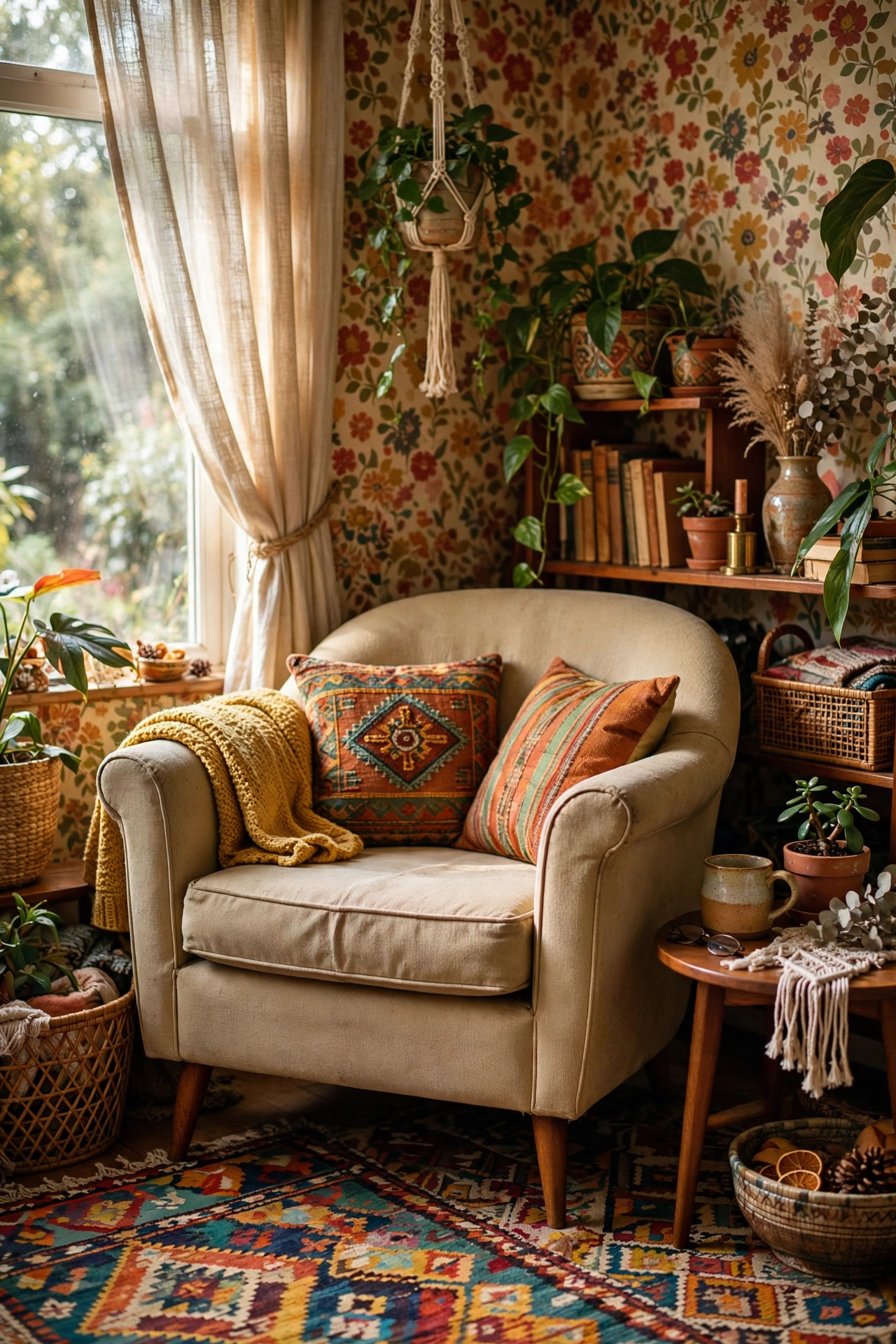
The best armchairs are hiding in charity shops under dated upholstery, usually with solid wooden frames that new budget chairs can’t match. A £20 chair plus a staple gun and two metres of fabric becomes a one-off statement piece. Step one: check the frame for wobble and smell the cushions before you commit. Step two: remove the old fabric panels and use them as a cutting template for the new cloth. Step three: pull tight, staple underneath, and trim. I tried this on a 1970s tub chair in my living room, and my mistake was picking a thin cotton that showed every staple. A medium-weight canvas hid the sins and has survived two years of daily use.
Cost: ~$35 | Time: 3 hours
Stack Vintage Suitcases as a Side Table
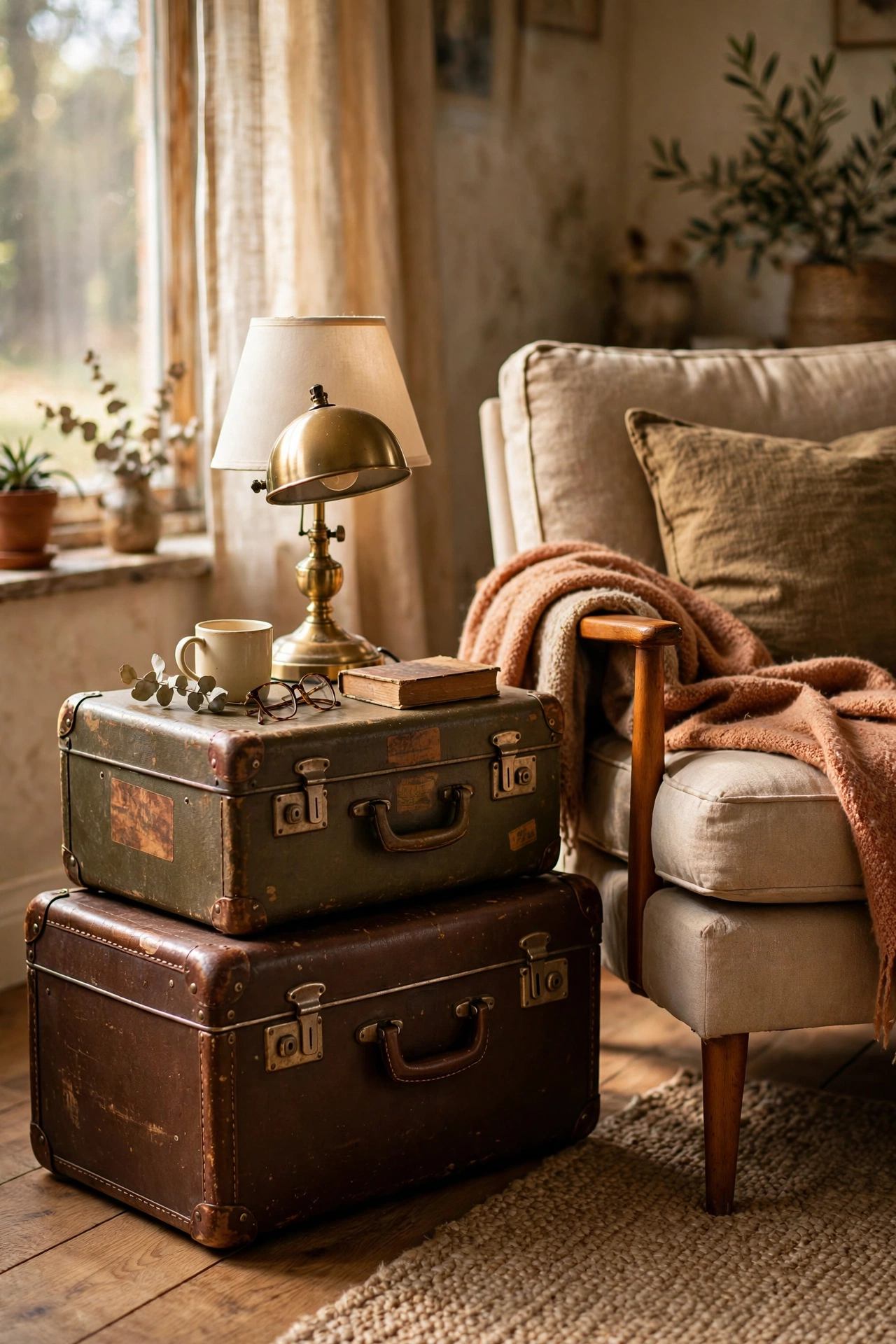
Hard-shell vintage suitcases stack into the perfect eclectic side table, and they hide remotes, chargers, and all the boring stuff inside. Hunt for leather or patterned ones at car boot sales where they often go for a few pounds each. Step one: clean inside and out with a damp cloth and leave open to air for a day. Step two: stack two or three largest at the bottom, slightly rotated for that collected look. I tried this beside my reading chair, and my mistake was stacking them perfectly straight, which looked like luggage storage. Rotating each case about ten degrees off the one below makes it look styled, and the top one holds a lamp perfectly.
Cost: ~$16 | Time: 25 minutes
Cluster Brass Candlesticks From Different Eras
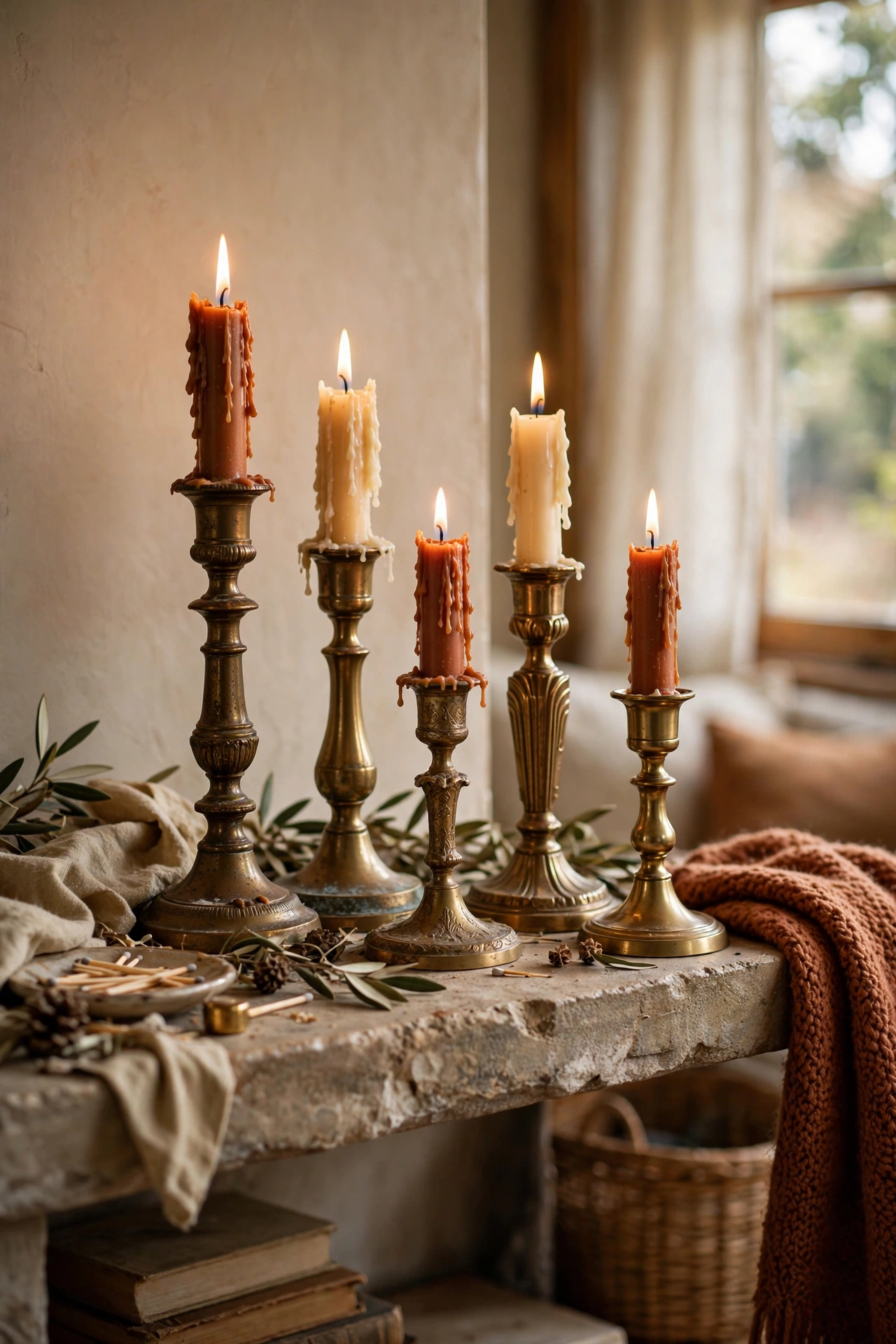
Brass candlesticks are the thrift shop item that never runs out, and a cluster of five or six in mixed heights looks like an intentional collection on a mantel or tray. They warm up a room the second the candles are lit. Step one: polish them lightly with vinegar and salt, but leave some patina for character. Step two: group them in odd numbers, tallest in the middle, and vary the candle colours in creams and rusts. I tried this on my windowsill, and my mistake was lining them up in height order like soldiers. Mixing tall and short randomly, then stepping back to check, gives that effortless layered feel eclectic rooms need.
Cost: ~$10 | Time: 40 minutes
Style a Secondhand Bookshelf With Mixed Objects
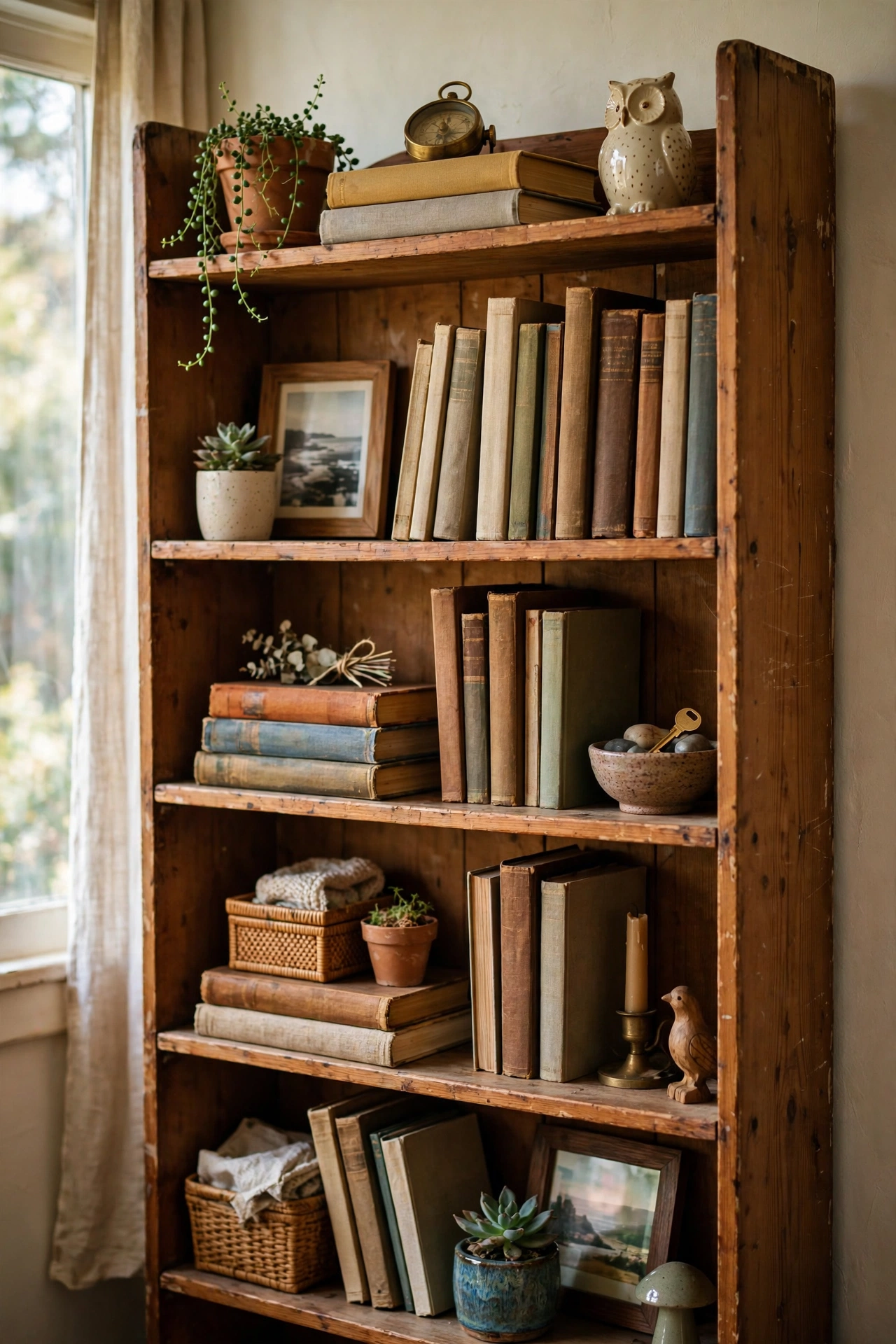
A plain wooden bookshelf becomes eclectic the moment you stop shelving by category and start styling by feeling. Mix books both ways, leave breathing space, and slot in plants, framed photos, and odd objects between the rows. Step one: pull everything off and sort into books, frames, and objects. Step two: work shelf by shelf, leaning art behind books and stacking smaller books horizontally as risers. I tried this with a £12 pine bookcase in my living room, and my mistake was filling every shelf edge to edge, which just looked crowded. Leaving a third of each shelf empty is what lets the interesting pieces stand out.
Cost: ~$9 | Time: 1.5 hours
Give a Retro Lamp a Bold New Shade
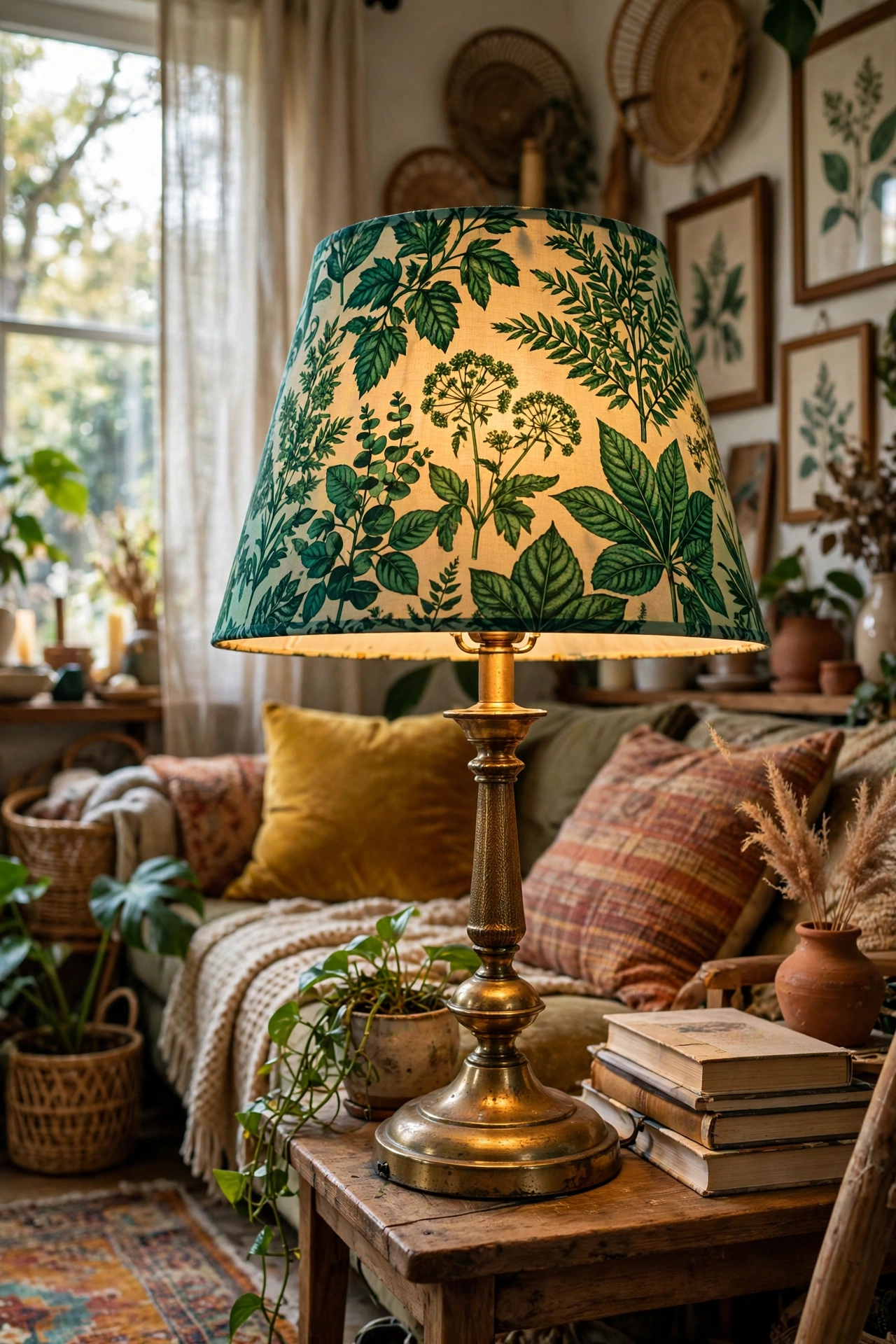
Retro lamp bases are everywhere secondhand, usually for under a fiver, while their shades are always stained or dated. Swapping on a bold patterned shade turns a sad lamp into the room’s personality piece. Step one: check the wiring is sound and the fitting takes a standard shade carrier. Step two: choose a shade in a print that echoes your cushions for cohesion. I tried this with a brass 1980s base and an emerald botanical shade, and my mistake was getting a shade too small, which made the base look clumsy. Measuring so the shade is about two-thirds the base height keeps the proportions right.
Cost: ~$20 | Time: 20 minutes
The Colour-Clash Mix (Ideas 11–15): bold colour pairings that look brave, not accidental.
Pair a Rust Sofa With Teal Cushions
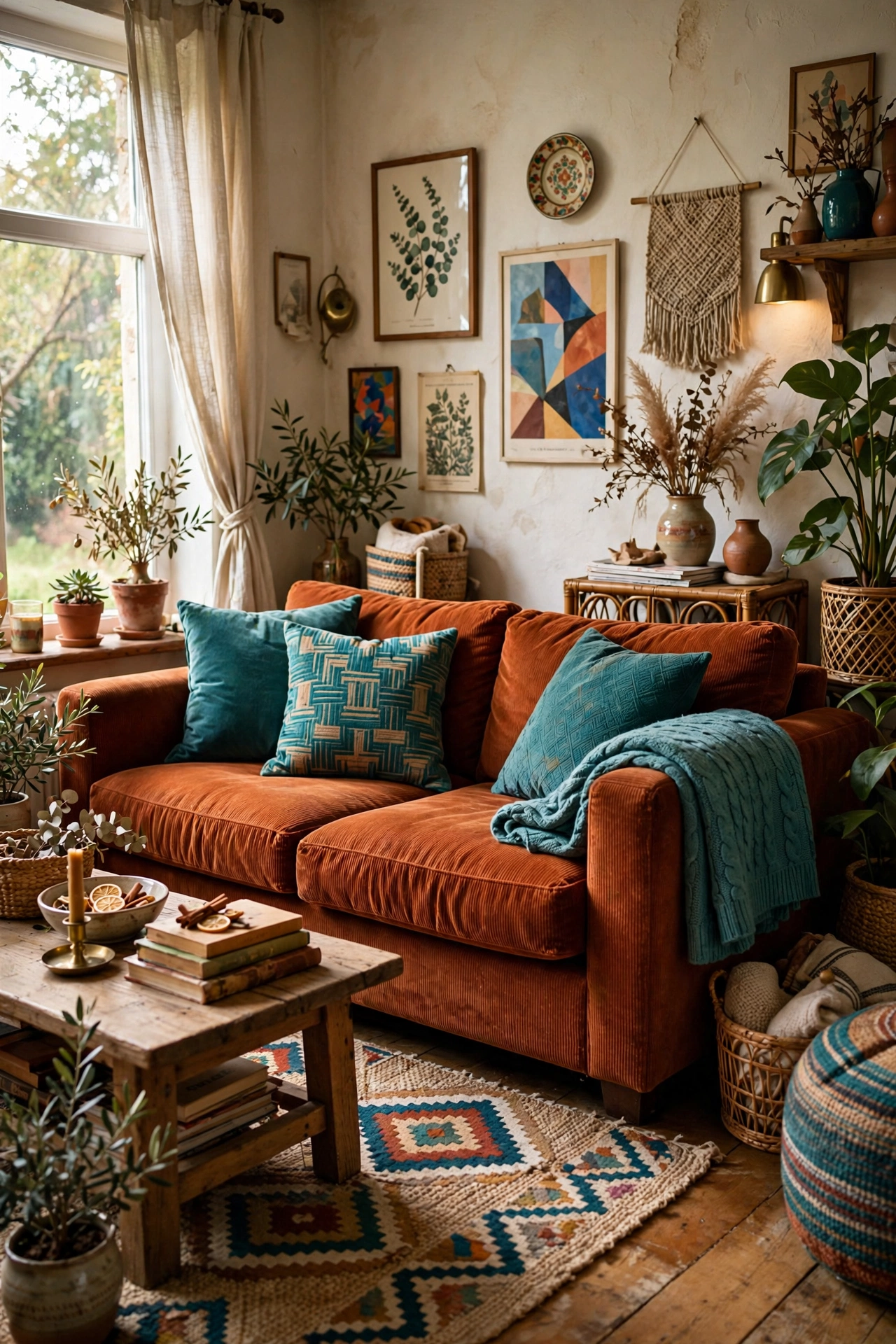
Rust and teal sit opposite on the colour wheel, which is exactly why they sing together, and you can build the whole palette from a slipcover and a few cushions. This combo is the heart of my living room and cost me less than a takeaway-heavy weekend. Step one: start with the bigger piece in rust, a slipcover works on almost any sofa. Step two: add teal in smaller doses, three cushions and a throw is plenty. Step three: echo the pairing in one piece of art. I tried this after seeing it in a magazine, and my mistake was adding teal everywhere at once, which felt chaotic. Keeping rust dominant and teal as the accent is what makes it feel confident.
Cost: ~$42 | Time: 1 hour
Paint One Wall in a Confident Coral
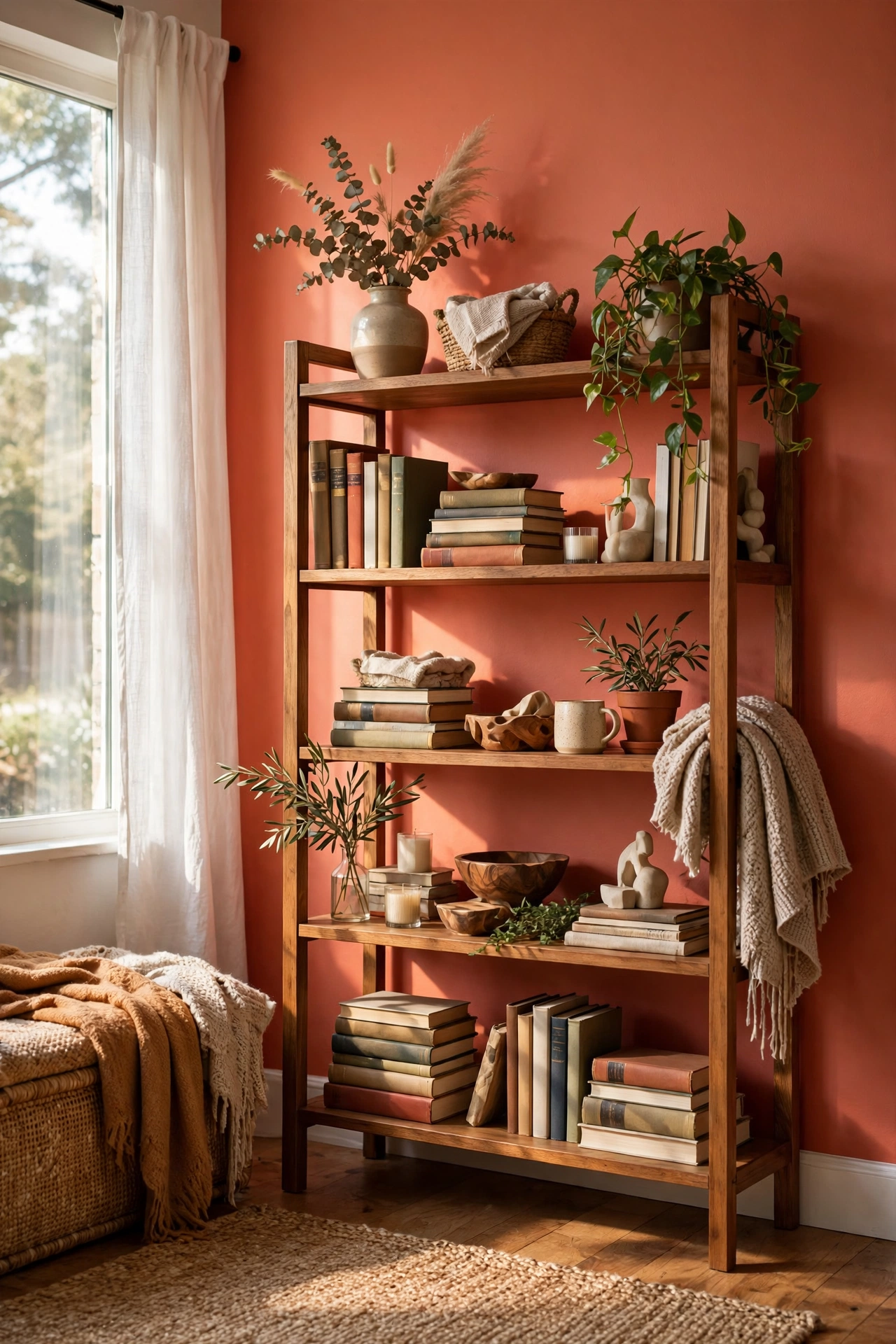
Nothing changes a room faster than one confident wall, and coral is warm, cheerful, and forgiving of wonky brushwork. A single tin of paint covers a feature wall easily and costs less than most decor objects. Step one: sample three shades on the wall and live with them for two days in different light. Step two: cut in carefully at the edges, then roll in long even strokes. I tried this behind my bookshelf, and my mistake was painting the wall with the window, which made the colour look washed out all day. The wall facing the window gets the full glow and makes the coral look rich from morning to evening.
Cost: ~$28 | Time: 4 hours
Paint a Coffee Table Sunshine Yellow
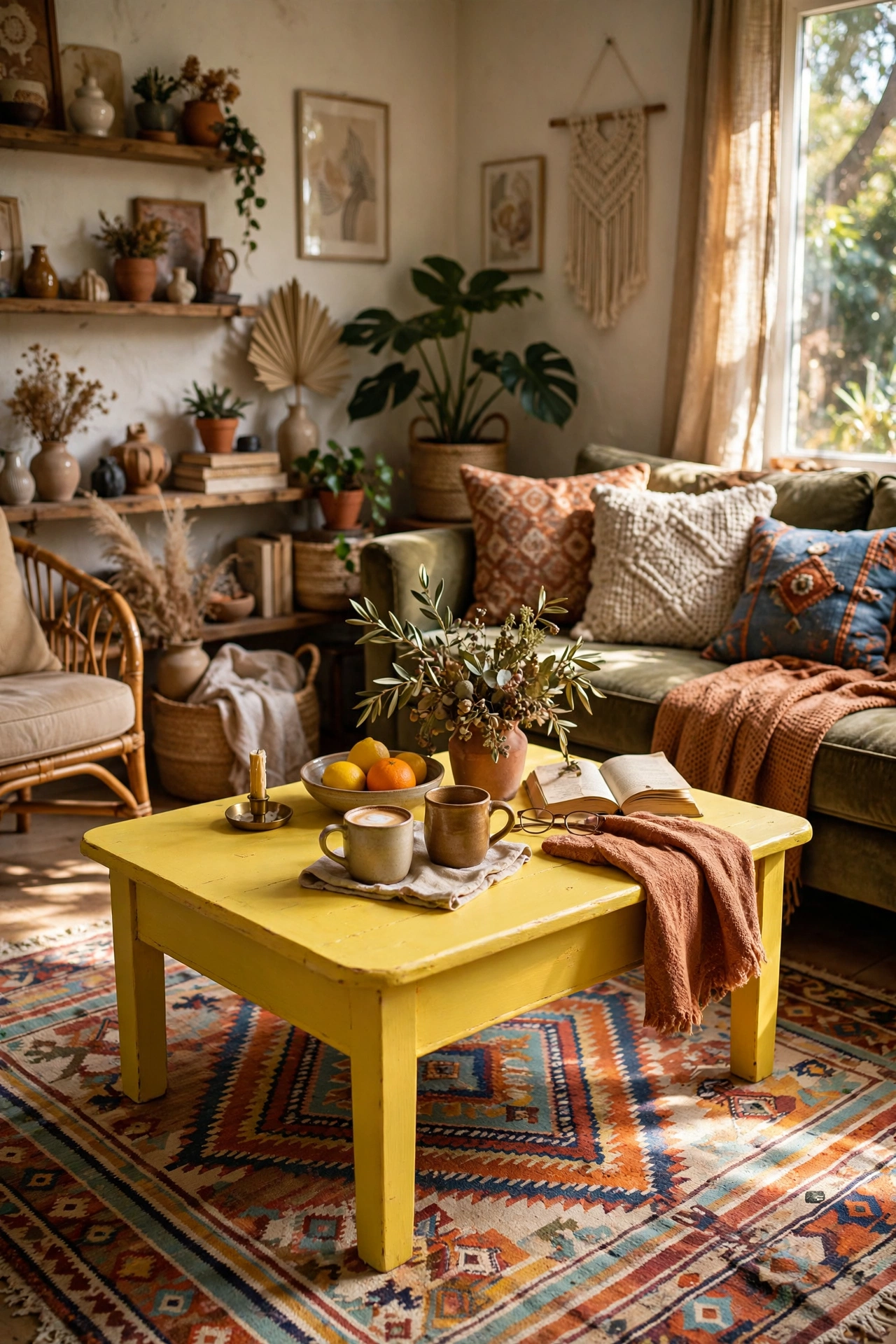
A plain wooden coffee table is a blank canvas begging for colour, and sunshine yellow turns it into the happiest object in the room. Chalk paint needs barely any prep, which is perfect for secondhand finds. Step one: give the table a light sand and wipe clean. Step two: apply two thin coats of chalk paint, then a clear wax seal for durability. I tried this on a £5 table from a charity shop, and my mistake was skipping the seal, so mug rings appeared within a week. Two coats of wax fixed it and the yellow still glows two years later against my patterned rug.
Cost: ~$19 | Time: 2.5 hours
Drop a Velvet Pouffe in Emerald Green
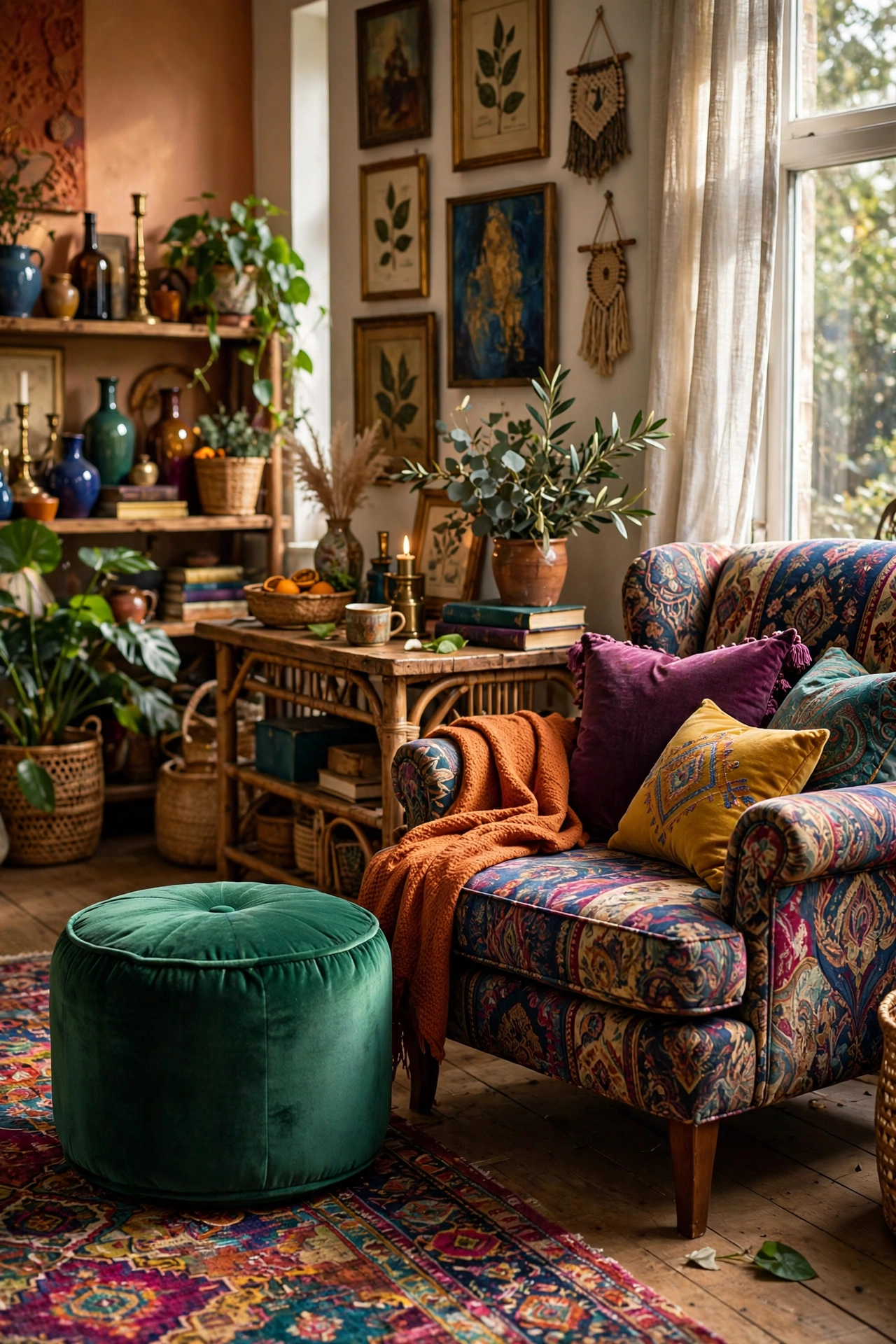
A jewel-toned pouffe is the eclectic room’s exclamation mark: extra seat, footrest, and colour bomb in one. Emerald green works with almost any clashy palette because it reads as a neutral with attitude. Step one: choose a firm-fill pouffe so it holds shape when sat on. Step two: place it slightly off the rug’s edge so it bridges the floor and seating area. I tried this in my living room, and my mistake was buying one too small, which made it look like a toy. A 45 cm pouffe is the minimum to be useful, and mine is the seat guests always steal.
Cost: ~$24 | Time: 10 minutes
Paint an Interior Door Two-Tone
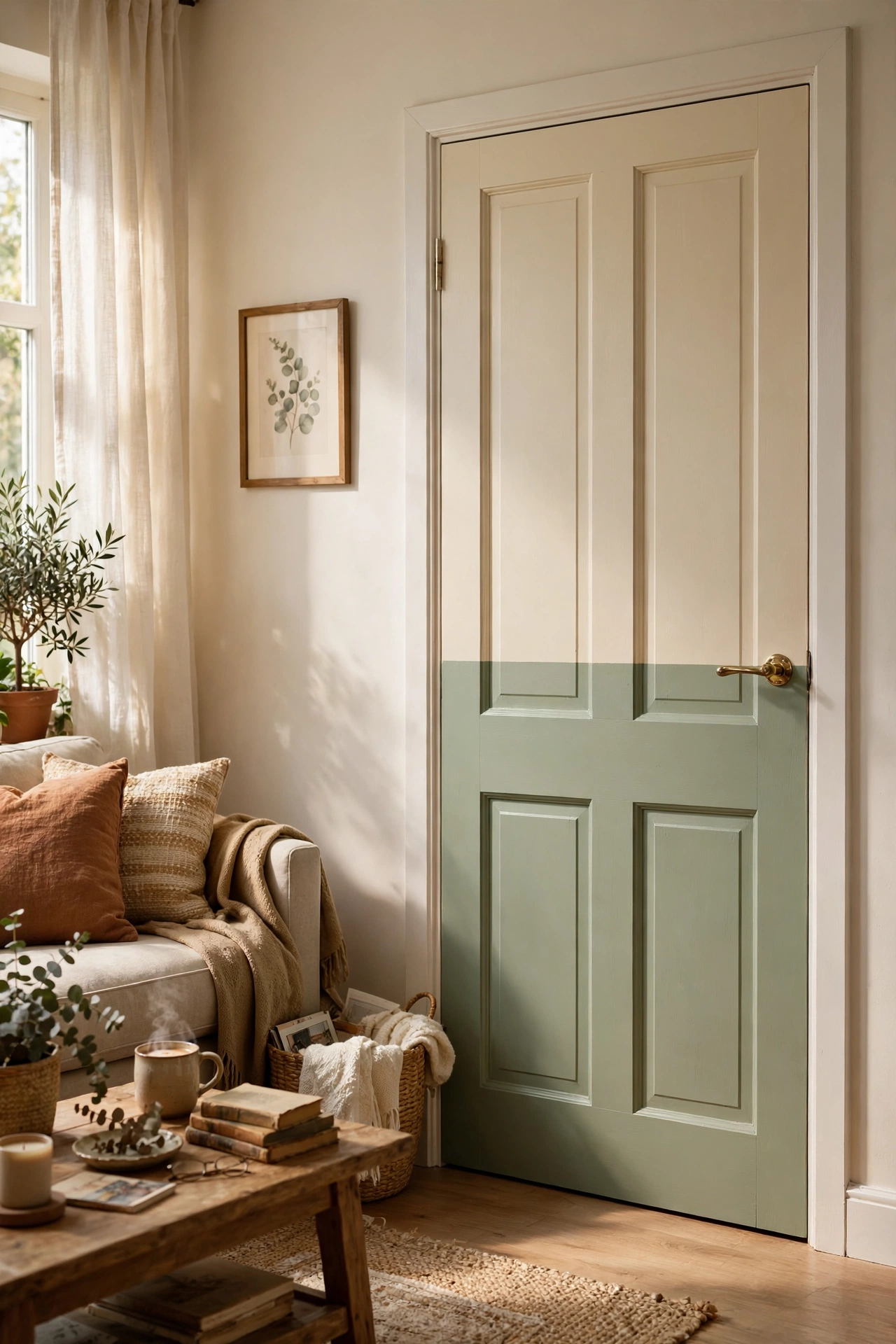
Doors are the most overlooked surface in the room, and a two-tone paint job makes yours a feature for the price of two sample pots. I painted mine sage green below and cream above with a brass strip of tape as the divider. Step one: remove the handle and sand lightly. Step two: paint the bottom colour first, let it cure, then tape a crisp line at dado height. Step three: paint the top colour and peel the tape while wet. I tried this on my living room door, and my mistake was taping on tacky paint, which pulled colour off. Waiting a full 24 hours between coats gave me the sharpest line in the house.
Cost: ~$11 | Time: 3 hours
The Wall Mix (Ideas 16–19): gallery walls and statement surfaces that cost almost nothing.
Build a Gallery Wall From Thrifted Frames
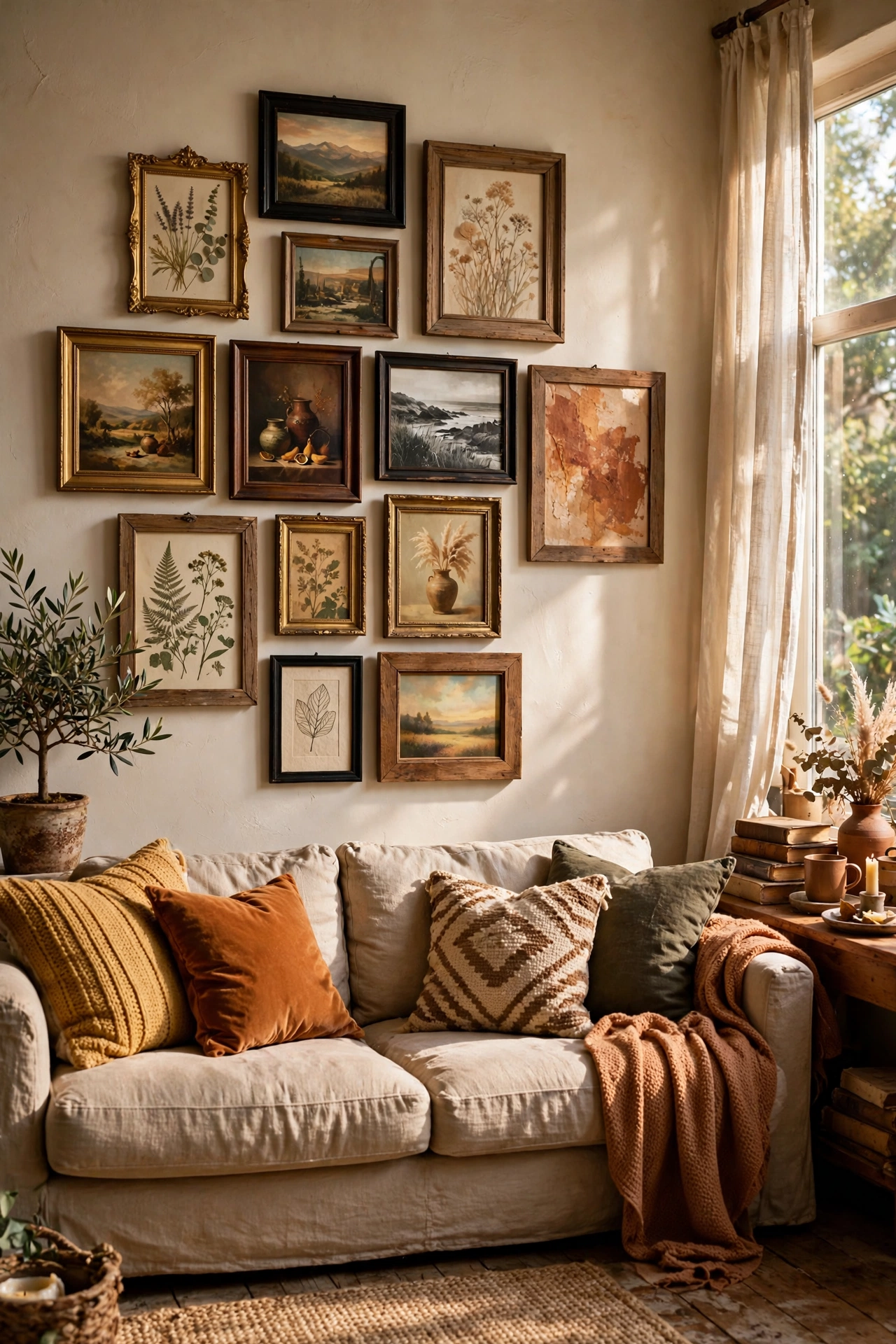
A gallery wall of mismatched frames is eclectic style in its purest form, and charity shops sell frames for pennies if you’re patient. The trick is unifying the art inside or the colour of the frames so the mix feels curated. Step one: collect ten to fifteen frames over a few weeks, all roughly gold, black, or wood. Step two: lay the arrangement on the floor first and photograph it. Step three: hang from the centre outwards. I tried this above my sofa, and my mistake was hanging it too high, which disconnected it from the furniture. Keeping the bottom of the arrangement 15 cm above the sofa back is what ties it together.
Cost: ~$21 | Time: 2 hours
Paint a Bold Arch Behind the Sofa
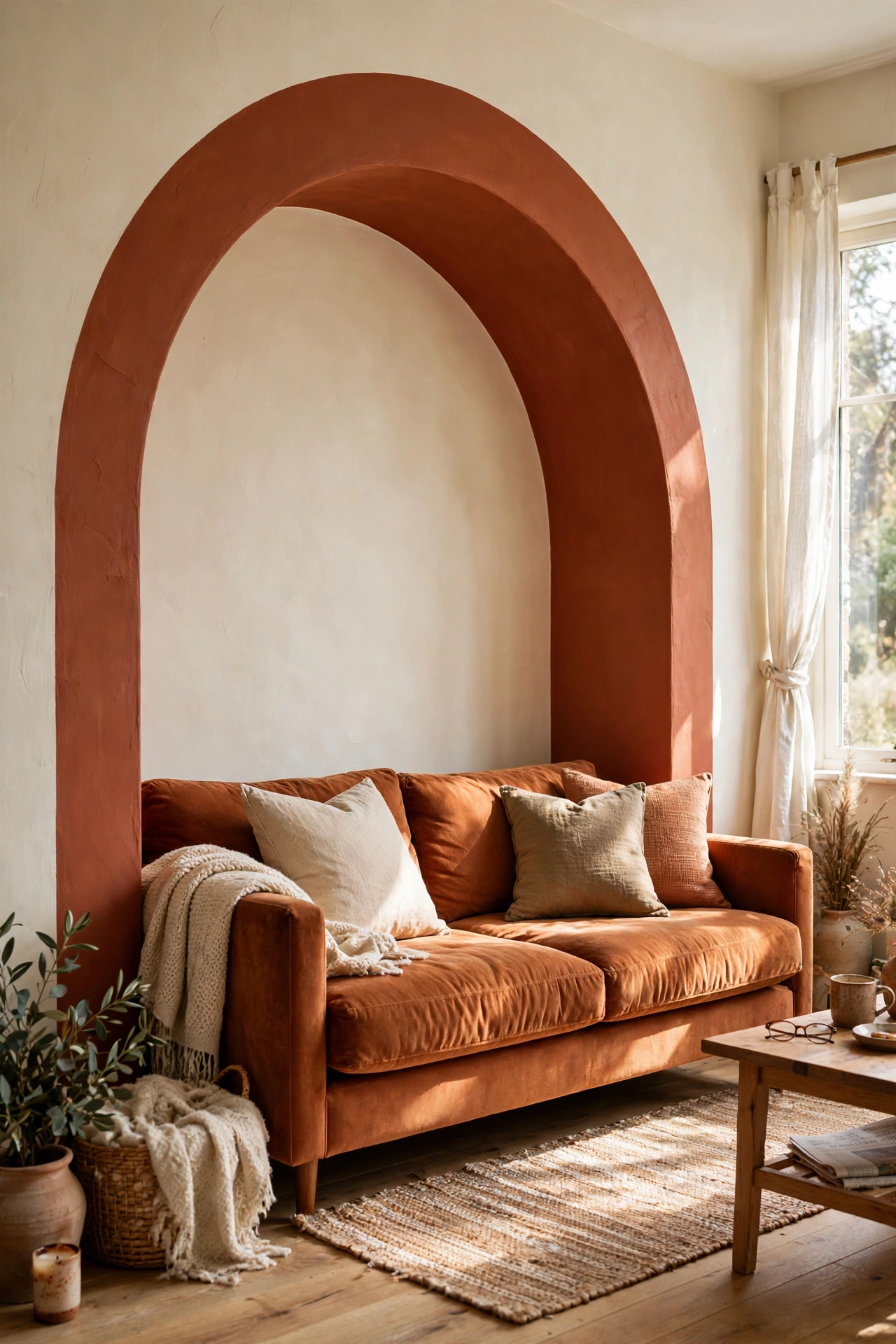
A painted arch is the budget answer to wallpaper, framing your sofa like a piece of art with nothing but a sample pot and a steady hand. Terracotta and ochre are my favourites for eclectic rooms. Step one: mark the arch with a pencil tied to string, using a nail as the pivot. Step two: fill in with a small roller, feathering the edges by hand. I tried this in my living room with a terracotta arch over a rust sofa, and my mistake was making it too narrow, which looked timid. Going wider than the sofa by at least 20 cm each side is what gives it that confident, gallery-like presence.
Cost: ~$7 | Time: 2 hours
Hang a Woven Wall Hanging From a Branch
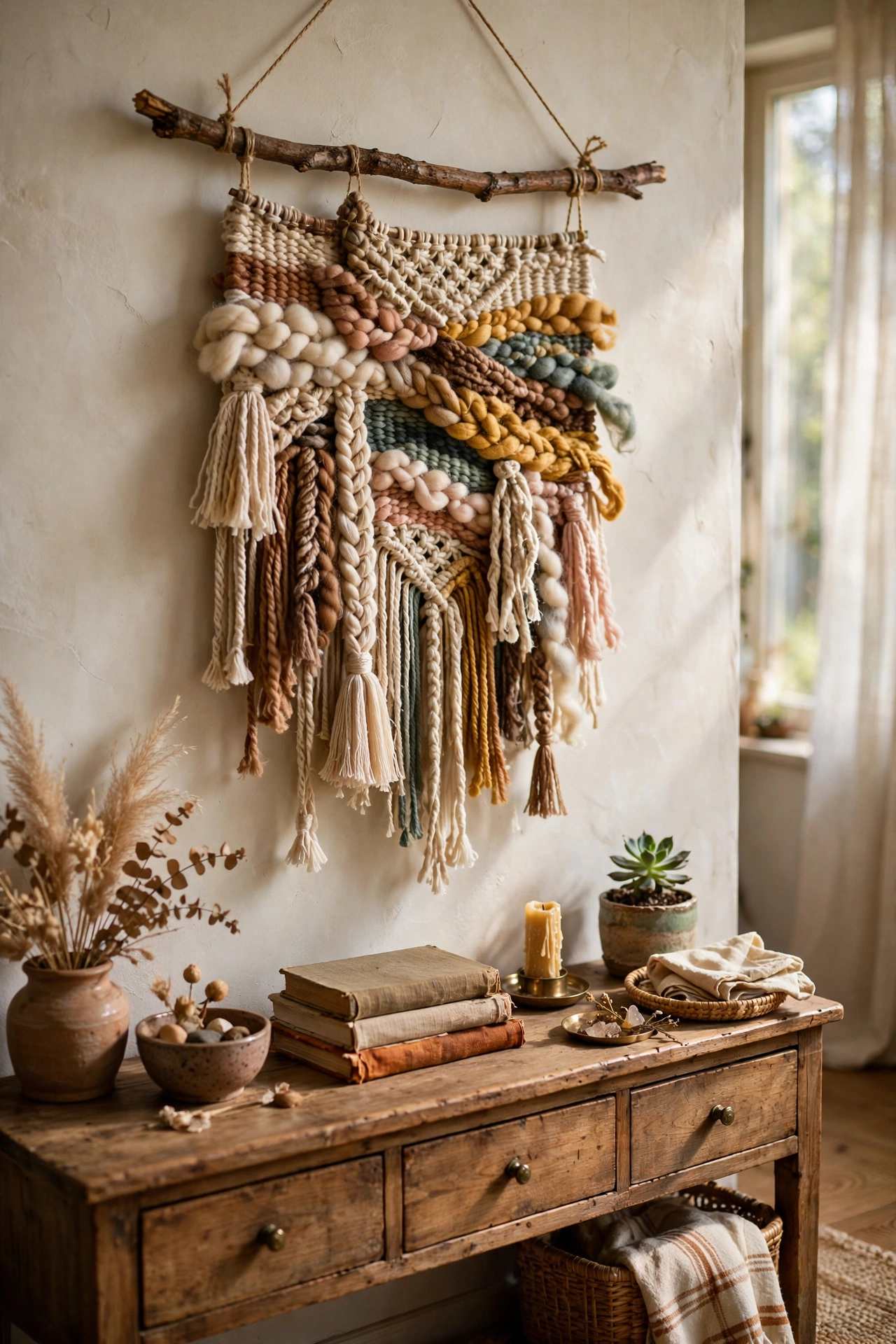
A woven hanging adds the handmade texture eclectic rooms crave, and you can make one from yarn scraps on a found branch for almost nothing. Mine hangs over the sideboard and softens the whole corner. Step one: find a straight branch about 60 cm long and clean it. Step two: cut yarn lengths double your desired drop and loop them over the branch. Step three: knot rows or just let strands hang in graduated lengths. I tried this with leftover yarn from a jumper project, and my mistake was cutting every strand the same length, which looked flat. Varying lengths and mixing three textures is what makes it look artisanal.
Cost: ~$4 | Time: 1.5 hours
Cluster Vintage Mirrors in Odd Shapes
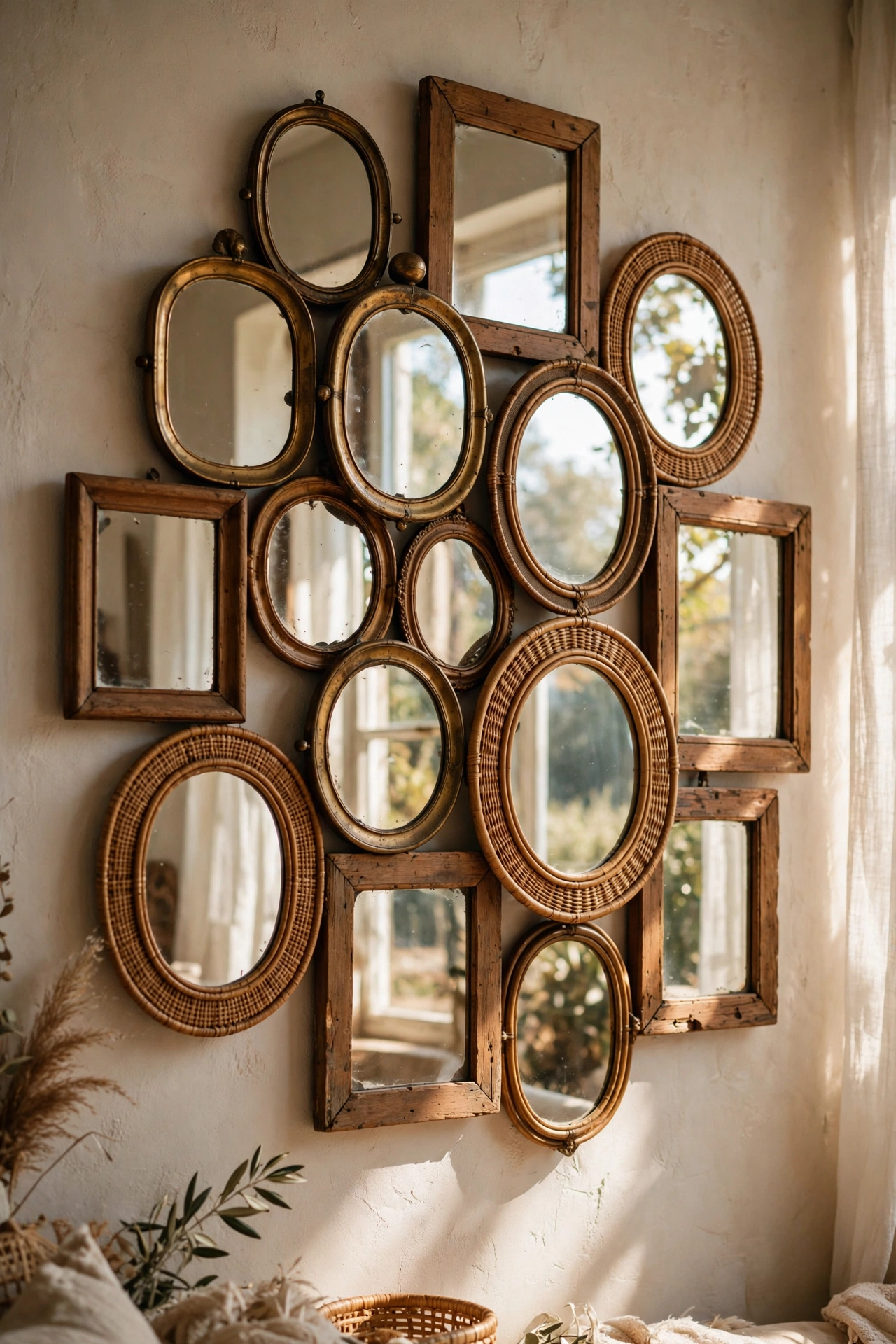
A cluster of small vintage mirrors bounces light around and fills a wall for a fraction of what one big mirror costs. Car boot sales and charity shops are full of them in brass, wood, and rattan. Step one: gather five to nine mirrors in different shapes but similar warm frames. Step two: arrange them tight, like a honeycomb, with only 5 cm gaps. I tried this in my dark hallway corner of the living room, and my mistake was spacing them evenly in a grid, which killed the eclectic energy. Clustering them organically, like they grew there, doubled the light and the charm.
Cost: ~$17 | Time: 1 hour
The Finishing Mix (Ideas 20–23): small final touches that make the room feel collected, not decorated.
Fill Mismatched Pots With Easy Houseplants
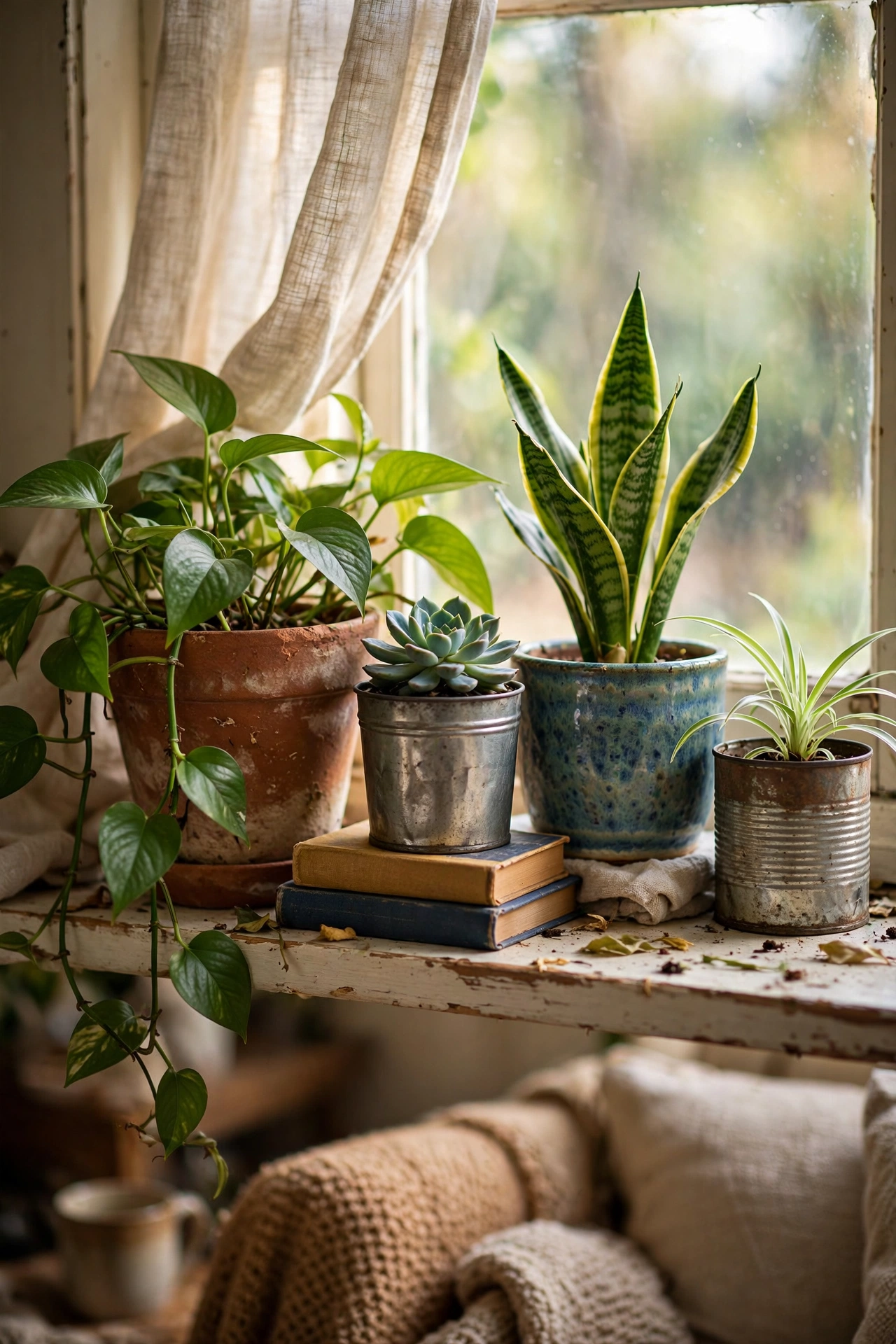
Plants are the cheapest way to finish any room, and eclectic style loves them in pots that don’t match at all. Terracotta, glazed ceramic, a tin can wrapped in twine: the mix is the point. Step one: pick easy plants like pothos, spider plants, and snake plants that forgive neglect. Step two: group them in threes at different heights, using books or stools as risers. I tried this on my windowsill, and my mistake was buying fussy plants that died within a month and left me with empty pots. Sticking to the easy trio means my jungle is still thriving and the mismatched pots get all the compliments.
Cost: ~$26 | Time: 35 minutes
Use a Stack of Art Books as a Side Table
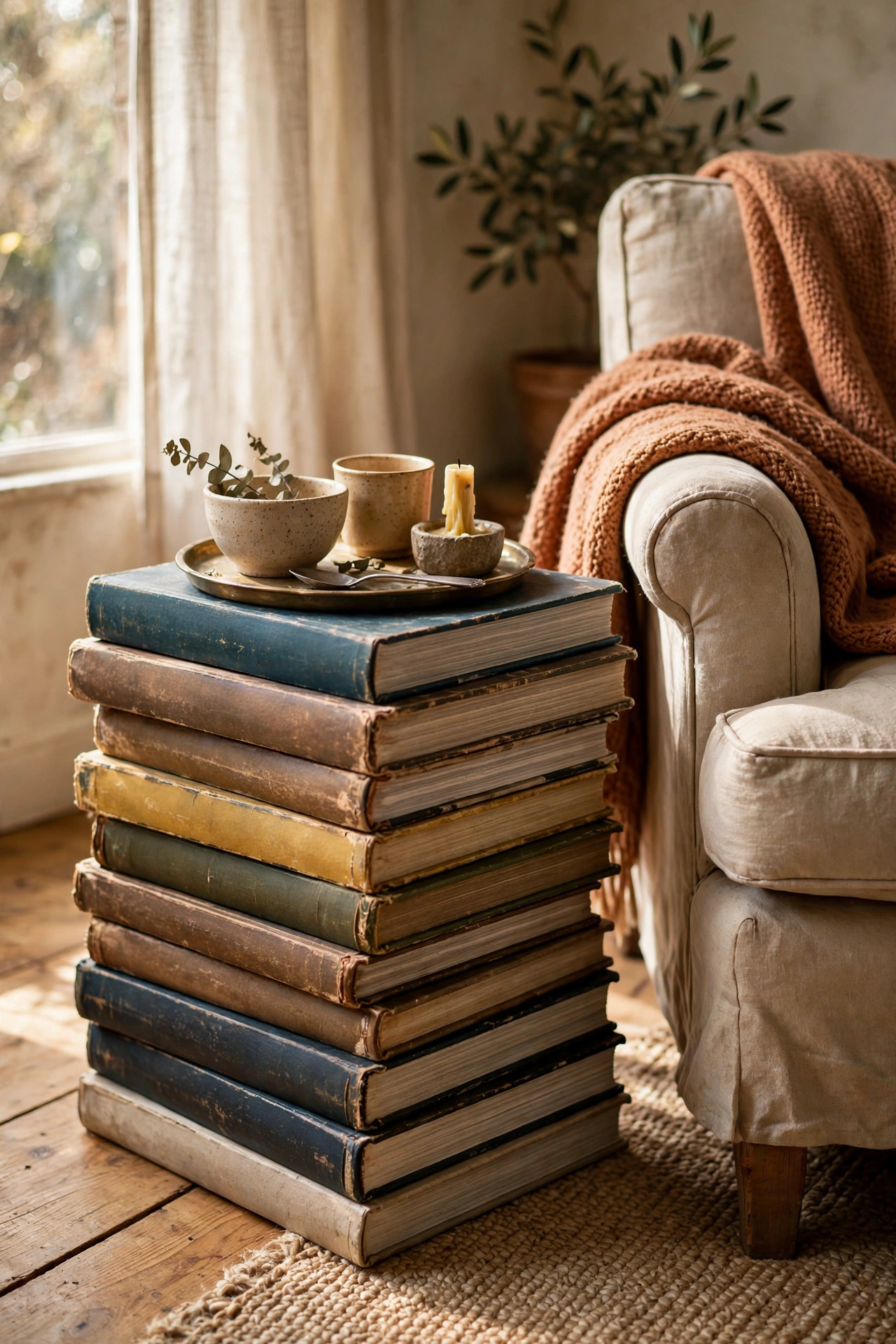
Big art and photography books are heavy, beautiful, and dirt cheap secondhand, and a stack of four or five makes a side table with built-in conversation. Choose covers in colours that echo your room. Step one: hunt charity shops for the largest hardbacks with attractive spines. Step two: stack biggest at the bottom, rotating each slightly. Step three: top with a small tray so mugs don’t mark the covers. I tried this beside my armchair, and my mistake was stacking them perfectly square, which looked like a library pile. The slight rotation is what turns books into furniture.
Cost: ~$13 | Time: 15 minutes
Cluster Candles in Collected Holders
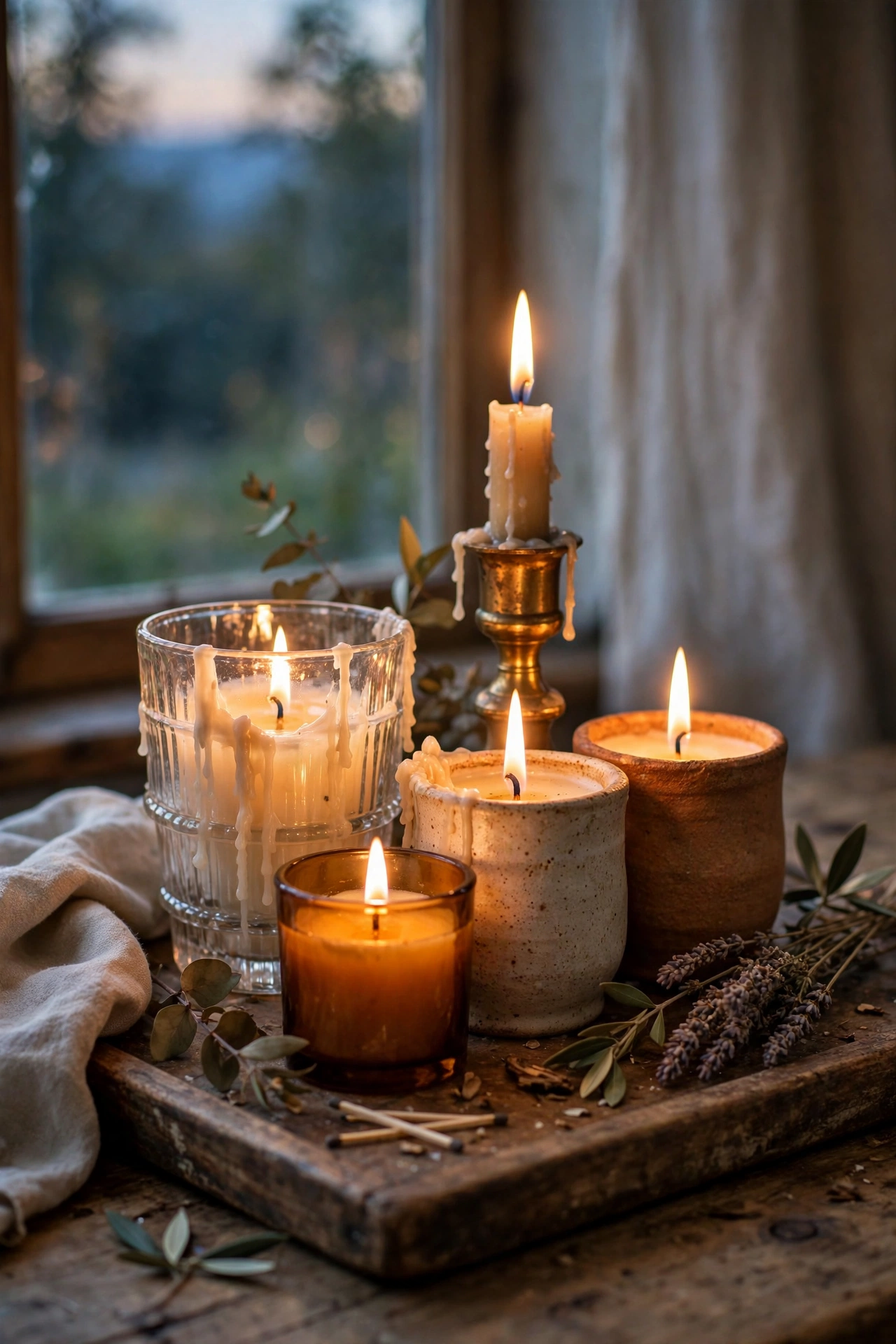
One candle is decoration, but seven in mixed holders is atmosphere, and eclectic rooms run on atmosphere. Gather glass jars, brass cups, and ceramic dishes over time rather than buying a set. Step one: place a tray or runner to ground the cluster. Step two: mix heights and materials, keeping the candle colours to creams and ambers. Step three: light them all at dusk. I tried this on my coffee table, and my mistake was using scented candles in five different fragrances, which gave me a headache. Unscented pillars with one scented candle in the mix gives the glow without the clash.
Cost: ~$15 | Time: 25 minutes
Hang a Quirky Flea-Market Clock
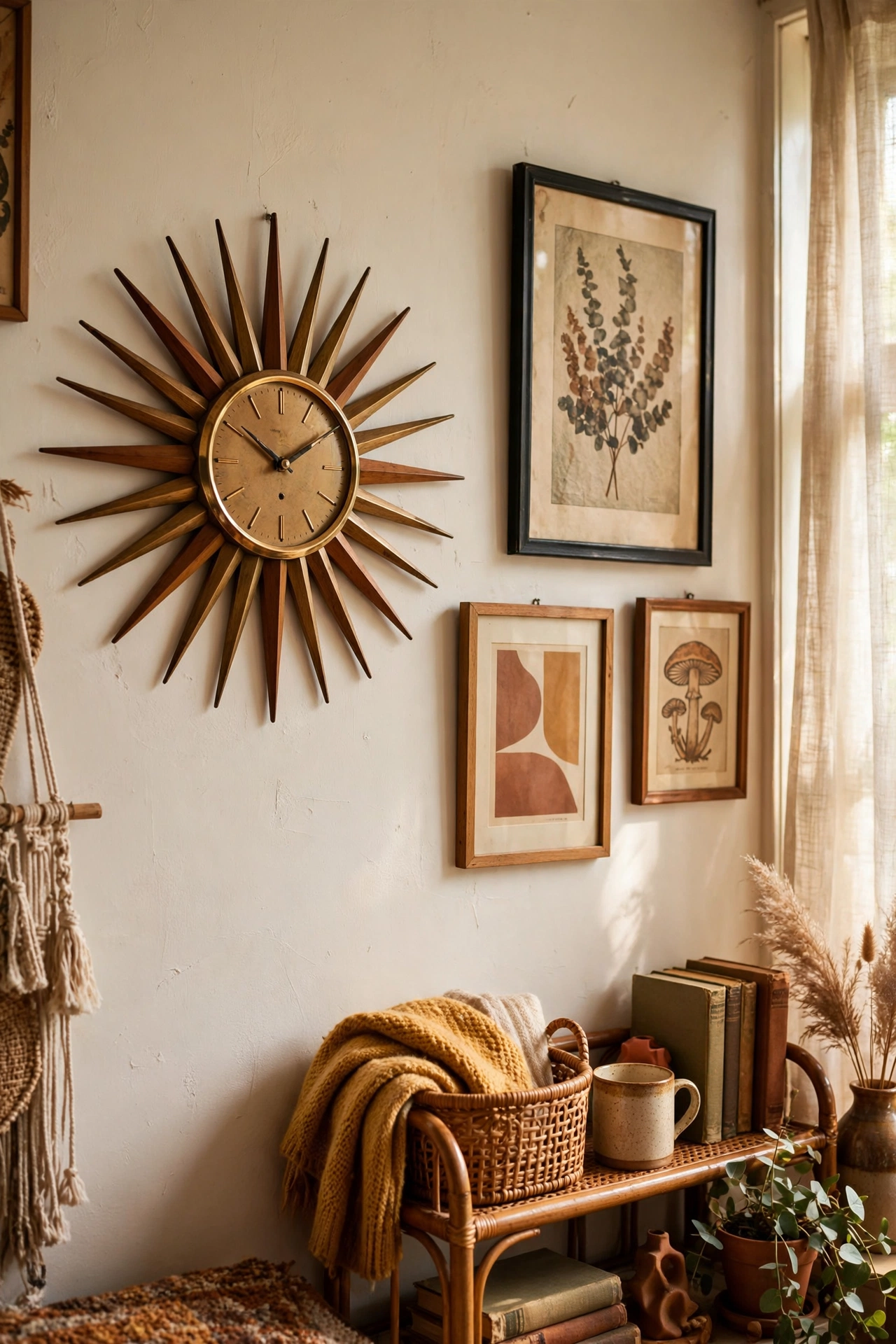
Every eclectic room needs one conversation piece, and a weird clock from a flea market is perfect: useful, characterful, and usually under a tenner. Mine is a 1970s sunburst that makes visitors smile. Step one: check it actually ticks before you buy, and factor in a new battery. Step two: hang it where it’s visible from the sofa but not the room’s main focal wall, so it’s a discovery, not a demand. I tried this in my living room, and my mistake was hanging it dead centre above the mantel, where it competed with the art. Off to one side, it became the detail people ask about.
Cost: ~$8 | Time: 20 minutes
Want more living room inspiration? (see also: 25-beige-living-room-ideas-that-feel-calm-and-collected), (see also: 18-budget-living-room-ideas-under-50), (see also: 21-thrifted-living-room-decor-ideas).
If one of these caught your eye, save this idea to your Pinterest board so you can find it later.
