19 Linen Closet Organization Ideas That Stay Neat
Linen closet organization ideas that stay neat share one secret: everything has a visible home and nothing is stacked so high it topples. The ideas below use bins, labels and simple folding tricks to turn a linen closet you avoid into one you can use with your eyes closed.
1. Rolled Towels in Open Bins
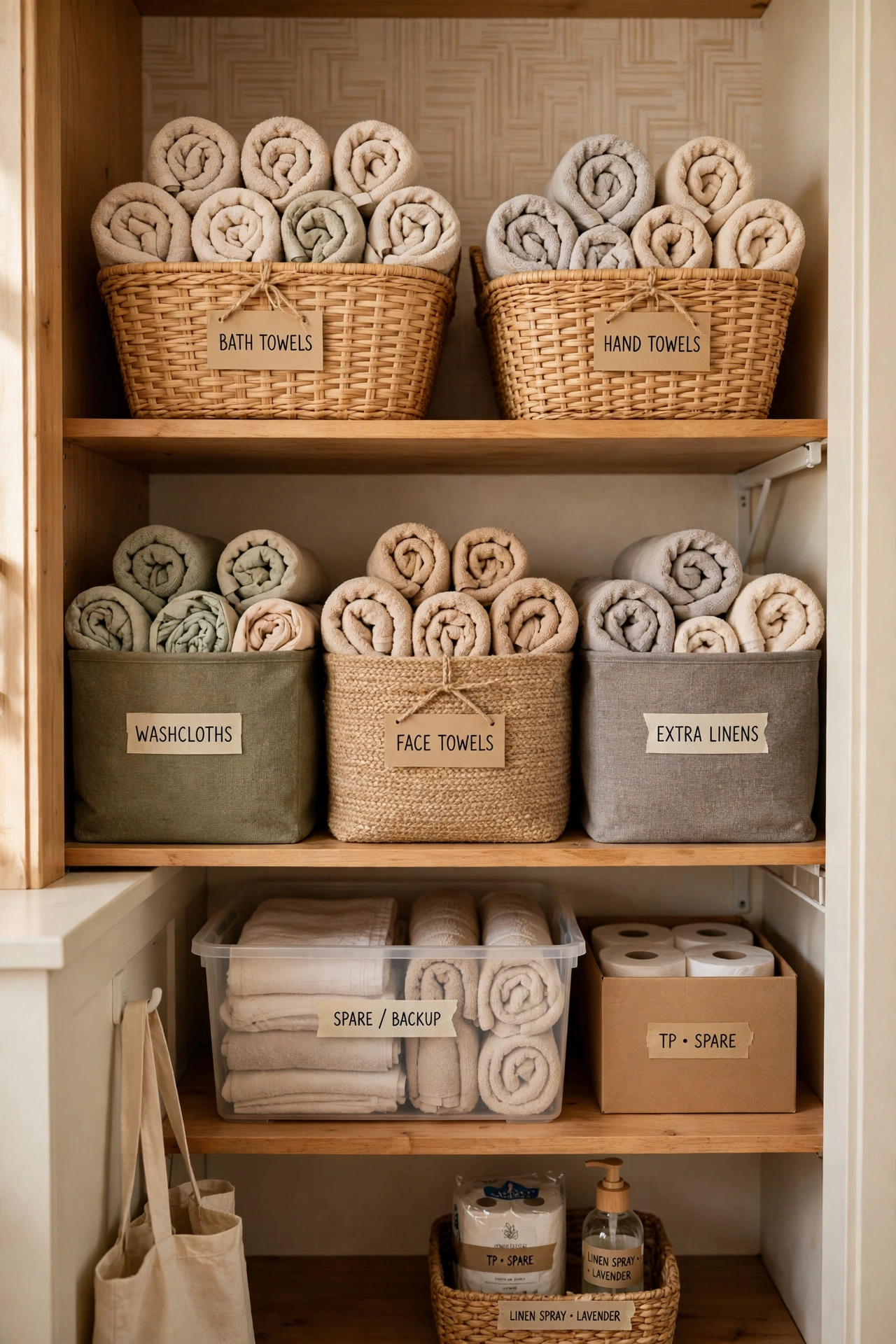
Rolled Towels in Open Bins is one of those small changes that pays off every single day, because rolled towels fit more per shelf and look neat like a hotel shelf. Start by choosing open bins that fit your shelf depth, then rolling towels tightly from one end, and finish by standing rolls upright in the bin. Roll towels the same way each time, since mixed rolls look messy fast. I tried this on a Saturday morning and it stuck, because I could see the result every time I opened the cupboard. One mistake to avoid is filling every container to the brim, because an overfull bin is just as hard to use as a messy shelf.
Cost: ~$9 | Time: 20 minutes
2. Shelf Dividers for Towel Stacks
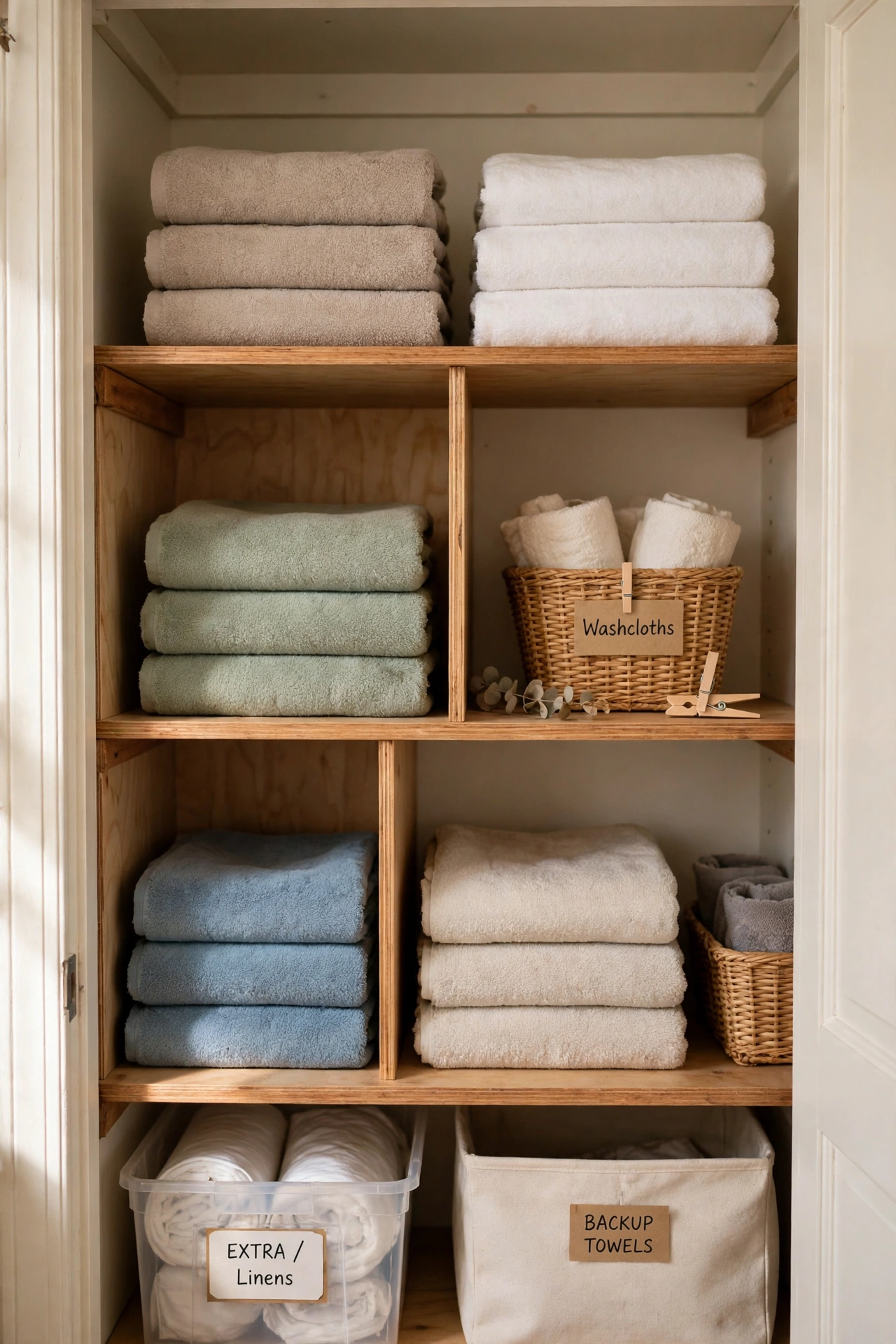
Shelf Dividers for Towel Stacks is one of those small changes that pays off every single day, because dividers stop tall towel stacks toppling into each other. Start by measuring shelf height before buying dividers, then sliding a divider at each stack edge, and finish by stacking towels between dividers. Keep stacks to six towels high, since taller stacks always topple. I tried this after one too many mornings hunting for the right thing, and the difference the next week was obvious. One mistake to avoid is organizing around things you no longer use, because clearing first always saves more room than any container.
Cost: ~$8 | Time: 15 minutes
3. Labelled Bins by Room
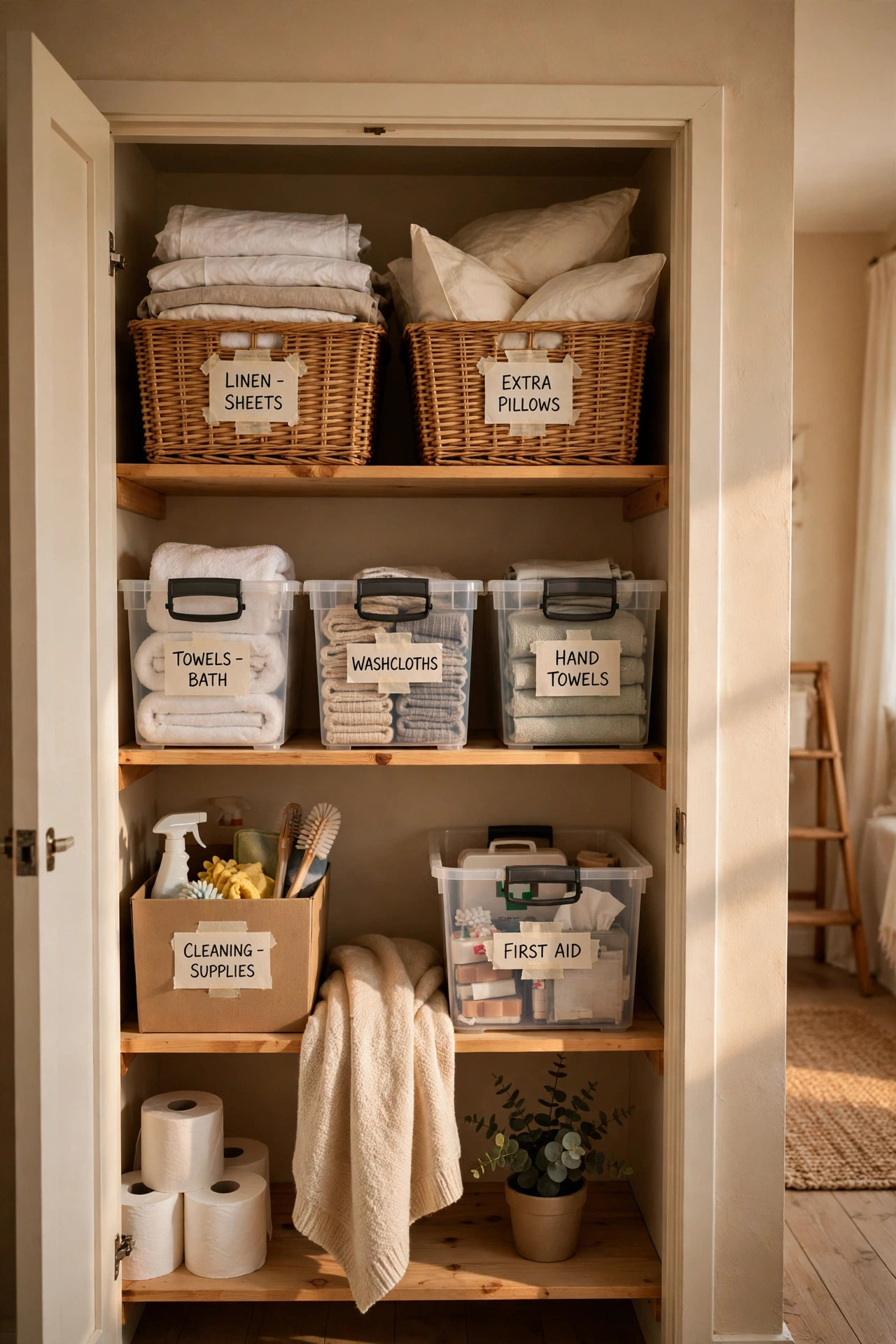
Labelled Bins by Room is one of those small changes that pays off every single day, because bins by room mean you grab the right linen without opening five bins. Start by choosing bins in one size family, then labelling each bin with a room name, and finish by placing guest-room linen in its own bin. Use large print labels, since linen closets are often dimly lit. I tried this in my own home first, and my family noticed the change before I even mentioned it. One mistake to avoid is doing the whole room in one exhausting session, because a tired tidy rarely lasts past the weekend.
Cost: ~$10 | Time: 25 minutes
4. Vacuum Bags for Bulky Blankets
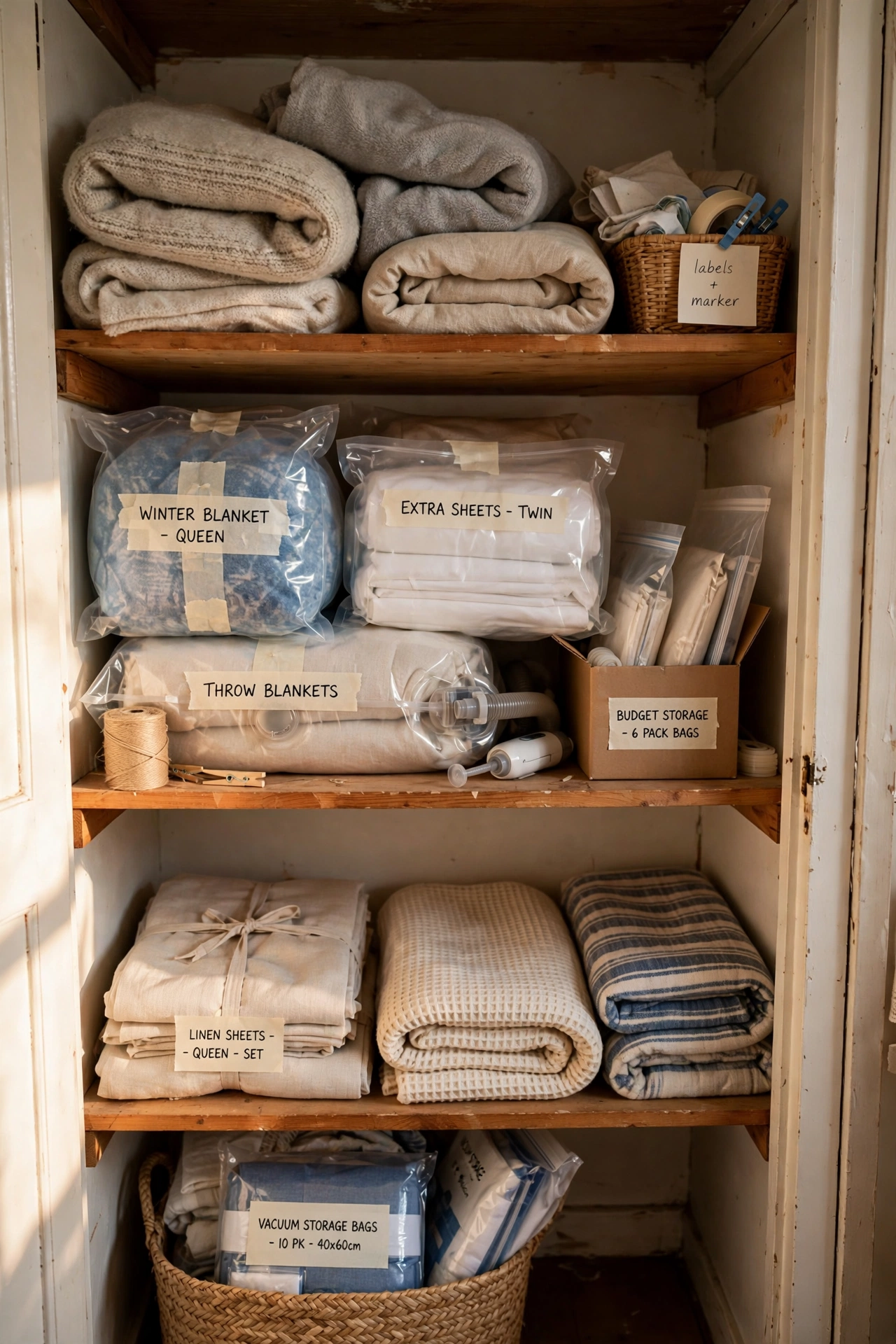
Vacuum Bags for Bulky Blankets is one of those small changes that pays off every single day, because vacuum bags shrink bulky blankets to a fraction of their size. Start by choosing bags that fit your shelf, then folding blankets loosely before bagging, and finish by vacuuming the air out slowly. Do not vacuum delicate wool, since compression can damage its fibres. I tried this with supplies I already had, and it worked well enough that I never bothered buying a fancier version. One mistake to avoid is filling every container to the brim, because an overfull bin is just as hard to use as a messy shelf.
Cost: ~$8 | Time: 20 minutes
5. Small Basket for First-Aid Supplies
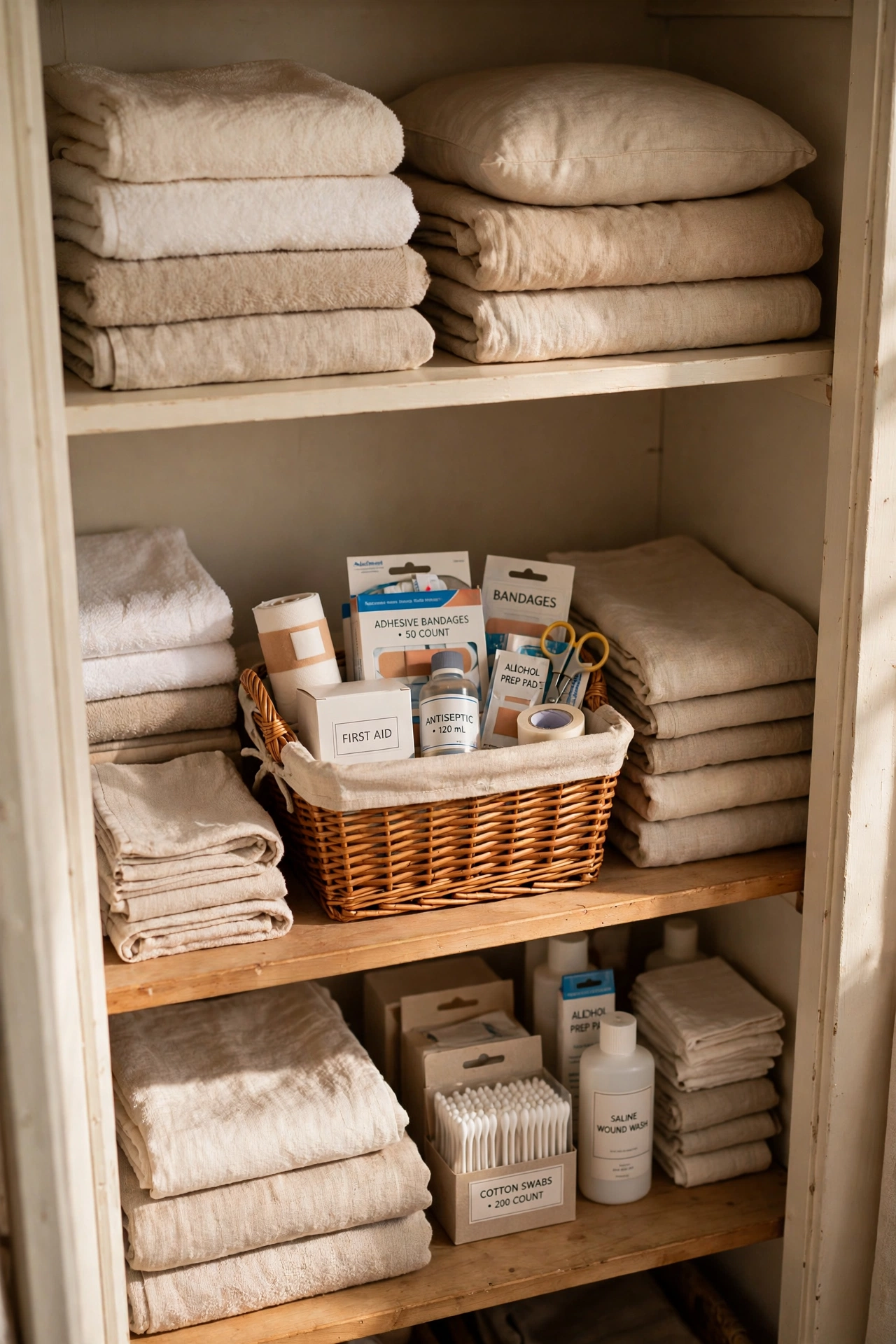
Small Basket for First-Aid Supplies is one of those small changes that pays off every single day, because first aid in one basket beats hunting through three shelves in a hurry. Start by choosing a small basket with a handle, then grouping plasters, bandages and creams inside, and finish by placing the basket at eye level. Check expiry dates twice a year, since expired first aid helps nobody. I tried this while tidying one small area at a time, and finishing that one spot kept me going through the rest. One mistake to avoid is organizing around things you no longer use, because clearing first always saves more room than any container.
Cost: ~$4 | Time: 15 minutes
6. Sheet Sets Stored Inside Their Pillowcase
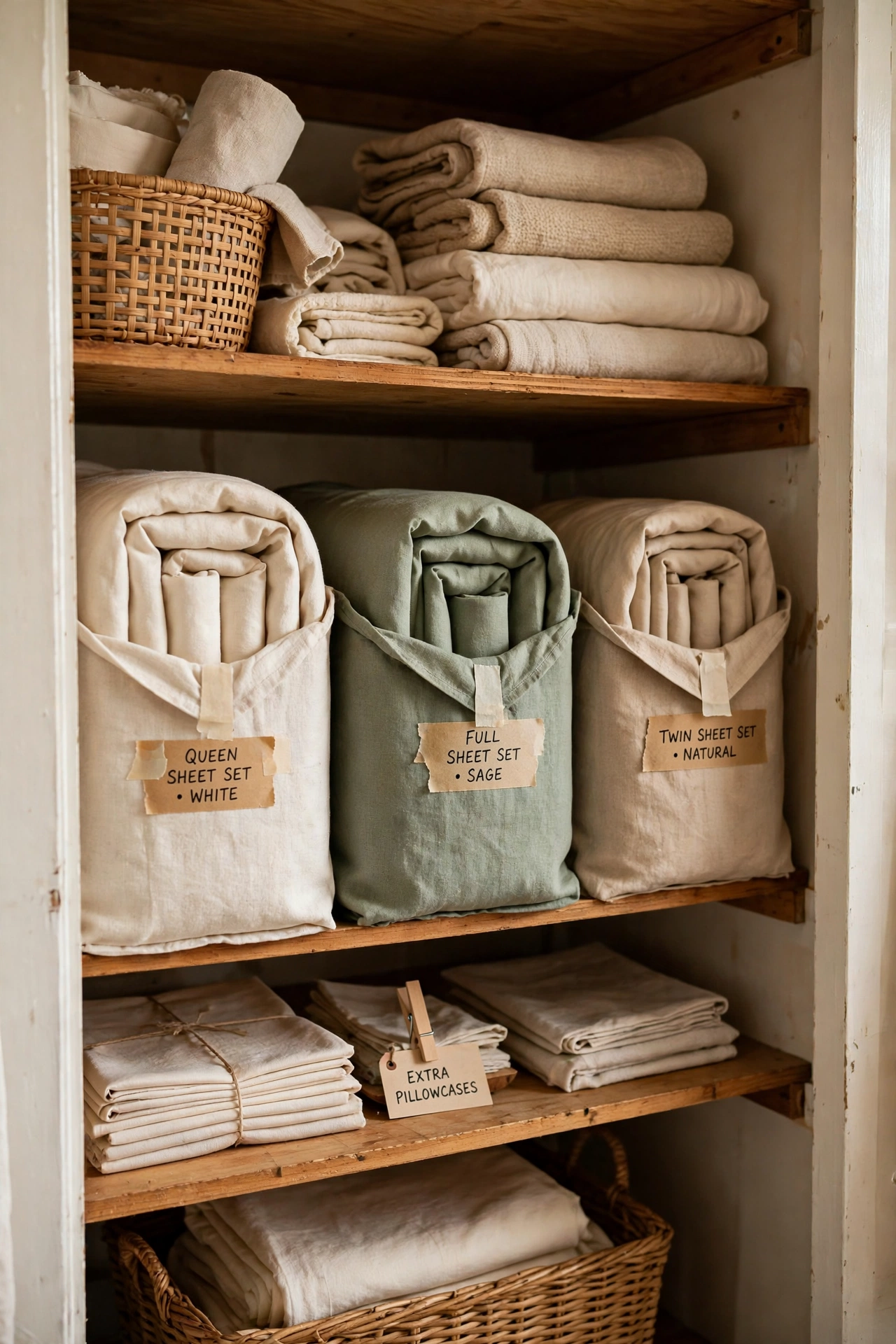
Sheet Sets Stored Inside Their Pillowcase is one of those small changes that pays off every single day, because a sheet set inside its pillowcase never loses its matching pieces. Start by folding the sheet and pillowcases neatly, then sliding the folded set inside one pillowcase, and finish by stacking sets upright like files. Fold sets the same size each time, since uneven sets topple on the shelf. I tried this after a friend showed me her version, and I have kept it in place ever since because it is so easy to maintain. One mistake to avoid is doing the whole room in one exhausting session, because a tired tidy rarely lasts past the weekend.
Cost: ~$0 | Time: 15 minutes
(see also: 19-bedroom-organization-ideas-that-actually-work)
7. Hooks on the Door for Cleaning Rags
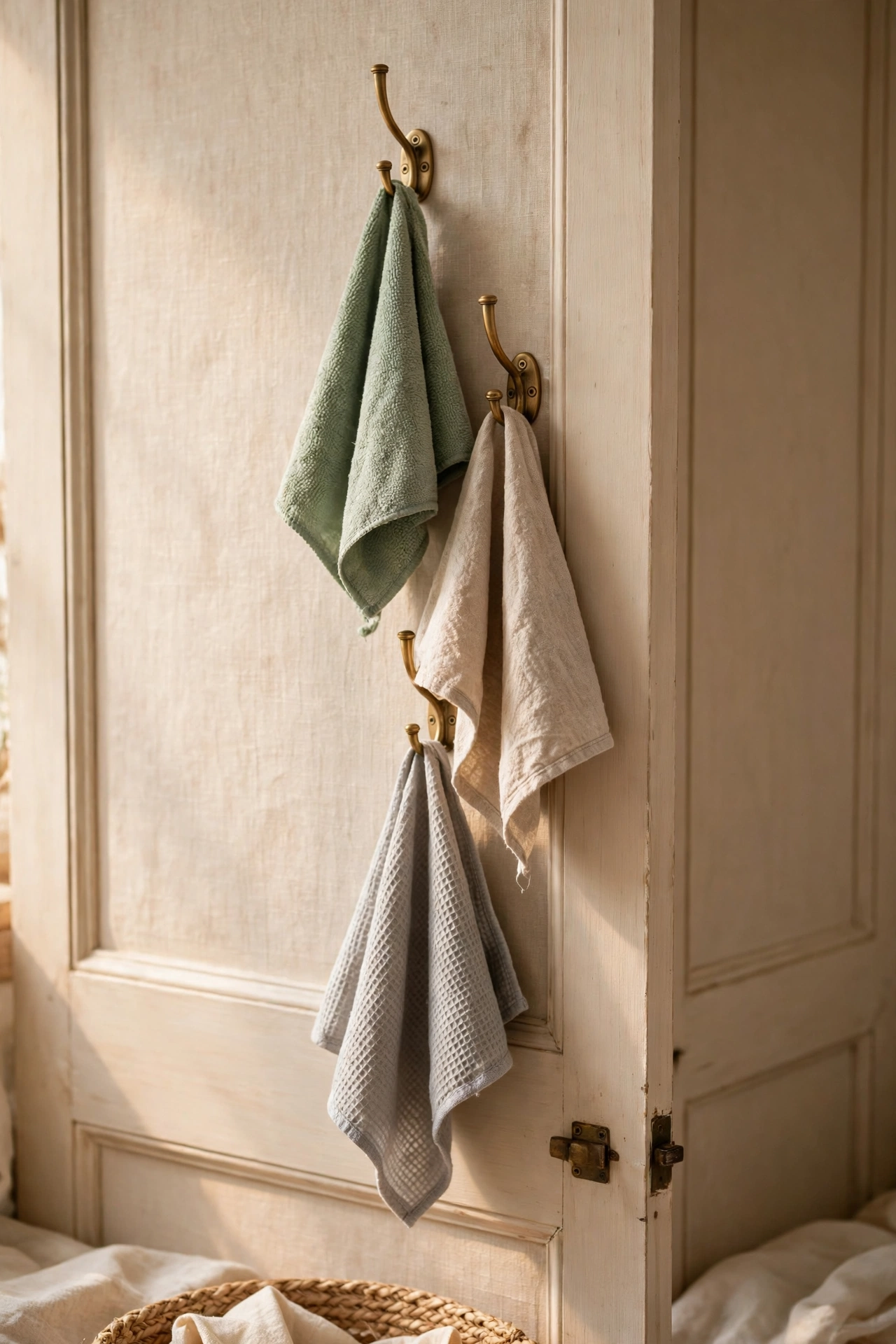
Hooks on the Door for Cleaning Rags is one of those small changes that pays off every single day, because door hooks give cleaning rags a home instead of a damp pile. Start by fixing two hooks inside the closet door, then hanging rags by colour or use, and finish by keeping a spare hook for the mop head. Wash rags before hanging them, since damp rags smell within days. I tried this on a Saturday morning and it stuck, because I could see the result every time I opened the cupboard. One mistake to avoid is filling every container to the brim, because an overfull bin is just as hard to use as a messy shelf.
Cost: ~$3 | Time: 10 minutes
8. Clear Jars for Cotton Balls and Swabs
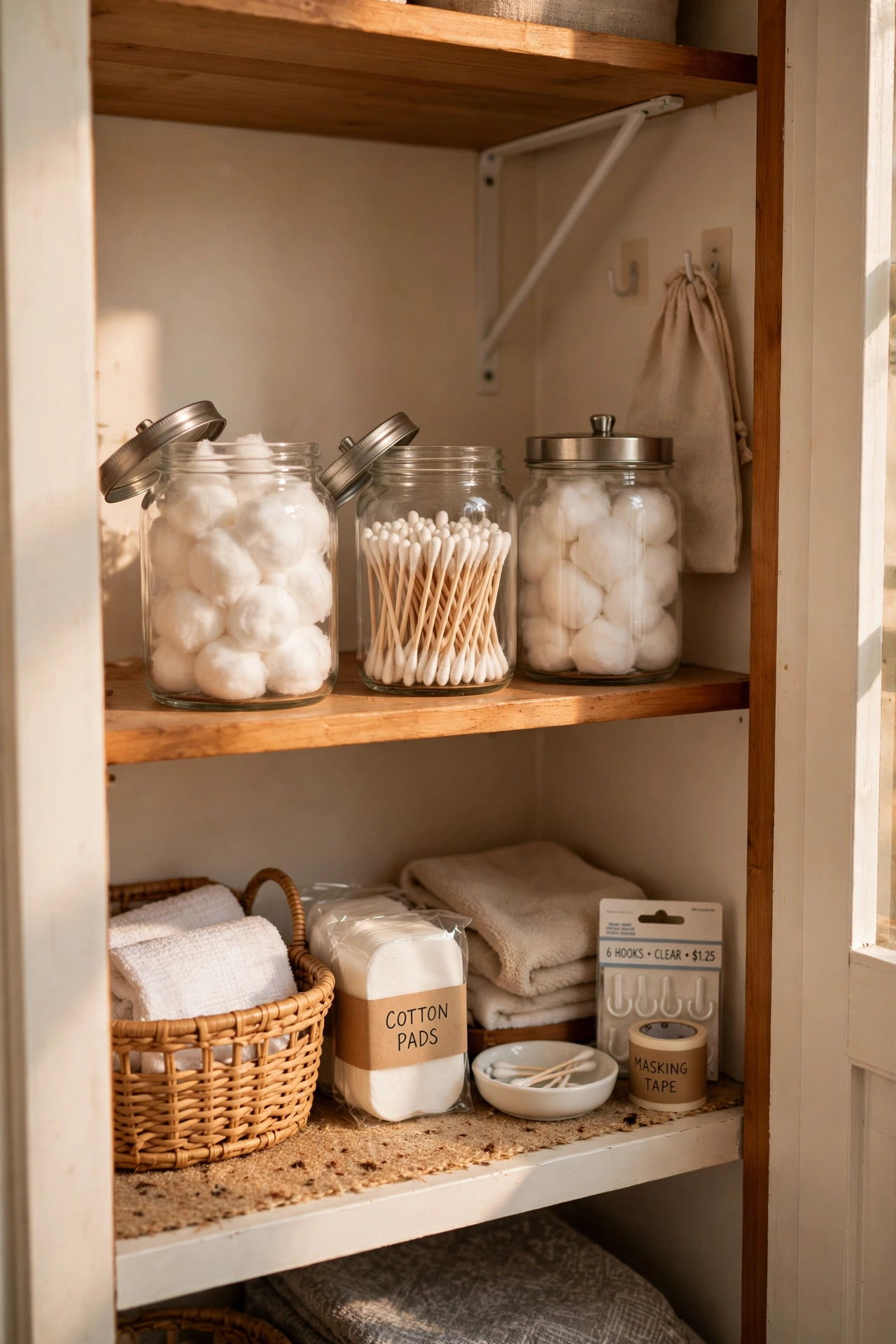
Clear Jars for Cotton Balls and Swabs is one of those small changes that pays off every single day, because clear jars show supplies at a glance and keep them dust-free. Start by choosing jars with wide mouths, then filling one jar per item, and finish by lining jars on a shallow shelf. Keep jars low enough to reach, since a jar you cannot reach stays full. I tried this after one too many mornings hunting for the right thing, and the difference the next week was obvious. One mistake to avoid is organizing around things you no longer use, because clearing first always saves more room than any container.
Cost: ~$6 | Time: 15 minutes
9. Tiered Shelf for Small Toiletries
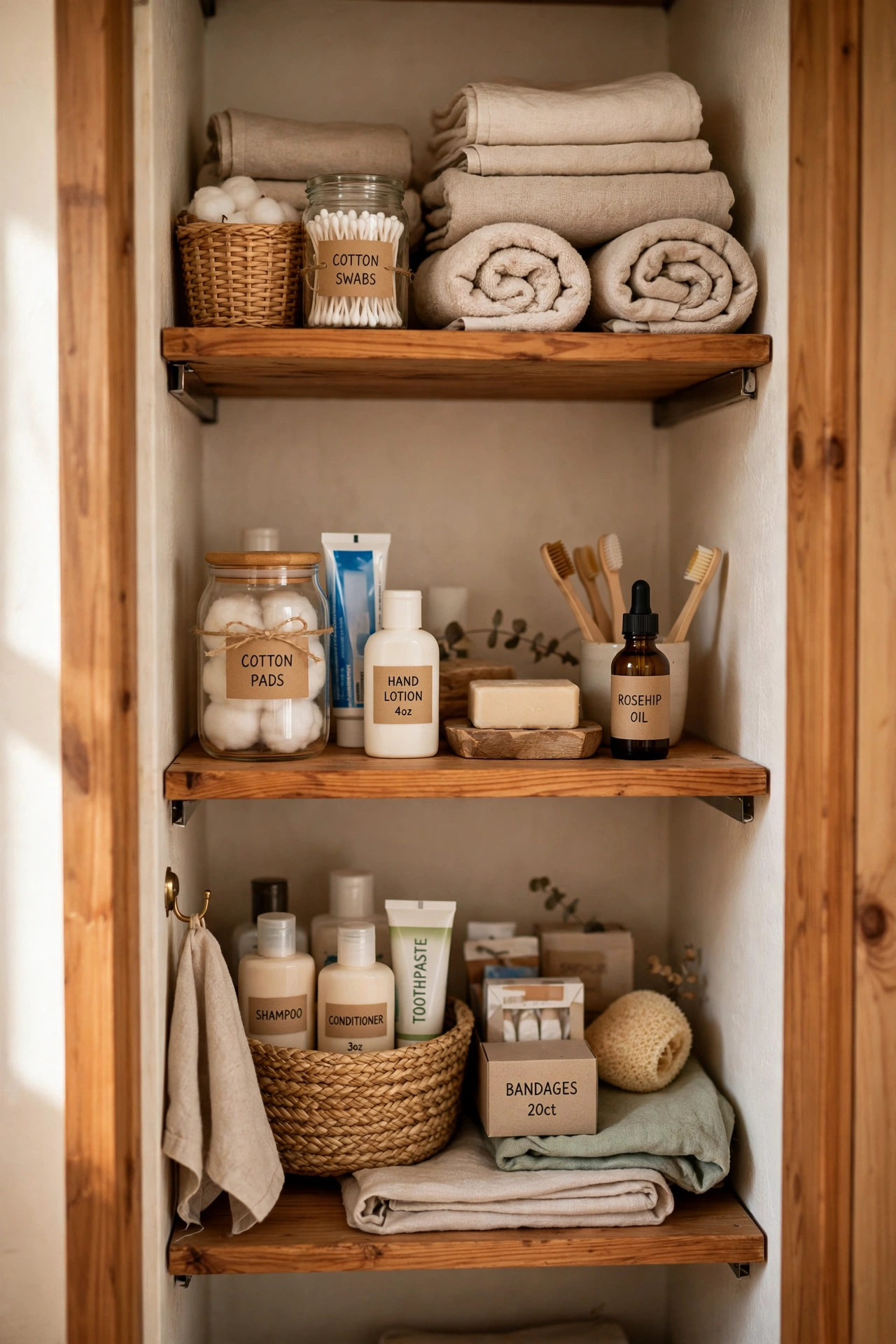
Tiered Shelf for Small Toiletries is one of those small changes that pays off every single day, because a tiered shelf steps small bottles up so none hide behind others. Start by placing a small tiered shelf on a deep shelf, then sorting toiletries by person or use, and finish by putting daily items at the front. Wipe the tiered shelf monthly, since small spills collect on steps. I tried this in my own home first, and my family noticed the change before I even mentioned it. One mistake to avoid is doing the whole room in one exhausting session, because a tired tidy rarely lasts past the weekend.
Cost: ~$7 | Time: 15 minutes
10. Linen Labels You Can Read at a Glance
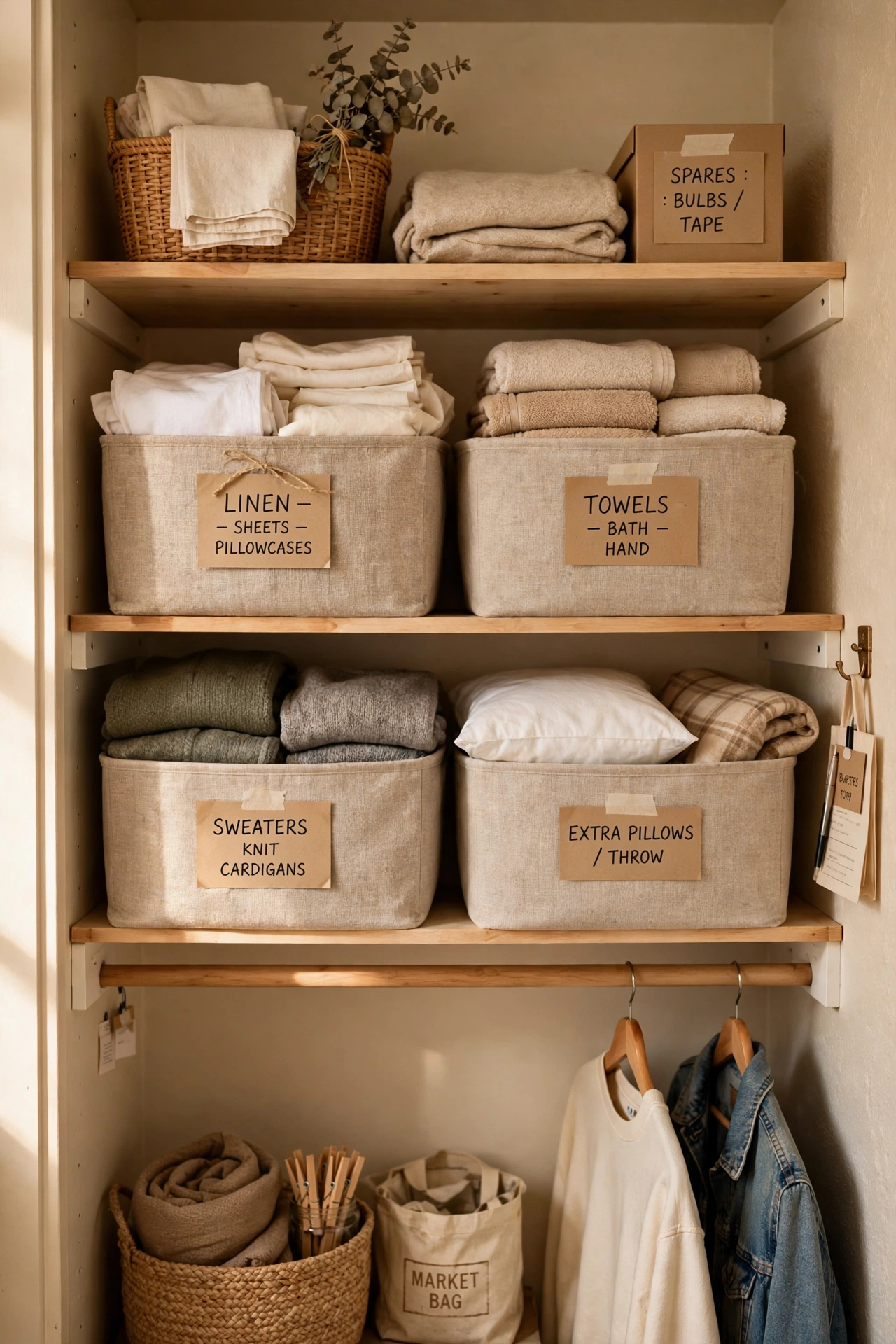
Linen Labels You Can Read at a Glance is one of those small changes that pays off every single day, because readable labels mean anyone in the house can find the right sheet. Start by writing labels in large, clear print, then sticking labels on bin fronts, and finish by using colour dots for bed sizes. Test labels in dim light, since linen closets rarely have bright lighting. I tried this with supplies I already had, and it worked well enough that I never bothered buying a fancier version. One mistake to avoid is filling every container to the brim, because an overfull bin is just as hard to use as a messy shelf.
Cost: ~$2 | Time: 20 minutes
11. Rolling Cart for Extra Toiletries
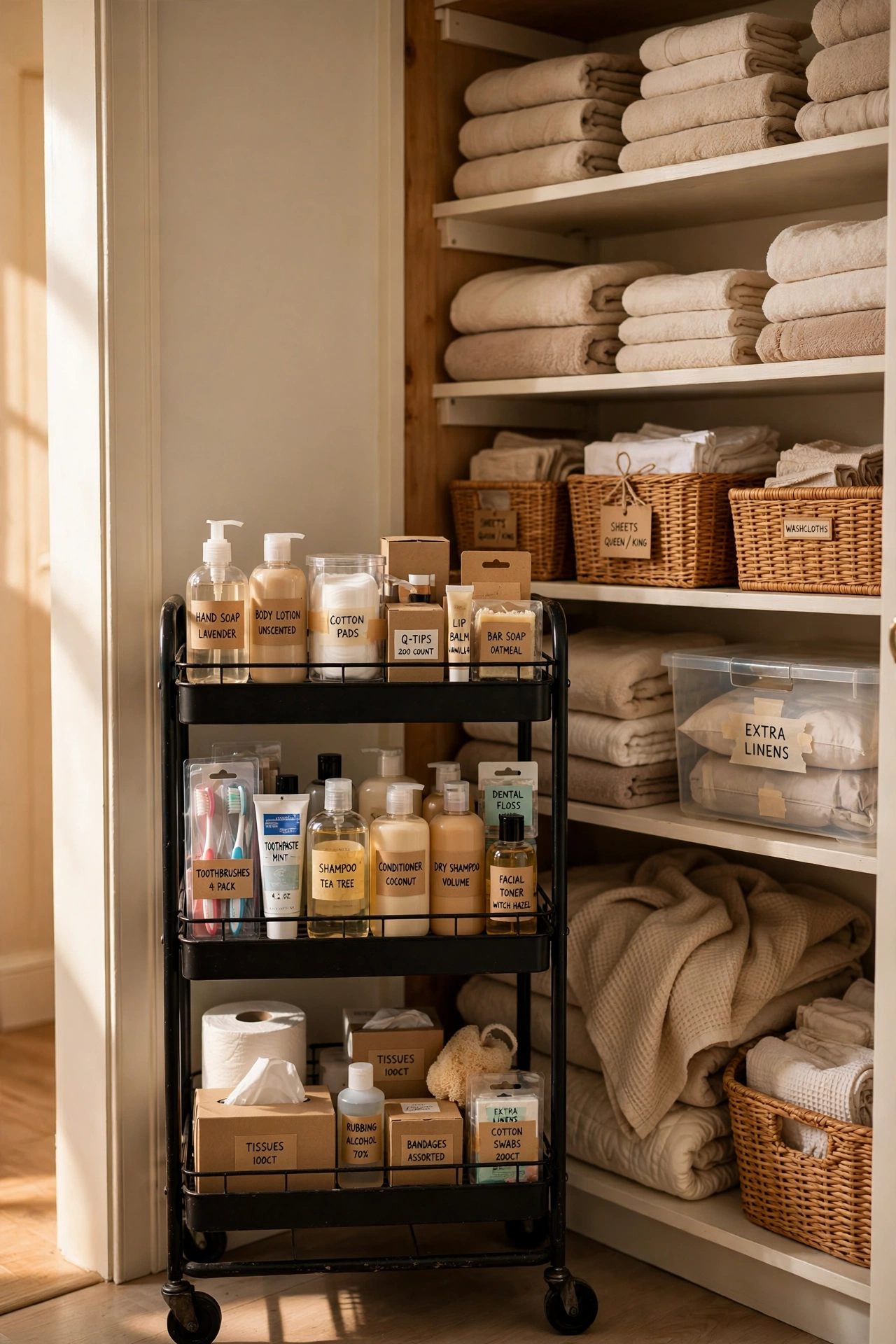
Rolling Cart for Extra Toiletries is one of those small changes that pays off every single day, because a rolling cart holds backstock toiletries that overflow the main shelf. Start by choosing a slim cart for the closet corner, then grouping backstock by type, and finish by rolling it out when restocking. Keep backstock to one cart, since two carts of spares defeat the purpose. I tried this while tidying one small area at a time, and finishing that one spot kept me going through the rest. One mistake to avoid is organizing around things you no longer use, because clearing first always saves more room than any container.
Cost: ~$14 | Time: 15 minutes
12. Folded Blanket Stack by Weight
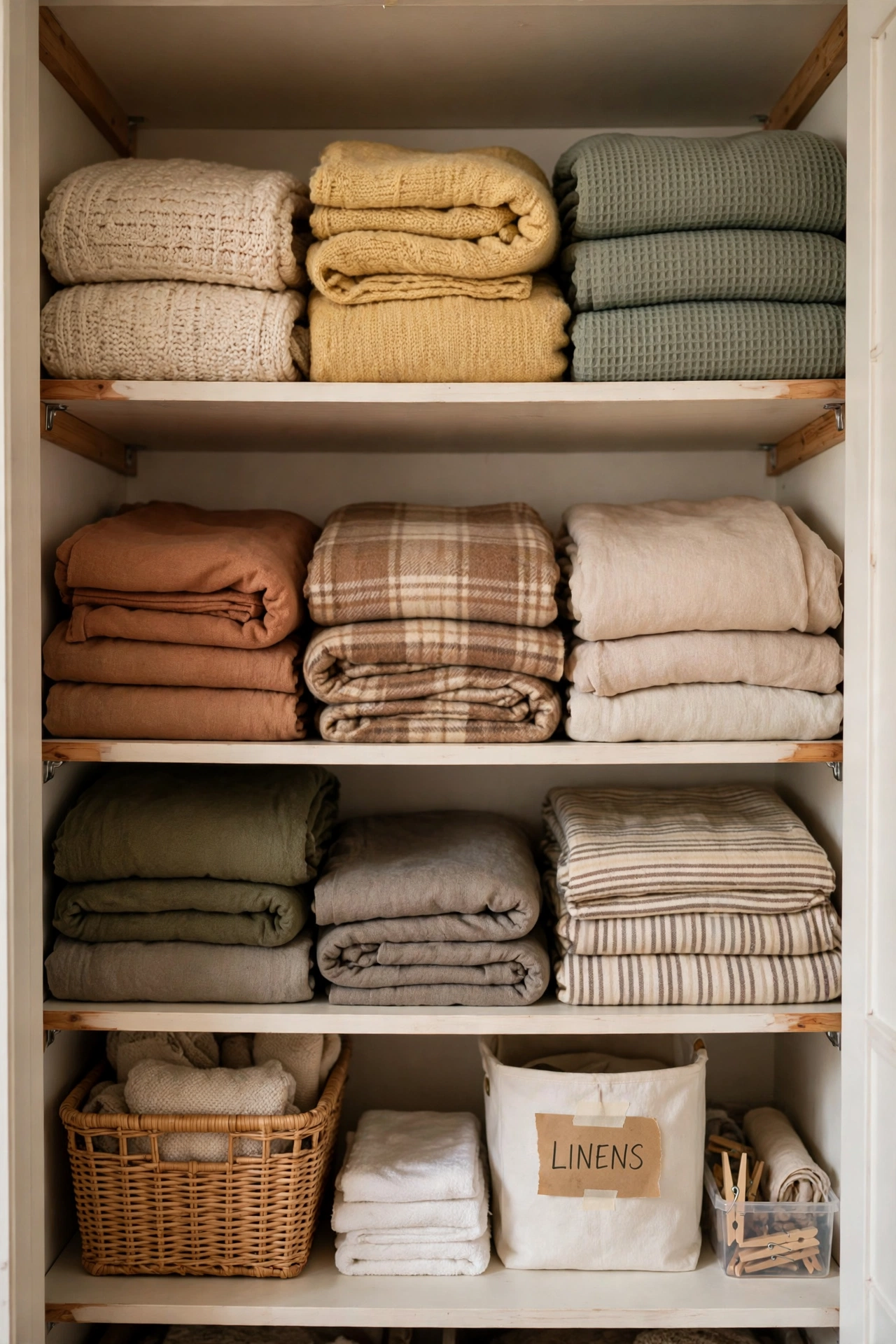
Folded Blanket Stack by Weight is one of those small changes that pays off every single day, because stacking heavy blankets low and light ones high keeps stacks stable. Start by sorting blankets by weight, then placing the heaviest at the bottom, and finish by keeping the lightest throw on top. Refold blankets after washing, since a washed blanket refolded loosely takes double space. I tried this after a friend showed me her version, and I have kept it in place ever since because it is so easy to maintain. One mistake to avoid is doing the whole room in one exhausting session, because a tired tidy rarely lasts past the weekend.
Cost: ~$0 | Time: 20 minutes
(see also: 25-small-bathroom-organization-on-a-budget)
13. Spare Pillow Storage in a Zipper Bag
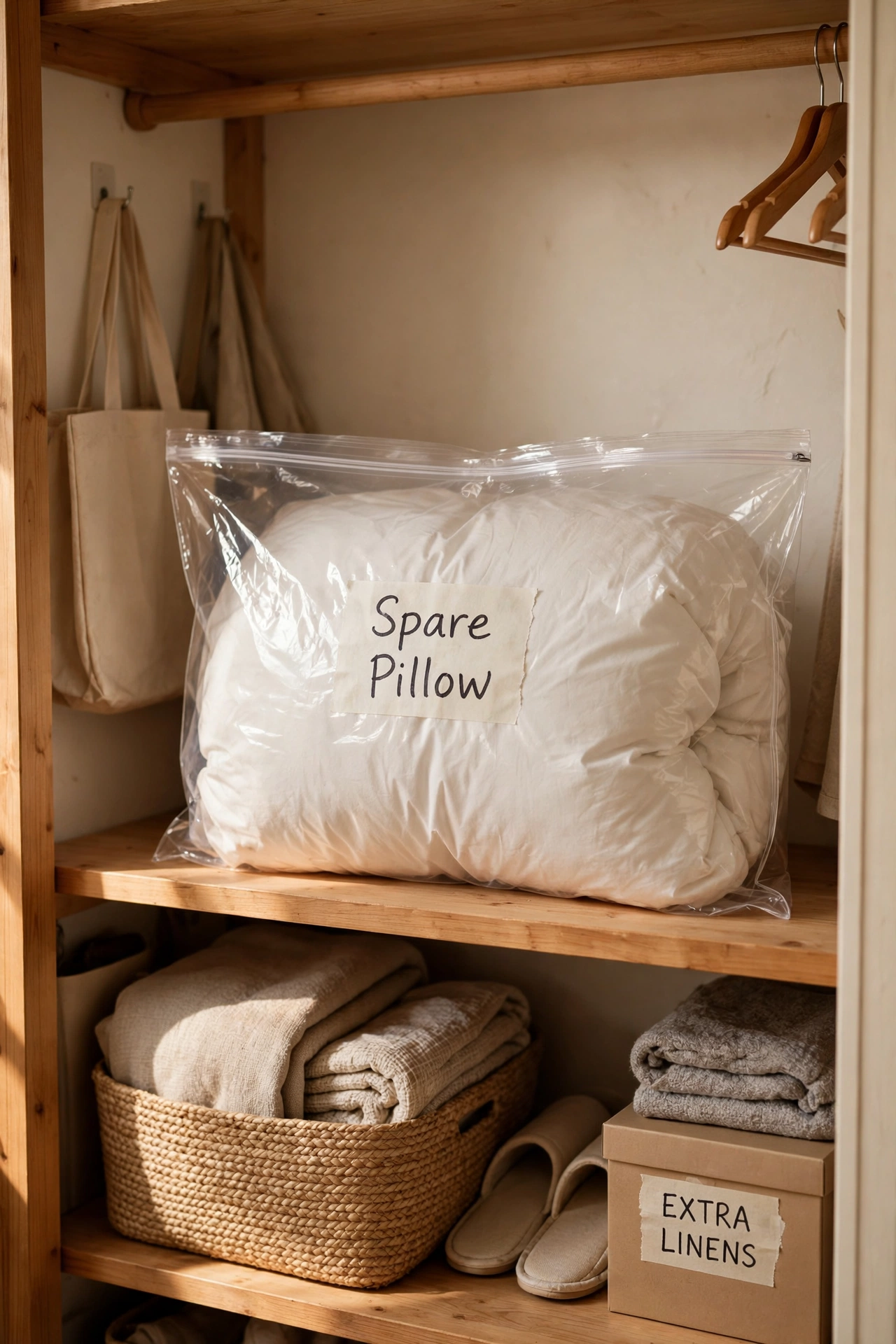
Spare Pillow Storage in a Zipper Bag is one of those small changes that pays off every single day, because zipper bags keep spare pillows clean and compressed on a high shelf. Start by choosing a breathable zipper bag, then sliding the pillow in flat, and finish by storing the bag on the top shelf. Air pillows out before bagging, since a damp pillow stored sealed smells musty. I tried this on a Saturday morning and it stuck, because I could see the result every time I opened the cupboard. One mistake to avoid is filling every container to the brim, because an overfull bin is just as hard to use as a messy shelf.
Cost: ~$5 | Time: 10 minutes
14. Guest Towel Set Ready in One Bin
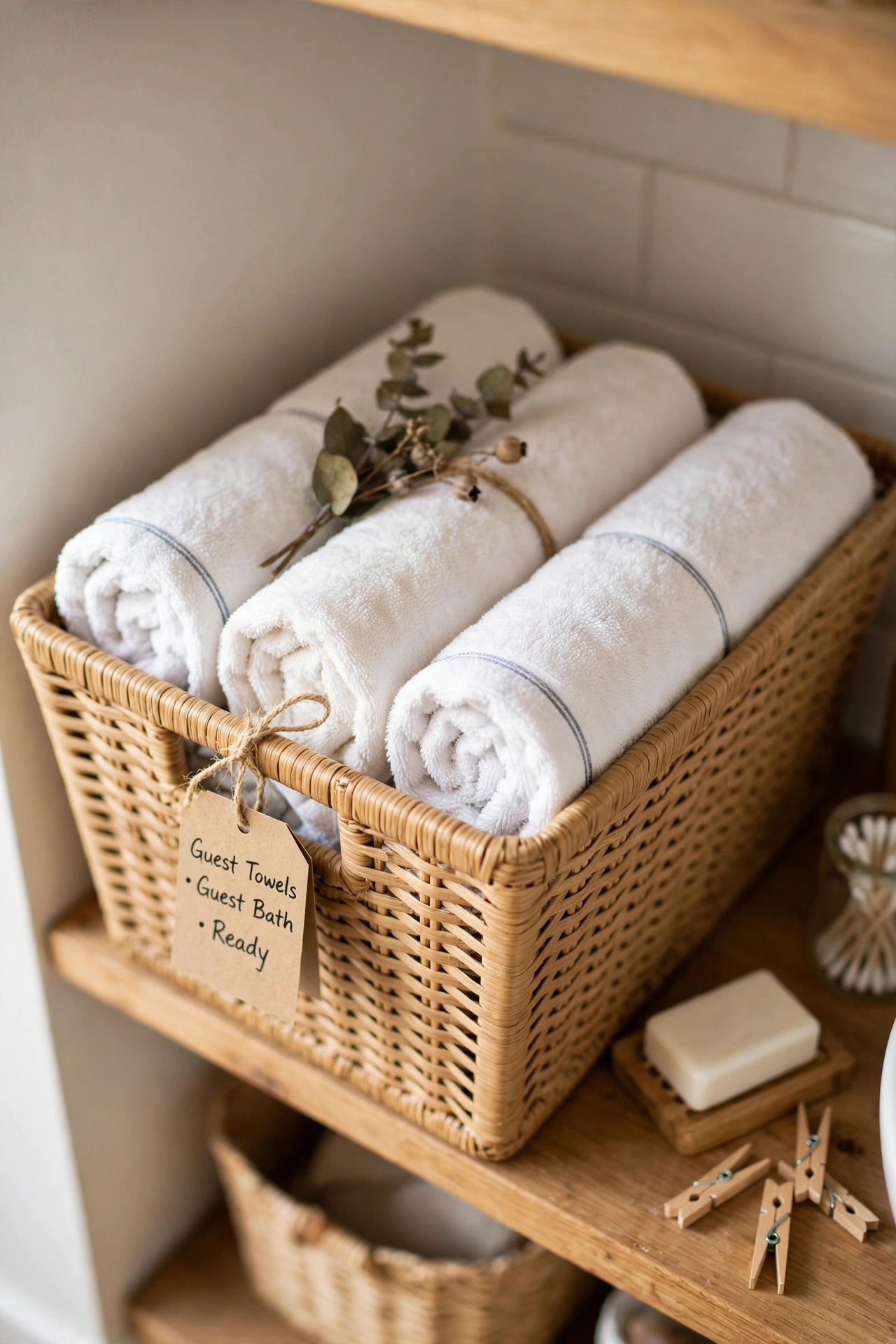
Guest Towel Set Ready in One Bin is one of those small changes that pays off every single day, because a ready guest bin means hosting without a last-minute linen hunt. Start by choosing a bin for two towels and a washcloth, then adding a small soap and a hand towel, and finish by placing the bin where guests can find it. Refresh the guest bin after each visit, since a used guest bin helps nobody. I tried this after one too many mornings hunting for the right thing, and the difference the next week was obvious. One mistake to avoid is organizing around things you no longer use, because clearing first always saves more room than any container.
Cost: ~$6 | Time: 15 minutes
15. Weekly Linen Check for Damp Spots
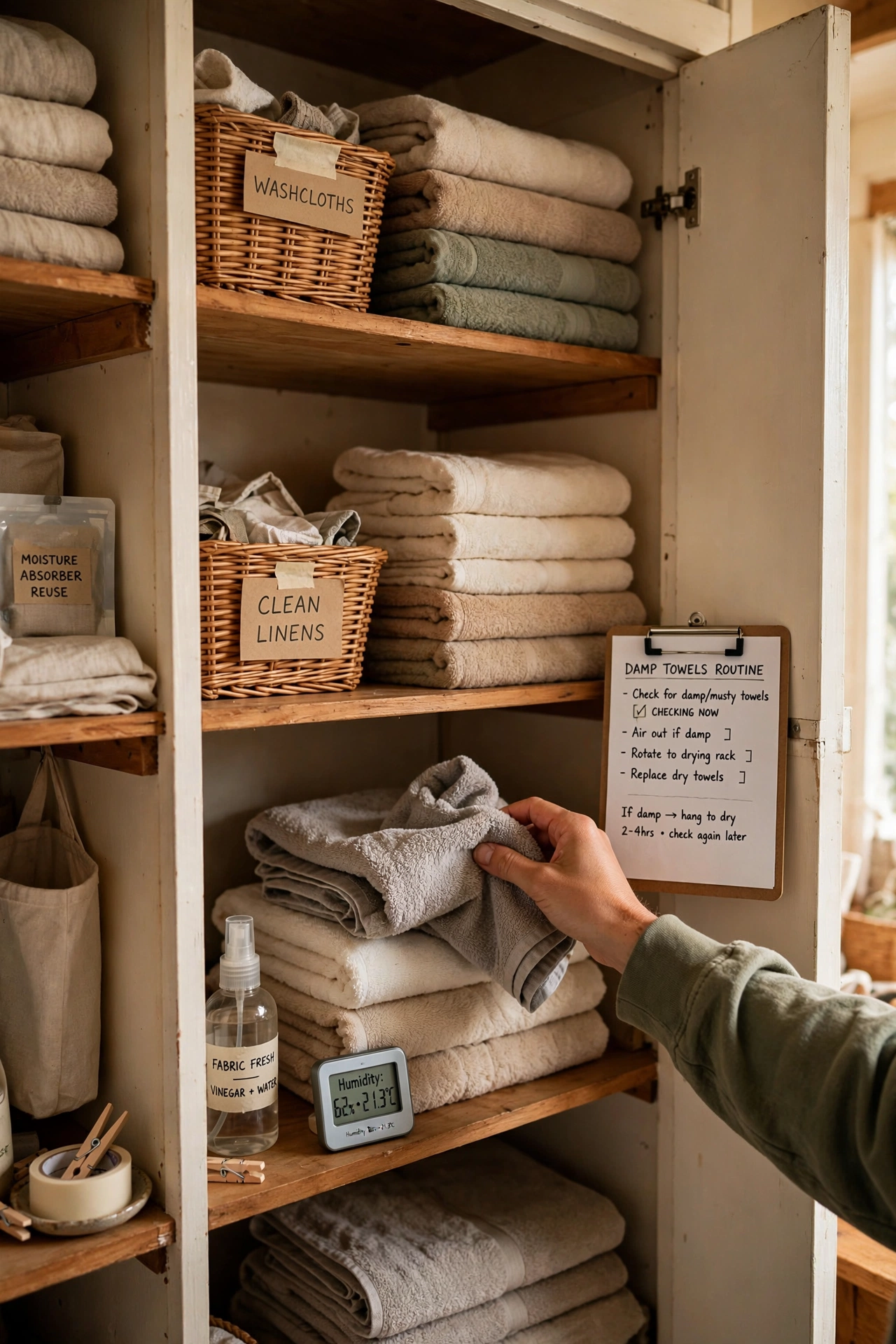
Weekly Linen Check for Damp Spots is one of those small changes that pays off every single day, because a weekly check catches damp before it becomes mildew. Start by choosing one day each week, then feeling towel stacks for dampness, and finish by airing any damp items immediately. Check the back corners too, since damp hides where air never reaches. I tried this in my own home first, and my family noticed the change before I even mentioned it. One mistake to avoid is doing the whole room in one exhausting session, because a tired tidy rarely lasts past the weekend.
Cost: ~$0 | Time: 5 minutes
16. Scent Sachets Between Towel Stacks
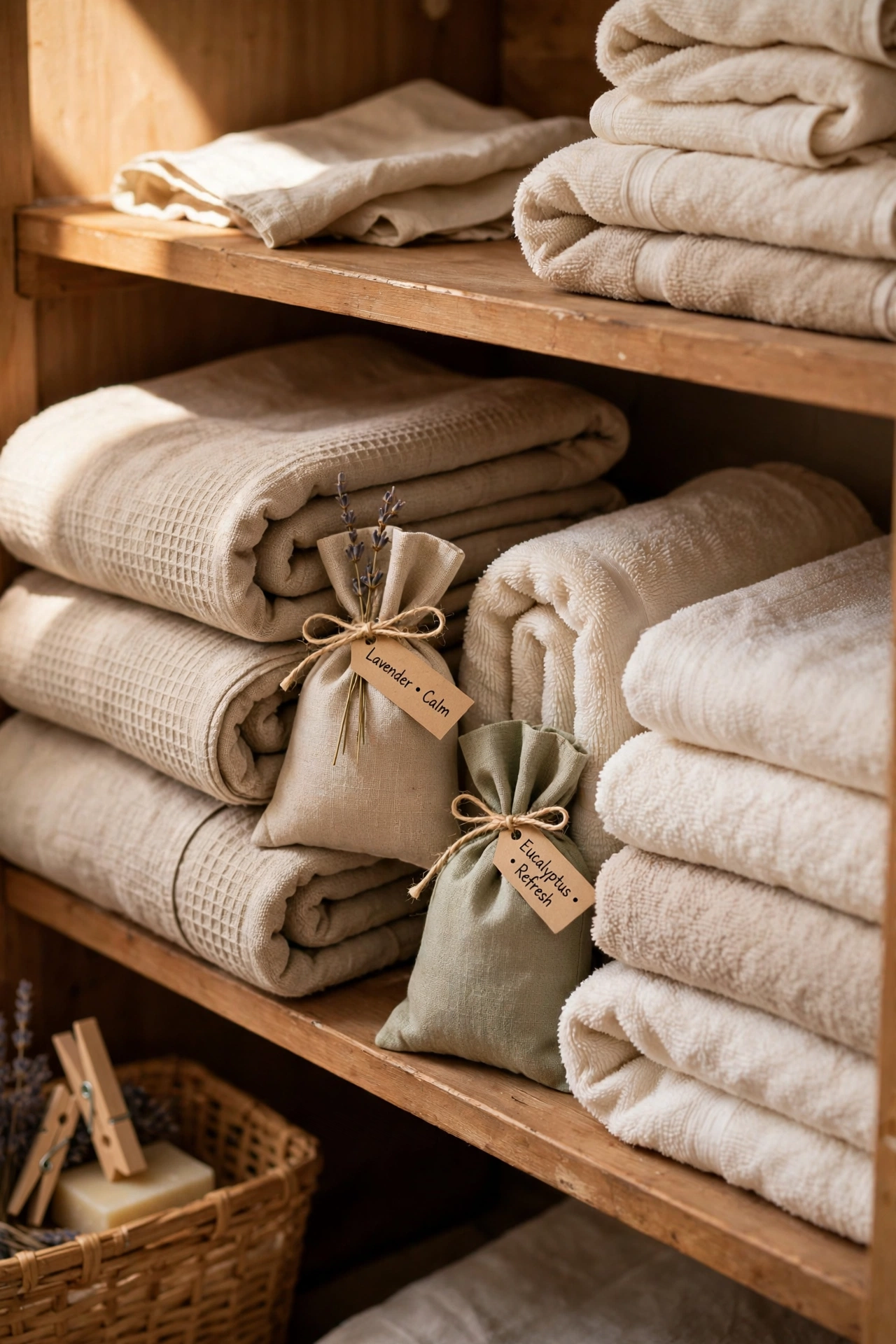
Scent Sachets Between Towel Stacks is one of those small changes that pays off every single day, because scent sachets keep linen smelling fresh without sprays. Start by choosing lavender or cedar sachets, then tucking one sachet between stacks, and finish by replacing sachets every few months. Do not place sachets directly on white linen, since oils can stain over time. I tried this with supplies I already had, and it worked well enough that I never bothered buying a fancier version. One mistake to avoid is filling every container to the brim, because an overfull bin is just as hard to use as a messy shelf.
Cost: ~$4 | Time: 5 minutes
17. Top Shelf Basket for Rarely Used Linens
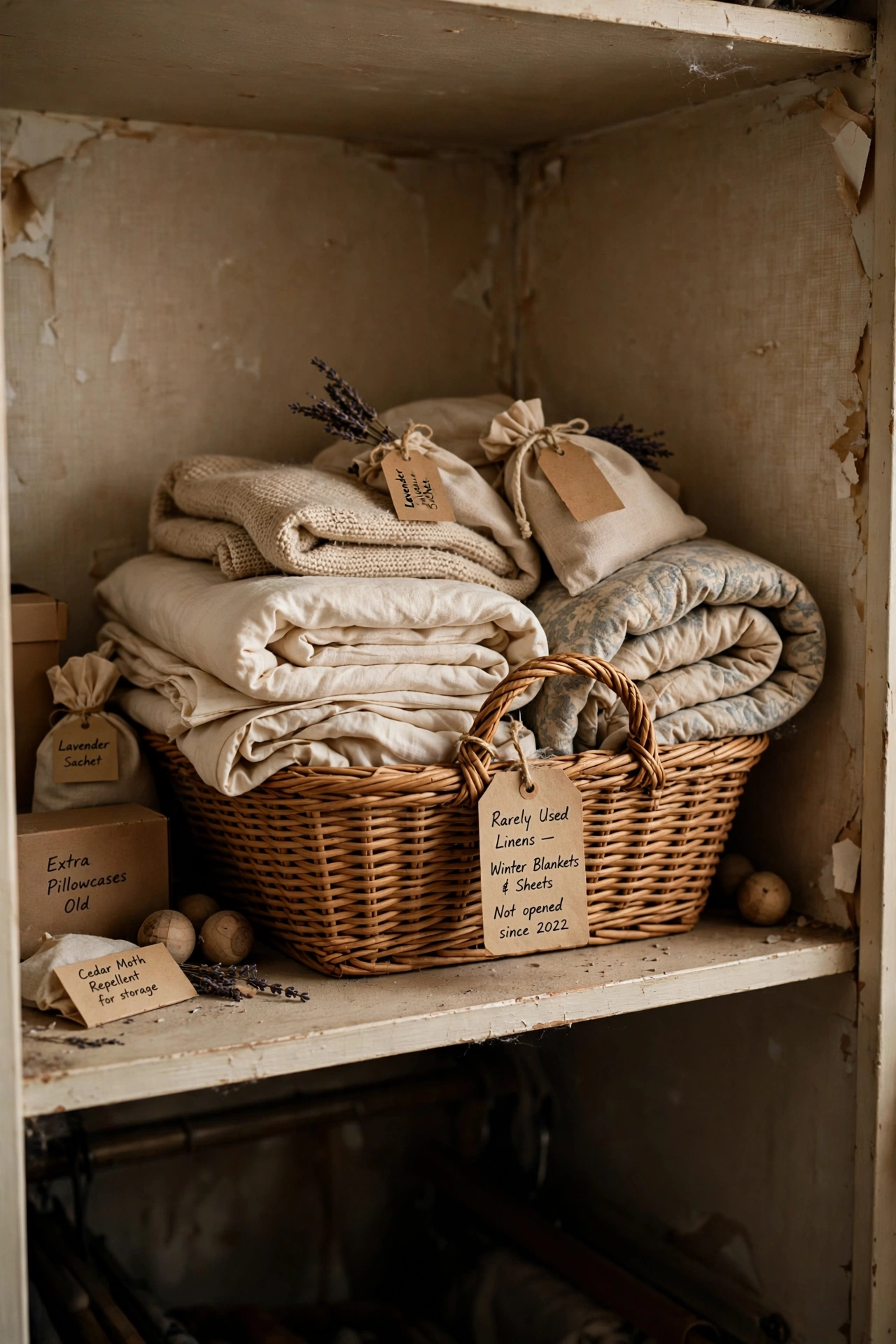
Top Shelf Basket for Rarely Used Linens is one of those small changes that pays off every single day, because a top basket gives rarely used linen a home without blocking daily towels. Start by choosing a basket with handles for high shelves, then placing tablecloths and spare sets inside, and finish by labelling the basket clearly. Keep a step stool nearby, since a top basket without one never gets used. I tried this while tidying one small area at a time, and finishing that one spot kept me going through the rest. One mistake to avoid is organizing around things you no longer use, because clearing first always saves more room than any container.
Cost: ~$7 | Time: 15 minutes
18. Cleaning Caddy That Lives by the Door
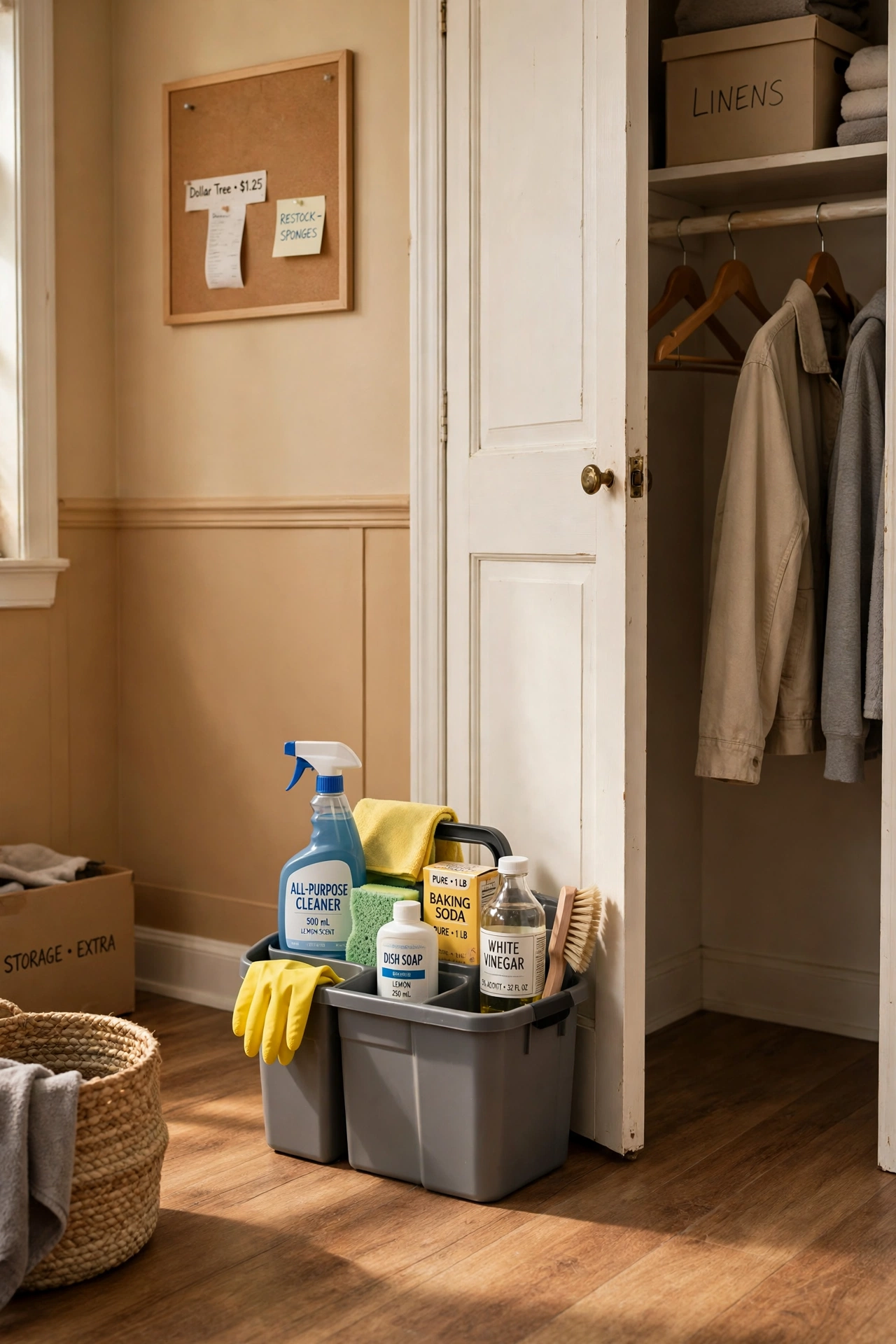
Cleaning Caddy That Lives by the Door is one of those small changes that pays off every single day, because a caddy by the door means cleaning supplies leave with you, not after a hunt. Start by choosing a caddy with a handle, then grouping sprays and cloths inside, and finish by parking it just inside the door. Restock the caddy after each clean, since an empty caddy stays parked. I tried this after a friend showed me her version, and I have kept it in place ever since because it is so easy to maintain. One mistake to avoid is doing the whole room in one exhausting session, because a tired tidy rarely lasts past the weekend.
Cost: ~$8 | Time: 15 minutes
19. Seasonal Swap Routine Twice a Year
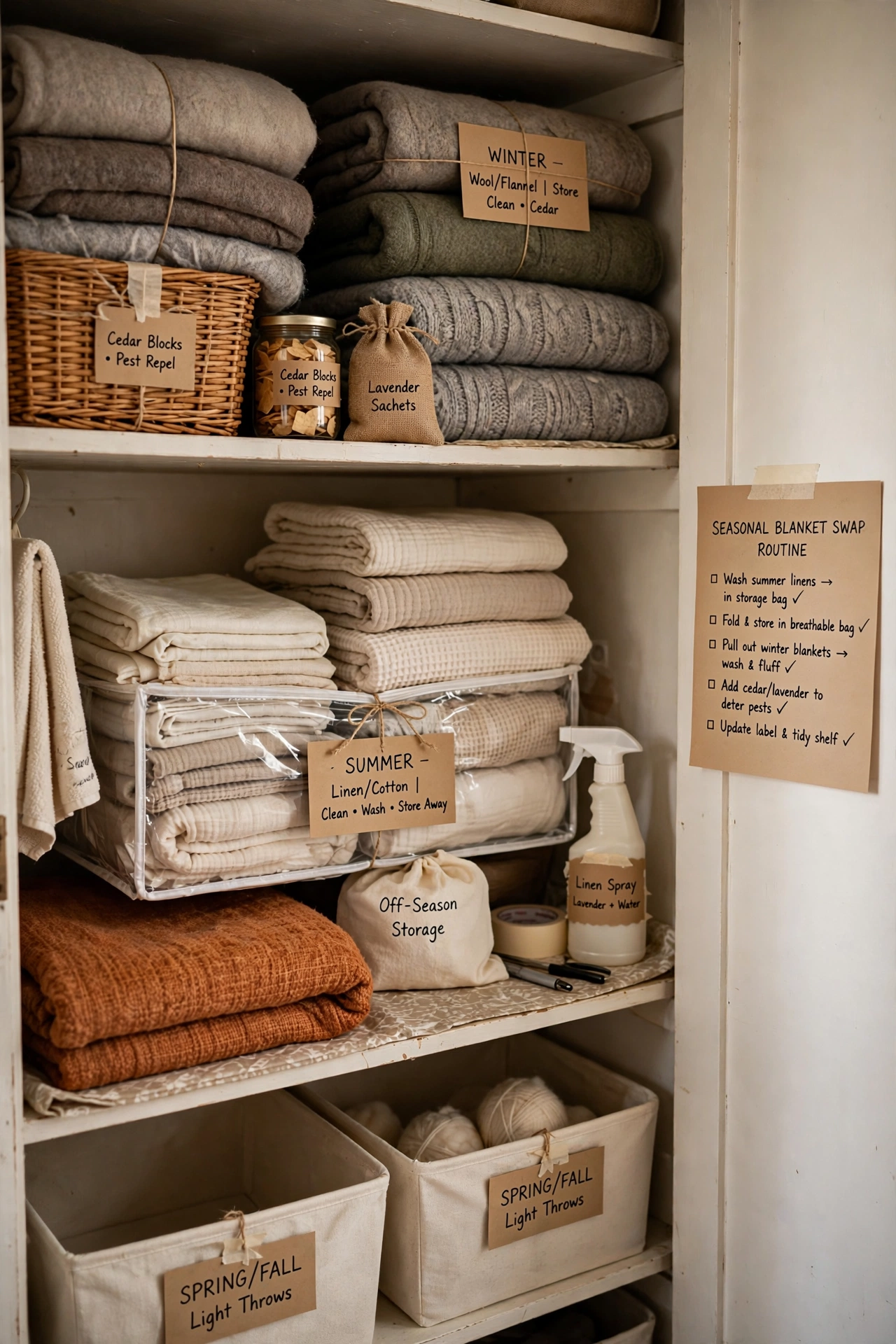
Seasonal Swap Routine Twice a Year is one of those small changes that pays off every single day, because a twice-yearly swap keeps winter blankets out of summer linen and vice versa. Start by choosing spring and autumn swap dates, then moving out-of-season linen to the top shelf, and finish by bringing in-season linen down to reach. Label swapped bins by season, since unlabelled seasonal bins get opened constantly. I tried this on a Saturday morning and it stuck, because I could see the result every time I opened the cupboard. One mistake to avoid is filling every container to the brim, because an overfull bin is just as hard to use as a messy shelf.
Cost: ~$0 | Time: 30 minutes
Frequently Asked Questions
How do I stop towel stacks toppling?
Use shelf dividers and keep stacks to six towels high. Taller stacks always lean, and one leaning stack pulls the next one down with it.
What is the best first change for a messy linen closet?
Labelled bins by room. Labels alone end most hunting, because you stop opening every bin to find the guest towels.
How often should I check for damp?
Once a week, quickly feeling the back corners. Damp caught early airs out in an afternoon, while damp left alone becomes mildew.
Save this idea for your next tidy-up weekend if a calmer, easier room is on your list, and pin the one change you will try first.
See also: more budget organization ideas and small-space storage ideas.
Start with the cheapest change on this list, live with it for a week, and only then buy the next organizer. Small, steady fixes beat a big shopping trip every time, and your room will stay easier to keep tidy because the system finally fits how you actually live in it.
