17 Home Office Organization Ideas on a Dime
These home office organization ideas work because they start with the desk you already have, not a new desk you cannot afford. Each change costs a few dollars, takes under an hour, and removes one daily friction, whether that is paper piles, cable tangles or a drawer you dread opening.
Paper and Desk Surface
1. Desktop Tray for Incoming Paper
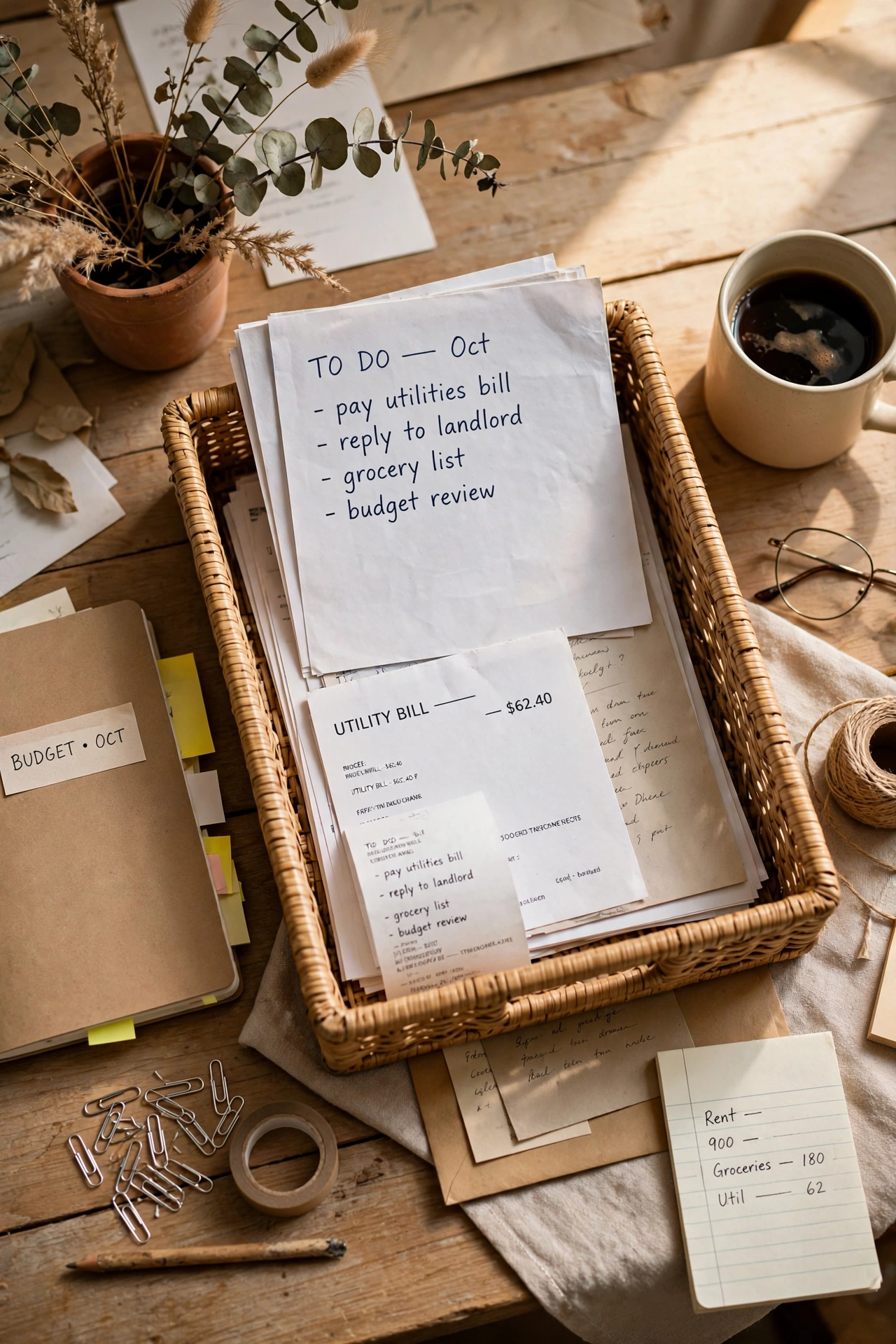
Desktop Tray for Incoming Paper is one of those small changes that pays off every single day, because paper stops piling on the desk when it has one landing tray. Start by placing a tray at the desk corner, then dropping all incoming paper in it daily, and finish by sorting the tray once a week. Keep the tray shallow, since a deep tray becomes a paper graveyard. I tried this on a Saturday morning and it stuck, because I could see the result every time I opened the cupboard. One mistake to avoid is filling every container to the brim, because an overfull bin is just as hard to use as a messy shelf.
Cost: ~$5 | Time: 10 minutes
2. Cable Box to Hide Power Strips

Cable Box to Hide Power Strips is one of those small changes that pays off every single day, because a cable box turns a tangle of wires into one neat block. Start by choosing a box that fits your power strip, then feeding cables through its side slots, and finish by placing it behind or under the desk. Leave the strip switch accessible, since a box you cannot switch off gets ignored. I tried this after one too many mornings hunting for the right thing, and the difference the next week was obvious. One mistake to avoid is organizing around things you no longer use, because clearing first always saves more room than any container.
Cost: ~$9 | Time: 15 minutes
Wall Storage
3. Wall Grid for Notes and Reminders
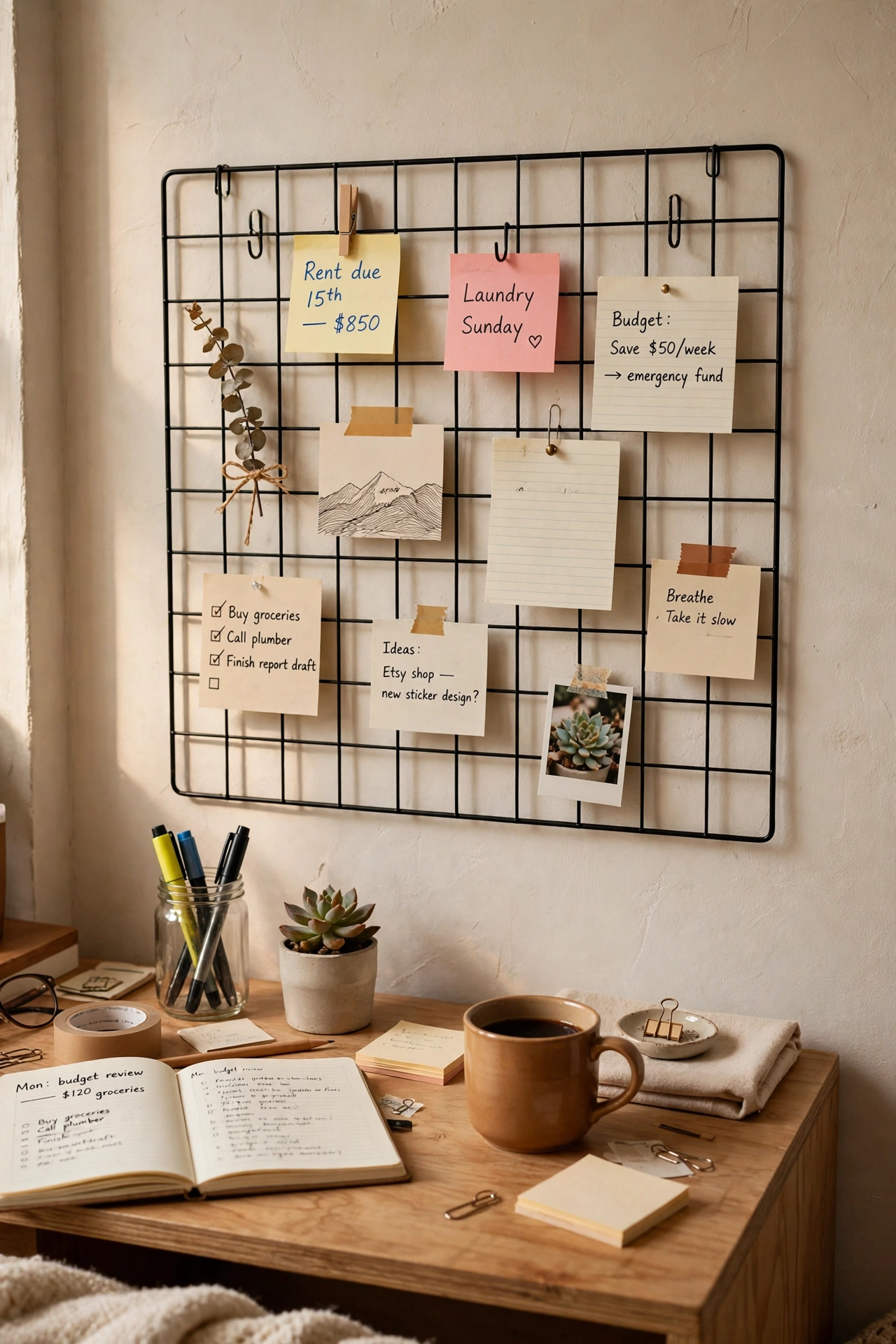
Wall Grid for Notes and Reminders is one of those small changes that pays off every single day, because a wall grid keeps notes visible without covering the desk in sticky notes. Start by fixing a metal grid above the desk, then clipping notes and photos with small clips, and finish by removing notes once they are done. Review the grid every Friday, since old notes quickly become wallpaper. I tried this in my own home first, and my family noticed the change before I even mentioned it. One mistake to avoid is doing the whole room in one exhausting session, because a tired tidy rarely lasts past the weekend.
Cost: ~$12 | Time: 25 minutes
4. Drawer Organizer for Office Supplies

Drawer Organizer for Office Supplies is one of those small changes that pays off every single day, because a divided drawer ends the hunt for a working pen. Start by emptying the desk drawer completely, then laying a small organizer inside, and finish by assigning one section per supply type. Keep pens in one section only, since pens scattered across sections multiply. I tried this with supplies I already had, and it worked well enough that I never bothered buying a fancier version. One mistake to avoid is filling every container to the brim, because an overfull bin is just as hard to use as a messy shelf.
Cost: ~$7 | Time: 20 minutes
5. DIY Monitor Stand from a Small Crate

DIY Monitor Stand from a Small Crate is one of those small changes that pays off every single day, because raising the screen to eye level saves your neck and adds storage underneath. Start by choosing a sturdy crate that fits your monitor base, then placing the monitor on top securely, and finish by storing notebooks underneath the crate. Check the crate is level first, since a wobbly stand makes typing miserable. I tried this while tidying one small area at a time, and finishing that one spot kept me going through the rest. One mistake to avoid is organizing around things you no longer use, because clearing first always saves more room than any container.
Cost: ~$4 | Time: 15 minutes
(see also: 17-home-office-organization-ideas-that-actually-work)
6. Rolling File Cart Beside the Desk
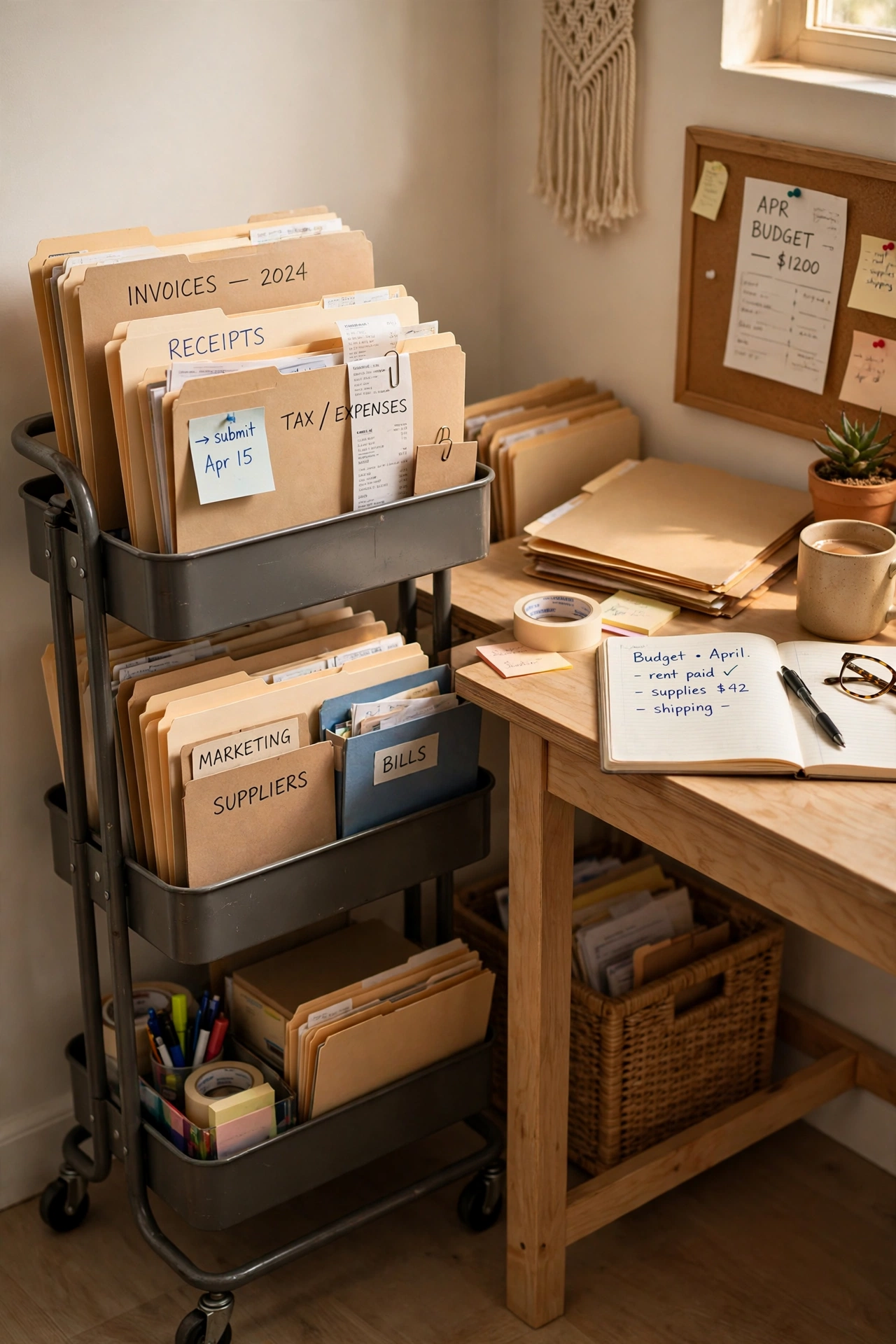
Rolling File Cart Beside the Desk is one of those small changes that pays off every single day, because files beside the desk beat files stacked on the desk. Start by choosing a slim cart with hanging folders, then labelling folders by topic, and finish by rolling the cart beside the desk within reach. Keep current files at the front, since archived files belong further back. I tried this after a friend showed me her version, and I have kept it in place ever since because it is so easy to maintain. One mistake to avoid is doing the whole room in one exhausting session, because a tired tidy rarely lasts past the weekend.
Cost: ~$16 | Time: 20 minutes
7. Mug Cup for Pens That Actually Gets Used
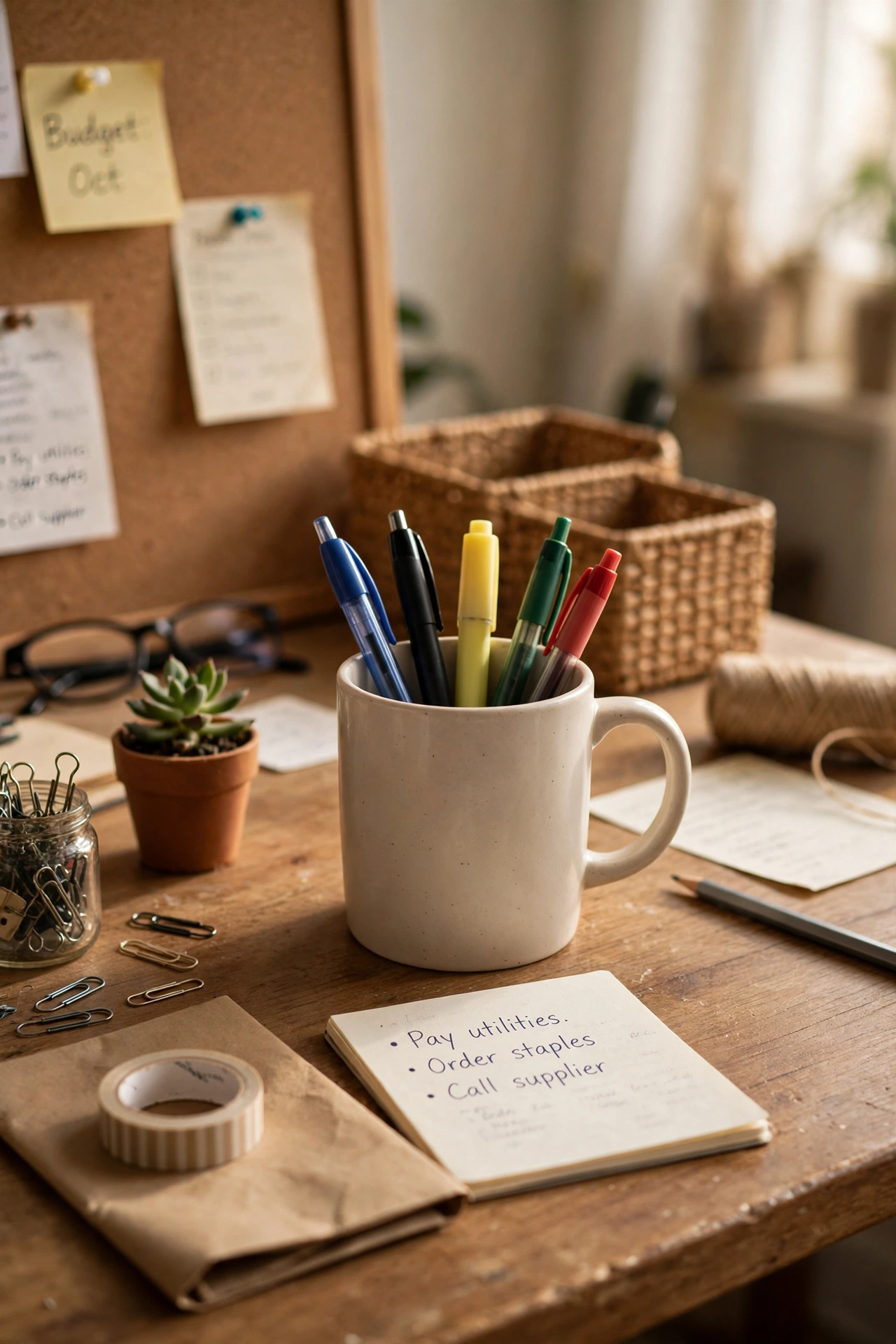
Mug Cup for Pens That Actually Gets Used is one of those small changes that pays off every single day, because one cup for pens beats five cups scattered around the room. Start by choosing a single sturdy mug, then testing every pen and keeping only working ones, and finish by placing the mug at your dominant-hand side. Empty the mug monthly, since dead pens sneak back in fast. I tried this on a Saturday morning and it stuck, because I could see the result every time I opened the cupboard. One mistake to avoid is filling every container to the brim, because an overfull bin is just as hard to use as a messy shelf.
Cost: ~$2 | Time: 10 minutes
8. Labelled Binder System for Bills
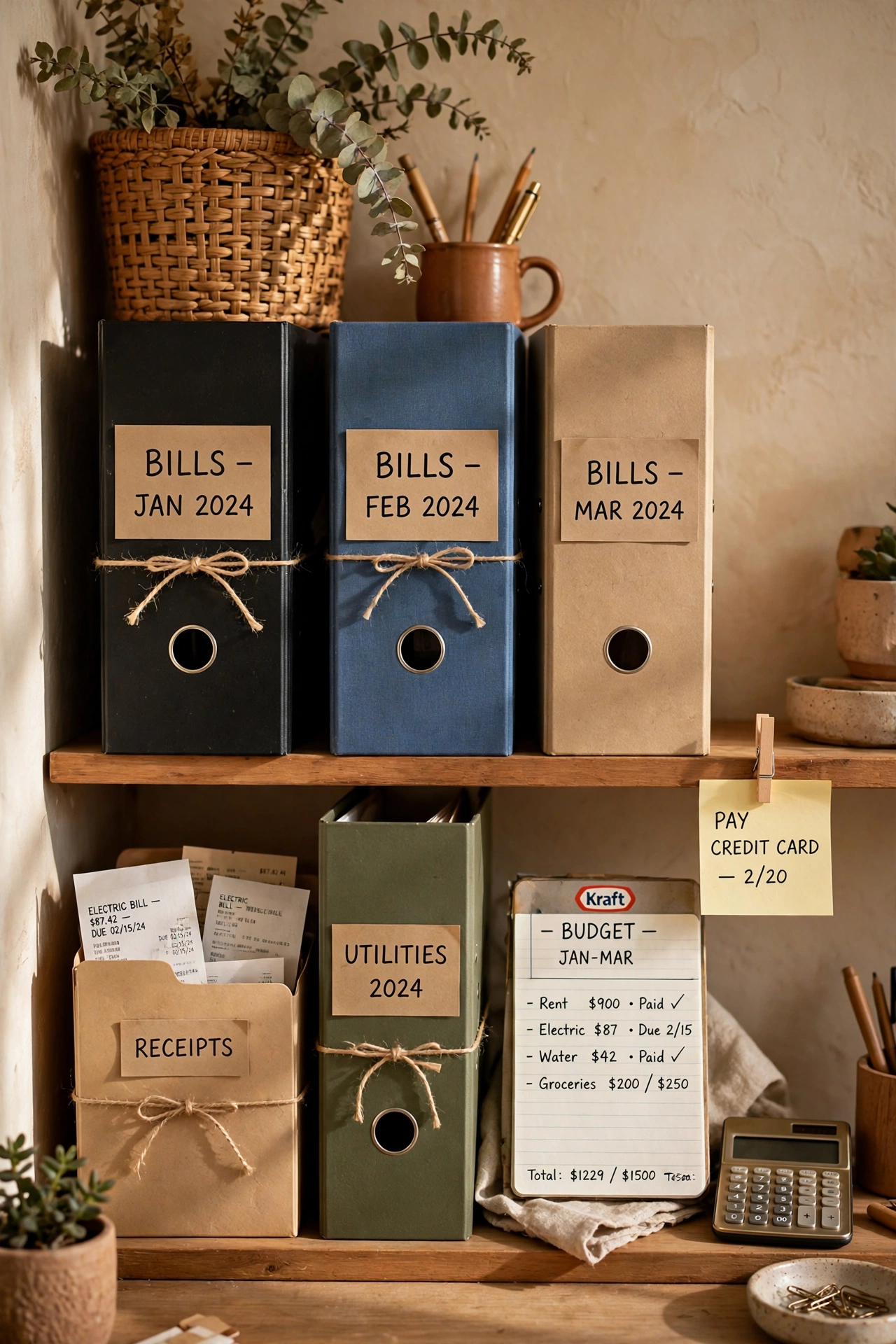
Labelled Binder System for Bills is one of those small changes that pays off every single day, because labelled binders turn bill chaos into a shelf you can trust. Start by choosing binders in one colour family, then labelling each binder by year or topic, and finish by filing bills the day they arrive. File bills weekly at most, since a monthly pile always feels overwhelming. I tried this after one too many mornings hunting for the right thing, and the difference the next week was obvious. One mistake to avoid is organizing around things you no longer use, because clearing first always saves more room than any container.
Cost: ~$10 | Time: 30 minutes
9. Pegboard Above the Desk

Pegboard Above the Desk is one of those small changes that pays off every single day, because a pegboard lifts supplies off the desk and onto the wall. Start by fixing a pegboard panel above the desk, then hanging cups and hooks for supplies, and finish by keeping daily tools at arm height. Do not hang heavy items high, since a pegboard hook under strain eventually drops. I tried this in my own home first, and my family noticed the change before I even mentioned it. One mistake to avoid is doing the whole room in one exhausting session, because a tired tidy rarely lasts past the weekend.
Cost: ~$14 | Time: 35 minutes
10. Small Shelf Above the Monitor
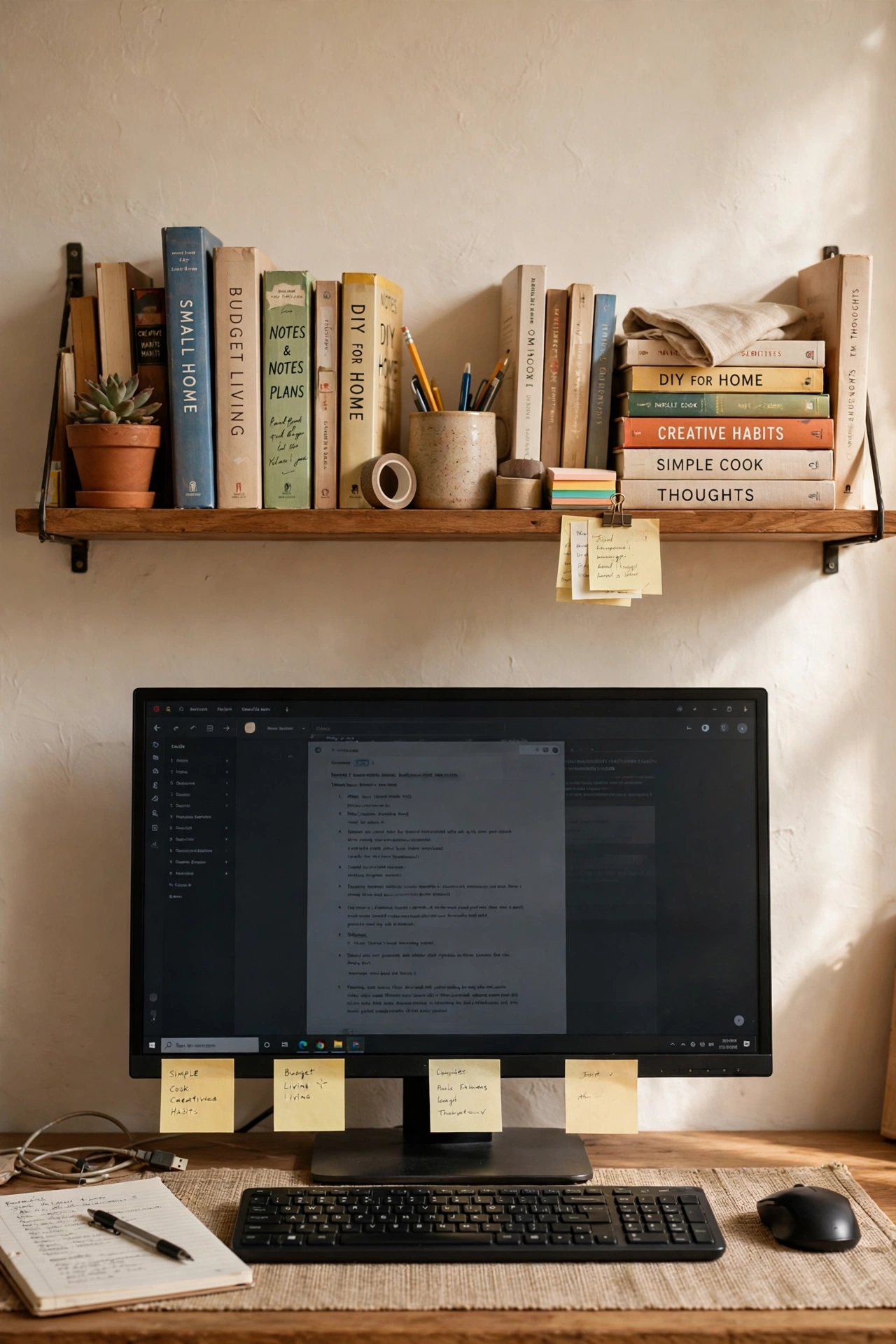
Small Shelf Above the Monitor is one of those small changes that pays off every single day, because a shelf above the monitor adds storage without taking desk space. Start by fixing a shallow shelf above monitor height, then placing reference books and a plant there, and finish by keeping the shelf to light items only. Measure monitor height first, since a shelf too low blocks the screen top. I tried this with supplies I already had, and it worked well enough that I never bothered buying a fancier version. One mistake to avoid is filling every container to the brim, because an overfull bin is just as hard to use as a messy shelf.
Cost: ~$11 | Time: 30 minutes
Drawers and Cables
11. Cord Clips Along the Desk Edge

Cord Clips Along the Desk Edge is one of those small changes that pays off every single day, because cord clips stop charging cables sliding behind the desk forever. Start by sticking clips along the back edge of the desk, then threading one cable through each clip, and finish by leaving enough slack to use devices comfortably. Label each cable with tape, since identical black cables all look the same. I tried this while tidying one small area at a time, and finishing that one spot kept me going through the rest. One mistake to avoid is organizing around things you no longer use, because clearing first always saves more room than any container.
Cost: ~$4 | Time: 10 minutes
(see also: 19-home-office-organization-ideas-on-a-budget)
12. Weekly Desk Clear-Out Habit
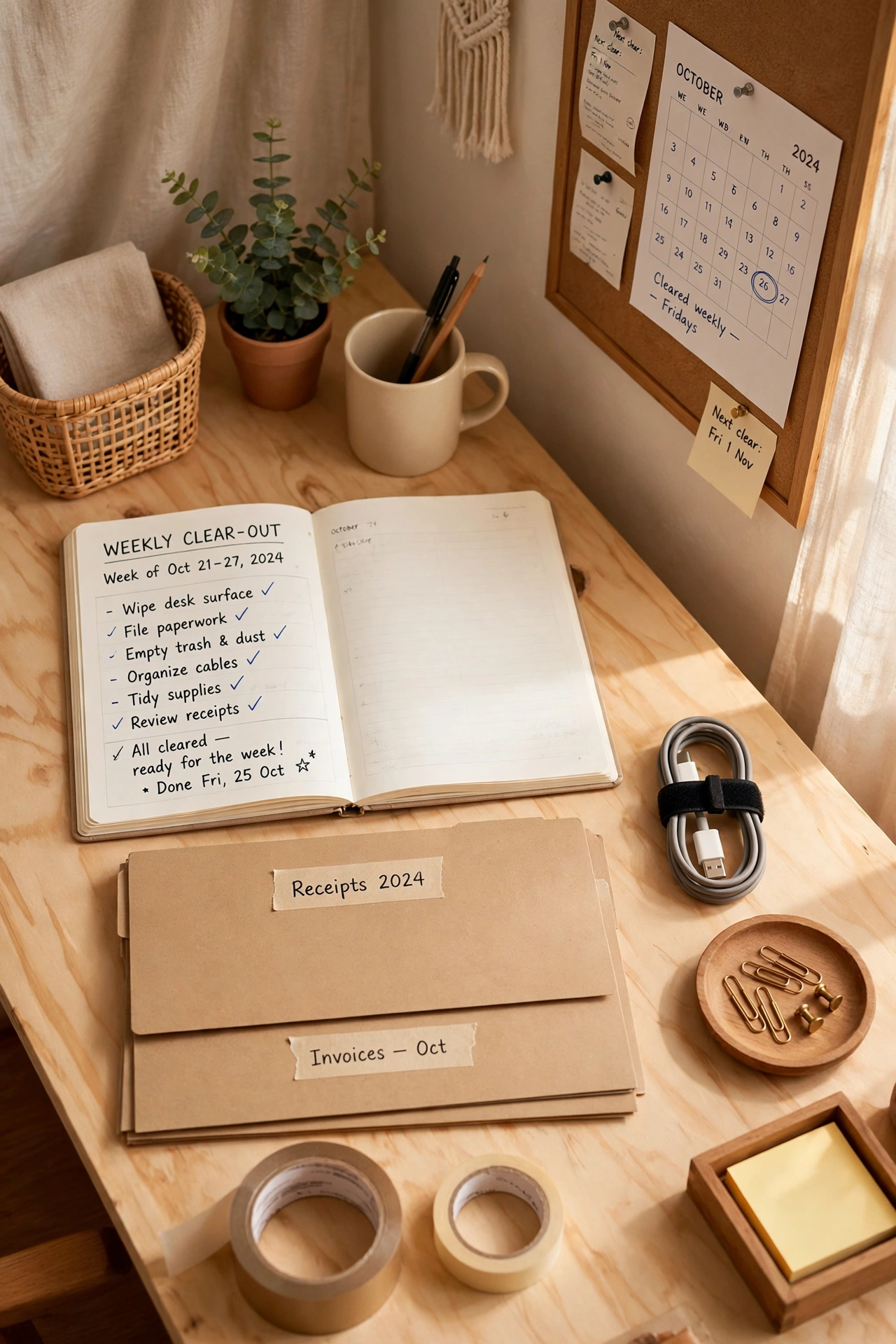
Weekly Desk Clear-Out Habit is one of those small changes that pays off every single day, because a weekly clear-out keeps the desk from slowly becoming a storage shelf. Start by choosing one fixed day each week, then removing everything that does not belong, and finish by returning supplies to their labelled homes. Set a phone reminder, since a habit without a cue rarely happens. I tried this after a friend showed me her version, and I have kept it in place ever since because it is so easy to maintain. One mistake to avoid is doing the whole room in one exhausting session, because a tired tidy rarely lasts past the weekend.
Cost: ~$0 | Time: 15 minutes
13. Tray for Charging Cables
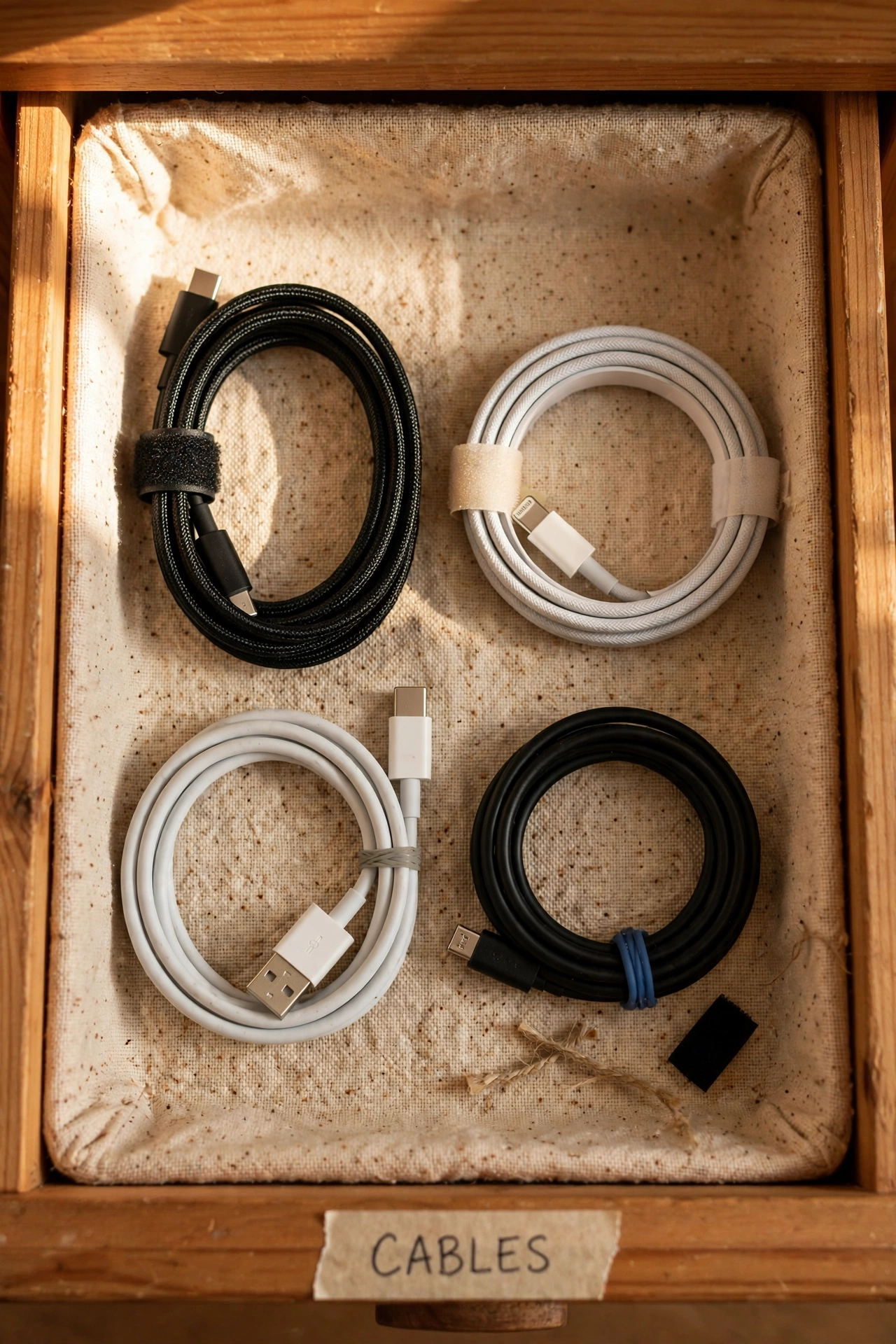
Tray for Charging Cables is one of those small changes that pays off every single day, because one tray for cables ends the drawer full of tangled chargers. Start by choosing a shallow tray for a drawer or shelf, then coiling each cable neatly, and finish by labelling cables by device. Keep one spare cable only, since spares multiply into a drawer of their own. I tried this on a Saturday morning and it stuck, because I could see the result every time I opened the cupboard. One mistake to avoid is filling every container to the brim, because an overfull bin is just as hard to use as a messy shelf.
Cost: ~$5 | Time: 15 minutes
14. Hanging File Pockets on the Wall

Hanging File Pockets on the Wall is one of those small changes that pays off every single day, because wall pockets file papers vertically and free the whole desk. Start by fixing three or four pockets on a free wall, then labelling pockets by project, and finish by filing papers as soon as they arrive. Keep the pockets at eye level, since pockets too high never get filed into. I tried this after one too many mornings hunting for the right thing, and the difference the next week was obvious. One mistake to avoid is organizing around things you no longer use, because clearing first always saves more room than any container.
Cost: ~$13 | Time: 25 minutes
15. Desk Drawer Zones by Task

Desk Drawer Zones by Task is one of those small changes that pays off every single day, because zones by task mean you open one drawer section, not the whole drawer. Start by emptying the drawer and grouping supplies by task, then assigning each task a zone, and finish by labelling zones lightly with tape. Review zones monthly, since tasks change and zones should change with them. I tried this in my own home first, and my family noticed the change before I even mentioned it. One mistake to avoid is doing the whole room in one exhausting session, because a tired tidy rarely lasts past the weekend.
Cost: ~$6 | Time: 25 minutes
Habits That Hold It Together
16. Inbox and Outbox Trays Stacked

Inbox and Outbox Trays Stacked is one of those small changes that pays off every single day, because stacked trays separate what needs doing from what is done. Start by stacking two trays at the desk corner, then placing incoming work in the top tray, and finish by moving finished work to the bottom tray. Clear the outbox tray daily, since finished work left there clogs the system. I tried this with supplies I already had, and it worked well enough that I never bothered buying a fancier version. One mistake to avoid is filling every container to the brim, because an overfull bin is just as hard to use as a messy shelf.
Cost: ~$8 | Time: 10 minutes
17. End-of-Day Shutdown Checklist on a Card

End-of-Day Shutdown Checklist on a Card is one of those small changes that pays off every single day, because a shutdown card turns tidying into a two-minute habit. Start by writing five shutdown steps on a card, then keeping the card beside the keyboard, and finish by ticking steps off before you log off. Keep the card to five steps, since a long checklist never gets finished. I tried this while tidying one small area at a time, and finishing that one spot kept me going through the rest. One mistake to avoid is organizing around things you no longer use, because clearing first always saves more room than any container.
Cost: ~$1 | Time: 5 minutes
Save this idea for your next tidy-up weekend if a calmer, easier room is on your list, and pin the one change you will try first.
See also: more budget organization ideas and small-space storage ideas.
Start with the cheapest change on this list, live with it for a week, and only then buy the next organizer. Small, steady fixes beat a big shopping trip every time, and your room will stay easier to keep tidy because the system finally fits how you actually live in it.
