19 Decluttering Tips for People Who Hate Decluttering
If you hate decluttering, you are not lazy, you are probably just tired of advice that assumes you enjoy sorting things for fun. These decluttering tips are built for people who would rather do almost anything else, with short timers, small wins, and no giant weekend project. Start with one tip, stop when the timer rings, and let the room get a little better instead of waiting for a perfect day that never comes.
- Set a timer and stop when it rings — free, and it works even on your worst day.
- Keep a donation box by the front door — free, and it catches clutter the moment you notice it.
- Let go of duplicates first — free, and it clears space without any hard decisions.
1. Set a Timer and Stop When It Rings
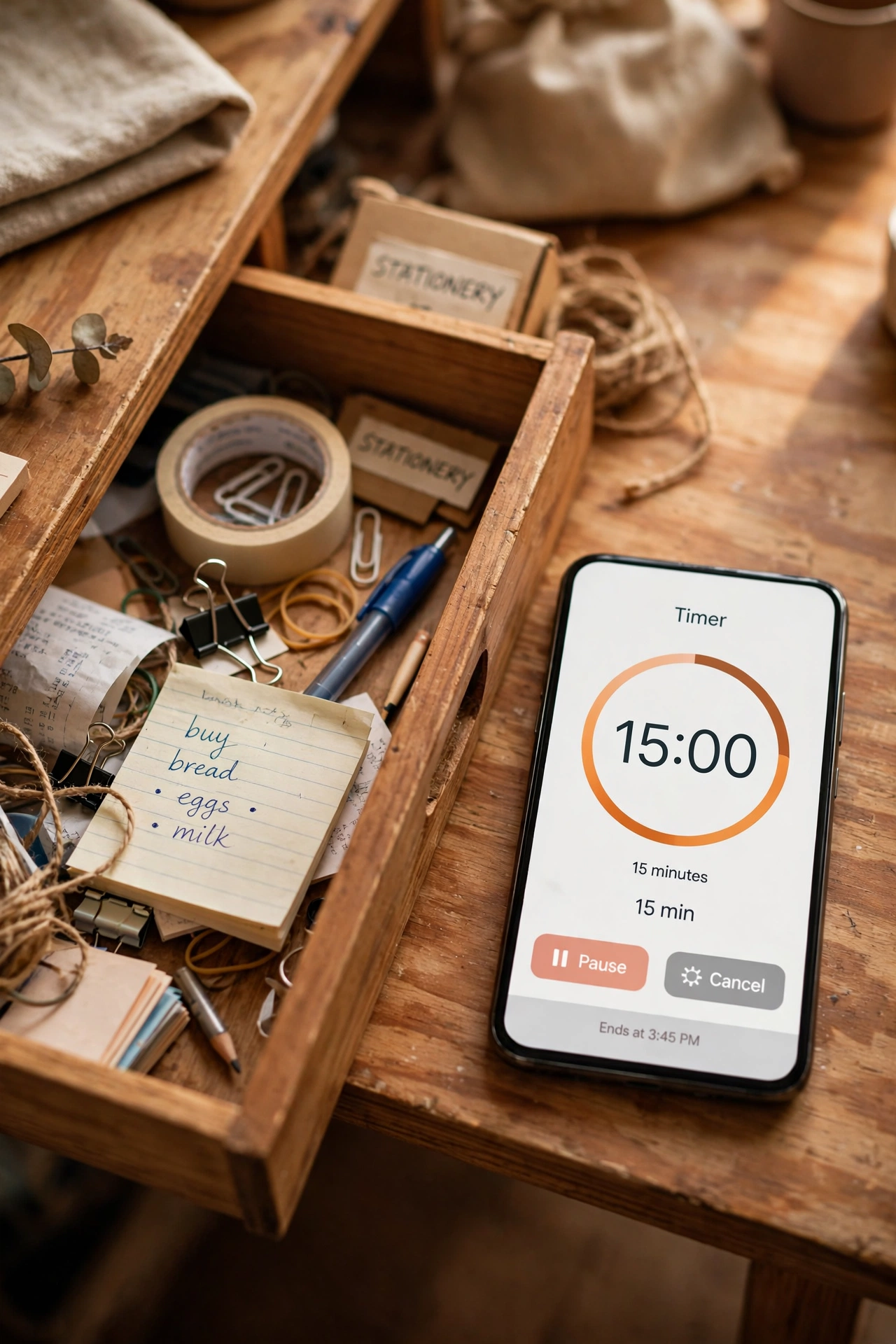
A timer turns decluttering from an endless project into a job with an end, which is exactly what reluctant declutterers need. Set your phone for fifteen minutes, pick one small area, and work until the timer rings, then stop, even if the job is not finished. I tried this after avoiding a messy drawer for months, and fifteen minutes cleared it completely, which surprised me more than anyone. The mistake to avoid is resetting the timer again and again, because a short session that feels good beats a long session you dread repeating. Keep sessions short, celebrate the stop as much as the start, and come back tomorrow if you feel like it.
Cost: ~$0 | Time: 15 minutes
2. Start With the Surface You See First
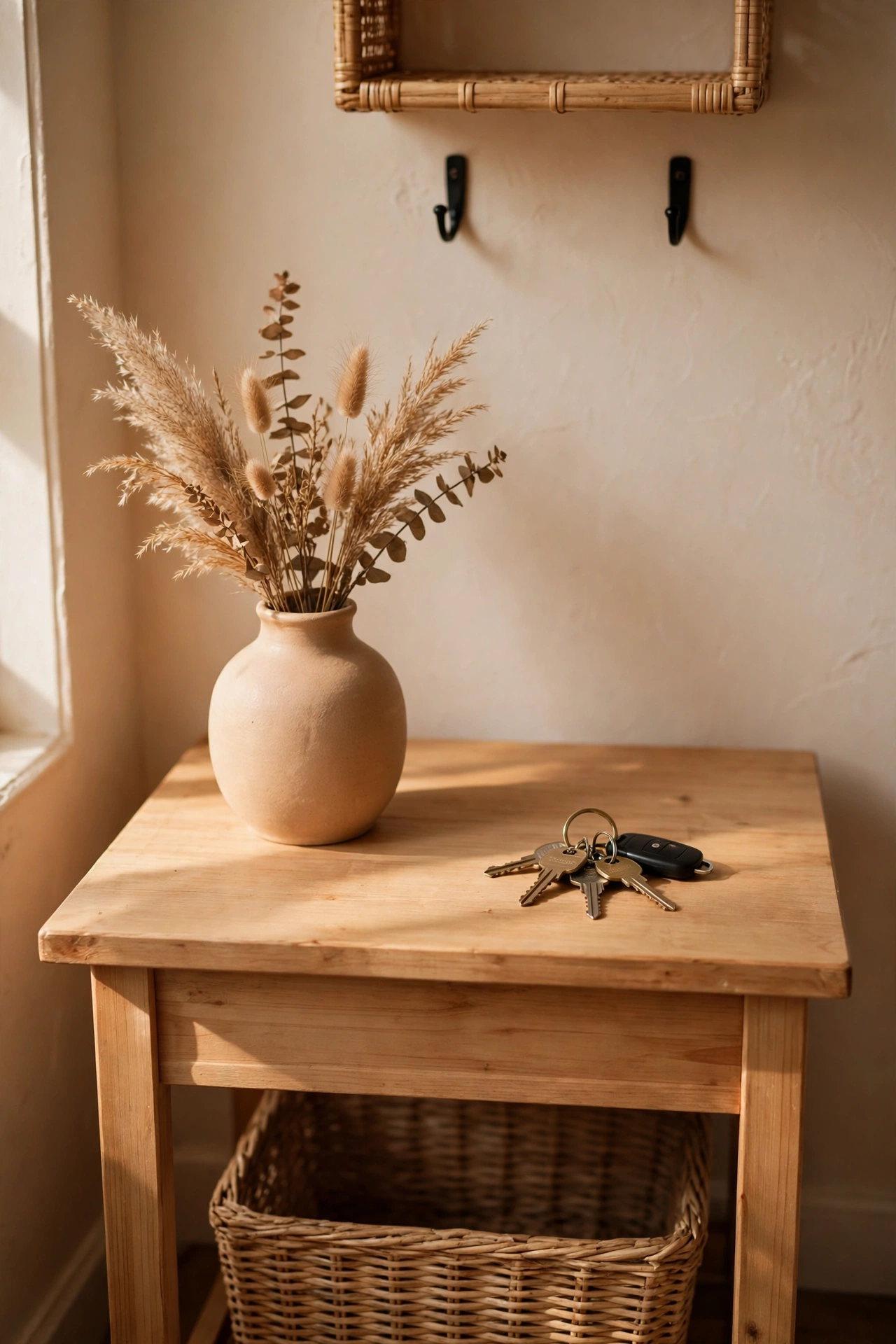
Starting with the surface you see first, usually the kitchen counter or the entry table, gives you a visible win fast, and visible wins keep reluctant declutterers going. Clear everything off that one surface, keep only what belongs there, and move the rest to a box for sorting later. I tried this on our entry table one evening, and walking in the next morning felt noticeably calmer, even though the cupboards were still a mess. Do not start with a hidden cupboard nobody sees, because hard work with no visible payoff kills motivation fast. Pick the surface that greets you daily, clear it fully, and enjoy the result before tackling anything else.
Cost: ~$0 | Time: 20 minutes
3. Use a Box and a Bag, Nothing Fancier
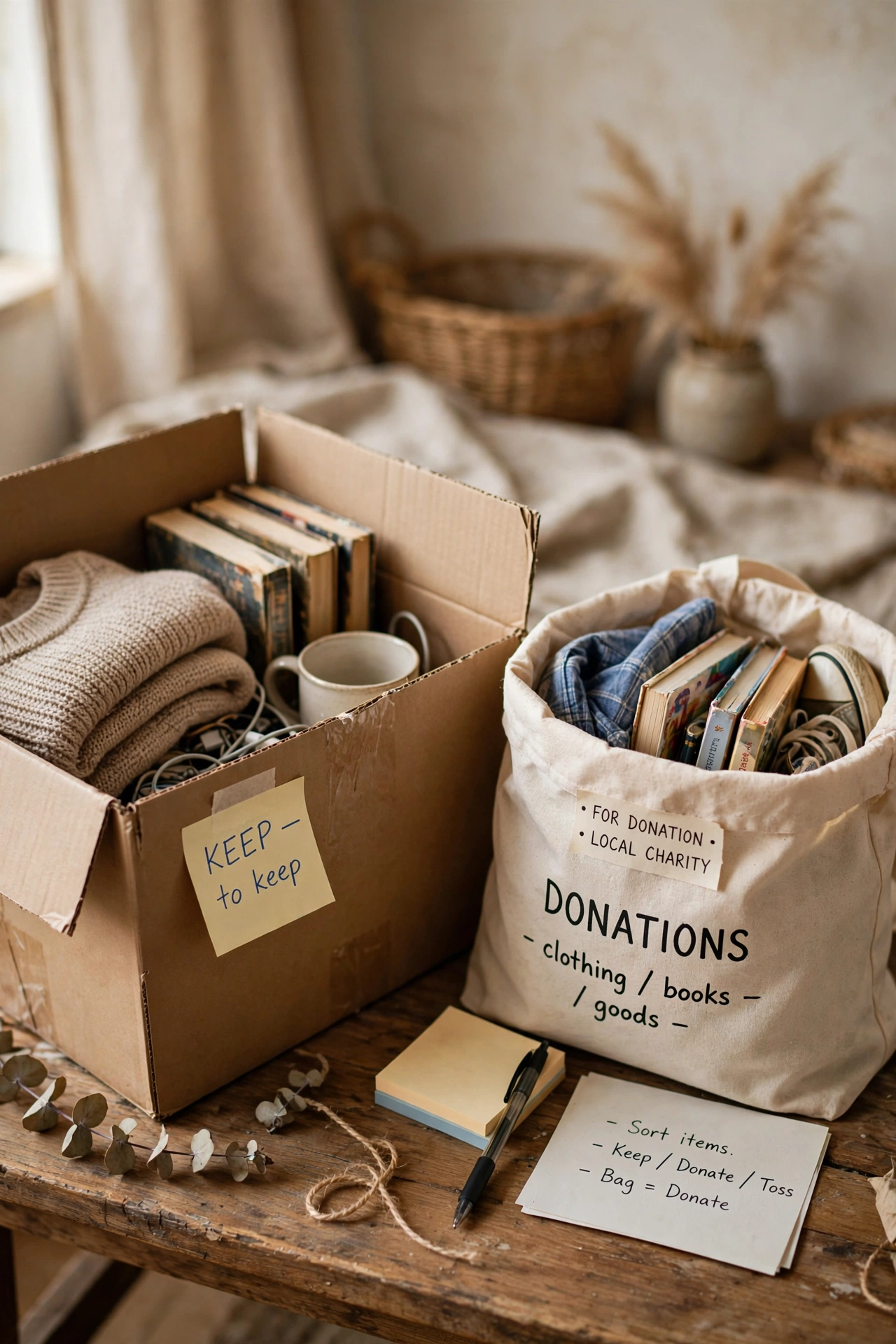
One box for keep and one bag for donate is all the equipment decluttering really needs, and fancy sorting systems often just delay the start. Label the box keep, label the bag donate, and sort each item into one or the other without a third maybe pile to stall you. I tried this after buying a set of sorting bins that sat empty for a month, and the humble box and bag cleared a whole shelf in one evening. The mistake to avoid is creating a pile for later decisions, because later rarely comes and the pile becomes furniture. Decide quickly, keep the tools simple, and put the donate bag by the door the same day.
Cost: ~$1 | Time: 20 minutes
(see also: 19-bedroom-organization-ideas-on-a-dime)
4. Keep Only What Earned Its Place This Year
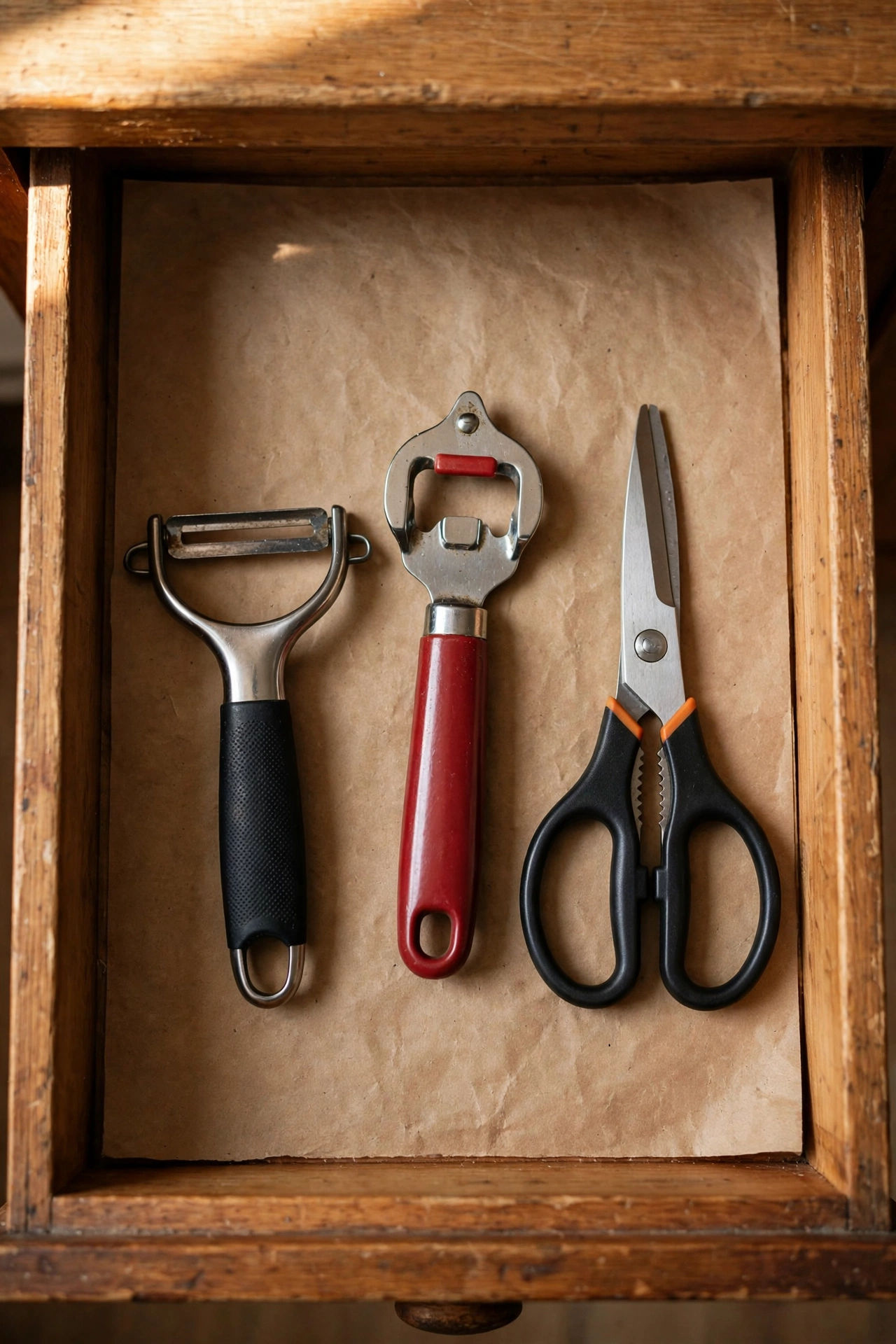
Asking whether an item earned its place this year is a kinder test than asking whether it sparks joy, and it works better for practical people. If you have not used, worn, or needed it in the past twelve months, it probably does not need prime space in your home. I tried this on a kitchen drawer full of gadgets, and only three items survived, which told me everything about the rest. The mistake to avoid is making exceptions for everything, because a rule with twenty exceptions is not a rule at all. Allow one exception per drawer if you must, then donate or store the rest, and notice how much easier the drawer is to use.
Cost: ~$0 | Time: 25 minutes
5. Photograph Sentimental Clutter Before Letting It Go

Photographing sentimental clutter before letting it go keeps the memory without keeping the object, which makes hard decisions much easier. Take a clear photo of the item, write one line about why it mattered, save it in a folder, and then donate or recycle the object itself. I tried this with a box of old school projects, and keeping the photos felt like keeping the memories, while the box finally left the house. Do not photograph everything and keep it all anyway, because then you have done the work twice for no gain. Photograph the few items that truly matter, let the rest go without a photo, and free both the shelf and your mind.
Cost: ~$0 | Time: 20 minutes
6. Declutter One Drawer, Not the Whole Room
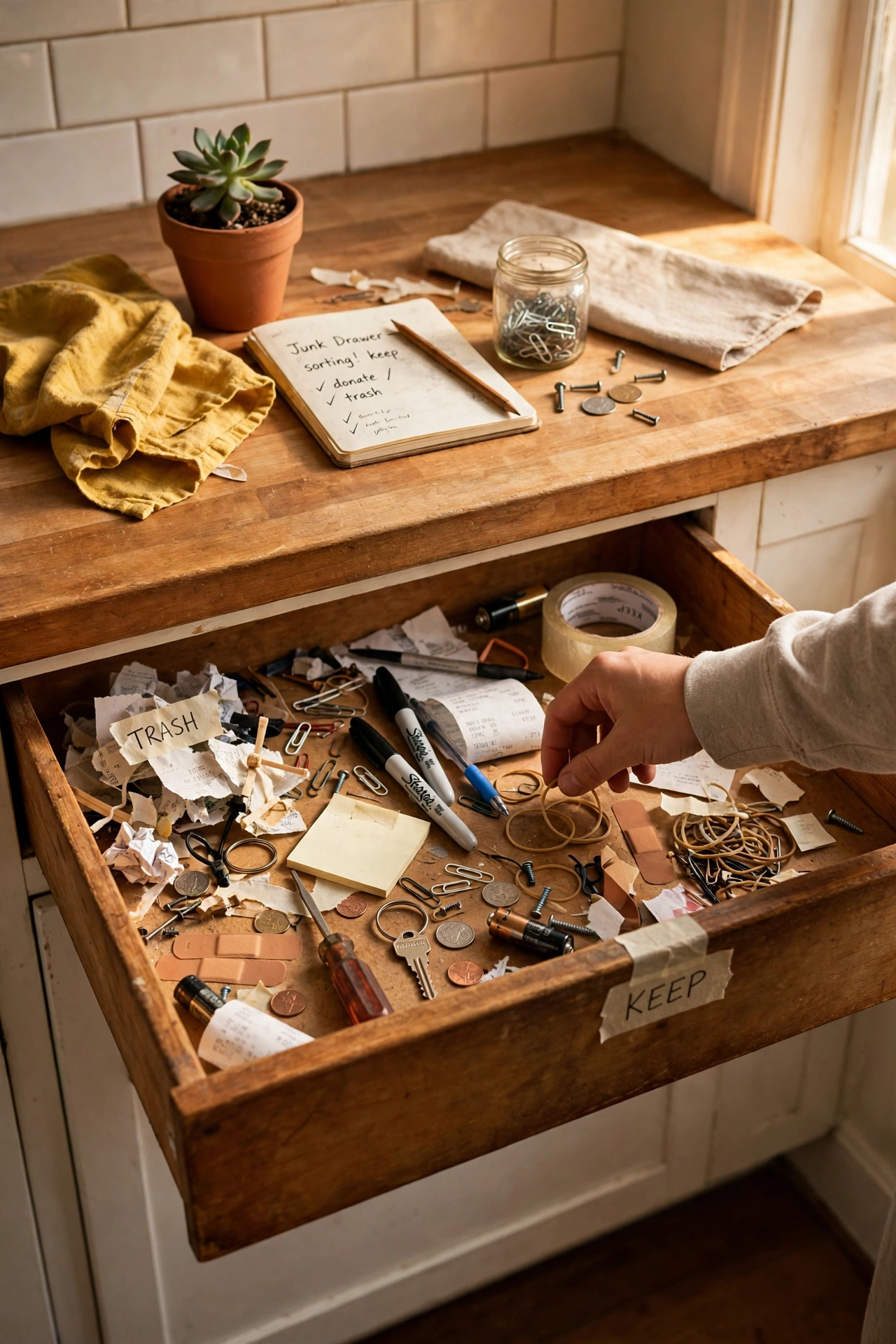
One drawer is a finishable job, while a whole room is a project that scares most people off before they start. Empty the drawer completely, wipe it out, keep only what belongs there, and put the rest in the donate bag or its real home. I tried this with the dreaded junk drawer, and finishing it in twenty minutes gave me the energy to do a second drawer the next day. The mistake to avoid is emptying three drawers at once, because a bigger mess halfway through feels worse than the original mess. Finish one drawer fully, enjoy opening it, and let that small success pull you toward the next one.
Cost: ~$0 | Time: 20 minutes
7. Try the One-In, One-Out Rule for a Week
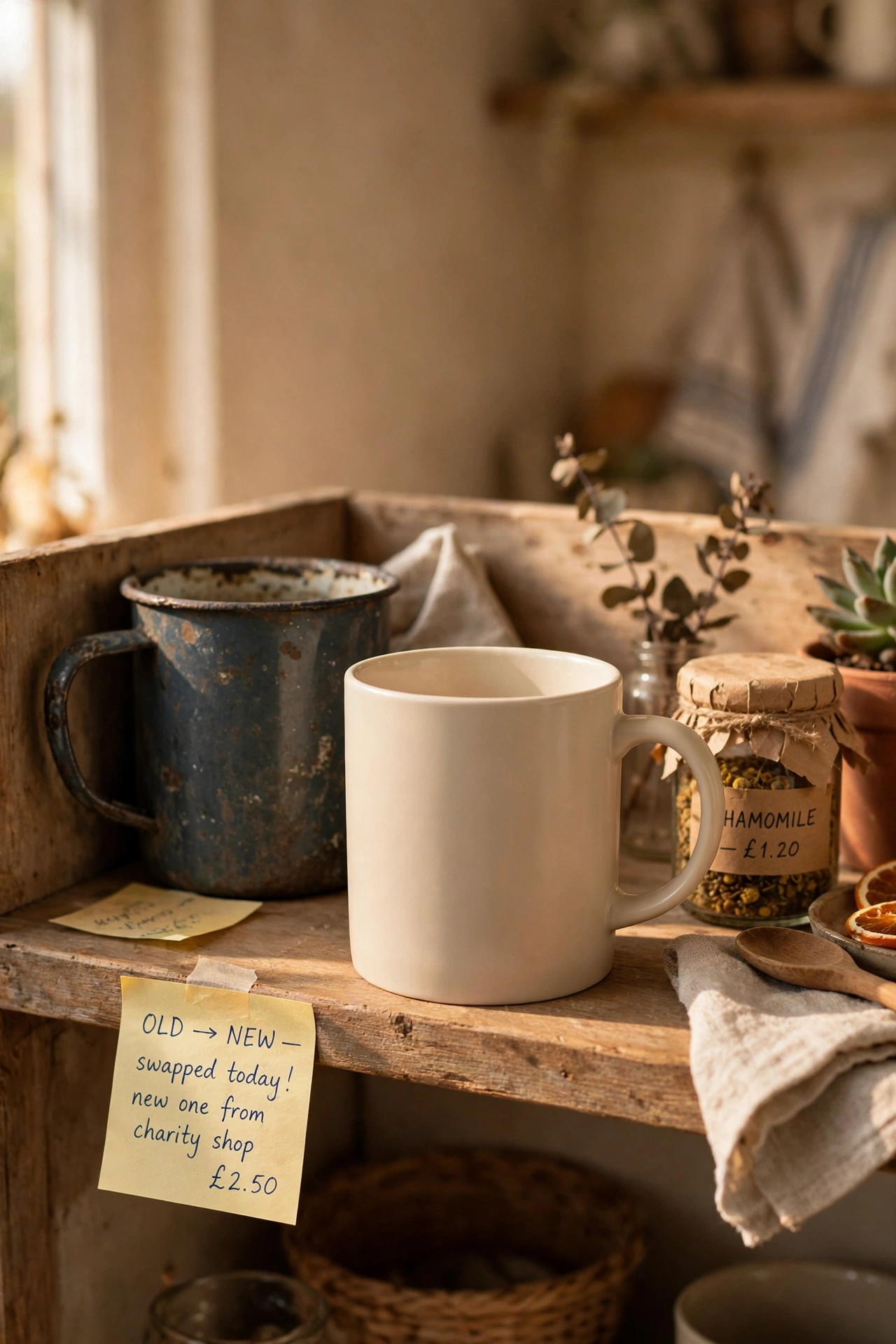
The one-in, one-out rule stops clutter from growing back, because every new item must replace an old one. For one week, whenever something new comes into the house, choose one similar item to donate or recycle the same day. I tried this after realising new mugs kept arriving while old ones never left, and the cupboard finally stopped overflowing. Do not apply the rule only to things you like buying, because clutter grows fastest in the categories you ignore. Apply it to clothes, mugs, books, and toys alike, keep it going for a week, and you will see whether it is a rule worth keeping.
Cost: ~$0 | Time: 10 minutes
8. Make a Maybe Box and Date It
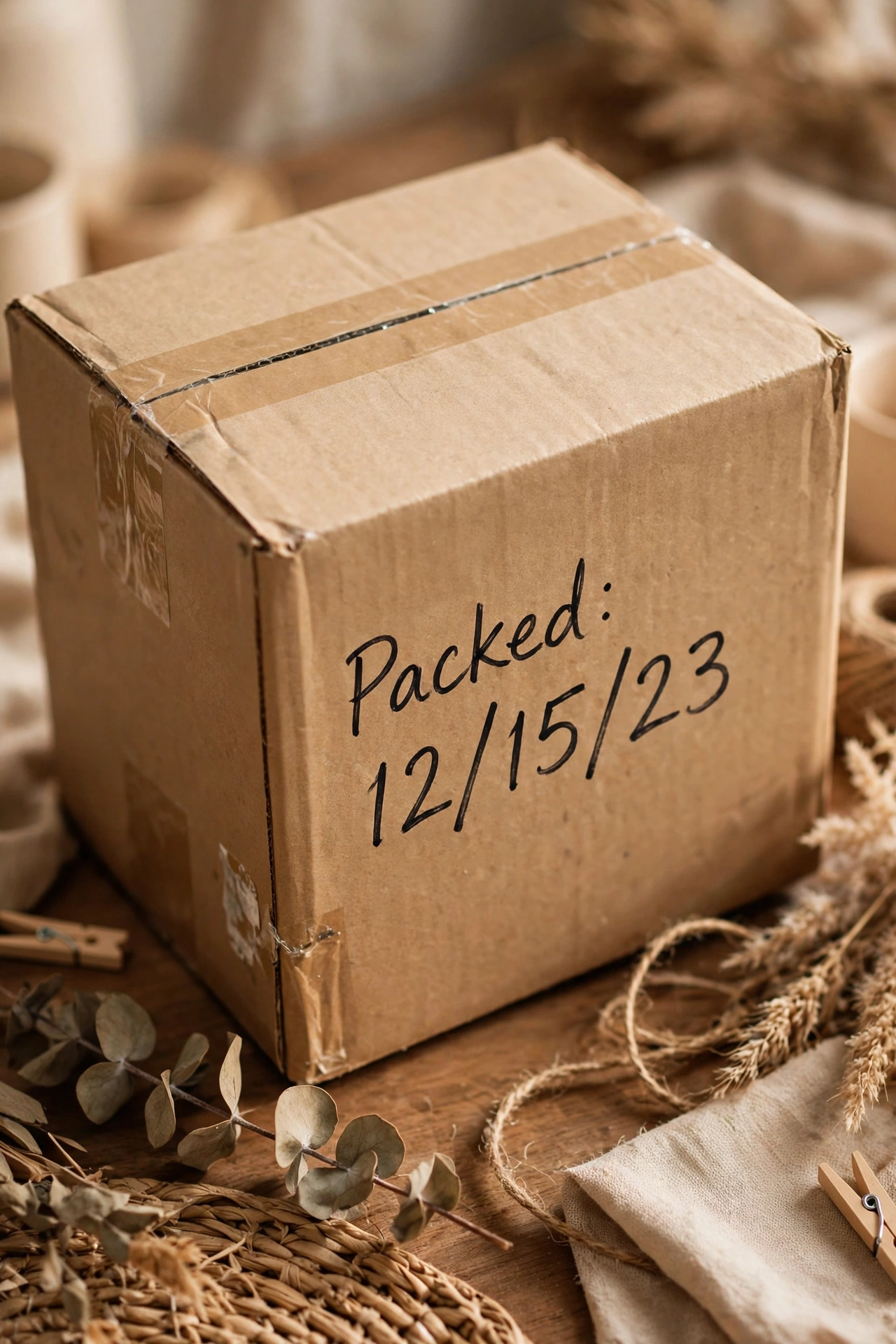
A maybe box with a date on it lets you postpone hard decisions without letting them live in your living space forever. Put uncertain items in a box, write today’s date plus six months on the outside, and store the box out of sight. I tried this with clothes I was not ready to donate, and when I opened the box six months later I had forgotten most of what was inside. The mistake to avoid is opening the box early to rescue things, because that resets the whole experiment. If you have not missed an item in six months, donate the box unopened, and trust that the test gave you the answer.
Cost: ~$2 | Time: 15 minutes
9. Clear Flat Surfaces Before Opening Cupboards
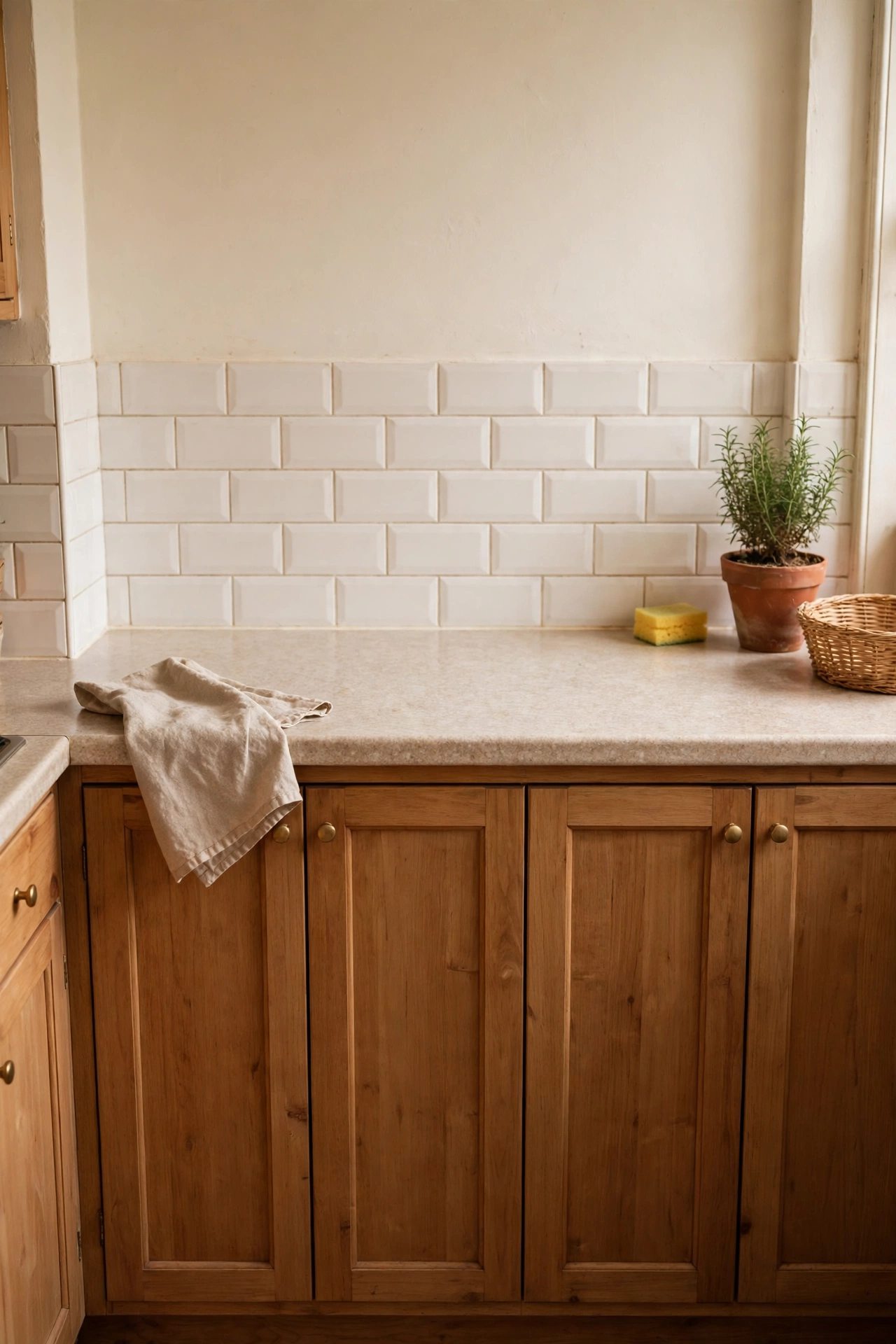
Flat surfaces collect clutter fastest, so clearing them first gives the biggest visible payoff for the least effort. Work across one counter or table, remove everything that does not belong, and only then think about what is inside the cupboards. I tried this in the kitchen, and clearing the counters made the whole room feel handled, even though the cupboards were untouched. Do not open a cupboard mid-clear, because you will pull things out, get sidetracked, and end with two messes instead of one. Finish the surface, step back and enjoy it, and save cupboards for a separate short session.
Cost: ~$0 | Time: 20 minutes
10. Sort by Category, Not by Room
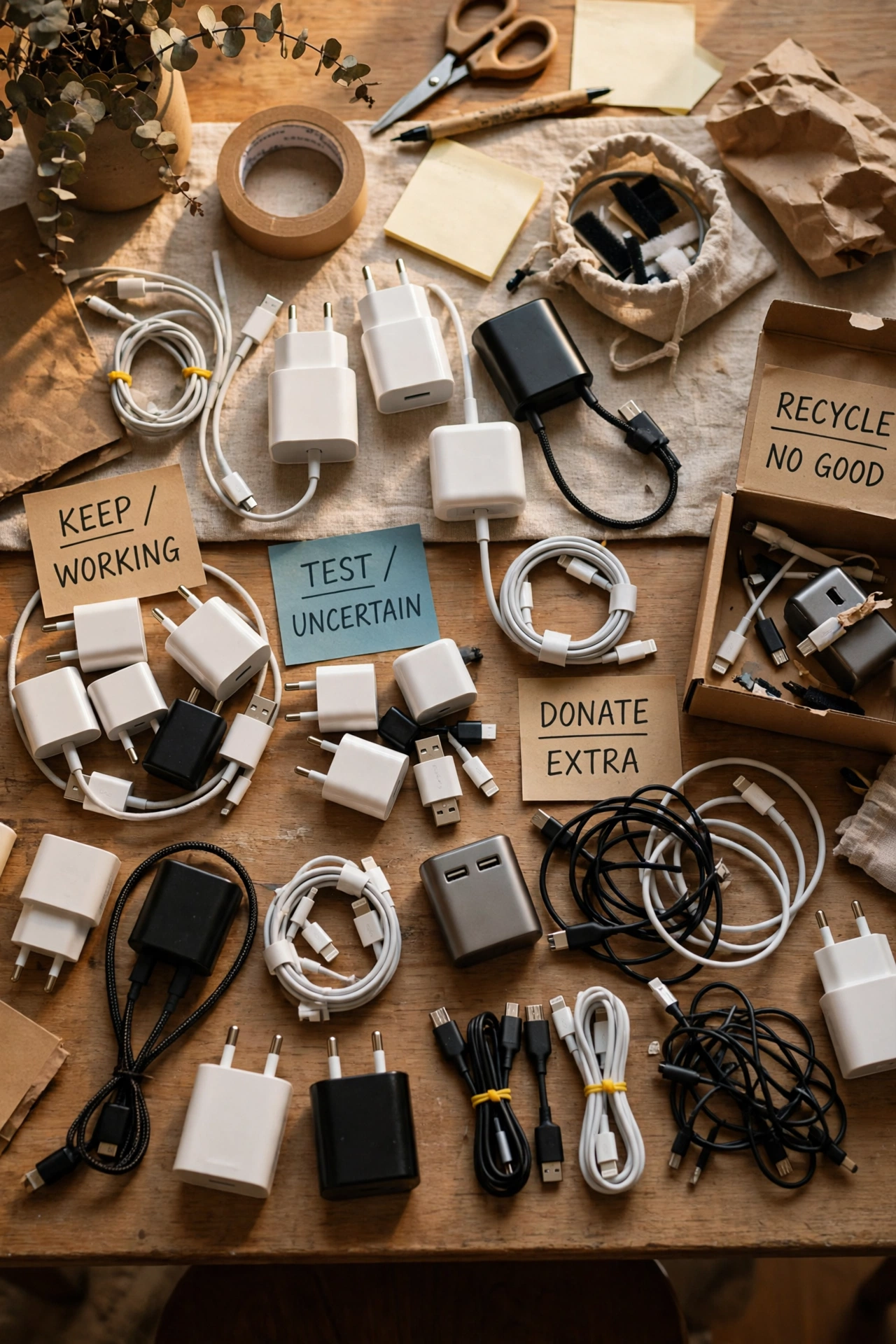
Sorting by category, such as all books or all cables, shows you how much you really own, which a room-by-room tidy never reveals. Gather every item in one category from around the house, lay them out together, and keep only the best or most useful ones. I tried this with phone chargers and found eleven, which made keeping three an easy decision. The mistake to avoid is gathering a huge category like all clothes at once, because a mountain on the bed is overwhelming. Start with a small category like mugs or chargers, finish it fully, and use that win to try a bigger category next time.
Cost: ~$0 | Time: 30 minutes
(see also: 15-small-laundry-room-ideas-on-a-budget)
11. Give Every Item a Deadline to Find a Home
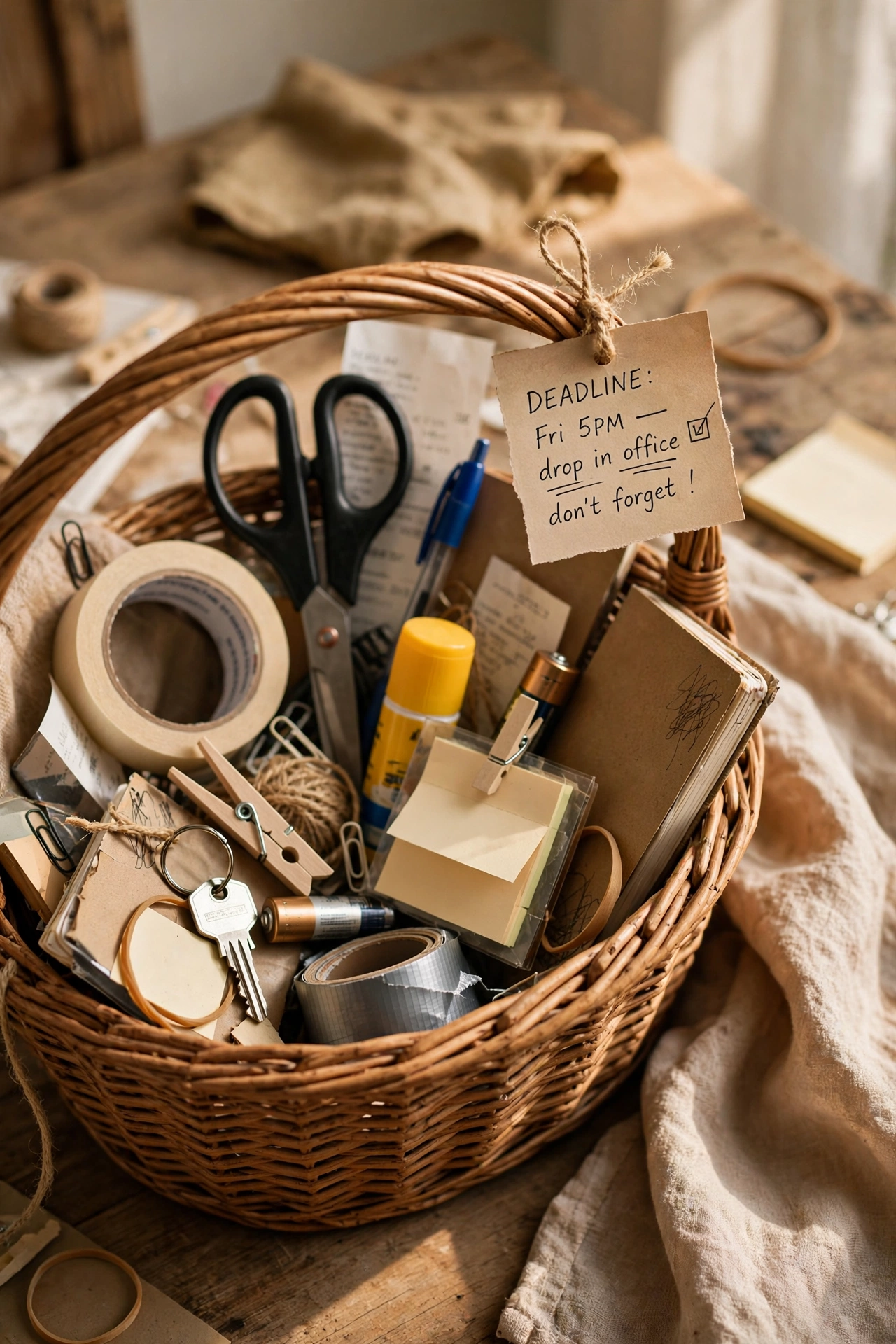
A deadline for homeless items stops them from living on counters and chairs indefinitely, which is where most clutter actually lives. Put stray items in one basket, set a deadline of one week, and anything still homeless at the deadline gets donated or stored away. I tried this with a basket of random household bits, and the deadline forced decisions I had avoided for months. Do not extend the deadline again and again, because a deadline you ignore teaches you that deadlines do not matter. Keep it to one week, decide quickly at the end, and enjoy a home where everything has a place.
Cost: ~$0 | Time: 15 minutes
12. Use the Hanger Trick for Clothes You Never Wear
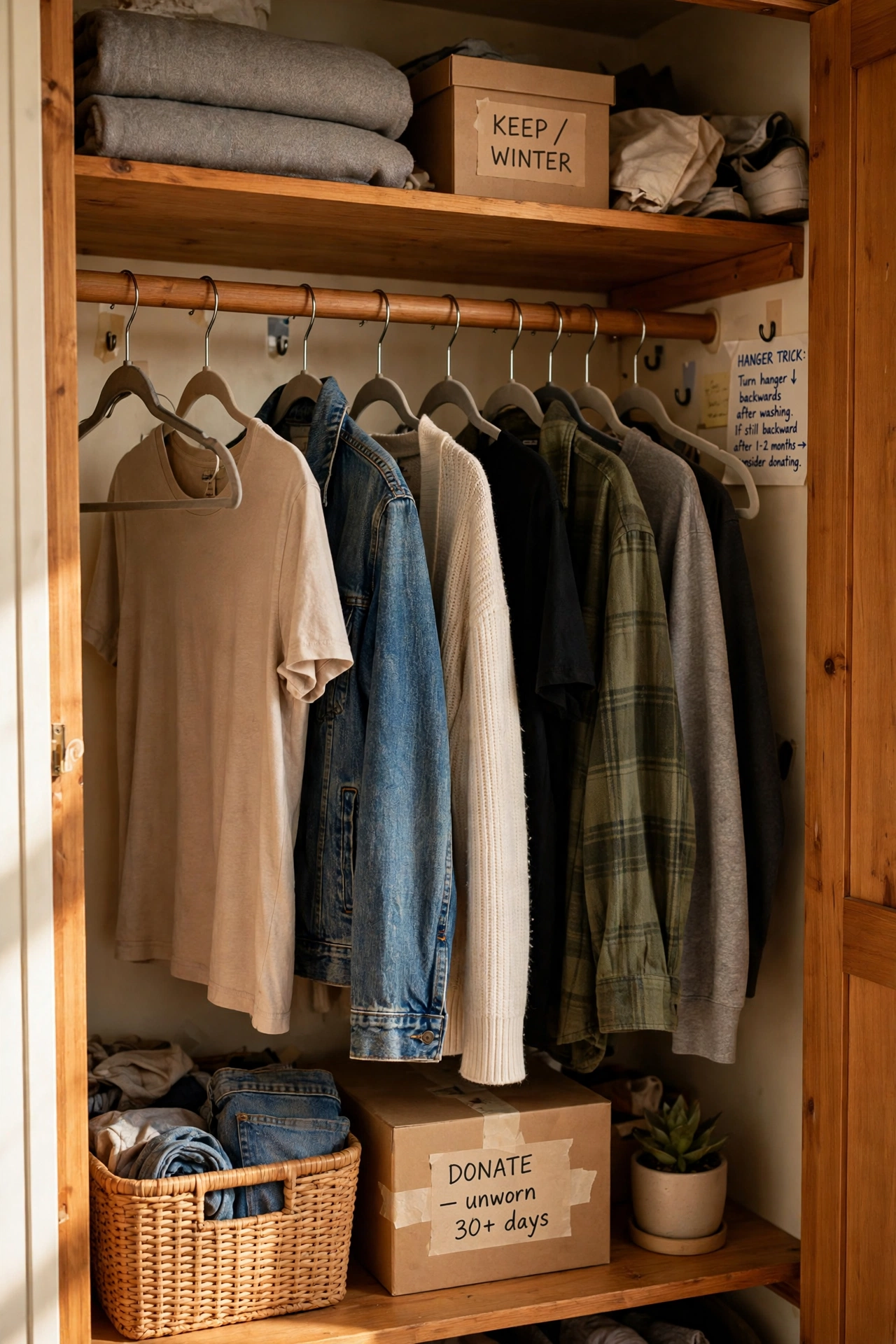
The hanger trick quietly reveals which clothes you never wear, without asking you to decide anything on the spot. Turn all your hangers backwards, and each time you wear something, hang it back the normal way. I tried this in January, and by June half the hangers still faced backwards, which made donating those clothes feel obvious rather than painful. The mistake to avoid is turning hangers back after trying something on and rejecting it, because that cheats the test. Only reverse a hanger when you actually wear the item out, wait a full season, and donate what never turned around.
Cost: ~$0 | Time: 10 minutes
13. Declutter in Fifteen Minutes While Dinner Cooks
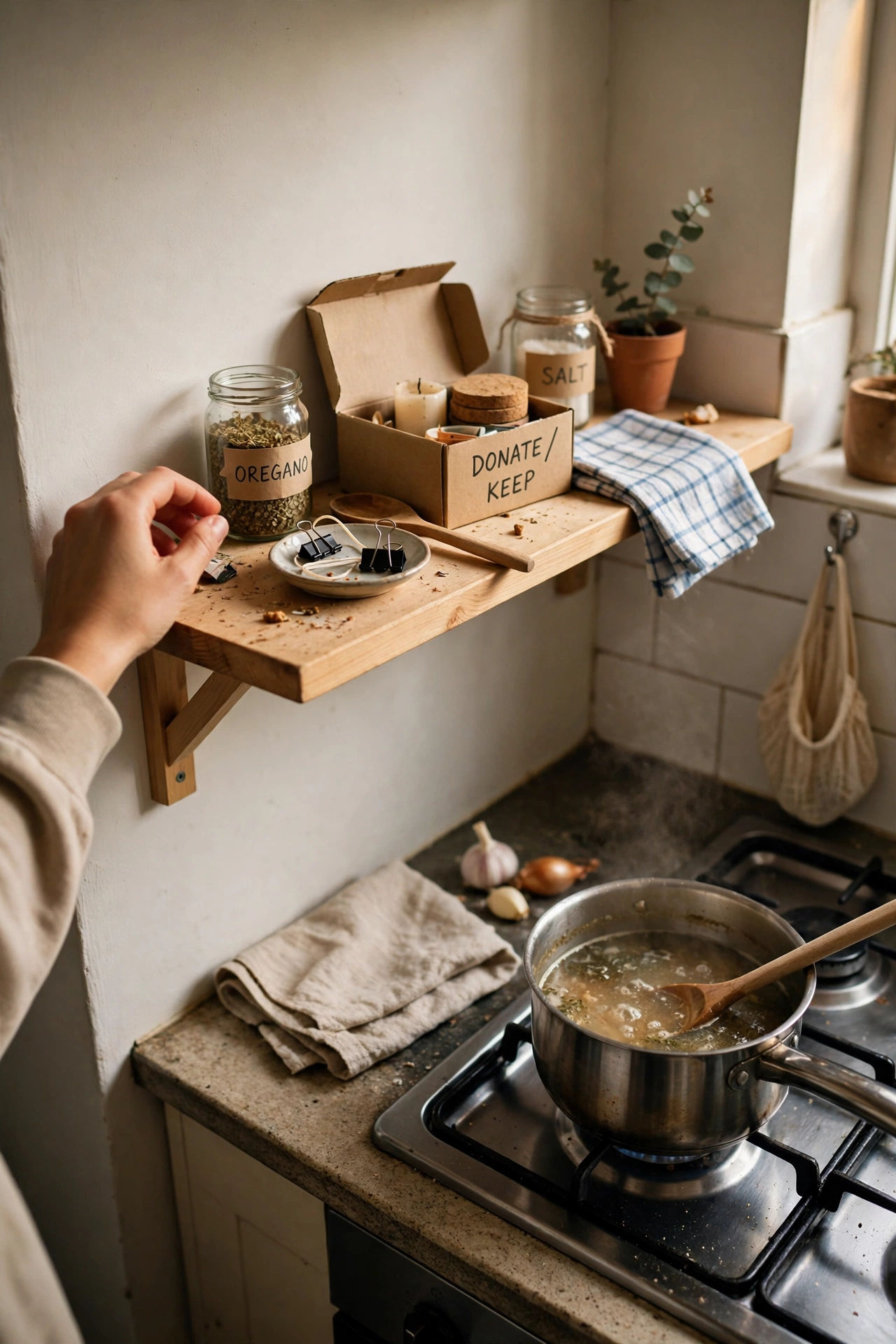
Decluttering while dinner cooks uses dead time you already have, so it never feels like a separate chore competing with your evening. While something simmers or bakes, clear one drawer, one shelf, or one small pile nearby, and stop when dinner is ready. I tried this on busy weeknights, and a week of dinner-time sessions cleared a whole cupboard without me ever scheduling decluttering. Do not pick a job that needs the stove area clear or takes longer than dinner, because a rushed job near hot pans helps nobody. Choose small, safe jobs, keep a timer running, and let cooking time quietly do double duty.
Cost: ~$0 | Time: 15 minutes
14. Keep a Donation Box by the Front Door
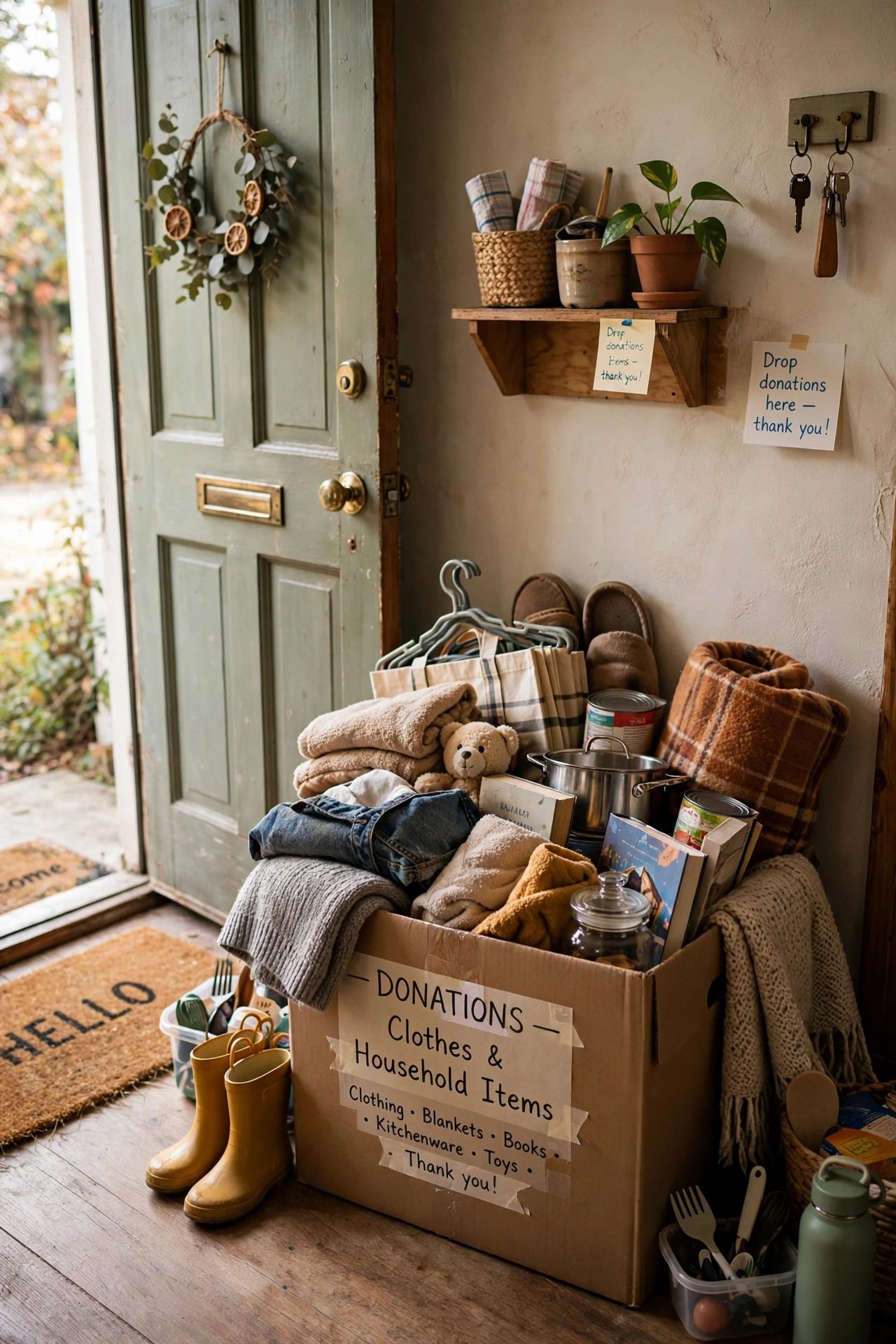
A donation box by the front door catches clutter at the exact moment you notice it, instead of waiting for a big clear-out that may never happen. Put a sturdy box or bag near the door, drop in anything you no longer want the moment you spot it, and take it to donate when it fills. I tried this after years of planning big decluttering weekends that never happened, and the box filled steadily without any effort at all. The mistake to avoid is using the box as extra storage, because a donation box you keep raiding is not a donation box. Once something goes in, it stays in, and the house gets lighter one item at a time.
Cost: ~$1 | Time: 5 minutes
15. Say No to Freebies Before They Enter the House

Saying no to freebies stops clutter before it starts, because free items are still clutter if you do not need them. Decline the extra tote bag, the sample packet, and the promotional pen, and leave conference swag at the conference. I tried this for a month, and the difference was startling, because so much of our clutter had arrived free and uninvited. Do not feel rude for declining, because a polite no thanks is kinder than a bag of unwanted items heading for landfill later. Make it a habit at events and shops, teach kids the same line, and the front door becomes a filter instead of a funnel.
Cost: ~$0 | Time: 5 minutes
16. Break Big Jobs Into One-Bag Wins
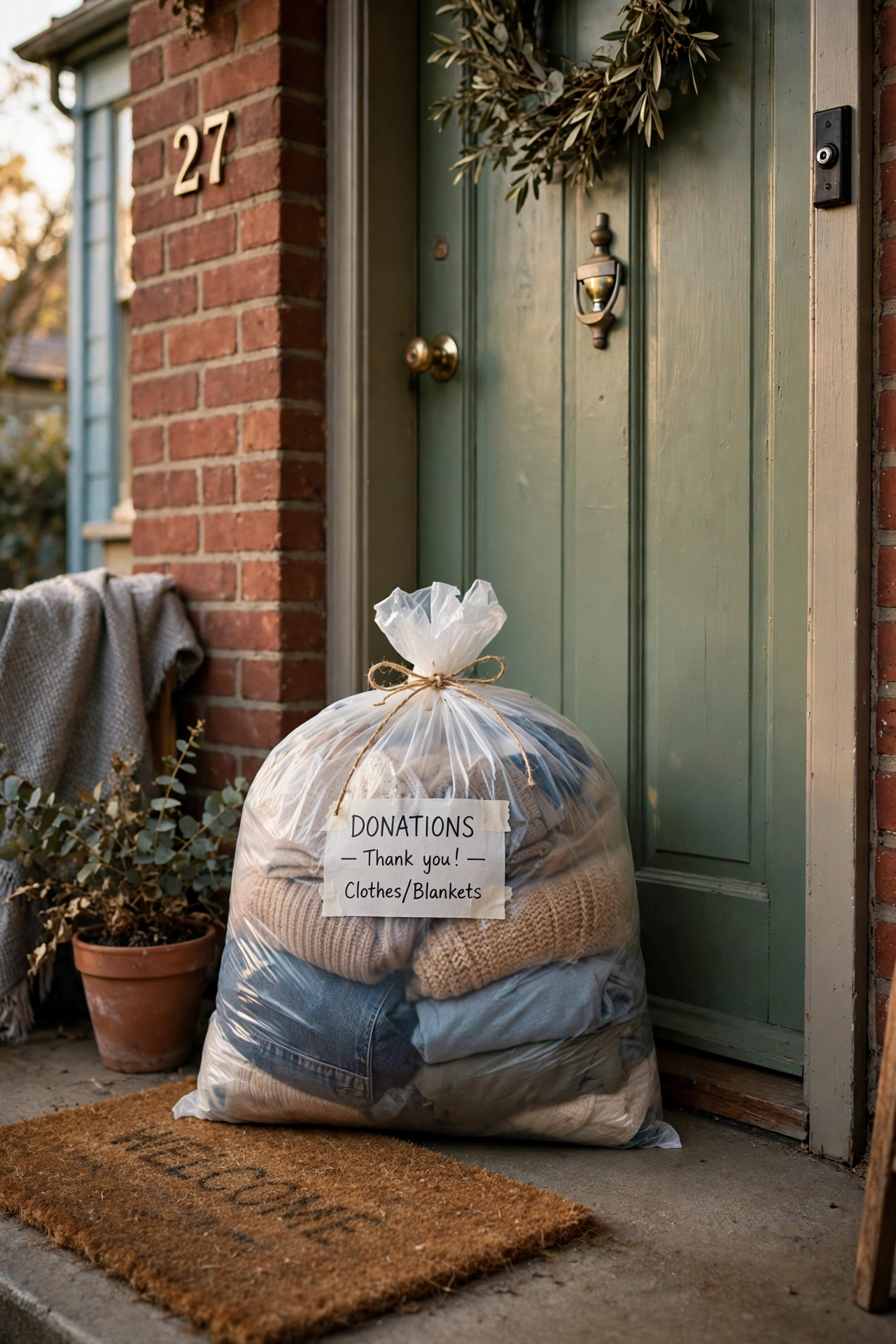
One bag is a win you can finish, while a whole garage or attic is a job that makes most people give up before starting. Fill one bag with things to donate, recycle, or throw away, tie it up, and stop for the day if you want to. I tried this with a storage room that had scared me for a year, and one bag a day cleared it in three weeks without a single exhausting weekend. The mistake to avoid is judging a one-bag day as too small, because small wins repeated daily beat grand plans that never start. Fill one bag, get it out of the house, and let tomorrow’s bag handle tomorrow’s mess.
Cost: ~$1 | Time: 15 minutes
(see also: 23-small-closet-organization-with-dollar-store-finds)
17. Stop Buying Storage Before You Sort
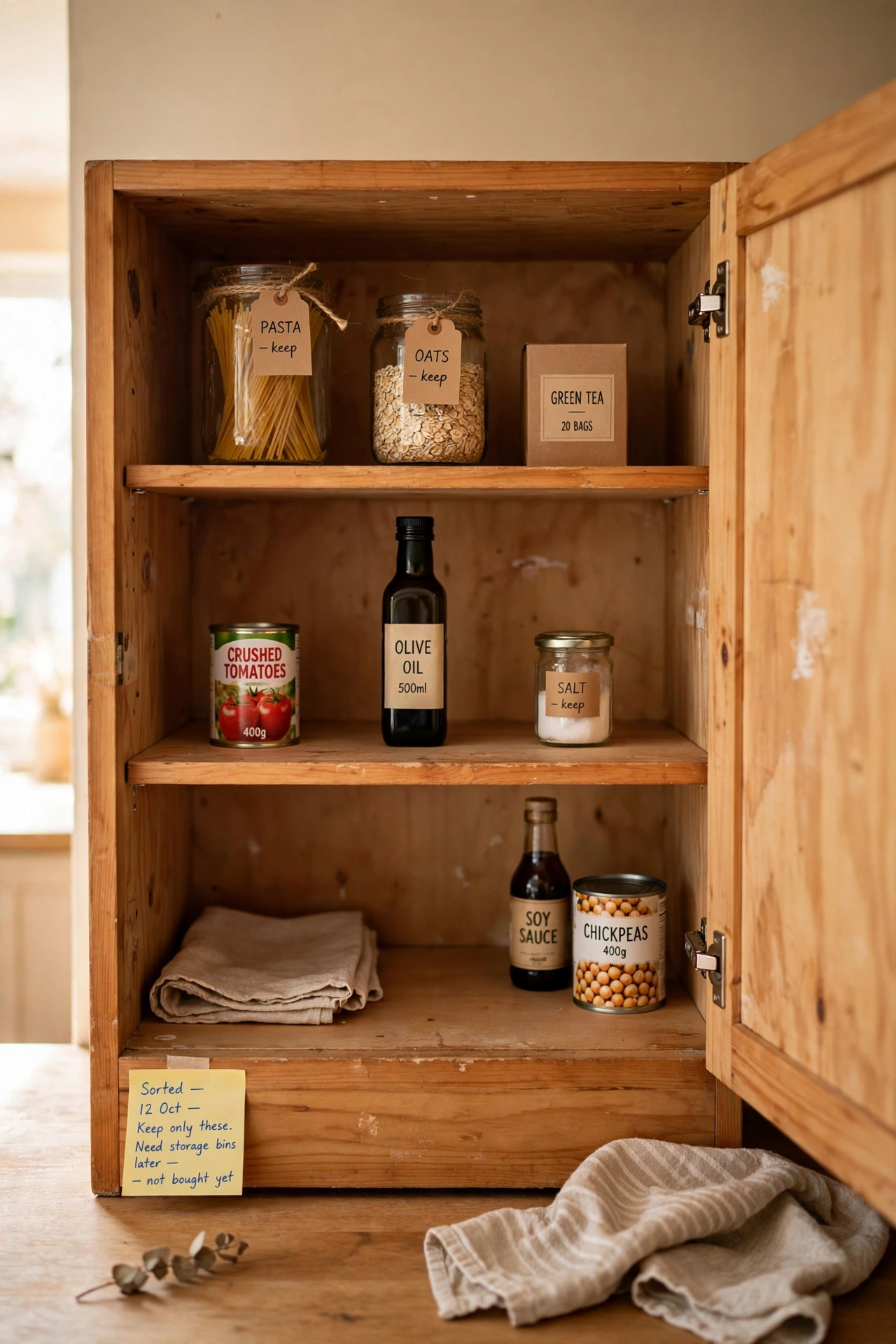
Buying storage before sorting just gives clutter a prettier place to hide, and it often means you keep things you would otherwise have let go. Sort first, donate what you do not need, and only then measure what remains and buy containers that actually fit it. I tried this the expensive way first, buying bins for a cupboard that then turned out to be half empty after sorting. Do not buy matching sets before you know what you are storing, because matching bins full of unwanted things are still clutter. Sort, donate, measure, and then buy only what the remaining items truly need.
Cost: ~$0 | Time: 20 minutes
18. Let Go of Duplicates First
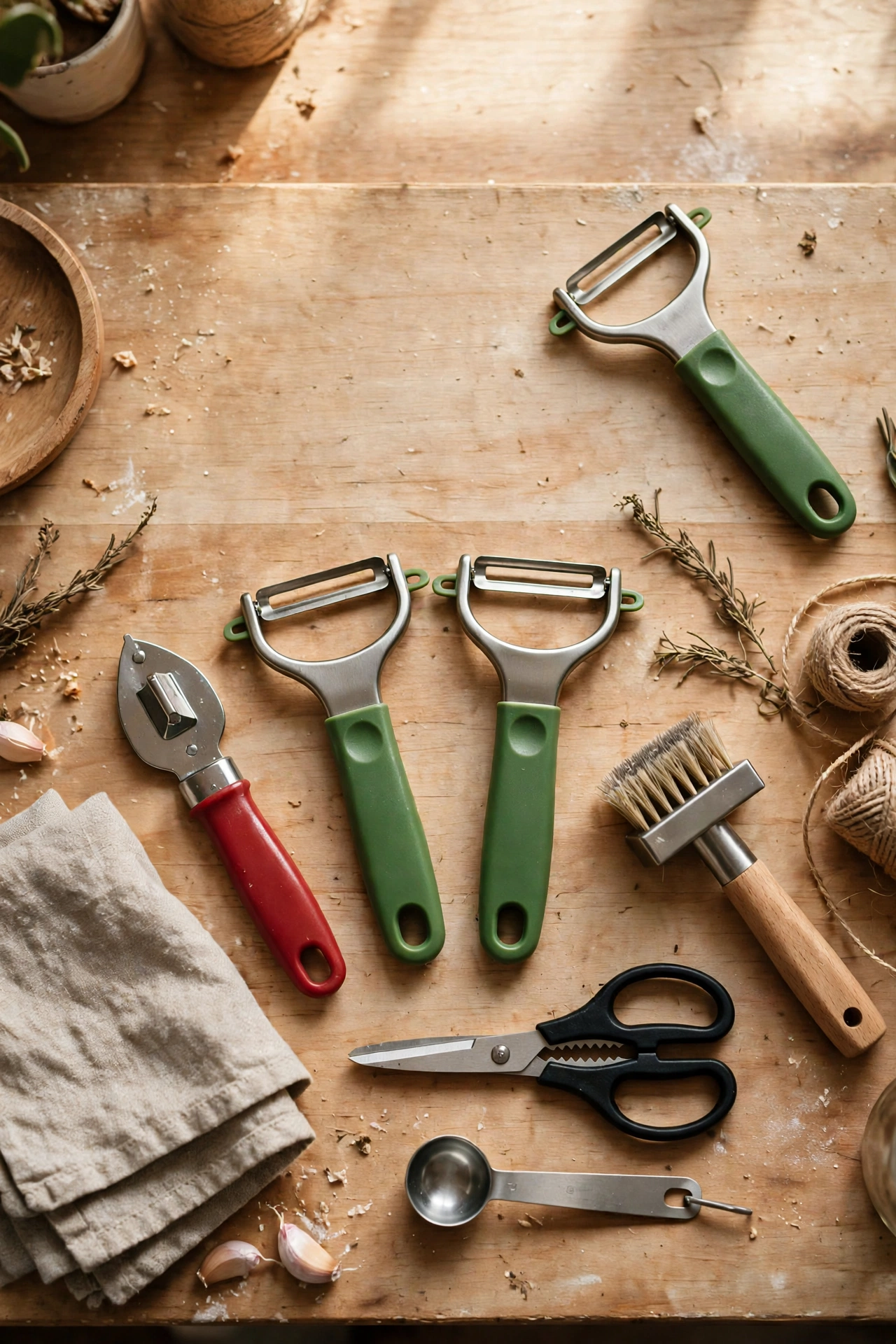
Duplicates are the easiest decluttering win, because you do not have to decide whether you need something, only which one to keep. Find the doubles, keep the best one, and donate or recycle the rest, starting with kitchen tools, chargers, and scissors. I tried this in the kitchen and found four vegetable peelers, three of which left the house in under five minutes. The mistake to avoid is keeping a spare for every item just in case, because a house full of spares is just clutter with an excuse. Keep one spare only for things that break often, let the rest go, and enjoy drawers that finally close easily.
Cost: ~$0 | Time: 15 minutes
19. End With a Room You Can Actually Sit In

Ending with a room you can actually sit in gives decluttering a finish line that feels good, instead of a vague goal of being tidy. Pick one room, clear just enough that you can sit down comfortably with a cup of tea, and call that done for today. I tried this with our living room on a tired Sunday, and sitting down in a clear room felt like a reward, not a chore. Do not chase perfection in that room, because a room that is good enough to enjoy beats a perfect room you never finish. Sit down, enjoy the space you cleared, and let that feeling pull you back tomorrow.
Cost: ~$0 | Time: 20 minutes
Frequently Asked Questions
How do I start decluttering if I hate it?
Start with a fifteen-minute timer and one drawer or surface. A short, finishable job beats a big plan, and stopping when the timer rings makes it easier to start again tomorrow.
What should I declutter first?
Duplicates and the surface you see first. Duplicates need no hard decisions, and a clear surface gives you a visible win that motivates the next small job.
How do I stop clutter coming back?
Use one-in, one-out for new items, keep a donation box by the door, and say no to freebies. Stopping clutter at the door matters more than any single clear-out.
Save this idea for a day when decluttering feels impossible, and start with just the timer and one drawer.
Decluttering does not have to be a personality trait or a weekend project. Pick one small tip, do it badly if you must, and stop when the timer rings. A slightly clearer home, kept that way by small habits, is worth far more than a perfect home you never get around to.
