21 Black and White Kitchen Ideas With Vintage Charm
Vintage charm in a black and white kitchen does not mean hunting down expensive antiques — it means knowing which small details whisper the past while the palette keeps everything fresh. Black and White kitchen ideas with a vintage bent are my favourite kind of project, because the look is built from charity-shop finds, rescued hardware and clever paint rather than big spending. Below are 21 ideas organised into four loose groups: thrifted treasures, hardware and lighting, walls and floors, and textiles with a history. I have done most of these in my own kitchen over the years, and I will tell you exactly where I went wrong so you do not.
Thrifted & secondhand finds
1. Enamelware in Black and White on Open Shelves
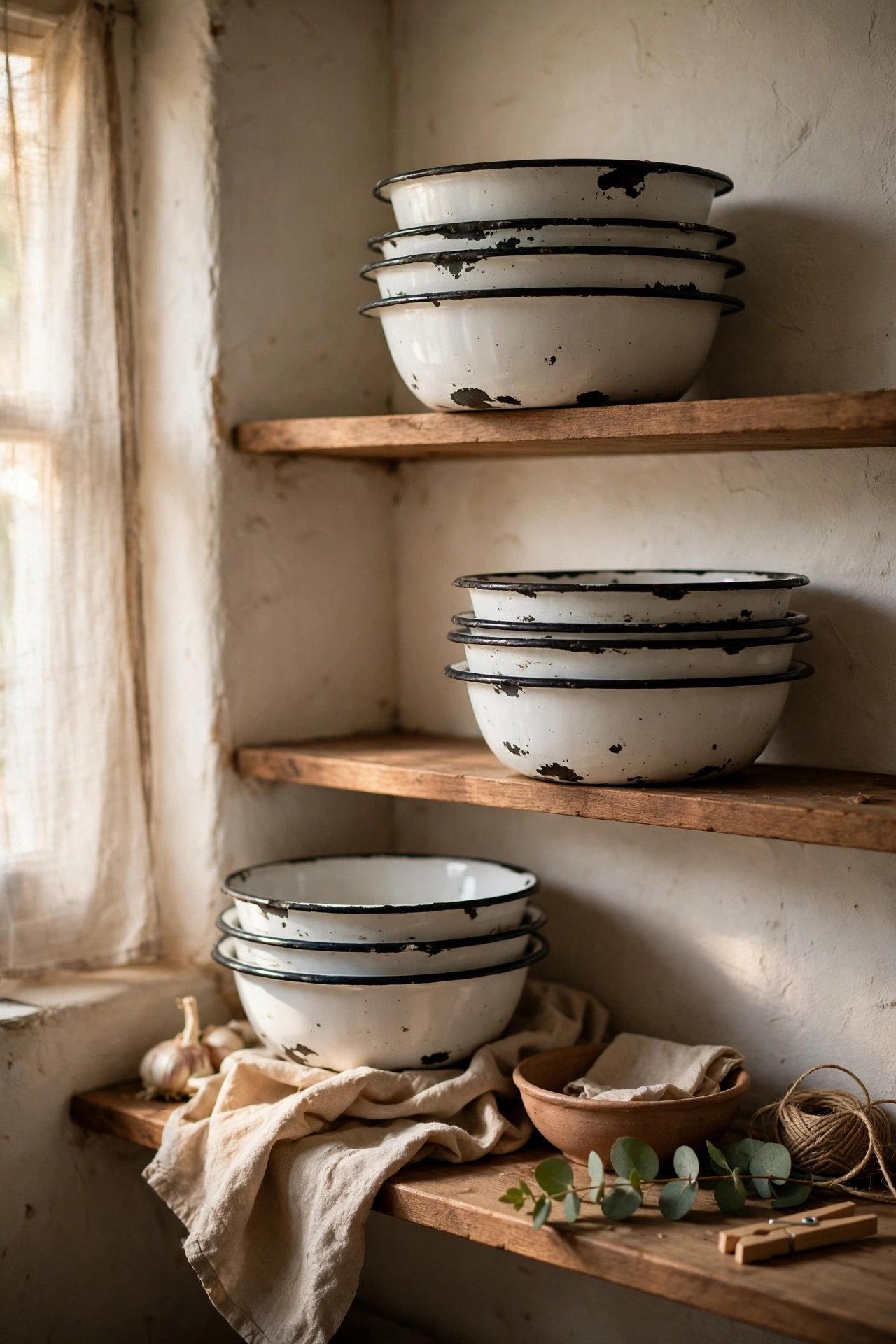
Chipped white enamel bowls with black rims are the signature of a vintage monochrome kitchen, and charity shops practically give them away. Arrange a small stack on open shelving rather than hiding them in cupboards — the slight wear is what sells the story. Start with three or four pieces and build slowly, checking the rims for rust before you buy. I tried this and the mistake to avoid is washing them in a scorching dishwasher every day; the rims on my first bowls lifted within months. Hand wash and they last decades, and they look better a little worn anyway.
Cost: ~$10 for four pieces | Time: 30 minutes
2. A Salvaged Vintage Clock With a Black Roman-Numeral Face
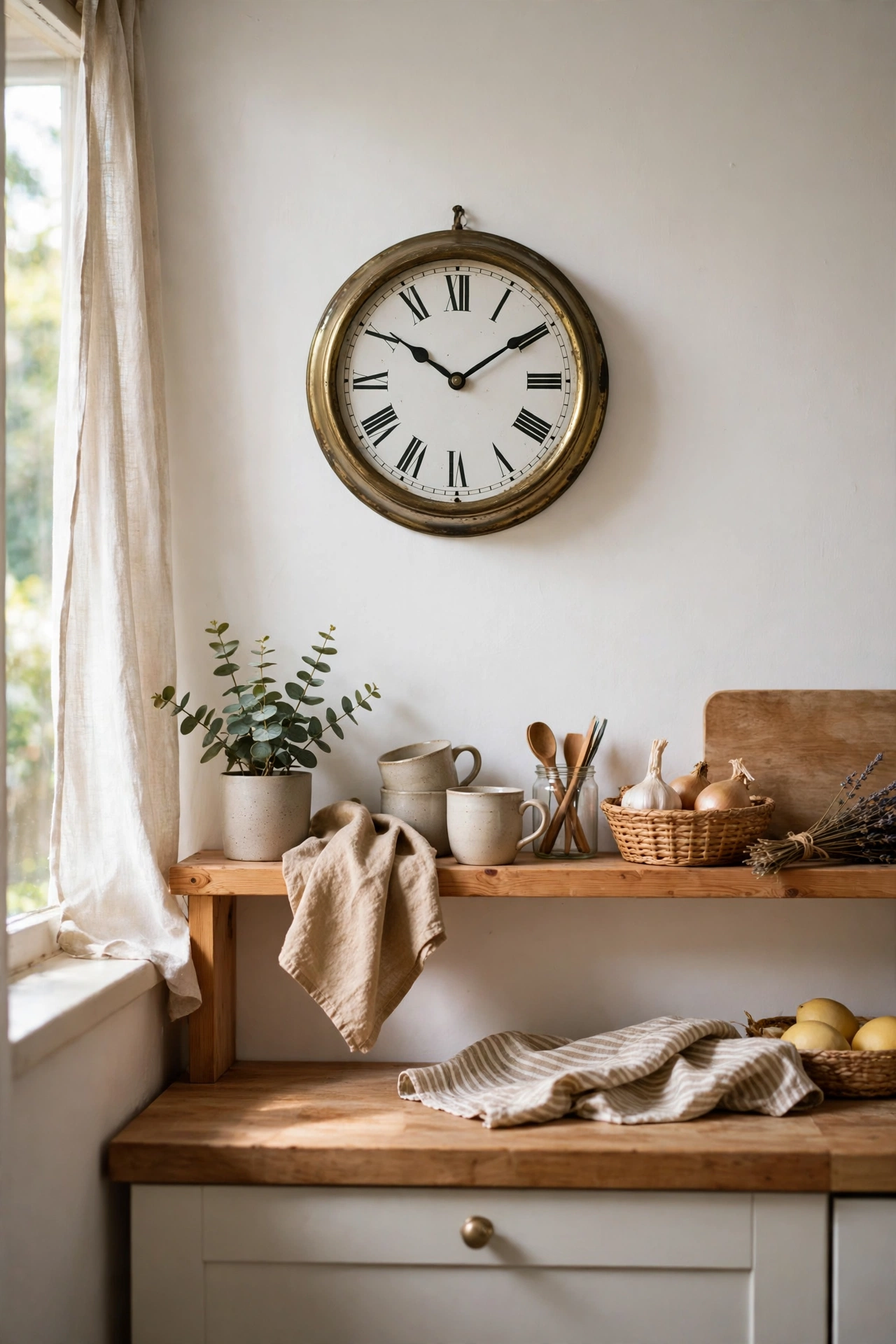
One vintage clock with a bold black-and-white face anchors a whole wall, and you do not need it to work — though most cheap ones do with a fresh battery. Hang it where you can see it from the kettle, because a kitchen clock earns its place by being useful. I tried this and the mistake to avoid is buying the reproduction that looks perfect but ticks so loudly you can hear it from the sofa; listen before you buy, or check the listing video. A quiet sweep movement is worth the extra few pounds.
Cost: ~$15 secondhand | Time: 15 minutes
3. Mismatched White Ironstone Plates on a Plate Rail
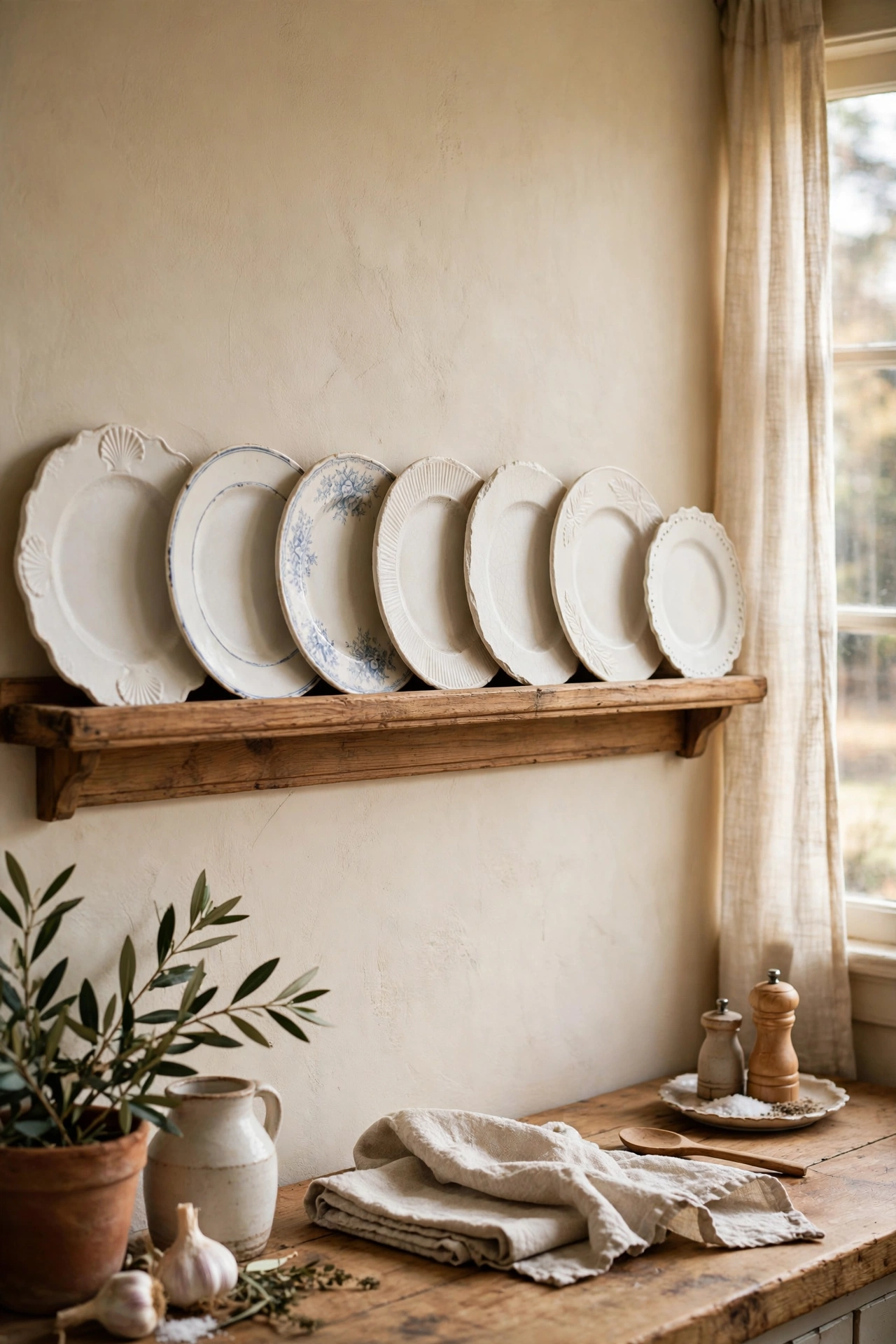
Old ironstone plates in plain white have a lovely chalky heft, and a simple plate rail — two thin battens screwed to the wall — displays them like the farmhouses of a century ago. Pick plates with age marks rather than perfect ones; a little crazing is the charm. I tried this and the mistake to avoid is spacing the battens for one plate size only; my rail held the dinner plates beautifully and the side plates slid straight through. Measure your largest and smallest plate first and set the gap for the middle.
Cost: ~$18 for plates and timber | Time: 1 hour
4. Black Metal Bread Bin or Vintage Biscuit Tins
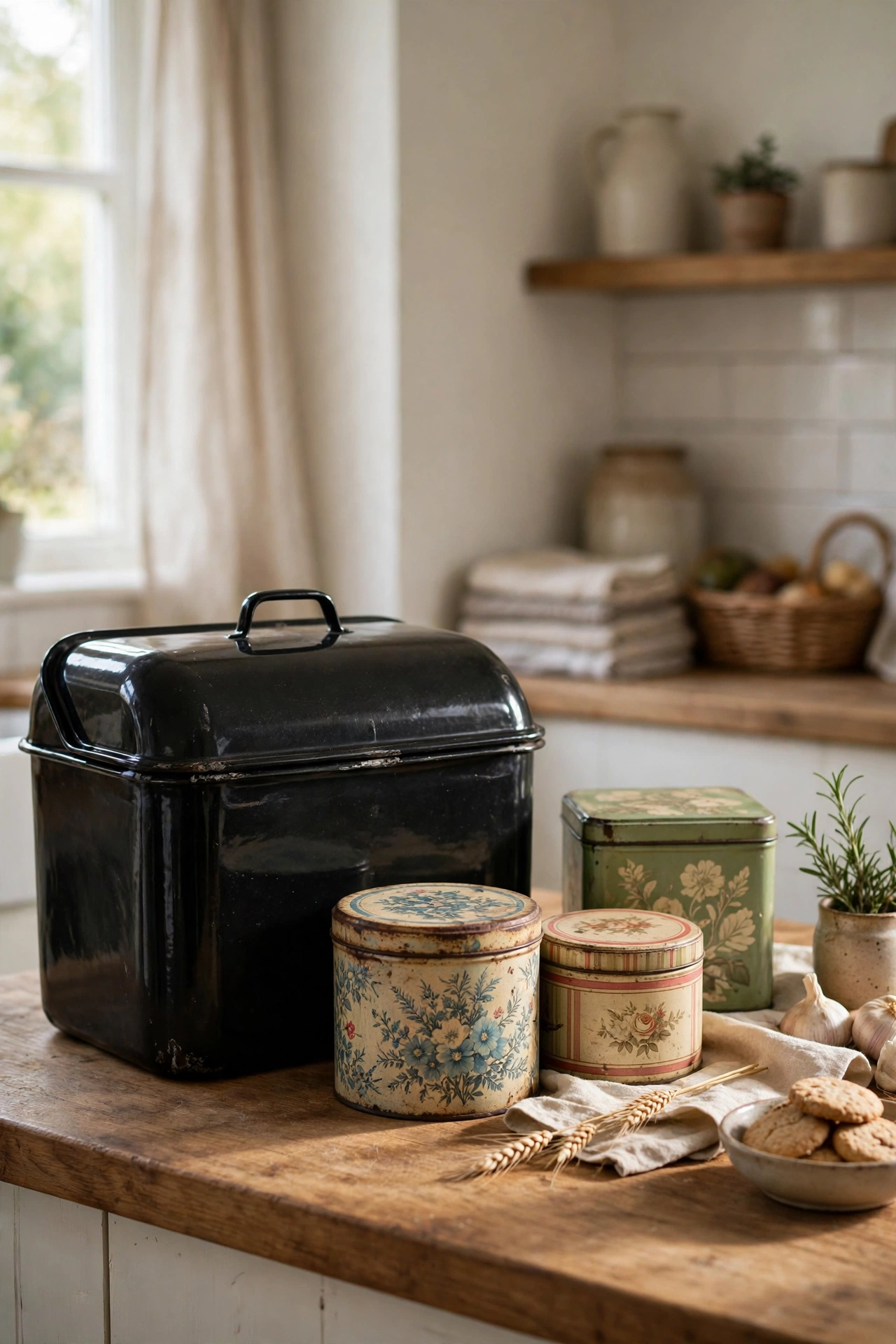
A black enamel bread bin or a row of vintage biscuit tins brings instant nostalgia to a worktop, and it hides the modern packaging you would rather not look at. Check inside old tins for rust before storing food — line them with a paper bag if you are unsure. I tried this and the mistake to avoid is keeping bread in a tin with a poor seal; my beautiful roll-top let air in and the loaf staled overnight. Test the seal with a tissue before committing, or use the tin for tea and coffee instead.
Cost: ~$12 secondhand | Time: 10 minutes
5. Reclaimed Wood Cutting Boards as Wall Art
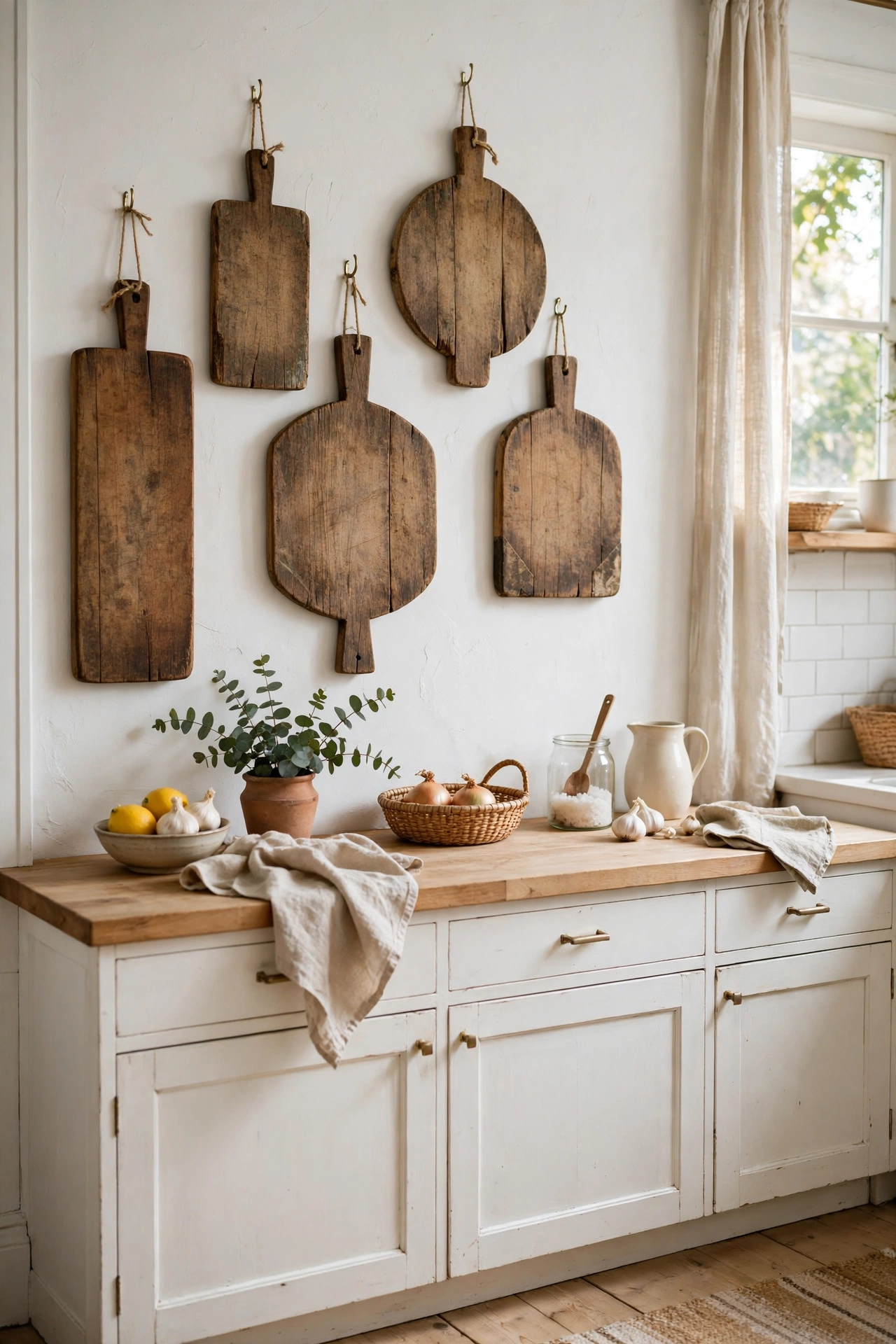
Old wooden boards in varied shapes hung on a white wall read as folk art, and they cost nothing if you already own them. Wipe with a damp cloth, rub in food-safe oil to deepen the grain, and hang with a single brass cup hook each. I tried this and the mistake to avoid is hanging boards that still smell of garlic right above the dining table — soak smelly ones in bicarbonate first. Group five or six at slightly uneven heights; perfect alignment would kill the casual vintage feel.
Cost: ~$5 for hooks and oil | Time: 45 minutes
6. A Secondhand Farmhouse Sink Caddy in Black Wire
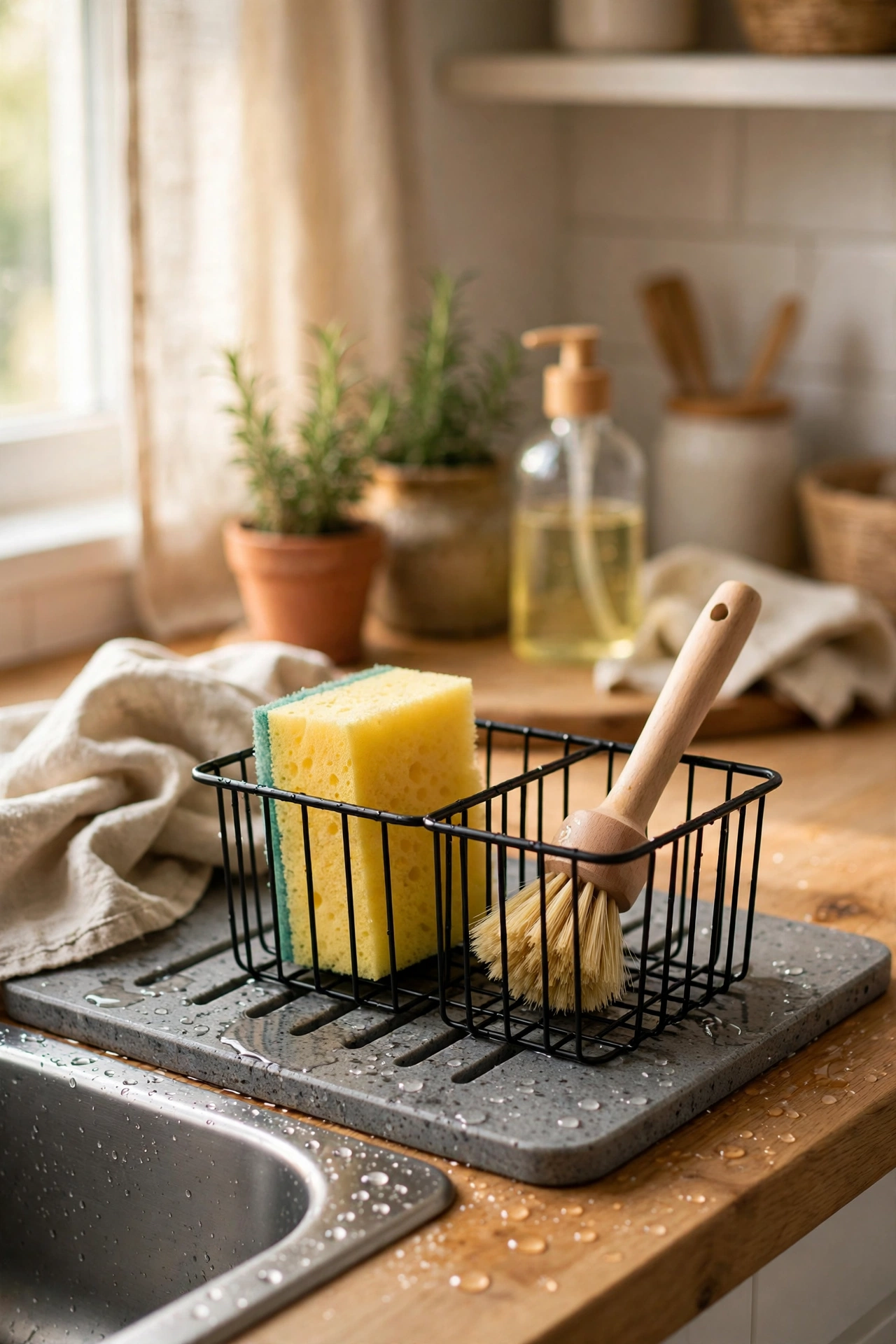
A black wire sink caddy corralled on the draining board keeps washing-up gear tidy and nods to the scullery era. Look for one with a drip tray so the worktop does not stay damp underneath. I tried this and the mistake to avoid is choosing the pretty enamel one with no drainage holes; mine filled with soapy water and went rusty at the seams. Wire dries fast, costs less, and suits the palette — and while you are by the sink, these (see also: budget-farmhouse-kitchen-ideas) have more vintage scullery inspiration.
Cost: ~$14 | Time: 10 minutes
Hardware & lighting with a past
7. Aged Brass and Black Mixed Hardware on Creamy White Cabinets
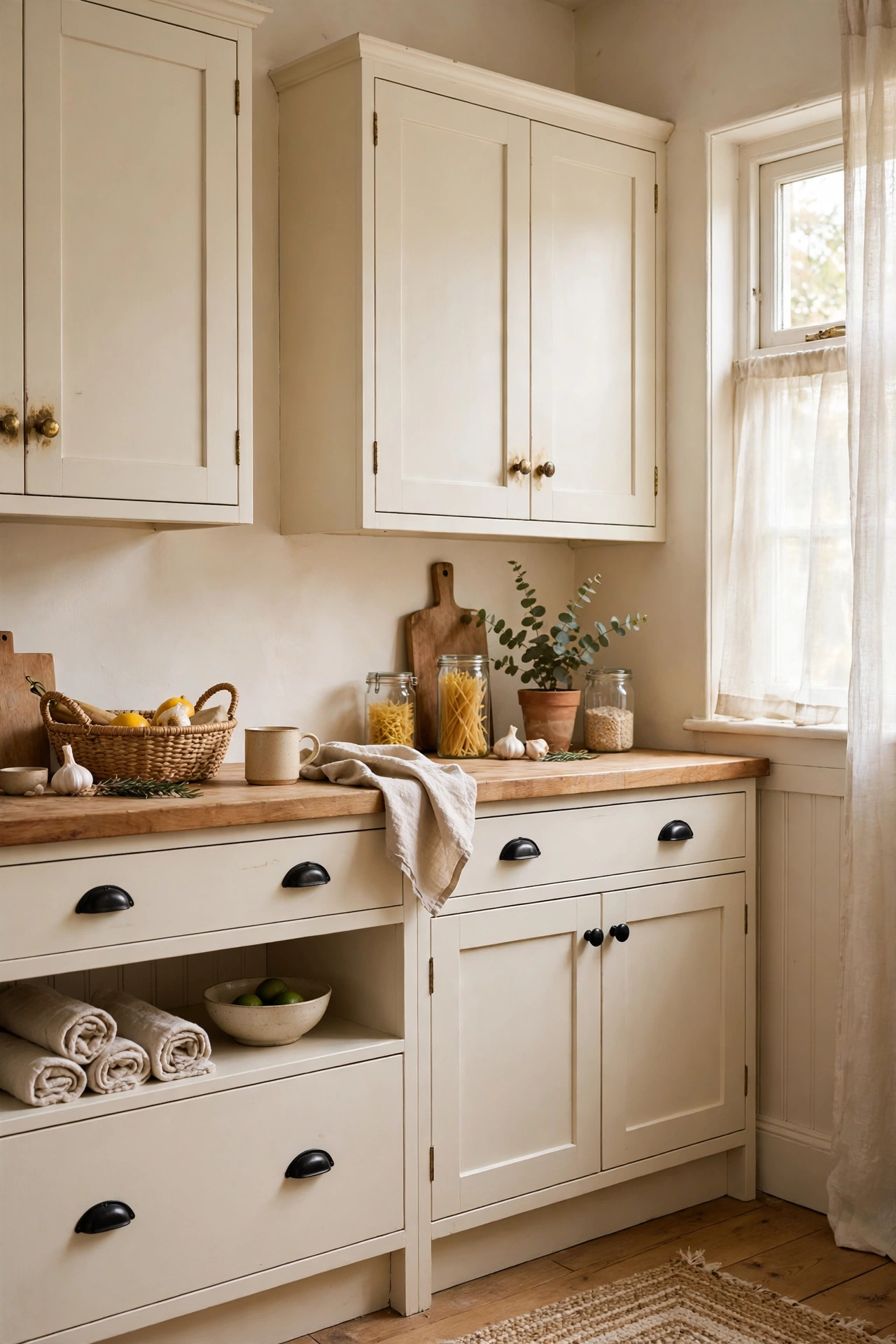
Mixing aged-brass knobs with black cup pulls on off-white cabinets is the vintage trick the expensive kitchen showrooms use — you can do it with one bag of secondhand knobs. Keep the ratio deliberate: all the pulls black, all the knobs brass, so it reads as a scheme rather than a shortage. I tried this and the mistake to avoid is mixing three metals at once; I added a chrome towel rail and the whole thing looked accidental. Two metals maximum, and the vintage warmth comes through beautifully.
Cost: ~$25 for a full set | Time: 1 hour
8. Edison-Style Bulbs in Black Cage Pendants
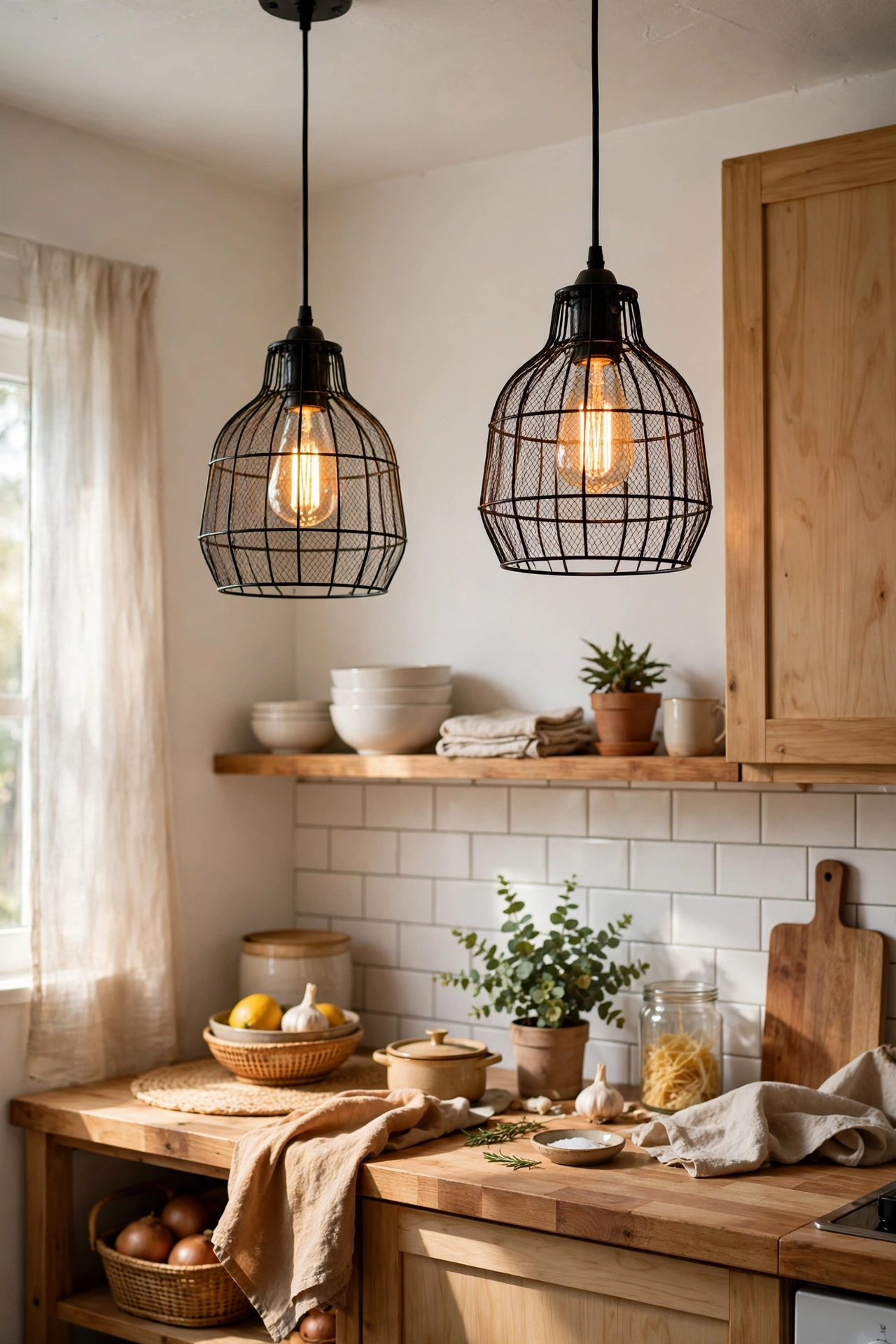
Black wire-cage pendants with warm filament bulbs give you the 1920s factory look for the price of two lamp shades. Choose LED filament bulbs so you get the look without the heat and the electricity bill of real tungsten. I tried this and the mistake to avoid is buying bulbs that are too bright and too cool; my first ones were 4000K and the kitchen felt like a garage. Warm 2700K, dimmable if you can, and the whole room glows like an old photograph.
Cost: ~$45 for two pendants and bulbs | Time: 1 hour
9. Vintage-Style Black Bridge Tap With White Ceramic Handles
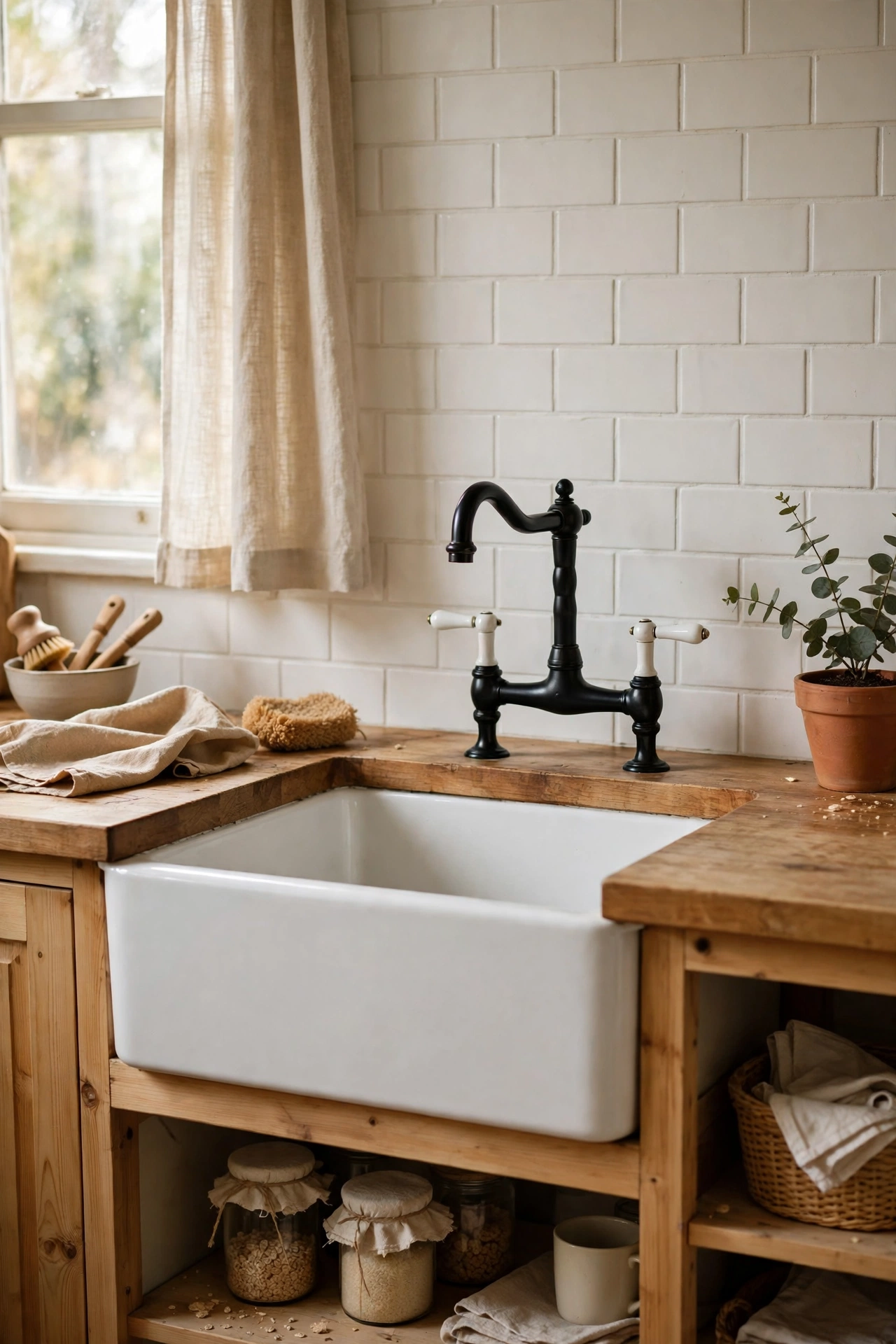
A black bridge tap with white porcelain lever handles is the single most characterful upgrade a monochrome sink can get, and modern copies are far cheaper than the real Victorian thing. Measure your tap-hole spread carefully — bridge taps need two holes at a fixed distance. I tried this and the mistake to avoid is assuming the cheap one has standard fittings; my first had metric threads that no local adapter matched. Check the fitting type before ordering, shut off the isolation valves, and budget an hour for the swap.
Cost: ~$80 for a good copy | Time: 1 hour
10. Cast-Iron-Style Black Hooks on a White Tiled Wall
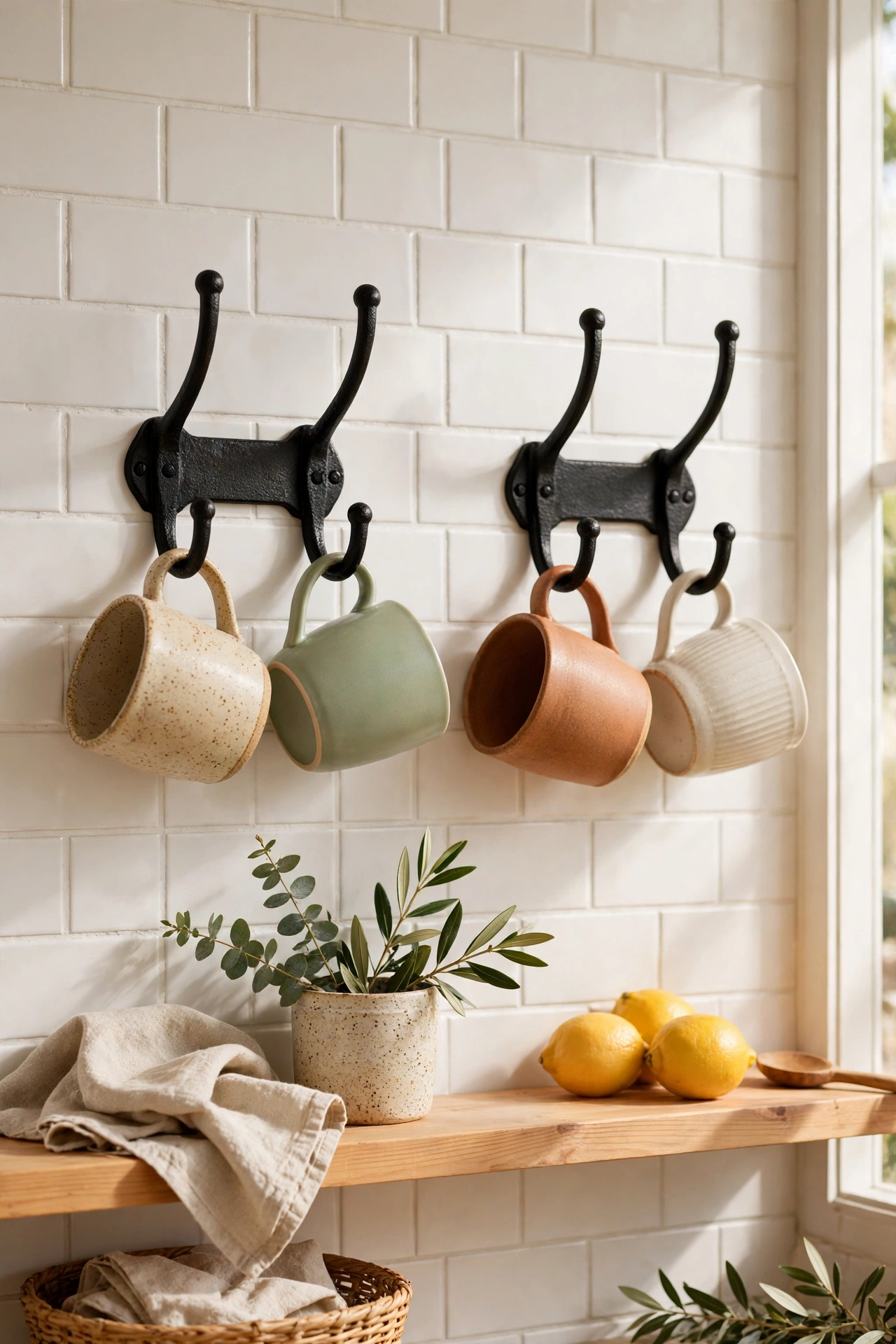
A row of black double hooks — the kind old sculleries used — holds mugs, utensils and a tea towel for almost nothing. Fix a painted timber batten to the wall first, then mount the hooks to the batten so you only make two wall holes. I tried this and the mistake to avoid is screwing straight into tile grout lines; the drill skated and chipped a tile. Drill the batten into studs or plugs in solid wall, and hang everything from there — the hooks look like they have been there for decades.
Cost: ~$16 for hooks and batten | Time: 45 minutes
11. A Rewired Vintage Lamp as a Counter Accent
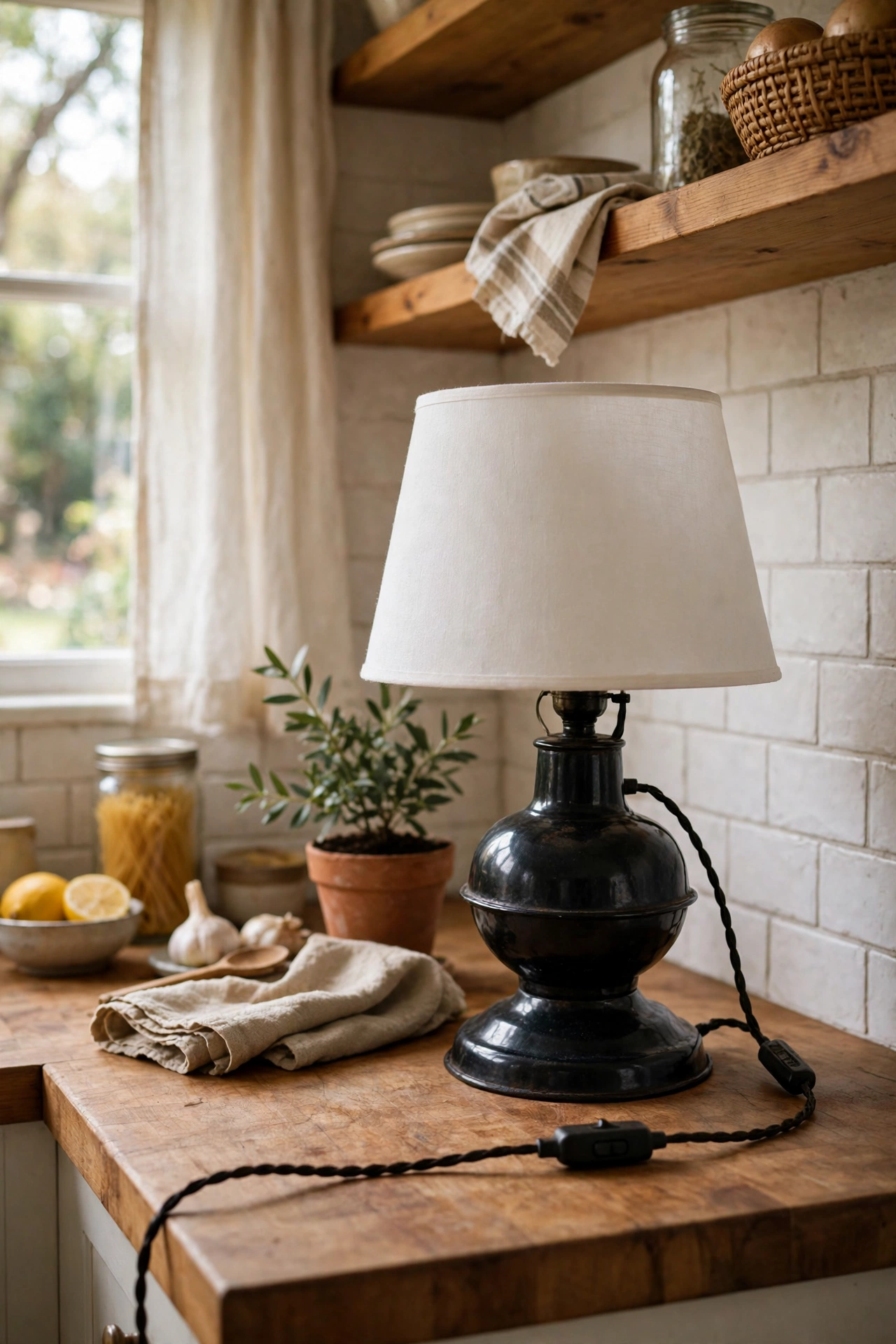
An old black enamel or brass lamp base, rewired with a modern kit and topped with a simple white shade, makes the most characterful corner light you will own. Rewiring kits are cheap and straightforward: new flex, a plug and a lampholder, done in twenty minutes. I tried this and the mistake to avoid is trusting the original 1960s wiring just because the lamp “still works”; the insulation on mine crumbled in my hands. Always rewire, always earth it, and you get vintage looks with modern safety.
Cost: ~$20 for the lamp and rewire kit | Time: 1 hour
Walls & floors with old soul
12. Pressed-Tin-Style White Ceiling Tiles on a Feature Wall
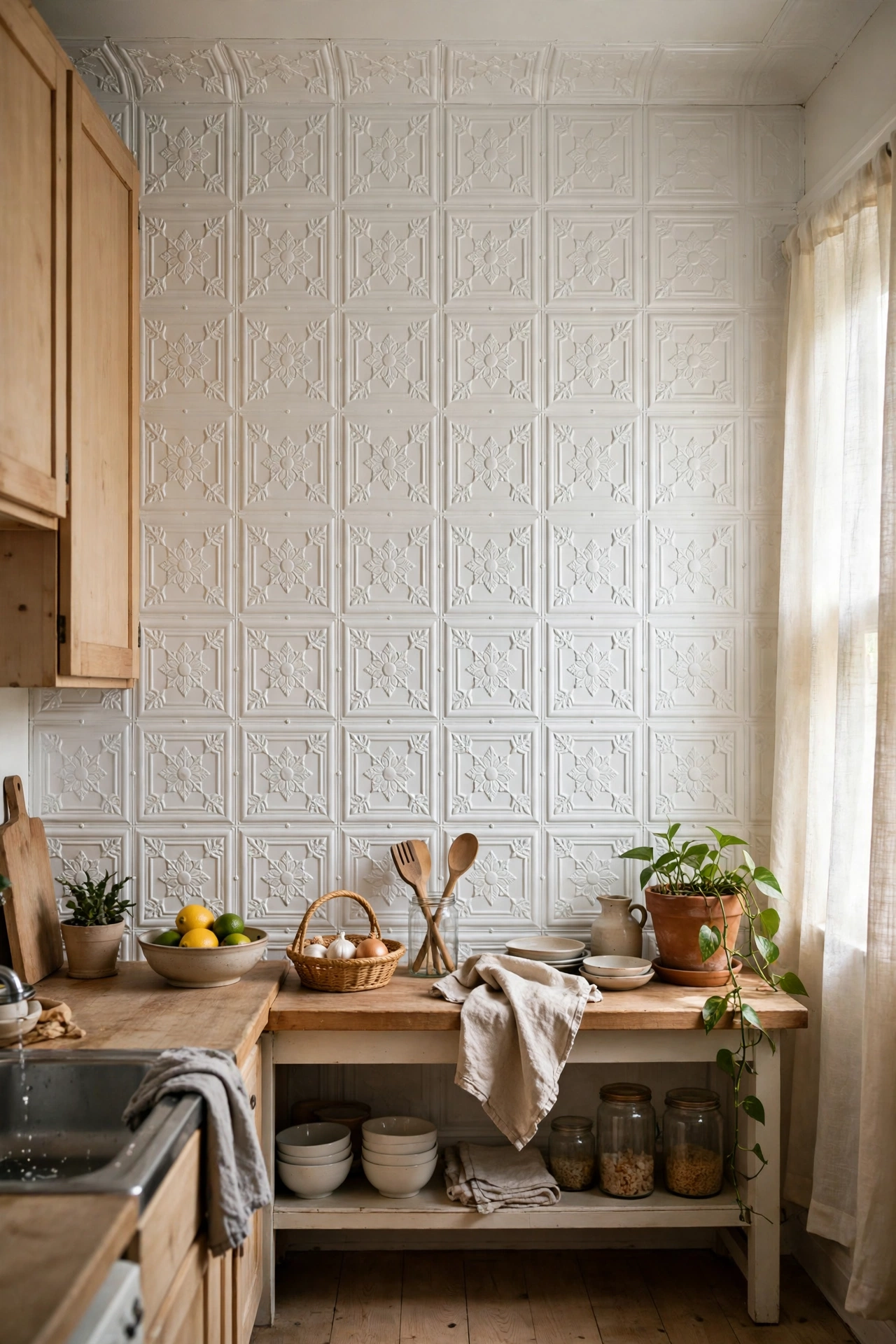
Polystyrene or PVC ceiling tiles in a pressed-tin pattern, painted soft white and glued to a feature wall, give you Victorian character for the cost of a pizza. Start from the centre of the wall and work outward so cut tiles land in the corners. I tried this and the mistake to avoid is using them directly behind the hob without checking the heat rating; mine softened and warped above the kettle’s steam. Keep them on the dining-side wall and they fool everyone — guests always touch them to check.
Cost: ~$28 for a small wall | Time: 2 hours
13. Black-and-White Diamond Floor Tiles With a Vintage Pattern
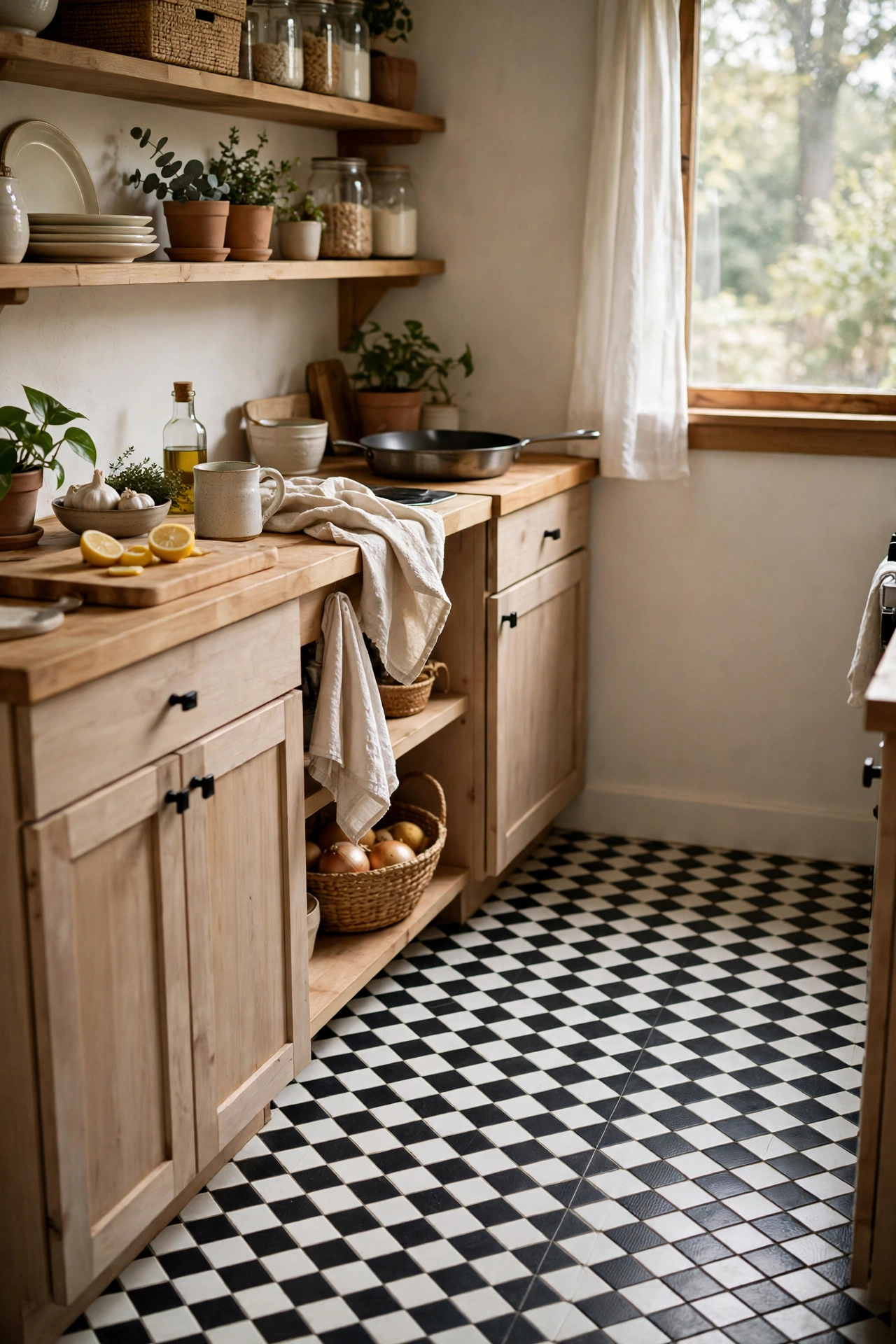
Peel-and-stick tiles in a small diamond pattern — not the big diner checkerboard, the smaller Victorian one — give a hallway-to-kitchen floor genuine period feel. The smaller the pattern, the more forgiving it is of wonky rooms, which old houses always have. I tried this and the mistake to avoid is laying them in one session with no breaks; tired eyes miss the pattern alignment and one rotated tile shows forever. Lay a row, stand back, check, and only then commit. Save this idea if you are dreaming of a proper Victorian floor without the five-figure quote.
Cost: ~$55 for a small kitchen | Time: 5 hours
14. Whitewashed Beadboard Backsplash With a Black Cap Rail
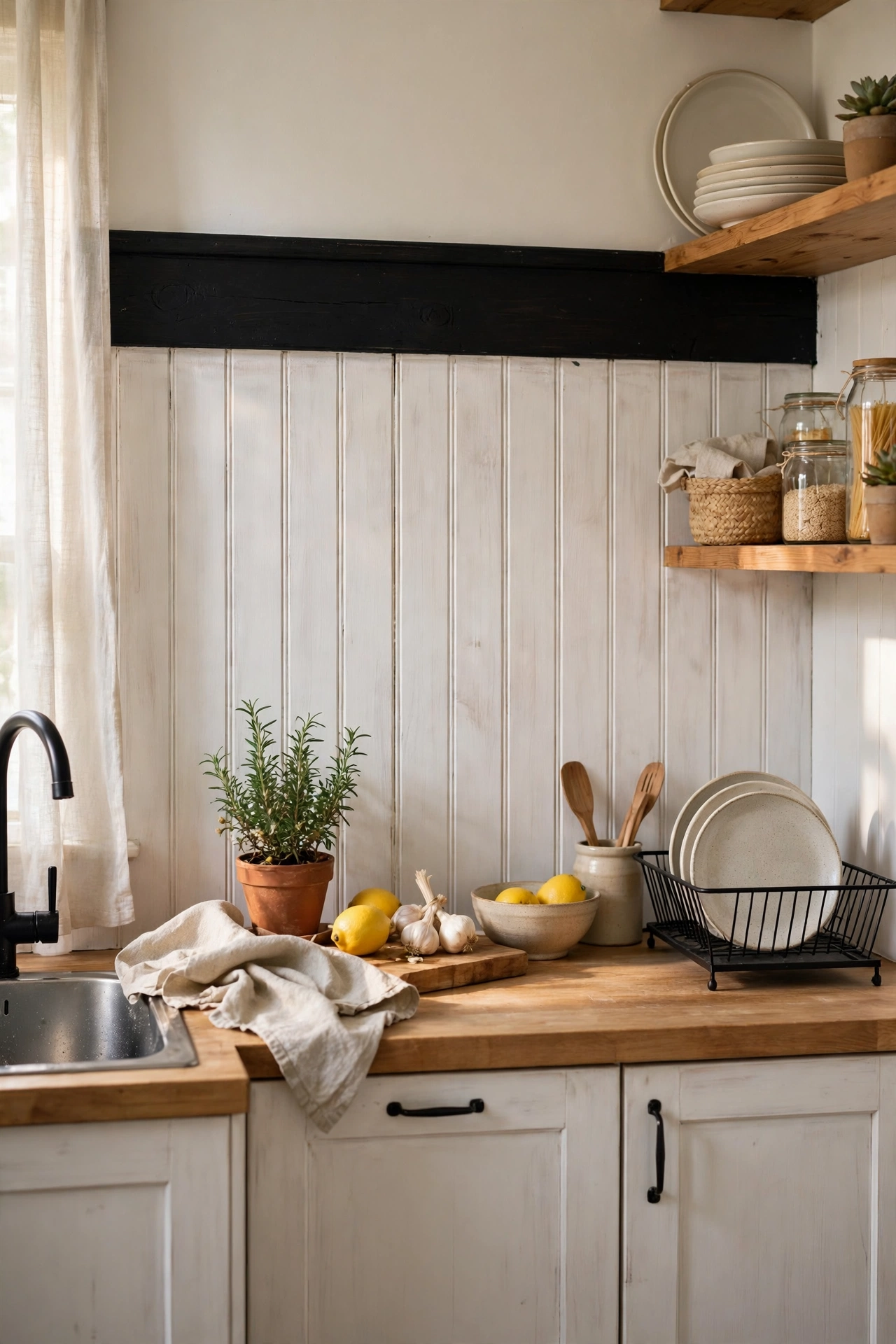
Beadboard panels painted white with a black-painted timber cap along the top read as cottage-kitchen from a century ago. Cut the panels to sit just behind the worktop and fix with construction adhesive, then bed the cap rail on top to hide the raw edge. I tried this and the mistake to avoid is leaving the bottom edge unsealed where the worktop meets the panel; water crept behind mine and the paint bubbled. Run a bead of clear silicone along the joint and it stays perfect through years of splashes.
Cost: ~$35 for panels and trim | Time: 3 hours
15. Framed Vintage Black-and-White Kitchen Adverts
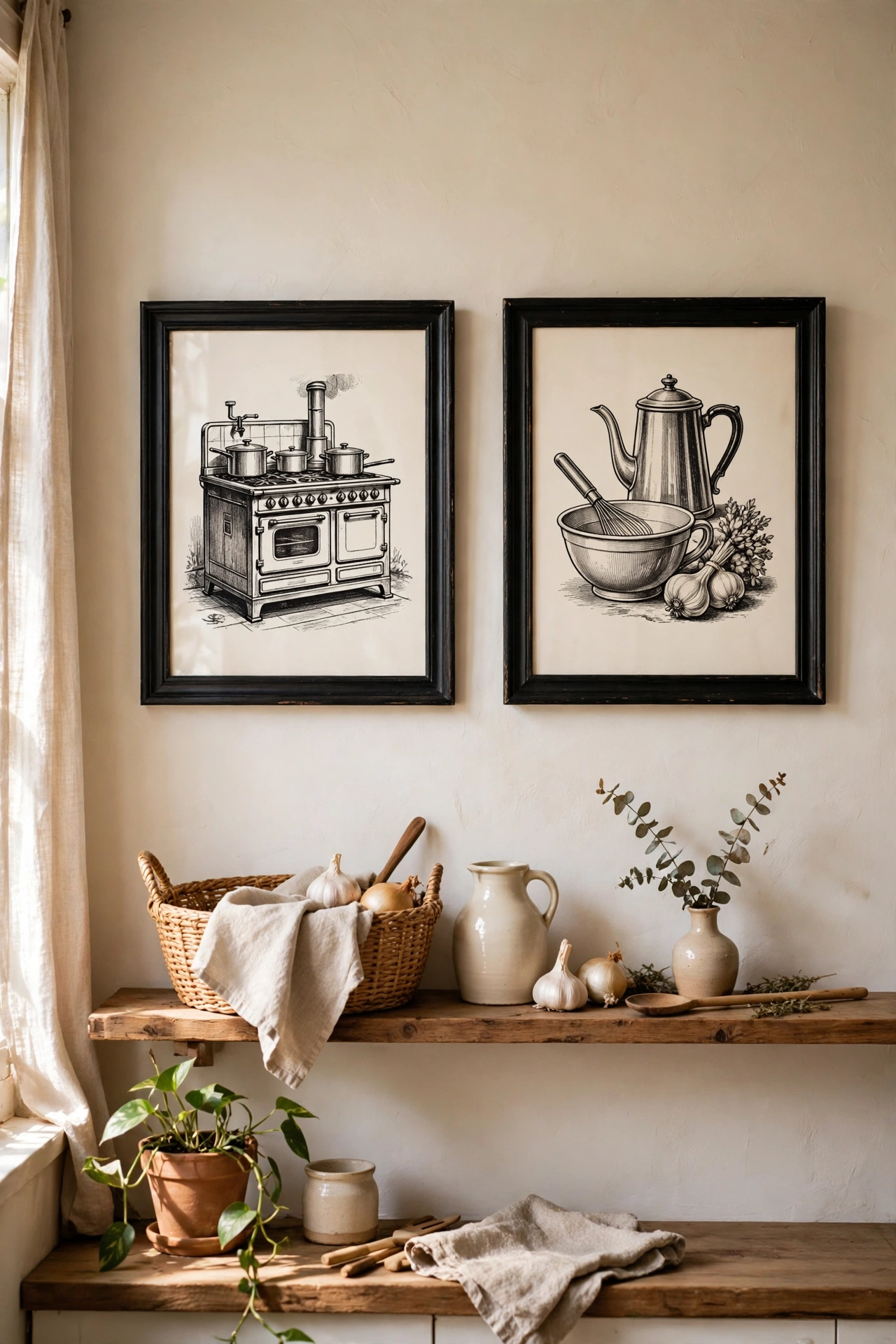
Old magazine adverts — baking powder, stoves, soap — in simple black frames are pure nostalgia and cost pennies if you print scans at home. Estate-sale photo albums and free digital archives are full of them. I tried this and the mistake to avoid is printing on glossy photo paper; the sheen looks modern and wrong. Matte paper, or even aged with a tea stain, and the prints sit in the frames like originals. Hang a pair flanking a window for the classic look, and these (see also: vintage-kitchen-decor-on-a-budget) have more period-wall ideas.
Cost: ~$12 for two framed prints | Time: 1 hour
16. A Black Chalkboard Paint Door on the Pantry
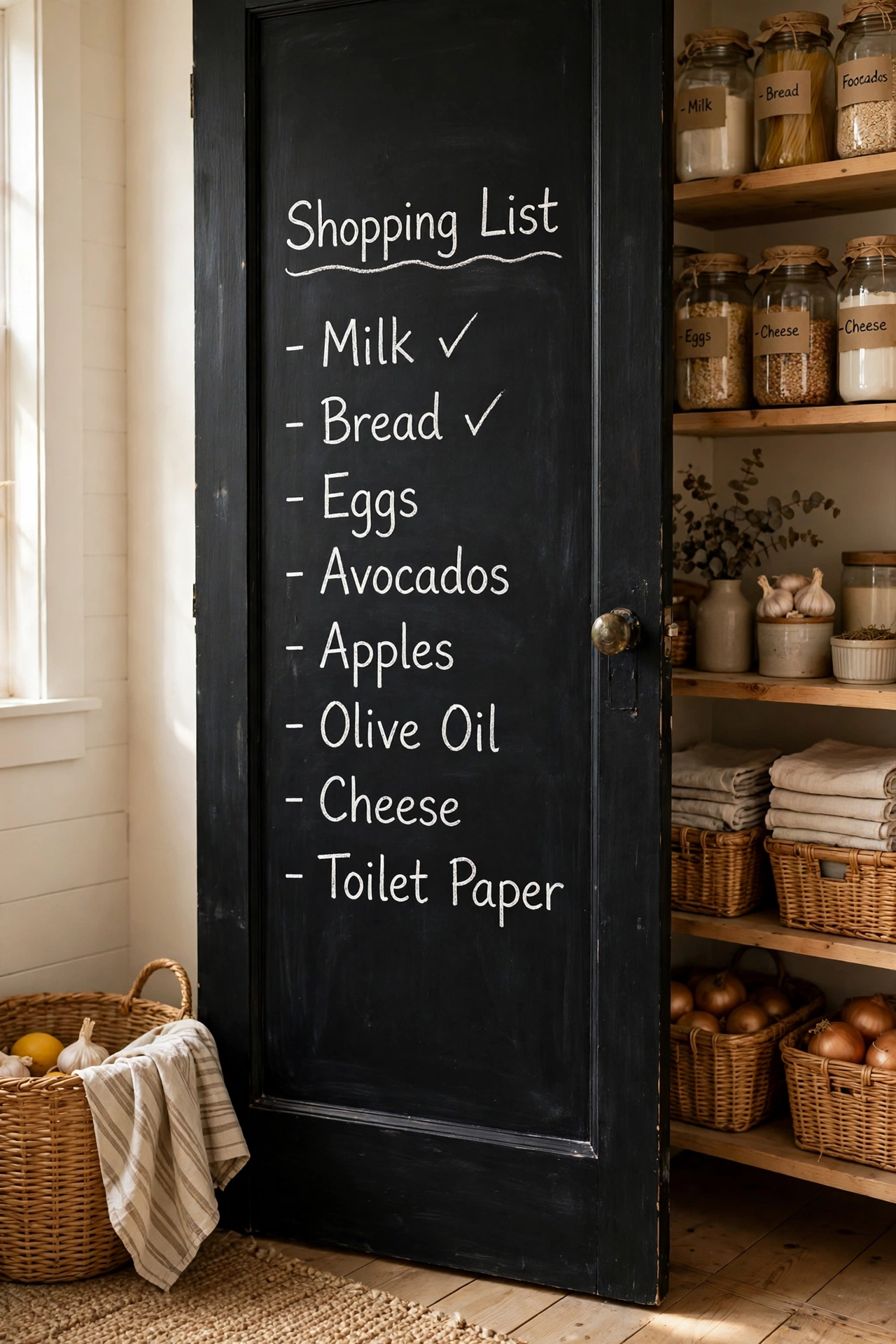
Painting the pantry door in black chalkboard paint turns a plain door into a shopping-list station with real vintage general-store energy. Remove the door and lay it flat — painting a vertical door invites drips — and do three thin coats. I tried this and the mistake to avoid is using regular chalk straight away; you must season the surface by rubbing chalk across it all and wiping off first. Then the family’s lists wipe clean every week and the door looks better than the day it was painted.
Cost: ~$16 for paint | Time: 3 hours
Textiles & finishing touches
17. Black-and-White Ticking Stripe Blind on the Window
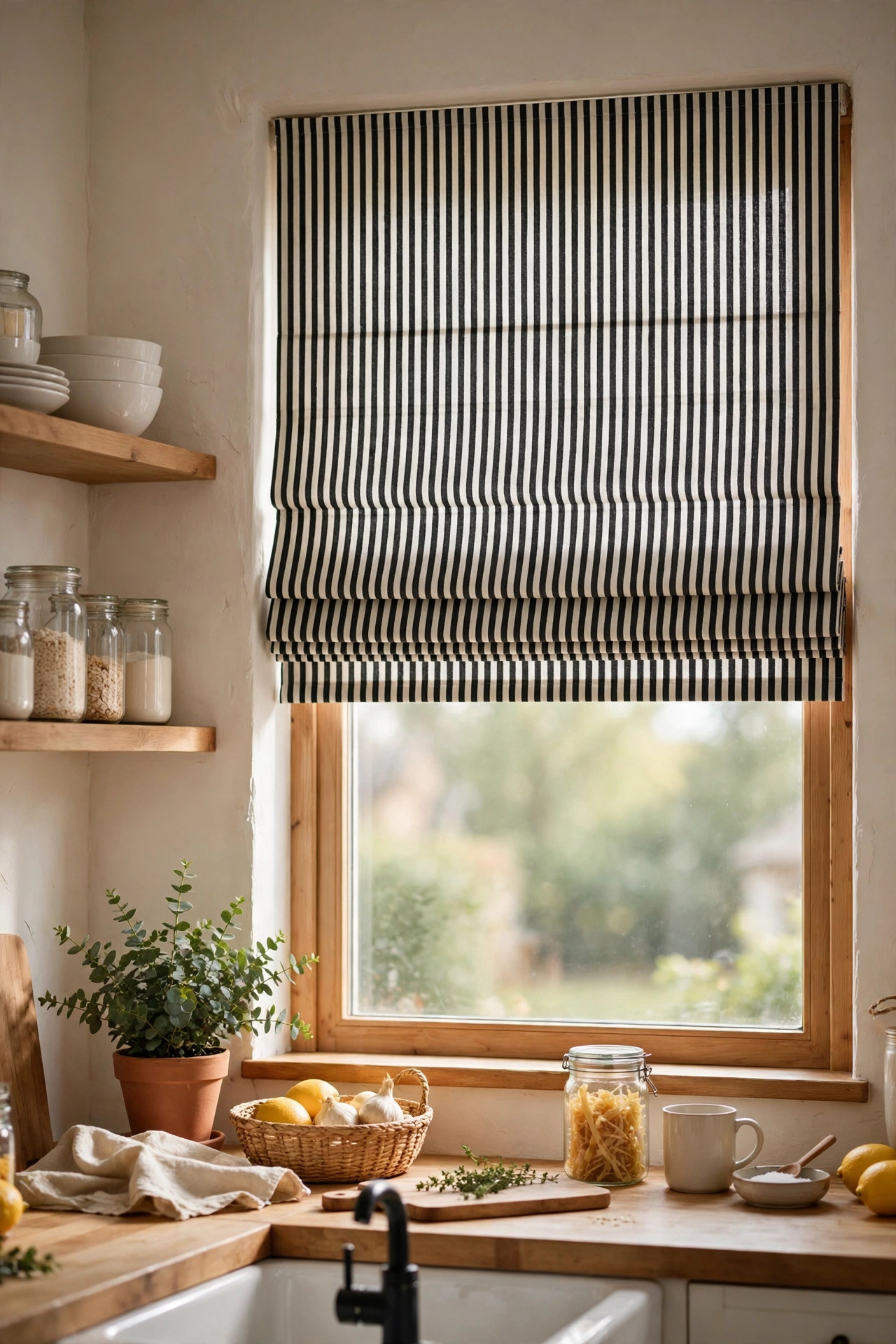
Ticking stripe — the classic mattress-ticking pattern — is the vintage textile for monochrome kitchens, and a Roman blind in it looks made-to-measure for very little. Cut-to-size services online will make one from your measurements for a fraction of a curtain shop’s price. I tried this and the mistake to avoid is measuring the recess instead of the full window when you want an outside mount; my first blind sat inside the frame and let light leak around the edges. Measure twice, mount above the frame, and it falls in perfect crisp folds.
Cost: ~$38 cut to size | Time: 45 minutes
18. Crocheted or Lace-Edge Runner on a Black Console Table
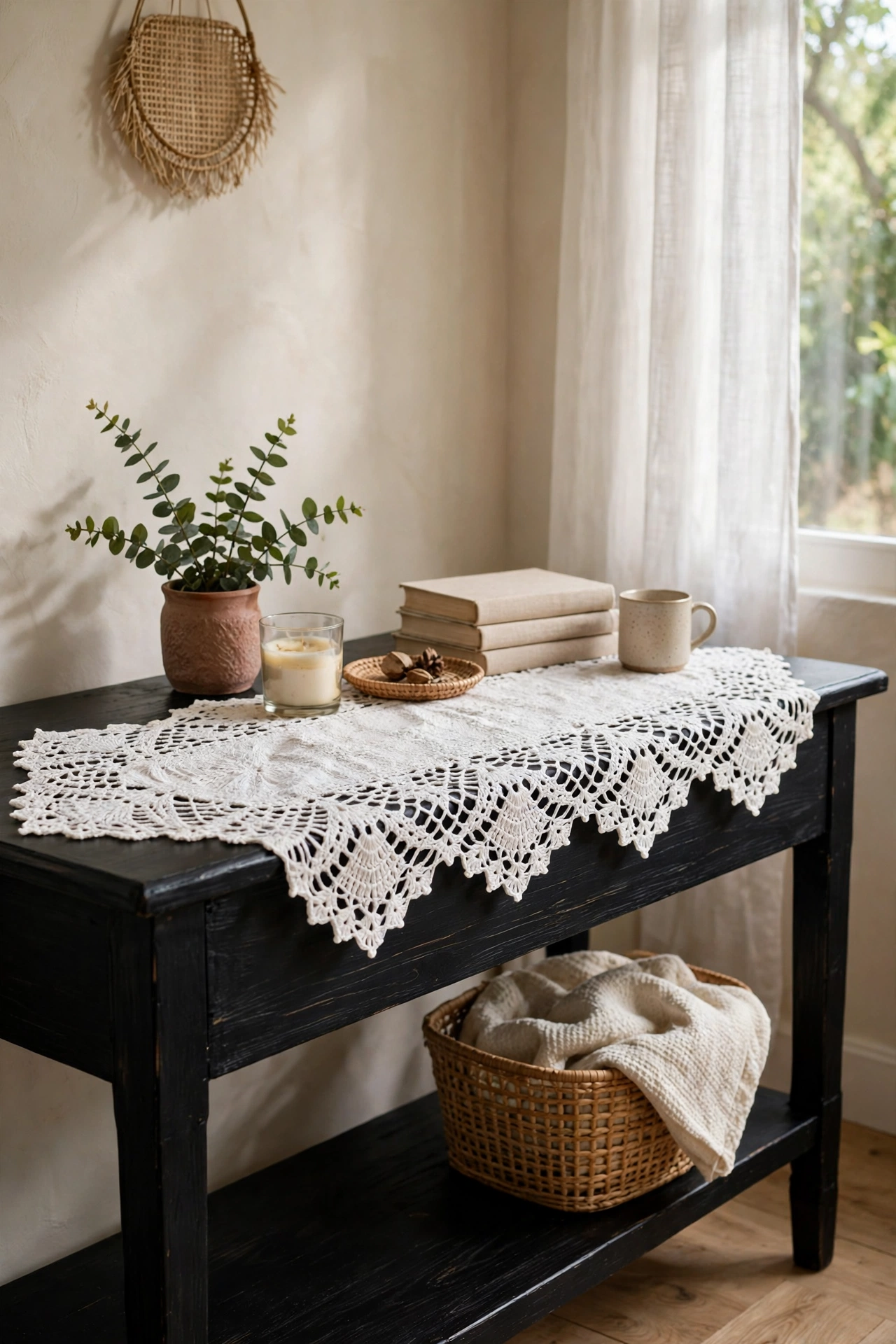
A white lace or crochet runner — the kind every grandmother owned — layered over a black-painted side table is vintage charm in its purest form. Charity shops sell them for a pound or two; wash gently by hand and press while damp. I tried this and the mistake to avoid is putting a lace runner under anything hot or wet; my first one took a ring mark from a plant pot that never came out. Layer it over a felt mat and it survives the kitchen while looking like an heirloom.
Cost: ~$4 secondhand | Time: 20 minutes
19. Vintage-Style Black Letterboard for Kitchen Quotes
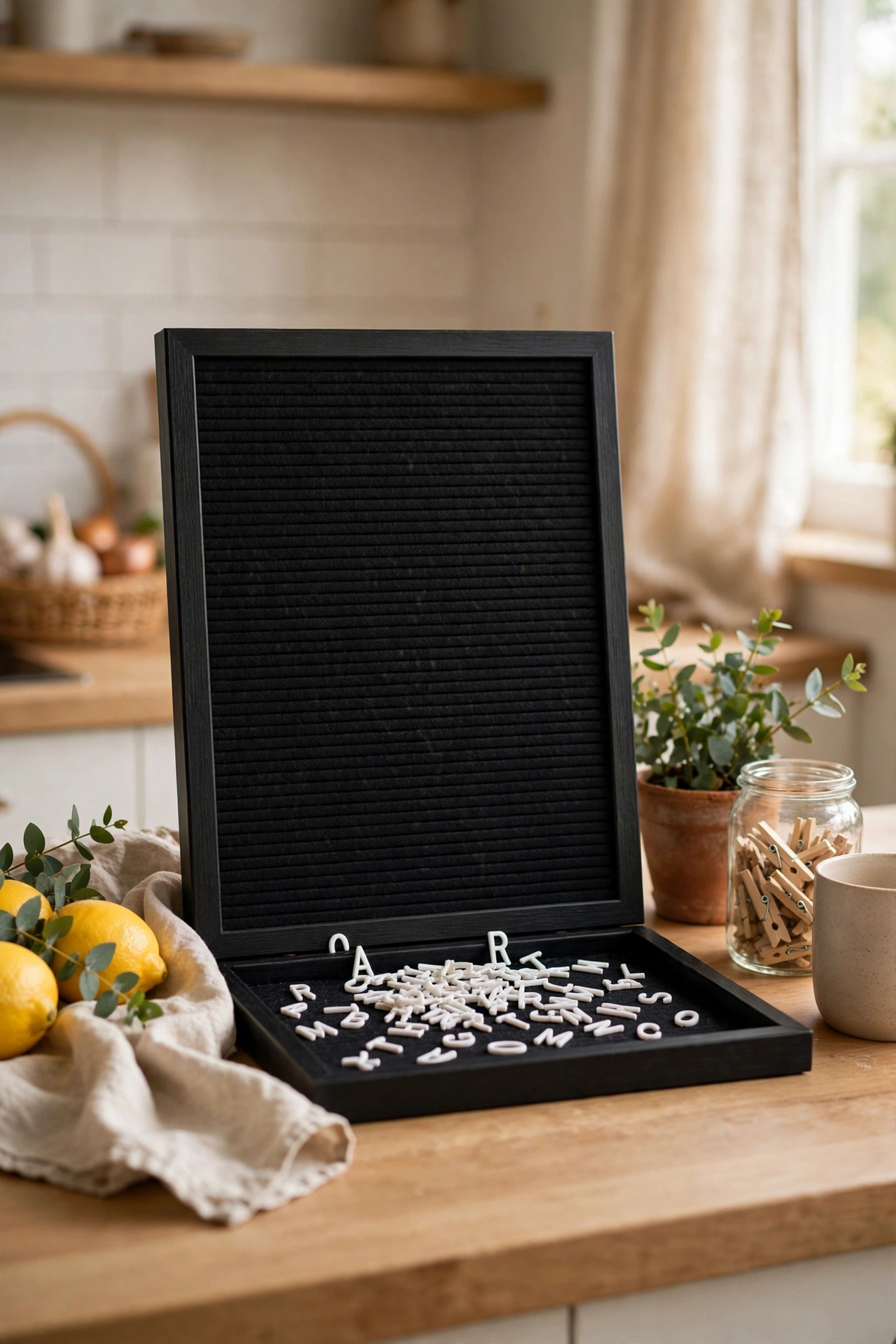
A black felt letterboard with white changeable letters lets you rotate seasonal messages — and it photographs beautifully for that retro-diner feel. Propped on the worktop against the splashback, it needs no fixings at all. I tried this and the mistake to avoid is buying the tiny one; the letters are fiddly and the board reads as a toy. The 25cm size is the sweet spot, big enough to read from the door, and the letter sets are cheap to top up when you lose the Es.
Cost: ~$22 | Time: 10 minutes
20. Enamel Tea Towels: Striped Black-and-White Hanging by the Stove
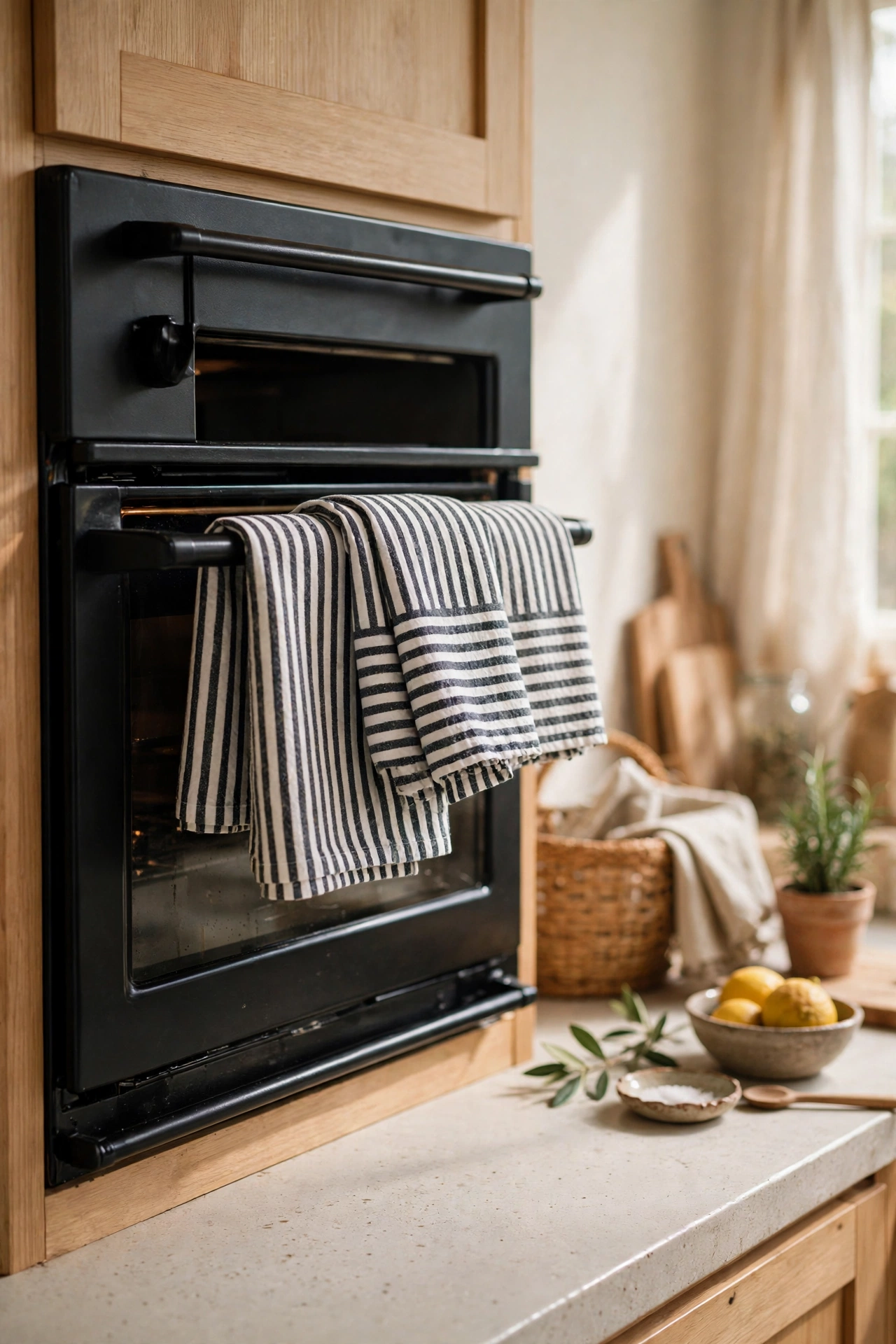
Good striped tea towels, folded over the oven rail or hung from a black hook, are working decor — useful and pretty at once. Buy cotton, not microfibre; cotton dries dishes properly and ages into that soft vintage look. I tried this and the mistake to avoid is buying the thin souvenir-style ones that go see-through after three washes; proper heavyweight cotton costs a little more and lasts years. Rotate a fresh one weekly and the rail always looks styled, and these (see also: cosy-kitchen-textile-ideas) round out the soft furnishings.
Cost: ~$15 for three quality towels | Time: 5 minutes
21. A Weathered Black Wooden Stool as a Plant Stand
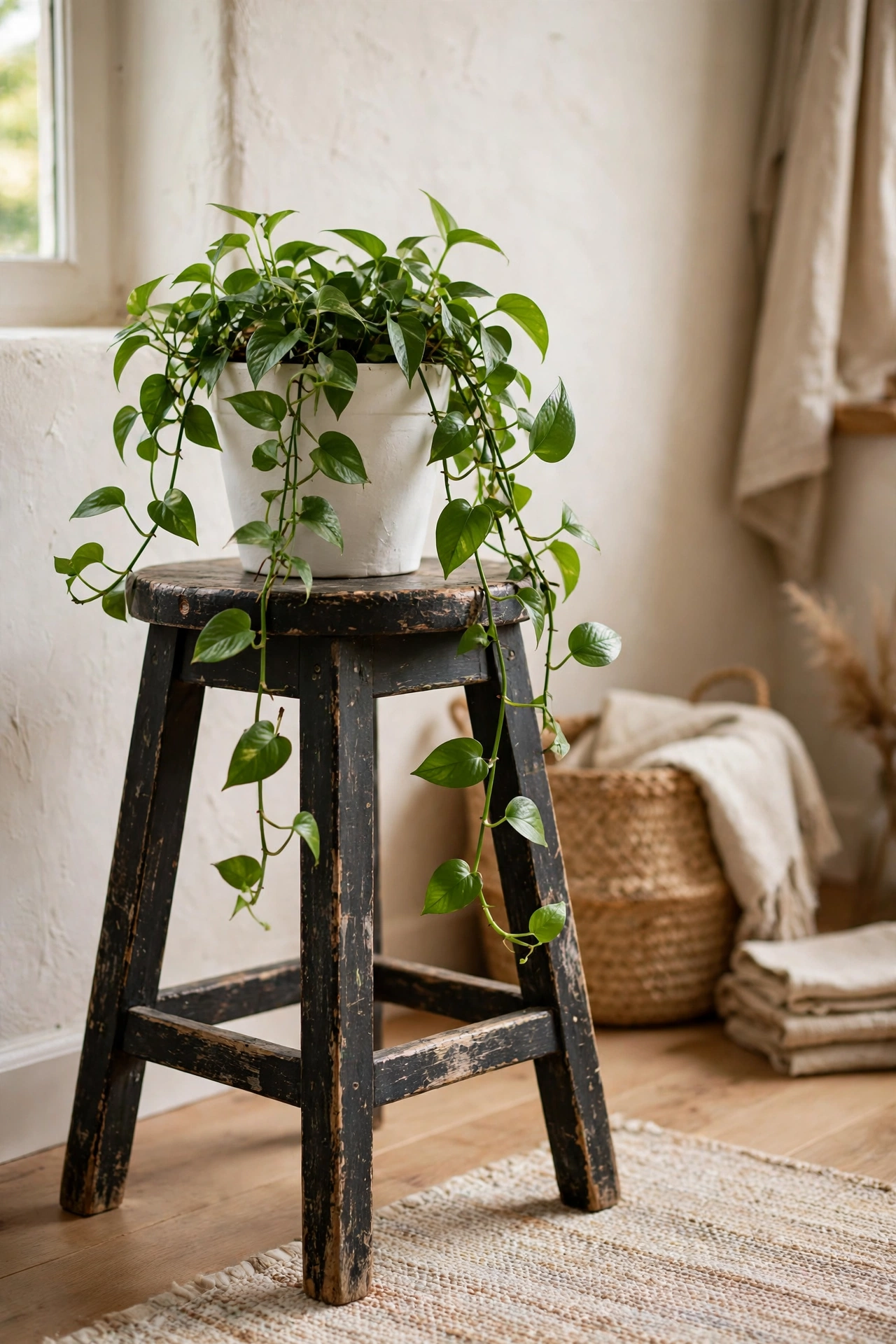
An old black-painted stool, paint worn at the edges, makes the perfect stand for a trailing plant in a white pot — instant patina money cannot buy new. Sand the top just enough to be stable, and put a saucer under the pot so water does not pool on the wood. I tried this and the mistake to avoid is skipping the saucer; the ring it left on mine is still there, a reminder. A spider plant or pothos trails down and softens the whole black-and-white scheme with a little green life.
Cost: ~$8 secondhand | Time: 20 minutes
Vintage charm is really just patience made visible — a worn edge here, a rescued find there, and a palette strict enough to make it all look deliberate. Start with the thrifted shelf and see where the hunting takes you; the best pieces are rarely the ones you planned for.
