25 Japandi Living Room Ideas on a Budget
Japandi living room ideas clicked for me the moment I realised my cluttered flat was making me tired. Japandi, the blend of Japanese minimalism and Scandinavian warmth, is about calm through simplicity: natural materials, low furniture, and only things you love. I spent a month slowly editing my living room toward it, and the mental quiet that followed was worth more than any single purchase. Everything below is budget-friendly, because Japandi at its heart is about less, not more.
Each idea below comes with simple steps, because Japandi is a philosophy you practise, not a shopping list. Start with the decluttering ideas, they’re free and they change everything. Then add the material and light touches one at a time. You’ll know it’s working when the room starts to feel like a deep breath.
Edit Ruthlessly Until the Room Breathes
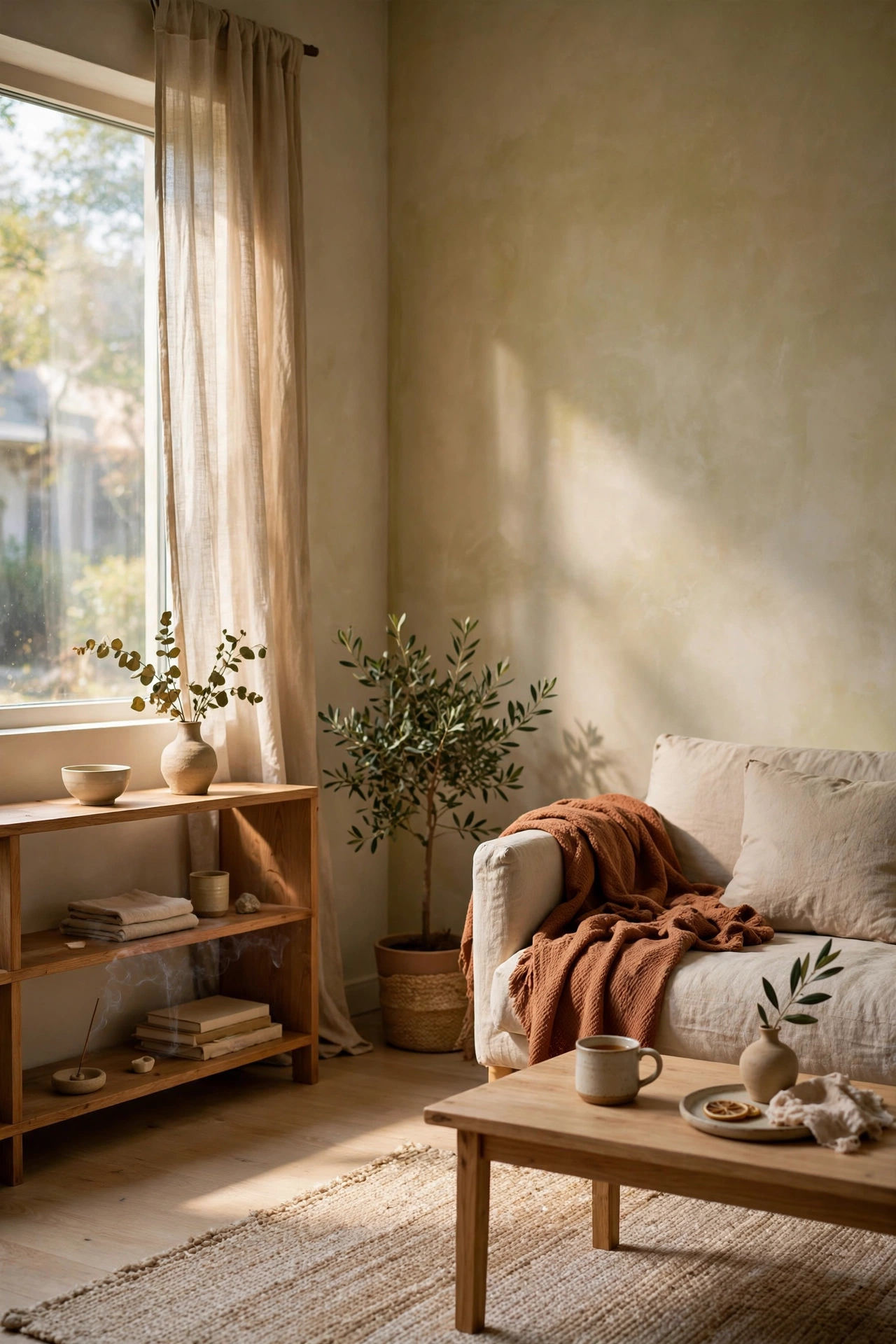
Japandi starts with subtraction, not shopping. Every object you remove gives the remaining ones room to matter. I spent one Saturday taking everything off my shelves and only putting back what I genuinely loved, and half of it never returned. The room felt twice as big with half the stuff. This costs nothing and it’s the foundation everything else builds on, skip it and the rest won’t land. The room felt twice as big with half the stuff, and I finally stopped losing things in the clutter.
- Remove everything from one surface or shelf completely.
- Put back only pieces you’d miss if they vanished, box the rest for a month.
- If you don’t miss the boxed items, donate them and enjoy the space.
Cost: $0 | Time: a Saturday
Lower Your Seating Profile
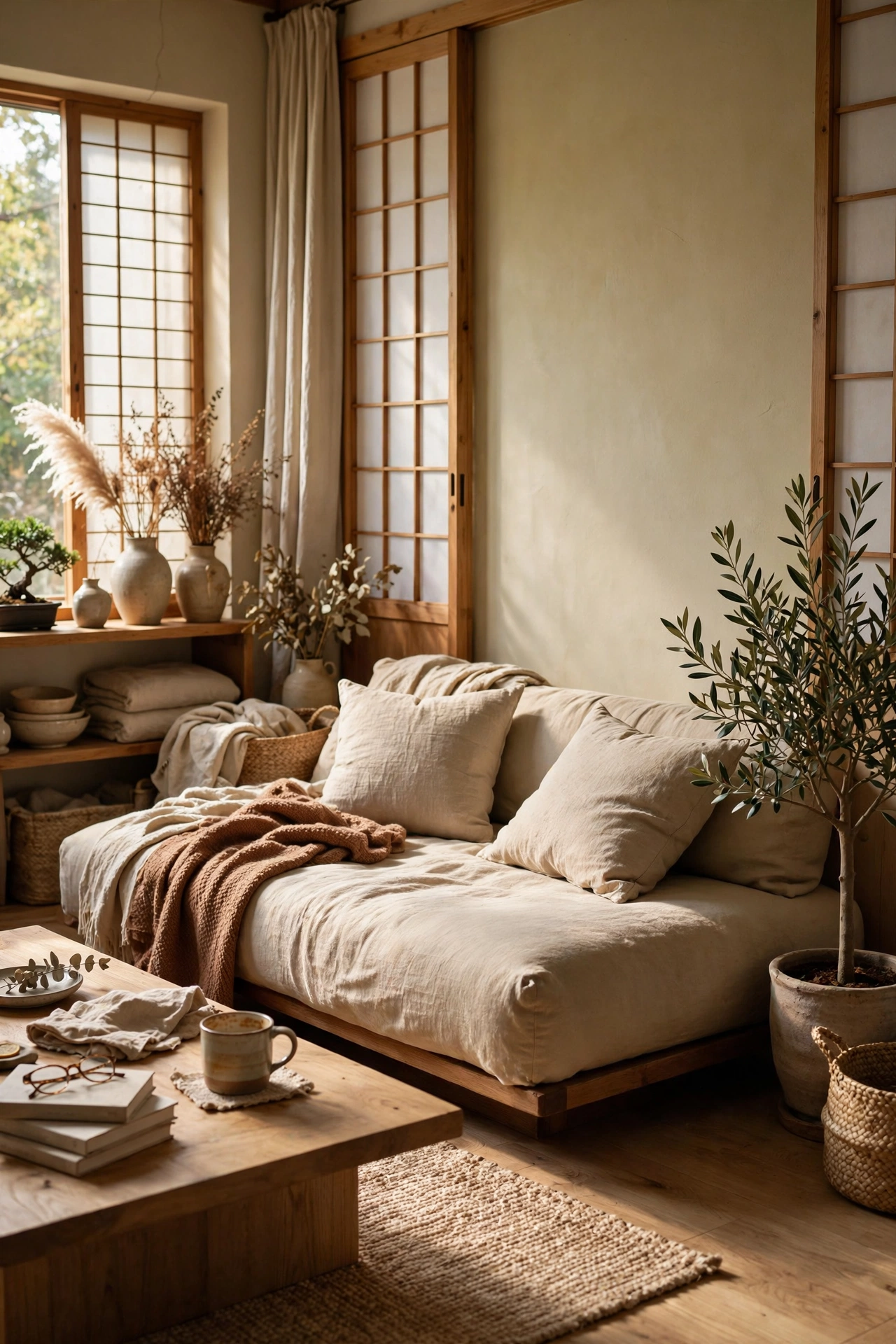
Japandi rooms sit low, which makes ceilings feel higher and the mood calmer. You don’t need new furniture, removing sofa legs or choosing floor cushions gets you there. I took the legs off my old sofa and the whole room’s proportions shifted in the right direction. Low seating also encourages the relaxed, grounded feeling that’s central to the style. If buying, look for platform-style or Scandinavian low designs secondhand. Low seating also encourages the relaxed, grounded feeling that sits at the very heart of the style.
- Check if your sofa legs unscrew, many do, and try it legless for a week.
- Add a thick rug underneath so low seating still feels comfortable.
- Balance with one low coffee table so sightlines stay level.
Cost: $0 | Time: 30 minutes
Choose Light, Natural Wood Tones
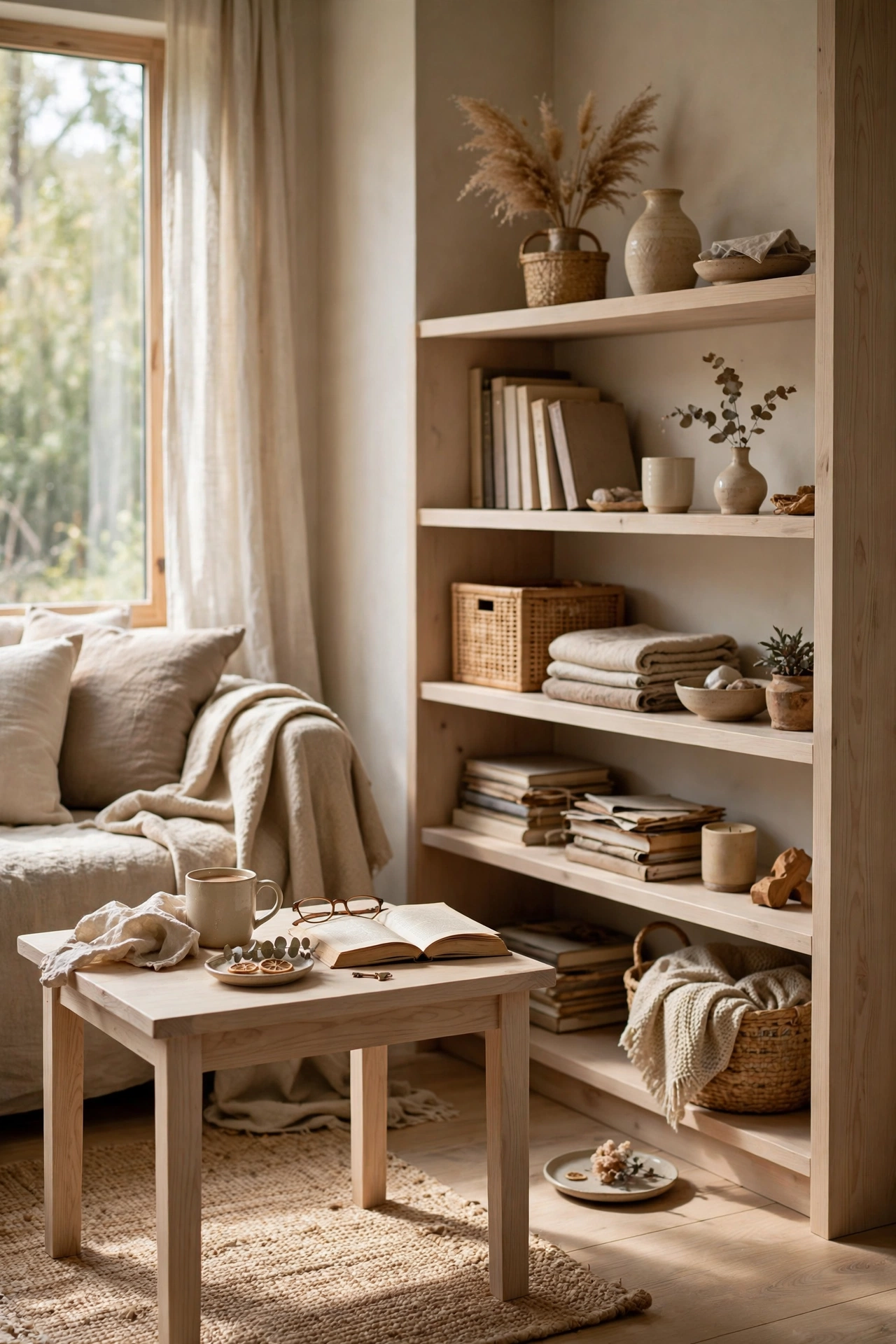
Pale woods like ash, pine, and bamboo are the backbone of Japandi, bringing warmth without visual weight. Dark heavy woods fight the calm, so favour light tones in your larger pieces. I sanded back a dark charity-shop stool to pale wood and it went from looming to lovely. When thrifting, look for Scandinavian-style pieces, they’re usually light wood already and turn up constantly. When thrifting, look for Scandinavian-style pieces, since they are usually light wood already and turn up constantly in charity shops.
- Audit your wooden pieces and note which are dark and heavy.
- Sand and oil one dark piece to pale, or swap it for a light-wood find.
- Keep wood tones within one family so the room feels cohesive.
Cost: ~$15 for sandpaper and oil | Time: a weekend
Hang a Paper Lantern Pendant
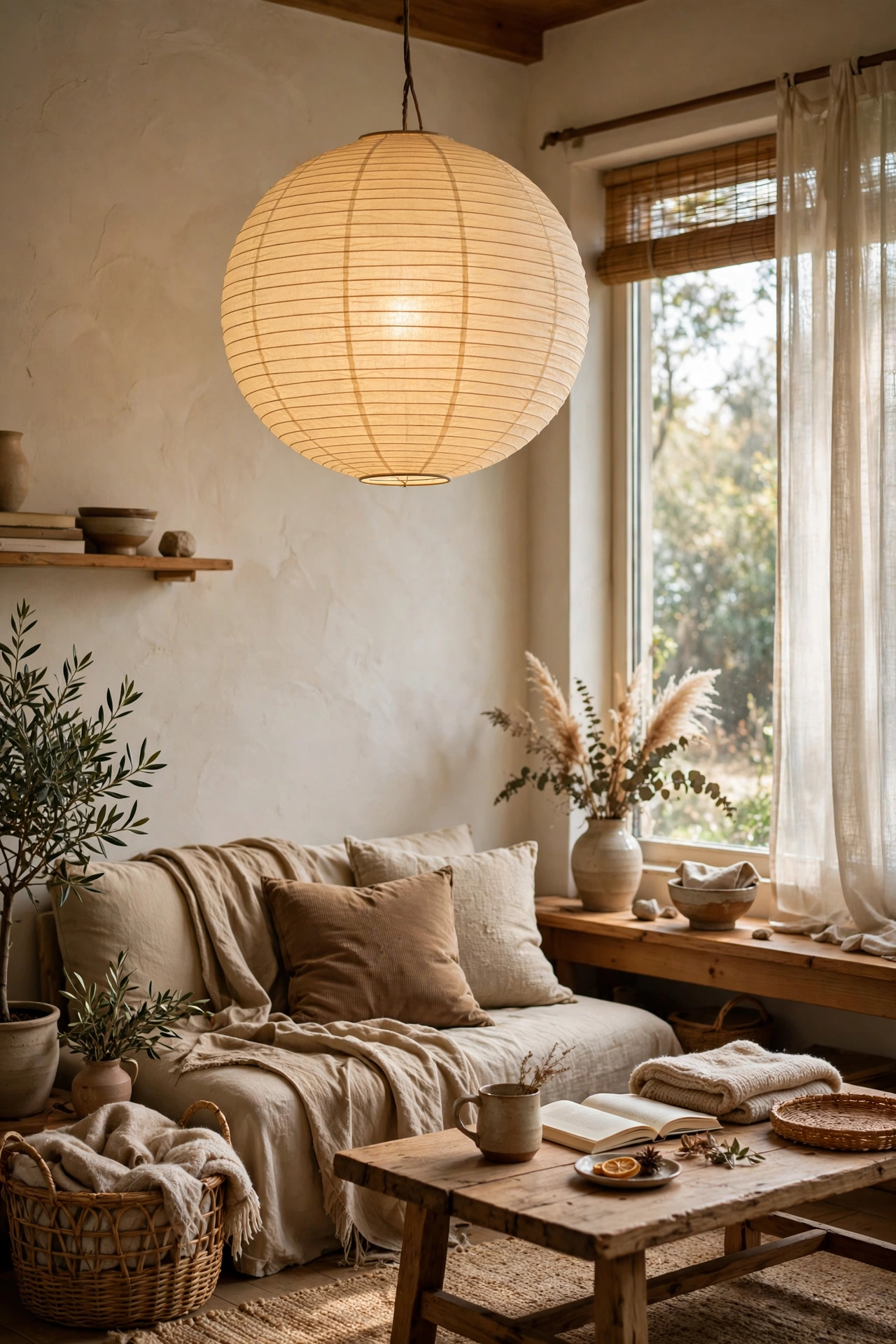
The paper lantern is the unofficial light of Japandi, scattering soft glow in every direction. It weighs nothing, costs very little, and suits the aesthetic perfectly. I replaced an ugly builder shade with a large rice-paper lantern and the whole room softened. Go oversized rather than small, a generous lantern looks deliberate. Pair with a warm bulb and you’ve nailed the Japandi lighting mood for under twenty pounds. Pair it with a warm bulb and you have nailed the Japandi lighting mood for less than twenty pounds.
- Measure your current shade and buy a lantern at least as large.
- Hang it so the bottom sits well above head height.
- Fit a warm 2700K bulb and enjoy the diffused glow.
Cost: ~$14 | Time: 15 minutes
Layer Flatweave Rugs in Natural Fibres
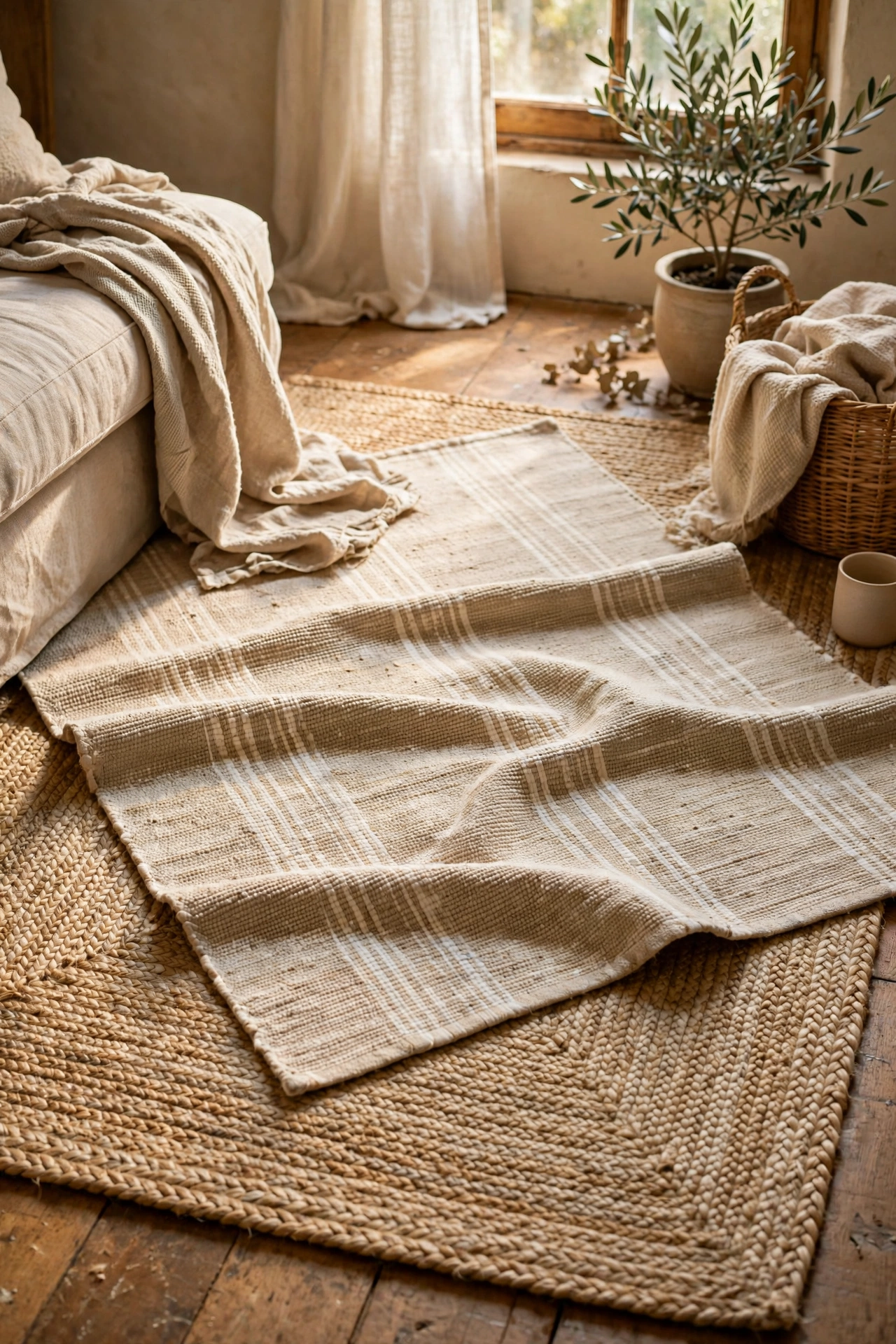
Japandi floors favour natural fibres and layered textures over single statement rugs. A large jute base with a smaller cotton flatweave on top gives you the texture contrast the style loves. I layered mine this way and the floor became one of the calmest parts of the room. Keep colours in the beige-to-oatmeal family and let the materials speak. Flatweaves are also practical, they’re easy to clean and don’t trap dust. Flatweaves are also practical, they are easy to clean and they do not trap dust the way deep pile does.
- Start with an affordable jute or sisal-look base rug.
- Layer a smaller soft flatweave where feet actually land.
- Keep both rugs in the same tonal family for cohesion.
Cost: ~$45 for both | Time: 20 minutes
Commit to a Muted, Warm-Neutral Palette
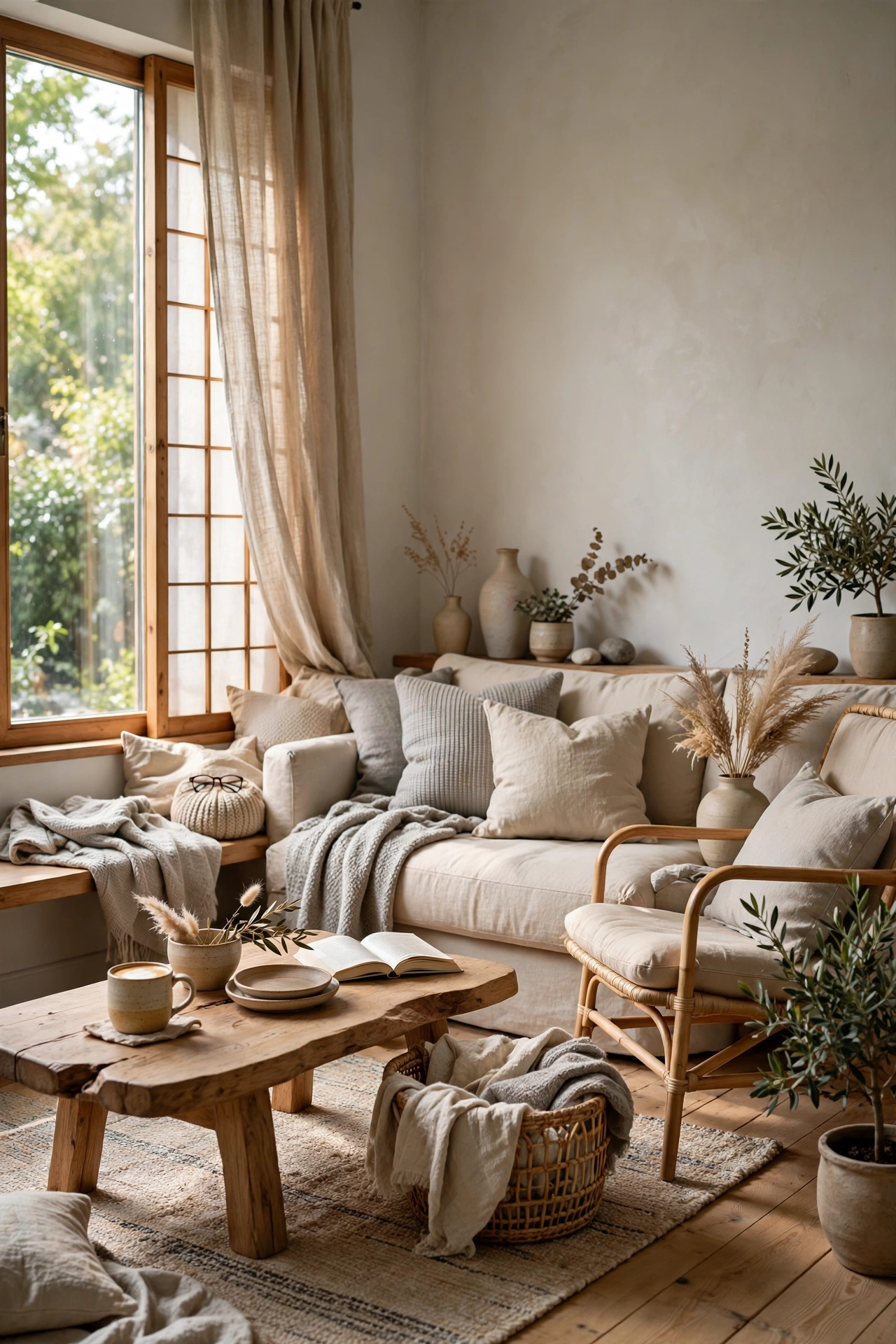
Japandi colour lives in warm whites, beiges, soft greys, and muted earth tones, never brights. Pulling your room into this palette is mostly editing: remove the loud cushion, the neon throw, the clashing art. I boxed up my colourful bits for a month and was shocked how calm the room became without them. You don’t need to repaint, textiles and editing do most of the work. Add colour back only in muted, natural forms like clay or moss. Add colour back only in muted, natural forms like clay or moss, and only if the room asks for it.
- Gather every item with a bright or clashing colour in one spot.
- Remove them for two weeks and live with the calmer palette.
- Reintroduce only muted, earthy tones that earn their place.
Cost: $0 | Time: 1 hour
Display Wabi-Sabi Ceramics
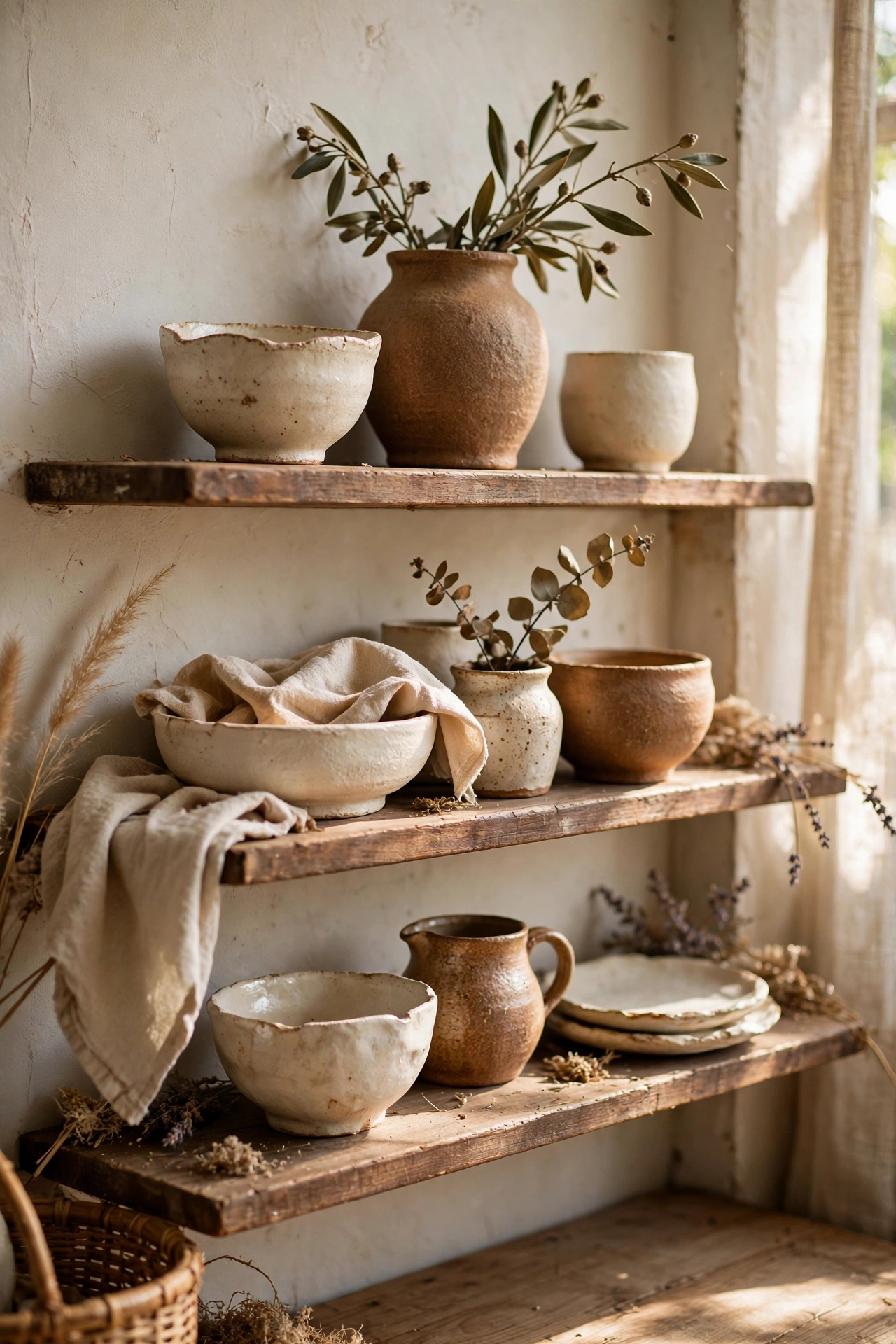
Wabi-sabi, the beauty of imperfection, is Japandi’s soul, and handmade-look ceramics express it perfectly. Charity shops are full of slightly irregular stoneware vases and bowls for very little. I built a shelf display of mismatched cream and clay pieces and it looks like a styling shoot. The secret is keeping everything in one tonal family while varying shapes. A visible fingerprint or uneven rim isn’t a flaw here, it’s the point. A visible fingerprint or uneven rim is not a flaw here, it is the entire point of the aesthetic.
- Hunt charity shops for stoneware in cream, clay, and soft grey.
- Group three to five pieces with varied shapes and heights.
- Leave breathing room around them, restraint is the style.
Cost: ~$12 for a shelf’s worth | Time: ongoing hunting
Style Open Shelves Sparingly
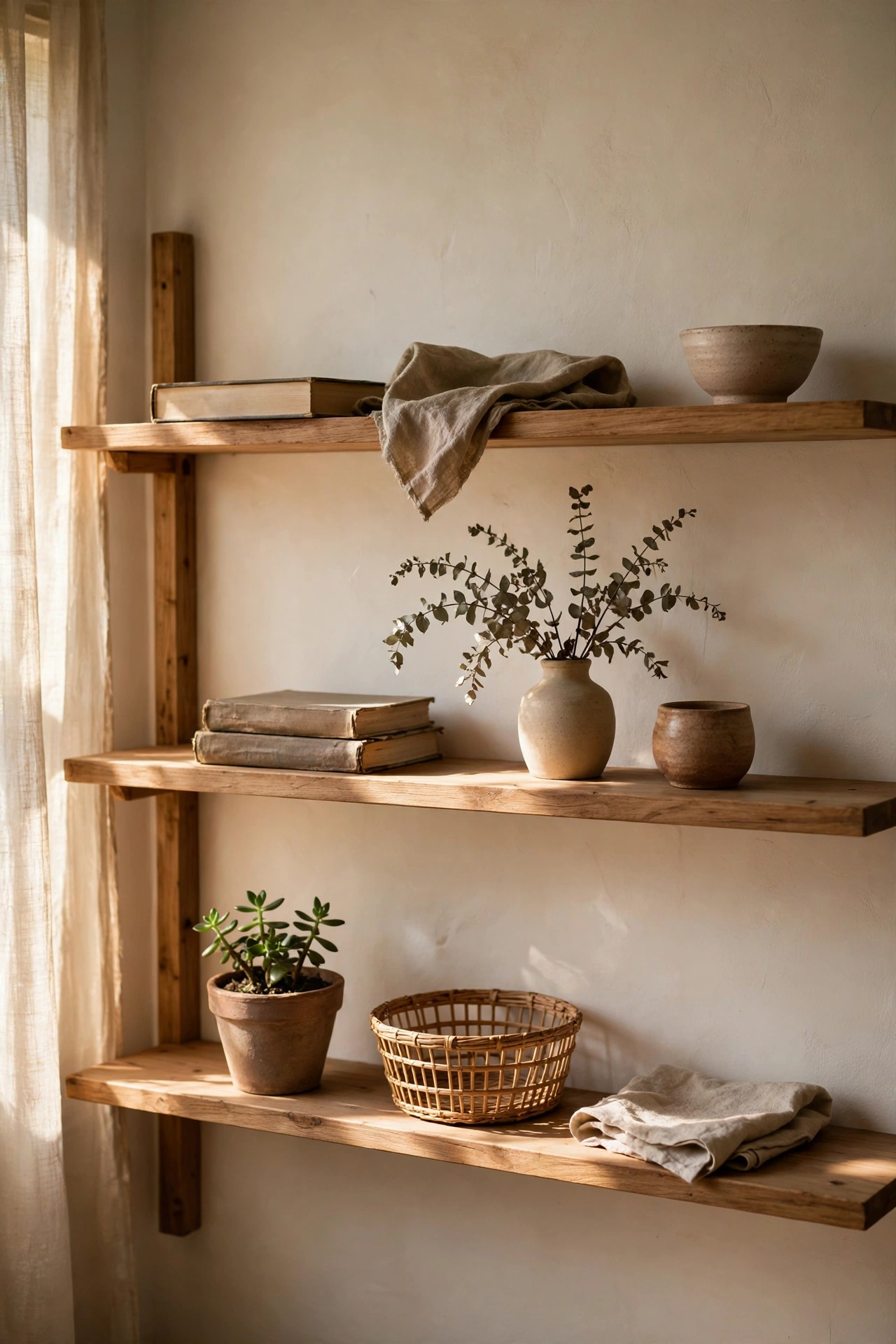
Japandi shelving follows the rule of space: every object gets room around it, and empty shelf is a design choice, not a failure. I restyled my shelves keeping only a third of what was there, and they went from storage to gallery. Group in odd numbers, mix books with one beautiful object, and leave at least one shelf mostly empty. If it feels bare at first, live with it a week, your eye adjusts and then it feels right. If it feels bare at first, live with it for a week, since your eye adjusts and then it feels exactly right.
- Clear one shelf completely and start from empty.
- Add back books plus one decorative object per shelf.
- Step back and remove one more thing, that’s the Japandi edit.
Cost: $0 | Time: 1 hour
Choose One Statement Plant
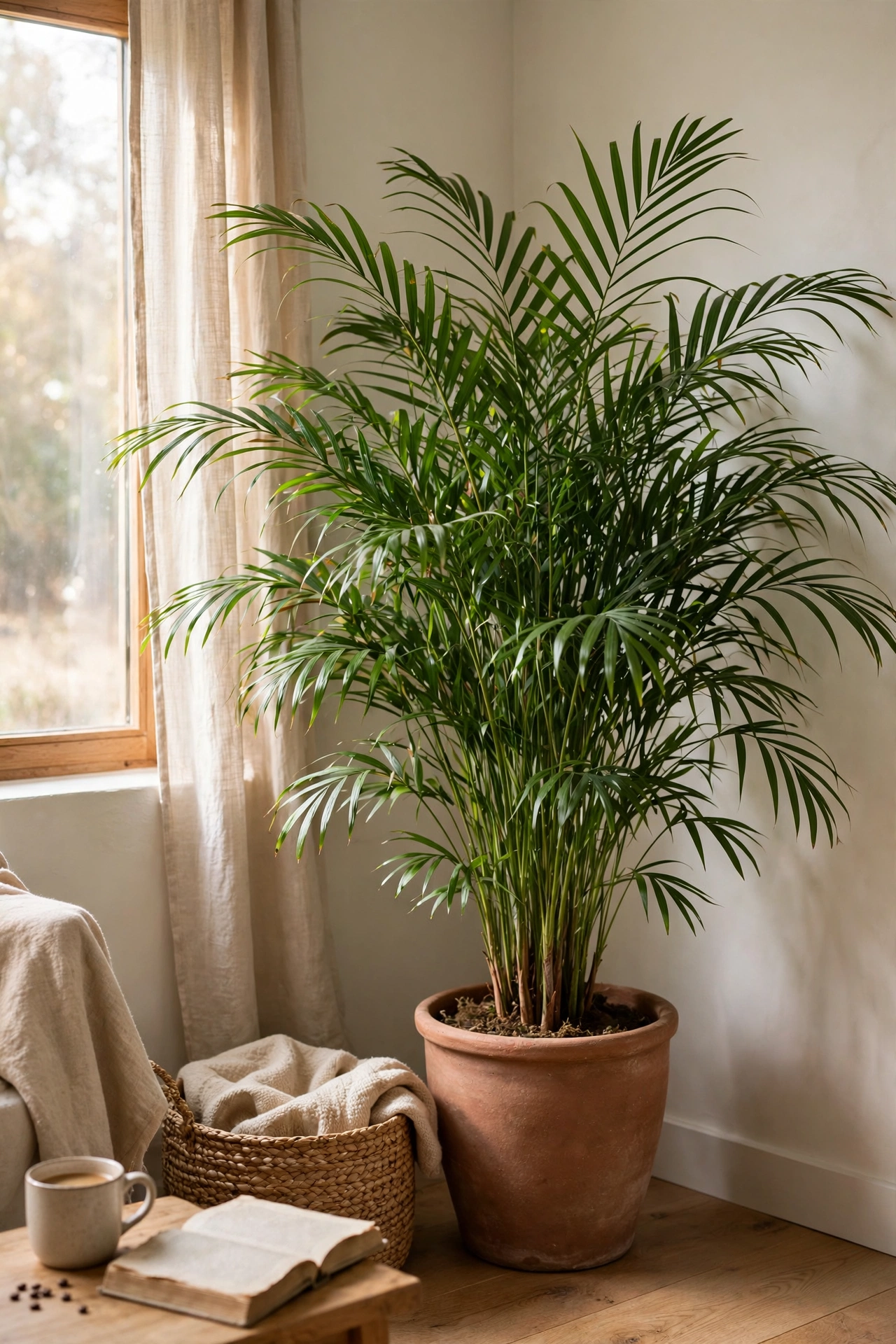
One large, sculptural plant beats five small fussy ones in a Japandi room. A single olive tree, rubber plant, or tall snake plant adds life and a focal point without clutter. I bought one big parlour palm and it became the thing the whole room is arranged around. Put it in a simple clay or ceramic pot, nothing patterned or shiny. If you’re a plant killer, a convincing faux olive tree works, just dust it. Put it in a simple clay or ceramic pot, nothing patterned or shiny, and let it be the living sculpture.
- Pick the emptiest corner with the best light.
- Choose one large plant with an architectural shape.
- Pot it simply and let it be the room’s living sculpture.
Cost: ~$25 | Time: 15 minutes
Hang Natural Linen Curtains
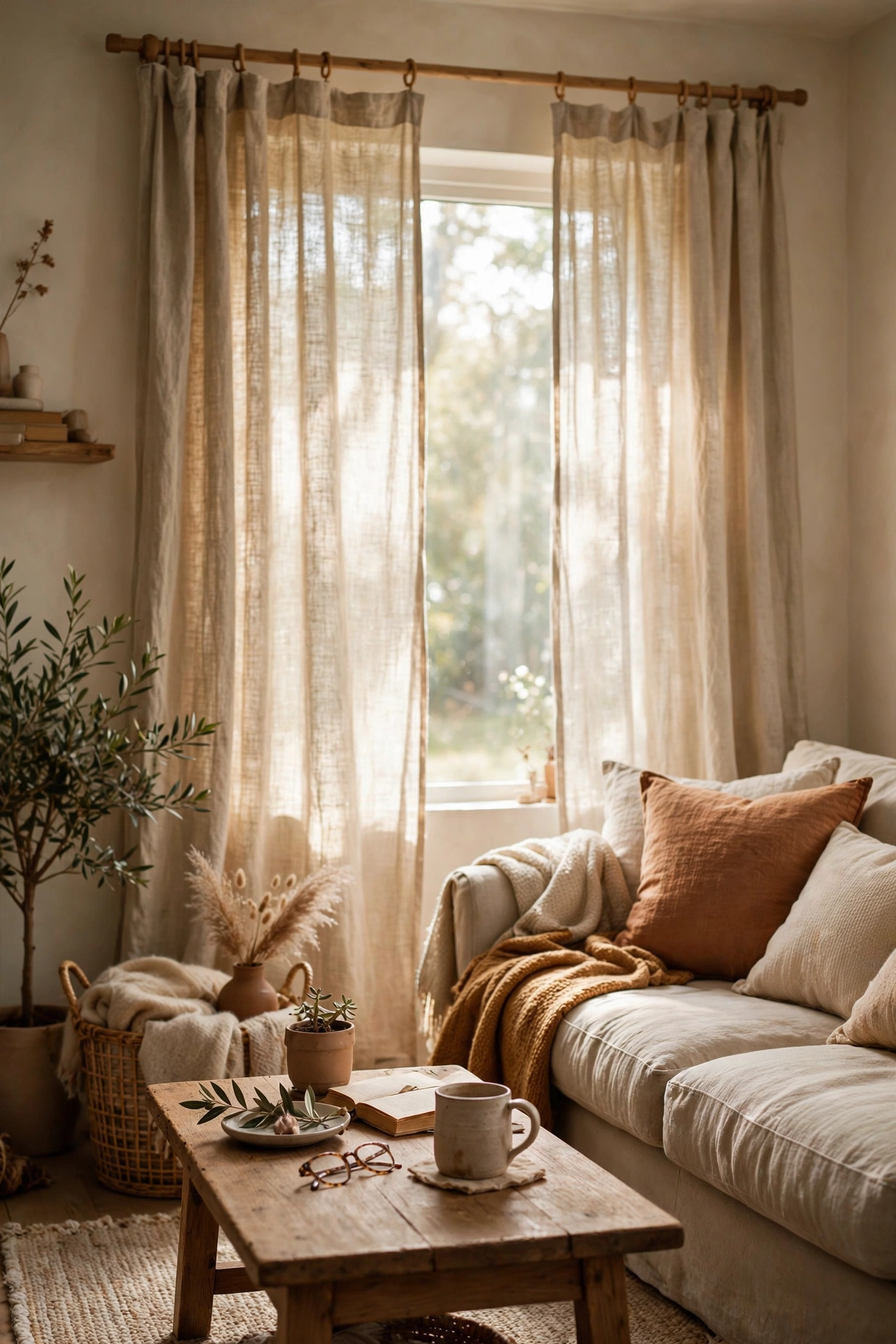
Natural linen curtains in oatmeal or undyed tones filter light into the soft glow Japandi rooms need. The fabric’s slubby texture adds the imperfection the style celebrates. I found mine on clearance and they’re the softest thing in the room visually. Hang them high and let them just kiss the floor, pooling fabric looks messy in a minimal room. Two panels per side gives the fullness that reads as intentional. Two panels per side gives the fullness that reads as intentional rather than skimpy.
- Choose undyed or oatmeal linen, avoiding bright whites.
- Hang the rod high and wide for tall, generous lines.
- Let panels just touch the floor, hem if they pool.
Cost: ~$28 for a pair | Time: 30 minutes
Anchor With a Low Wooden Coffee Table
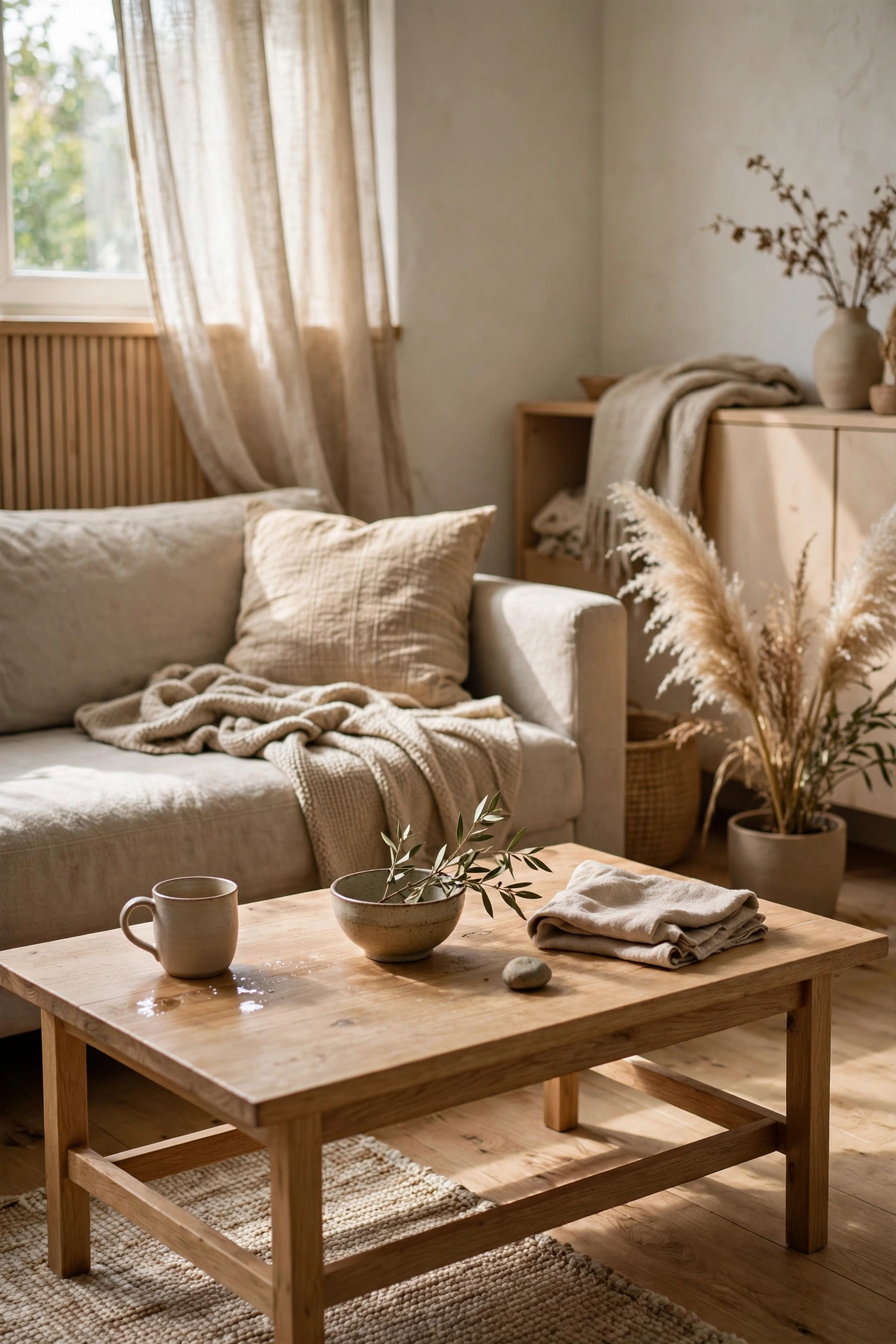
A low, simple wooden coffee table is the Japandi living room’s anchor, keeping sightlines level and the mood grounded. Look for clean lines and light wood, thrift stores have them constantly in Scandinavian styles. I swapped my tall glass table for a low oak one and the room finally felt settled. Keep the top styled minimally, a book, a small bowl, nothing more. The emptiness around it is part of the design. Keep the top styled minimally, a book and a small bowl, because the emptiness around it is part of the design.
- Measure your seating height and aim for a table slightly lower.
- Hunt secondhand for simple light-wood designs.
- Style the top with two objects maximum.
Cost: ~$35 secondhand | Time: an afternoon of hunting
Add Floor Cushions for Flexible Seating
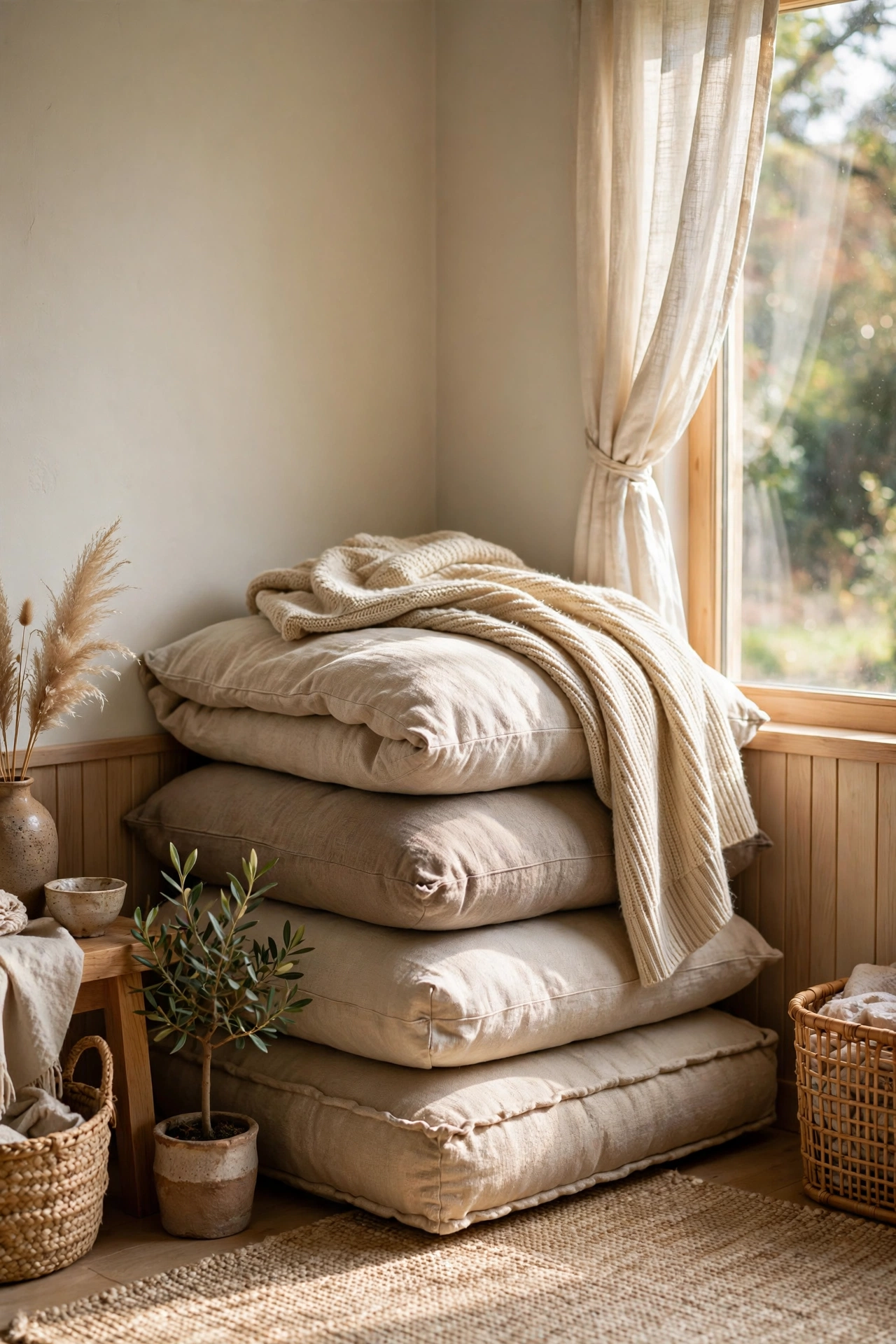
Floor cushions in natural fabrics give you the low, relaxed seating Japandi loves, and they stack away when it’s just you. They’re perfect for casual gatherings and they suit the grounded feel of the style. I keep three large ones in a corner and they get used more than my actual chairs. Choose washable covers in oatmeal or soft grey, floor life is messy. Look for firm, thick cushions that support sitting properly. Look for firm, thick cushions that properly support sitting, since thin ones go flat within weeks.
- Choose firm cushions at least four inches thick.
- Pick washable covers in natural, muted tones.
- Stack them as a sculptural pile when not in use.
Cost: ~$30 for three | Time: 10 minutes
Weave In Bamboo and Rattan Accents
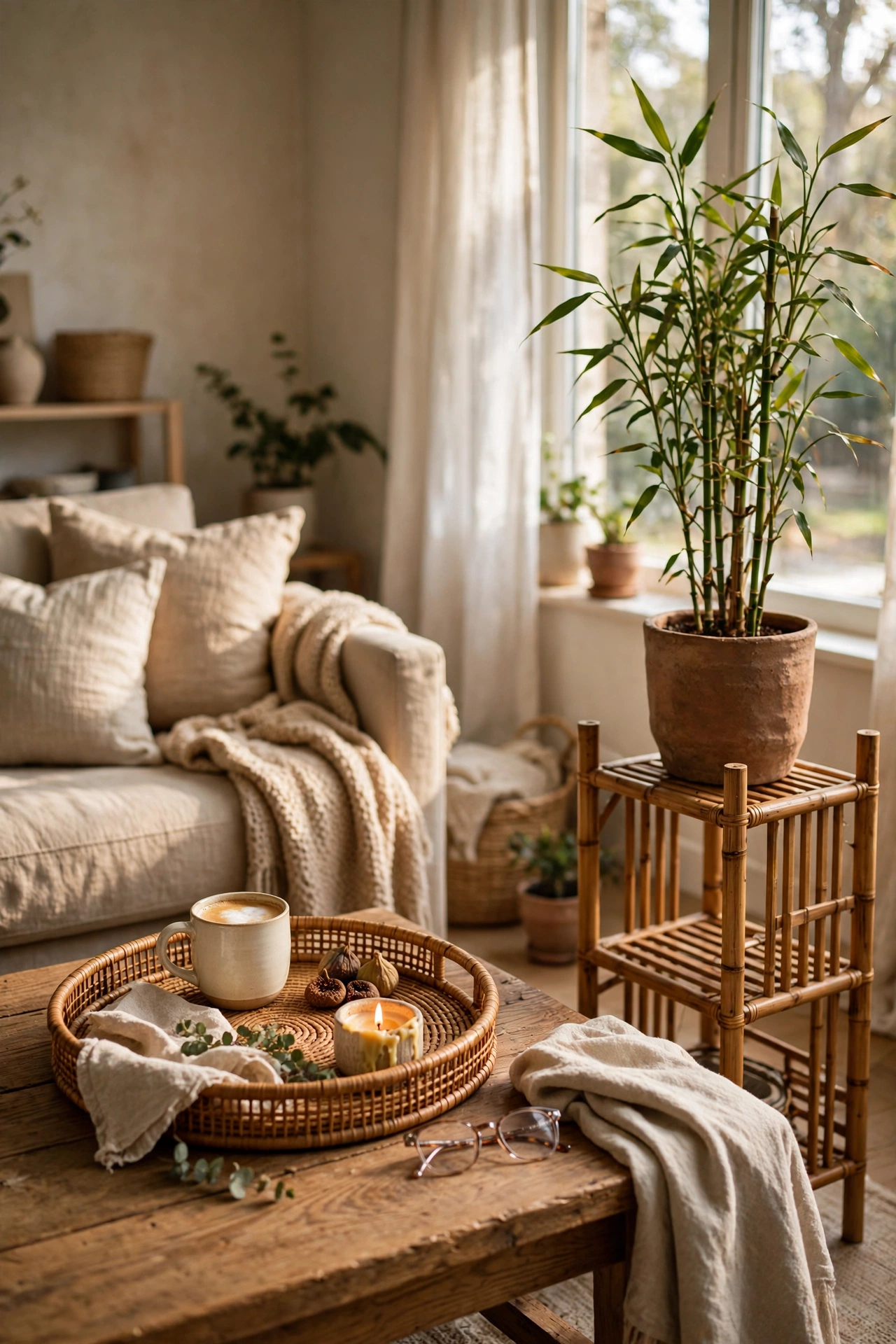
Bamboo and rattan bring the natural texture Japandi needs, and small accents go a long way. A rattan tray, a bamboo plant stand, or a woven pendant shade each add warmth without clutter. I added a rattan tray to my coffee table and a bamboo stand for my plant, and the room’s texture palette clicked. Keep to two or three pieces so it reads as accent, not theme. Natural, unsealed finishes look best. Keep to two or three pieces so it reads as an accent, and choose natural unsealed finishes.
- Pick one functional piece, like a tray or plant stand.
- Add one lighting piece, like a woven shade.
- Stop there and let the materials breathe.
Cost: ~$25 for two pieces | Time: 20 minutes
Use a Shoji-Style Screen as a Divider
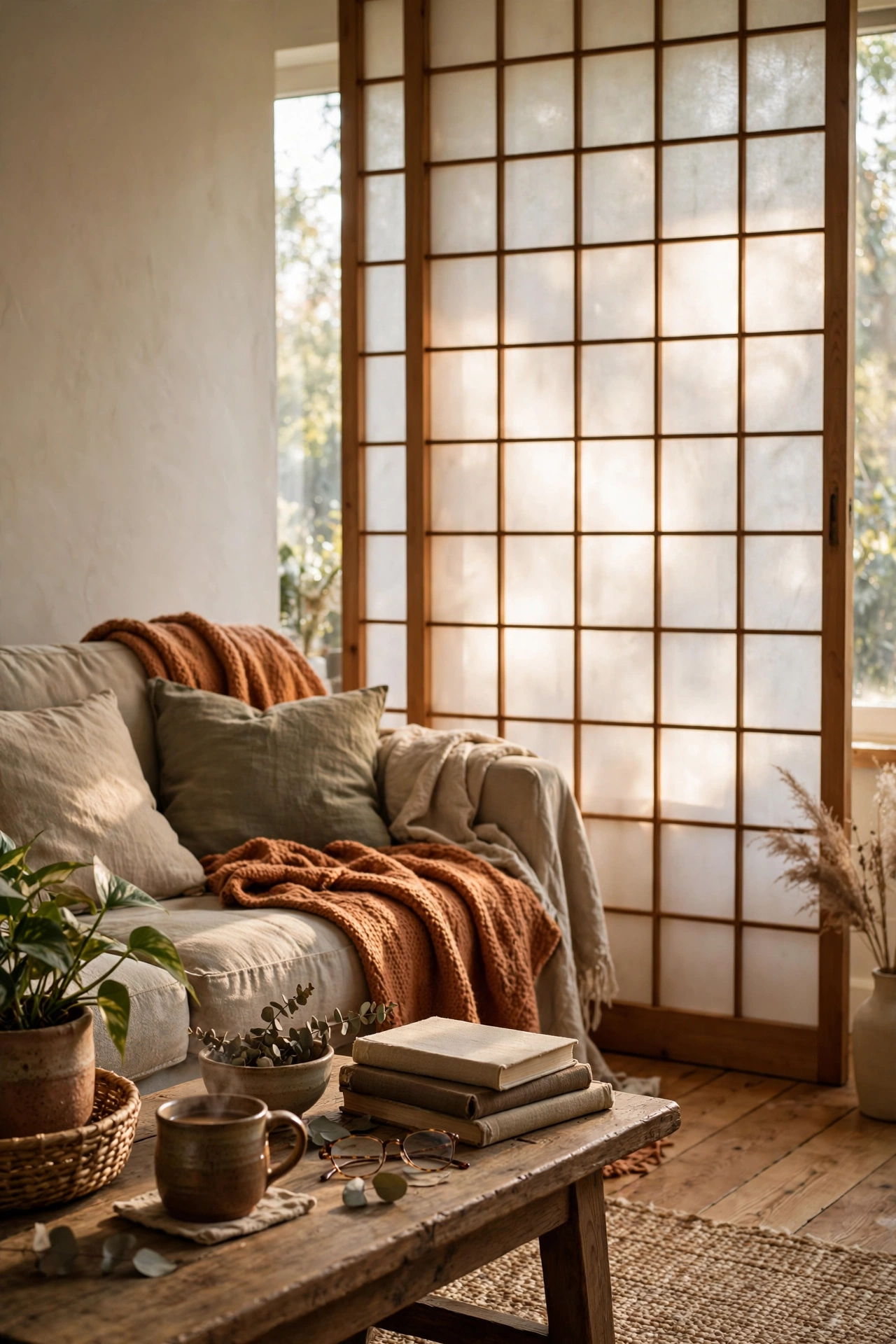
A shoji-style screen brings the Japanese half of Japandi directly into the room, filtering light beautifully while dividing space. It works as a room divider, a backdrop, or a way to hide clutter. I use one to screen my work corner and it transformed the studio feel. Look for rice-paper-style panels secondhand, or make one from a wooden frame and translucent fabric. Keep it simple, the grid pattern is the decoration. Keep it simple, because the grid pattern itself is the decoration and needs no help.
- Decide its job: divider, backdrop, or clutter screen.
- Source a simple grid-pattern screen secondhand.
- Position it to filter light, not block it.
Cost: ~$40 secondhand | Time: 10 minutes
Hang One Muted, Meditative Art Print
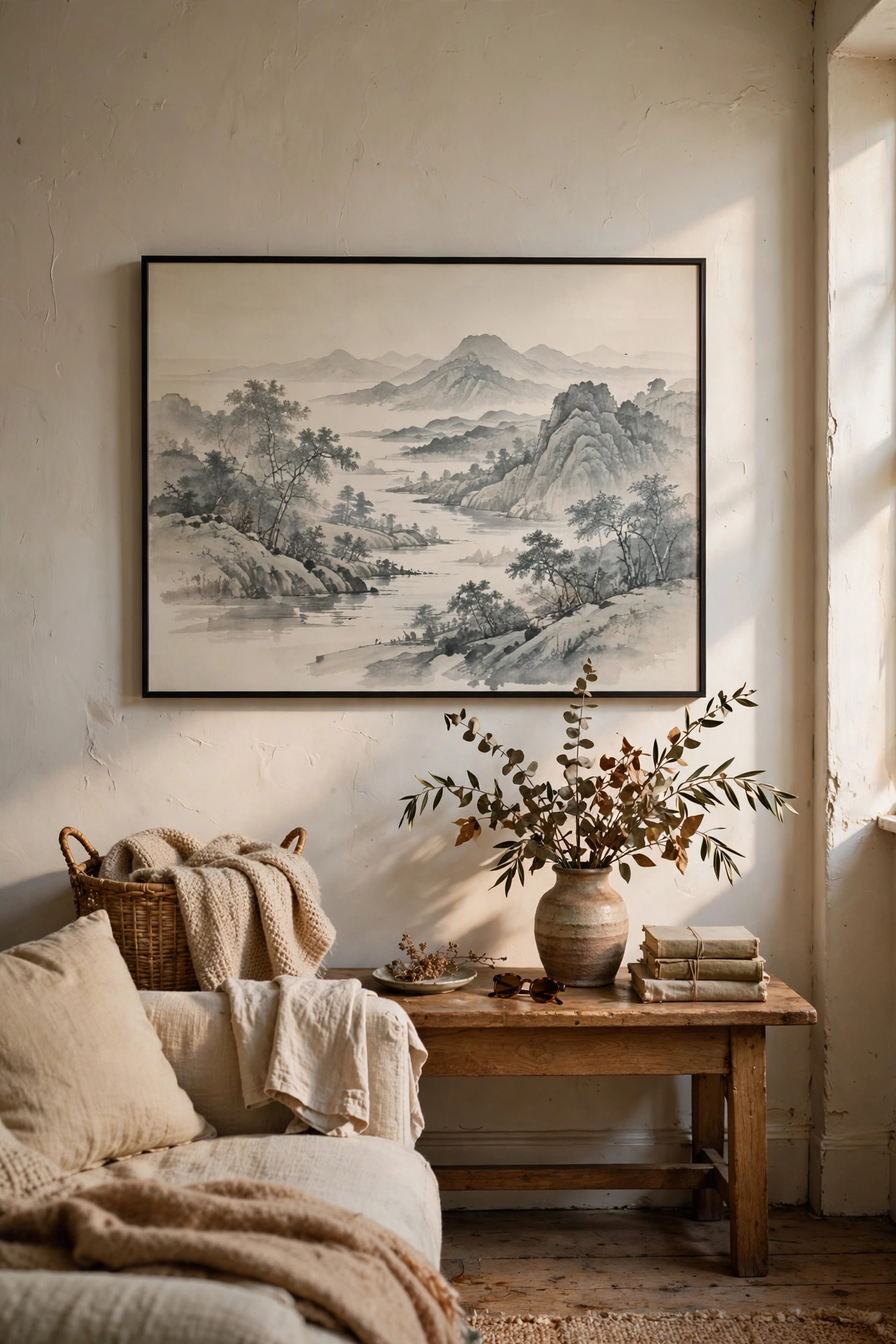
Japandi walls favour one quiet piece over a busy gallery wall. A single ink-style landscape, abstract brushstroke, or botanical print in muted tones gives the eye a calm focal point. I replaced six small frames with one large ink landscape and the wall finally felt serene. Keep the frame simple, thin black or natural wood, and let the art breathe with plenty of empty wall around it. Free public-domain ink paintings print beautifully at large sizes. Free public-domain ink paintings print beautifully at large sizes and cost almost nothing to frame.
- Choose one image in muted, natural tones.
- Print it large and frame it simply.
- Hang it with generous empty wall around all sides.
Cost: ~$18 | Time: 30 minutes
Bring In Stone and Raw Clay Textures
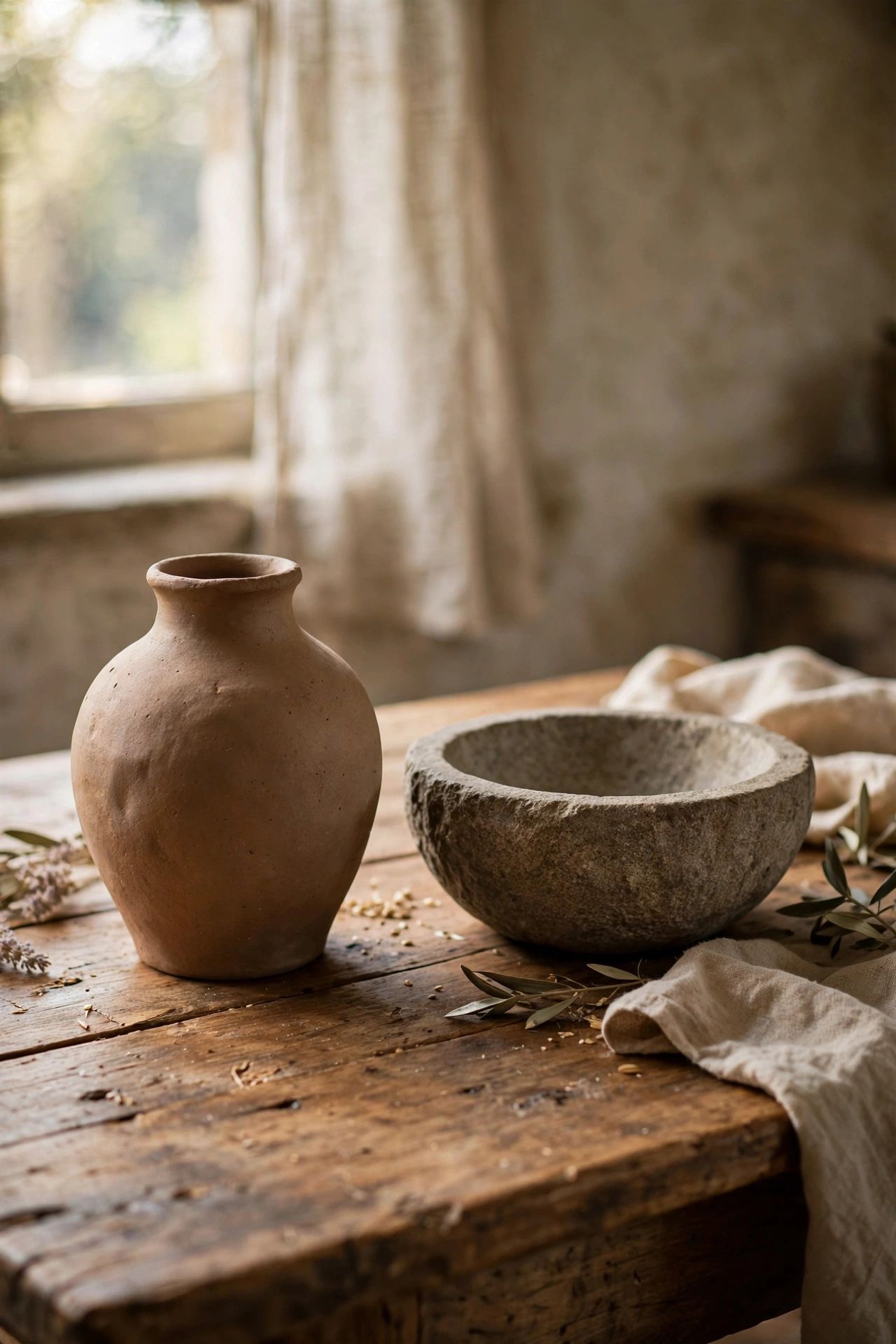
Stone and raw clay add the earthy, tactile layer that keeps Japandi from feeling cold. A rough stoneware bowl, a travertine-effect tray, or raw clay planters each ground the room. I added a chunky stoneware vase and it became the most-touched object in the room, everyone picks it up. Charity shops and garden centres are the cheapest sources. Keep finishes matte and colours natural, the rawness is the appeal. Keep finishes matte and colours natural, since the rawness is precisely the appeal.
- Find one stone or clay piece with a tactile, matte finish.
- Place it where hands naturally reach, a table or shelf.
- Let it sit mostly empty, the material is the decoration.
Cost: ~$10 secondhand | Time: 20 minutes of browsing
Hide Everything With Clever Storage
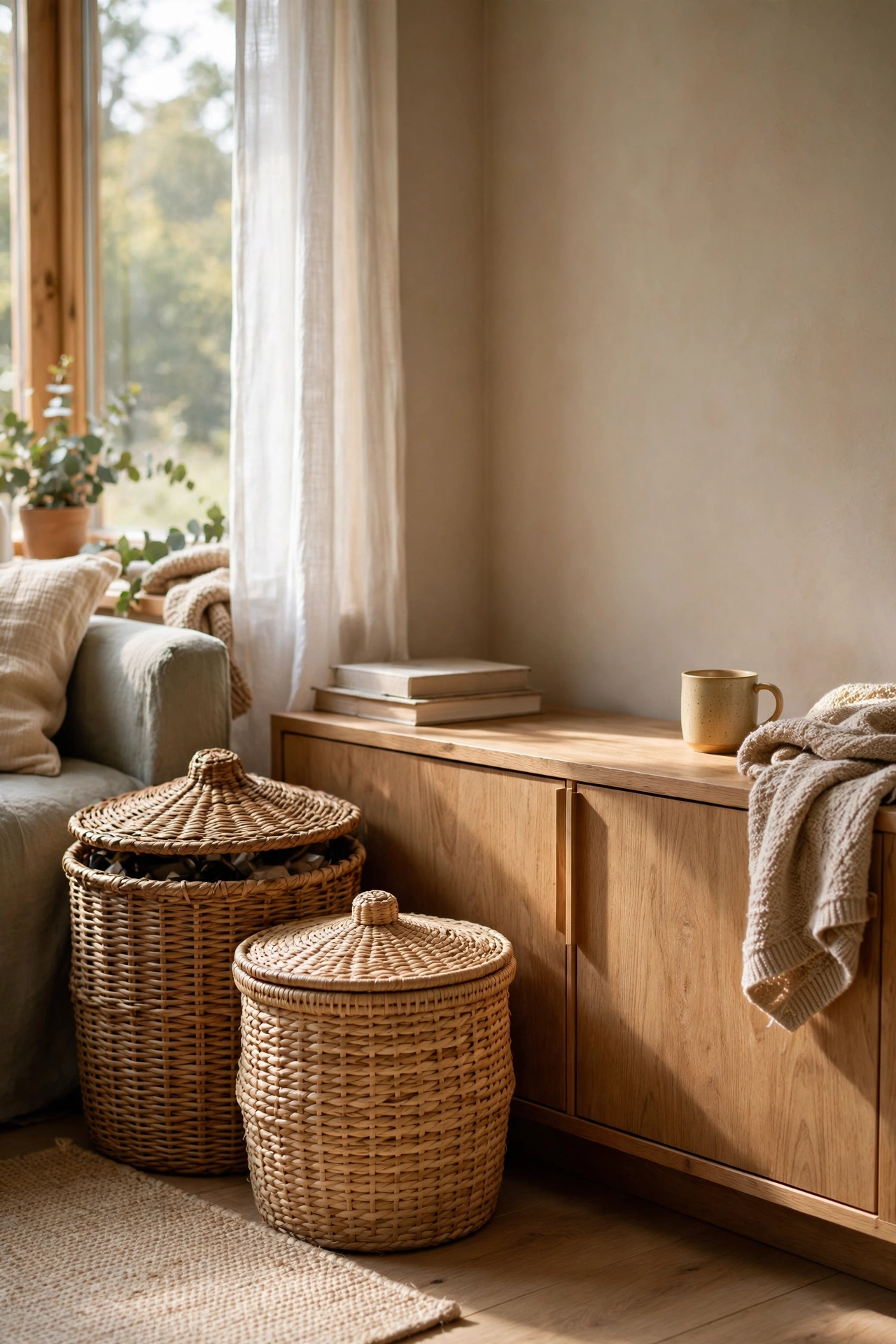
Japandi calm depends on clear surfaces, which means everything needs a hidden home. Lidded baskets, storage ottomans, and closed cabinets swallow the daily clutter that ruins the serenity. I did a ten-minute nightly reset where everything goes back to its hidden home, and the morning room always feels calm. The rule is simple: if it’s out, it should be beautiful, everything else hides. Start with the worst clutter corner and work outward. The rule is simple: if it is out, it should be beautiful, and everything else stays hidden.
- Identify where clutter collects and place lidded storage there.
- Give every everyday item a hidden home.
- Do a ten-minute reset each evening to maintain the calm.
Cost: ~$20 for baskets | Time: 1 hour to organise
Add One Black Accent for Contrast
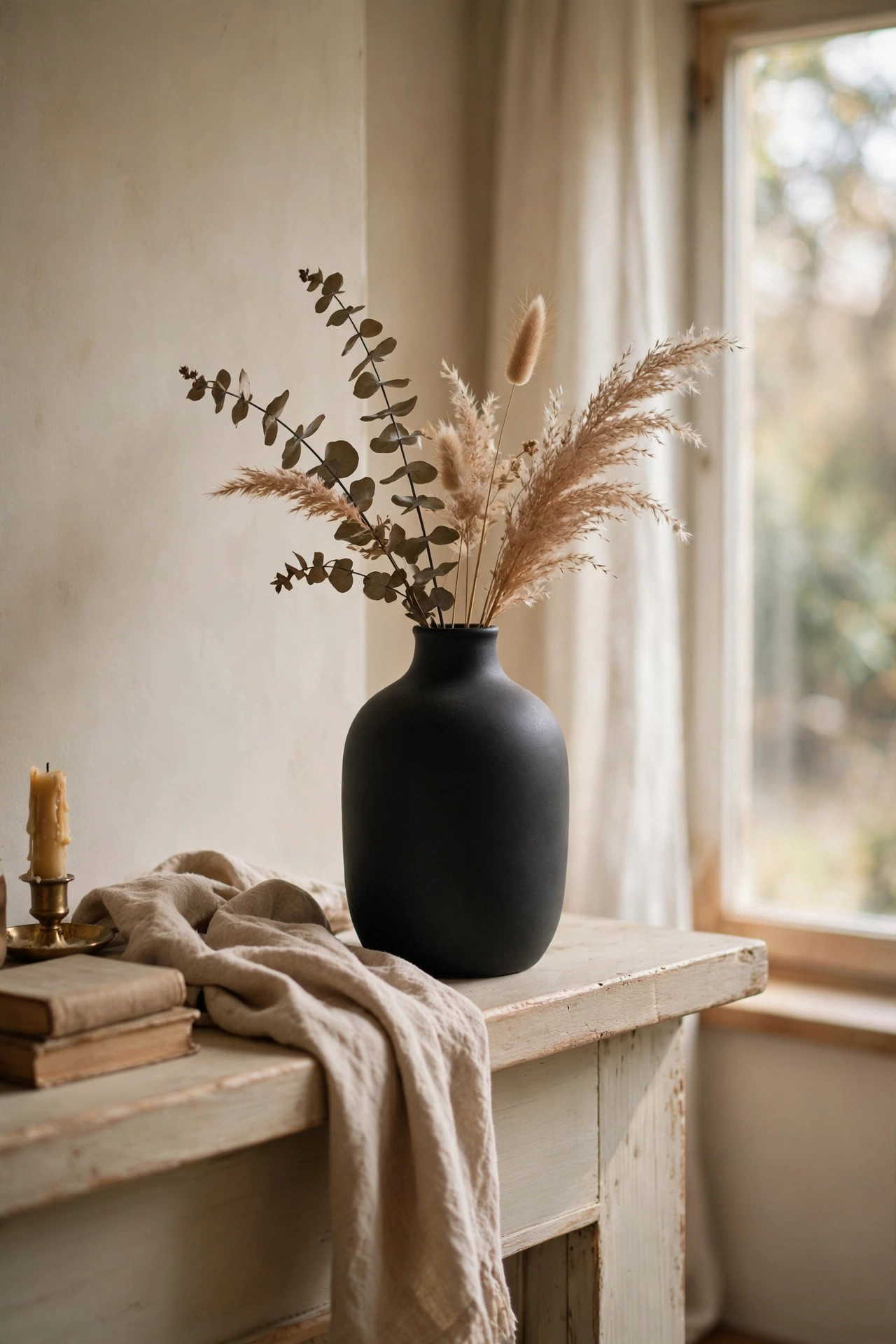
A single black element, a thin-framed mirror, black candle holders, a dark vase, gives Japandi rooms the contrast that stops them feeling washed out. It’s the Japanese ink-brushstroke in a pale room. I added black metal candle holders to my pale mantel and the whole arrangement snapped into focus. One piece is enough, two maximum, the power is in the restraint. Matte black reads softer than gloss in this palette. One piece is enough, two at most, because the power of the contrast lies in its restraint.
- Look at your palest surface or shelf.
- Add one matte black object with a simple shape.
- Step back and check the contrast feels like punctuation, not noise.
Cost: ~$12 | Time: 10 minutes
Try Limewash in a Warm Neutral
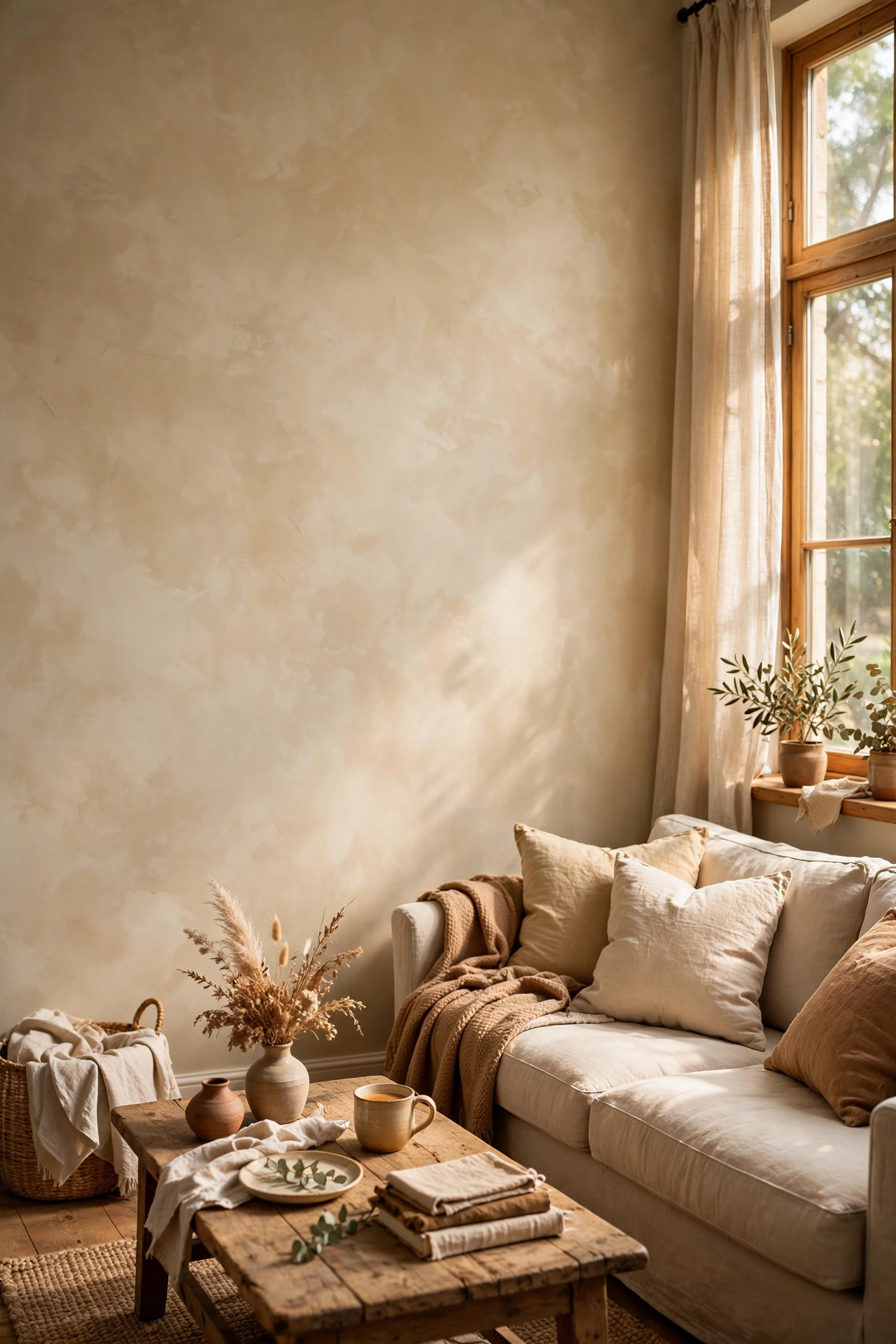
Limewash walls in warm beige or greige give you the soft, cloudy texture that makes Japandi rooms feel hand-finished. The mottled movement adds depth without pattern, which is exactly the style’s language. I limewashed one wall as a trial and the texture made my flat-pack furniture look better. Apply with a large brush in random strokes, the technique forgives everything. One feature wall is plenty, the texture is a strong voice. One feature wall is plenty here, since the texture speaks loudly and needs no competition.
- Choose a warm neutral limewash shade, beige or greige.
- Apply with a block brush in loose criss-cross strokes.
- Live with one wall before deciding on more.
Cost: ~$40 per tin | Time: a weekend
Drape One Natural-Fibre Throw
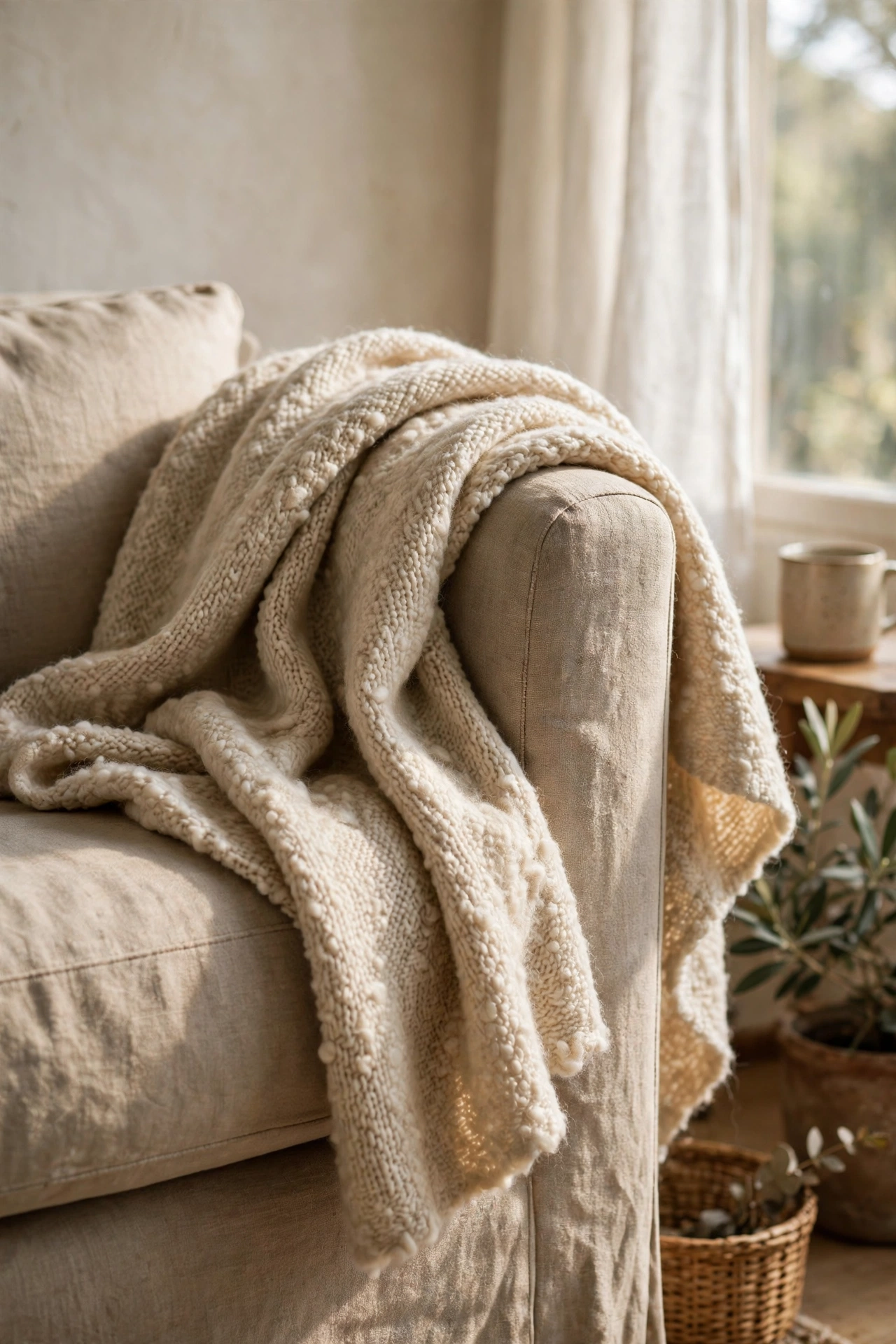
One beautiful throw in wool, cotton, or linen does more for a Japandi room than three average ones. The natural fibre and simple weave add the tactile layer the style needs. I invested in a single undyed wool throw and it’s the most-used, most-loved textile I own. Drape it with intention, folded over the sofa arm or laid across the foot of a chair. Quality over quantity is the whole Japandi textile philosophy. Quality over quantity is the whole Japandi textile philosophy, so choose the one you would rescue in a fire.
- Choose one throw in a natural fibre you love to touch.
- Keep the colour undyed or in a muted earth tone.
- Place it deliberately and let it be the only throw.
Cost: ~$30 | Time: 5 minutes
Embrace Curved, Organic Shapes
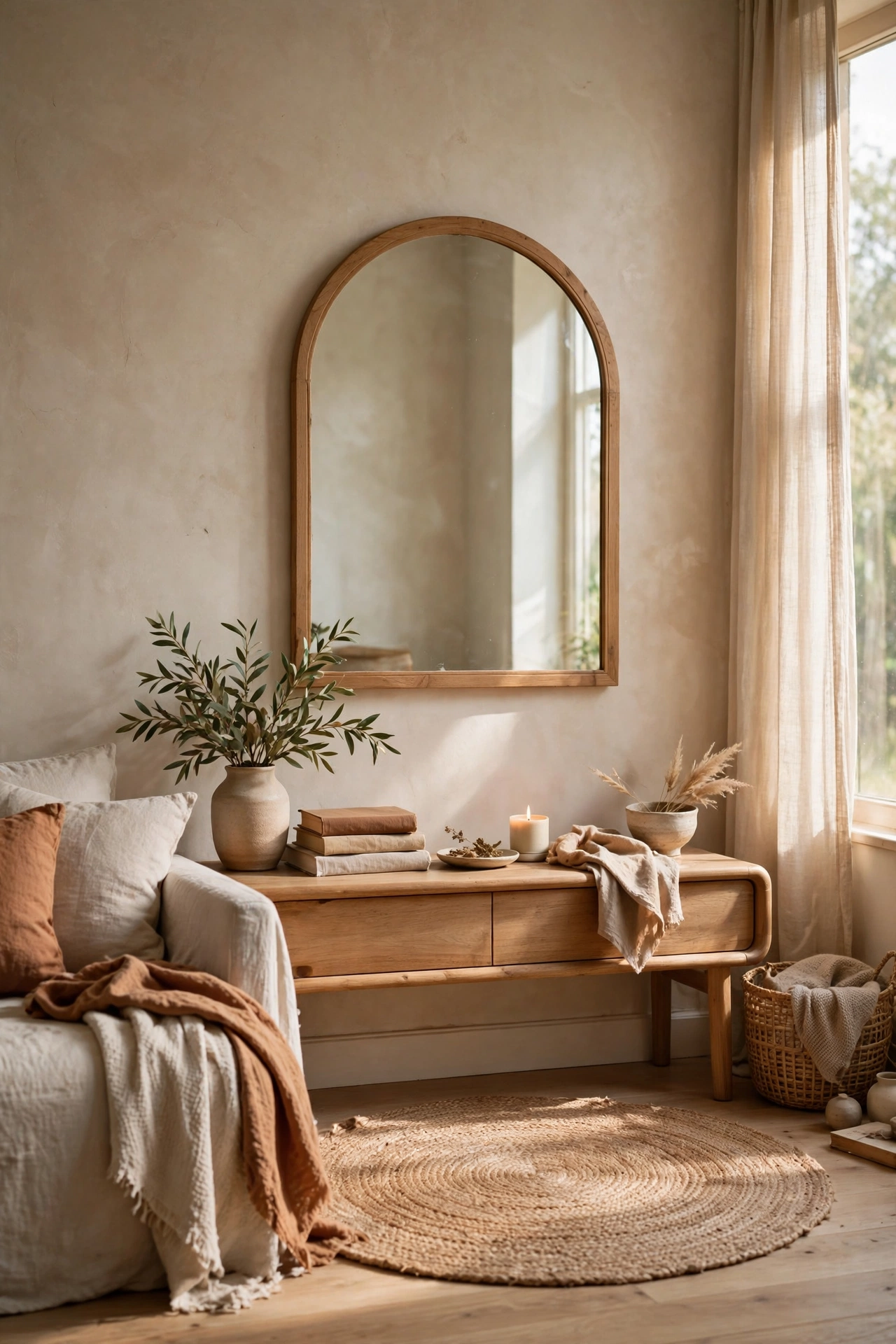
Japandi softens minimalism with curved, organic shapes: an arched mirror, a round jute rug, a bowl with an irregular rim. Curves stop the simplicity feeling severe. I swapped a rectangular mirror for an arched one and the whole wall relaxed. You don’t need many, two or three curved pieces among the straight lines is the right ratio. Look for arches and circles in mirrors, rugs, and ceramics. You do not need many curves, since two or three among the straight lines is exactly the right ratio.
- Spot the harshest rectangle in your room, usually a mirror or art.
- Swap it for an arched or round version.
- Echo the curve once more, in a rug or bowl, for rhythm.
Cost: ~$25 for an arched mirror | Time: 20 minutes
Display a Single Sculptural Branch
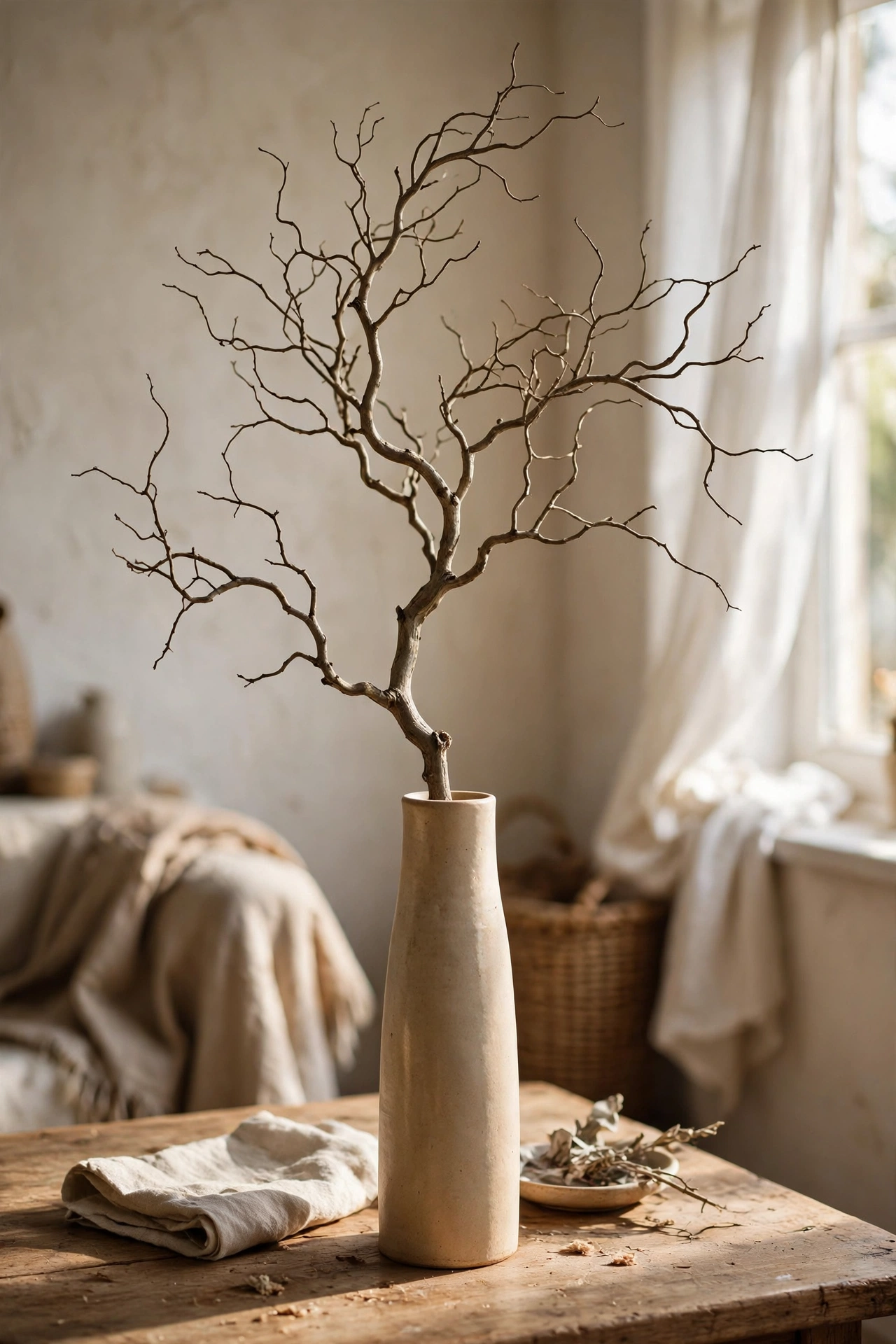
One sculptural branch in a simple vase is peak Japandi styling: natural, minimal, and free if you forage it. The bare branches add line and movement without any of the fuss of flowers. I found a beautiful twisted branch on a walk and it’s been in my vase for two years. Choose interesting shapes, curves and forks photograph beautifully. A tall floor vase with one dramatic branch can anchor a whole corner. A tall floor vase with one dramatic branch can anchor a whole corner without any other styling.
- Forage for an interestingly shaped fallen branch.
- Clean it and let it dry fully indoors.
- Place it in a simple tall vase and let it stand alone.
Cost: $0 | Time: a walk plus 10 minutes
Add a Whisper of Muted Green
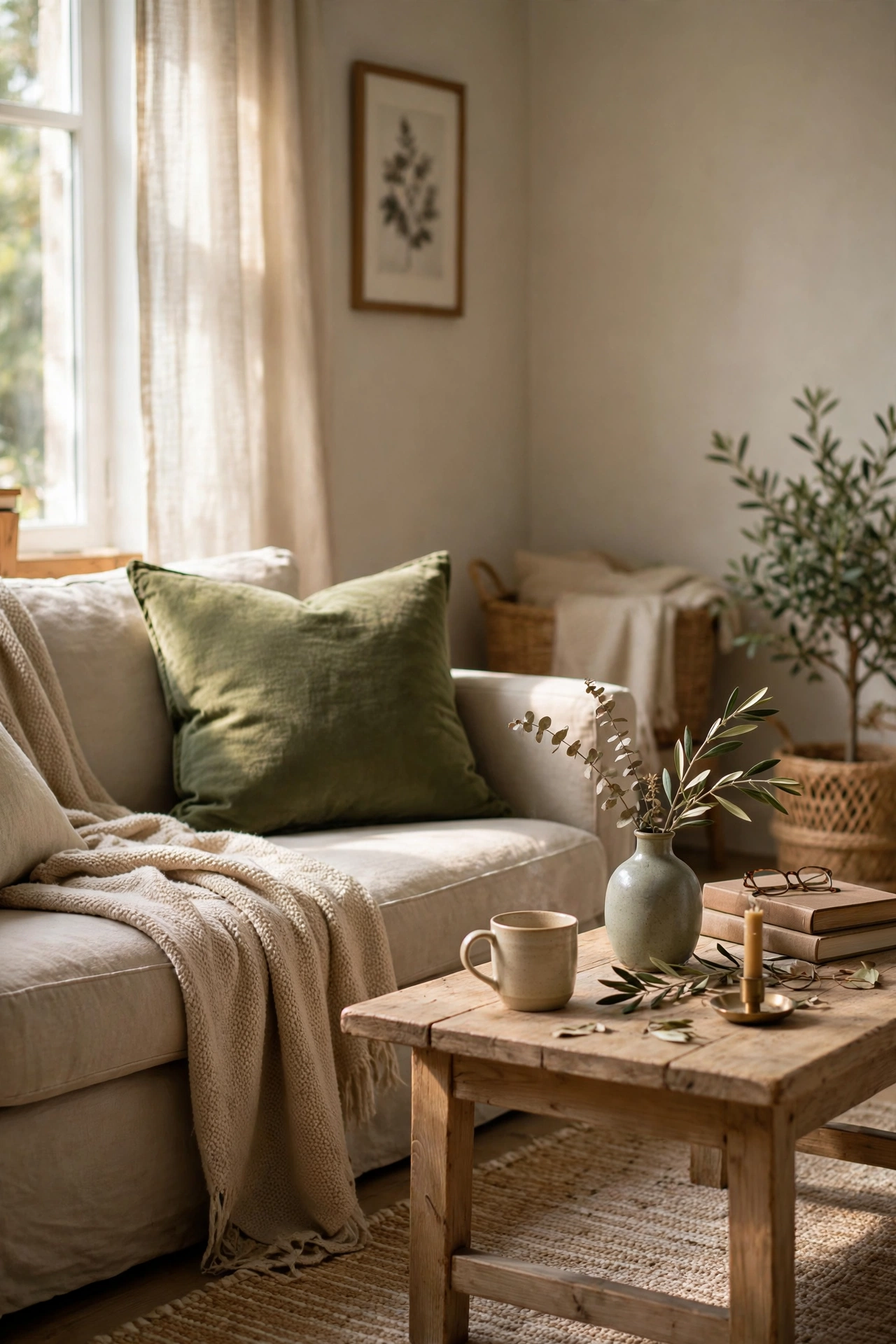
A touch of muted green, moss, sage, or eucalyptus tone, keeps Japandi’s neutrals from feeling flat. It’s the colour of the style’s beloved plants, translated into textiles or ceramics. I added a moss-green cushion and a sage vase, and the palette came alive without losing its calm. Keep it to ten percent of the room maximum, it’s an accent, not a theme. Plants themselves count toward this, so you may already be there. Keep the green to ten percent of the room at most, since it is an accent rather than a theme.
- Check if your plants already provide the green accent.
- If not, add one muted green textile or ceramic.
- Stop at one or two touches to protect the calm.
Cost: ~$14 | Time: 10 minutes
Choose Candlelight Over Ceiling Lights
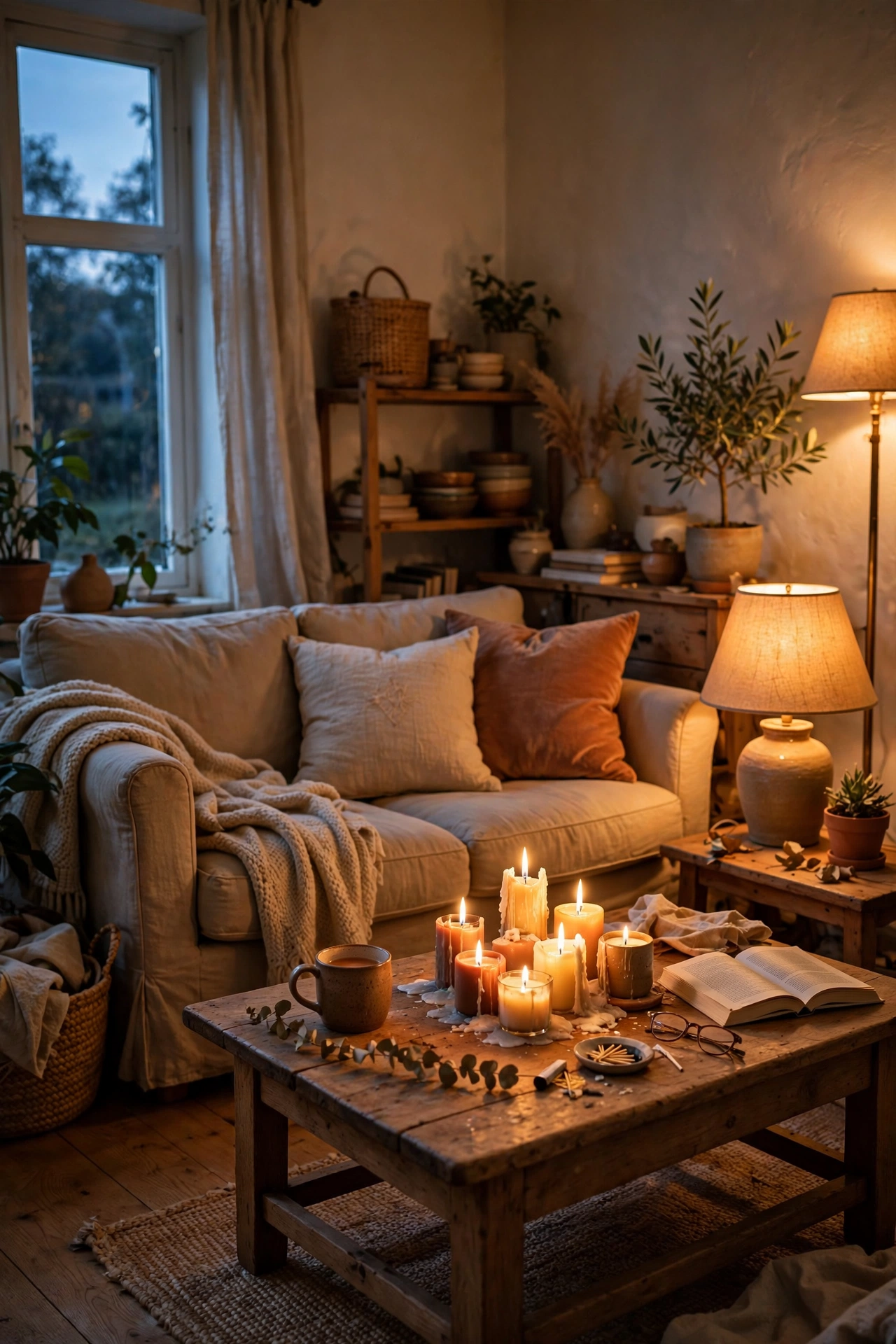
In the evening, Japandi rooms glow from low, warm sources rather than overhead glare. Candles, paper lanterns, and low lamps create the intimate calm the style is famous for. I stopped using my ceiling light entirely and the evenings became my favourite part of the day. Group candles at different heights on a tray for safety and style. Battery candles with timers give you the ritual without the worry. Battery candles with timers give you the evening ritual without any of the worry.
- Turn off the ceiling light for one week as an experiment.
- Light candles or switch on low lamps each evening instead.
- Notice how the room’s mood changes and adjust from there.
Cost: ~$10 for candles | Time: 5 minutes nightly
Simplify the Entryway to a Bench and Basket
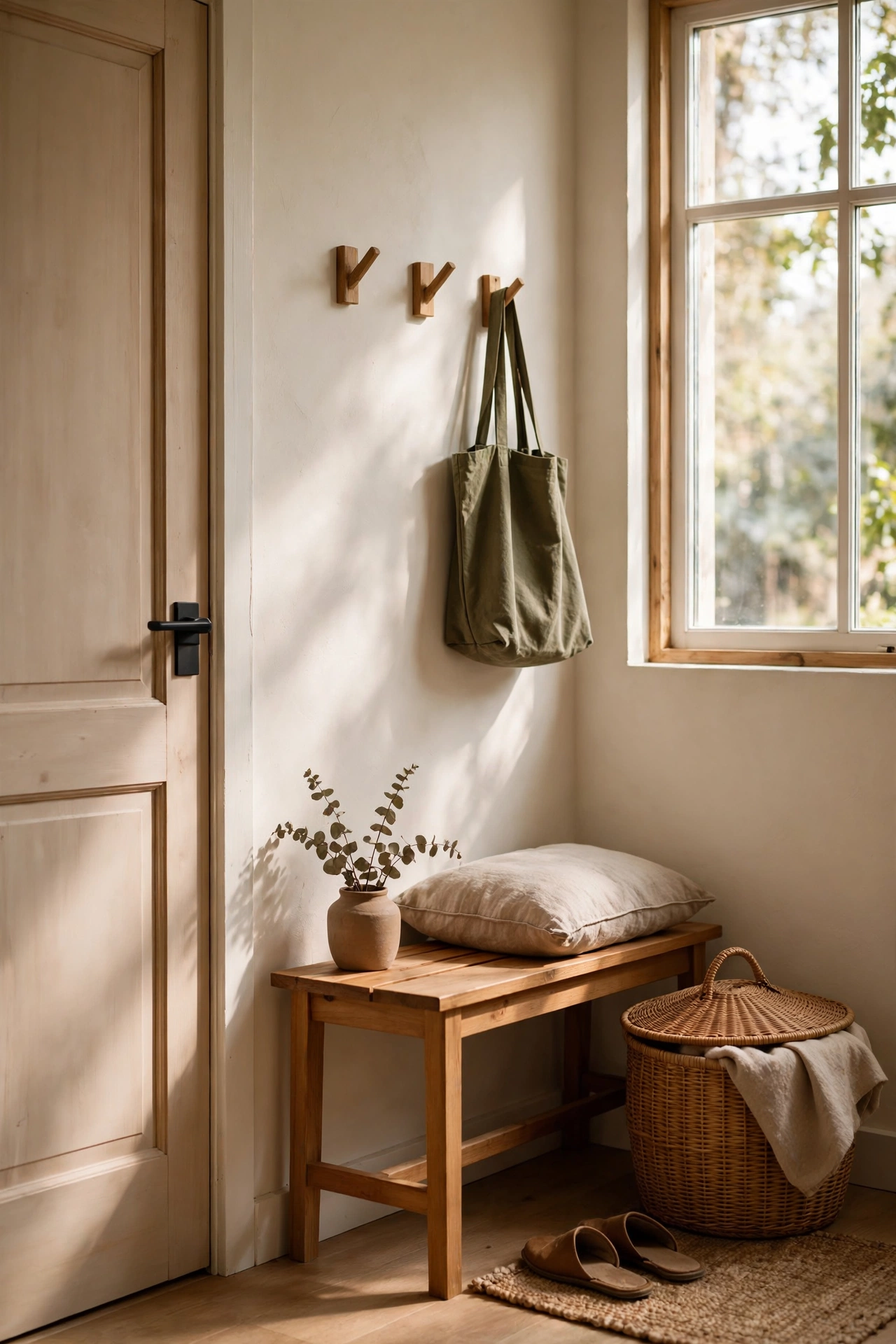
The Japandi entryway is a bench, a basket for shoes, and one beautiful object, nothing more. It’s the first impression of the calm inside. I stripped my hallway down to a simple bench and a lidded basket, and coming home started feeling like exhaling. Everything else, coats, bags, post, gets a hidden home nearby. This small zone sets the tone for the whole flat, so it’s worth the edit. This small zone sets the tone for the whole flat, so the edit is well worth the effort.
- Remove everything from your entryway except essentials.
- Add a simple bench and one lidded basket for shoes.
- Place one beautiful object, a branch, a bowl, as the welcome.
Cost: ~$30 for bench and basket | Time: 1 hour
More ideas you’ll like: (see also: 21-minimalist-living-room-ideas-on-a-budget) and (see also: 15-sage-green-living-room-decor-ideas-that-feel-cozy).
Craving the calm? Save this idea to your Pinterest board and start with the free declutter tonight.
