23 Small Living Room Ideas to Make Every Inch Count
Small living room ideas were my obsession for three years while I lived in a 380-square-foot flat, and I learned that square footage matters far less than decisions. My living room was barely bigger than a parking space, yet friends always said it felt bigger than it was. The secret was never one big purchase, it was twenty small choices that each gave back a little space, light, or breathing room. Everything below is renter-friendly, cheap, and proven in genuinely tiny rooms, including mine.
Before you buy anything, stand in your doorway and look at the room like a stranger would. Notice what’s blocking light, what’s eating floor space, and what’s just visual noise. Most small rooms don’t need more stuff, they need fewer, smarter pieces. Work through this list one idea at a time and stop when the room starts feeling right, you probably won’t need all 23.
Hang Curtains Near the Ceiling Line
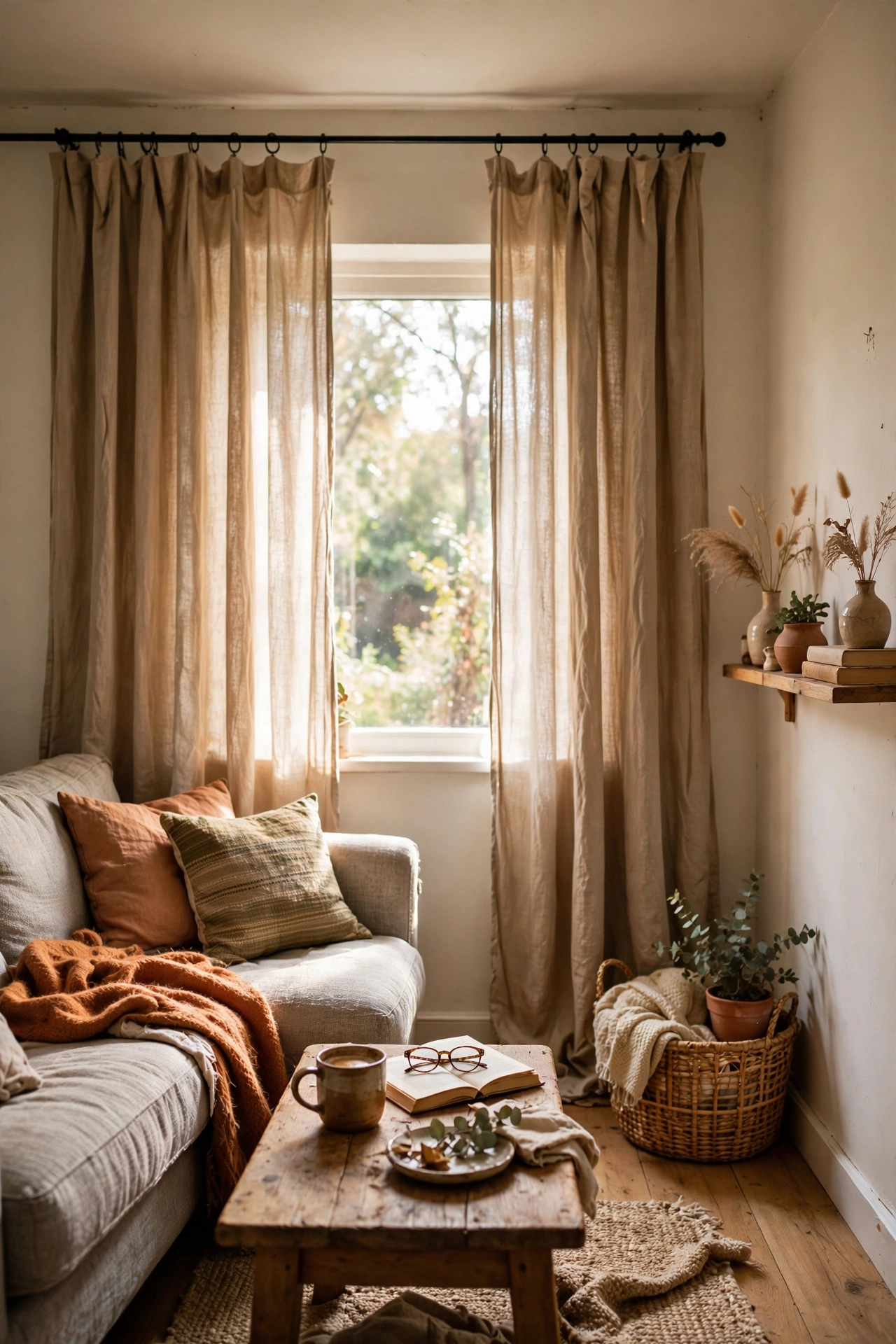
Mounting your curtain rod just below the ceiling instead of at the window frame tricks the eye into reading the wall as taller. The long vertical line of fabric draws your gaze upward, and the window underneath seems grander than it is. I did this in my old flat with eight-foot ceilings and a friend genuinely asked if I’d had them raised. Measure so your panels just kiss the floor, pooling fabric eats visual space. Use a rod that extends past the frame so open curtains stack on the wall. Pro tip: match the curtain colour to your walls and the whole wall reads as one tall surface.
Cost: $0 with your existing rod | Time: 25 minutes
Place a Mirror Opposite the Window
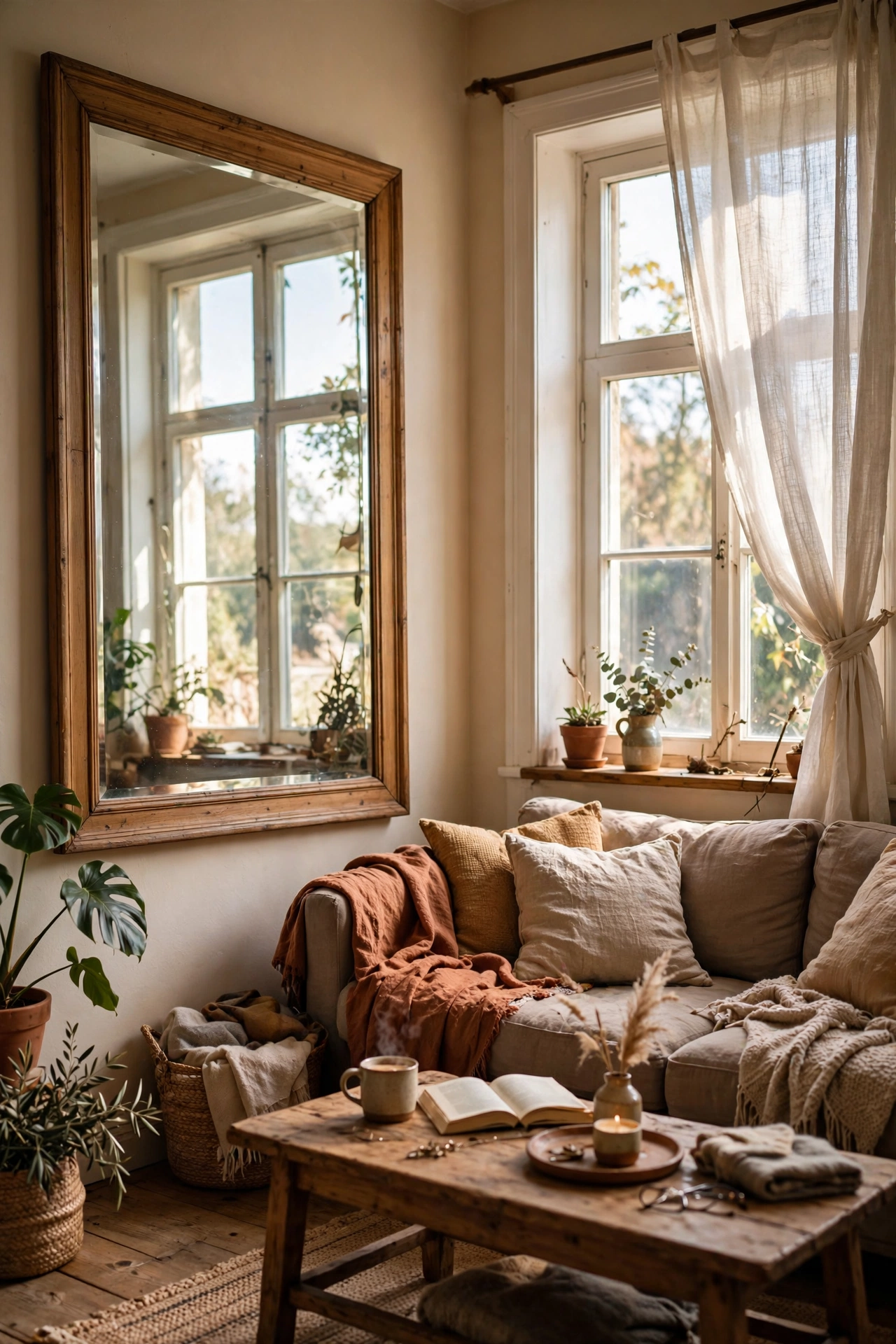
A mirror across from your window doubles your daylight and your view, which is the closest thing to adding a second window. It bounces light deep into the room and creates the illusion of depth where there’s only wall. I hung a large thrifted mirror opposite my only window and the back half of the room, which used to go gloomy by 3pm, stayed bright until evening. Lean a big one against the wall if you can’t drill, or use adhesive strips for lighter frames. Pro tip: one large mirror beats a cluster of small ones, which can read as clutter in a tiny room.
Cost: ~$15 secondhand | Time: 20 minutes
Swap the Coffee Table for Nesting Tables
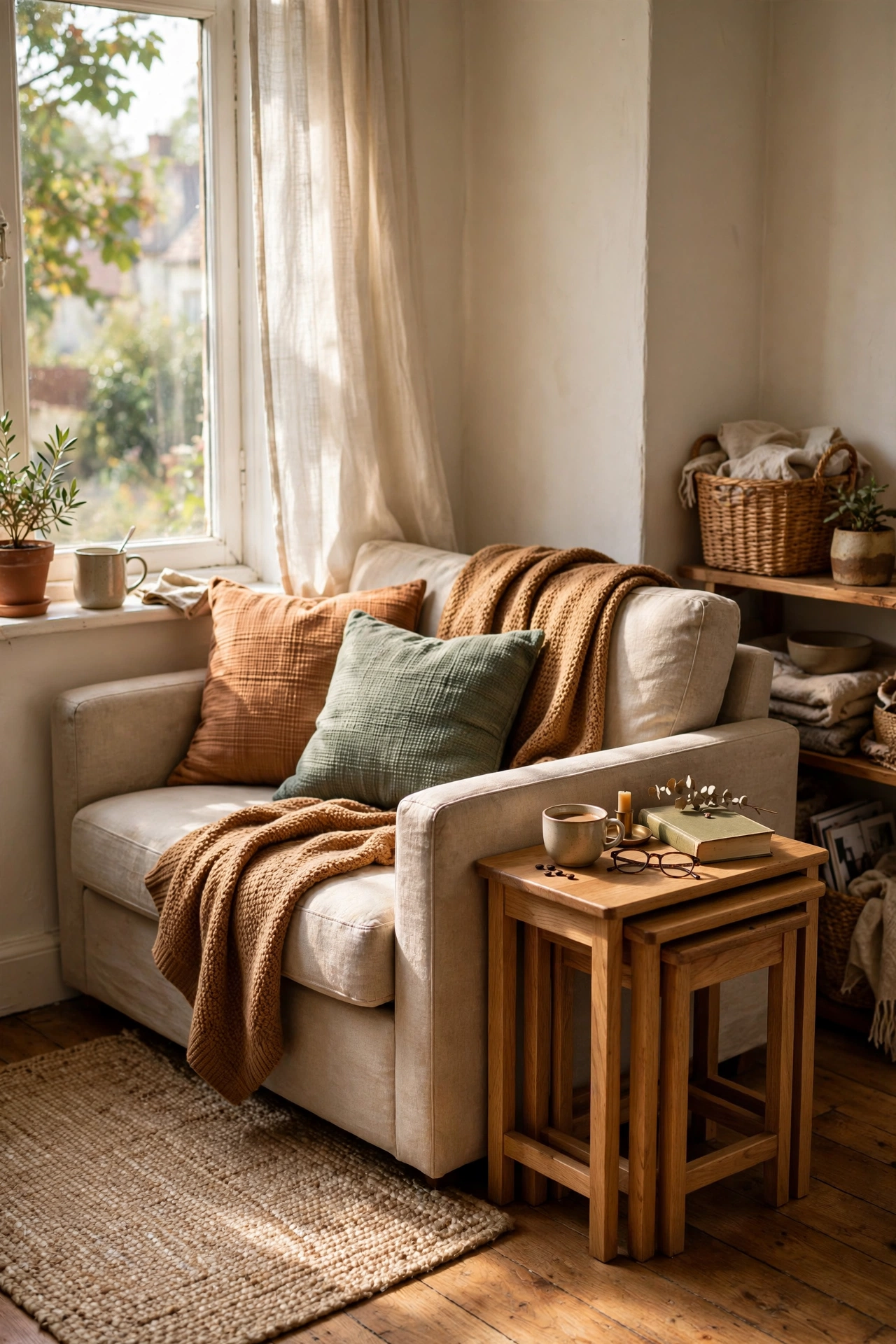
Nesting tables give you the surface of a coffee table when you need it and tuck away to almost nothing when you don’t. Pull them out for guests or a big puzzle night, then slide them back under each other for daily life. I replaced my bulky coffee table with a thrifted nesting set and suddenly had a clear path from the sofa to the door. Look for sets with different heights so they layer nicely. Pro tip: keep the smallest one by your reading chair permanently and nest the rest, you’ll use them more.
Cost: ~$20 thrifted | Time: 10 minutes
Use a Storage Ottoman as Your Coffee Table
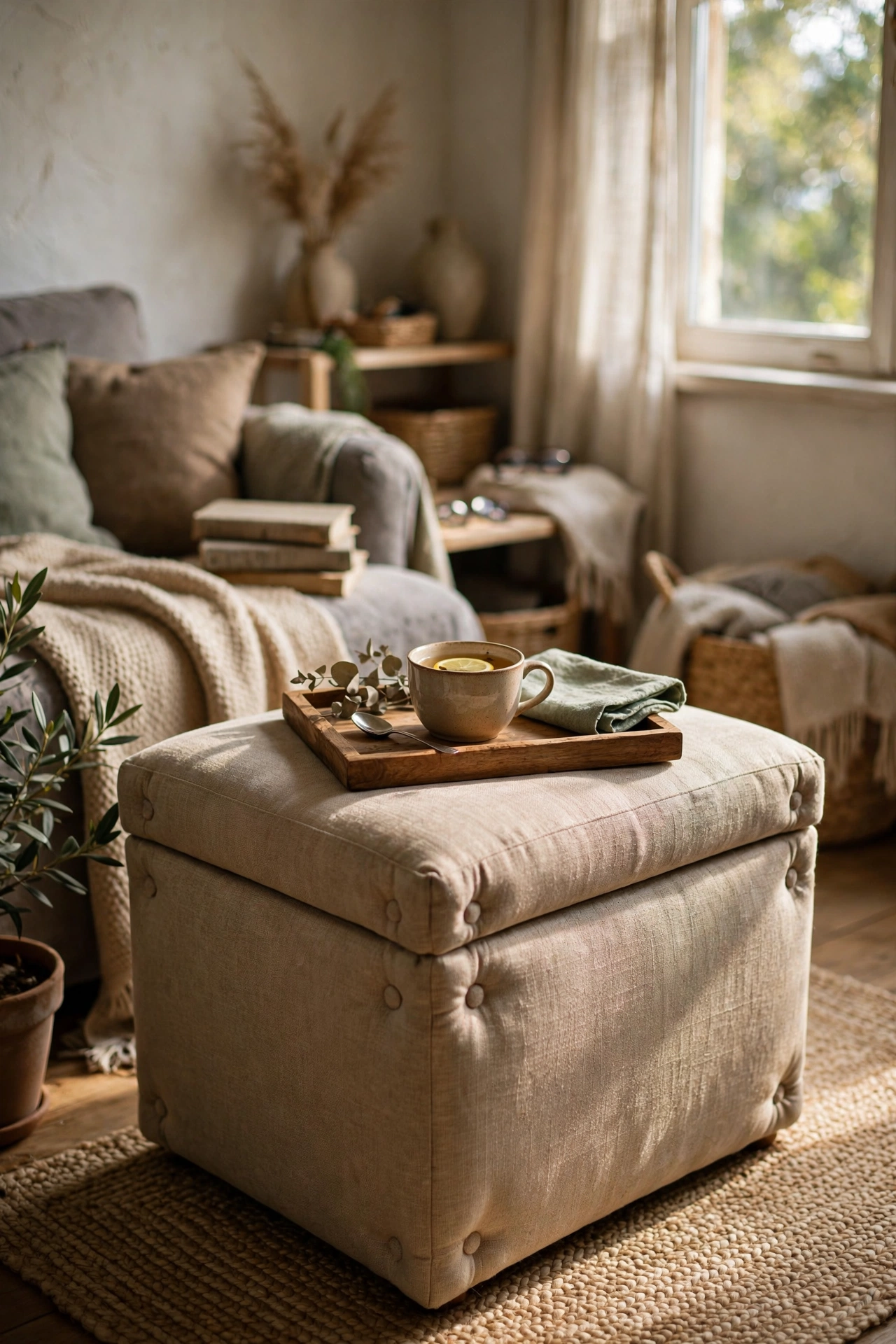
A storage ottoman does triple duty in a small room: footrest, coffee table with a tray on top, and hidden storage for blankets, games, or the remote controls that multiply on their own. Choose one roughly the height of your sofa seat so it works comfortably as a table. I kept board games and two spare throws inside mine, which emptied an entire shelf elsewhere. Pick a flat-topped style rather than a tufted one so trays sit steady. Pro tip: a tray with handles turns the ottoman into a proper table in two seconds flat.
Cost: ~$35 | Time: 5 minutes
Mount the TV on the Wall
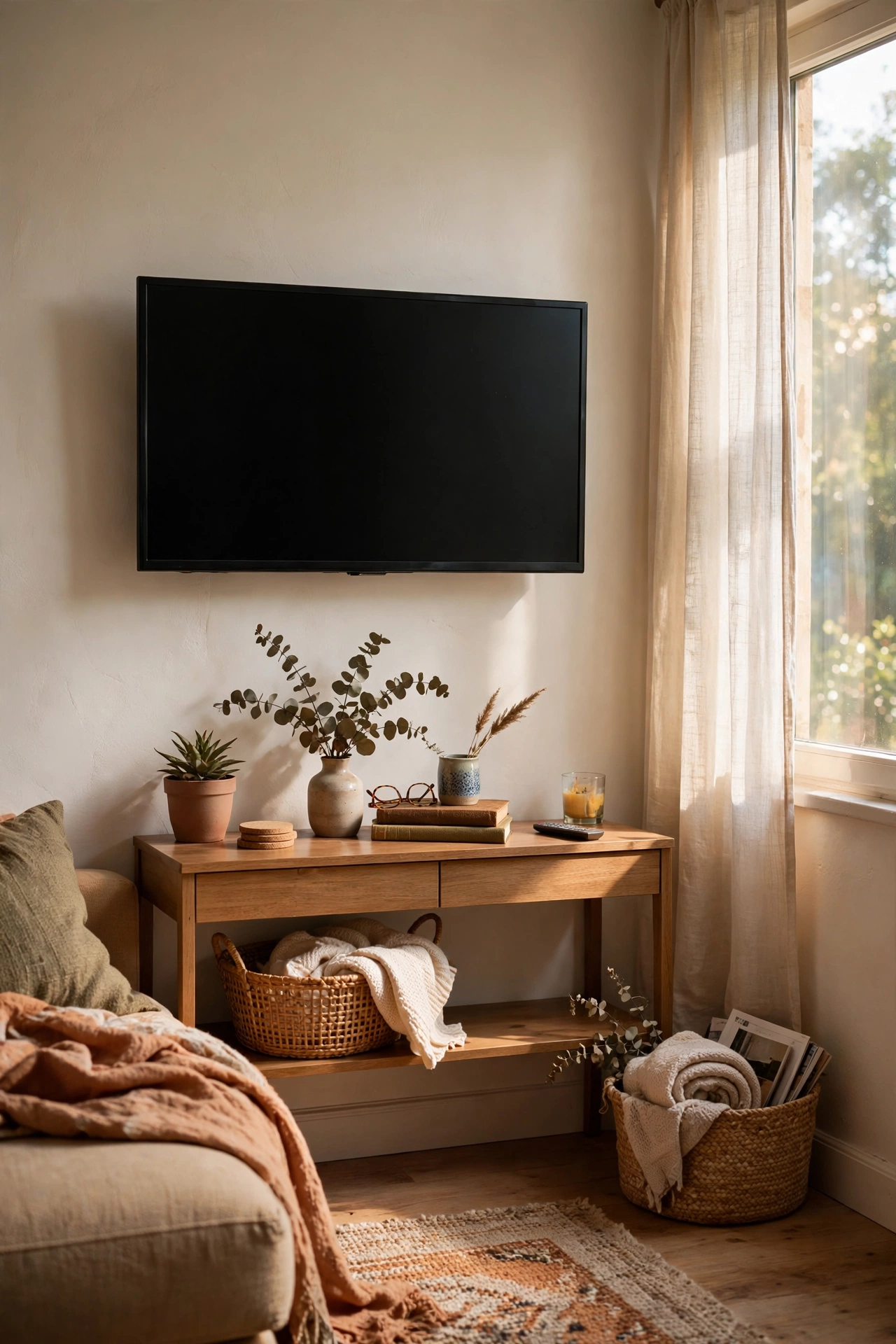
A TV on a media console eats about four square feet of floor you’ll never get back, while a wall-mounted TV eats zero. A basic tilting bracket costs less than a takeaway dinner and most people can install it in under an hour with a stud finder. I wall-mounted mine and reclaimed the whole corner for a reading chair that changed how I used the room. Hide the cables with a paintable cord cover so the wall stays clean. Pro tip: mount it slightly lower than you think, eye level from your sofa, not standing height.
Cost: ~$18 for the bracket | Time: 1 hour
Add Floating Shelves Instead of a Bookcase
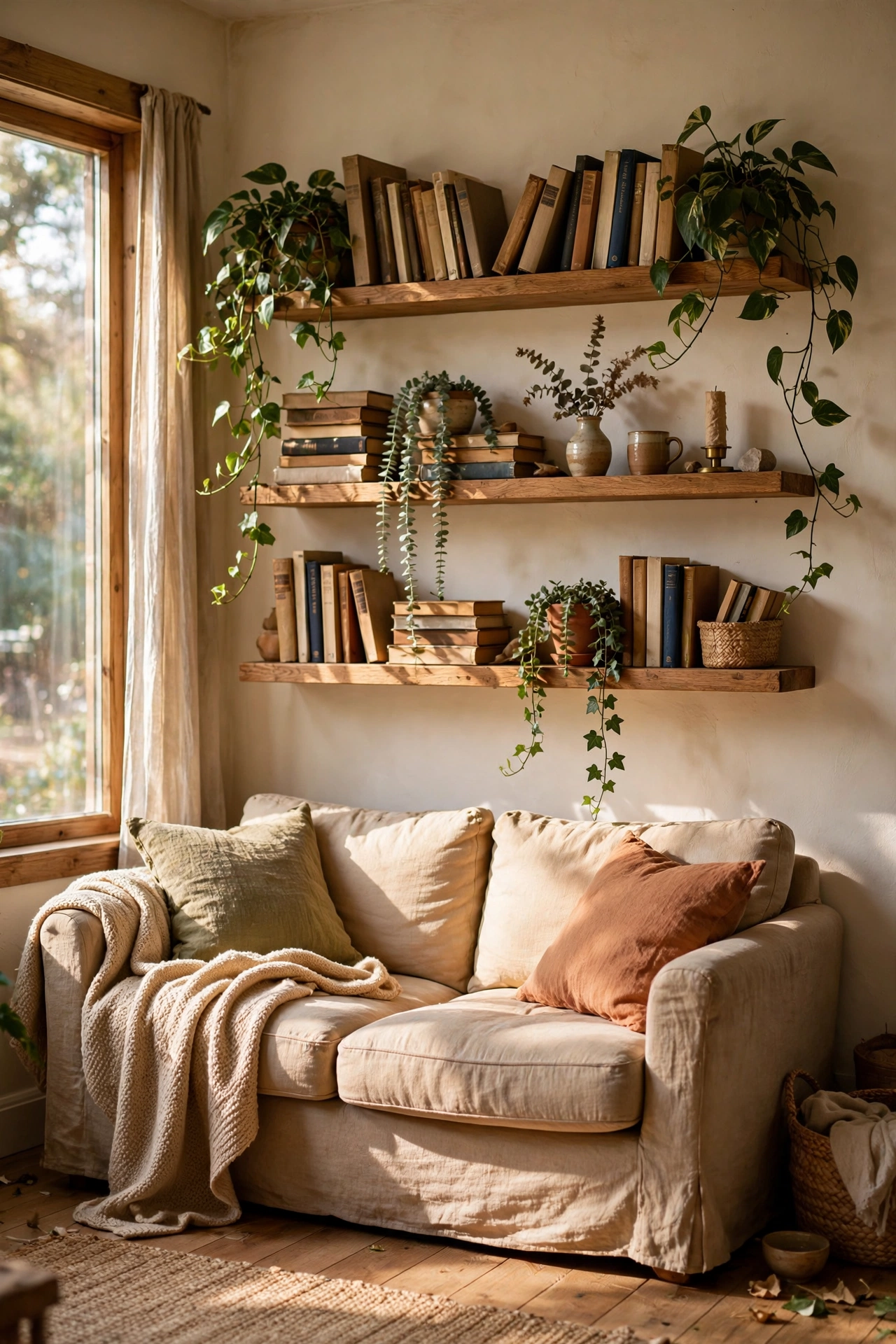
Floating shelves give you display and storage space without touching the floor, which keeps the room feeling open underneath. Two or three sturdy shelves above the sofa hold books, plants, and pretty objects that used to live on a bulky bookcase. I swapped a narrow bookcase for shelves and the freed floor corner fit a floor lamp I’d been wanting. Use proper wall anchors, not just the screws in the box, especially for books. Pro tip: leave some empty space on each shelf, crammed shelves look cluttered and defeat the purpose.
Cost: ~$22 for three shelves | Time: 45 minutes
Choose a Loveseat Over a Full-Size Sofa
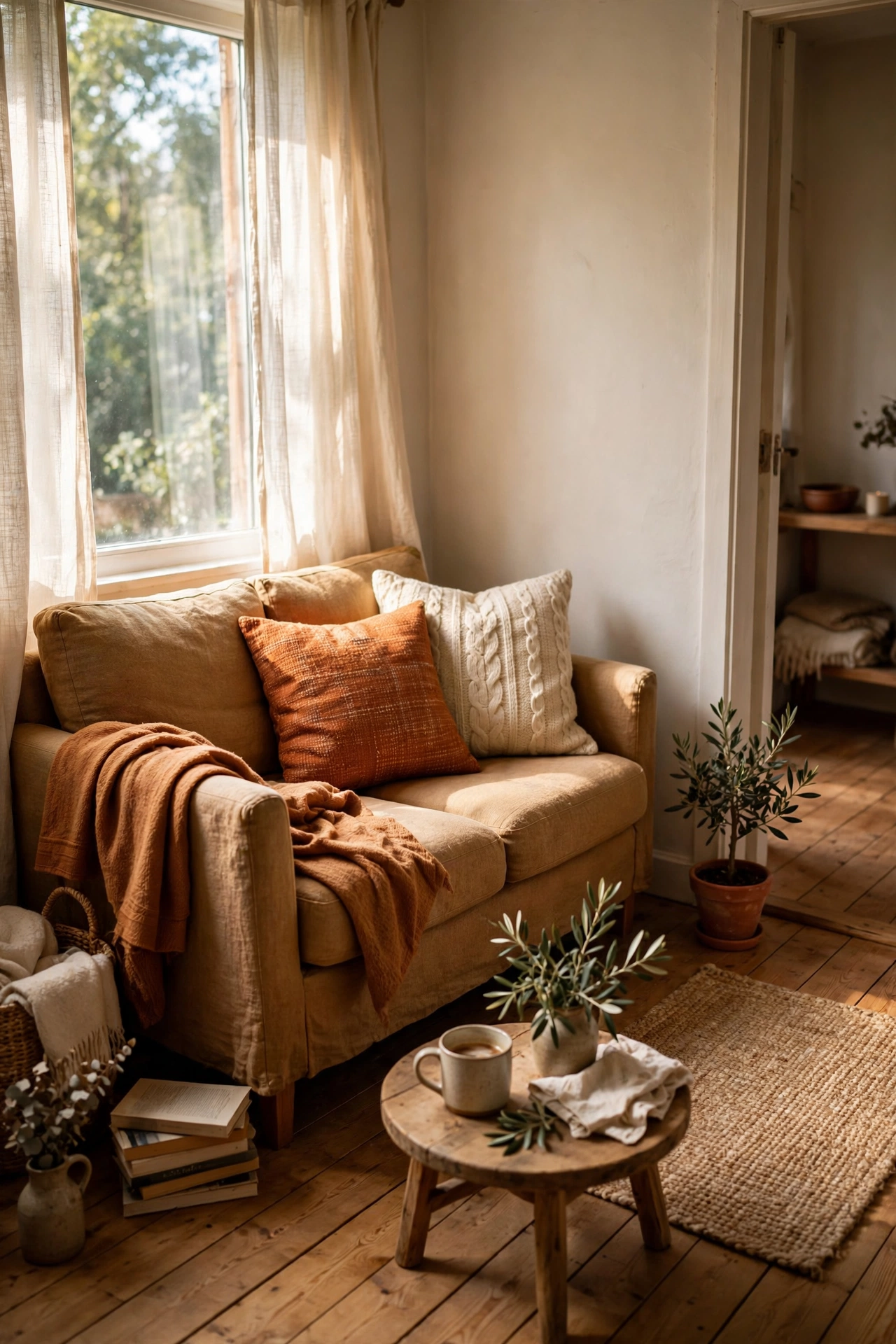
A full sofa in a small room often leaves you with twelve inches of walkway and a bruised hip. A loveseat seats two comfortably and frees up precious floor for a chair, a plant, or just breathing room. When I downsized my sofa, the room finally had a proper conversation layout instead of one giant piece dominating everything. Add a floor cushion or two for overflow guests. Pro tip: measure your doorways before buying, loveseats are much easier to get into flats and up stairwells.
Cost: ~$150 secondhand | Time: an afternoon of hunting
Pick Furniture With Visible Legs
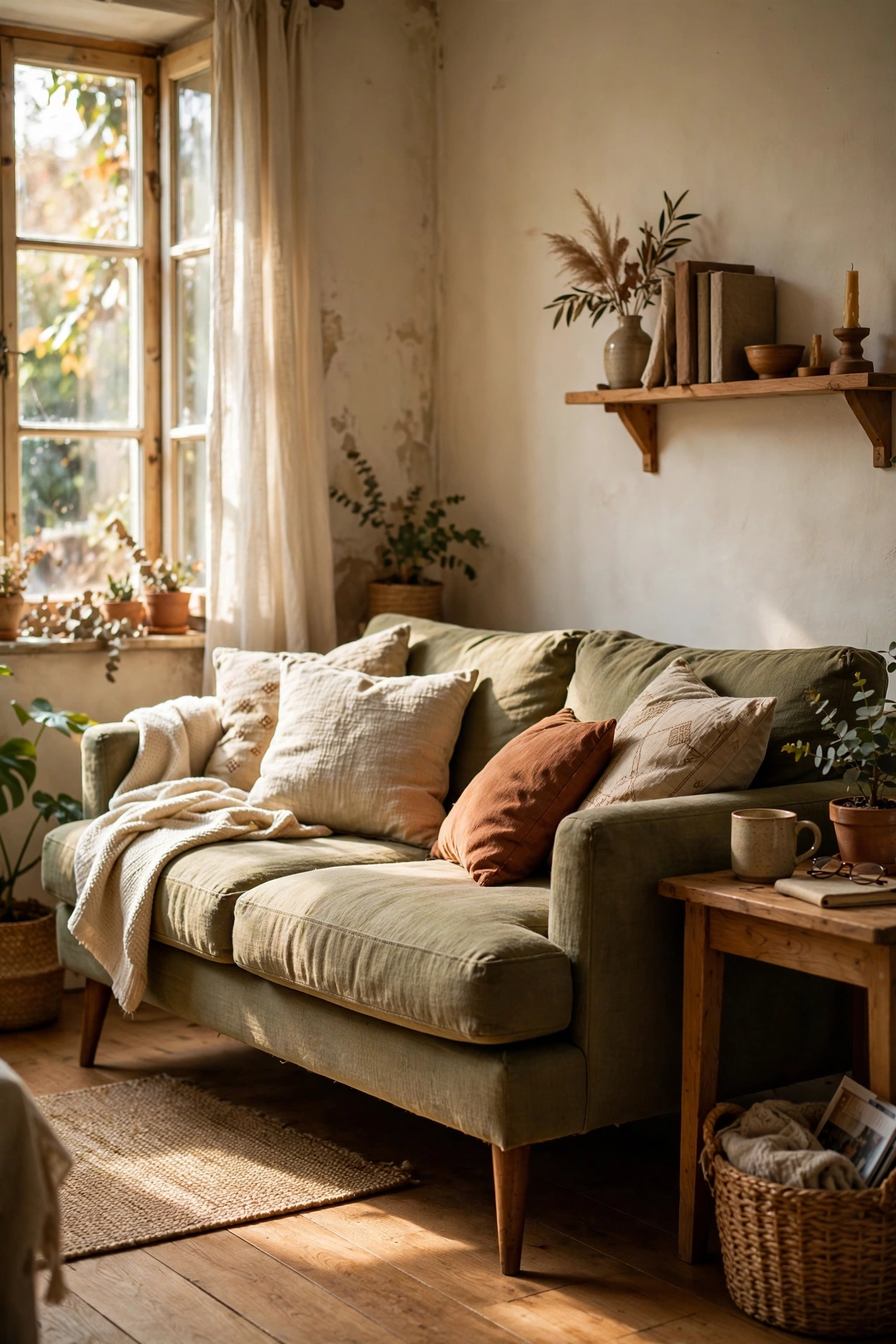
Furniture that sits directly on the floor looks like a solid block and visually shrinks a room, while pieces on legs let light and sightlines pass underneath. That glimpse of floor makes the whole piece feel lighter and the room bigger. When I swapped my boxy sofa for one on tapered wooden legs, the same room felt six inches roomier in every direction. This applies to sofas, chairs, media units, and even beds. Pro tip: mid-century style pieces almost always have legs, so thrift stores are full of them.
Cost: $0 if you shop your home first | Time: varies
Lay One Large Rug Instead of Several Small Ones
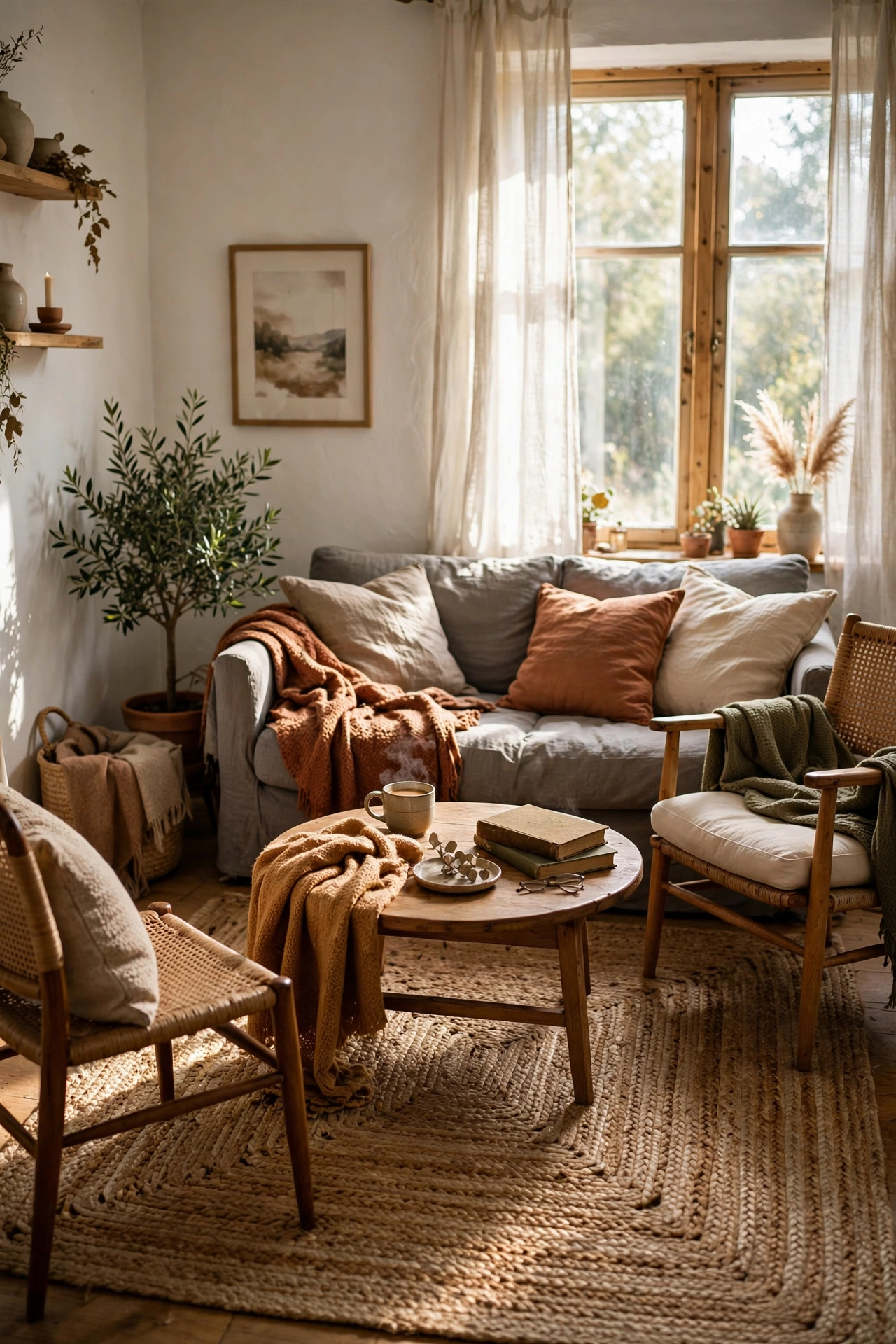
Lots of little rugs chop a small floor into even smaller pieces, while one large rug unifies the space and makes it feel expansive. Size it so at least the front legs of your sofa and chairs sit on it. I replaced three small rugs with one big jute rug and the room instantly looked calmer and larger, like the floor had been decluttered. A large rug also anchors your furniture arrangement so the layout feels intentional. Pro tip: a low-pile or flatweave rug is easier to clean and won’t visually bulk up the floor.
Cost: ~$60 | Time: 15 minutes
Use a Tall, Narrow Bookcase in a Dead Corner
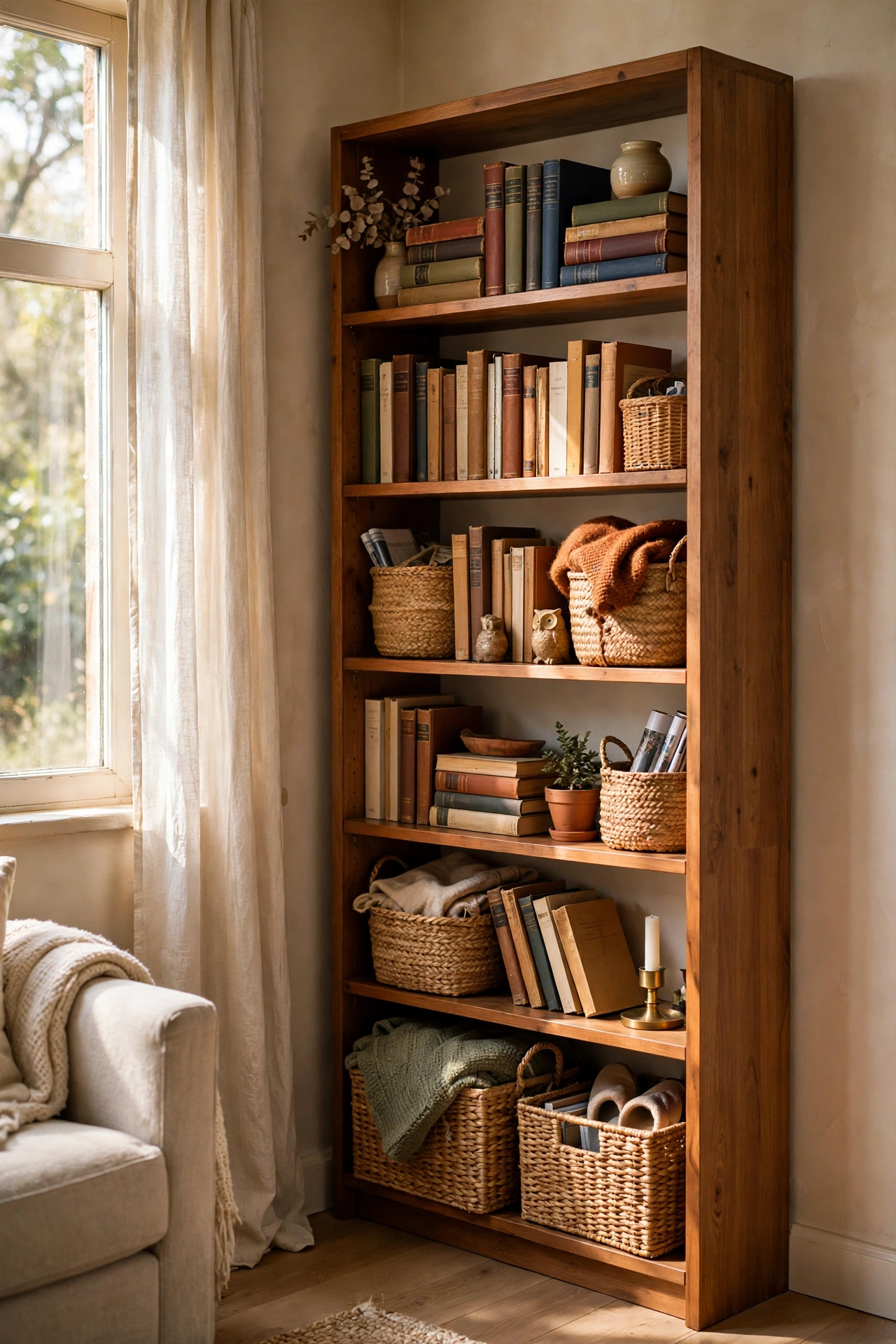
Dead corners in small rooms are wasted vertical real estate, and a tall narrow bookcase turns one into storage without sprawling across the wall. Go up, not out: a twelve-inch-deep tower holds a surprising amount while barely denting your floor plan. I squeezed one into the corner beside my door and it swallowed books, baskets, and the printer that had been living on my desk. Anchor it to the wall for safety. Pro tip: style the top shelves with plants and art so it reads as decor, not just storage.
Cost: ~$40 | Time: 1 hour to assemble
Install a Fold-Down Wall Desk
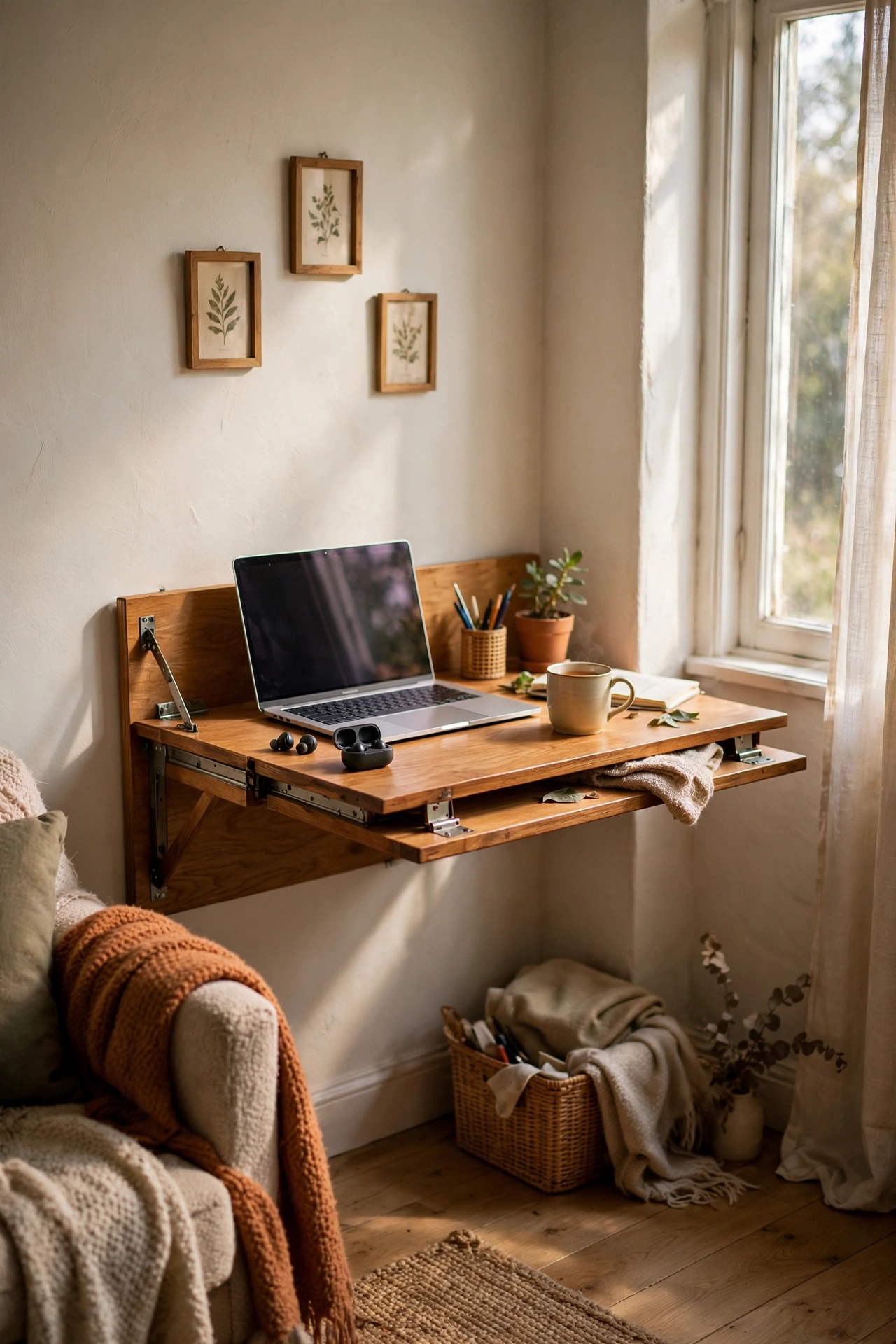
If your living room doubles as an office, a fold-down wall desk gives you a real workspace that vanishes after hours. Fold it up for laptop work, fold it down to a slim shelf when you’re done, and the room goes back to being a living room. I used one through two years of remote work in a studio and it saved my sanity, no more eating dinner next to a monitor. Many designs include little shelves inside for supplies. Pro tip: mount it near an outlet and add a cable clip underneath so cords don’t dangle.
Cost: ~$55 | Time: 1 hour to mount
Paint the Walls a Light, Airy Colour
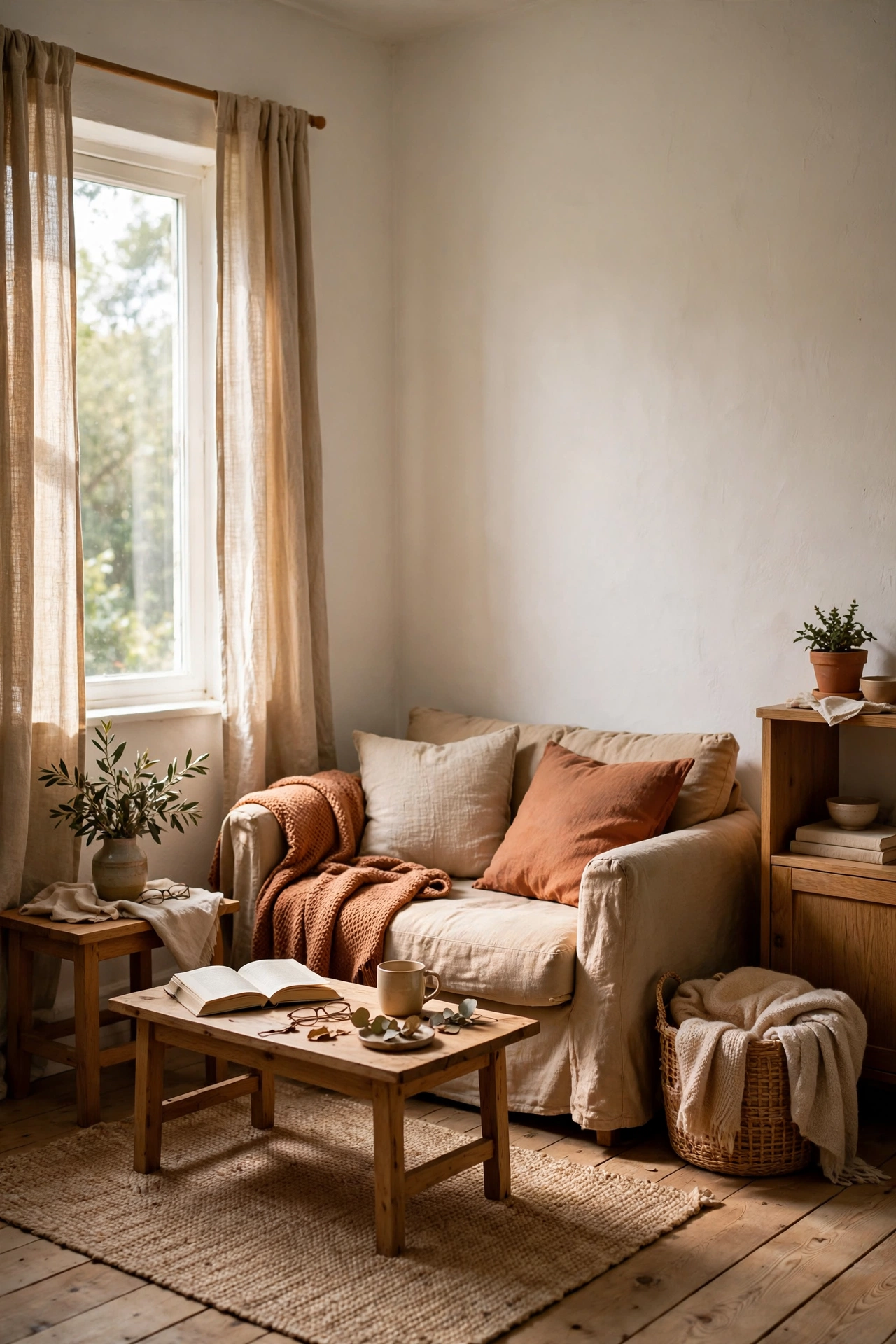
Light walls reflect daylight around the room while dark walls absorb it, and in a small space that difference is dramatic. You don’t need stark white, warm whites, pale greys, and soft creams all bounce light beautifully. I painted my north-facing living room a warm white and it felt like I’d added a window, the gloom just lifted. One tin of paint is the cheapest transformation on this list. Pro tip: paint the ceiling the same colour to blur the edges and make the room feel taller.
Cost: ~$30 for paint | Time: a weekend
Try a Glass or Acrylic Side Table
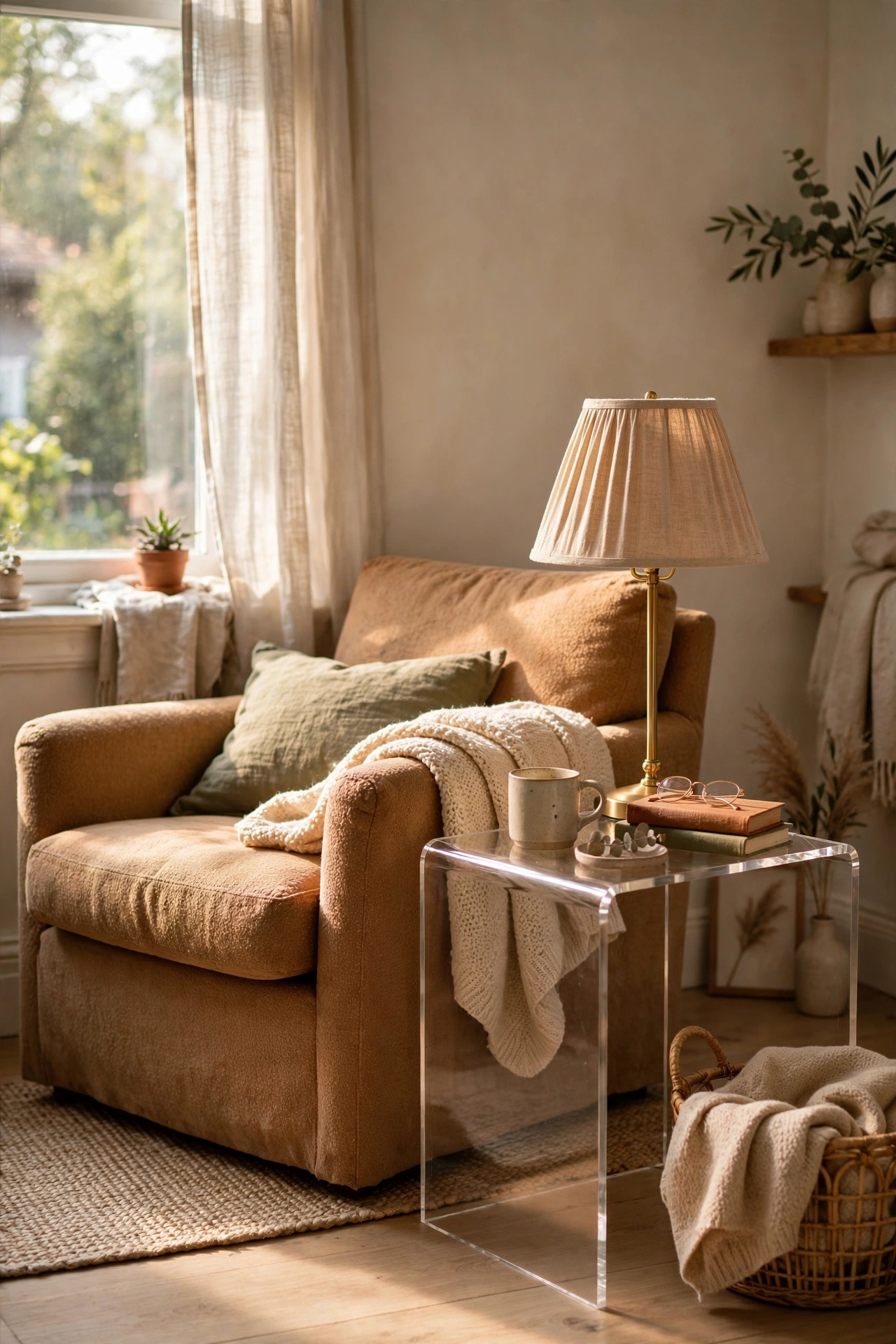
A glass side table holds your lamp and your tea while visually disappearing, which is exactly what a small room needs. Because you see through it, it doesn’t interrupt the flow of the space the way a solid wood table does. I put a small acrylic side table next to my reading chair and it holds everything without adding any visual weight. They’re easy to find secondhand and wipe clean in seconds. Pro tip: keep the surface styled simply, a cluttered glass table looks messy fast since you see it from all angles.
Cost: ~$25 secondhand | Time: 5 minutes
Slide Baskets Under Furniture for Hidden Storage
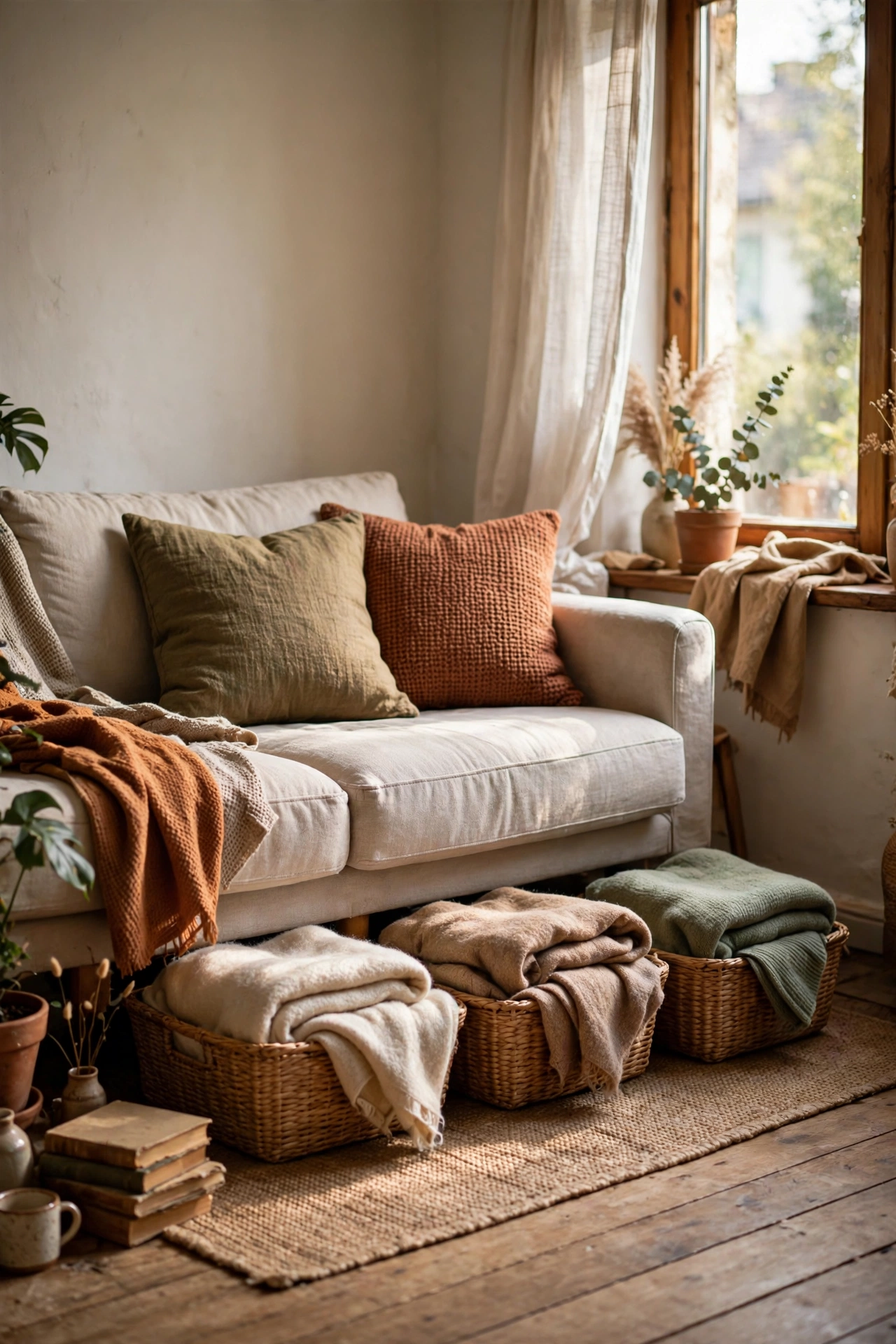
The space under sofas, consoles, and benches is storage waiting to happen, and low baskets turn it into tidy hidden homes for clutter. Measure the clearance first, then find flat baskets or fabric bins that slide in neatly. I keep spare bedding under my sofa and craft supplies under the bench, and guests have no idea. Label the fronts if you have several so you don’t have to pull them all out. Pro tip: baskets with lids stack the visual calm, open ones are fine for things you grab daily.
Cost: ~$12 for two baskets | Time: 20 minutes
Hang One Oversized Art Piece Instead of Many Small Ones
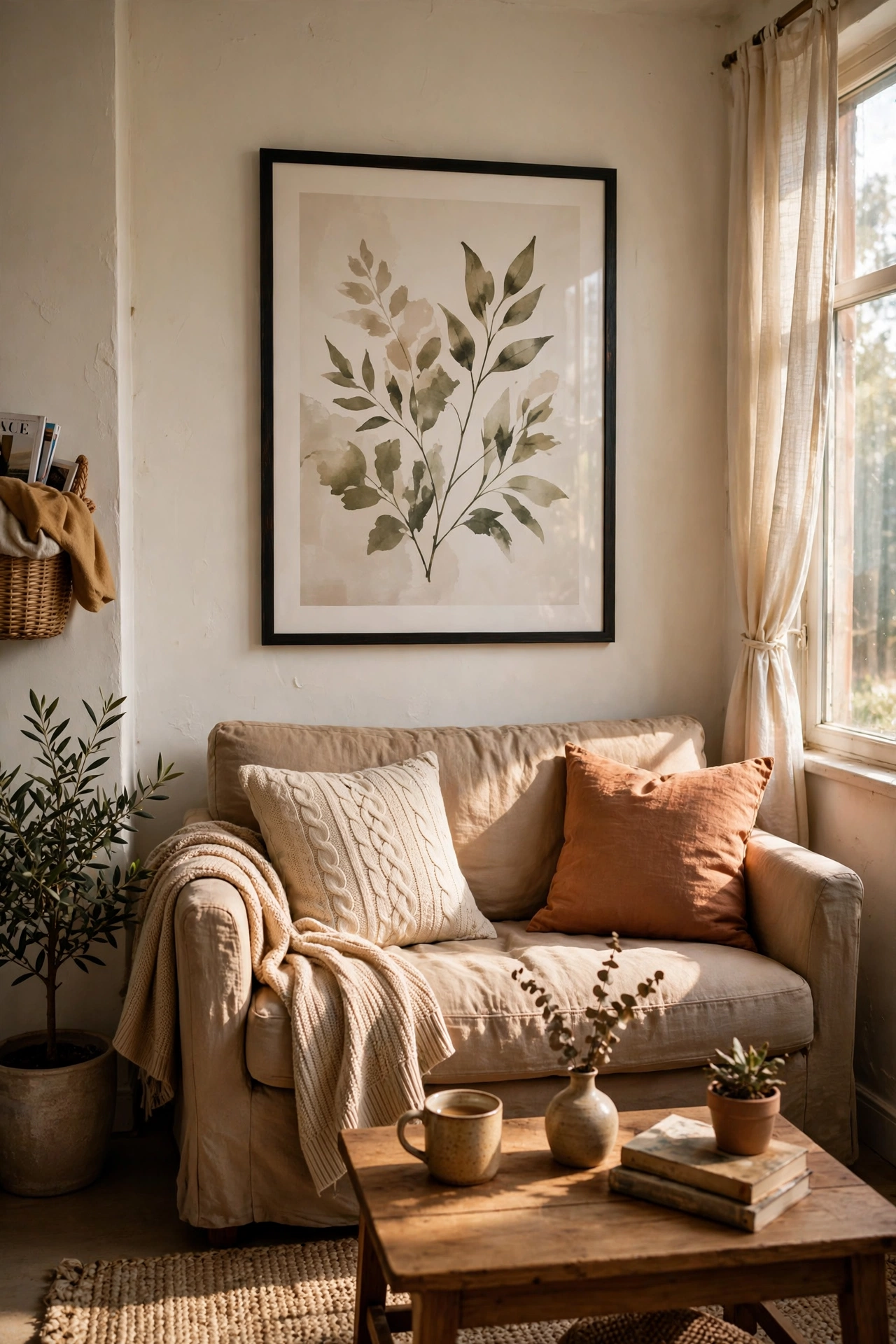
A gallery wall of tiny frames can look busy in a small room, while one large piece gives the eye a single calm focal point and makes the wall feel grander. It doesn’t need to be expensive, a big canvas from a discount store, a framed poster, or even fabric stretched over a frame works. I hung one oversized print above my sofa and the whole wall suddenly looked designed instead of decorated-by-accident. Pro tip: aim for art that’s about two-thirds the width of the furniture below it.
Cost: ~$20 | Time: 20 minutes
Light the Corner With a Slim Floor Lamp
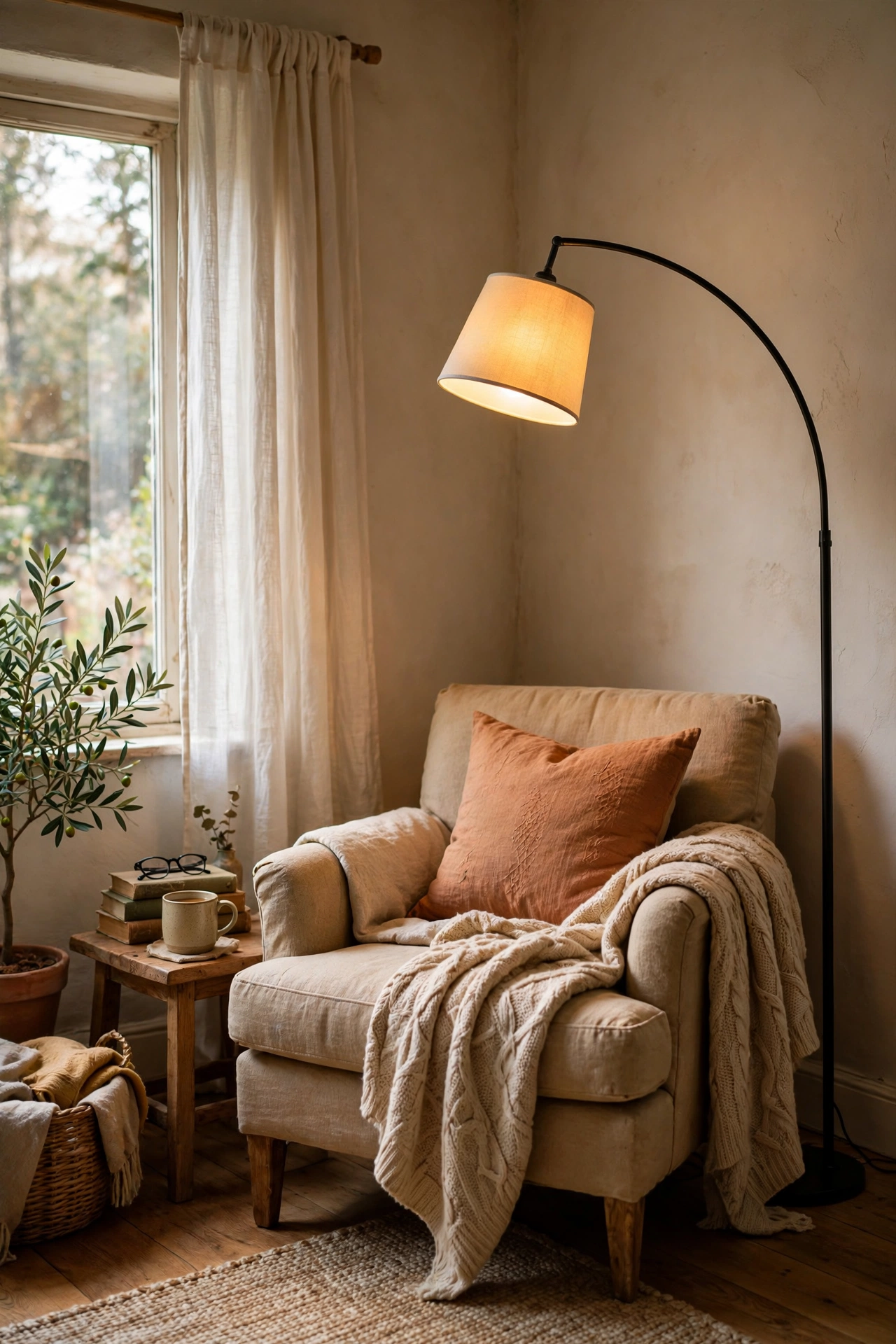
Dark corners make rooms feel smaller because your eye stops at the shadows, and a slim floor lamp erases them without taking floor space. An arc or torchiere style sends light upward, which makes the ceiling feel higher too. I added one behind my reading chair and the room gained a whole cosy zone that used to be dead space after dark. Choose a warm bulb, around 2700K, for that inviting glow. Pro tip: plug it into a smart plug so you can switch it on with your voice from the sofa.
Cost: ~$28 | Time: 10 minutes
Choose Curtains in the Same Colour as Your Walls
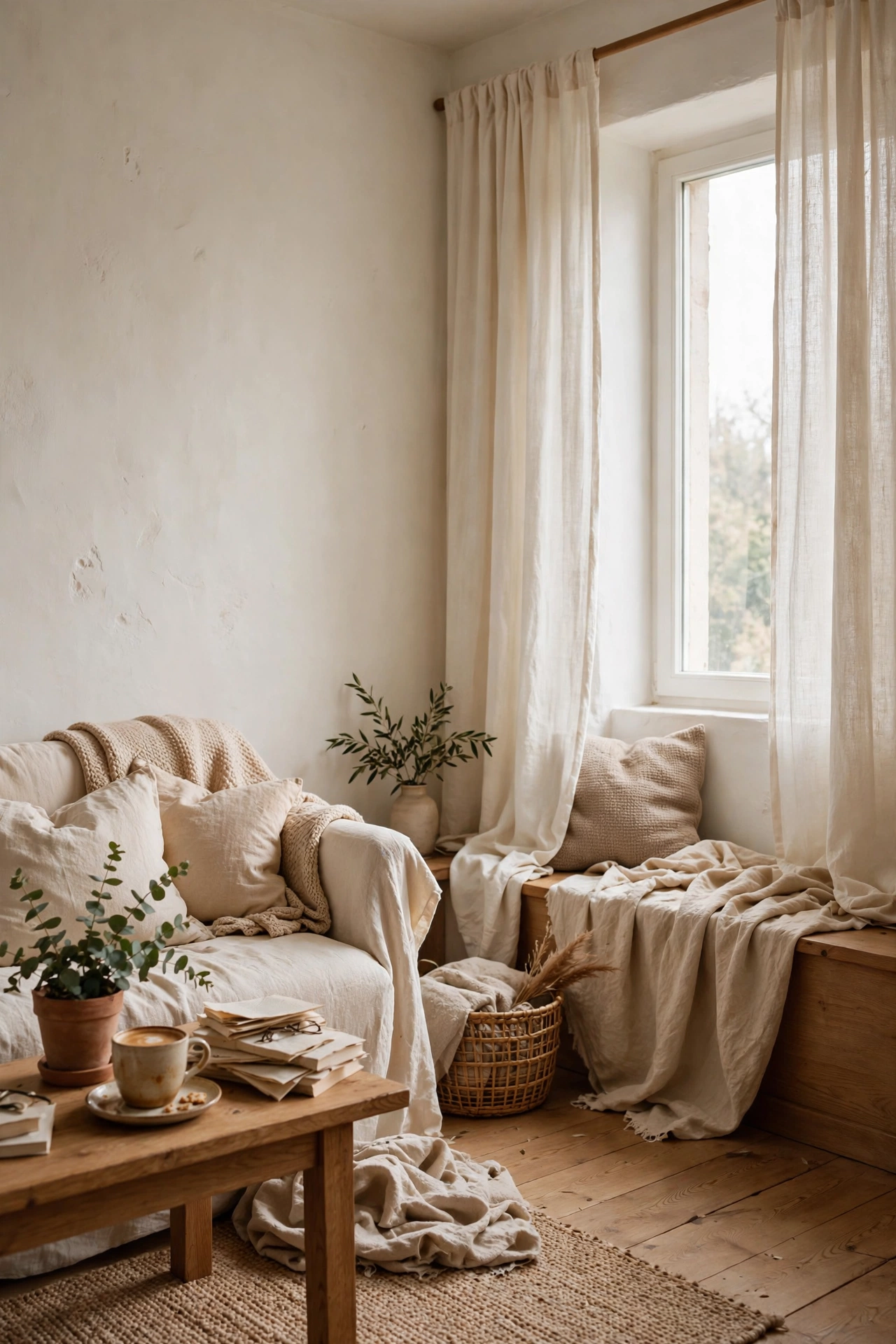
When curtains match the walls, the boundary between them disappears and the room reads as one continuous, larger space. Contrasting curtains chop the wall into sections, which shrinks the feel of the room. I switched from navy curtains to warm white ones matching my walls and the difference was immediate, the windows just melted into the room. This works with any colour, not just white. Pro tip: vary the texture instead of the colour, linen curtains against painted walls add depth without contrast.
Cost: ~$14 for drop-cloth panels | Time: 30 minutes
Build a Storage Bench Under the Window
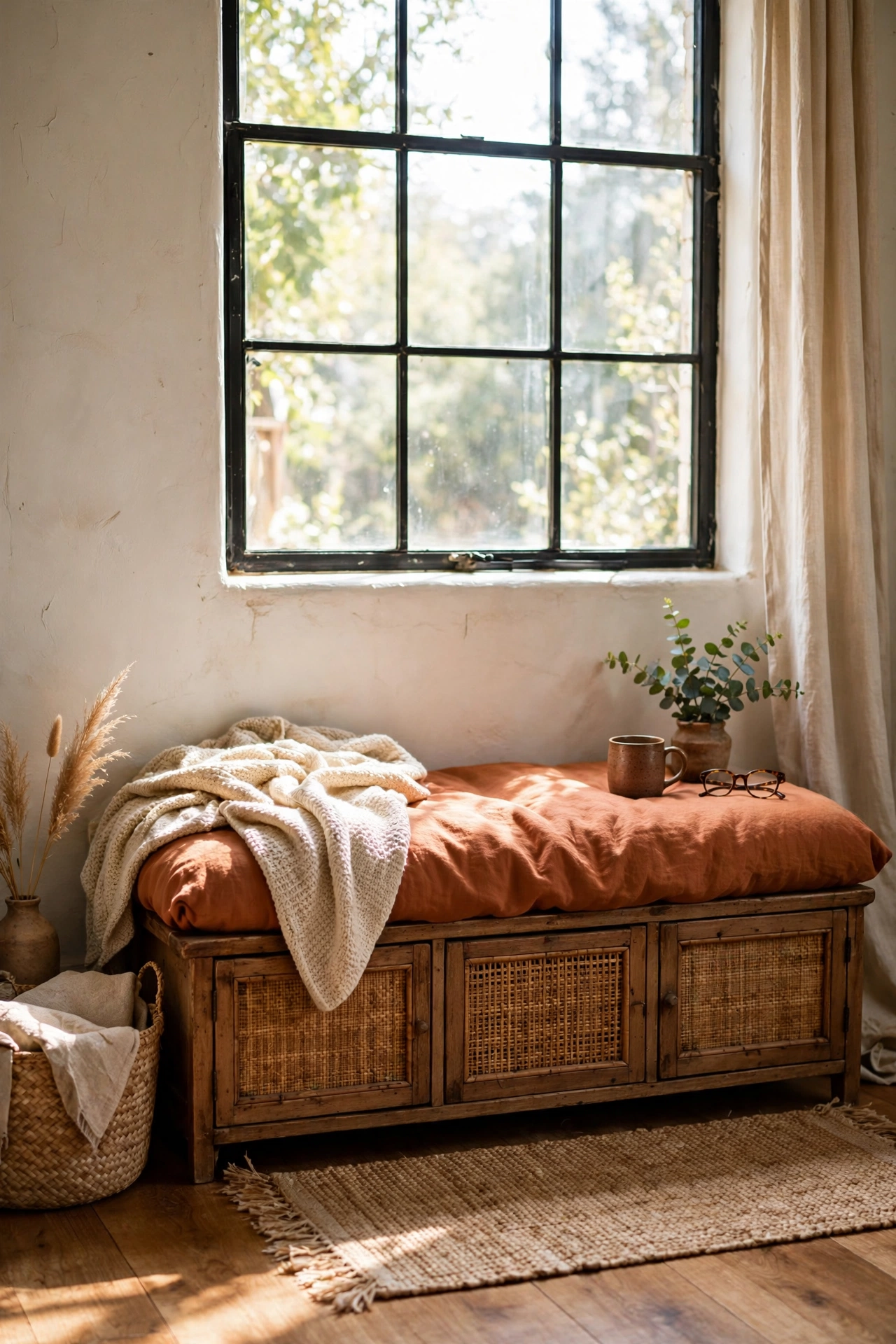
The wall under a window is often empty, and a low storage bench turns it into seating, a display surface, and hidden storage in one. Top it with a cushion and it becomes the best seat in the house, especially with a view. I built a simple one from two cube shelves laid sideways with a foam cushion on top, and it holds all my wrapping supplies inside. It also gives the window wall a finished, intentional look. Pro tip: keep the bench lower than the windowsill so it doesn’t block any light.
Cost: ~$45 | Time: 2 hours
Pick an Armless Slipper Chair for Extra Seating
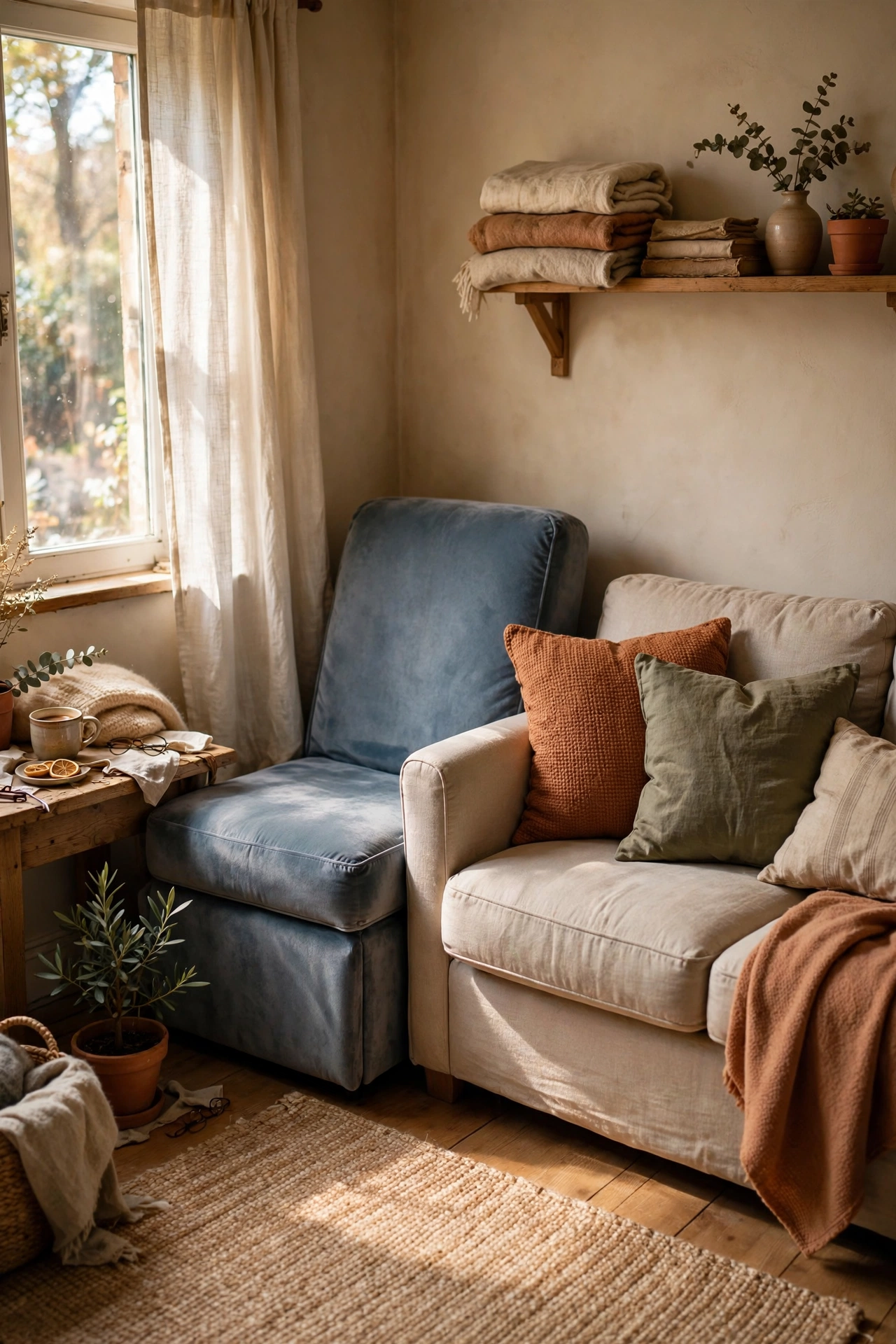
Armless chairs take up noticeably less visual and physical space than armed ones, so you can fit seating where a regular armchair would crowd. A slipper chair tucks neatly beside a sofa or floats in a corner as a reading spot. I added one to my tiny living room and gained a proper second seat without the room feeling stuffed. Look for them at thrift stores, they’re a classic shape that turns up often. Pro tip: a small lumbar cushion makes an armless chair far more comfortable for long sits.
Cost: ~$30 secondhand | Time: an afternoon of hunting
Switch to a Round Coffee Table
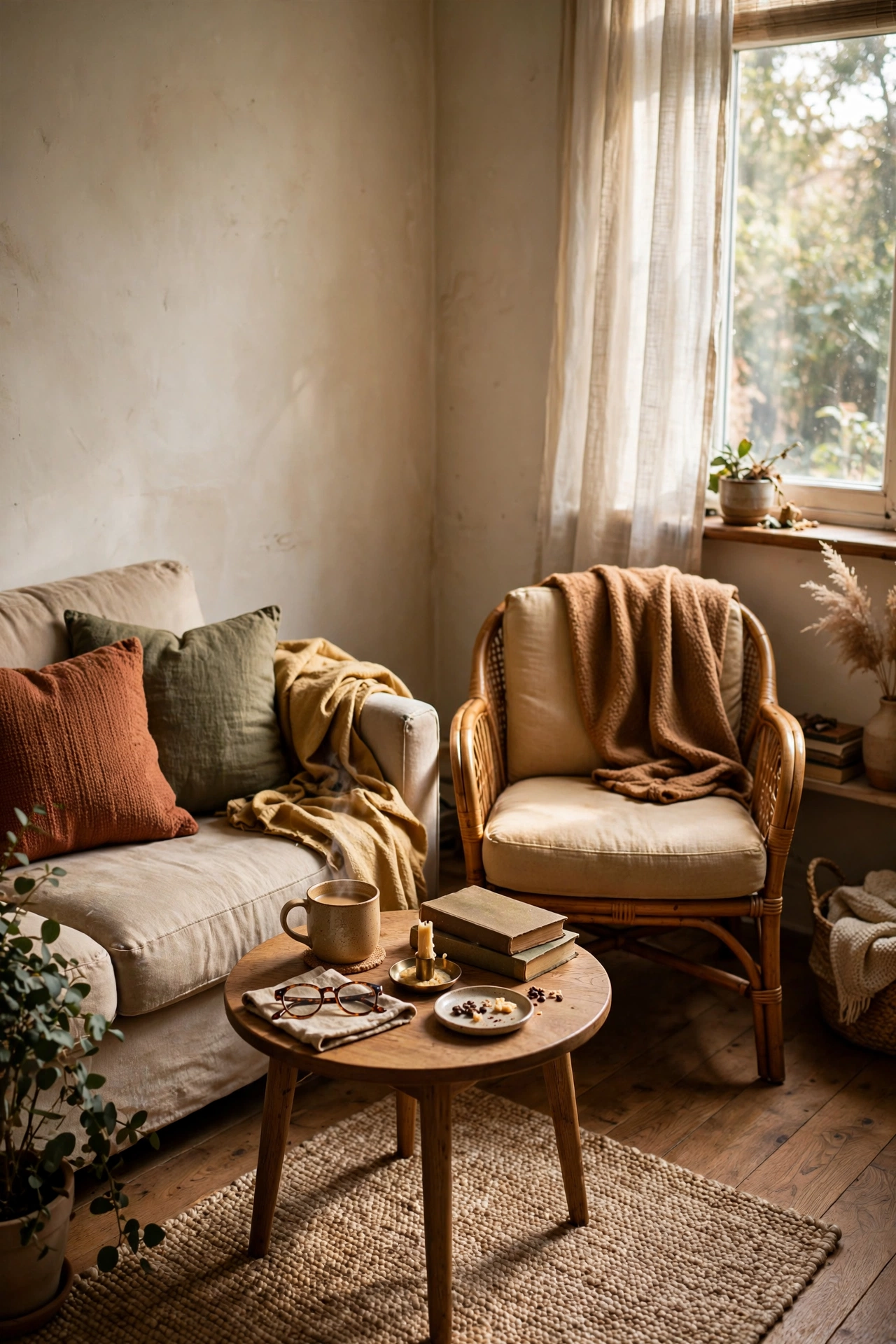
Round tables improve traffic flow in tight rooms because there are no corners to navigate around or bump into. You can squeeze past a round table in a narrow gap that a square one would block. I swapped my square table for a round one and the path from door to sofa finally felt easy instead of obstacle-course. A pedestal base is even better since it frees up leg room underneath. Pro tip: a round tray on top corrals remotes and coasters so the small surface stays usable.
Cost: ~$35 secondhand | Time: 10 minutes
Show the Floor by Skipping Skirted Furniture
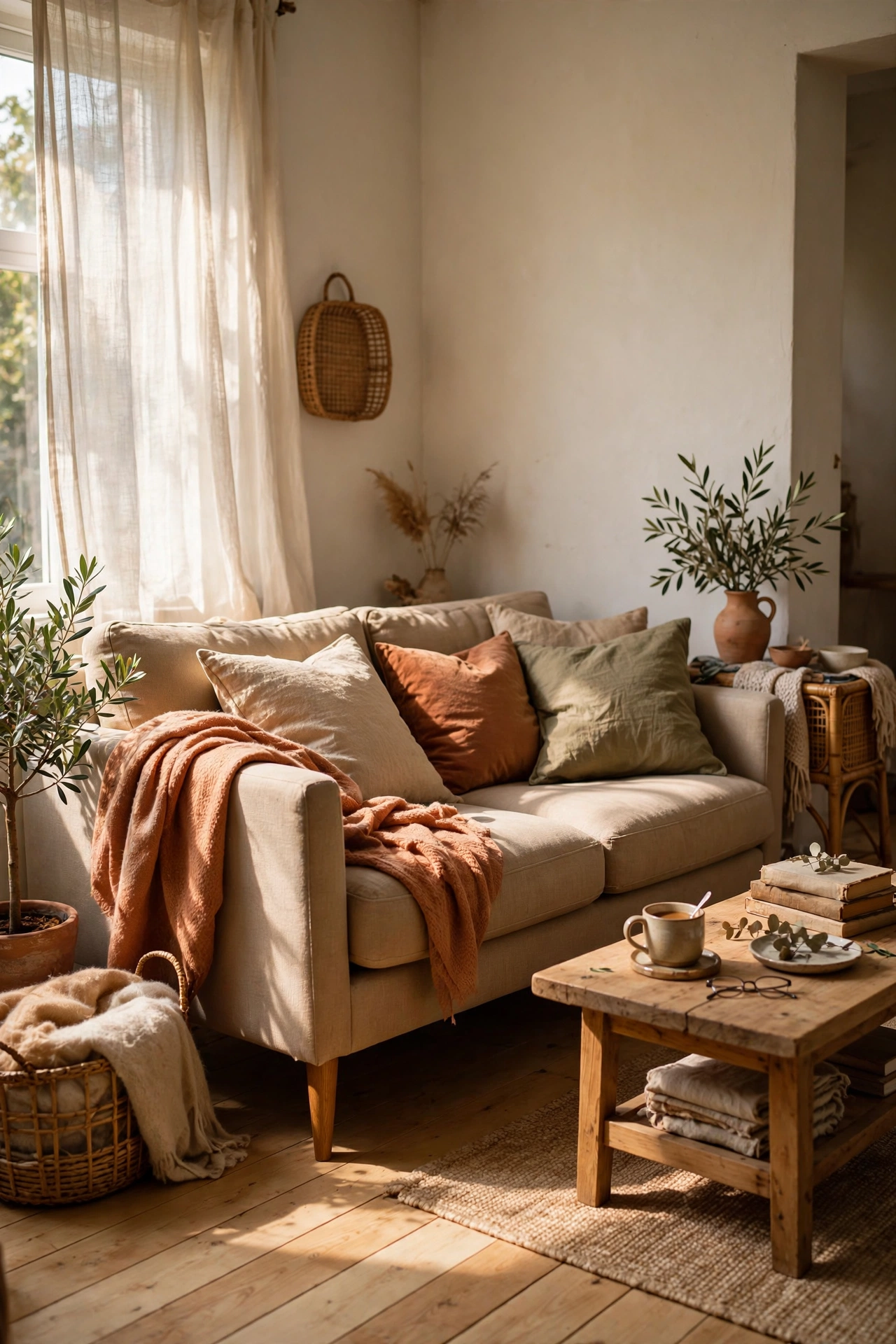
Skirted sofas and bed skirts hide the floor and make furniture look like solid blocks, which shrinks a small room visually. Pieces that show floor beneath them feel lighter and let the room breathe. When I removed the skirt from my old sofa, I was amazed how much airier the same piece looked. If you love the skirted look, save it for a bigger room. Pro tip: this is free, just pull off or tie up existing skirts and see the difference today.
Cost: $0 | Time: 5 minutes
Add Floor Cushions for Flexible Extra Seats
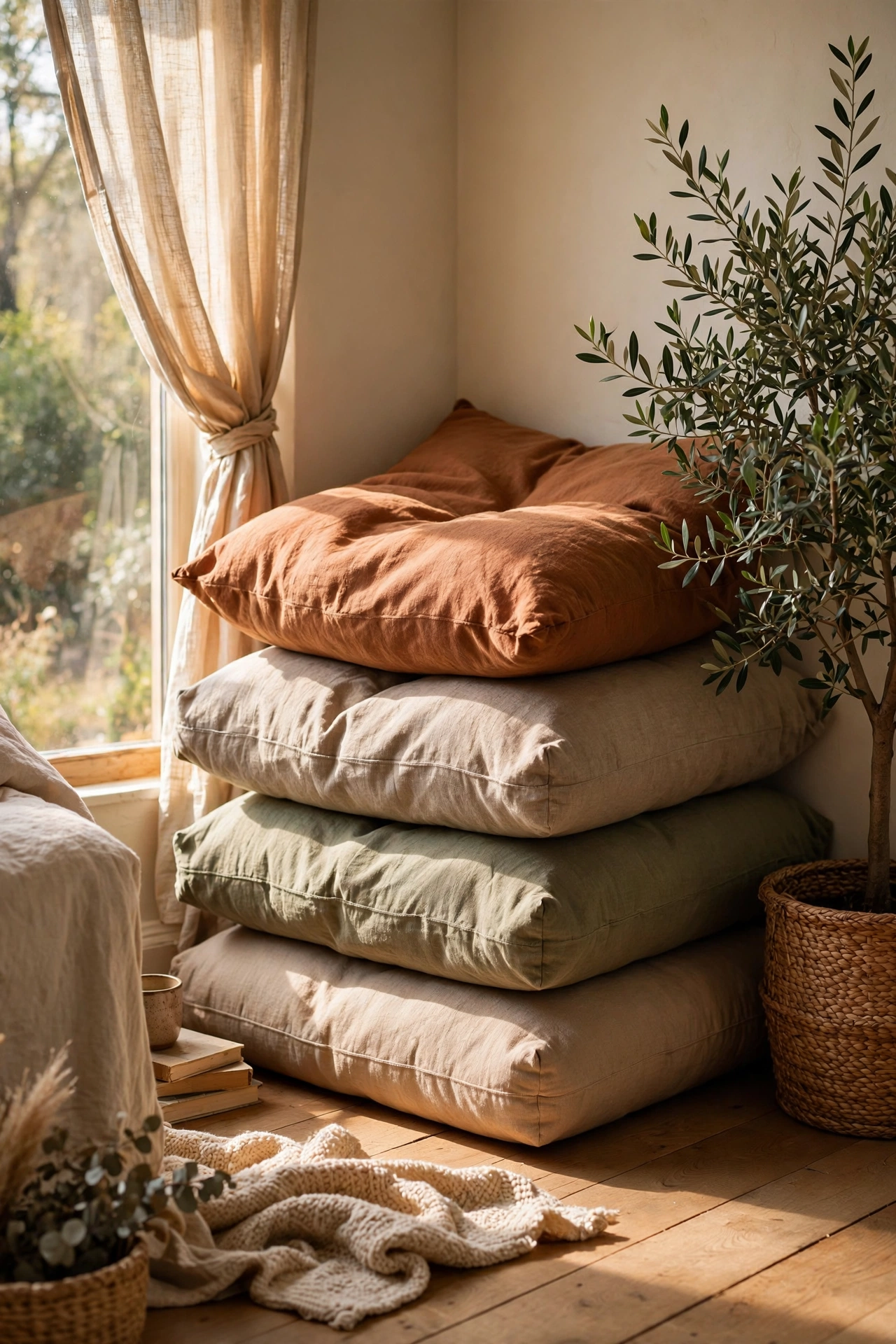
Floor cushions give you guest seating that stacks in a corner or slides under furniture when it’s just you. They’re cheap, comfortable for casual hangs, and kids absolutely love them. I keep three large ones stacked beside my bookcase and pull them out for film nights, then they disappear again. Choose washable covers because floor life is a messy life. Pro tip: look for cushions with handles, they’re much easier to grab and stack. They also work brilliantly as back support when you are lounging against the sofa, and the kids will inevitably build forts with them, which is half the fun.
Cost: ~$24 for three | Time: 5 minutes
Build Your Gallery Wall Upward, Not Outward
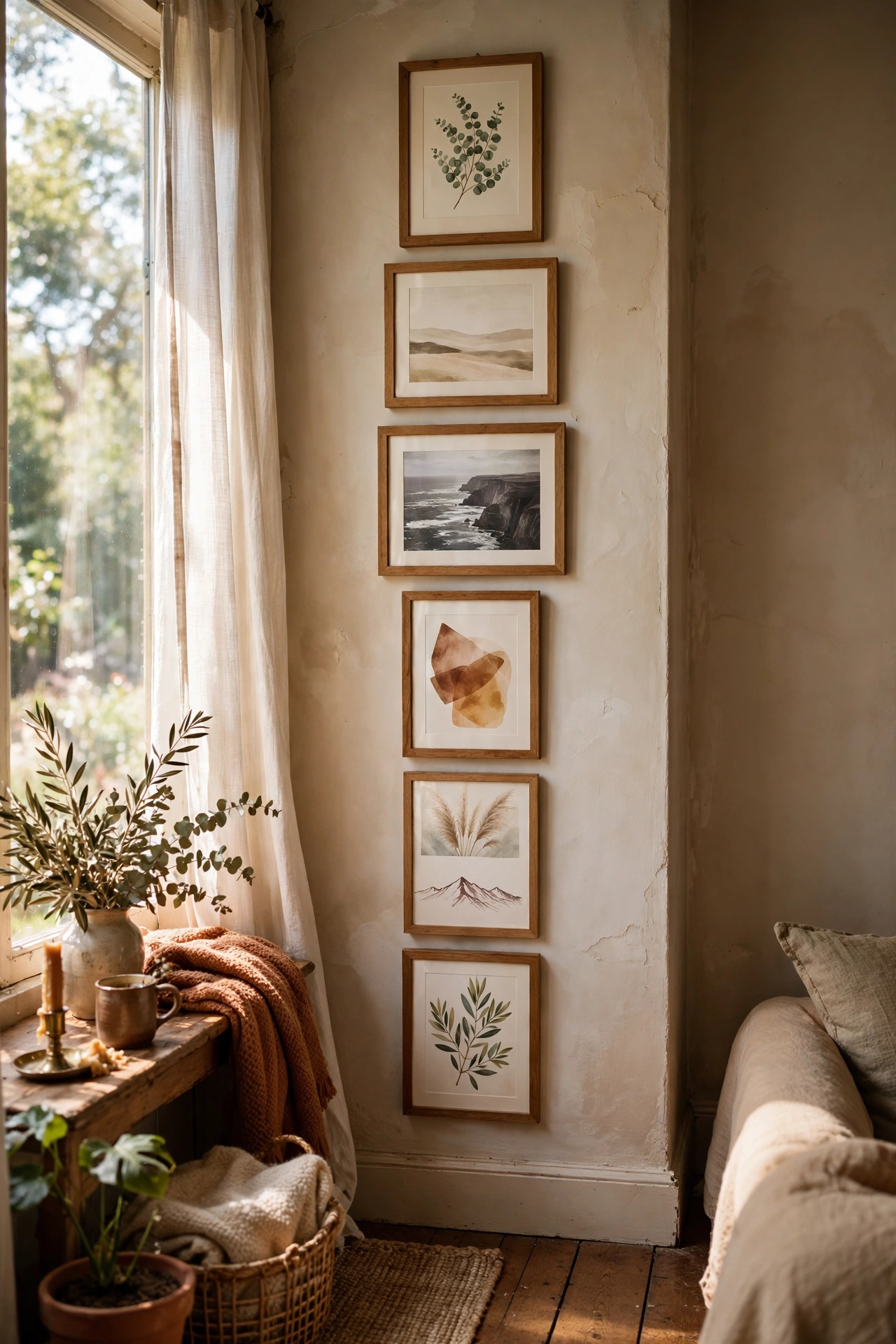
Arranging art in a tall vertical column instead of spreading it wide draws the eye up and makes ceilings feel higher. This works brilliantly on narrow walls between windows or beside doorways that can’t fit a wide arrangement. I ran a vertical line of four frames up my narrowest wall and it became a feature instead of an awkward gap. Keep the spacing tight and consistent, about two inches between frames. Pro tip: lay the arrangement on the floor first and photograph it, it’s easier to adjust there than on the wall.
Cost: ~$10 for frames | Time: 1 hour
More ideas you’ll like: (see also: 19-small-living-room-ideas-that-maximize-every-corner) and (see also: 25-apartment-living-room-ideas-for-renters).
Found a trick you’ll use? Save this idea to your Pinterest board for your next small-space refresh.
