21 Minimalist Living Room Ideas on a Budget
Two years ago my living room was so full of stuff I could not find the remote without a search party. Then I spent one ruthless weekend decluttering, and the calm that followed honestly surprised me. I have been collecting Minimalist living room ideas ever since, learning that minimalism is not about owning nothing. It is about owning only things that earn their place, and styling what remains with intention.
These 21 minimalist ideas cost almost nothing, because minimalism’s first tool is subtraction, which is free. I have grouped them into three phases: clearing, choosing, and styling. Each idea includes the real cost and time. You do not need to buy a single thing to start; you need a bin bag, an afternoon, and the willingness to let go.
Clear the Decks
1. The Ruthless Surface Sweep
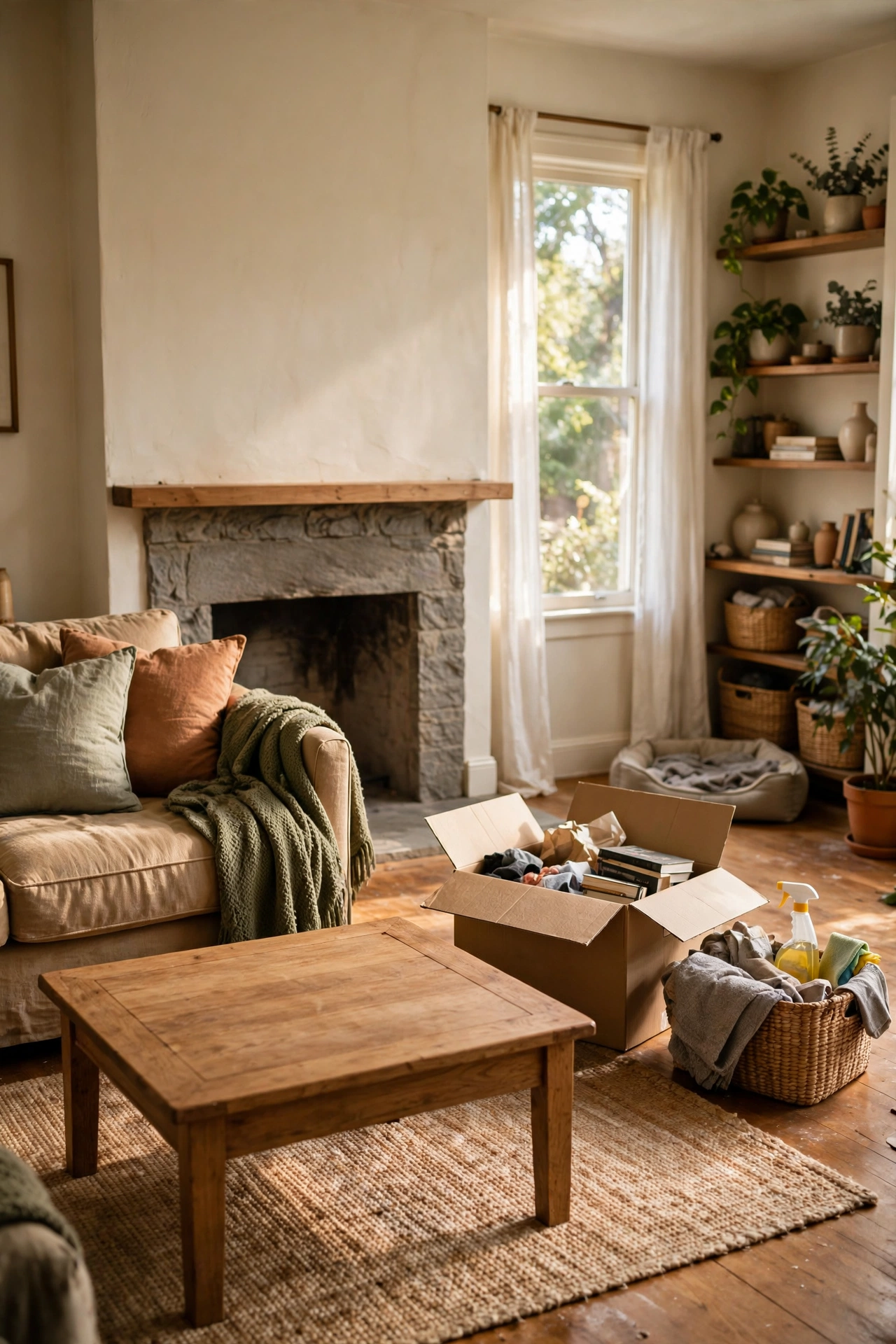
Start by clearing every surface completely, then add back only what you love. I took everything off my coffee table, mantel, and shelves, piled it on the dining table, and lived with bare surfaces for a day. Then I returned one beautiful object per surface. The room felt twice as big overnight. My mistake the first time was “temporarily” putting things back that I was unsure about; they stayed for months. If you are unsure, box it for thirty days. If you do not miss it, donate it.
Cost: $0 | Time: 2 hours
2. The One-In-One-Out Rule
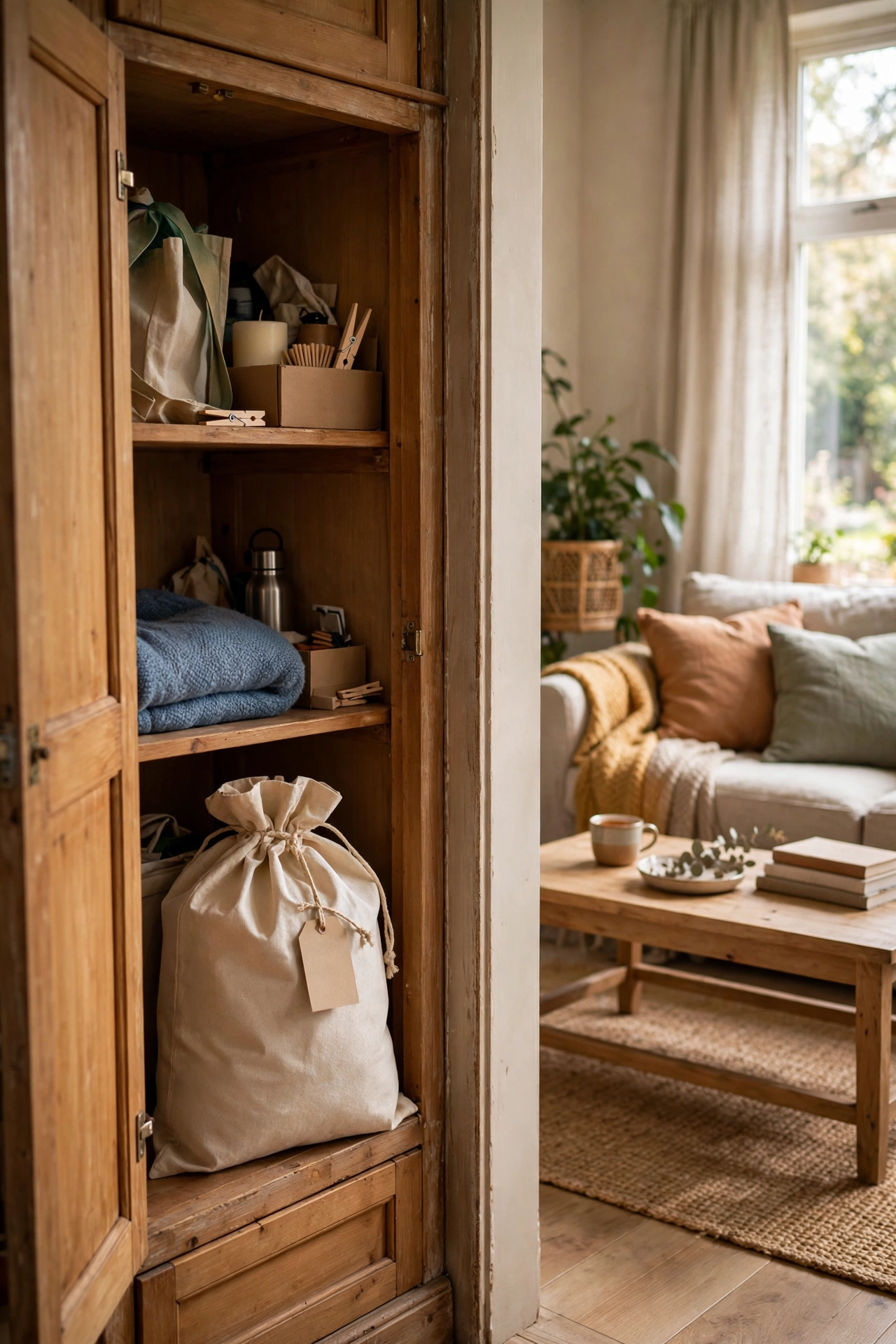
Adopt the rule that nothing new enters without something old leaving. I started this after realising my shelves crept fuller every month despite my minimalist intentions. Bought a new vase? An old one goes to donation. It sounds strict, but it keeps the room in equilibrium. I keep a donation bag in the hall cupboard so the “out” part happens immediately, not someday. This single habit has done more for my minimalist living room than any purchase ever could. I tell guests about the rule too, which has dramatically reduced the number of decorative gifts I receive.
Cost: $0 | Time: 5 minutes per swap
3. Hide the Visual Noise
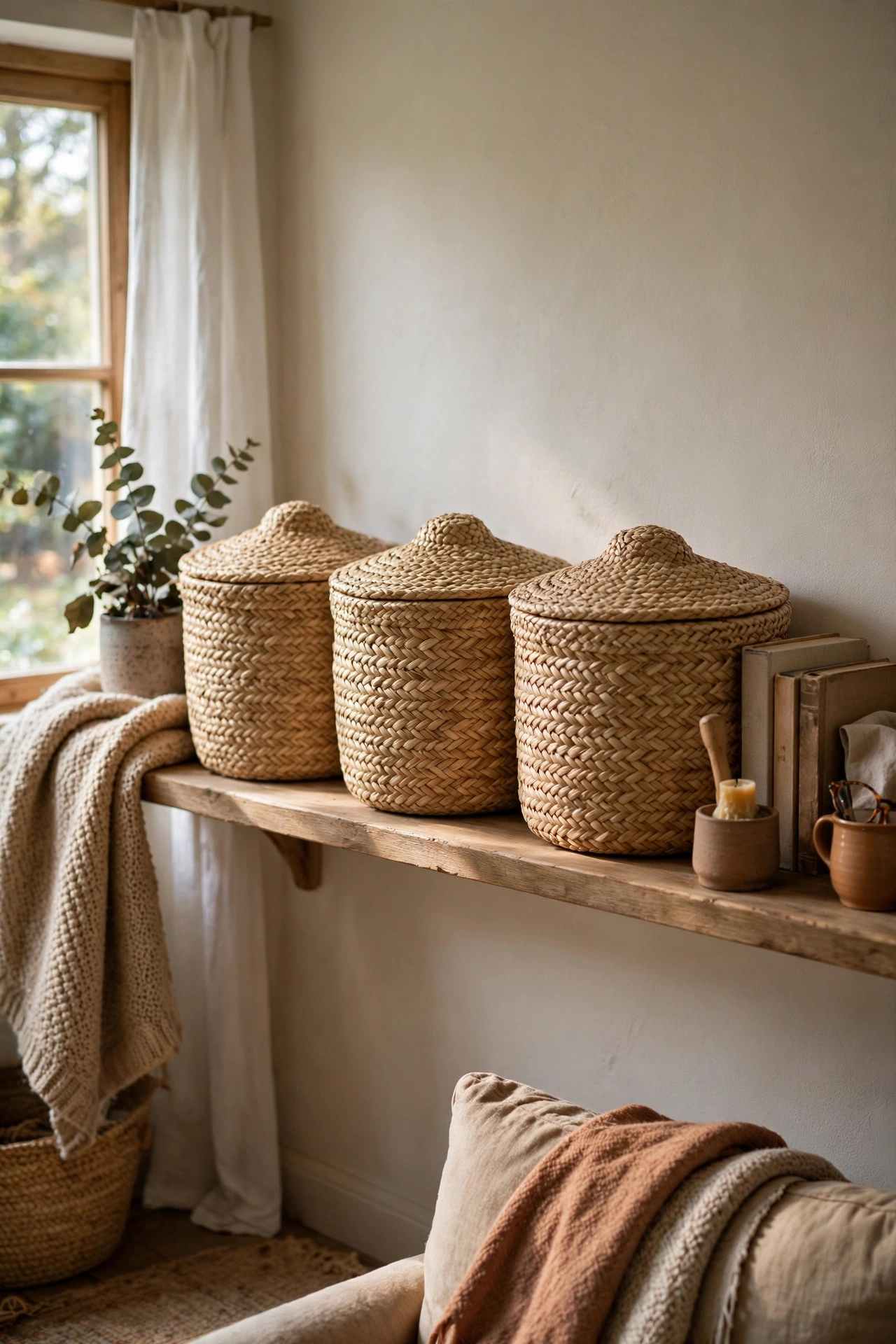
Minimalism is mostly about hiding the necessary clutter. I bought three matching lidded baskets for $24 and corralled the remotes, chargers, and kids’ bits that used to live on every surface. Matching containers are key; mismatched storage looks like clutter wearing a costume. Label nothing; you will remember what is where. My coffee table went from chaos to calm, and the baskets themselves look like decor. Contained clutter does not count as clutter. I chose baskets with lids, because open baskets just become another surface to clutter.
Cost: ~$24 | Time: 30 minutes
4. The Cable Tidy-Up
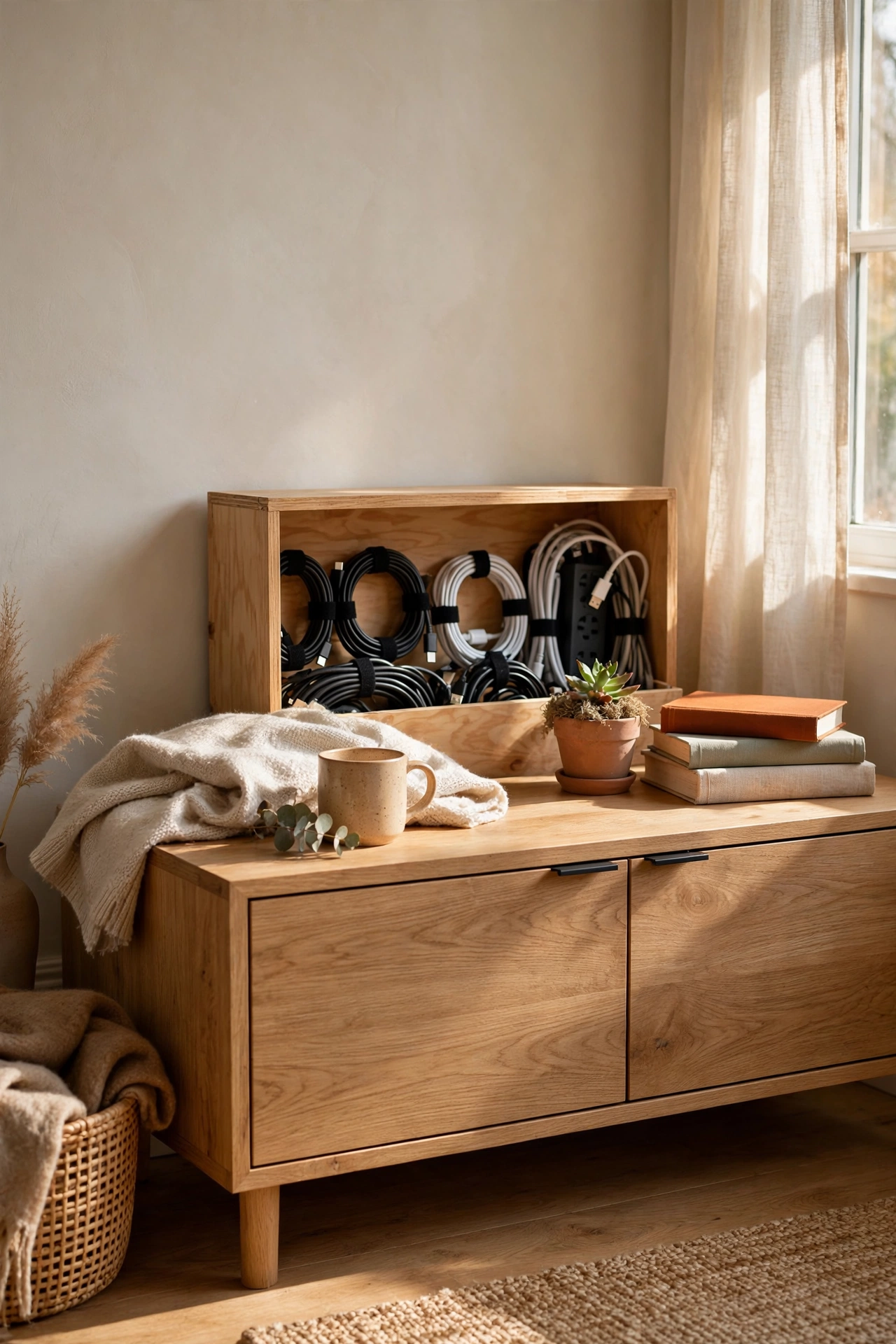
Cables are the invisible clutter ruining your minimalist dreams. I spent $12 on a cable box and some velcro ties, gathered every charger and cord behind the media console into the box, and the whole wall looked cleaner instantly. Coil excess cable length and tie it; dangling loops are visual noise. I also labelled the plugs with tiny tags so I am not unplugging the wrong thing. Ten minutes of cable management changed the feeling of my entire media wall.
Cost: ~$12 | Time: 30 minutes
5. Edit the Bookshelf to Half
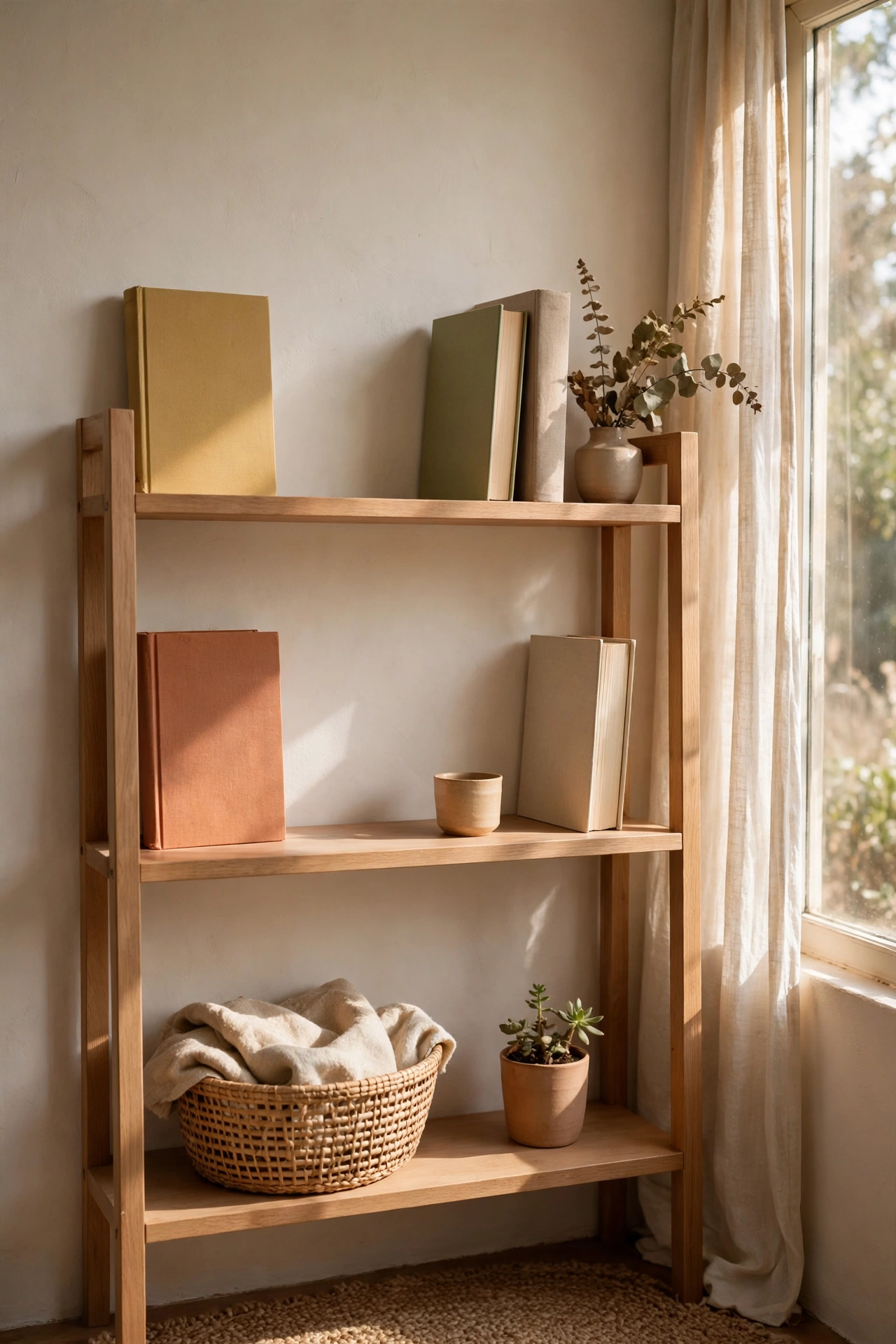
A minimalist bookshelf holds half what you think it should. I removed fifty percent of my books, keeping only favourites and beautiful ones, and arranged the rest with generous breathing room. Some shelves hold just a stack of three books and one object. The empty space is the design. I boxed the overflow for the bedroom and donated the rest. My bookshelf went from storage unit to styled display, and I can actually find the books I want now. I photograph the shelves before big edits, so I can remember what I loved about the old arrangement.
Cost: $0 | Time: 1 hour
6. The Drawer Dump and Sort
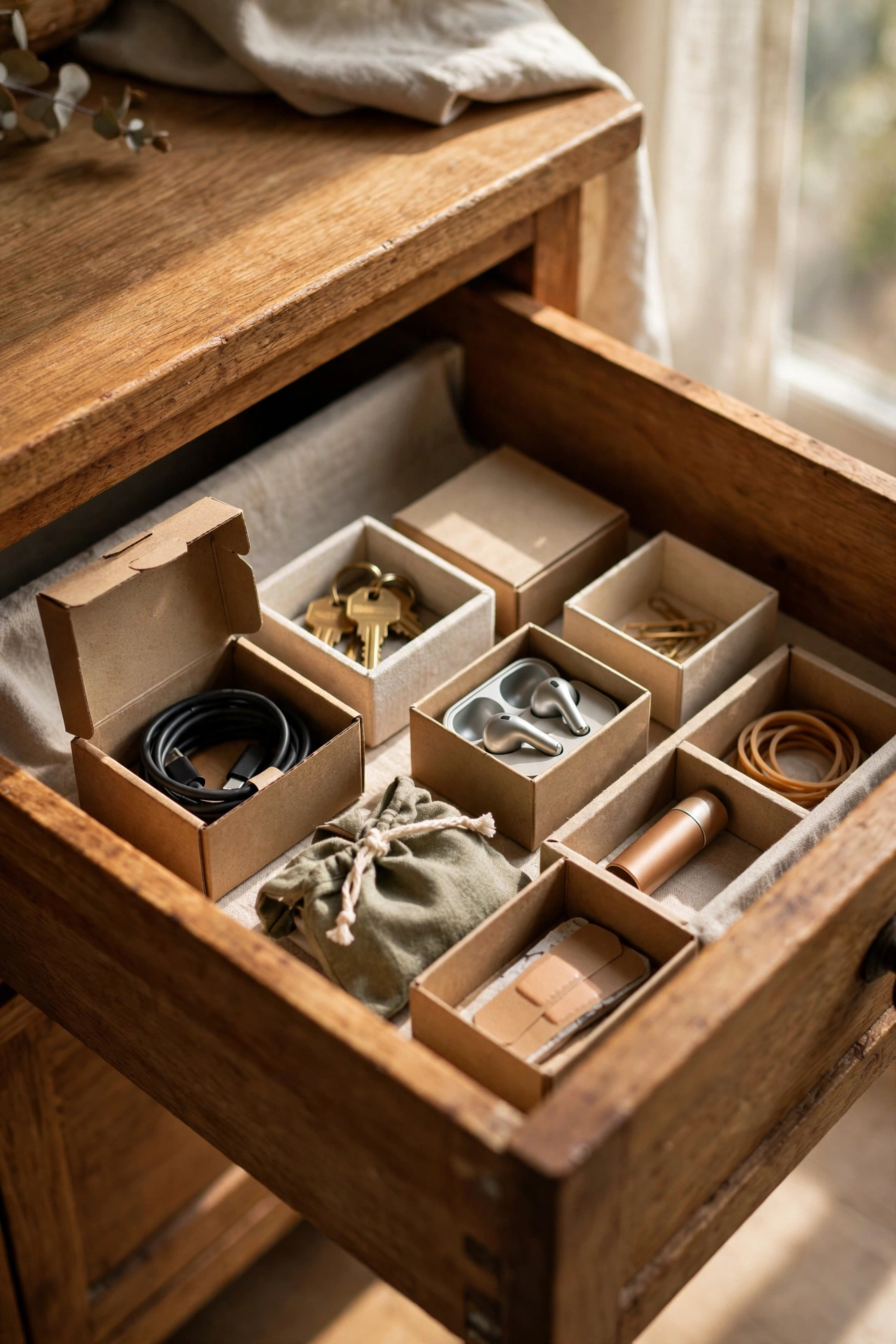
Minimalist rooms need functional drawers, because there is nowhere to hide mess otherwise. I emptied my console drawers completely, threw away the dead batteries and mystery keys, and organised what remained with small boxes I already owned. Every drawer now closes easily and holds only things that belong there. I do this twice a year, and each time I find things I forgot I owned. A calm room starts with calm drawers. I put a small tray in each drawer for batteries and bits, which stops the chaos from rebuilding.
Cost: $0 | Time: 45 minutes
7. Remove One Piece of Furniture
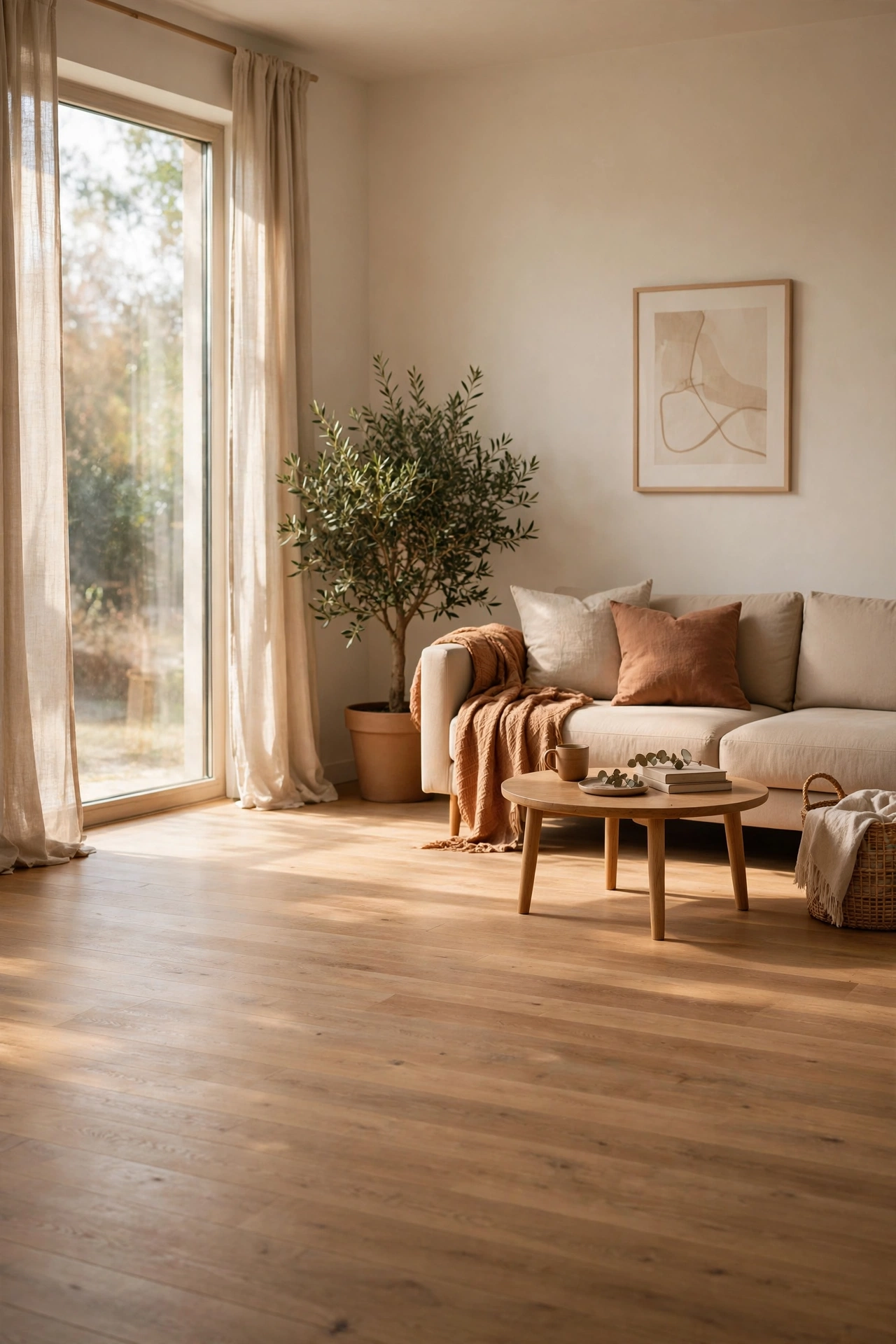
Most living rooms have one piece of furniture too many. I removed the extra armchair nobody sat in, and the room breathed. Walk through your room and notice what you navigate around; that is the piece to lose. Move it to another room or sell it. The floor space you gain is worth more than the seat you lose. My living room felt bigger the moment the chair left, and nobody has missed it in two years, which tells you it was never needed.
Cost: $0 | Time: 20 minutes
Choose Less, Better
8. The Neutral Textile Reset
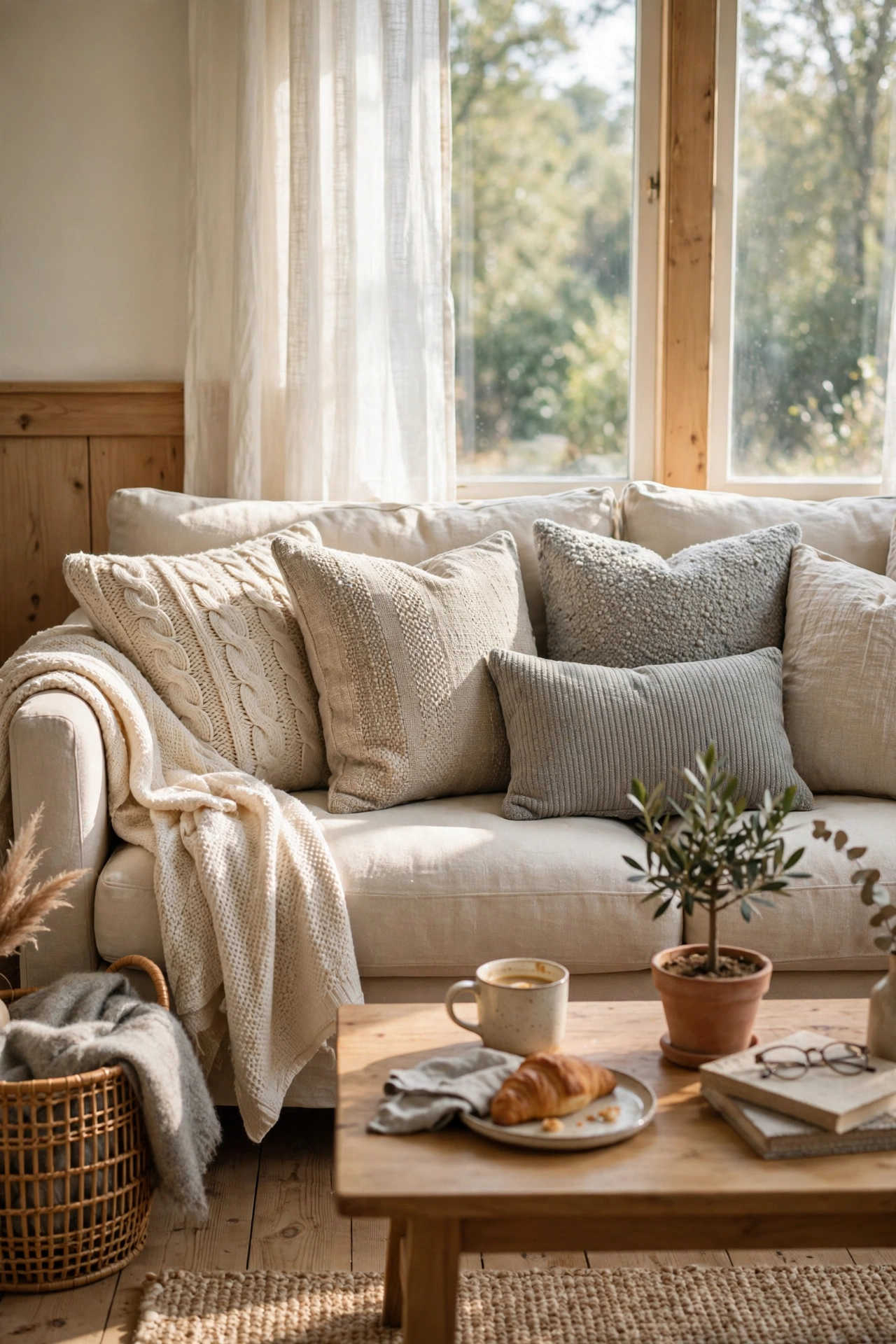
Swap busy patterns for calm neutrals and the room exhales. I replaced my patterned cushions with cream, oatmeal, and soft grey covers for $30 total, and the visual noise dropped dramatically. Stick to two or three close tones and vary the textures instead of the colours. My sofa looks more expensive now than it did with the “interesting” pillows. Interesting was tiring; calm is luxurious. This is the highest-impact textile change for minimalism. I store the old patterned covers in a labelled box, in case I ever want them back for another room.
Cost: ~$30 | Time: 20 minutes
9. One Large Piece of Art
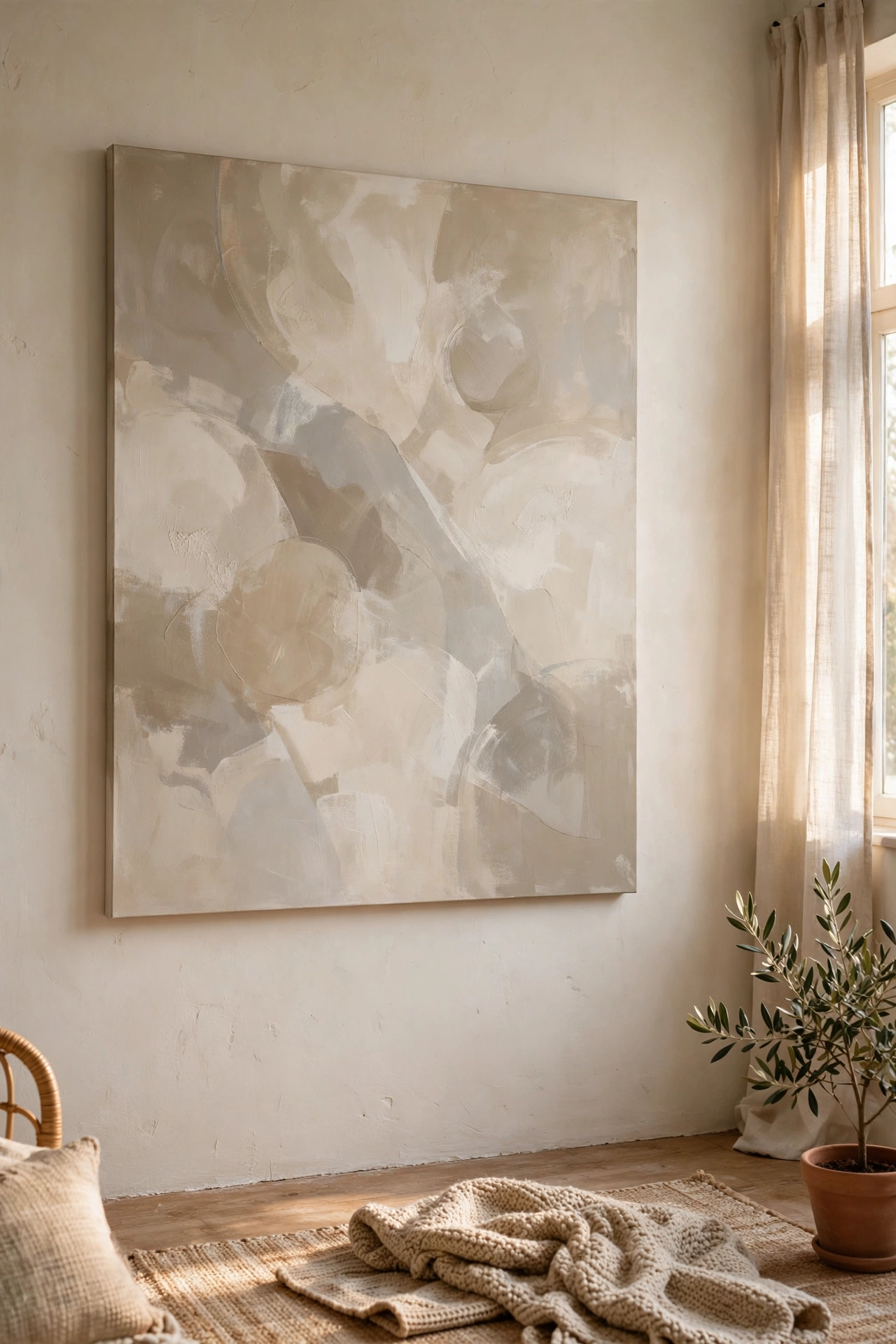
Replace a busy gallery wall with one large, calm piece of art. I took down nine small frames and hung one big abstract canvas I painted myself for $15 in supplies. The wall went from chatter to statement. One large piece gives the eye a place to rest, which is the whole point of minimalism. If you cannot paint, a large framed textile or even a beautiful blank linen canvas works. Scale creates calm. I hung mine slightly lower than eye level, which makes the wall feel calmer and more grounded.
Cost: ~$0–15 | Time: 1 hour
10. The Uniform Frame Edit
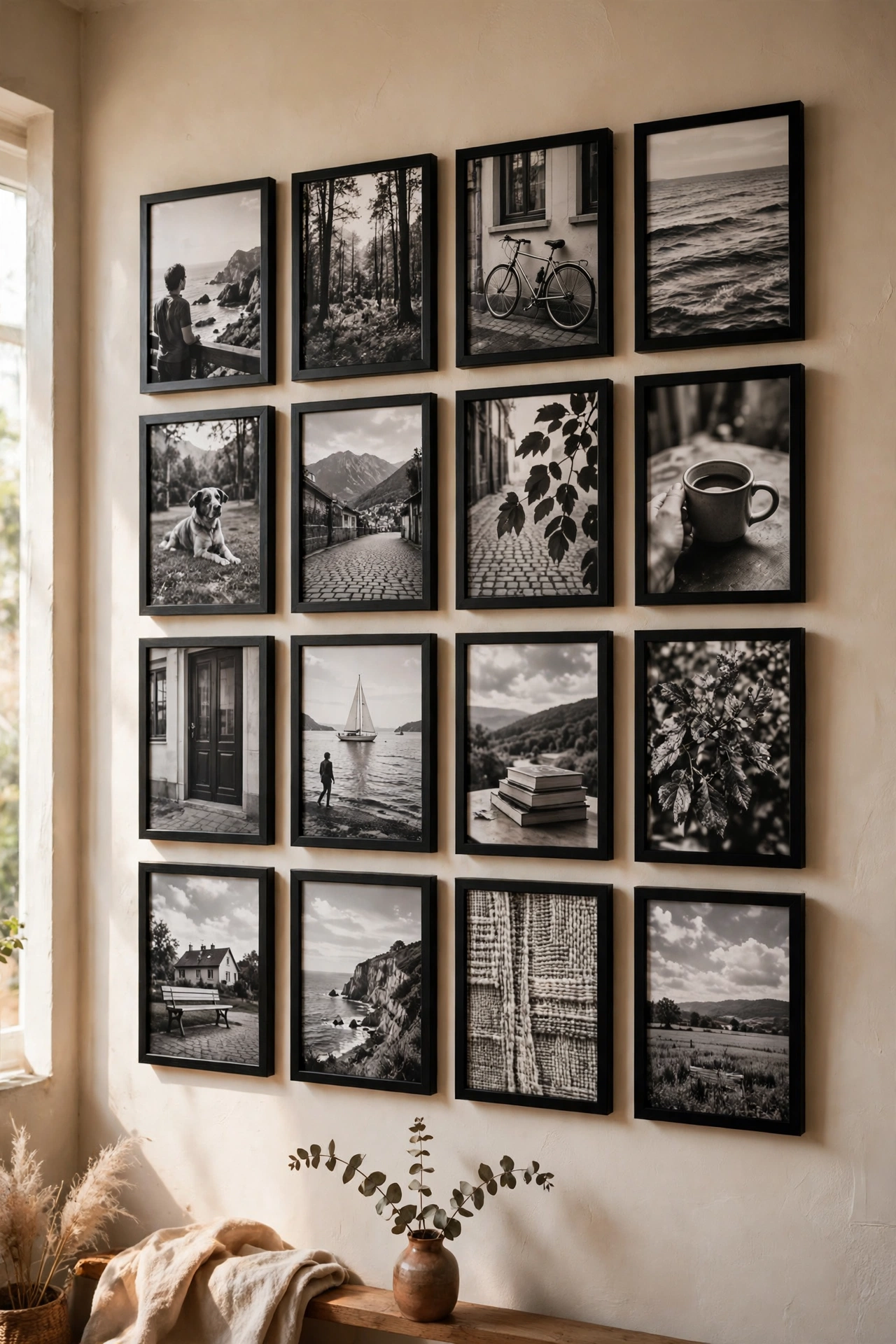
If you keep photos, unify them in identical frames. I replaced my mixed frames with simple black ones from the pound shop, printed the photos in black and white, and hung a tight grid. Same frames, same tones, total calm. The uniformity is what makes it minimalist; the content can still be personal and warm. My photo wall went from eclectic to edited, and I love the photos more now that they are not competing with their frames. I used the same mount size in every frame, which is the detail that makes the grid look professional.
Cost: ~$12 | Time: 1 hour
11. Quality Over Quantity Lighting
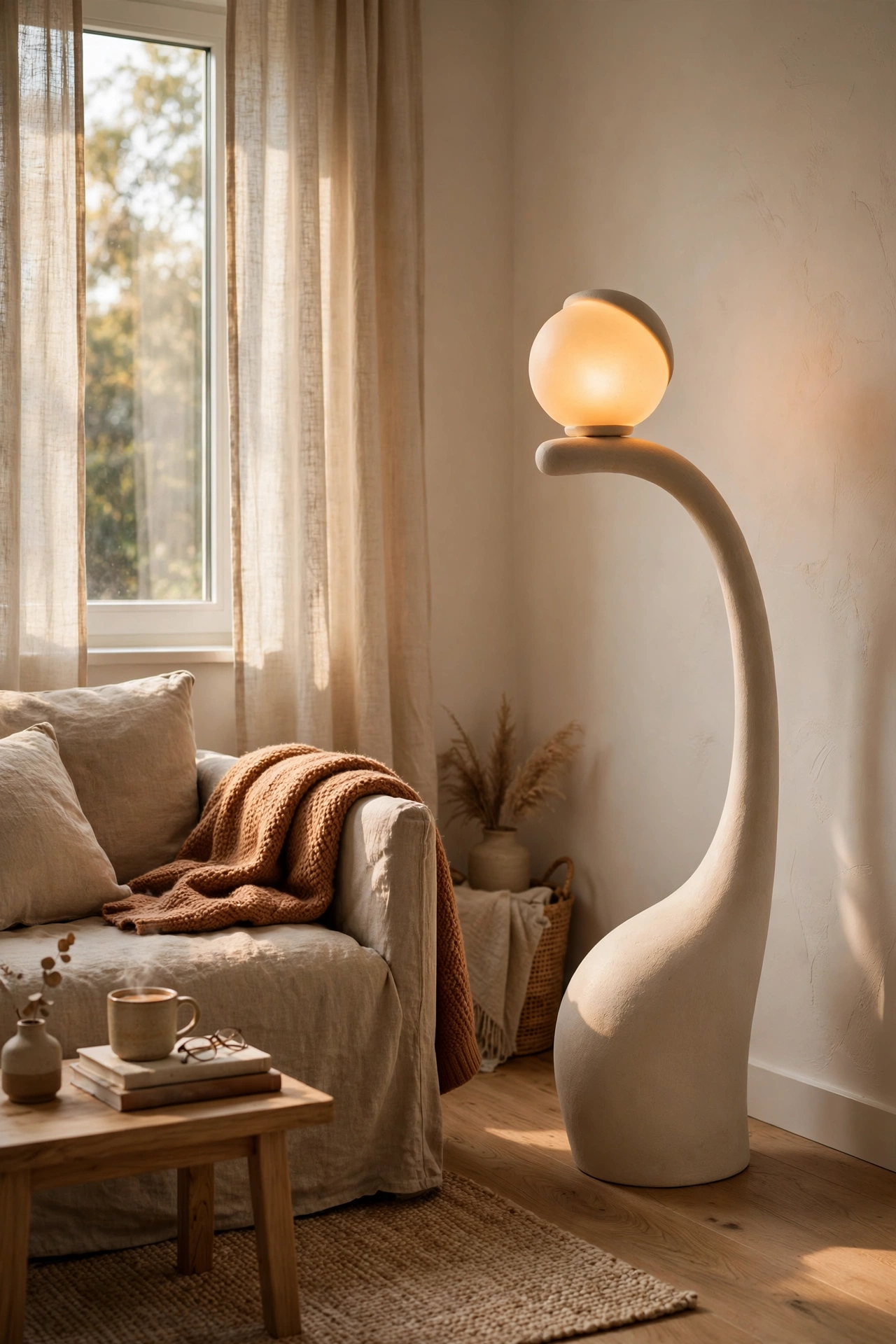
Replace three mediocre lamps with one beautiful one. I donated two fussy table lamps and kept a single sculptural floor lamp that now defines the corner. One great light source beats three okay ones, both for looks and for atmosphere. Choose a lamp with a simple silhouette and a warm bulb. My corner went from cluttered to gallery-like. Minimalism loves a single confident choice over a committee of compromises. I donated the old lamps the same day, before I could talk myself into keeping just one.
Cost: ~$0–40 | Time: 20 minutes
12. The Single-Colour Palette
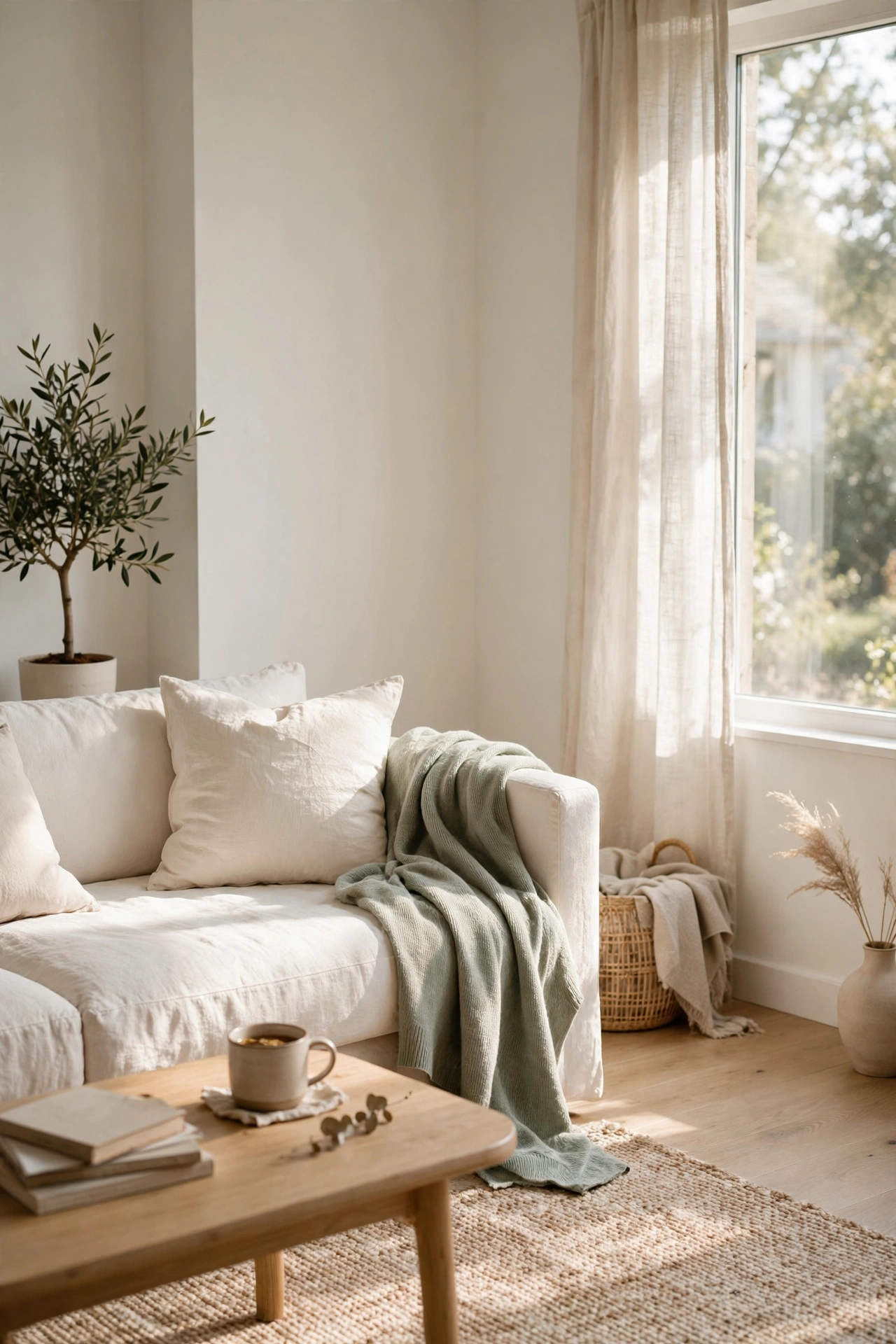
Limit your room to one colour plus neutrals and everything harmonises. I chose warm white as my base and soft sage as my single accent, removing everything that did not fit. The room finally feels like one thought instead of ten. Pick your accent from something you already own and love. Mine came from a throw I could not part with. Editing to a palette is free, and it is the fastest way to make a room look intentionally designed.
Cost: $0 | Time: 55 minutes
13. Furniture With Hidden Storage
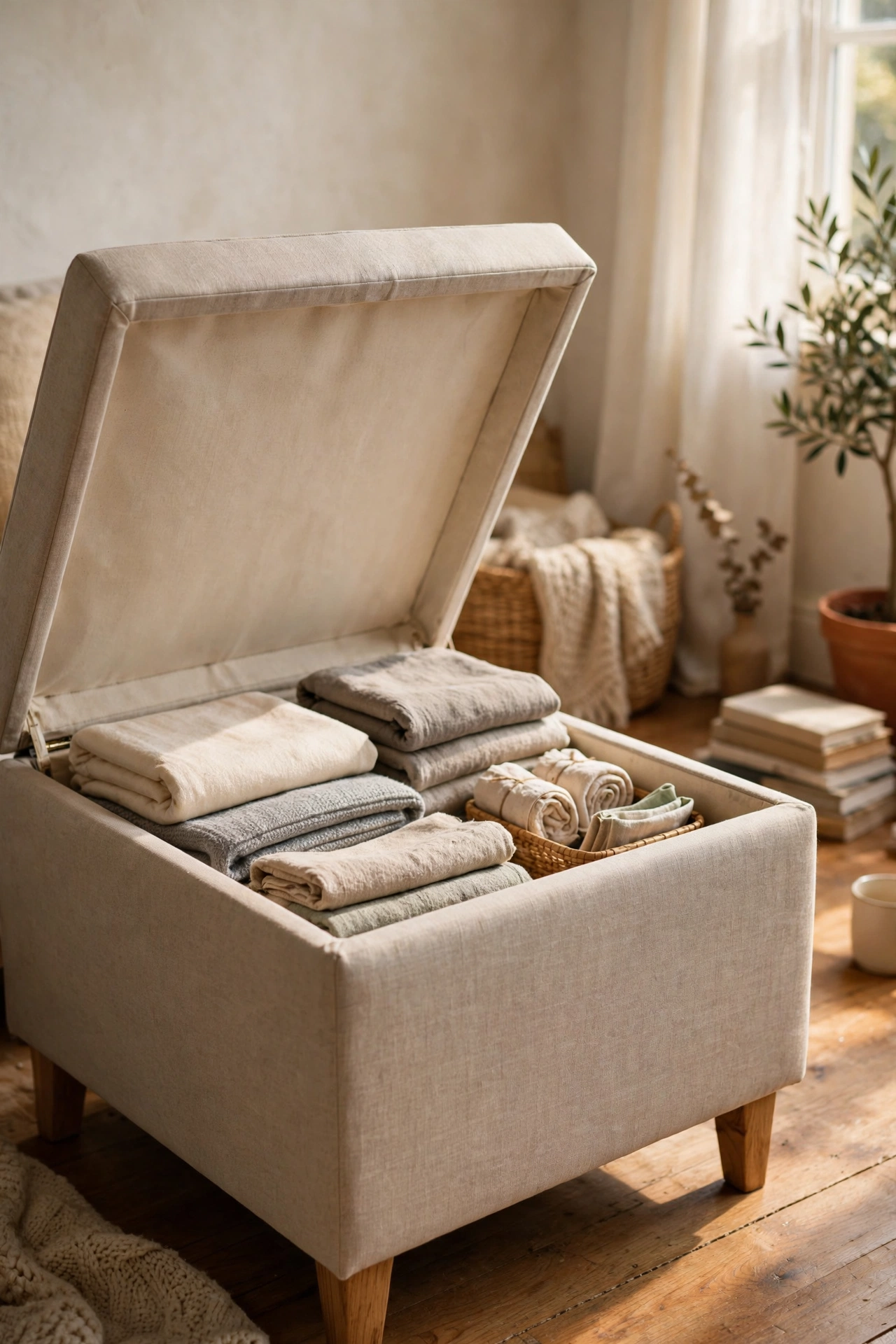
Minimalist rooms survive on hidden storage. I swapped my open coffee table for a secondhand ottoman with storage inside for $35, and the throws, magazines, and games disappeared inside it. Every minimalist room needs at least two pieces that swallow clutter. Look for ottomans, benches, and side tables with lids or drawers. Mine holds the entire living room’s chaos, and the top is always clear. Out of sight is out of mind, literally. I keep a folded throw inside mine, so the storage earns its keep twice over.
Cost: ~$35 | Time: 30 minutes
14. The Plant Edit: One Statement
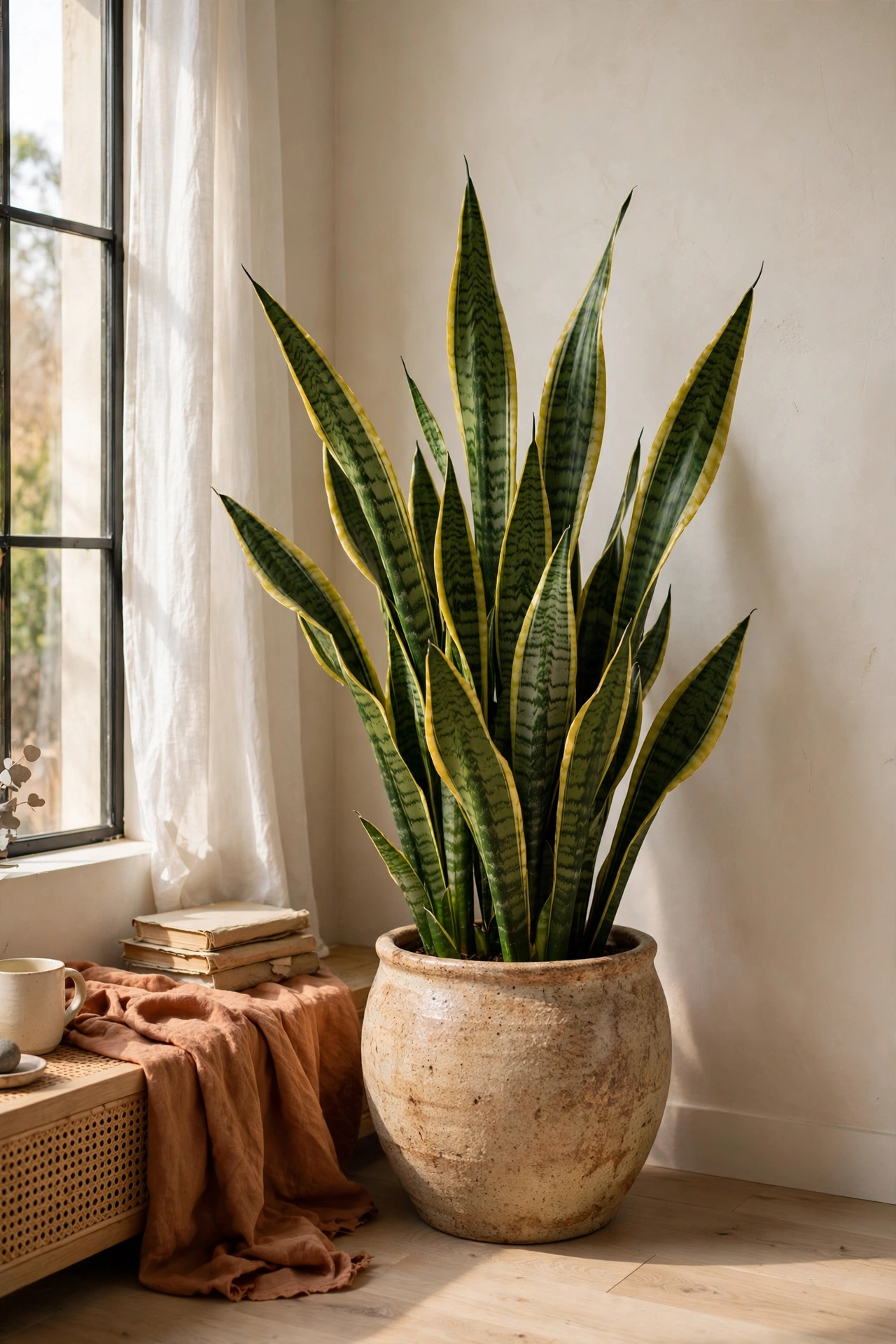
Replace a crowd of small struggling plants with one thriving statement plant. I rehomed six leggy small plants and bought one large snake plant in a beautiful pot for $32. One confident plant reads as design; six sad ones read as neglect. Choose something architectural and low-maintenance. Mine needs water monthly and looks sculptural year-round. The corner it fills used to hold a plant hospital; now it holds a single green exclamation mark. I water mine on the first of every month, and the routine means I never forget.
Cost: ~$32 | Time: 20 minutes
Style the Silence
15. Negative Space as Decor
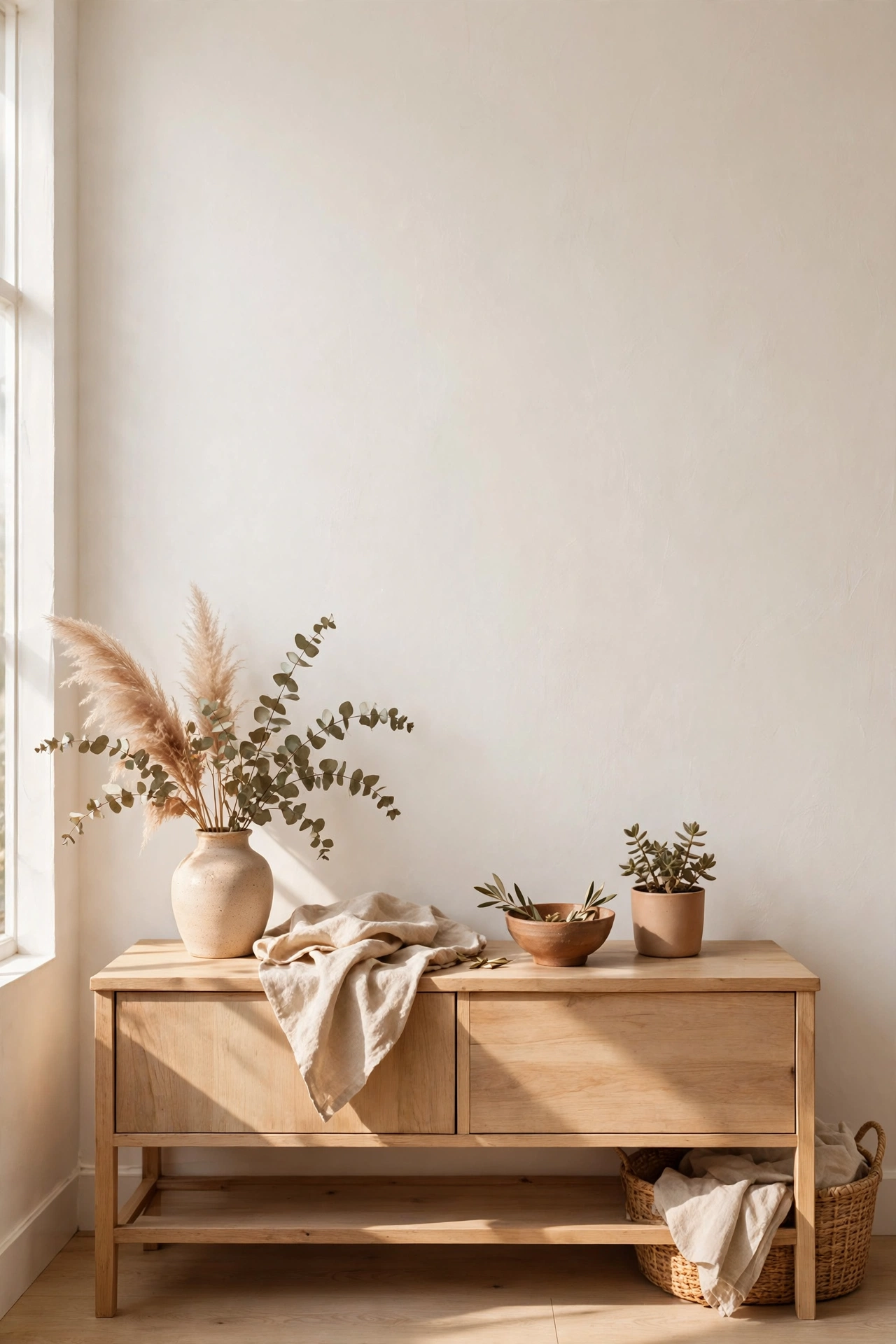
Leave one wall or shelf completely empty on purpose. I cleared the wall above my sideboard and left it bare, and the emptiness became the most striking thing in the room. Negative space gives the eye rest and makes everything else look more important. It feels wrong at first; I kept wanting to hang something. Resist for a month. You will start to see the empty wall as a design choice, which is exactly what it is. Silence is a style.
Cost: $0 | Time: 10 minutes
16. The Three-Object Mantel
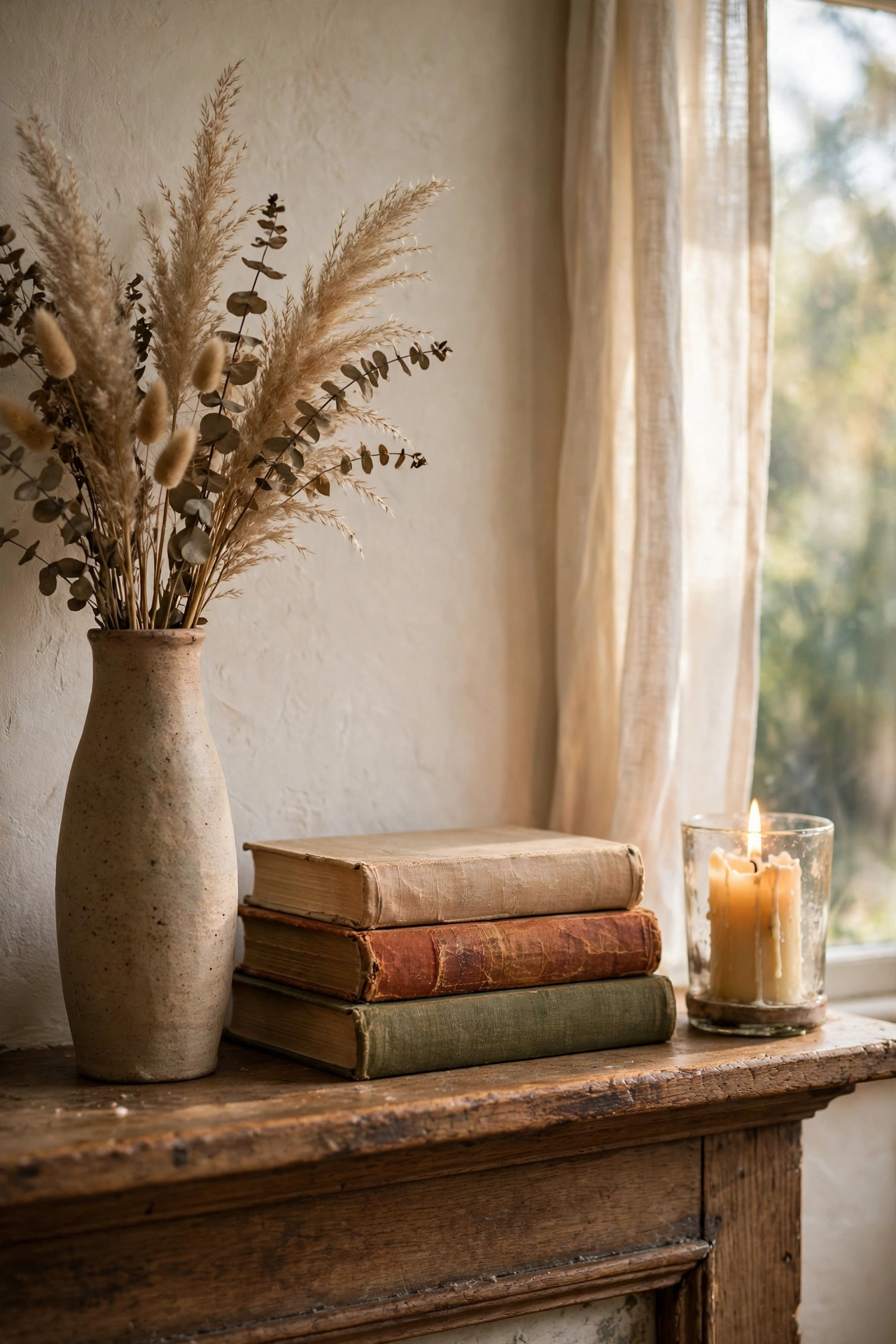
Style the mantel with exactly three objects and nothing else. I chose a tall vase with branches, a low stack of two books, and one candle. Three objects, three heights, generous space between them. Every time I am tempted to add a fourth thing, I remove something instead. The discipline is the design. My mantel used to hold eleven objects and looked like a gift shop. Three looks like a gallery. Less is not just more; less is everything. I dust the mantel weekly now, since three objects show dust that eleven used to hide.
Cost: $0 | Time: 15 minutes
17. Uniform Storage Baskets
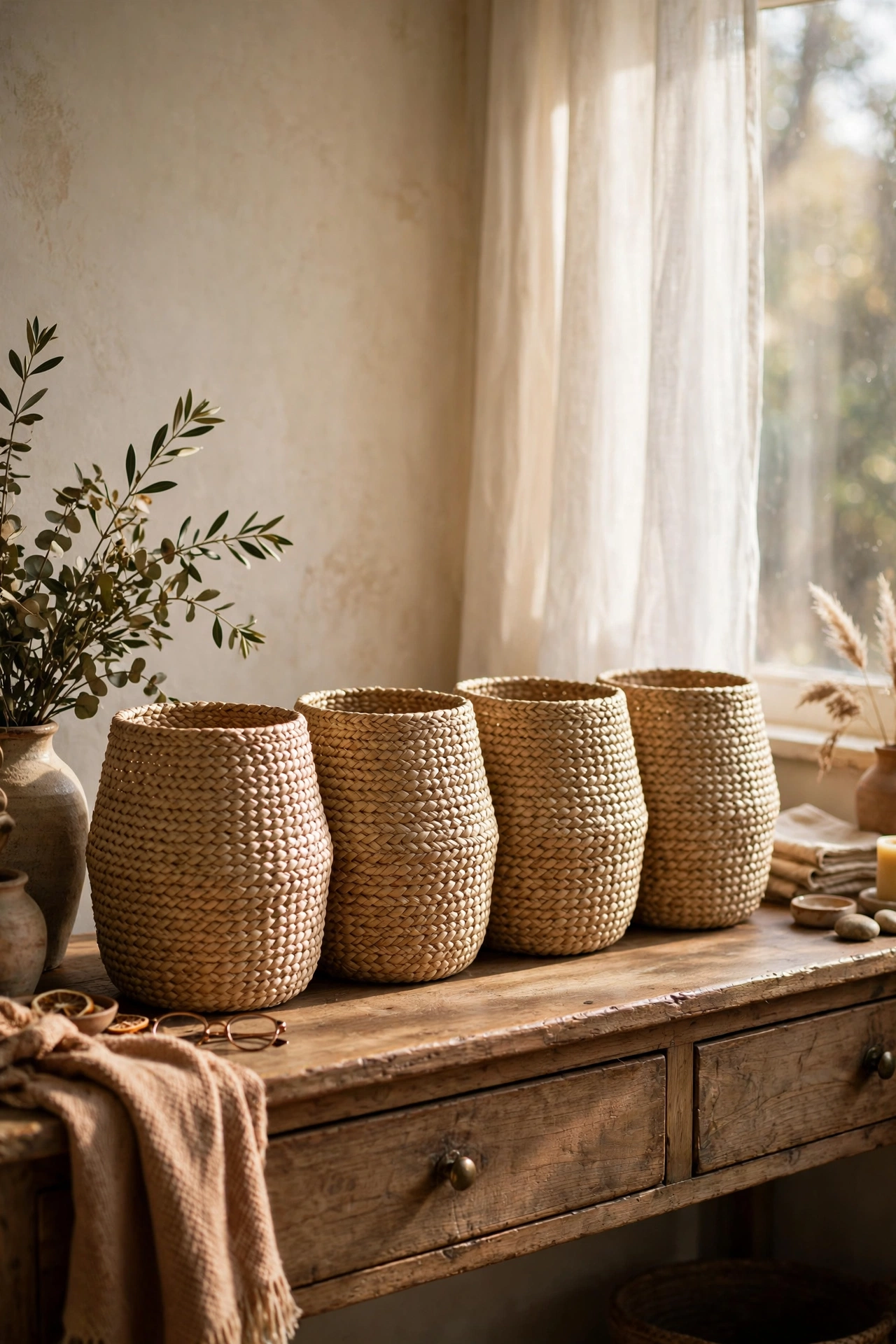
Matching baskets turn necessary storage into a design feature. I bought four identical seagrass baskets for $32 and lined them on the bottom shelf of my console. Same size, same material, perfect rhythm. They hold toys, throws, and the endless small things of family life. The uniformity is calming in a way mismatched storage never is. When everything matches, storage stops looking like storage and starts looking like intention. I added small chalk labels to two of them, which keeps the family putting things back correctly.
Cost: ~$32 | Time: 15 minutes
18. The Bare Coffee Table
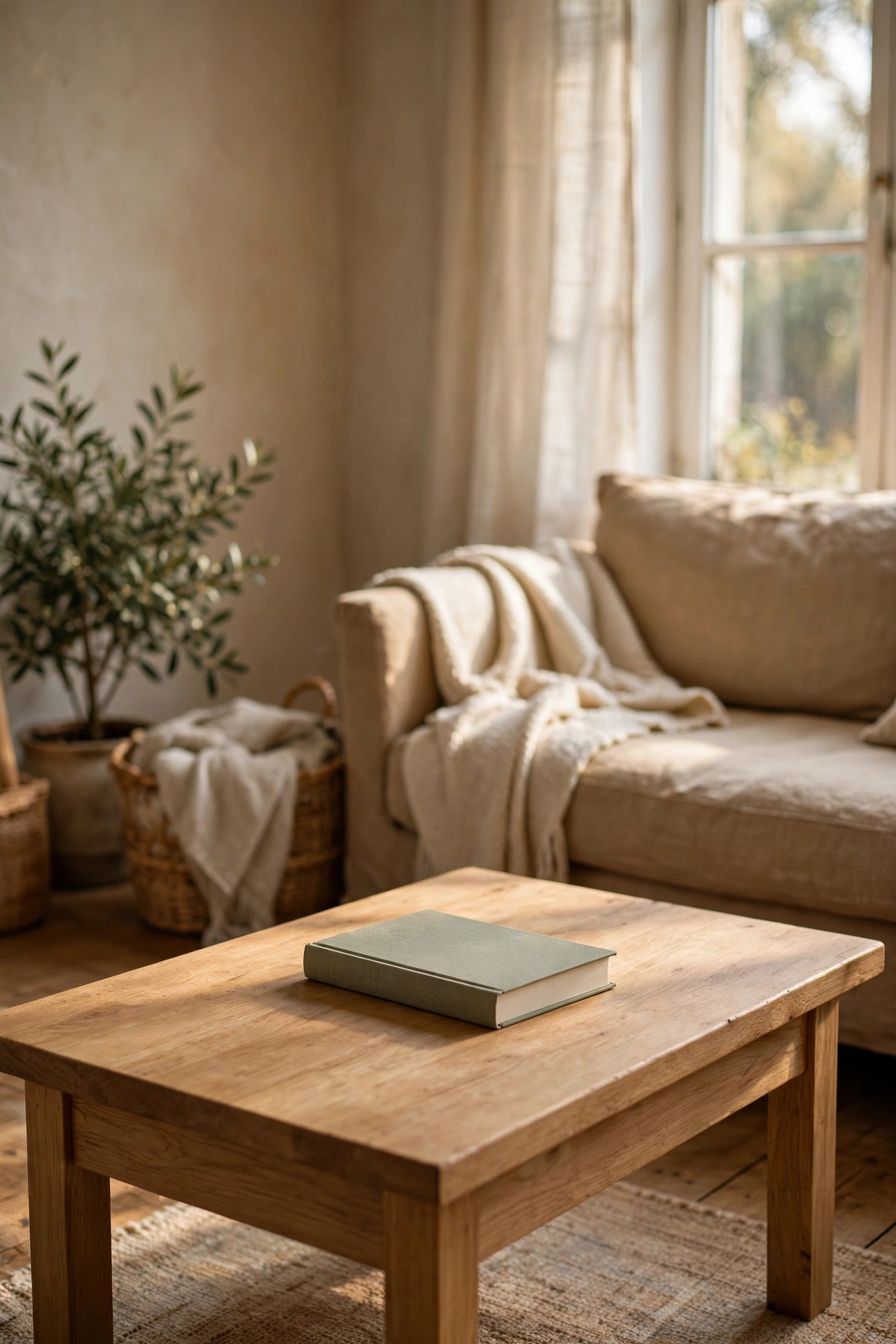
Try a completely clear coffee table for a week. I removed everything, even the tray, and the room felt impossibly spacious. Now I keep just one book on it, and only the one I am actually reading. A bare table is the ultimate minimalist flex; it says the room is so calm it needs no styling. Guests notice the emptiness and comment on how peaceful the room feels. The table is still fully usable, which is the point minimalists forget: clear is functional.
Cost: $0 | Time: 5 minutes
19. Morning Light, Nothing Else
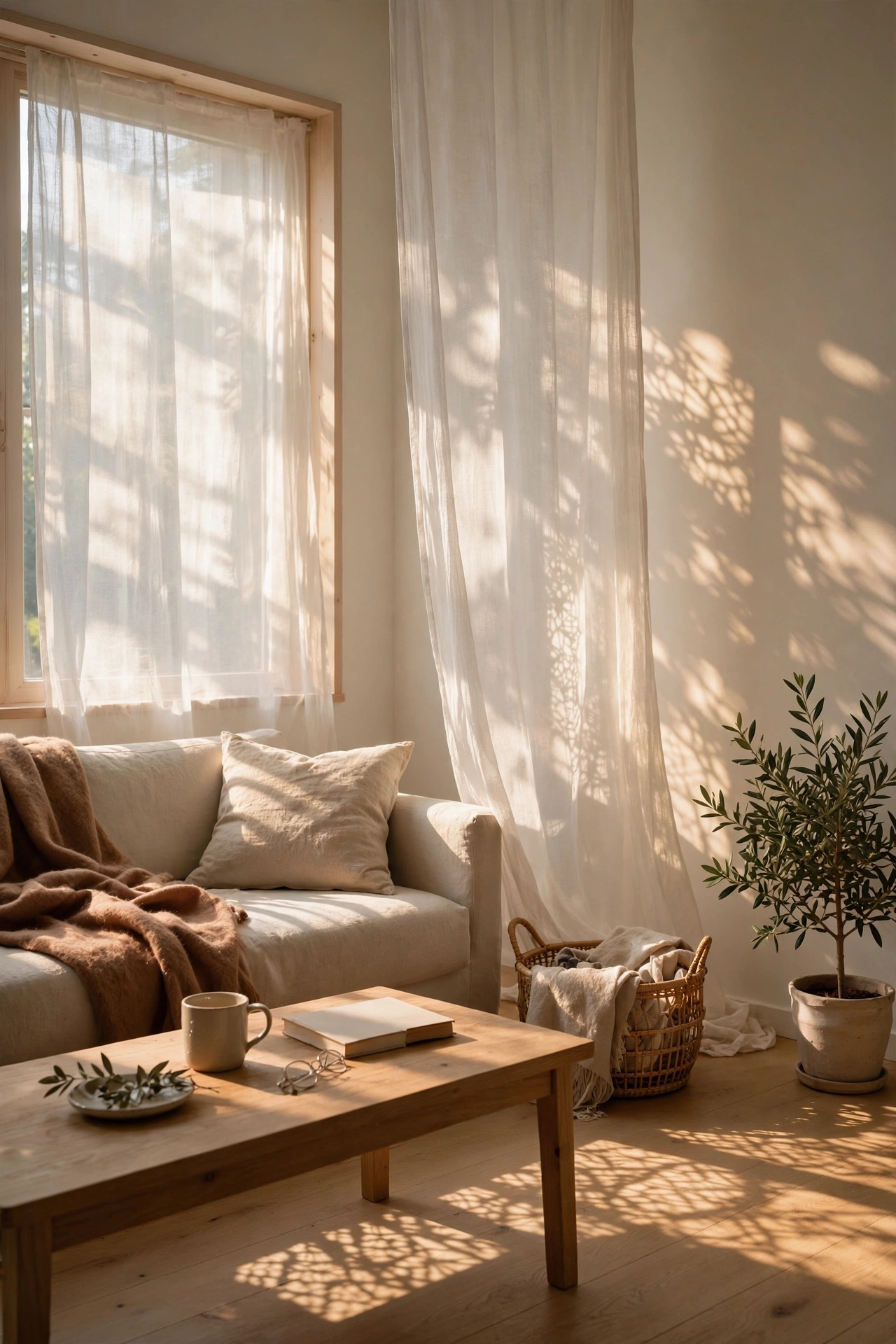
Let natural light be the decor. I removed the heavy curtains from my main window, replacing them with a simple sheer that diffuses the morning sun. The light patterns on the floor became the prettiest thing in the room. No valance, no tiebacks, no fuss. If privacy is a concern, a simple roller blind works. I used to fight the light with layers of fabric; now I let it in, and the room changes beautifully through the day like a slow art installation.
Cost: ~$15–25 | Time: 30 minutes
20. The Weekly Reset Ritual
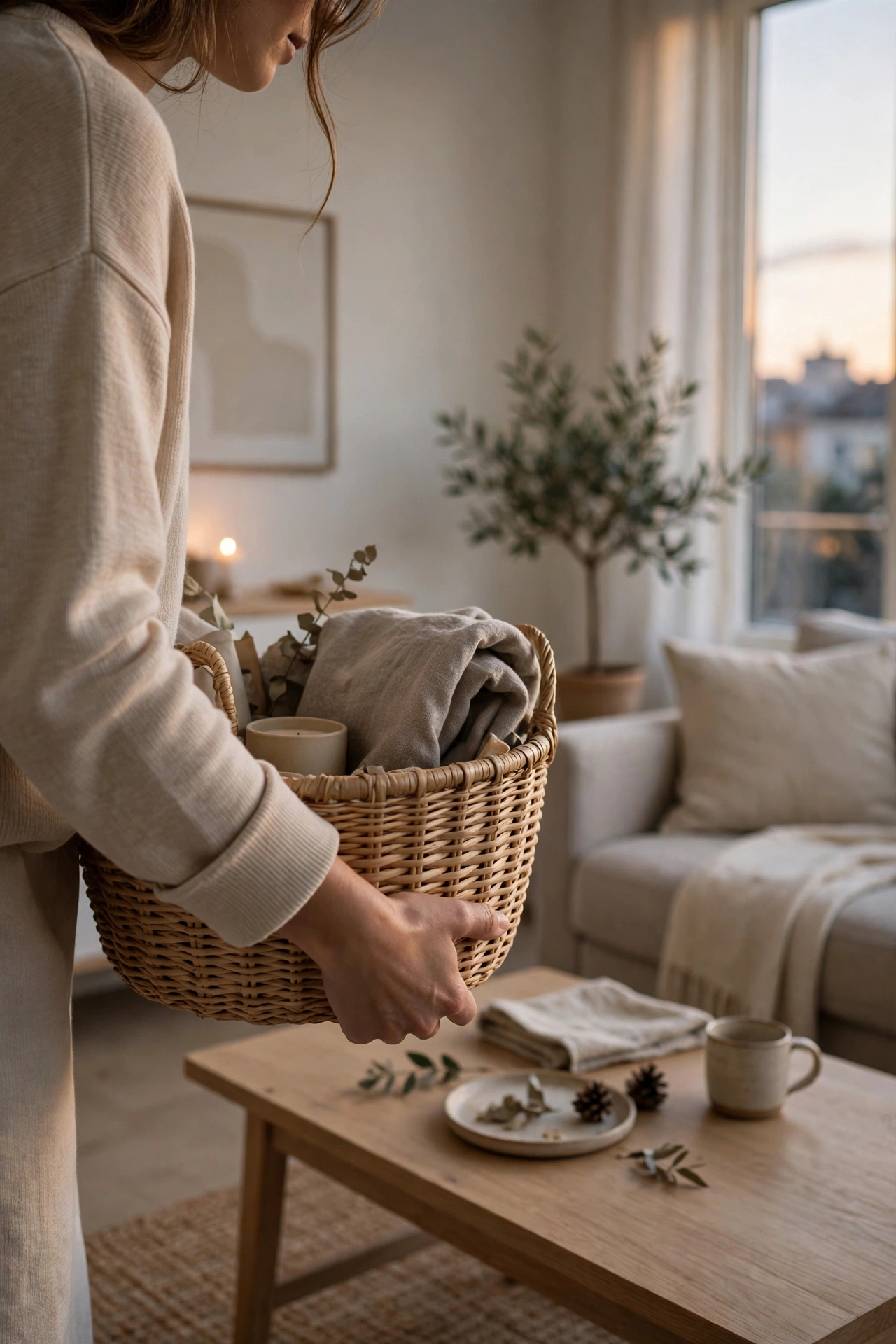
Minimalism needs maintenance, so build a ten-minute weekly reset. Every Sunday evening I walk the living room with a basket, returning everything to its home, fluffing cushions, and wiping surfaces. It takes ten minutes because the room has so little in it. I set a timer and make it a game. This ritual is what keeps minimalism from sliding back into clutter. A minimalist room is not a one-time project; it is a practice, and the practice is the peaceful part.
Cost: $0 | Time: 10 minutes weekly
21. Keep One Beautiful Thing
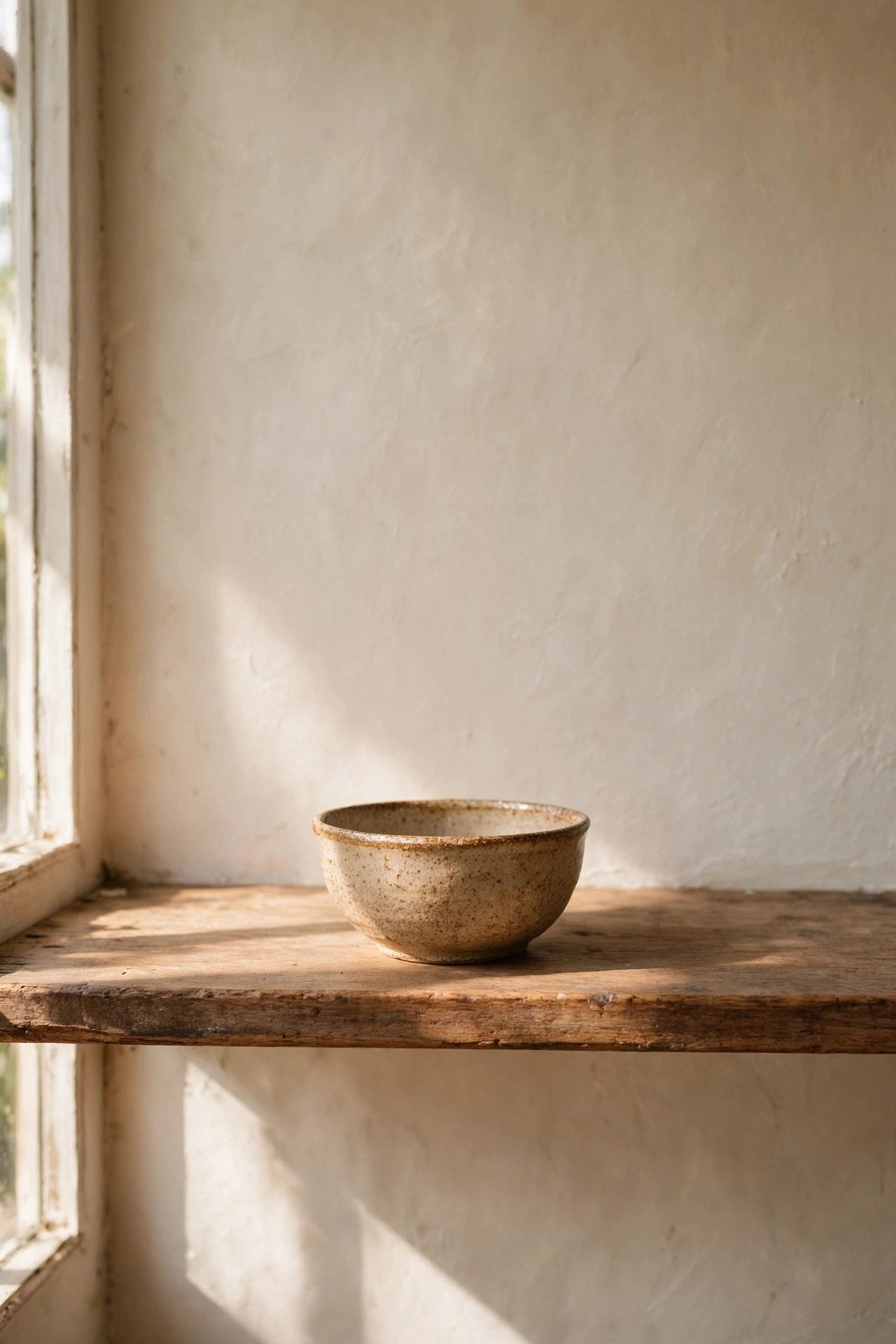
End by choosing the one object you love most and giving it pride of place. I cleared a whole shelf for a handmade bowl a friend gave me, lit only by the window light. One beautiful thing, honoured with space, brings more joy than a shelf of pretty things competing for attention. Minimalism is not about emptiness; it is about making room for what matters. My bowl makes me smile every day, which is more than any of the eleven mantel objects ever did.
Cost: $0 | Time: 12 minutes
Minimalism pairs beautifully with (see also: 23-beige-living-room-decor-ideas-on-a-budget) and (see also: 17-warm-white-living-room-ideas-that-feel-calm-and-collected). Started your clear-out? Save this idea to your simple home board and enjoy the calm.
