15 Small Closet Organization on a Budget
A small closet feels tight when clothes pile up and nothing has a set place, but you do not need a full built-in system to fix it. These small Closet organization ideas use cheap bins, hooks, and hangers to give every item a home, and most of them take less than half an hour. Work through one zone at a time, starting with the part that annoys you most, and stop when the closet works for your morning routine.
Hanging Rail Fixes
1. Double the Rail With a Second Tension Rod
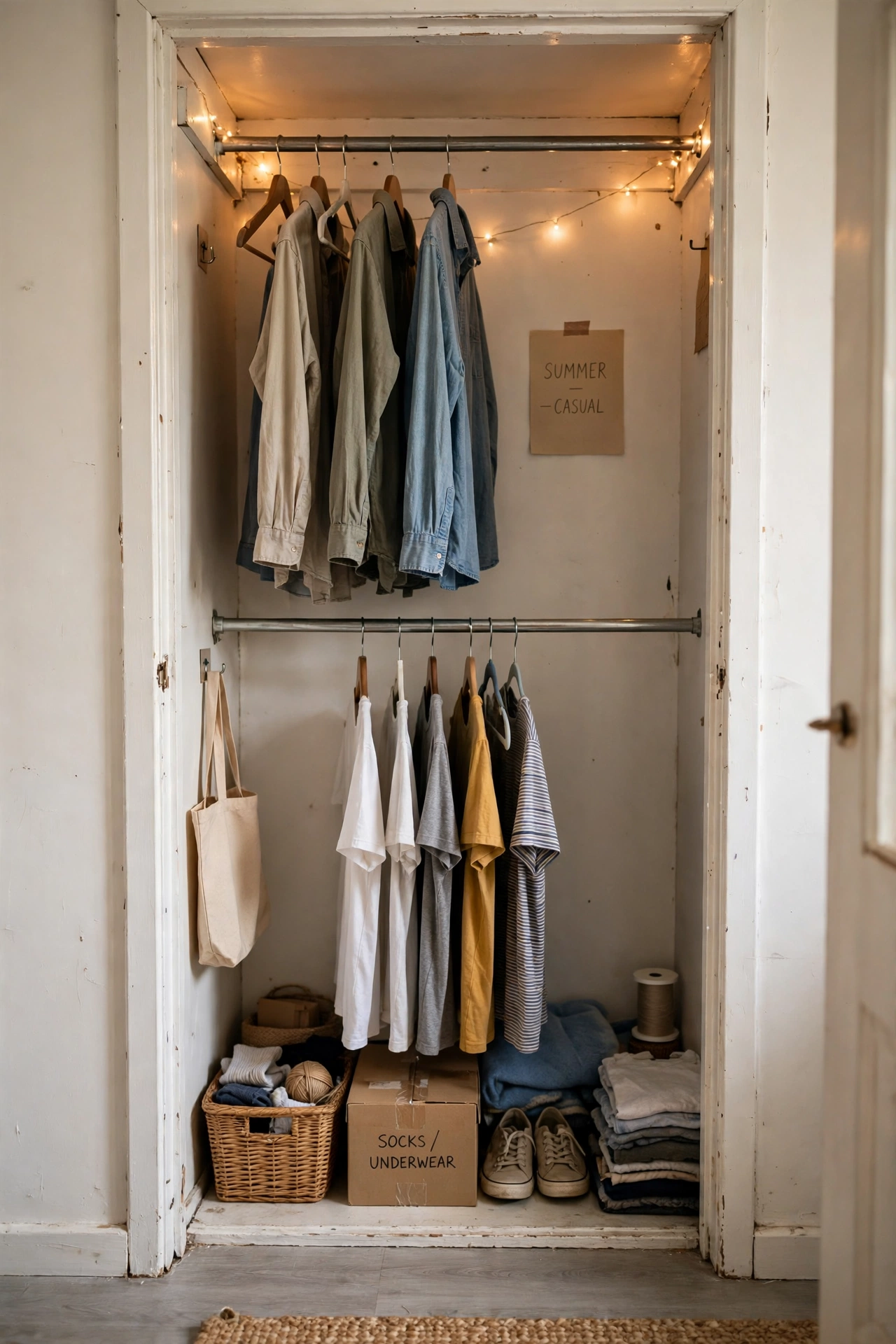
A second tension rod hung below the main rail creates a lower row for shirts, skirts, and folded trousers without any drilling. Measure the gap, twist the rod until it grips both side walls, and hang shorter items underneath so they do not drag on the floor. I tried this in a rental closet where I could not drill, and it instantly doubled my hanging space for about eight dollars. Do not hang heavy coats on the lower rod, since a tension rod will slip if you overload it, and that mistake sent my shirts to the floor once.
Cost: ~$8 | Time: 15 minutes
2. Switch to Slim Matching Hangers
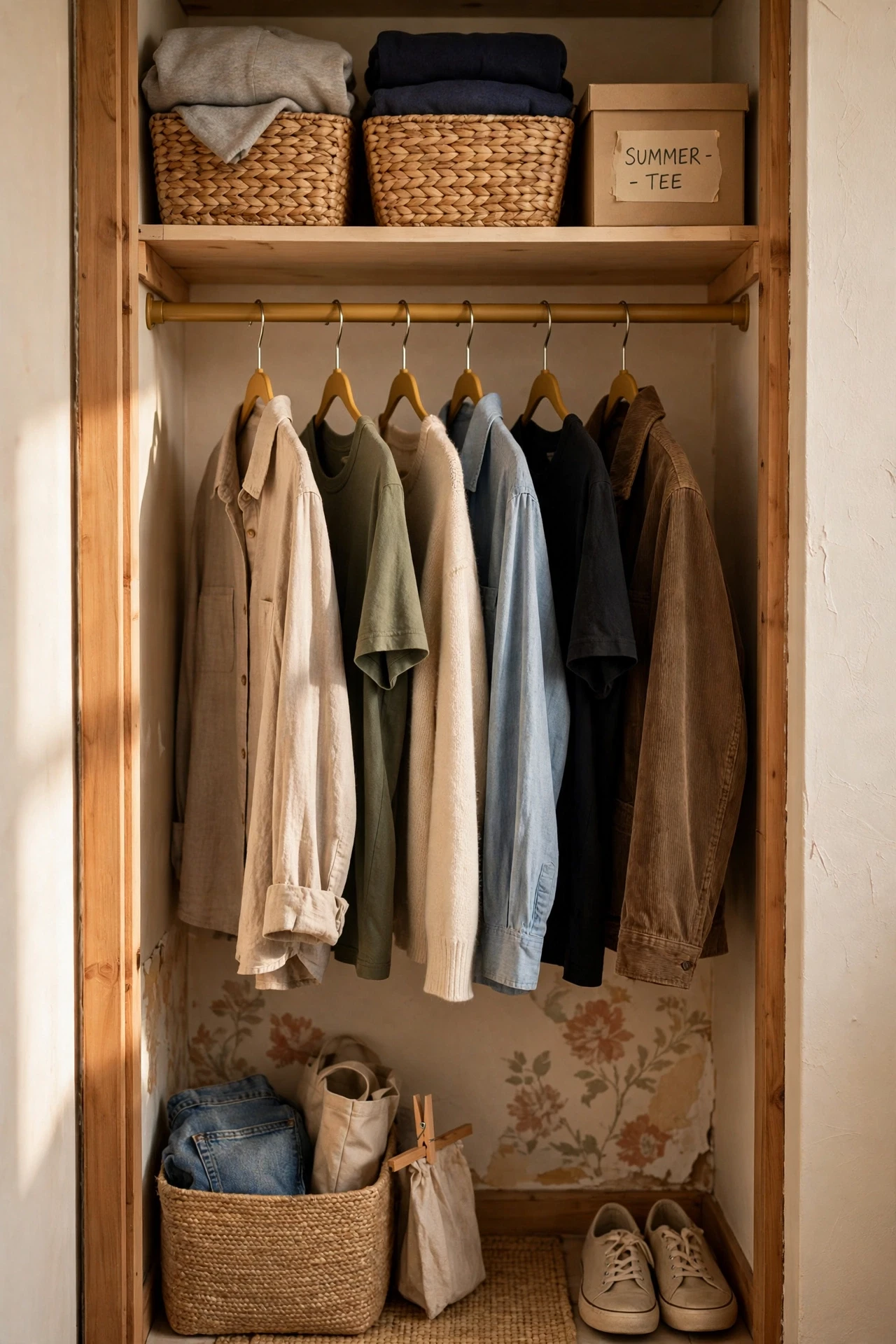
Slim hangers take up far less rail space than thick plastic or wooden ones, and matching hangers make the whole closet look calmer at a glance. Start with one crowded section, move the old hangers out as you go, and keep a few sturdy ones aside for heavy coats. I tried this with a ten-pack first before buying more, and the extra inches let me fit eight more shirts on the same rail. Do not throw out every old hanger at once, since you will need spares for laundry day, and I learned that the hard way.
Cost: ~$10 | Time: 30 minutes
3. Hang Cascading Hooks for Full Outfits
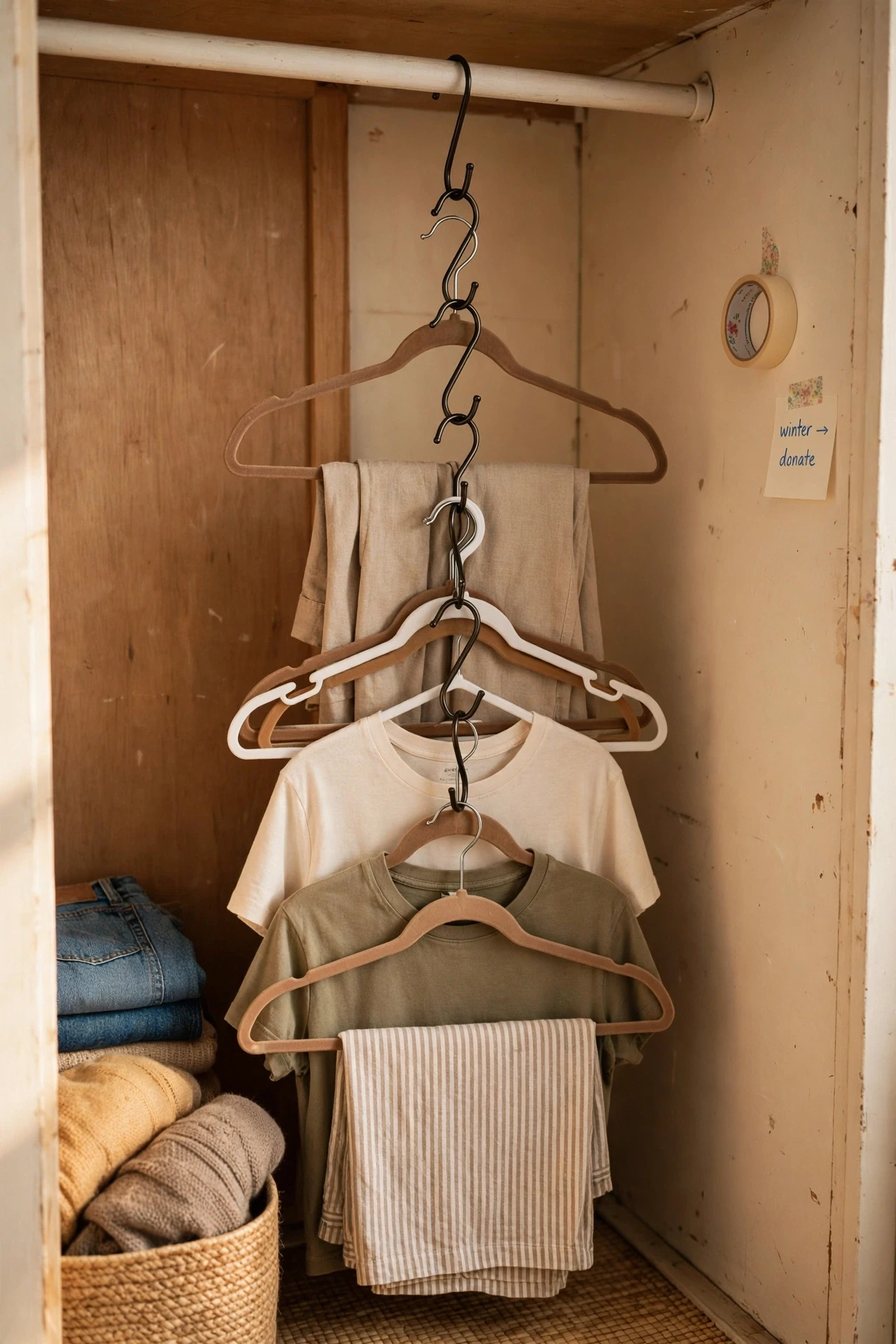
Cascading hooks link hangers together in a vertical chain, so one rail hook can hold a full outfit or several tops in the space of one. Hook the first hanger to the rail, clip the next hanger below it, and group each chain by outfit or by colour. I tried this for work outfits, and picking clothes the night before became a one-grab job instead of a hunt. Keep each chain to three or four hangers, since longer chains get heavy and tangled, and I had to untangle one chain after overloading it.
Cost: ~$5 | Time: 15 minutes
4. Clip Scarves and Belts to One Ring
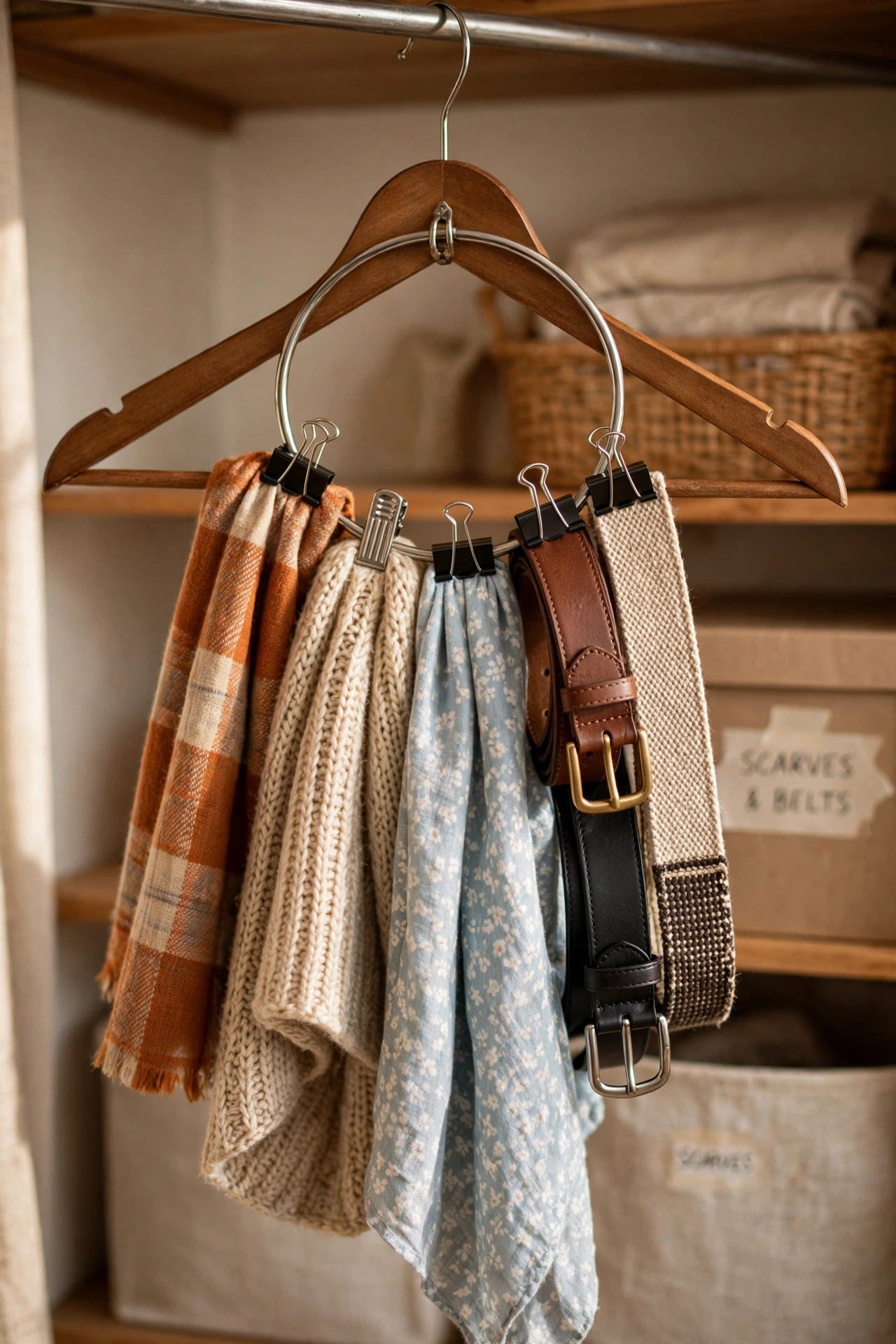
A shower curtain ring or a large key ring on one hanger holds scarves, belts, and ties where you can see them all at once. Loop one item through each ring, hang the rings together on a single hanger, and sort them by colour so the one you want stands out. I tried this after losing a favourite scarf in a drawer for months, and now I spot it in seconds. Do not cram ten scarves onto one ring, since they bunch up and wrinkle, and I ruined a silk scarf that way.
Cost: ~$2 | Time: 10 minutes
(see also: 19-bedroom-organization-ideas-on-a-dime)
Shelf and Bin Tricks
5. Sort Folded Clothes Into Labelled Bins
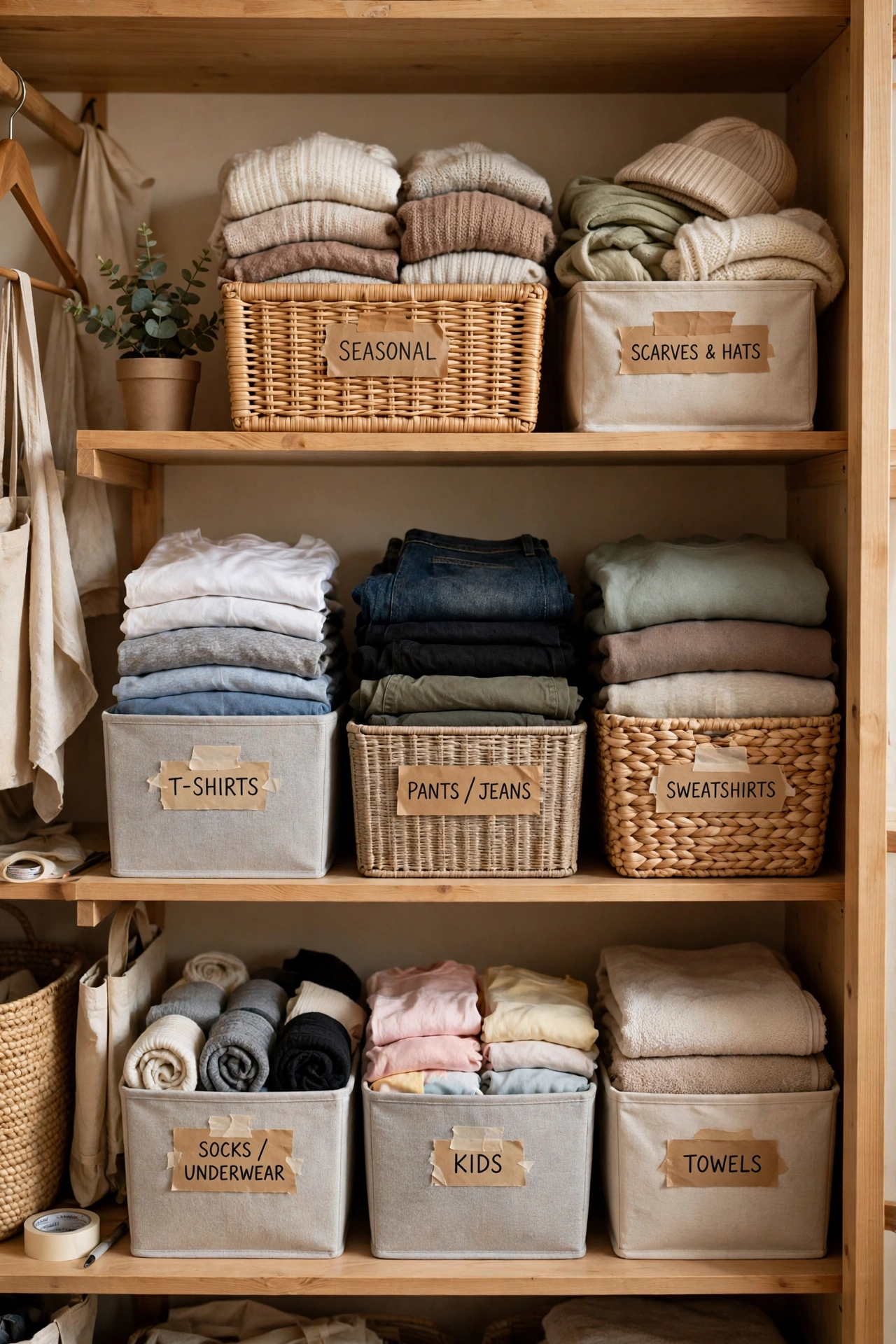
Open bins on closet shelves stop folded piles from sliding into each other, and labels stop everyone guessing where things belong. Put one category in each bin, such as tees, knitwear, or gym clothes, fold the clothes to fit the bin width, and label the front with tape. I tried this on my top shelf, and the stacks finally stayed upright instead of collapsing every time I pulled out a sweater. Do not buy bins before measuring your shelves, since bins that are too tall waste the space above them.
Cost: ~$8 | Time: 25 minutes
6. Add Shelf Dividers for Tall Stacks
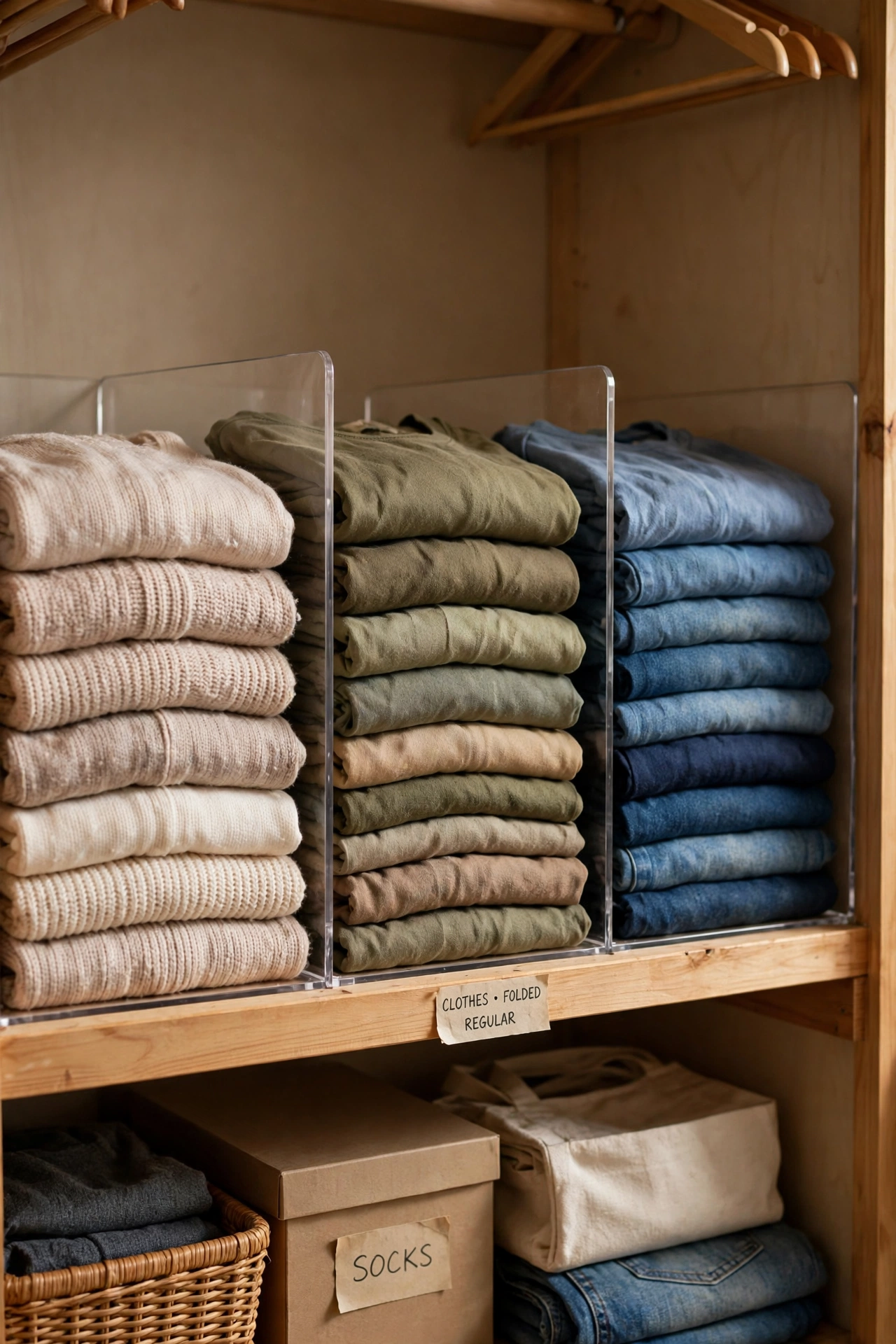
Shelf dividers stand upright between folded stacks and act like bookends, so pulling one sweater out does not bring the whole pile down. Slide a divider at each end of a stack, keep stacks no taller than about eight items, and leave a small gap for your hand. I tried this with cheap wire dividers, and my jeans stack stopped leaning sideways within a day. Do not pack stacks right up to the shelf above, since you need room to lift items out without dragging the stack apart.
Cost: ~$6 | Time: 15 minutes
7. Roll T-Shirts Instead of Stacking Them Flat

Rolled tees stored side by side in a bin or drawer let you see every shirt at once, instead of only seeing the top of a stack. Lay each shirt flat, fold the sleeves in, roll it snugly from the bottom, and stand the rolls upright with the print facing out. I tried this on a shelf bin, and I stopped wearing the same five shirts just because they were on top. Do not roll heavy knitwear this way, since thick rolls take up more room than folding, and I learned that with chunky sweaters.
Cost: ~$0 | Time: 20 minutes
8. Use Clear Boxes for Small Accessories
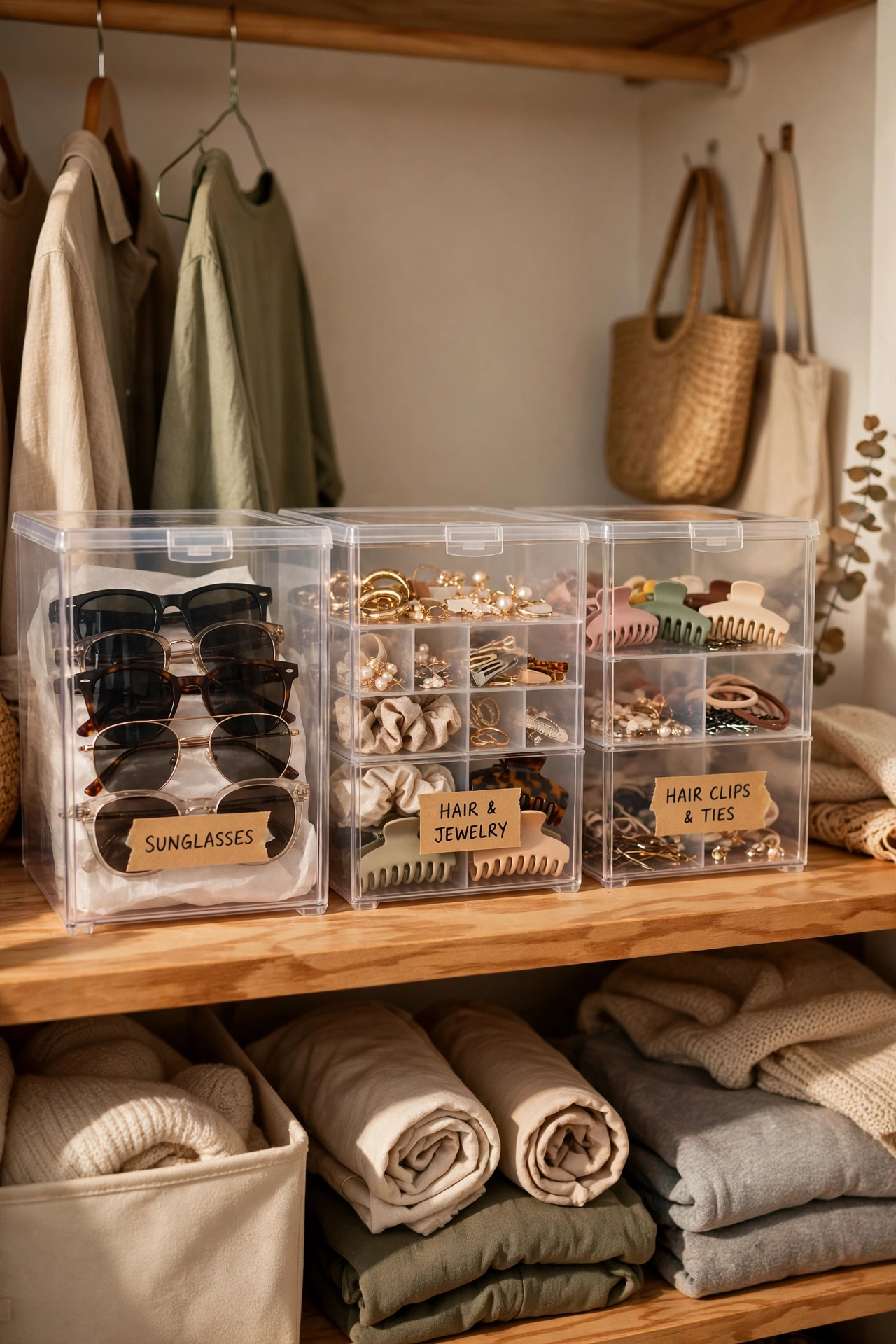
Clear boxes keep sunglasses, watches, hair ties, and small accessories visible and together, instead of scattered across shelves and pockets. Sort accessories by type, put each type in its own small box, and stack the boxes on one shelf where you get dressed. I tried this after buying a second pair of sunglasses I already owned, and that duplicate purchase paid for the boxes twice over. Do not use one big box for everything, since a mixed box turns back into a junk drawer within a week.
Cost: ~$7 | Time: 20 minutes
Floor and Door Solutions
9. Put a Low Shoe Rack on the Floor
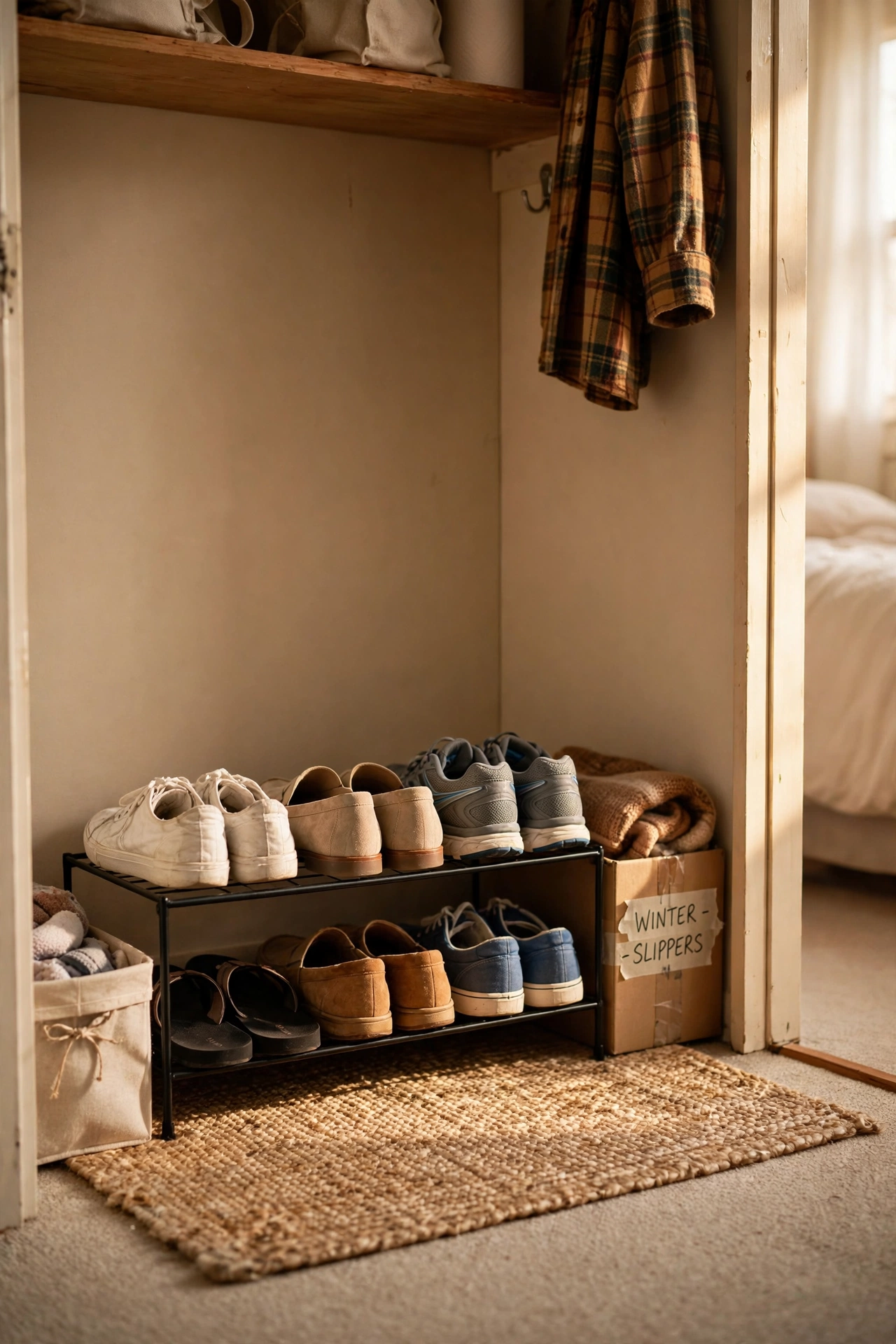
A low two-tier shoe rack on the closet floor lines shoes up in rows and frees the shelf space they used to take. Measure the floor width first, assemble the rack inside the closet if it is wide, and put everyday shoes on the lower tier for easy grabbing. I tried this in a closet with no shoe shelf, and the floor went from a pile to two neat rows in ten minutes. Do not buy a tall rack for a small closet, since it eats the hanging space above it, and I made that mistake first.
Cost: ~$12 | Time: 20 minutes
10. Hang an Over-Door Pocket Organizer
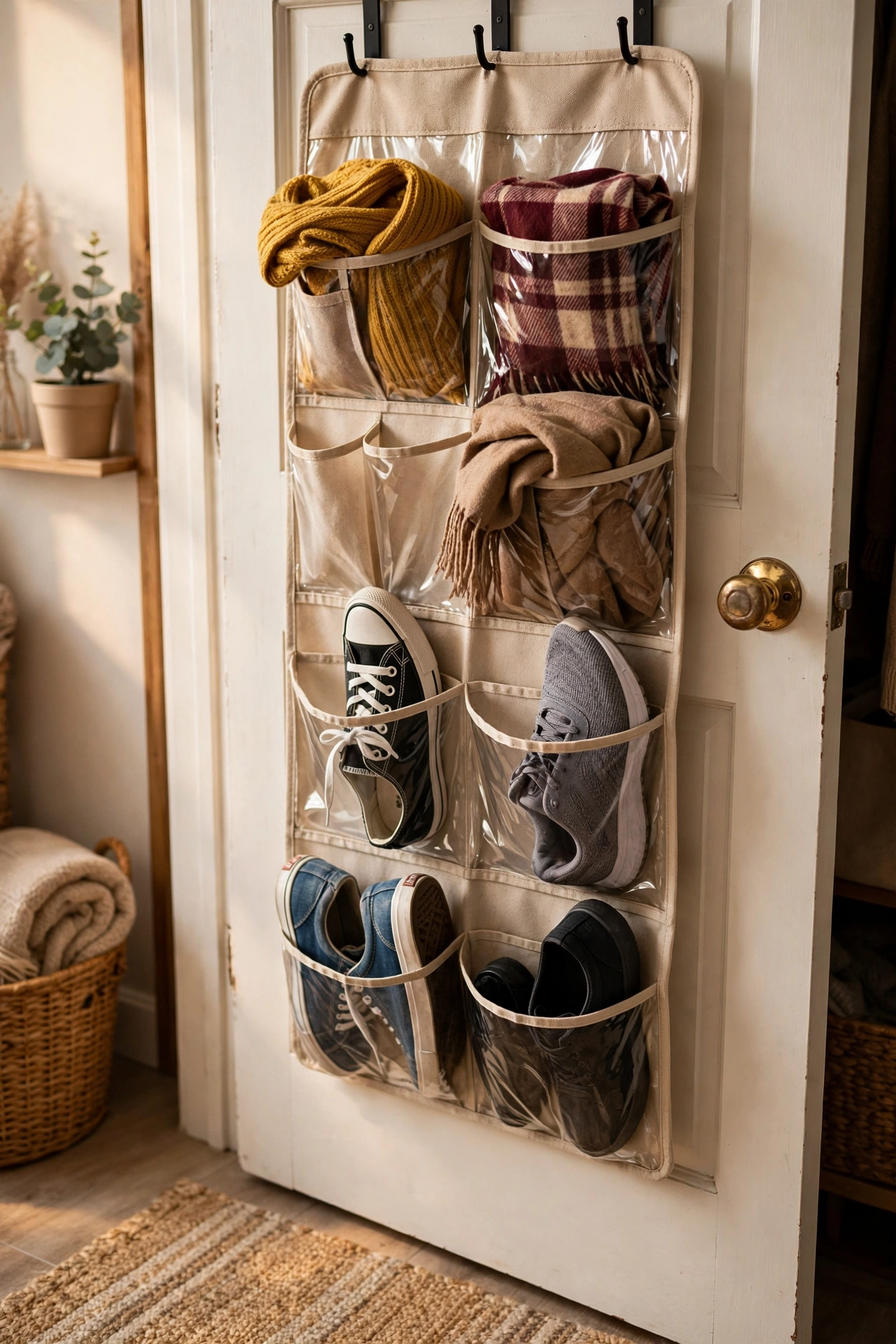
An over-door pocket organizer turns dead door space into storage for shoes, scarves, belts, or cleaning supplies for the closet itself. Hook it over the door, fill the top pockets with light items, and keep heavier shoes in the bottom pockets so the door still closes easily. I tried this in a tiny closet, and it swallowed a whole drawer of small items I had nowhere else to put. Do not overload the top pockets, since a heavy door swings badly and pulls at its hinges over time.
Cost: ~$6 | Time: 10 minutes
11. Stick Hooks Inside the Door for Bags and Outfits
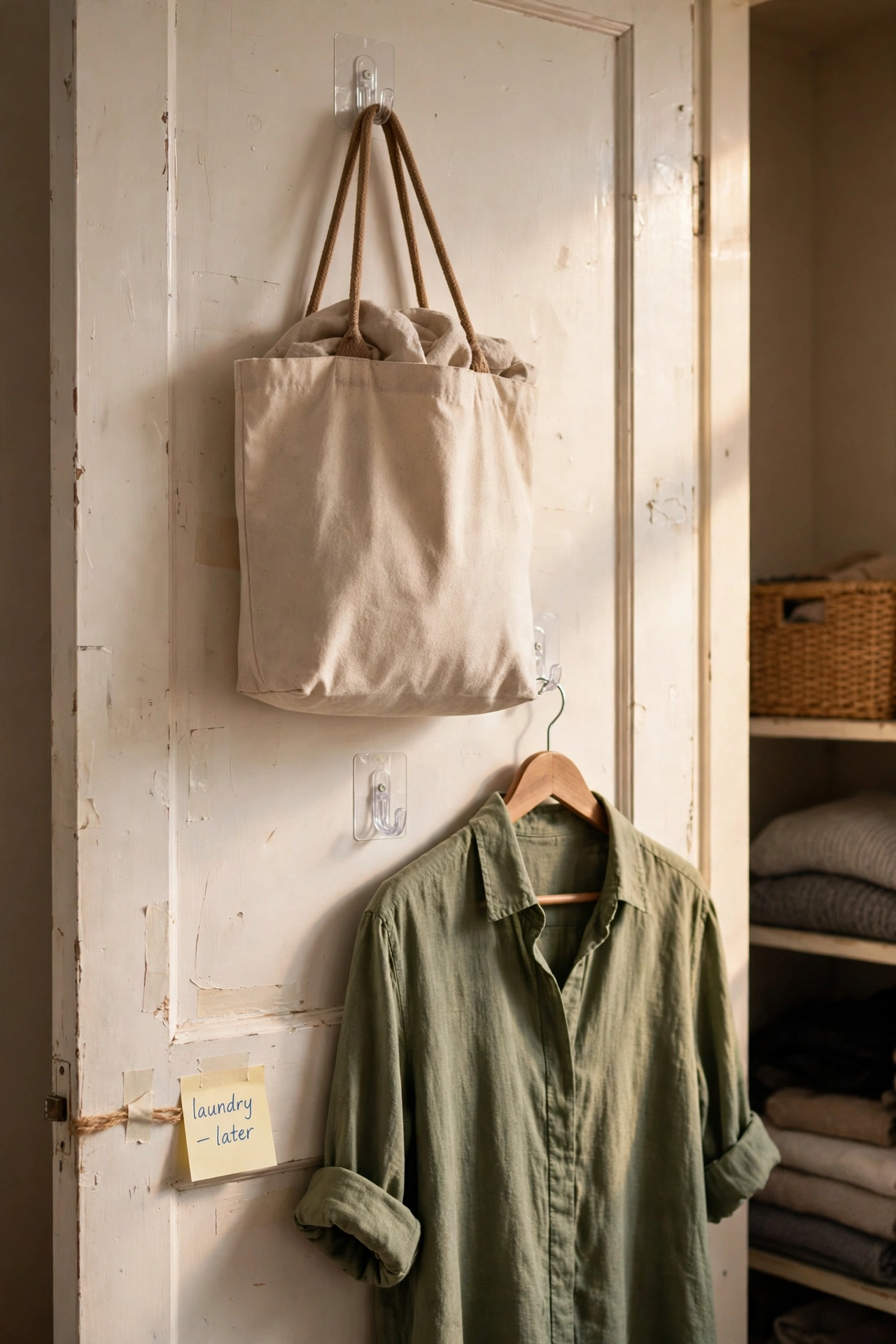
Adhesive hooks inside the closet door hold a handbag, a robe, or tomorrow’s outfit in a spot you see every time you open the door. Clean the door surface first, press each hook firmly for thirty seconds, and wait a day before hanging anything heavy. I tried this for my work bag, and grabbing it on the way out became automatic instead of a last-minute search. Do not stick hooks on a dusty door, since the adhesive fails within days, and I had a bag fall overnight because I skipped the wipe.
Cost: ~$3 | Time: 10 minutes
12. Store Seasonal Clothes in a Top Bin
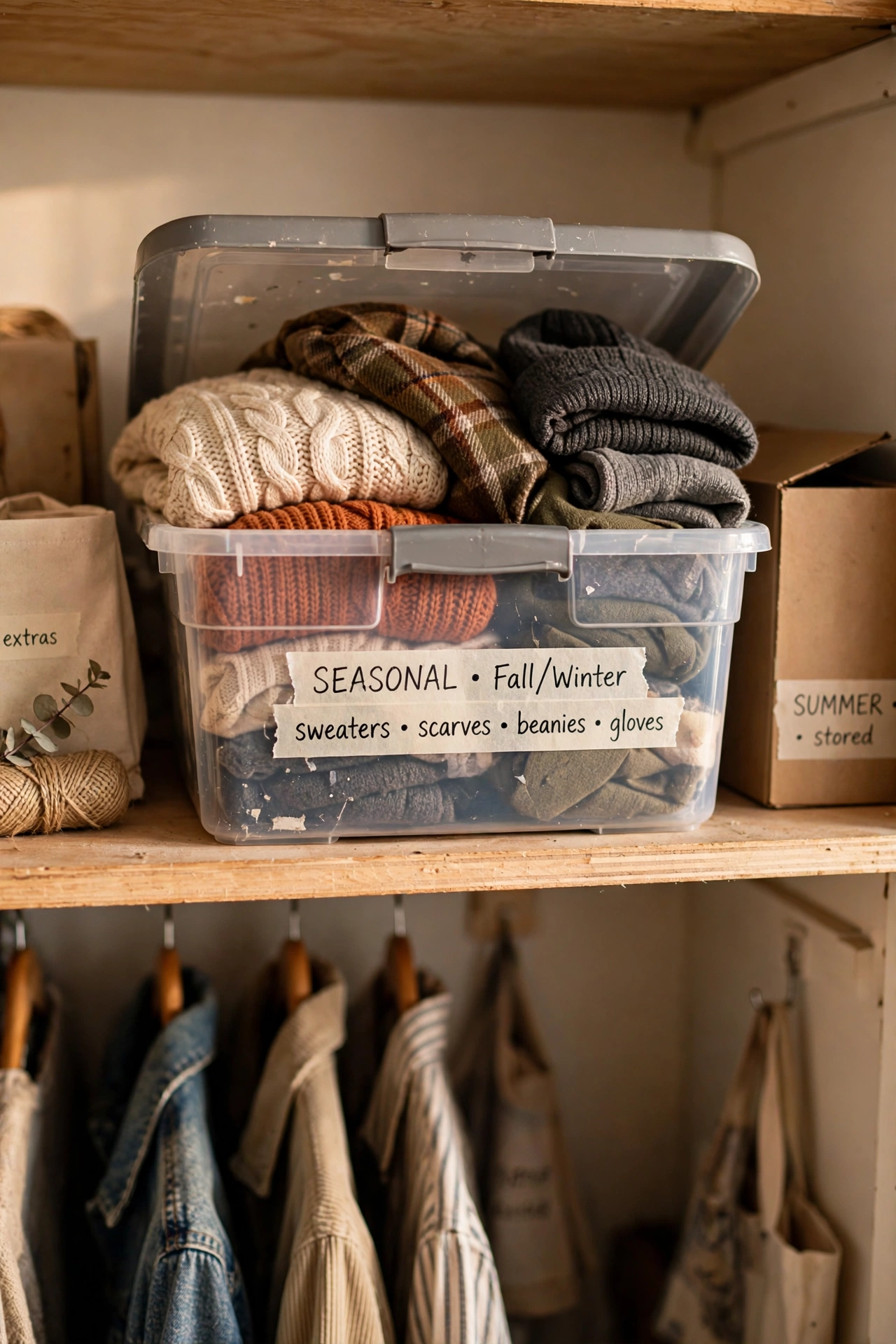
A lidded bin on the top shelf holds out-of-season clothes together, so your everyday rail only carries what you actually wear now. Wash or clean the clothes first, fold them neatly, label the bin by season, and swap the bin contents when the weather changes. I tried this with winter coats in summer, and my daily rail finally had breathing room instead of coats I never reached for. Do not store dirty clothes for months, since stains set and smells linger, and I ruined a sweater that way.
Cost: ~$5 | Time: 30 minutes
(see also: 15-small-laundry-room-ideas-on-a-budget)
Small Extras That Keep It Working
13. Add a Hanging Cubby Shelf for Knitwear
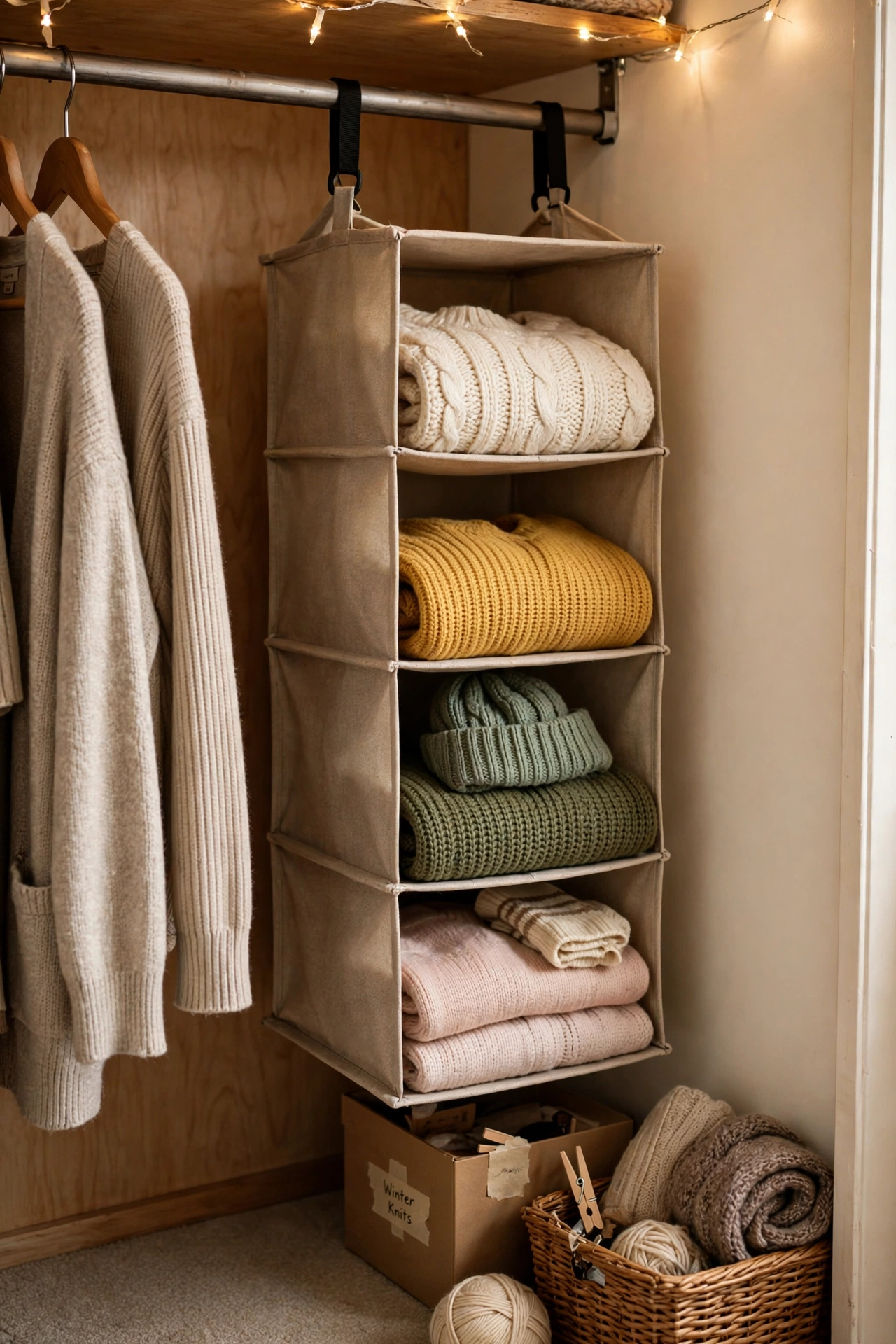
A hanging fabric shelf clipped to the rail adds cubbies for knitwear, bags, and folded clothes in a closet with no built-in shelves. Hang it at one end of the rail, put heavier items in the bottom cubby, and keep light hats and scarves up top so nothing gets crushed. I tried this in the dead corner of my closet, and that corner went from wasted space to the spot where my sweaters actually live. Do not hang it in the middle of your main rail, since it blocks the clothes behind it.
Cost: ~$6 | Time: 10 minutes
14. Use Fabric Drawers for Socks and Underwear
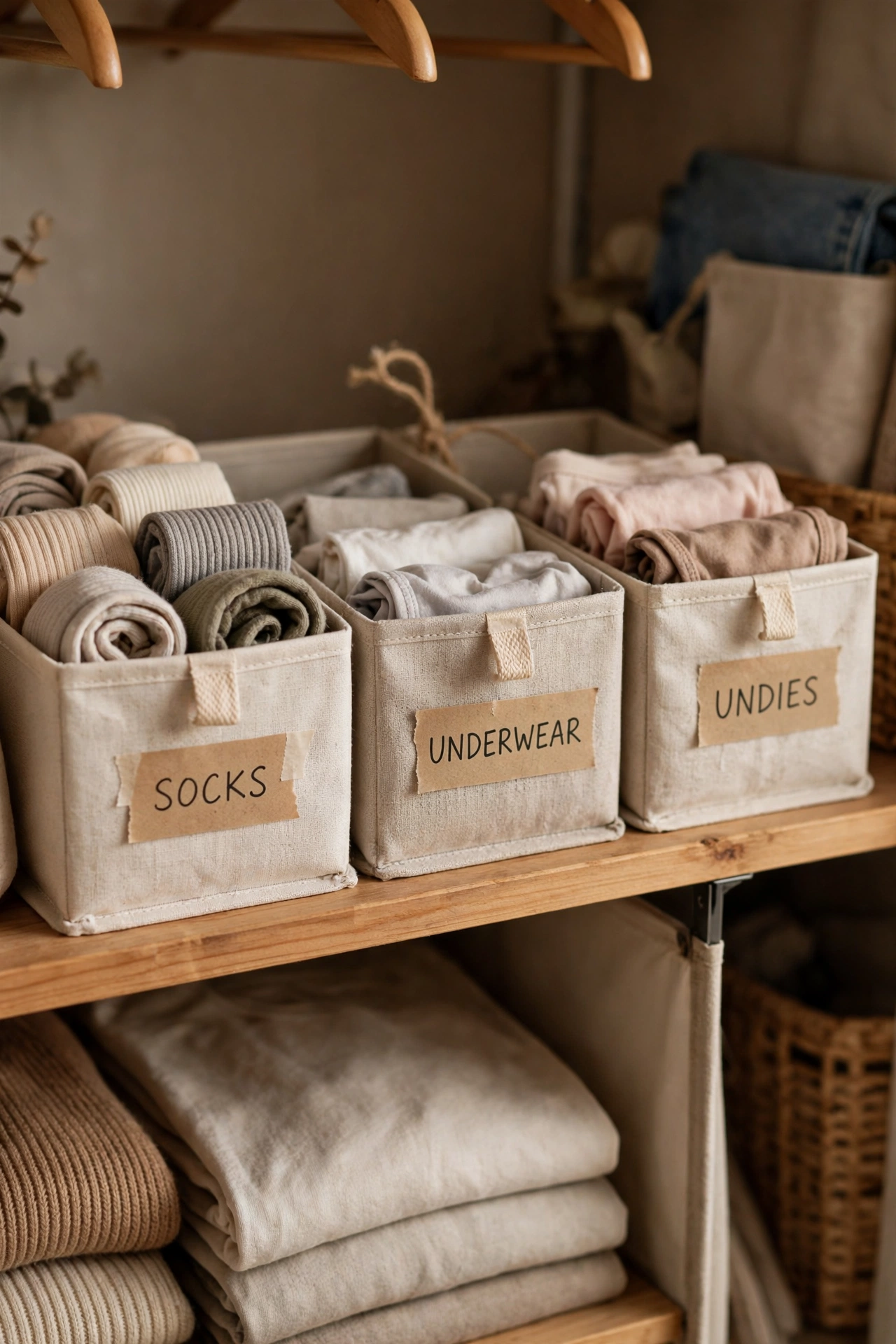
Small fabric drawers on a shelf keep socks, underwear, and undershirts sorted without needing a dresser drawer. Put one category in each drawer, fold or roll items to fit, and label the drawer fronts if you share the closet. I tried this after my sock pile kept mixing with my gym clothes, and matching pairs stopped being a morning chore. Do not buy drawers deeper than your shelf, since drawers that stick out catch on the closet door every time you close it.
Cost: ~$9 | Time: 20 minutes
15. Do a Weekly Five-Minute Closet Reset
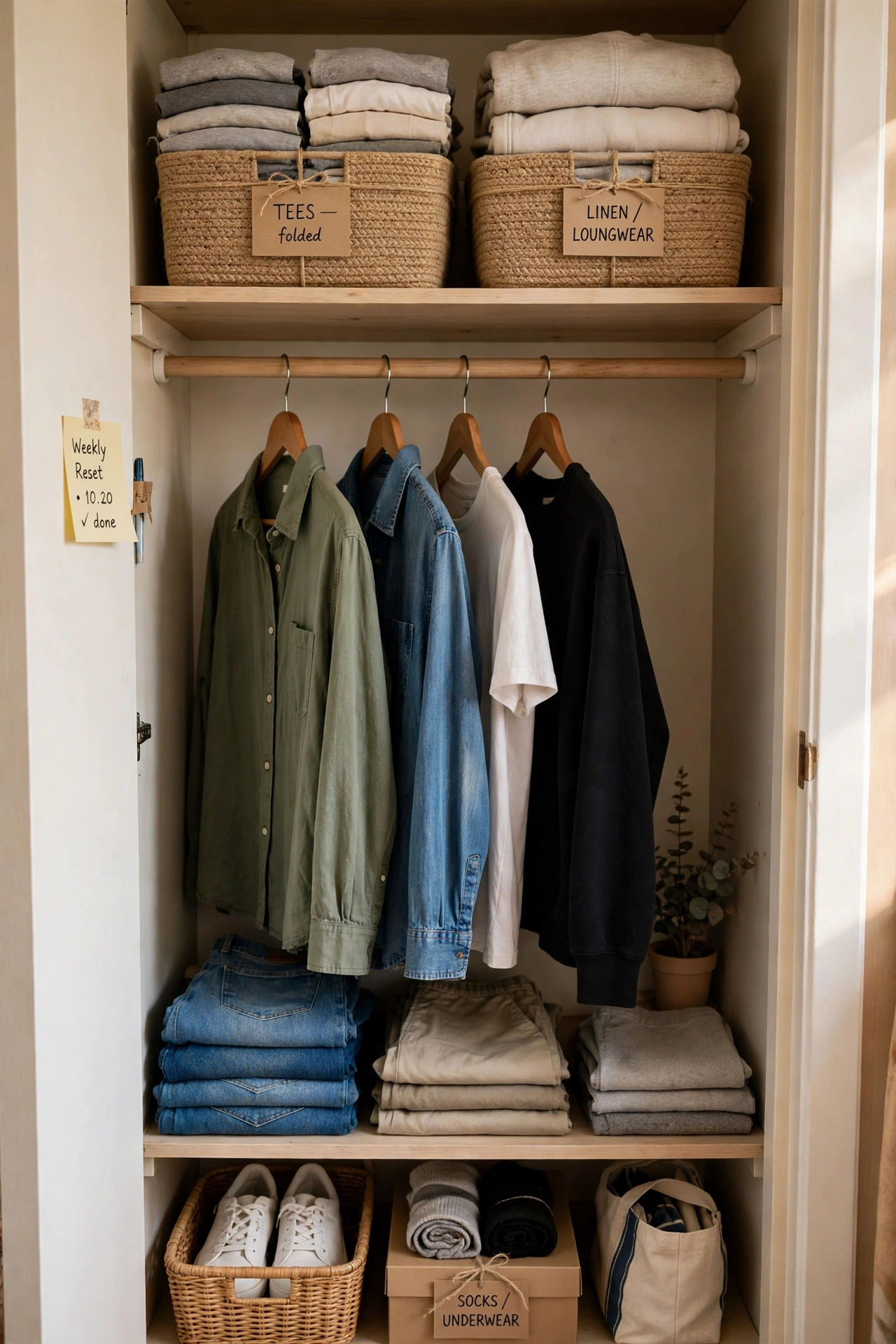
A five-minute reset each week keeps a small closet from sliding back into a pile, because small messes are easier to fix than big ones. Rehang anything on the floor, refold one shelf that has drifted, return stray items to their bins, and pull out one thing you no longer wear. I tried this on Sunday evenings, and my closet stayed tidy all month without a big weekend clean-out. Do not skip two weeks in a row, since the second week is when the pile starts feeling normal again.
Cost: ~$0 | Time: 5 minutes
(see also: 19-bedroom-organization-ideas-on-a-dime)
Save this idea for your next closet clear-out, and start with just the rail or just one shelf instead of gutting the whole closet at once.
A small closet on a budget works when every item has a place you can reach and a habit that keeps it there. Pick the two or three ideas that fix your worst trouble spot, add bins and hooks where they help most, and keep the weekly reset going. Your closet will cost less than a new wardrobe, and it will feel calmer every morning.
