17 Living Room Organization Ideas on a Budget
These Living Room organization ideas prove you can tidy the busiest room in the house for less than the cost of one takeaway dinner for the family. Most of the fixes below cost under ten dollars, use things you may already own, and take less than half an hour to set up. Work through the list one idea at a time, starting with the spot that bothers you most, and stop when the room feels calm again.
1. Corral Remotes in a Small Lidded Basket
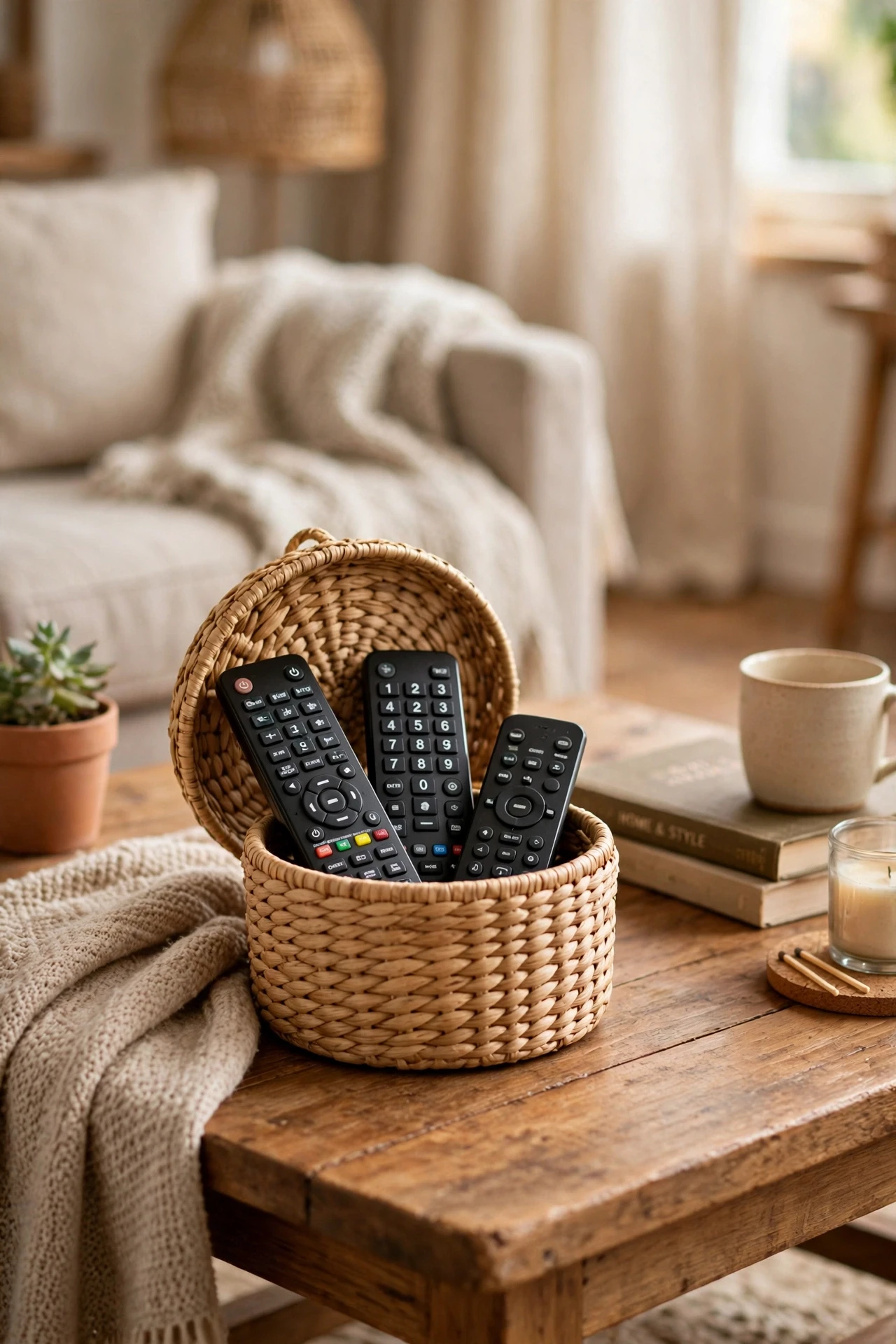
A small lidded basket on the coffee table ends the daily hunt for the remote, because every remote has one obvious home instead of sliding between sofa cushions. Pick a basket that fits on the table without crowding your drinks, drop the remotes inside, and put the lid back on after each use. I tried this after losing the TV remote inside the sofa for the third time in one week, and the basket paid for itself in saved frustration. Keep only the remotes you actually use in the basket, since old remotes for dead devices just refill the clutter you cleared.
Cost: ~$5 | Time: 10 minutes
2. Tame TV Cables With Binder Clips and Ties
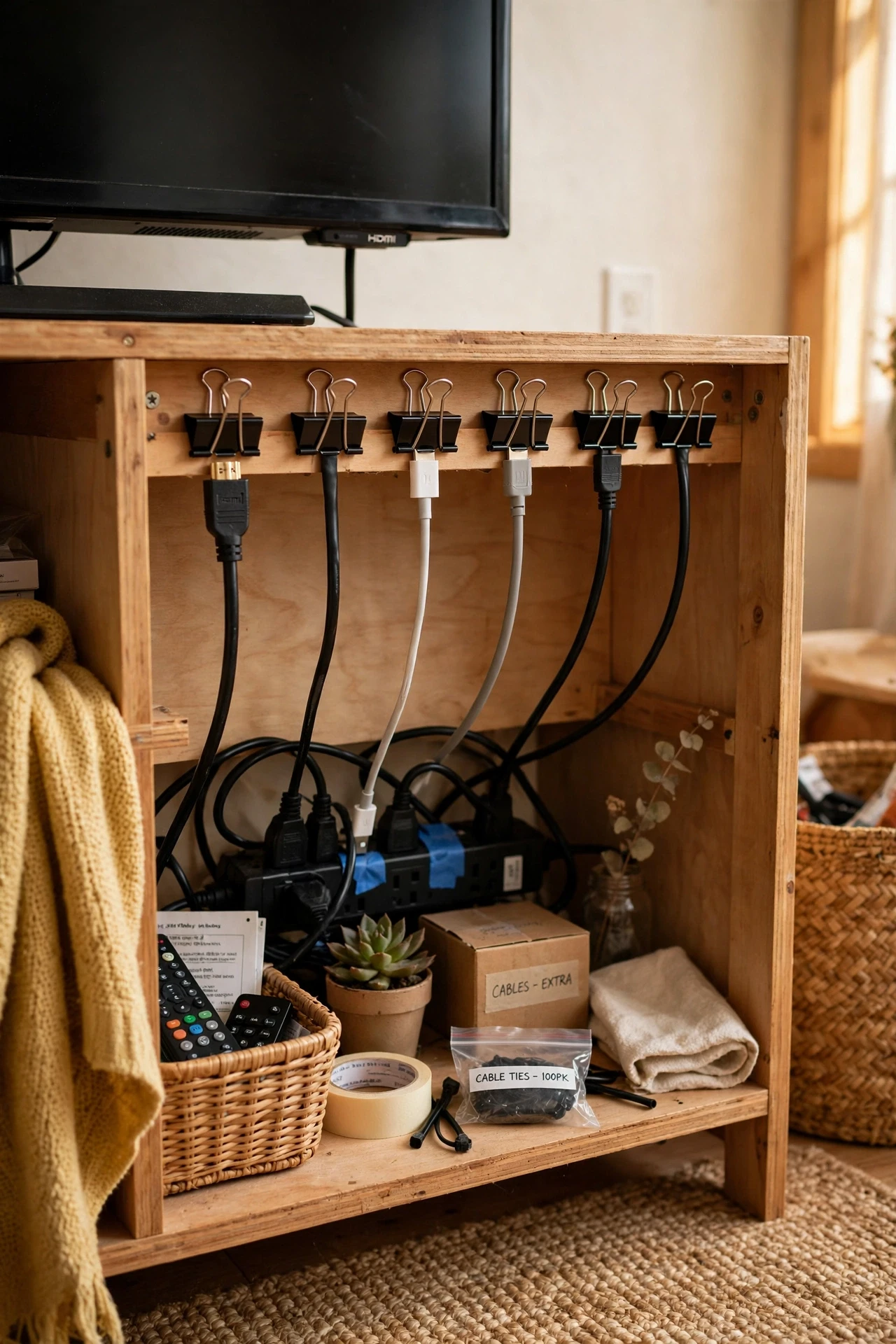
Binder clips clipped to the back edge of the TV stand turn a tangle of cables into neat, labelled lines that you can actually follow when something stops working. Clip one cable through each clip, wrap a reusable tie around any long slack, and label the clips with masking tape if you have several similar leads. I tried this behind my own TV stand and found two cables I had been stepping over for months, plus one charger I thought I had lost. The mistake to avoid is pulling cables tight, since taut cables strain plugs and get yanked loose whenever you move the stand.
Cost: ~$3 | Time: 20 minutes
3. Slide a Rolling Cart Beside the Sofa
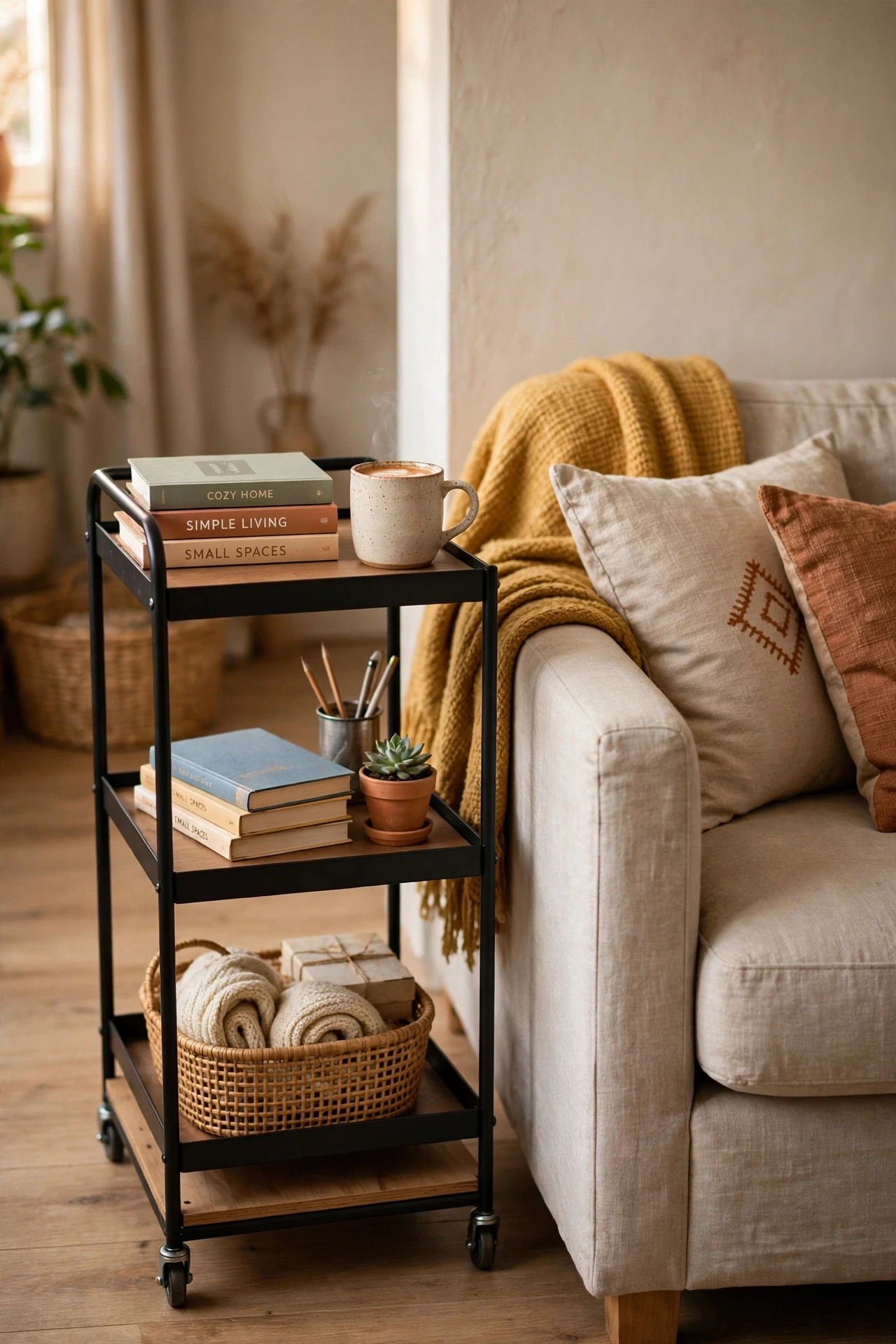
A narrow rolling cart parked beside the sofa holds books, chargers, notebooks, and a drink, so the arm of the sofa stops being a dumping ground. Choose a cart no wider than the gap beside your sofa, load the top shelf with daily items, and keep heavier books low so it rolls smoothly. I tried this in a small living room where a side table would never have fitted, and the cart became the spot everyone reached for first. Roll it out of the way when guests arrive, since a cart left in a walkway turns a tidy room into an obstacle course.
Cost: ~$15 | Time: 15 minutes
4. Sort Board Games Into Labelled Bins
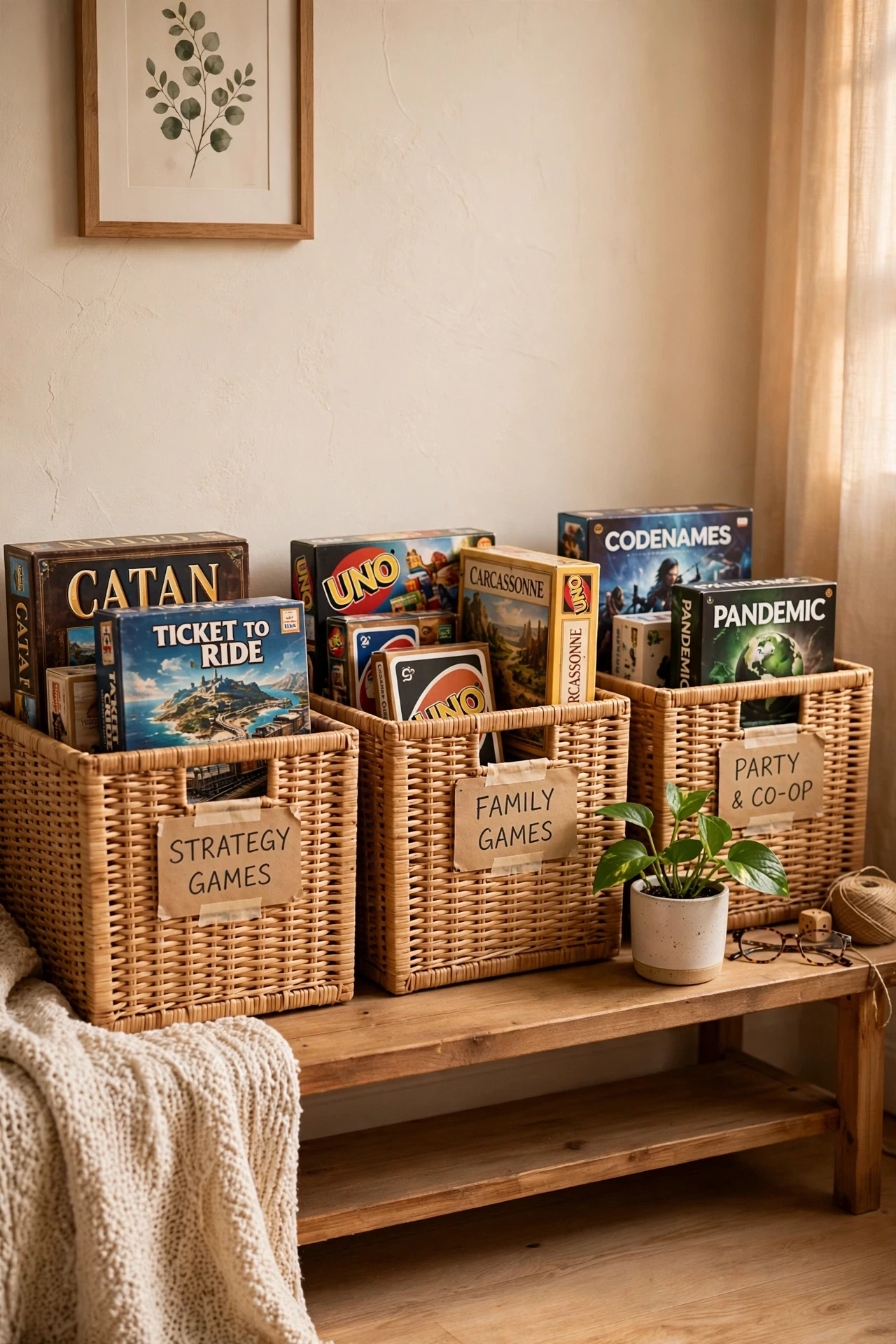
Board games stored in labelled bins on a low shelf stay playable, because you can pull out one game without collapsing a leaning tower of boxes. Sort games by how often you play them, stand the boxes upright like books where possible, and label each bin in plain words. I tried this after our game shelf collapsed twice in one evening, and game night finally started on time instead of with a rescue mission. Keep the most-played games at eye level, since burying favourites at the bottom means they never get chosen and the shelf slowly fills with games nobody touches.
Cost: ~$8 | Time: 30 minutes
5. Hang a Pocket Organizer Inside a Cabinet Door
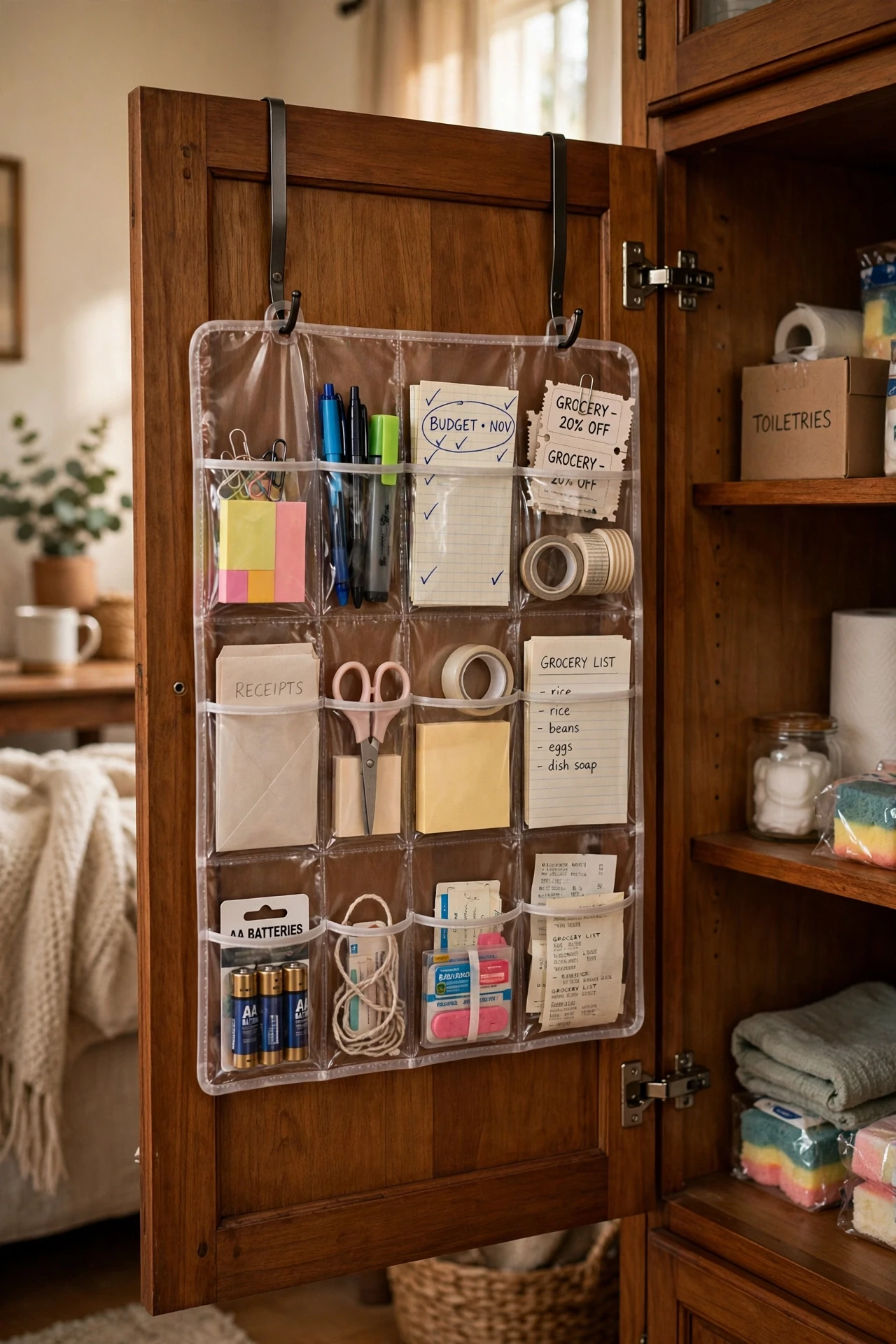
A clear pocket organizer hung inside a living room cabinet door uses dead space for batteries, chargers, tape, and other small items that usually scatter across drawers. Hang it with over-door hooks or adhesive strips, sort one category per pocket, and keep the heaviest items in the lowest pockets. I tried this in our media cabinet and finally stopped buying batteries I already owned, because I could see the stock at a glance. Do not overload the top pockets, since a door that swings shut with weight behind it can pull the hooks off and dump everything on the floor.
Cost: ~$6 | Time: 15 minutes
See also: 19 Living Room Organization Ideas on a Dime
6. Use a Tray to Zone the Coffee Table
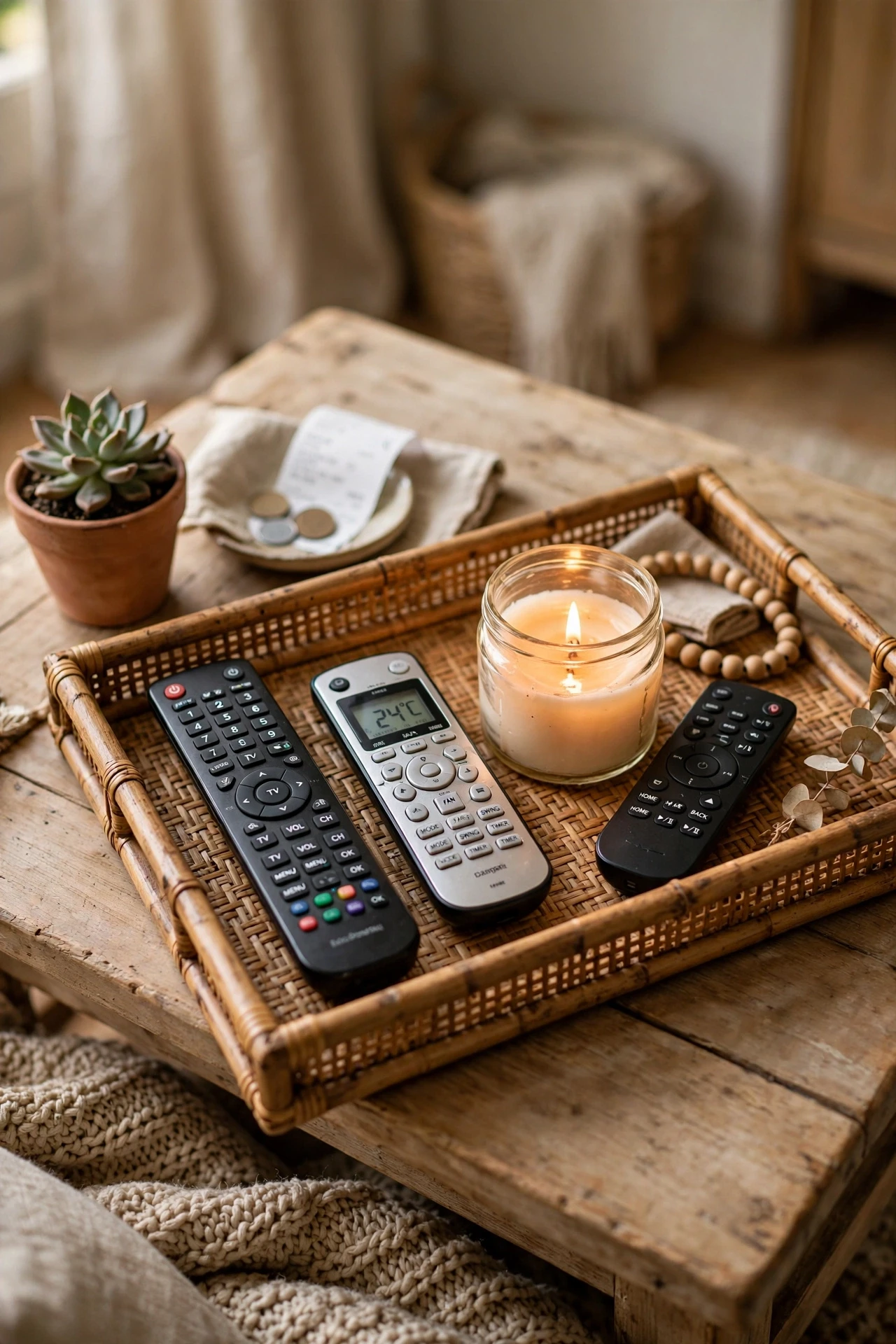
A single tray on the coffee table gives remotes, coasters, and a candle one clear zone, so the rest of the table stays free for cups and books. Pick a tray that covers about a third of the table, group the small items inside it, and leave the space outside the tray deliberately empty. I tried this after our coffee table became a landing strip for mail, keys, and half-finished snacks, and the tray made tidying a one-move job. The mistake to avoid is choosing a tray that is too big, since a tray that fills the whole table just becomes another cluttered surface with edges.
Cost: ~$7 | Time: 5 minutes
7. Stack Books Vertically With a Bookend Pair
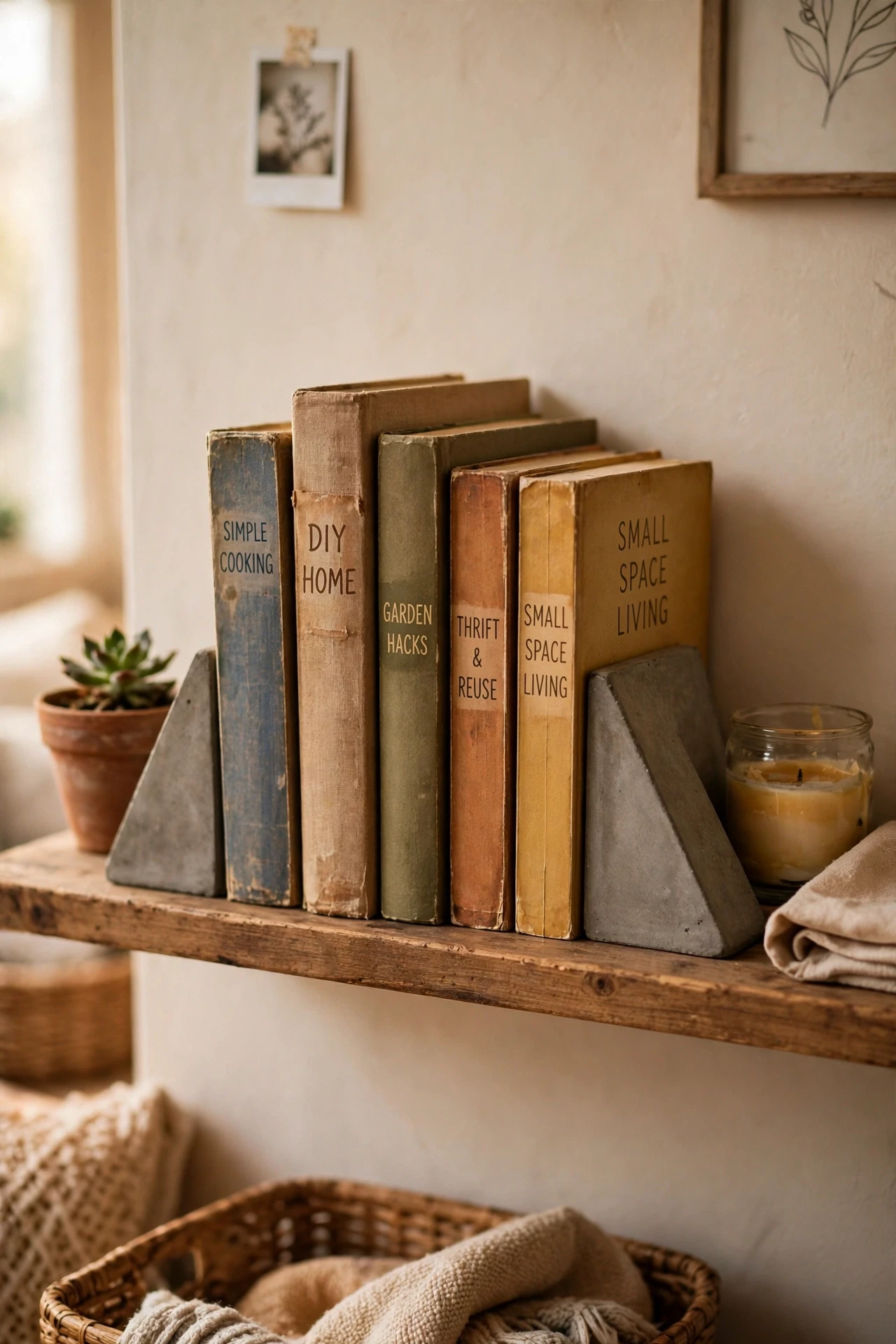
Bookends let you stack and stand books vertically on an open shelf, which keeps rows upright instead of leaning into a slow domino fall. Sort books by size or topic, place a bookend at each end of the row, and leave a little breathing room so you can pull one book out cleanly. I tried this on our loosest shelf, where paperbacks kept sliding sideways, and the shelf finally looked intentional instead of half-collapsed. Avoid packing the row so tight that removing a book tears a cover, since a shelf you cannot use comfortably will drift back into a pile within a week.
Cost: ~$6 | Time: 20 minutes
8. Store Blankets in a Lidded Ottoman Basket
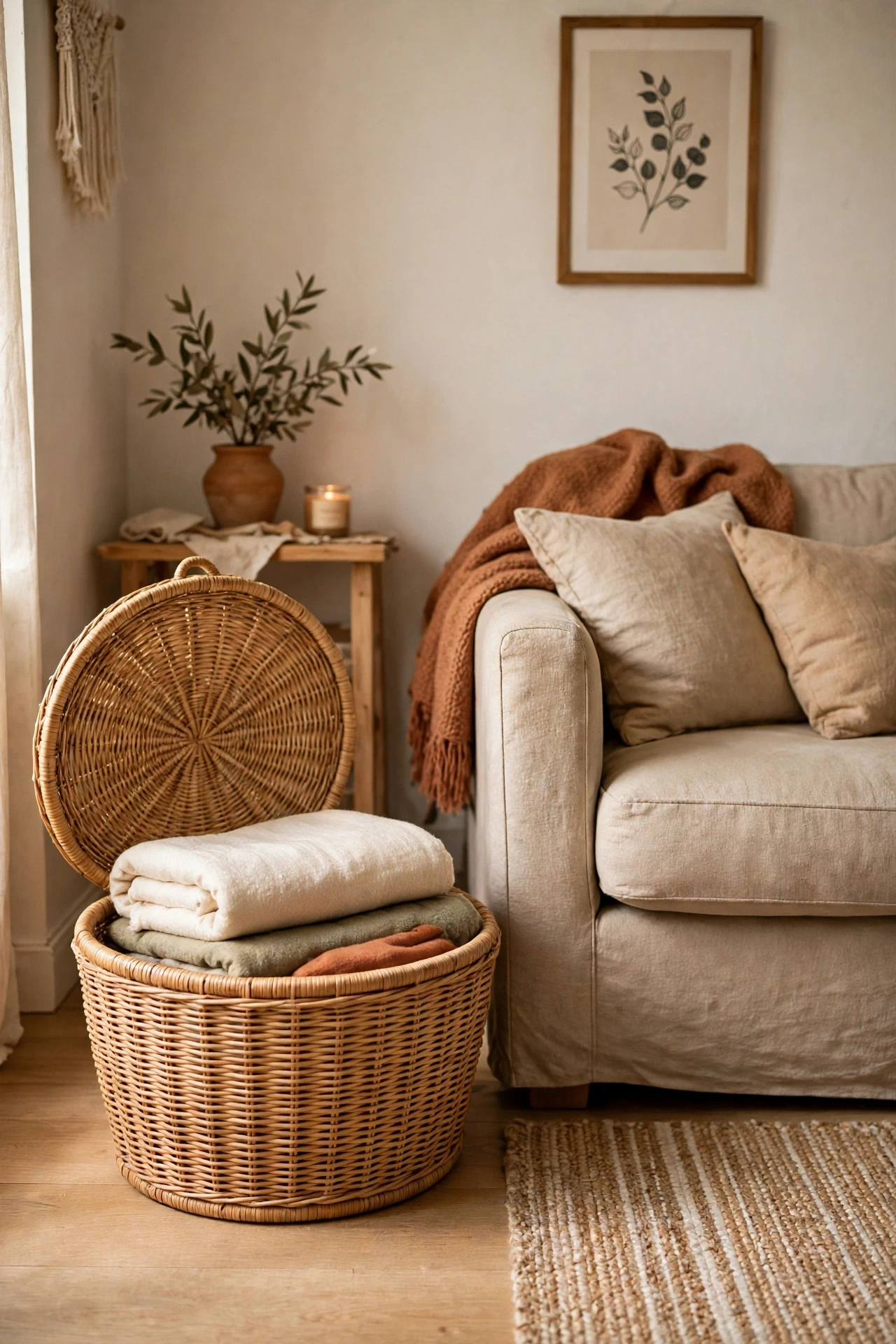
A lidded basket or ottoman by the sofa stores throws and blankets out of sight, so the sofa stops wearing a permanent pile of folded fabric. Fold each blanket once, roll it if the basket is deep, and keep only two or three blankets in rotation. I tried this after our sofa looked like a blanket shop every evening, and guests could finally sit down without moving a stack first. Wash the blankets before storing them for a season, since a blanket folded away dusty smells stale the first night you pull it out again.
Cost: ~$12 | Time: 15 minutes
9. Use a Shoe Rack as a Low Book and Toy Shelf
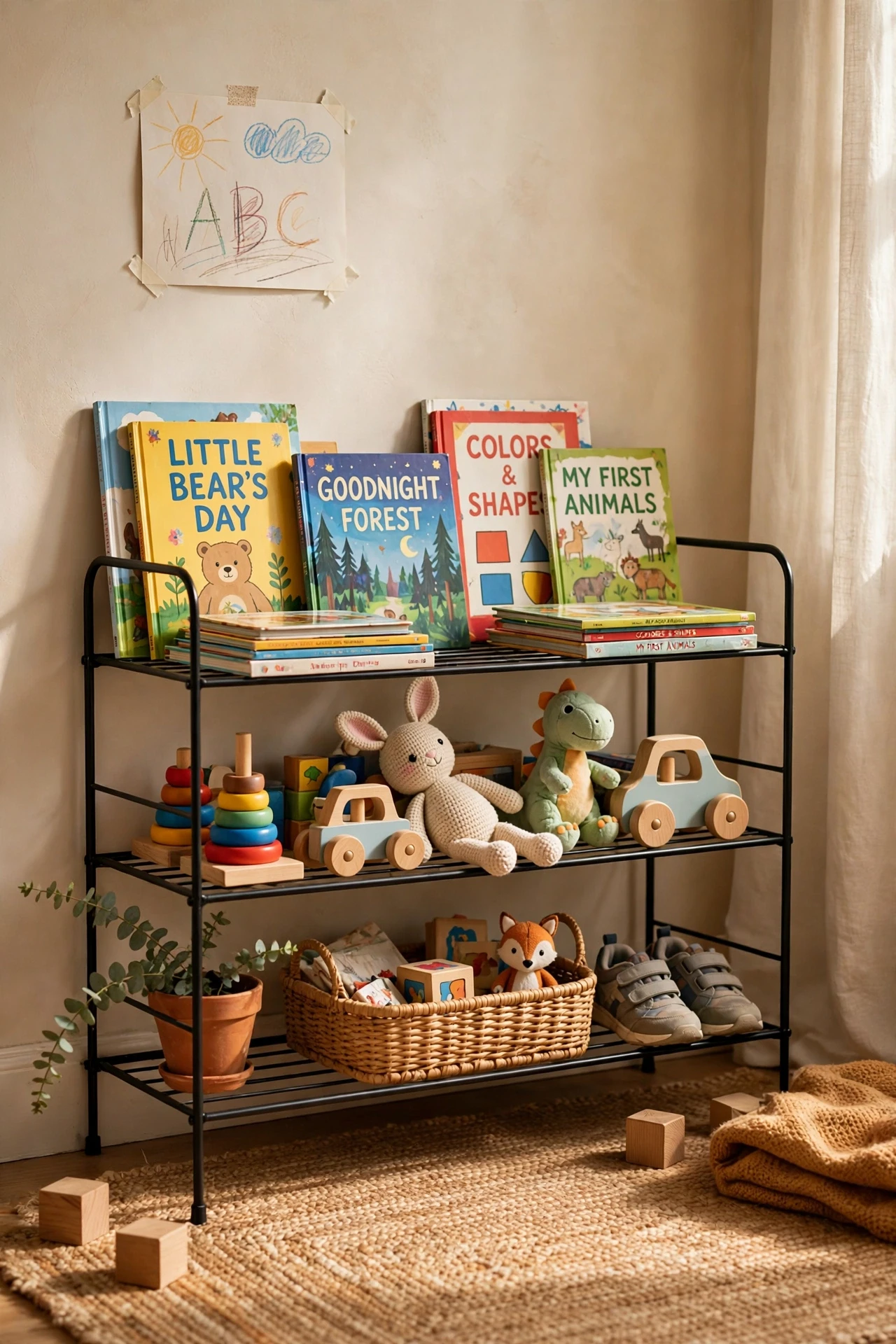
A cheap shoe rack makes a surprisingly good low shelf for children’s books, small toys, and magazines, because its open tiers are easy for small hands to reach. Place it against a wall or under a window, sort items by child or category, and keep the heaviest books on the bottom tier. I tried this in a corner that held nothing but a stray shoe, and it became the most-used shelf in the room within days. Anchor the rack to the wall if children climb, since a light rack tips forward far more easily than a proper bookcase when a child pulls on it.
Cost: ~$10 | Time: 20 minutes
10. Label Open Baskets for Each Family Member
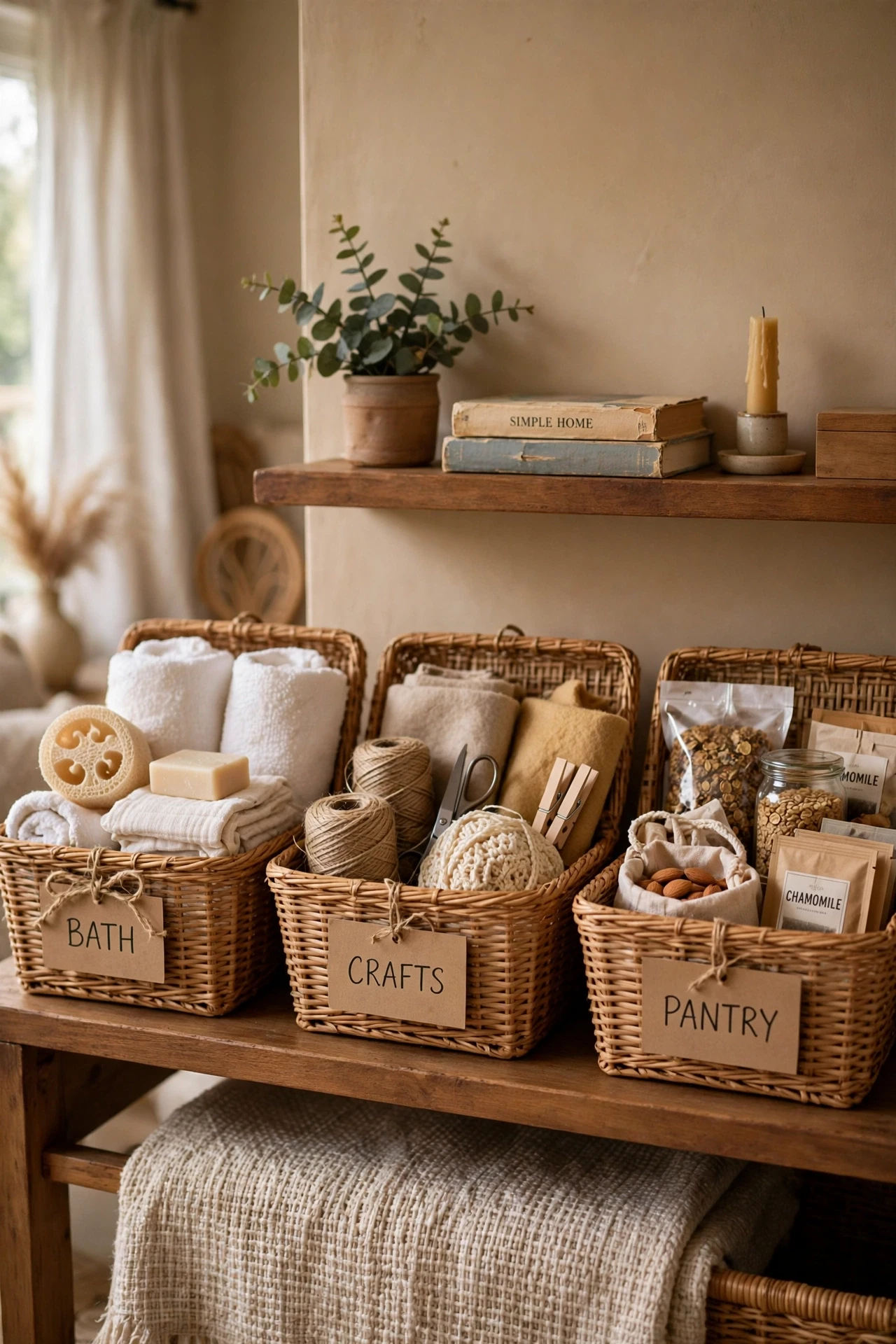
Open baskets labelled with each family member’s name give everyone one place for their own living room bits, from chargers to craft supplies. Place the baskets on one shelf, label them clearly, and agree that anything left out goes into its owner’s basket at night. I tried this when our shared shelf became a mystery pile nobody would claim, and the labels ended the daily argument about whose charger was whose. Keep the baskets small, since a huge basket invites hoarding and turns a tidy system into a private junk drawer with a name on it.
Cost: ~$9 | Time: 20 minutes
11. Hang Floating Ledges for Small Decor
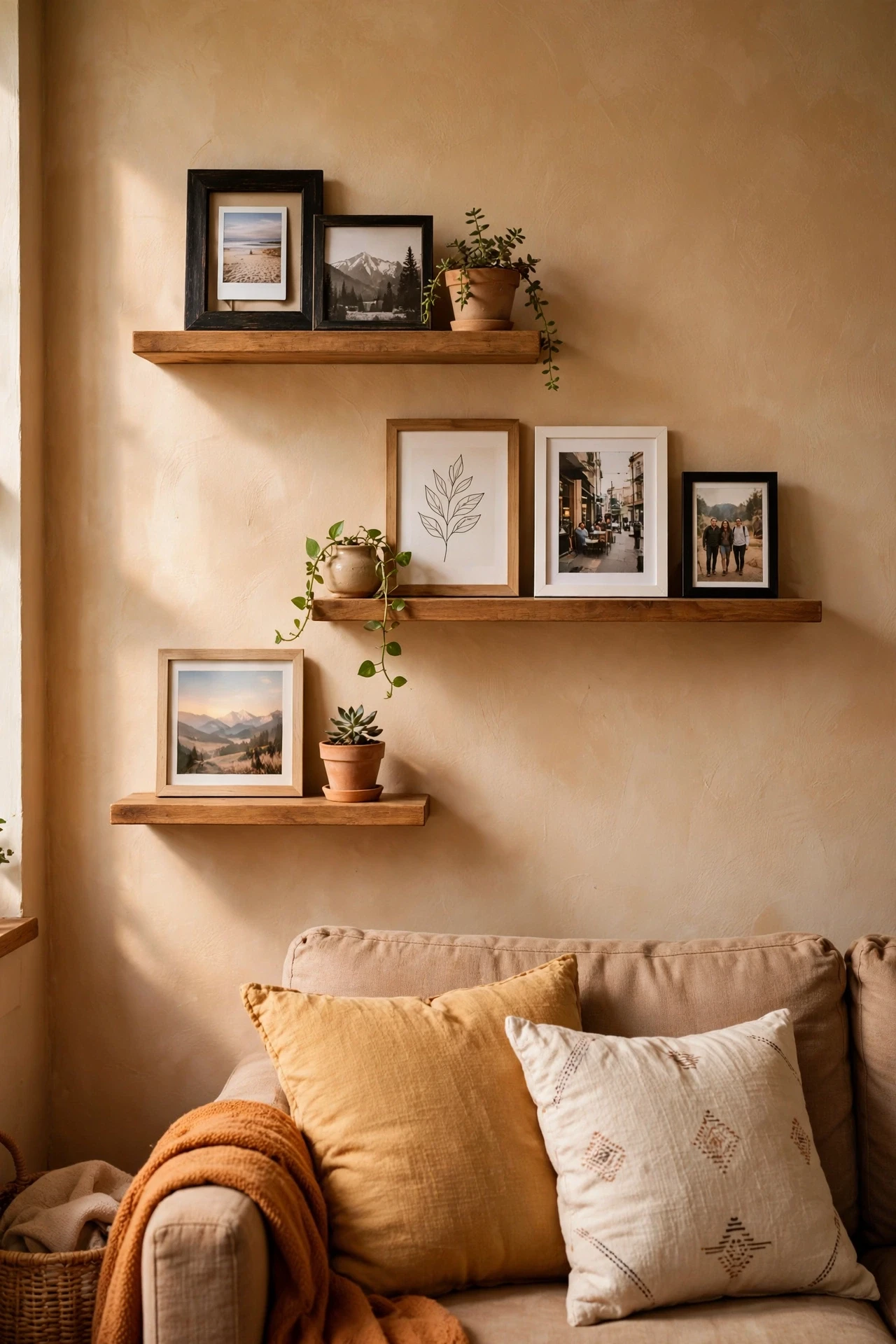
Two small floating ledges lift framed photos and small plants off the coffee table and side tables, freeing the surfaces you actually use every day. Measure twice, fix the ledges at eye level, and keep the display to a few pieces per ledge so it reads as calm, not crowded. I tried this above our sofa after the side tables disappeared under frames, and the room felt larger even though nothing had left it. The mistake to avoid is hanging ledges above a spot where people lean back, since a bumped frame falls exactly where someone is sitting.
Cost: ~$14 | Time: 30 minutes
See also: 25 Small Kitchen Organization Ideas on a Budget
12. Keep a Donation Box by the Door
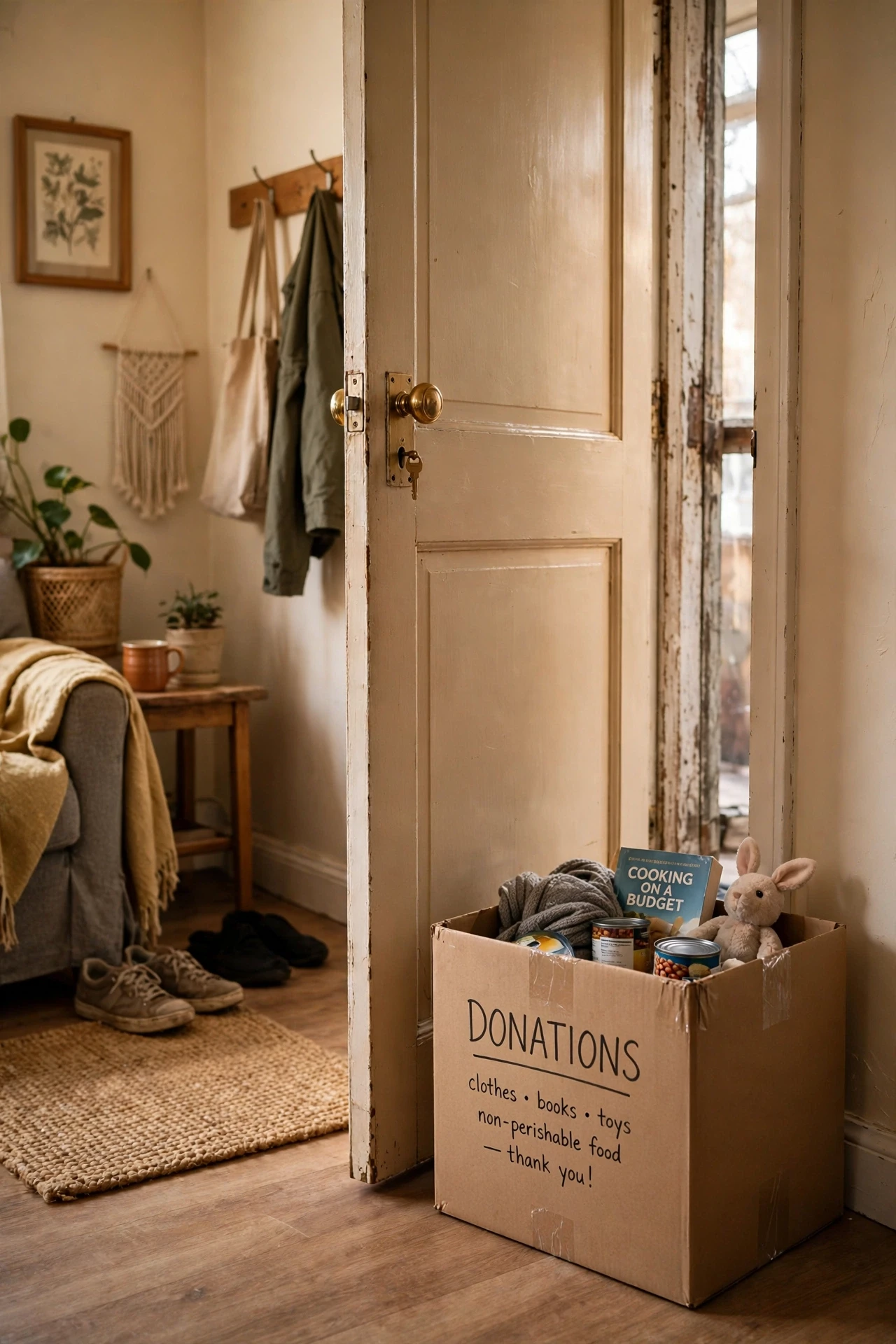
A donation box by the living room door catches books, games, and decor you no longer love the moment you notice them, instead of letting them sit for years. Drop items in as you spot them, and take the box to charity when it fills. I tried this after realising I had kept three board games nobody had played in two years, and the box made letting go painless because the decision happened in seconds. Replace the box as soon as you empty it, since a missing box means the next unwanted item goes straight back onto the shelf out of habit.
Cost: ~$0 | Time: 5 minutes
13. Use Clear Jars for Small Game Pieces
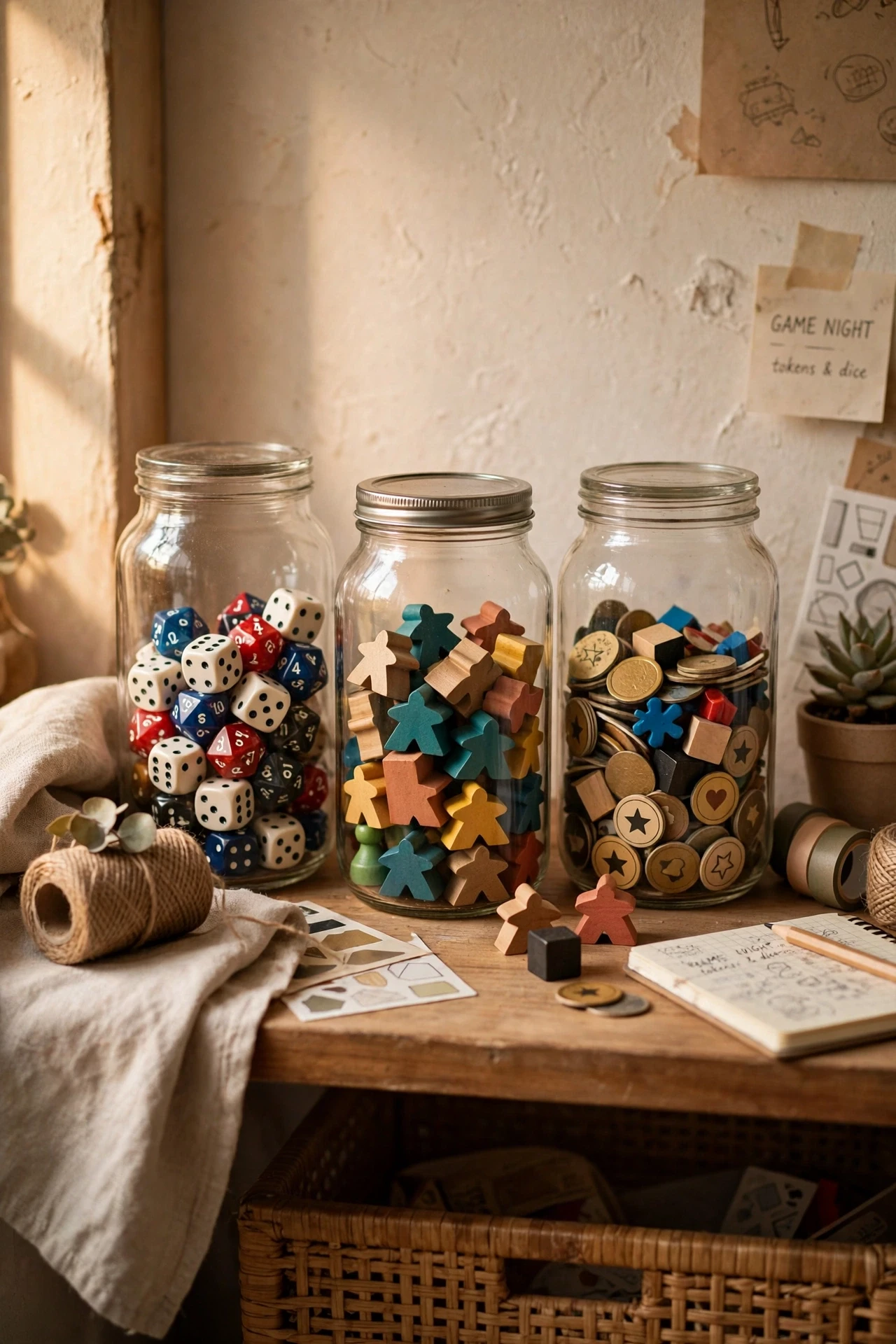
Clear jars rescue the small pieces that make games unplayable when they go missing, from dice and tokens to puzzle parts and card decks. Pour each game’s small pieces into its own jar, label the jar with the game name, and store the jars together on one shelf. I tried this after losing the dice from our favourite game twice, and we have not had an unplayable game night since. Keep one spare jar for stray pieces, since a single orphaned token found under the sofa is far easier to reunite with its game when it has a waiting home.
Cost: ~$4 | Time: 15 minutes
14. Add a Wall-Mounted Mail and Key Station
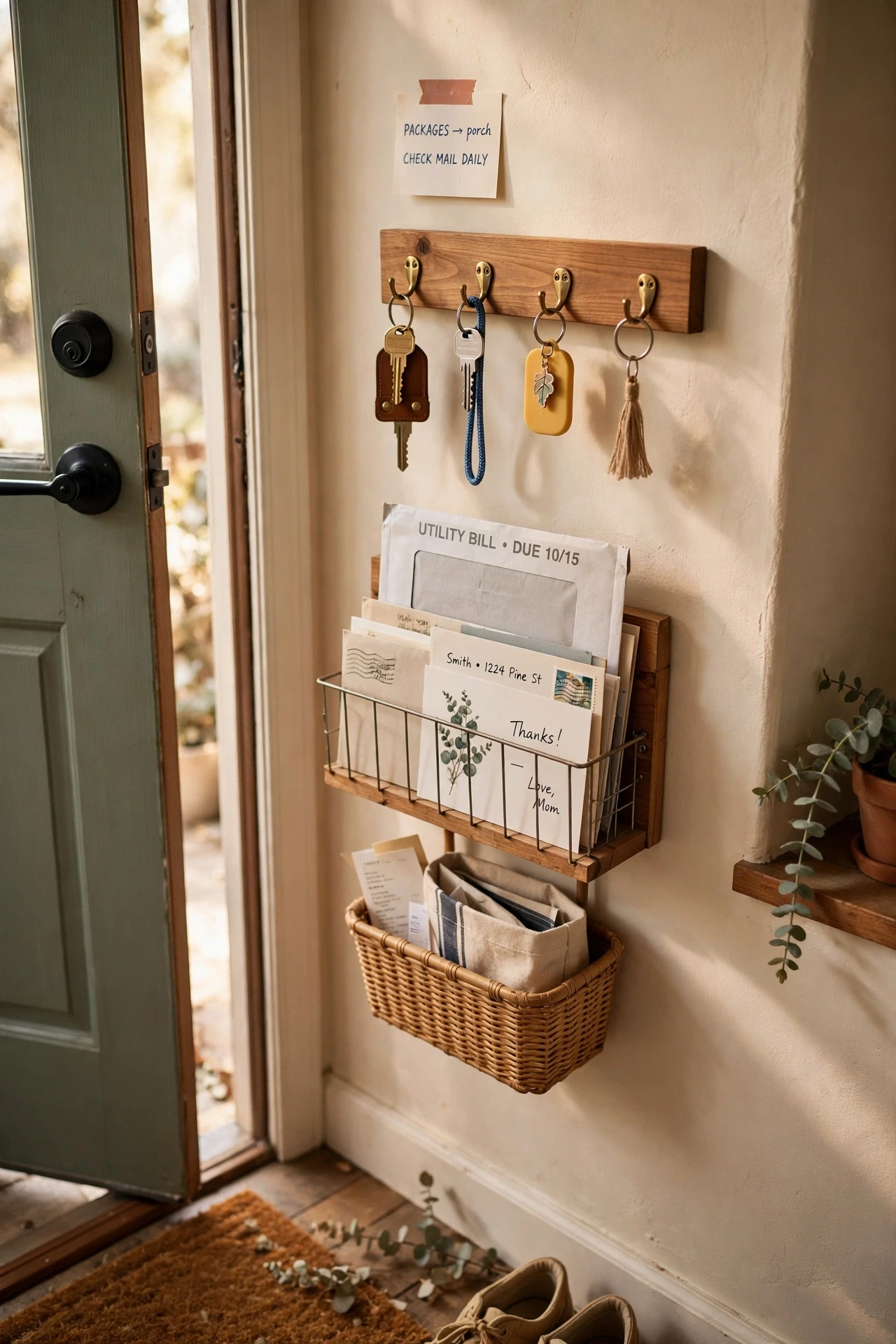
A small wall-mounted station with hooks for keys and a slot or pocket for mail stops post and keys from colonising the coffee table. Mount it near the door you actually use, hang keys the moment you come in, and sort mail into keep and recycle each evening. I tried this after losing my keys three mornings in a row, and the habit stuck because the hooks were right where my hand already went. Empty the mail pocket weekly, since a station that fills up just moves the pile from the table to the wall.
Cost: ~$11 | Time: 25 minutes
15. Swap Bulky Boxes for Matching Fabric Bins
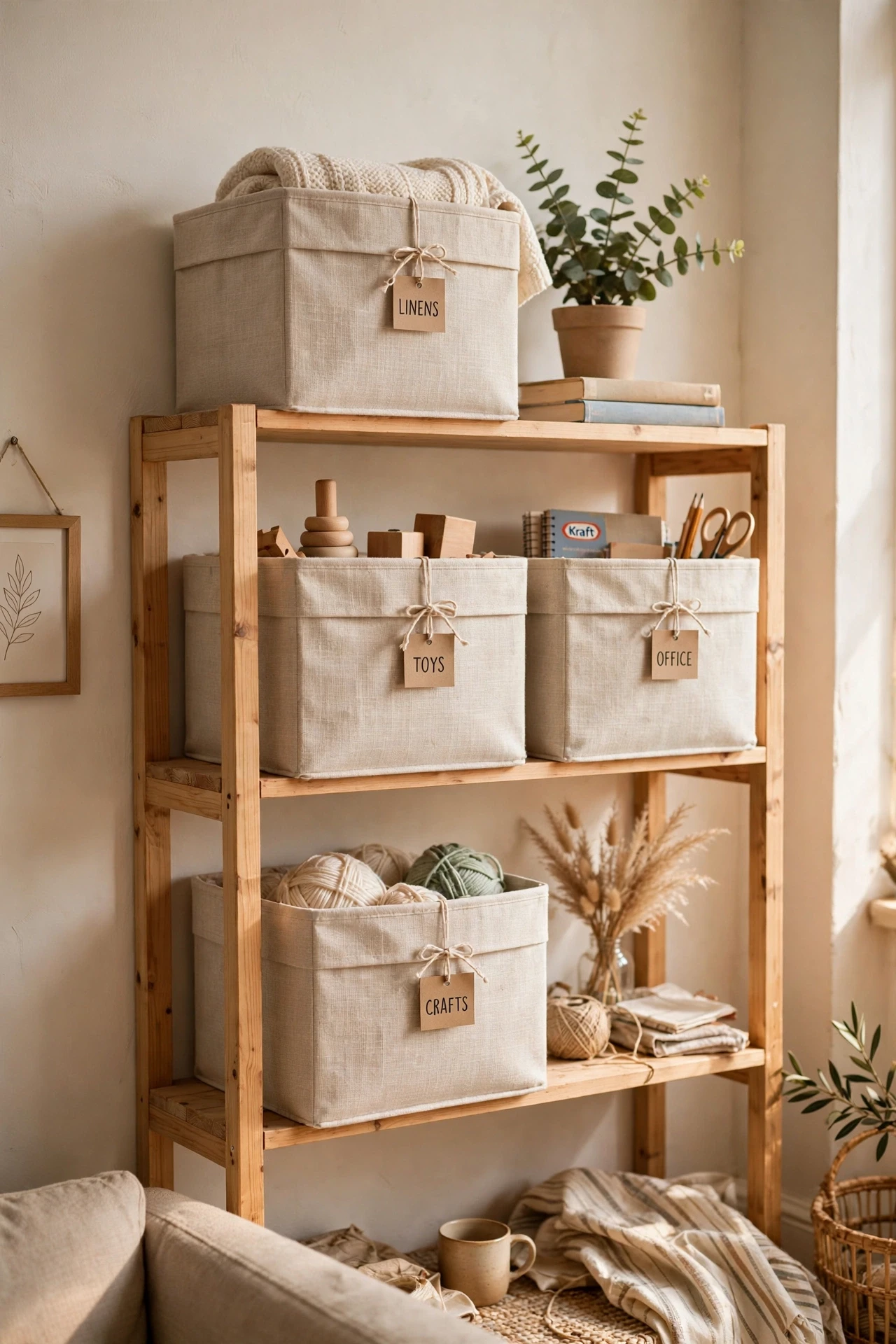
Matching fabric bins on open shelves make a mixed collection of clutter look calm, because the eye reads one colour and shape instead of ten competing boxes. Measure your shelves first, buy bins that fit with a little room to spare, and label the front of each bin. I tried this on our open shelving, where cardboard boxes and plastic tubs had clashed for years, and the shelves looked planned for the first time. Do not buy bins before measuring, since bins that are even slightly too tall will not slide in and will end up stacked on the floor beside the shelf.
Cost: ~$12 | Time: 25 minutes
16. Store Kids’ Art Supplies in a Portable Caddy
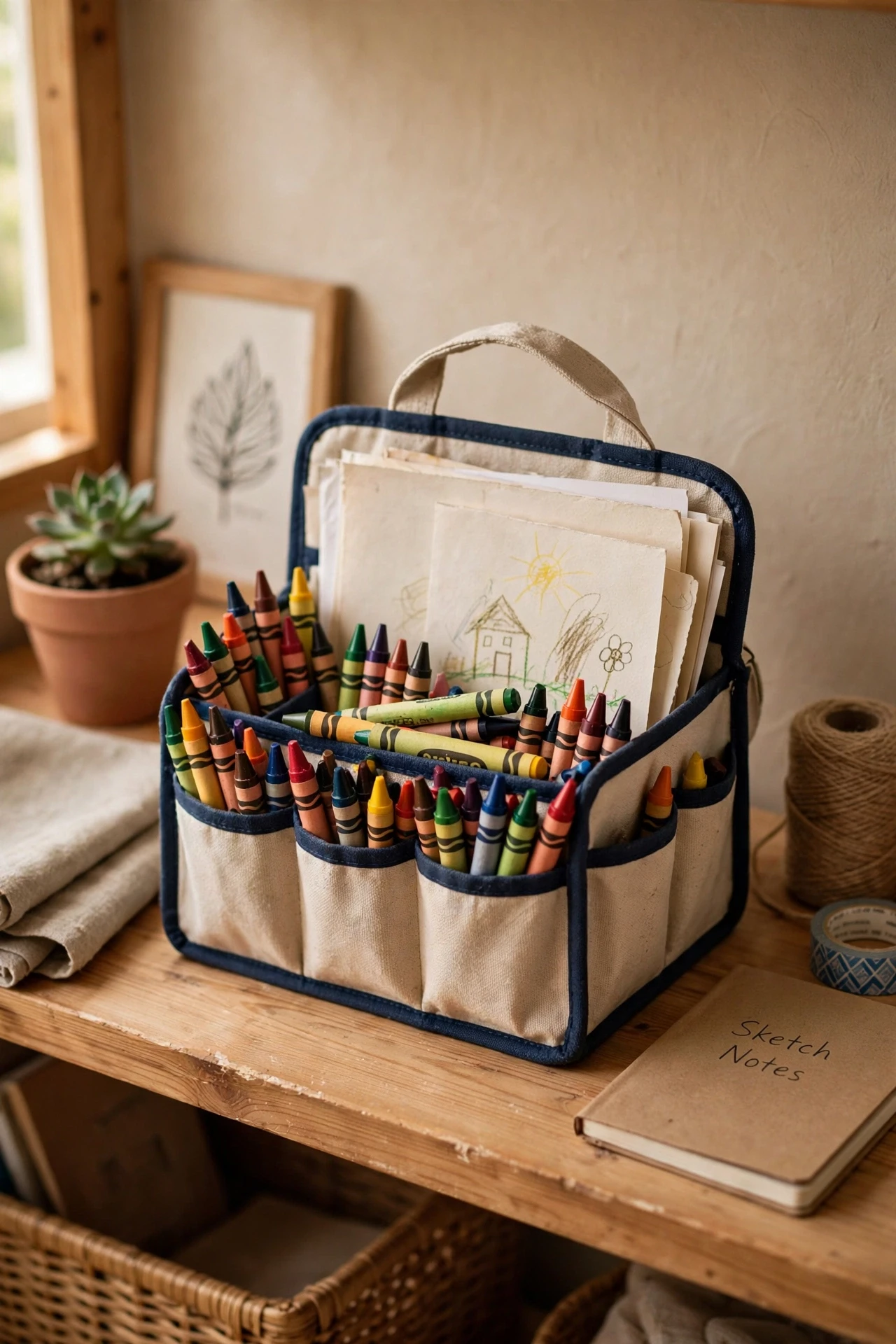
A portable caddy with a handle keeps crayons, paper, and glue in one grab-and-go kit, so art time does not end with supplies spread across the whole living room. Sort supplies by type into the caddy’s sections, keep it on one shelf, and make putting it back part of finishing the activity. I tried this after finding crayons in the sofa, under the rug, and once inside a shoe, and clean-up dropped from twenty minutes to two. Keep scissors and glue in the middle sections, since small items at the edges fall out when children carry the caddy by its handle.
Cost: ~$8 | Time: 20 minutes
See also: 21 Garage Organization Ideas on a Budget
17. Do a Five-Minute Nightly Living Room Reset
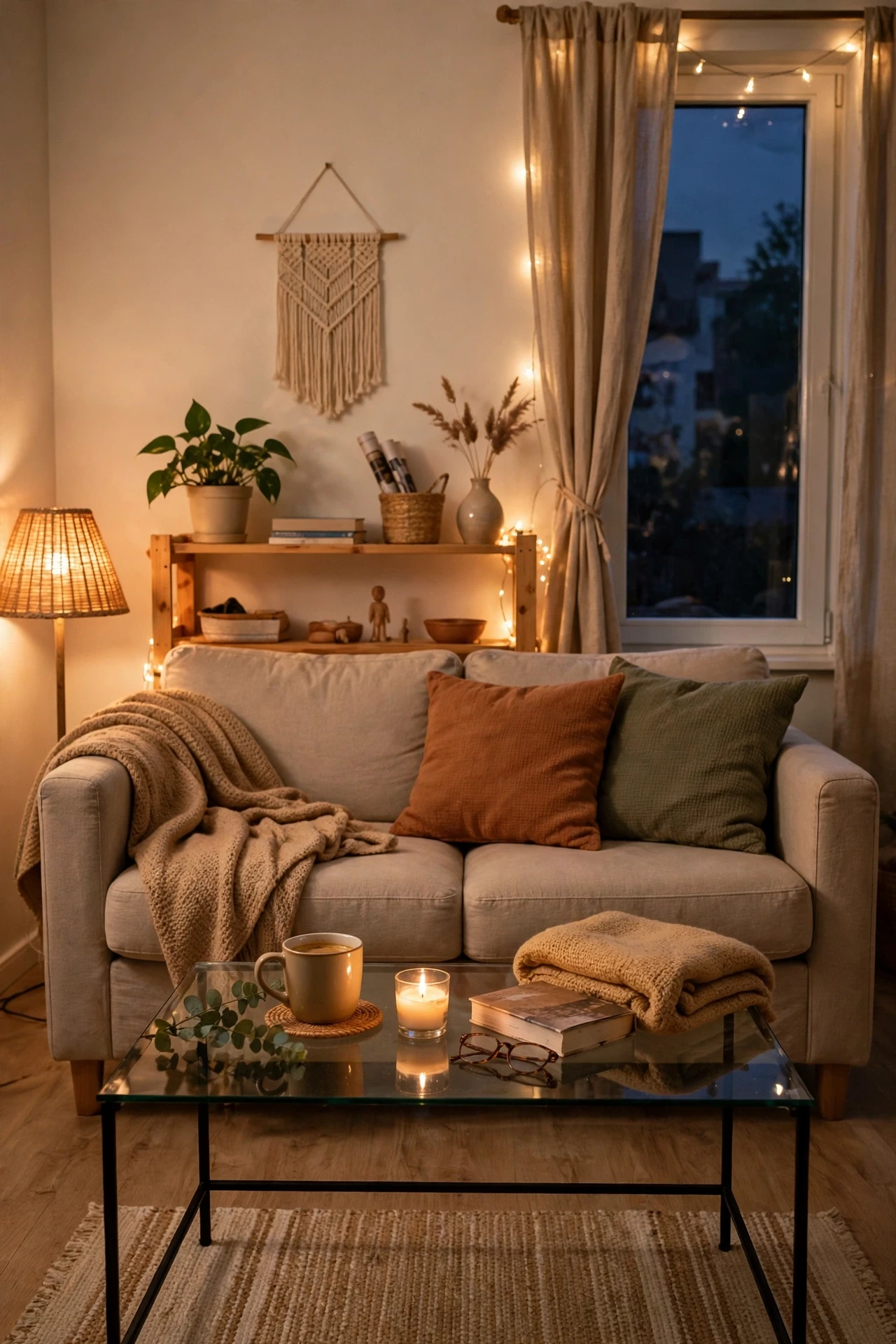
A five-minute nightly reset, returning remotes to the basket, folding blankets, and clearing cups, keeps the living room from sliding back into chaos between deep cleans. Set a timer, work clockwise around the room, and stop when the timer ends even if one corner is still imperfect. I tried this for two weeks and the room stayed guest-ready most days, which never happened when I waited for a big weekend tidy. Pair the reset with something you already do, like locking the front door, since a habit tied to an existing routine survives far longer than one that relies on willpower alone.
Cost: ~$0 | Time: 5 minutes
Save this idea for your next weekend tidy-up.
- Cheapest wins: the donation box and the nightly reset cost nothing at all.
- Under five dollars: binder clips for cables, clear jars for game pieces, and the remote basket.
- Under ten dollars: the tray, bookends, pocket organizer, and game bins all stay in single figures.
A tidy living room does not need a big budget, just a few cheap containers and habits that match how your family actually lives. Start with the free ideas, add one or two small buys, and let the room stay calm instead of chasing a perfect look that nobody can maintain.
