15 Olive Green Living Room Decor Ideas That Feel Cozy
I bought my first olive green cushion by accident. It was wedged behind the beige ones in a clearance bin, and I only grabbed it because the tag said $3. Back home, I tossed it onto my plain cream sofa and stood back. The whole room looked different: warmer, calmer, somehow more finished, all from one cushion.
That little accident taught me why Olive Green living room decor has such a loyal following. Olive sits right between grey and green, so it reads as a neutral while still giving the room some life. Below are fifteen ways I have actually used it in my own living room, from five-minute swaps to a weekend paint project.
Start with Olive Velvet Throw Pillows on a Neutral Sofa
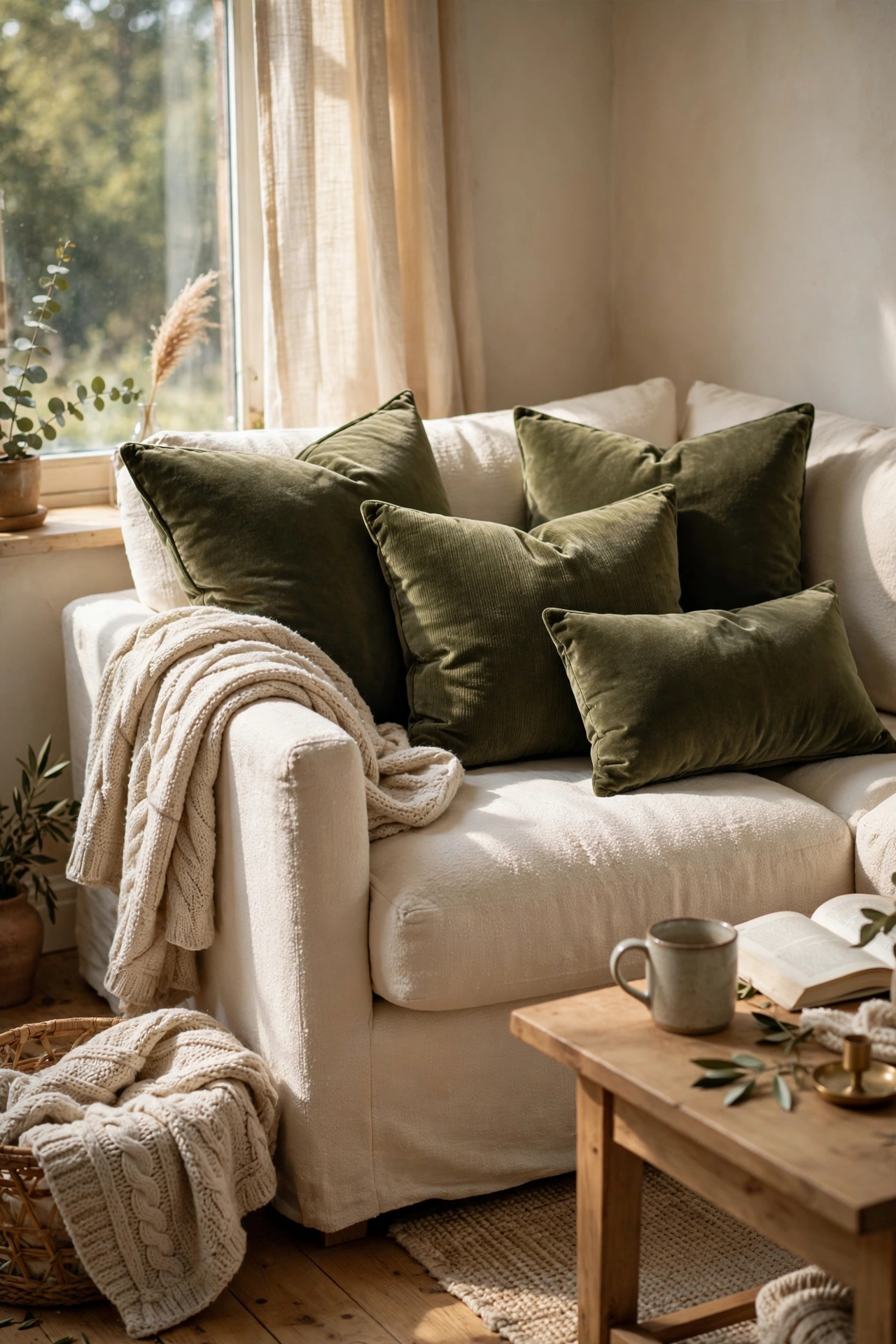
If you want to test olive green without committing, start here. Buy two or three velvet-look cushion covers in olive and swap them onto your existing sofa; no sewing, no paint, nothing permanent. I like mixing sizes: one large square at the back, a smaller one in front, and I always fluff the corners so they look plump rather than flat. My mistake was buying the cheapest polyester covers first, and they looked shiny and fake in daylight. Spending a few dollars more on a matte, cotton-blend fabric changed everything. In my living room, these cushions sit against a cream sofa, and guests always ask where they are from.
Cost: ~$18 | Time: 10 minutes
Paint One Olive Green Accent Wall Behind the Sofa
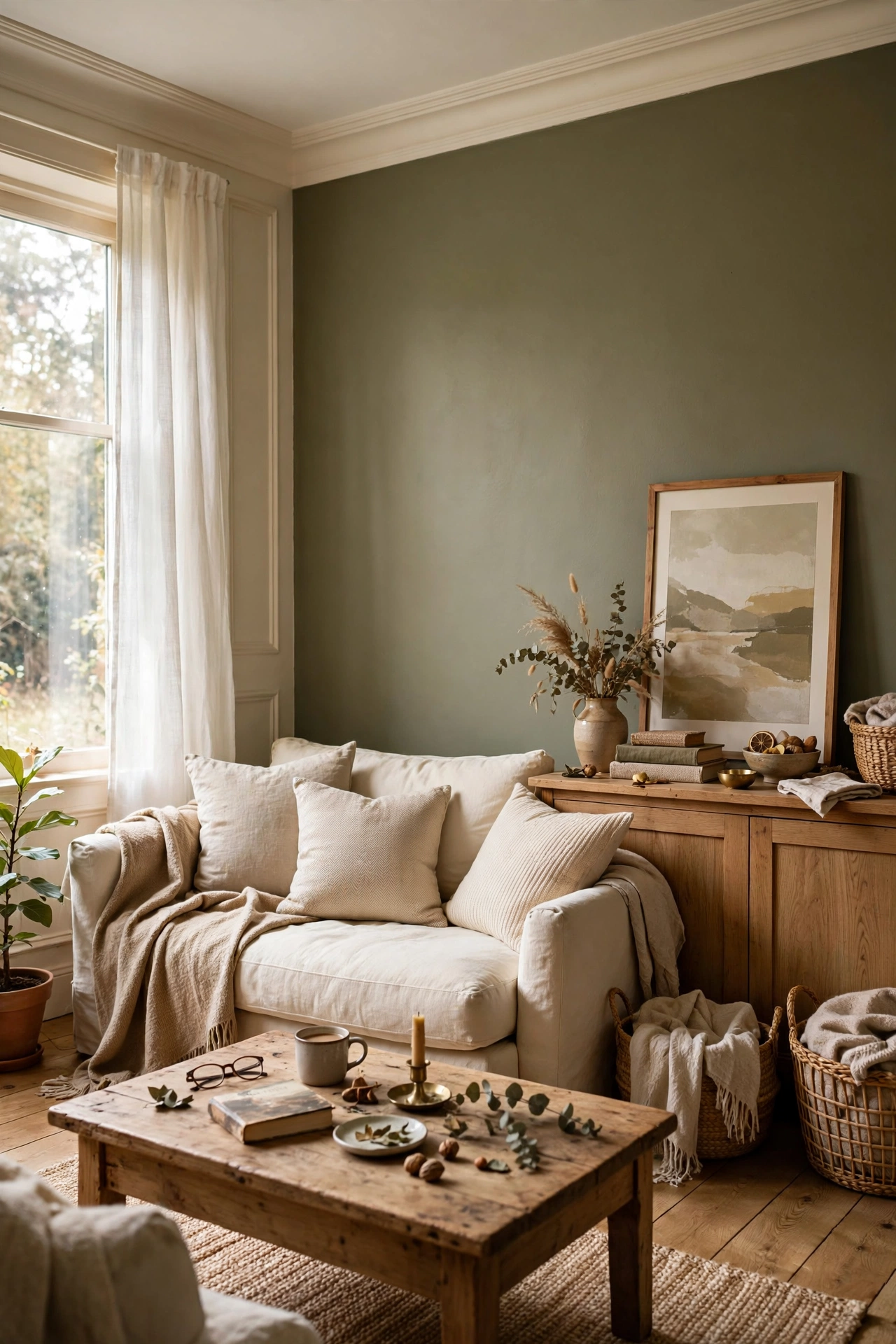
An accent wall is the fastest way to make olive feel intentional instead of accidental. Pick the wall behind your sofa, clean it down, and use painter’s tape to get a crisp edge where it meets the ceiling. Two coats of a muted olive, something like a sage-olive rather than army green, will do it; the muted tones are what keep the room feeling calm. I tried this in my last rental with a peel-and-stick alternative first, just to check I would not hate it, and lived with the swatch for a week before committing to paint. The result made my whole seating area feel anchored, like the sofa finally had a backdrop. Pair it with warm white trim and the contrast looks properly designed.
Cost: ~$35 | Time: a Saturday afternoon
Layer Olive Linen Curtains over Sheer Whites
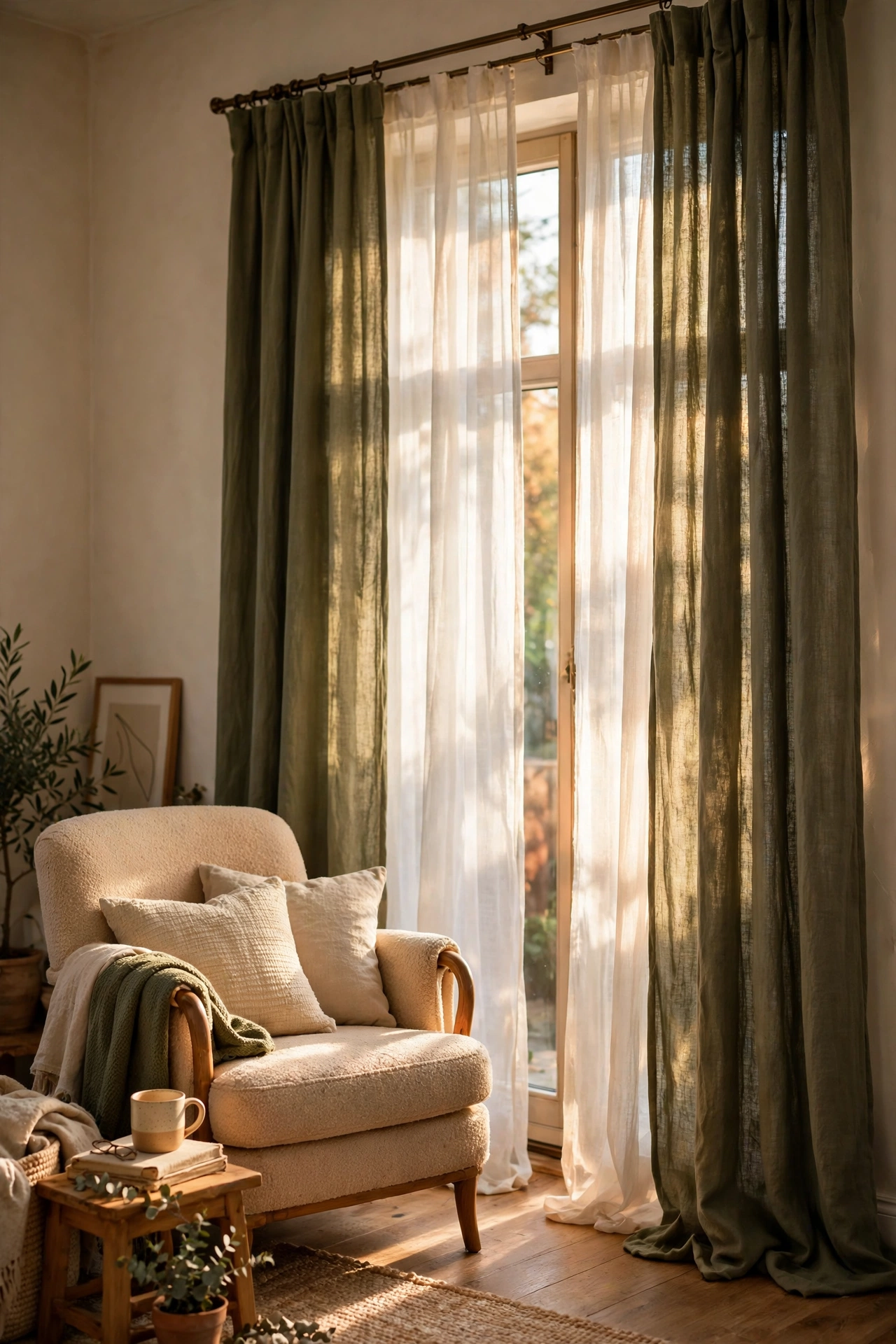
Curtains are one of the biggest colour blocks in a living room, so olive here makes a real statement. Hang simple white sheers on a double rod first, then add olive linen-look panels in front; the sheer layer keeps daylight soft while the olive frames the window. Measure from just below the ceiling to the floor, and let the panels kiss the floor rather than puddling, which collects dust. I tried this in my front room and the space instantly felt more tailored, like the windows had finally been dressed on purpose. The trick is keeping the rest of the palette light: cream walls, pale rug, and the olive does the heavy lifting.
Cost: ~$32 | Time: 45 minutes
Pro tip: If you are choosing between olive shades, hold the swatch up in daylight and lamplight before you commit. Olive shifts dramatically between the two, and the one that looks perfect at noon can turn muddy by evening.
Drape a Chunky Olive Knit Throw over Your Armchair
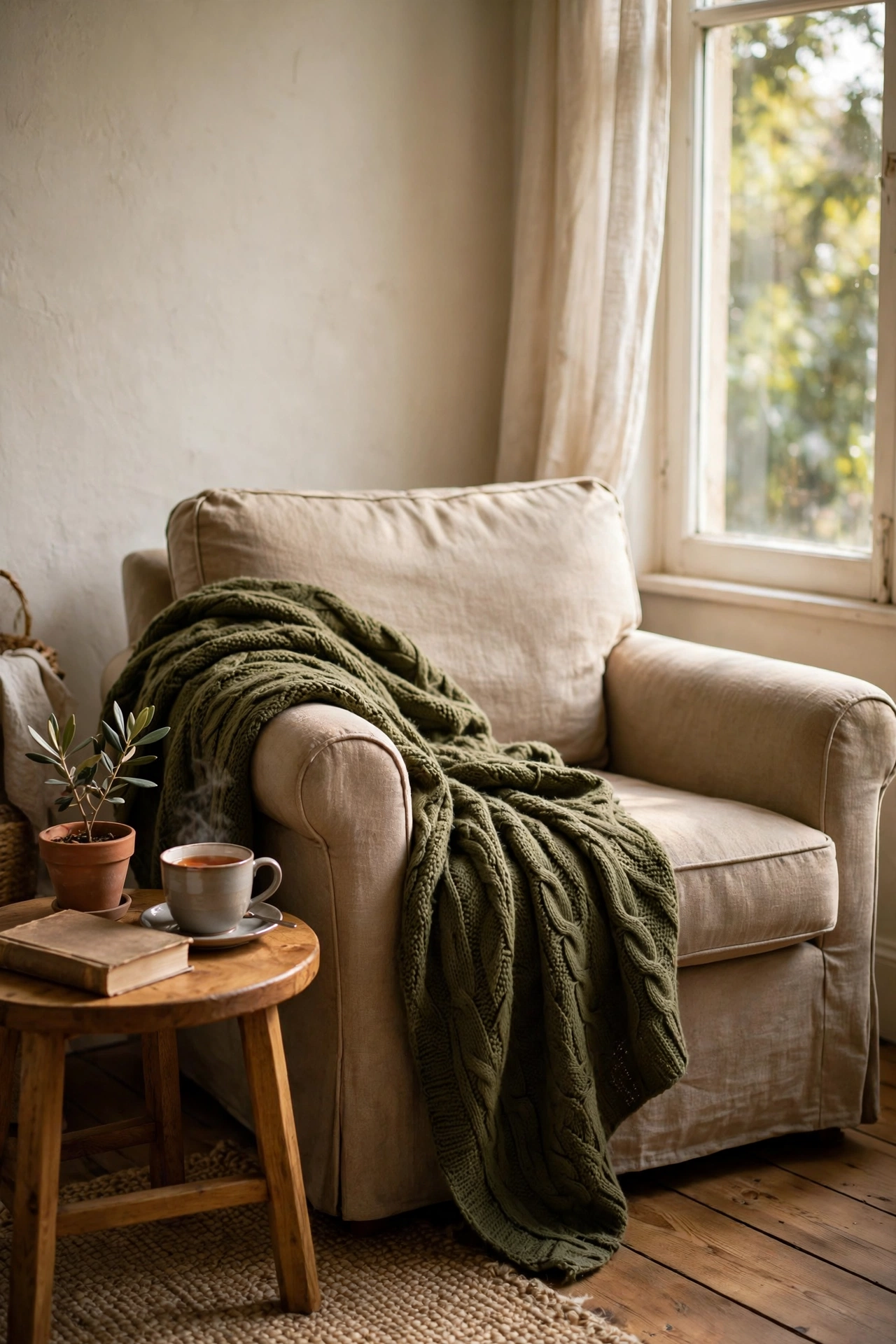
Nothing says cosy like a thick knit throw, and olive is a brilliant colour for it because it hides wear. Fold it in thirds lengthwise and drape it over one arm of your armchair or the corner of the sofa, then pull one corner forward so it looks casually placed rather than staged. I keep mine on the chair nearest the window, which is where I read in the evenings, and it has survived two years of daily use without looking tired. My mistake was draping it dead centre on the sofa at first, where it just looked like I was hiding a stain. Off to one side looks natural and inviting.
Cost: ~$24 | Time: 5 minutes
Build a Botanical Gallery Wall in Olive Tones
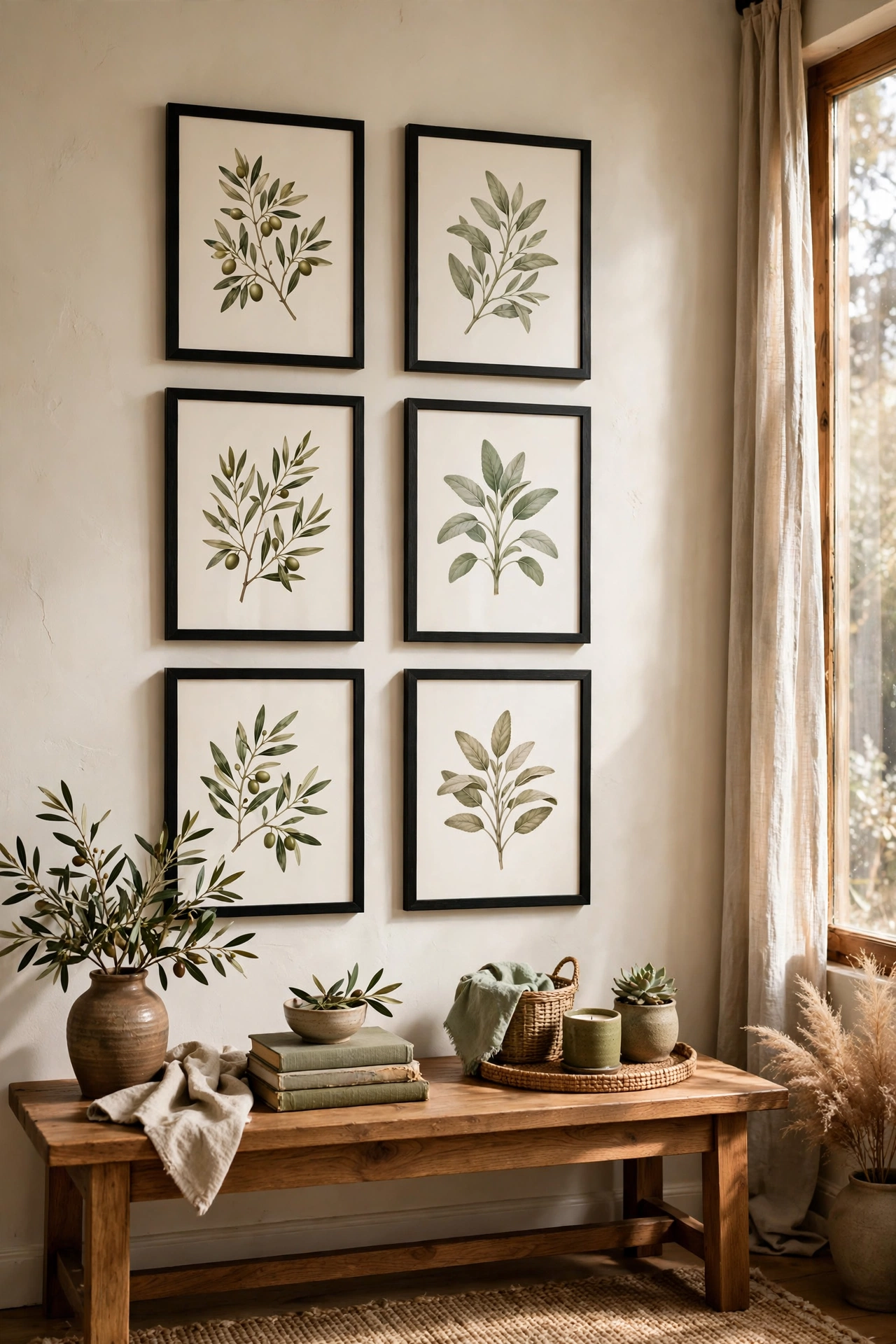
Prints are cheap, frames are cheap, and a gallery wall pulls a room together fast. I collected six botanical prints with olive and sage leaves, printed them at home on matte paper, and put them in simple black frames from a discount shop. Lay the arrangement out on the floor first; I use painter’s tape on the wall to mark positions before I hammer a single nail. In my living room the cluster sits above a small console, and it turned a blank wall into the bit of the room people comment on. Keep the frames identical and let the olive tones vary slightly; the mix of greens is what makes it feel collected, not matched.
Cost: ~$21 | Time: about an hour
Add a Vintage Olive Velvet Ottoman
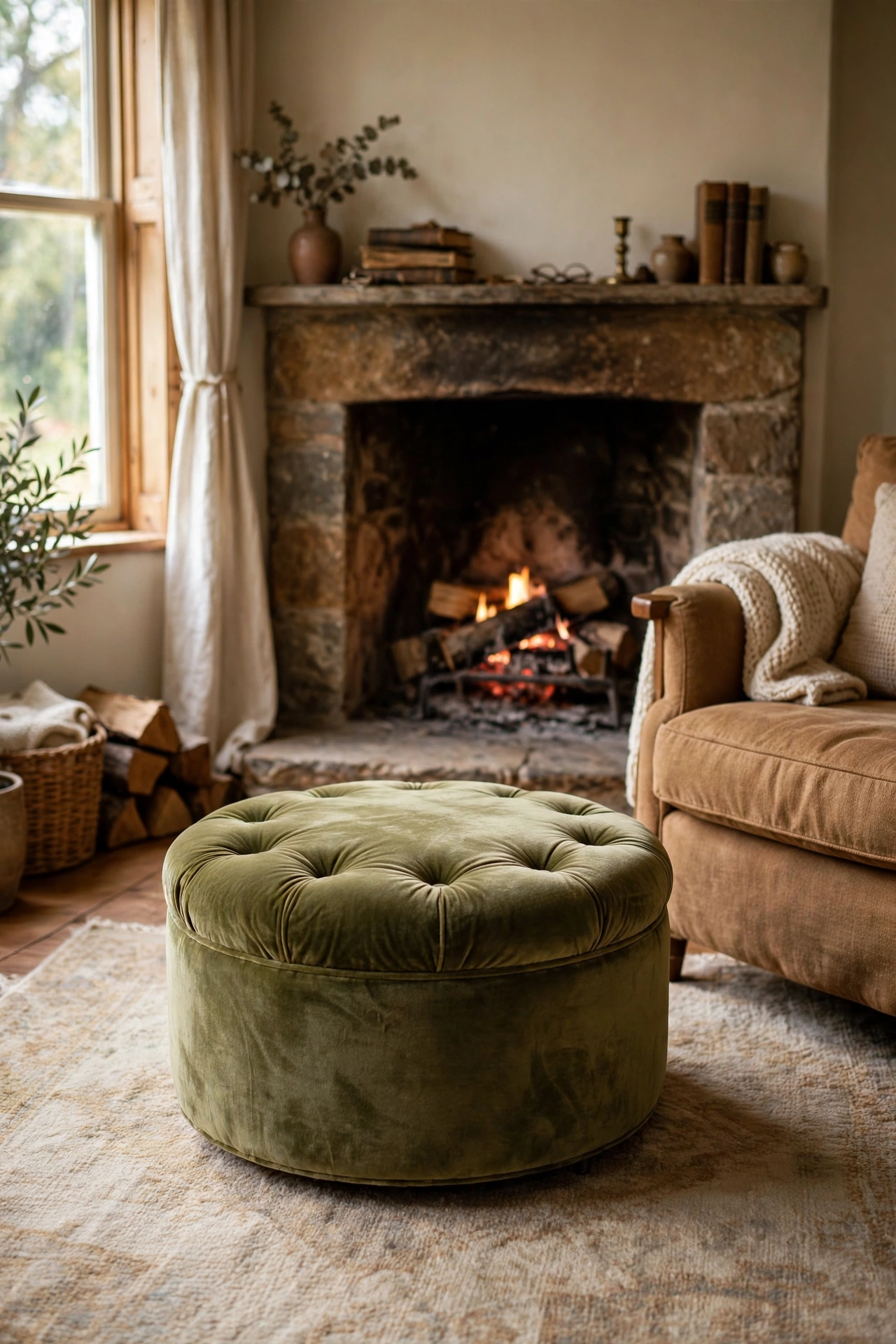
I found mine at a charity shop for less than the price of a takeaway, and it is now the most-used seat in the house. Look for a round velvet ottoman in olive, or buy a plain one and recover it with olive velvet fabric using a staple gun; the round shape hides wonky stapling. Mine sits in front of the fireplace as a footrest, and the kids fight over it. I tried a square one first and it looked blocky against my curved sofa, so shape matters more than you think. A quick steam with a handheld steamer lifts the pile and makes old velvet look nearly new.
Cost: ~$42 | Time: a weekend of thrifting
Pro tip: When thrifting for olive pieces, search for “green” too; sellers rarely label the shade correctly, and some of my best finds were listed under plain green.
Pair Olive Cushions with Terracotta for Autumn Warmth
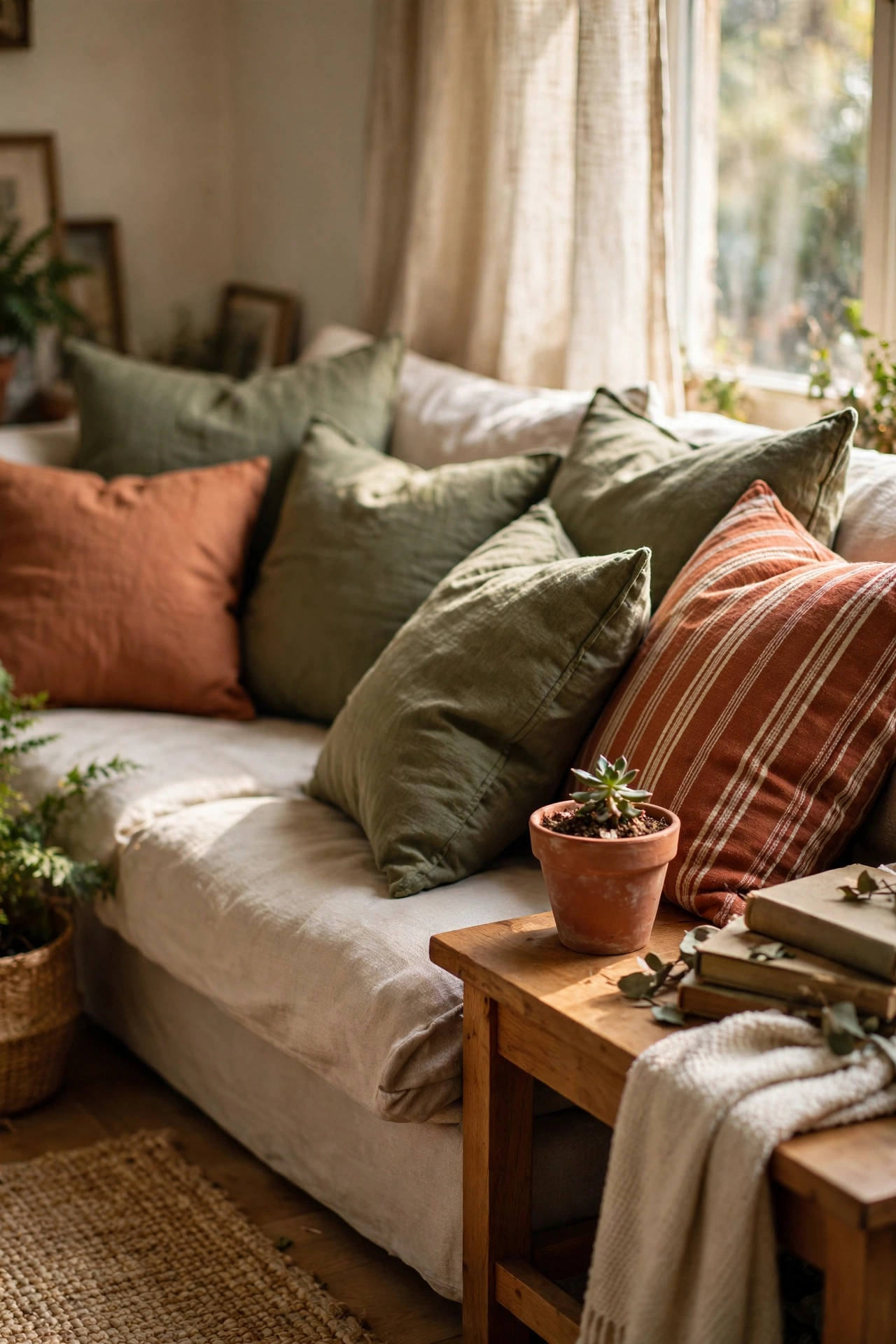
This is the colour combination I reach for every autumn without fail. Olive and terracotta sit next to each other in nature, so they never clash; add one terracotta cushion and one in a rusty striped pattern to your olive base and the whole sofa glows. I tried this last October and did not change it back until March, which tells you how well it worked. The trick is proportion: keep olive dominant and let terracotta be the accent, roughly two olive to one terracotta. A small terracotta planter on the side table ties the whole look together without buying anything big.
Cost: ~$19 | Time: 15 minutes
Paint a Tired Sideboard in Deep Olive
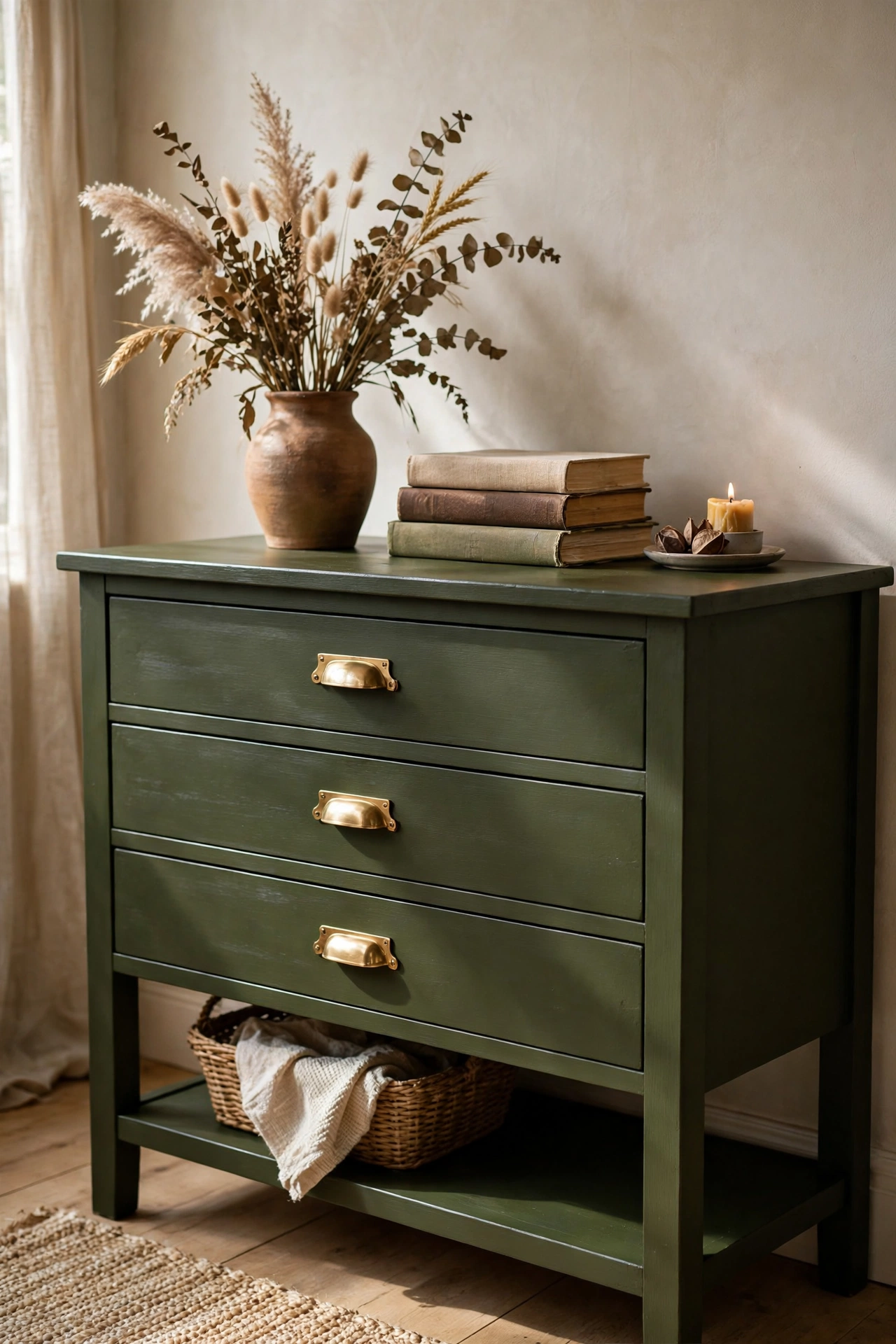
My sideboard was a brown laminate box that dragged the whole room down. I cleaned it, lightly sanded the shine off, used a bonding primer, then painted two coats of deep olive furniture paint with a small foam roller. The finish looks far more expensive than it was, and the olive makes the brass handles I added pop beautifully. I tried skipping the primer the first time and the paint peeled within a month, so do not skip it; that mistake cost me a full weekend of redoing it. This is a proper weekend project, but it is also the single biggest transformation on this list for the money.
Cost: ~$27 | Time: one full weekend
Anchor the Seating Area with an Olive Green Rug
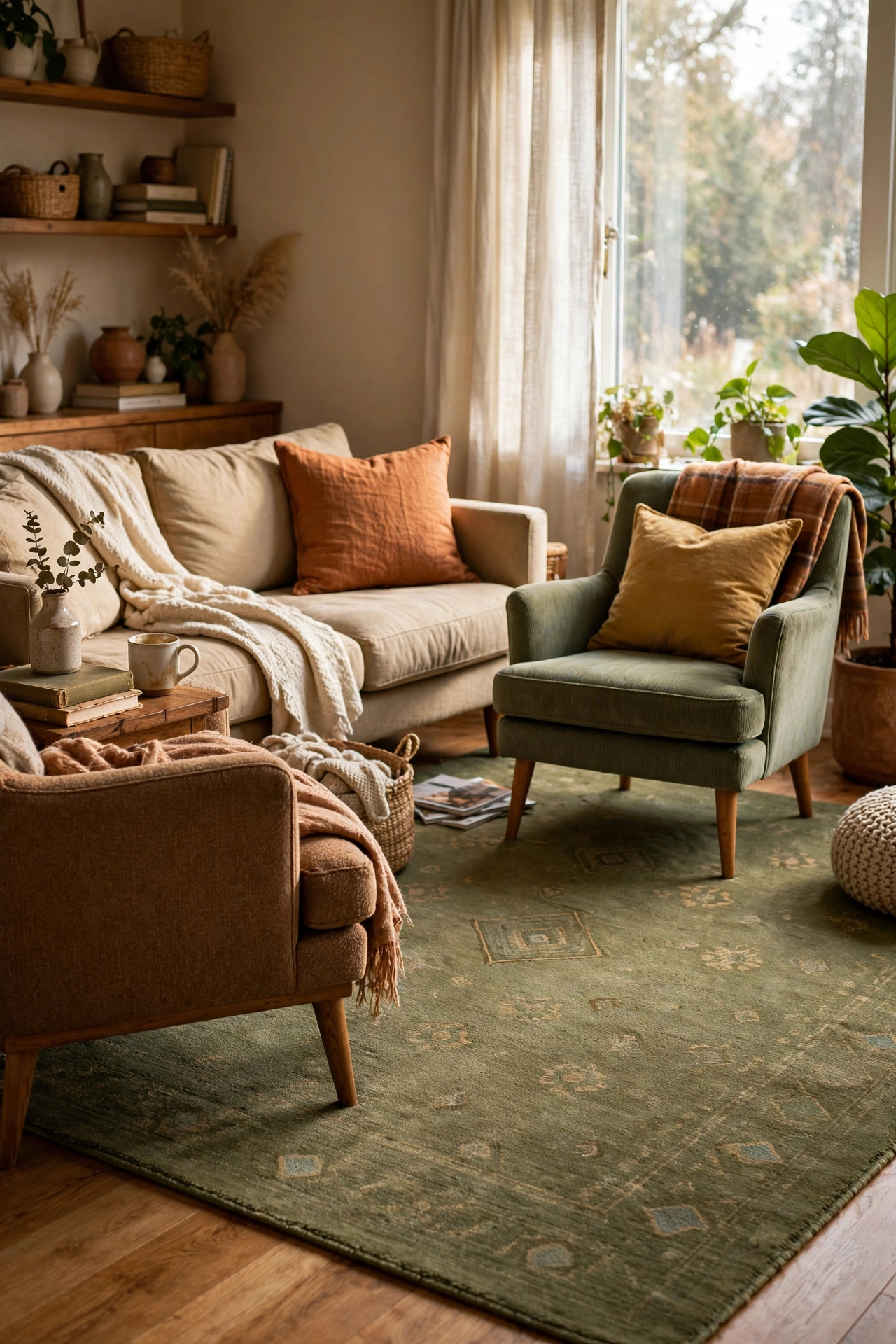
A rug in olive grounds a seating area the way nothing else can. Choose one big enough that the front legs of your sofa and chairs sit on it; a too-small rug makes the room feel choppy, which I learned the hard way in my first flat. Low-pile rugs in an olive tone are practical with kids and pets, and they hide crumbs far better than cream. I found mine on sale and it has a subtle pattern that breaks up the solid colour, which stops a big flat area of green feeling heavy. Lay it down, live with it for a week, then arrange the furniture around it rather than the other way round.
Cost: ~$58 | Time: 30 minutes
Pro tip: Put a rug pad underneath, even on carpet. It stops the rug creeping, adds a layer of softness underfoot, and makes a budget rug feel twice as thick.
Style Dried Eucalyptus in a Matte Ceramic Vase
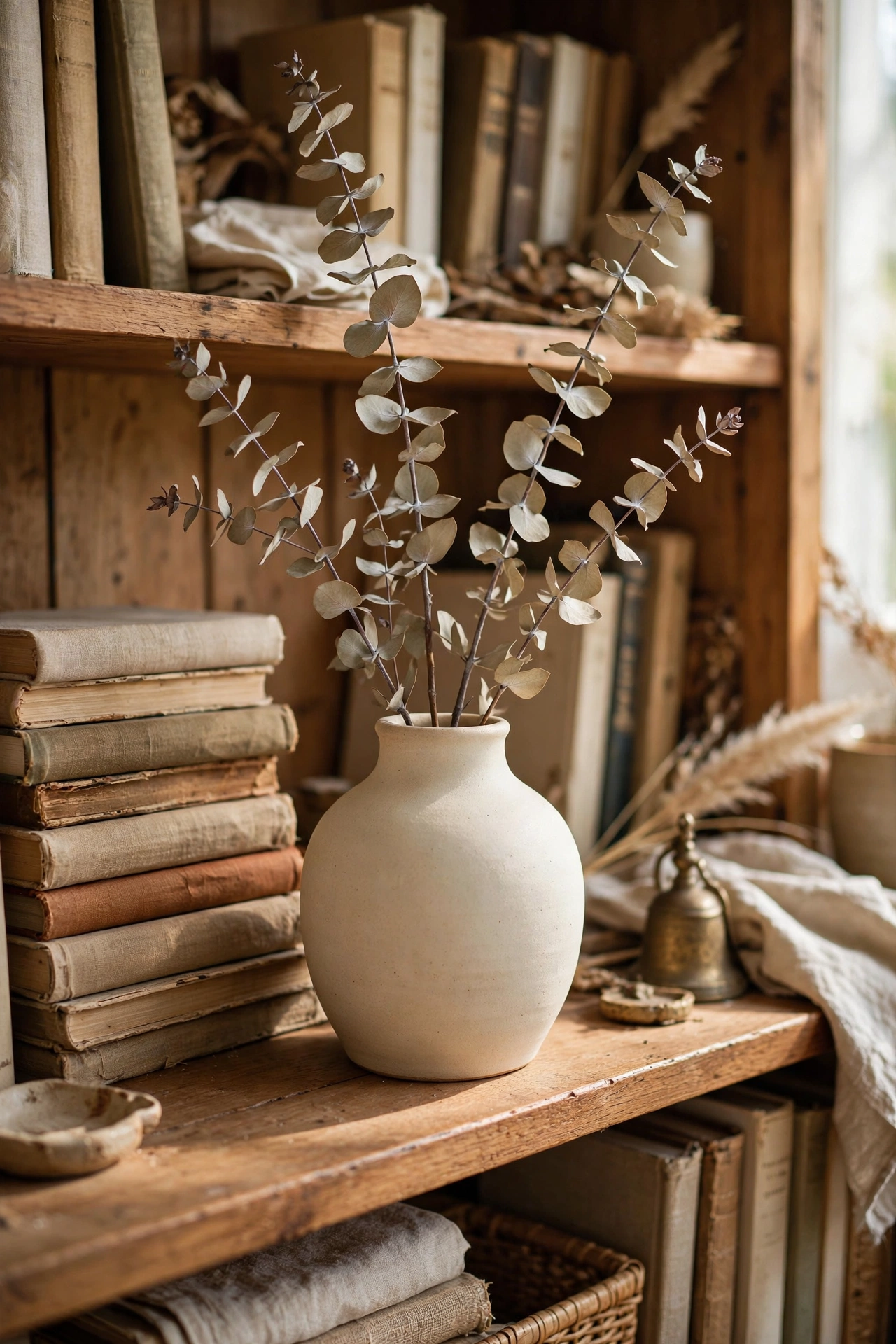
Dried stems are the lazy person’s flowers: they last for months and cost almost nothing. I bought a bunch of dried eucalyptus with olive-silver leaves and put it in a matte cream ceramic vase on my bookshelf, and it adds height and softness without any maintenance. Trim the stems at different lengths so the arrangement has shape, tallest at the back, and give the bunch a gentle shake outside first to drop loose leaves. My mistake was placing it in direct sun, where it faded to grey in a month; a bright spot out of direct sun keeps the olive tone. It has been there for over a year and still looks good.
Cost: ~$11 | Time: 20 minutes
Swap in an Olive Green Lampshade
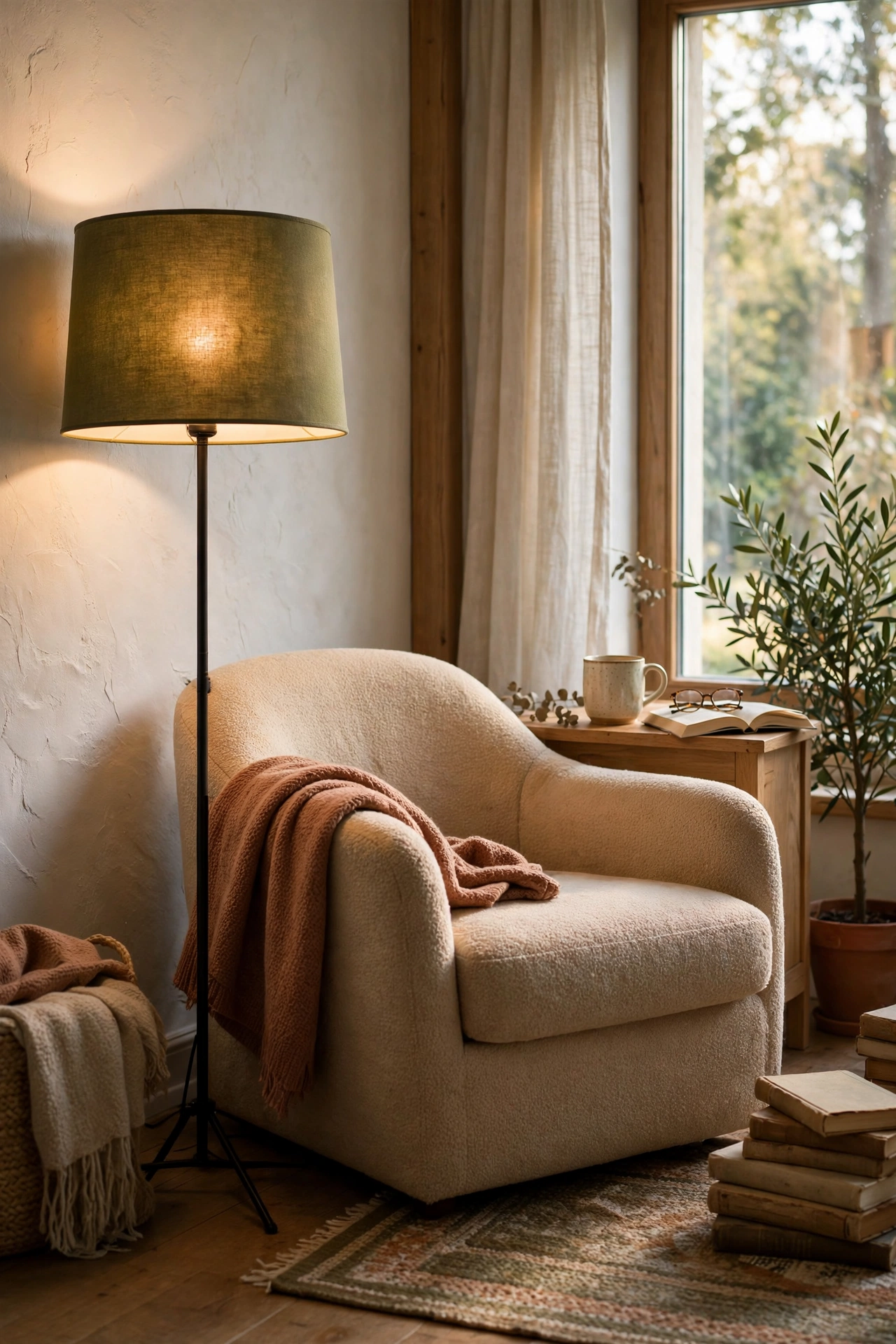
This is a five-minute change with a surprisingly big payoff. Unscrew your existing shade, pop on an olive linen or cotton drum shade, and suddenly the lamplight feels warmer and the corner looks styled. I did this on the floor lamp in my reading corner and the whole nook went from forgotten to favourite. Measure your old shade before buying; the diameter across the top and bottom matters more than the height. My first attempt was too small and looked like a hat perched on the lamp, which taught me to measure twice. Warm white bulbs only: cool white fights with olive and makes it look murky.
Cost: ~$23 | Time: a couple of minutes
Refresh Your Coffee Table with Olive Chalk Paint
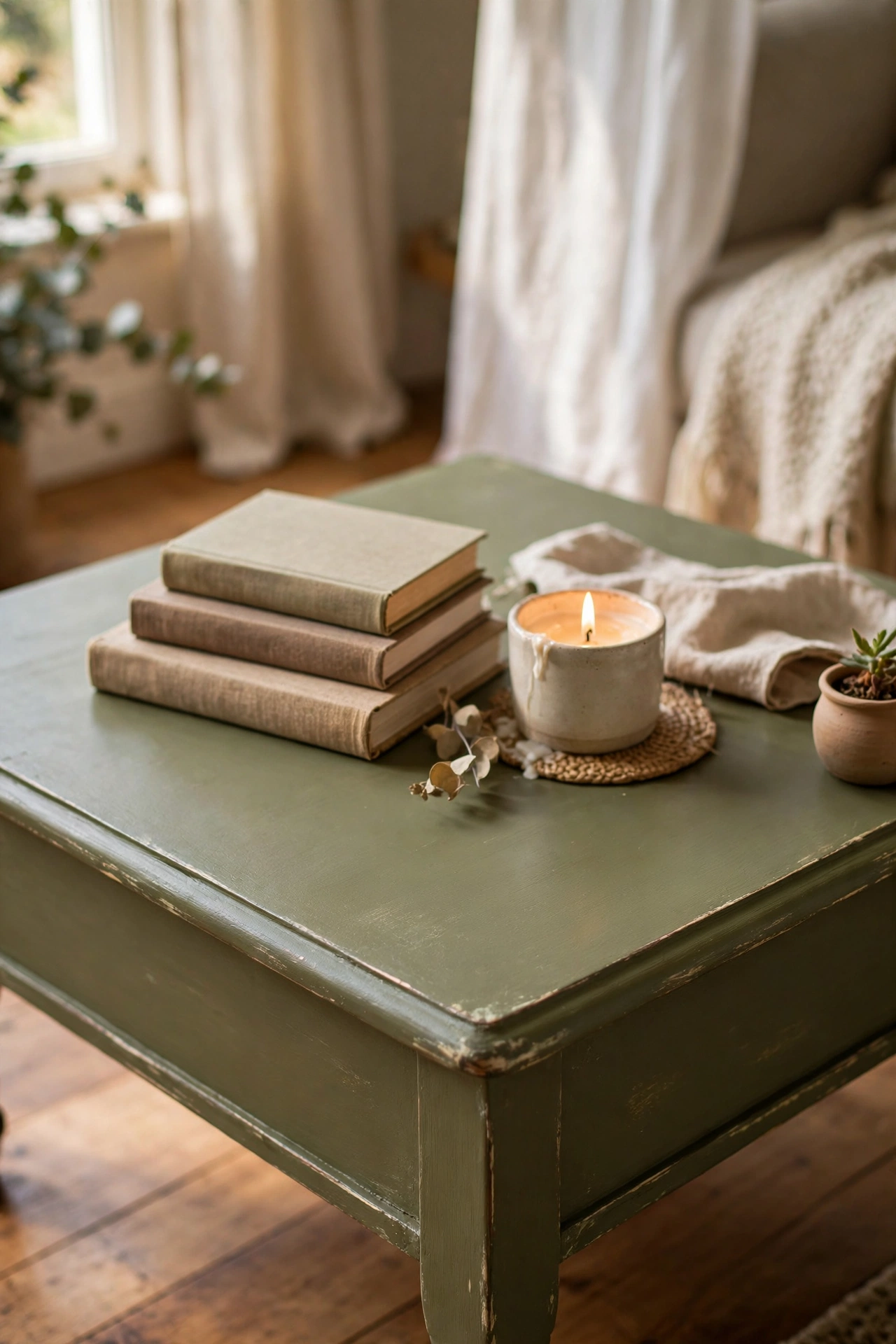
Chalk paint is forgiving, which makes it perfect for a first furniture project. I cleaned my scratched pine coffee table, gave it one coat of olive chalk paint, distressed the edges lightly with fine sandpaper, and sealed it with clear wax. The whole thing took an afternoon and the table looks like something from a vintage shop. I tried painting without distressing first and it looked too perfect, almost plastic; the light sanding on edges and corners is what sells the aged look. Keep the top mostly clear when styling: a small stack of books and one candle is enough to show off the new finish.
Cost: ~$15 | Time: one afternoon
Pro tip: Chalk paint shows brush marks if you overwork it. Lay it on in one direction, resist the urge to go back over it, and let the paint level itself.
Create a Cosy Reading Nook with Olive Floor Cushions
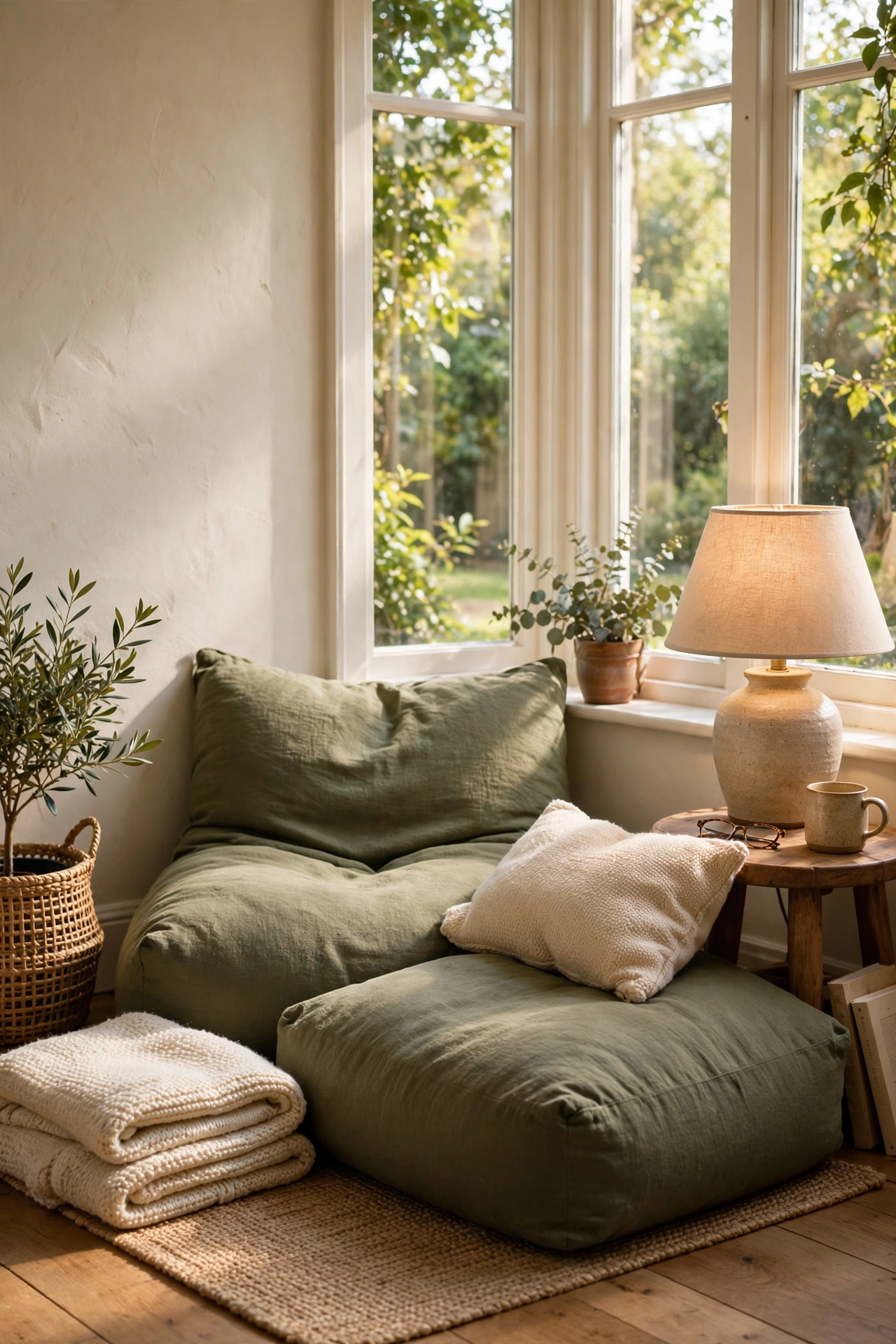
I carved my reading nook out of a dead corner by the window: two large olive floor cushions, a small side table, and a lamp. Stack the cushions slightly overlapping so they read as one generous seat, and add a smaller cushion in cream for contrast. This is where I end up every evening, and it cost less than one night out. My mistake was buying cushions that were too soft at first; they flattened within weeks. Look for firm foam inserts, which hold their shape and actually support your back. A folded throw within arm’s reach finishes it, because a reading nook without a blanket is just a corner.
Cost: ~$34 | Time: 25 minutes
Style Olive and Brass Together on a Tray
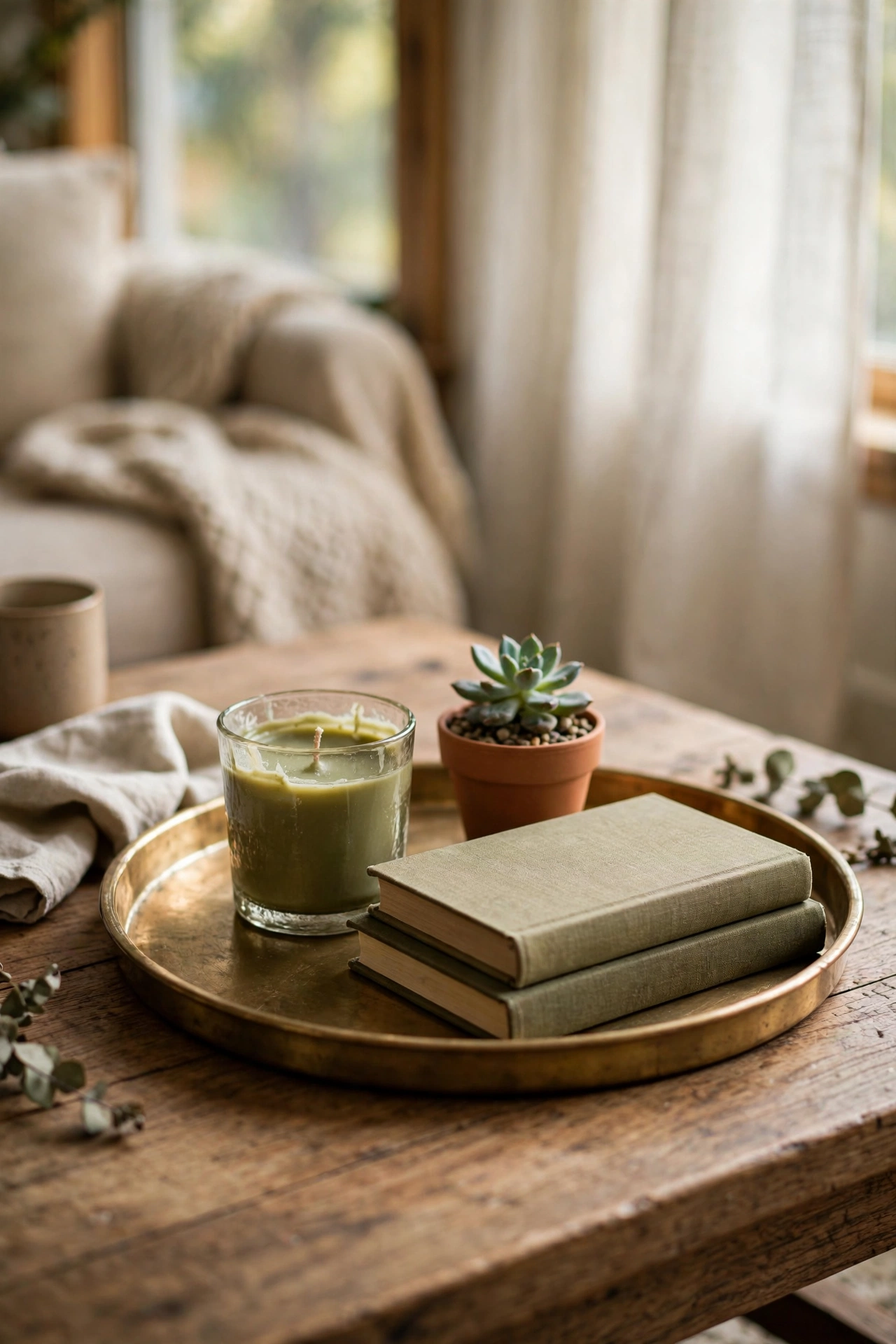
A tray turns random objects into a vignette, and olive plus brass is my favourite pairing for it. I use a round brass-look tray on my coffee table with a small olive candle, a tiny potted plant, and a stack of two books with olive-toned spines. The rule I follow is odd numbers and varied heights: tall, medium, low. I tried this with all-silver accessories first and it felt cold; swapping to warm brass made the olive glow. Keep the tray itself simple, because the styling is the star. When guests come over, the whole tray lifts off in one move, which is the practical bonus nobody talks about.
Cost: ~$16 | Time: a lazy Sunday morning
Finish with an Olive Velvet Pouf by the Fireplace
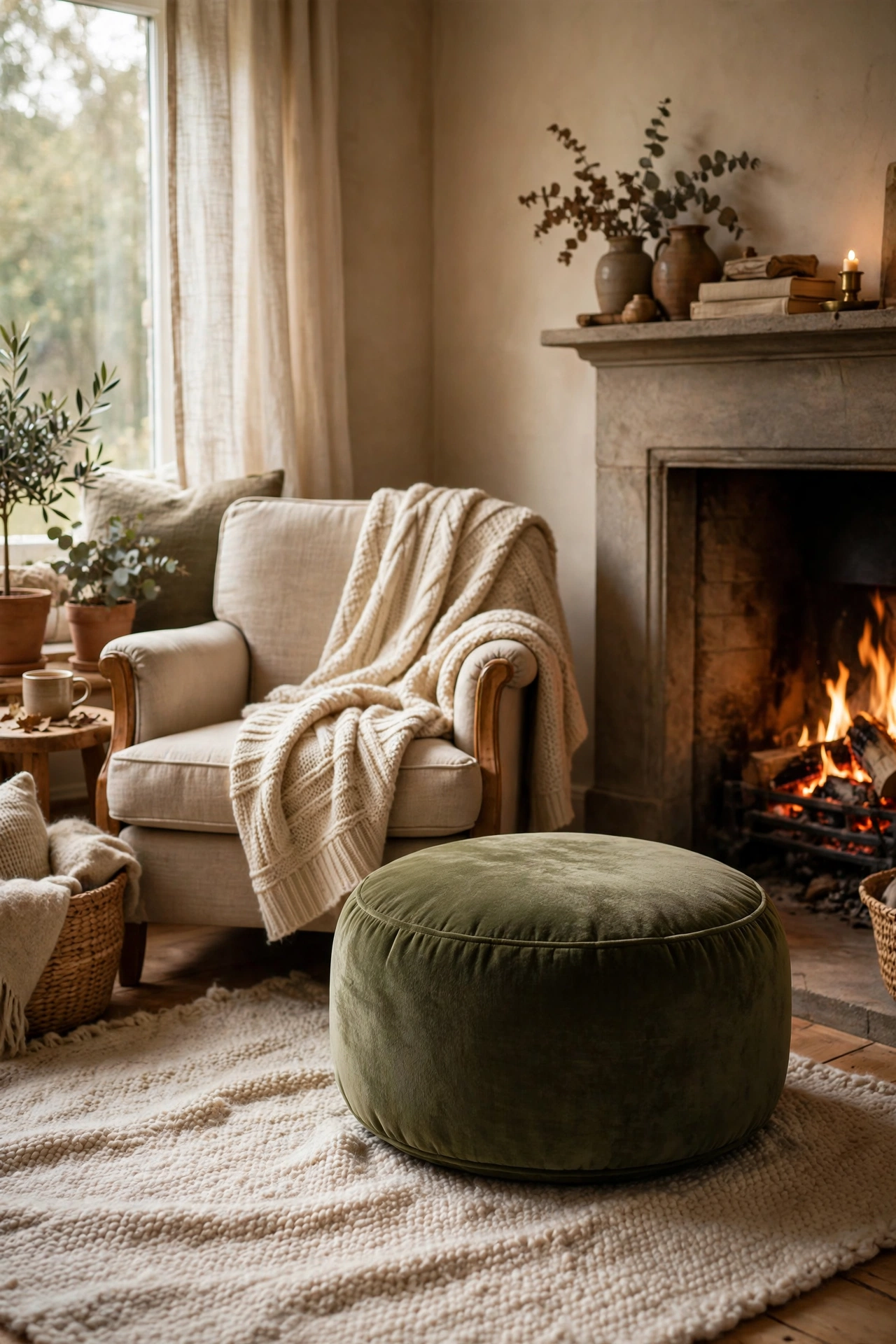
The pouf was my final purchase and it tied everything together. A round olive velvet pouf beside the fireplace gives you extra seating, a footrest, and a soft shape that balances all the hard furniture edges. I stuff mine firmly so it doubles as a side table for a tray of tea; underfilled poufs sag and look sad within weeks. In my living room it sits at a slight angle to the hearth, which feels more relaxed than pushed flat against the wall. It was the most I spent on any single item here, and honestly the one I would replace first if it ever wore out.
Cost: ~$45 | Time: a morning’s thrifting
Pro tip: Vacuum velvet pieces with an upholstery attachment monthly. Dust settles into the pile and dulls the colour, and a quick vacuum brings the richness straight back.
FAQ
What colours pair best with olive green in a living room? Cream, warm white, terracotta, mustard, and natural wood all sit beautifully beside olive. I keep metals warm too: brass and aged gold rather than chrome.
Does olive green make a small living room feel dark? Not if you use it in accents rather than wall to wall. In my old flat, which was tiny, olive cushions and one throw kept the room cosy without closing it in.
How do I stop olive green looking dull or muddy? Layer textures: velvet, linen, knit. Flat olive on flat surfaces can fall flat, but mixing weaves catches the light and keeps the colour alive.
More ideas to try: (see also: 15-sage-green-living-room-ideas-on-a-budget), (see also: cheap-cosy-fall-living-room-decor), (see also: how-to-style-a-neutral-sofa-on-a-budget).
If one of these caught your eye, save this idea to your Pinterest board so you can find it later.
