15 Living Room Organization Ideas That Actually Work
Last winter my living room looked fine from the doorway and fell apart the moment you sat down. Remotes hid between cushions, blankets slid off the sofa arm, and every flat surface collected mail, chargers, and things nobody could name. I tried a big weekend tidy first, and it lasted about three days. These Living Room organization ideas came from what finally stuck instead: small homes for the stuff we use every day, not a perfect room nobody is allowed to touch.
The turning point was embarrassingly simple. I stopped buying pretty boxes and started watching where things actually landed. The remotes always ended up on the right side of the sofa, so that is where their basket went. The blankets always ended up in a heap by the window, so that is where the blanket basket went. Once each habit had a home nearby, tidying stopped feeling like a chore and started feeling like putting a book back on a shelf.
None of these ideas needs a full makeover or a big budget. Pick the three messes that bother you most, fix those first, and let the rest wait. A living room that works for real evenings, with snacks, kids, guests, and a dog on the rug, will always beat a showroom that falls apart by Tuesday.
1. Give Every Remote a Home With a Small Basket
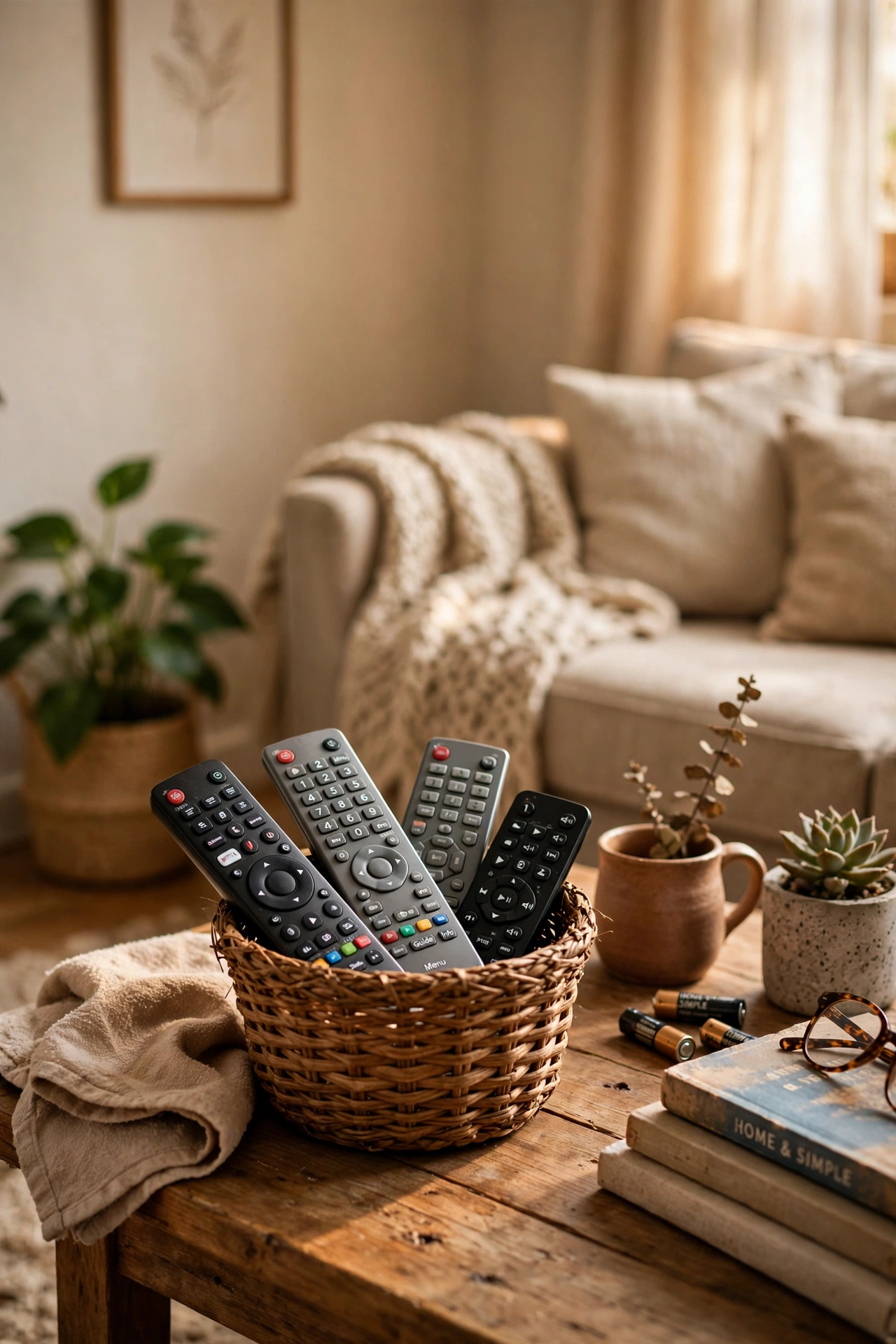
A small basket on the side table ends the daily remote hunt, because remotes finally have one obvious place to live. Pick a basket that fits the table without crowding your coffee cup, drop all the remotes in it, and add the small controllers for the lights or the fan if you have them. I tried this after losing the TV remote inside the sofa for the third time in a week, and I have not dug down a cushion since. The mistake to avoid is buying a basket that is too pretty to use, because if it feels like decoration, nobody will put things back in it. Keep it within arm’s reach of where you sit, and make returning the remote part of switching the TV off.
Cost: ~$5 | Time: 10 minutes
2. Tame the Coffee Table With a Tray and a Rule
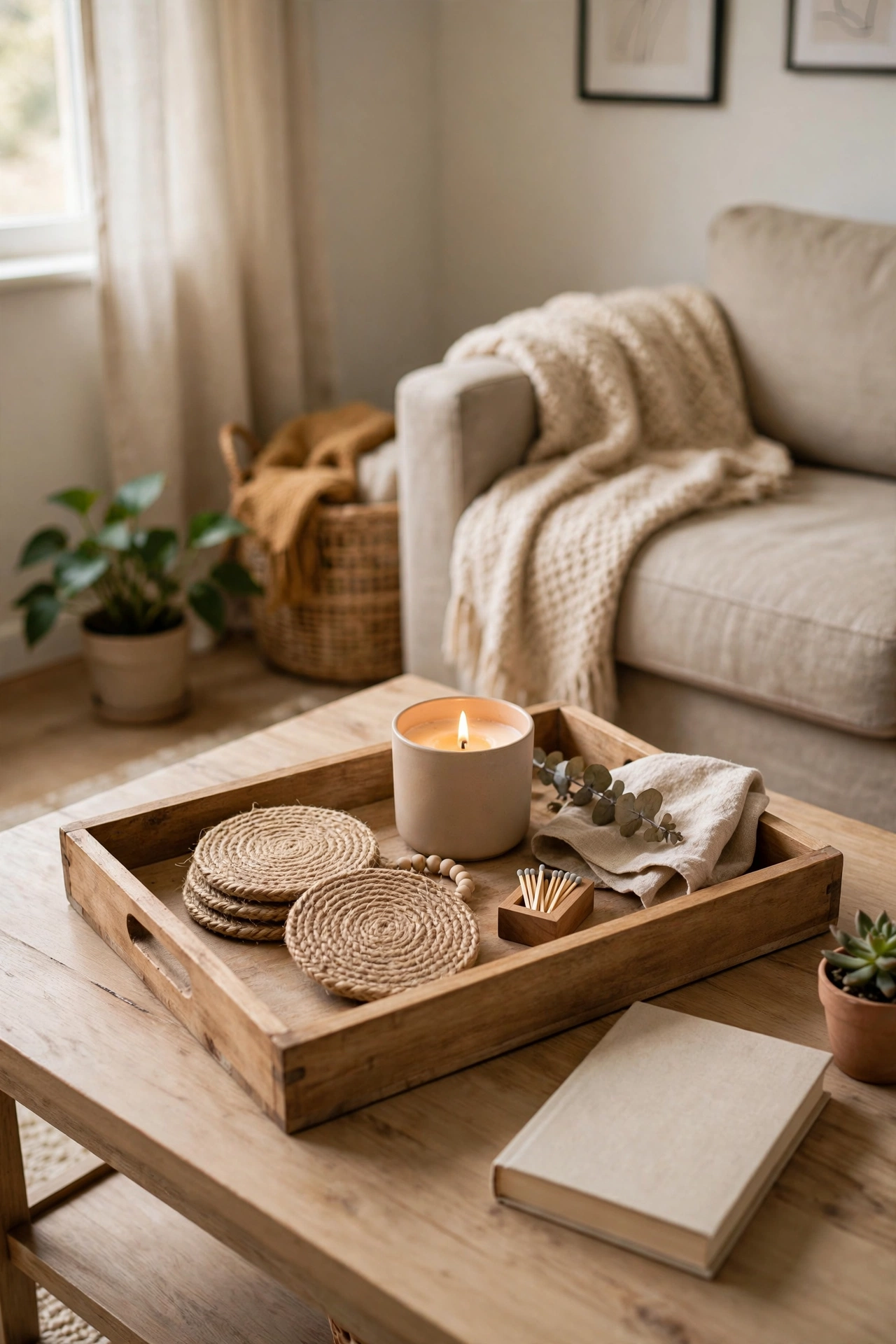
A tray on the coffee table gives the clutter a border, and the rule that nothing lives outside the tray keeps it from creeping back. Choose a tray big enough for a candle, a coaster stack, and the remote basket, then move everything else off the table to its real home. I tried this on a Sunday afternoon, and the table stayed clear for a whole week, which had never happened before. The mistake I made first was letting the tray itself become a dumping ground, so now anything that does not fit in the tray leaves the table. Wipe the tray once a week, keep only what you actually use there, and the room instantly looks calmer.
Cost: ~$8 | Time: 15 minutes
3. Hide Cords Behind a Fabric Cord Cover
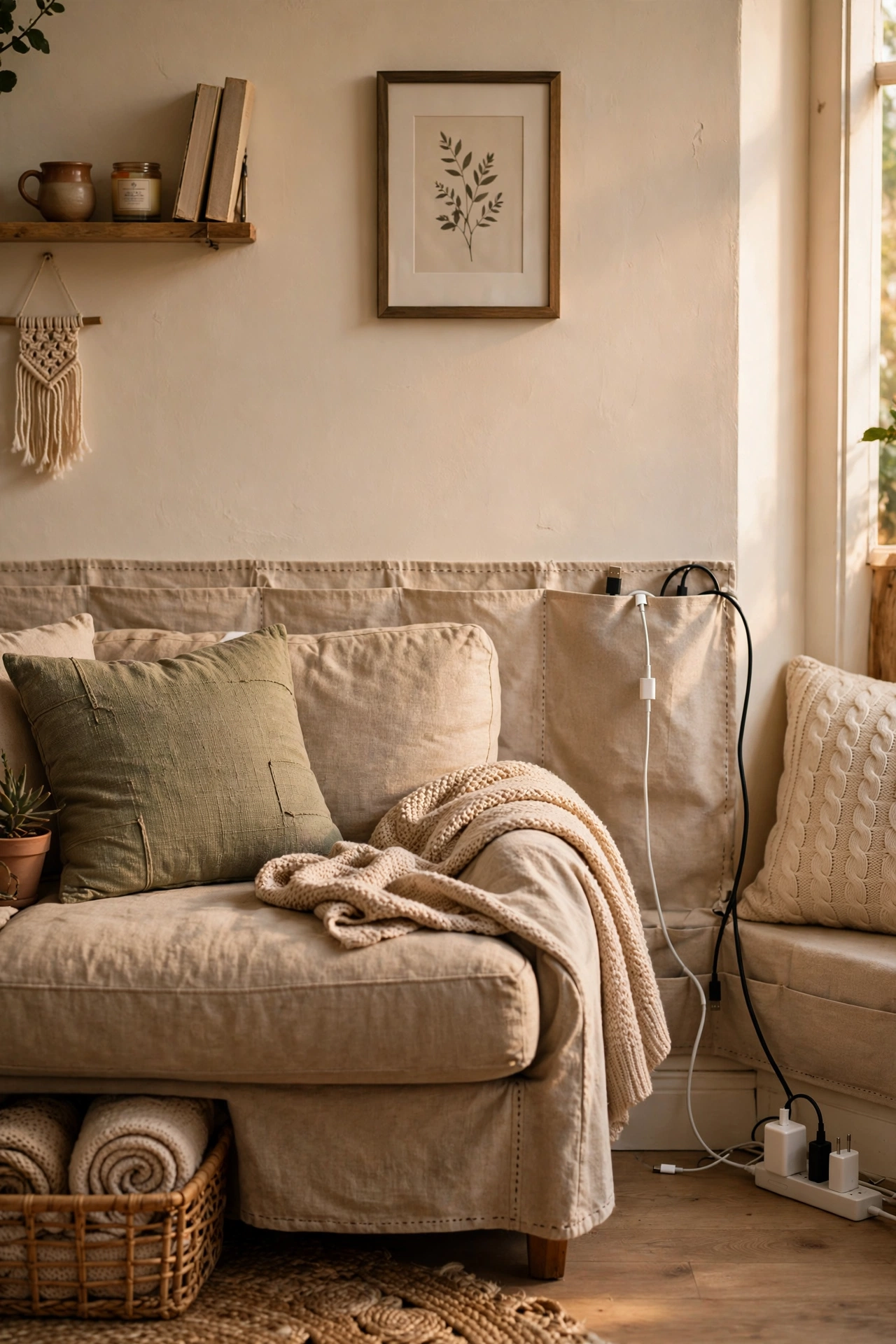
A fabric cord cover turns a tangle of charger cables and lamp cords into one neat line along the wall, which makes the whole room feel less busy. Gather the cords running to the sofa or the TV stand, bundle them loosely with a couple of ties, and slip the cover over the bundle from the plug to the furniture. I tried this behind our sofa after tripping over a phone charger twice, and the floor finally looked intentional instead of wired. Do not bundle cords too tightly, because tight bends can damage cables and make them hard to replace later. Leave a little slack at each end, label the plugs if you have several, and vacuuming gets easier too.
Cost: ~$7 | Time: 20 minutes
4. Add a Lidded Basket for Blankets by the Sofa
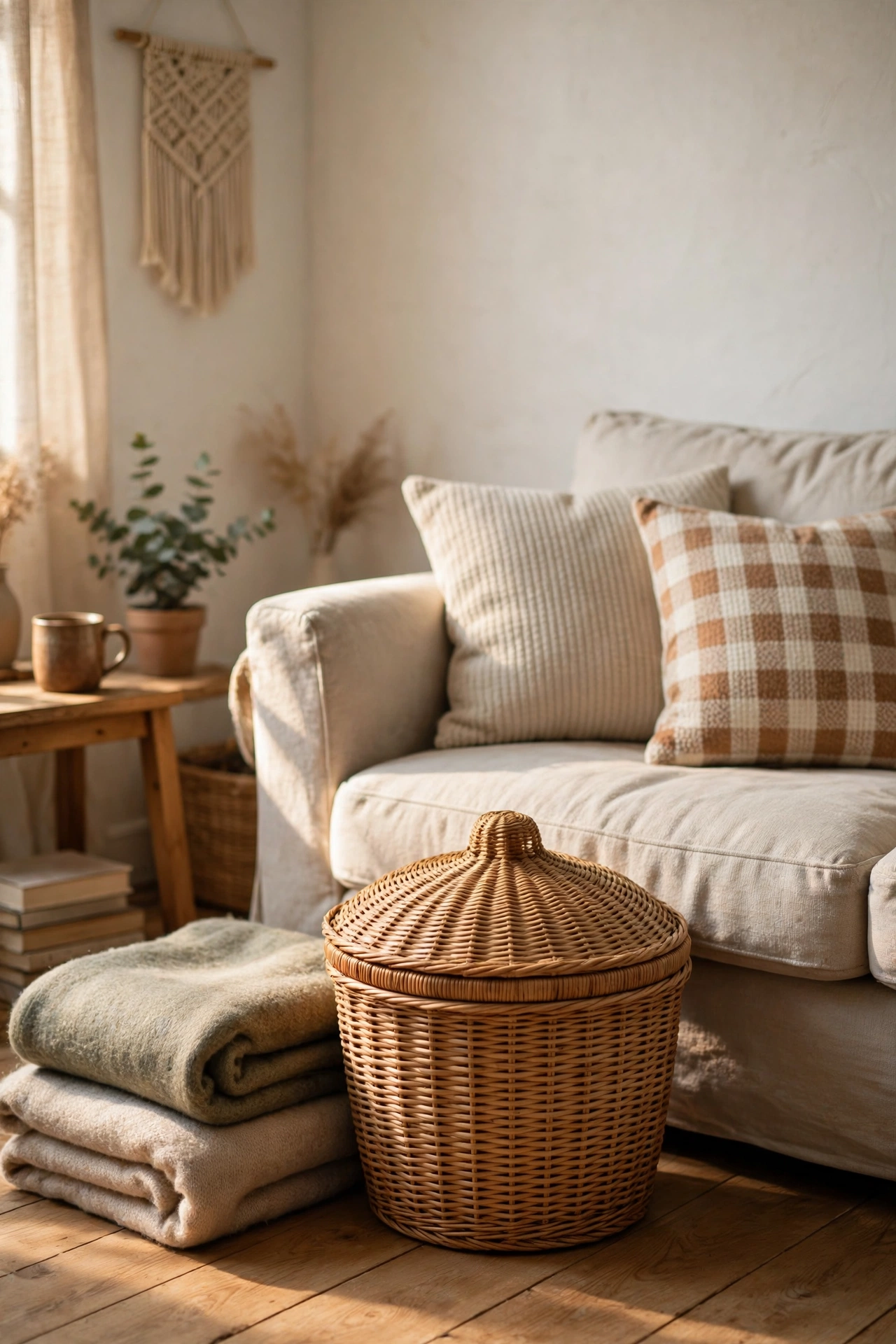
A lidded basket beside the sofa holds the blankets you actually use, so they stop living in a heap on the cushions or the floor. Fold each blanket once, stack them loosely in the basket, and put the lid on when guests arrive so the room looks tidy in seconds. I tried this after counting four blankets draped over one armchair, and the sofa finally had room for people again. The mistake to avoid is stuffing in blankets nobody uses, because a full basket is just a new pile with a lid. Keep two or three favourites, store the rest elsewhere, and pull a blanket out only when you need it.
Cost: ~$12 | Time: 10 minutes
Pro tip: Put the blanket basket on the side of the sofa where people actually reach for a blanket, not where it looks best in a photo. A basket that is easy to use gets used.
5. Sort Books by How Often You Actually Read Them
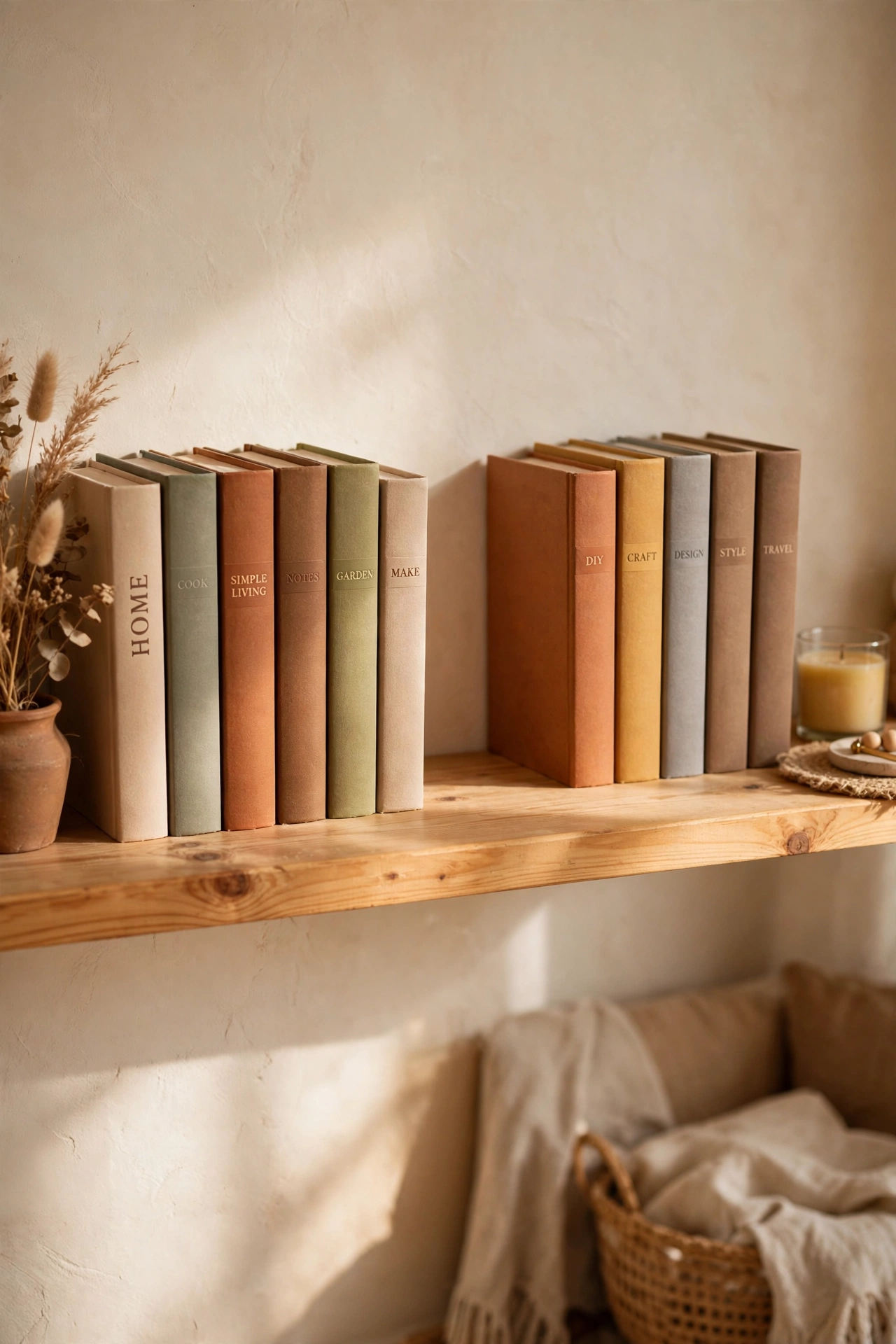
Sorting books by how often you reach for them frees shelf space and stops the shelves from looking like a storage unit. Pull everything off one shelf, keep the books you reread or reference near the sofa, and move the rest to a higher shelf, a bedroom, or a donation box. I tried this with a shelf I had not touched in two years, and half of it left the room without me missing a single title. Do not sort by colour first if you cannot find anything afterwards, because a pretty shelf you cannot use is just decoration. Keep current reads at eye level, group the rest by topic, and leave one empty gap so new books have somewhere to go.
Cost: ~$0 | Time: 30 minutes
(see also: 19-bedroom-organization-ideas-on-a-dime)
6. Use the Side of the Sofa for a Slim Magazine Holder
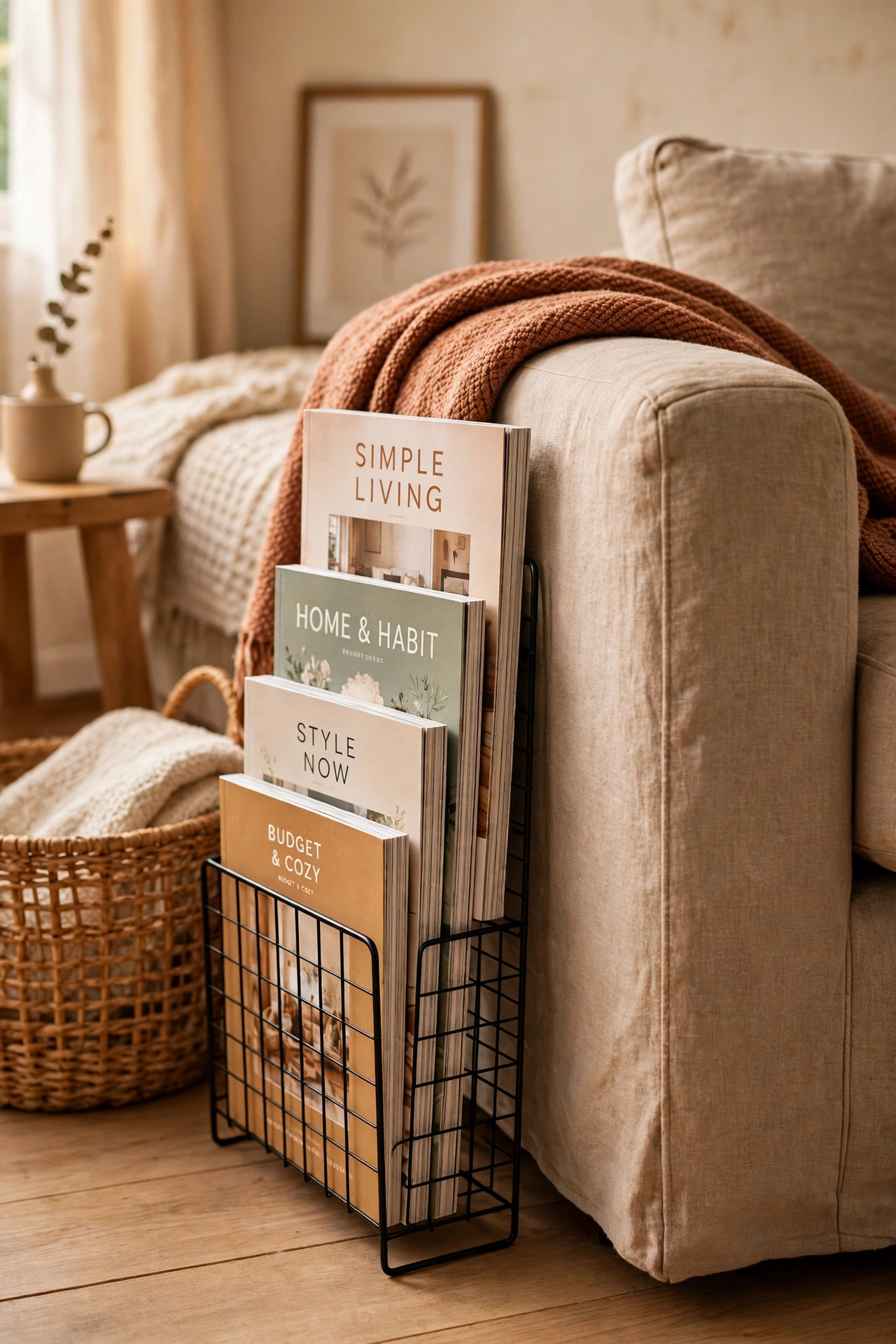
A slim magazine holder tucked beside the sofa arm keeps magazines, catalogues, and kids’ activity books upright instead of stacked in a sliding pile. Slide the holder between the sofa and the side table, stand the current issues upright, and recycle anything older than a month. I tried this after a stack of magazines slid off the table and scattered across the rug, and the pile has never come back. The mistake to avoid is keeping every issue just in case, because a holder stuffed full is no better than a pile. Keep five or six at a time, pass finished ones on, and the holder stays useful rather than becoming another shelf.
Cost: ~$9 | Time: 15 minutes
7. Create a Drop Zone by the Living Room Door
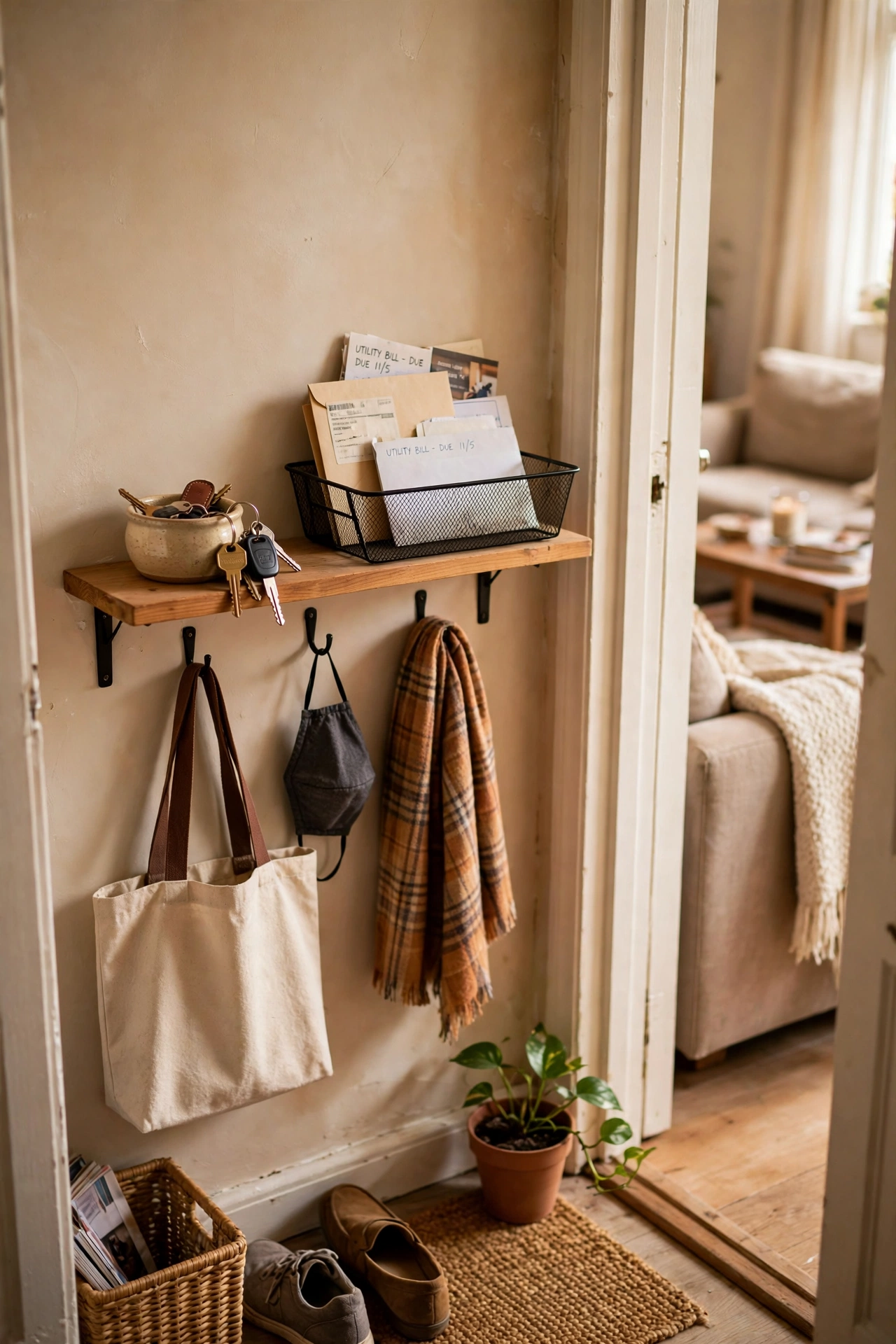
A small drop zone by the living room door catches keys, bags, and mail before they spread across the coffee table. Set a shallow bowl for keys, a hook for one bag, and a small tray for mail, all within one step of the door. I tried this after finding my keys in three different rooms in one week, and I have not hunted for them since. Do not let the drop zone grow into a second storage area, because a tray that holds everything holds nothing well. Empty the mail tray every evening, return bags to their hooks, and the rest of the room stays clear because the clutter stops at the door.
Cost: ~$10 | Time: 20 minutes
8. Swap Open Shelves for Closed Baskets on Lower Shelves
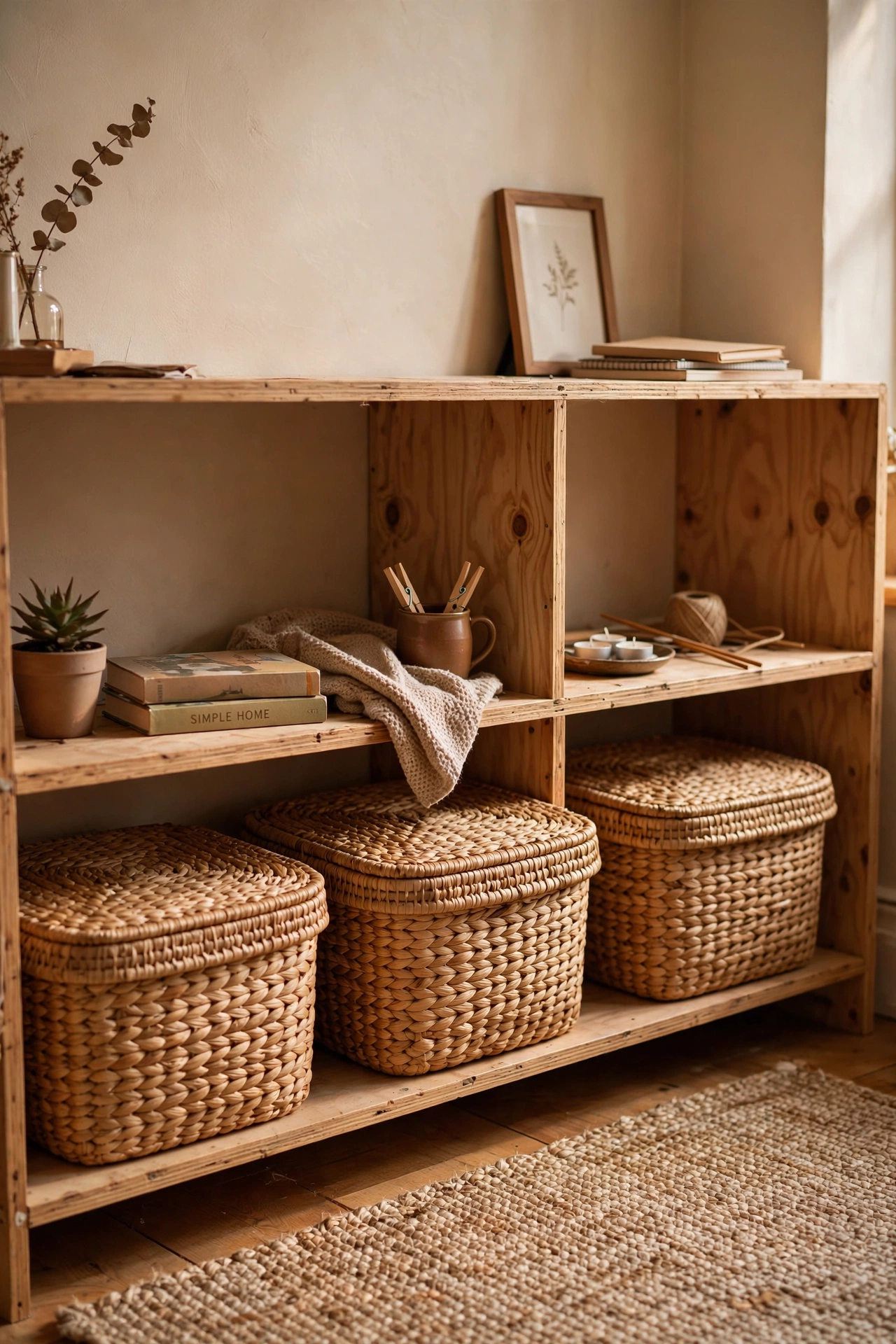
Closed baskets on the lower shelves hide the messy, everyday stuff while the upper shelves stay open for books and things you like looking at. Measure the shelf, buy baskets that fit with a little room to pull them out, and sort one category per basket, such as games, chargers, or pet toys. I tried this on our lowest shelf, which used to be a jumble of board games and cables, and it now looks tidy even when the baskets inside are not perfect. The mistake I made first was buying baskets before measuring, so one stuck out and blocked the door. Label each basket lightly, keep heavy items low, and pull out only the basket you need.
Cost: ~$15 | Time: 25 minutes
Pro tip: Label baskets on the inside of the rim if you hate visible labels. You still find things fast, and the shelf keeps its clean look.
9. Label the Baskets So Guests Can Tidy Too
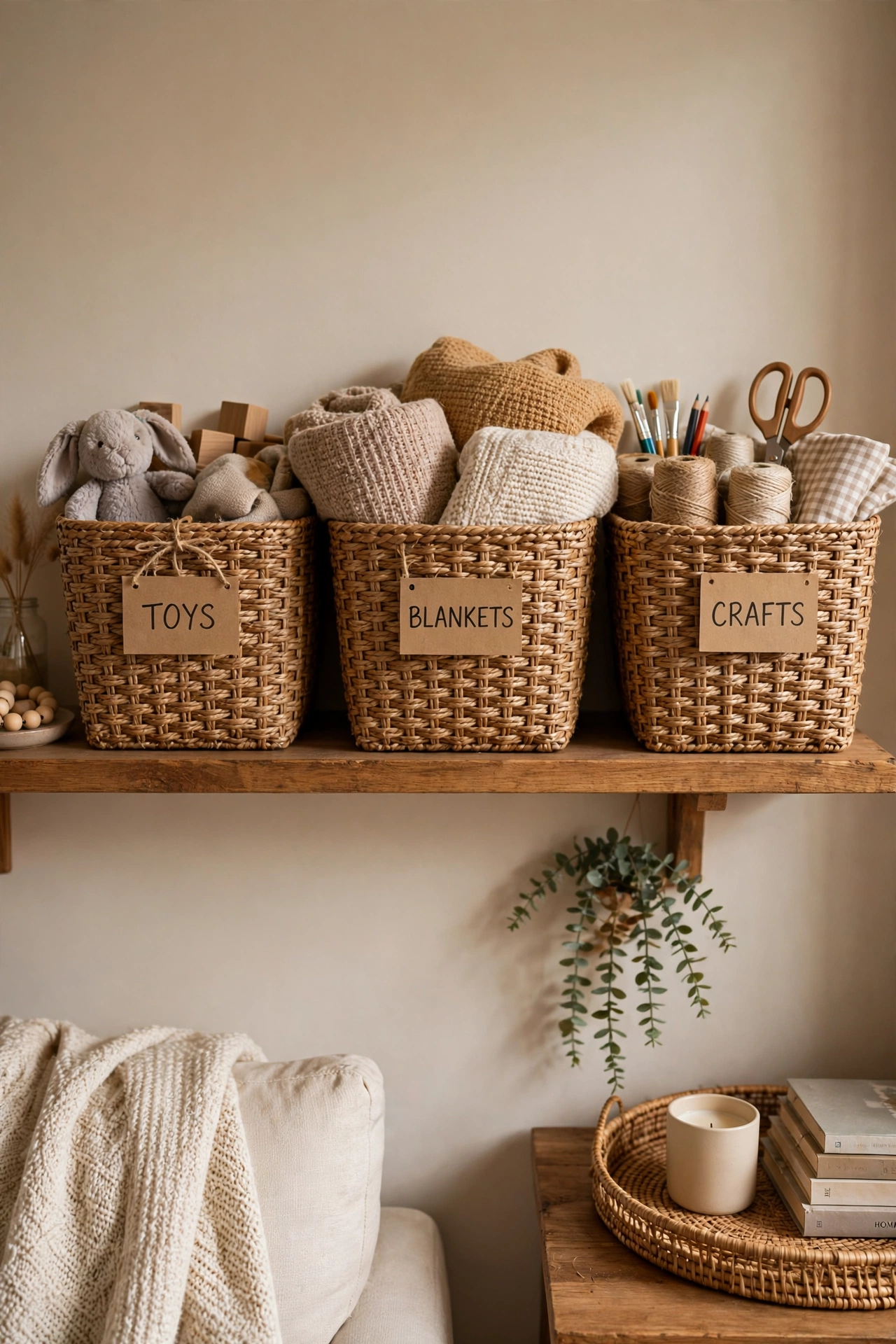
Labels on baskets mean guests, kids, and partners can put things away without asking you where everything goes, which is half the battle. Use simple words like blankets, games, or chargers, write them on small tags or masking tape, and stick them where they are easy to read. I tried this before a family visit, and for the first time someone else tidied the living room correctly while I cooked dinner. Do not use clever or vague labels, because a basket marked miscellaneous becomes the new junk drawer within a week. Keep labels honest and specific, update them when the contents change, and the system keeps working even when you are not the one tidying.
Cost: ~$2 | Time: 15 minutes
10. Corral Kids Toys in One Rolling Bin
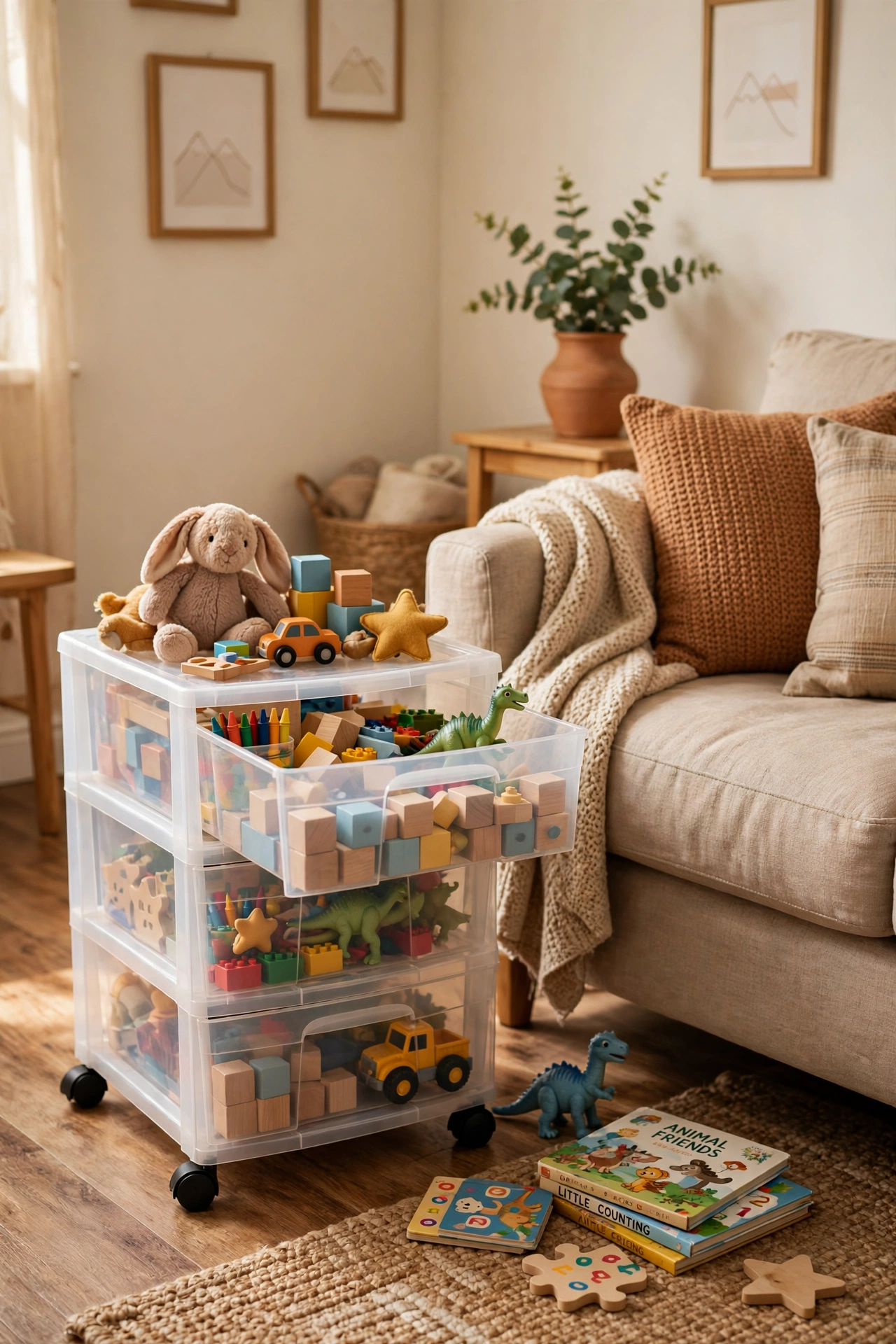
One rolling bin for kids’ toys gives playtime a clear end point, because everything goes back into the same bin when play is over. Pick a bin with wheels that fits under a side table or beside the sofa, let kids choose which toys live in it, and roll it out for play and back for tidy-up. I tried this after stepping on the same building blocks three nights in a row, and evening tidy-up dropped to about two minutes. The mistake to avoid is buying a bin so big that kids cannot push it, because then you become the one rolling it. Keep the bin at kid height, rotate toys monthly so the bin stays fresh, and keep only what fits.
Cost: ~$14 | Time: 20 minutes
11. Hang a Slim Rail for Throws Instead of Piling Them
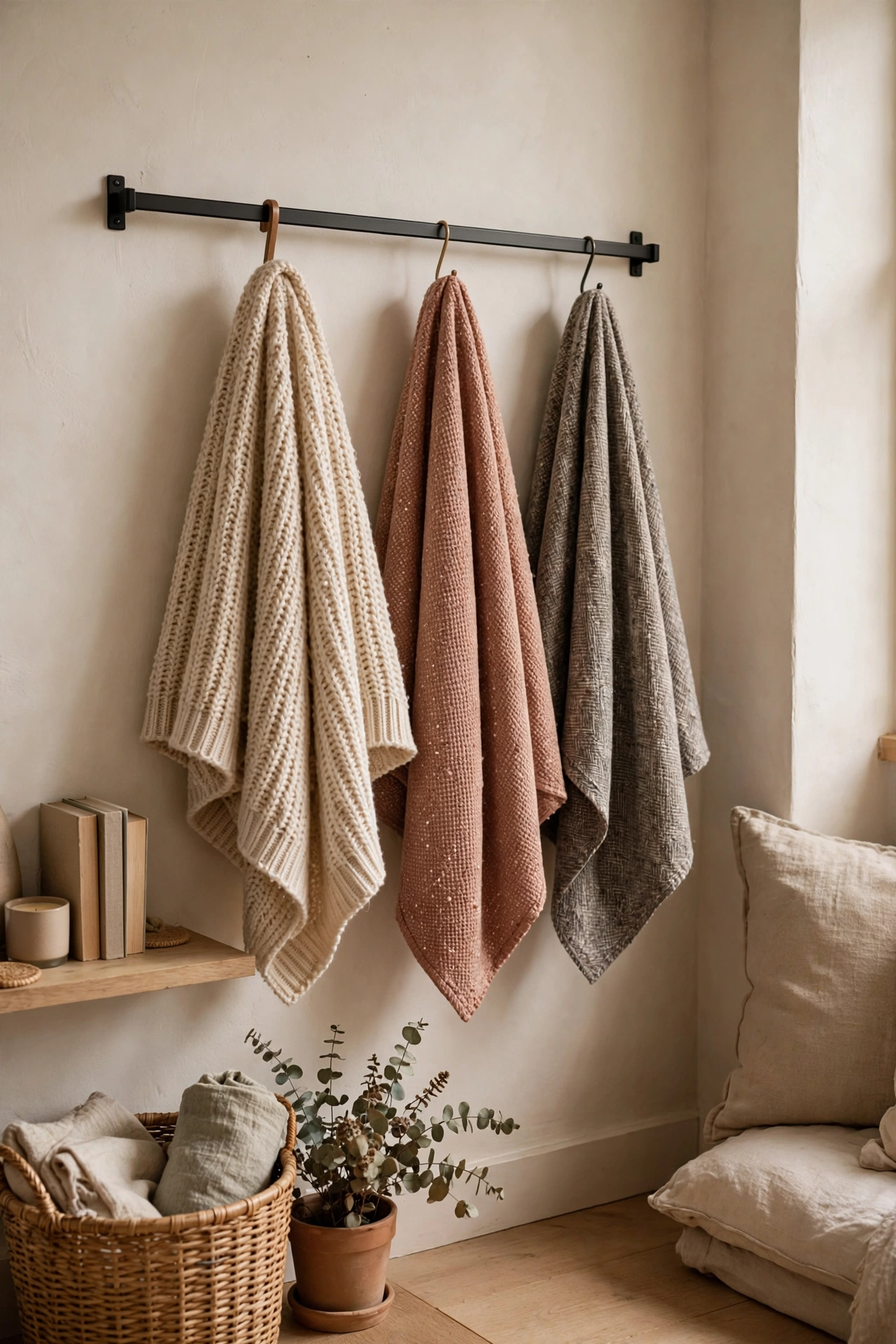
A slim rail on the wall or the back of a door gives throws a place to hang, so they stop piling on the sofa arm and sliding to the floor. Fix a short rail at a height you can reach easily, drape one throw per hook or over the rail, and keep only the throws you use weekly. I tried this in a corner that was otherwise wasted, and the sofa arm finally stayed clear for a whole month. Do not hang throws you never use, because a rail full of untouched blankets is just wall clutter. Wash throws before hanging them, keep the rail near the sofa, and grabbing one on a cold evening becomes easy.
Cost: ~$11 | Time: 20 minutes
12. Keep a Small Daily Reset Basket on the Coffee Table
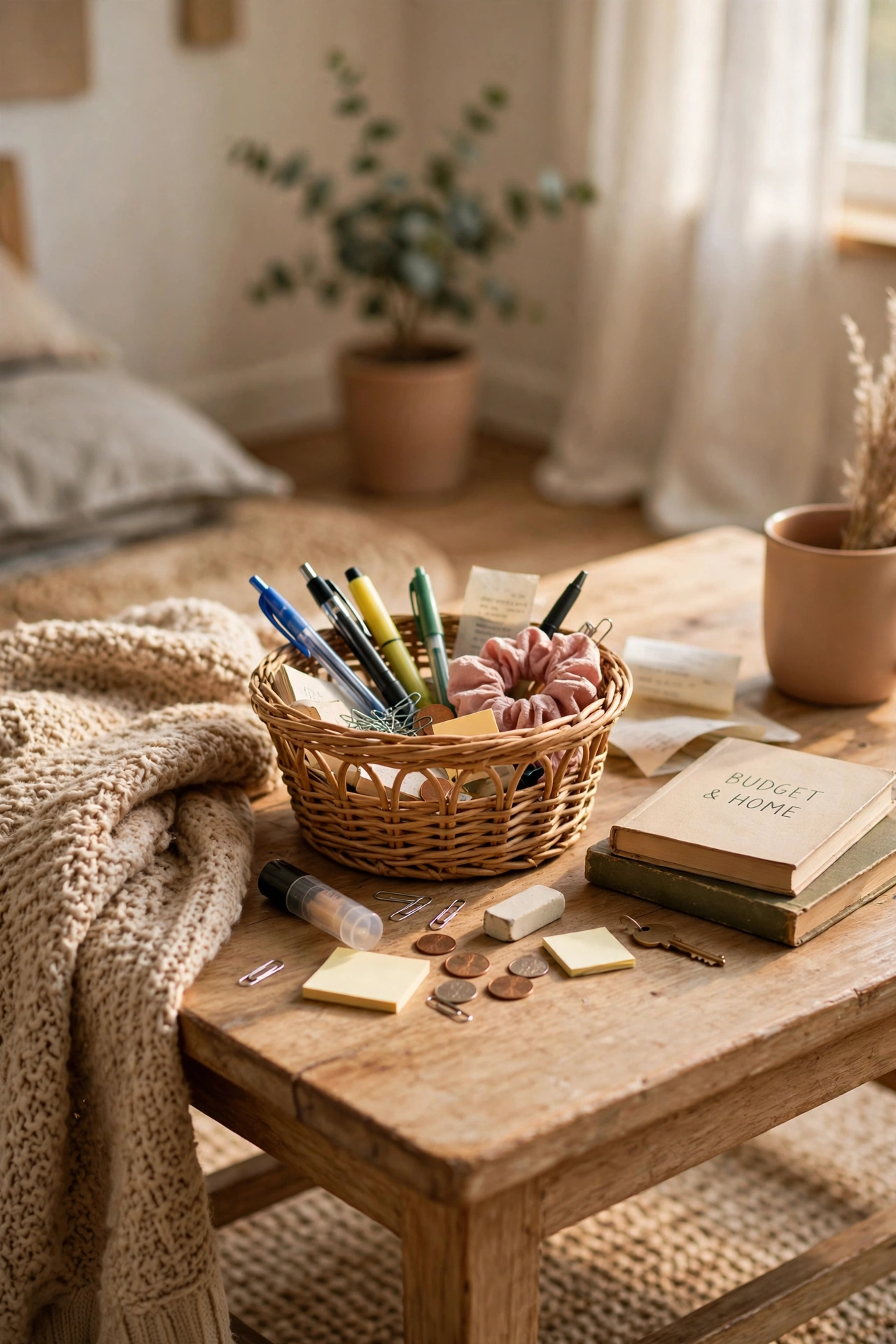
A small reset basket on the coffee table collects the strays that wander in during the day, so one trip puts them all away. Drop in hair ties, small toys, pens, and anything without an obvious home, then carry the basket around the room once each evening and return everything. I tried this after realising I was making five separate trips to tidy one room, and the evening reset now takes about three minutes. The mistake to avoid is letting the basket become permanent storage, because a basket that never empties is just a prettier mess. Empty it every night, even if you only move two things, and the habit will do more than any new furniture.
Cost: ~$4 | Time: 5 minutes
Pro tip: Do the reset right before you sit down for the evening, not after. A clear room feels like a reward, and you are far more likely to keep doing it.
(see also: 15-small-laundry-room-ideas-on-a-budget)
13. Use Furniture With Hidden Storage for Board Games
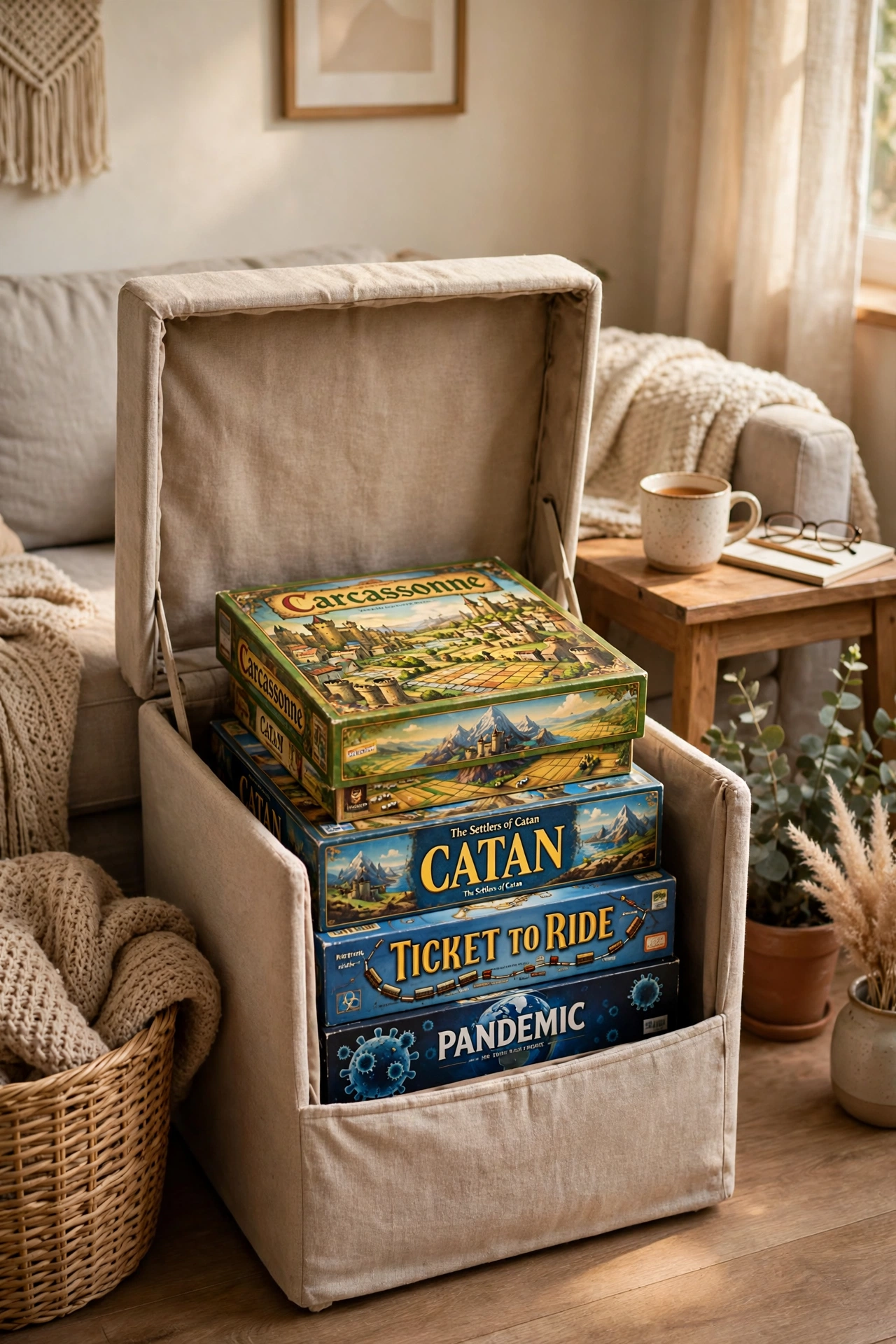
Furniture with hidden storage, like an ottoman or a coffee table with a lift top, hides board games and puzzles without adding another shelf to the room. Move games into the ottoman or table compartment, stack boxes neatly so lids stay on, and keep one or two favourites on top for easy grabbing. I tried this with an old ottoman that used to hold nothing but lost socks, and our game shelf disappeared overnight. Do not cram in games with missing pieces, because a full ottoman of broken games helps nobody. Check each box first, donate incomplete sets, and the hidden storage stays a pleasure to open instead of a chore.
Cost: ~$0 | Time: 30 minutes
14. Display Only Five Things on the Mantel
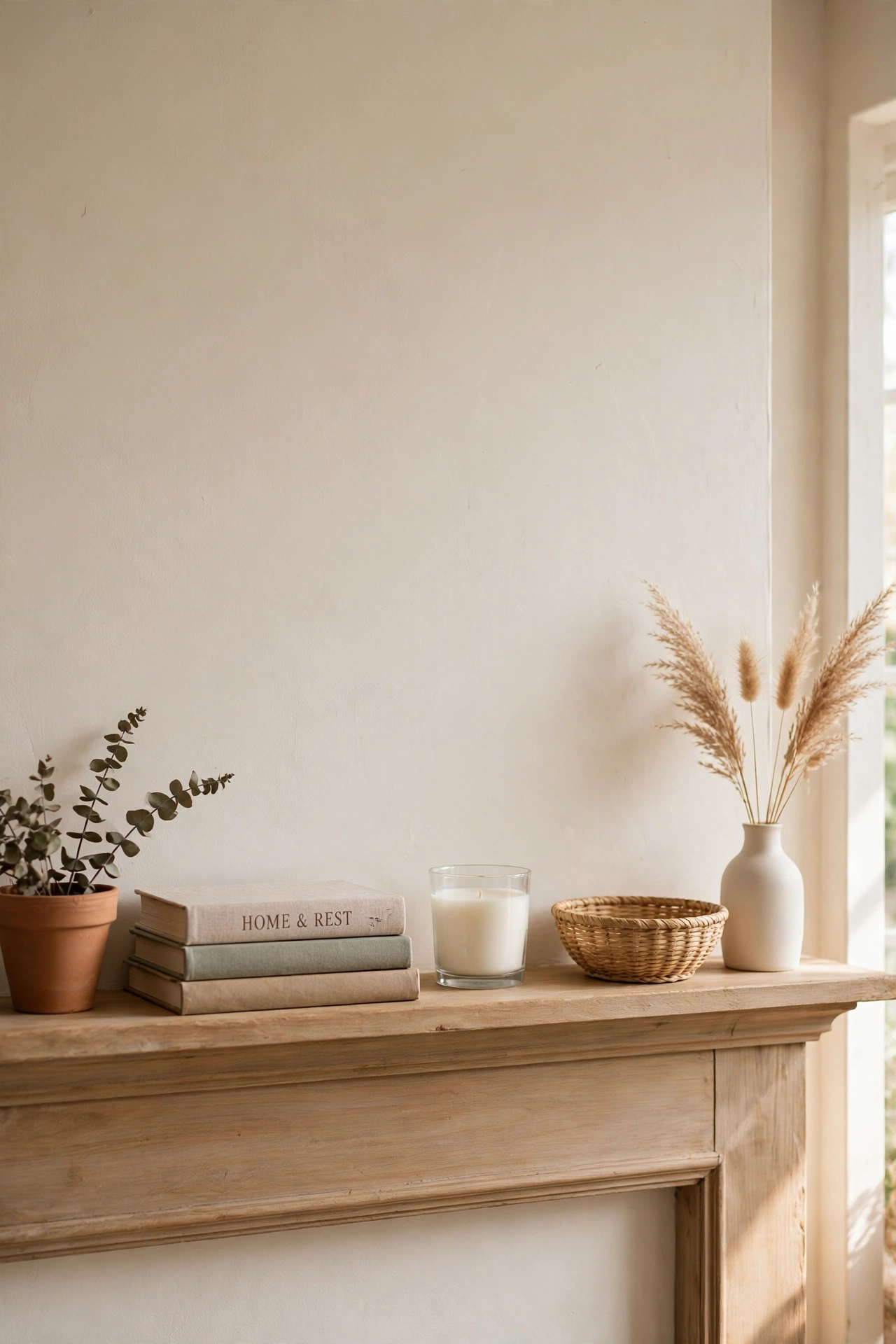
Limiting the mantel to five items stops it from becoming a display shelf for everything that has no other home. Take everything off, choose five pieces you truly like, vary their heights a little, and store or donate the rest. I tried this after our mantel collected candles, photos, and random gifts until you could barely see the wall, and the room suddenly felt calmer. The mistake I made first was choosing five items and then adding just one more, which turned into six, then nine. Stick to five, rotate pieces seasonally if you like change, and leave breathing room between each item so they can actually be seen.
Cost: ~$0 | Time: 20 minutes
15. End the Day With a Five-Minute Sofa Reset
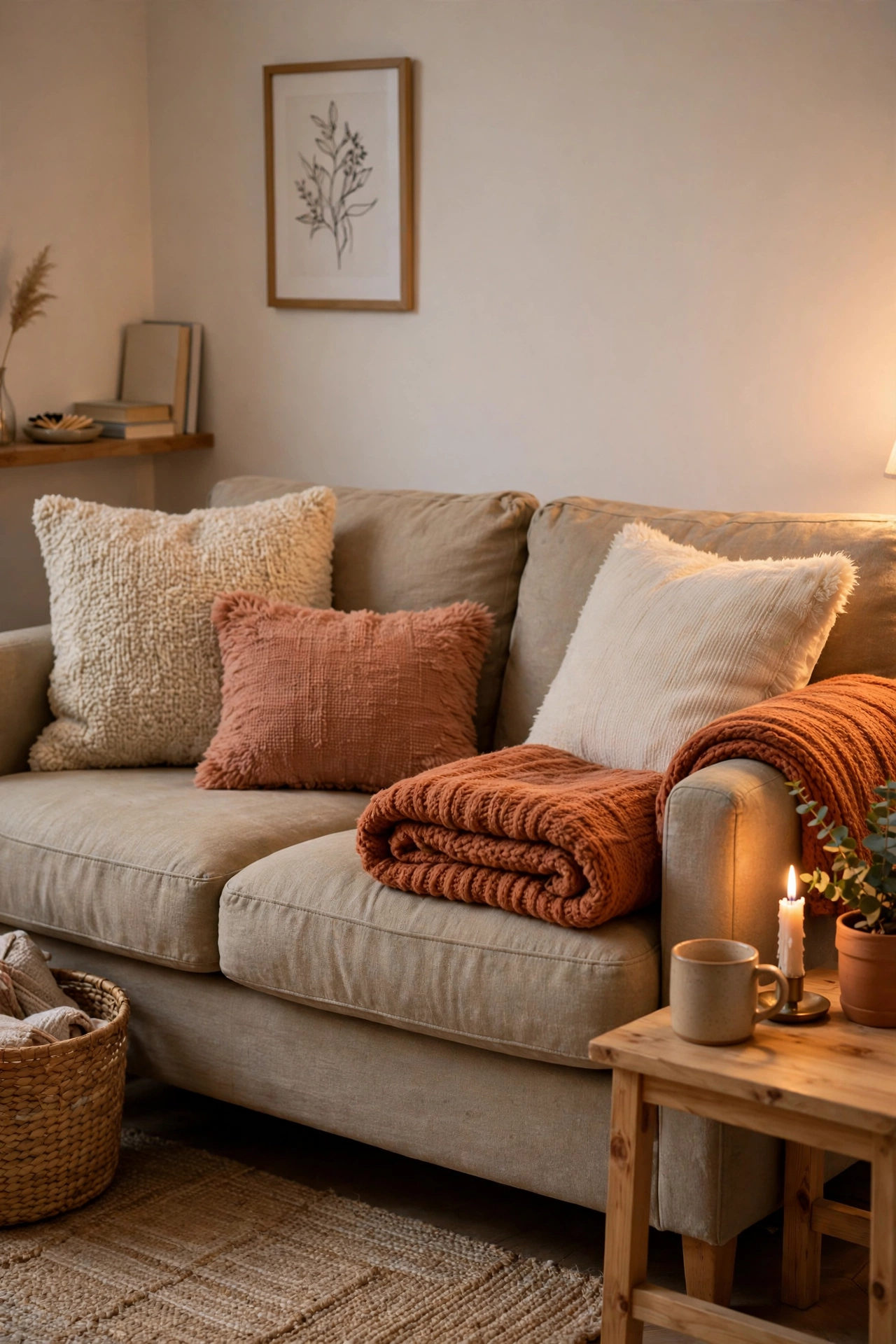
A five-minute sofa reset at the end of the day, fluffing cushions, folding one blanket, and clearing the coffee table, keeps the room from sliding back overnight. Set a timer, work from one end of the sofa to the other, and put strays in the reset basket instead of carrying each one away. I tried this for two weeks straight, and mornings stopped starting with a tidy-up before coffee. Do not turn the reset into a deep clean, because a five-minute habit you skip is worse than a small habit you keep. Keep it short, do it at the same time daily, and the living room will mostly take care of itself.
Cost: ~$0 | Time: 5 minutes
Save this idea for your next weekend tidy if your living room looks fine from the doorway but falls apart when you sit down.
Start with the basket, the tray, or the five-minute reset, whichever mess bugs you most, and add the next idea only when the first one sticks. A living room that stays tidy is rarely the tidiest room in the house, it is the one where everything has a nearby home and putting things away takes less effort than leaving them out.
