25 Living Room Ideas for Small Apartments That Maximize Space
When I moved into my first studio, my living room was also my hallway, my office, and sometimes my dining room. I bought a big sofa because it looked comfortable in the shop, then spent a year squeezing past it to reach the window. Learning Living Room ideas small apartment dwellers actually live with changed everything for me. The ideas below are grouped by what they fix: layout, seating, storage, light, and the small details that make a room breathe. Start with one group, not all five at once.
Layout That Opens the Room
1. Float the Sofa Off the Wall
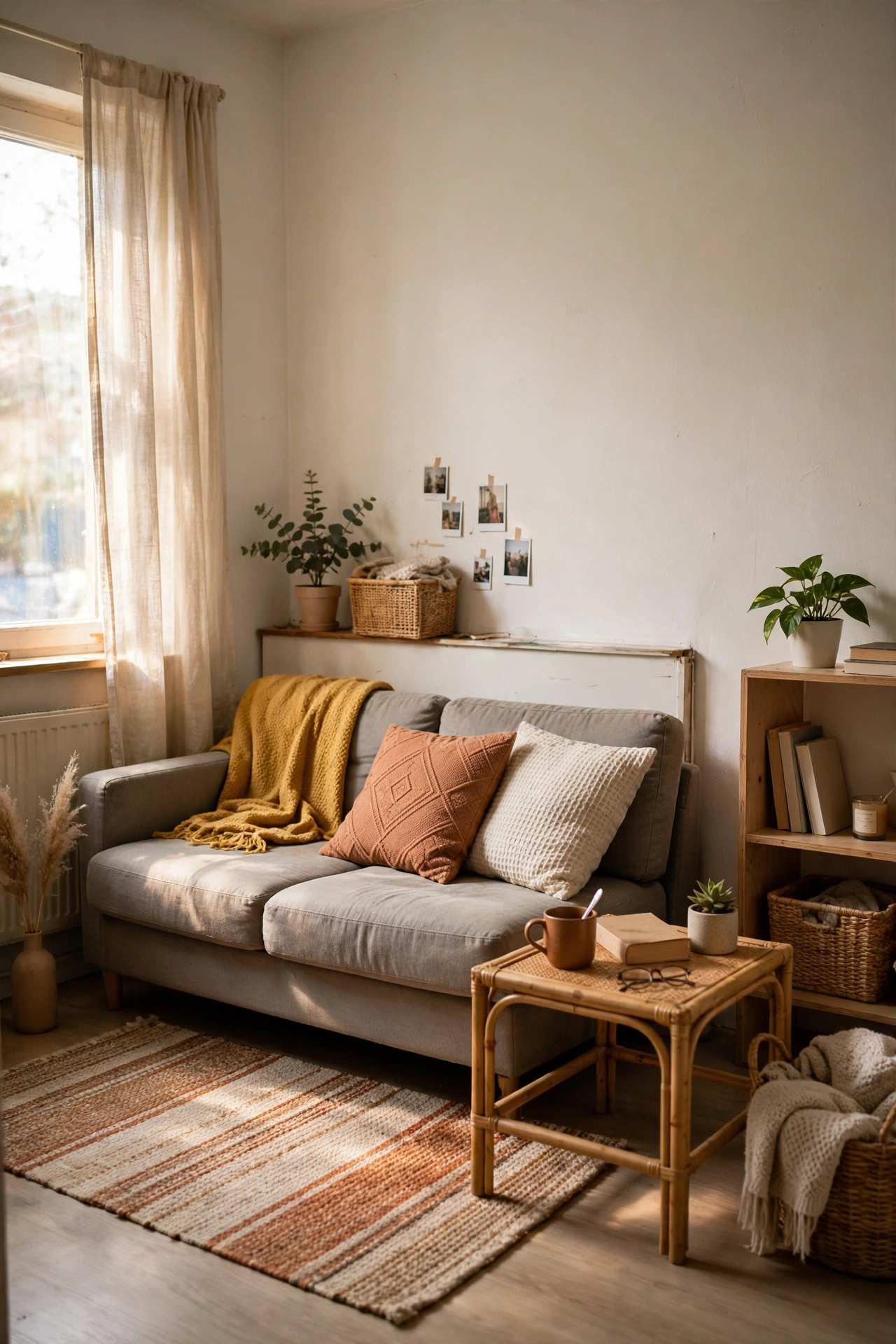
Pulling your sofa even six inches off the wall makes a small living room feel less boxed in, because you can see floor and shadow behind it. It also lets you tuck a narrow console or a lamp behind the sofa instead of wasting that strip of wall. Measure your walkways first so you still have a clear path to the door. I tried this after years of pushing furniture flat against every wall, and the room suddenly looked intentional instead of crammed. The mistake to avoid is floating it so far out that you block a walkway, so keep at least thirty inches for passing through.
Cost: ~$0 | Time: 20 minutes
2. Use a Rug to Zone the Living Area
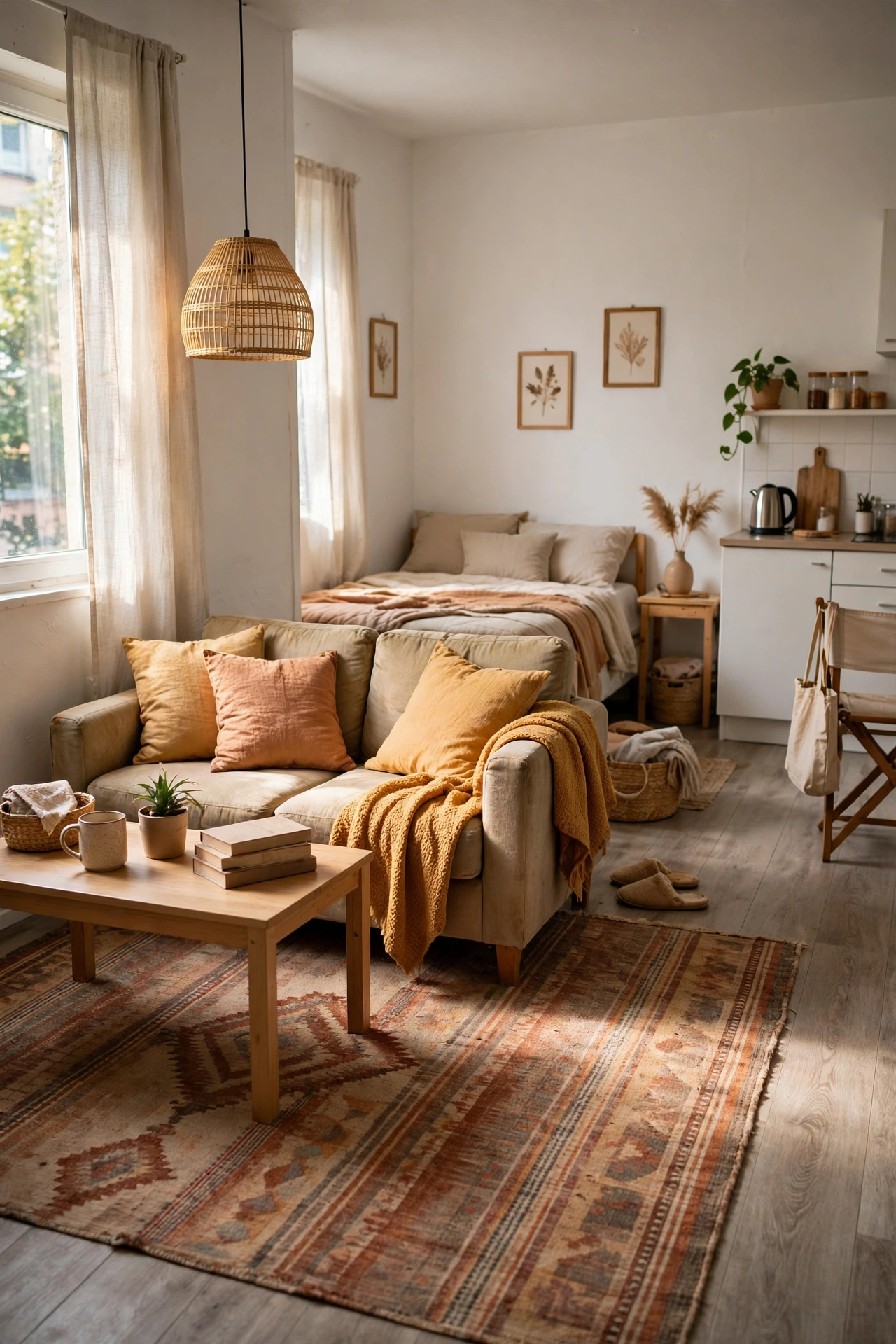
A rug draws a clear border around your living area, which matters most in a studio where rooms blend together. Choose a rug large enough that the front legs of the sofa and chairs sit on it, and keep the pattern simple so the floor does not look busy. A flat-weave rug works well if you roll chairs or a cart across it. I zoned my studio with one rug and guests finally stopped asking where the living room started. The mistake to avoid is a tiny rug floating in the middle, because it chops the room up instead of grounding it.
Cost: ~$45 | Time: 15 minutes
3. Angle One Chair Toward the Window
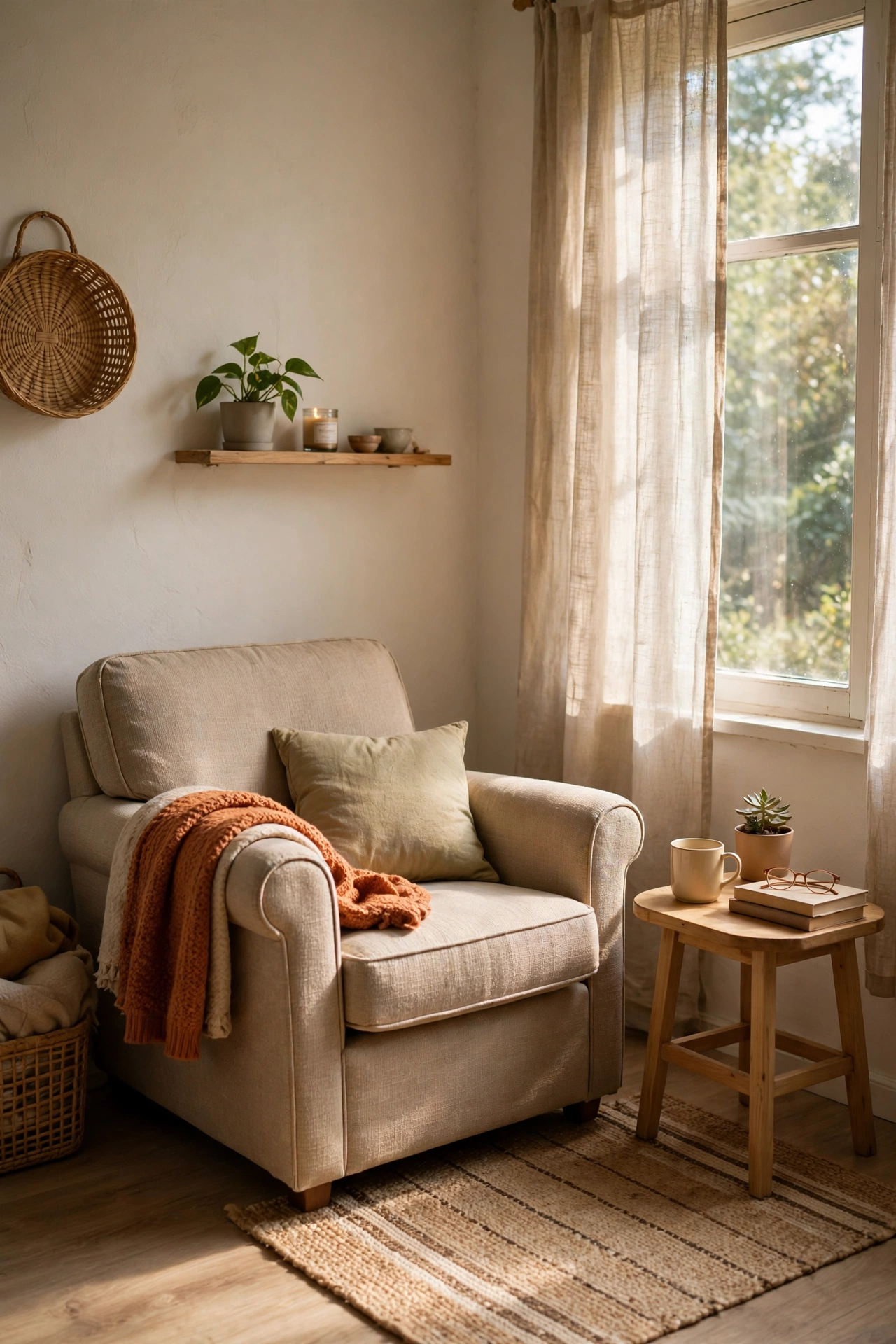
Angling a single chair toward the window breaks up the boxy grid most small rooms fall into and gives you a reading spot with natural light. Place a small side table and a lamp beside it, and keep the rest of the seating facing the main sofa arrangement. This works even in a narrow room because one angled piece reads as deliberate, while a whole angled set looks chaotic. I angled my old armchair this way and it became the seat everyone fought over. The mistake to avoid is angling everything, so let one chair do the work.
Cost: ~$0 | Time: 10 minutes
4. Keep Walkways Wide and Clear
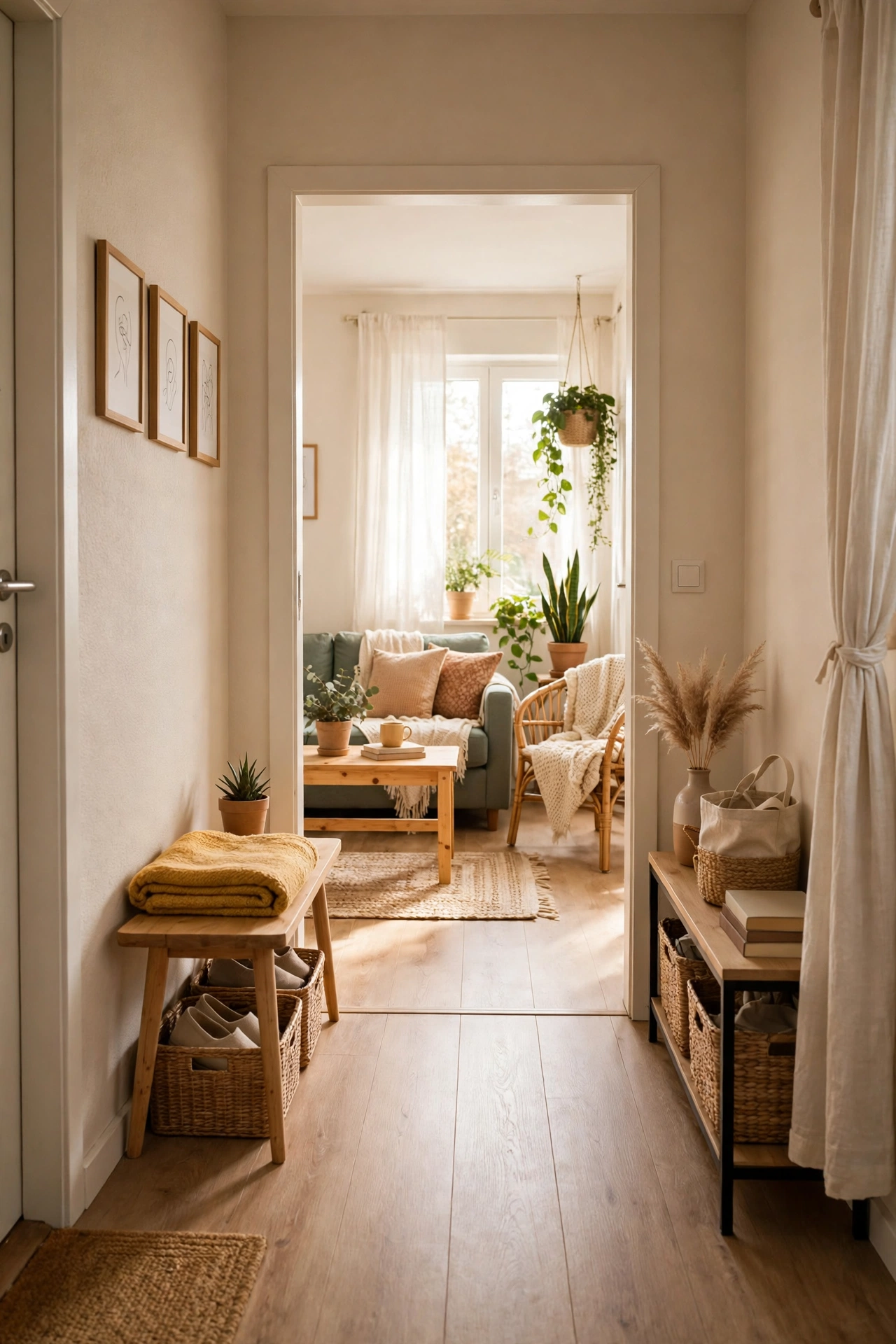
Clear walkways make a small room feel larger than any mirror can, because your eye travels without hitting clutter. Map the path from door to window to kitchen, then move anything that sticks into that path, even if it is only a basket or a plant stand. Keep cords taped along baseboards and shoes by the door. I cleared one path in my flat and stopped bumping my shin on the coffee table every evening. The mistake to avoid is filling a clear path later with a new purchase, so check the path again each time something new arrives.
Cost: ~$0 | Time: 30 minutes
5. Choose a Loveseat Over a Full Sofa
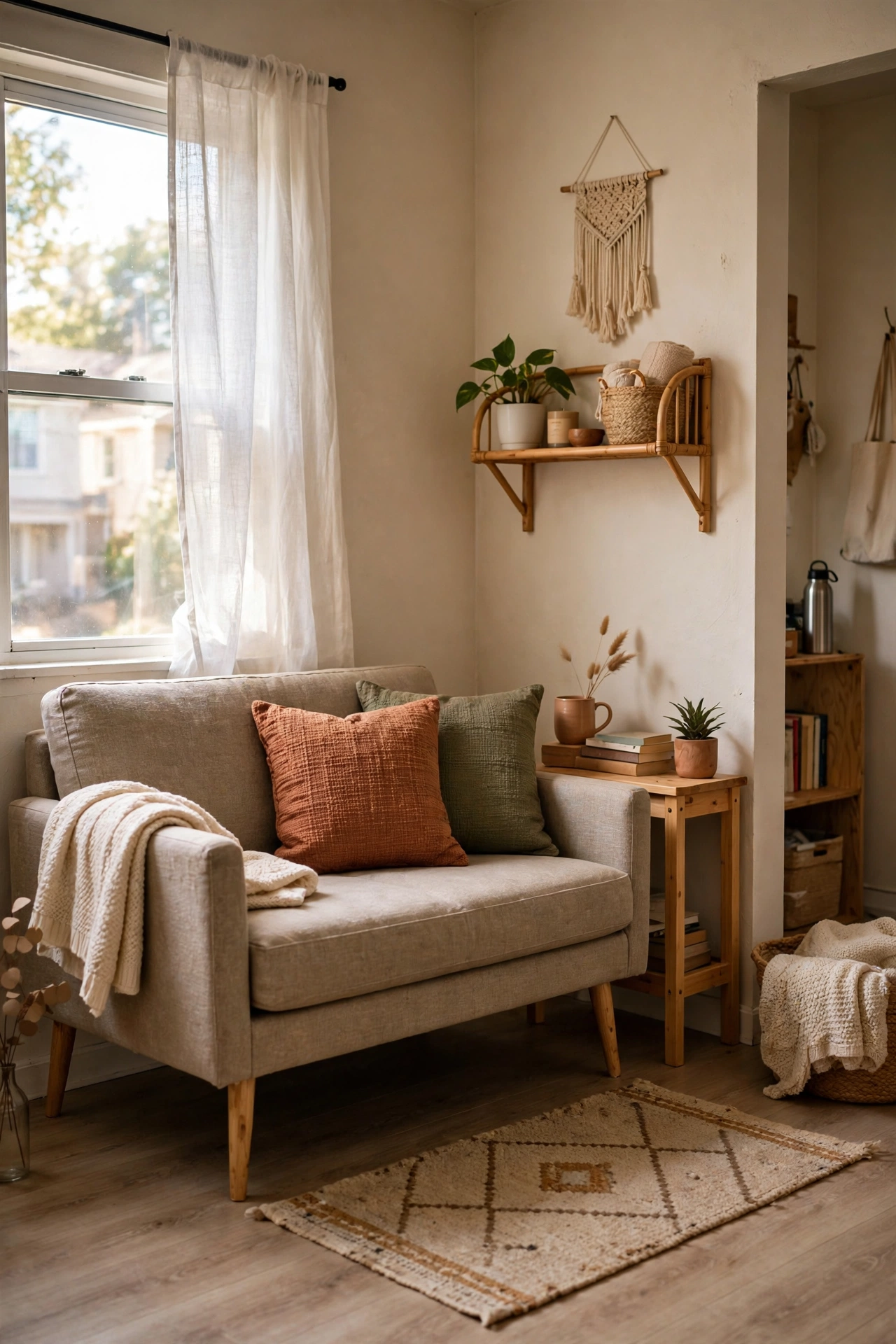
A loveseat seats two comfortably and leaves room for a chair, a plant, or simply breathing space that a full three-seater would eat. Look for a loveseat with slim arms and raised legs so you can see floor beneath it. Pair it with a light chair rather than a matching bulky set. I swapped a huge sofa for a loveseat and gained space for a bookshelf I actually used daily. The mistake to avoid is buying a loveseat with oversized rolled arms, because they take the space you just saved, so check the outer width, not just the seat width.
Cost: ~$300 | Time: 30 minutes
Seating That Does Double Duty
6. Pick a Storage Ottoman
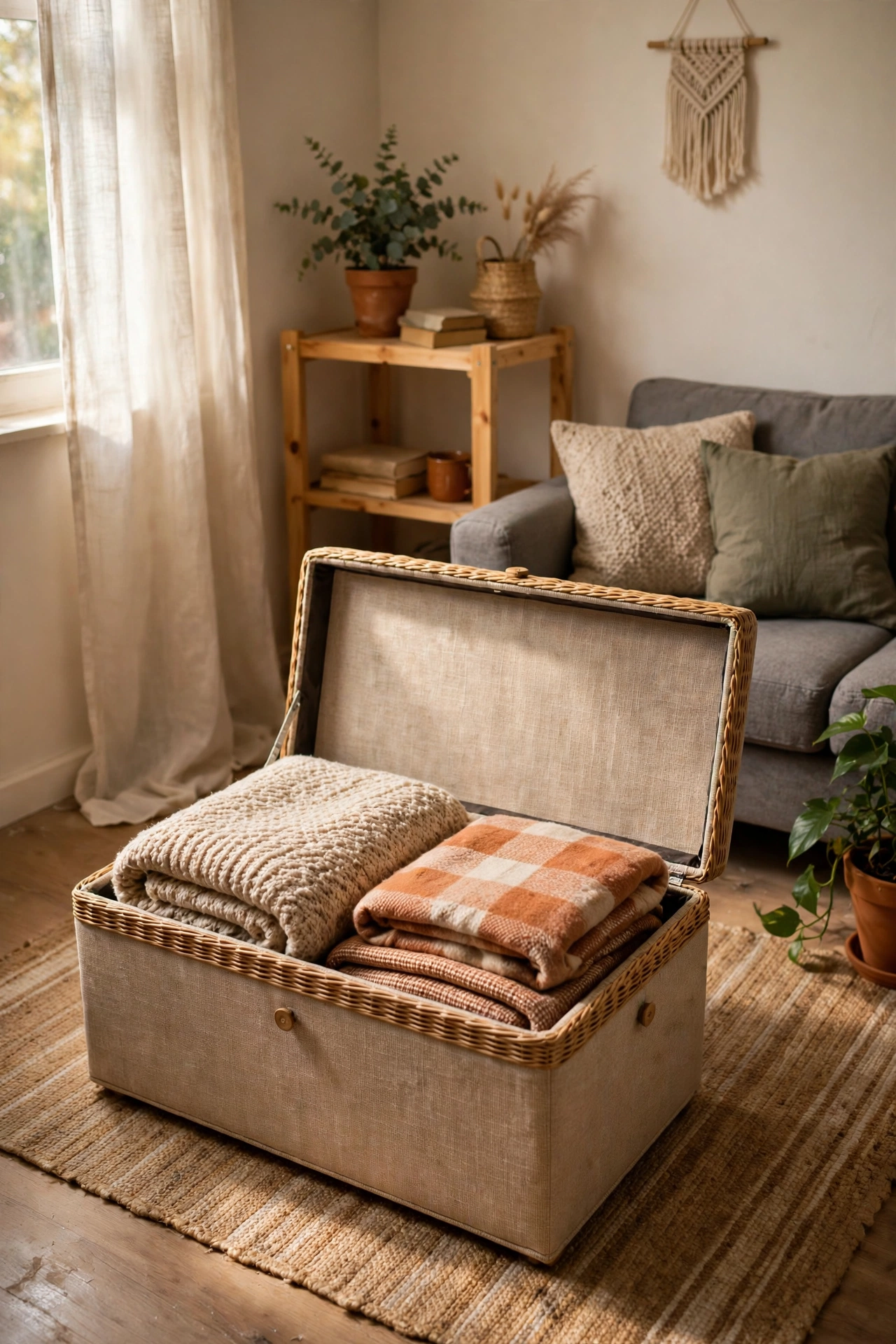
A storage ottoman works as a footrest, an extra seat, and a hiding place for blankets, chargers, and board games. Choose one with a flat, sturdy top so it can also hold a tray for coffee. Keep the items inside grouped in one small bag so you are not digging every time. I kept throw blankets in mine and my living room finally looked tidy when friends dropped by unannounced. The mistake to avoid is buying an ottoman too tall for your sofa seat, because your knees will sit higher than your hips and it gets uncomfortable fast.
Cost: ~$55 | Time: 10 minutes
(see also: 15-small-apartment-decorating-ideas-that-feel-like-home)
7. Add Stackable Stools for Guests
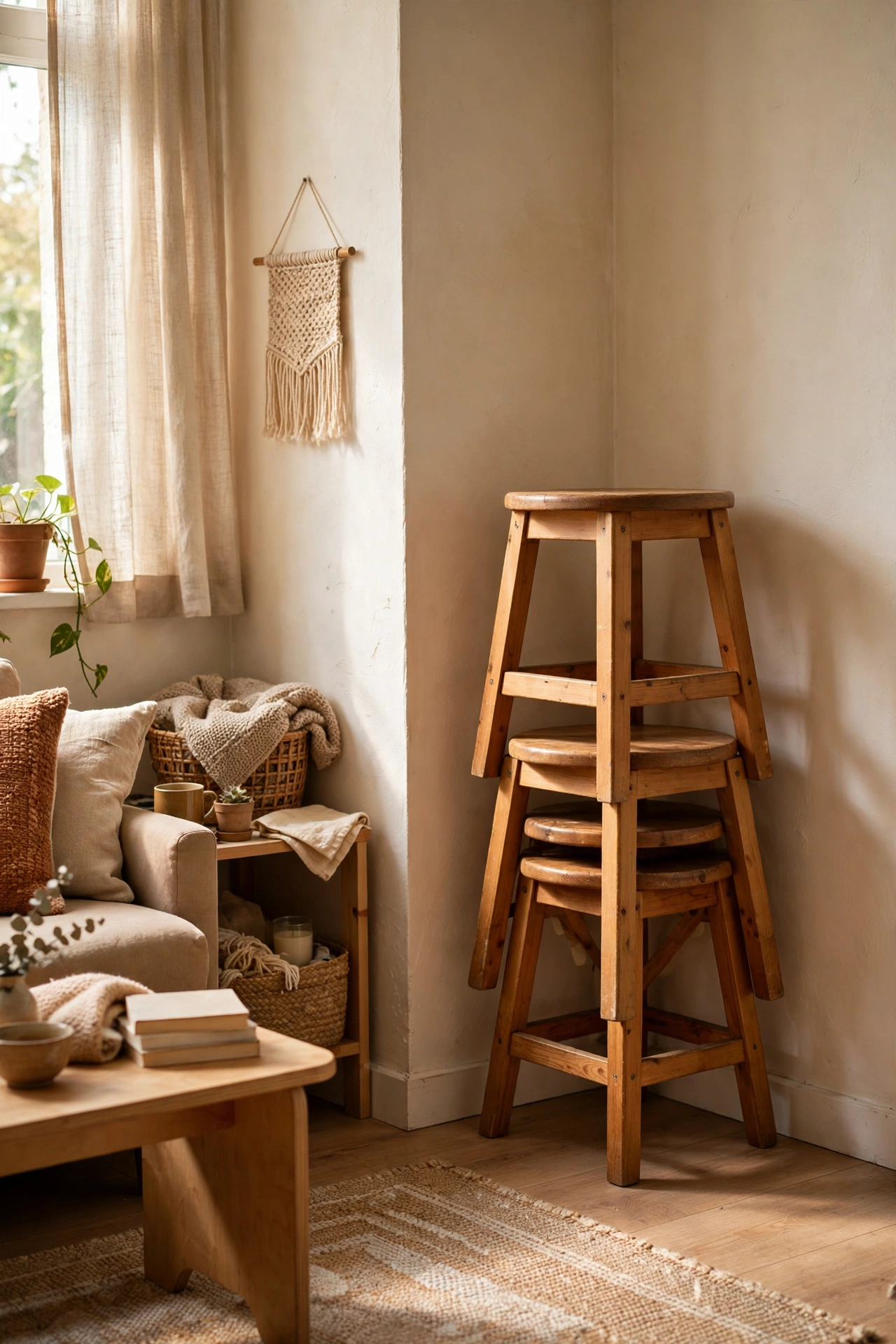
Stackable stools give you seating for four extra guests without a dining set taking over your living room all week. Stack them in a corner or beside a bookshelf, pull them out for film nights, and stack them again when everyone leaves. Pick lightweight stools with a wipe-clean top. I kept three stacked behind my door and never had to borrow chairs again. The mistake to avoid is buying stools with no grip on the feet, because they slide on hard floors, so check for rubber pads before you buy.
Cost: ~$40 | Time: 10 minutes
8. Use a Daybed as Sofa and Guest Bed
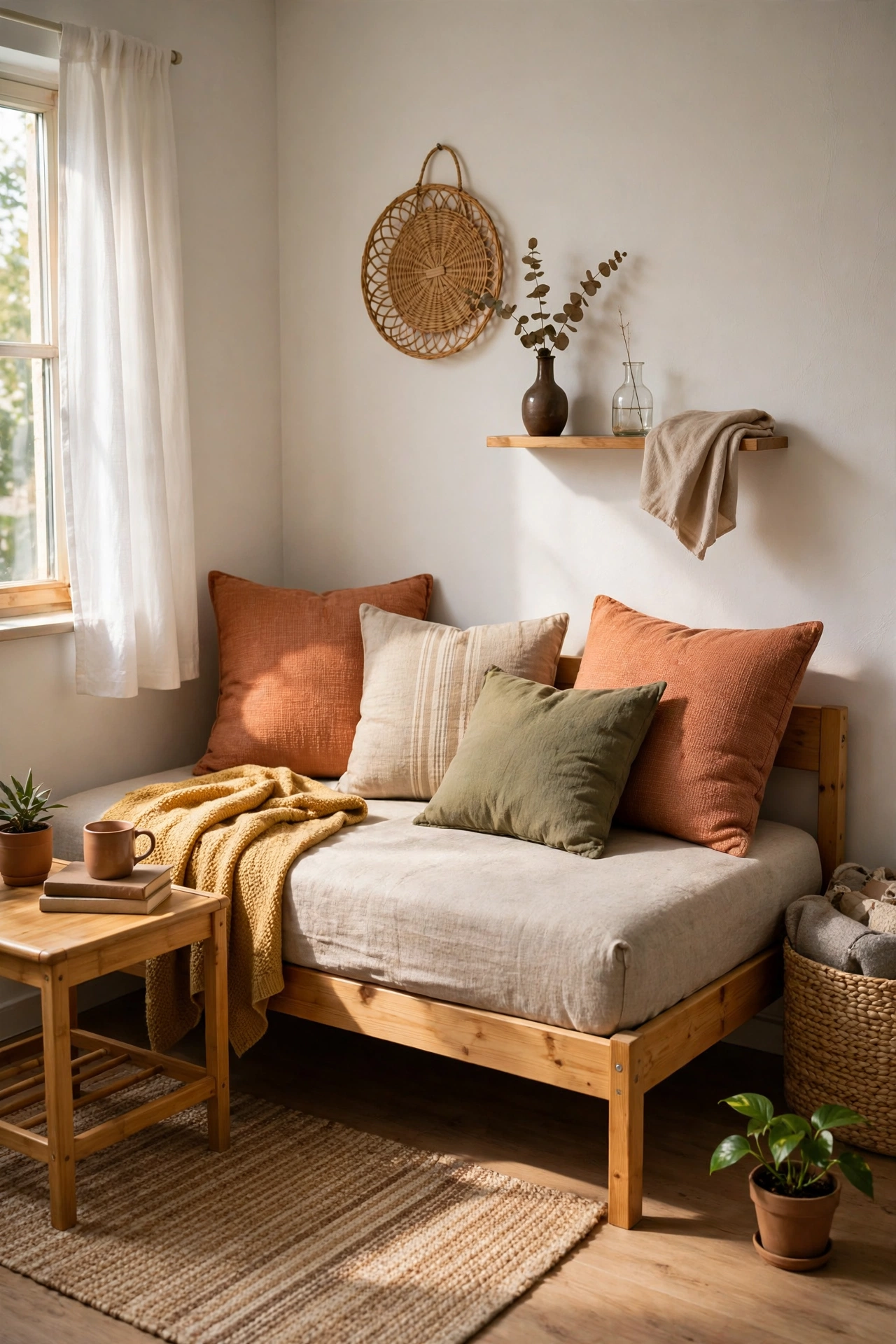
A daybed with a firm mattress and large back cushions works as a sofa by day and a proper guest bed by night. Dress it with sofa cushions during the day so it reads as seating, then swap in a pillow and blanket when someone stays over. Choose a frame with drawers underneath for bedding storage. I used a daybed in a studio for two years and hosted friends without an air mattress on the floor. The mistake to avoid is a soft, saggy mattress, because it feels wrong as both sofa and bed, so test firmness in person if you can.
Cost: ~$250 | Time: 60 minutes
9. Try a Slim Armless Sofa
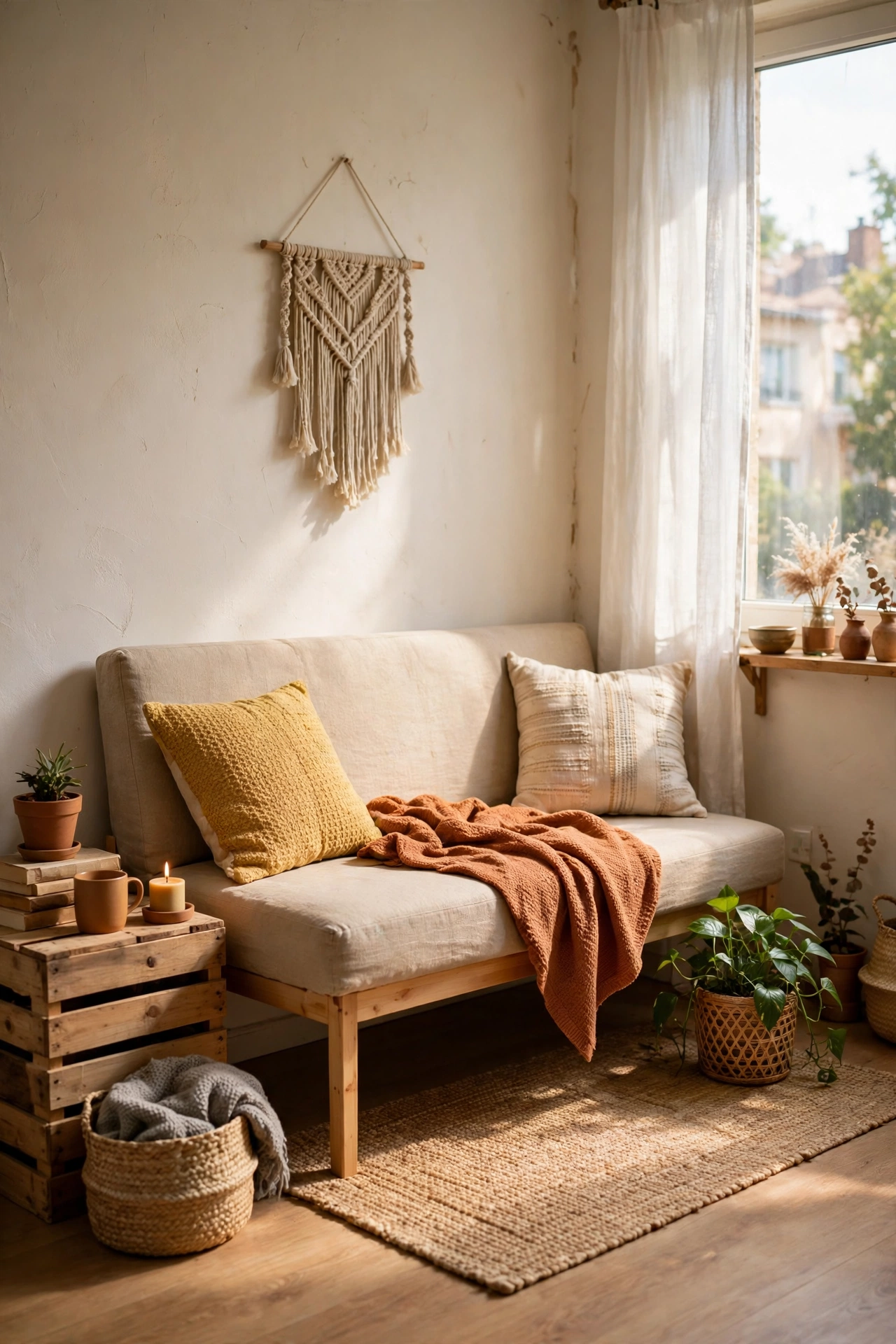
An armless sofa saves six to ten inches compared with a traditional sofa, which is a lot in a small apartment. Without bulky arms, the seat feels wider and the room feels less blocked. Add a bolster cushion on one end if you like leaning sideways. I tried an armless style after struggling with a wide-armed sofa that dominated my wall, and the difference was immediate. The mistake to avoid is assuming armless means uncomfortable, so sit on it first and check the back height supports you properly.
Cost: ~$280 | Time: 30 minutes
10. Keep a Folding Chair Behind the Door
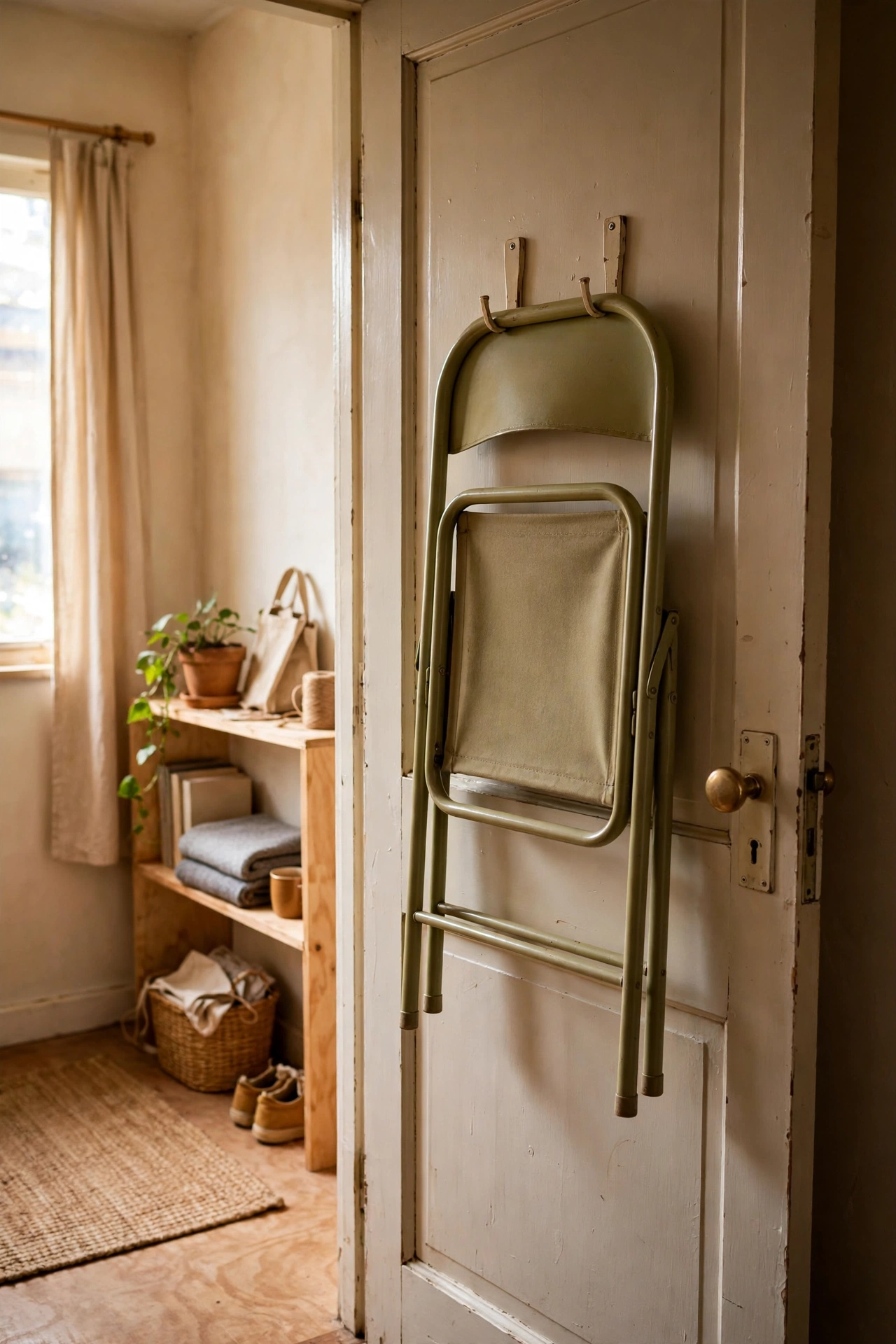
One good folding chair hung behind a door is insurance for every gathering, and it costs almost nothing in floor space. Hang it on two sturdy hooks, keep a small cushion with it if the seat is hard, and unfold it only when you need it. Choose a chair that folds flat and does not pinch fingers. I kept one behind my bedroom door for a year and pulled it out more times than I can count. The mistake to avoid is a flimsy chair that wobbles, because guests remember that, so spend a little more on a solid frame.
Cost: ~$25 | Time: 10 minutes
Storage That Hides in Plain Sight
11. Build Shelves Up to the Ceiling
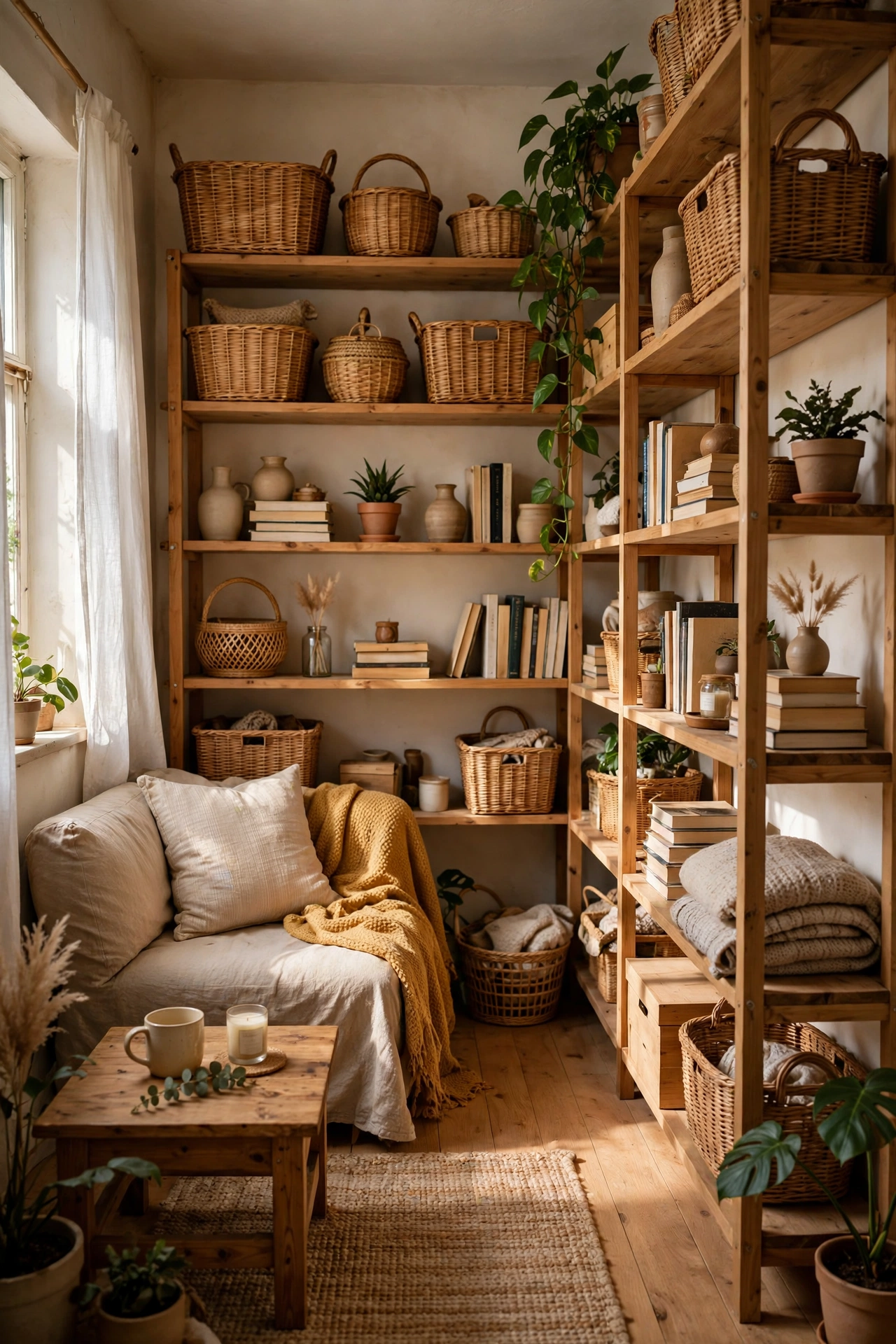
Shelves that run up to the ceiling use wall space you already own and pull the eye upward, which makes a room feel taller. Put everyday books and plants at eye level, and store rarely used boxes and photo albums up high in matching bins. Anchor every shelf into studs so heavy books do not pull it down. I added one tall shelf wall in my living room and cleared two whole boxes off the floor. The mistake to avoid is filling every shelf edge to edge, because a packed wall feels heavy, so leave one shelf partly empty on purpose.
Cost: ~$60 | Time: 90 minutes
12. Use a Coffee Table With Drawers
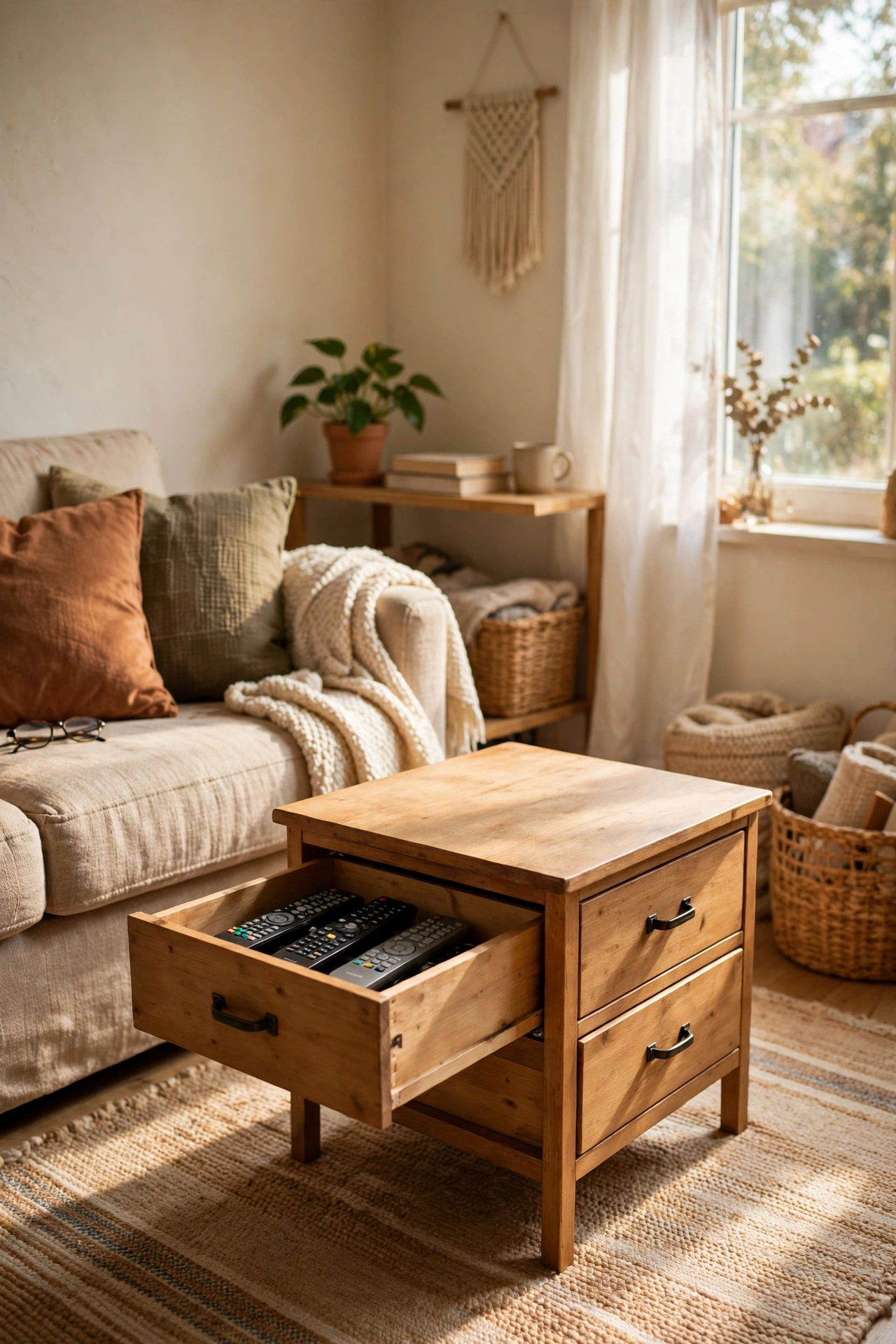
A coffee table with drawers hides remotes, chargers, notebooks, and coasters in the middle of the room instead of on top of it. Choose a table with shallow drawers that glide easily, and keep one drawer for tech and one for reading material. Wipe the top weekly so it stays a usable surface, not a second shelf. I swapped an open table for one with drawers and my living room looked calmer within a day. The mistake to avoid is a table with drawers so deep they jam on the rug, so check drawer clearance before you buy.
Cost: ~$80 | Time: 20 minutes
13. Hide Clutter in Woven Baskets
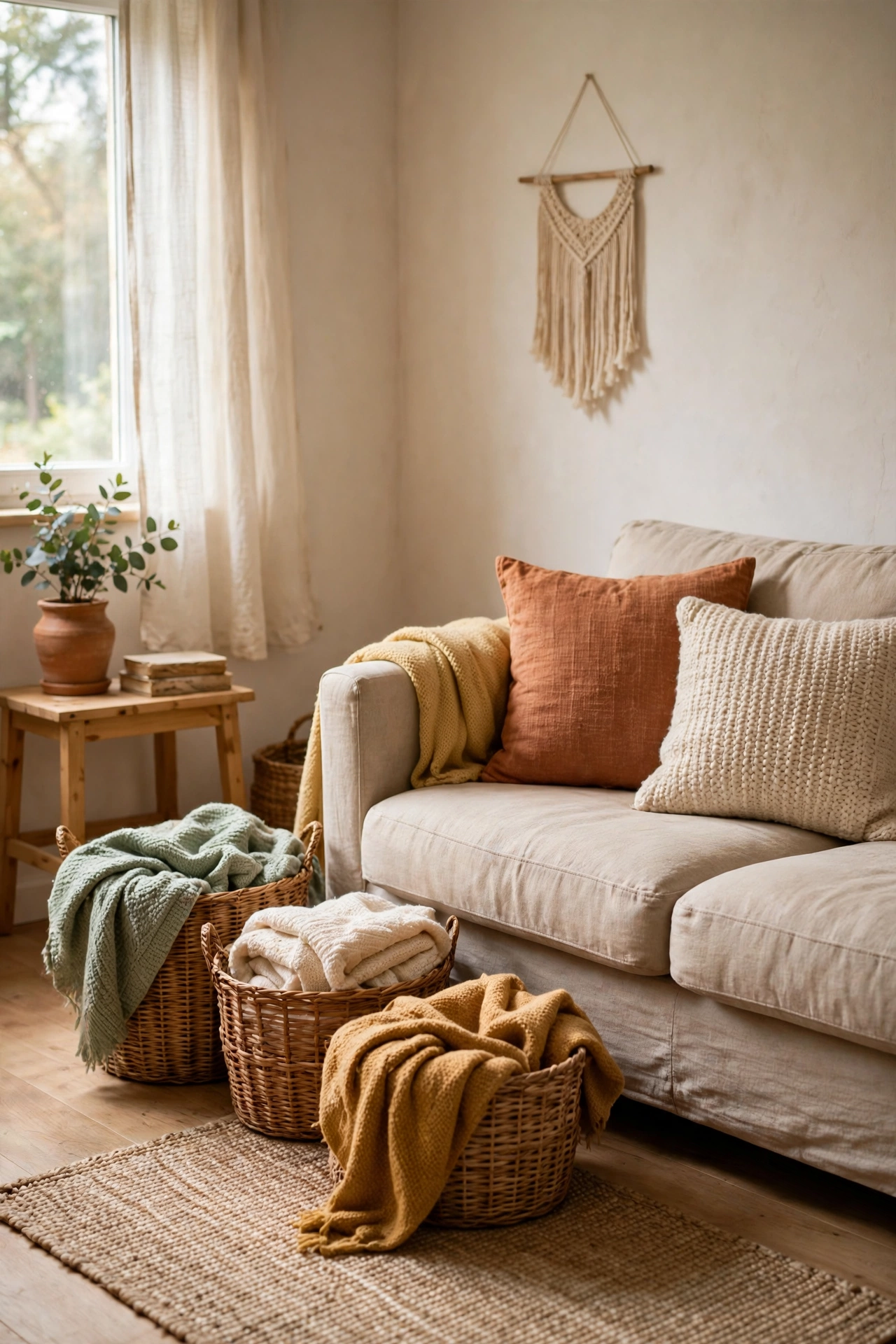
Woven baskets make clutter look like decor, which is exactly what a small living room needs. Assign one basket to toys, one to blankets, and one to the random items that land on the sofa each day, then slide them under a console or beside the sofa. Choose baskets with lids if you want a cleaner look. I used three matching baskets and tidying took two minutes instead of twenty. The mistake to avoid is buying baskets with no job, because empty baskets become clutter themselves, so give each one a clear purpose.
Cost: ~$30 | Time: 15 minutes
14. Mount the TV to Free the Console
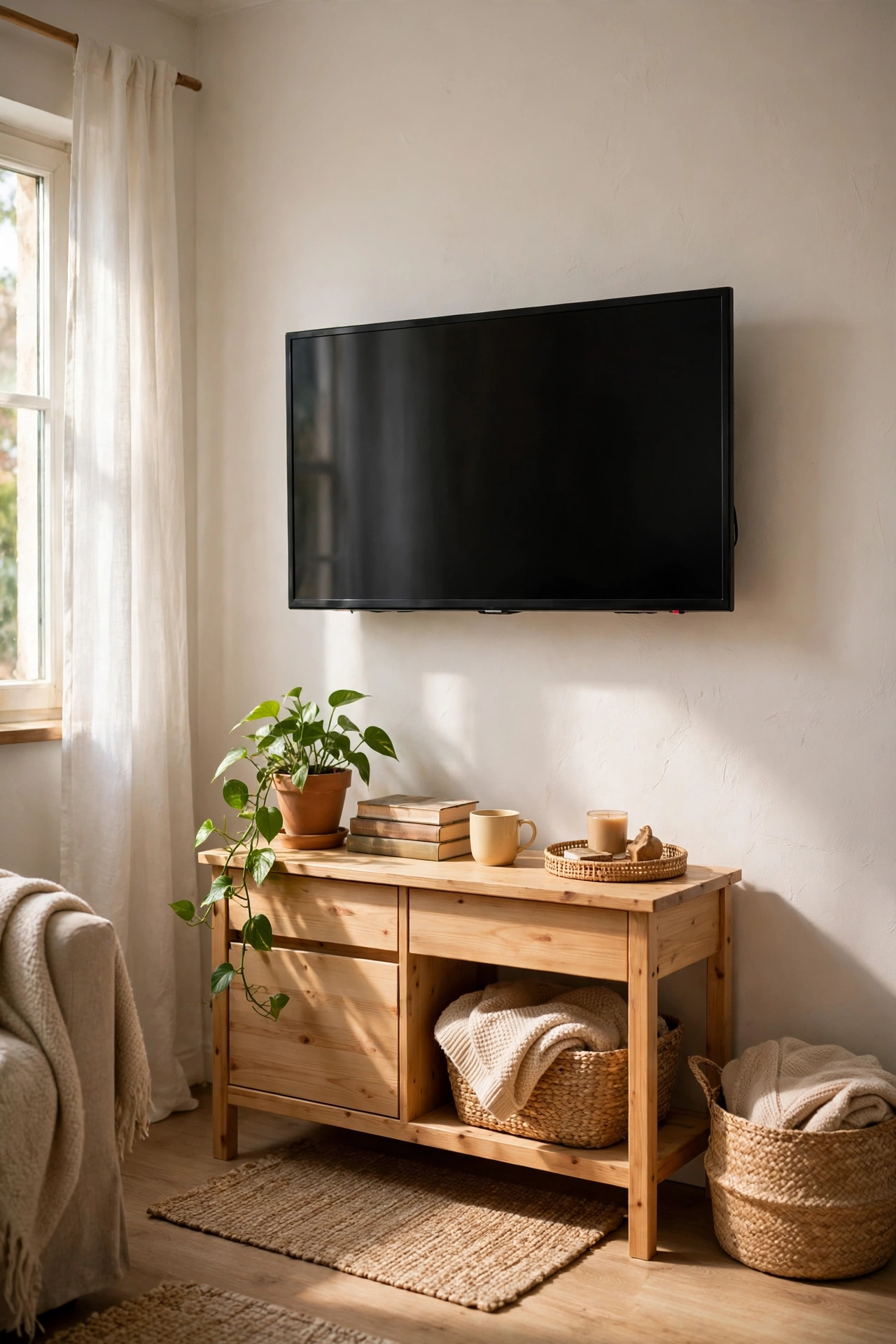
Wall-mounting the TV frees the top of your console for books, plants, or simply empty space, and it lets you push furniture a little closer to the wall. Mount at eye level from your seated position, hide cables in a paintable channel, and check the wall type before drilling. If you rent, use a no-drill stand that leans against the wall instead. I mounted mine and gained a whole shelf of storage underneath. The mistake to avoid is mounting too high, because neck strain ruins film nights, so sit on the sofa and mark the centre height first.
Cost: ~$35 | Time: 60 minutes
15. Add Floating Shelves Over the Sofa
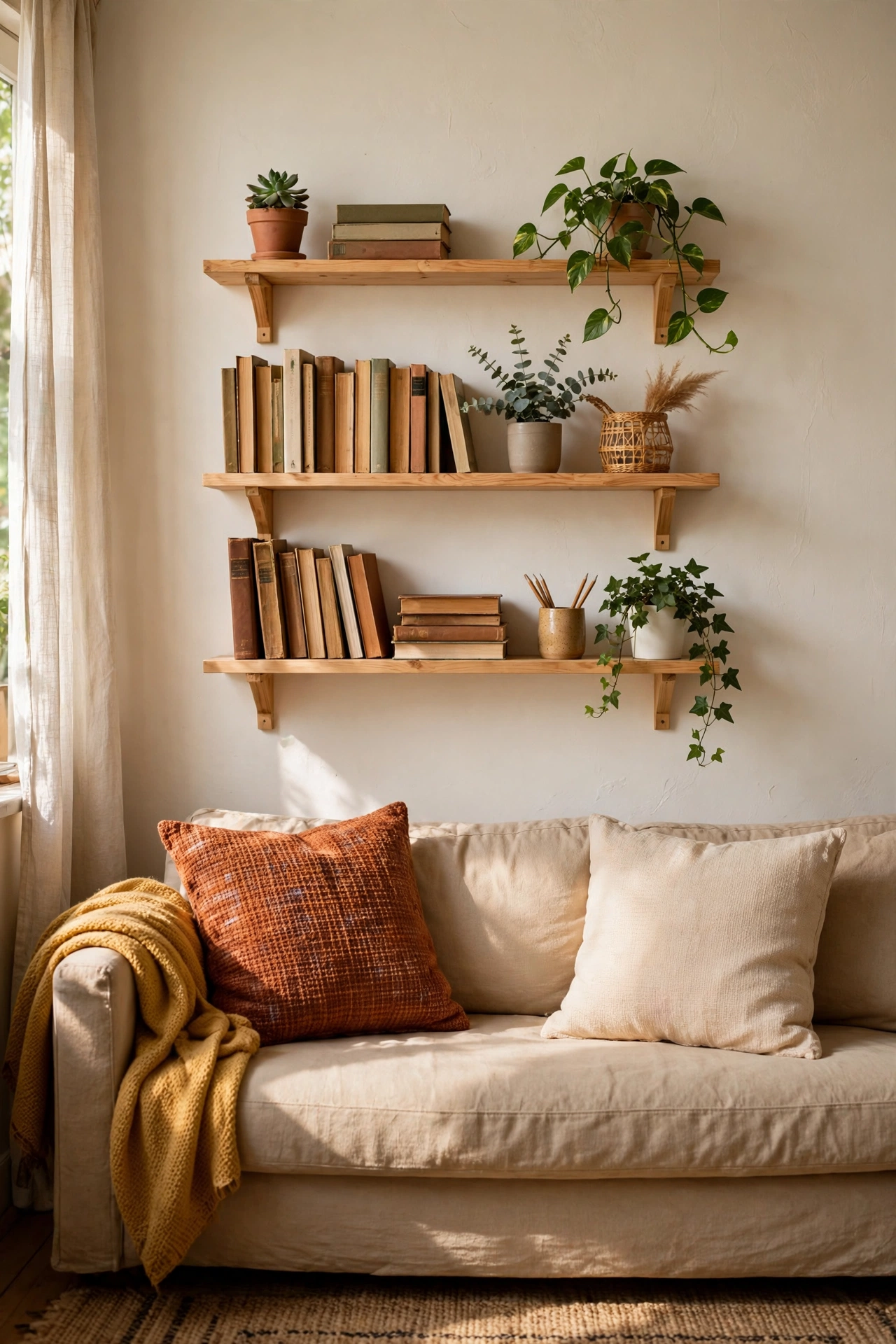
Floating shelves over the sofa turn dead wall into display and storage without a bookshelf eating floor space. Hang two shelves at a height you can reach with a small step stool, style them with books, a plant, and one or two framed photos, and keep heavier items on the lower shelf. Anchor into studs for safety above seating. I put two shelves over my sofa and moved a whole stack of books off the coffee table. The mistake to avoid is hanging them so low that tall guests bump their heads when they stand up.
Cost: ~$40 | Time: 45 minutes
16. Use the Space Behind the Sofa
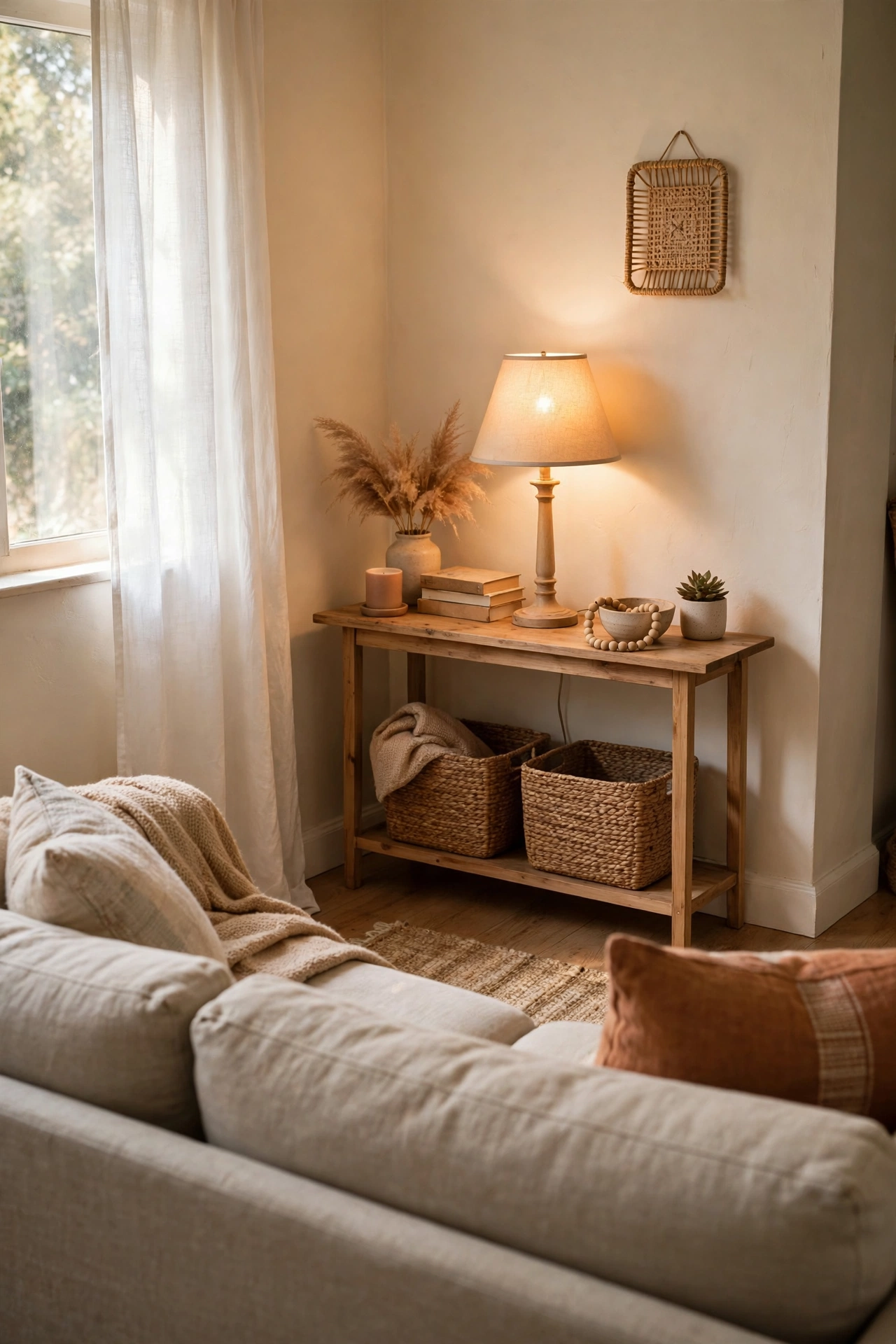
The gap behind a floated sofa is perfect for a narrow console table that holds lamps, books, and charging cables out of sight. Choose a console no deeper than twelve inches so it does not push the sofa too far into the room. Add a basket underneath for blankets. I used this spot for my reading lamp and phone charger, which cleared both from the coffee table. Save this idea for your small living room board if you love hidden storage. The mistake to avoid is a console so tall it peeks awkwardly over the sofa back, so keep it at or below sofa height.
Cost: ~$50 | Time: 20 minutes
(see also: 17-small-space-storage-ideas-on-a-budget)
Light and Colour Tricks
17. Hang One Big Mirror Opposite the Window
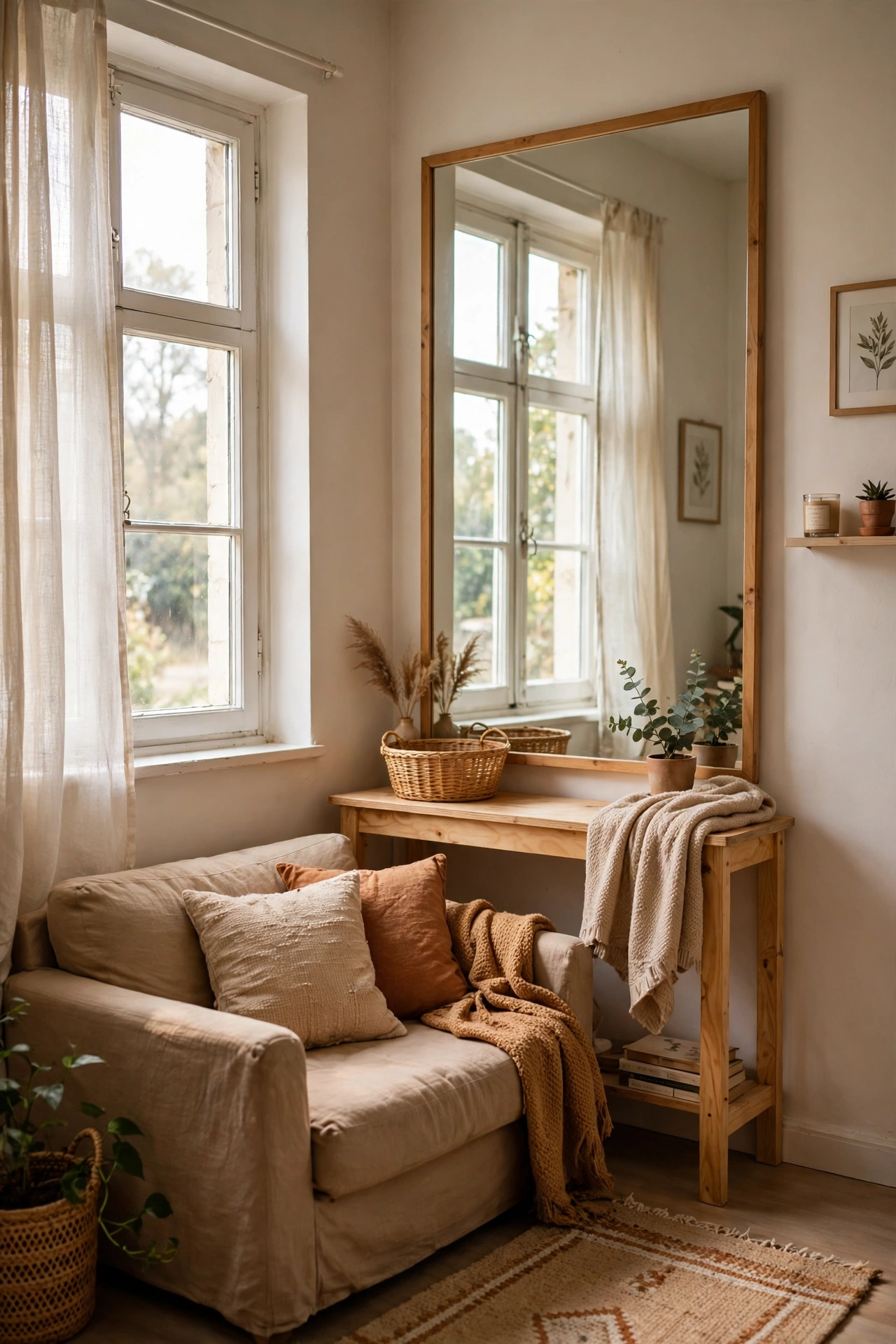
One large mirror opposite the window doubles the light and the view, which makes a small living room feel almost twice as big. Hang it so it reflects the window, not a blank wall or clutter, and keep the frame simple so the mirror itself does the work. Clean it weekly because dust shows fast on glass. I hung a big mirror in a dark living room and stopped needing the overhead light during the day. The mistake to avoid is a gallery of small mirrors, because many little reflections chop the room up instead of opening it.
Cost: ~$60 | Time: 30 minutes
18. Paint Walls Warm White
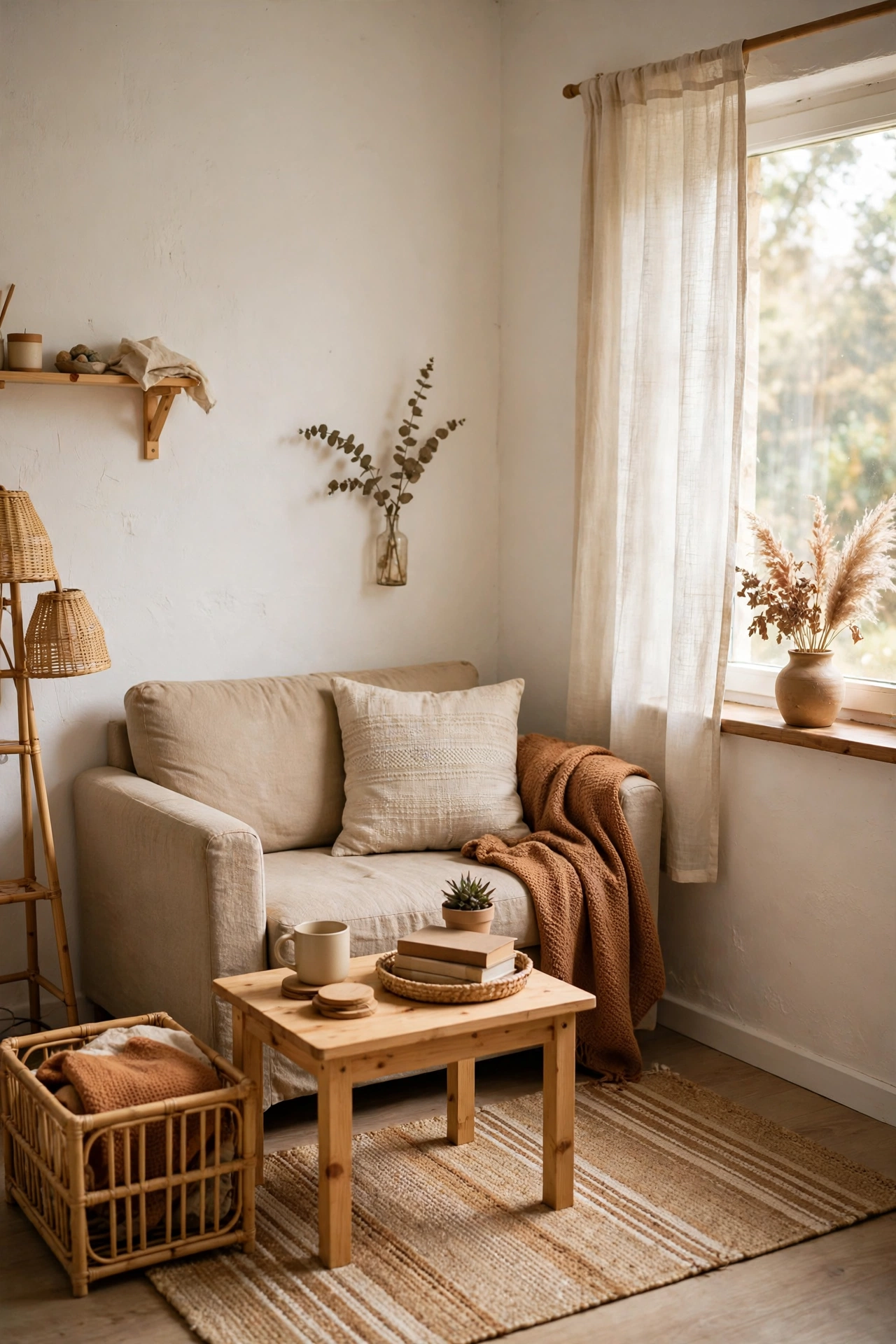
Warm white paint reflects light without the cold, clinical feel of pure white, and it lets your furniture and art stand out. Paint the largest wall first and live with it for a day before doing the rest, since light changes the colour from morning to evening. Use a satin finish in a living room so marks wipe off easily. I painted a beige room warm white and friends asked if I had knocked a wall down. The mistake to avoid is painting every wall a different shade of white, because mismatched whites look dirty side by side.
Cost: ~$40 | Time: 180 minutes
19. Layer Three Small Lights
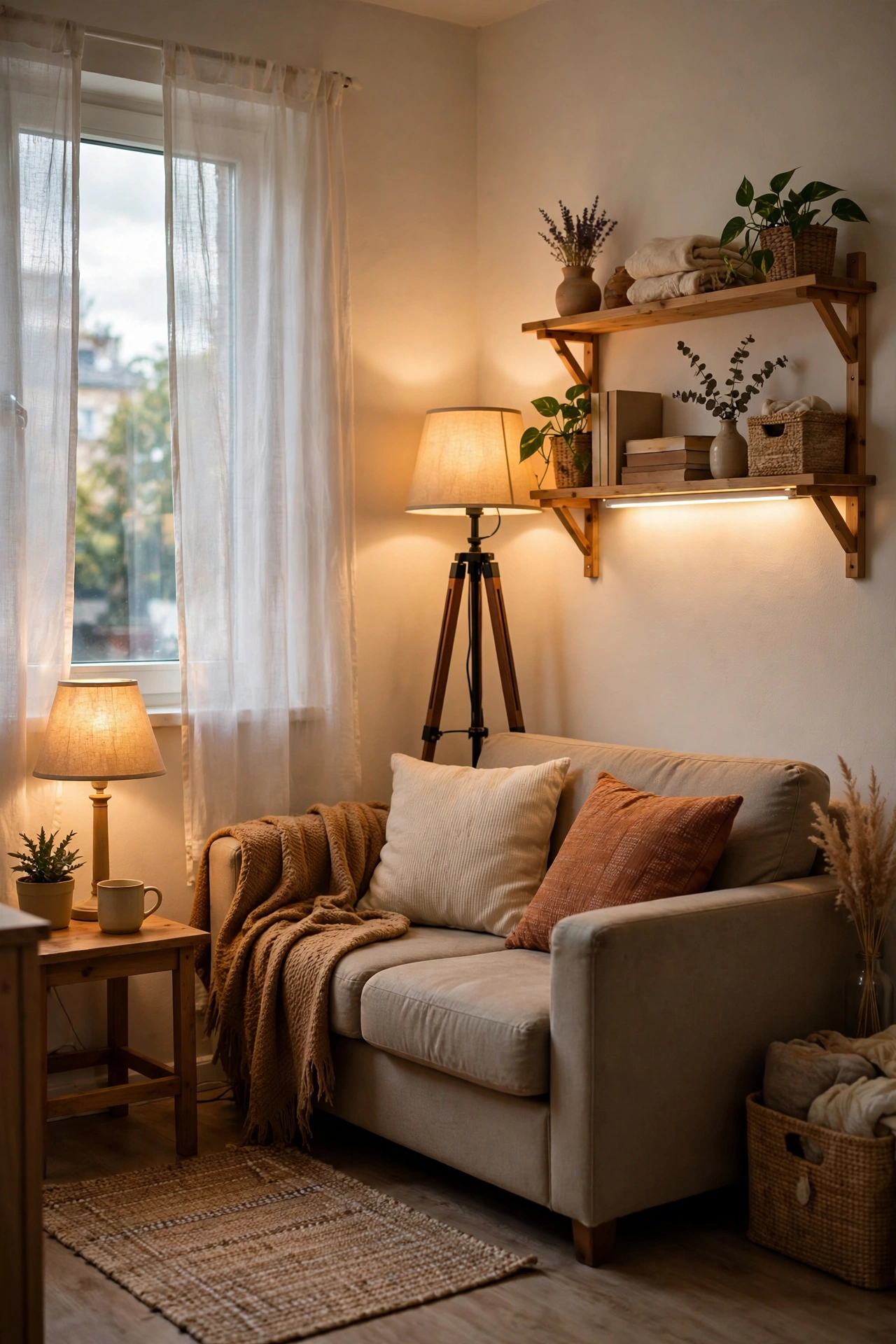
Three small lights at different heights beat one harsh ceiling light in a small room every time. Use a floor lamp in a corner, a table lamp beside the sofa, and a small warm light on a shelf, then switch on only what you need. Warm bulbs around 2700 kelvin keep the room cosy. I replaced my single overhead light with this trio and evenings felt calmer instantly. The mistake to avoid is mixing warm and cool bulbs in one room, because the clash feels restless, so check the bulb colour before you buy.
Cost: ~$55 | Time: 30 minutes
20. Use Sheer Curtains Hung High
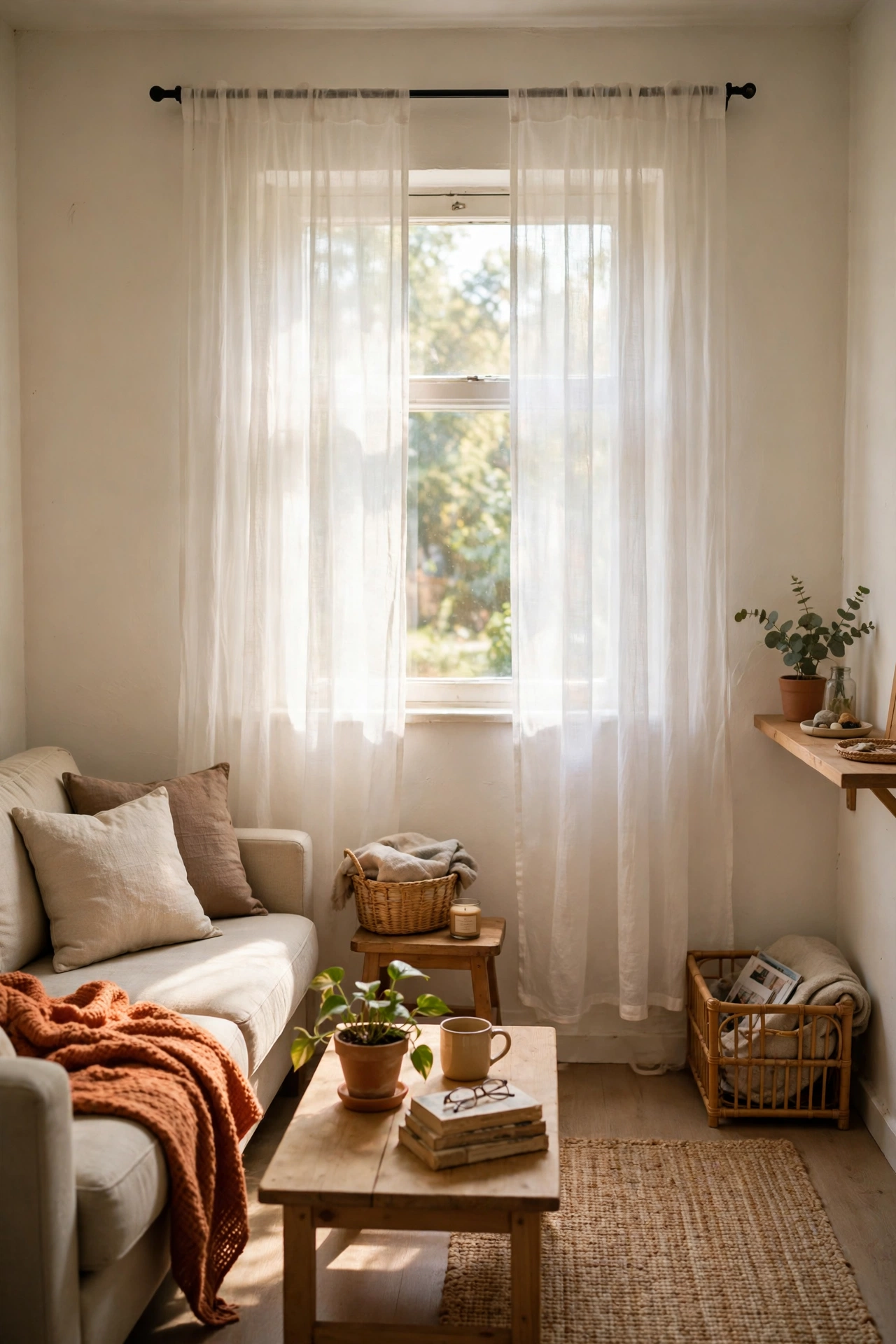
Sheer curtains hung close to the ceiling and wide past the window frame make the window look larger and let daylight in while keeping privacy. Choose a light linen-look fabric that filters sun without blocking it, and let the curtains fall to the floor for a taller feel. Keep the rod simple and sturdy. I hung sheers high in a basement flat and the window suddenly felt like a real feature. The mistake to avoid is short curtains that stop at the sill, because they cut the wall in half and shrink the room visually.
Cost: ~$30 | Time: 30 minutes
21. Keep One Bold Colour Only
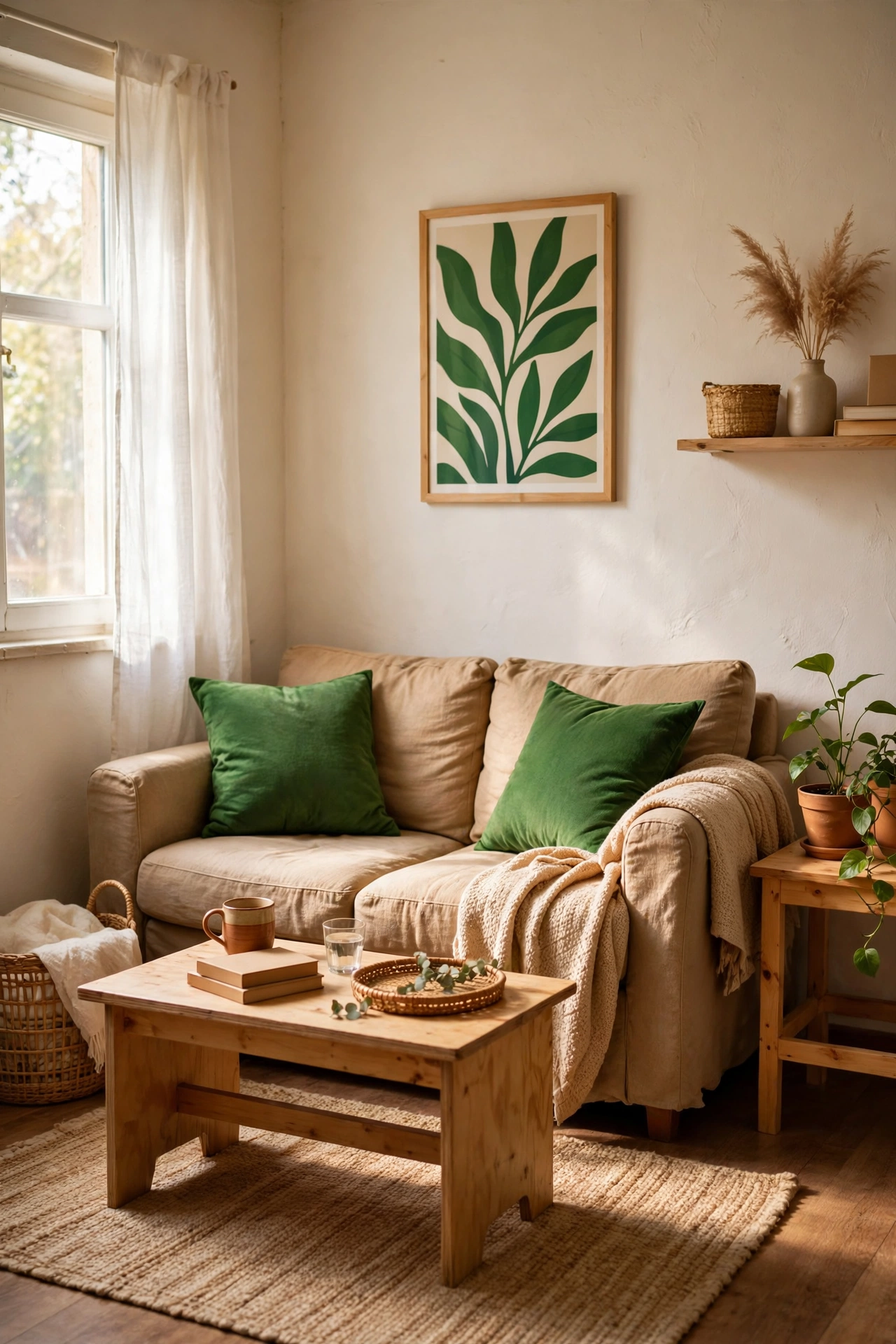
One bold colour, repeated in a cushion, a throw, and a piece of art, gives a small room personality without visual noise. Keep everything else neutral so the bold colour has room to breathe. Pick a colour you love living with, not just one that photographs well. I chose deep green for my living room and repeated it three times, which tied the whole space together. The mistake to avoid is adding a second and third bold colour later, because each new colour competes and the room starts to feel busy.
Cost: ~$25 | Time: 20 minutes
Small Details, Big Space
22. Choose Leggy Furniture You Can See Under
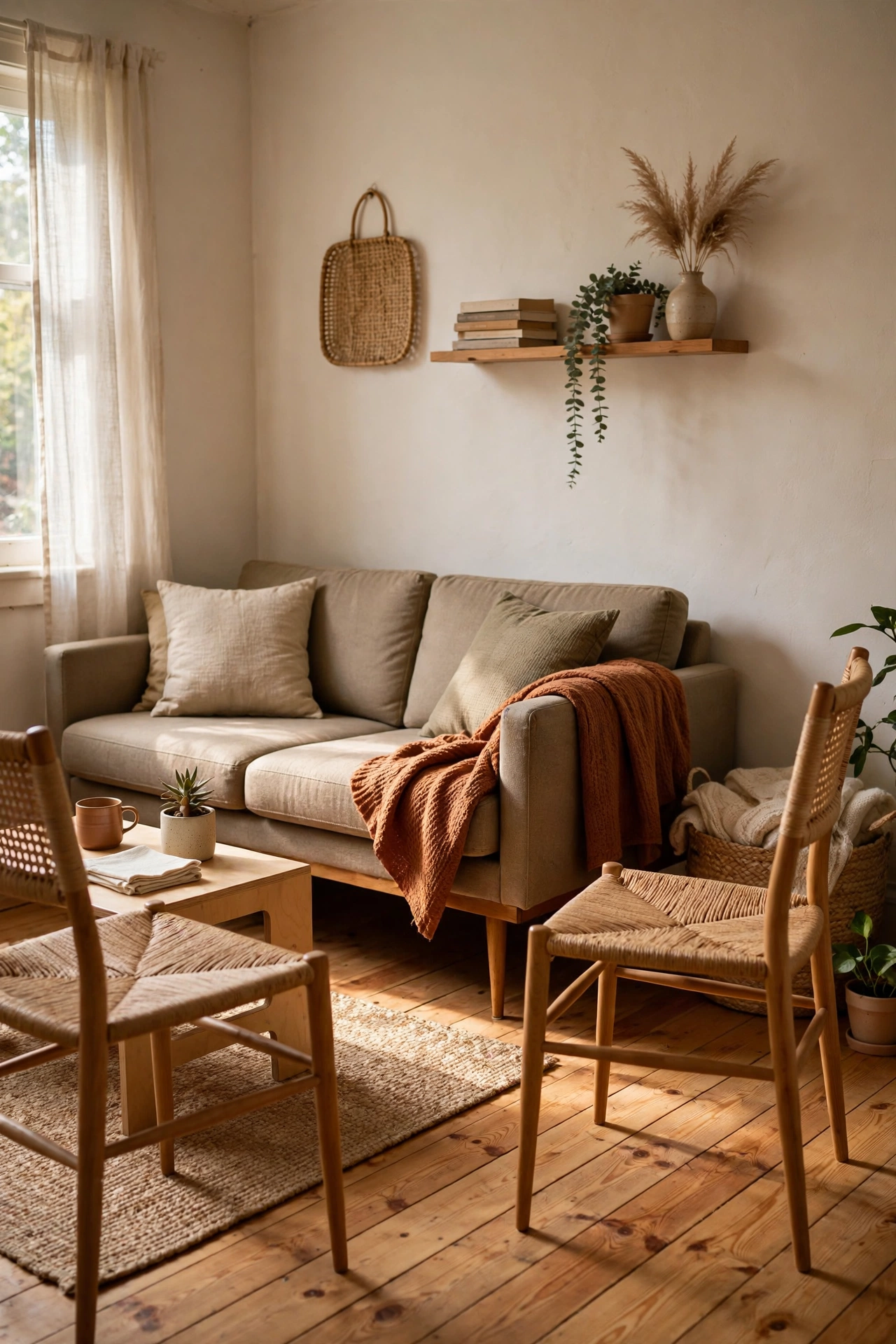
Furniture with visible legs lets you see floor underneath, which tricks the eye into reading more space than solid-to-floor pieces allow. Choose a sofa, chairs, and console with slim wooden or metal legs, and keep the floor beneath them clear of boxes. This one change made my living room feel lighter without buying anything new, because I simply swapped a skirted sofa for a leggy one. The mistake to avoid is stuffing storage boxes under leggy furniture, because that cancels the whole effect, so keep that space empty on purpose.
Cost: ~$0 | Time: 15 minutes
23. Use a Glass or Acrylic Coffee Table
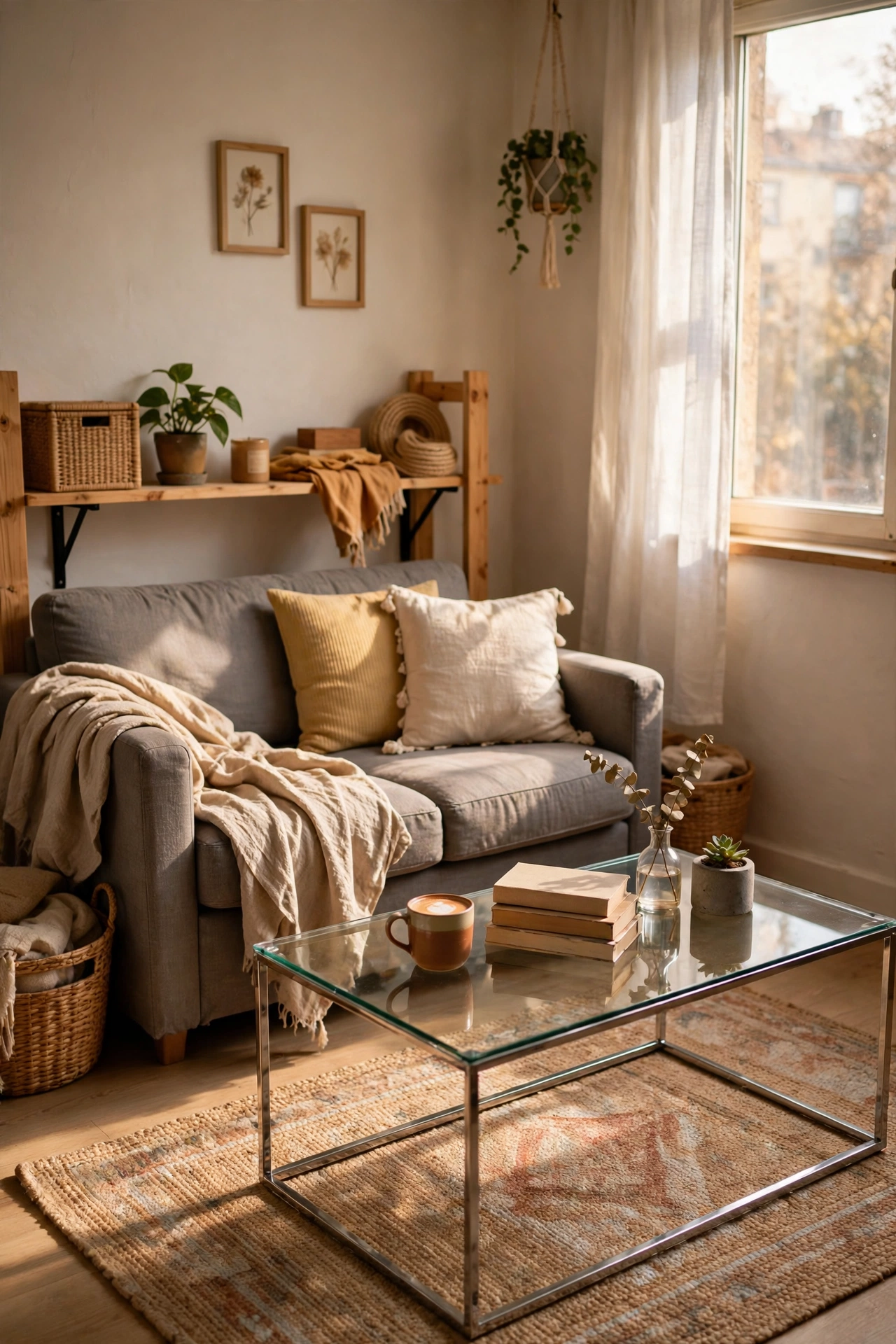
A glass or acrylic coffee table almost disappears in a small room, so the rug and sofa get the attention instead of a heavy block of wood. Choose tempered glass for safety, keep the top clear except for one book or tray, and wipe fingerprints weekly. This works especially well in front of a patterned rug. I swapped a dark wood table for a clear one and the room felt wider the same evening. The mistake to avoid is a glass table with sharp corners in a tight walkway, so pick rounded corners if space is very tight.
Cost: ~$70 | Time: 20 minutes
24. Swap Heavy Curtains for Blinds
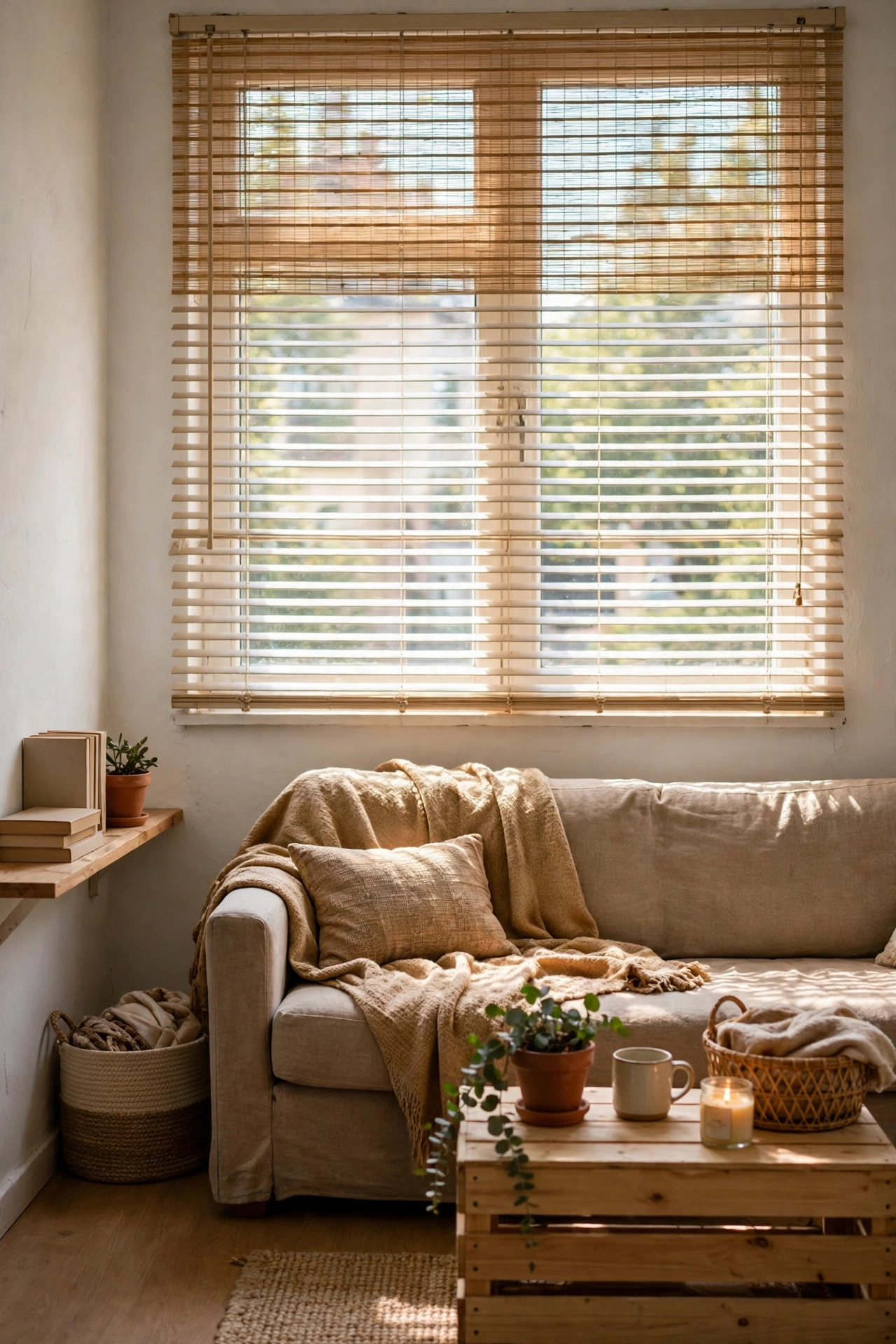
Heavy curtains eat wall space and light, while simple blinds sit flat against the window and free up the sides for furniture or plants. Choose light-filtering roller blinds or slim wooden blinds, and add a sheer panel only if you need softness. Measure the inside of the window frame carefully for a neat fit. I swapped thick drapes for blinds in a small living room and gained space for a plant shelf beside the window. The mistake to avoid is blinds that block all light during the day, so pick a fabric that still glows.
Cost: ~$35 | Time: 40 minutes
25. Do a Weekly Ten-Minute Reset
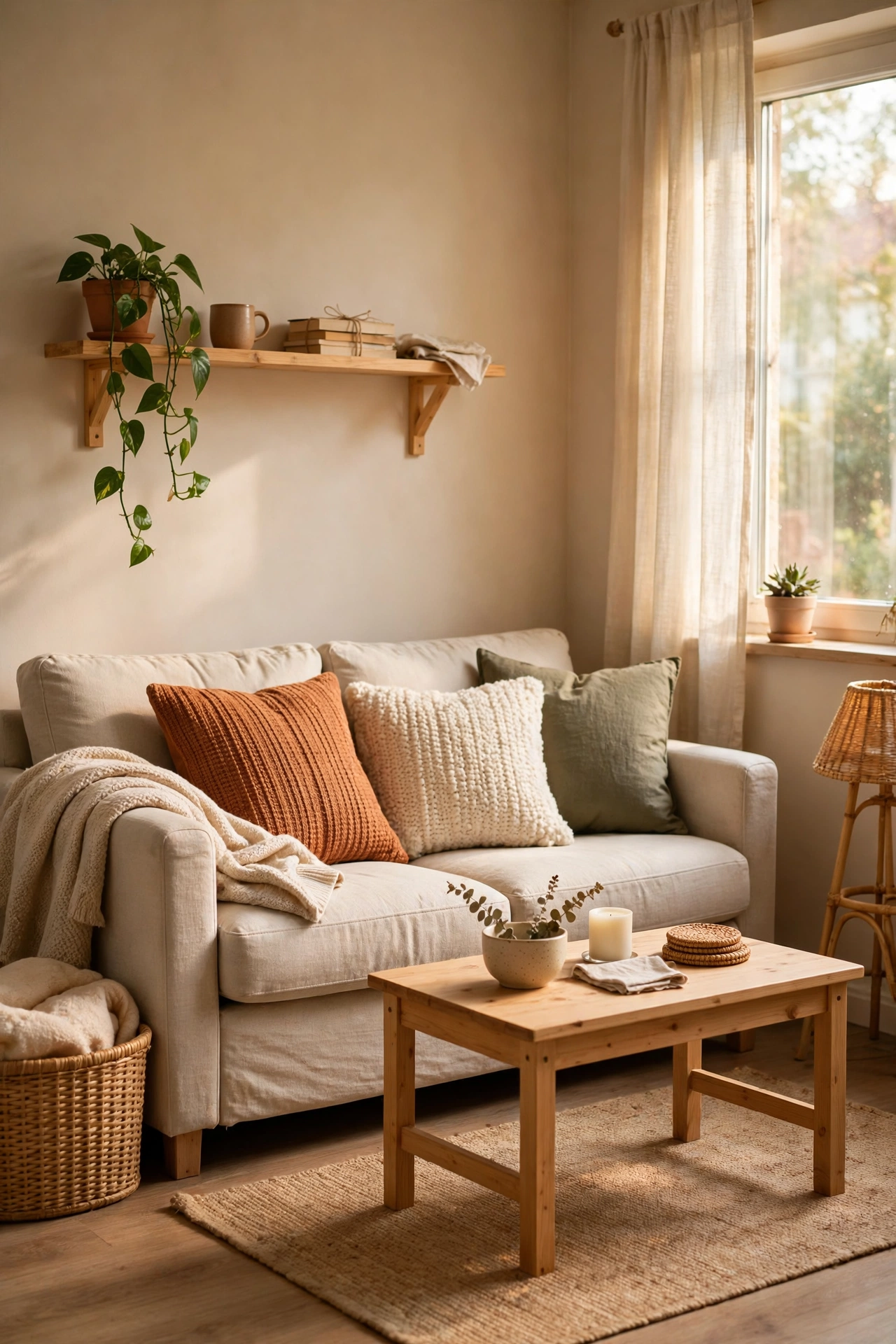
A ten-minute weekly reset keeps a small living room feeling spacious long after the decorating is done. Set a timer, return every item to its home, fluff cushions, wipe surfaces, and take out anything that does not belong in the room. Do it the same day each week so it becomes a habit, not a chore. I do mine on Sunday evenings and Monday mornings feel calmer for it. The mistake to avoid is turning the reset into a deep clean, because then you will skip it, so stop when the timer rings even if one drawer is still messy.
Cost: ~$0 | Time: 10 minutes
(see also: 23-renter-friendly-apartment-upgrades-that-need-no-drilling)
Maximizing a small living room is less about buying more and more about choosing pieces that earn their floor space. Start with layout, add one storage fix, then let light do the rest. Your room will feel bigger within a weekend, and it will stay that way if you keep the walkways clear.
