23 Studio Apartment Ideas That Feel Like a Real Home
A studio can feel like a bedsit or like a proper home, and the difference is rarely size — it is whether each corner has a clear job. When I moved into my first studio, the bed, the desk and the sofa were all fighting over the same square metres, and nothing felt finished. These studio apartment decor ideas fix that without building walls: zones, light, one calm colour story and furniture that works twice as hard. Steal the ones that fit your layout, and leave the rest.
1. Zone the Studio With a Bookcase Room Divider
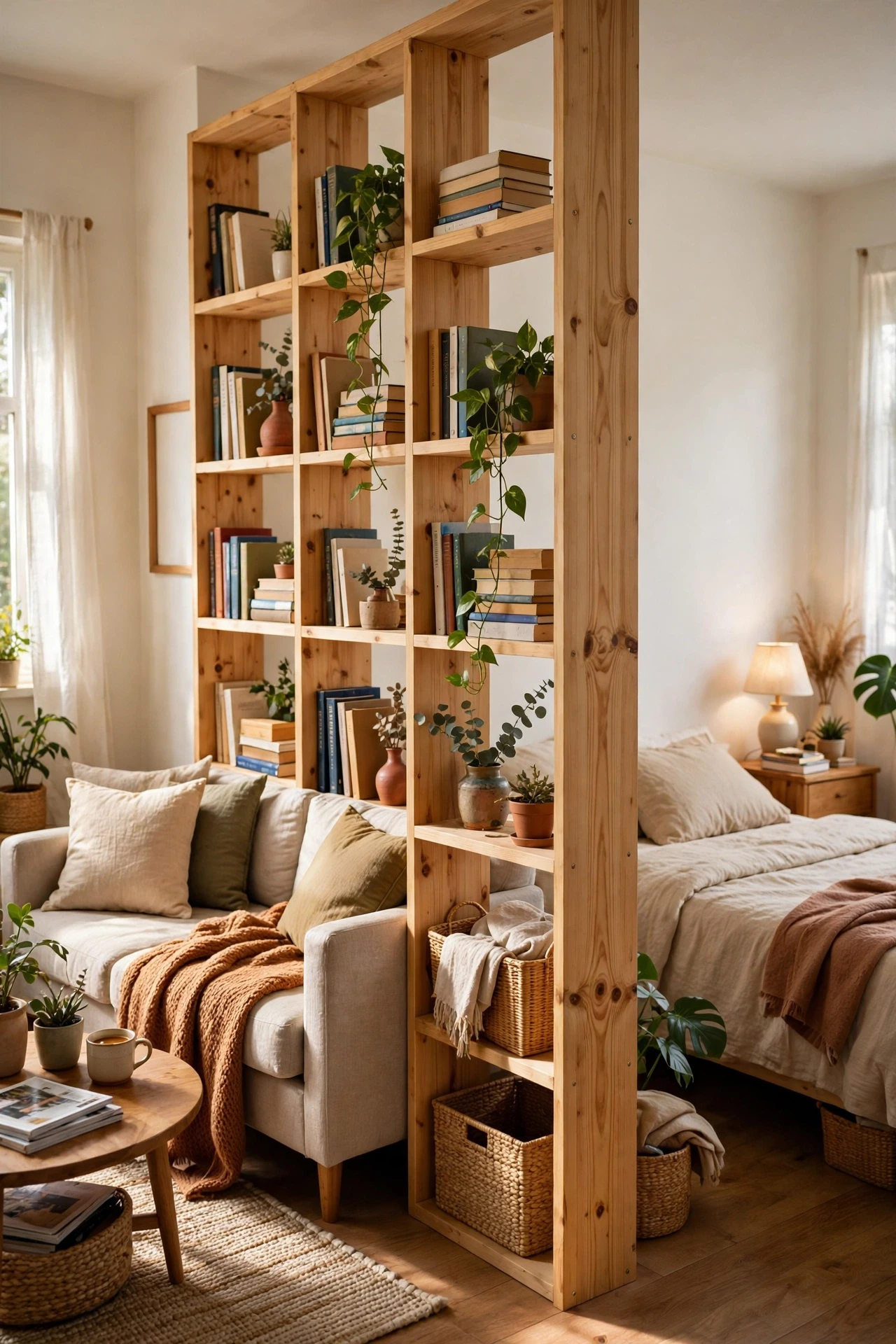
A bookcase divider splits a studio into a bedroom side and a living side without blocking light the way a wall would. Pick an open-backed bookcase so light still travels through, and style it from both sides — books and plants facing the living area, folded clothes and baskets facing the bed. Anchor it to the wall if it is tall, because a freestanding bookcase in a walkway is a tipping risk. I used a secondhand bookcase in my first studio, and the moment it went up, the flat finally felt like two rooms instead of one long corridor. Leave the top shelf partly empty so the divider reads as furniture, not a barricade.
Cost: ~$60 | Time: 1 hour
Pro tip: Turn the bookcase sideways by a few centimetres so it does not line up exactly with the walls — that tiny angle makes the zones feel natural, not boxed in.
2. Define the Bedroom With a Curtain You Can Close at Night
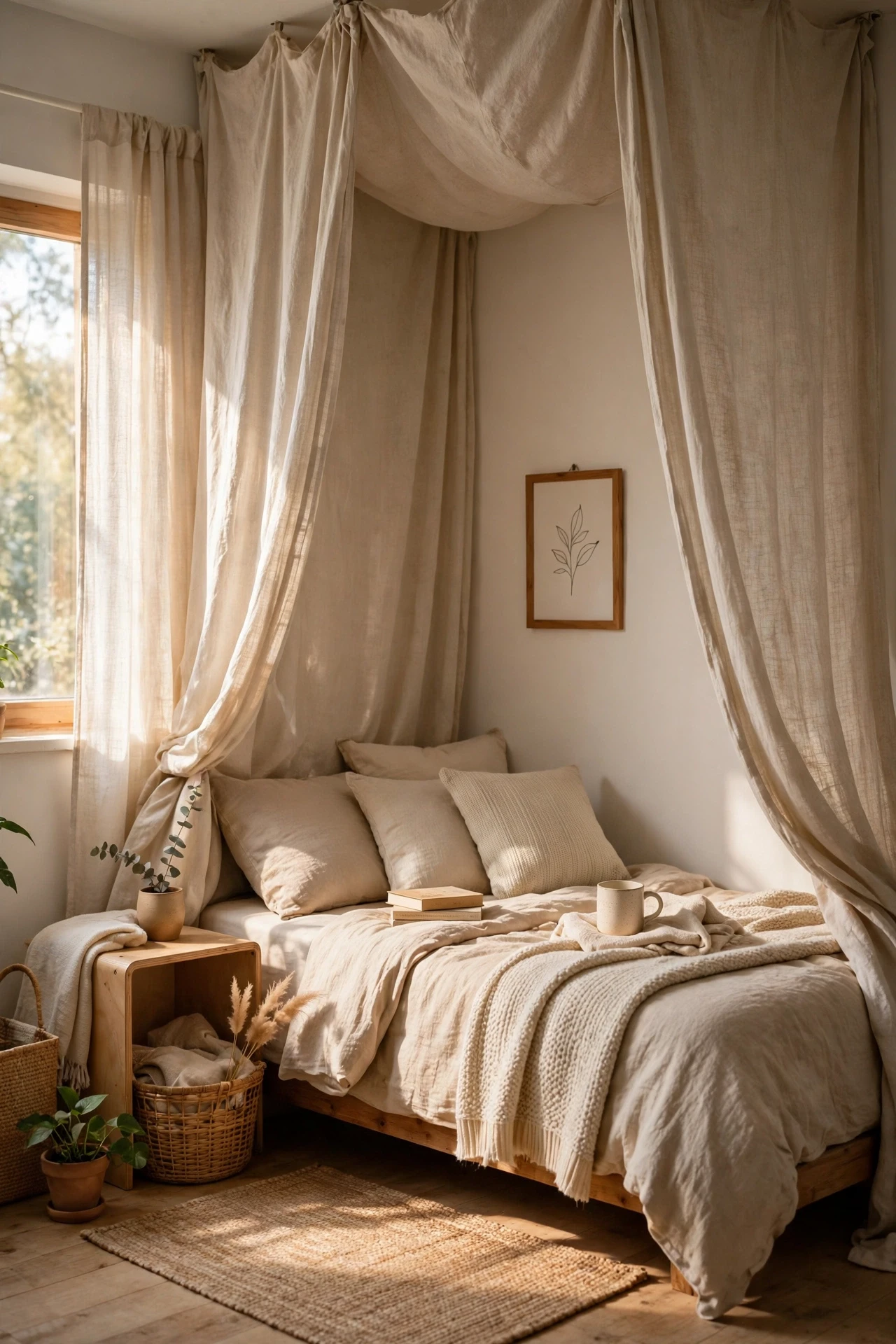
A ceiling curtain around the bed is the cheapest bedroom door you will ever buy, and it changes how a studio feels after dark. Fix a curved ceiling track or a simple wire around the sleeping corner, hang a heavy linen curtain, and close it at night so the bed disappears from the living area. Choose a fabric that matches your bedding so it reads as soft furnishing, not a hospital cubicle. I slept far better once my bed was out of sight while I watched television, because my brain stopped seeing the unmade duvet. Keep the curtain pulled back during the day, or the studio will feel smaller, not cozier.
Cost: ~$30 | Time: 2 hours
3. Choose a Sofa Bed That Actually Sleeps Well
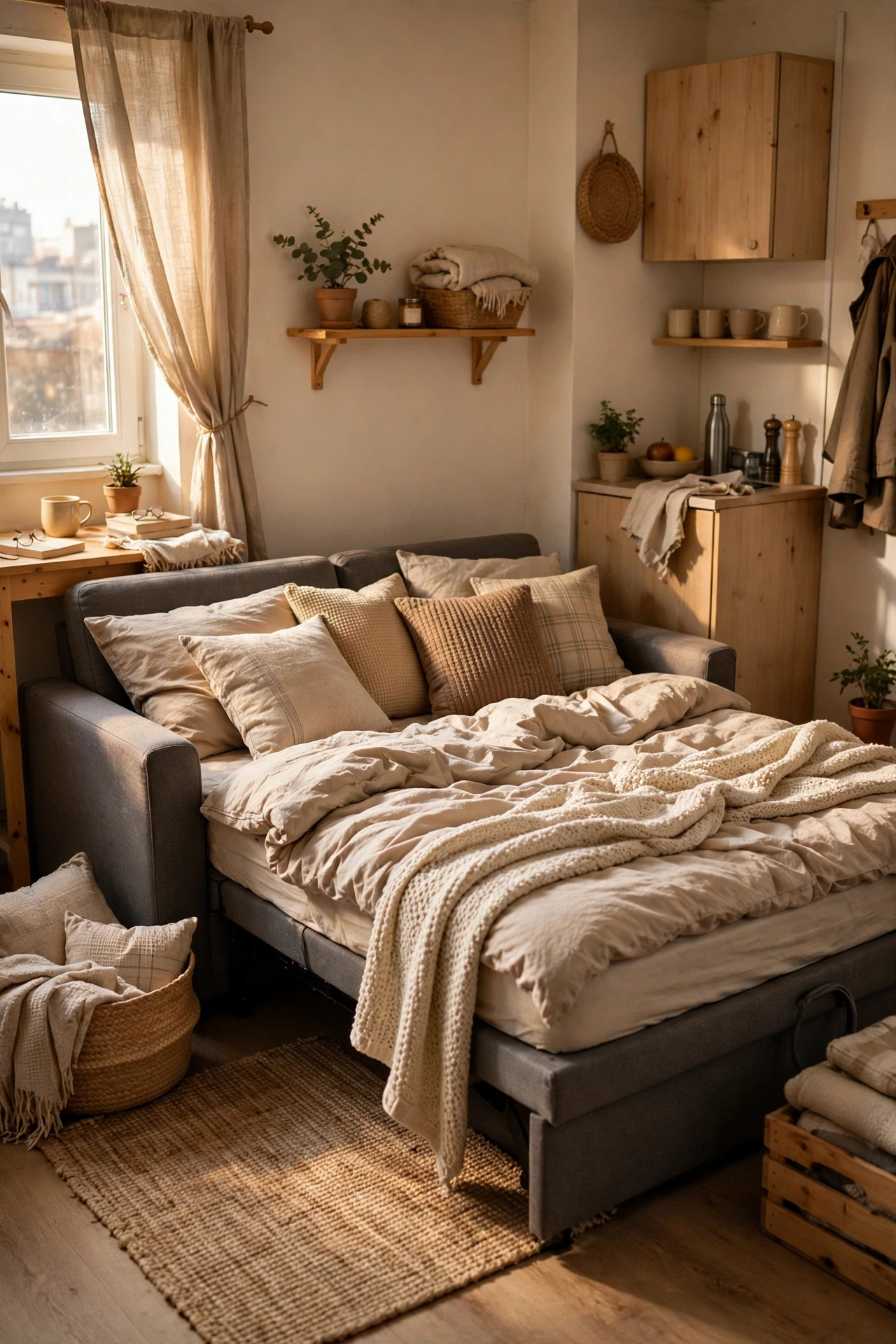
Most sofa beds punish you twice — uncomfortable to sit on, worse to sleep on — so test before you buy, and test it as a bed, not just a sofa. Look for a proper mattress, at least 12 centimetres thick, and a mechanism you can open one-handed after a long day. Add a mattress topper that lives folded in the ottoman, and proper pillows, because a sofa bed with real bedding stops feeling like a compromise. I bought a cheap one first and regretted it within a month; the second one, with a real mattress, meant guests actually volunteered to stay over. Spend on the mattress, save on the frame.
Cost: ~$250 | Time: 1 hour
4. Anchor the Living Area With One Large Rug
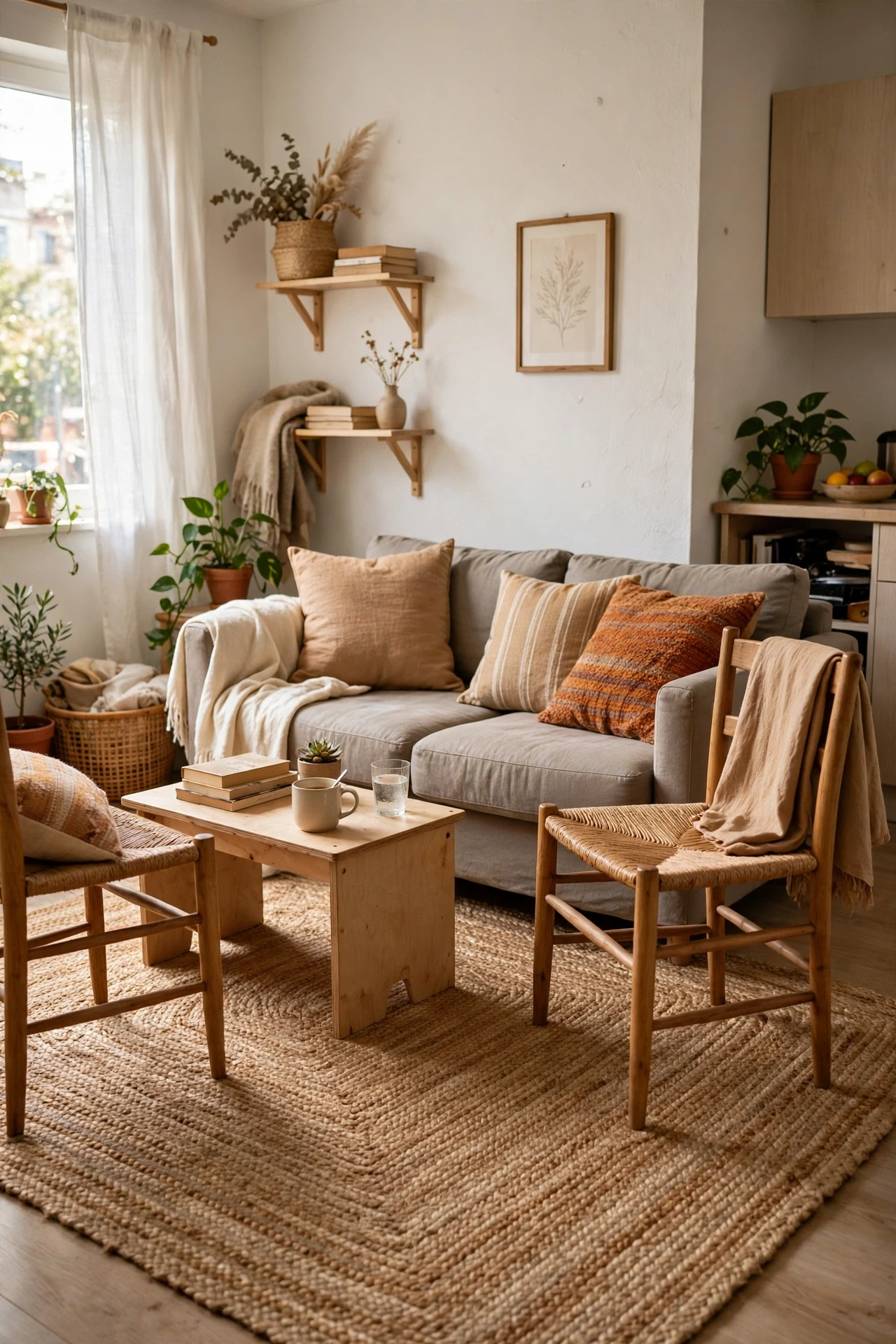
Several small rugs chop a studio into scraps, while one large rug pulls the living area together and tells your eye where the room starts and ends. Size it so the front legs of the sofa and chairs all sit on it — that is the rule that makes a seating area look intentional. Choose a flat-weave or low-pile rug, because thick pile makes a small room feel crowded and traps crumbs. I swapped three small rugs for one big jute rug, and the flat looked twice as calm overnight. For more floor tricks, my (see also: small-living-room-rug-ideas) post covers sizing in detail. Save this idea for your studio board — it is the fastest zoning trick here.
Cost: ~$50 | Time: 15 minutes
5. Use a Fold-Down Desk That Disappears After Work
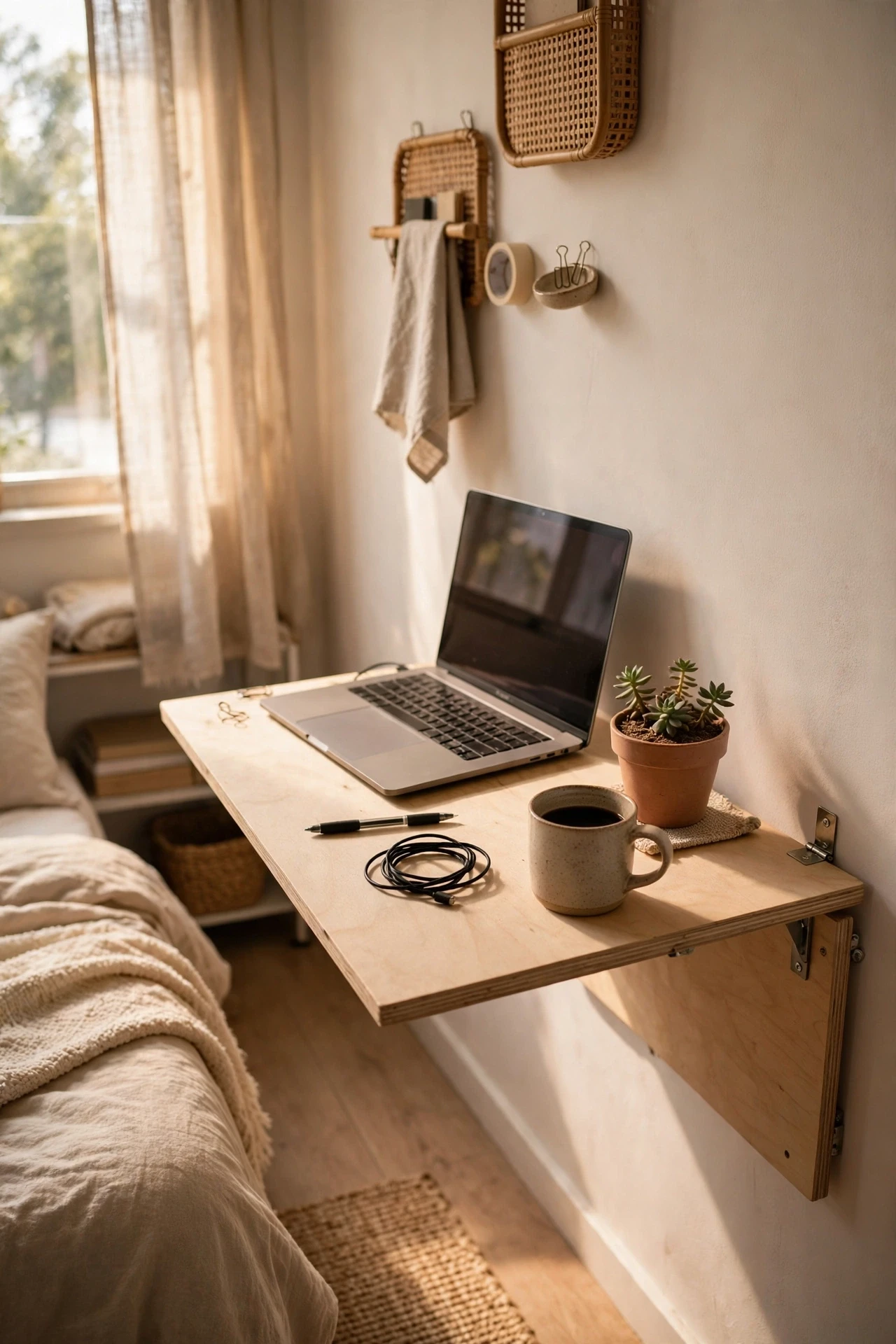
Working from a studio means your desk is always in view, unless it folds away. A wall-mounted fold-down desk gives you a proper work surface at standing or sitting height, then folds flat against the wall when the day ends, with a shelf for the laptop behind it. Mount it into studs, because a desk that wobbles will not get used, and keep the chair nearby — a folding chair hung on a hook does the job. I worked from a kitchen table for a year and never switched off; the fold-down desk gave me back my evenings, because closing it felt like leaving the office. That small ritual matters more than the desk itself.
Cost: ~$45 | Time: 1 hour
Pro tip: Keep a small basket on the desk shelf for pens and cables, so folding the desk down takes ten seconds, not a full tidy-up.
6. Hang Curtains High to Make Low Ceilings Feel Taller
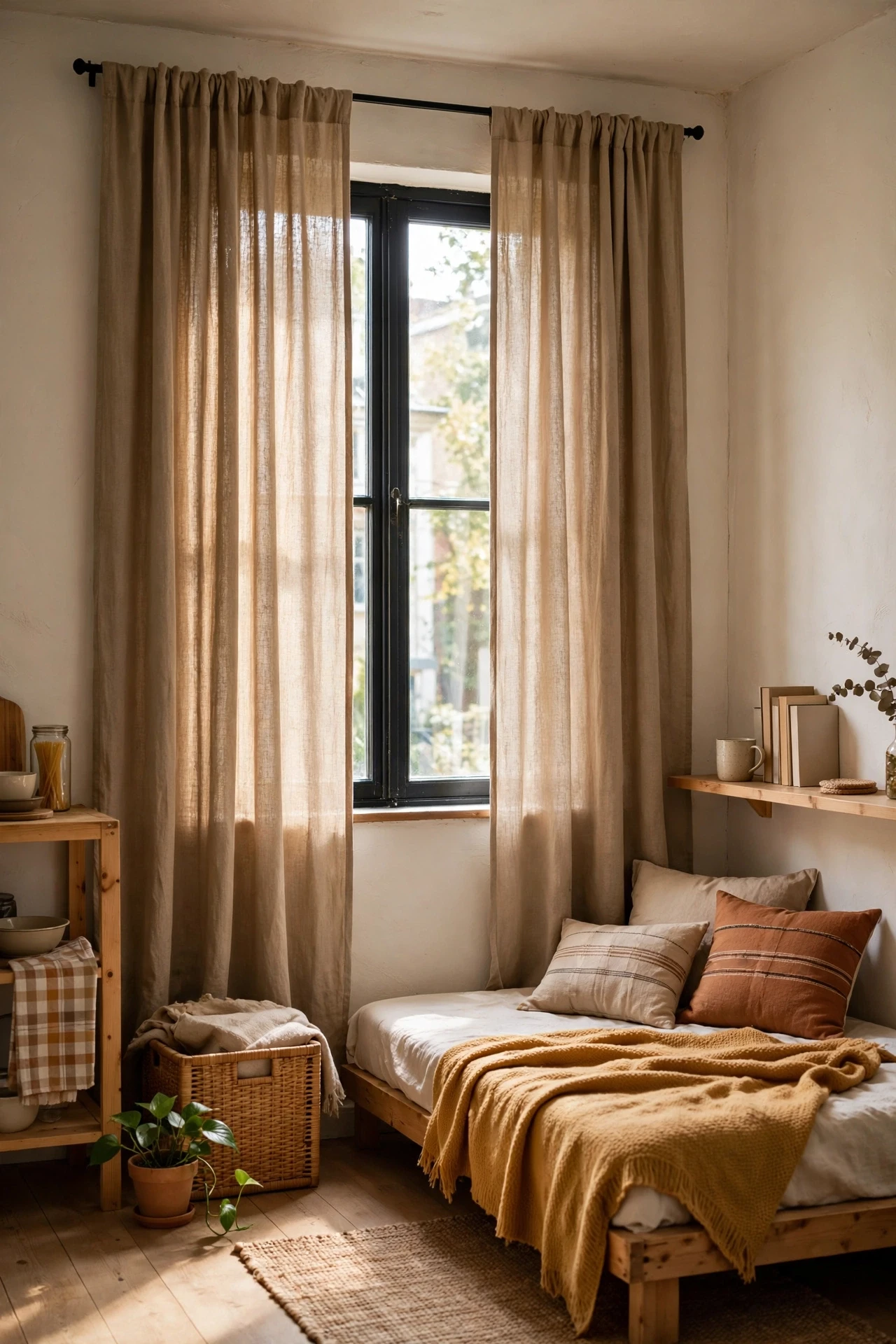
Studios often have low ceilings, and curtains hung at window height make them feel lower still. Mount the rod as close to the ceiling as you can, extend it 15 centimetres past each side of the window, and let the curtains fall all the way to the floor. The long vertical lines draw the eye up, and the wider rod makes the window look bigger than it is. Choose a light fabric that lets daylight through, because heavy curtains in a small room eat light. I did this in a basement studio with one small window, and visitors kept asking if the ceiling had been raised. It had not — only the curtains had moved.
Cost: ~$25 | Time: 45 minutes
7. Pick a Round Dining Table That Seats Four Without Blocking the Walkway
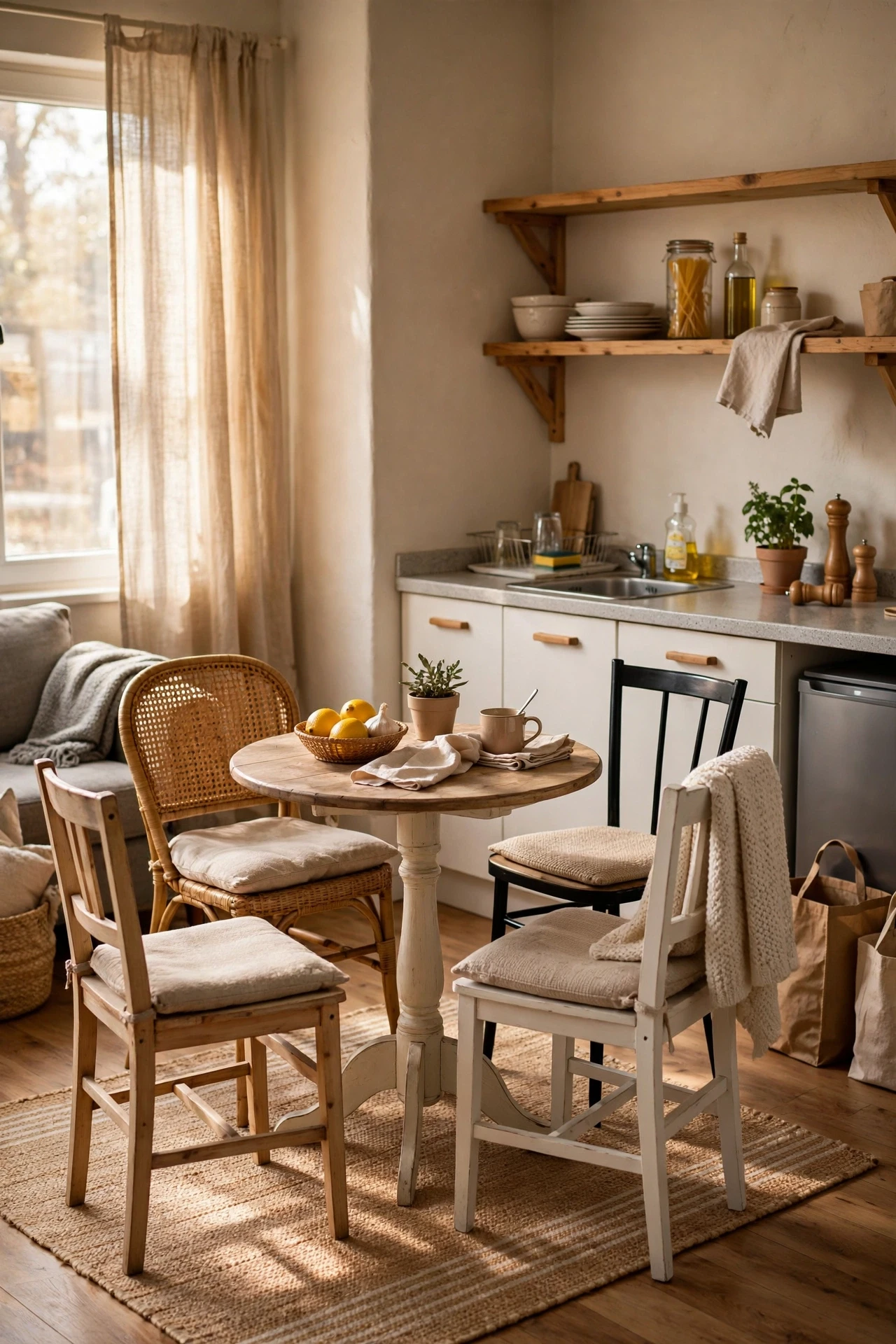
A rectangular table in a studio creates corners to bump into and a walkway that narrows to nothing, while a round pedestal table seats four and leaves the paths clear. With no corners and one central leg, chairs tuck fully underneath, and people can slide in from any side. Measure the walkway first — you need at least 75 centimetres clear around the table for someone to pass with a plate. I swapped a rectangle for a round table in my old flat and gained a proper dinner-party corner where before there was only a corridor. Buy secondhand if you can: round pedestal tables are common at thrift shops and paint up beautifully.
Cost: ~$70 | Time: 30 minutes
8. Create a Mini Entryway With a Hook Rail and a Tray
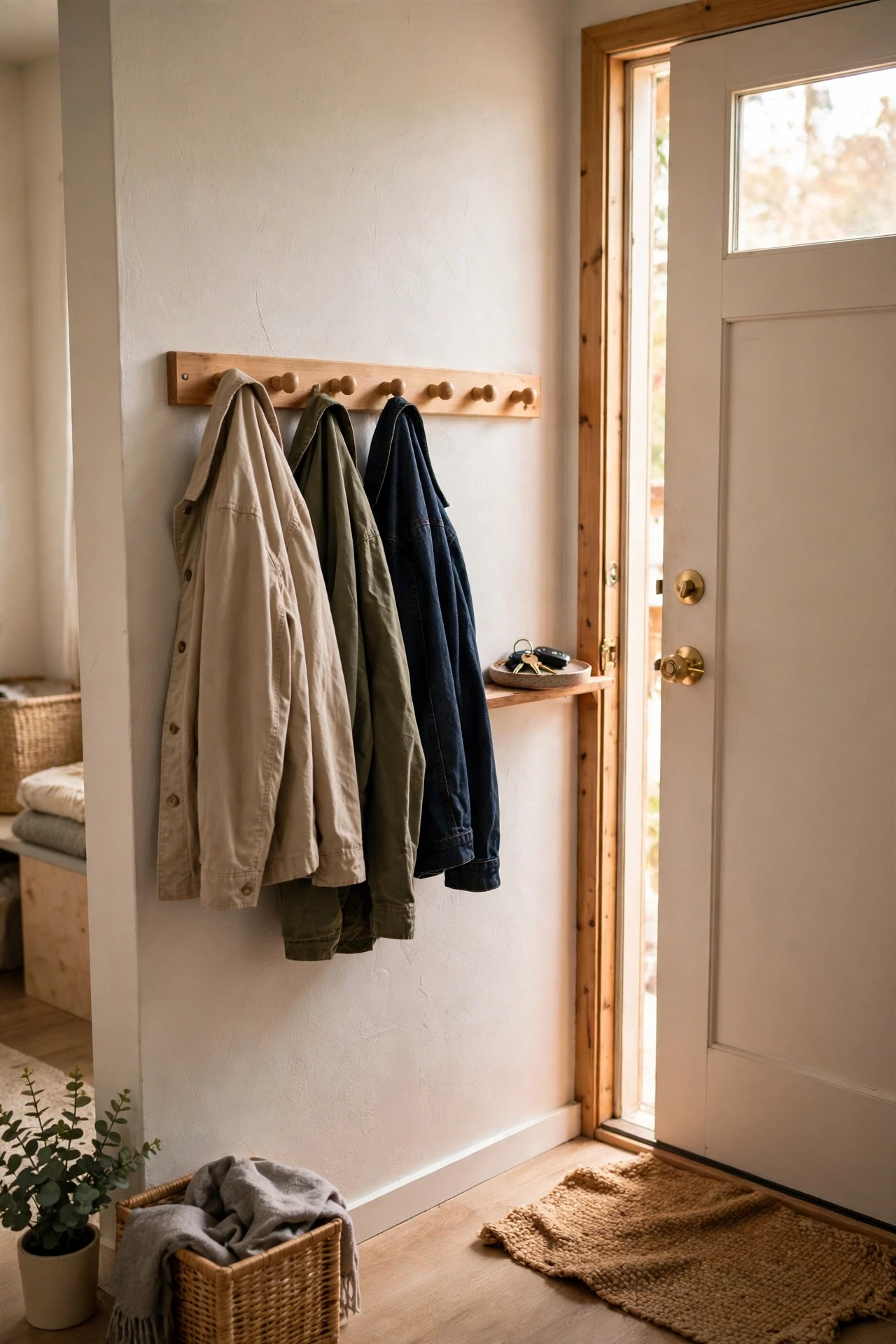
Studios rarely have a hallway, so coats and keys land on the nearest chair unless you build a tiny entryway on purpose. Fix a short hook rail beside the front door, add a small tray or bowl on a shelf below for keys and sunglasses, and put a doormat down to mark the boundary. One hook per person keeps it from becoming a coat pile. I added mine with three hooks and a chipped ceramic bowl, and the chair by the door finally stayed clear. The trick is placement: the rail has to be the first thing your hand reaches when you walk in, or the habit never forms. Keep it small and it will actually get used.
Cost: ~$18 | Time: 30 minutes
9. Layer Warm Lighting Instead of One Harsh Ceiling Light
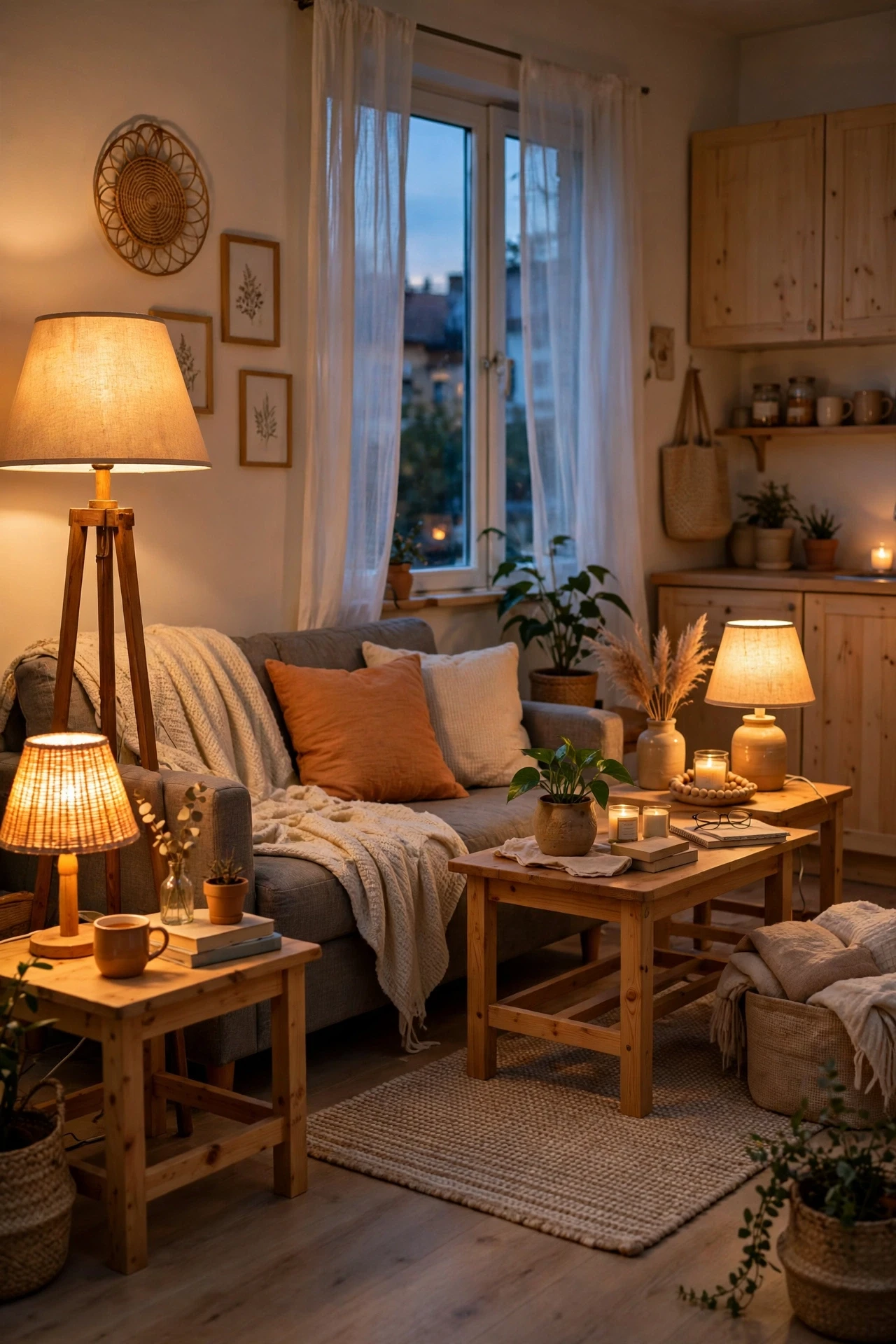
One ceiling light makes a studio feel like an office at night, because every zone gets the same flat glare. Layer instead: a floor lamp by the sofa, a small lamp on the desk, and a warm bedside light, all on warm-white bulbs around 2700K. Switch on only the zone you are using, and the rest of the flat falls into soft shadow, which makes it feel bigger and calmer. I replaced my ceiling bulb with three cheap lamps, and evenings went from harsh to homely in one weekend. Use dimmers or smart bulbs if the budget stretches, but even three lamps on separate switches do most of the work. Avoid cool-white bulbs entirely — they are the fastest way to make a home feel like a waiting room.
Cost: ~$40 | Time: 30 minutes
Pro tip: Put the brightest lamp in the darkest corner, not the centre of the room — light in the corners pushes the walls outward.
10. Use a Kitchen Cart as a Movable Island and Extra Counter
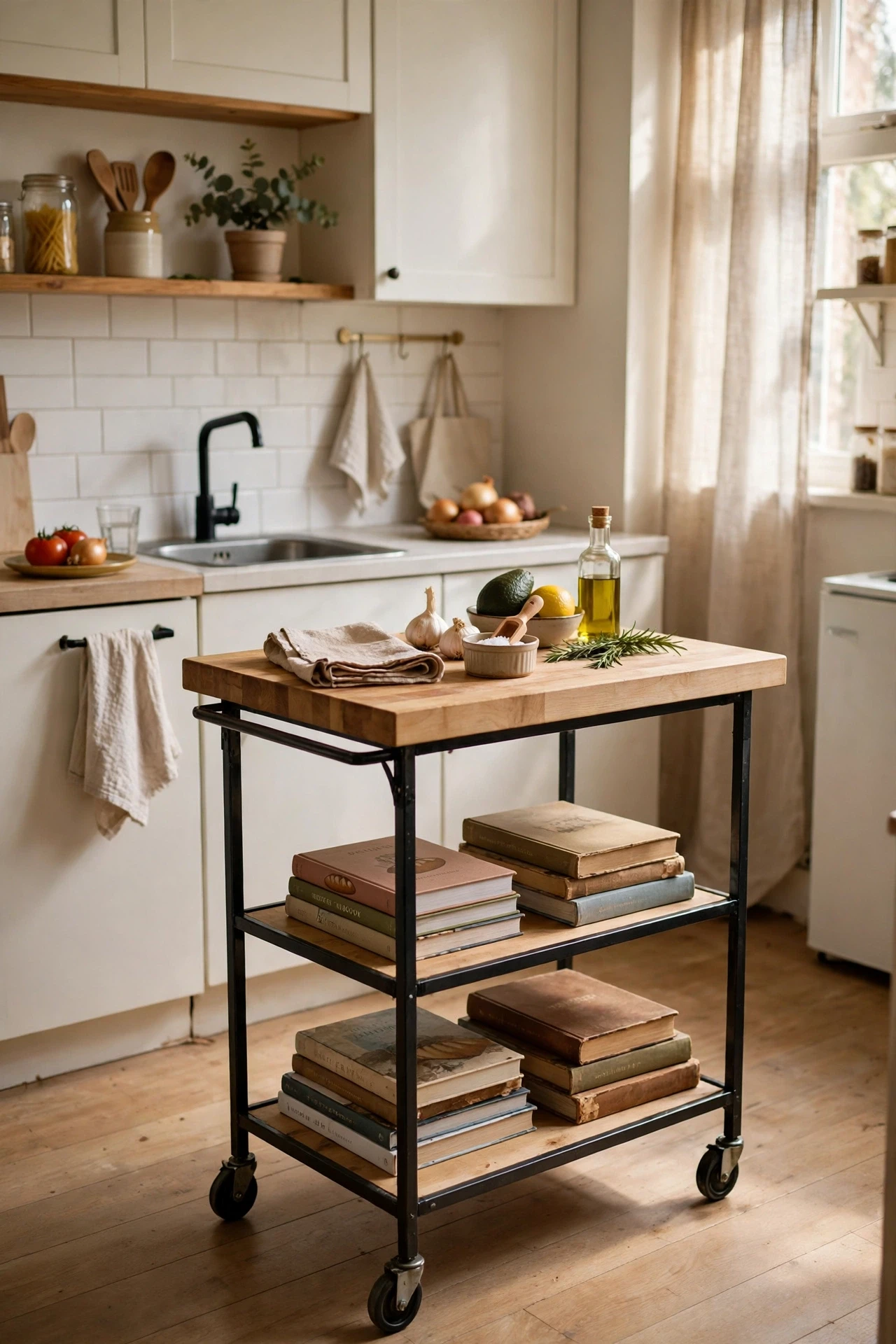
Studio kitchens are usually one short counter, so a rolling kitchen cart adds prep space, storage and a breakfast spot in one move. Roll it out when you cook, tuck it against the wall when you eat, and use the shelf below for pots or cookbooks. Locking wheels are essential, because a cart that rolls while you chop is dangerous. I bought mine secondhand, oiled the top, and it became the most-used piece in the flat — prep surface, coffee station and extra seating for a friend with a stool. Look for a butcher-block top if you can, because it doubles as a chopping board and ages far better than laminate.
Cost: ~$40 | Time: 20 minutes
11. Dress the Bed Like a Sofa With Big Cushions by Day
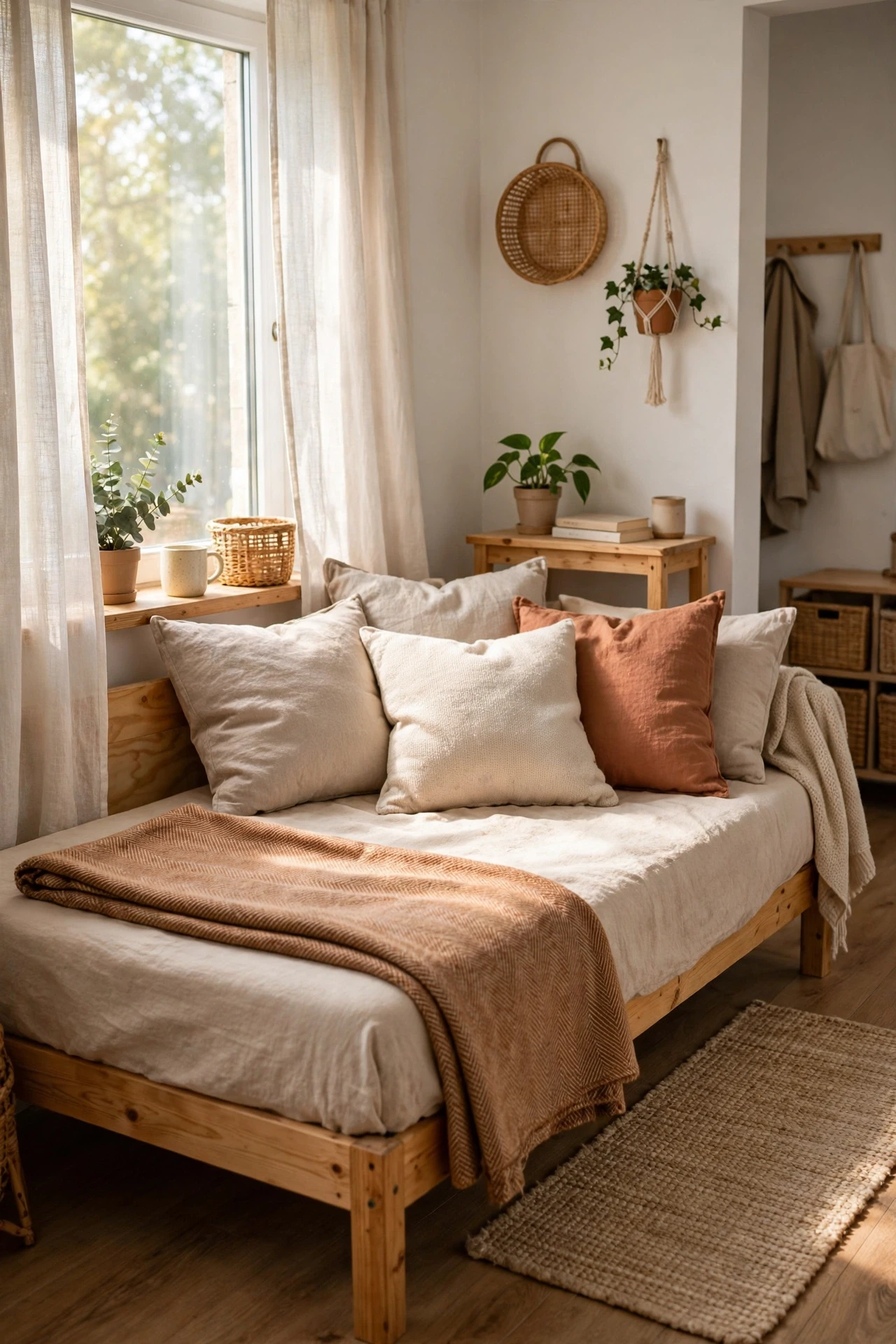
In a studio the bed is visible all day, so dressing it like a sofa stops it from looking like an unmade bedroom in the middle of your living room. Layer two large square cushions against the wall or headboard, add a throw folded across the foot, and pull the duvet tight each morning. By day it reads as a daybed you can lounge on; at night you just remove the cushions and sleep. I did this for two years, and guests stopped asking where the sofa was — they just sat on the bed quite happily. The mistake to avoid is too many small cushions, which slide everywhere; two big ones and one throw are enough.
Cost: ~$30 | Time: 10 minutes
12. Add a Full-Length Mirror to Double the Light
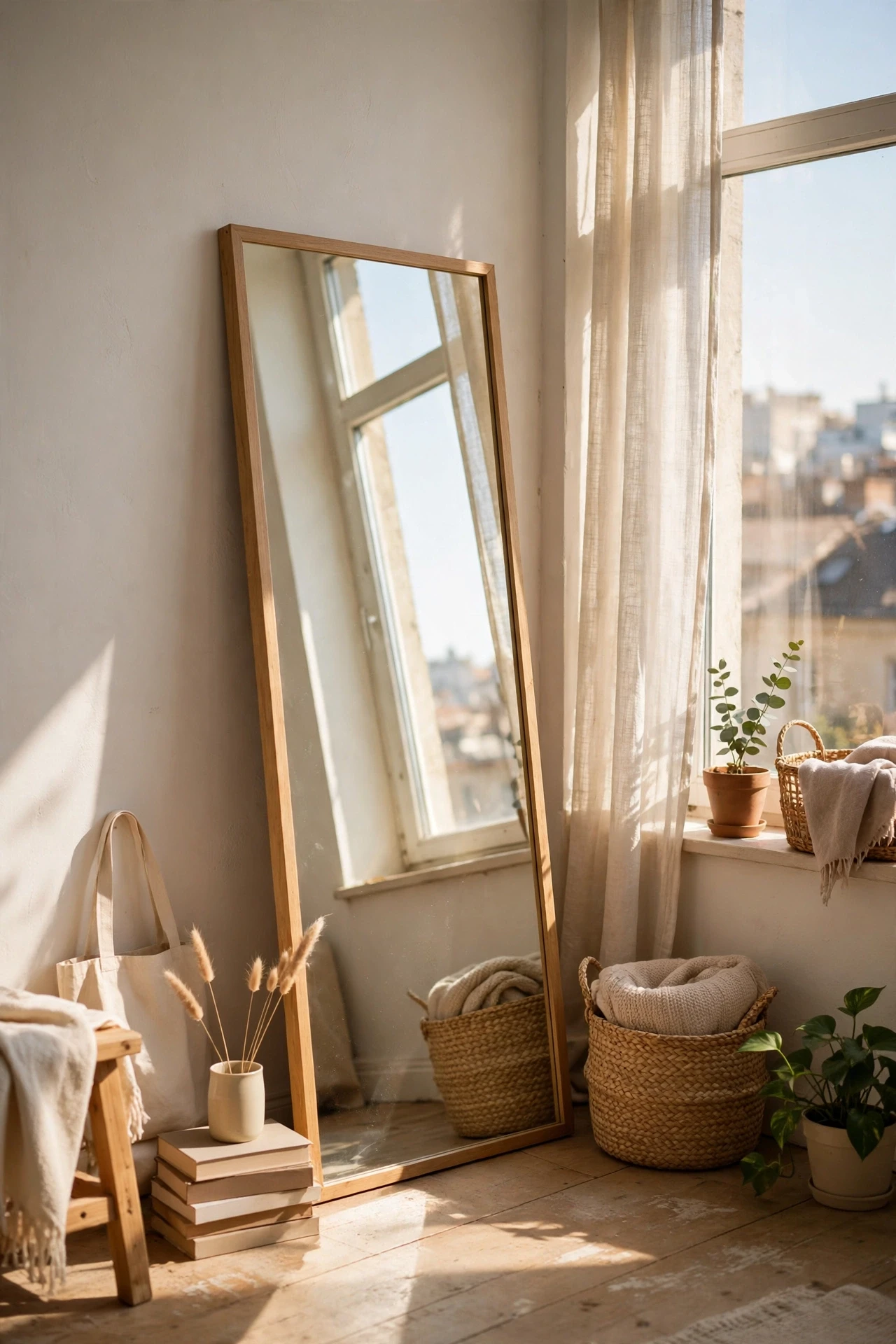
A full-length mirror opposite or beside a window bounces daylight deep into a studio and makes the room feel almost twice as large. Lean a large mirror against the wall rather than hanging a small one, because size is what sells the trick — a tiny mirror just reflects a tiny patch. Keep the wall opposite the mirror calm, or it doubles the clutter too. I leaned one against the wall beside my window, and the flat felt brighter on grey days, not just sunny ones. Angle it slightly if you can, so it reflects the window rather than the bed, and the light lands where you actually sit and eat.
Cost: ~$35 | Time: 15 minutes
13. Keep One Colour Palette Running Through Every Zone
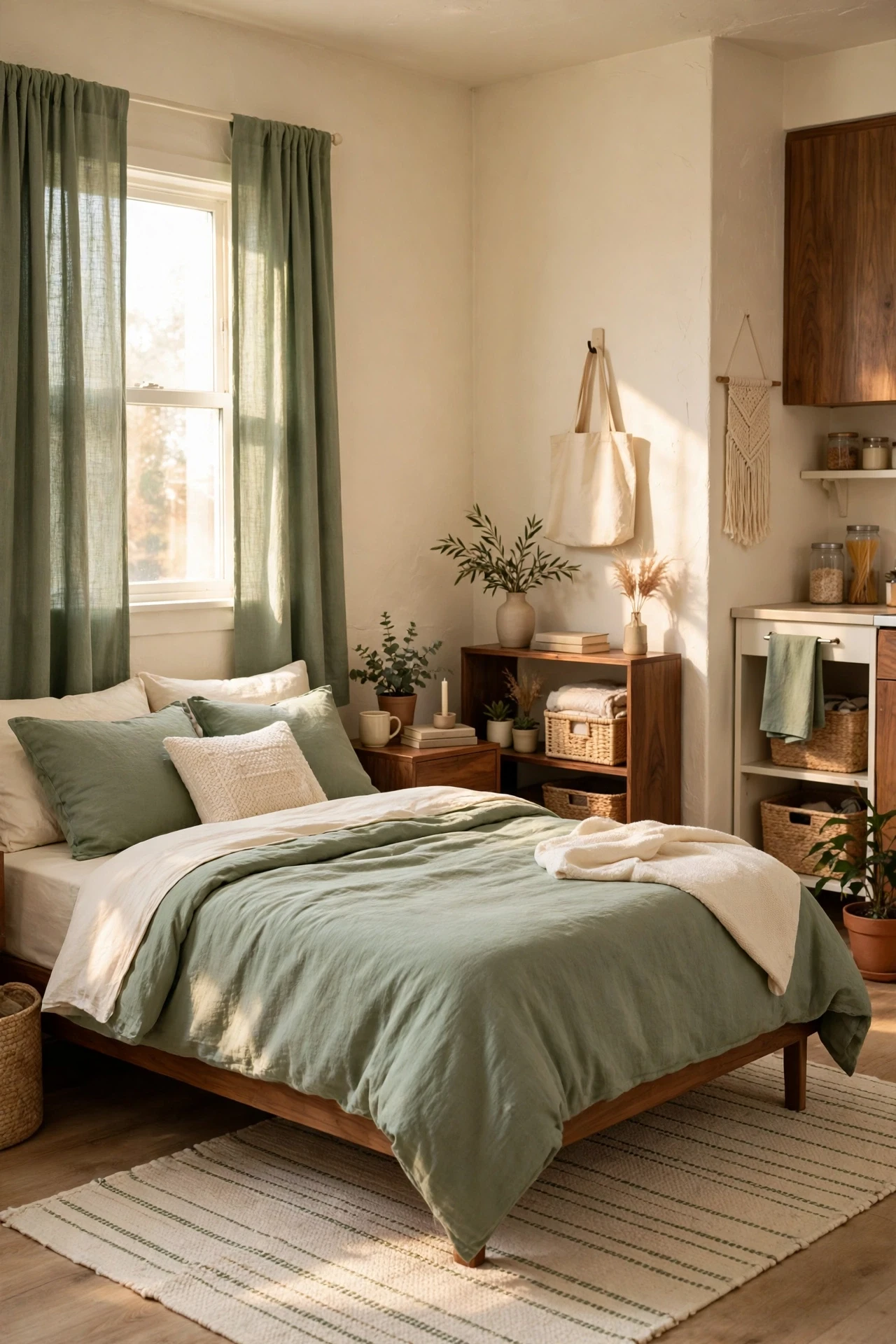
A studio with a different colour in every corner feels like several small rooms crammed together, while one palette makes it read as a single calm home. Pick three colours — a warm neutral, one soft accent and one darker anchor — and repeat them in bedding, cushions, curtains and art. You do not need to match everything exactly; tones in the same family do the job. I switched my bedding, throw and curtains to warm cream, sage and walnut, and the flat stopped feeling patched together. The rule that saved me money was simple: new things only came home if they fit the palette, which stopped impulse buys from breaking the calm.
Cost: ~$0 | Time: 1 hour
Pro tip: Photograph each zone on your phone before shopping — colours look different under shop lights than they do at home.
14. Float Furniture Off the Walls to Fake More Floor Space
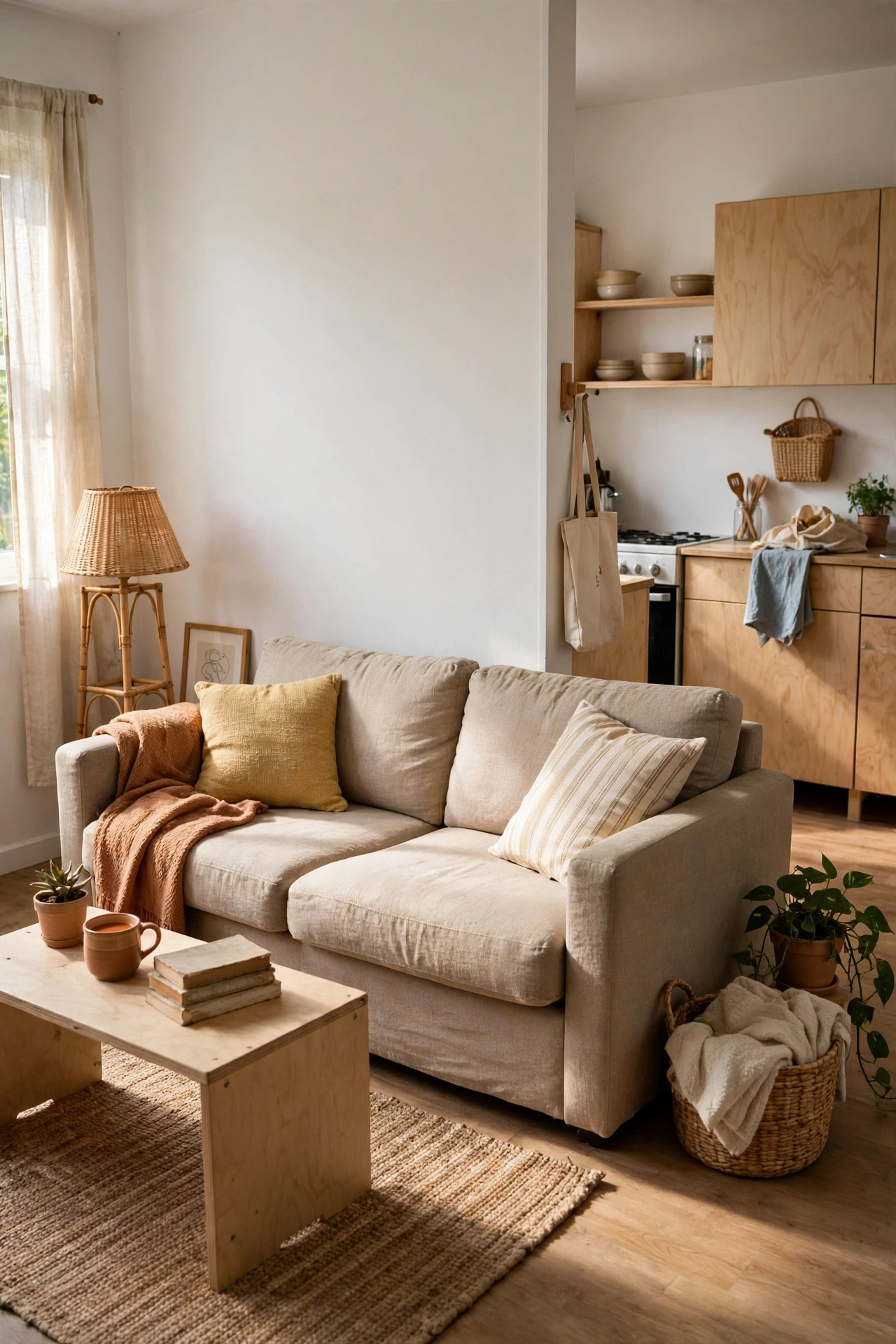
Pushing everything against the walls feels logical in a small room, but it actually makes a studio feel cramped, because there is no breathing room around anything. Pull the sofa a few centimetres off the wall, angle a chair slightly, and leave a gap behind the bed for air to move. Those small gaps let light fall behind furniture and make the floor look larger, even though you have used the same square metres. I tried this reluctantly — it felt like wasting space — but the room immediately felt less like a storage unit. Just do not overdo it: a few centimetres is enough, and walkways still need to stay clear for daily life.
Cost: ~$0 | Time: 20 minutes
15. Hang Art at Eye Level in One Gallery Wall
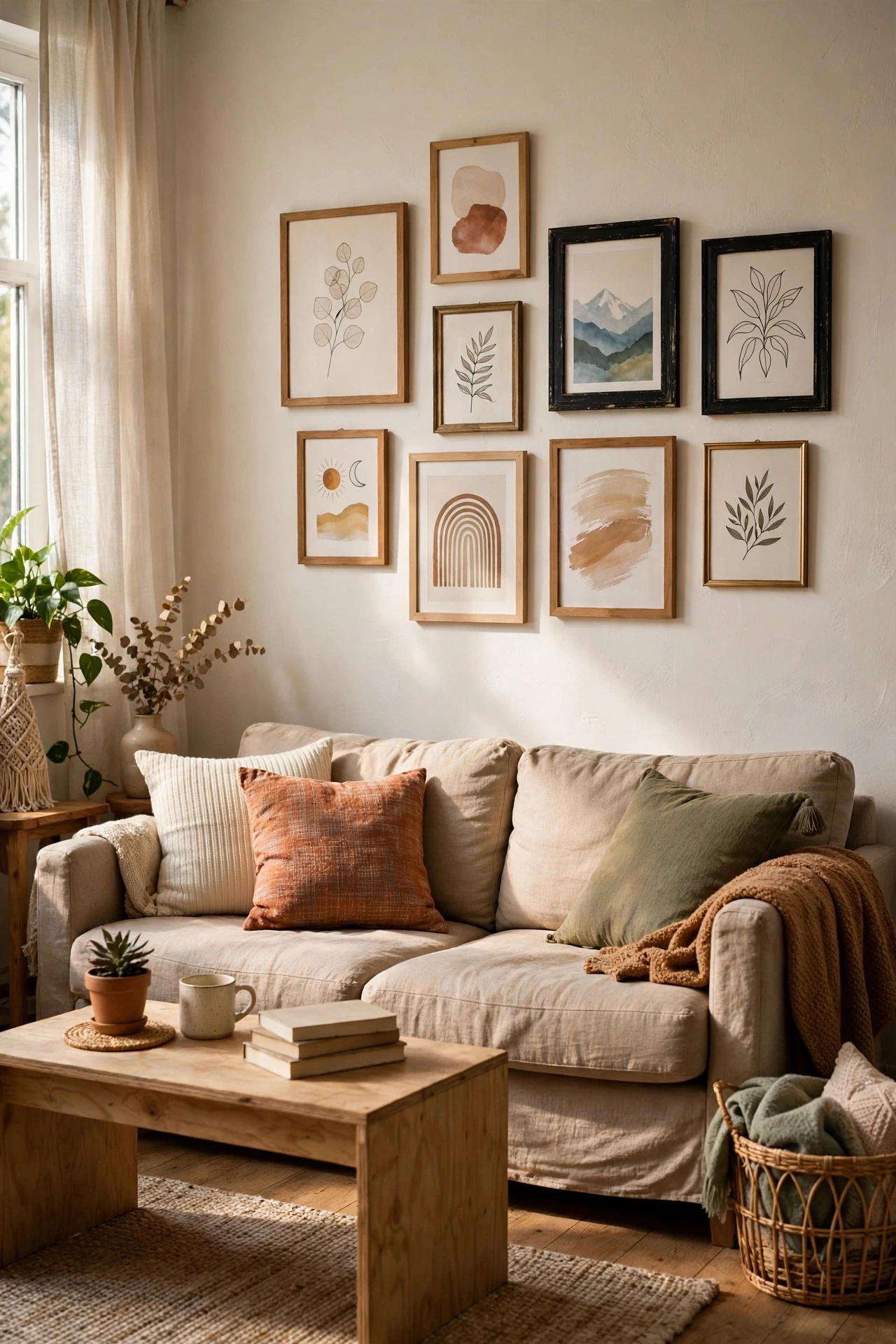
Scattered small frames all over a studio make the walls look busy, while one gallery wall at eye level gives the flat a focal point and a sense of intention. Pick one wall — usually above the sofa or the desk — and group five to seven pieces with consistent frames and varied sizes. Hang the centre of the group at eye level, about 145 centimetres from the floor, and keep the spacing even. I built mine from thrift-shop frames and free prints, and it became the first thing visitors commented on. For more wall ideas, my (see also: small-apartment-wall-decor-ideas) post has layouts worth copying. Start on the floor, arrange the group flat, then hang it once.
Cost: ~$20 | Time: 2 hours
16. Use a Storage Ottoman as a Coffee Table
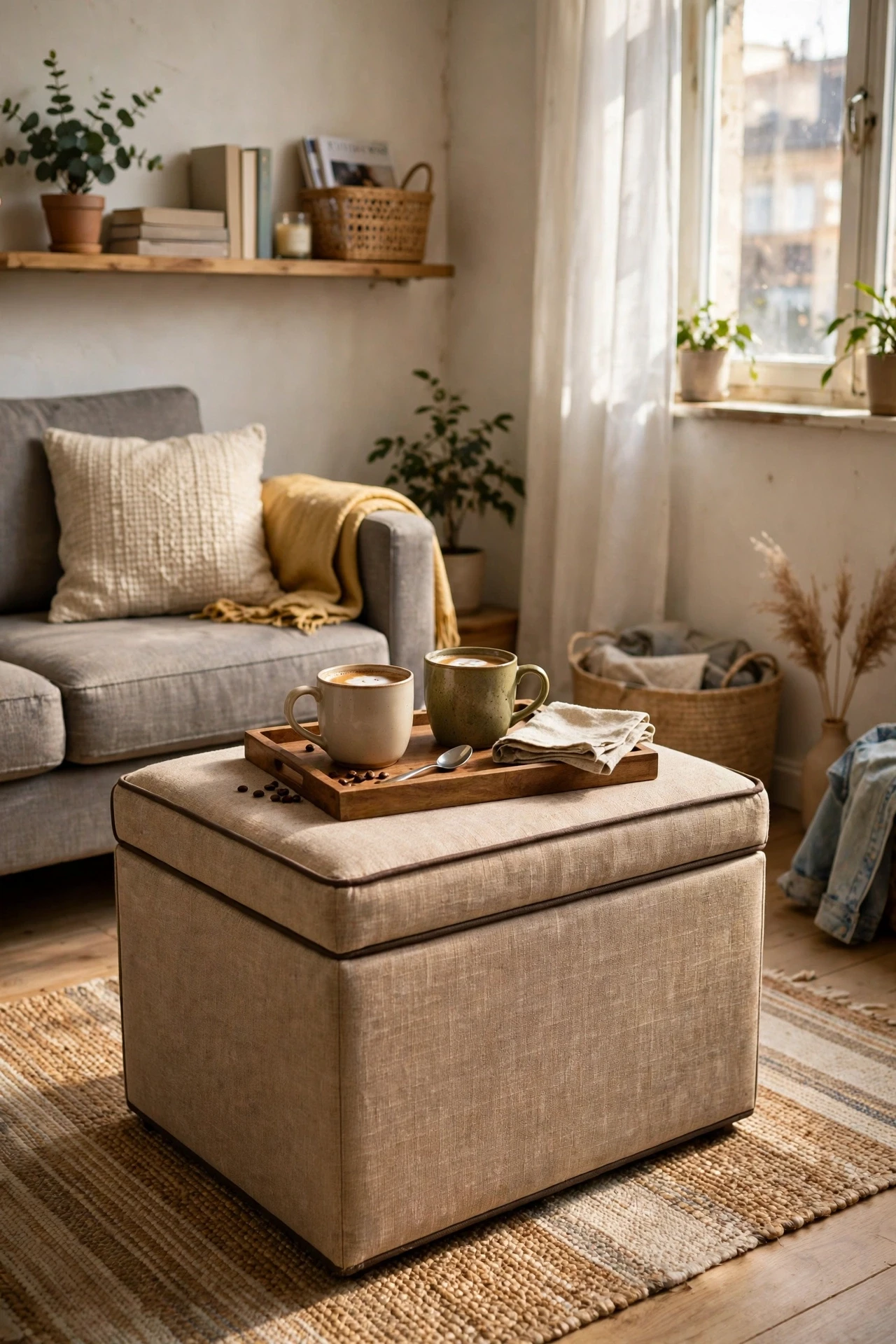
A coffee table in a studio should earn its floor space, and a storage ottoman does three jobs at once: table, footrest and hidden box for throws, remotes and chargers. Add a tray on top so cups sit steady, and lift the lid for the things you want out of sight. Choose a firm, flat-topped ottoman rather than a squashy pouf, or mugs will wobble. I swapped a glass table for a firm ottoman and gained a whole cupboard of hidden storage without losing a surface. The mistake to avoid is an ottoman so large it blocks the walkway — measure the gap between sofa and television first, and leave room to walk past comfortably.
Cost: ~$25 | Time: 10 minutes
17. Divide the Kitchen With a Slim Breakfast Bar
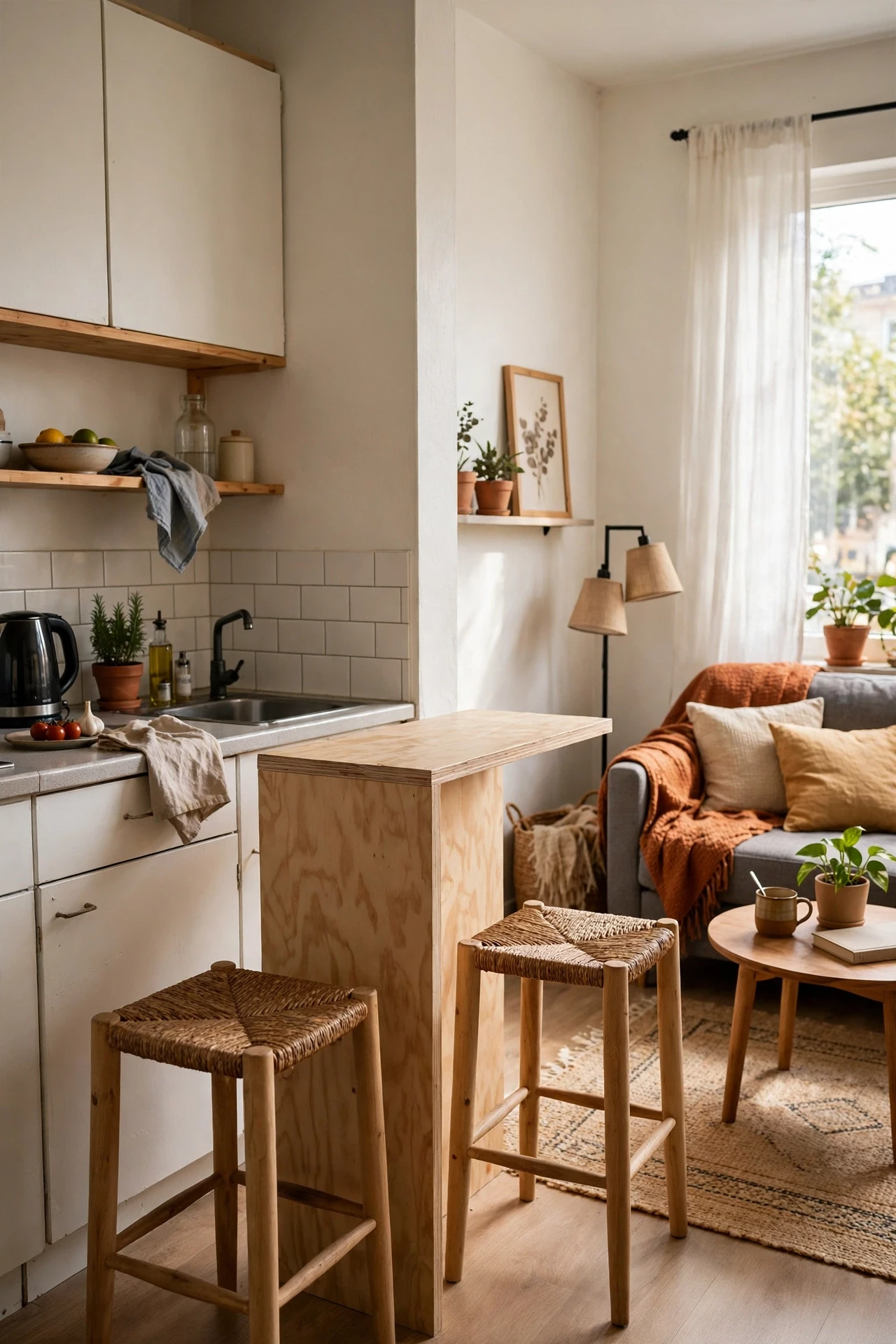
A slim breakfast bar marks where the kitchen ends and the living area begins, without a wall or a bulky island. Use a narrow console or a wall-mounted shelf at counter height, add two stools that tuck fully underneath, and you have a dining spot and a boundary in one piece. Keep the bar clear except for a small vase or a candle, because a bar that collects mail becomes a junk shelf. I built mine from a pine board and two brackets, and it changed how the flat flowed — cooking stayed on one side, relaxing on the other. The bar also gives guests a place to perch while you cook, which is the closest a studio gets to a kitchen island party.
Cost: ~$35 | Time: 1 hour
Pro tip: Stools that tuck fully under the bar matter more than the bar itself — stools left sticking out erase the walkway you just saved.
18. Make a Cozy Reading Nook in a Window Corner
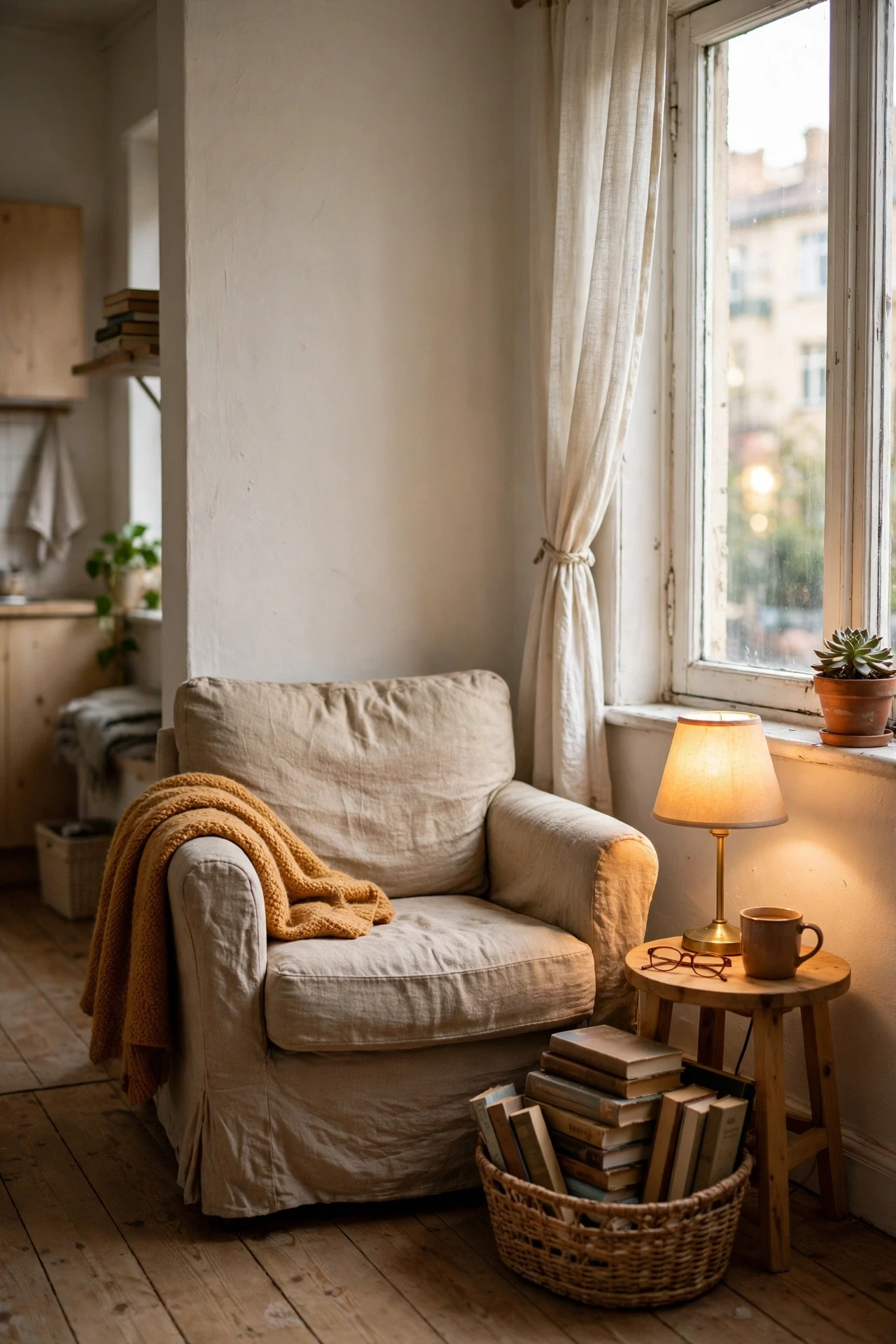
Every home needs a spot that is just for resting, and in a studio that spot has to be small on purpose. Tuck an armchair or a floor cushion into a window corner, add a small side table for a mug, a basket for books, and a lamp that pools warm light right there. Keep it to one chair, not a set, so it stays a nook rather than a second living room. I made mine from a secondhand chair and a basket I already owned, and it became the place I actually read instead of scrolling on the sofa. The window light does half the work in daytime, so pick the corner with the best light, not the corner that is left over.
Cost: ~$30 | Time: 30 minutes
19. Choose Leggy Furniture So You Can See the Floor
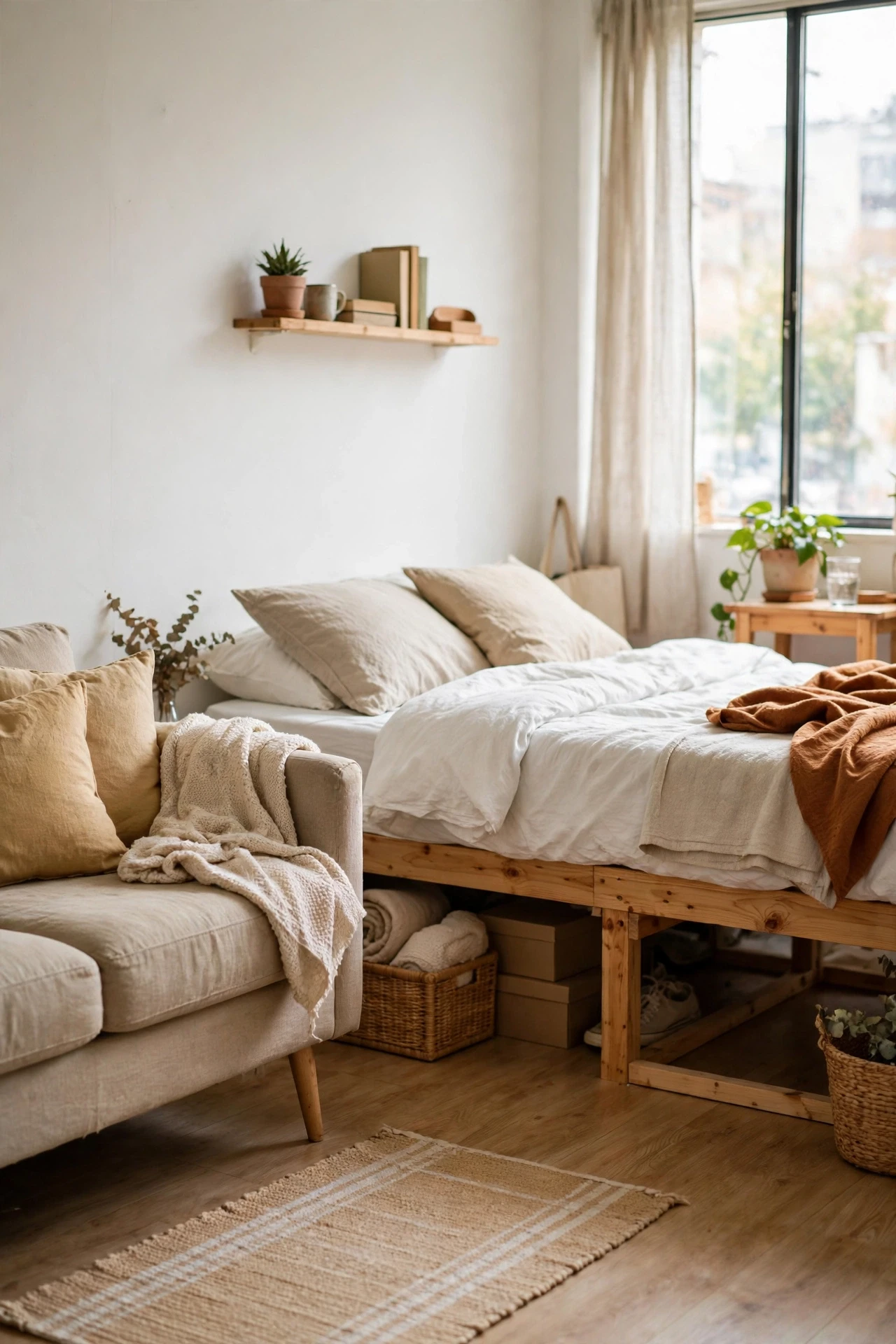
Heavy furniture that sits flat on the floor makes a studio feel like the walls are closing in, because your eye stops at every solid block. Leggy furniture — a sofa on slim wooden legs, a bed frame you can see under, a console on tapered legs — lets you see the floor running underneath, and that visible floor reads as extra space. You do not need to replace everything: swapping a bulky sofa for a leggy one, or raising a bed on a simple frame, changes the whole room. I raised my bed six inches and the floor suddenly felt continuous. Just keep the space under furniture tidy, because visible floor only helps if it is not full of dust and lost socks.
Cost: ~$0 | Time: 30 minutes
20. Add Plants at Three Heights for a Lived-In Feel
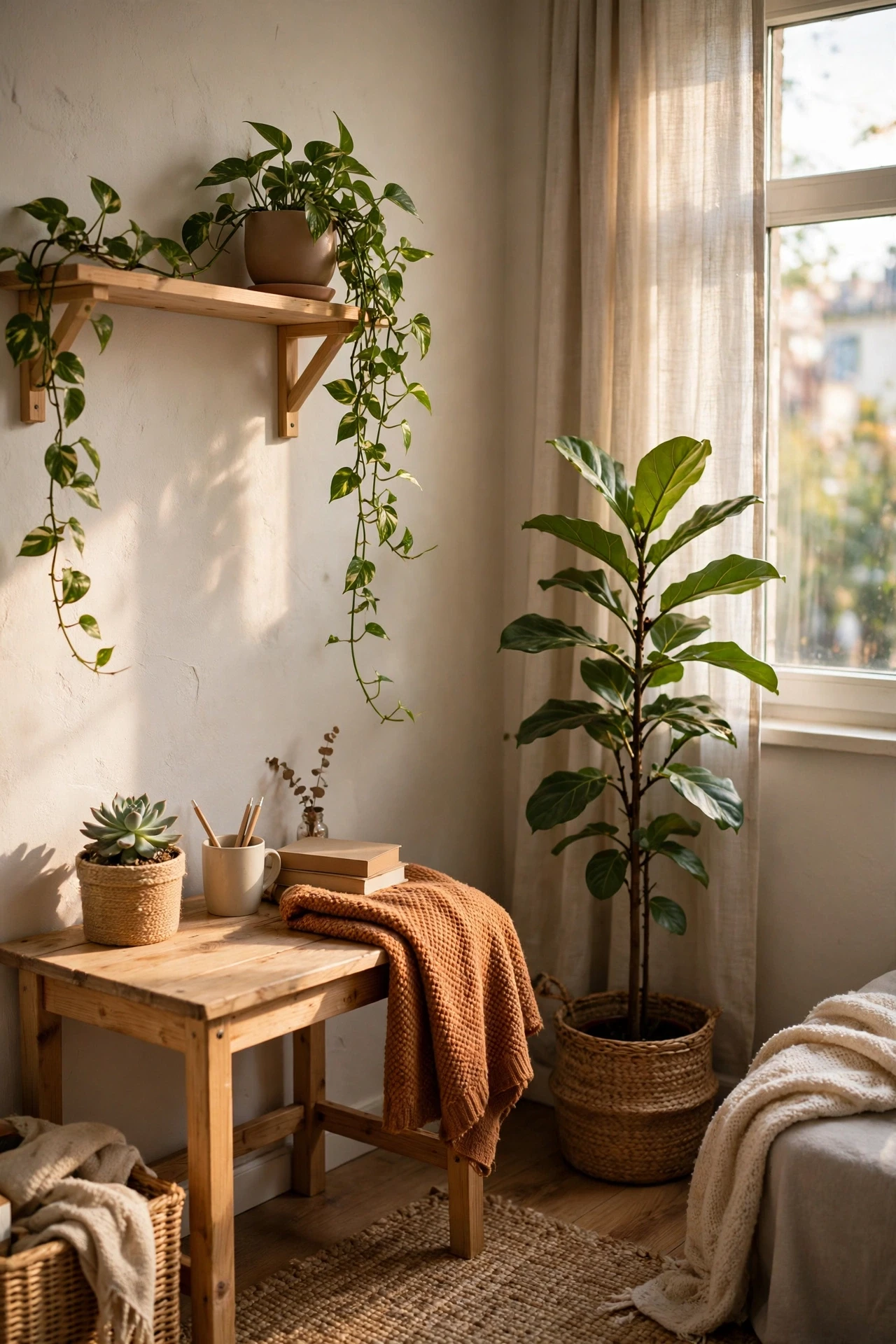
A studio with no plants can feel like a showroom, but plants at three heights — one trailing from a shelf, one on a table, one tall on the floor — make it feel lived in without taking much space. Pick hardy types if you are forgetful: pothos, snake plants and ZZ plants forgive missed watering. Keep the pots in one colour family so the group looks intentional rather than random. I started with one pothos and added a floor plant a month later, and the flat went from bare to homely without any other change. Water on a schedule, not when you remember, and check the light each plant actually gets before blaming yourself for a brown leaf.
Cost: ~$20 | Time: 30 minutes
21. Use a Rolling Clothing Rack as a Flexible Wardrobe
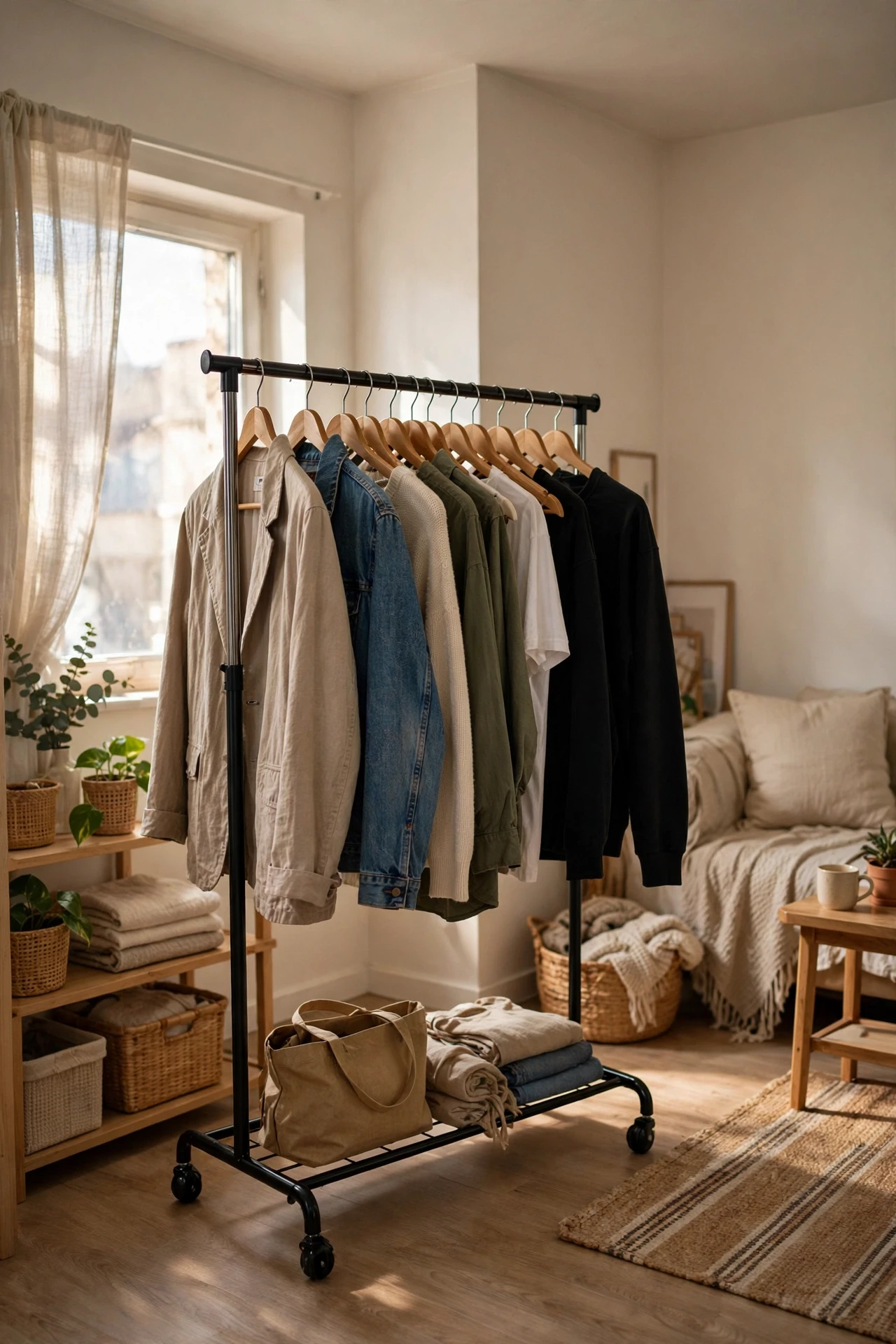
Studios often lack closet space, and a rolling clothing rack gives you a wardrobe you can move, hide or expand as needed. Hang only the clothes you wear this week, keep the rest in bins, and the rack reads as a curated rail rather than a clothes explosion. Add a shelf below for shoes and a hook at the end for tomorrow’s outfit. I used one in a flat with a single tiny closet, and rolling it behind a curtain at night made the bedroom feel tidy again. The rule that keeps it working is strict: if the rack is full, something goes back into storage before anything new gets hung. Otherwise it becomes the chair pile, upright.
Cost: ~$20 | Time: 15 minutes
Pro tip: Use matching hangers on the rack — mixed hangers are what make a rail look messy, even when the clothes are tidy.
22. Create a Bedtime Ritual Corner With a Lamp and a Basket
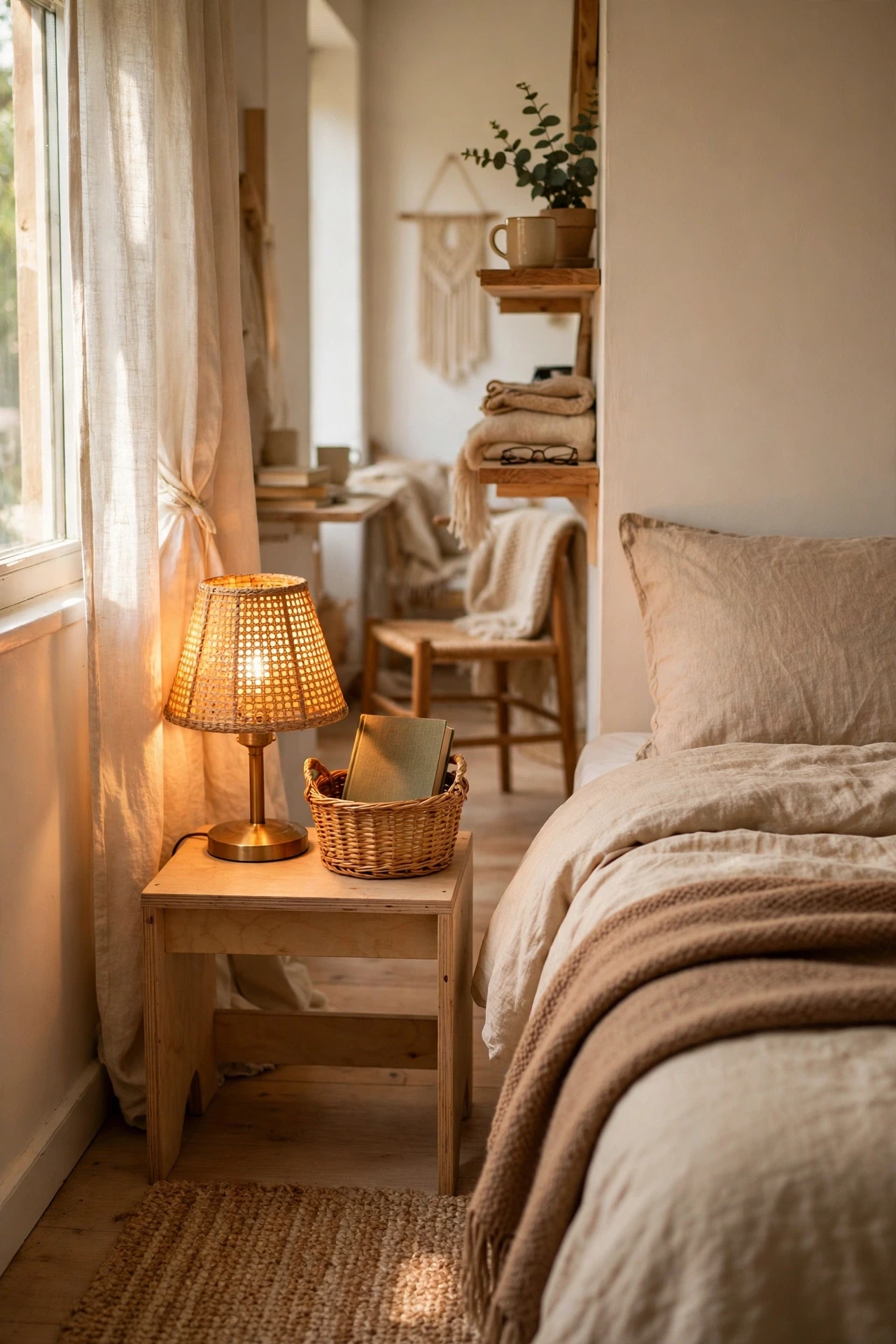
A studio blurs the line between day and night, so a small bedtime corner helps your brain switch off. Set a warm lamp and a basket beside the bed: the basket holds the book you are reading, hand cream and your phone charger, so everything for winding down lives in one place. Switch off the main lights, switch on only that lamp, and the flat shrinks to a cozy bedroom for the last hour of the day. I started this after months of scrolling in bright overhead light and sleeping badly, and the ritual — lamp on, phone in the basket, book out — genuinely helped. Keep the basket small, or it becomes another junk drawer by the bed.
Cost: ~$15 | Time: 15 minutes
23. Keep One Surface Completely Clear as Your Breathing Room
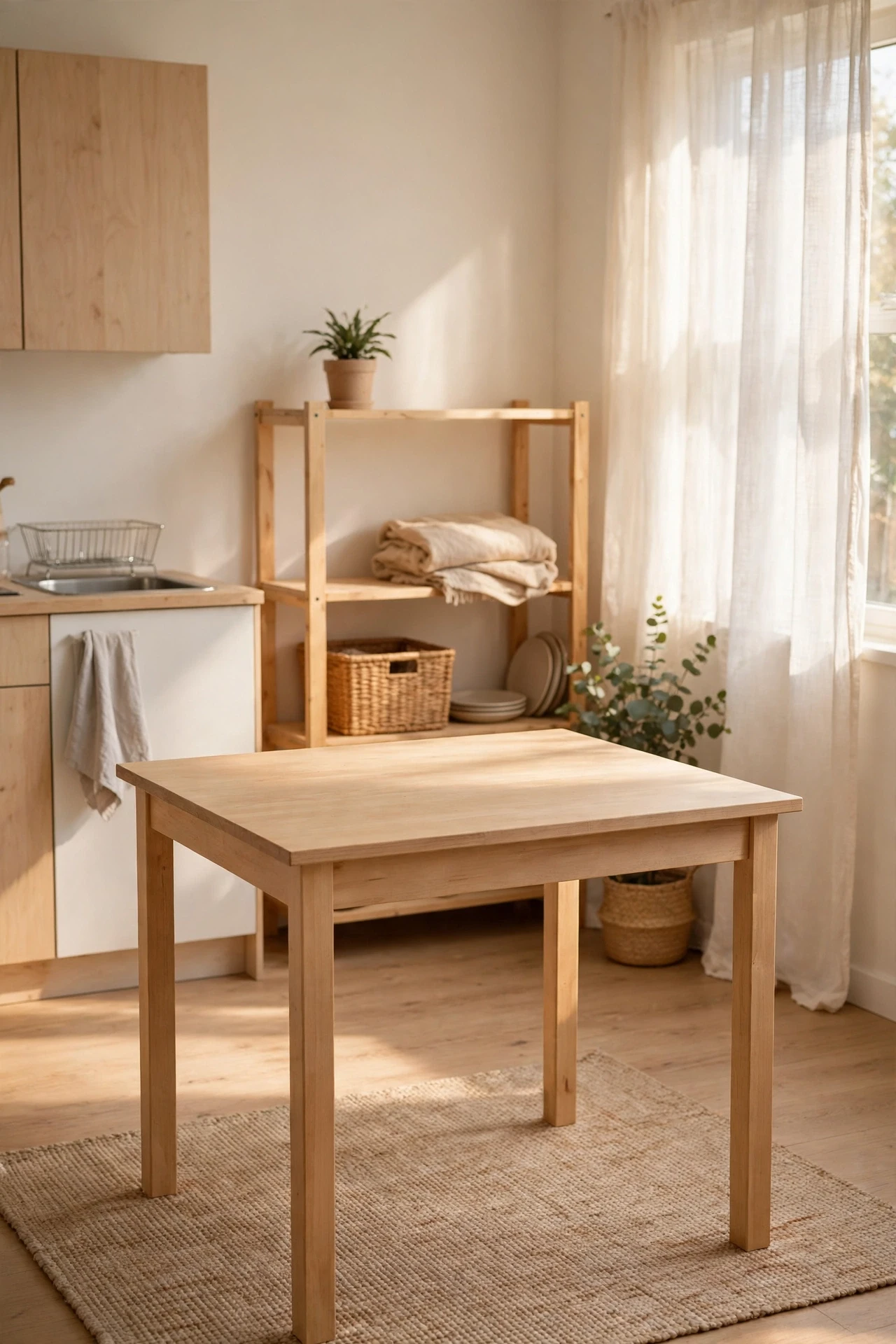
The hardest studio idea is also the cheapest: keep one surface completely clear, all the time. Pick the dining table, or a stretch of counter, and let nothing live there — no mail, no keys, no half-finished projects. A clear surface gives your eye somewhere to rest, and in a small flat that rest makes the whole room feel calmer. It takes a few weeks for the habit to stick, and everyone in the flat will test it. I protect my kitchen counter this way, and it is the reason the studio feels like a home rather than a storage room, even on messy days. Pair it with my (see also: small-apartment-decorating-ideas-on-a-tight-budget) guide for the full small-space system.
Cost: ~$0 | Time: 20 minutes
A studio feels like a real home not when it is bigger, but when every corner has a job and a little breathing room around it. Start with zoning — the rug, the divider, the curtain — then add light and one calm palette. Live with those for a week, and the rest of the ideas will fall into place around the life you actually live.
