25 Japandi Bedroom Ideas That Look Expensive (But Aren’t)
25 Japandi Bedroom Ideas That Look Expensive (But Aren’t)
Japandi bedroom ideas are what finally cured my overstuffed bedroom. Japandi is Japanese minimalism meeting Scandinavian warmth: low furniture, natural wood, calm neutrals, and the beauty of imperfection. My room used to be full of stuff that was supposed to look cosy and just looked crowded. I sold half of it, painted one wall, built a low platform bed from pallets, and friends now ask which designer I hired. The answer is nobody. Every idea below costs $40 or less, and most are under $20.
Everything here is something I tried in my own bedroom, with real prices and the mistakes I made along the way. I have grouped the 25 ideas into four themes: calm, cheap foundations that set the mood, low and simple furniture that defines the style, natural textures and textiles that add warmth, and the wabi-sabi details that make it look expensive. Start anywhere you like.
Calm, cheap foundations: set the mood first, because Japandi is a feeling before it is furniture.
1. The Free Declutter Sweep That Starts Everything
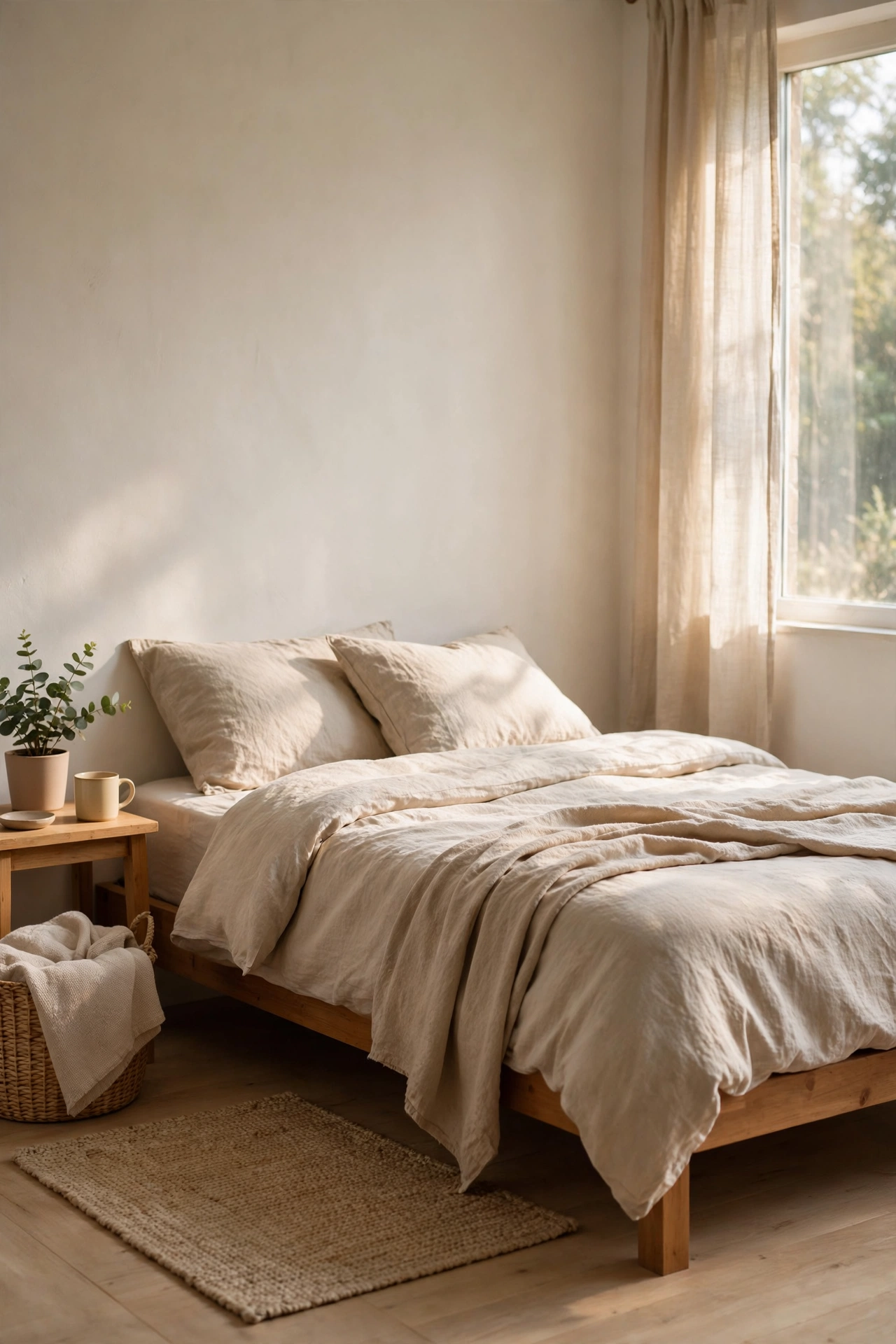
Japandi begins with empty space, and empty space is free. I took everything off every surface in my bedroom, put it all on the bed, and only put back what was beautiful or genuinely useful. Half of it left the room in donation bags. The rule I use now: every surface gets one object or one small group, never a crowd. My first attempt kept too much “just in case” stuff and the room still felt busy. Being ruthless the second time is what finally made it feel calm. Do this before you buy anything, because you might find you need far less than you thought.
Cost: ~$0 | Time: 2 hours
2. One Warm White Wall Refresh
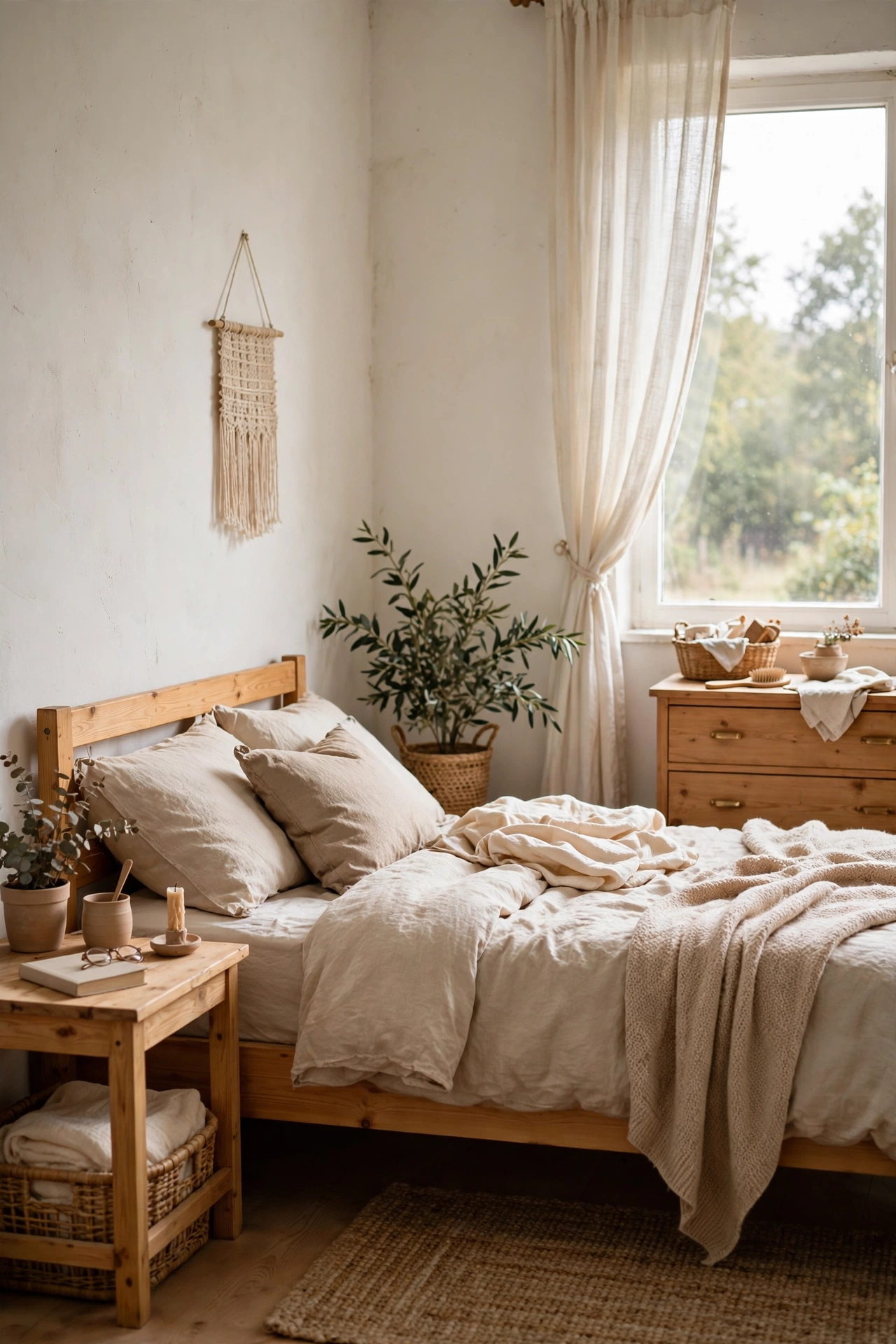
Japandi walls are warm, never stark. I painted my bedroom in a warm white with a whisper of beige for $24, one coat over the old flat white, and the room instantly felt softer. Pure brilliant white reads cold and clinical against natural wood, which is why my first Japandi attempt felt wrong. Test your swatch next to any wood furniture you own, because the wall and the wood have to get along. Cut in the edges with an angled brush and roll in long vertical strokes. One Saturday, one tin of paint, and the whole room exhaled.
Cost: ~$20-30 | Time: 3 hours plus drying
3. A Large Jute Rug to Ground the Room
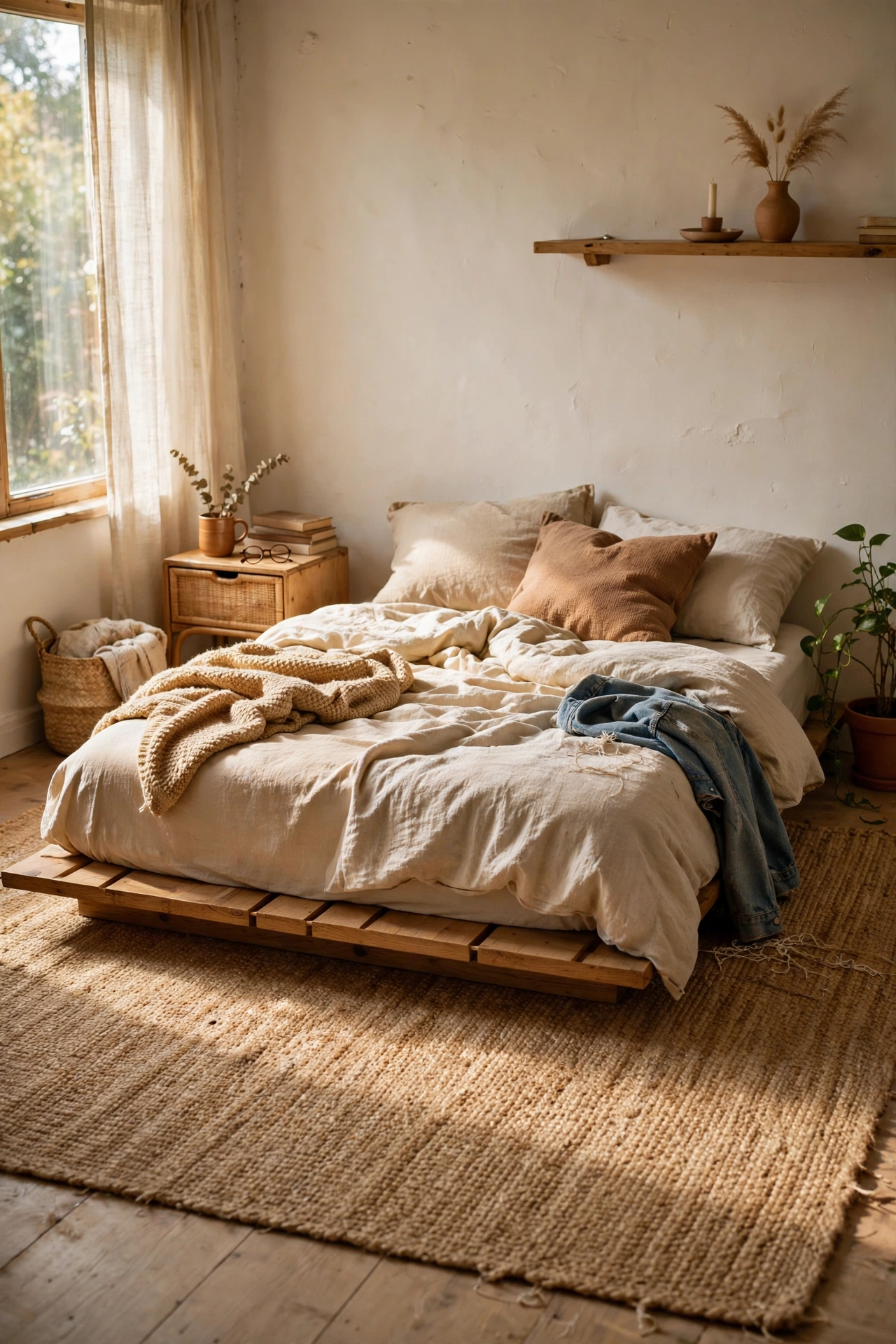
Nothing says Japandi floors like natural fibre, and a big jute rug fakes expensive flooring for very little. I bought a large jute rug for $39 and laid it so it extends well beyond the bed on both sides. The natural texture hides a multitude of flooring sins, including my tired laminate. Vacuum it on low suction without the beater bar, because aggressive vacuuming frays the weave. My first small jute mat looked lost and sad in the middle of the room. Going big made it look like a deliberate design layer. Feet on jute every morning feels wonderful.
Cost: ~$30-45 | Time: 15 minutes
4. A Paper Lantern Pendant Over the Bed
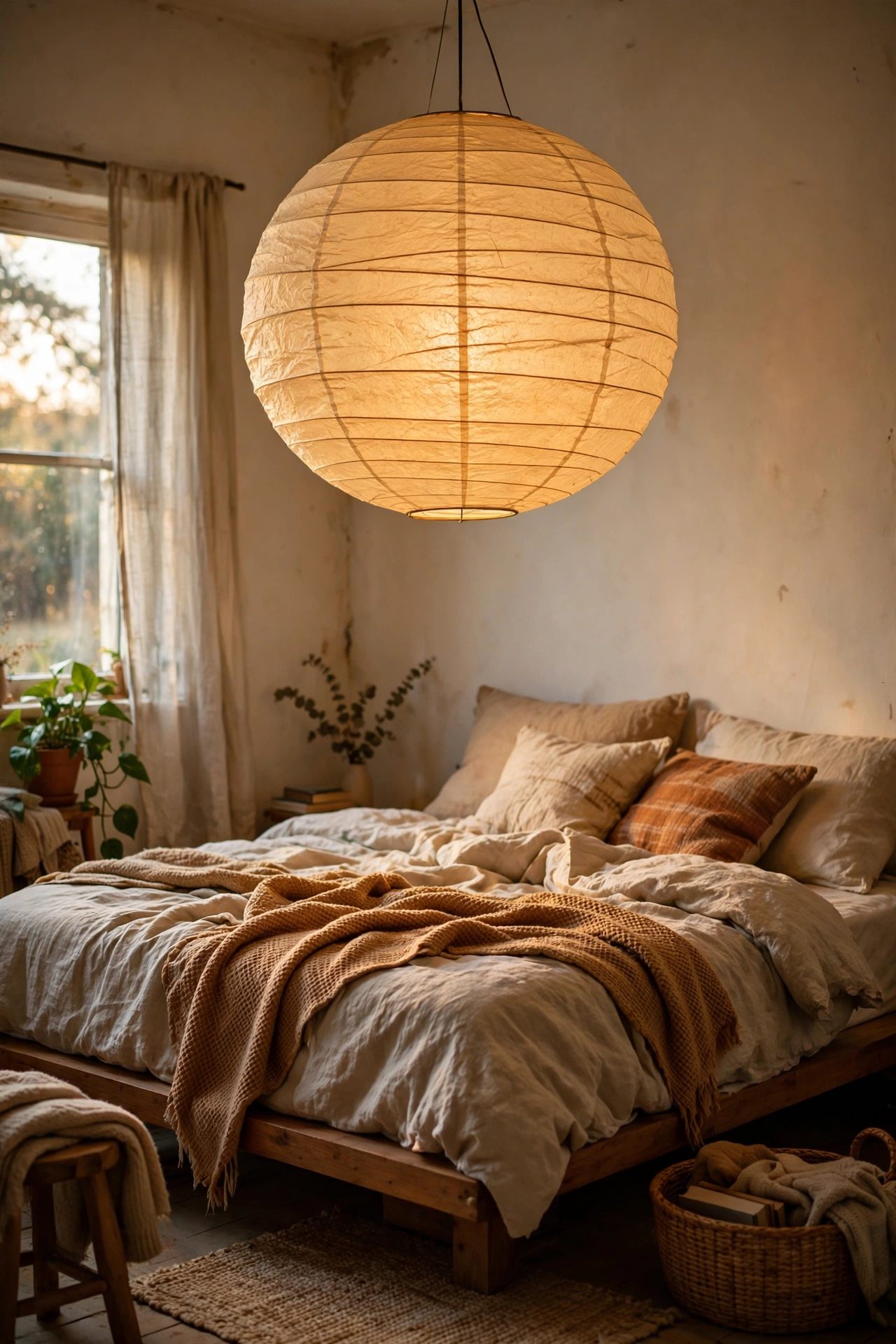
A rice paper lantern is the single most Japandi light you can buy, and it costs almost nothing. I hung a large paper globe for $14 where an ugly flush-mount used to be, using a swag hook and cord cover since I rent. Hang it low enough to feel intentional, about 30 inches above the bed, so the glow pools over the pillows. Pair it with a warm 2700K bulb or the paper looks blue and sad. My first bulb was daylight white and the lantern glowed like a hospital corridor. A two-minute bulb swap turned it into moonlight.
Cost: ~$12-18 | Time: 30 minutes
5. Warm 2700K Bulbs in Every Lamp
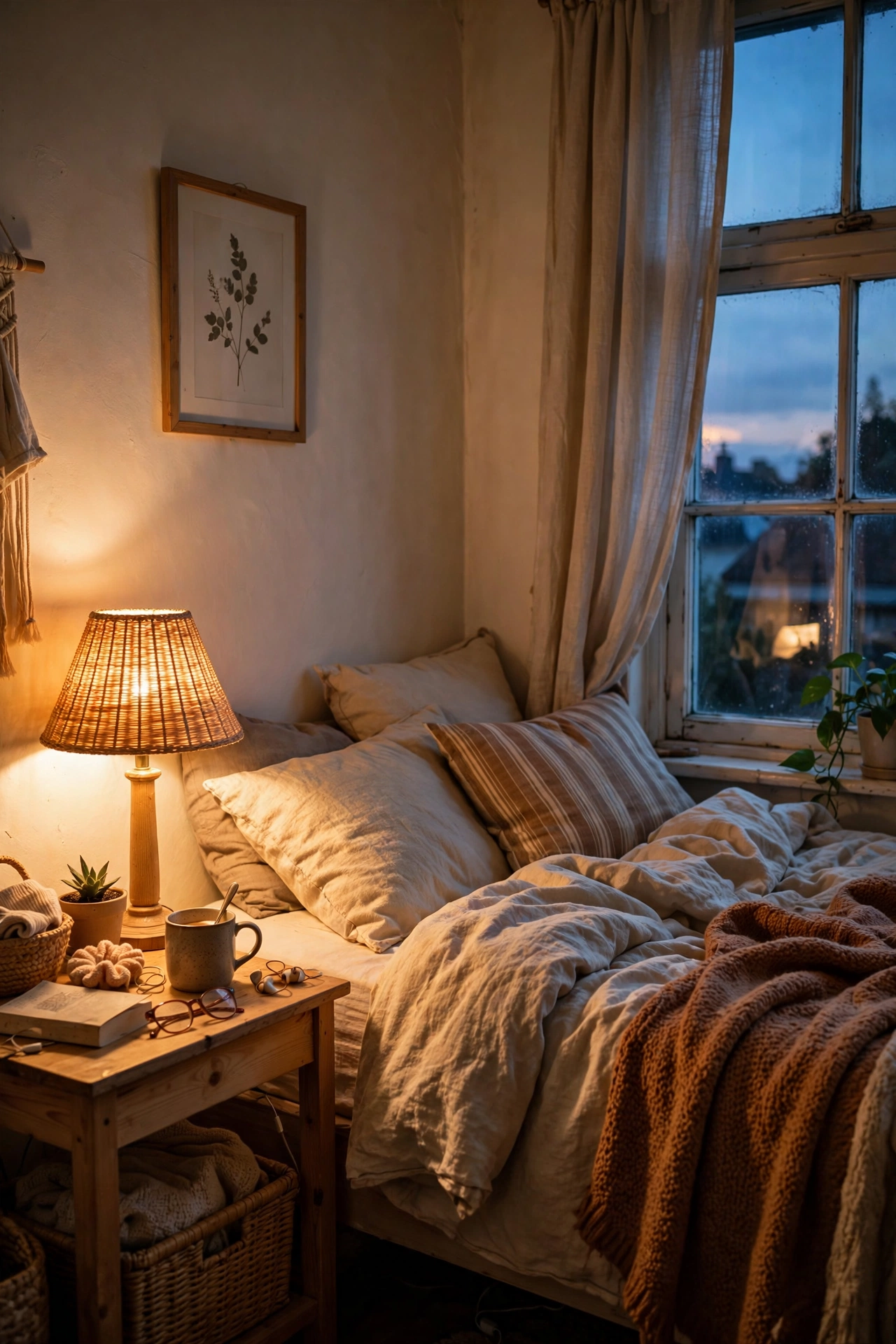
Japandi evenings are golden, never blue-white. I replaced every bulb in my bedroom with warm 2700K LEDs for $16 total and added a $7 plug-in dimmer to the bedside lamp. The rule now: no overhead light after dark, only warm pools of lamplight. Check the Kelvin number printed on the bulb box, because “soft white” sometimes hides 4000K, which kills the mood stone dead. I keep one spare warm bulb in my nightstand drawer so I never install the wrong one by mistake. Fifteen minutes of work, and every single evening feels calmer.
Cost: ~$15-25 | Time: 15 minutes
6. A Bamboo Roman Blind Instead of Curtains
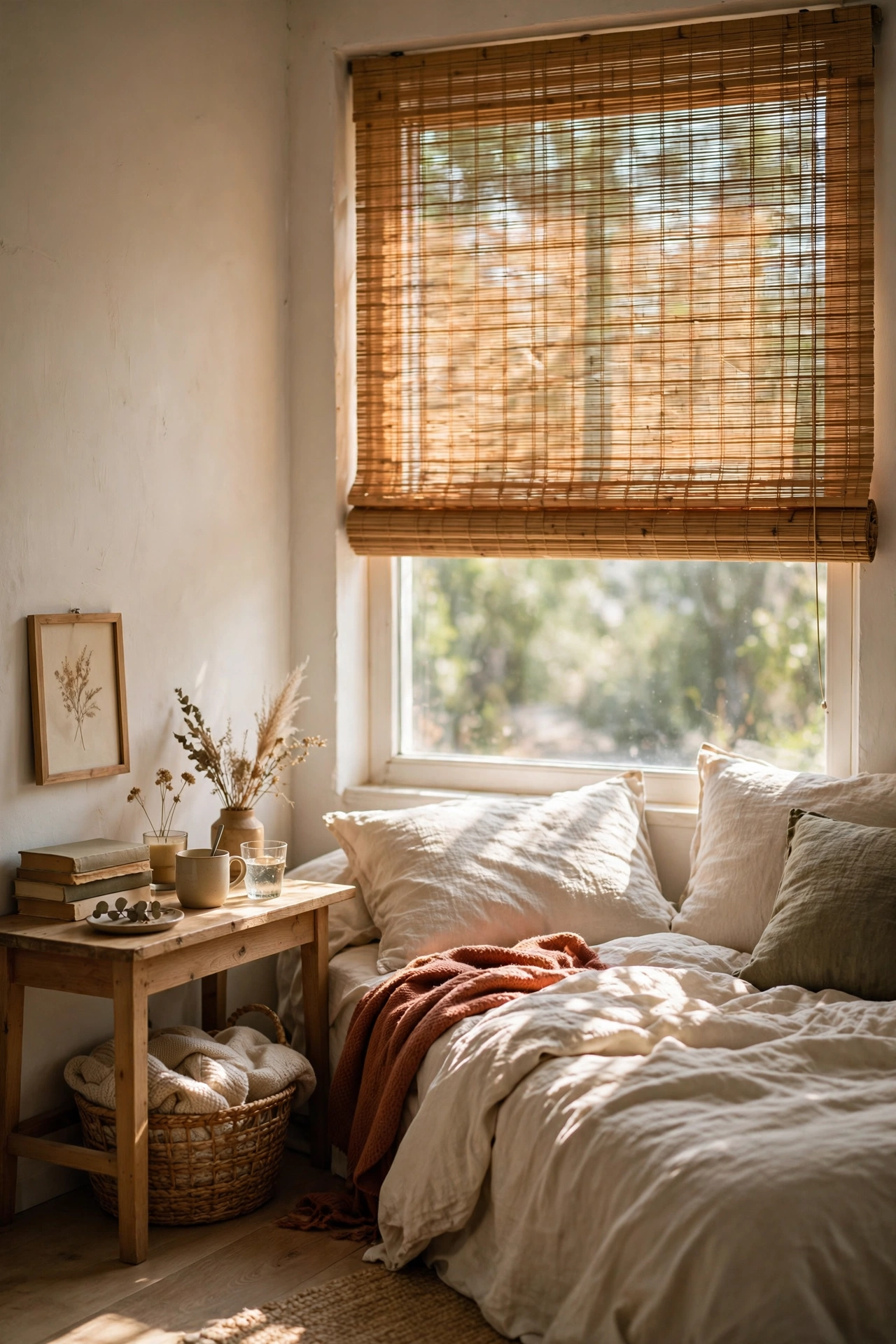
Heavy curtains fight the Japandi look; a bamboo blind embraces it. I swapped my bedroom drapes for a bamboo roll-up blind for $22, mounted inside the window frame. It filters daylight into soft stripes and rolls away completely when you want the full view. Measure the inside of your window frame carefully, because blinds are unforgiving about size. Mine was half an inch too narrow at first and the gap bugged me for weeks until I remounted it outside the frame instead. The natural texture against the warm white wall is pure Japandi.
Cost: ~$18-28 | Time: 30 minutes
Low, simple Japandi furniture: keep everything close to the floor and the room instantly feels serene.
7. A DIY Pallet Platform Bed Base
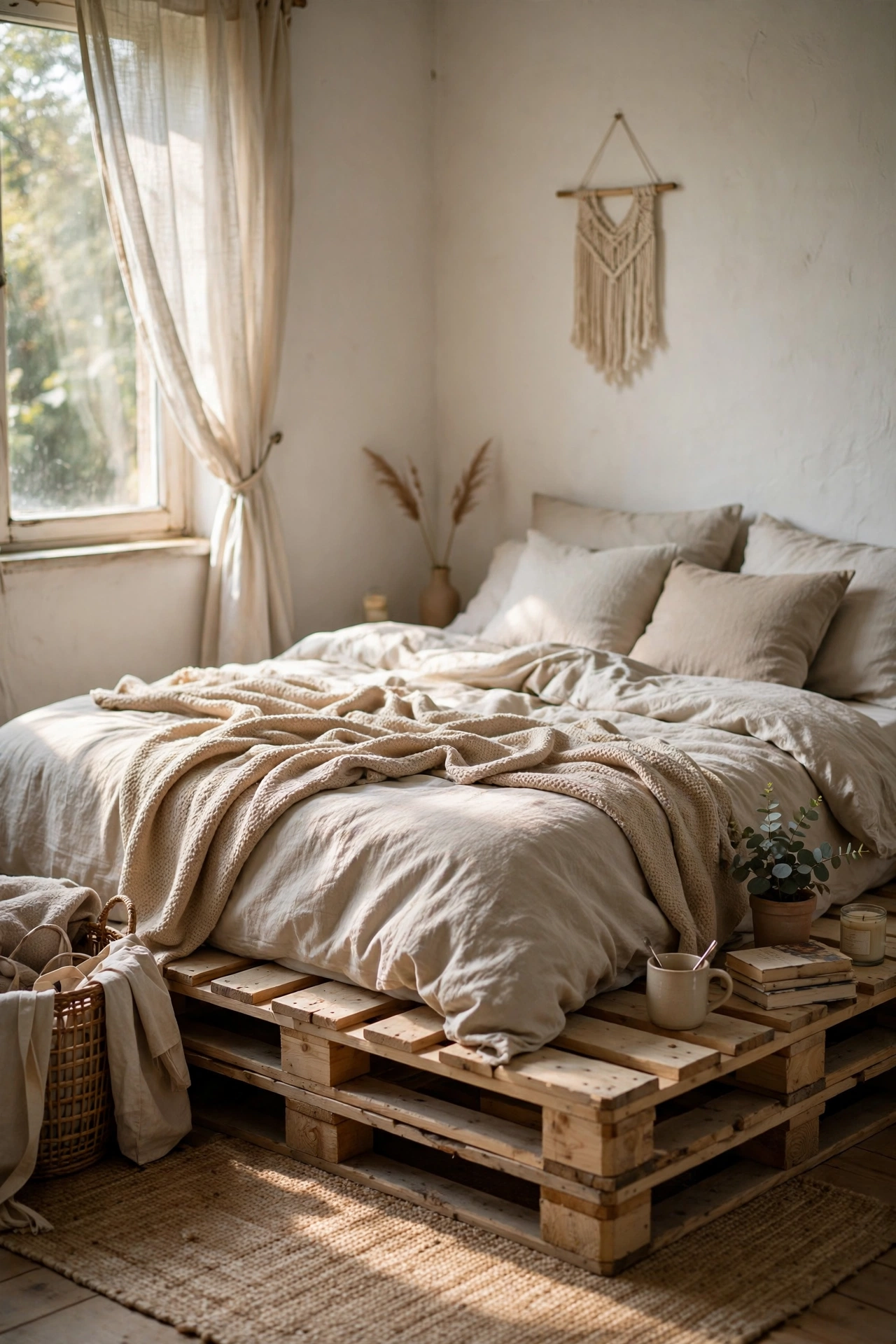
A low platform bed is the heart of a Japandi bedroom, and pallets make it nearly free. I collected four clean heat-treated pallets, sanded them smooth with 120-grit paper, and arranged them in a rectangle under my mattress. Check for the HT stamp, which means heat-treated and safe, and avoid any stamped MB. Sand thoroughly, because splinters and bedding do not mix; I learned that on night one. A quick coat of clear matte sealer keeps the wood pale and cleanable. My platform sits just eight inches off the floor, and the whole room feels grounded and calm.
Cost: ~$10-20 | Time: 3 hours
8. A Thrifted Frame With Its Legs Trimmed Low
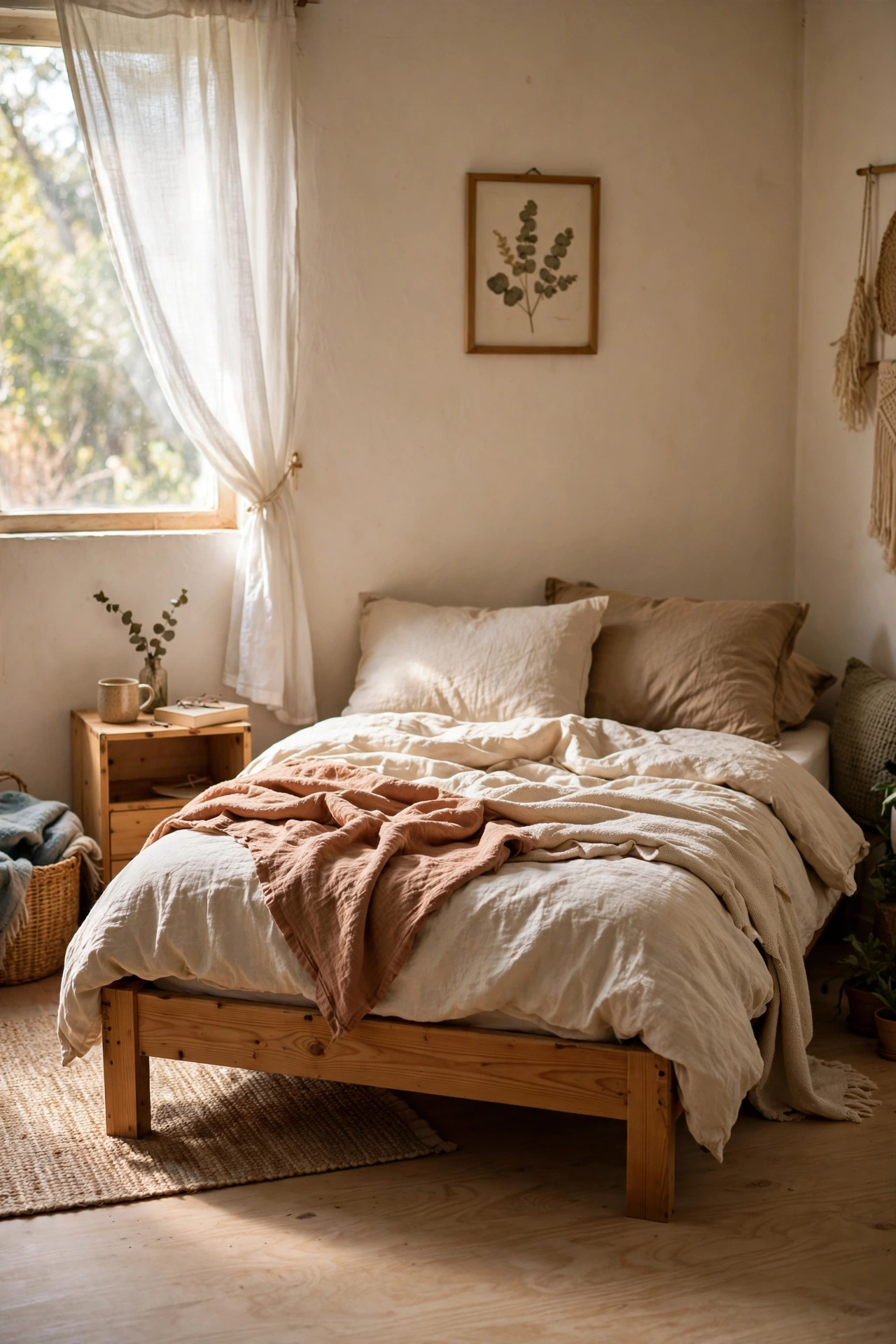
If pallets are not your thing, buy any solid wood bed frame secondhand and cut the legs down. I found a pine frame for $30 and sawed six inches off each leg, sanded the cuts smooth, and suddenly it sat at perfect Japandi height. Measure twice and cut once, and keep the cuts level or the bed will rock. I marked all four legs with painter’s tape at the same height before cutting, which saved me from a wobbly disaster. A low bed makes even a small bedroom feel spacious, because your sightline travels clean across the room.
Cost: ~$30-40 | Time: 2 hours
9. One Low Bench Instead of Two Nightstands
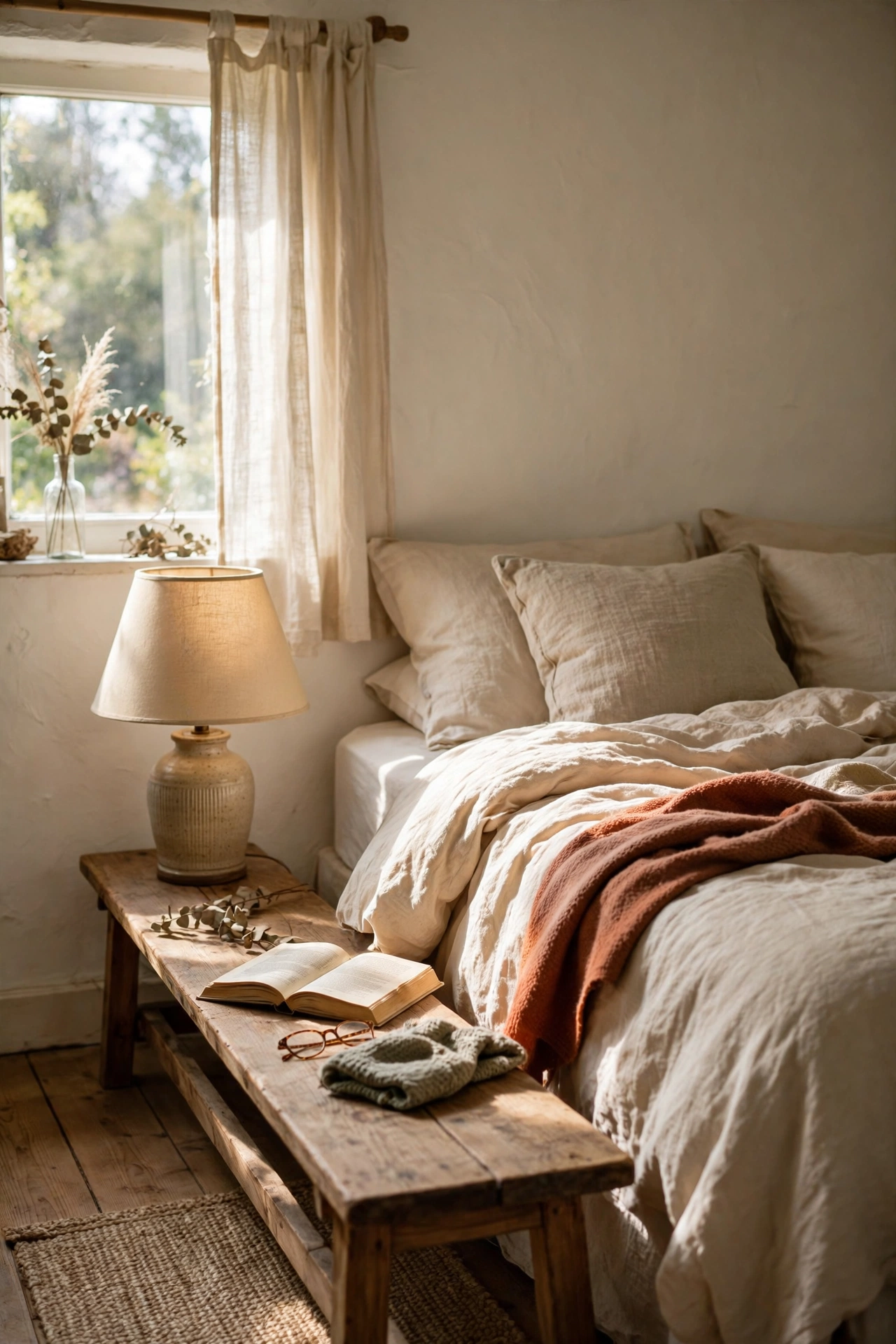
Japandi does not demand matching nightstands. I replaced both of mine with one long low wooden bench along one side of the bed for $18 from a charity shop. It holds a lamp, a book, and a small tray, with room to spare, and the unbroken horizontal line is deeply calming. Keep the top styled to one end so the rest stays empty; that negative space is the point. My old pair of tall nightstands chopped the wall into bits. One low bench, and the whole side of the room breathes. It also doubles as extra seating.
Cost: ~$15-25 | Time: 15 minutes
10. A Floor Cushion Reading Corner
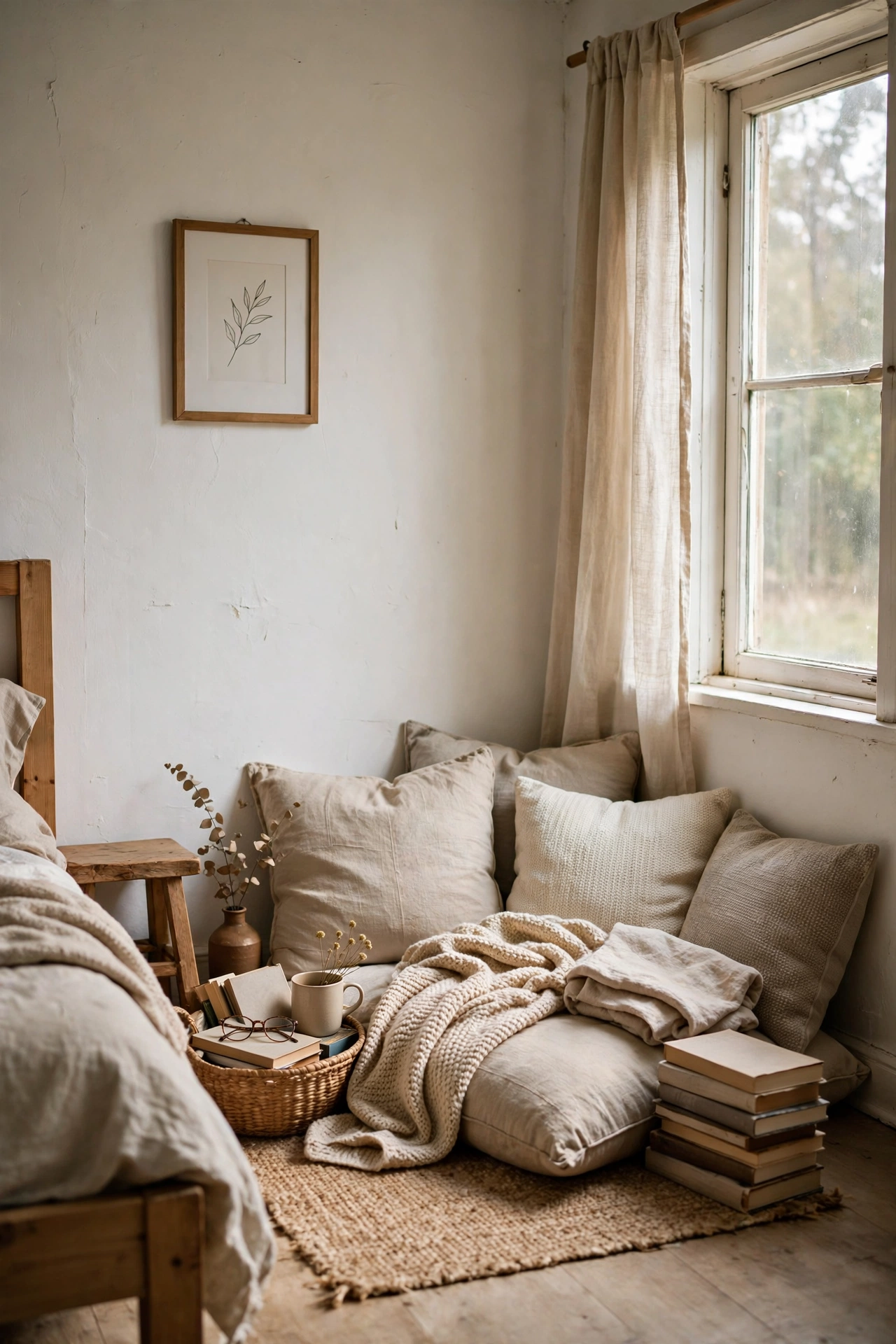
A low reading corner is peak Japandi, and it is just cushions on the floor done well. I stacked a large flat floor cushion, a square zabuton-style pad, and one lumbar pillow in the corner by the window for $34 total, with a small side table for tea. Keep the palette to oat, beige, and soft grey so it melts into the room. My first attempt used bright patterned cushions and the corner shouted while the rest of the room whispered. Swapping to neutrals made it feel like part of the architecture. I read there every single night now.
Cost: ~$28-40 | Time: 10 minutes
11. A Simple Wooden Tray Table Beside the Bed
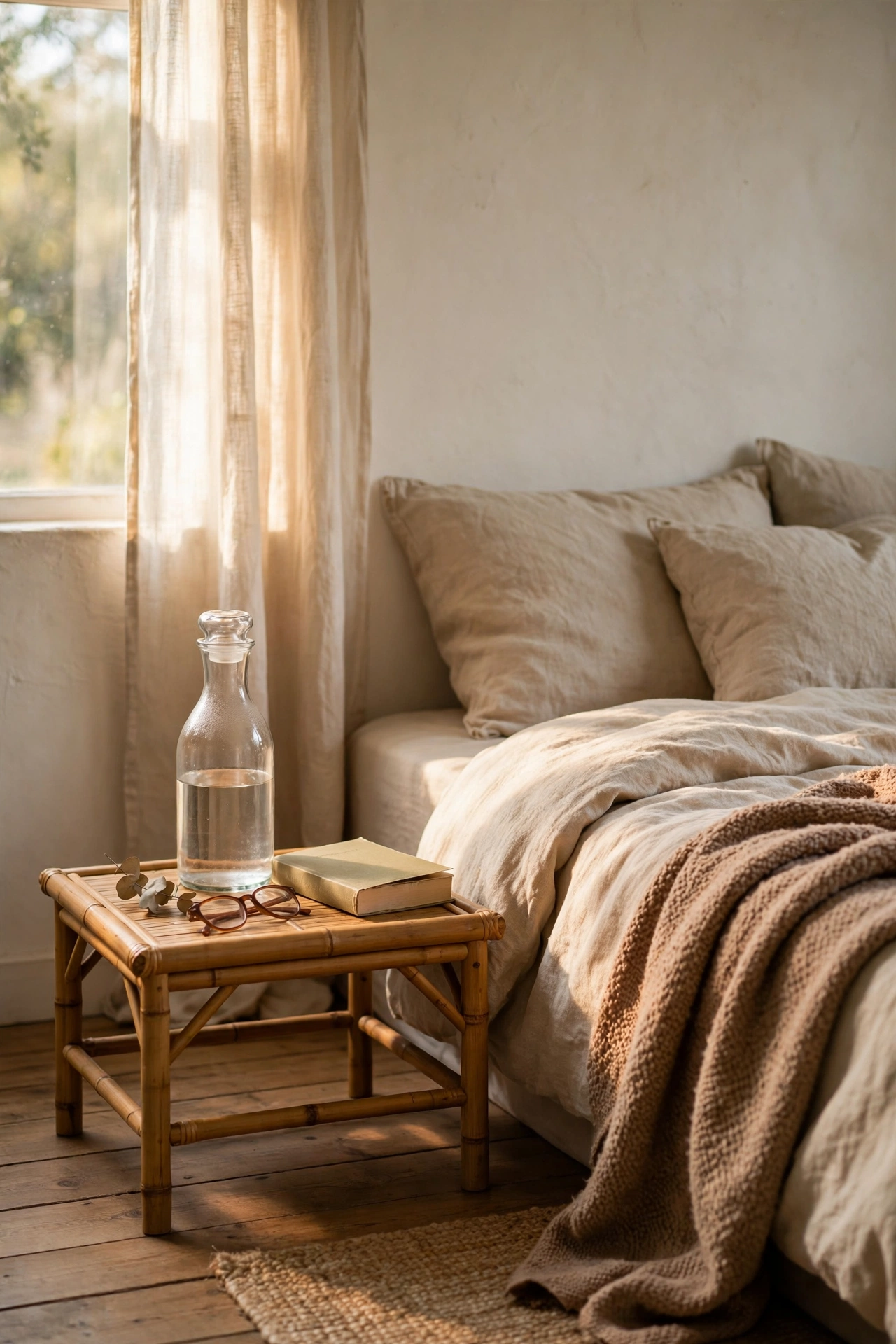
A small wooden tray table works as a nightstand, a tea spot, and a styling moment all at once. I bought a bamboo tray table for $19 and set it beside the low bed with a carafe, one book, and a tiny vase. The tray edge keeps everything corralled, which is why it looks tidy without effort. Oil the bamboo once with food-safe mineral oil to deepen the colour slightly and protect it from water rings. My water glass left its mark within a week before I oiled it. One tray table, three objects, endless calm.
Cost: ~$15-25 | Time: 10 minutes
12. A Floating Shelf as a Minimal Nightstand
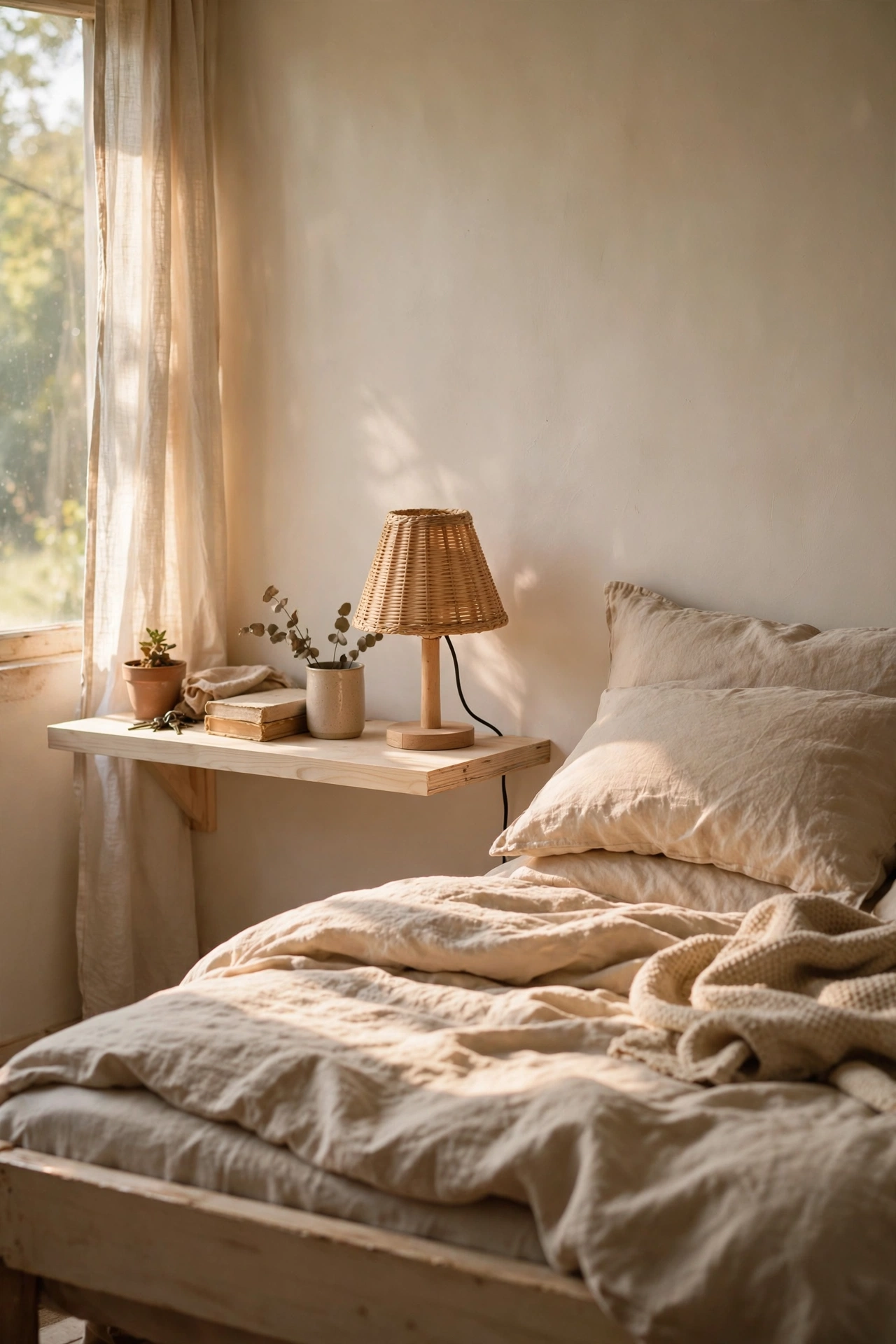
When even a small table feels like too much, a floating shelf is the answer. I mounted a single pale wood shelf at mattress height beside the bed for $11, holding just a lamp and my current book. Use proper wall anchors and a level, because a crooked shelf in a minimal room screams. The floor stays completely clear underneath, which makes the room feel twice as big and makes vacuuming a joy. My first shelf was too deep and stuck out awkwardly. A slim eight-inch depth is perfect: enough for a lamp, not enough for clutter.
Cost: ~$10-15 | Time: 30 minutes
Natural textures and textiles: linen, weave, and raw fibre are what keep minimalism warm instead of cold.
13. A Beige Linen-Look Duvet Set
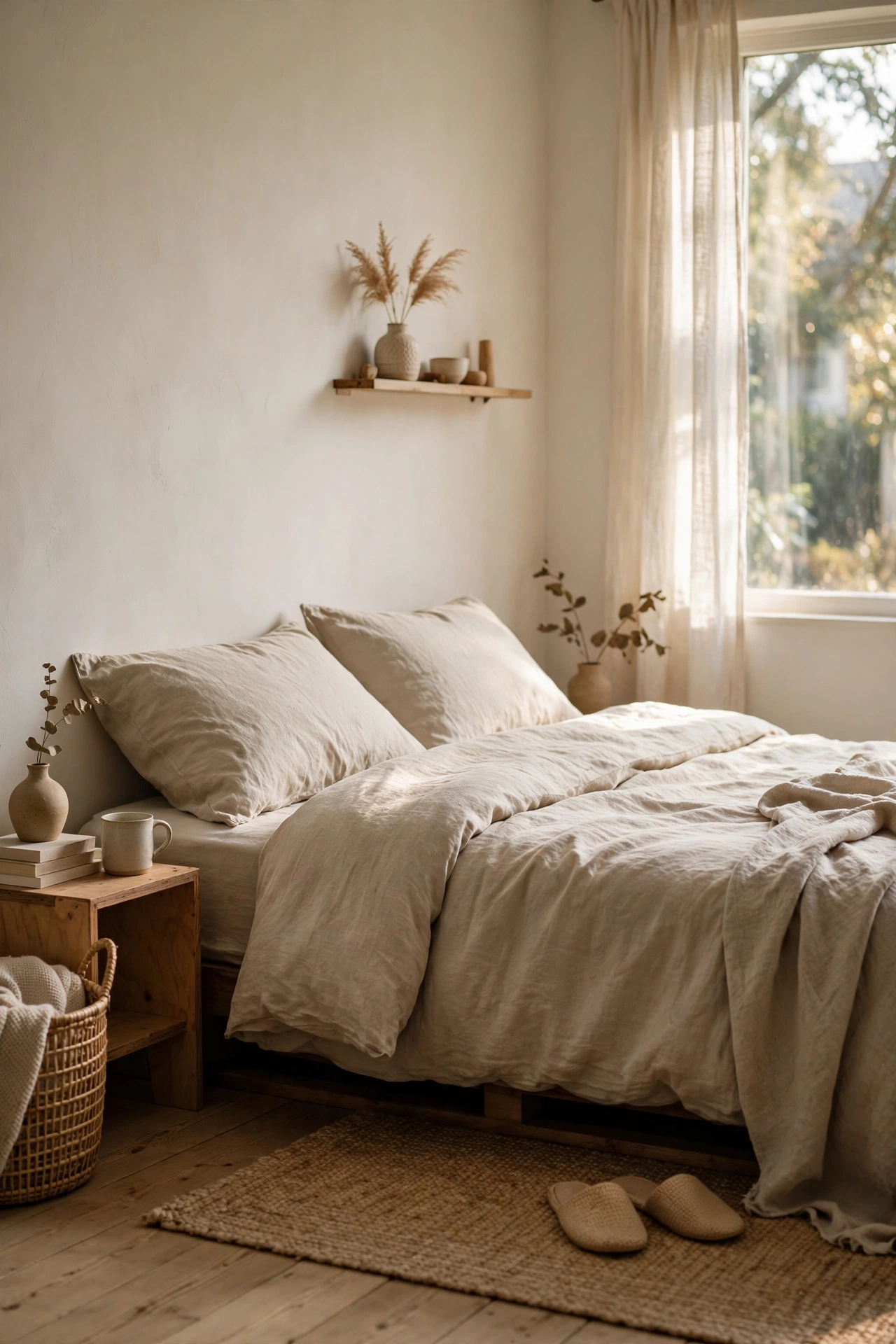
The Japandi bed is always tonal: oat, beige, soft white, never a loud colour. I bought a linen-look duvet set in warm beige for $36, and the bed instantly looked like a boutique ryokan. Linen-look fabric has that soft crinkle that reads expensive and relaxed at once. Wash it warm and line dry if you can, because the texture gets better with every wash. My first set was a flat sateen that looked slippery and formal against the wood. The textured linen-look fixed the whole bed. Fold the top down once to show the layers.
Cost: ~$30-45 | Time: 15 minutes
14. An Oatmeal Waffle-Weave Throw
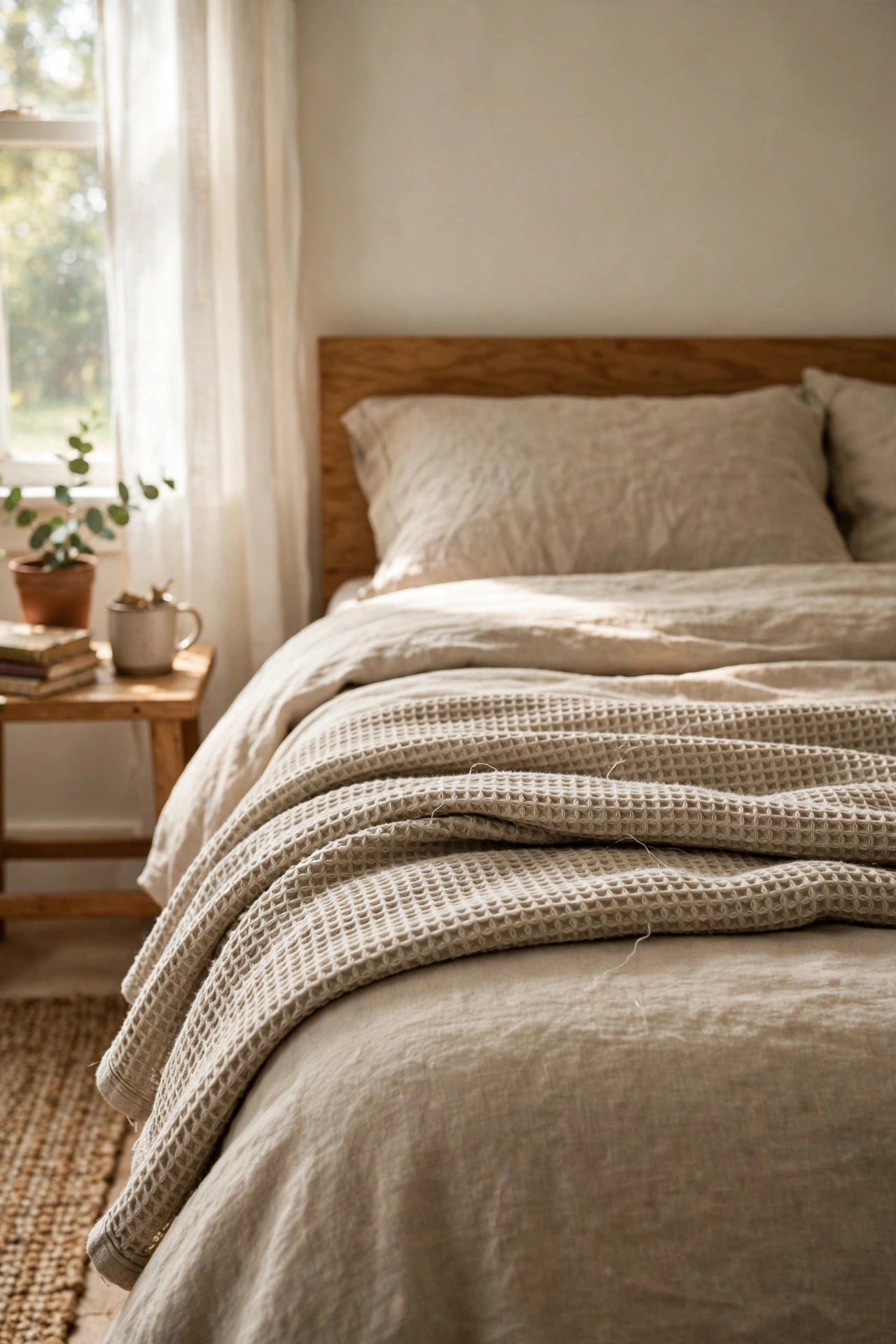
A waffle-weave throw in oatmeal is the texture layer every Japandi bed needs. I found one for $21 and folded it in half across the foot of the bed. The waffle texture catches the light beautifully and adds depth without adding colour, which is exactly the Japandi way. Keep it at the foot, not bunched in the middle, so the bed keeps its clean horizontal lines. I wash mine on gentle and skip fabric softener, which coats the fibres and flattens the waffle. It has stayed puffy and perfect for over a year.
Cost: ~$18-28 | Time: 5 minutes
15. Layered Woven Mats Instead of One Rug
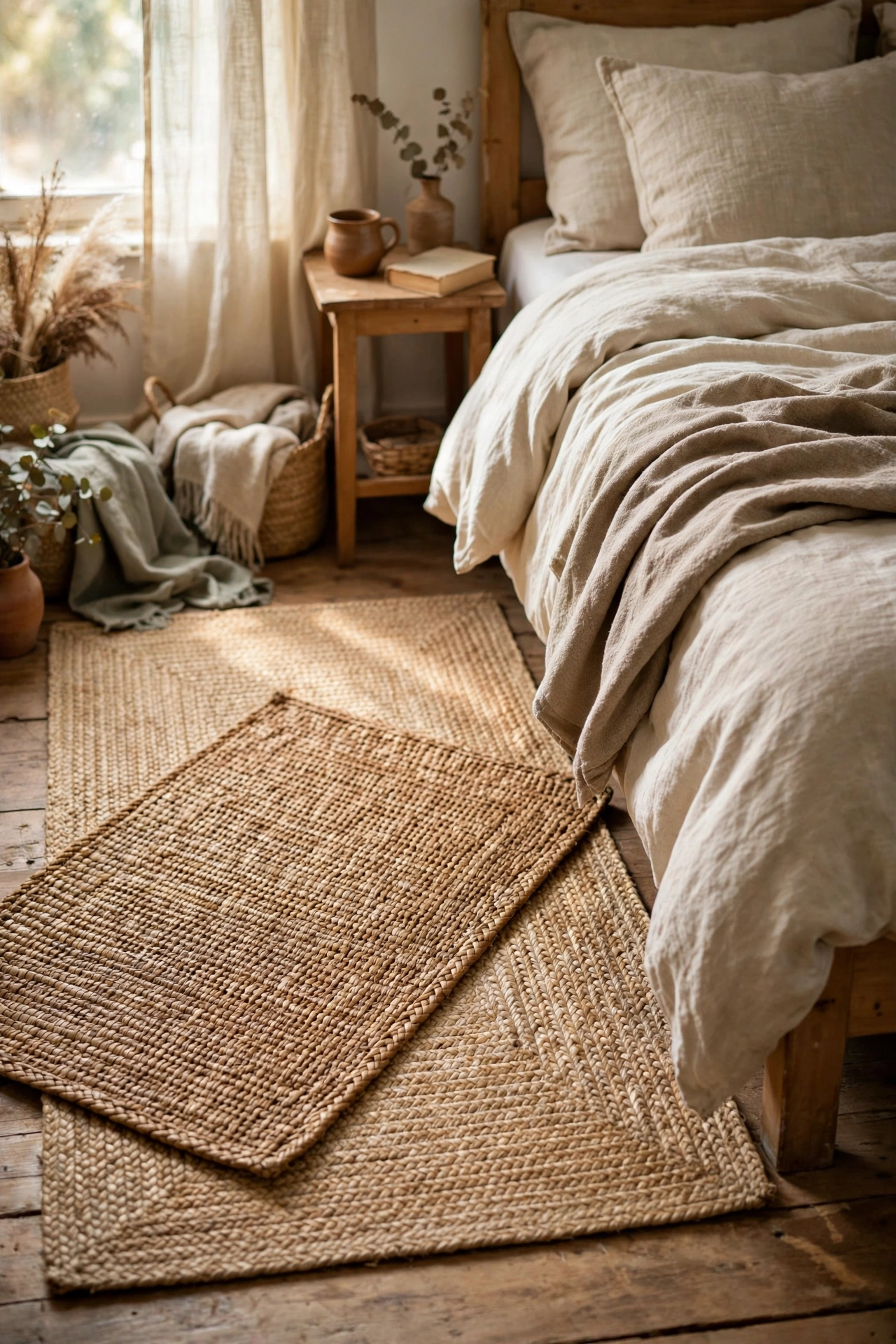
Layering two flat woven mats at angles looks far more designed than a single rug. I overlapped a jute mat and a smaller cotton dhurrie in natural tones beside the bed for $30 total, offsetting them slightly so both textures show. The trick is keeping both in the same neutral family so it reads tonal, not busy. My first pairing mixed a grey rug with a beige mat and they fought all winter. Swapping to two warm neutrals made the floor look intentional. Layered texture underfoot is quietly luxurious every morning.
Cost: ~$25-38 | Time: 10 minutes
16. A Noren-Style Fabric Panel Over the Wardrobe
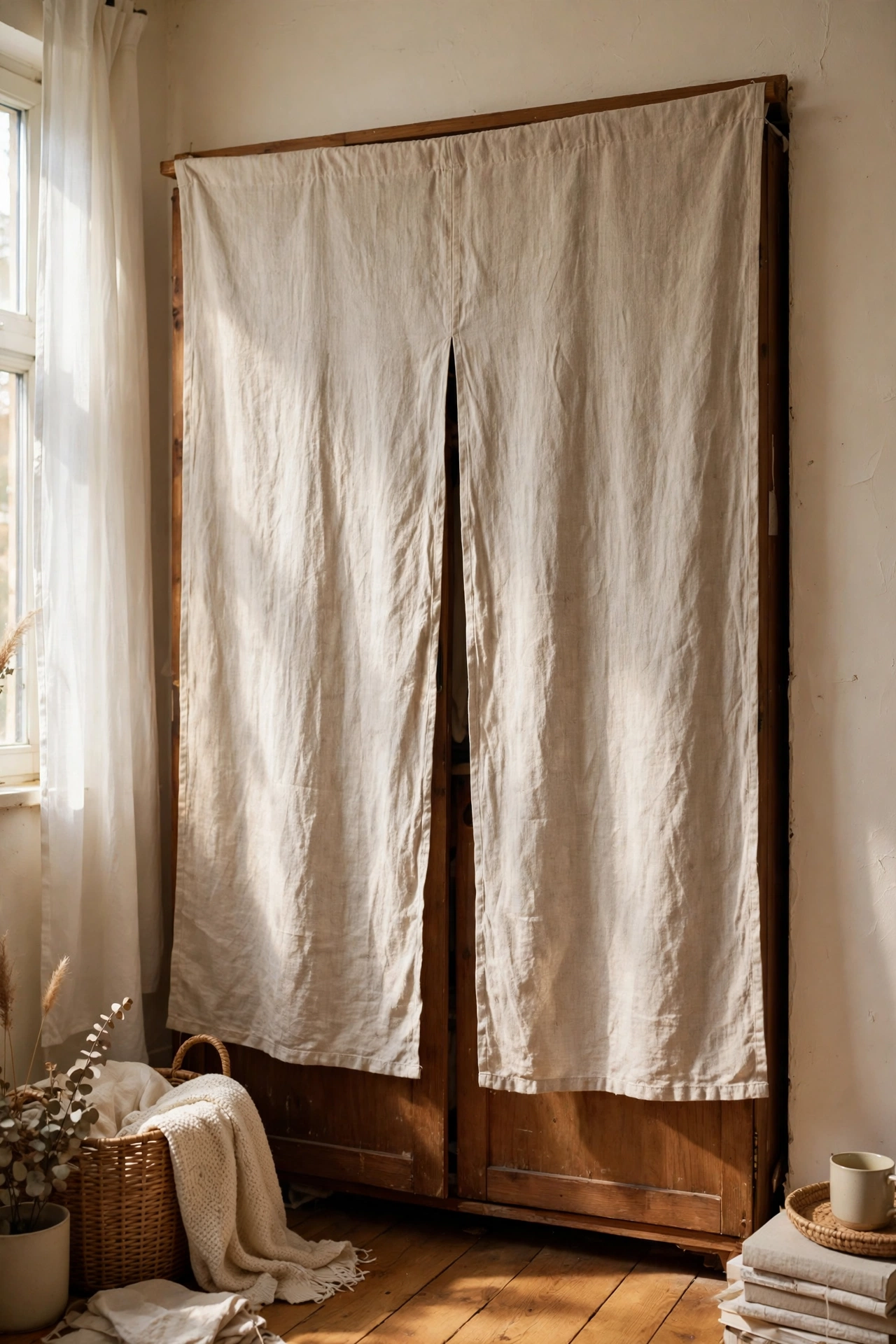
A noren panel, the split fabric curtain from Japanese doorways, hides ugly storage beautifully. I hung a plain oatmeal linen panel on a tension rod across my open wardrobe for $17, and the visual noise of my clothes vanished. Cut a centre slit two-thirds of the way up so you can part it to reach inside, which is the traditional noren shape. My first version had no slit and I fought it every morning. The slit makes it functional and authentic. One panel, and my messiest corner became my calmest.
Cost: ~$14-22 | Time: 20 minutes
17. Linen Storage Baskets for the Clutter
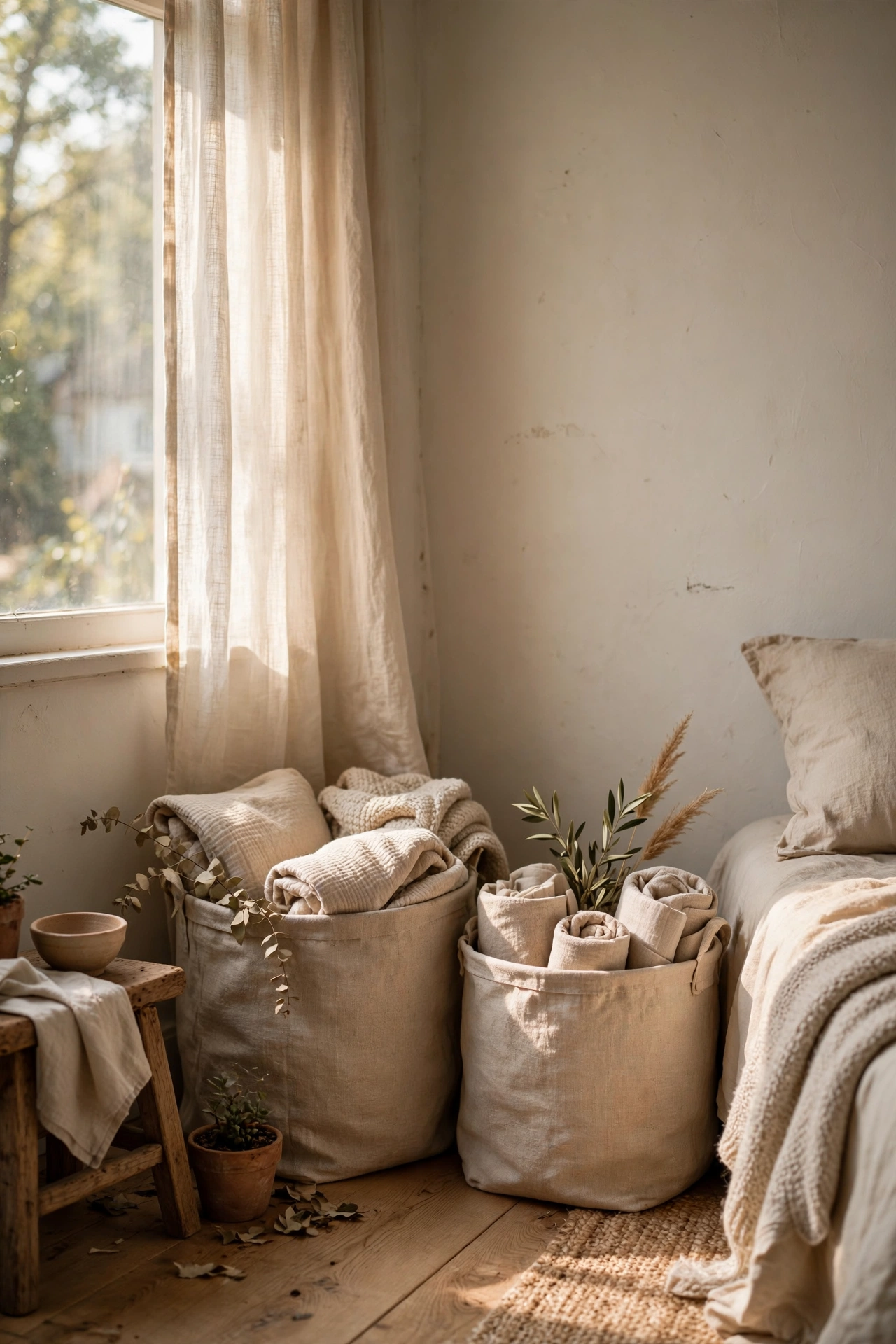
Japandi calm survives real life because the clutter has somewhere beautiful to hide. I bought two natural linen baskets for $13 each: one holds spare throws, the other swallows chargers and bedside bits. The soft structure looks relaxed rather than rigid, which suits the style perfectly. I tried stiff plastic boxes first and they looked like office supplies in my serene bedroom. The linen versions do the same job and look like decor. Everything has a home now, and tidying takes about ninety seconds.
Cost: ~$22-30 | Time: 10 minutes
18. A Stoneware Vase With a Single Branch
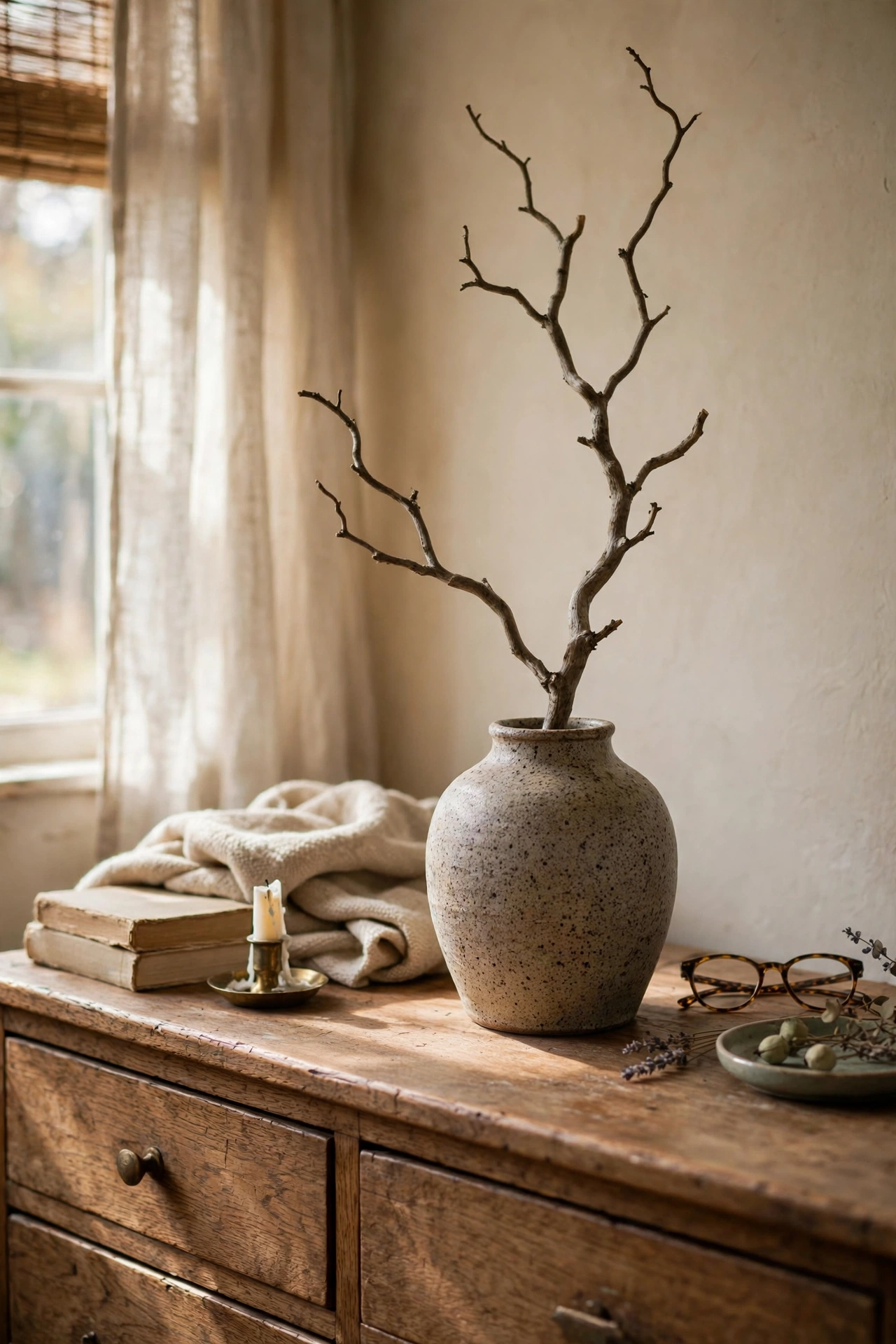
One branch in a handmade-look vase is the Japandi floral arrangement, and restraint is the whole point. I found a speckled stoneware vase for $9 at a charity shop and stood a single foraged branch in it on the dresser. Strip the lower leaves so the silhouette stays clean and sculptural. One stem, never a bouquet; abundance is the opposite of this style. My first attempt crammed in five stems and it looked like every other mantel. Pulling it back to one made it feel like art. It has lasted months with zero maintenance.
Cost: ~$8-14 | Time: 10 minutes
Wabi-sabi details that look expensive: imperfection, age, and restraint are the luxury finishes money cannot buy.
19. Thrifted Handmade-Look Ceramics
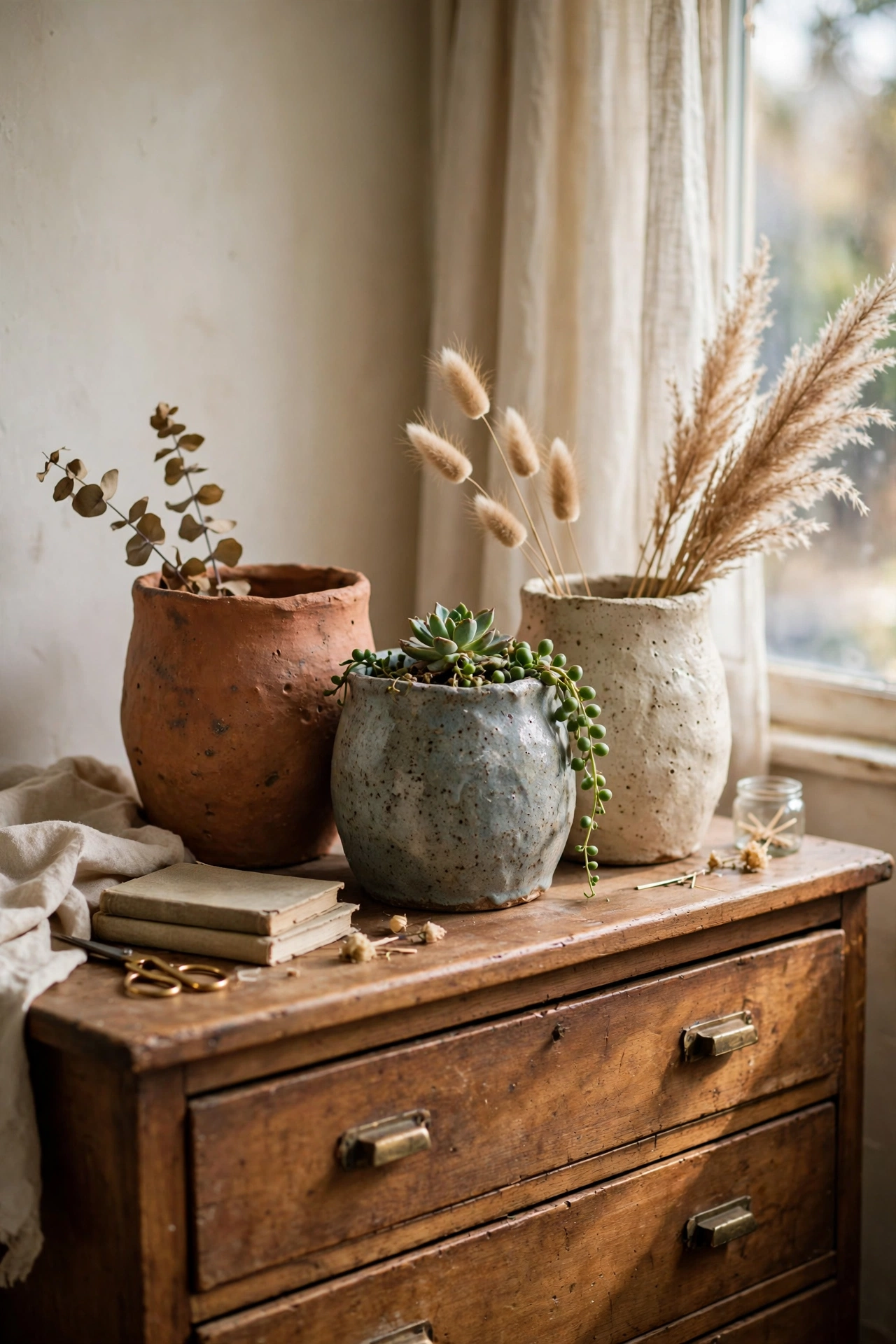
Slightly irregular ceramics are the wabi-sabi signature, and charity shops are full of them. I collected three small handmade-look pots for $2 to $4 each and grouped them tight on the dresser, one holding the branch from idea 18. Look for uneven rims, visible throwing rings, and matte glazes; perfection is what you are avoiding. My first instinct was to buy a matching set, but the mismatched trio looks far more collected and interesting. Grouped close together, they read as one intentional arrangement. Nine dollars for the most complimented corner of my room.
Cost: ~$6-12 | Time: 10 minutes
20. One Small Bonsai or Sculptural Plant
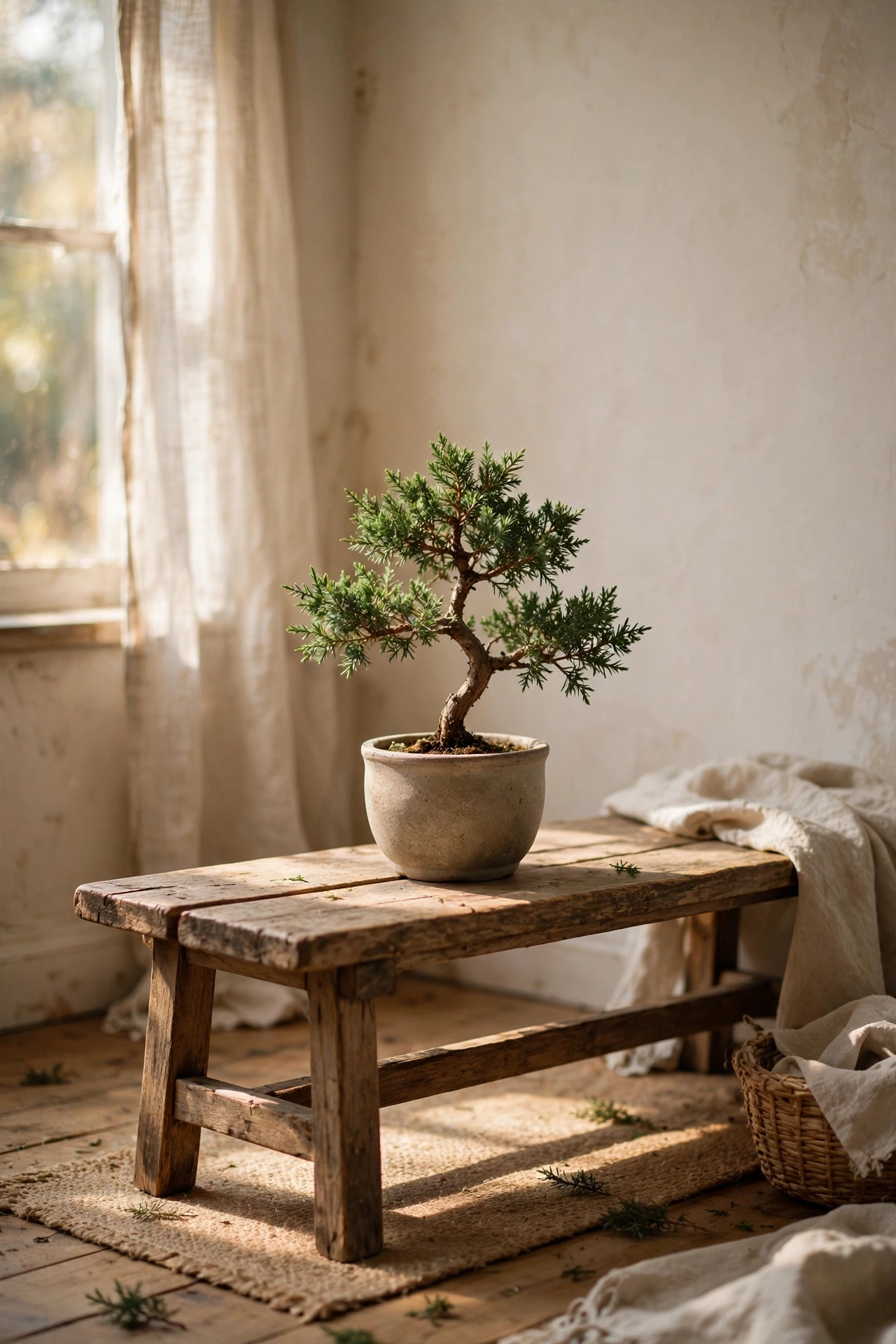
A single sculptural plant is worth ten ordinary ones in a Japandi room. I bought a small juniper bonsai for $19 and set it on the low bench where nothing else competes with it. Give it pride of place and space around it, because crowding kills the effect. Water it when the top inch of soil dries and mist it occasionally; mine sulked until I moved it closer to the window. A bonsai looks like patience made visible, which is exactly the energy this style runs on. One plant, treated like art.
Cost: ~$15-25 | Time: 10 minutes
21. A Single Brushstroke Art Print
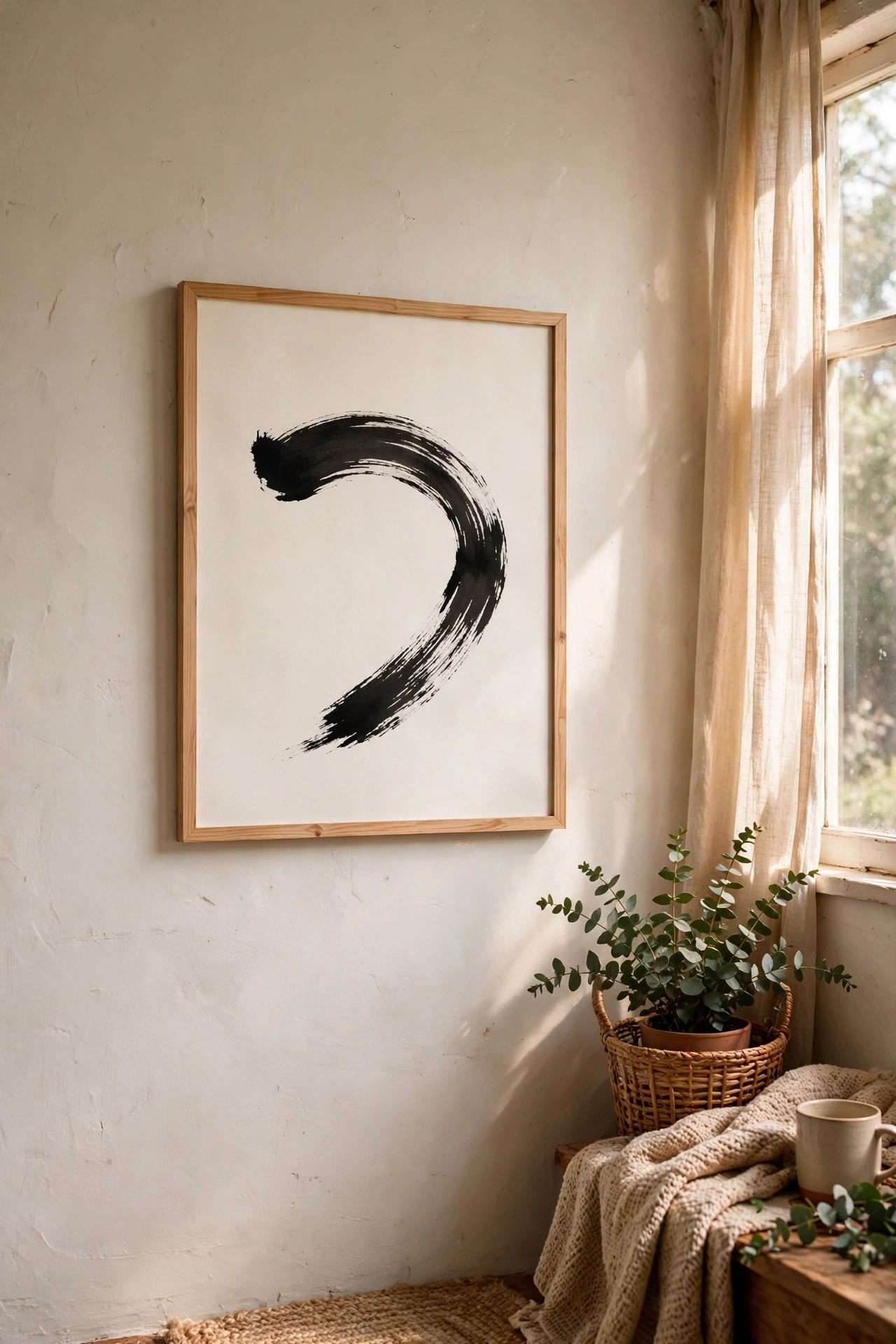
One bold ink brushstroke on plain paper is the only wall art a Japandi bedroom needs. I printed a free enso-style brushstroke image at the library for $1 and framed it in a thin natural wood frame for $8. Hang it alone on the biggest empty wall, centred and low, and let the empty space around it do the talking. My instinct was to add two more prints to “fill” the wall, and I am glad I resisted. The single image with all that breathing room looks like a gallery made a decision. Minimal art, maximum confidence.
Cost: ~$8-12 | Time: 20 minutes
22. A Low Stack of Beautiful Books
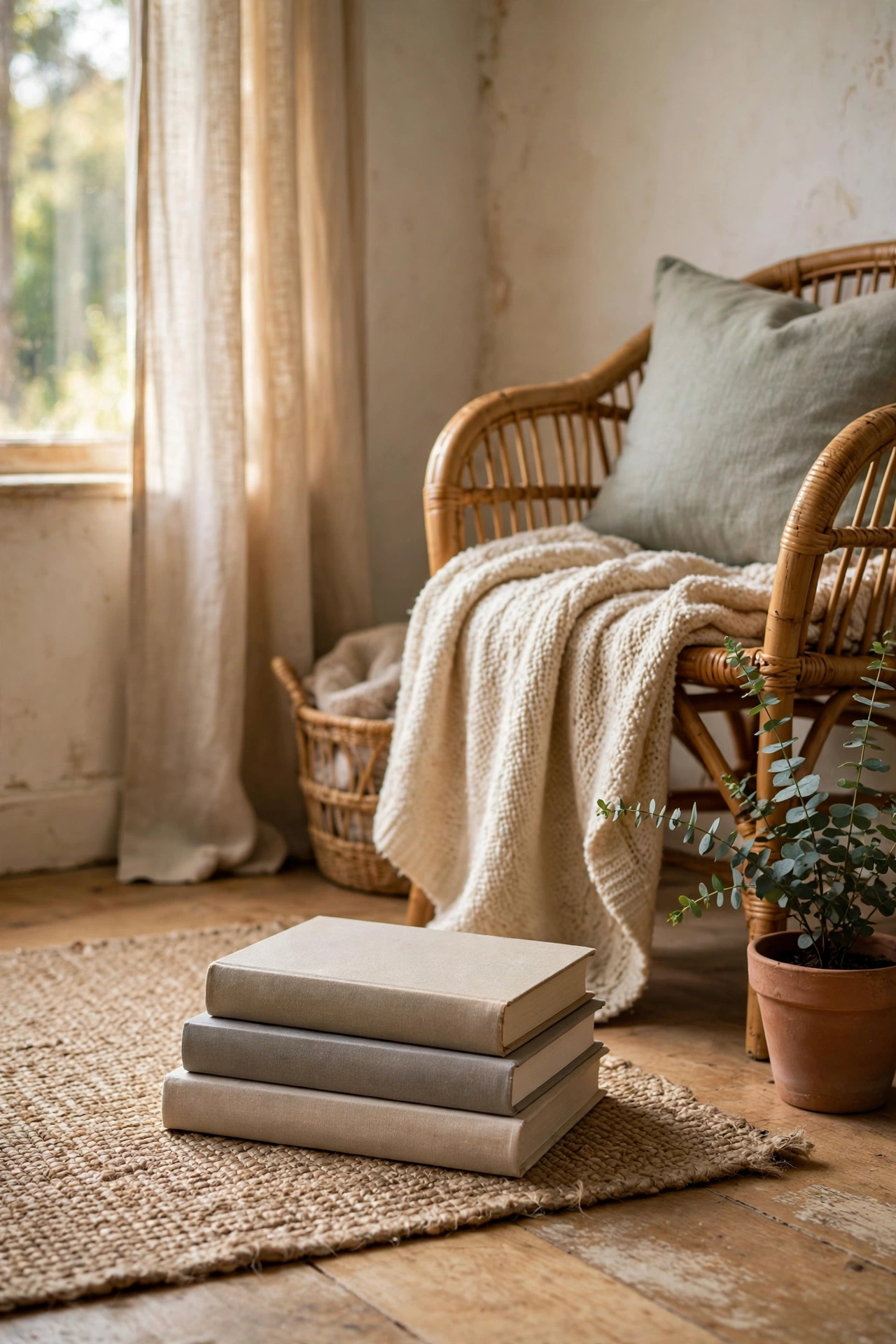
Three beautiful books stacked on the floor or a low bench are Japandi styling at its simplest. I stacked two design books and one linen-covered novel I already owned beside the reading corner, largest at the bottom. Keep the covers neutral and the stack low; this is a plinth, not a library. My first stack was six books high and it toppled within a day. Three is stable and looks deliberate. A small ceramic on top finishes it. It cost me nothing, since the books were already mine, and it looks like a stylist did it.
Cost: ~$0-10 | Time: 5 minutes
23. An Incense Ritual Tray
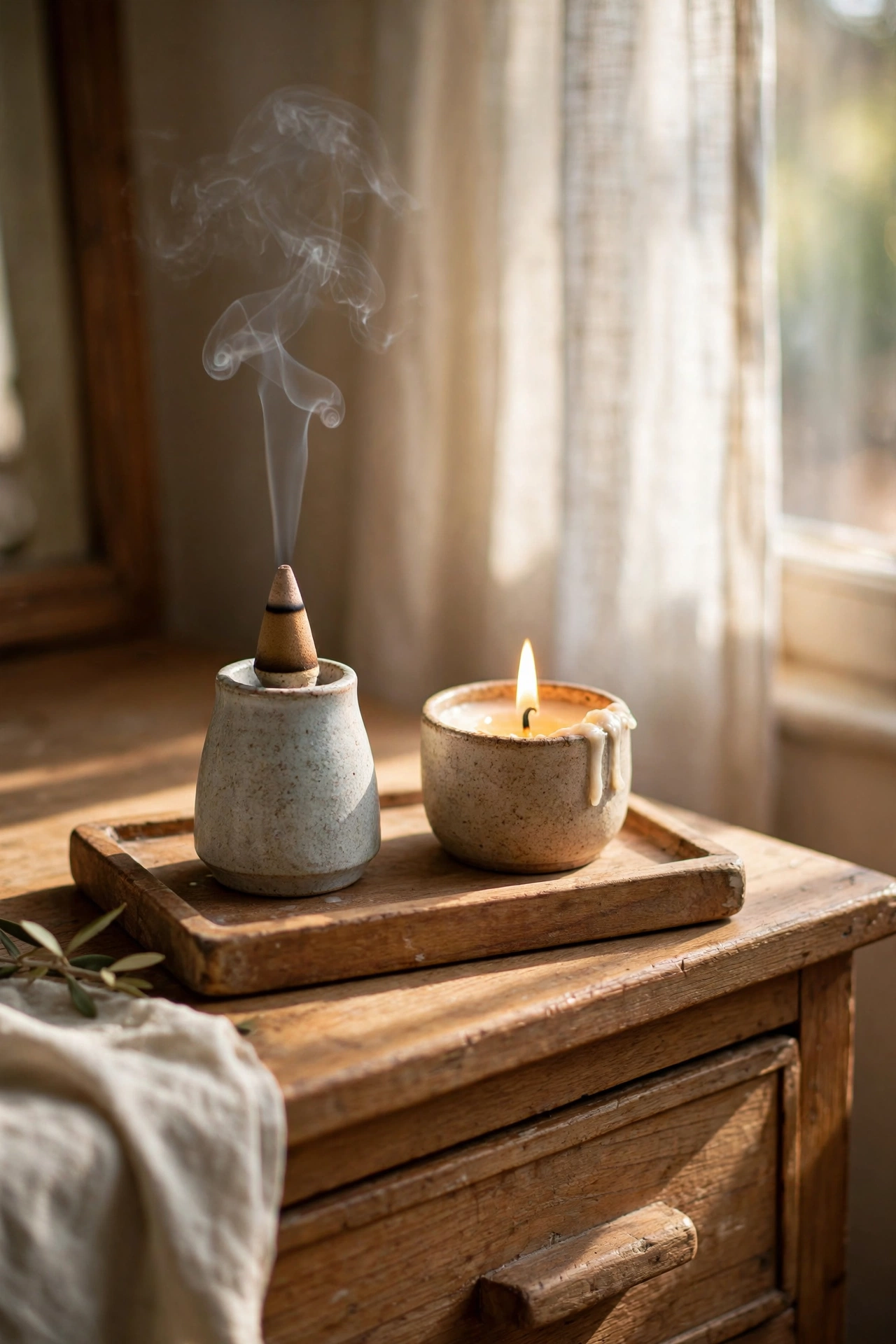
A small tray for incense turns an ordinary evening into a ritual, which is very Japandi. I set a $6 wooden tray on the dresser with a ceramic incense holder, a box of sandalwood sticks, and a small candle. Everything lives on the tray, so the ritual has a home and the dresser stays clear. Light one stick while you get ready for bed; the scent becomes a signal to your brain that the day is over. I burned my first stick too close to the curtains, so keep the tray well clear of fabric. Five minutes of ceremony, nightly calm.
Cost: ~$10-18 | Time: 10 minutes
24. One Deliberately Empty Surface
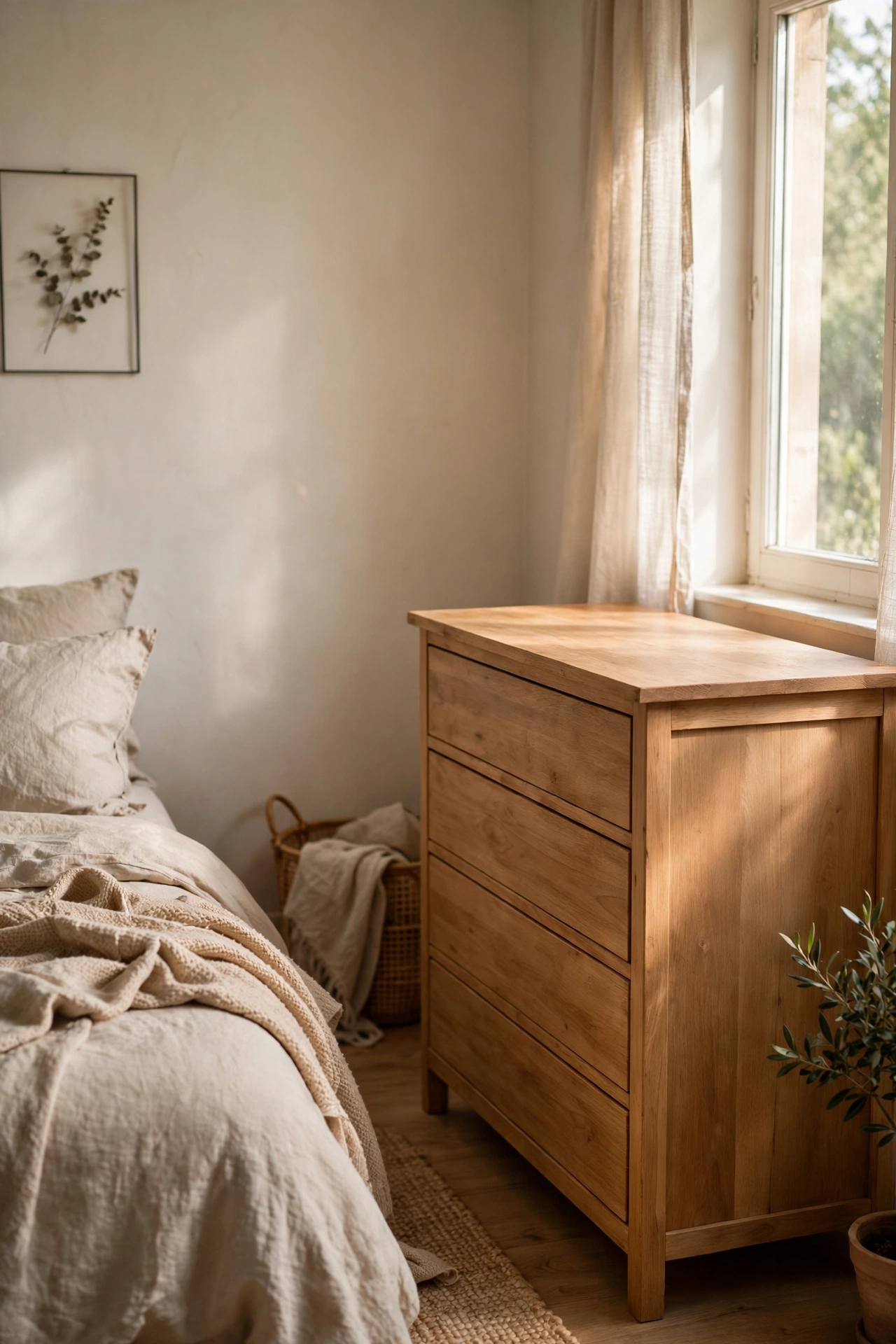
The most luxurious thing in my bedroom is an empty dresser top, and it cost nothing. I cleared one entire surface and left it bare, just wood and air, as a reminder that not every space needs filling. This is the hardest idea on the list, because the urge to “use” empty space is strong. My dresser top collected keys, mail, and random bits within a week the first time. Now it is a house rule: that surface stays clear, and everything else has its basket or tray. Visitors always comment on it. Emptiness, done on purpose, reads as wealth.
Cost: ~$0 | Time: 10 minutes
25. One Piece Sanded Back to Raw Wood
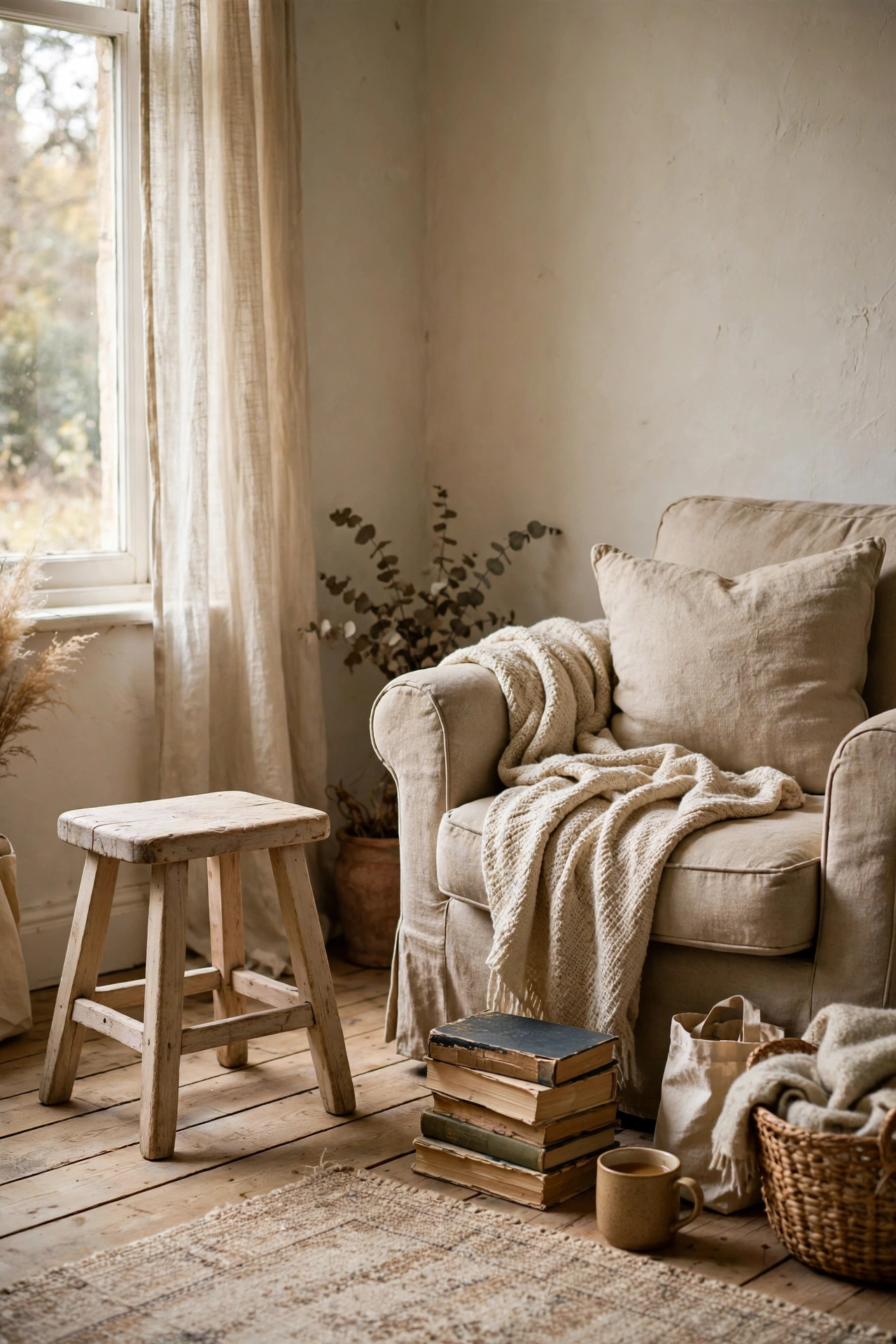
A single piece of raw, unfinished wood is the wabi-sabi trophy of the room. I sanded an old pine stool right back to bare wood with 80-grit then 120-grit paper, wiped it clean, and left it completely unfinished. The pale grain, the small dents, the honest wear: that is the beauty. Do not varnish it, because the matte rawness is the point; just rub in a little beeswax if you want a hint of protection. It sits beside my reading corner holding nothing at all, and it might be my favourite object in the house. Imperfection, framed.
Cost: ~$0-8 | Time: 1 hour
That is the Japandi bedroom: low, calm, natural, and honest about its budget. Start with the free declutter and the bulbs, because those two cost almost nothing and change the feeling overnight. If this calm spoke to you, save this idea for later. Keep the serenity going with these: (see also: 21-japandi-living-room-ideas-on-a-budget/) (see also: 19-minimalist-bedroom-ideas-that-feel-calm/) (see also: 17-warm-white-bedroom-decor-ideas-on-a-budget/)
