15 Cozy Japandi Bedroom Ideas
15 Cozy Japandi Bedroom Ideas
A cozy japandi bedroom started as an accident in my spare room. I had dragged a low pine bed frame in there during a move, slept on it for two weeks with nothing but undyed linen sheets, and woke up every morning calmer than I had been in years. No headboard, no clutter, no stuff shouting at me. That was the moment I realised the calm, minimal mix of Japanese and Scandinavian design was not just a trend for me, it was the way I wanted my bedroom to feel.
I have built out the whole room since then, one budget piece at a time, and every idea below is something I actually did or wish I had done sooner. Nothing here costs more than a normal shopping trip, most sit well under $40, and I have noted prices, timings, and the mistakes I made along the way. If your bedroom feels busy, read on.
1. A Low Platform Bed From Simple Pine Boards
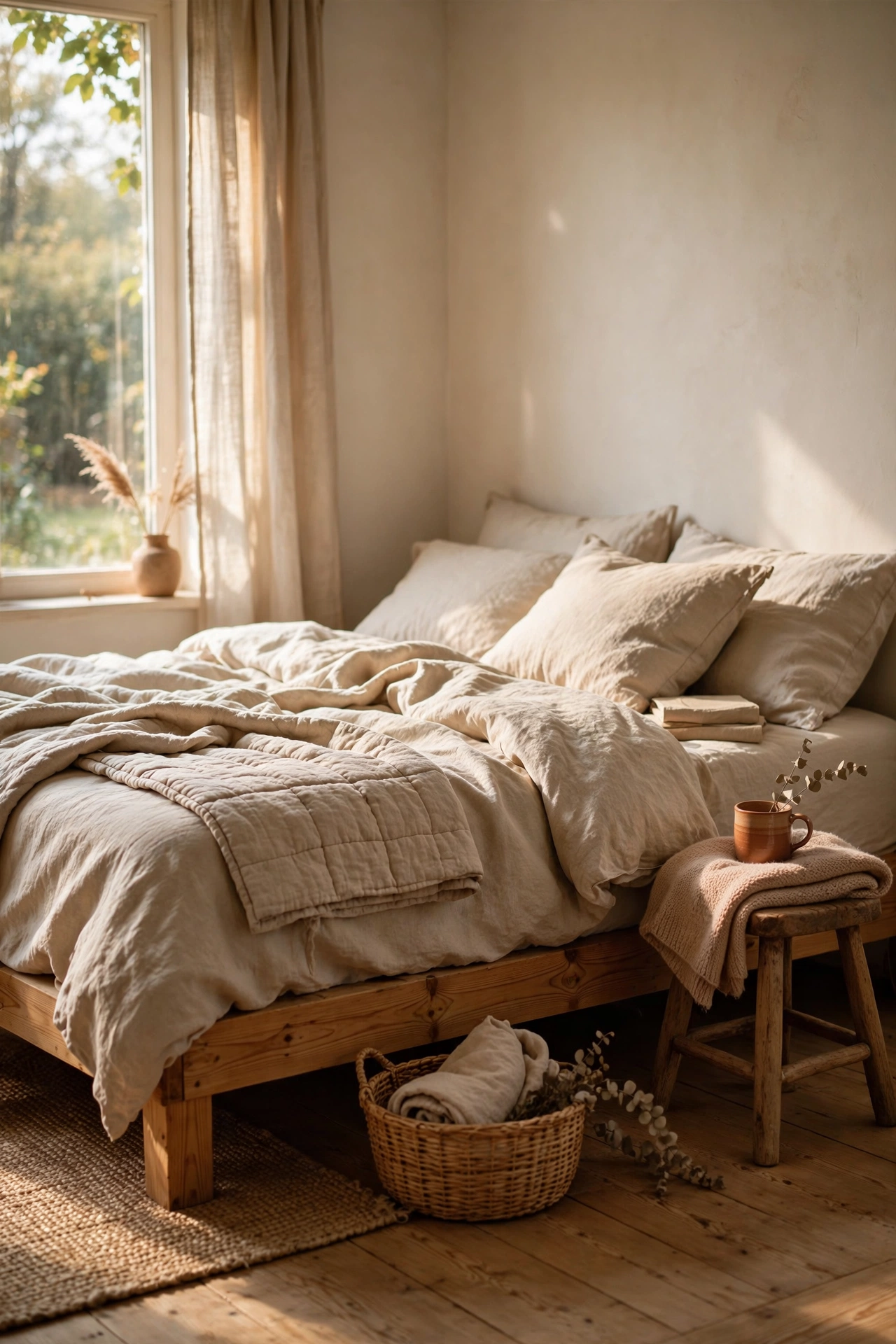
A low platform bed is the single most Japandi thing you can own, and you can build one from basic pine boards for very little money. I bought four 2×6 pine planks and a set of stubby legs from the hardware store for about $55, sanded everything smooth with 120-grit paper, and assembled a simple slatted rectangle in an afternoon. Keep the mattress no higher than eighteen inches off the floor, because that low profile is what makes the room feel grounded and calm. Stain it clear or leave it raw. My first attempt sat too high because I used chunky legs, and the whole room lost its cosy feeling. Low legs fixed everything.
Cost: ~$50-65 | Time: 3 hours
2. Undyed Linen Bedding, Layered Not Matchy
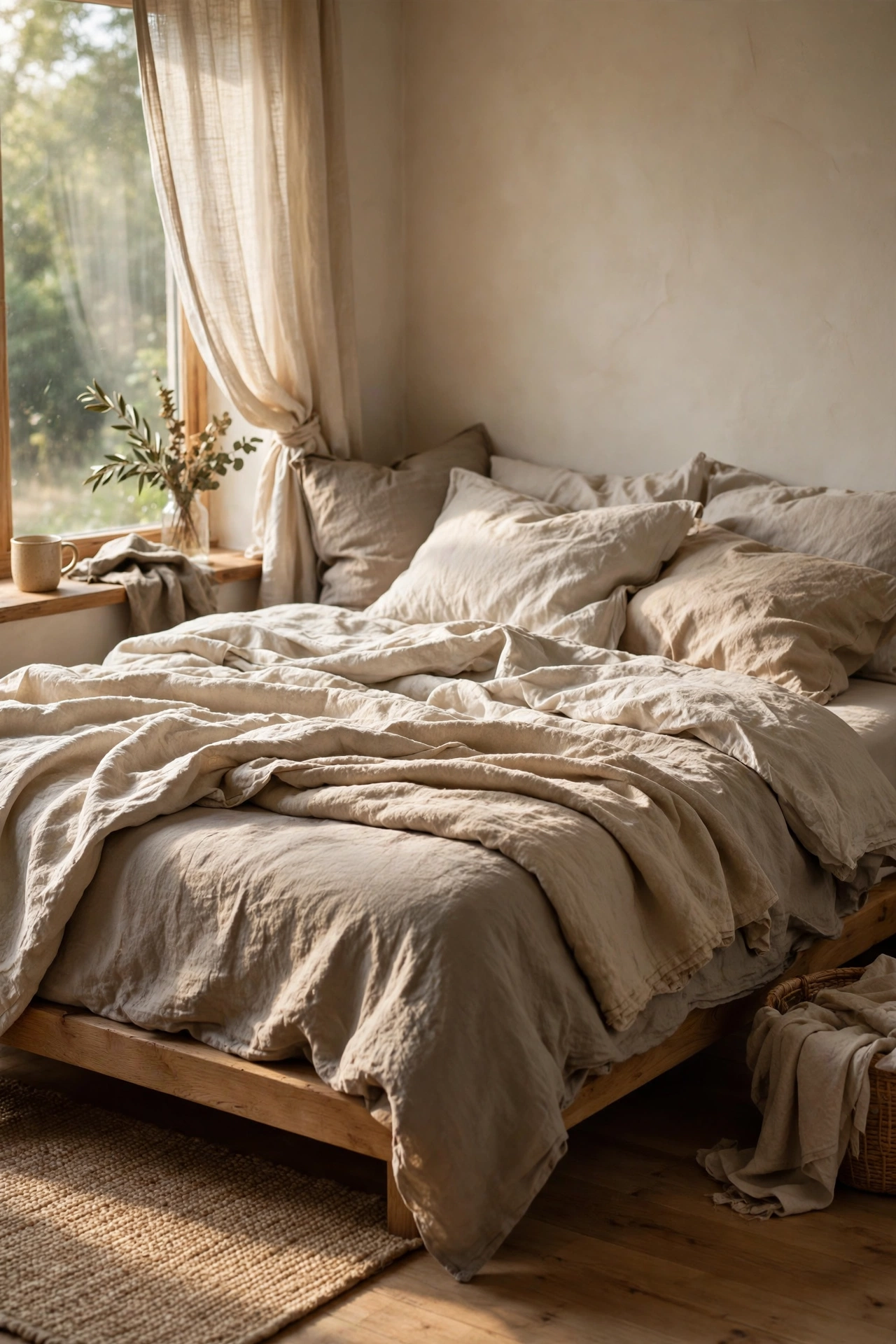
Undyed linen bedding in oat, stone, and soft beige layers is the heart of Japandi calm. I started with a natural linen duvet set for about $60, then added a washed cotton throw and one oatmeal pillow in slightly different tones. The rule is layered, not matchy, so three close neutrals always beat one perfect shade. Wash everything before you judge it, because linen softens and relaxes with every wash. My mistake was buying everything in the exact same colour, and the bed looked like a beige hotel bed. Three tones apart and it suddenly looked rich and collected.
Cost: ~$55-75 | Time: 20 minutes
3. A Rice-Paper Lantern Pendant Light
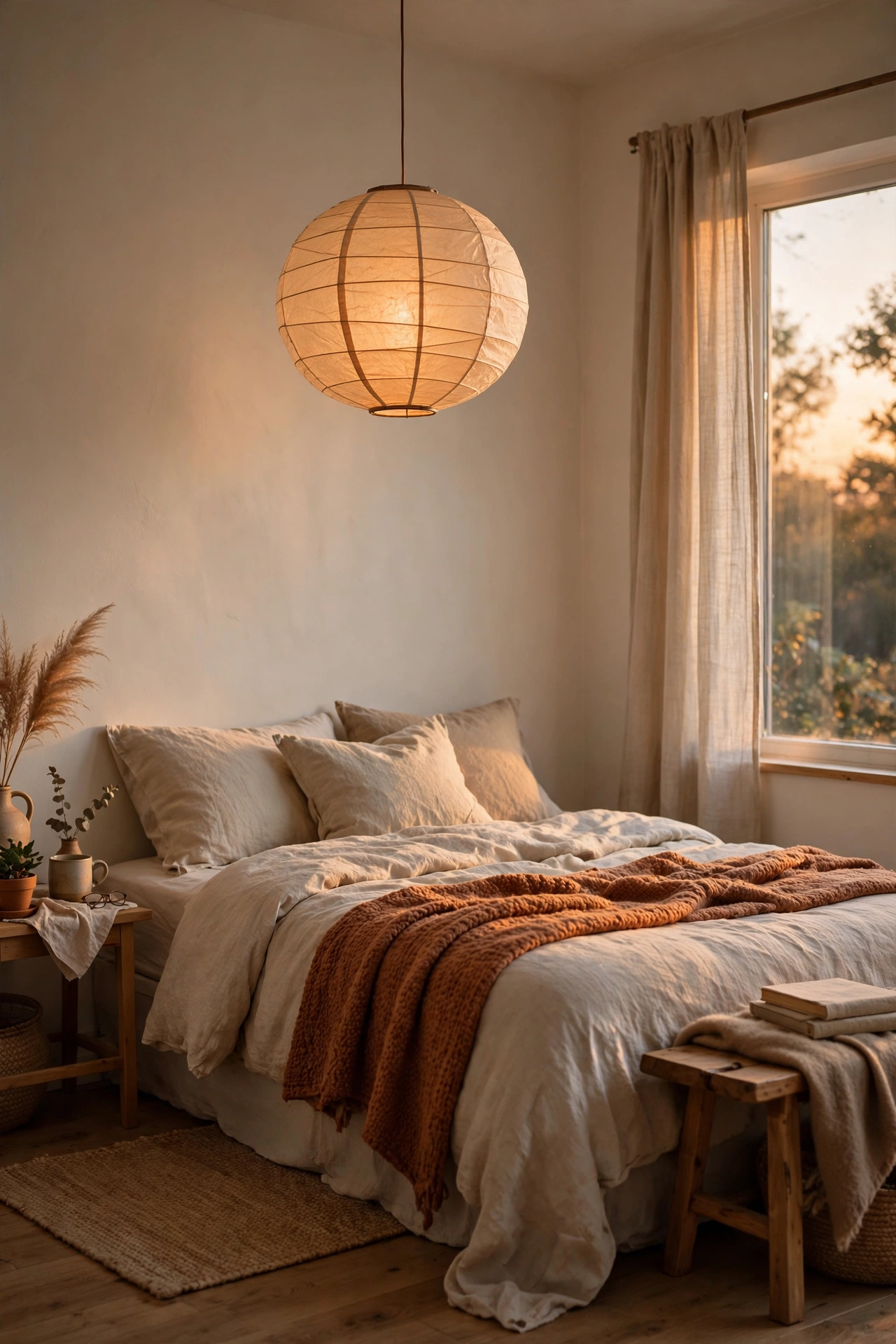
A rice-paper lantern pendant turns harsh bedroom lighting into a soft warm glow for pocket money. I bought a large round rice-paper shade for $18 and hung it from a $12 pendant cord kit over the centre of the bed, keeping the drop so the bottom of the lantern sits about seven feet off the floor. Use a warm-white bulb, never cool daylight, because cool light kills the cosiness instantly. My first bulb was bright white and the lantern looked like an office fitting. One warm bulb swap later and the whole room glowed like candlelight. Five minute job, biggest mood change in the room.
Cost: ~$25-35 | Time: 30 minutes
4. A Tatami-Style Woven Rug Beside the Bed
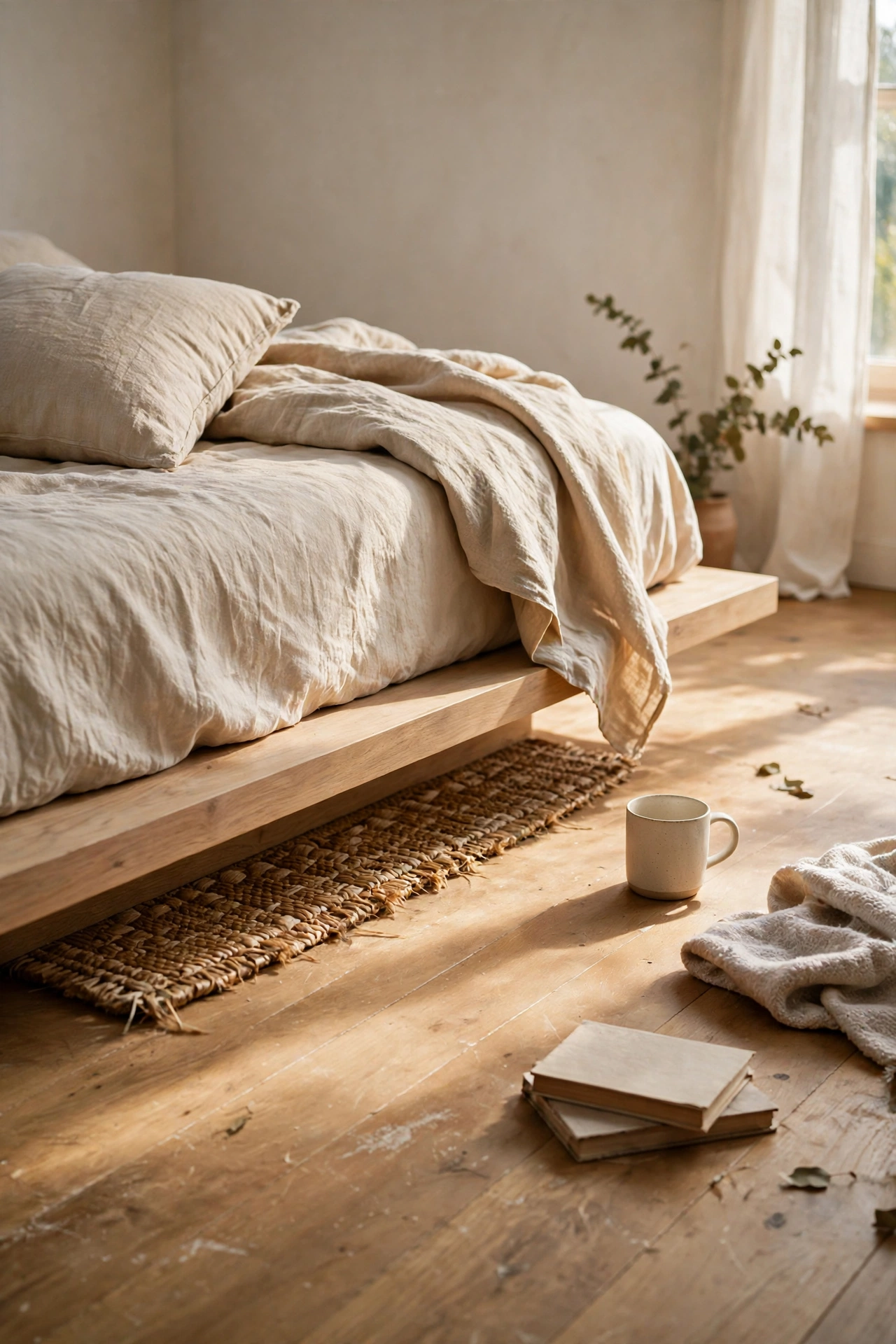
A woven rush-style rug beside the bed gives you that tatami feeling without importing real tatami mats. I found a flatweave jute rug in a natural tone for $32, sized so my feet land on it when I get up, and it changed my mornings completely. Place it partly under the bed so it looks intentional rather than floating in the room. Vacuum it gently with a suction-only setting, because the beater bar frays the weave. I skipped that advice the first month and got fuzzy edges. Real tatami would have cost hundreds, and honestly this reads just as calm and far more practical.
Cost: ~$30-40 | Time: 15 minutes
5. A Low Wooden Bench at the Foot of the Bed
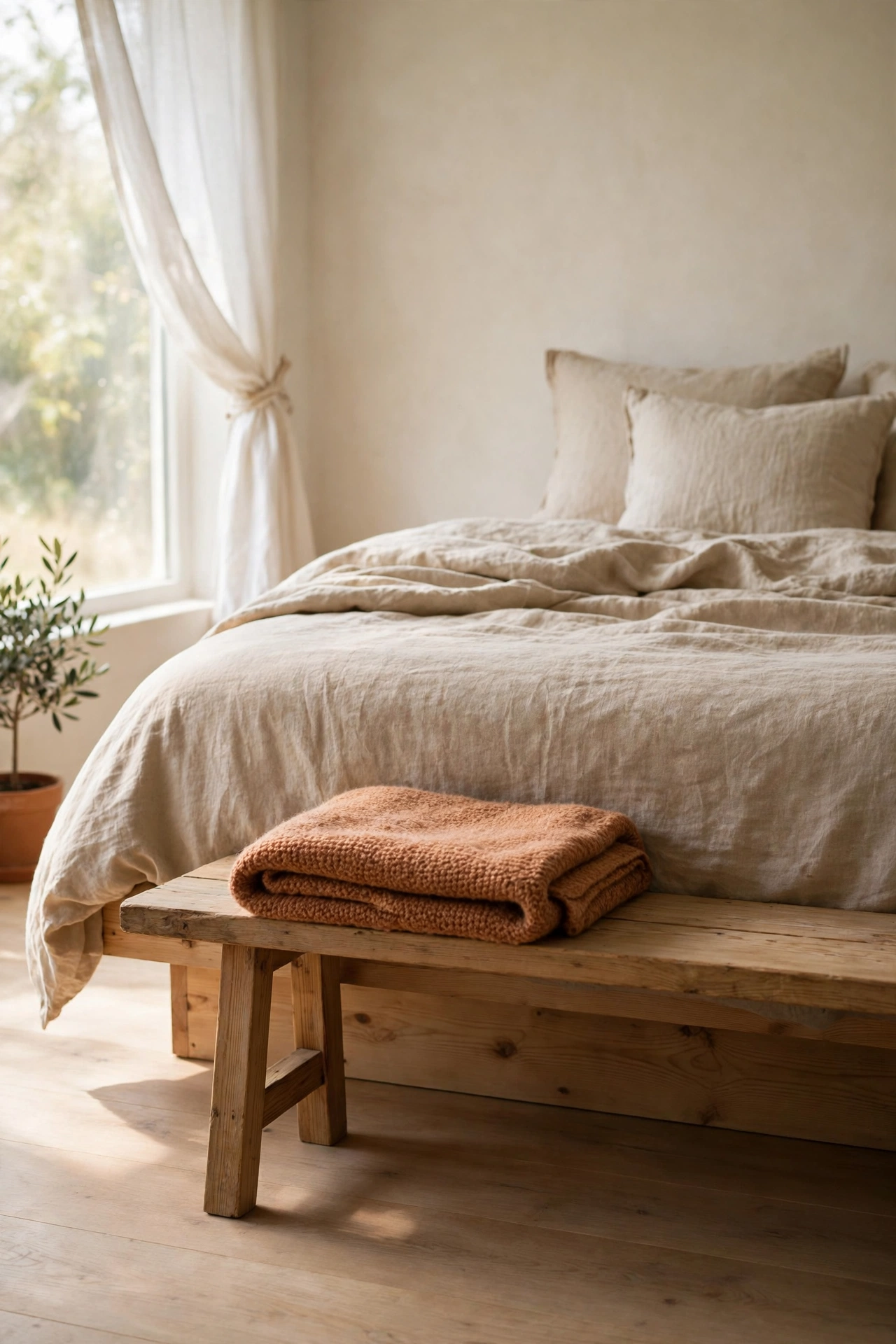
A low wooden bench at the foot of the bed replaces the chair everyone dumps clothes on. I picked up a plain pine bench secondhand for $20, sanded it lightly, and left it raw. It now holds my morning clothes, the throw I reach for at night, and nothing else. Keep the height level with or below the mattress top so it stays visually quiet. My old habit was a chair buried in jeans, and the room always looked messy. The bench forced a rule: if it does not fit on the bench, it goes in the wardrobe. The room has stayed tidy ever since.
Cost: ~$18-28 | Time: 1 hour
Pro tip: Japandi thrives on breathing room, so for every item you add, remove one. I keep a small basket by the door during decorating week and anything I lift off a surface goes straight in it.
6. A Floating Shelf as a Bedside Table
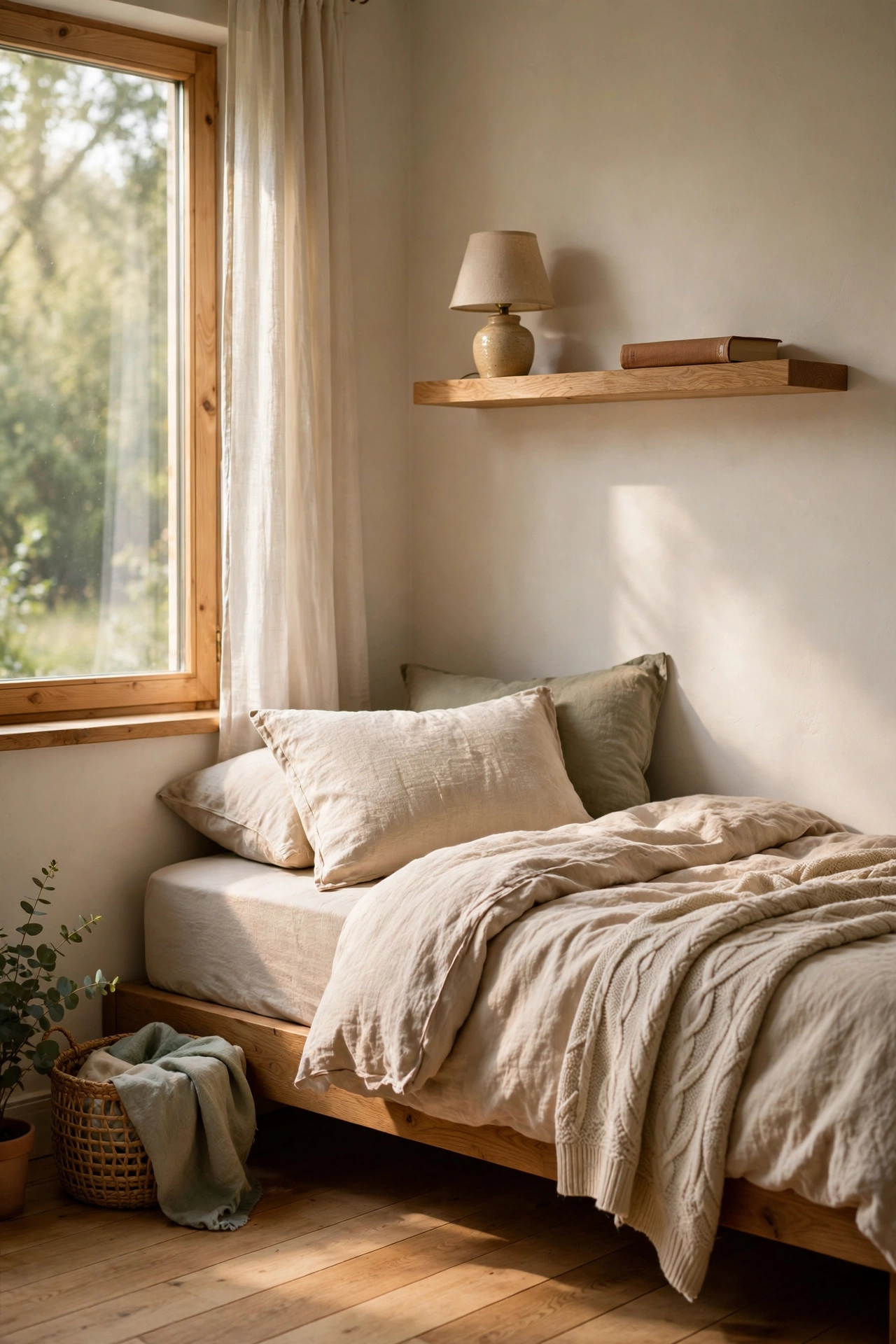
A floating shelf as a bedside table keeps the floor clear and the look airy. I mounted a 12-inch oak shelf at mattress height for $22, and it holds exactly one lamp, my book, and a glass of water. That is the point. Drill into a stud or use proper toggle bolts, because a shelf that wobbles is worse than none. Style it with restraint: a small stack of two books maximum. My old bulky bedside table swallowed light and collected junk drawers. The shelf forced me to keep only what I use, and the floor underneath now gets mopped without a wrestling match.
Cost: ~$20-28 | Time: 45 minutes
7. A Shoji-Style Room Divider, Thrifted or Hacked
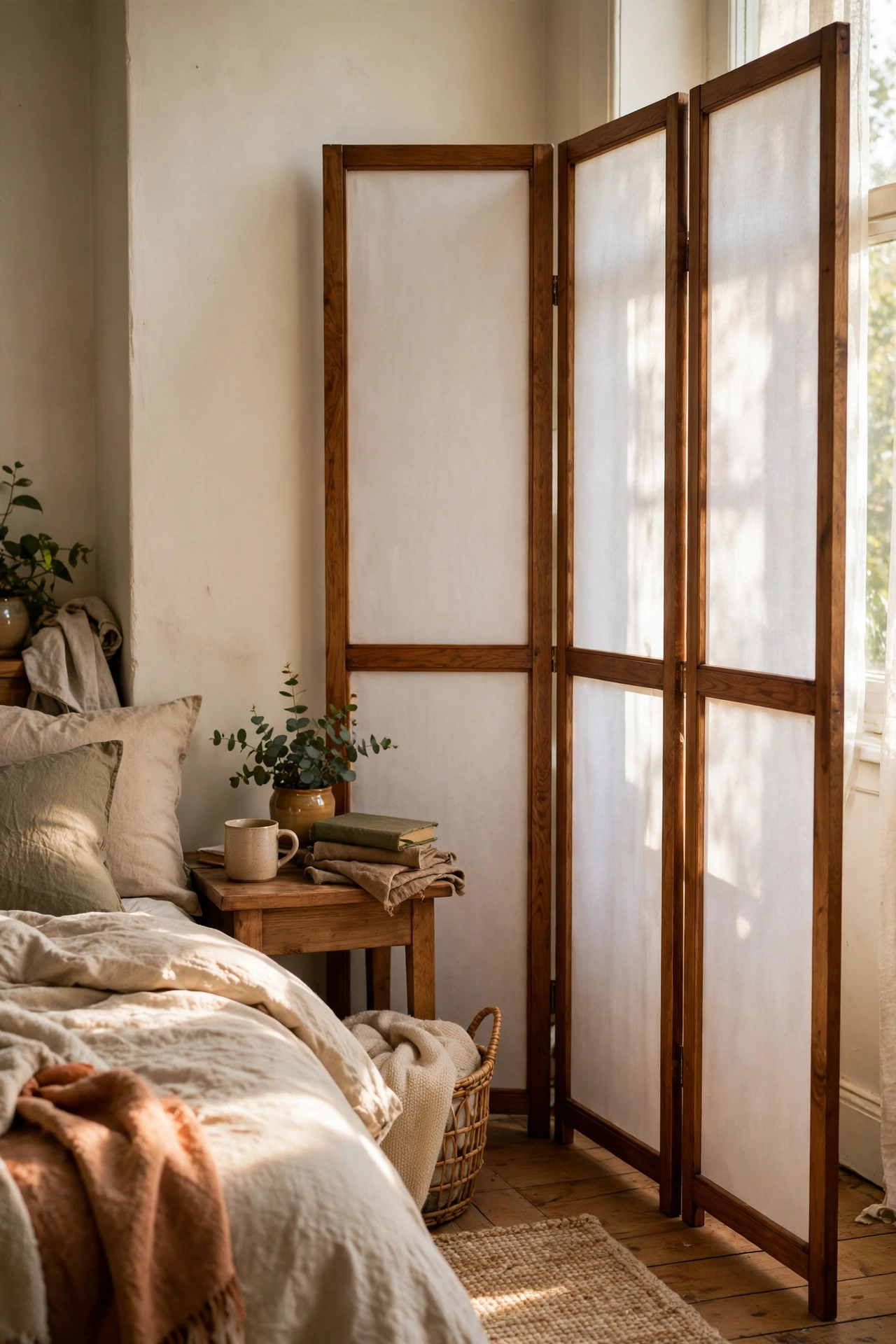
A shoji-style divider hides the mess corner every bedroom has without a renovation. I thrifted a three-panel room screen for $25, then hacked it by stapling thin white cotton over the panels to fake the rice-paper look. Check hinges before you buy secondhand, since wobbly panels collapse. I keep mine screening the laundry corner, and the room looks twice as tidy as it is. Real shoji screens cost a fortune and stain easily. This one took twenty minutes, cost less than a pizza night, and gives me the layered, screened look I wanted.
Cost: ~$22-35 | Time: 40 minutes
8. Sheer Linen Curtains That Let Light Breathe
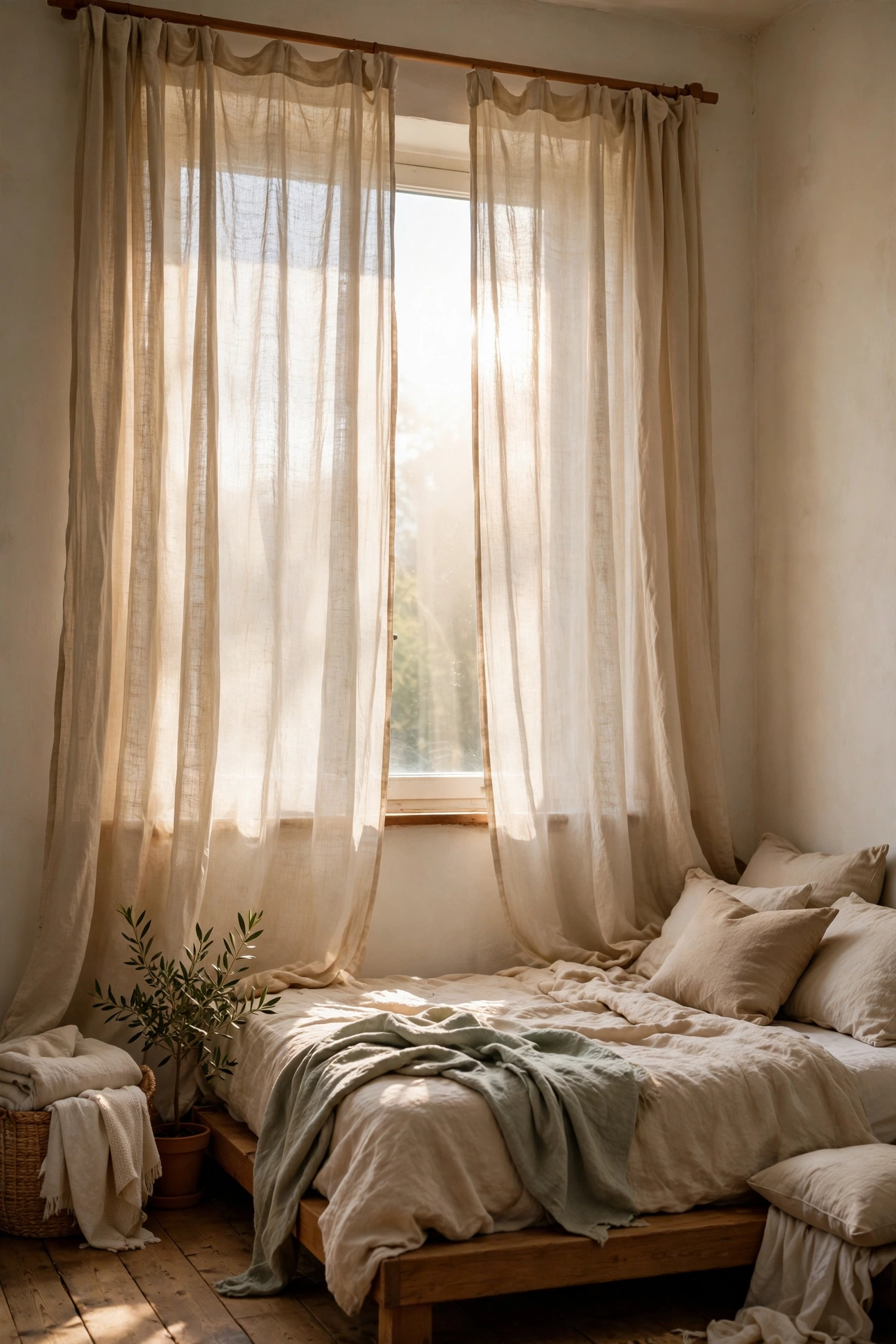
Sheer linen curtains soften daylight without darkening the room, which is exactly what Japandi needs. I bought two sheer natural linen panels for $26 and hung the rod near the ceiling so the fabric falls in long relaxed pleats. Do not fight wrinkles, because linen is supposed to look soft and imperfect. Steam them once at the start and then leave them alone. My old heavy curtains made the room feel like a cave and blocked the morning light I actually need. These breathe, they glow at sunrise, and the room finally wakes up the way I want to.
Cost: ~$24-32 | Time: 30 minutes
9. One Wabi-Sabi Handmade Ceramic Vase
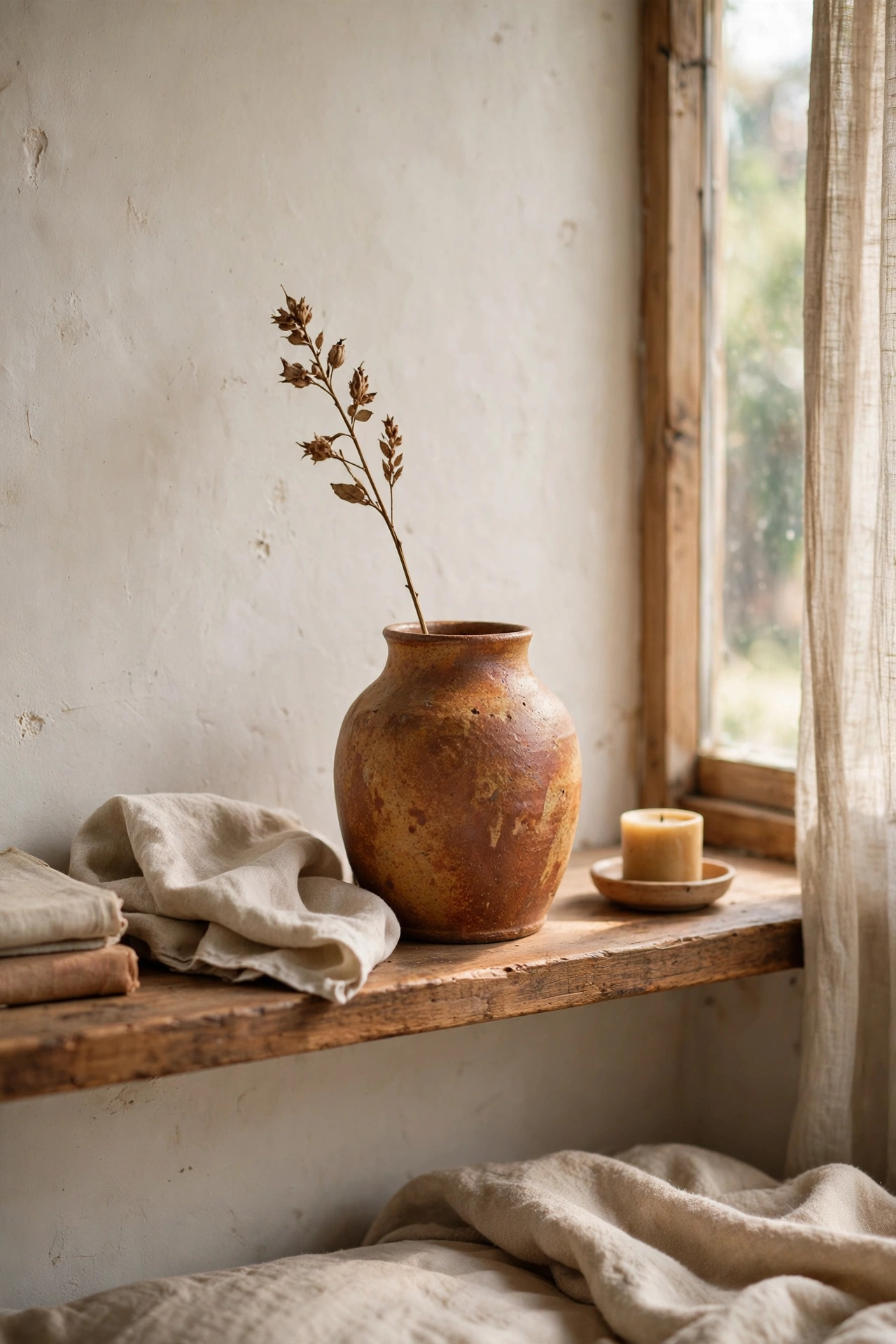
One handmade ceramic vase with visible flaws beats five perfect ones in a Japandi bedroom. I bought an unevenly glazed stoneware vase from a local potter for $14, and it sits on my floating shelf holding a single stem. Wabi-sabi means finding beauty in the imperfect, so choose the piece with the wonky rim. Put it where you see it daily, not hidden. I tried a sleek store-bought vase first and it looked cold and wrong. The handmade one, with its fingerprints in the clay, finally gave the shelf the warmth the room needed.
Cost: ~$12-20 | Time: 5 minutes
10. Bamboo Storage Boxes for the Clutter
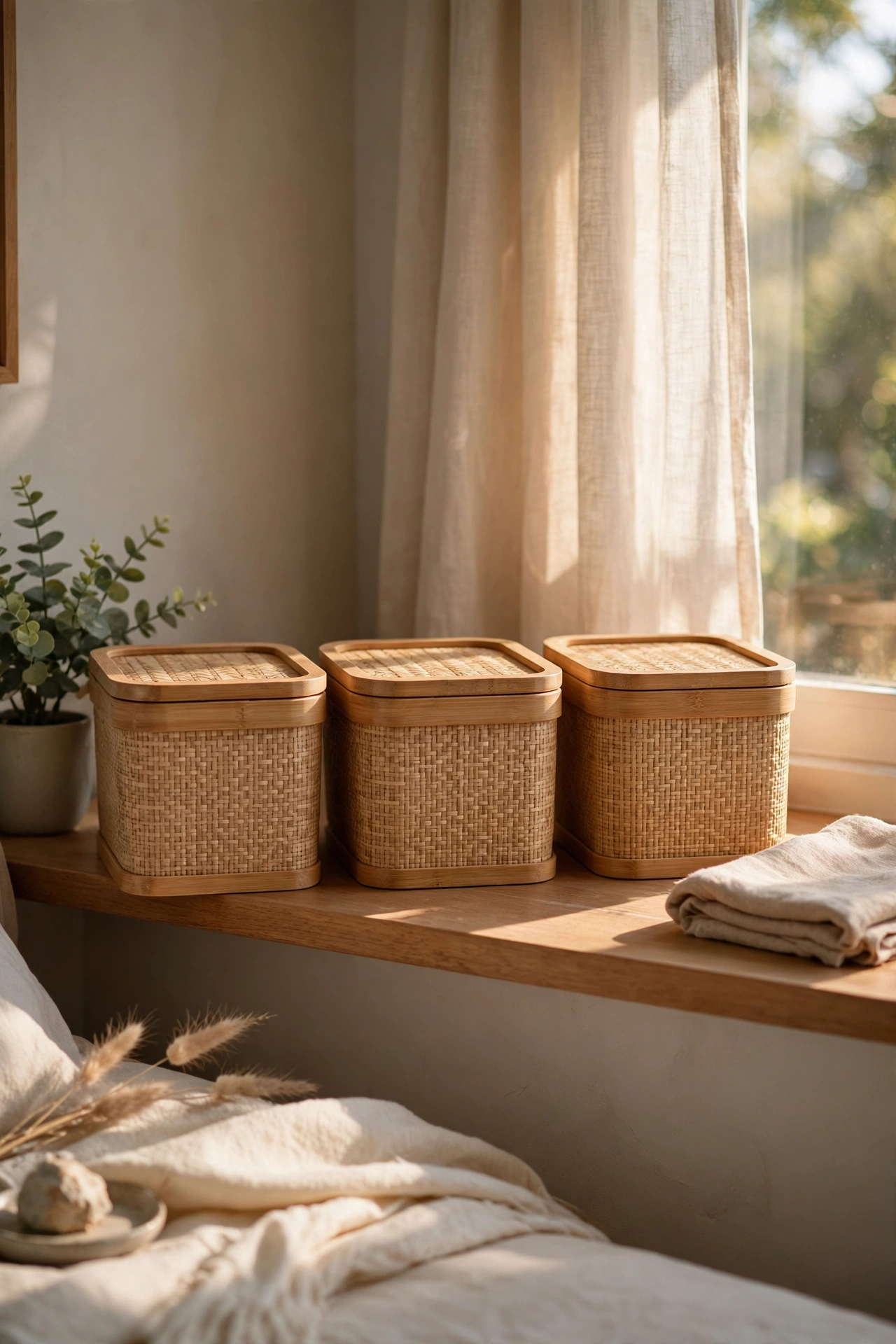
Bamboo storage boxes swallow bedroom clutter while looking like part of the design. I bought three lidded bamboo boxes for $24 total, one for chargers, one for hand cream and bits, one for the drawer of doom contents. Label the inside of the lid, not the outside, so they stay clean-looking. Everything on my surfaces now has a box home. Before this, my floating shelf had slowly collected receipts, spare buttons, and mystery keys. The boxes look like decor and act like drawers. Japandi calm is really just organised clutter, and bamboo is the prettiest way to do it.
Cost: ~$20-30 | Time: 20 minutes
11. A Single Branch in a Tall Vase
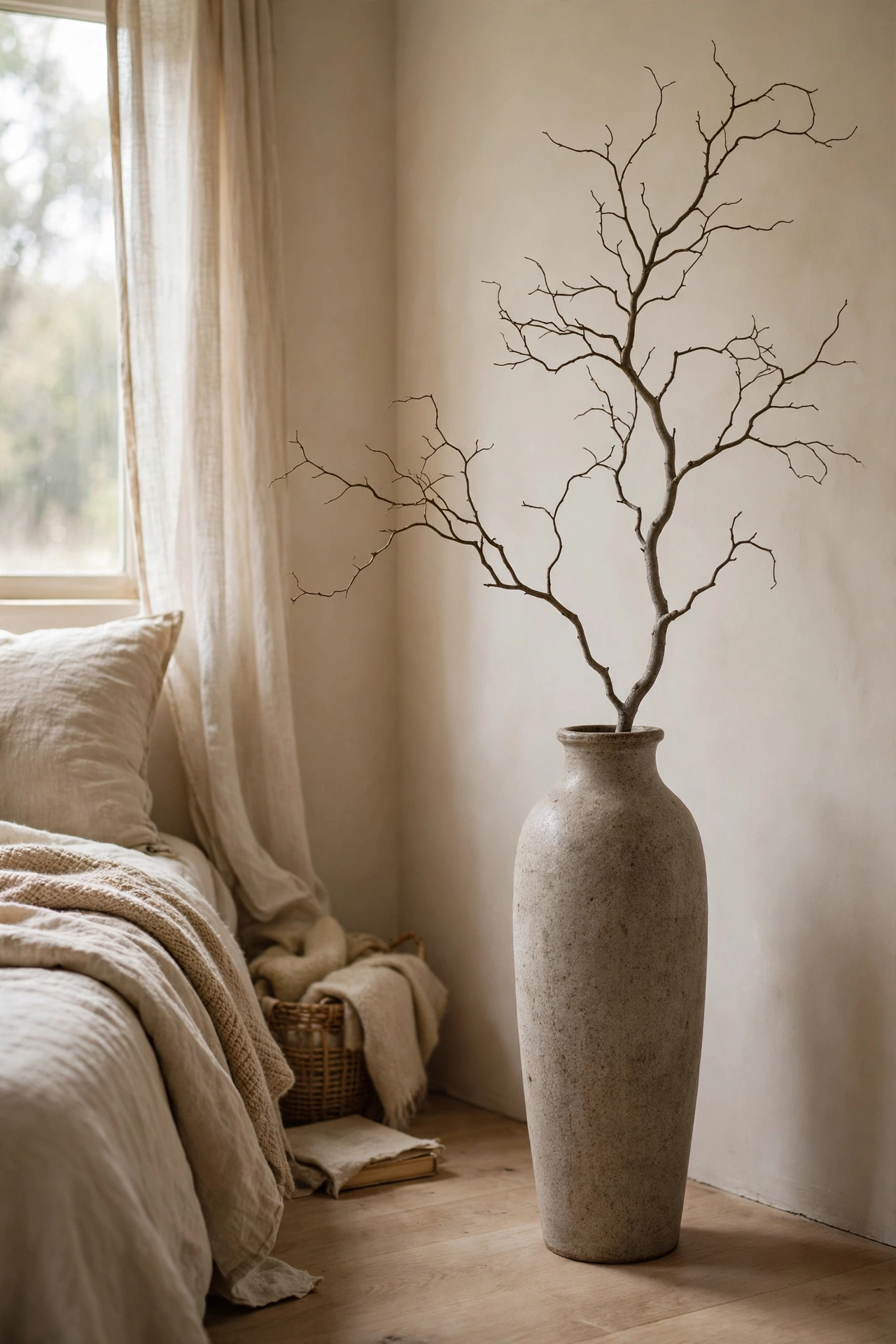
A single branch in a tall vase is the most Japandi styling move there is, and it costs nothing. I cut a bare branch from my garden, trimmed the lower twigs so the silhouette stays clean, and stood it in my stoneware vase. Change the water weekly if you use a living branch, or keep it dry for a sculptural look. I kept adding more branches until it looked like a forest, and had to learn the hard way that one is the rule. One branch, one vase, one moment of nature. It is still my favourite corner of the room.
Cost: ~$0-8 | Time: 10 minutes
12. A Wall-Mounted Reading Sconce, No Wiring Needed
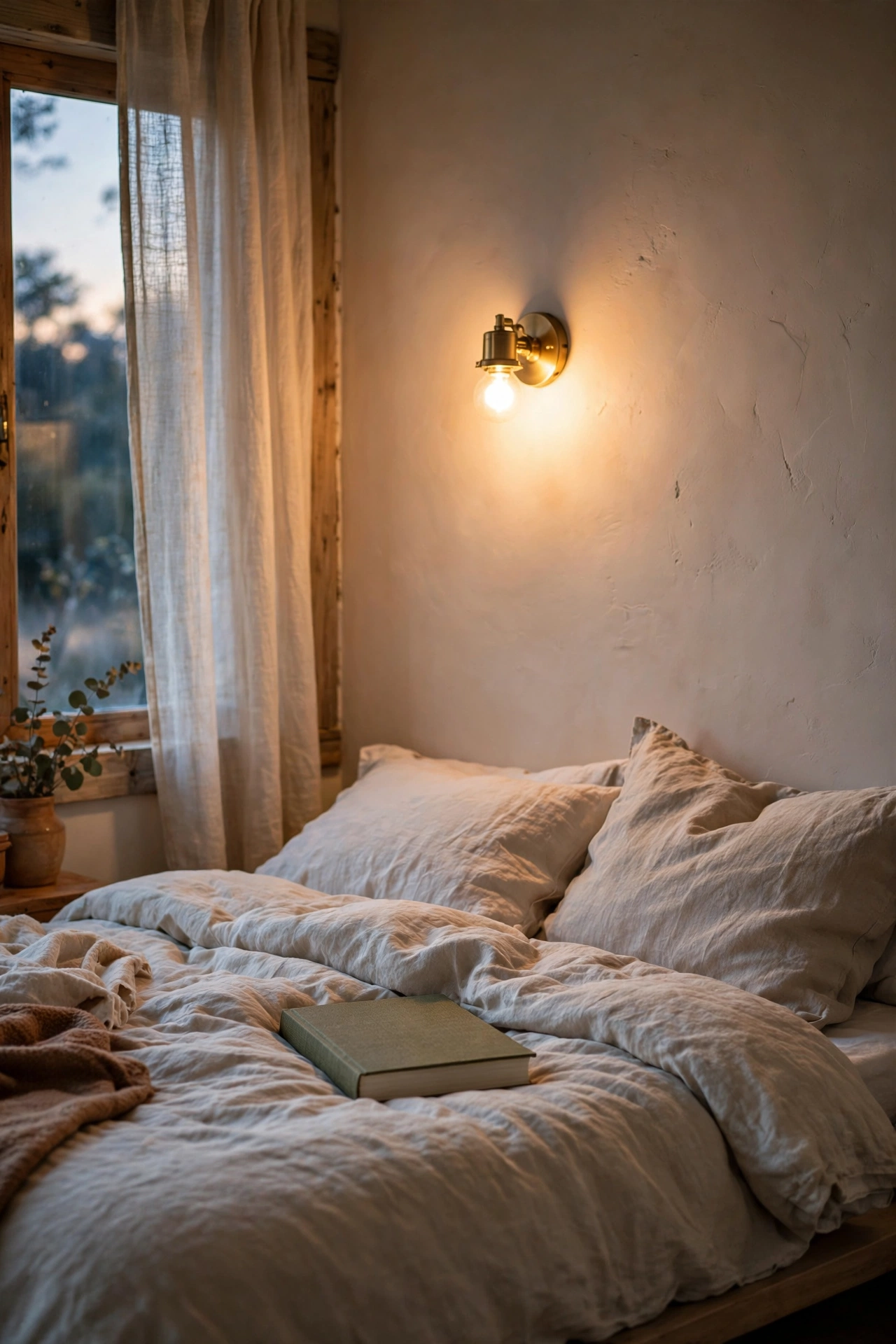
A battery reading sconce above the bed gives you book light without an electrician. I bought a small brass-look puck sconce for $16 that sticks on the wall and runs on batteries with a remote. Mount it about fifteen inches above your pillow, angled toward your book, and use warm-white batteries-friendly bulbs. My old bedside lamp ate the whole floating shelf and cast shadows. This freed the shelf and puts light exactly where I read. Battery changes are twice a year. It looks wired in, and nobody has guessed it is not.
Cost: ~$14-22 | Time: 20 minutes
13. Rolled Spare Blankets on an Open Shelf
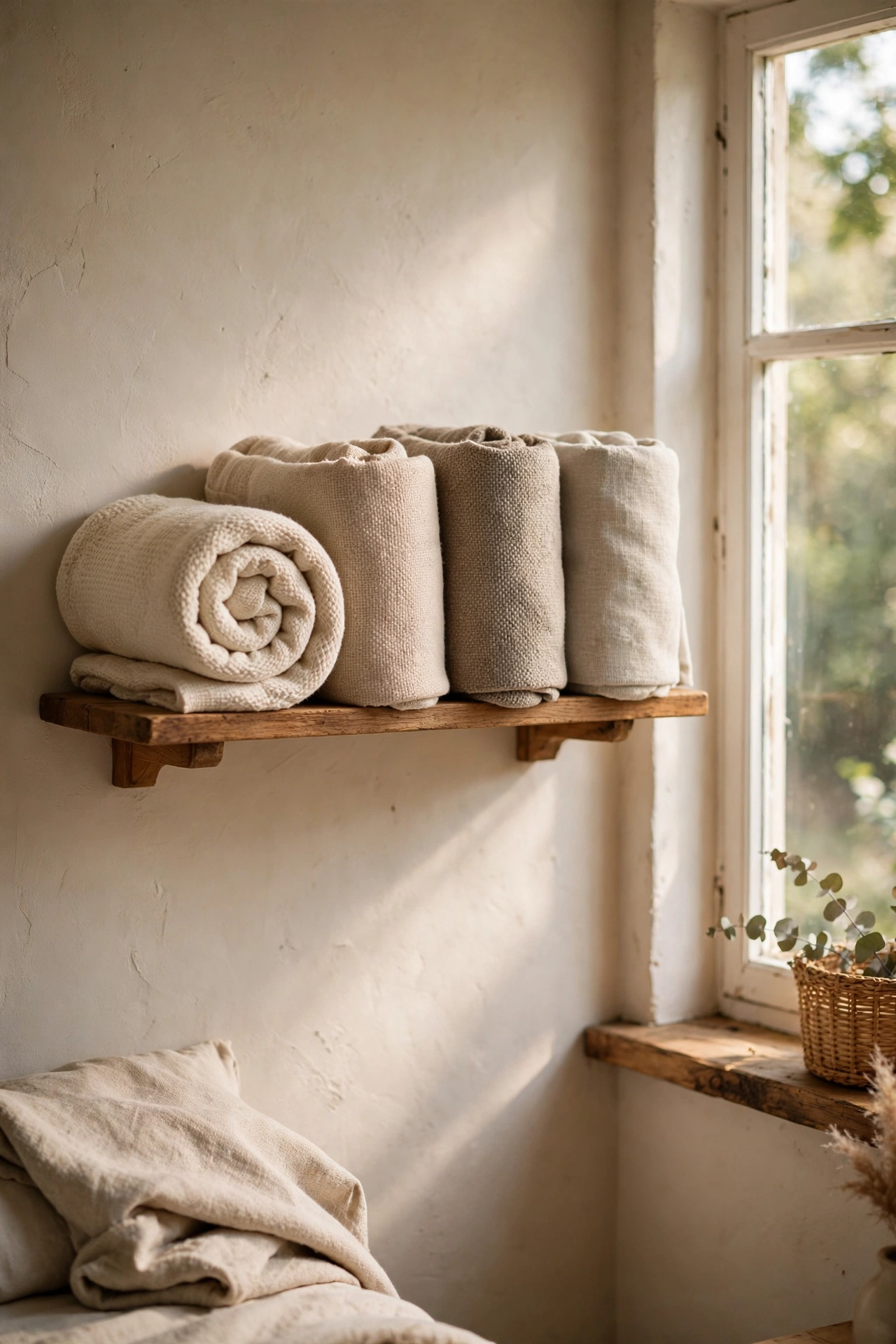
Rolled spare blankets on an open shelf look intentional and keep extras within reach. I roll two extra blankets into tight cylinders and stand them on a small wooden shelf for about $18, sorted heaviest at the bottom. Rolling beats folding here, because folded piles slump and rolled ones hold their shape. Wash before rolling so they are ready to grab. My spare blankets used to live in a lumpy pile on the bench. Rolled and shelved, they read as styling and take up half the space. Guests now help themselves, which is the point.
Cost: ~$16-25 | Time: 25 minutes
14. A Stone Bedside Tray for the Essentials
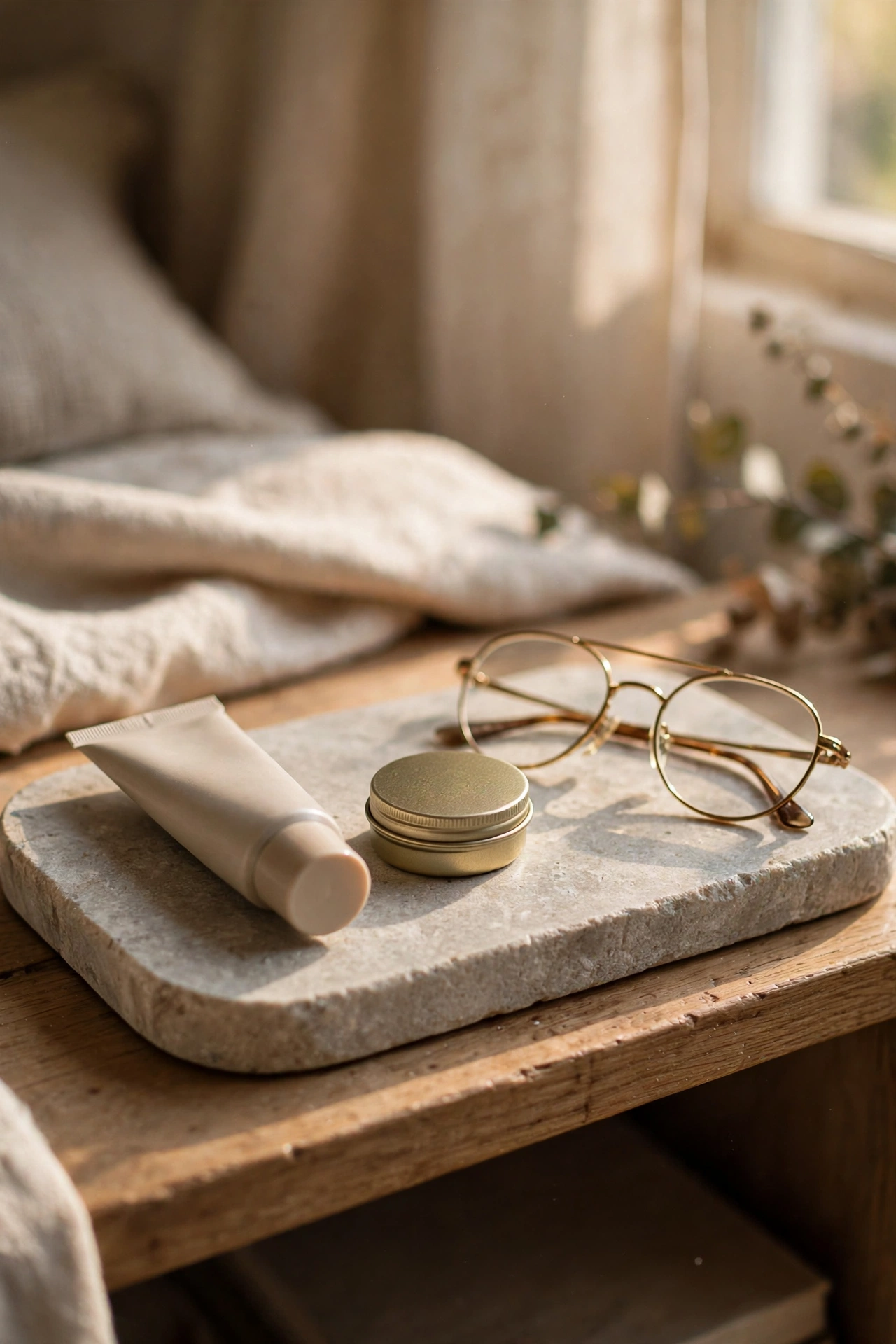
A stone tray on the shelf corrals your nightly essentials into one calm zone. I bought a small honed stone tray for $12 and it now holds my lip balm, hand cream, and reading glasses in one place. The rule is tray discipline: if it does not fit the tray, it does not live by the bed. My floating shelf used to breed scattered bits. The tray ended that in a day. Stone feels weighty and cool, which fits the natural materials of Japandi perfectly. Twelve dollars for the tidiest bedside I have ever had.
Cost: ~$10-16 | Time: 5 minutes
15. A Simple Woven Wall Hanging, No Frills
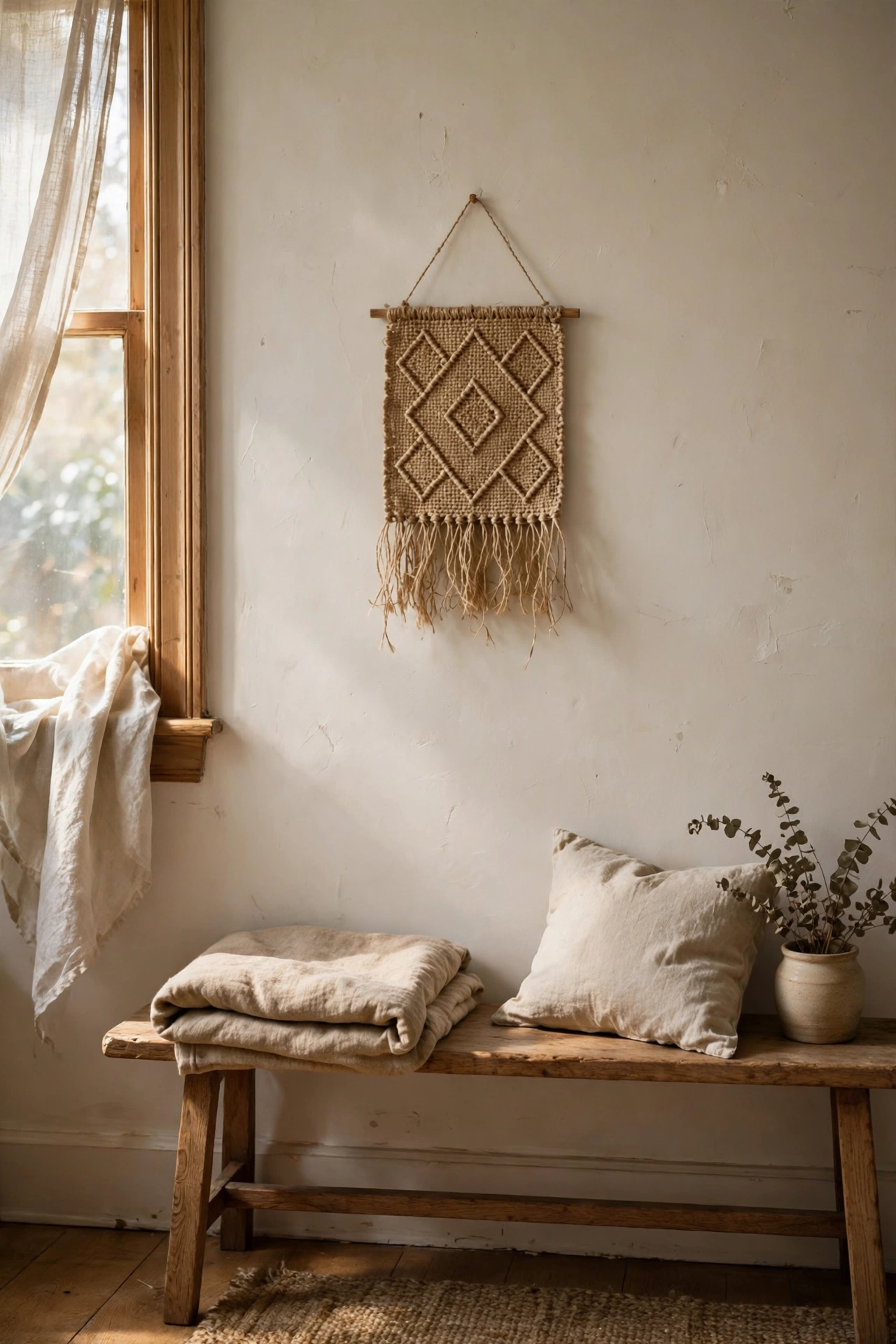
A simple woven wall hanging adds texture without noise on a Japandi wall. I bought a small handwoven jute piece for $19, hung it on a single nail with no frame, and let the fringes hang loose. Keep it small, because oversized textile art overwhelms a calm room. I measured twice and still went bigger than I should have the first time. The smaller replacement sits over the bench and the wall finally breathes. One textile, natural fibre, no pattern shouting. It softens the room the way a rug softens the floor, and it took five minutes.
Cost: ~$15-25 | Time: 10 minutes
Quick questions, answered
Is a Japandi bedroom expensive to create?
Not really. The style is built on restraint, so you buy less, not more. Most of the ideas above cost under $40, and several are free. The expensive part of bedroom decor is usually excess furniture and matching sets, which Japandi skips entirely.
What is the difference between Japandi and plain minimalism?
Minimalism can feel cold and empty; Japandi adds Japanese warmth, natural materials, and wabi-sabi imperfection. Think low wood, linen, stone, and one handmade object instead of bare white boxes.
How do I keep a Japandi bedroom from feeling cold?
Layer natural textures: linen bedding, a woven rug, warm-white lighting, and wood tones. Cool grey and bare surfaces make it chilly; warm neutrals and soft fibres make it cosy.
Where does all the clutter go in a Japandi bedroom?
Into closed storage that looks like decor. Bamboo boxes, lidded baskets, and wardrobe space handle everything. The surfaces stay clear because every item has a home out of sight.
📌 Save this one so you can save this idea for your Japandi bedroom mood board later!
If calm, simple rooms are your thing, read these next: (see also: 25-japandi-living-room-ideas-on-a-budget) (see also: 21-minimalist-living-room-ideas-on-a-budget) (see also: 21-thrifted-bedroom-decor-that-look-designer)
