15 Bookshelf Organization Ideas That Look Styled
Bookshelf organization ideas that look styled are less about buying decor and more about editing what is already there. A shelf looks styled when books have breathing room, heavy items sit low, and one or two objects get space to stand out instead of competing with twenty others.
1. Sort Books by Colour for a Calm Look
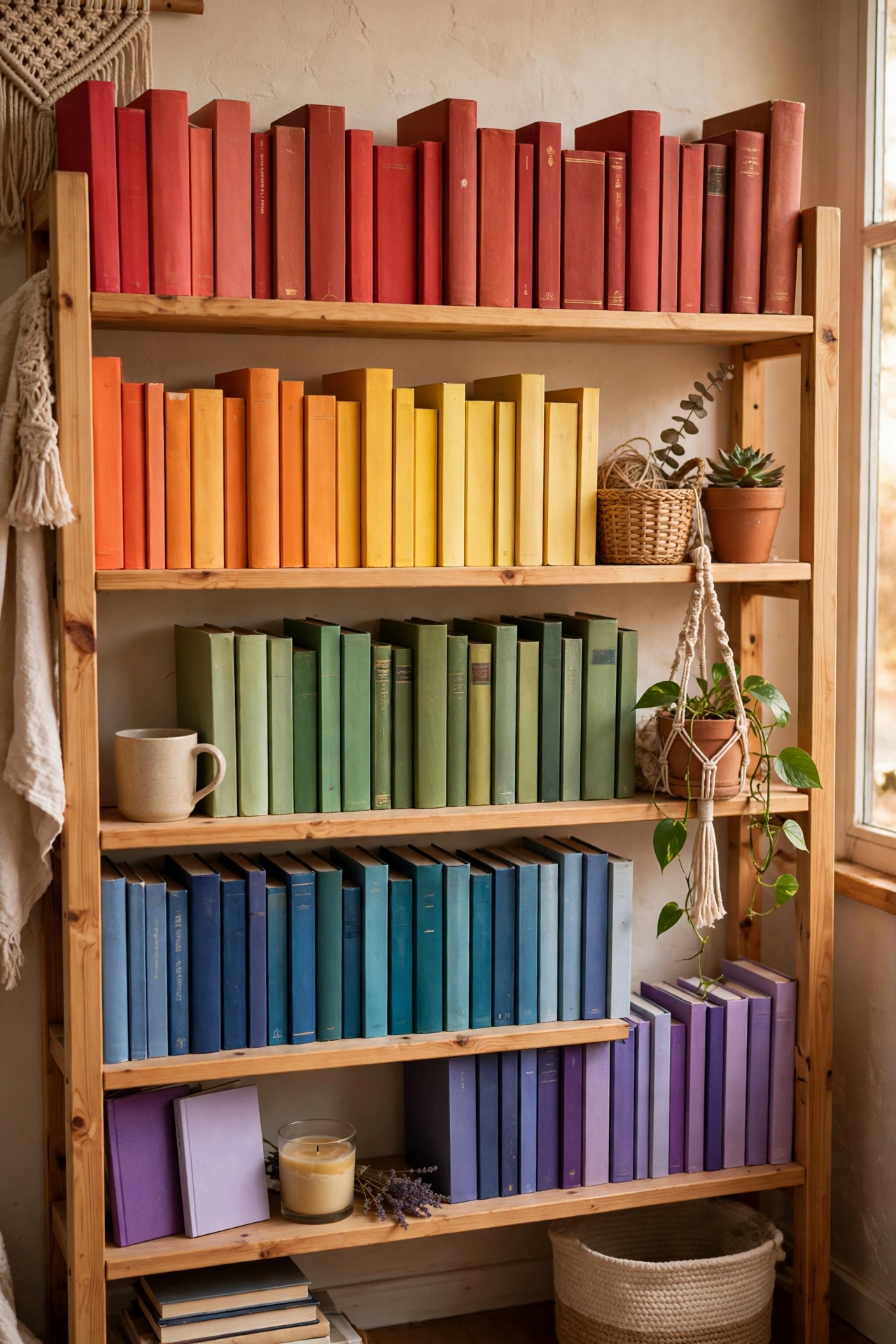
Sort Books by Colour for a Calm Look is one of those small changes that pays off every single day, because colour sorting turns a busy shelf into a calm rainbow gradient. Start by pulling all books off one shelf, then sorting them into colour piles, and finish by placing piles back in gradient order. Keep author sets together within a colour, since splitting a series looks odd. I tried this on a Saturday morning and it stuck, because I could see the result every time I opened the cupboard. One mistake to avoid is filling every container to the brim, because an overfull bin is just as hard to use as a messy shelf.
Cost: ~$0 | Time: 30 minutes
2. Leave Breathing Room on Every Shelf
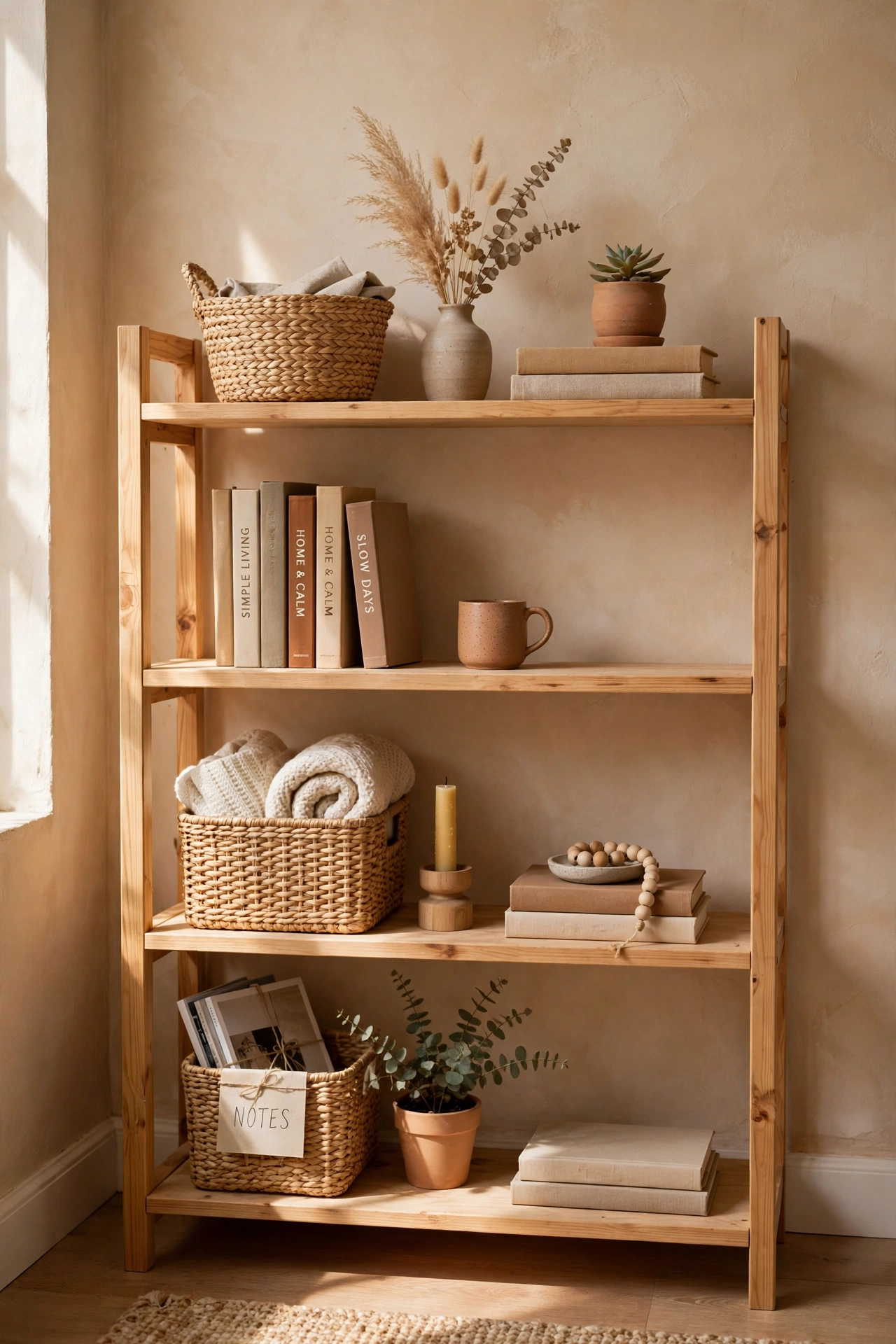
Leave Breathing Room on Every Shelf is one of those small changes that pays off every single day, because empty space on a shelf makes the books beside it look intentional. Start by removing one or two books per shelf, then leaving a hand-width gap somewhere, and finish by resisting the urge to refill it. Use gaps for a small object, since a gap with nothing can look unfinished. I tried this after one too many mornings hunting for the right thing, and the difference the next week was obvious. One mistake to avoid is organizing around things you no longer use, because clearing first always saves more room than any container.
Cost: ~$0 | Time: 15 minutes
3. Stack Books Horizontally as Bookends
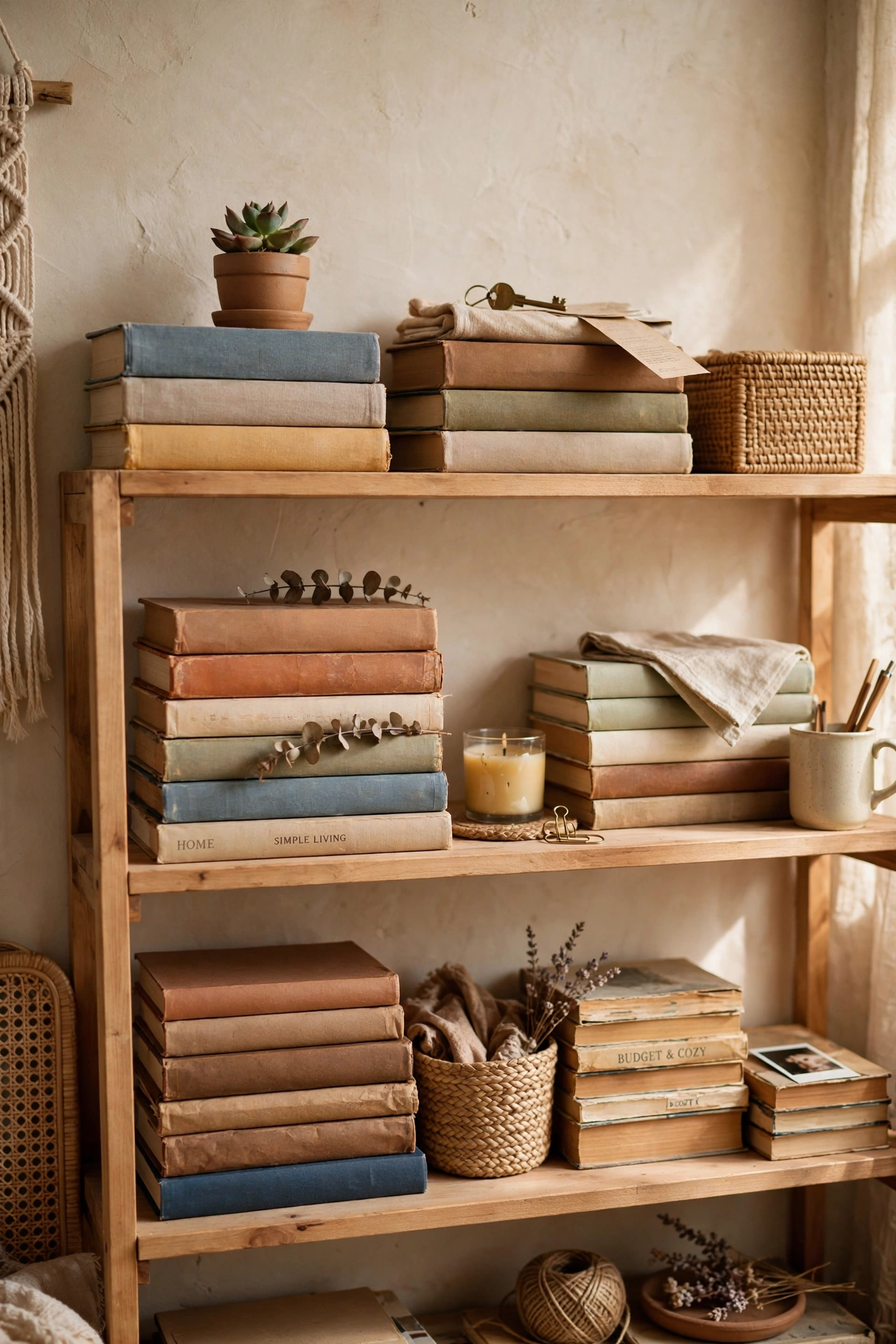
Stack Books Horizontally as Bookends is one of those small changes that pays off every single day, because horizontal stacks break up vertical rows and create display surfaces. Start by choosing three or four books to stack flat, then placing the stack at a row end, and finish by topping it with a small object. Keep stacks to four books, since taller stacks topple. I tried this in my own home first, and my family noticed the change before I even mentioned it. One mistake to avoid is doing the whole room in one exhausting session, because a tired tidy rarely lasts past the weekend.
Cost: ~$0 | Time: 10 minutes
4. Mix in a Small Plant on Each Level
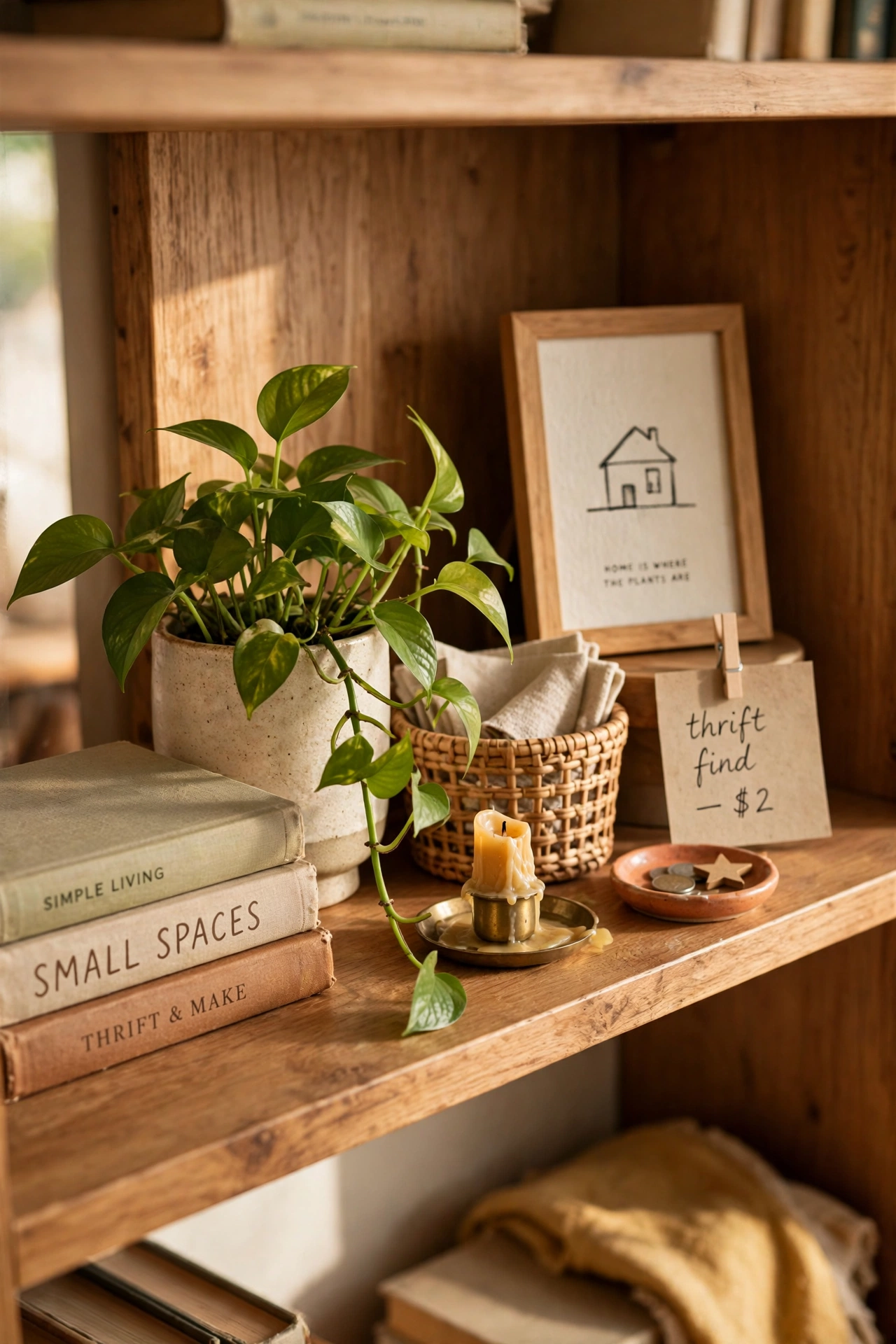
Mix in a Small Plant on Each Level is one of those small changes that pays off every single day, because a small plant softens shelves and adds life between books. Start by choosing trailing or small potted plants, then placing one plant per level, and finish by watering plants in place with a small jug. Choose low-light plants for dark shelves, since sun-lovers fade fast indoors. I tried this with supplies I already had, and it worked well enough that I never bothered buying a fancier version. One mistake to avoid is filling every container to the brim, because an overfull bin is just as hard to use as a messy shelf.
Cost: ~$8 | Time: 15 minutes
5. Group Books by Size, Tallest at the Ends
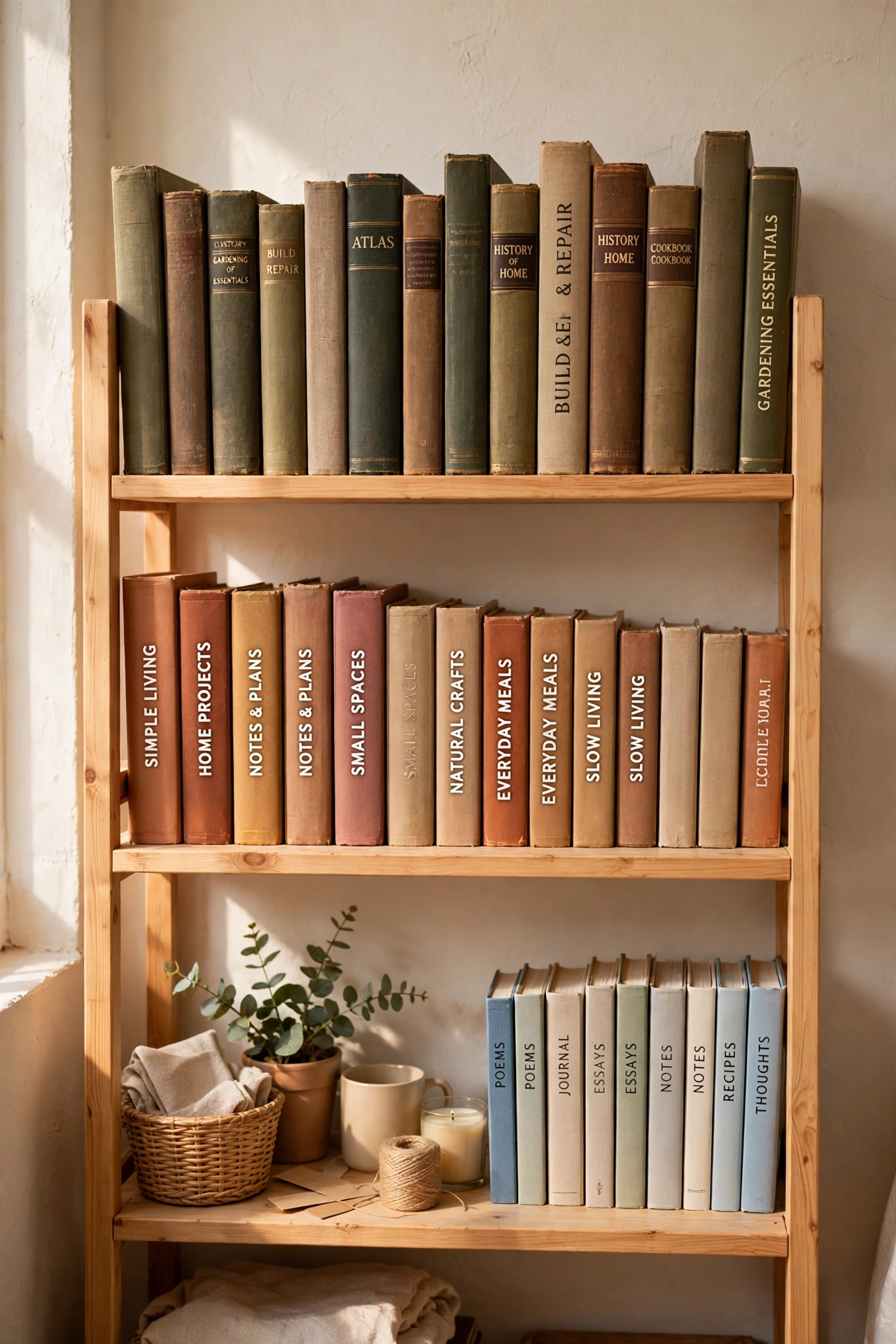
Group Books by Size, Tallest at the Ends is one of those small changes that pays off every single day, because size grouping gives shelves a tidy, stepped silhouette. Start by sorting books by height, then placing tallest books at shelf ends, and finish by filling the middle with shorter books. Keep paperbacks together, since mixed sizes in one row look ragged. I tried this while tidying one small area at a time, and finishing that one spot kept me going through the rest. One mistake to avoid is organizing around things you no longer use, because clearing first always saves more room than any container.
Cost: ~$0 | Time: 25 minutes
(see also: 15-bookshelf-organization-ideas-that-look-styled)
6. Add a Framed Photo Between Book Groups
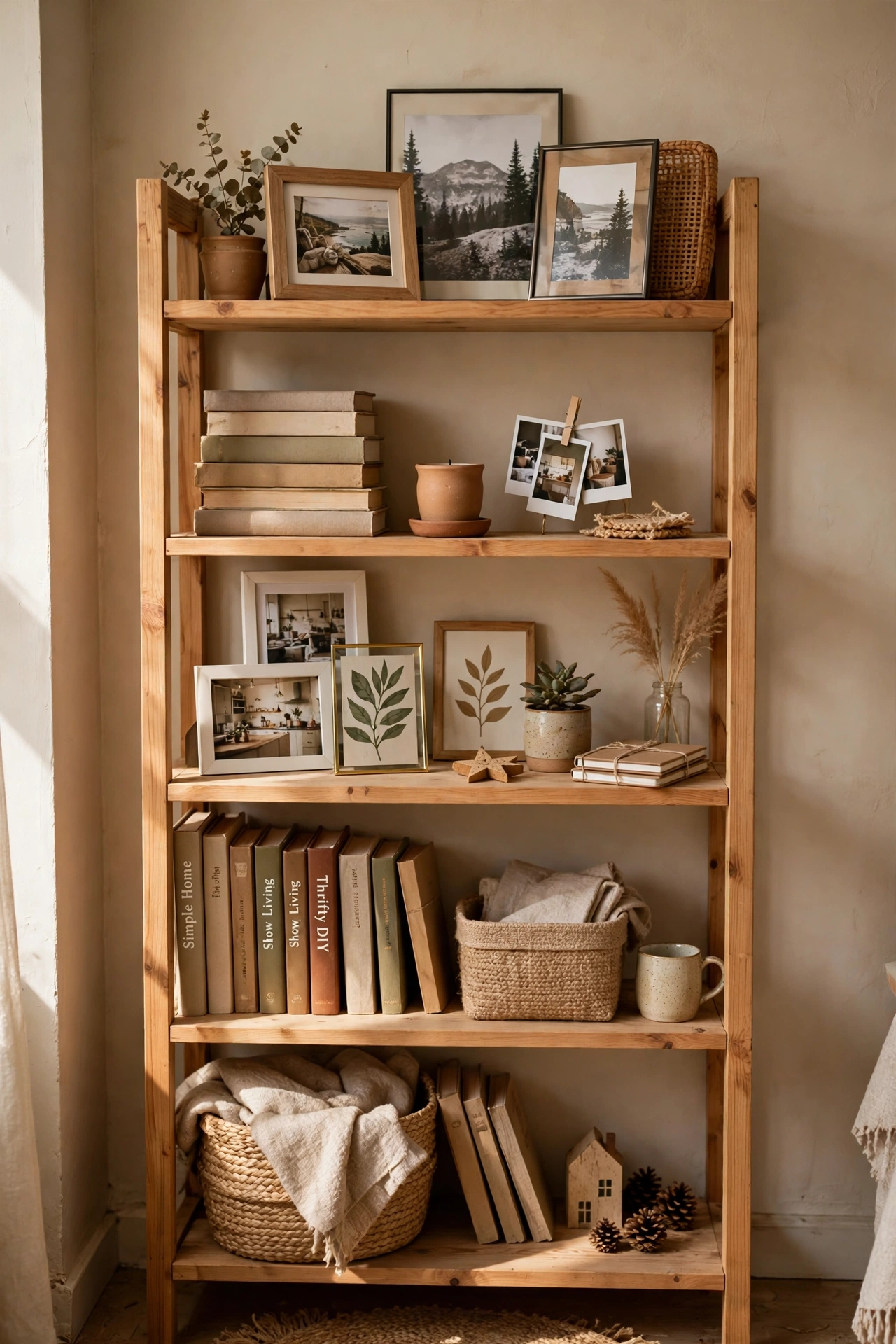
Add a Framed Photo Between Book Groups is one of those small changes that pays off every single day, because a framed photo personalises shelves without cluttering them. Start by choosing one small frame per shelf, then placing it between book groups, and finish by leaning it slightly against books. Use matching frames across shelves, since mixed frames compete with books. I tried this after a friend showed me her version, and I have kept it in place ever since because it is so easy to maintain. One mistake to avoid is doing the whole room in one exhausting session, because a tired tidy rarely lasts past the weekend.
Cost: ~$5 | Time: 10 minutes
7. Use Matching Baskets for Loose Items
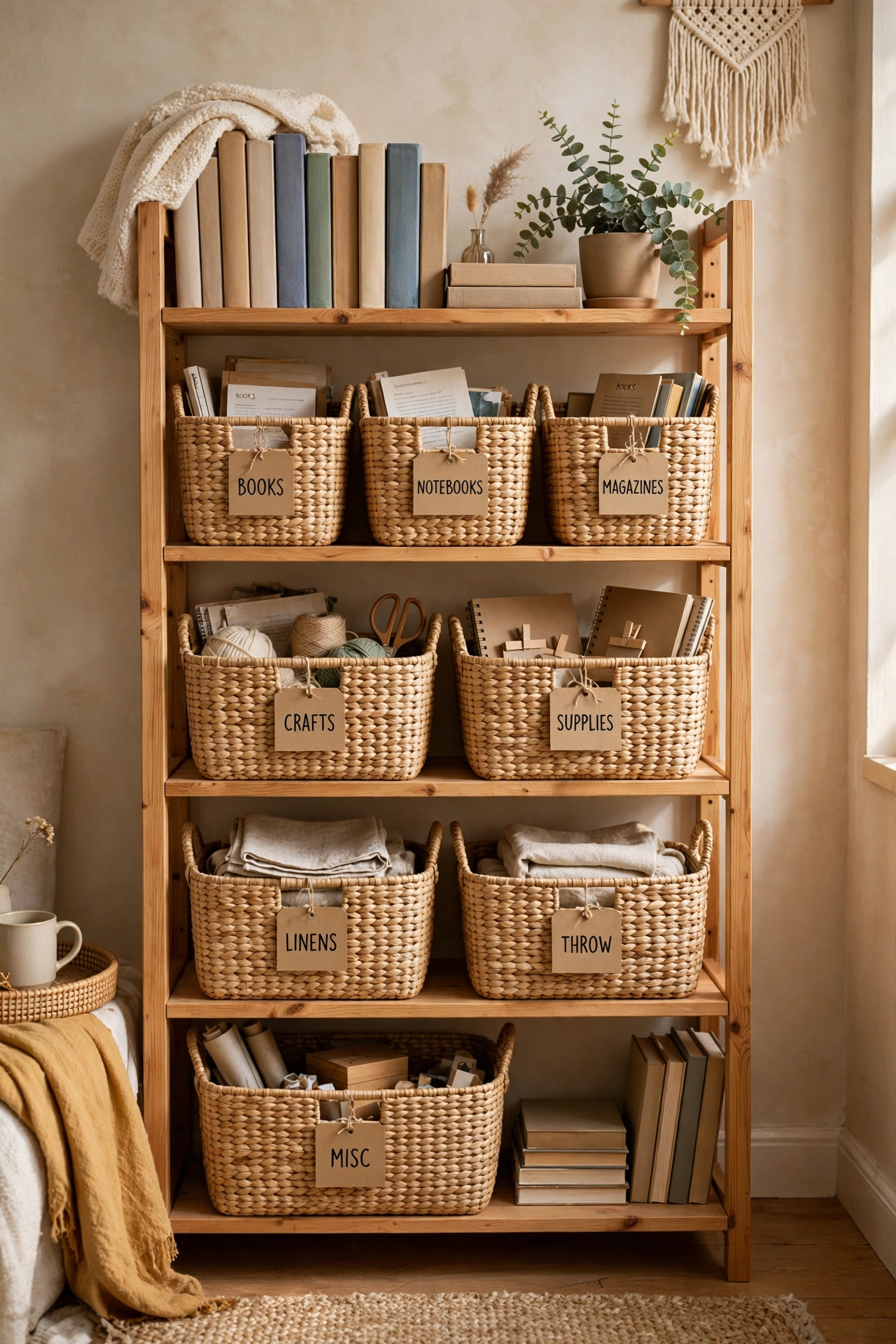
Use Matching Baskets for Loose Items is one of those small changes that pays off every single day, because matching baskets hide loose items and keep shelves calm. Start by choosing baskets that fit your shelf height, then labelling baskets discreetly, and finish by placing them on lower shelves. Keep baskets to one colour family, since mixed baskets look busy. I tried this on a Saturday morning and it stuck, because I could see the result every time I opened the cupboard. One mistake to avoid is filling every container to the brim, because an overfull bin is just as hard to use as a messy shelf.
Cost: ~$12 | Time: 20 minutes
8. Style One Shelf with a Single Vase
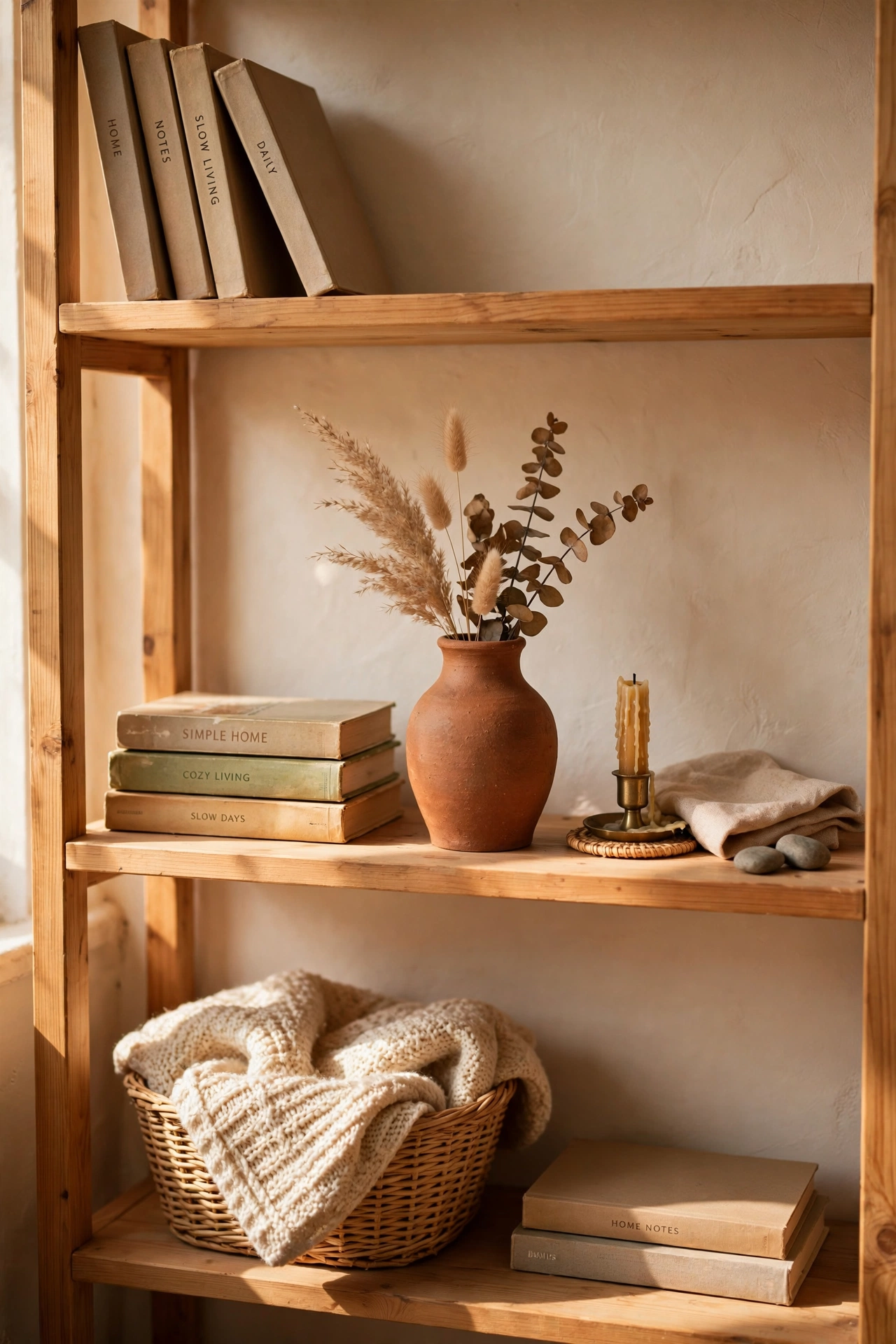
Style One Shelf with a Single Vase is one of those small changes that pays off every single day, because one vase on one shelf makes a quiet focal point. Start by choosing a vase taller than nearby books, then placing it alone on a shelf, and finish by adding one stem or leaving it empty. Do not add more objects to that shelf, since one vase works by being alone. I tried this after one too many mornings hunting for the right thing, and the difference the next week was obvious. One mistake to avoid is organizing around things you no longer use, because clearing first always saves more room than any container.
Cost: ~$6 | Time: 5 minutes
9. Face a Few Favourite Covers Outward
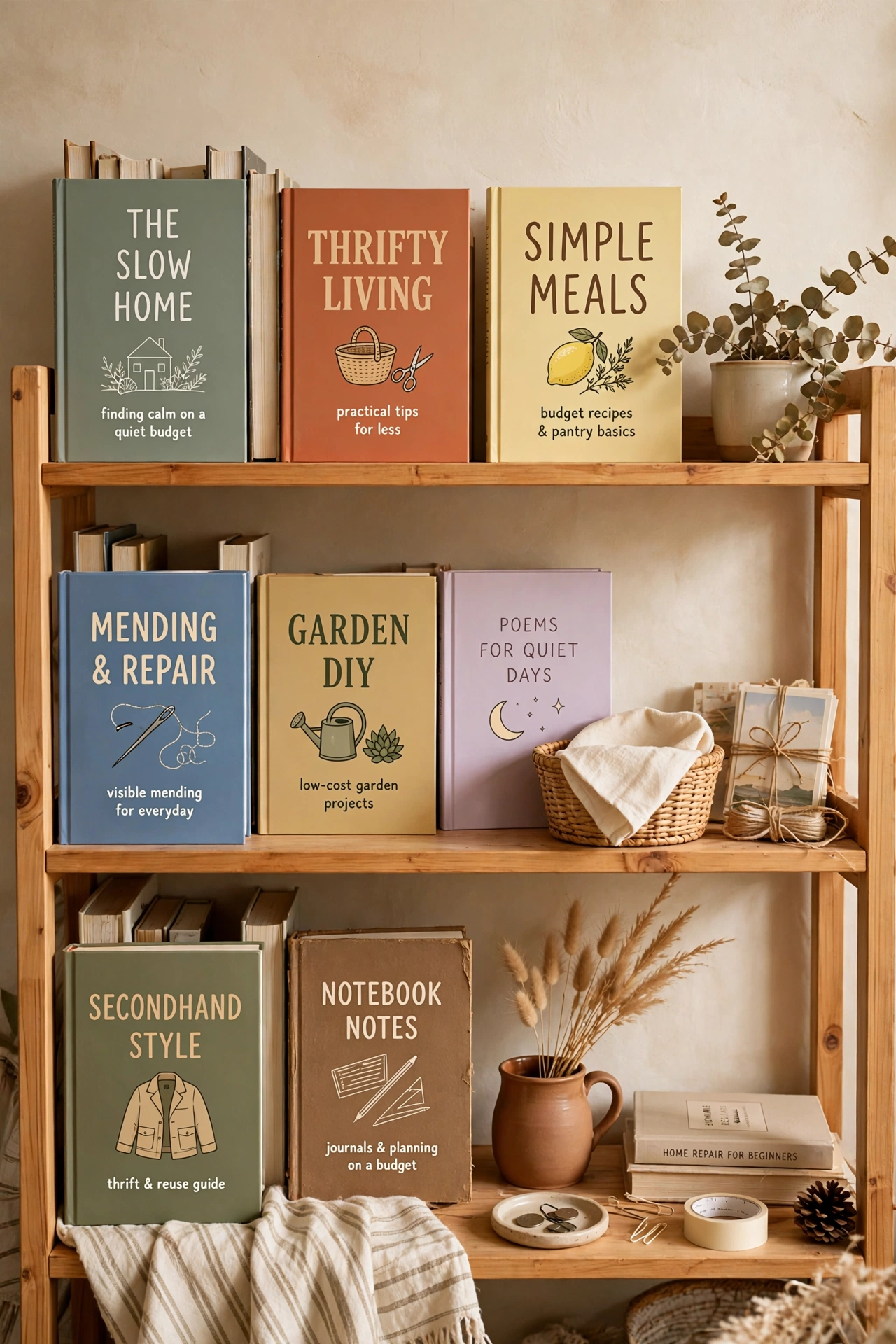
Face a Few Favourite Covers Outward is one of those small changes that pays off every single day, because facing favourite covers outward turns books into art. Start by choosing two or three beautiful covers, then facing them out at eye level, and finish by rotating favourites seasonally. Keep faced-out books to a few, since a whole shelf faced out looks like a shop. I tried this in my own home first, and my family noticed the change before I even mentioned it. One mistake to avoid is doing the whole room in one exhausting session, because a tired tidy rarely lasts past the weekend.
Cost: ~$0 | Time: 10 minutes
10. Add Small Art Prints Leaning on Shelves
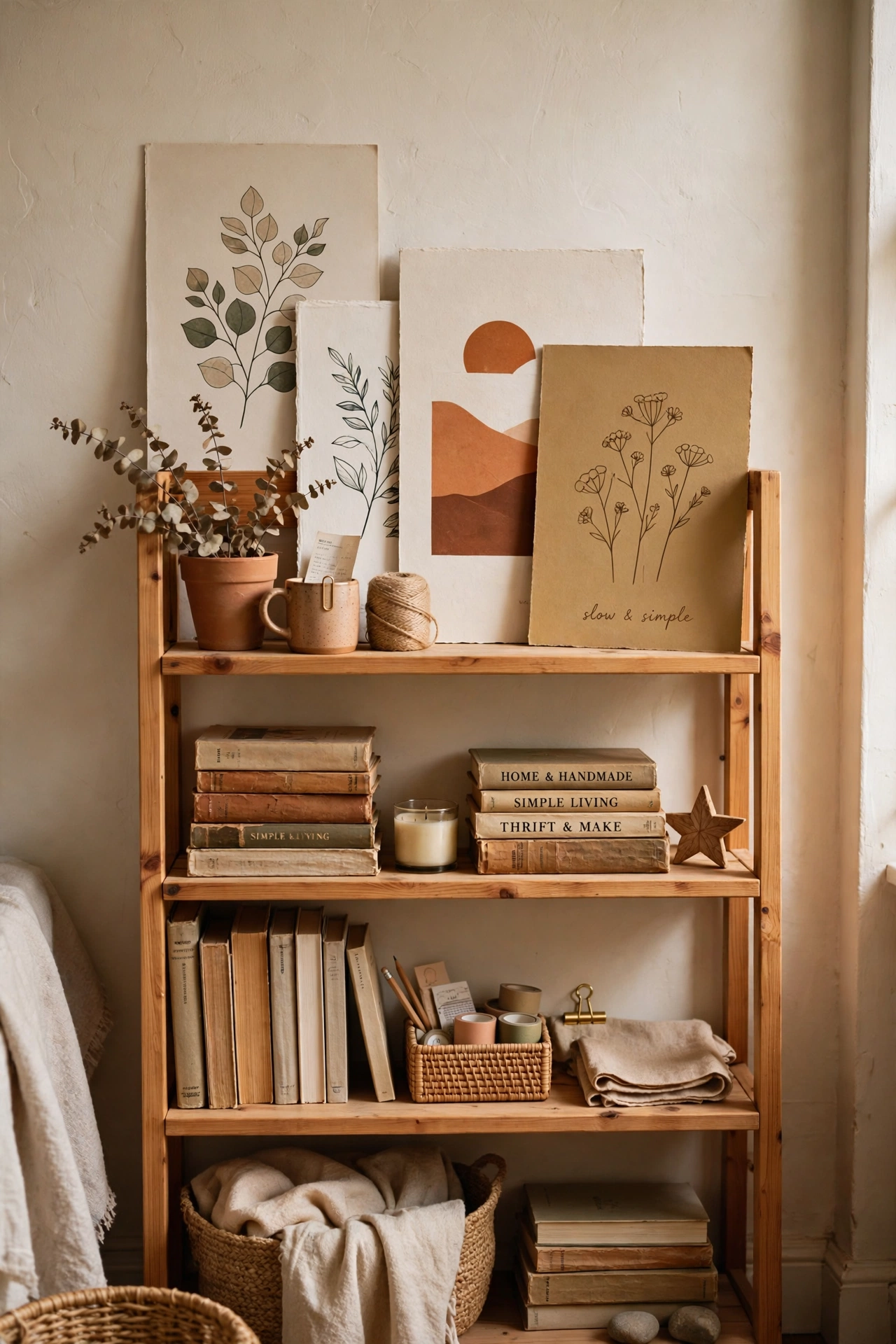
Add Small Art Prints Leaning on Shelves is one of those small changes that pays off every single day, because leaning prints add art without hanging anything. Start by choosing small prints in simple frames, then leaning them against the shelf back, and finish by placing books beside them as anchors. Secure leaning prints with putty, since a falling frame chips easily. I tried this with supplies I already had, and it worked well enough that I never bothered buying a fancier version. One mistake to avoid is filling every container to the brim, because an overfull bin is just as hard to use as a messy shelf.
Cost: ~$7 | Time: 15 minutes
(see also: 19-living-room-organization-ideas-on-a-dime)
11. Keep Heavy Books Low for Balance
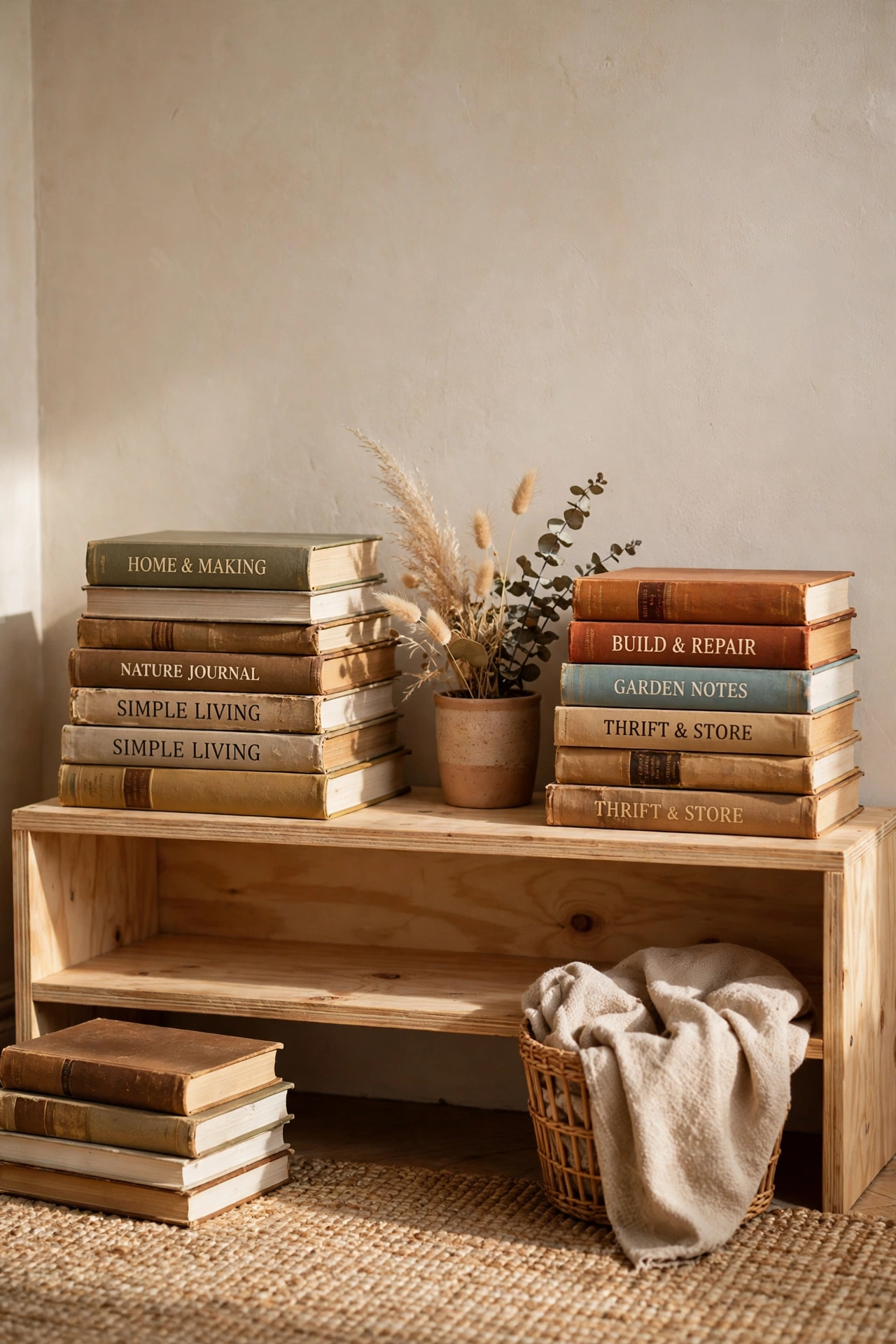
Keep Heavy Books Low for Balance is one of those small changes that pays off every single day, because heavy books low keep shelves stable and looking grounded. Start by moving large art books to lower shelves, then placing lighter paperbacks up high, and finish by checking shelf brackets after moving. Do not overload any shelf, since sagging shelves ruin the whole look. I tried this while tidying one small area at a time, and finishing that one spot kept me going through the rest. One mistake to avoid is organizing around things you no longer use, because clearing first always saves more room than any container.
Cost: ~$0 | Time: 20 minutes
12. Use Bookends That Double as Decor
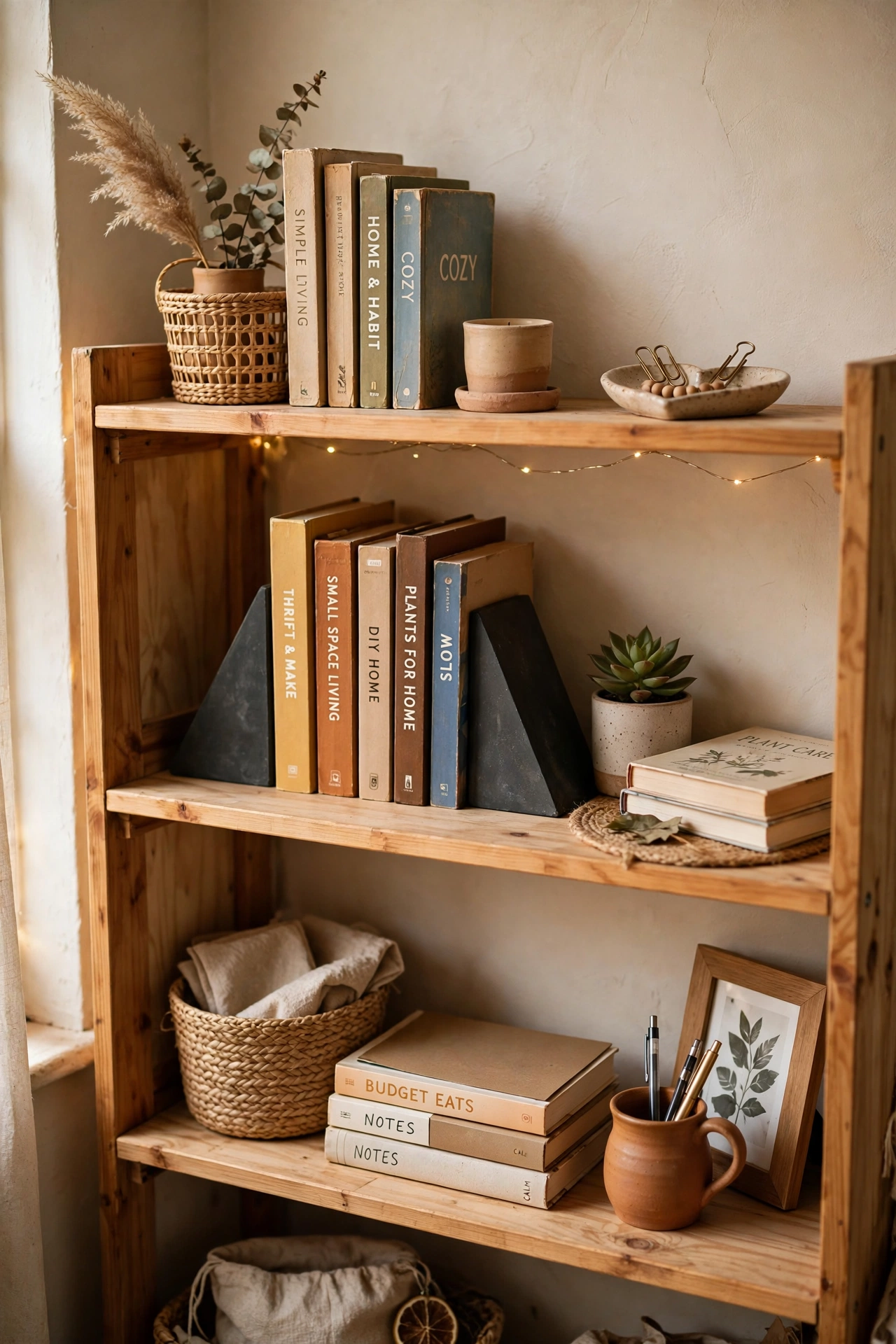
Use Bookends That Double as Decor is one of those small changes that pays off every single day, because bookends that look good hold books up and decorate at once. Start by choosing bookends in a material you love, then placing them at row ends, and finish by matching them loosely across shelves. Choose heavy bookends, since light ones slide under book weight. I tried this after a friend showed me her version, and I have kept it in place ever since because it is so easy to maintain. One mistake to avoid is doing the whole room in one exhausting session, because a tired tidy rarely lasts past the weekend.
Cost: ~$10 | Time: 10 minutes
13. Rotate Seasonal Objects on the Top Shelf
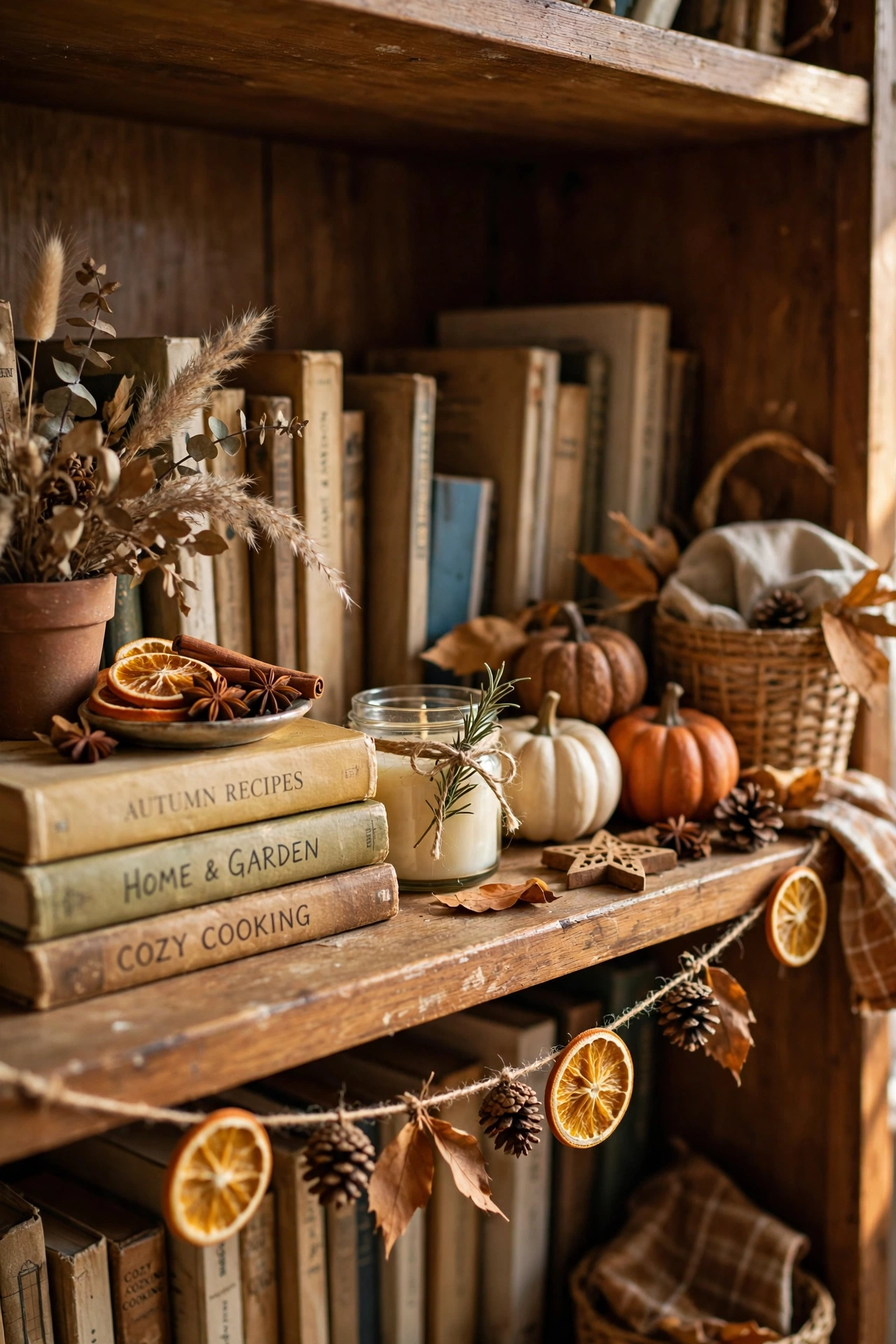
Rotate Seasonal Objects on the Top Shelf is one of those small changes that pays off every single day, because seasonal objects on top keep shelves feeling fresh all year. Start by choosing one seasonal object per season, then placing it on the top shelf, and finish by swapping it when the season changes. Store off-season objects together, since scattered seasonal decor gets lost. I tried this on a Saturday morning and it stuck, because I could see the result every time I opened the cupboard. One mistake to avoid is filling every container to the brim, because an overfull bin is just as hard to use as a messy shelf.
Cost: ~$4 | Time: 10 minutes
14. Hide Clutter in Closed Boxes on Lower Shelves
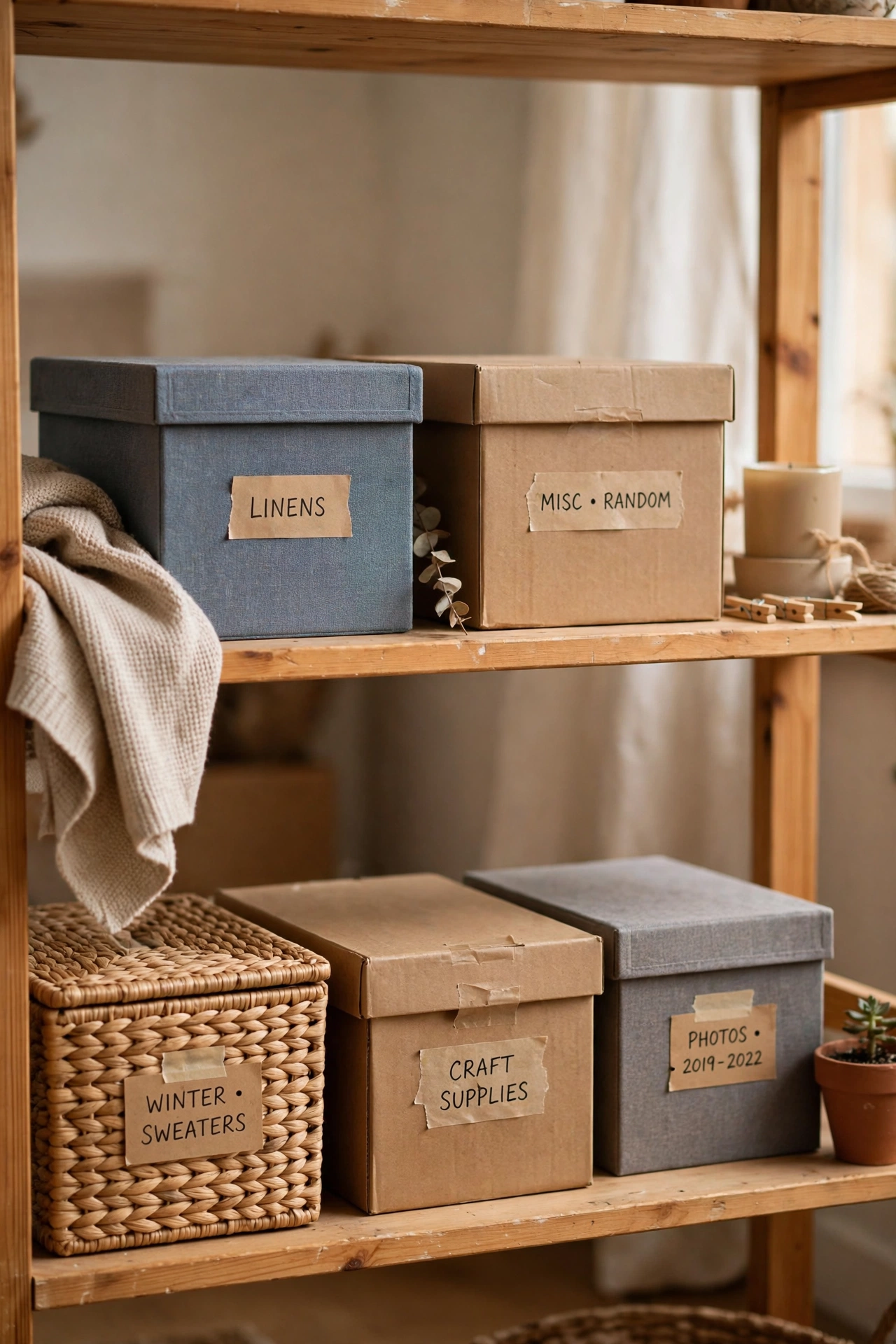
Hide Clutter in Closed Boxes on Lower Shelves is one of those small changes that pays off every single day, because closed boxes on lower shelves hide clutter where eyes rarely go. Start by choosing boxes that fit lower shelves, then sorting clutter into boxes, and finish by labelling boxes inside the lid. Keep lower boxes for rarely used items, since daily items belong higher. I tried this after one too many mornings hunting for the right thing, and the difference the next week was obvious. One mistake to avoid is organizing around things you no longer use, because clearing first always saves more room than any container.
Cost: ~$11 | Time: 25 minutes
15. Step Back and Edit One Item Per Shelf
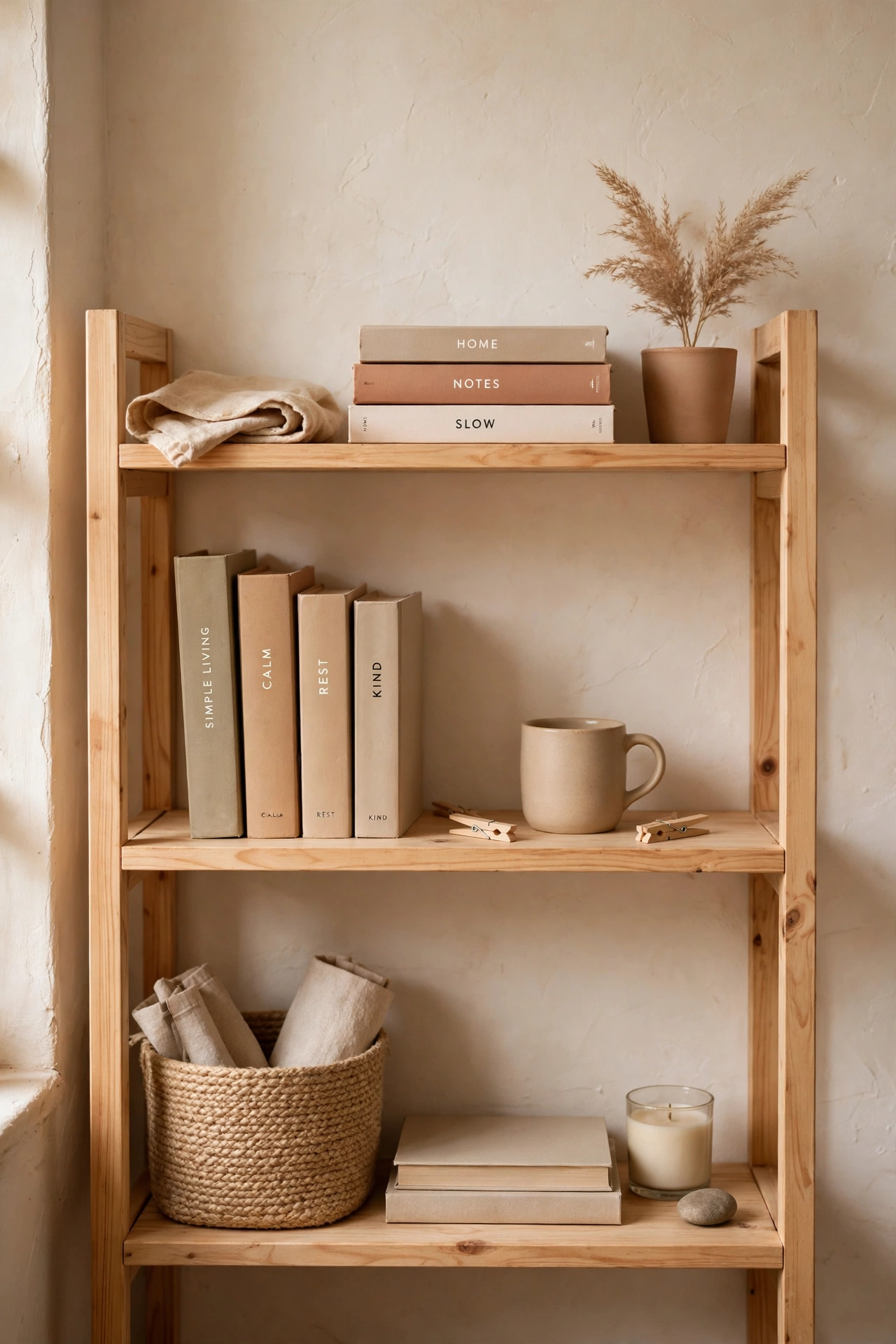
Step Back and Edit One Item Per Shelf is one of those small changes that pays off every single day, because stepping back and editing one item per shelf sharpens the whole look. Start by standing back from the shelf unit, then removing the weakest item per shelf, and finish by living with the edit for a week. Edit ruthlessly but slowly, since removing too much at once leaves shelves bare. I tried this in my own home first, and my family noticed the change before I even mentioned it. One mistake to avoid is doing the whole room in one exhausting session, because a tired tidy rarely lasts past the weekend.
Cost: ~$0 | Time: 15 minutes
The Styled-Shelf Formula
Try this on one shelf first: books grouped by size, one plant or vase, and a hand-width of empty space. If the shelf still looks busy, remove one item and step back again. The formula works because it gives your eyes somewhere to rest.
Save this idea for your next tidy-up weekend if a calmer, easier room is on your list, and pin the one change you will try first.
See also: more budget organization ideas and small-space storage ideas.
Start with the cheapest change on this list, live with it for a week, and only then buy the next organizer. Small, steady fixes beat a big shopping trip every time, and your room will stay easier to keep tidy because the system finally fits how you actually live in it.
