25 Cottagecore Living Room Ideas on a Budget
Cottagecore living room ideas are about one thing: making your home feel like the cozy cottage you wish you grew up in. I fell down this rabbit hole during a rainy weekend, and three thrift store trips later, my living room looked like a storybook — all for less than a hundred dollars total. The style is wonderfully budget-friendly by nature. It’s built on secondhand finds, handmade touches, dried flowers, and the kind of imperfection that money can’t buy.
These 25 cottagecore living room ideas on a budget will walk you through the whole look: thrifted wood, floral fabrics, lace curtains, dried botanicals, and cozy corners made for reading. Each idea has a real cost and time estimate, and most cost under fifteen dollars. Cottagecore isn’t about perfection. It’s about warmth, and warmth is free.
1. Thrifted Floral Armchair
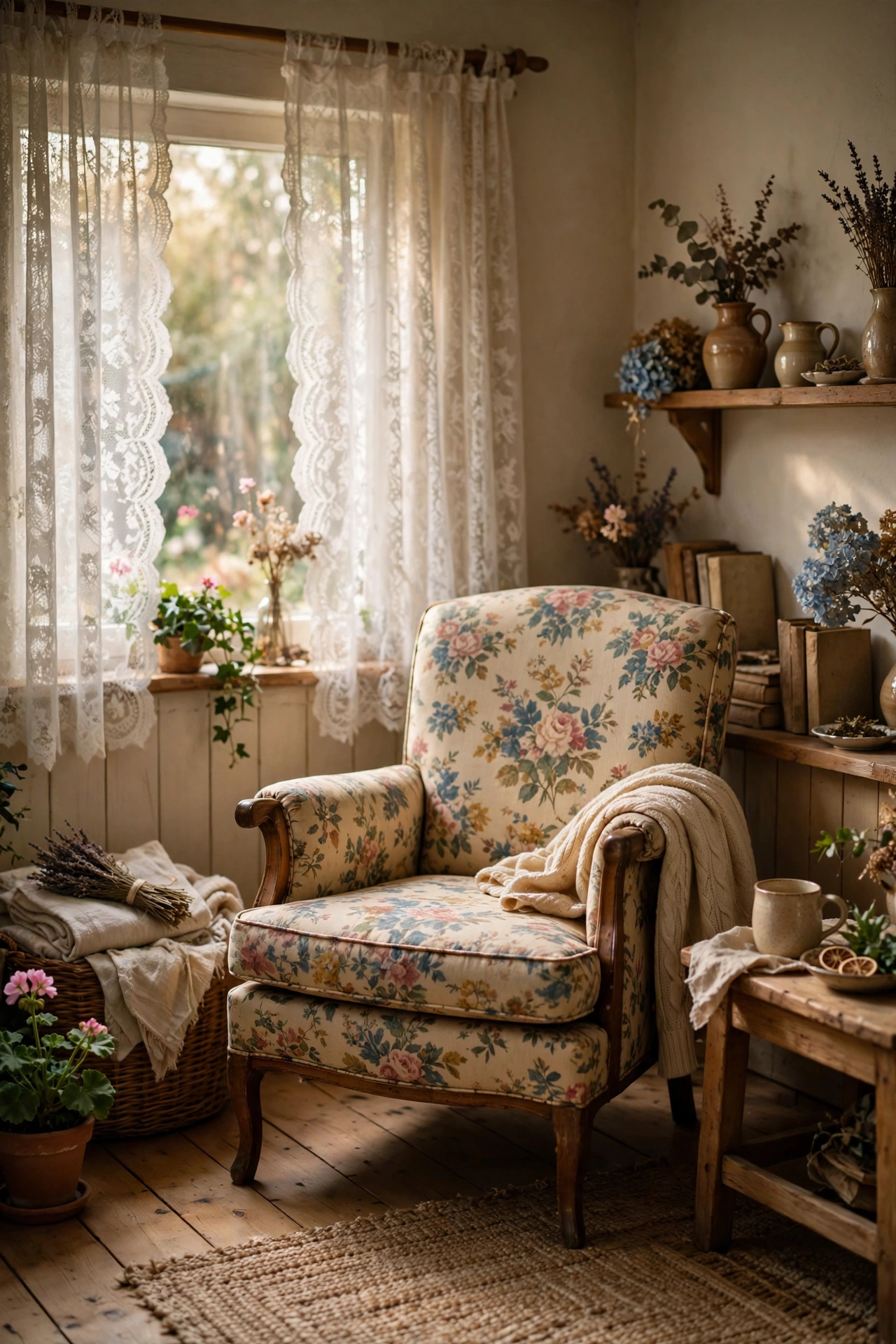
The cottagecore throne is a floral armchair, and thrift stores are full of them for twenty to forty dollars. Look for solid wood frames and decent springs — the fabric can be faded because faded is the aesthetic. I found a rose-print chair for twenty-five dollars, cleaned it with upholstery cleaner, and it’s now my favorite seat in the house. A floral chair doesn’t need to match anything; in cottagecore, it just needs to look loved. Sit in it before you buy. Comfort is non-negotiable.
Cost: ~$20–40 | Time: 1 hour shopping
2. Lace Curtain Panels
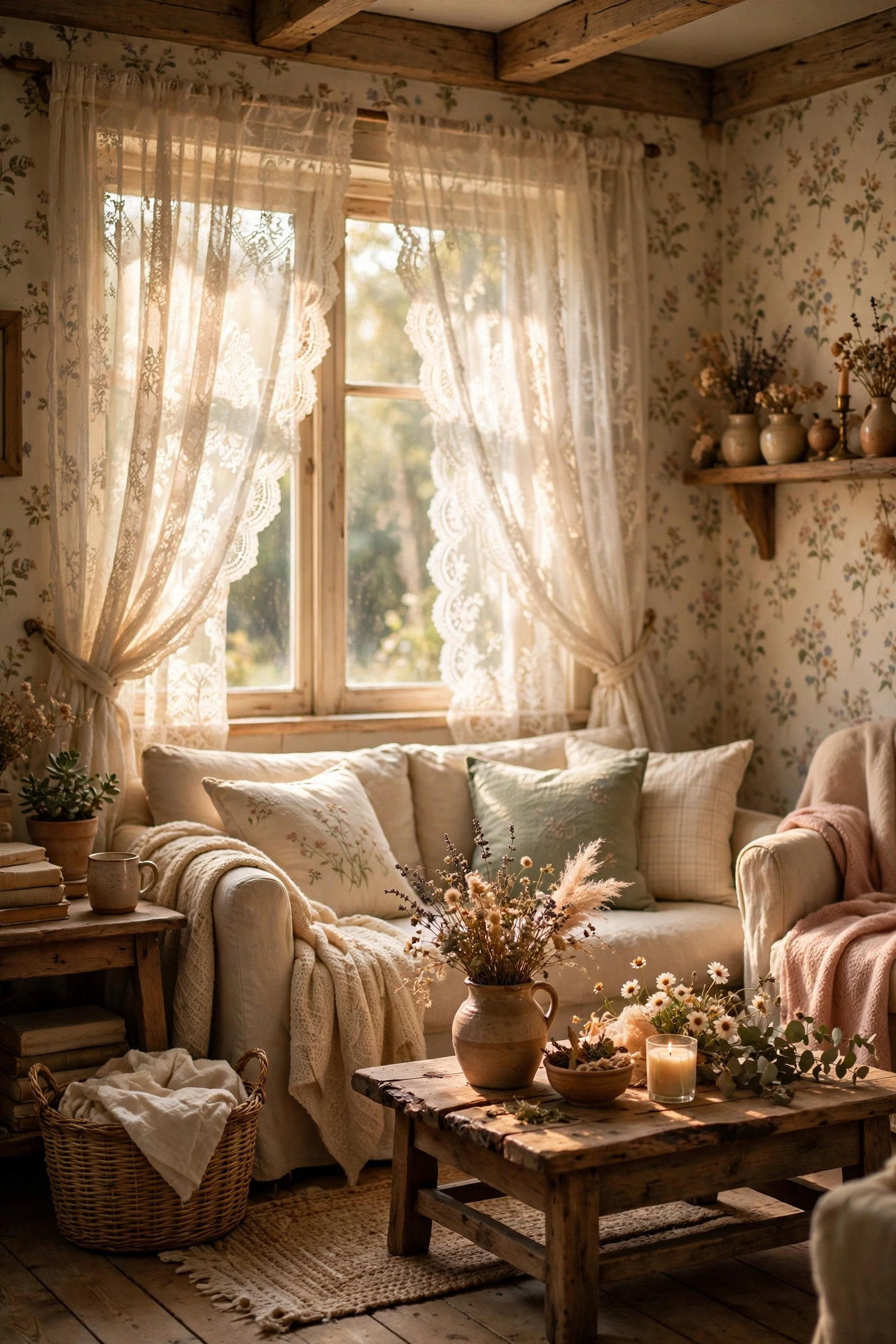
Lace or sheer curtains filter light into that dreamy, dappled glow cottagecore is famous for. Thrift stores sell lace panels for three to five dollars, or buy new for about fifteen. I hung thrifted lace panels in my living room and the afternoon light turned magical — all soft shadows and romance. Layer them over plain sheers for extra fullness. Don’t worry about perfect hems; lace is forgiving. My panels are three different lengths. Nobody has ever noticed.
Cost: ~$6–15 | Time: 30 minutes
3. Dried Flower Bouquets
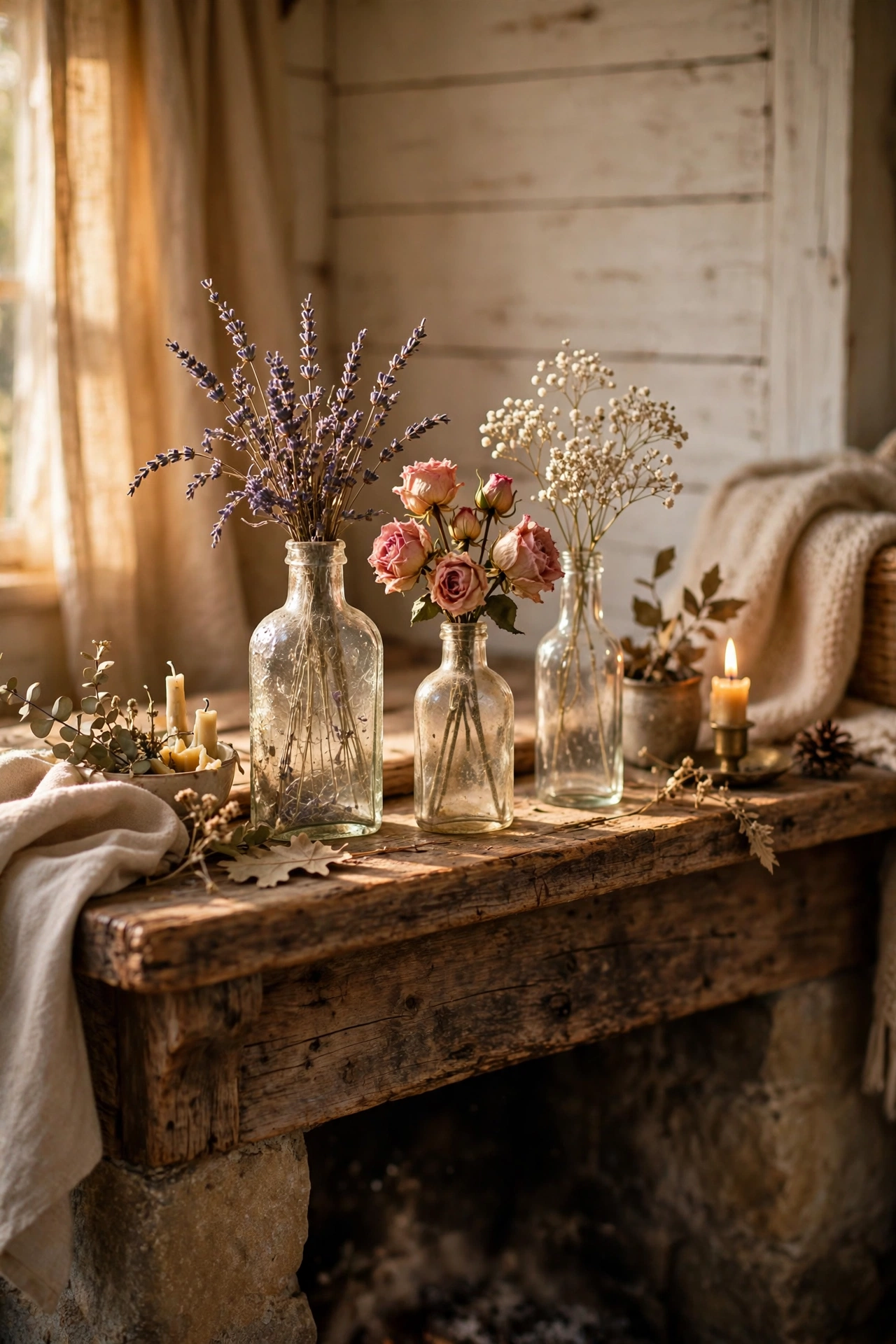
Dried lavender, baby’s breath, wheat, and roses in vintage vases are peak cottagecore — and they last for years. I dry my own garden flowers by hanging them upside down for two weeks, but craft store bundles run eight to twelve dollars. Arrange them loosely in thrifted glass bottles and pitchers. The slightly wild, imperfect look is exactly right. My mantel arrangement is three years old and still beautiful. Fresh flowers could never commit like this.
Cost: $0–12 | Time: 20 minutes
4. Quilt as a Throw
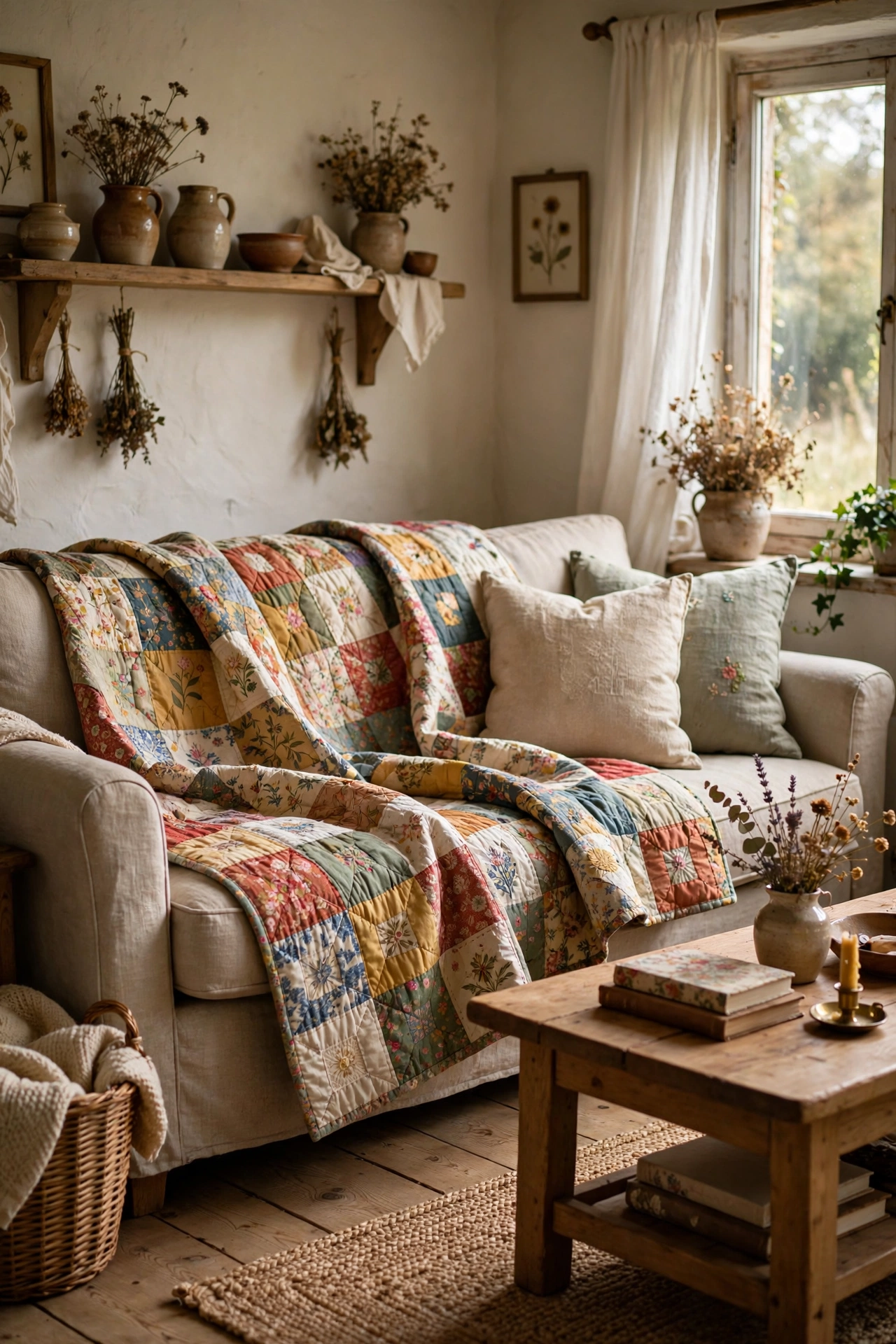
A quilt — real or quilt-look — draped over the sofa is cottagecore’s signature textile. Thrift stores sell handmade quilts for fifteen to thirty dollars, often made with more love than anything new. I found a grandmother-made quilt for twenty dollars and it’s the soul of my living room. Drape it over the sofa back or fold it at the foot of a chair. Even a new quilt-look throw from a discount store works. The patchwork pattern is what matters. Every square tells a story, real or imagined.
Cost: ~$15–30 | Time: 5 minutes
5. Vintage Book Nook
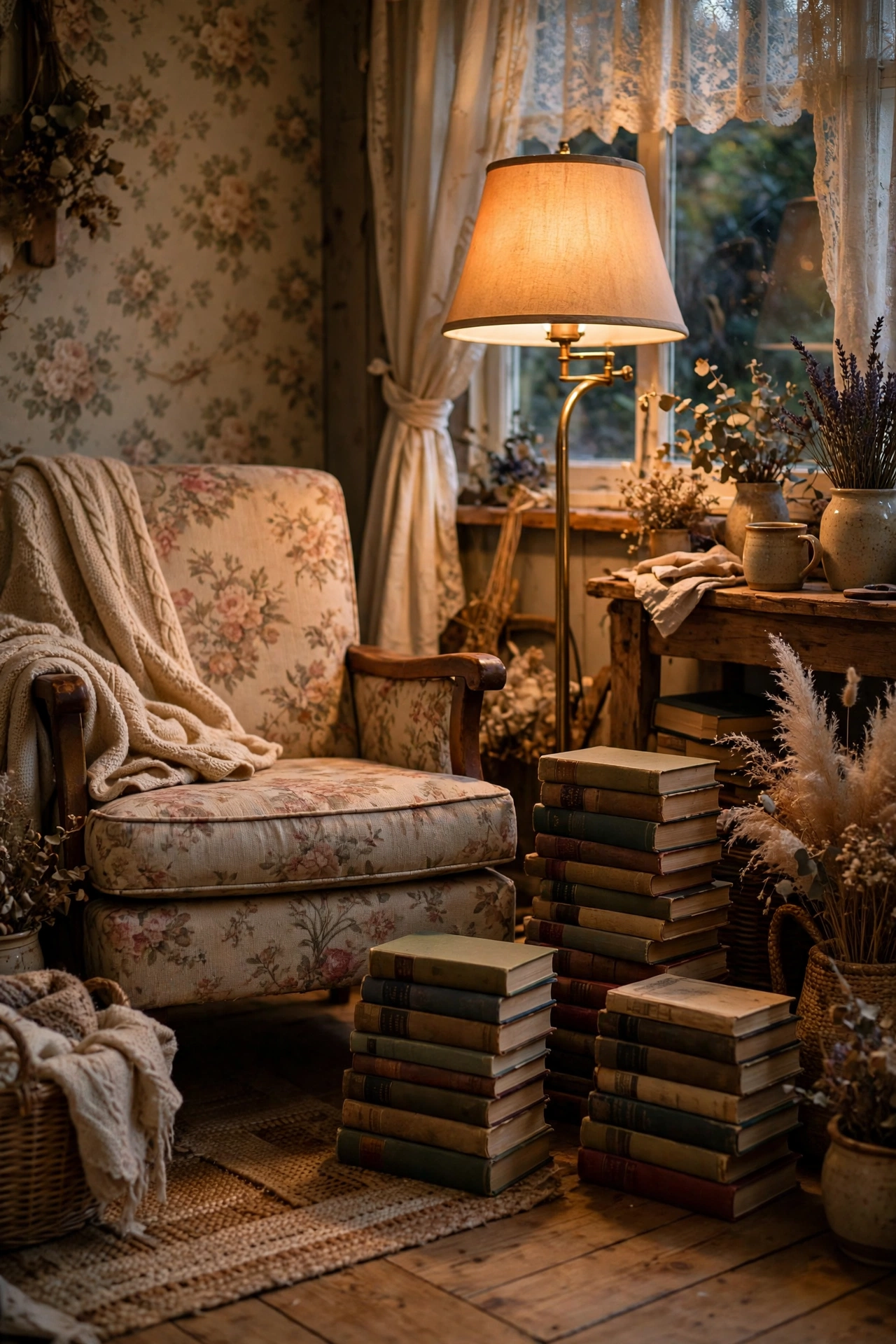
Stack vintage hardcovers on every surface — side tables, shelves, the floor beside your chair. Thrifted books cost a dollar each; look for cloth bindings in faded colors. I built a whole reading corner around a fifteen-dollar thrifted chair, a basket of books, and a floor lamp I owned. Tie a stack with twine for extra charm. A cottagecore living room should look like someone reads here. Because someone does. You, curled in that floral chair, obviously.
Cost: ~$10–20 | Time: 30 minutes
6. Gingham and Floral Pillow Mix
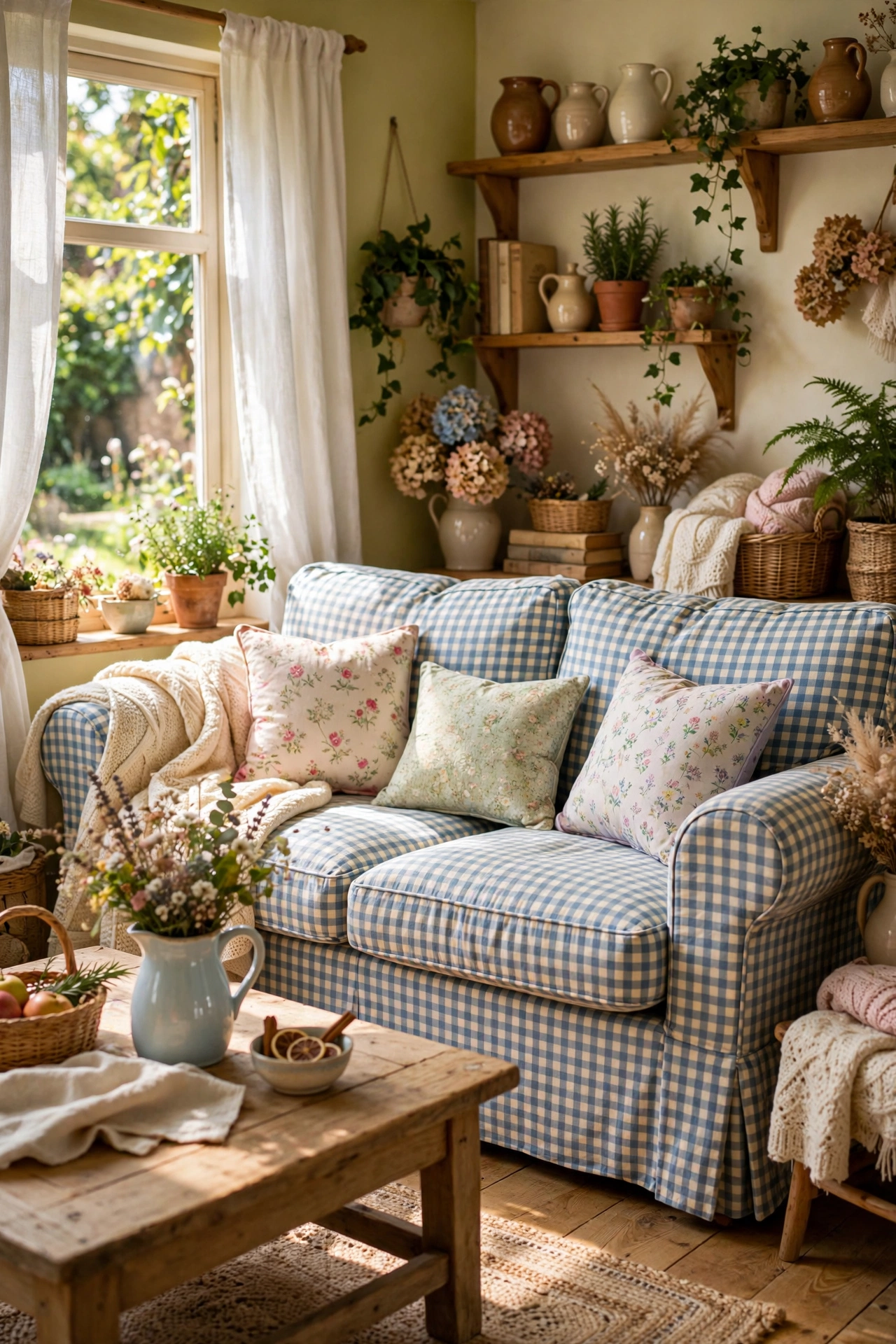
Mix gingham checks with small florals on your throw pillows — the pattern clash is the cottagecore signature. I bought four covers for sixteen dollars: two gingham, two floral, all in the same soft palette. The mix looks collected and cheerful instead of matchy. Keep the scale varied — big check, tiny floral — so the patterns don’t fight. My sofa looks like a picnic now, in the best way. Pattern mixing is a skill; cottagecore is the training ground.
Cost: ~$16 | Time: 10 minutes
7. Wicker Basket Collection
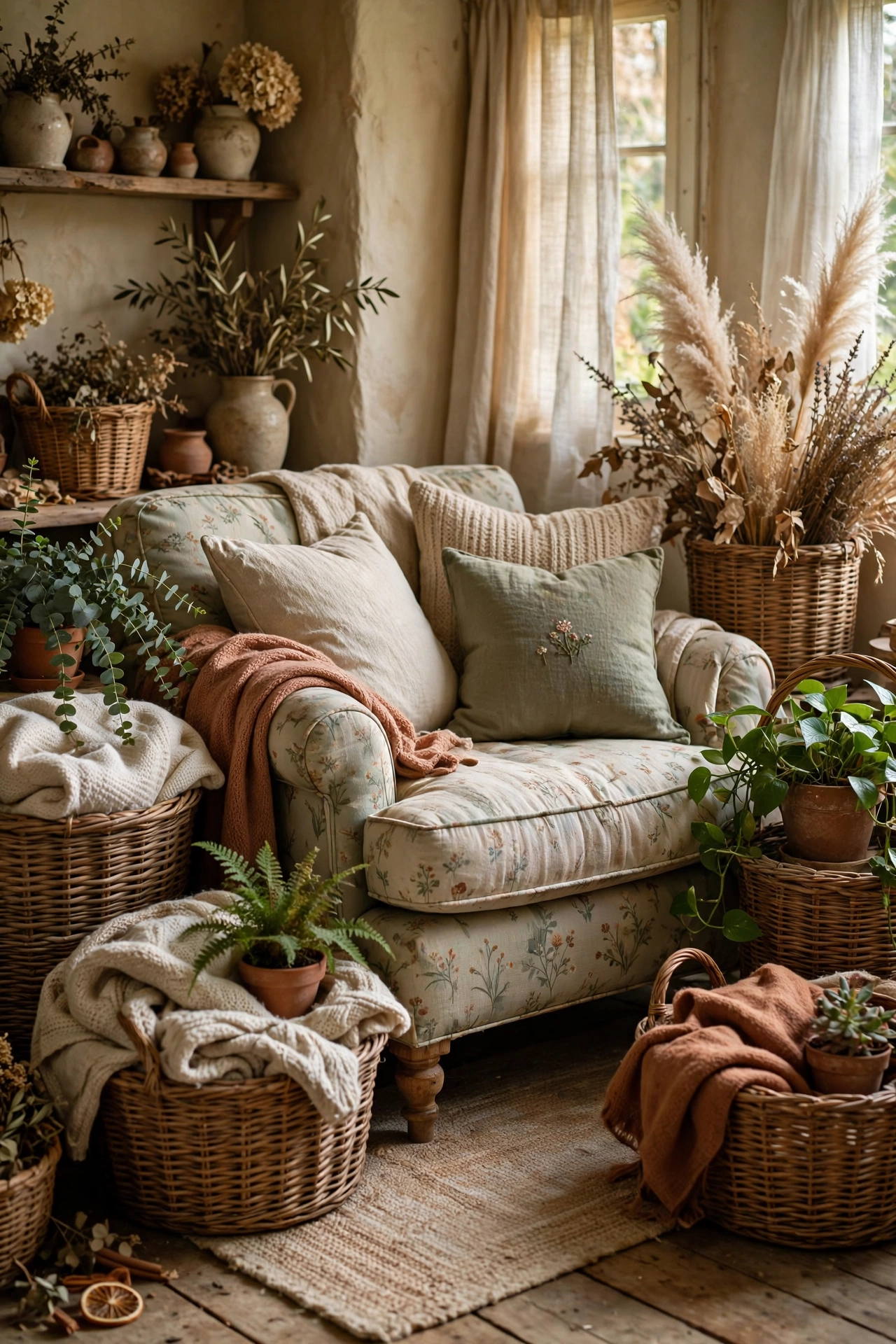
Wicker baskets hold everything in a cottagecore home — throws, magazines, plants, the general beautiful clutter of life. Thrift them for two to five dollars each; the more worn, the better. I have six scattered around my living room in various sizes. They add natural texture that the style depends on. Hang small ones on the wall, park big ones by the sofa. Wicker is cottagecore’s favorite material because it looks handmade even when it isn’t.
Cost: ~$10–20 | Time: 15 minutes
8. Botanical Print Gallery
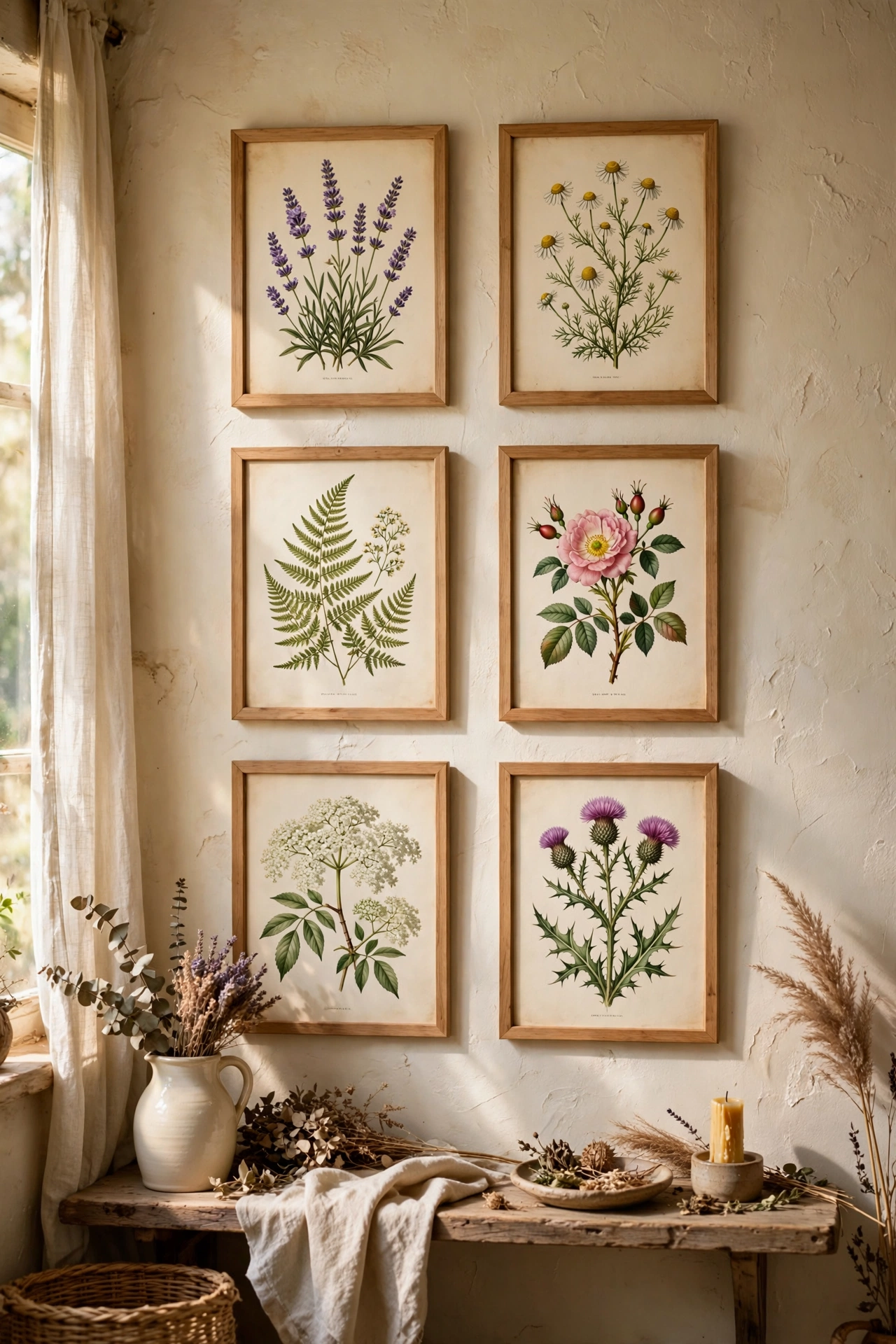
Frame vintage botanical prints — free printables online, printed for a few dollars — in thrifted wood frames. The scientific illustrations of flowers and herbs are quintessentially cottagecore. I printed six for eight dollars and hung them in a grid above my sideboard. They look like pages from an old naturalist’s journal. Group them tight and keep the frames simple wood. My wall looks like a museum exhibit. A very cozy, flower-filled museum.
Cost: ~$10–15 | Time: 1 hour
9. Doily Details
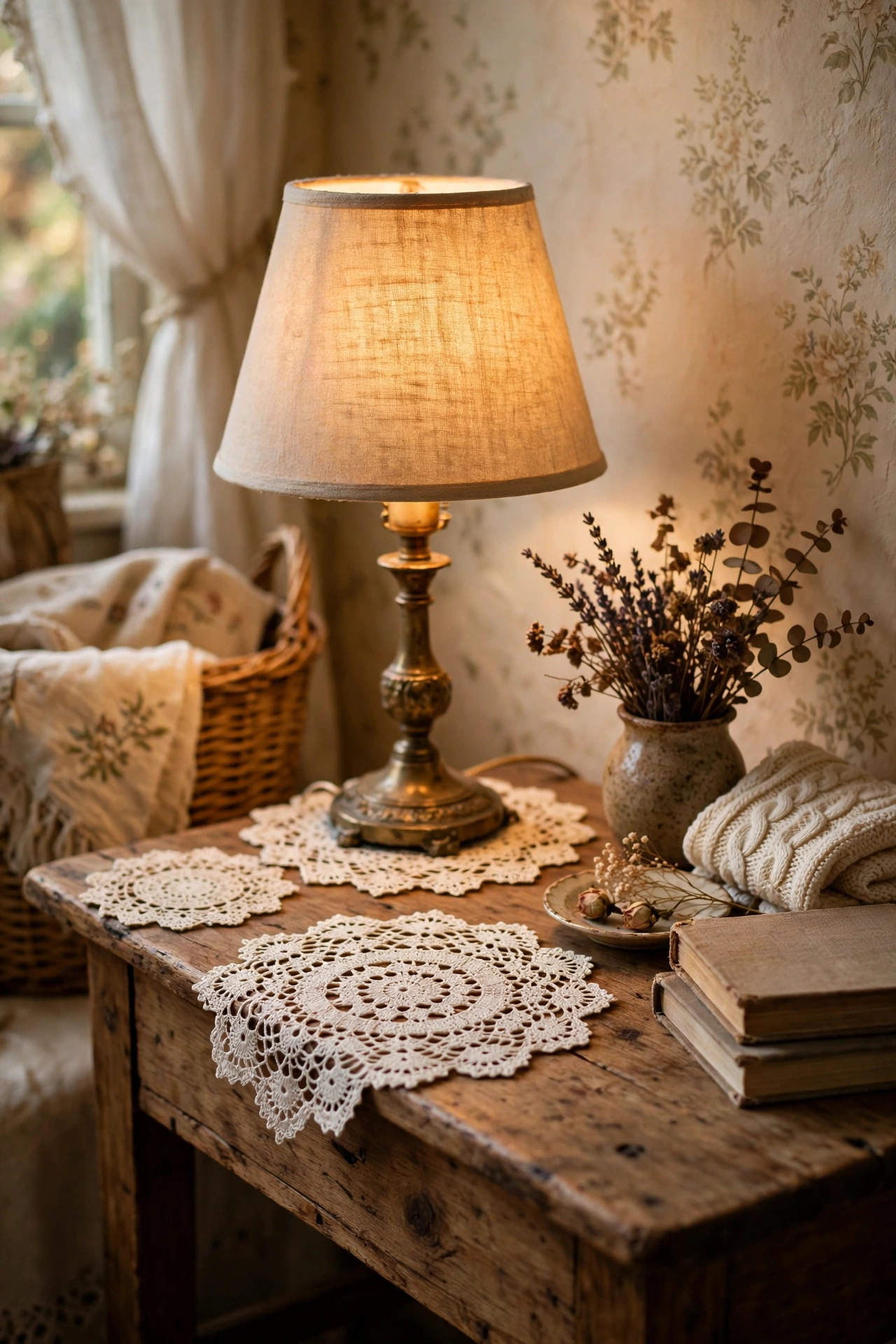
Doilies — yes, really — layered under lamps, on side tables, draped over chair backs, are pure cottagecore. Thrift stores sell bags of handmade doilies for a dollar or two. I was skeptical until I put a large doily under my table lamp; it softened the whole vignette instantly. They add handmade texture that the style craves. Use them as placemats under plants, frame a beautiful one as art, layer them on shelves. Grandma was right about doilies. I admit it now.
Cost: ~$2–5 | Time: 15 minutes
10. Fairy Lights in Glass Jars
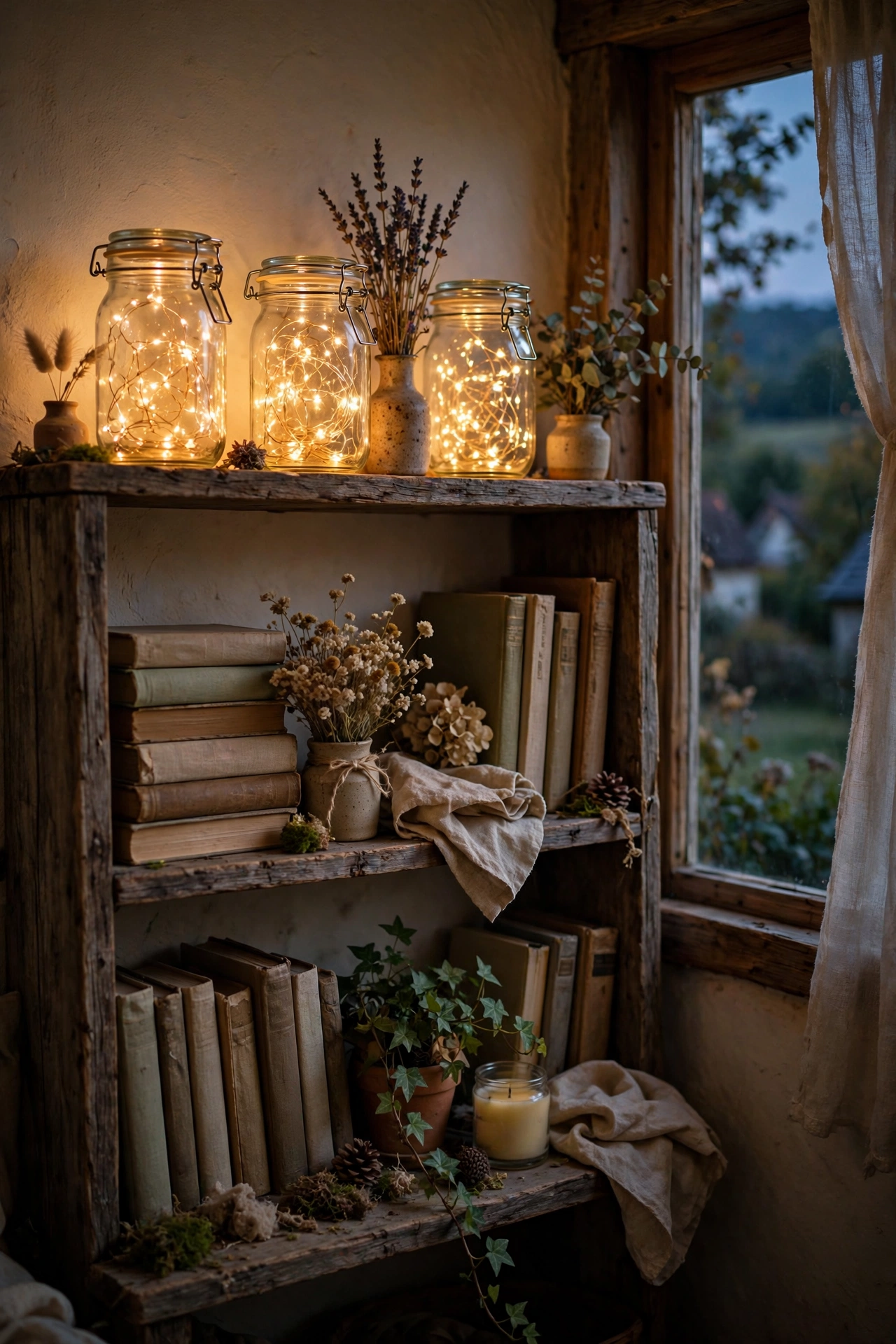
Warm fairy lights in mason jars, on shelves, draped over the mantel — cottagecore glows. I have three jars on my bookshelf that click on at dusk via timer, and the room turns golden and magical every evening. Battery lights cost three dollars a string; jars are a dollar at the thrift store. The glow makes everything softer and more romantic. It’s the cheapest atmosphere money can buy. My living room’s evening mood is entirely jars and timers.
Cost: ~$8–12 | Time: 20 minutes
11. Chipped-Paint Furniture
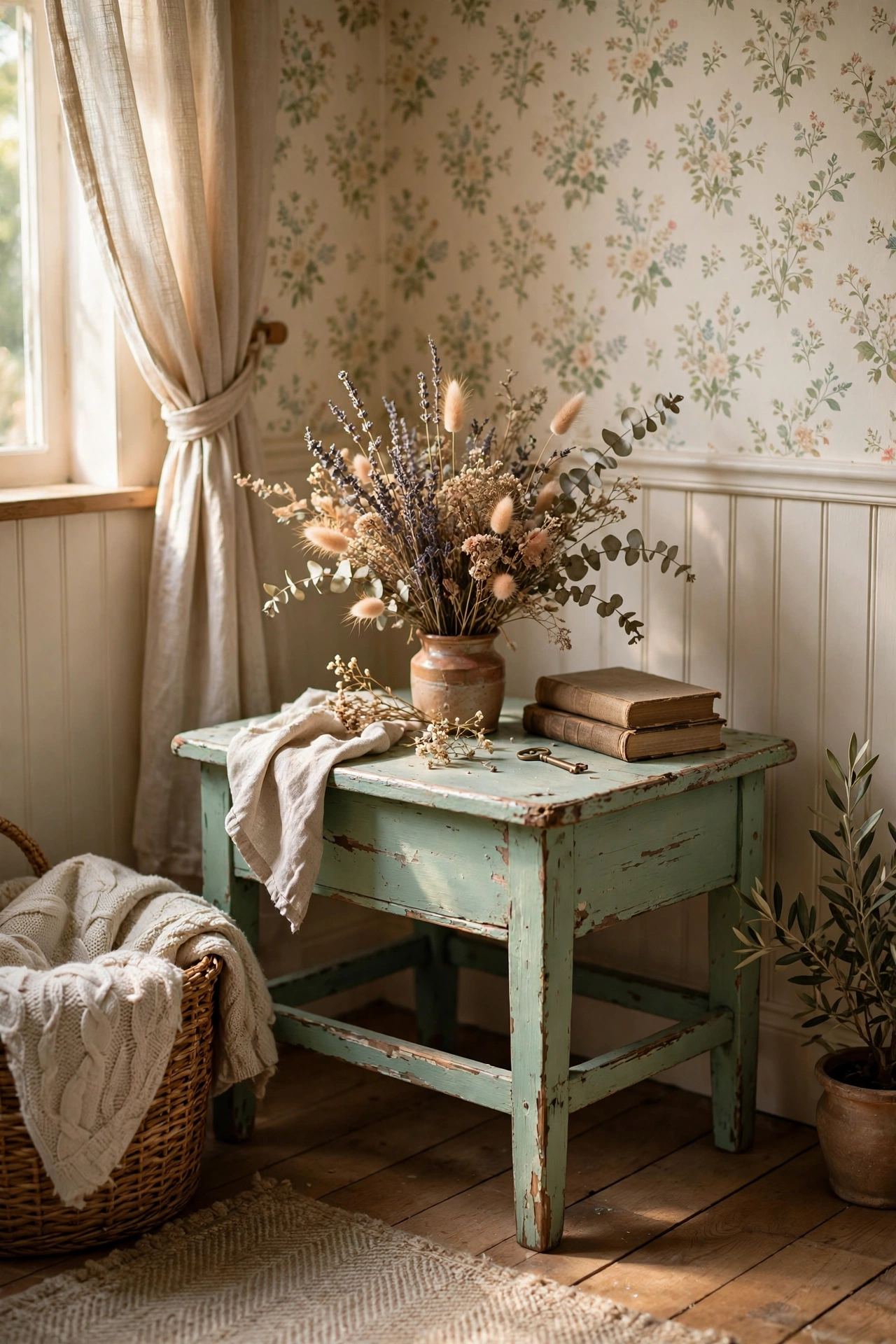
In cottagecore, chipped paint isn’t damage — it’s patina. Hunt thrift stores for painted wood furniture with wear in all the right places: edges, corners, handles. I found a mint-green side table with perfect chippy wear for twelve dollars and it’s a treasure. Don’t refinish it; the wear is the value. If you paint your own piece, distress the edges with sandpaper after painting. New furniture tries to look old. Cottagecore just finds the actually old stuff.
Cost: ~$10–20 | Time: 30 minutes shopping
12. Tea Tray Ritual
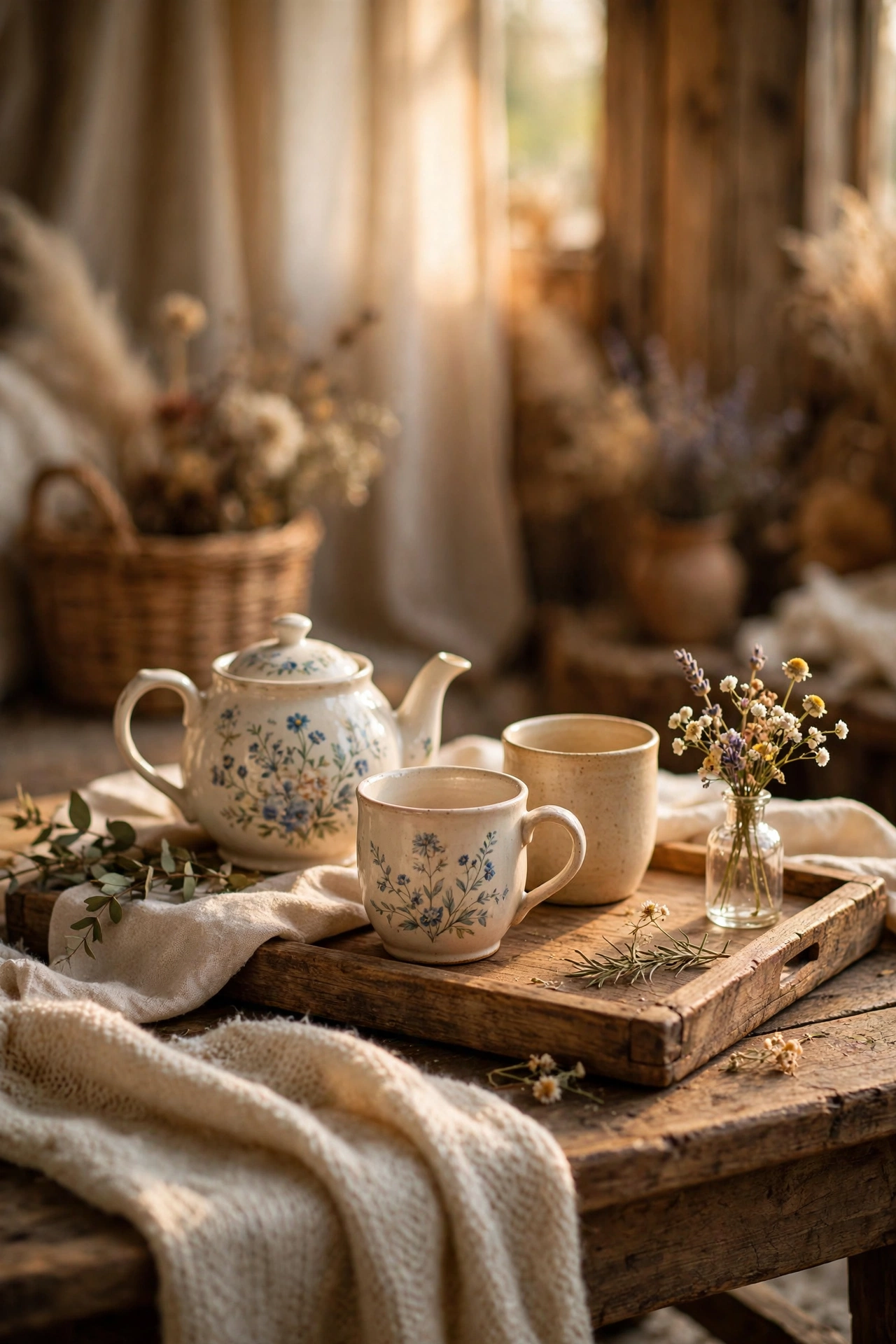
Keep a pretty tray with a teapot, cups, and a small vase permanently styled on your coffee table or sideboard. It’s decorative and it’s an invitation — to slow down, to have tea, to live the cottage life. I thrifted a floral teapot for four dollars and the tray was five. The whole setup cost less than two café lattes. Style it with a linen napkin and a tiny bouquet. Even if you drink coffee, the teapot stays. It’s about the ritual, not the beverage.
Cost: ~$10–15 | Time: 15 minutes
13. Pressed Flower Art
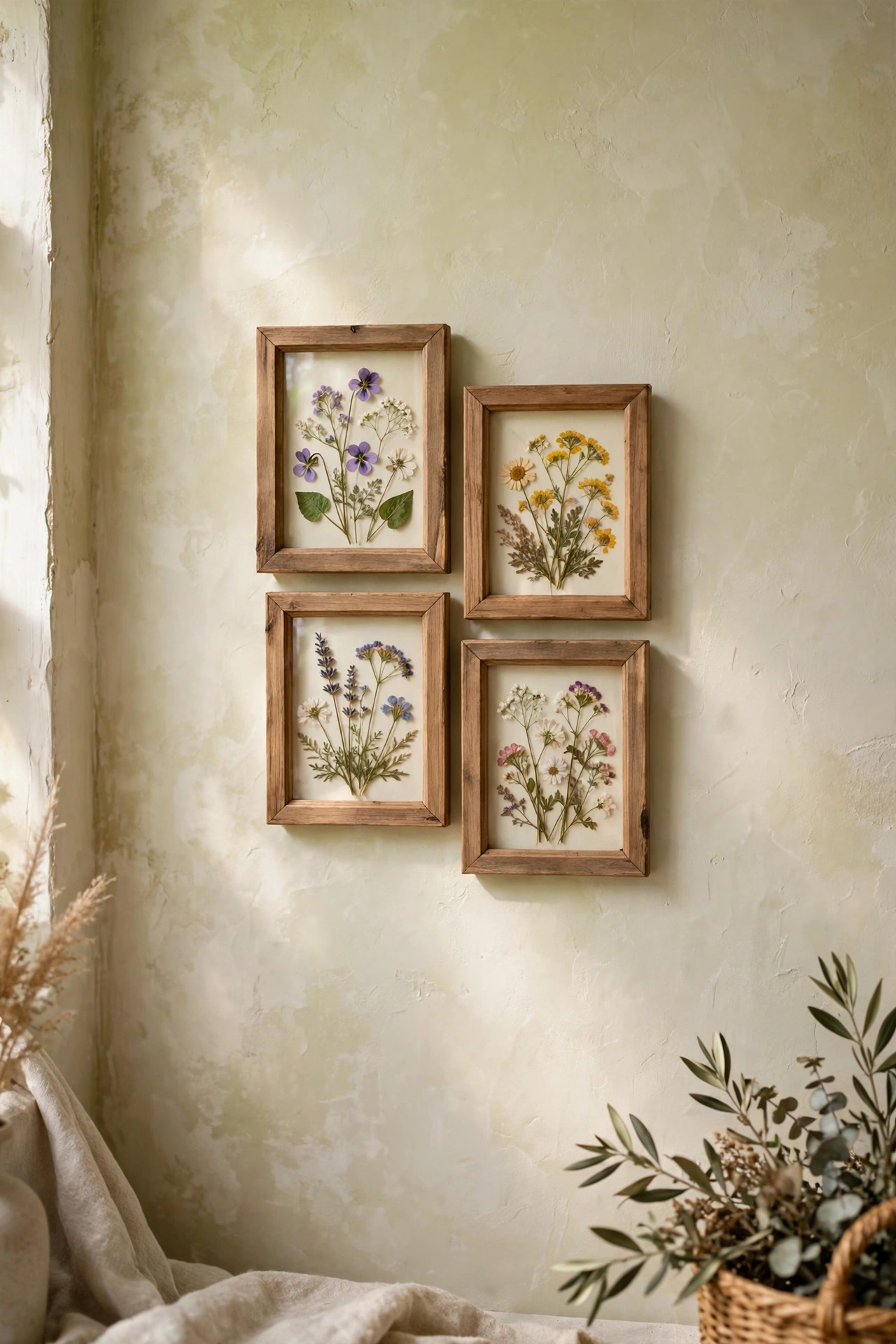
Press flowers between book pages for two weeks, then arrange them on cardstock and frame. It’s the most cottagecore art possible — literally flowers you preserved yourself. I pressed wildflowers from a spring walk and framed four pieces in thrifted frames. Total cost: the frames, about six dollars. The art is personal, seasonal, and completely free. Hang them in a little cluster. Every guest asks about them. “I made those” never gets old to say.
Cost: ~$6 | Time: 30 minutes plus pressing
14. Rag Rug or Braided Rug
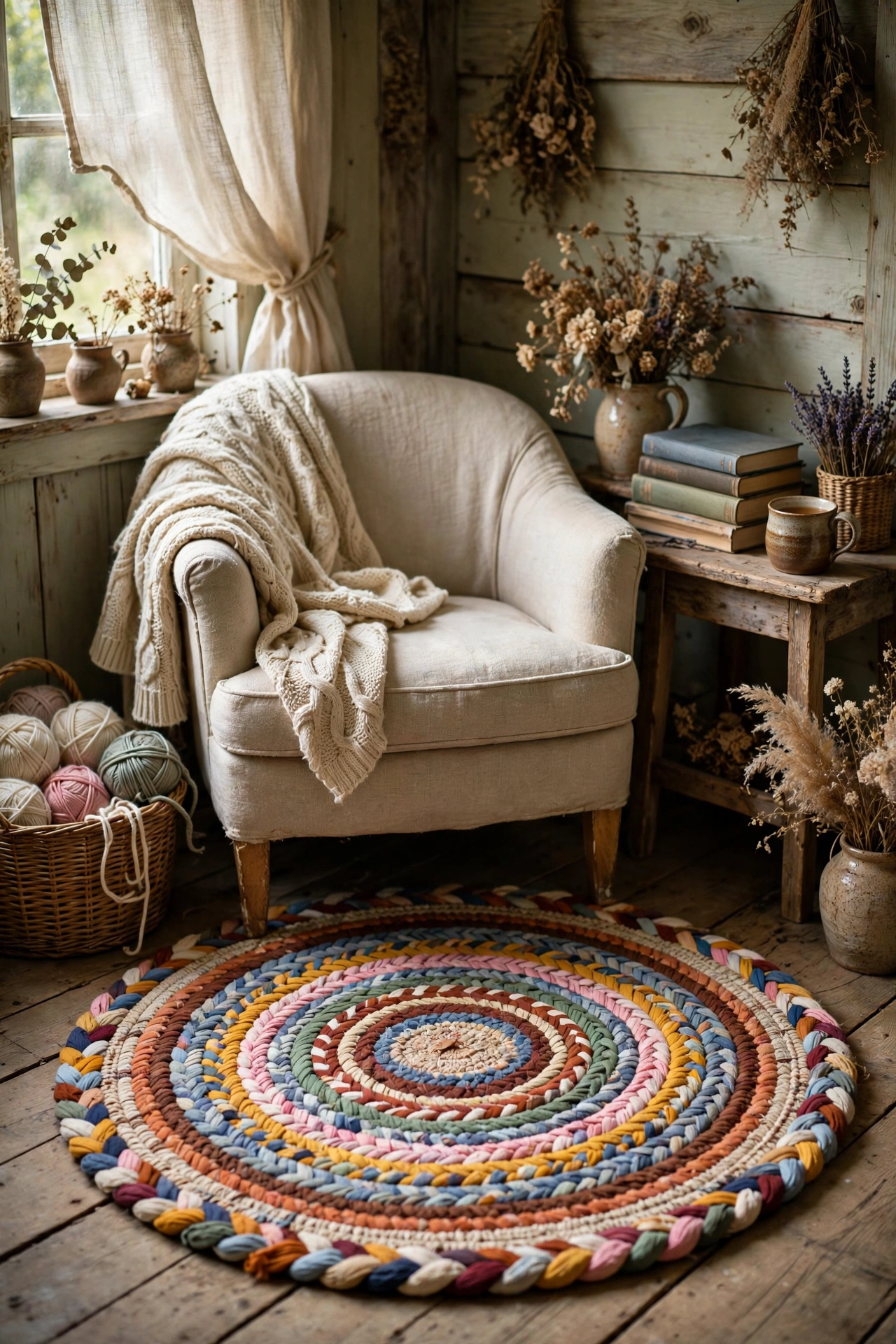
A braided rag rug — handmade-look, colorful, textured — is cottagecore flooring at its best. Thrift stores often have them for ten to twenty dollars, or buy new cotton rag rugs for about thirty. I found a big oval braided rug for eighteen dollars and it anchors my reading corner perfectly. The handmade texture is exactly what the style needs underfoot. They wash well and wear beautifully. Mine has been through two dogs and still looks charming. Charming is the goal.
Cost: ~$15–30 | Time: 15 minutes
15. Open Shelves with Pretty Things
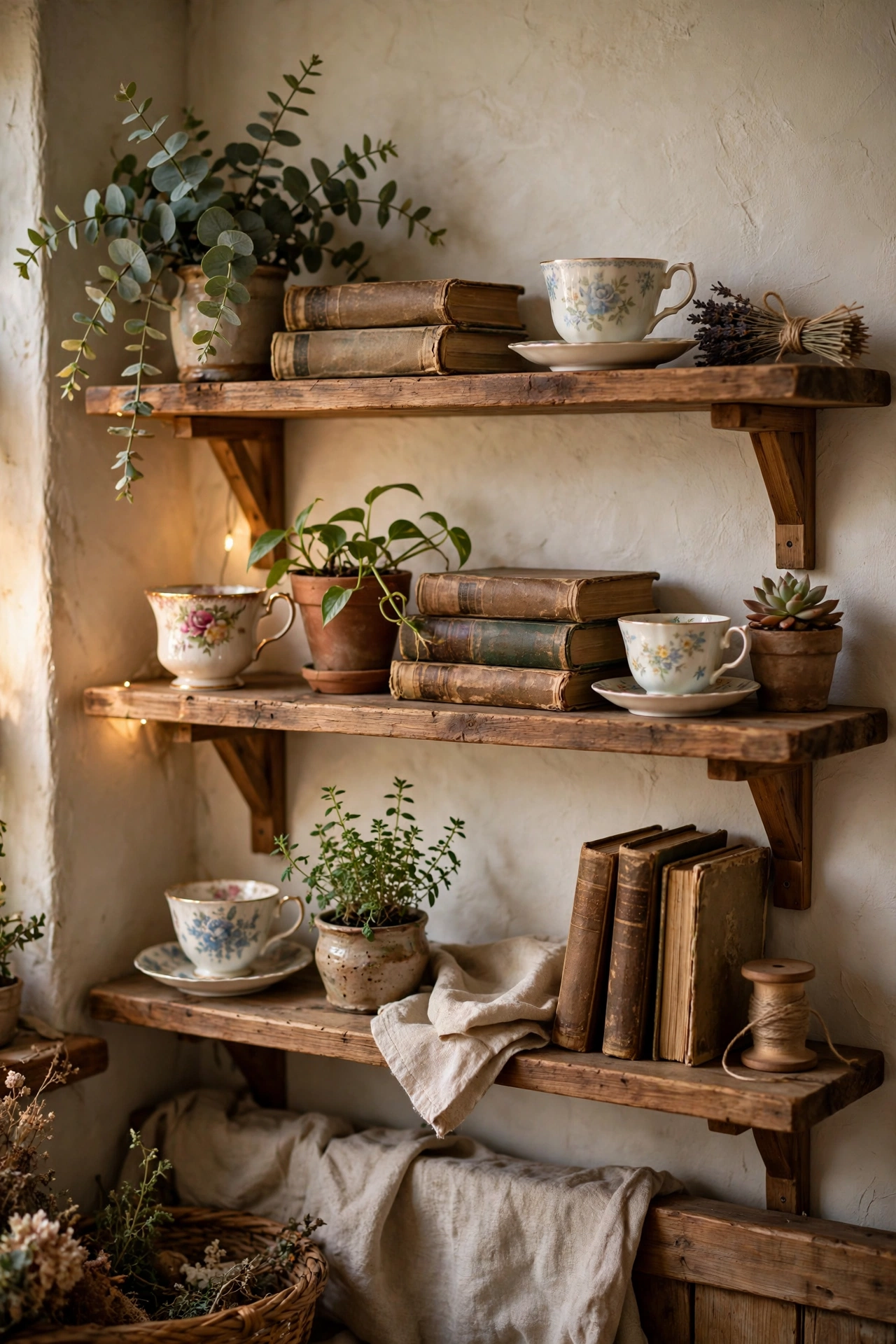
Style open shelves with teacups, small plants, vintage books, and dried flowers — useful things displayed beautifully. I took the doors off one small cabinet and styled it with thrifted teacups and a trailing pothos. It cost nothing beyond what I owned. The rule: group like with like, vary heights, leave breathing room. A cottagecore shelf should look like a curated collection, not storage. Mine holds my grandmother’s teacups. They’re finally getting the display they deserve.
Cost: $0–10 | Time: 45 minutes
16. Embroidered Pillow Finds
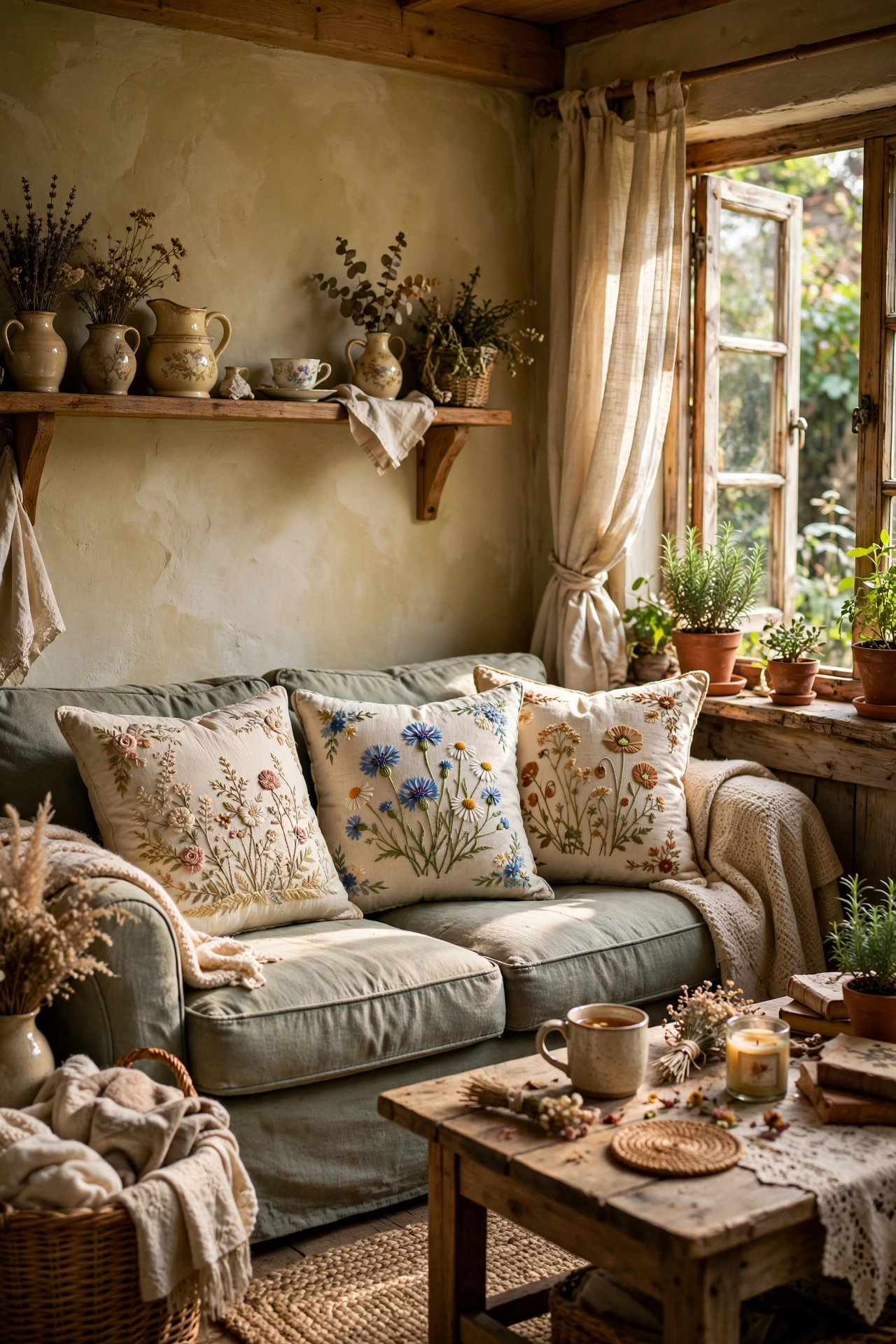
Thrift stores are full of hand-embroidered pillows and linens — someone’s grandmother’s work, sold for two dollars. I collect them; each one is unique and the hand-stitching adds soul no new pillow has. Look for floral embroidery in good condition. I have five now, scattered on chairs and the sofa. They’re the most complimented things I own, and the cheapest. Handmade details are cottagecore’s currency. Thrift stores are the bank.
Cost: ~$5–10 | Time: 15 minutes
17. Curtain Tiebacks with Ribbon
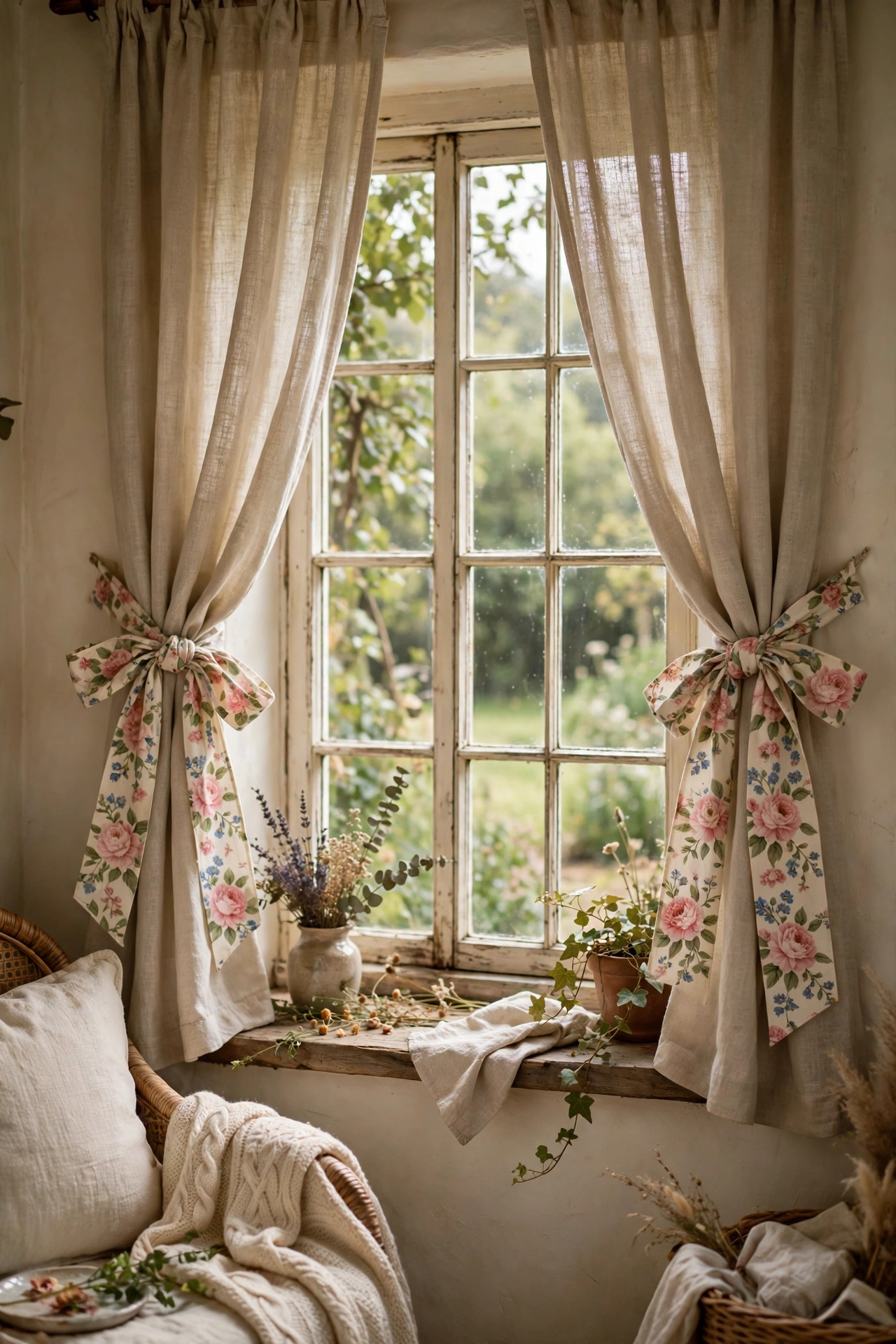
Tie back your curtains with wide floral ribbon or strips of vintage fabric instead of standard tiebacks. I used three-dollar-a-yard floral ribbon from the craft store, and my curtains now have the softest, most romantic drape. Tie in a loose bow and let the ends hang. It’s a tiny detail that changes the whole window. My curtains went from “window coverings” to “cottage windows” with six dollars of ribbon. Details are everything in this style.
Cost: ~$6 | Time: 15 minutes
18. Vintage Frame Collection
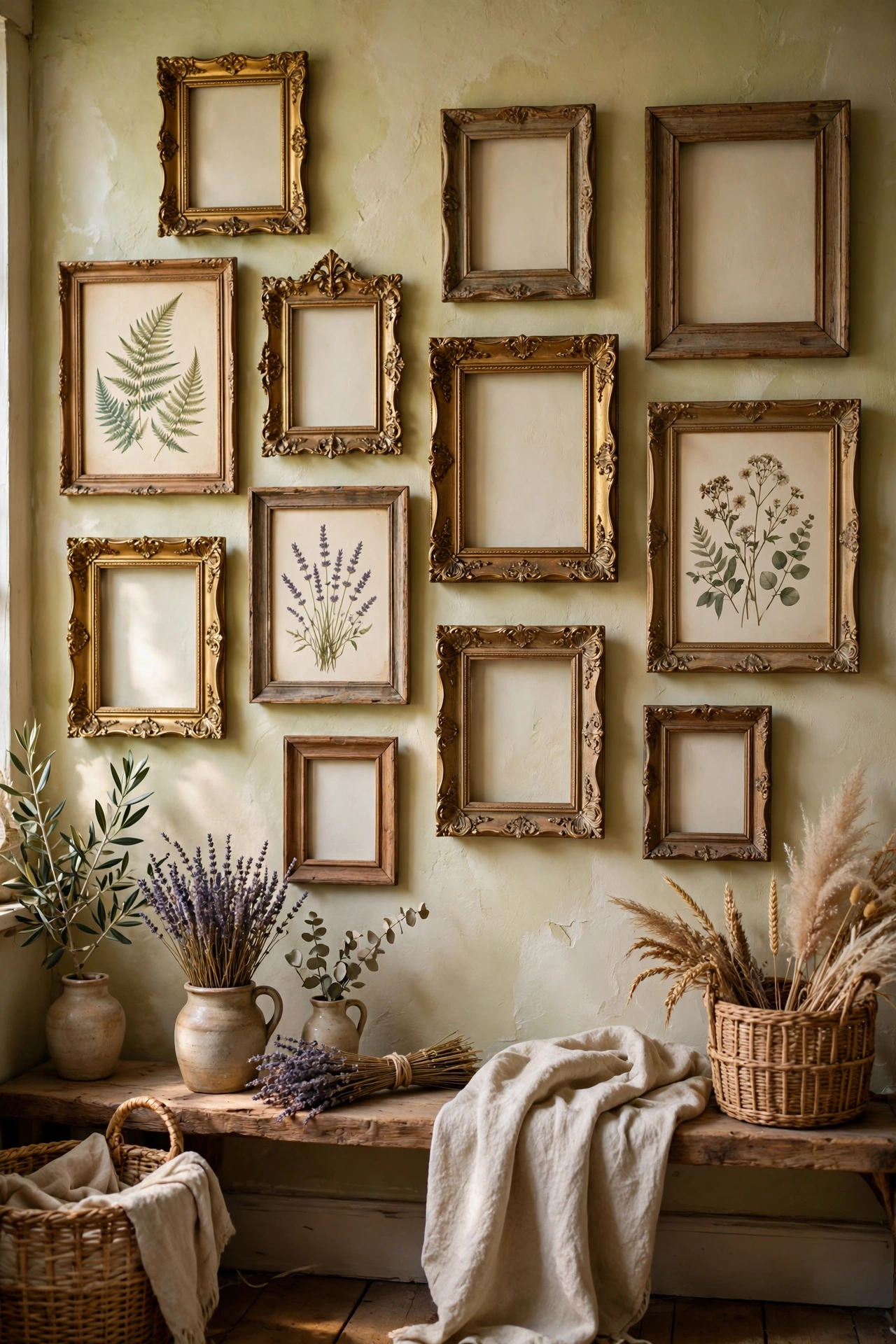
Collect ornate vintage frames — thrifted for two to five dollars — and hang them as a gallery, some with art, some empty. Empty ornate frames are a cottagecore statement: the frame is the art. I hung seven gold and wood frames on my wall, three holding botanical prints, four empty. It looks like a European manor had a yard sale. The mix of filled and empty is what makes it interesting. Frames this pretty deserve to be seen, art or not.
Cost: ~$15–25 | Time: 1.5 hours
19. Cozy Window Seat Nook
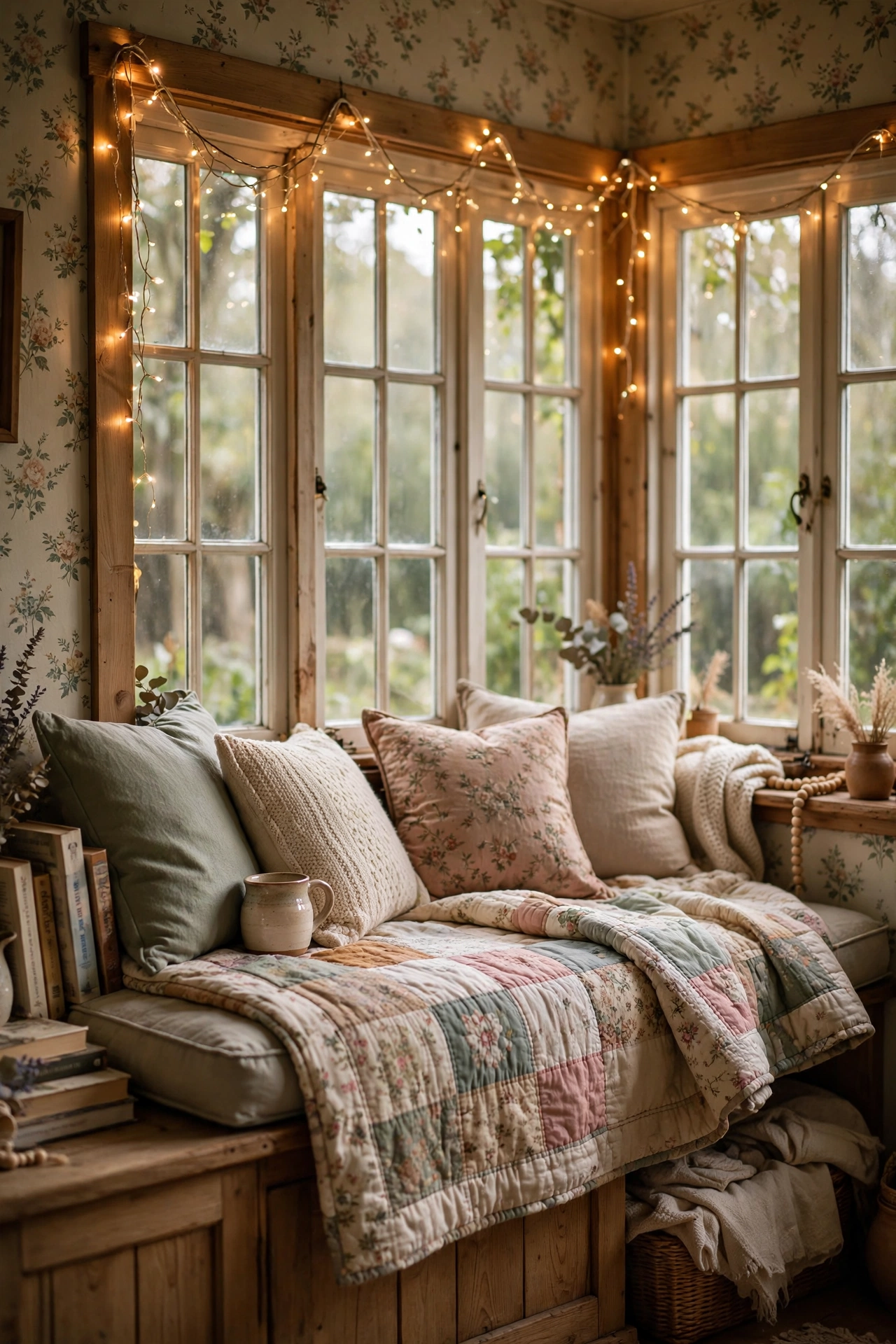
Turn any wide windowsill or low bench into a reading nook with a cushion, a quilt, and pillows. I built mine on a fifteen-dollar thrifted bench: cushion from a clearance pillow, quilt I owned, fairy lights above. Total new cost: fifteen dollars. It’s now the most fought-over seat in the house. A window seat is cottagecore’s promise — a place to read, dream, and watch rain. Every cottage needs one. Even apartments can fake it with a bench.
Cost: ~$15–25 | Time: 1 hour
20. Milk Glass Collection
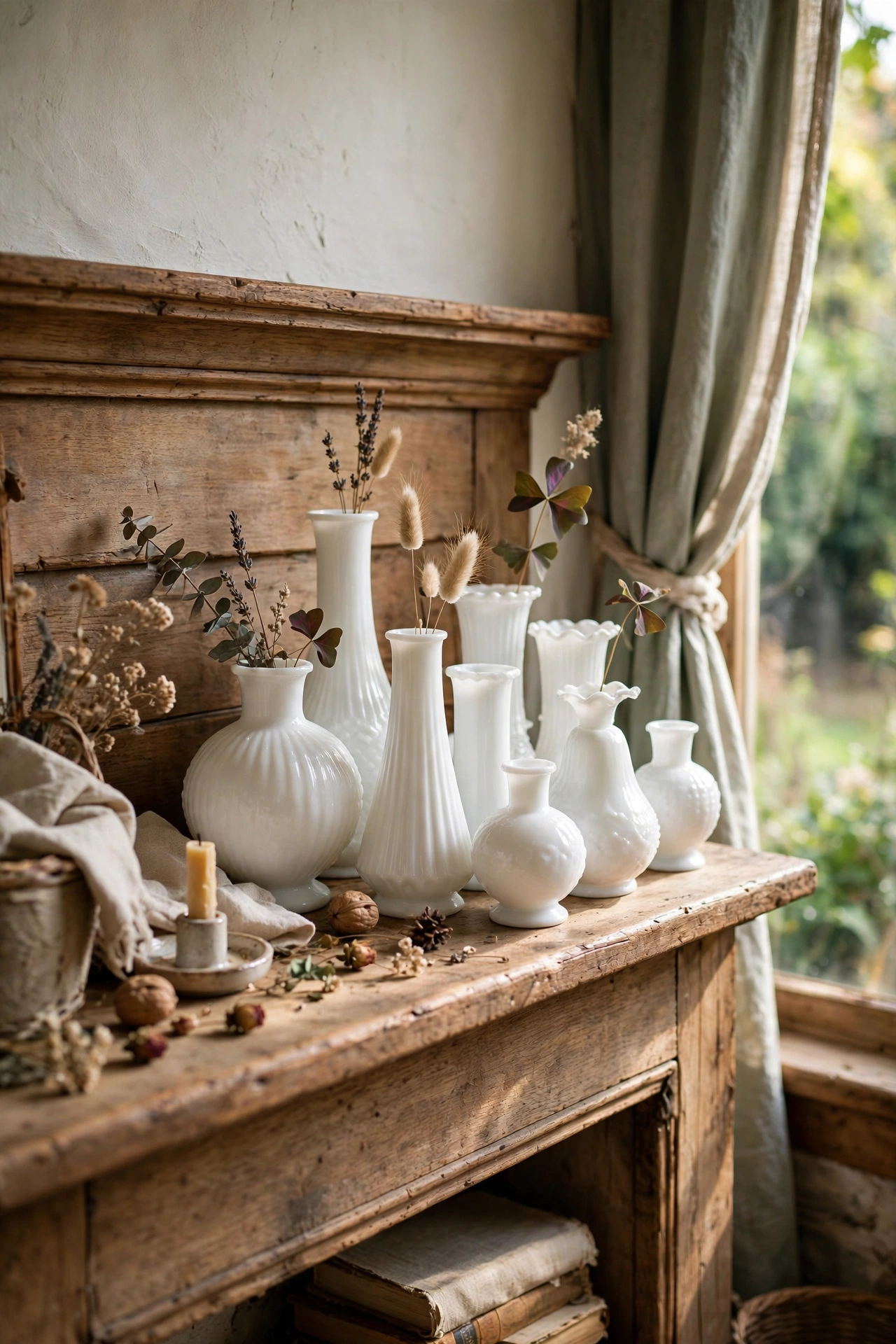
White milk glass vases — thrifted for one to three dollars each — grouped on a mantel or shelf are pure vintage charm. The opaque white glass glows beautifully in natural light. I have nine pieces now, collected over a year, none over two dollars. Group them in odd numbers with dried flowers in a few. They look like a curated collection because they are one — just a very patient, very cheap one. Milk glass is my favorite thrift hunt. The thrill never fades.
Cost: ~$8–15 | Time: 20 minutes
21. Tablecloth as a Throw
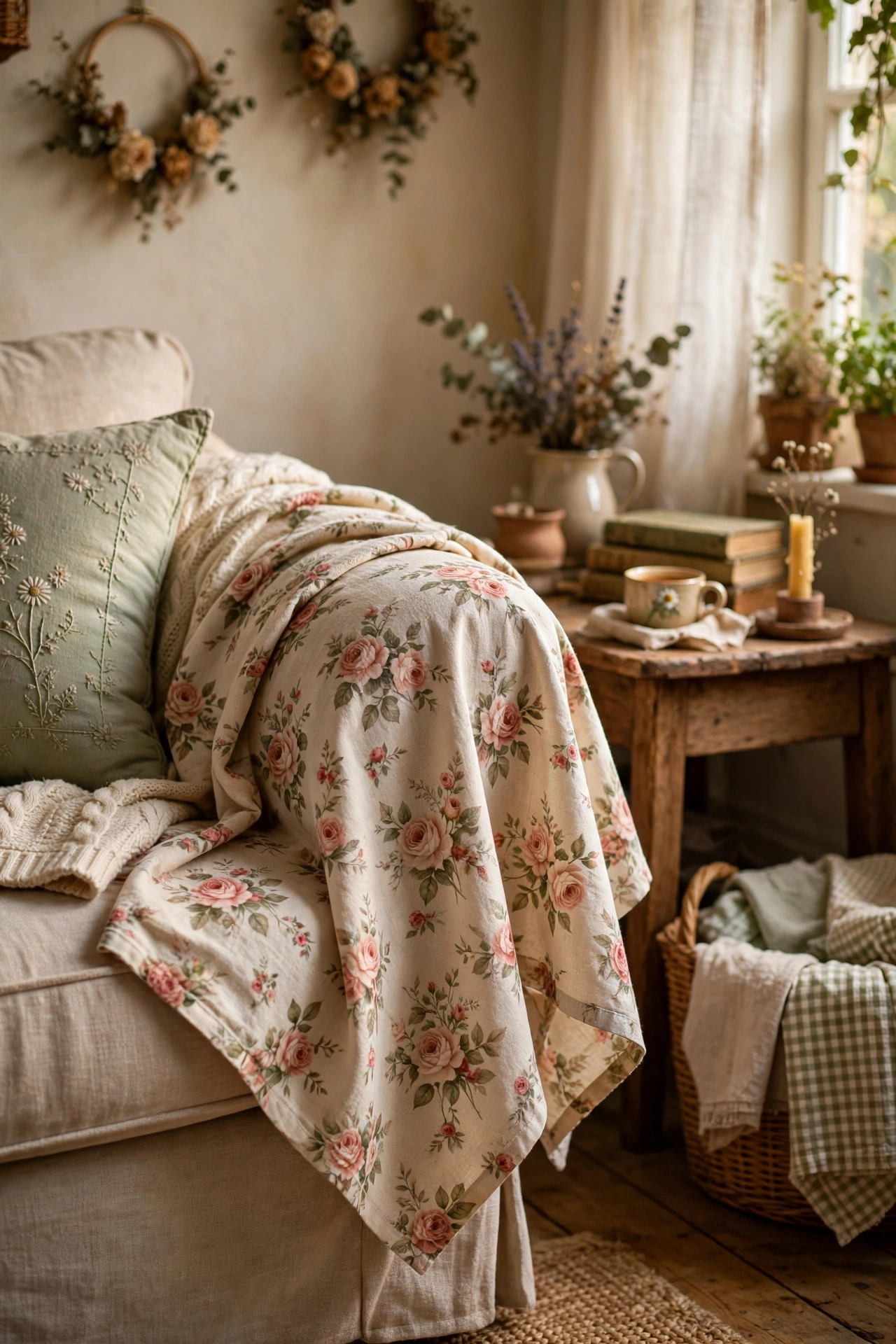
A pretty vintage tablecloth — floral, lace-edged, thrifted for three dollars — makes a beautiful sofa throw or chair drape. The patterns designed for tables work wonderfully as textiles elsewhere. I drape a rose-print tablecloth over my sofa arm and it looks like an expensive throw. Wash it first, obviously. Tablecloths are bigger than throws for half the price. It’s the textile world’s best-kept secret. My sofa’s prettiest layer cost three dollars.
Cost: ~$3–5 | Time: 5 minutes
22. Herb Pots on the Windowsill
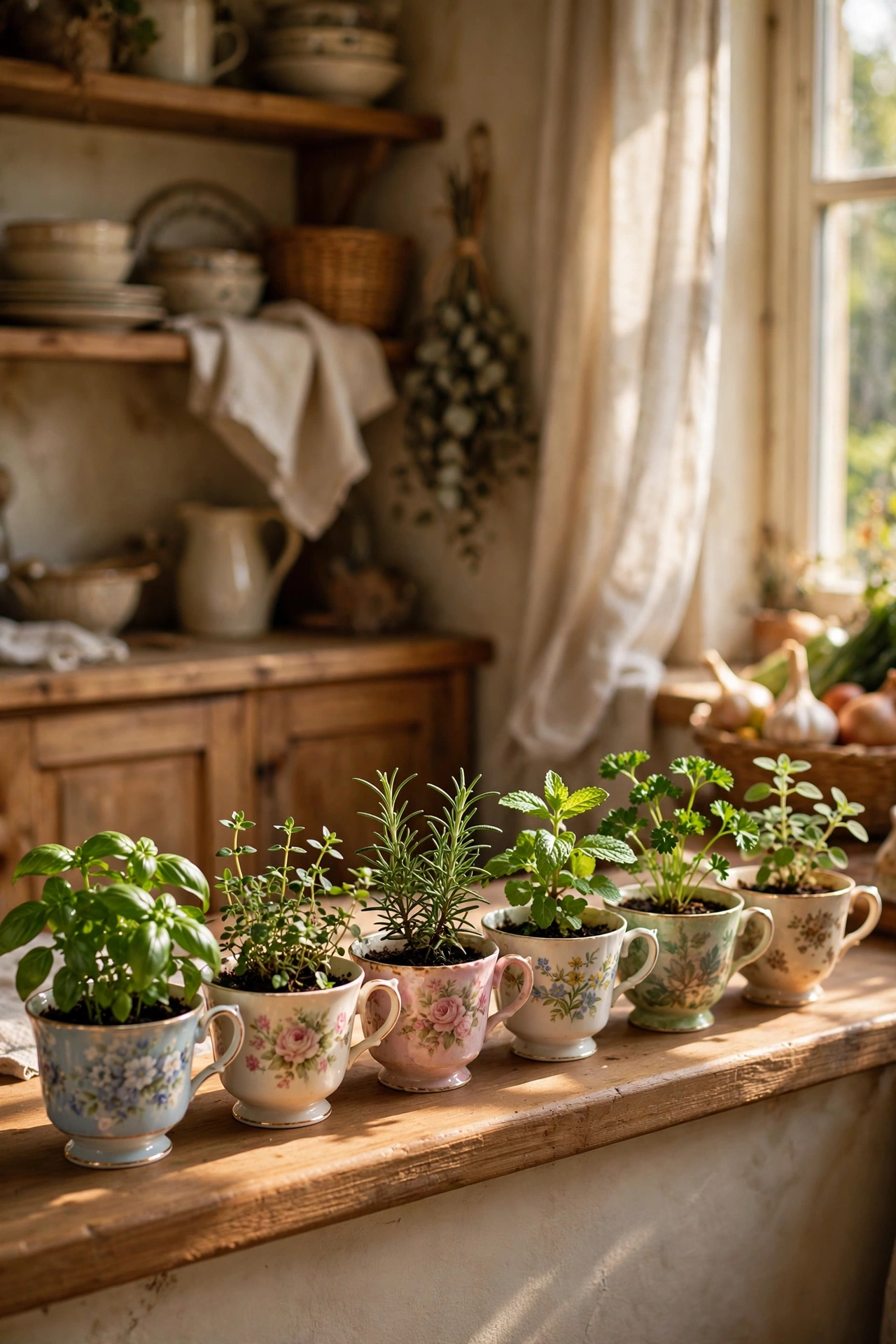
A row of small herb pots on the windowsill — basil, thyme, rosemary — is cottagecore you can eat. I planted mine in thrifted teacups and tiny pots for about ten dollars total. They smell amazing, they’re useful in cooking, and they add living green to the room. Water them when you make tea; that’s my reminder system. A windowsill garden makes any room feel like a cottage kitchen. Even if the rest of the room is modern, the herbs whisper cottagecore.
Cost: ~$8–12 | Time: 30 minutes
23. Candlelit Evenings Ritual
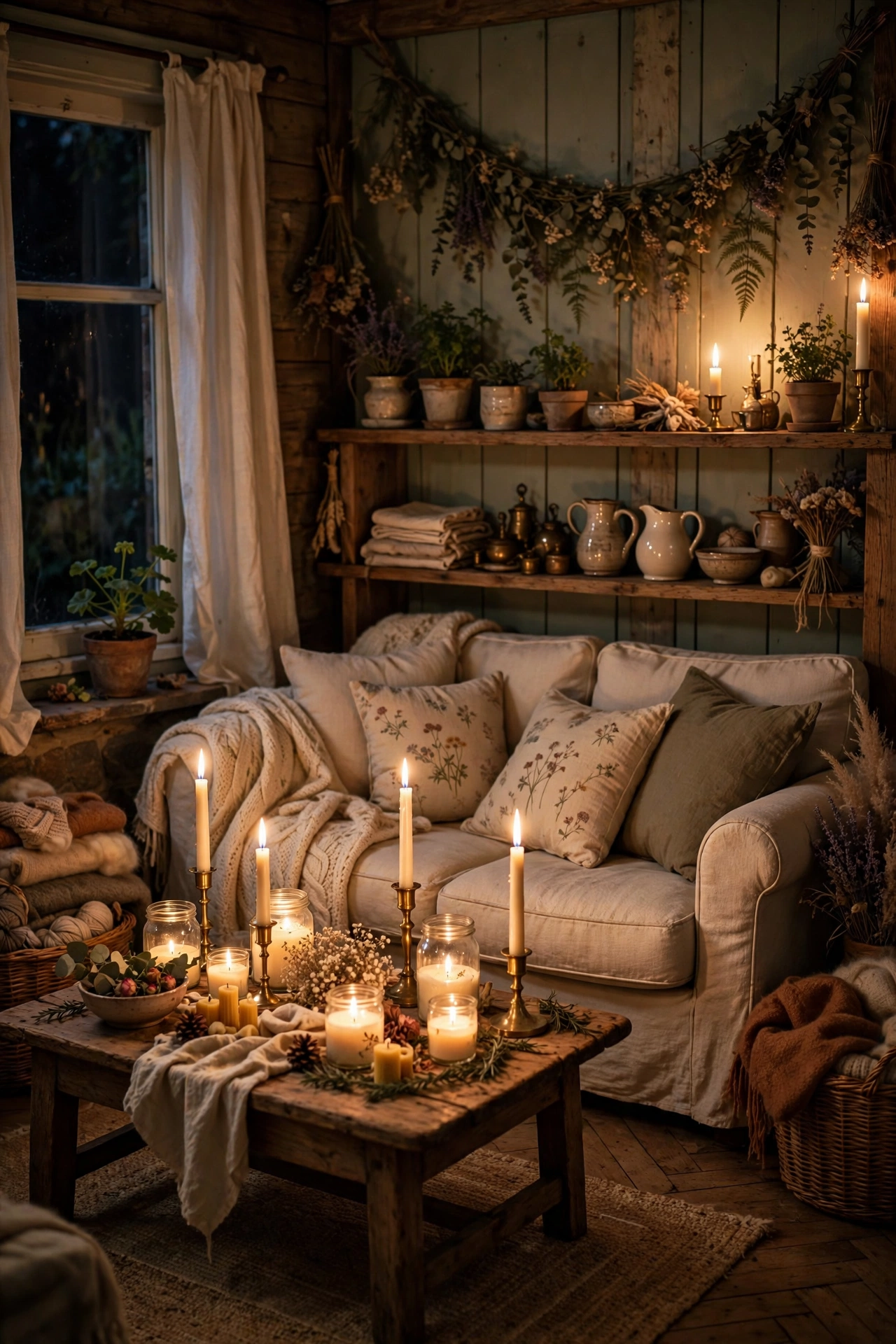
Make it a habit: every evening, light the candles. Tapers in thrifted brass holders, tea lights in jars, pillars on the mantel. The ritual costs almost nothing — I buy taper candles in bulk for pennies each — but it transforms the room nightly. Cottagecore isn’t just how the room looks; it’s how it feels at 8pm with candles lit and rain on the windows. My electric bill dropped when I started this. My happiness rose. Coincidence? I think not.
Cost: ~$5–10 | Time: 5 minutes nightly
24. Secondhand Slipcover in Floral
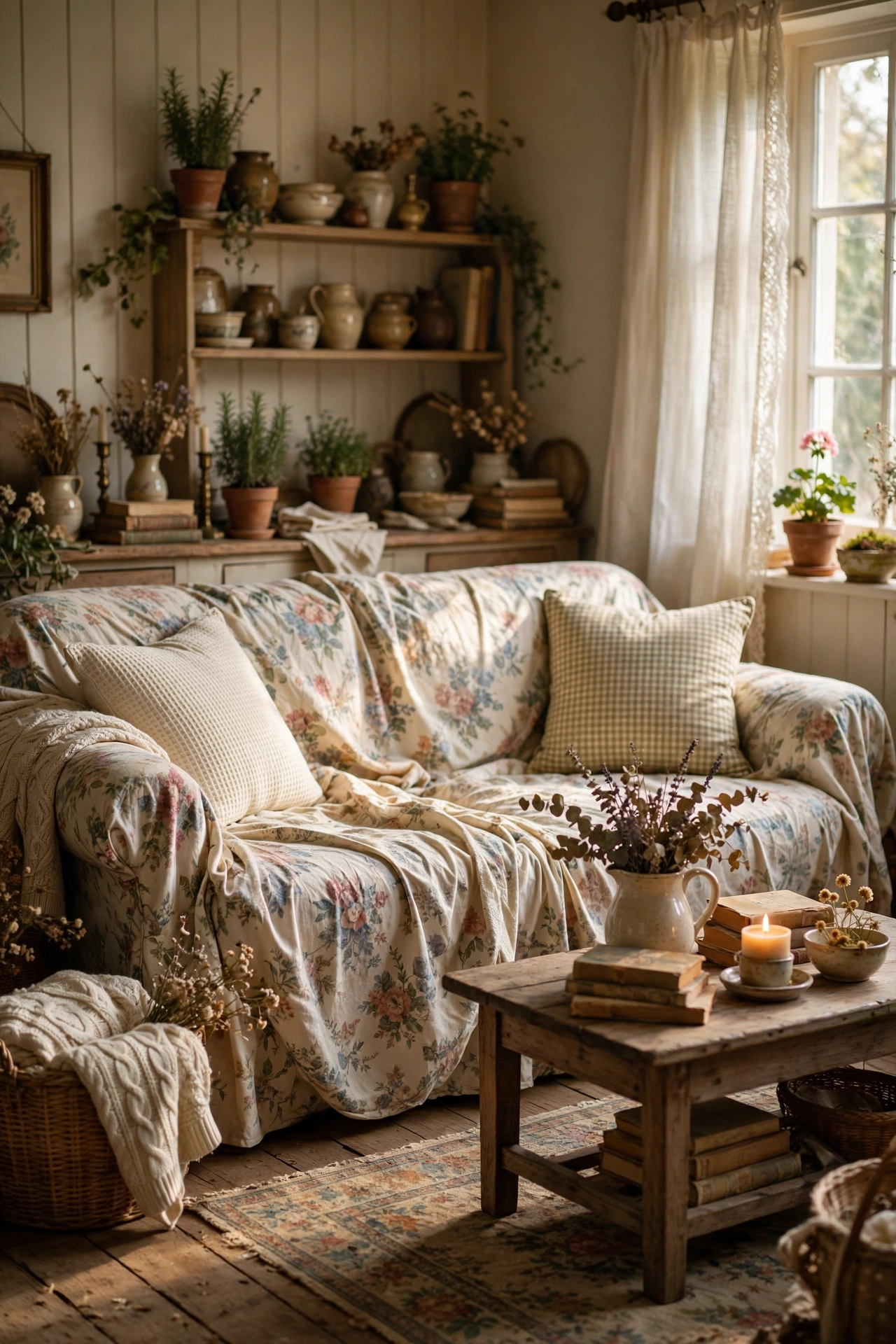
A floral slipcover — thrifted or on clearance — turns any sofa into a cottage sofa. I found one for eighteen dollars at a thrift store, still in its package. The loose, relaxed fit suits cottagecore perfectly; wrinkles are character. Tuck it well and let the skirt puddle. My brown sofa disappeared under roses and now the whole room leans cottage. Eighteen dollars for a new sofa. The thrift gods were smiling that day.
Cost: ~$15–25 | Time: 30 minutes
25. The Collected-Over-Time Mindset
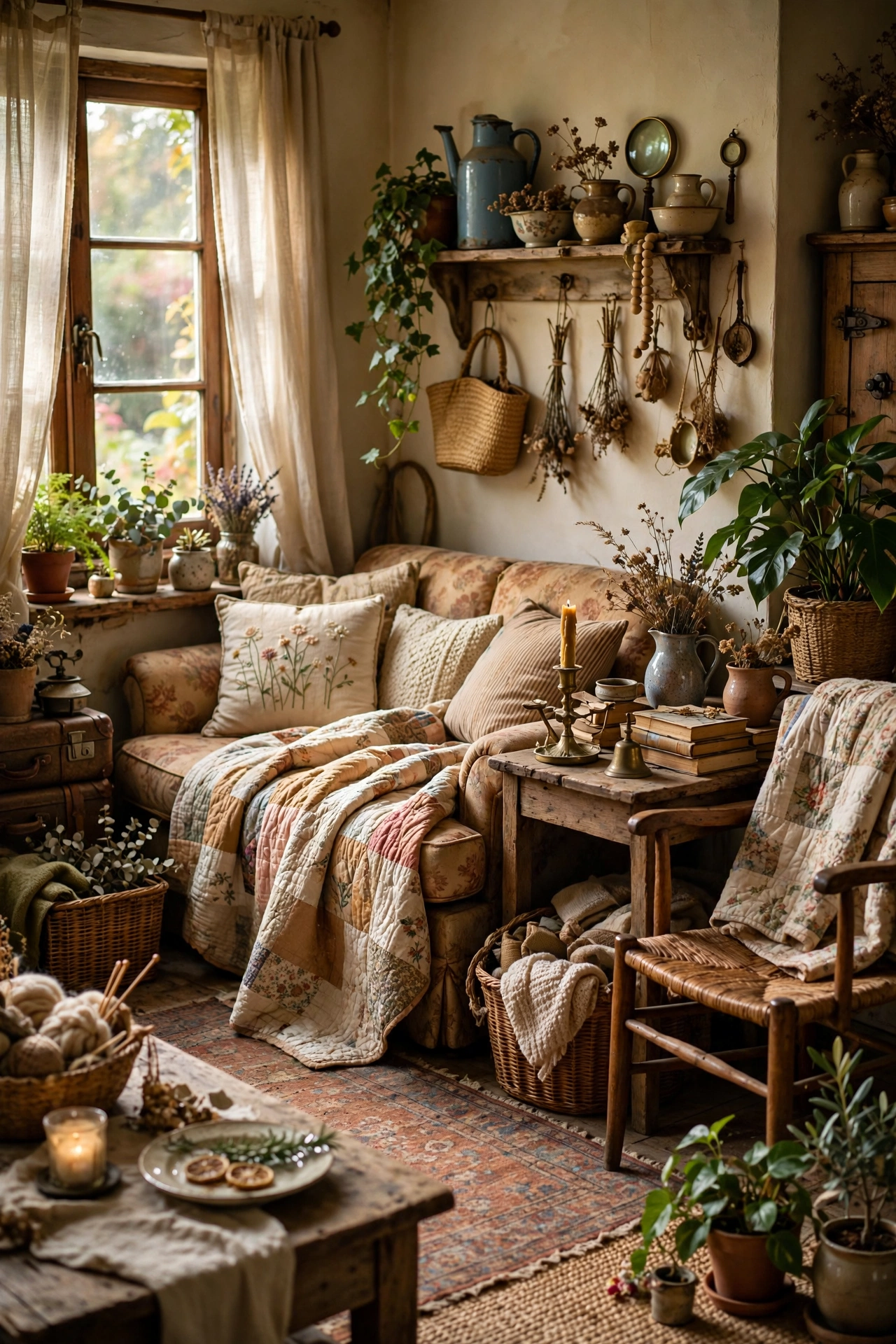
The final cottagecore idea isn’t a thing — it’s patience. The style looks best when it’s gathered slowly: a frame here, a quilt there, a plant from a friend. I built my living room over two years of thrift trips, and that’s why it works — nothing matches perfectly, everything belongs. Resist the urge to buy it all this weekend. The hunt is half the joy. Your cottagecore living room should feel like a life, not a shopping trip. Give it time. It’s worth it.
Cost: $0 | Time: Ongoing
📌 Pin your favorite idea before you go!
Cottagecore’s cozy cousin is farmhouse — see my (see also: 21-farmhouse-living-room-ideas-on-a-budget) for the wood-and-white version. And for more thrifted magic, (see also: 21-dollar-store-living-room-decor-that-look-designer) stretches every dollar further.
The Cottagecore Takeaway
Cottagecore might be the most budget-friendly style ever invented — it’s literally built on secondhand finds, handmade touches, and patience. Start with textiles: a quilt, floral pillows, lace curtains. Add dried flowers and candlelight. Then let the thrift gods provide the rest. Your living room doesn’t need to be perfect. It needs to feel like somewhere you’d curl up with tea and a good book. That’s the whole style, and it costs almost nothing.
