25 Tiny Entryway Ideas for Apartments
My first apartment had an entryway the size of a doormat, and for months it was just a pile of shoes, keys and mail by the door. These Tiny Entryway Ideas for Apartments changed that, because each one works in a space barely wider than the front door itself. You do not need a renovation or a big budget, just a few smart choices that give every item a home. Pick the three that solve your biggest annoyance first, then add the rest slowly.
First Impressions on a Shoestring
Start here if your entryway currently looks like a dumping ground. These five ideas cost very little, take an afternoon at most, and make the whole flat feel tidier the moment you walk in.
1. Hang a Slim Row of Wall Hooks by the Door
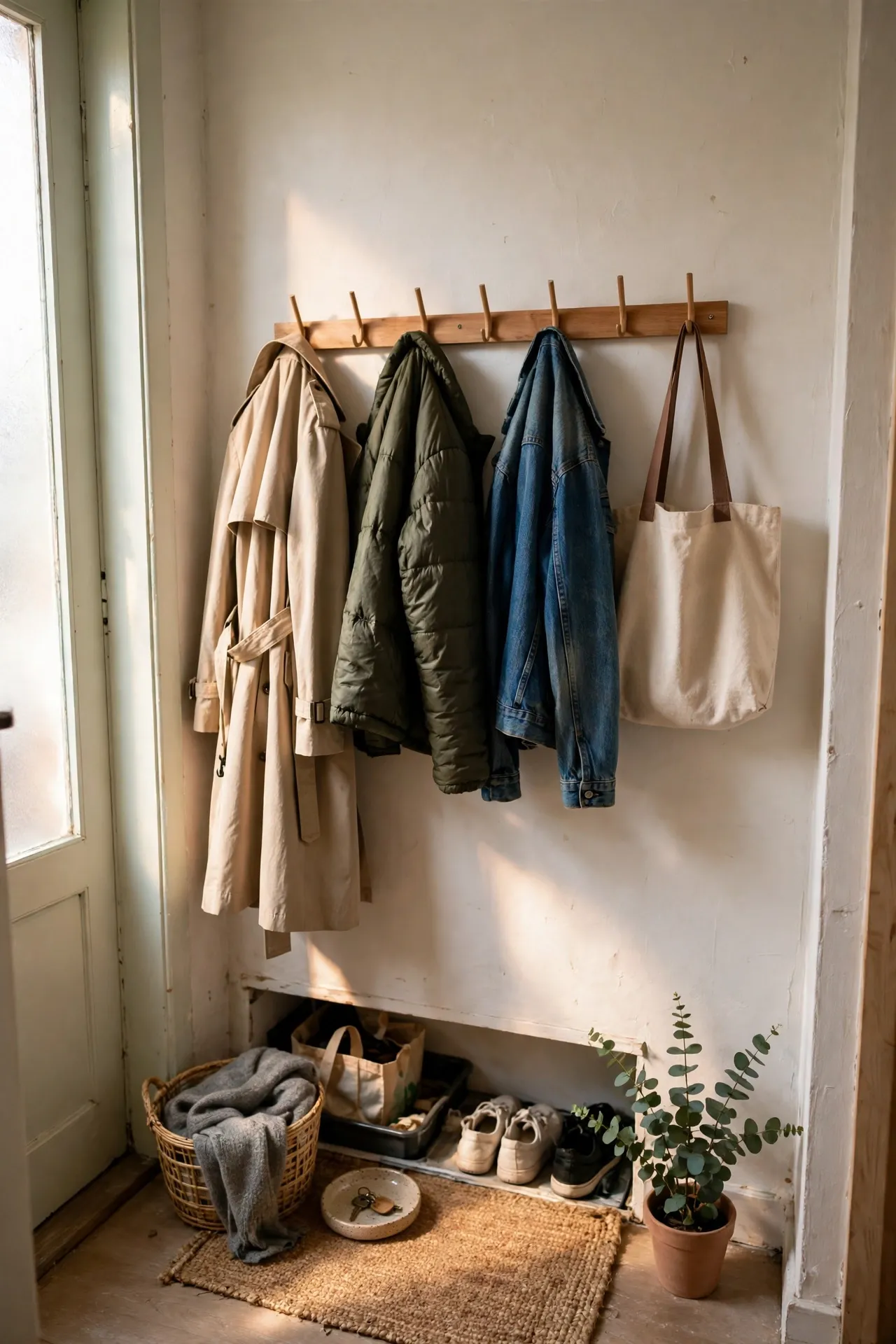
A row of wall hooks is the single fastest fix for a tiny apartment entry, because coats, bags and dog leads finally have somewhere to live besides the floor. Pick a slim rail with four or five hooks, mount it at shoulder height beside the door, and keep one hook spare for guests. Use proper wall anchors if your walls are plasterboard, since a rail full of winter coats pulls harder than you expect. I hung mine in twenty minutes, and the hallway floor stayed clear for the first time ever. The mistake to avoid is mounting the rail too high, because hooks nobody can reach just become decoration.
Cost: ~$12 | Time: 30 minutes
2. Add a Narrow Console Table That Hugs the Wall
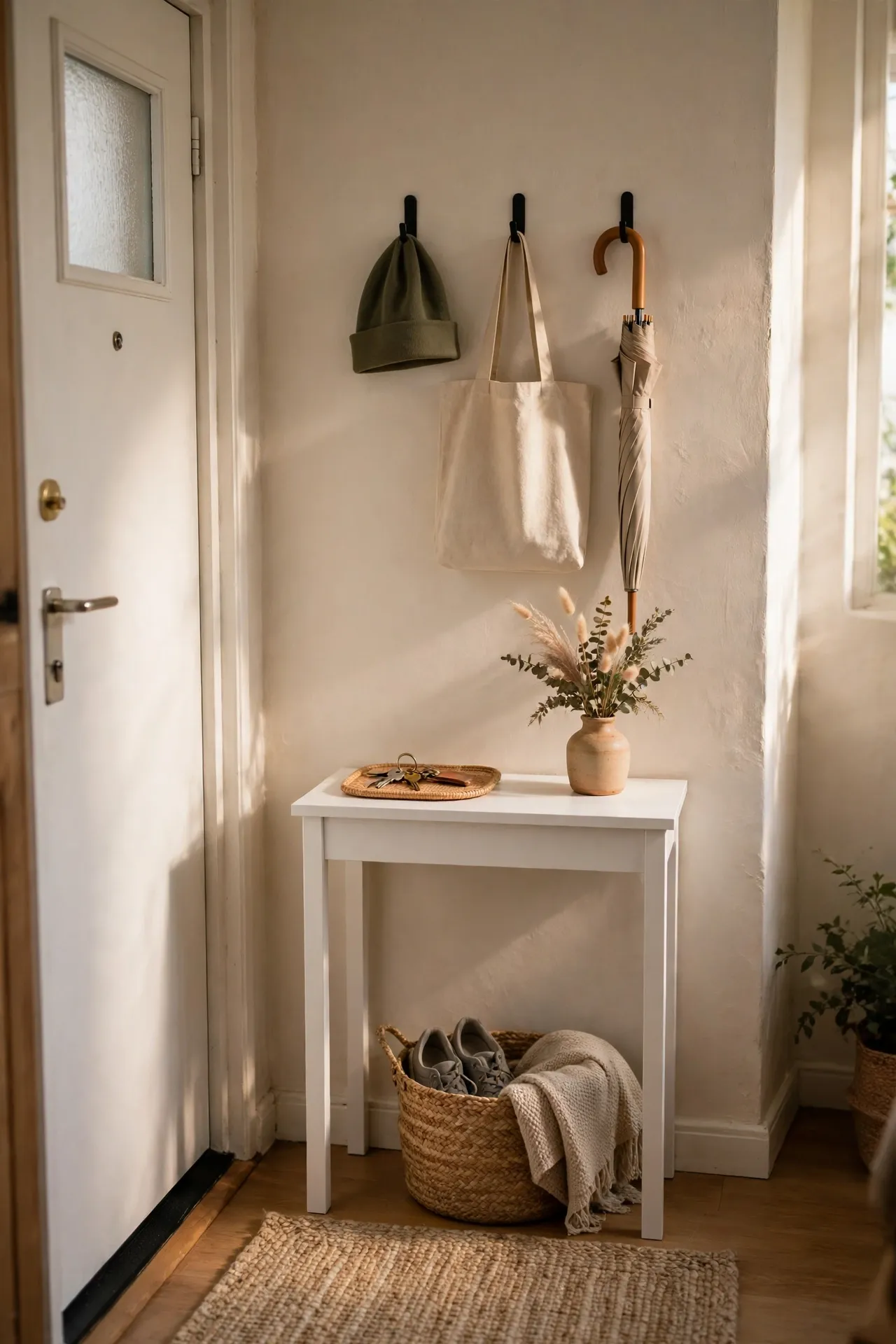
A console table sounds like a luxury, but a narrow one, barely ten inches deep, fits even the tightest apartment entry without blocking the walkway. Use it as a landing spot for keys, post and sunglasses, and tuck a basket underneath for shoes or scarves. Look for a secondhand table first, since a coat of paint hides most scratches, and measure your wall twice before buying. Mine came from a charity shop for less than a pizza, and it turned a bare wall into a proper entrance. Keep the top almost bare, because a console piled with clutter just moves the mess up a level.
Cost: ~$35 | Time: 20 minutes
3. Lay a Washable Runner to Define the Entry Zone
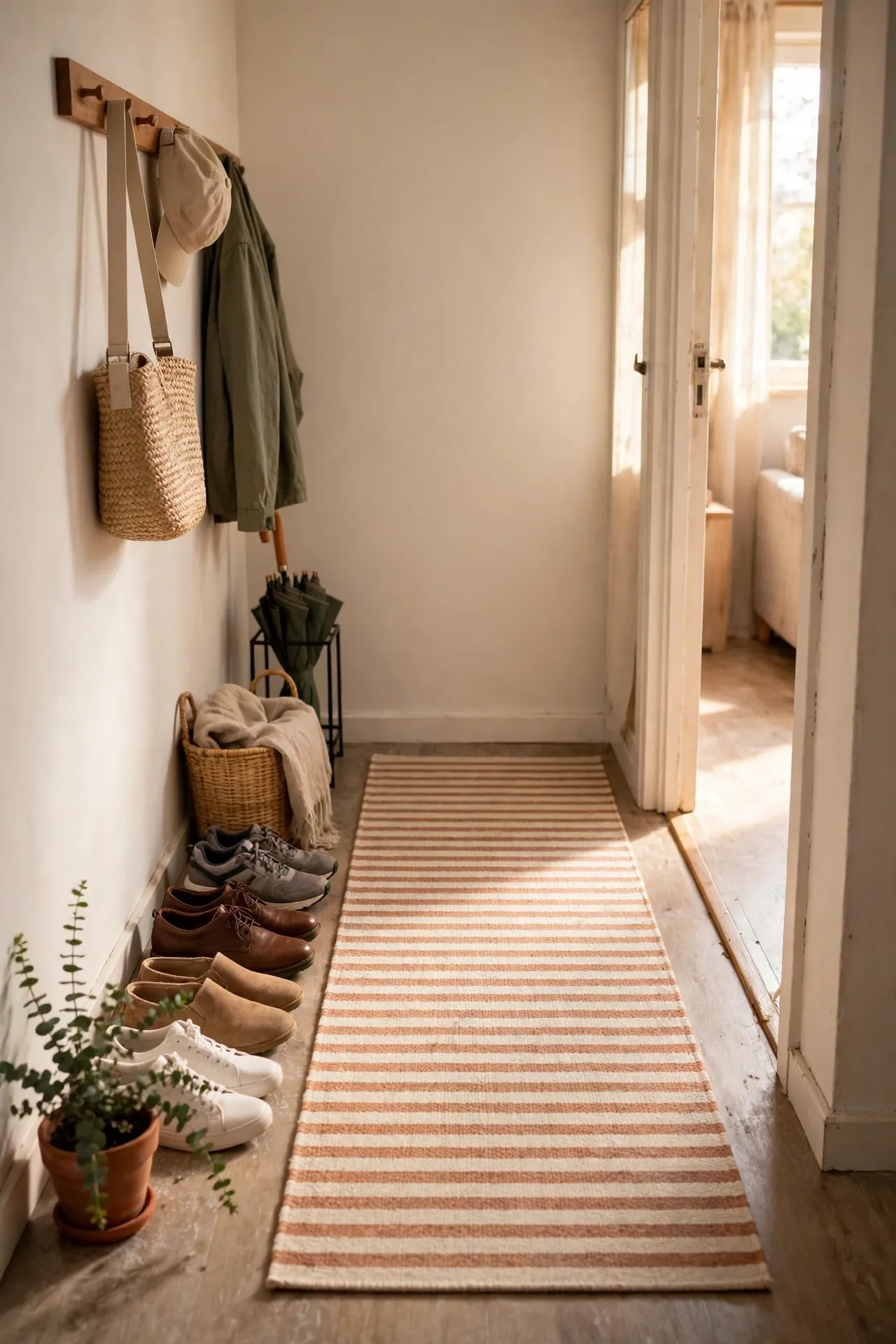
When there is no wall separating the entry from the living room, a runner rug does the job instead, marking out a clear zone for shoes and bags. Choose a flat-weave, washable runner in a pattern that hides dirt, because apartment entries take a beating in wet weather. Make sure it sits flat and does not curl at the edges, or you will trip over it daily. I picked a faded striped runner that cost less than two takeaways, and suddenly guests knew exactly where to leave their shoes. Save this idea for your apartment board, since it is the easiest way to give a doorless entry some shape.
Cost: ~$22 | Time: 10 minutes
4. Mount a Round Mirror to Double the Light
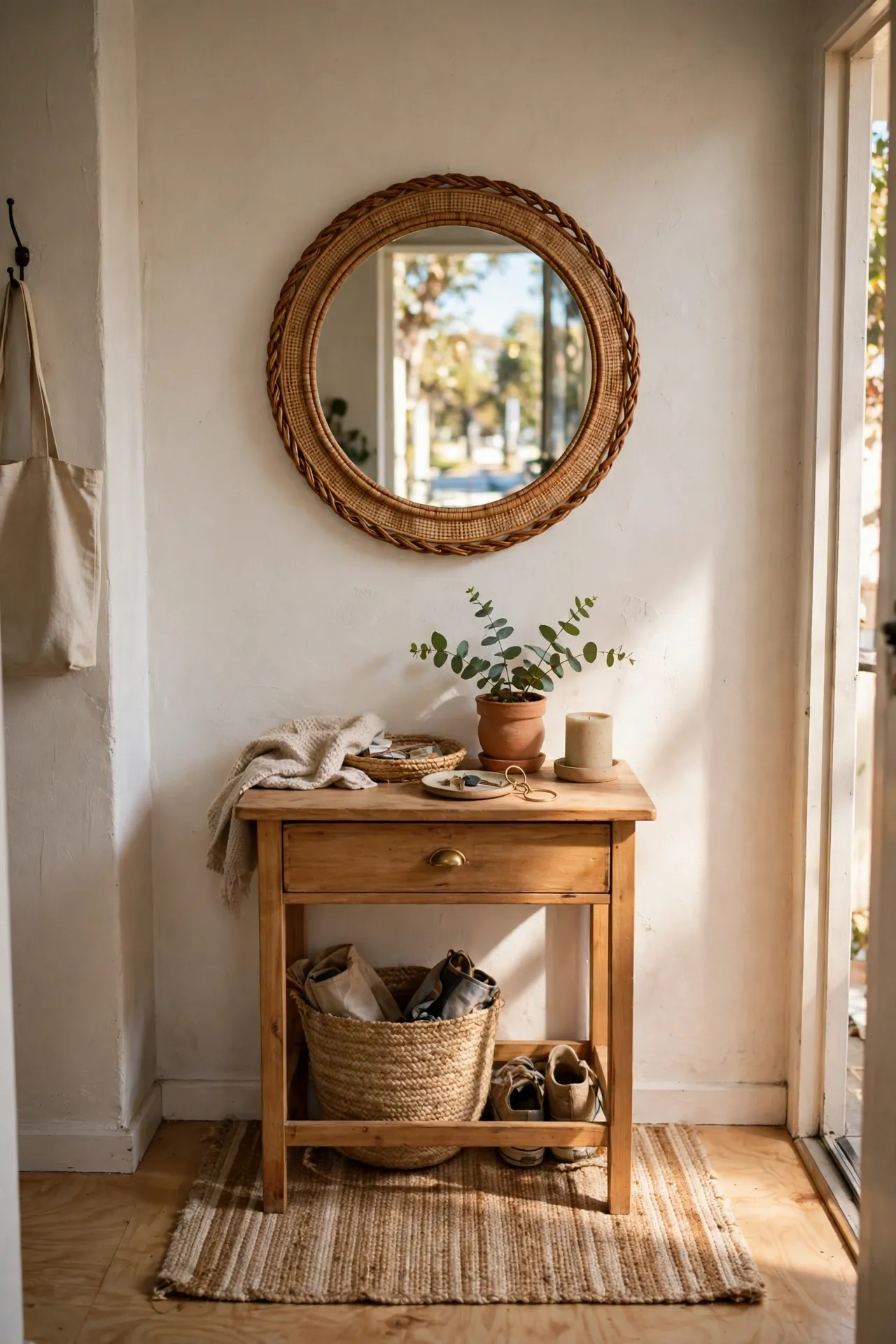
A round mirror above the console or hooks bounces daylight around a dark apartment entry and makes the space feel twice as wide. Round works better than square here, because the soft shape breaks up a corridor of straight lines and sharp corners. Hang it at eye level, not above head height, so you can actually check your hair before leaving. Use a damage-free hanging strip if you rent, and test the weight limit first, since mirrors are heavier than they look. I tried this, and the mistake to avoid is hanging it opposite a blank wall, because then it just reflects more blank wall.
Cost: ~$18 | Time: 15 minutes
5. Place a Small Tray for Keys and Sunglasses
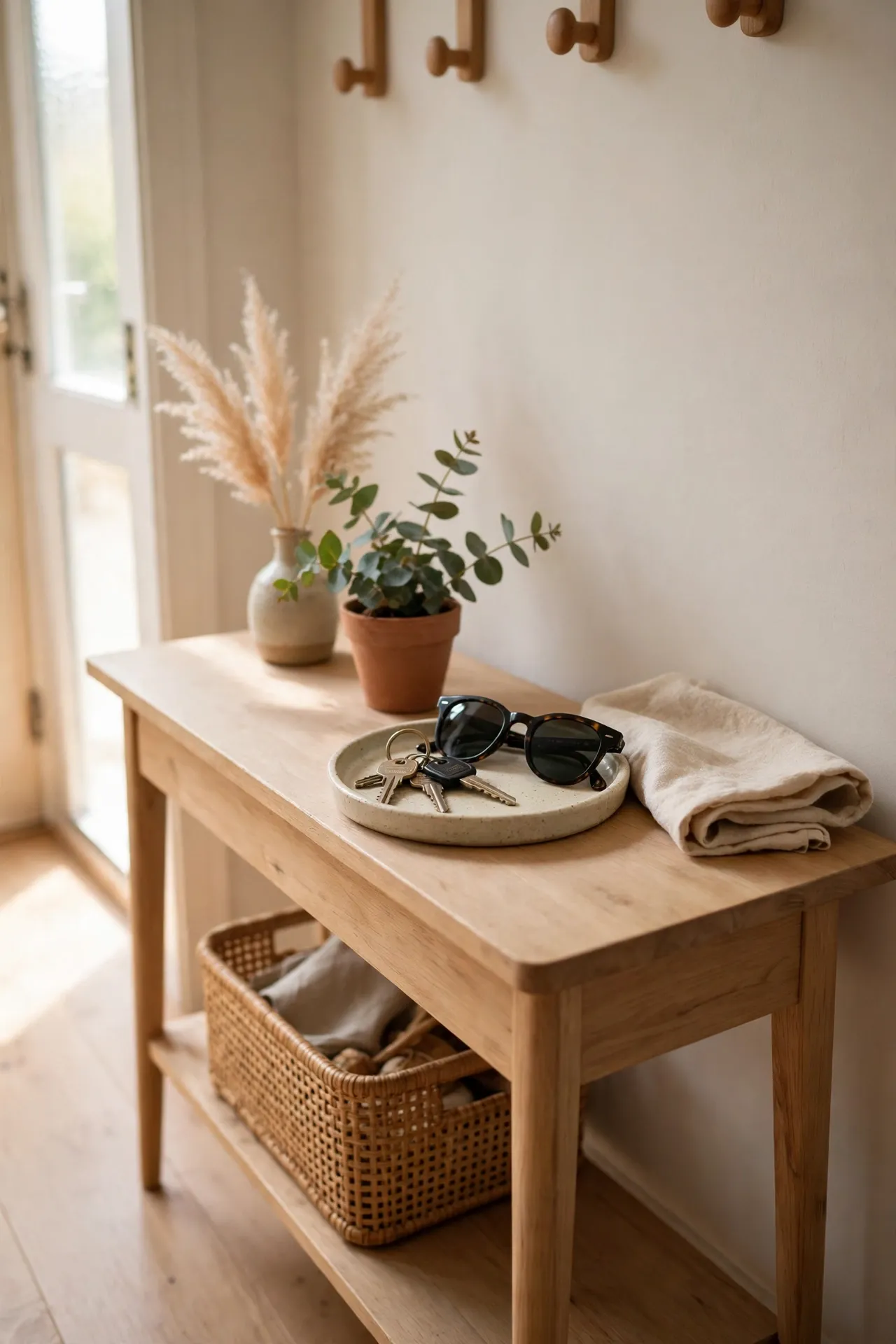
A small tray on the console is the cheapest habit-changer in this whole list, because it gives your keys, sunglasses and loose change one obvious home. Without it, keys end up in coat pockets, on the kitchen counter and, somehow, in the fridge. Pick a tray just big enough for the daily essentials, and empty it once a week so old receipts do not take over. A ceramic dish from a thrift shop works perfectly, and it looks far smarter than a plastic bowl. My keys have lived in the same tray for two years now, and I have not been late hunting for them since.
Cost: ~$6 | Time: 5 minutes
Storage That Hides in Plain Sight
A tiny entry cannot hold much, so the storage has to work twice as hard. This next group hides shoes, bags and winter gear inside furniture and baskets that look like decoration, which keeps the floor clear without making the space feel like a cupboard.
6. Tuck a Slim Shoe Cabinet Behind the Door
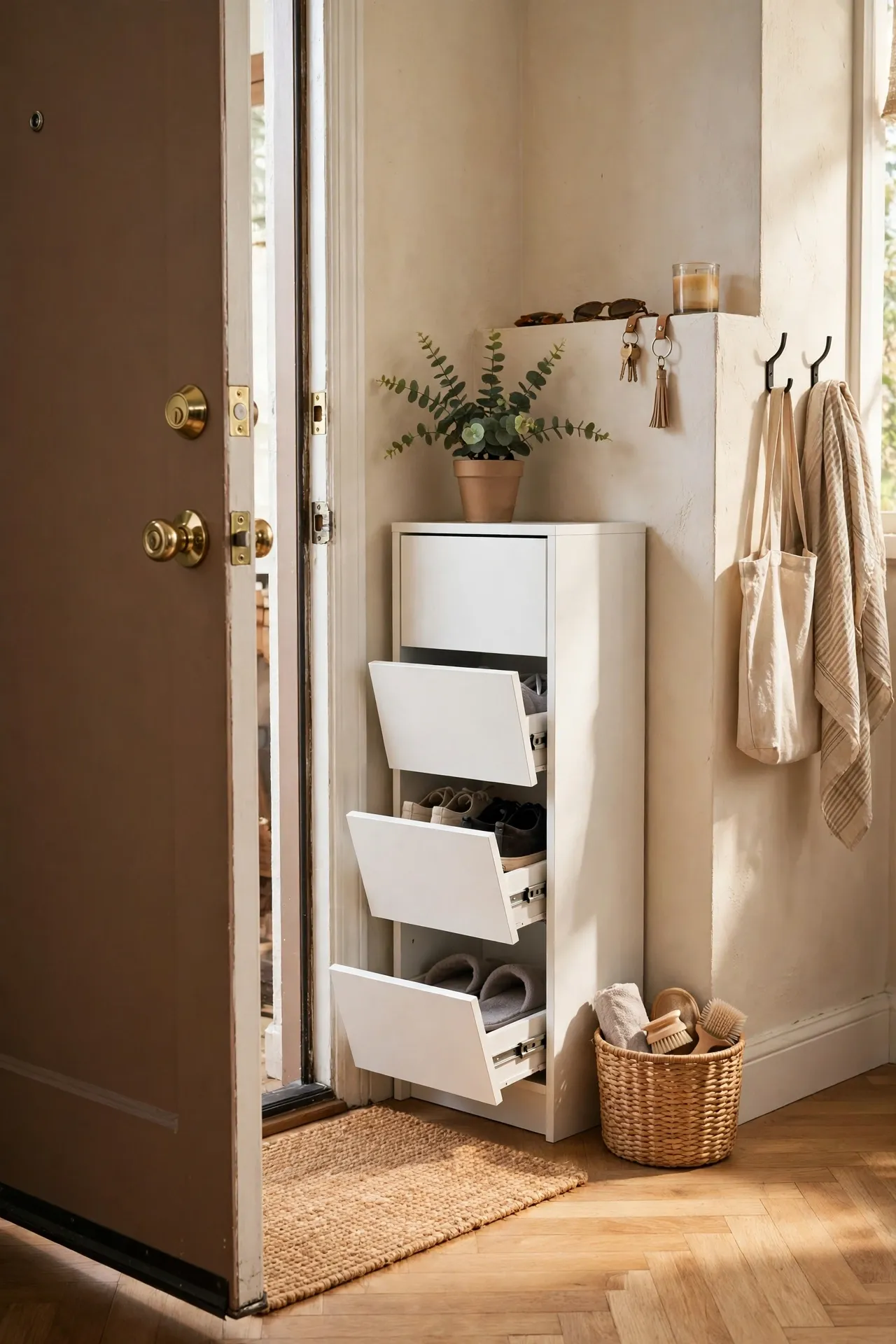
A slim shoe cabinet, the kind with tilt-out drawers, slides into the dead space behind a front door and swallows six or eight pairs without sticking out into the walkway. Measure the gap behind your door first, including how far the door swings, because a cabinet that blocks the door is worse than no cabinet at all. Keep only the shoes you wear weekly inside it, and store the rest elsewhere, or the drawers jam. I fitted one in a gap I thought was useless, and the hallway finally stopped looking like a shoe shop. For more hidden storage tricks, see my (see also: small-apartment-storage-ideas) roundup.
Cost: ~$45 | Time: 45 minutes
7. Use a Tall Basket for Umbrellas and Walking Sticks
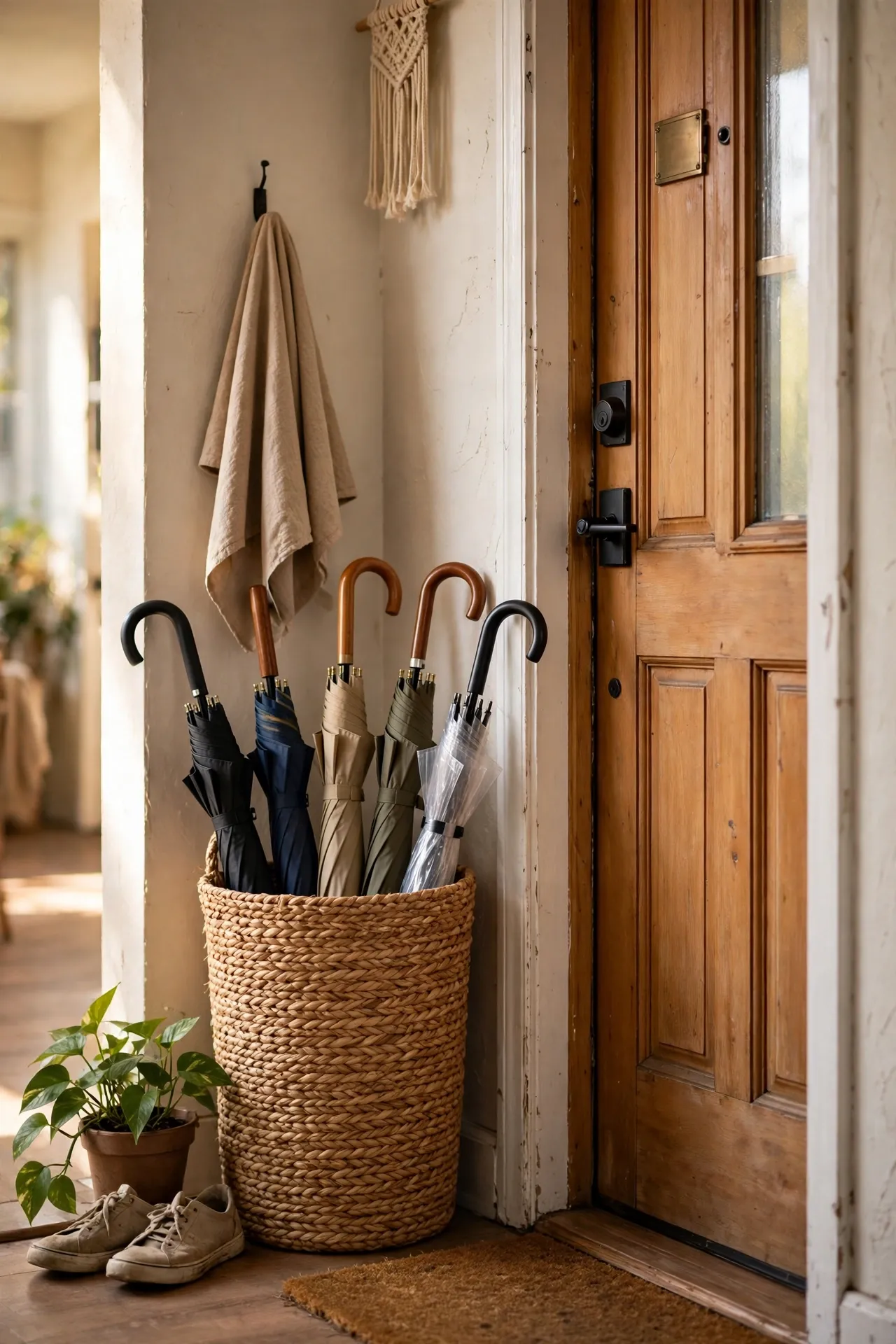
Umbrellas left by the door always end up leaning in a corner and sliding onto the floor, but a tall, sturdy basket solves it in one move. Pick a basket with a heavy base so it does not tip when you pull an umbrella out, and line the bottom with a small towel to catch drips. A woven seagrass basket looks warm and natural, while a metal one suits a more modern flat. Mine holds three umbrellas, a walking stick and a rolled-up shopping bag, all in a footprint smaller than a dinner plate. The mistake to avoid is a basket taller than your umbrellas, because then they vanish inside it.
Cost: ~$14 | Time: 5 minutes
8. Hang a Floating Shelf for Bags and Hats
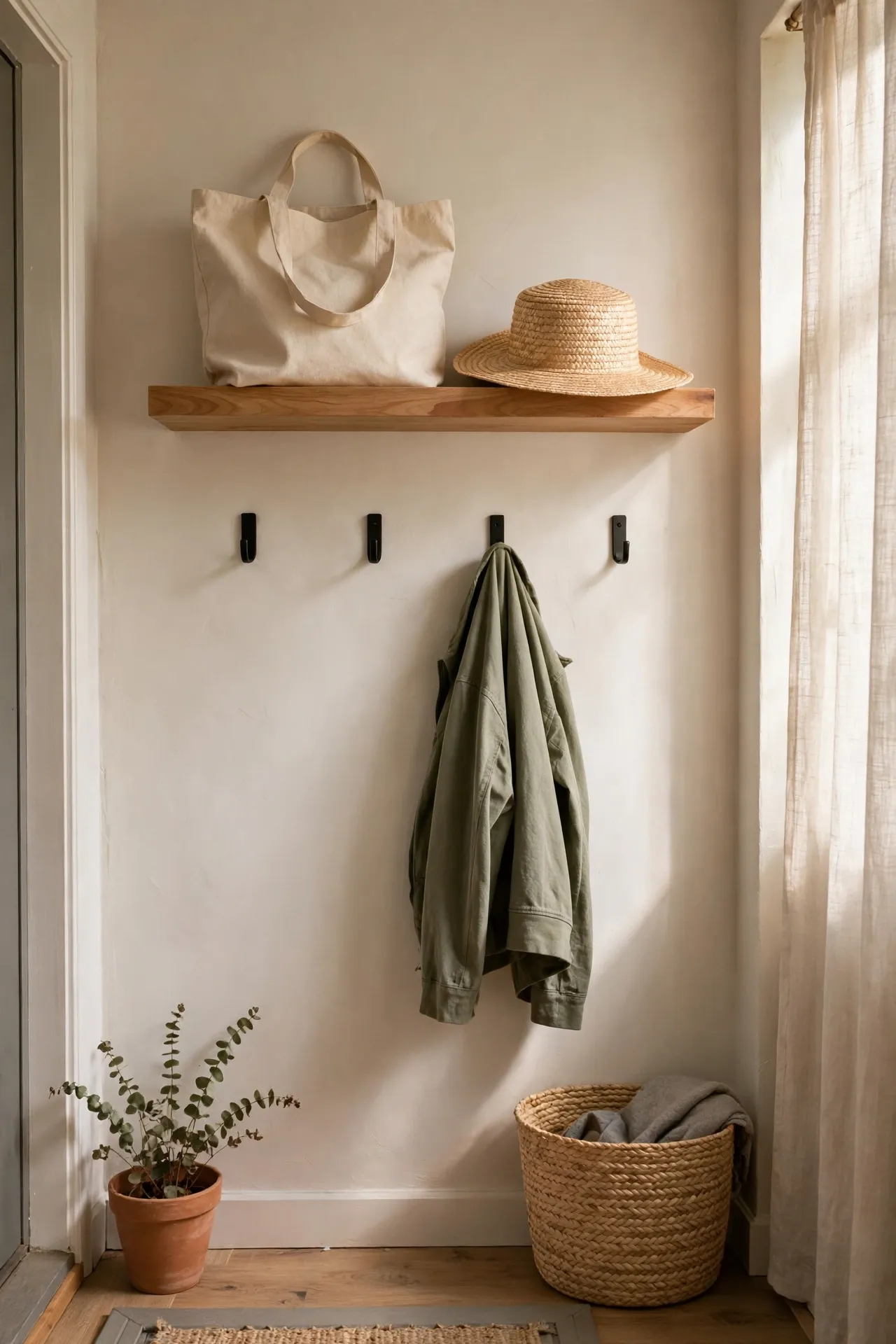
A single floating shelf above the hooks gives bags and hats a perch that keeps them off the floor and out of the walkway. Mount it high enough that you do not bump your head, but low enough to reach without a stool, which usually means just above head height. Use brackets rated for real weight, since a shelf full of handbags is heavier than books. I keep my everyday tote and a sun hat up there, and the shelf itself is barely noticeable, which is the point. Keep it to two or three items, because an overloaded shelf looks cluttered and sags over time.
Cost: ~$16 | Time: 30 minutes
9. Add Over-the-Door Hooks for Coats and Totes
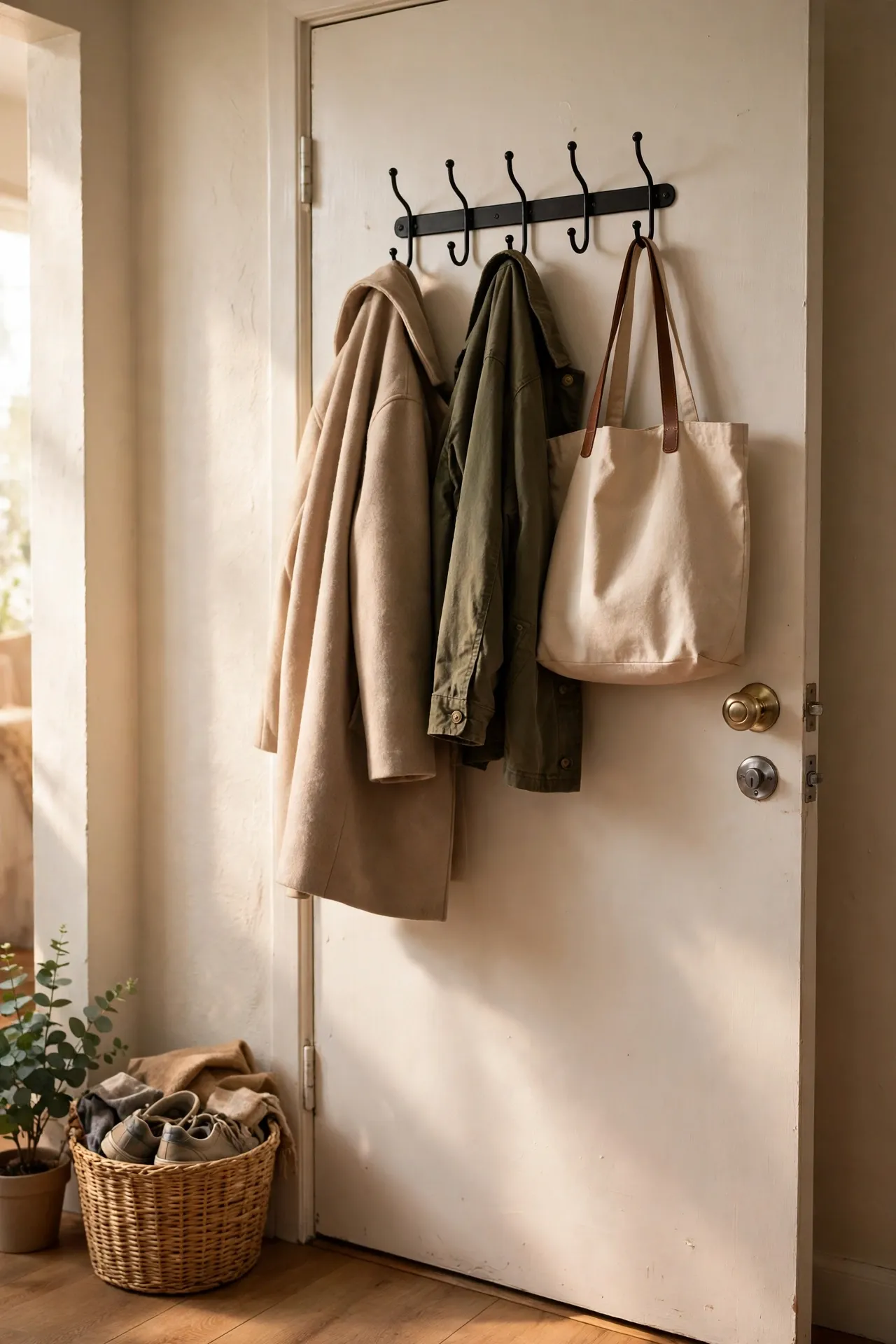
Over-the-door hooks are the renter’s best friend, because they add four or five hanging spots with no drilling, no holes and no deposit risk. Hang them on the inside of the front door for coats you grab daily, or on a bedroom door if the entry is too tight. Check that the door still closes properly first, since thick hooks can stop a door latching, and pad the metal with felt if it rattles. I used these in a flat where drilling was banned, and they held winter coats all season without a mark. They cost almost nothing and move with you to the next place.
Cost: ~$9 | Time: 5 minutes
10. Slide a Bench With Hidden Storage Under the Window
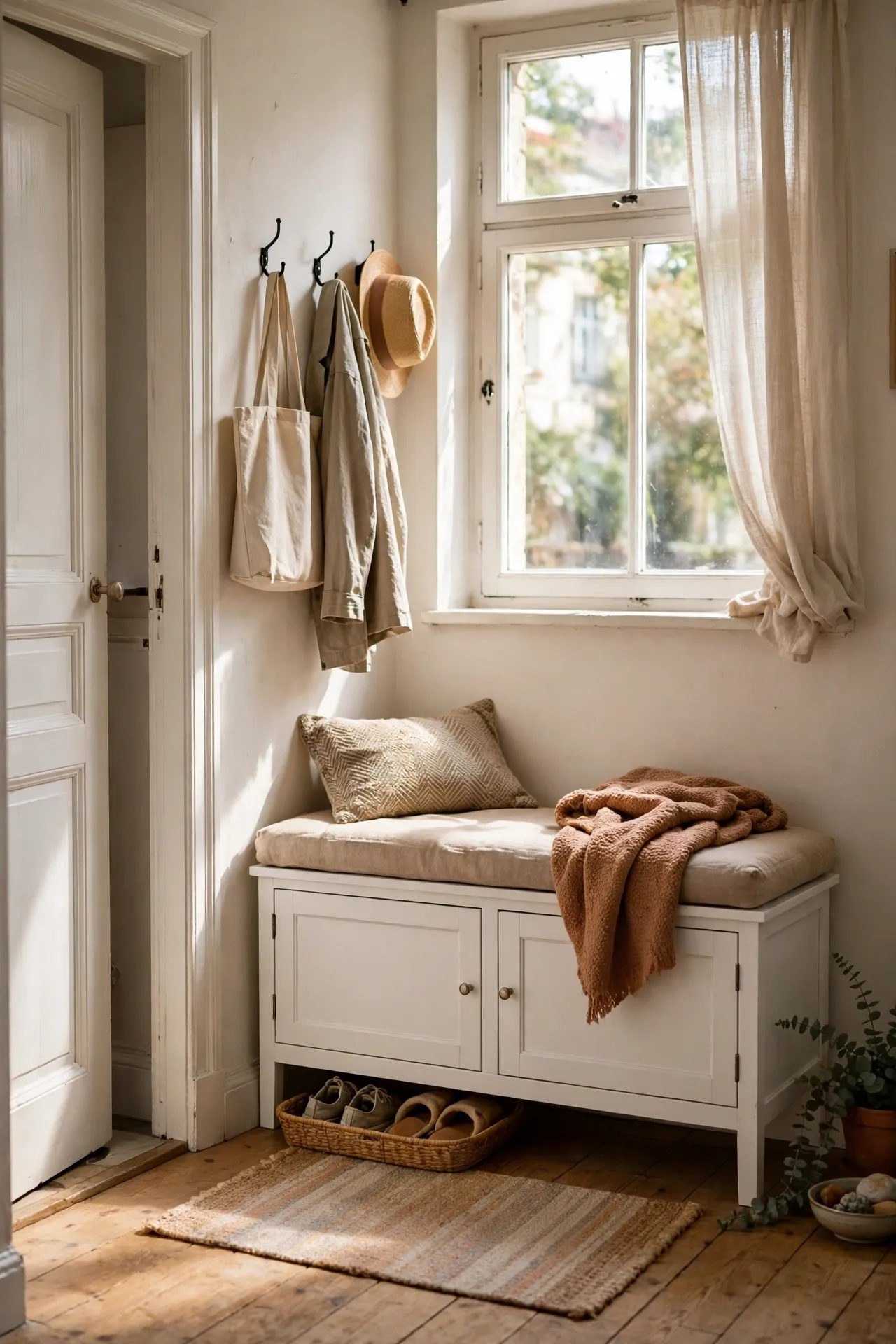
If your entry has even a small stretch of wall under a window, a storage bench turns it into a seat for putting shoes on and a box for hiding them after. Lift the lid, drop the shoes in, and the entry looks tidy in seconds, which beats lining shoes up neatly every single day. Choose a bench narrow enough to leave a clear walkway, and add a cushion in a washable fabric since it will get sat on daily. Mine holds two pairs of trainers, a scarf and a dog lead, and guests always comment on it. The mistake to avoid is buying a bench so deep that it eats the whole hallway.
Cost: ~$55 | Time: 20 minutes
11. Stack Two Wicker Baskets for Shoes and Scarves
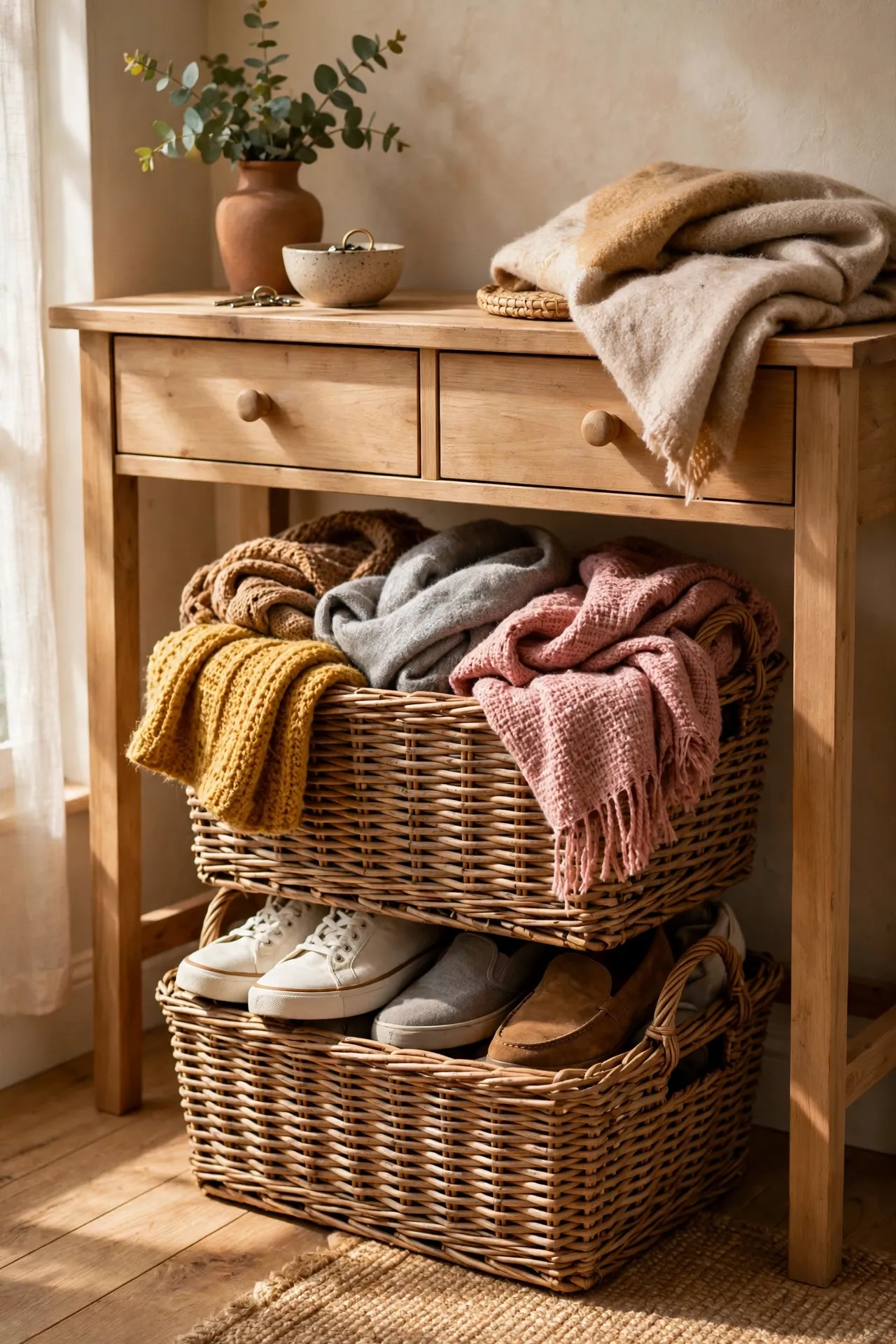
Two stackable wicker baskets under a console or bench sort the entry chaos into two simple piles: shoes below, scarves and gloves above. Label them only if you share the flat, since one person’s system is another person’s mystery, and keep the baskets open-topped so tossing things in takes one second. Wicker breathes better than plastic, which matters for damp shoes, and it looks far warmer too. I tried this, and the mistake to avoid is baskets so big they swallow small items whole. Medium baskets, emptied once a month, keep the system working instead of becoming another junk drawer.
Cost: ~$20 | Time: 10 minutes
Walls Working Harder
Floor space is the scarcest thing in an apartment entry, but wall space is usually going spare. This group puts the walls to work with colour, rails and small displays, so the entry gains personality without losing a single inch of floor.
12. Paint the Entry Nook a Warm, Welcoming Colour
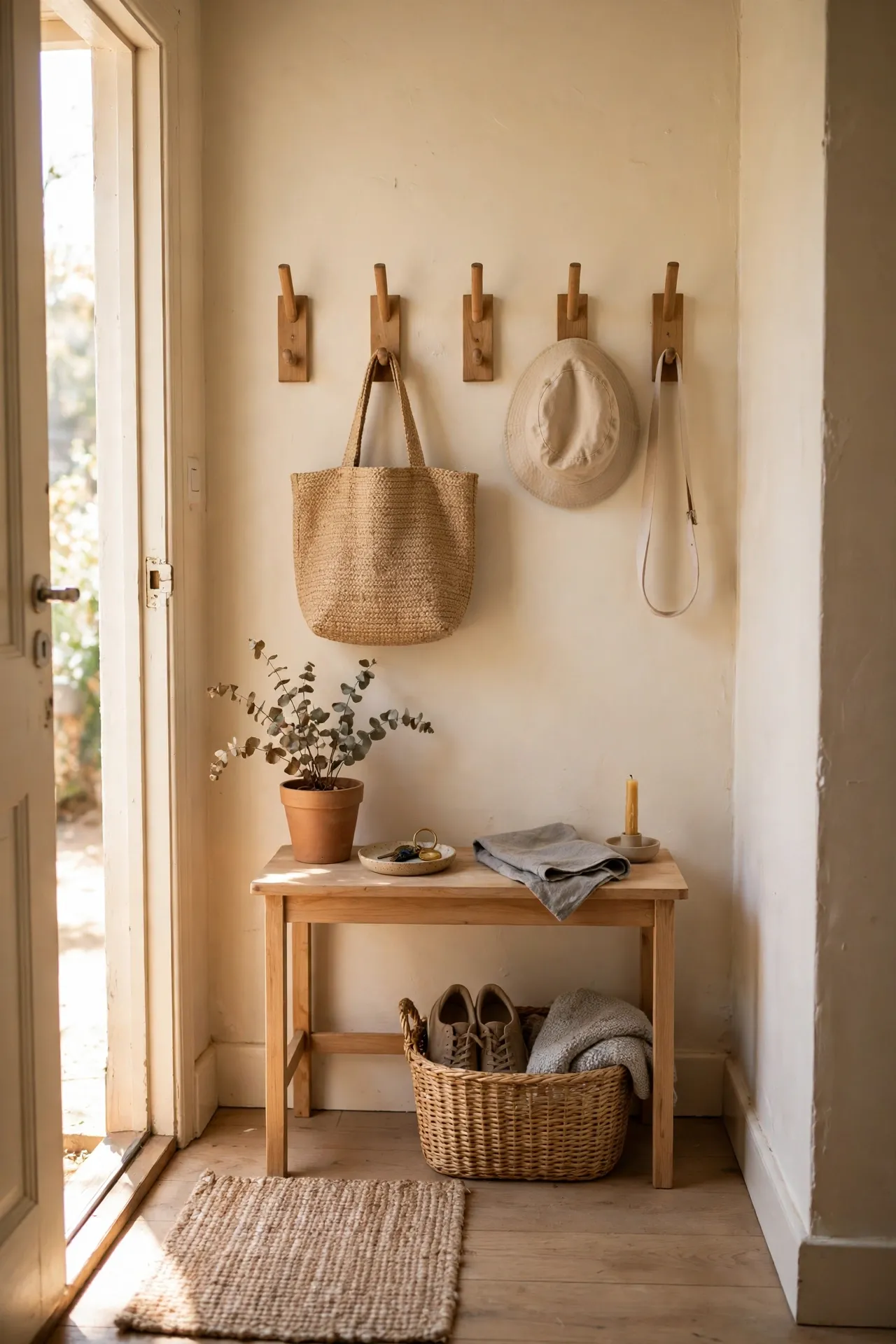
Painting just the entry nook, even one short wall, separates it from the rest of the flat and makes it feel like a real room instead of a corridor. Warm white, soft terracotta or pale sage all work, and one small tin is usually enough for the whole job. If you rent, ask about repainting first, or use peel-and-stick panels in a similar shade for the same effect. Test the colour in daylight and lamplight before committing, since small spaces shift colour fast. I painted my nook a warm cream, and visitors started complimenting the entry instead of stepping straight past it.
Cost: ~$25 | Time: 3 hours
13. Hang a Peg Rail for the Whole Family’s Gear
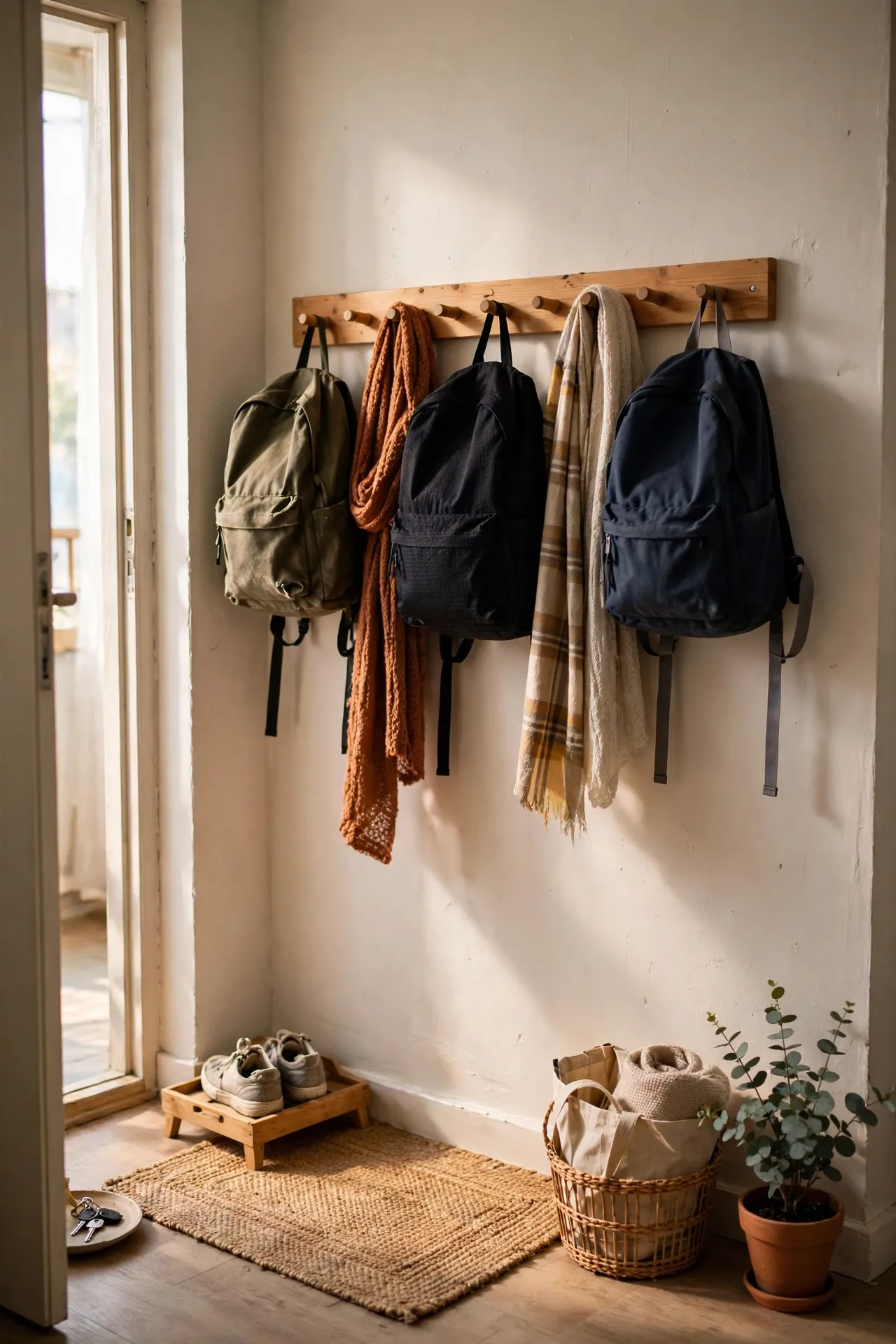
A peg rail beats a hook rail when several people share one entry, because the pegs stick out further and hold bulkier things like backpacks, bike helmets and chunky scarves. Mount it low enough for the shortest person in the flat, and give everyone one peg each, so nobody’s coat ends up on the floor. Wooden peg rails look handmade and warm, and they cost little more than a basic hook strip. I tried this in a shared flat, and the mistake to avoid is a rail with pegs too close together, because coats hung cheek by jowl just become one big lump.
Cost: ~$15 | Time: 30 minutes
14. Add Peel-and-Stick Wallpaper to One Entry Wall
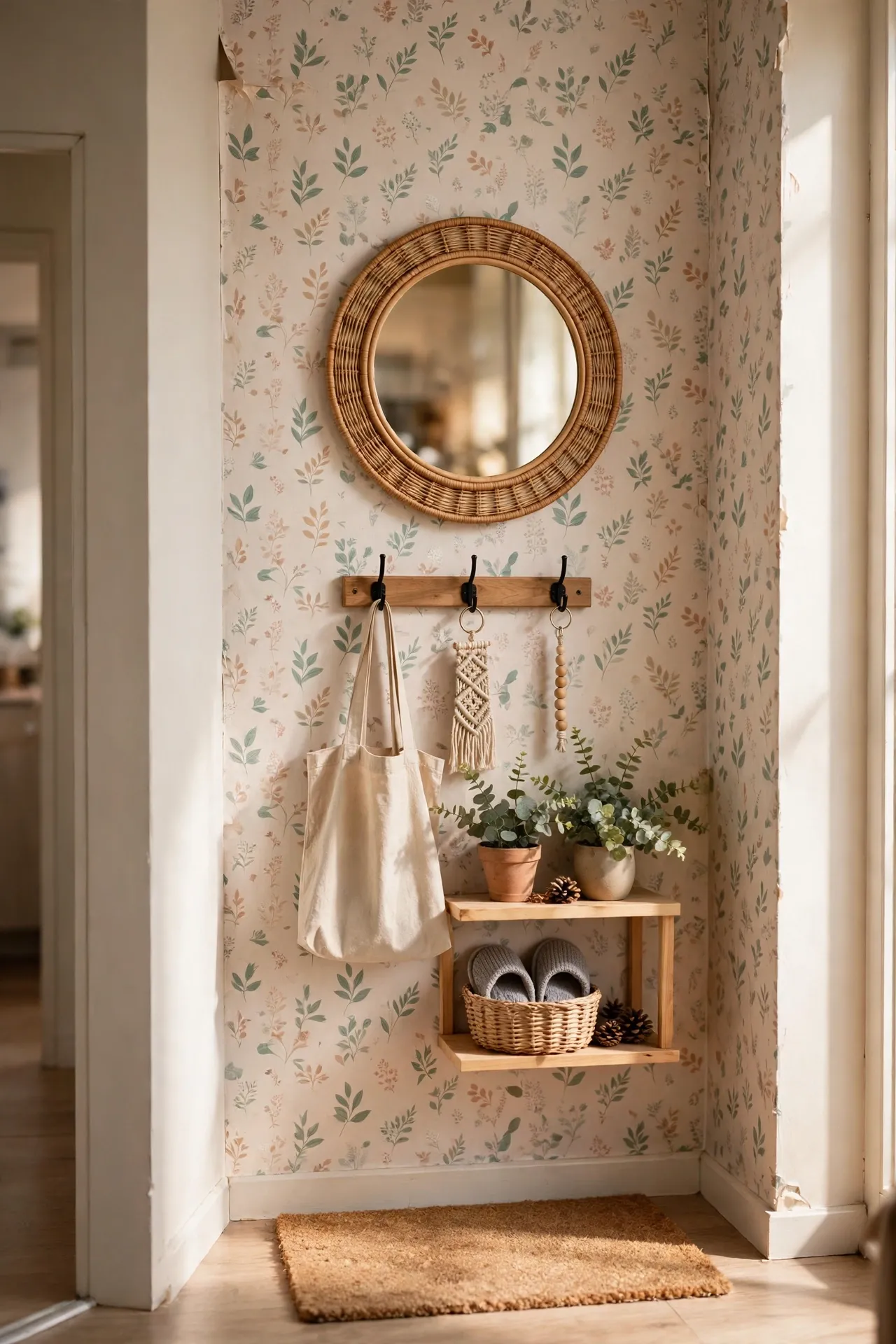
Peel-and-stick wallpaper gives a plain apartment entry instant character, and it peels off cleanly when you move out, which is why landlords usually allow it. Cover just one wall, or even one panel of a wall, since a small space drowns under too much pattern. Pick a small-scale print, line the first strip up carefully with a spirit level, and smooth bubbles out as you go. My hallway went from rented-white boredom to something with actual personality in one evening. For more renter-safe wall ideas, my (see also: renter-friendly-wall-decor) post has options that leave zero marks.
Cost: ~$28 | Time: 2 hours
15. Mount a Small Chalkboard for Notes and Reminders
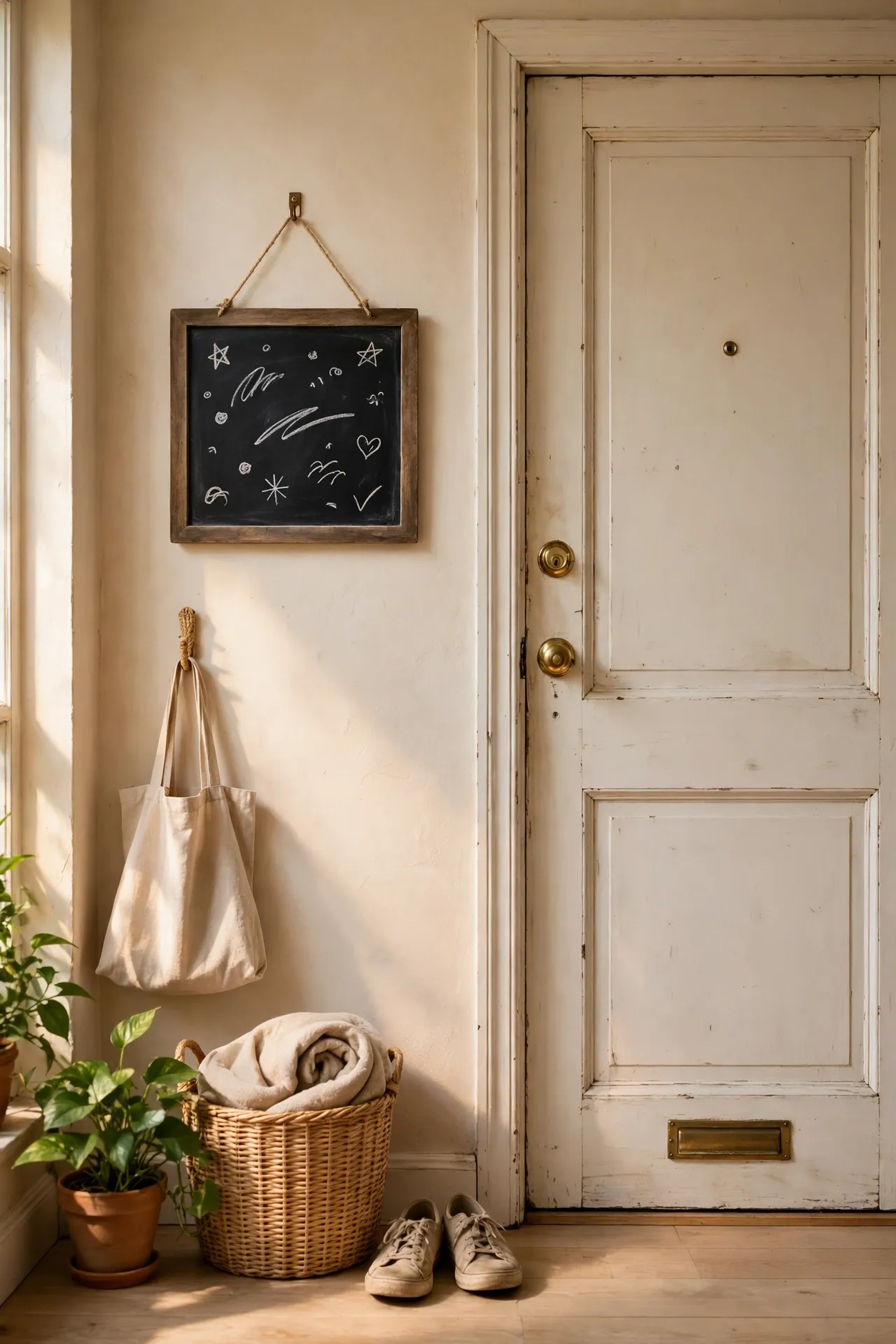
A small chalkboard by the door catches the notes that otherwise end up as phone reminders you ignore: bin day, a parcel to collect, keys for the neighbour. Hang it where you see it while putting shoes on, and keep the chalk in a little cup beside it, or the board stays blank forever. A framed chalkboard looks smarter than a bare one, and charity shops sell them for pennies. Mine says the same three things most weeks, and that is fine, because the point is the reminder, not the art. Wipe it clean on Sundays so old notes do not pile up and lose meaning.
Cost: ~$10 | Time: 15 minutes
16. Place a Potted Plant on a Tall, Slim Stand
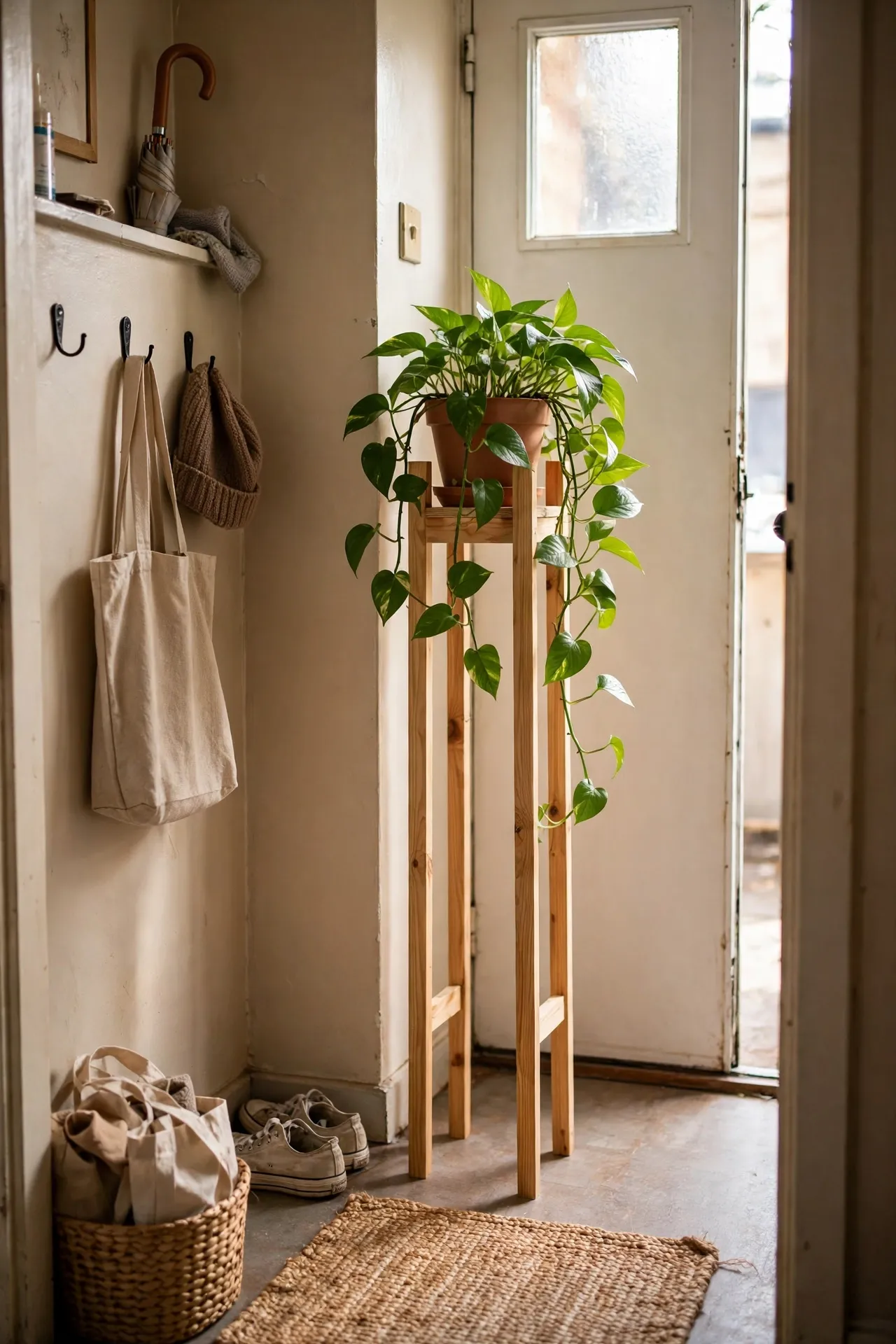
A plant on a tall, slim stand brings life to an entry without stealing floor space, because the stand’s footprint is barely wider than the pot itself. Pick a tough plant that survives low light, like a pothos or snake plant, since apartment entries rarely get much sun. Water it on the same day each week, and keep a saucer underneath so drips do not stain the floor. I killed two plants before learning that lesson, and the third has now survived three flats. The mistake to avoid is a trailing plant at head height, because you will walk into it daily.
Cost: ~$18 | Time: 10 minutes
17. Hang a Gallery of Small Framed Prints
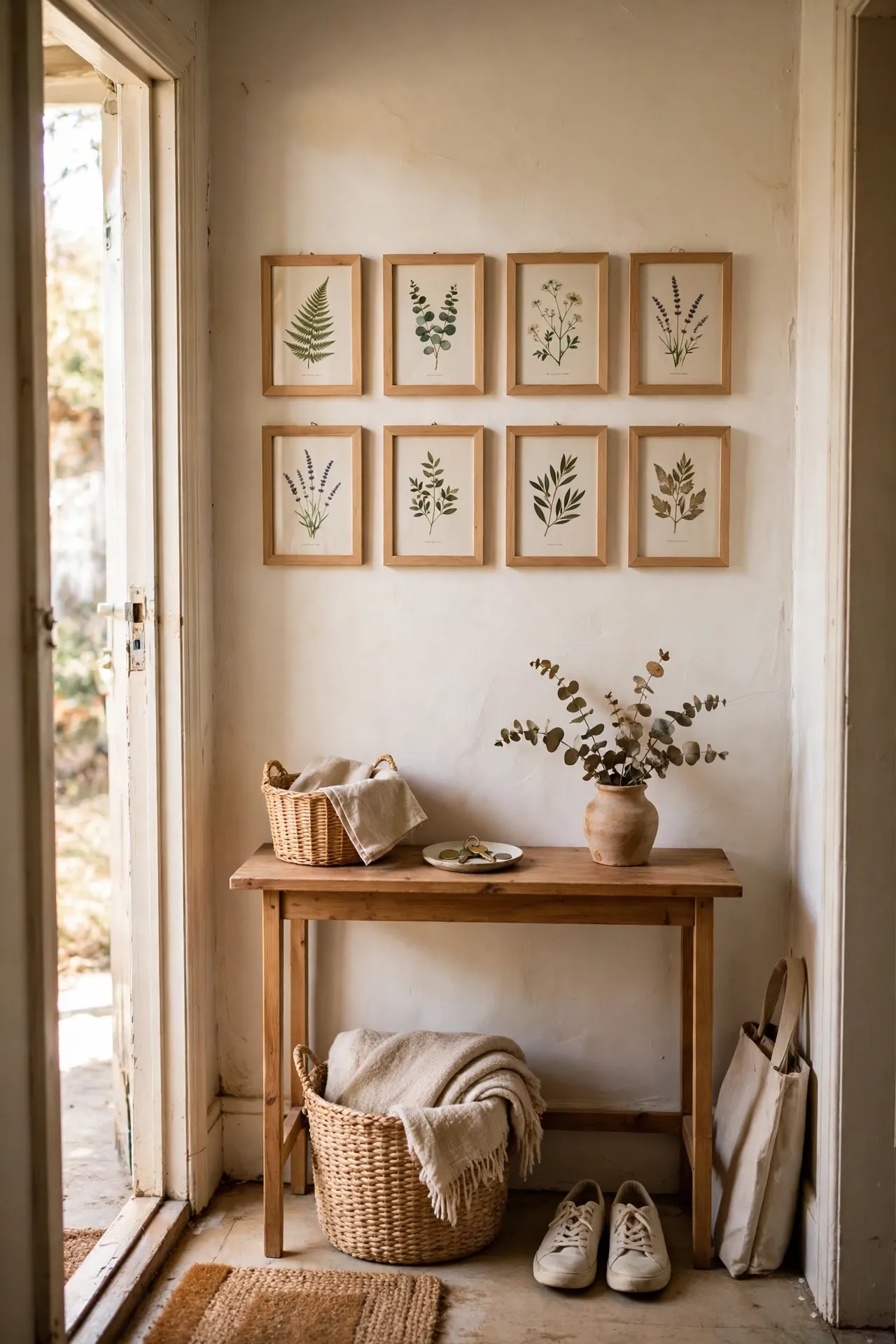
A gallery of small framed prints turns a bare entry wall into the first thing guests actually look at, and small frames suit a tiny space better than one big canvas. Use three to five prints in matching frames, hung in a straight row or a loose grid, and keep the theme simple, like travel photos or botanical prints. Hang them with damage-free strips if you rent, and measure the spacing with a strip of masking tape first. I framed postcards from trips instead of buying art, and the wall cost almost nothing yet gets more comments than anything else in the flat.
Cost: ~$20 | Time: 1 hour
Small Luxuries, Tiny Footprint
Once the practical stuff has a home, these last ideas add the finishing touches: light, scent and a few clever covers. None of them needs much space or money, but together they make coming home feel like a small daily pleasure.
18. Add a Battery Puck Light Above the Mirror
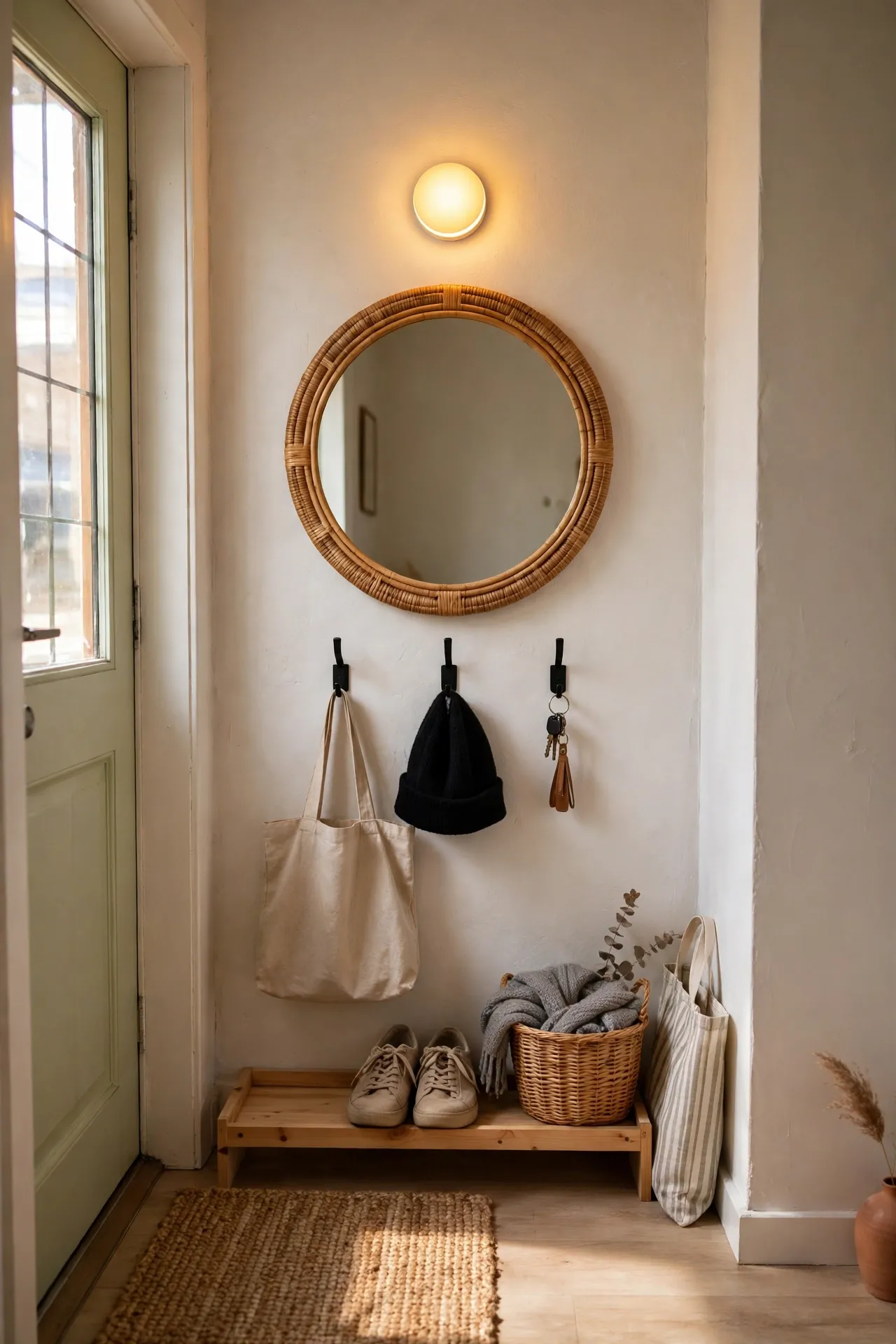
Many apartment entries have no decent light, which makes the whole space feel like a cupboard, but a battery puck light above the mirror fixes it without an electrician. Stick it with adhesive, tap it on when you need it, and the mirror suddenly does its job properly. Choose a warm white light, since cool white makes skin look grey and the entry feel cold. Keep spare batteries in the console drawer, because the light always runs out on a dark winter morning. I fitted two pucks in ten minutes, and the entry went from gloomy to genuinely welcoming after dark.
Cost: ~$8 | Time: 10 minutes
19. Keep a Foldable Step Stool for High Hooks
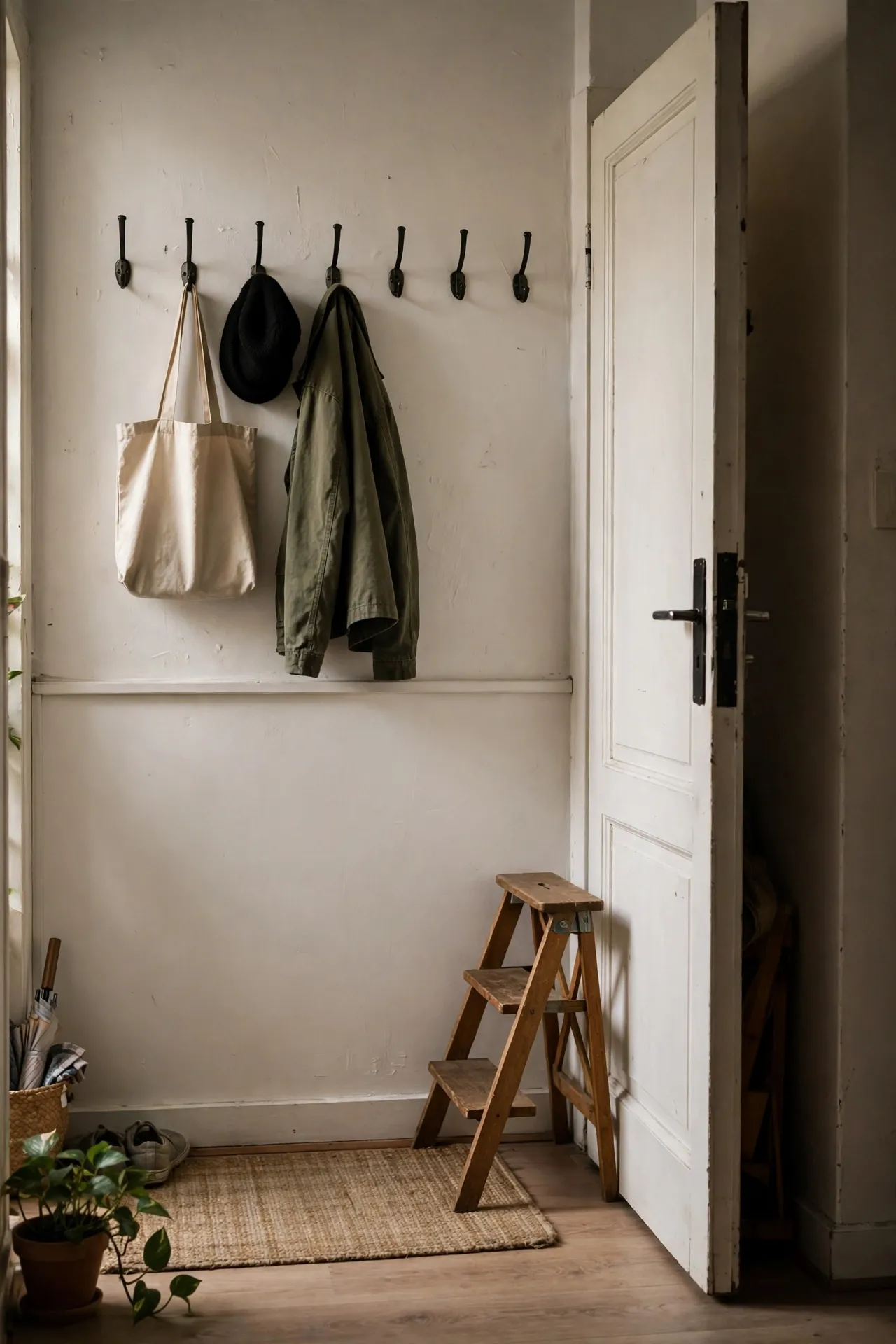
High hooks and shelves only work if you can actually reach them, so a foldable step stool tucked behind the door is the quiet hero of a tiny entry. Fold it flat when not in use, hang it on a hook itself, and pull it out for the top shelf or the winter-coat peg. Pick a sturdy one rated for your weight, since a wobbly stool is worse than no stool at all. Mine lives behind the front door, takes up almost no space, and means I finally use the top row of hooks instead of ignoring them. The mistake to avoid is a stool so bulky it becomes another thing cluttering the hall.
Cost: ~$16 | Time: 5 minutes
20. Use a Vintage Crate as a Catch-All Bin
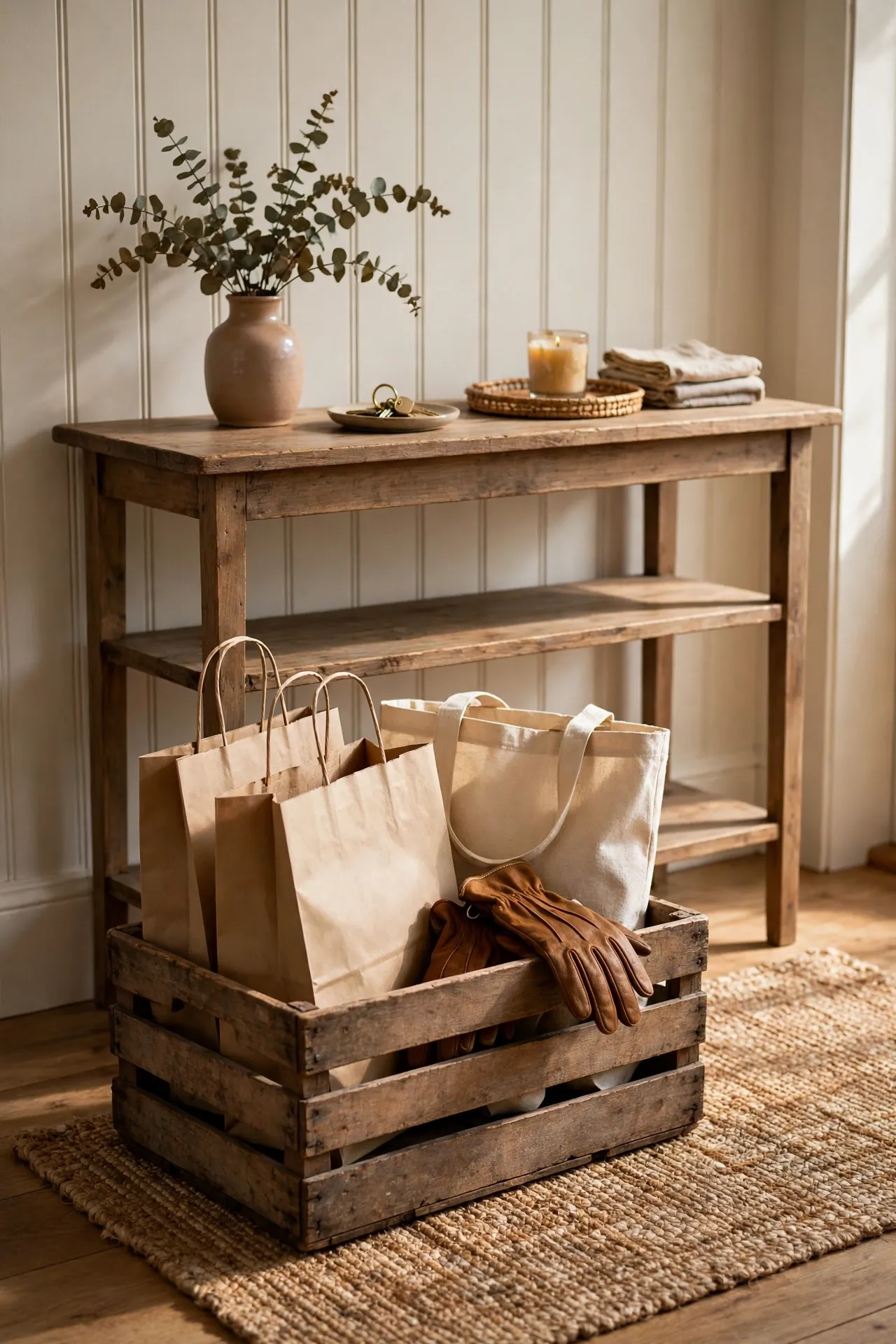
A vintage wooden crate under the console catches everything that has no other home: the dog’s spare lead, reusable shopping bags, a spare pair of gloves. Unlike a plastic box, a crate looks intentional, and unlike an open pile, it keeps the mess contained in one tidy rectangle. Line it with a fabric scrap if the wood is rough, and keep it to one crate only, since two crates quickly become a crate collection. I found mine at a flea market for a few dollars, sanded it once, and it has held the entry odds and ends ever since. Empty it monthly, or it slowly turns into storage for things you forgot.
Cost: ~$12 | Time: 15 minutes
21. Add a Coir Doormat That Traps Dirt Fast
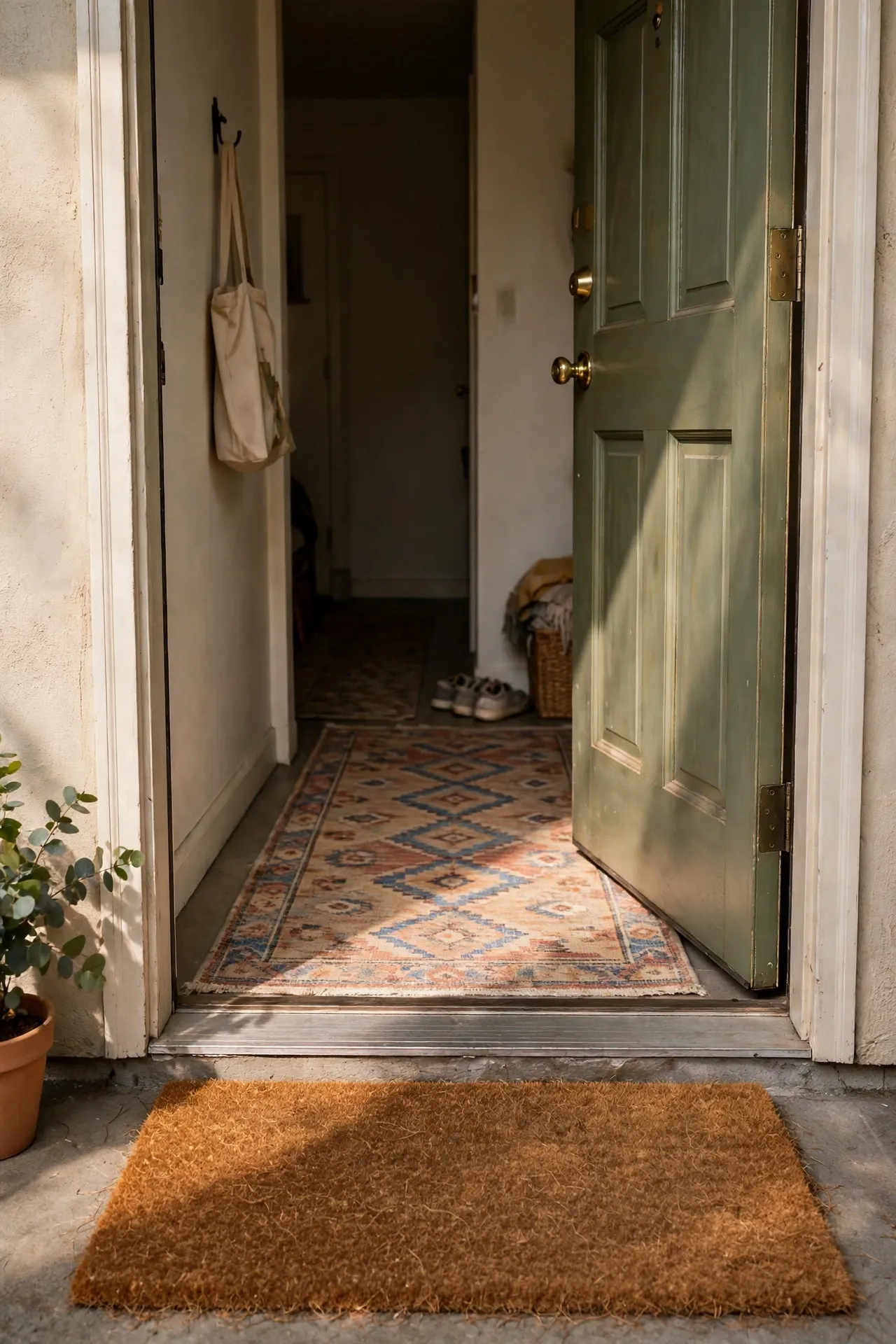
A thick coir doormat outside or just inside the door traps mud and grit before it reaches your floors, which matters twice as much in a small flat where dirt spreads everywhere fast. Pick one that fits the door width without bunching, and shake it outside weekly, or it stops trapping anything and just looks dirty itself. Coir lasts far longer than cheap fabric mats, and a simple pattern hides wear between replacements. My floors stayed noticeably cleaner after I swapped a thin mat for coir, and the runner inside lasted longer too. For more first-impression ideas, see my (see also: budget-entryway-decor) roundup.
Cost: ~$14 | Time: 5 minutes
22. Hang a Curtain to Hide an Open Coat Nook
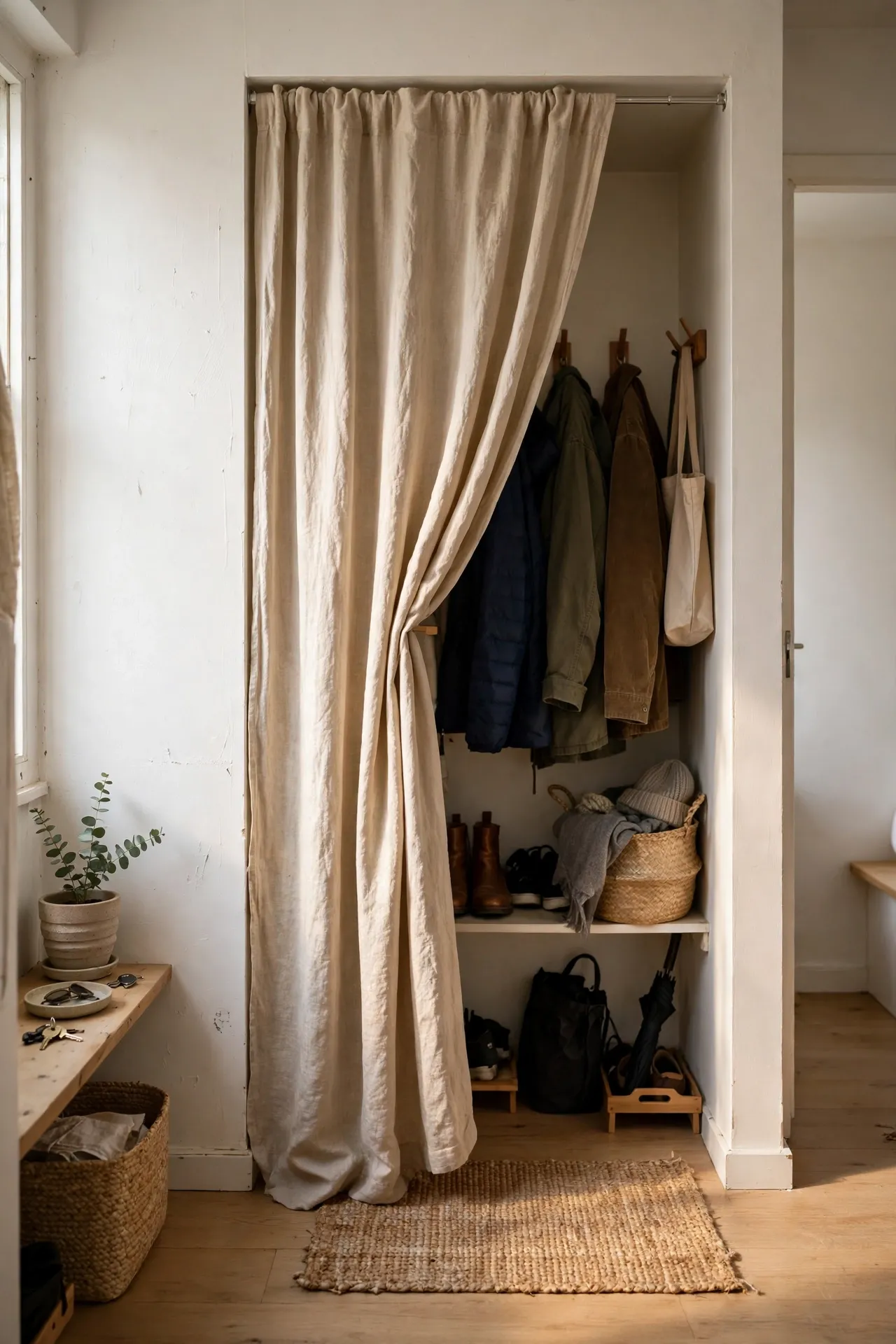
Some apartments have an open coat nook instead of a closet, and a simple curtain turns it into a tidy cupboard without any building work. Hang a tension rod inside the nook, pick a curtain in a fabric that matches the hallway, and pull it closed when guests arrive. Tension rods need no drilling, which keeps landlords happy, and the curtain hides coats, bags and the vacuum in one sweep. I tried this, and the mistake to avoid is a curtain that drags on the floor, because it collects dust and trips everyone. Hem it an inch above the floor and it looks custom-made.
Cost: ~$18 | Time: 20 minutes
23. Place a Slim Rolling Cart for Dog Leads and Bags
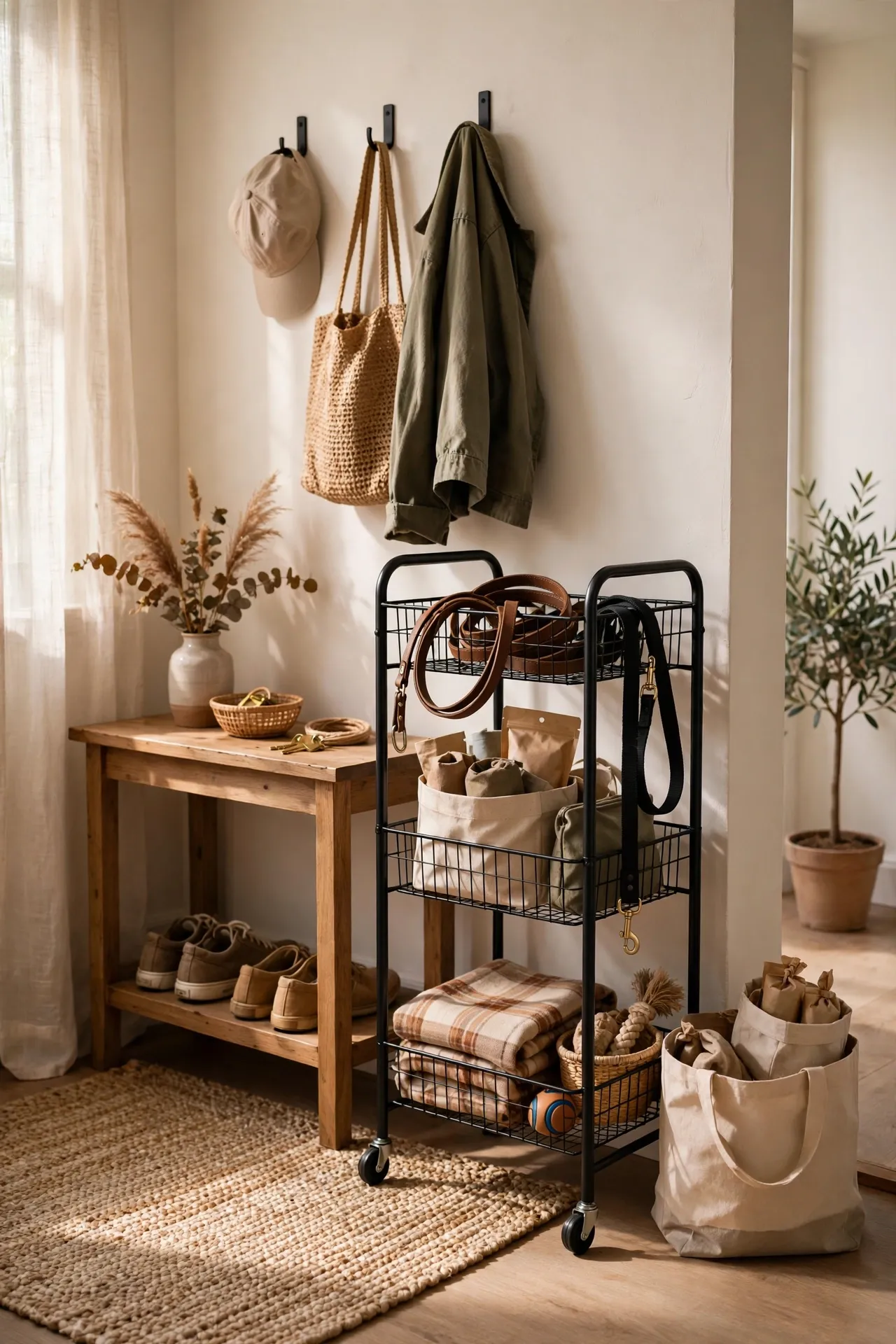
A slim rolling cart, no wider than a book, parks beside the console and holds dog leads, treat pouches, poop bags and spare keys in one roll-out spot. Roll it out for the morning walk, roll it back when you return, and it never blocks the hallway in between. Look for one with three tiers and small wheels that lock, so it stays put on smooth floors. Mine also holds a lint roller and a torch, which means I stop forgetting things on the way out. The mistake to avoid is overloading the top tier, because a top-heavy cart tips the moment you pull it.
Cost: ~$22 | Time: 15 minutes
24. Add a Small Scented Candle on the Console
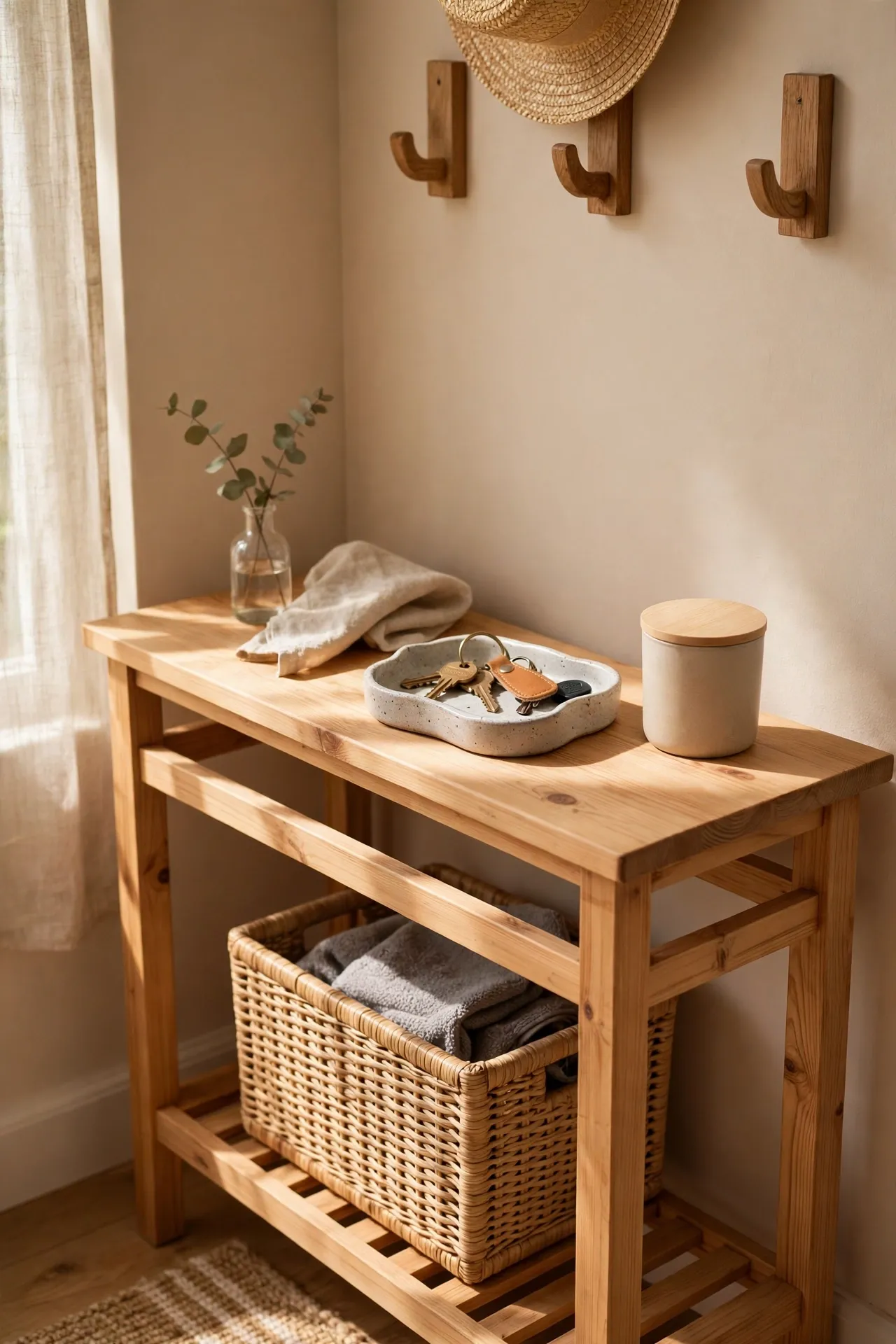
Scent is the first thing guests notice in a tiny entry, and a small candle on the console makes the whole flat smell like someone cares about it. Pick a fresh, light scent rather than anything heavy, since small spaces amplify fragrance fast, and never leave a candle burning when you leave the flat. A lidded candle doubles as decoration when unlit, and one candle lasts months if you only light it in the evenings. I light mine for ten minutes when friends come over, and the entry smells welcoming instead of like yesterday’s cooking. Keep it away from the curtain and the coat hooks for safety.
Cost: ~$9 | Time: 5 minutes
25. Keep One Hook Always Empty for Guests
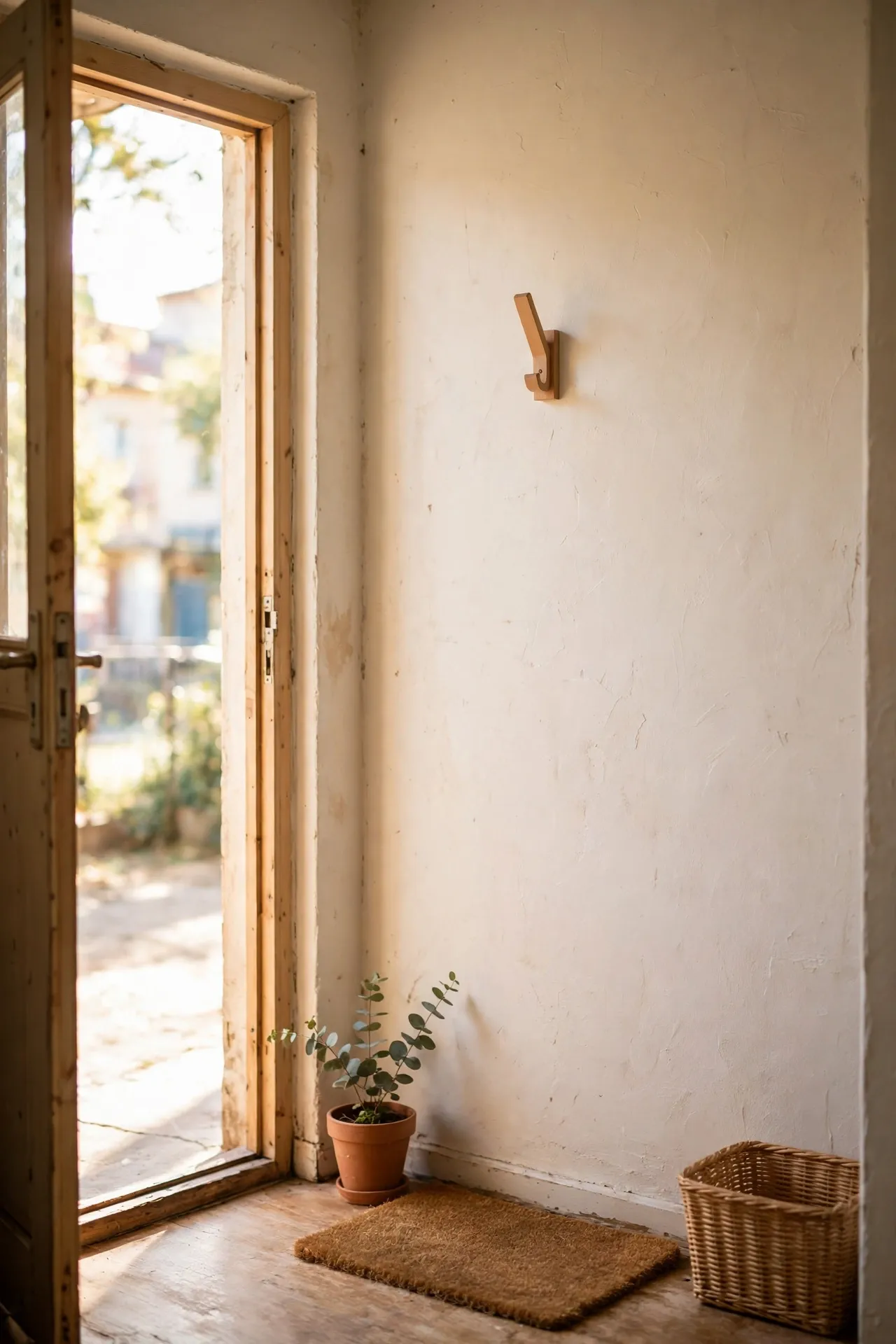
The kindest tiny entry idea costs nothing at all: keep one hook permanently empty, so a guest never has to drape their coat over a chair or hold it all evening. It also stops your own coats creeping onto every hook until there is no spare, which happens faster than you think. Put the guest hook nearest the door, at an easy height, and defend it like a house rule. I started doing this after a friend balanced her coat on my shoe basket, and now guests notice the spare hook immediately. A tiny entry that welcomes visitors properly feels bigger than one that merely stores things well.
Cost: ~$0 | Time: 5 minutes
Tiny entries reward the renter who edits hard and spends small. Start with hooks, a tray and a mat, then add storage and light as the budget allows. Before long, the smallest corner of your flat will be the one that works hardest, and walking through the front door will feel like arriving somewhere on purpose.
