25 Dollar Store Entryway Finds for Small Spaces
First impressions are made at the front door, and mine used to be a pile of shoes and a key bowl that had never once caught a key. It turns out the entryway is the cheapest room in the house to fix, because it needs so little. These dollar store entryway finds are the pieces I keep spotting on the shelves and using in real hallways — narrow, rented, and short on square metres. Most of them cost less than a takeaway lunch, and together they can make a two-metre hallway feel like it was designed on purpose.
1. Slim Console Table for a Tight Hallway
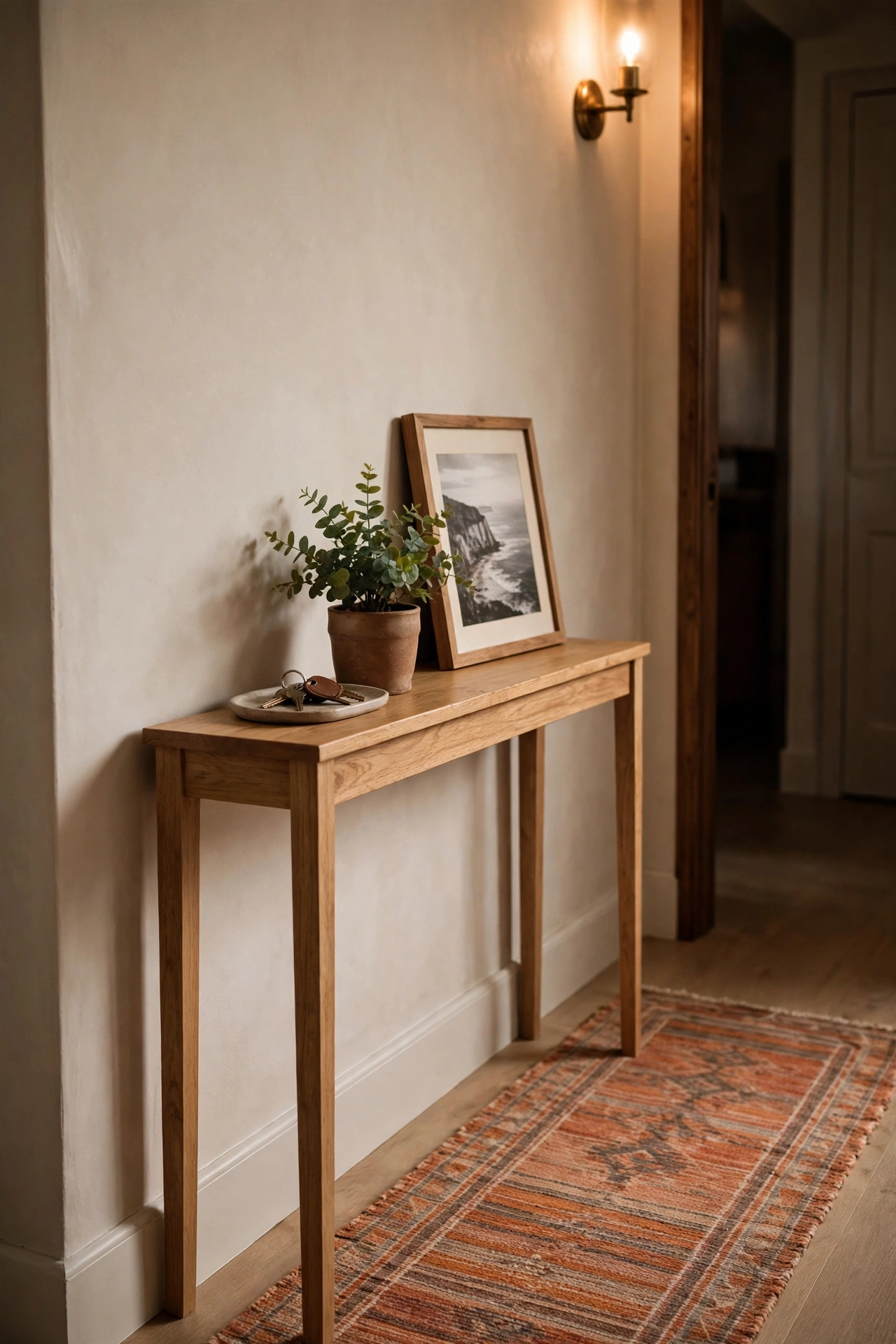
A console no deeper than a paperback gives your hallway a landing zone without eating the walkway. Place it against the longest wall, anchor it with a small rug underneath, and keep the top to three items: a tray, something green, and one personal piece. I measured my hallway first and chose a 25-centimetre-deep table, which sounds impossibly narrow until you realise keys and post need almost no depth at all.
Pro tip: Shop for the depth before the looks — anything deeper than 30 centimetres will dominate a narrow hall and snag every coat that passes.
Cost: ~$8 · Time: 20 minutes
2. Wooden Peg Rail for Coats and Bags
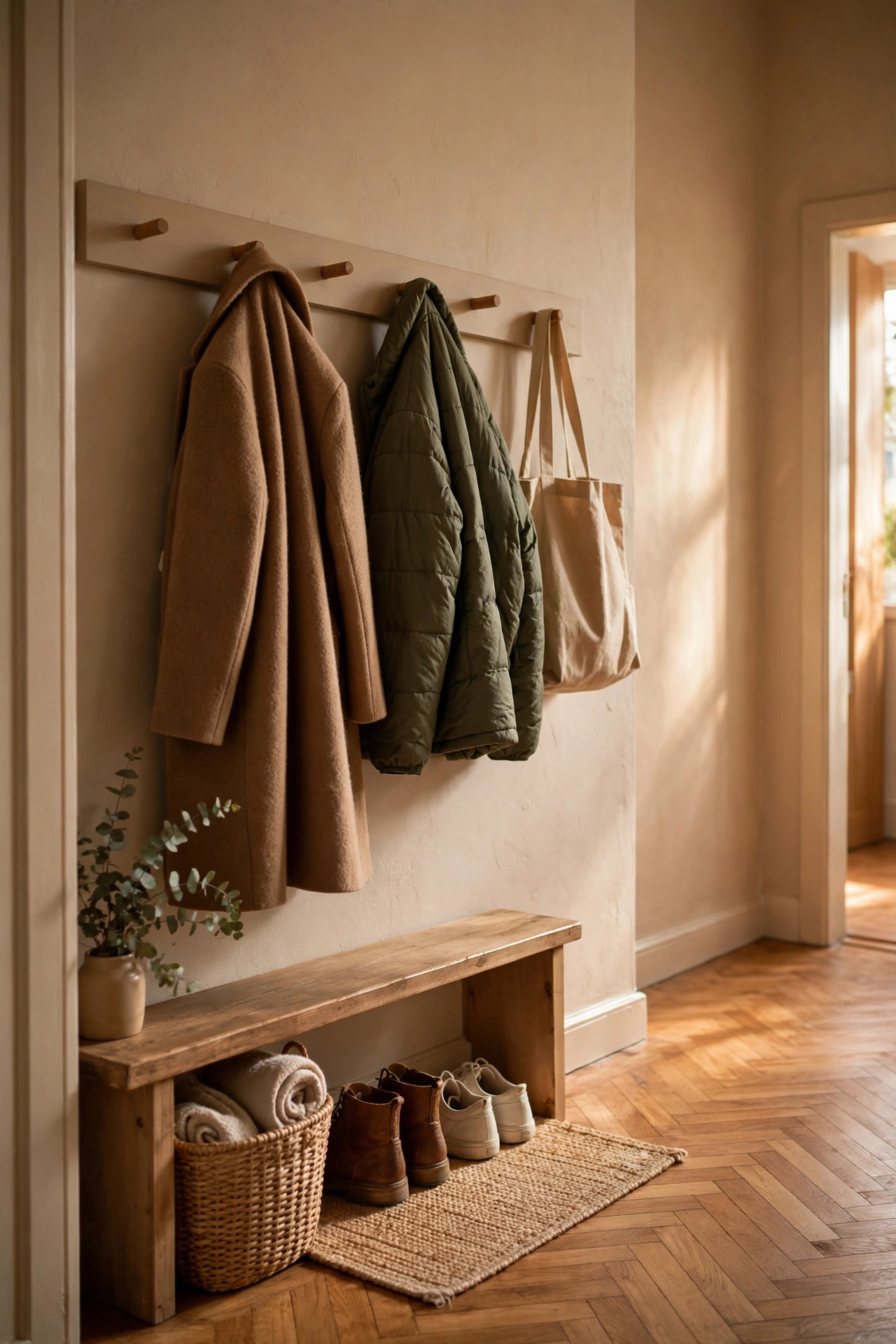
Four wooden pegs on a simple rail hold the coats you actually wear, and they ask for almost no wall space at all. Fix the rail at a height everyone in the house can reach, space the pegs a hand’s width apart, and hang the current week’s coats only — the rest belong in a cupboard. I put one by my front door and the coat pile on the dining chair finally vanished. Use proper wall plugs for plasterboard, because a rail of winter coats is heavier than it looks.
Pro tip: Paint the rail the same colour as your wall and it visually disappears, leaving the coats looking like they hang from nothing at all.
Cost: ~$4 · Time: 30 minutes
3. Round Wall Mirror to Open the Space
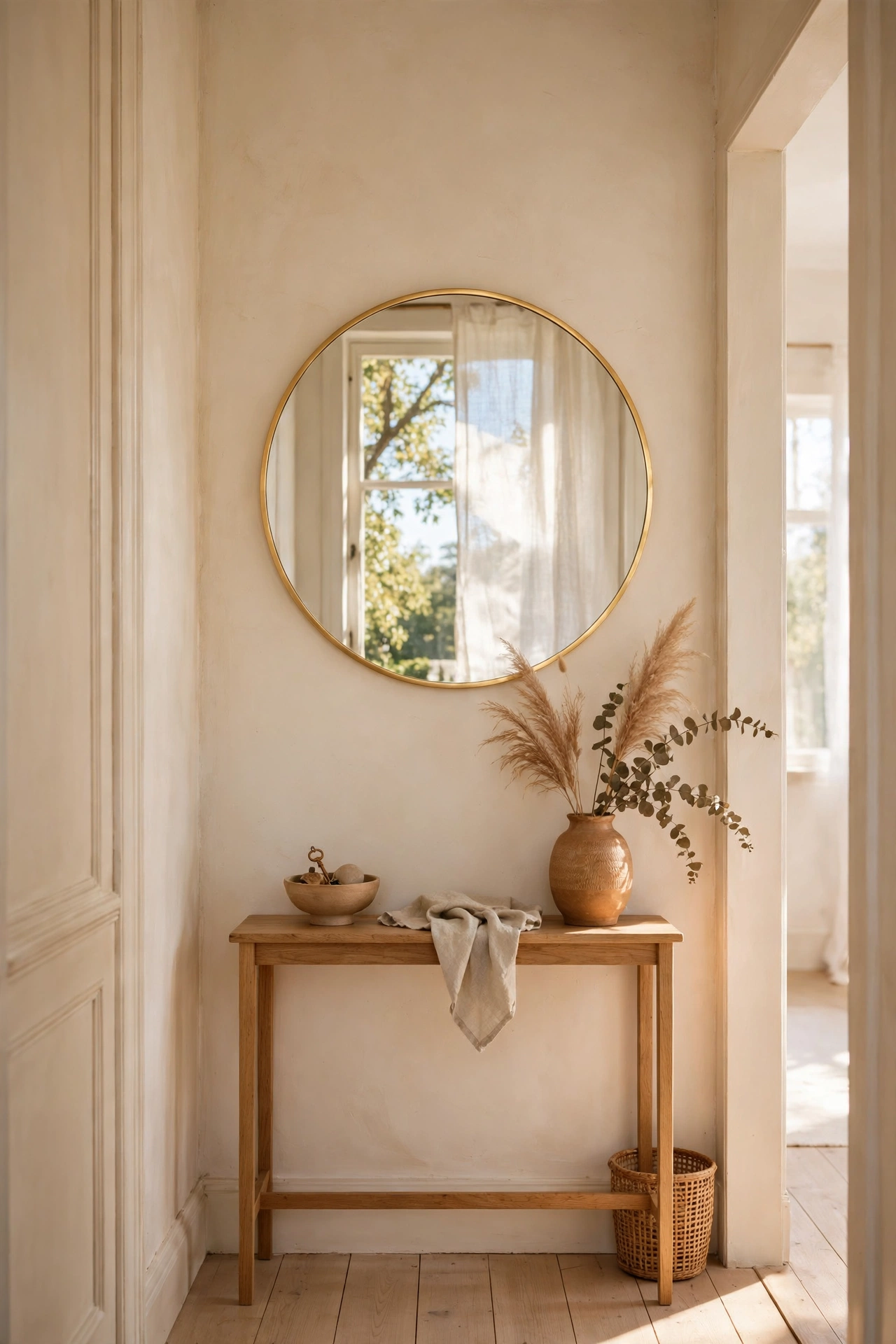
A round mirror opposite the door bounces light down the hallway and makes a narrow space feel twice as wide. Hang it at eye level, centred over the console if you have one, and angle it slightly to catch the nearest window. I hung one in my gloomy hallway and visitors started assuming I’d added a skylight, which was a generous but welcome misunderstanding. Wipe it down with glass cleaner before hanging, because you will never bother doing it properly once it’s up.
Pro tip: A plain thin frame looks more expensive than a chunky ornate one — spray a cheap gold frame matte if the shiny plastic gives the game away.
Cost: ~$5 · Time: 15 minutes
4. Narrow Runner Rug
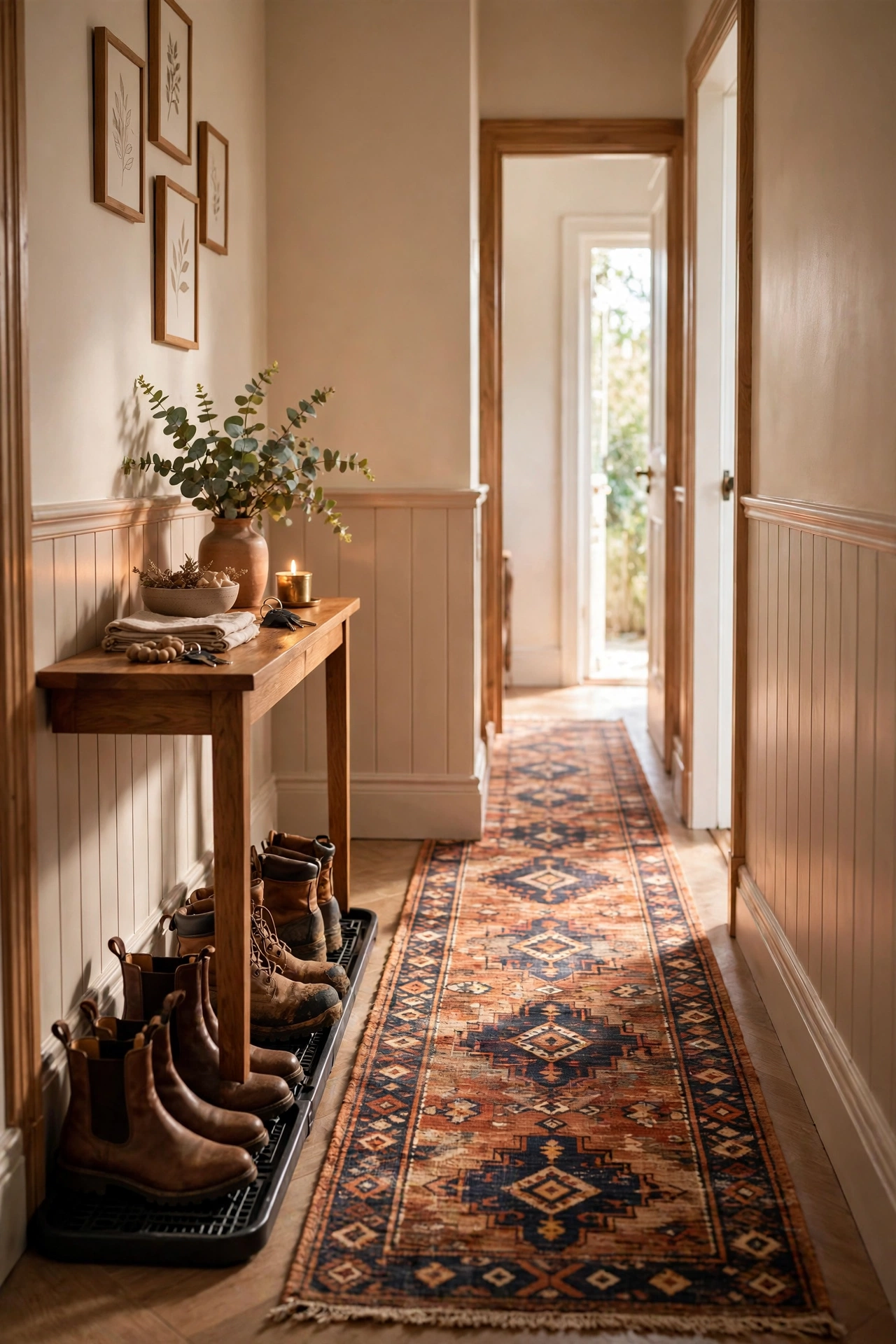
A runner defines the hallway as a room rather than a corridor, and it takes the beating that floors otherwise do. Choose one about 60 centimetres wide, long enough to run most of the hall, and low-pile so the door still opens over it. I tried this in my own entryway and the mud that used to travel straight to the living room stopped at the rug instead. Shake it out weekly and it lasts for years. One mistake to avoid: skip the fluffy high-pile runners by the door, because they trap grit that scratches the floor underneath.
Pro tip: Lay the runner with the pattern running lengthways — stripes or borders that follow the hall make it feel longer, not wider.
Cost: ~$6 · Time: 10 minutes
5. Ceramic Catch-All Tray for Keys
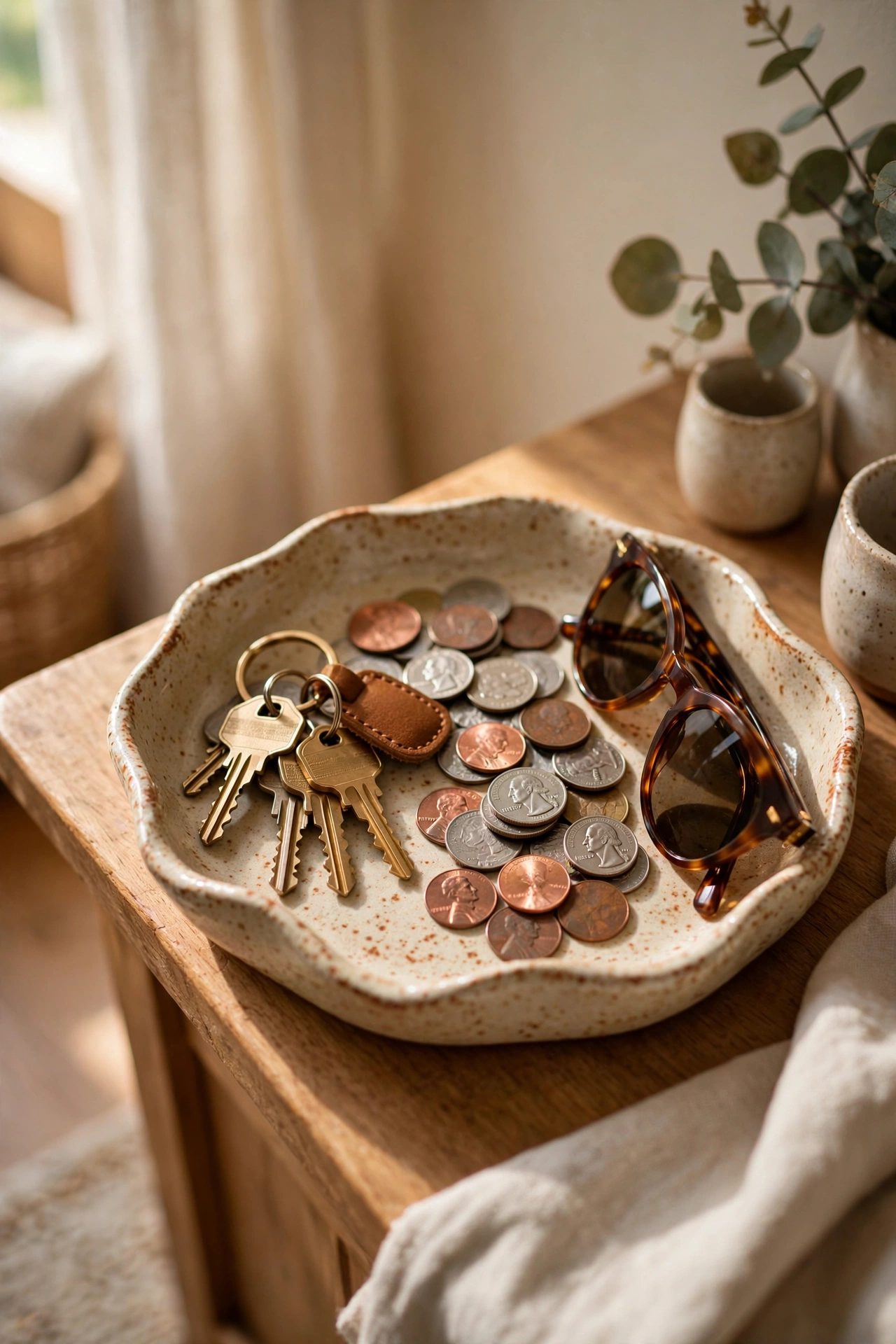
A small ceramic tray on the console is where keys, coins and the sunglasses land — every time, no exceptions. Choose a heavy one so it doesn’t slide when you drop things in, and keep it near the door edge of the console for a natural drop habit. I trained myself to use mine by putting it exactly where my hand landed after turning the lock, and the great key hunt of 2024 quietly ended. Empty the coin layer monthly, because it fills faster than you’d believe.
Pro tip: Pick a tray with a lip at least two centimetres high — flat dishes look elegant but keys slide straight off them onto the floor.
Cost: ~$3 · Time: 5 minutes
6. Tall Umbrella Stand
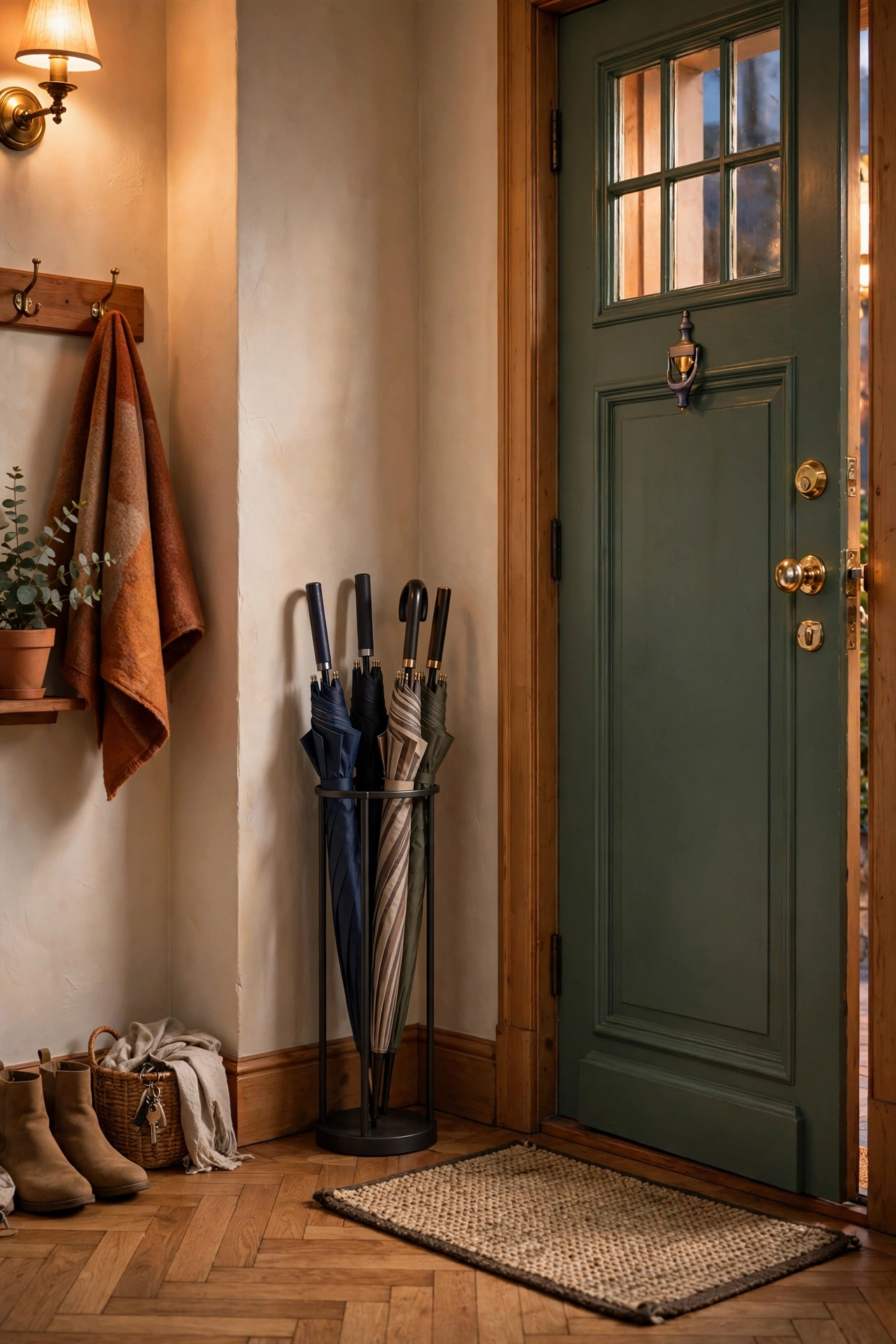
A slim umbrella stand in the corner keeps wet umbrellas off the floor and dry ones in one place. Stand it where the drip won’t reach the runner, drop in the umbrellas handle-up, and empty the base drip tray after heavy rain. I bought one after watching an umbrella slide across my hallway floor and take the paint off the skirting board. The taller, narrower stands work best in small halls because they tuck into corners that fit nothing else.
Pro tip: Add a folded tea towel to the bottom as a liner — it soaks up drips and washes in seconds, saving the stand’s base from going rusty or musty.
Cost: ~$5 · Time: 5 minutes
7. Rubber Boot Tray by the Door
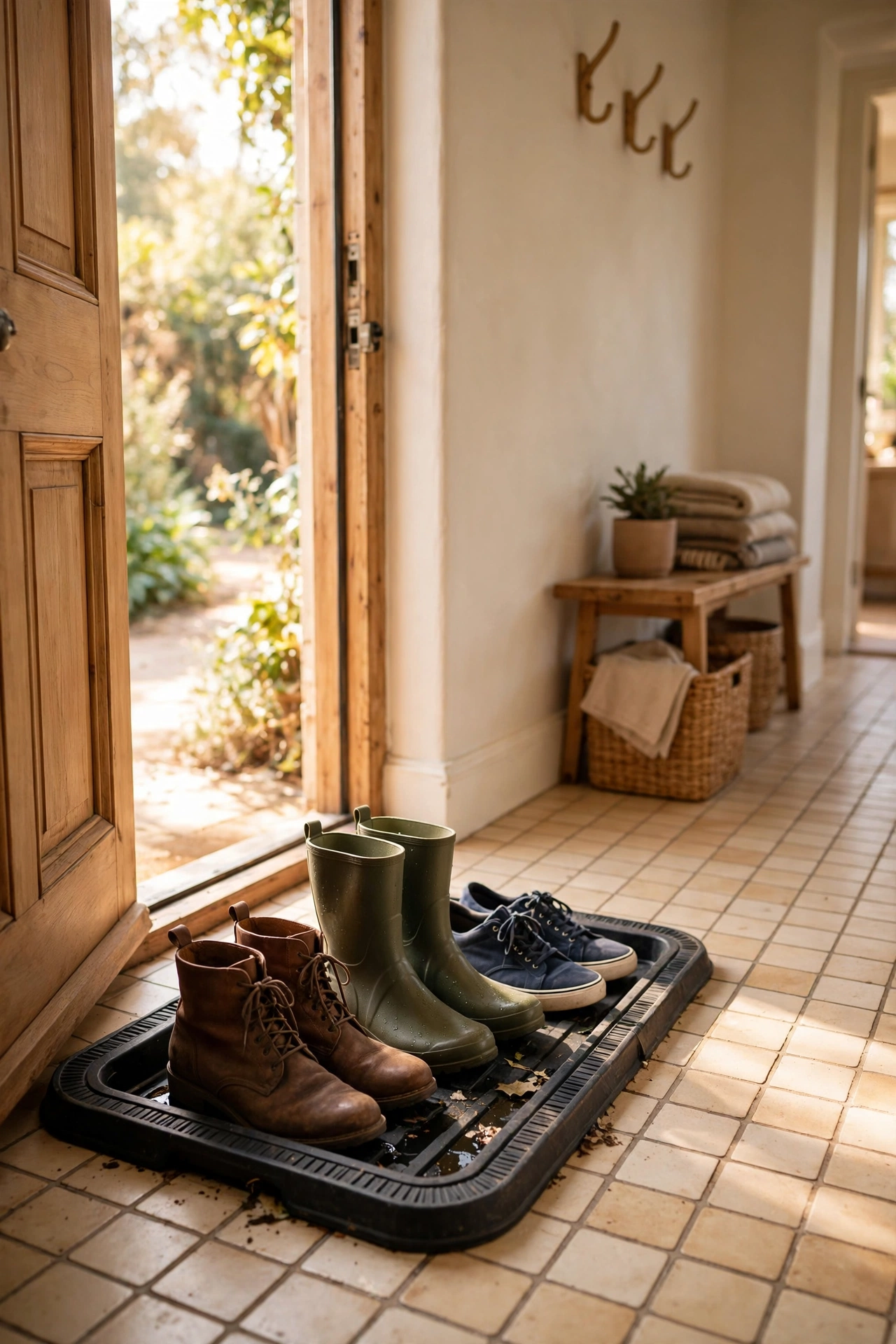
A low rubber tray just inside the door catches the winter slush and summer dust that shoes drag in. Slide it against the wall beside the door, train the household to step onto it first, and rinse it under the tap weekly. I put one in my hallway last autumn and the dark tide marks that used to spread across the tiles stopped at the tray’s edge. Choose one with a raised lip and a ribbed base so shoes don’t slide when they’re wet.
Pro tip: Size the tray for your largest two pairs side by side — anything bigger becomes a permanent shoe car park for pairs that belong in the cupboard.
Cost: ~$4 · Time: 5 minutes
8. Small Upholstered Entryway Bench
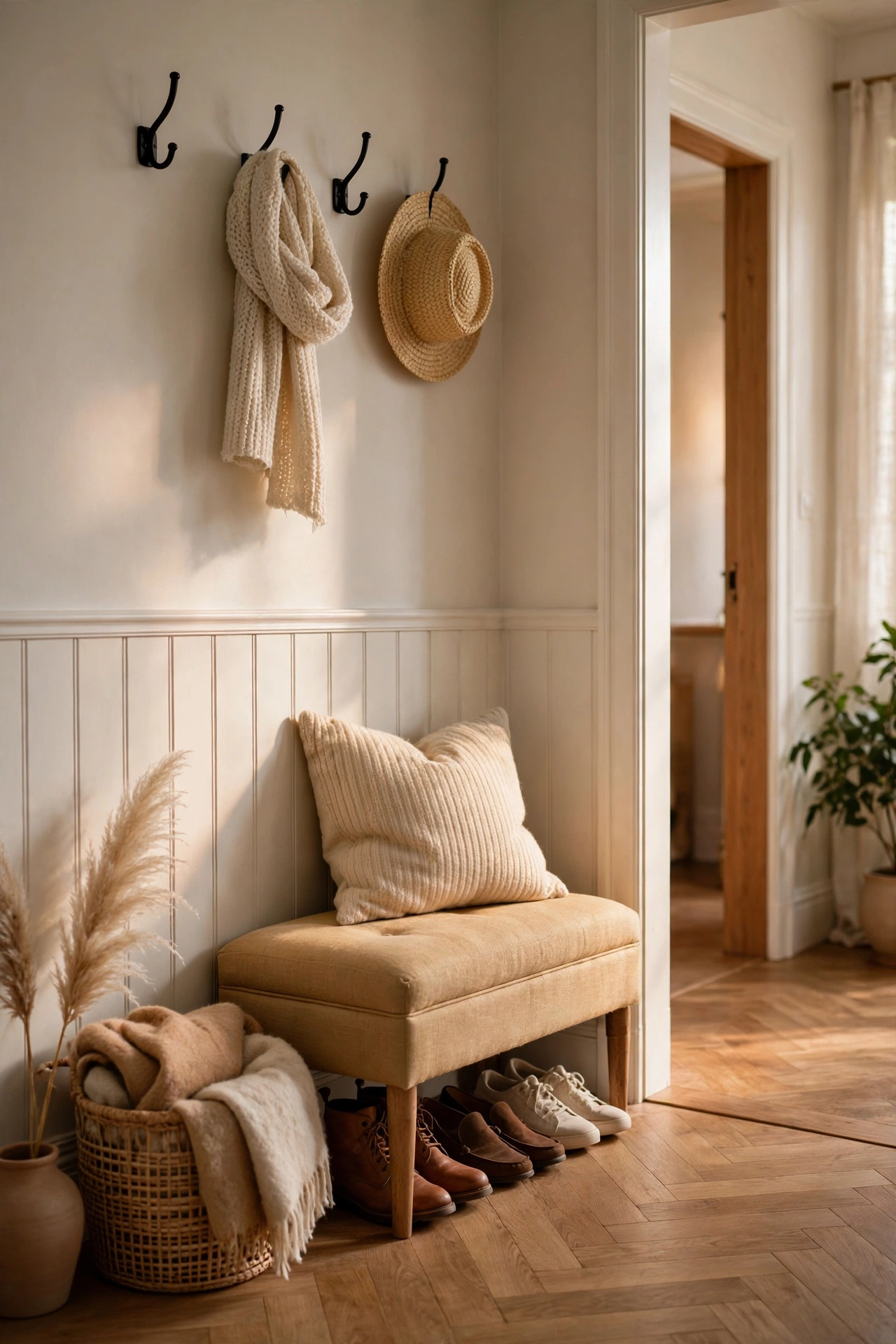
A compact bench gives you somewhere to sit while doing up shoes, and it softens a hard little hallway. Push it against the wall opposite the console, keep the top clear for one cushion, and resist storing things on it — a bench that collects clutter is just a very expensive shelf. I squeezed a metre-wide one into my hall and sitting to put on boots stopped being a daily balancing act against the doorframe. Look for one with a wipeable cover, because hallway benches take a surprising amount of muddy-bottom traffic.
Pro tip: A bench with a lift-up lid hides the spare tote bags and scarves — closed storage keeps the hallway calm where open baskets add visual noise.
Cost: ~$10 · Time: 10 minutes
9. Floating Wall Shelf Above the Console
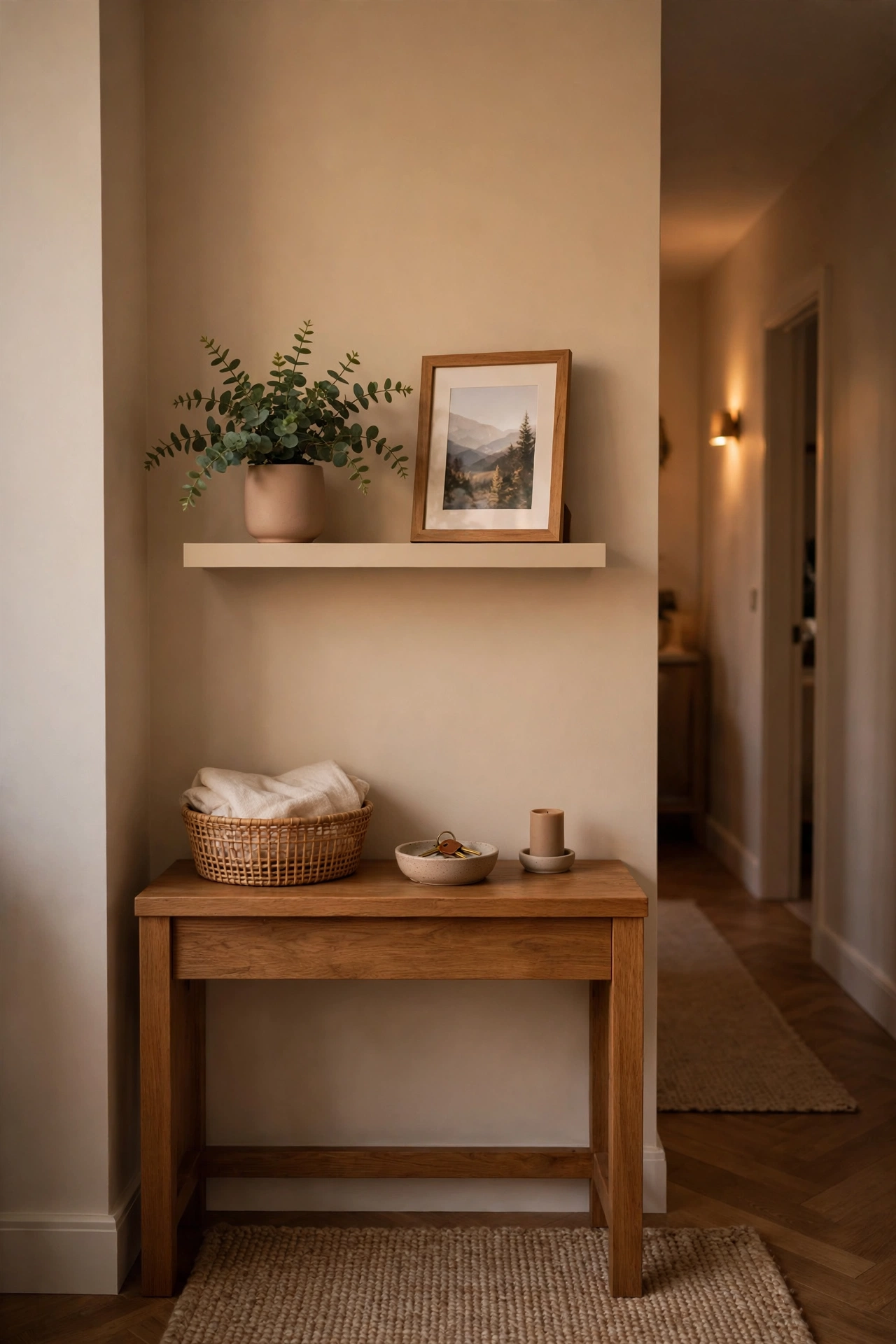
A single floating shelf above the console doubles your display space without taking a centimetre of floor. Mount it about 40 centimetres above the console top, style it with two or three small pieces, and leave breathing room between them. I tried this in my own hallway and the little shelf became the rotating gallery — seasonal stems, a framed photo, whatever felt right that month. Use a spirit level, because a shelf that looks straight in the shop will not look straight on your wall if you eyeball it.
Pro tip: Keep the shelf’s colour identical to the wall so it floats visually — contrasting wood draws the eye up and makes low ceilings feel lower.
Cost: ~$5 · Time: 25 minutes
10. Woven Seagrass Baskets for Shoes
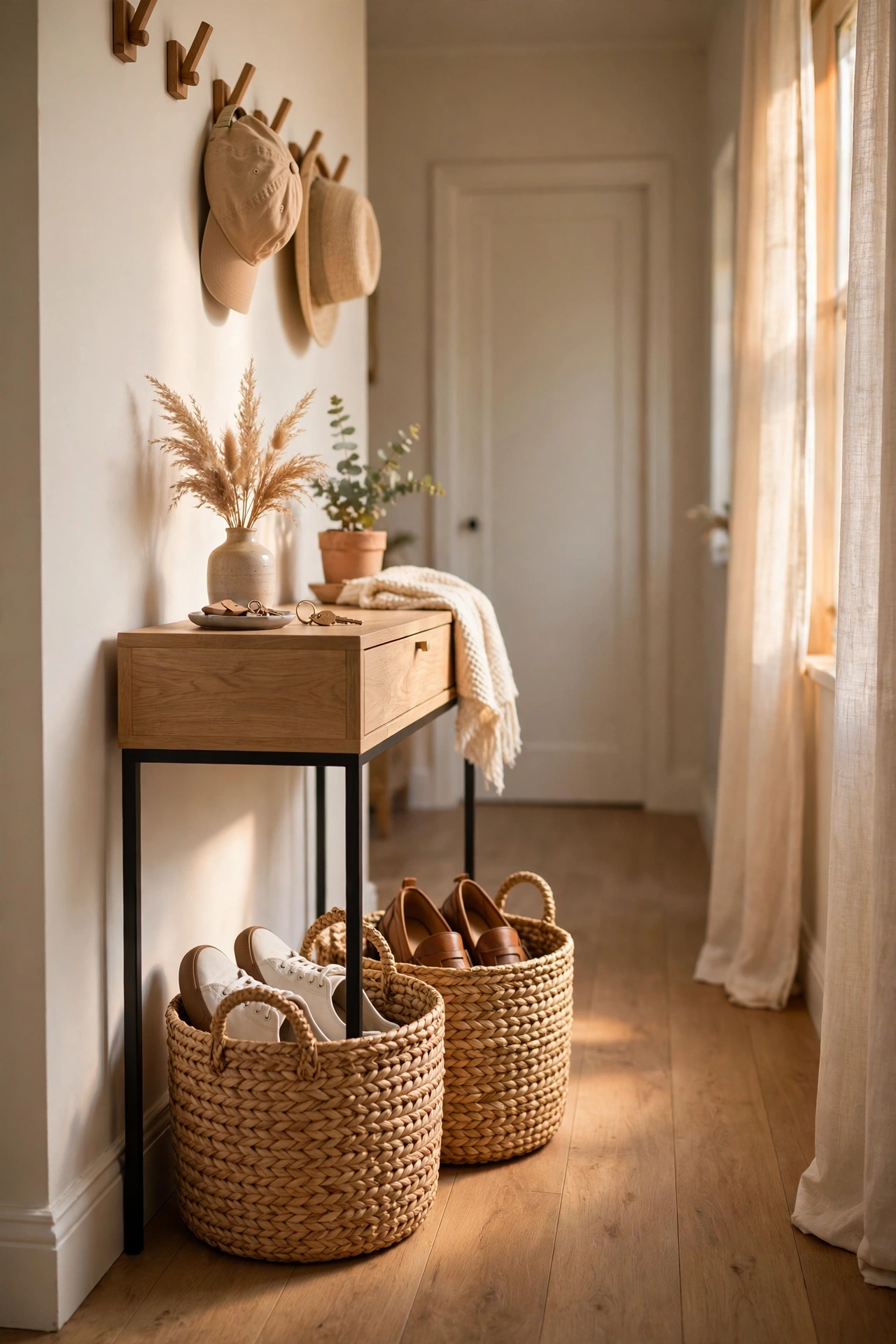
Two matching seagrass baskets under the console swallow the everyday shoes and hide them completely. Assign one basket per person or per pair-type — daily trainers in one, everything else in the other — and agree that shoes on the floor means shoes get rehoused. I switched to baskets after a wire rack failed me, because open racks display the mess while baskets disguise it. Shake them out monthly, because sand and gravel collect at the bottom like a tiny beach.
Pro tip: Slip a folded carrier bag inside each basket as a liner — it catches the grit and you just lift the whole liner out to empty it.
Cost: ~$4 each · Time: 10 minutes
11. Hook Rail with a Top Shelf
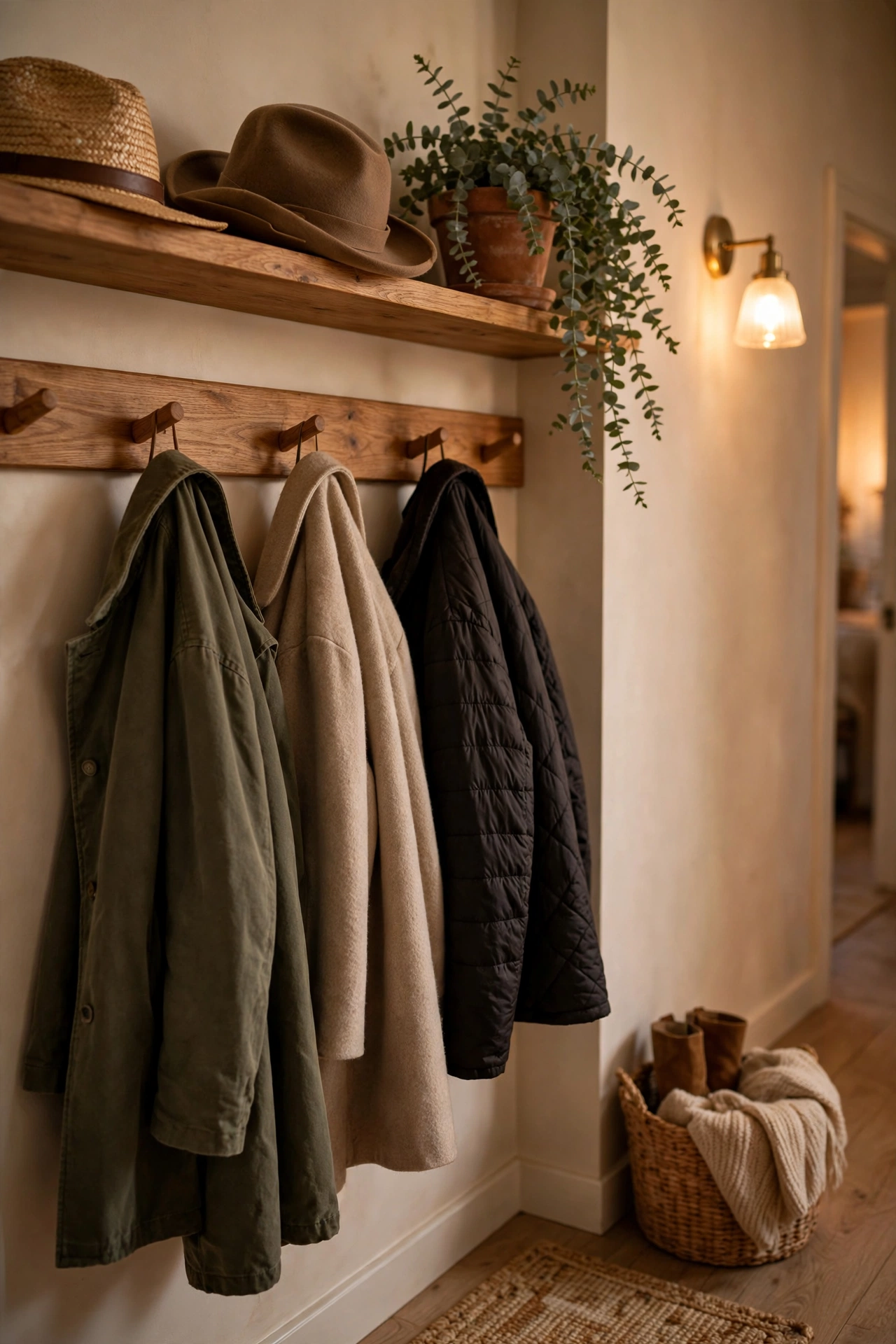
A rail that combines hooks below and a narrow shelf above does the work of two hallway pieces in one. Hang coats and bags from the pegs, and use the shelf for hats, the post tray, or a small plant. I mounted one in a hallway with no room for a console and it carried the entire entryway by itself. Fix it into a stud or use proper anchors, then test it with a full winter coat before trusting it. (see also: 15-dollar-tree-entryway-decor-hacks-on-a-budget) The shelf also stops the wall above the hooks from looking bare, which is half the battle in a small space.
Pro tip: Leave the shelf’s front half empty — overloading it crowds the mirror or art above and makes the wall feel top-heavy.
Cost: ~$7 · Time: 30 minutes
12. Faux Potted Plant for a Corner
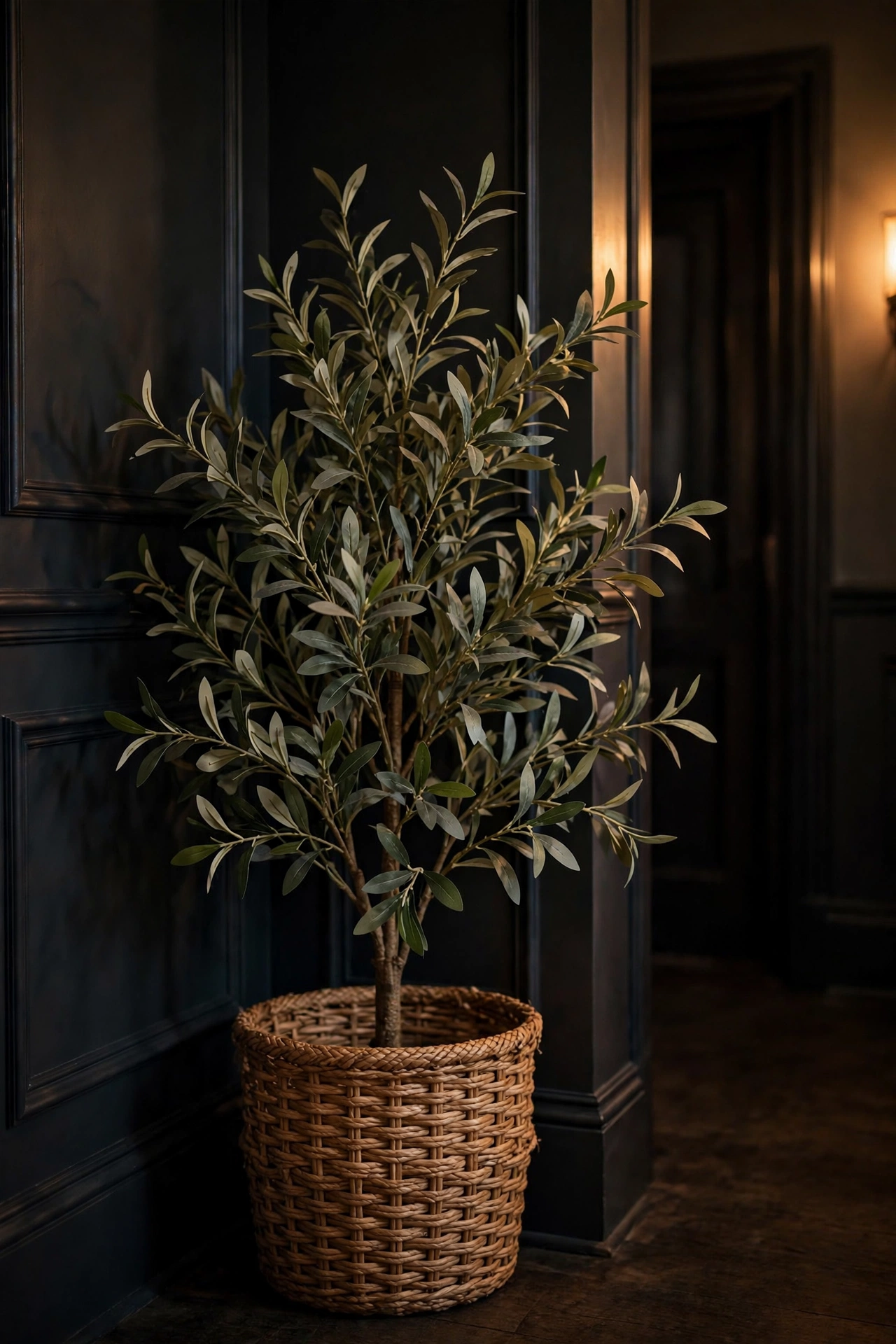
Every hallway has a dark corner where nothing real survives, and that’s exactly where a faux plant belongs. Choose one with varied leaf tones rather than uniform plastic green, pot it in a woven basket to hide the cheap pot, and give the leaves a dusting every month. I put a faux olive in my windowless hallway corner and guests regularly try to water it, which I take as the highest compliment available. Keep it away from the coat pegs, because real coats shed real lint onto fake leaves and the combination looks sad.
Pro tip: Bend a few stems outward before placing it — factory-fresh plants stand bolt upright, and a little asymmetry is what sells the illusion.
Cost: ~$6 · Time: 10 minutes
13. Glass Lantern with a Battery Candle
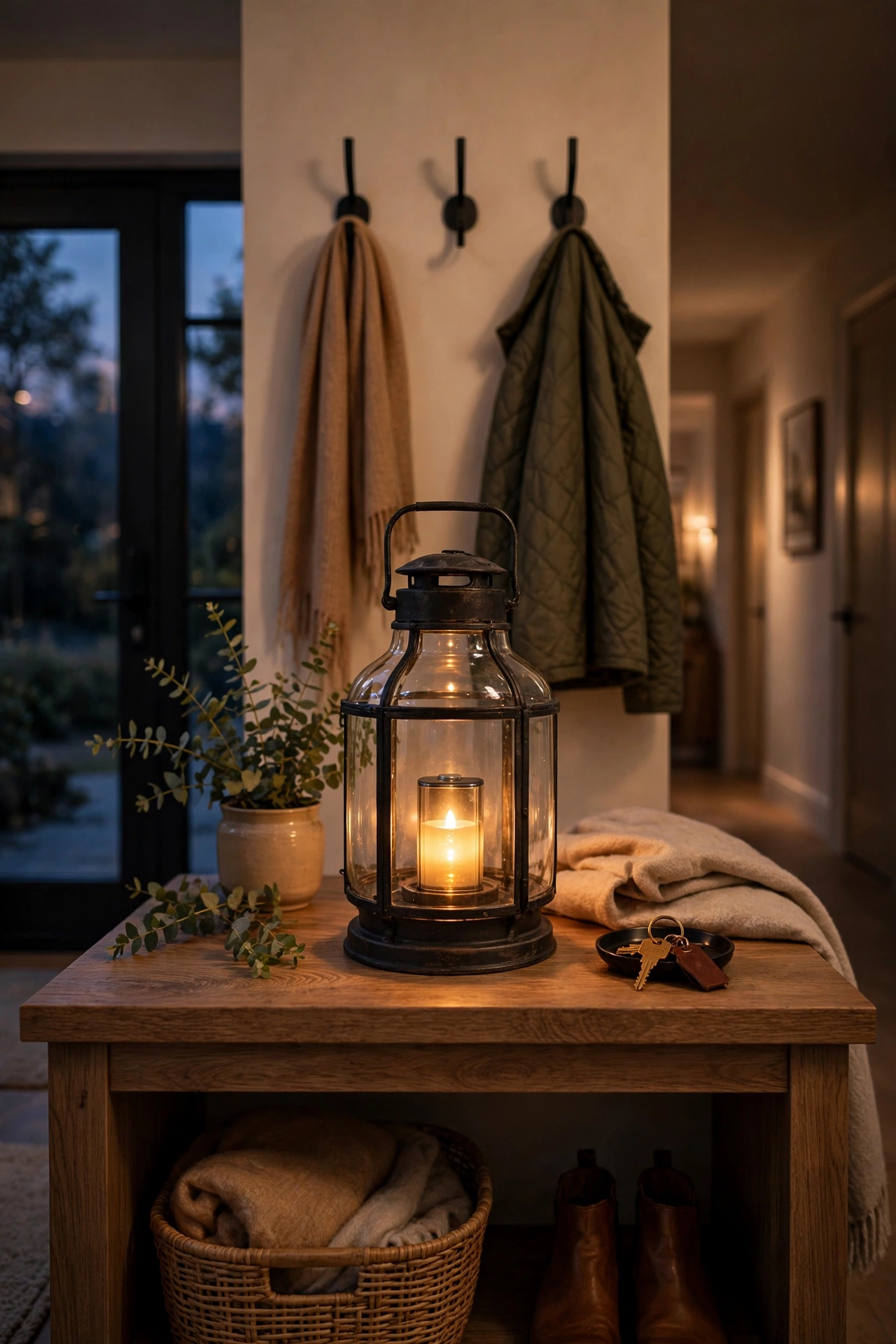
A glass lantern with a flickering battery candle makes the hallway glow in the evening without any fire risk. Set it on the console or the floating shelf, switch it to the timer mode, and let it come on at dusk by itself. I tried this in my own entryway and coming home to a lit hallway changed the whole feeling of arriving after dark. Buy the candles with the warm white setting — the cold white ones make a hallway feel like a dentist’s waiting room.
Pro tip: Group the lantern with one other small object rather than centring it alone — odd-numbered groupings always look more styled than a single item.
Cost: ~$5 · Time: 10 minutes
14. Framed Art Print for Personality
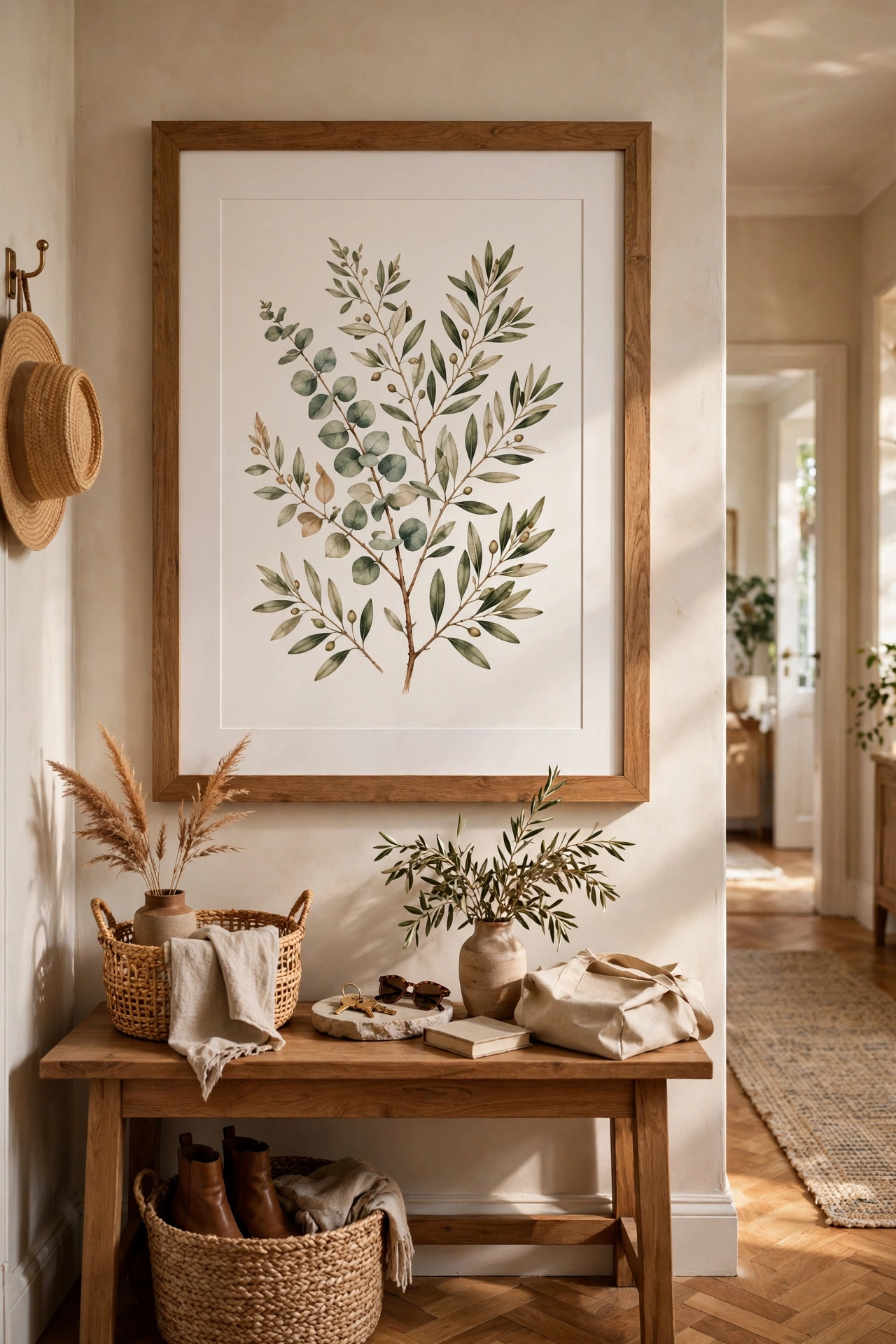
One framed print on the hallway wall is the fastest way to give the space a point of view. Pick something with colours that echo the runner or the cushions, frame it in a simple frame, and hang it where the eye lands when the door opens. I hung a botanical print in mine and the hallway went from “passage” to “room” in one nail. Print shops sell ready-made prints that fit standard cheap frames, so the whole thing costs less than a pizza. One mistake to avoid: don’t hang art higher than eye level — the classic hallway error makes every print look like it’s trying to escape.
Pro tip: Matte the print inside an oversized frame — the white border makes a small cheap print look gallery-sized for almost no extra money.
Cost: ~$4 · Time: 20 minutes
15. Small Round Wall Clock
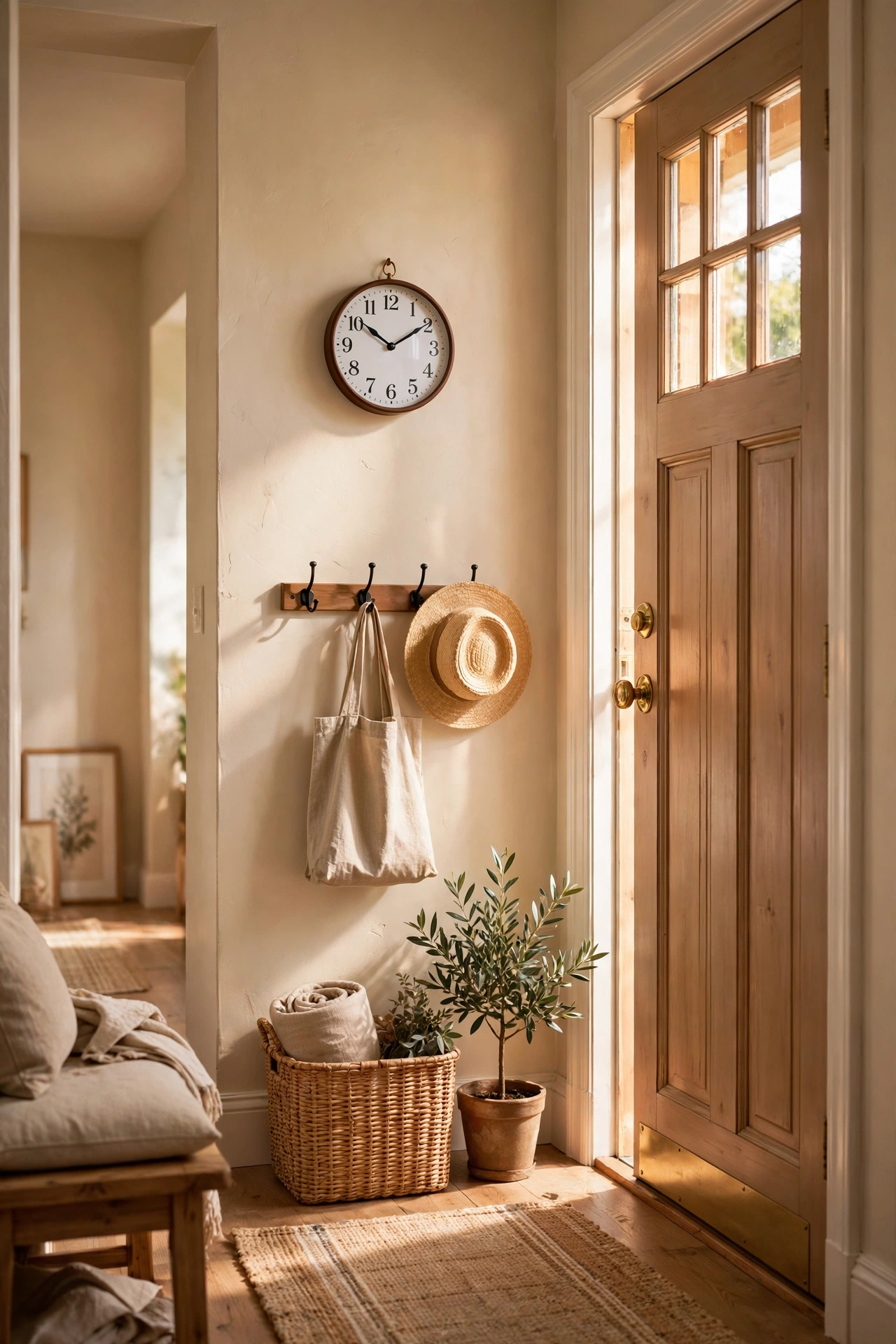
A small clock by the door answers the question you’re always asking on the way out: am I late? Hang it where you can see it while putting on shoes, choose a design with clear numerals, and fit a decent battery so it doesn’t die mid-winter. I added one to my hallway and stopped doing the phone-in-hand doorway dance every morning. Keep the face simple, because a clock you can’t read at a glance is just a decorative circle taking up wall space.
Pro tip: Hang it on the wall you face while locking the door — that’s the only sightline that matters for a last-second time check.
Cost: ~$5 · Time: 15 minutes
16. Styled Decorative Tray on the Console
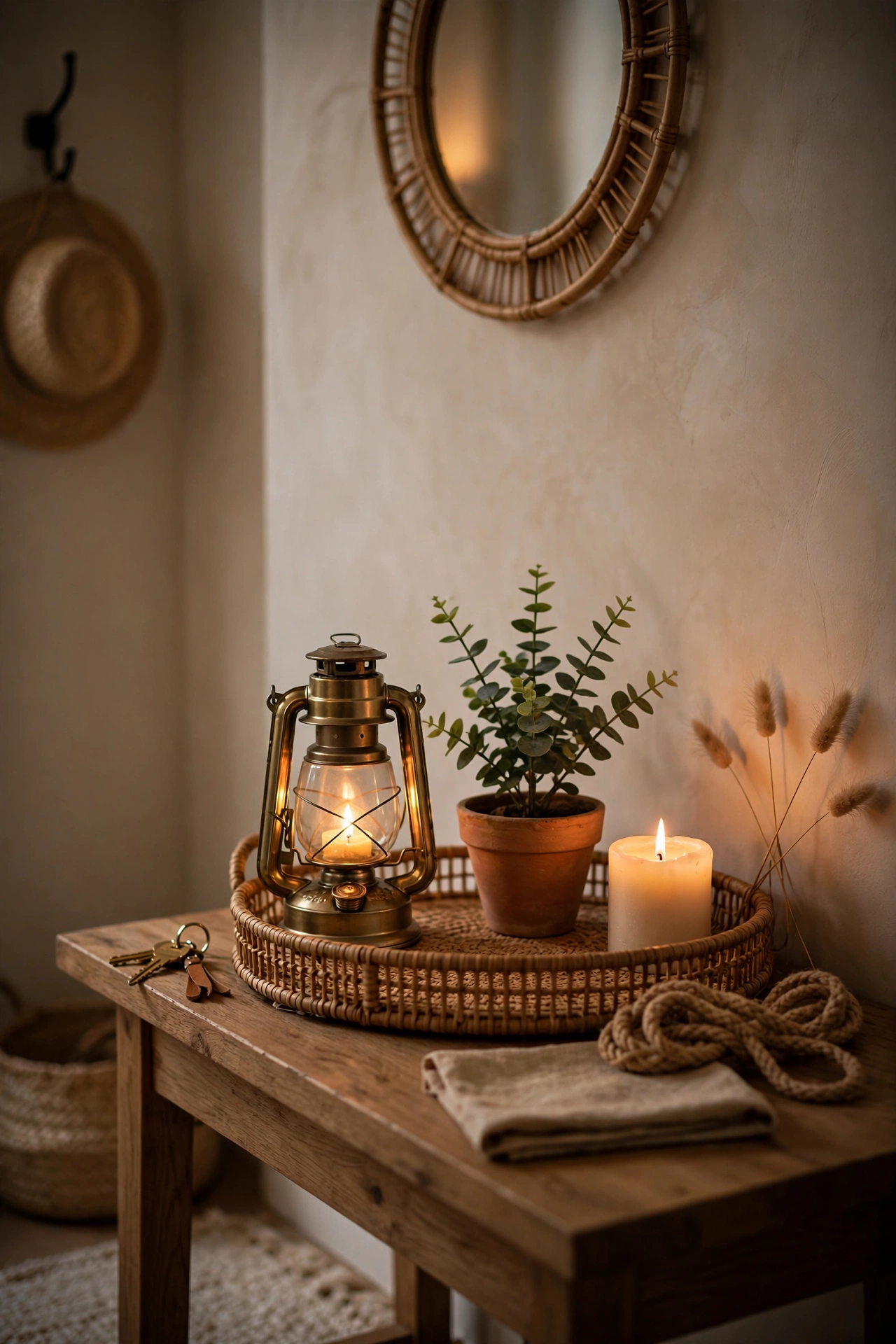
A decorative tray turns the console top from a random landing strip into an intentional vignette. Corral the catch-all tray, the lantern and one small object inside it, and leave the rest of the console surface clear. I styled mine with the rule of three — tray, greenery, one personal item — and the console finally looked finished instead of accumulated. Choose a tray that contrasts slightly with the console, because matching wood on matching wood blurs into one brown mass.
Pro tip: The tray should be big enough to hold its group with space to spare — a crammed tray looks busier than no tray at all.
Cost: ~$5 · Time: 10 minutes
17. Chalkboard Memo Board for Notes
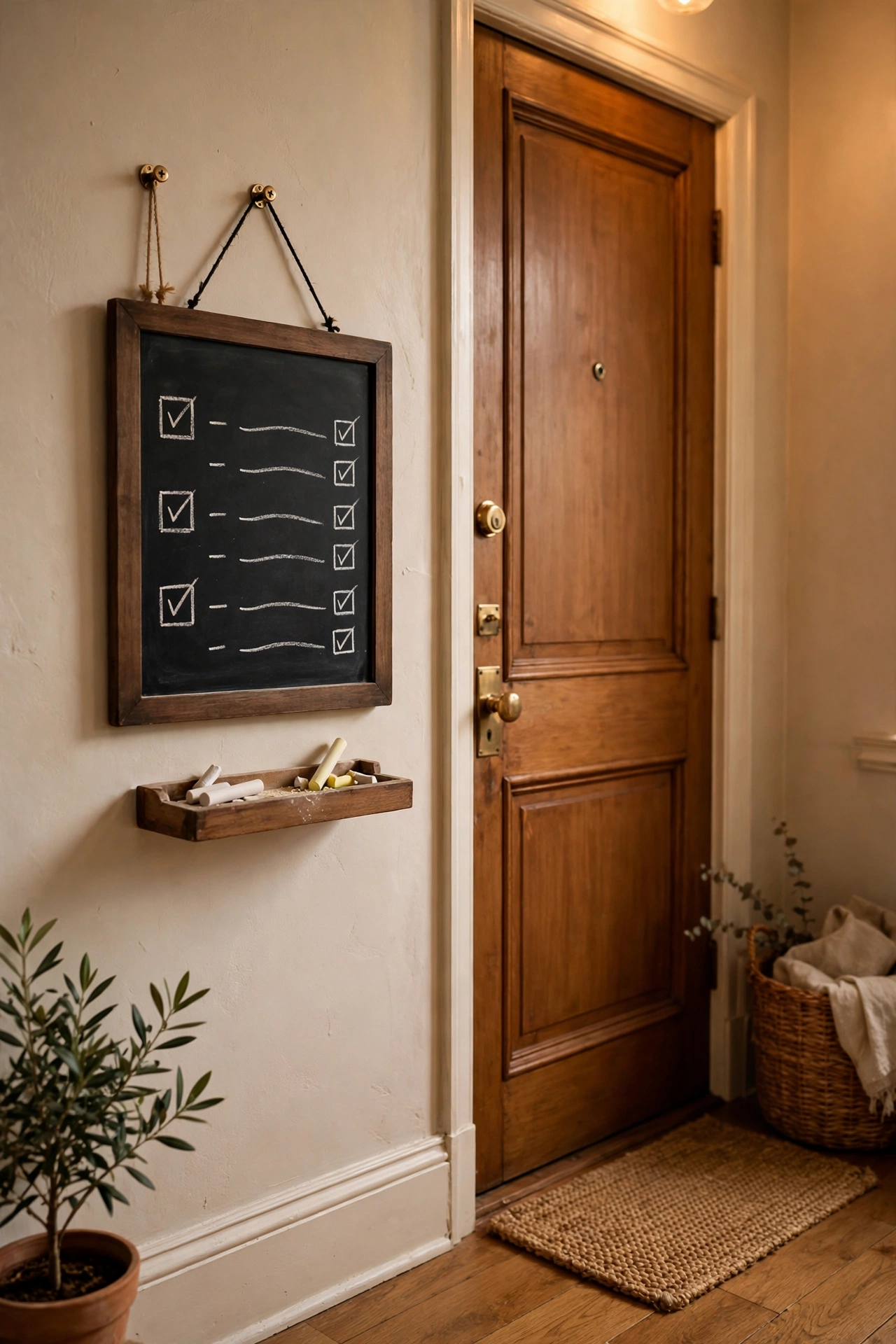
A small chalkboard by the door holds the notes that matter: “bin day Tuesday”, “call the dentist”, the shopping list someone always forgets. Hang it at hand height near the keys, keep a piece of chalk in the tray, and wipe it clean weekly so old notes don’t accumulate into wallpaper. I tried this in my own hallway and the family group chat finally went quiet, because the message was on the door where it couldn’t be ignored. Use liquid chalk pens rather than real chalk — they write cleaner and don’t dust the console below.
Pro tip: Divide the board into two halves — one for reminders, one for the weekly menu — and the whole house starts reading it without being asked.
Cost: ~$3 · Time: 15 minutes
18. Full-Length Leaning Mirror
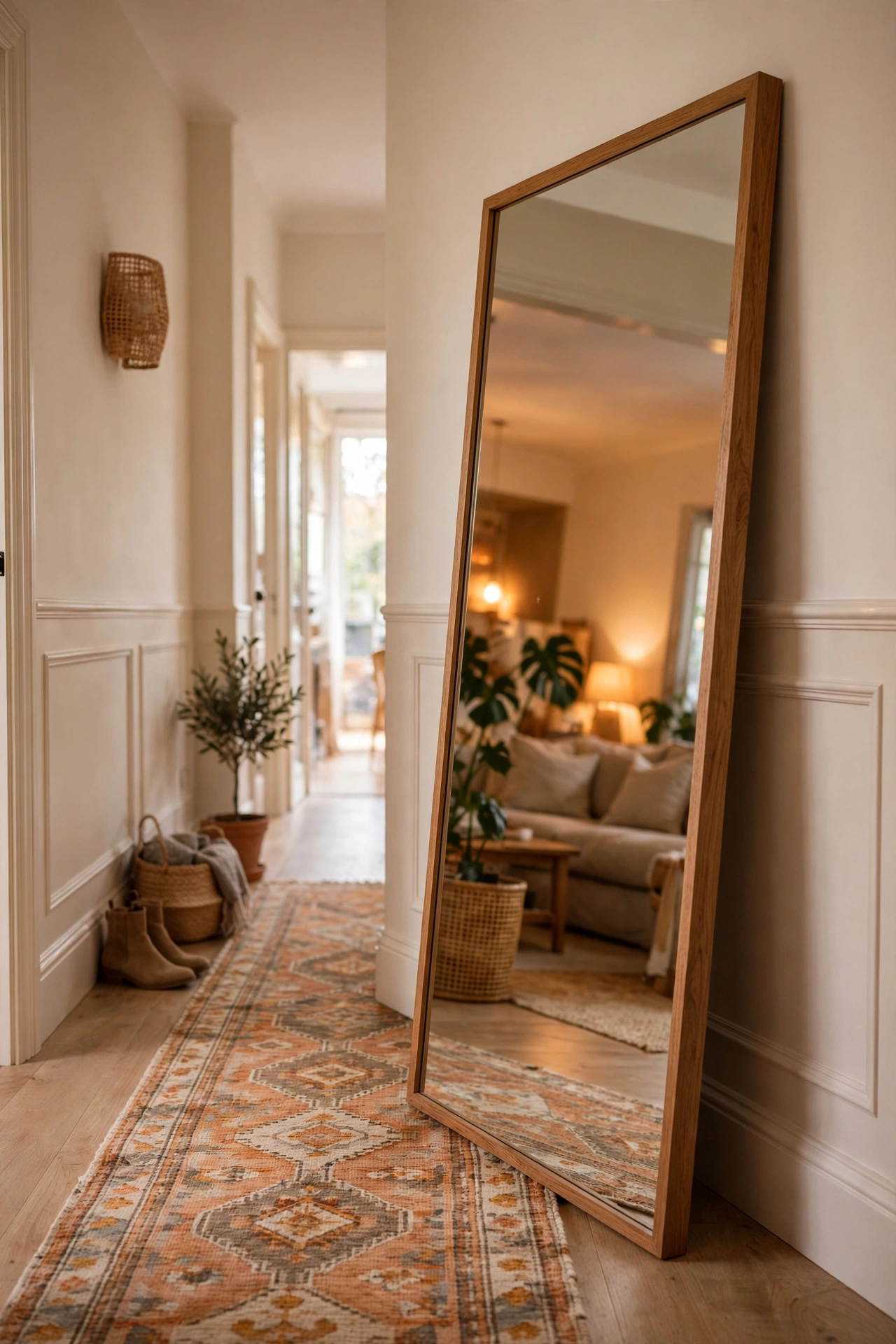
A full-length mirror leaned against the wall gives the last outfit check and doubles the light in one move. Lean it at a slight angle against a clear stretch of wall, secure the top with an adhesive wall bumper so it can’t slip, and stand back to check the angle before you commit. I added one to my narrow hall and the space genuinely felt deeper, plus I stopped discovering at work that my jumper was inside out. Keep the bottom edge on the runner rather than bare floor, because the rug’s grip stops any gradual sliding.
Pro tip: Angle the mirror slightly toward the room’s main light source — even a few degrees makes the reflection brighter and the hallway feel sunnier.
Cost: ~$10 · Time: 15 minutes
19. Stackable Mini Drawer Unit for Gloves and Post
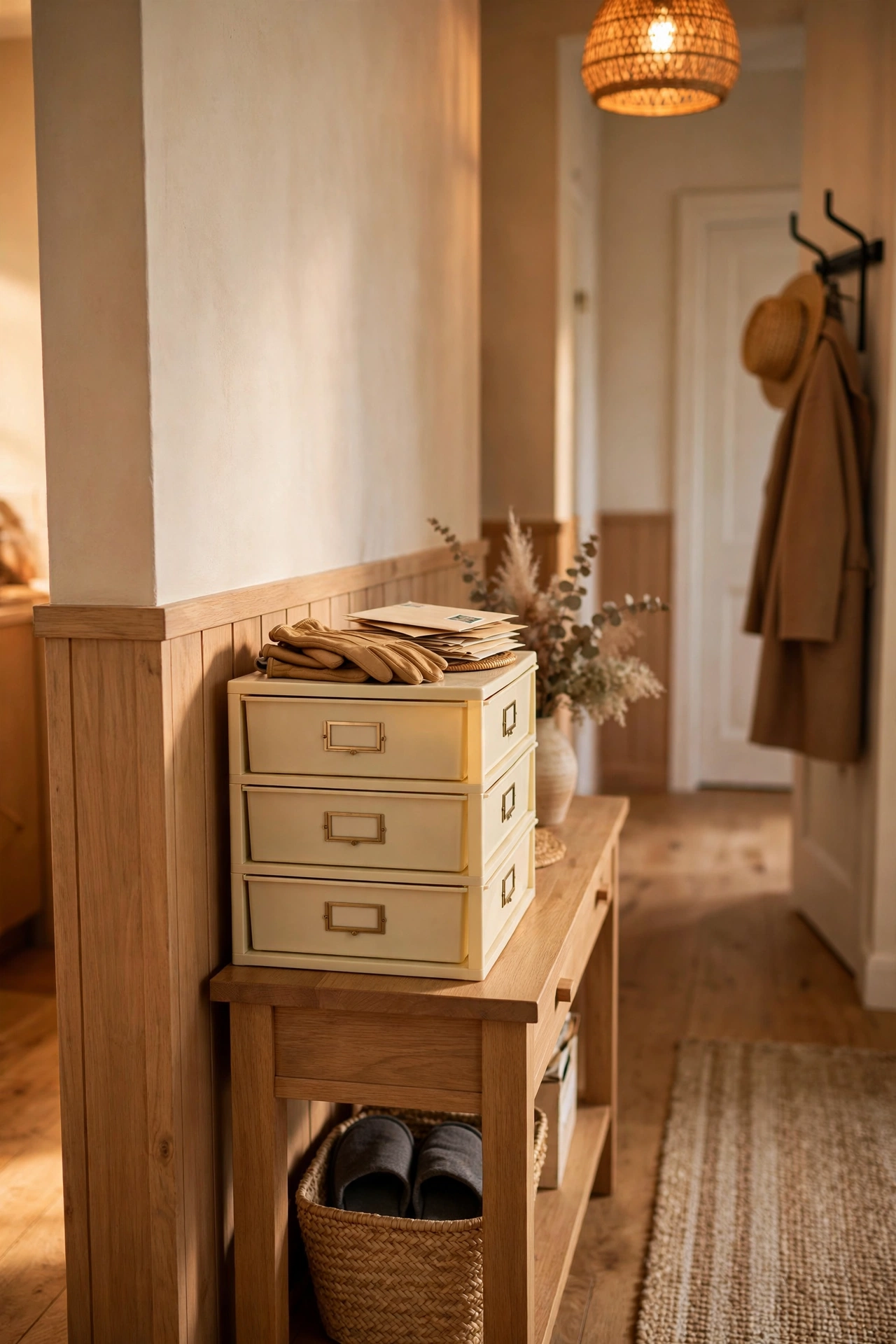
A tiny two or three-drawer unit on the console swallows the small things that clutter every entryway: gloves, sunglasses, spare keys, the post you need to keep. Assign one drawer per category, label the fronts with a marker or small tags, and empty the “to deal with” drawer every Sunday. I keep one on my console and the sunglasses I used to lose weekly now live in the same place every day. Choose a unit with drawers that open fully, because shallow half-drawers turn into dark holes where things go to disappear.
Pro tip: Put the unit at the back of the console so the drawers face out over the tray — it reads as furniture rather than a plastic box on a shelf.
Cost: ~$6 · Time: 10 minutes
20. Wall-Mounted Key Cabinet
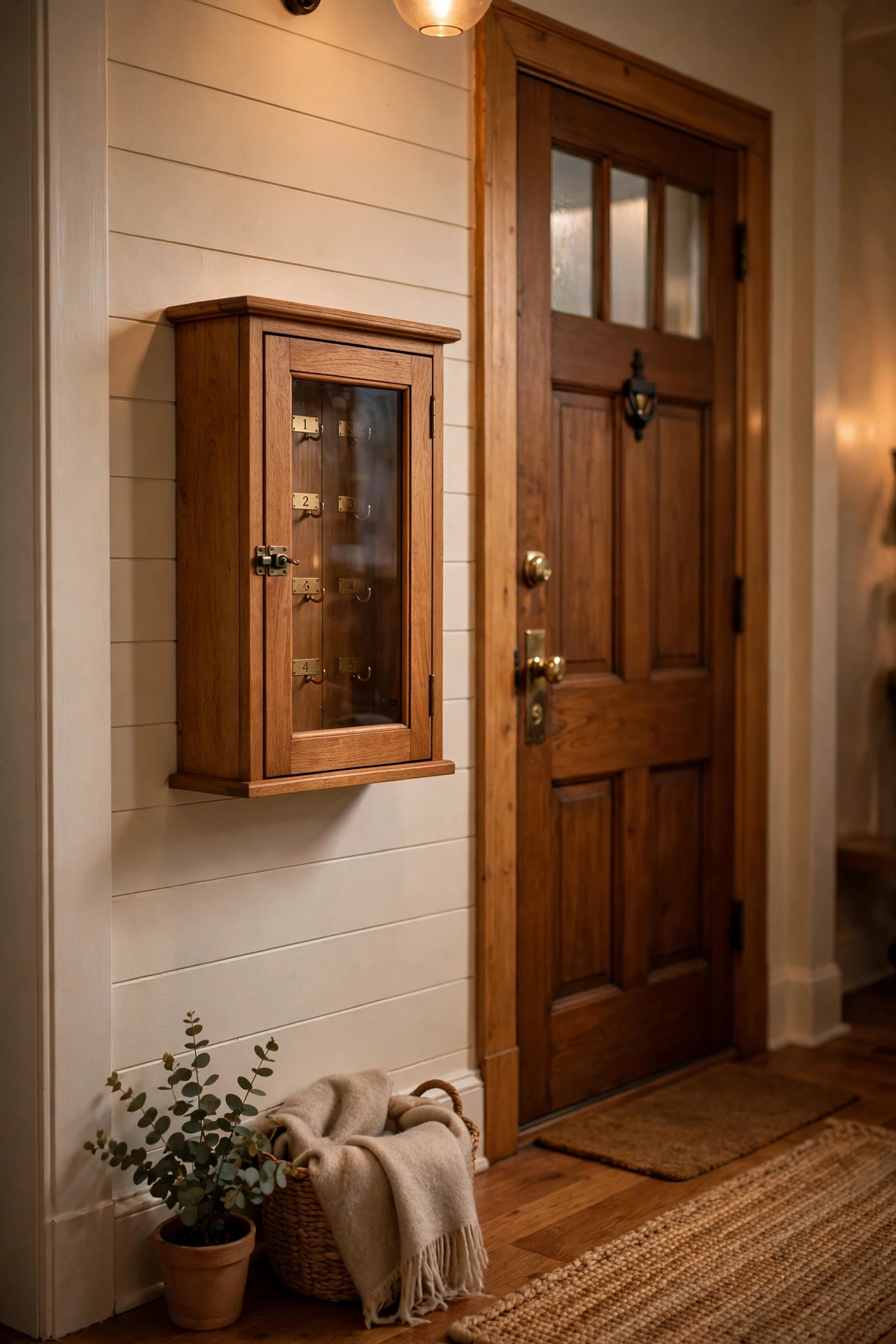
A little key cabinet with a door and numbered hooks is the grown-up version of the key bowl — every key has its hook, and the door hides them all. Mount it beside the front door at a height everyone reaches, hang each set on its own hook, and label the hooks so guests’ keys get a home too. I tried this in my own hallway after the third time I found my keys in the fridge, and I haven’t lost them since. The closed door also hides the jangling mess that open hooks display, which matters more than you’d think in a small space.
Pro tip: Keep one hook permanently empty as the “today” hook — it’s where tomorrow’s bag and keys wait, ready to grab on the way out.
Cost: ~$6 · Time: 25 minutes
21. Decorative Lidded Boxes for Console Clutter
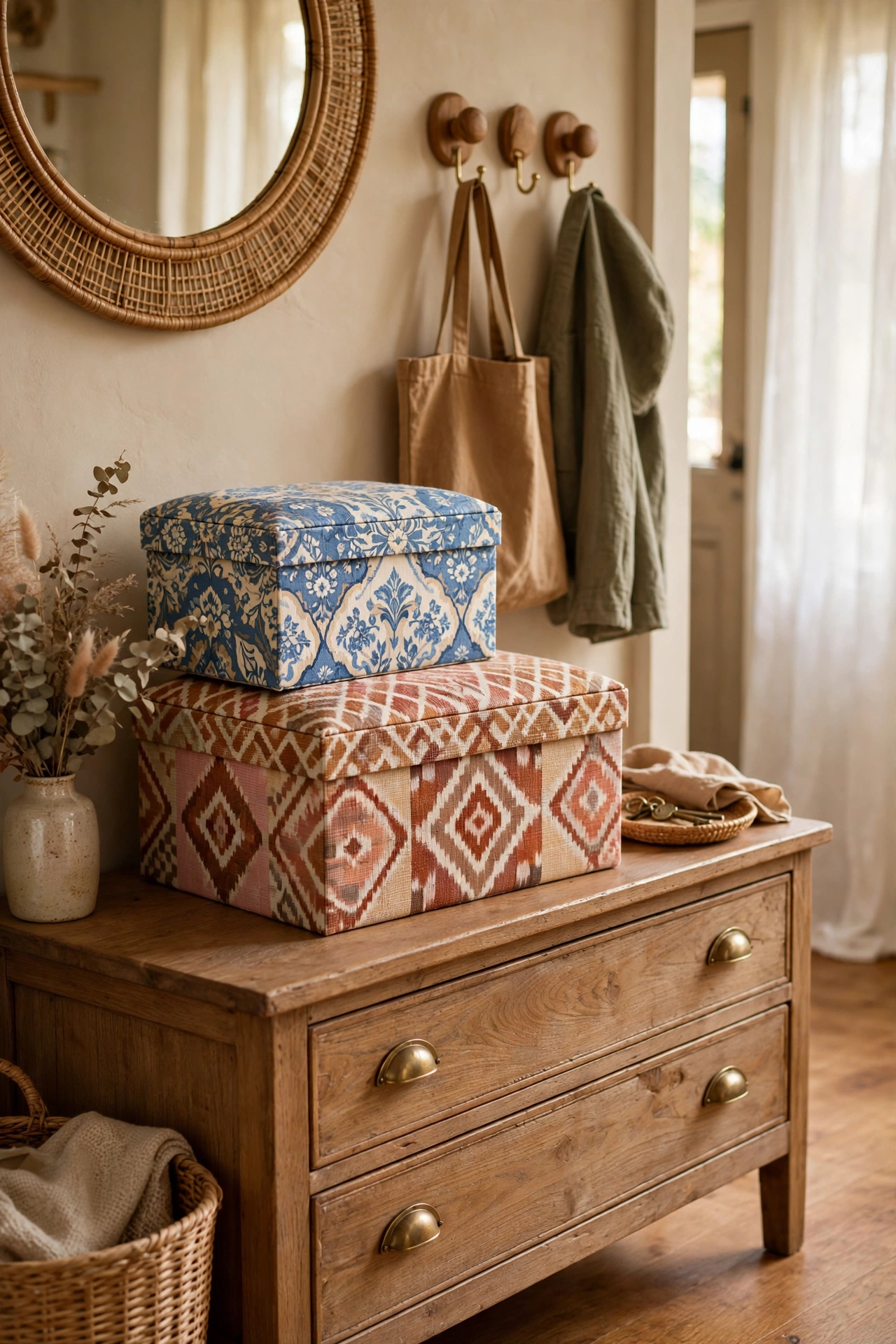
Two lidded boxes in a pattern you like hide the console’s inevitable small clutter: batteries, the tape measure, spare earbuds. Stack them slightly offset for a styled look, keep one for “useful bits” and one for “to relocate”, and clear the second one monthly so it doesn’t become a junk drawer with a lid. I put a pair on my console and the surface stayed clear for the first time since I moved in. One mistake to avoid: don’t buy boxes so pretty you’re afraid to open them — they’re storage, not museum pieces.
Pro tip: Mix one patterned box with one plain — the pair looks curated, while two identical patterns can read as a gift set that never got given.
Cost: ~$5 · Time: 10 minutes
22. Faux Eucalyptus Garland for the Mirror Frame
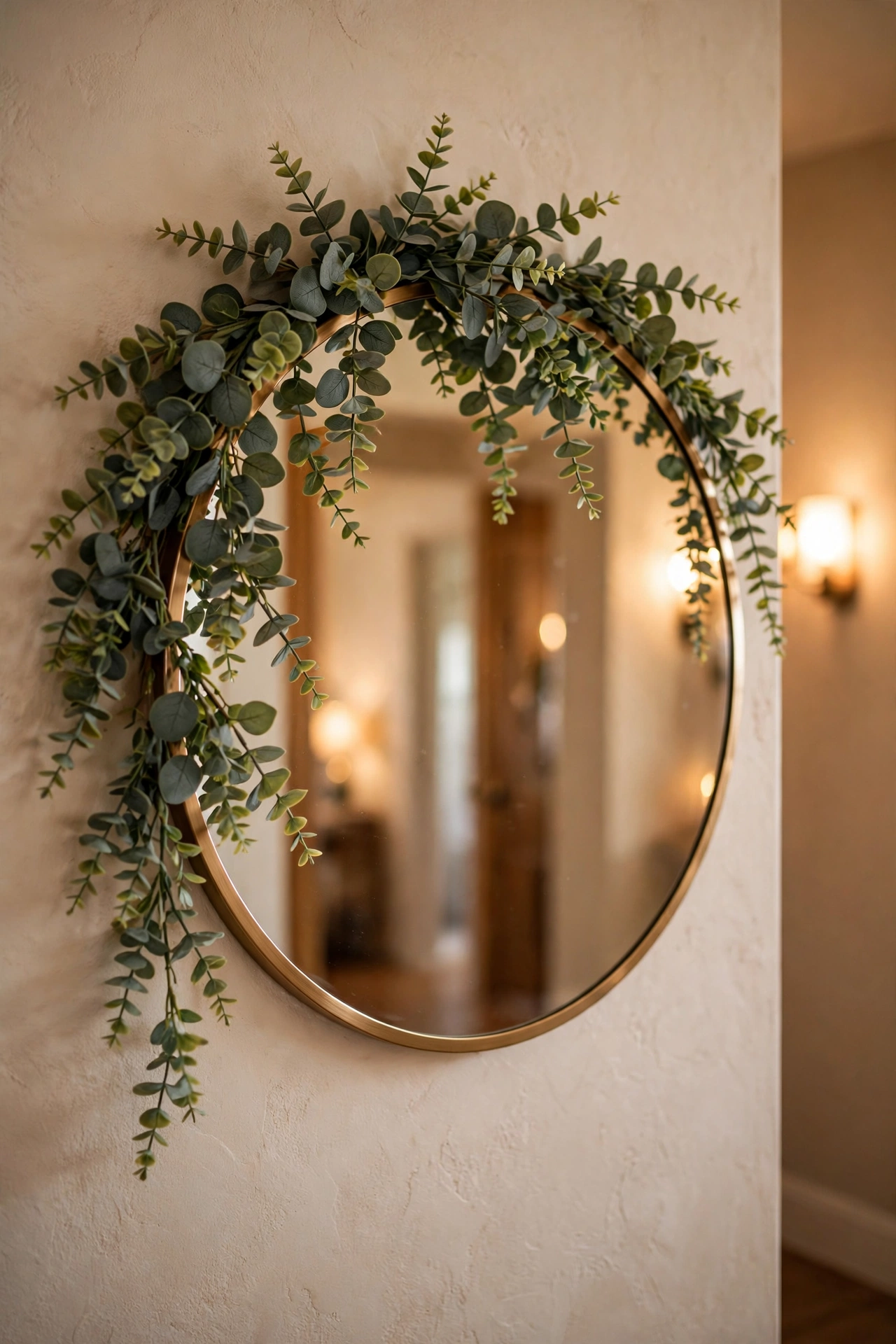
A faux eucalyptus garland draped across the top of the mirror softens the glass edge and adds a whisper of colour. Drape it loosely so it falls naturally, tuck one end behind the mirror’s edge to anchor it, and fluff the stems so they don’t lie flat. I added one above my hallway mirror and the whole wall went from functional to styled in about three minutes. Shake it outside first, because faux greenery sheds glittery dust straight out of the packaging and you don’t want that on the console.
Pro tip: Let one end trail longer than the other — asymmetry looks natural, while a perfectly centred garland looks like a Christmas decoration in the wrong season.
Cost: ~$4 · Time: 10 minutes
23. Seasonal Wreath for the Front Door
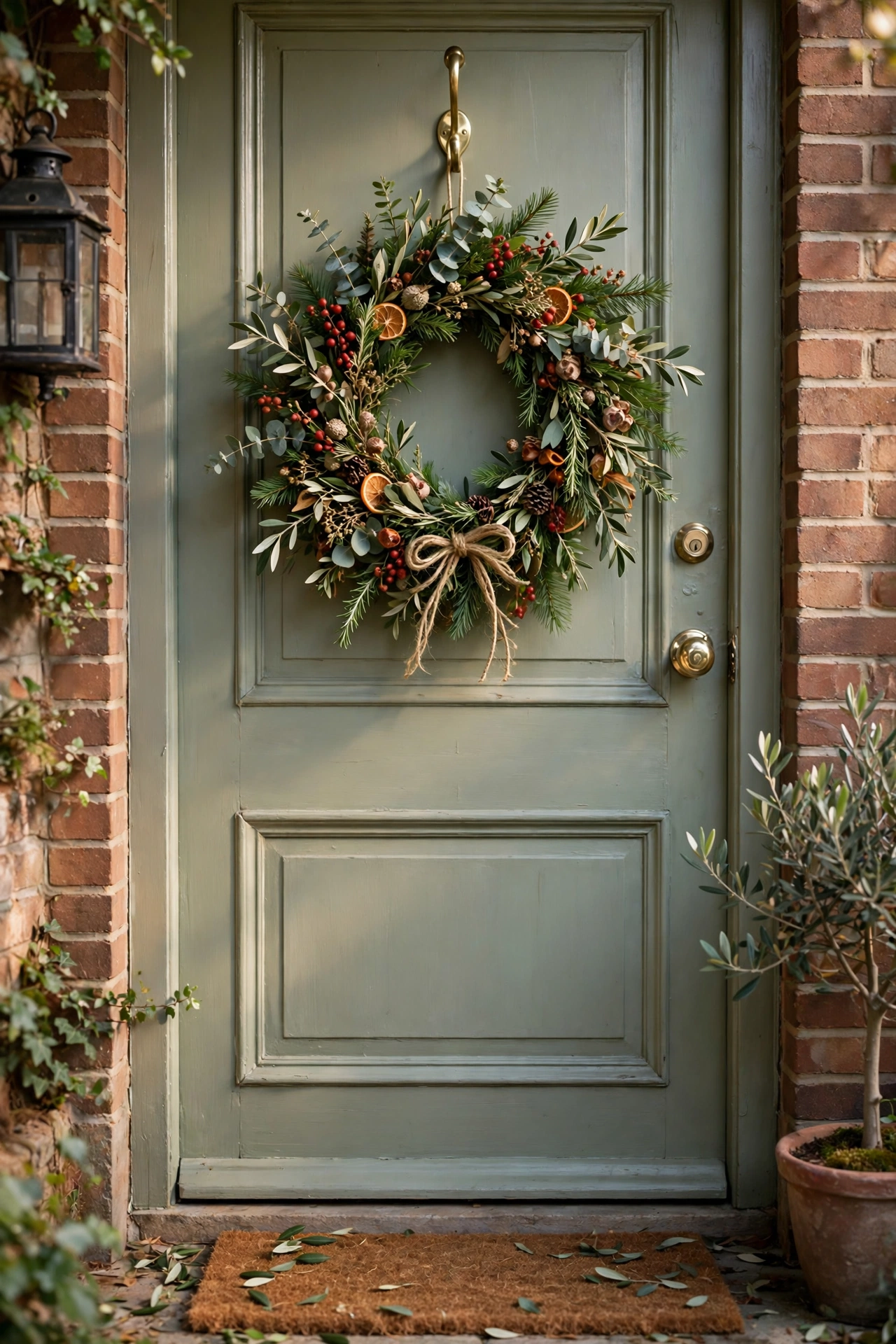
A simple seasonal wreath on the front door is the cheapest welcome sign there is. Hang it from an over-door hook or an adhesive hanger so there’s no damage, choose something in season — greenery for winter, dried grasses for autumn — and swap it when the season turns. I keep two wreaths and rotate them, which costs less than one takeaway and makes the house feel cared for from the street. Store the off-season one flat in a bag under the bed, because a crushed wreath never recovers its shape.
Pro tip: Pick a wreath slightly larger than you think — small wreaths on big doors look apologetic, and scale matters more than detail at street distance.
Cost: ~$6 · Time: 10 minutes
24. Fairy Light String for Evening Glow
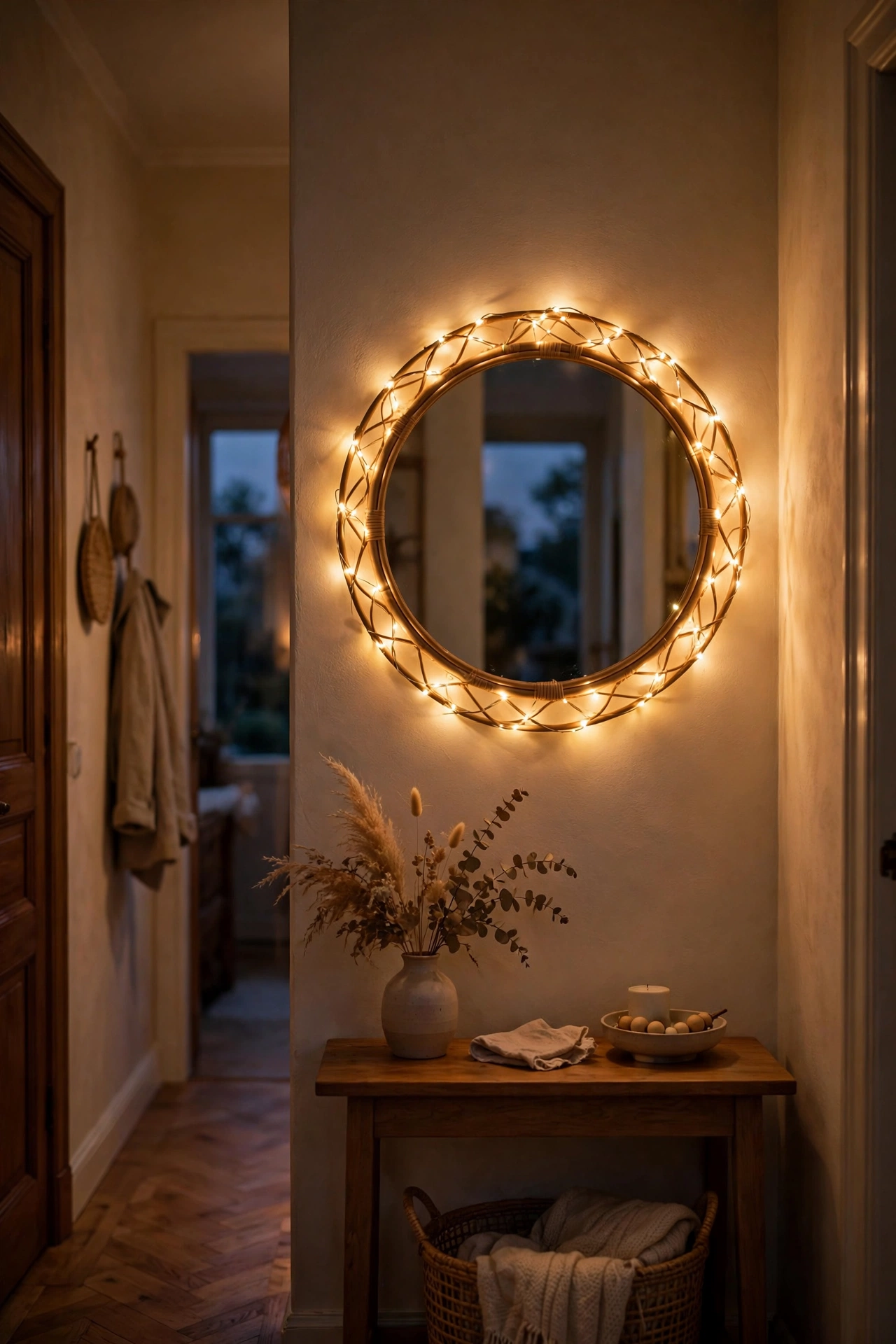
A short string of warm fairy lights woven along the console shelf or around the mirror frame makes the hallway magical after dark. Drape them loosely, hide the battery pack behind the console, and set them on a timer so they glow from dusk. I tried this in my own entryway last winter and the hallway became my favourite corner of the house every evening. Choose the warm white LEDs — the multicoloured ones belong on a tree, not in a hallway.
Pro tip: Weave the lights behind the garland or stems rather than in front — the glow peeking through greenery looks ten times more expensive than bare bulbs on a shelf.
Cost: ~$3 · Time: 15 minutes
25. Reed Diffuser Set for a Welcoming Scent
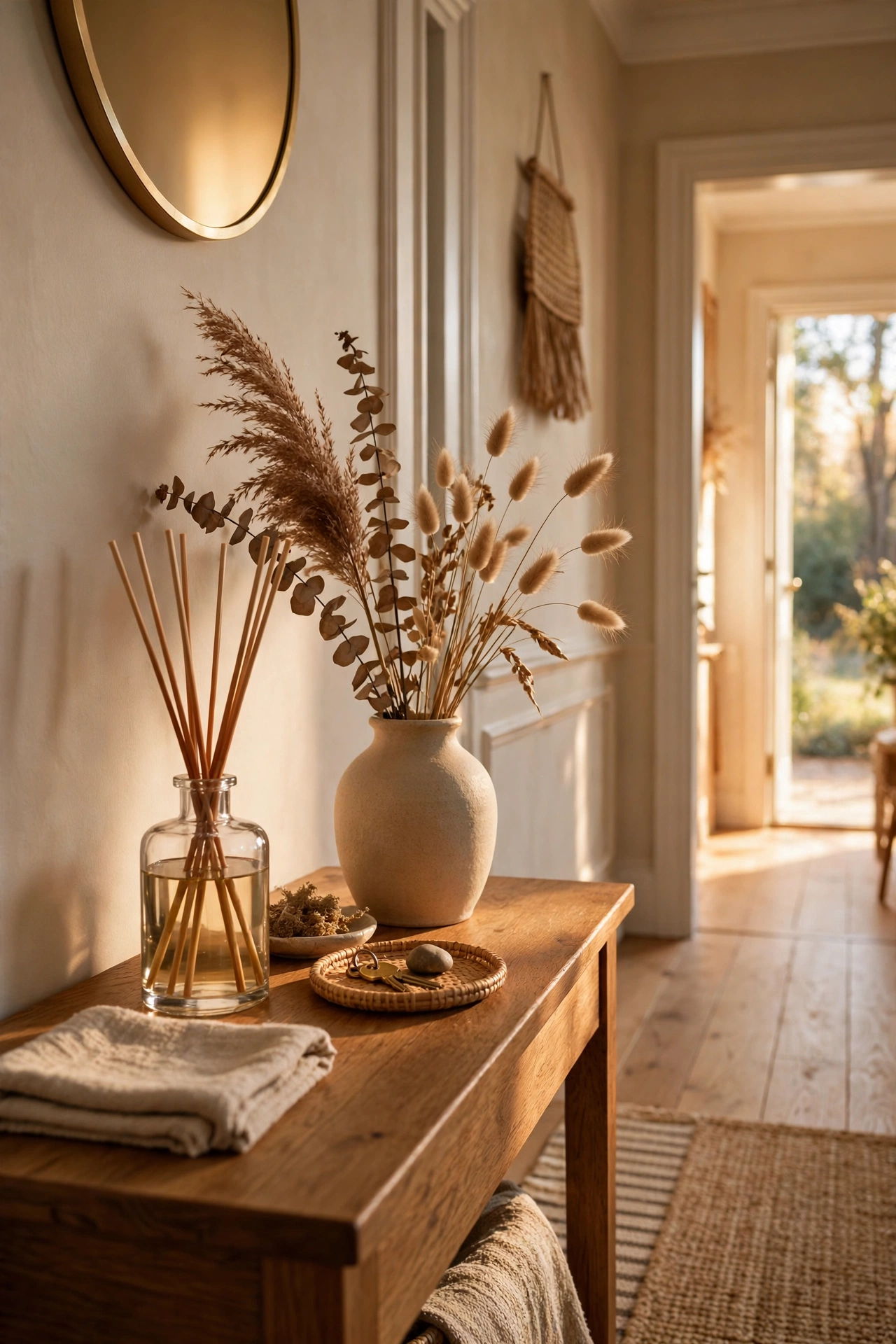
A reed diffuser on the console is the finishing touch — the hallway should smell as considered as it looks. Choose a fresh, light scent rather than anything heavy, flip the reeds weekly for the first fortnight to build the fragrance, then leave them alone. I put one in my entryway and visitors started commenting on how nice the house smelled before they’d even taken off their coats. Keep it away from the door’s draught, because direct airflow evaporates the oil in weeks instead of months.
Pro tip: Start with half the reeds, then add more to taste — it’s easy to add scent and miserable to air out an overpowering hallway.
Cost: ~$4 · Time: 5 minutes
Save this idea for later so you’ve got the full list ready the next time you wander the aisles with a basket and big plans.
Want more hallway inspiration? Browse (see also: 15-dollar-store-entryway-finds-on-a-budget) for budget basics and (see also: 23-dollar-tree-entryway-decor-hacks-that-look-high-end) for styling tricks that look far more expensive.
Your entryway is small, but it works hard — greet it with a few of these finds this week and the whole house will feel more welcoming.
