21 Small Apartment Zones That Make Studios Feel Bigger
When I moved into my first studio, I owned one room and about six jobs for it. My bed was my sofa, my desk was my dining table, and every bag I owned lived in plain sight by the door. Small Apartment Zones That Make Studios Feel Bigger became my rescue plan, because I stopped trying to fit rooms into a studio and started giving each corner one clear job. The night I rolled out a small rug and declared that patch my living room, the whole place felt calmer. Nothing got bigger, but everything finally had a place, and that is the trick behind every idea below.
1. A Rug-Defined Living Corner
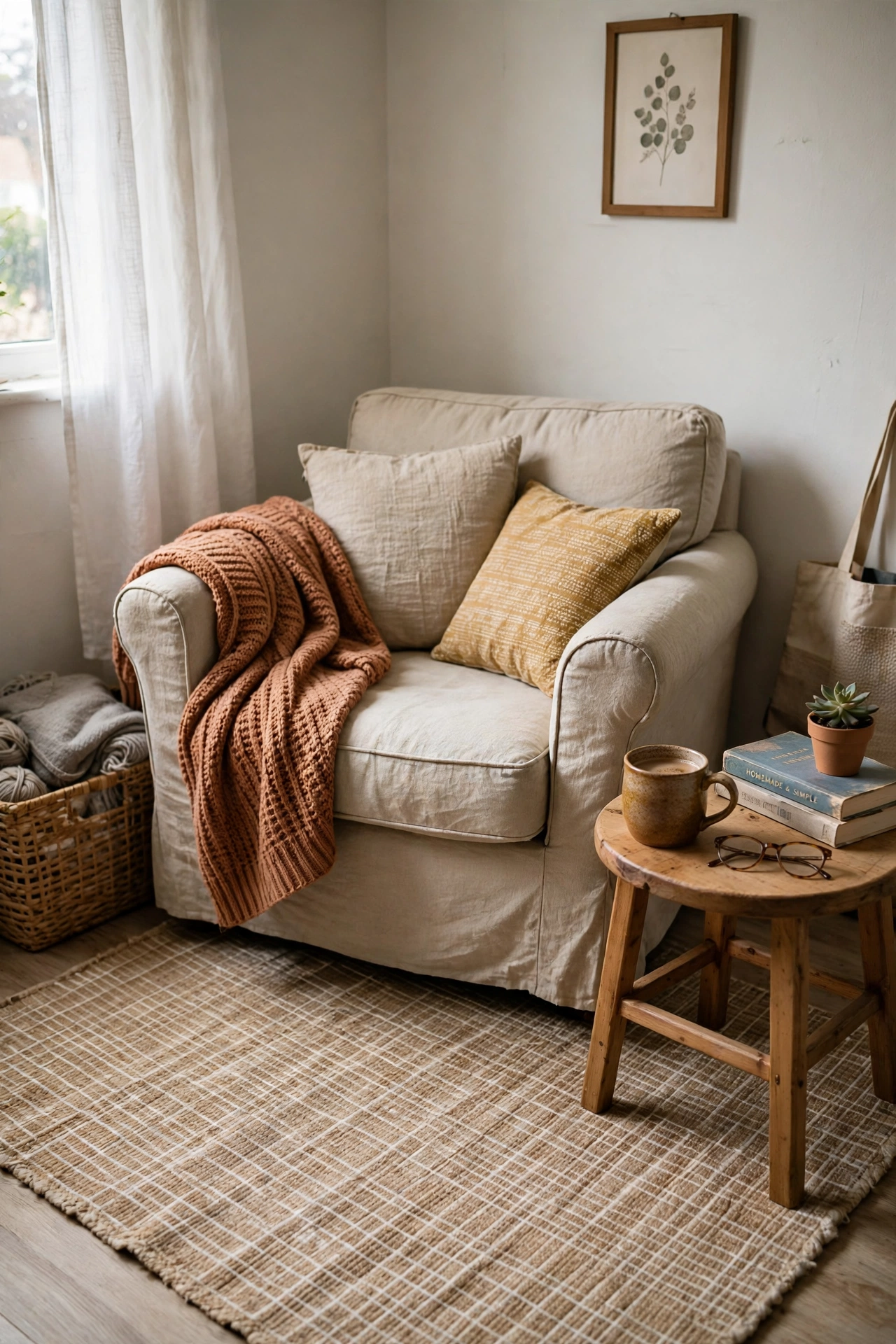
A rug is the cheapest wall you will ever buy. Lay one down where you want to sit in the evening, put your chair and a small side table on it, and suddenly that patch reads as a living room, not just floor. Keep the rug big enough for the front legs of your seating, and pick a flat weave so chairs slide easily. I tried this with a tiny rug first, and the mistake to avoid is choosing one so small it looks like a coaster under a chair. Measure the seating area, then buy one size up if you are torn between two.
Cost: ~$35 | Time: 20 minutes
💰 Budget win: A rug zones a room for less than a bookshelf divider, and you can take it with you when you move.
2. A Bed Nook Behind a Curtain
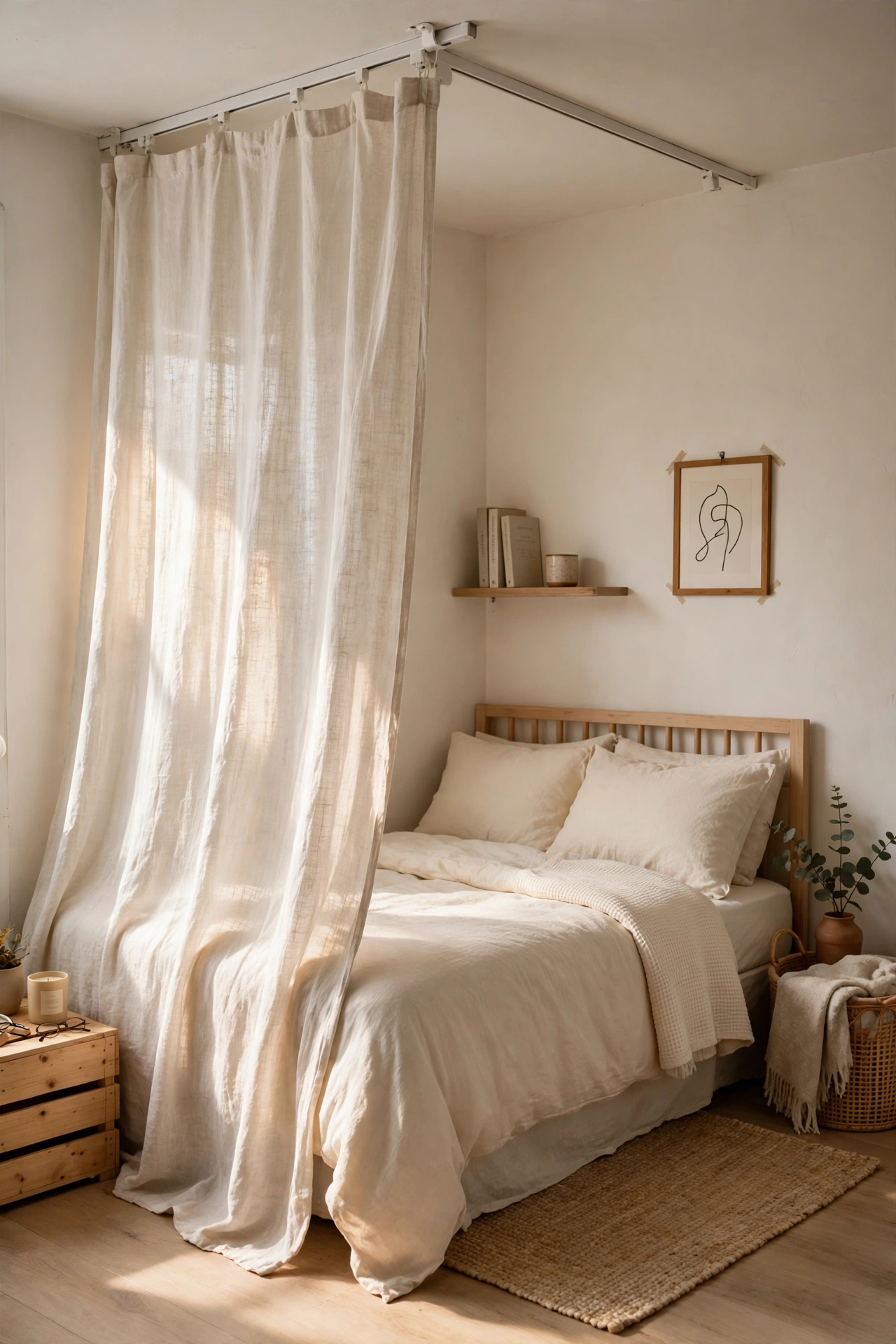
Hanging a curtain around your bed gives you a bedroom you can close at night and open in the morning. Fix a ceiling track or a tension rod, choose a curtain that reaches the floor, and keep the colour calm so the nook feels restful. Slide the curtain shut when guests come over, and your studio instantly looks like a living room again. I tried this in a long narrow studio, and the trick is leaving a small gap at one end so air still moves. The mistake to avoid is a heavy dark fabric that makes the bed feel like a cave.
Cost: ~$28 | Time: 45 minutes
💰 Budget win: A curtain track costs a fraction of a folding screen and folds away flat when you move out.
3. A Window Reading Chair Zone
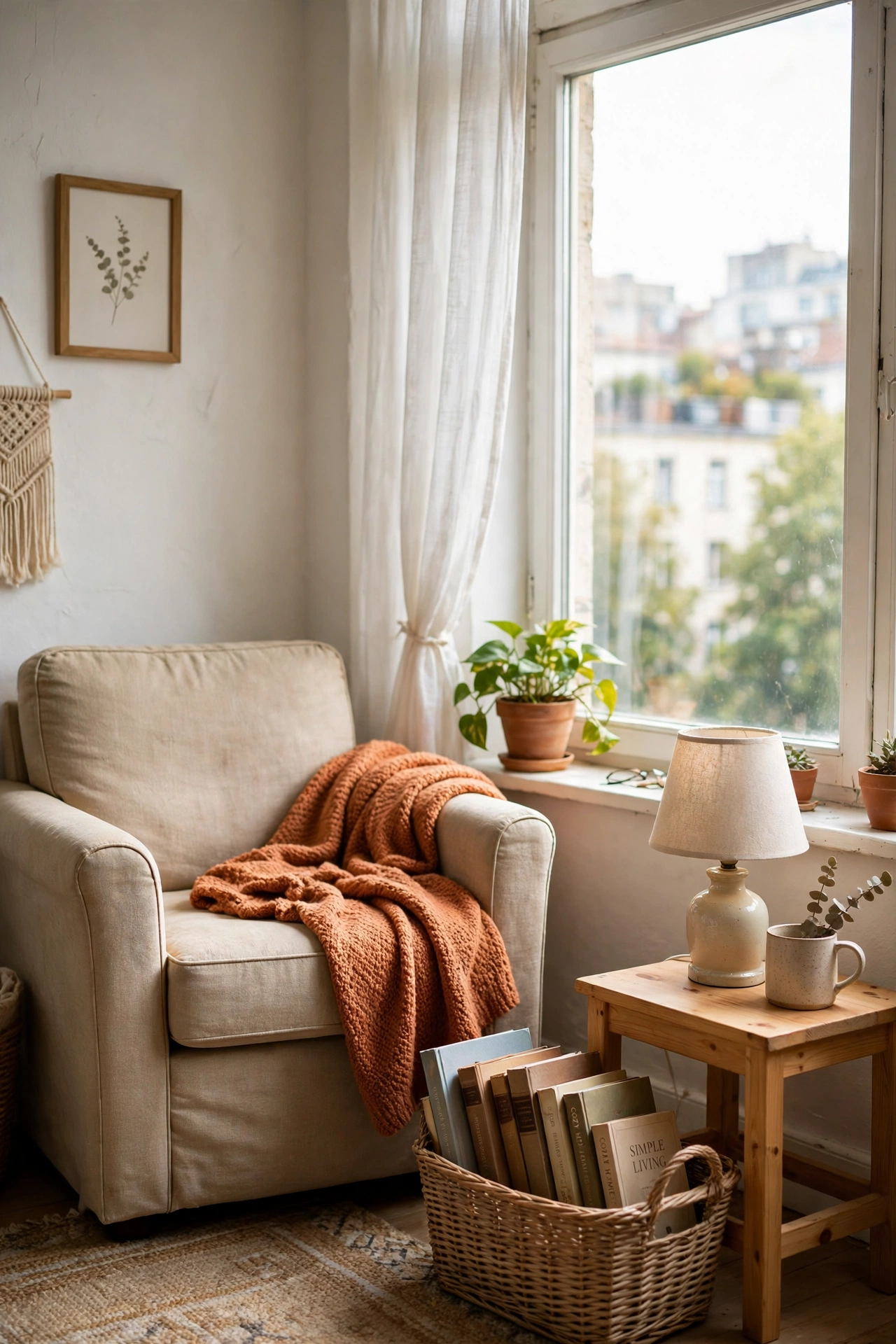
Claim the best light in your studio for reading, not for storage boxes. Put one comfortable chair by the window, add a small lamp and a basket for books, and keep that corner free of chores. A tray on the chair arm holds coffee, and a throw over the back makes it inviting on cold evenings. I moved my chair to the window after months of reading on my bed, and my sleep improved because the bed went back to being just for sleep. The mistake to avoid is letting mail and chargers pile up on the chair until nobody sits there.
Cost: ~$20 | Time: 25 minutes
💰 Budget win: A secondhand armchair plus a basket you already own beats a new reading nook set every time.
4. A Fold-Down Dining Spot
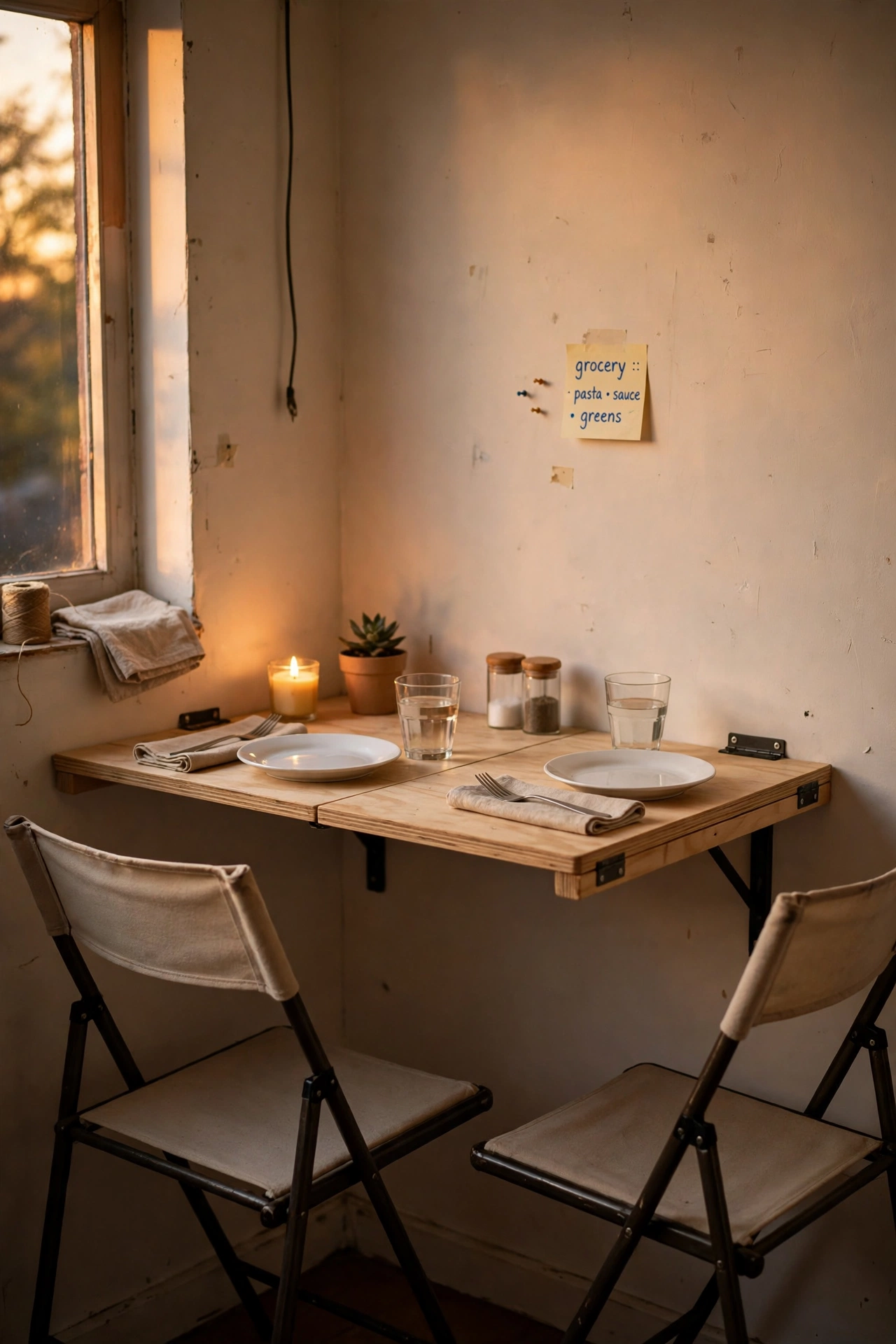
A wall-mounted fold-down table gives you a real dining spot that disappears after dinner. Fix it at a comfortable height, add two folding chairs that hang on hooks nearby, and keep a small placemat stack in a drawer so meals feel intentional. Fold it up when you need floor space, and wipe it down before guests arrive. I tried this after eating standing at the counter for a month, and sitting down properly made weeknight dinners feel slower and nicer. The mistake to avoid is mounting it too high, which turns every meal into an awkward perch.
Cost: ~$45 | Time: 60 minutes
5. A Kitchen Prep Strip
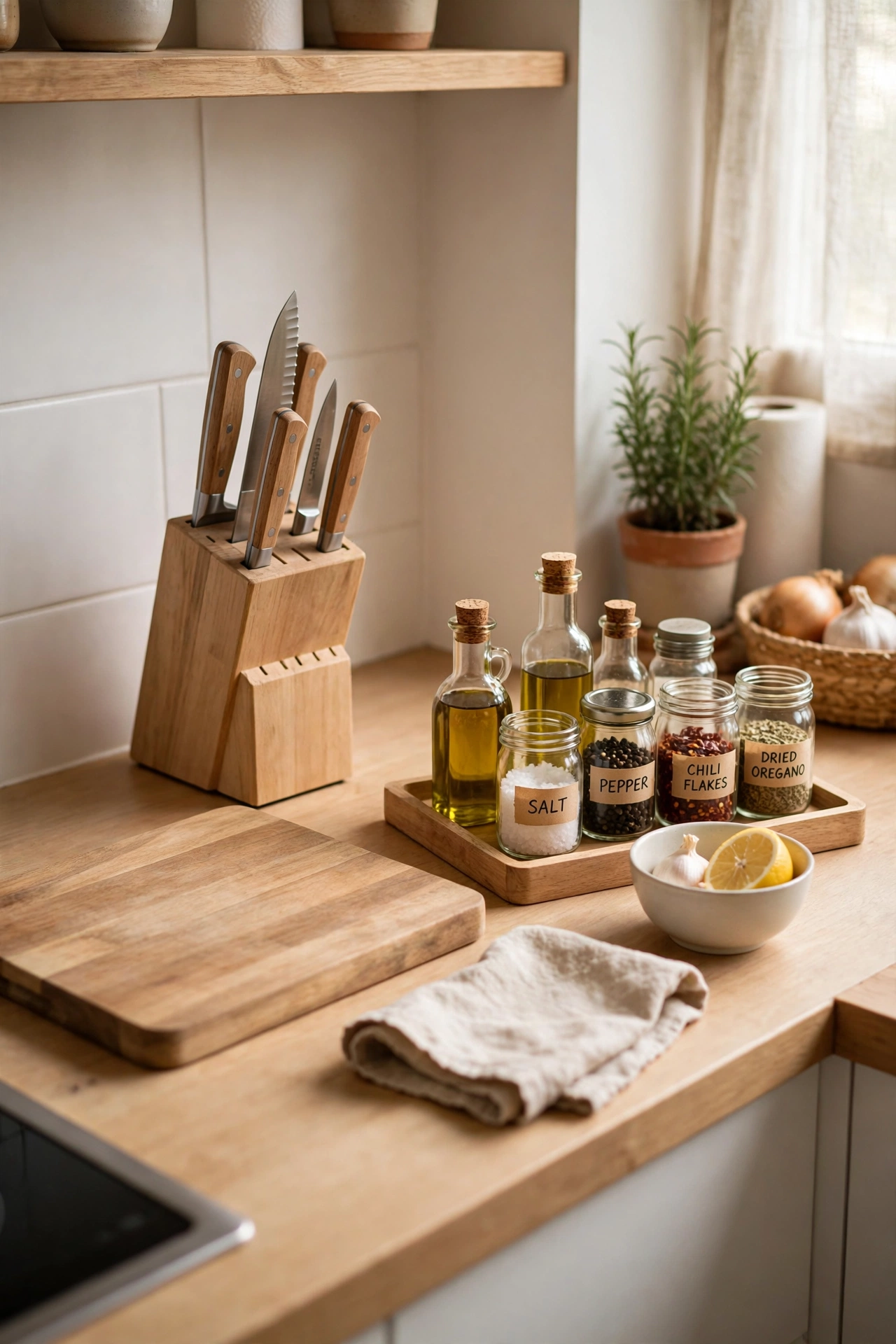
Even a tiny kitchen works better when one stretch of counter is kept clear just for prep. Clear a section near the stove, keep only a cutting board and a knife block there, and move everything else to a shelf or a cart. Use a small tray for oils and spices so they stay together, and wipe the strip clean after cooking. I tried this after years of chopping on top of the toaster, and the change felt silly and huge at once. The mistake to avoid is letting the prep strip become a charging station, because one phone cable invites a whole pile.
Cost: ~$12 | Time: 30 minutes
💰 Budget win: A tray and a board you already own can create this zone for almost nothing.
6. A Coffee Bar on a Cart
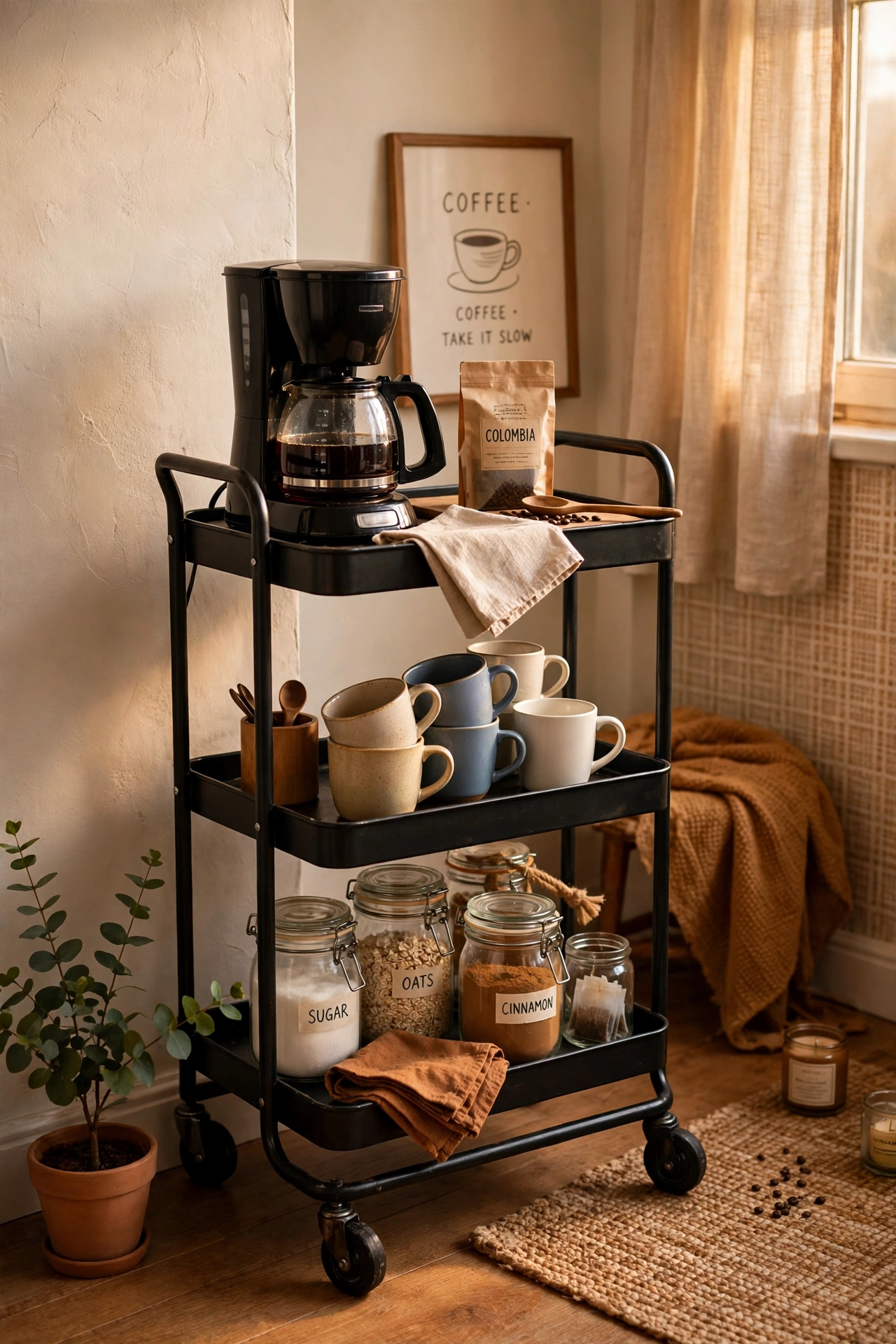
A rolling cart turns a corner of your studio into a coffee bar that never clutters the kitchen counter. Load the top shelf with your kettle or coffee maker, the middle shelf with mugs, and the bottom shelf with beans and filters. Roll it near the kitchen in the morning and back to its corner later, and keep a small cloth on top for spills. I tried this in a studio with almost no counter space, and it ended the daily shuffle of appliances. The mistake to avoid is overloading the cart until it will not roll, which defeats the whole point.
Cost: ~$38 | Time: 30 minutes
💰 Budget win: A basic utility cart does this job just as well as a fancy bar cart at a third of the price.
7. A Work Desk by the Door
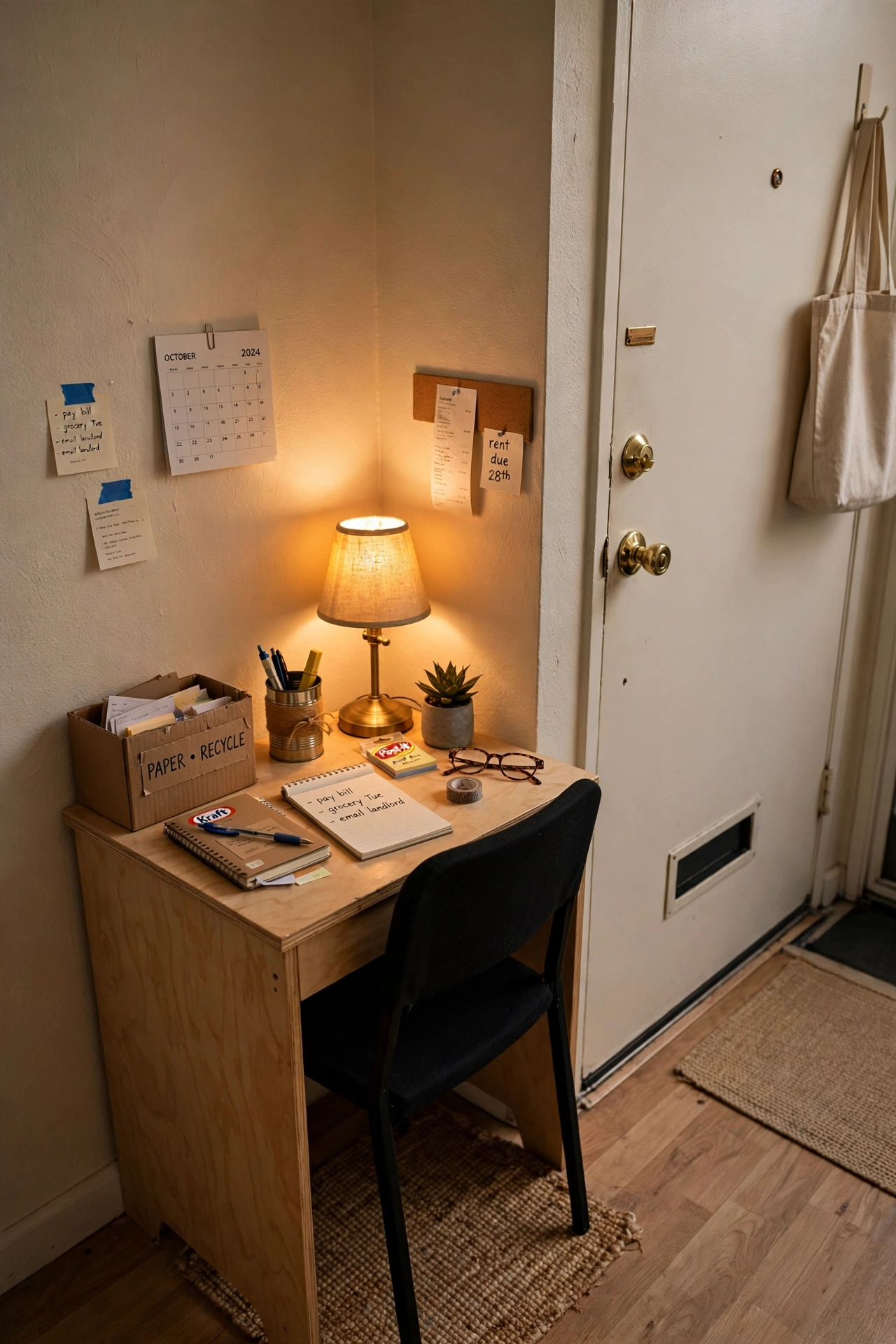
Putting your desk near the door, rather than beside the bed, helps your brain switch off at the end of the day. Choose a small desk that fits the wall, add a chair that tucks fully underneath, and keep a box for papers so work never spreads across the room. A small lamp marks the zone, and closing the laptop at night becomes a ritual. I moved my desk away from my bed after working from my pillow for weeks, and my evenings felt longer. The mistake to avoid is facing the desk toward the bed, which makes rest feel like unfinished work.
Cost: ~$40 | Time: 40 minutes
(see also: 19-studio-apartment-ideas-with-smart-zones)
8. A Dressing Corner With a Mirror
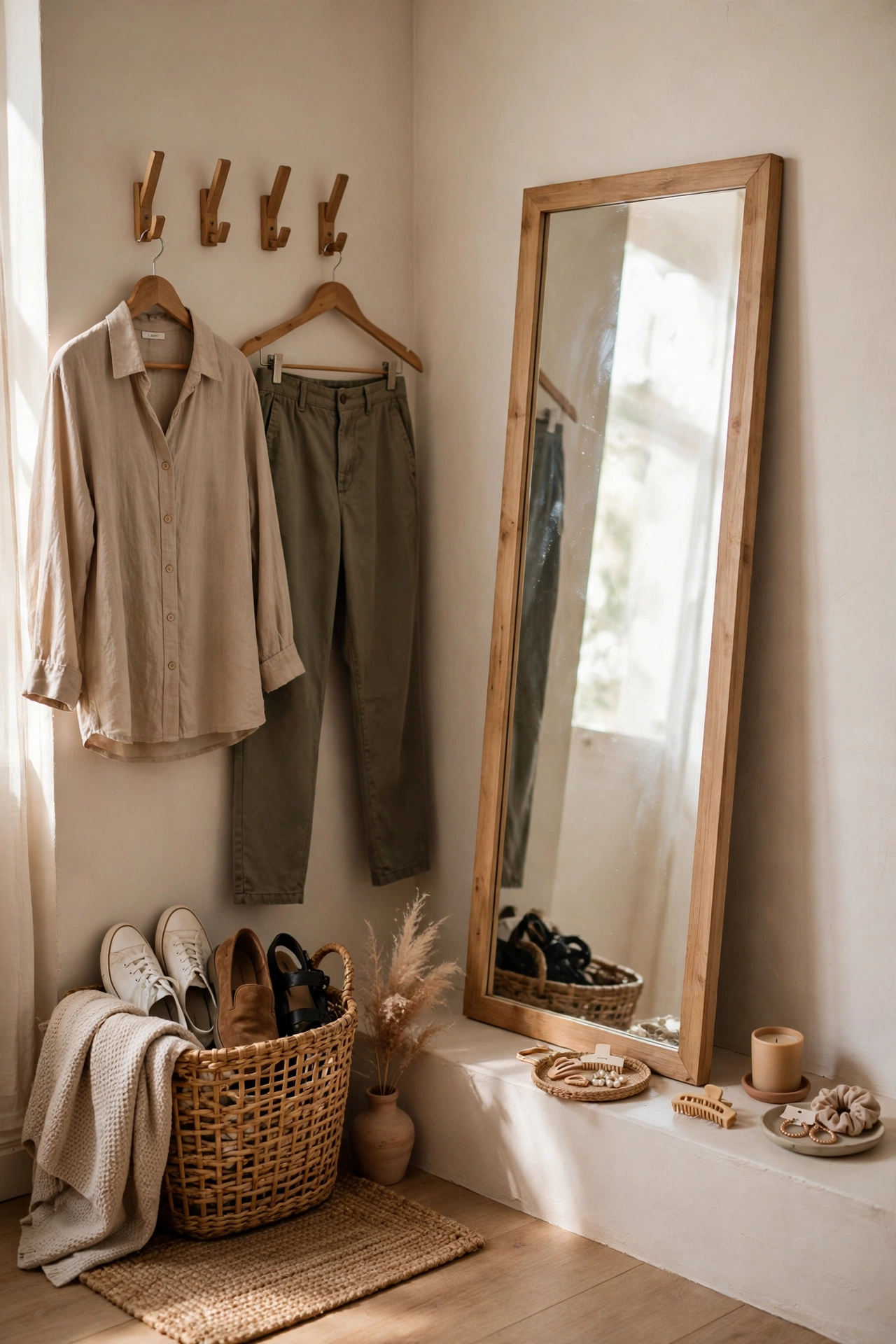
A full-length mirror leaning against one wall, plus a small stool and a hook rail, makes a dressing corner that saves your mornings. Hang tomorrow’s outfit on a hook the night before, keep shoes in a basket below, and check yourself in the mirror without blocking the bathroom. A leaning mirror needs no drilling, which renters love, and a small rug underfoot makes the corner feel finished. I tried this after getting dressed in the bathroom doorway for months, and the extra two minutes of calm changed my whole routine. The mistake to avoid is a wobbly mirror with no wall anchor for safety.
Cost: ~$32 | Time: 25 minutes
💰 Budget win: A leaning mirror plus three adhesive hooks creates a dressing room for under forty dollars.
9. An Entry Drop Zone
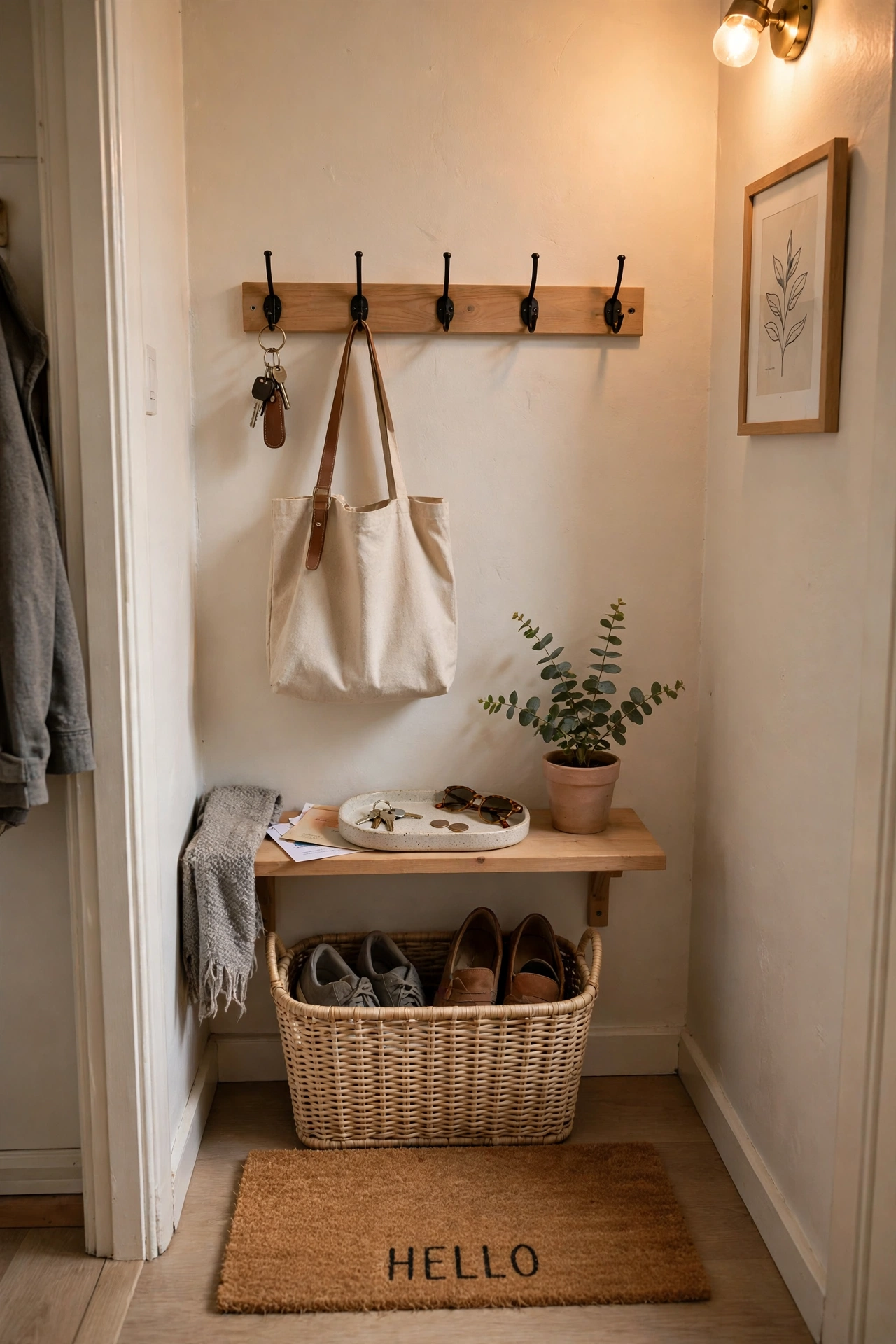
Give everything you carry home one landing spot just inside the door, and the rest of your studio stays tidy. Mount a row of hooks for keys and bags, put a small tray on a console or shelf for wallet and sunglasses, and add a basket for shoes. The rule is simple: if it came in with you, it lives here until you put it away properly. I tried this after losing my keys three times in one week, and the tray alone saved my sanity. The mistake to avoid is a drop zone with no basket, because loose shoes will slowly take over the entry.
Cost: ~$22 | Time: 30 minutes
💰 Budget win: A tray from the kitchen and hooks from the dollar store can build this zone for pocket change.
10. A Sleep Divider With a Bookshelf
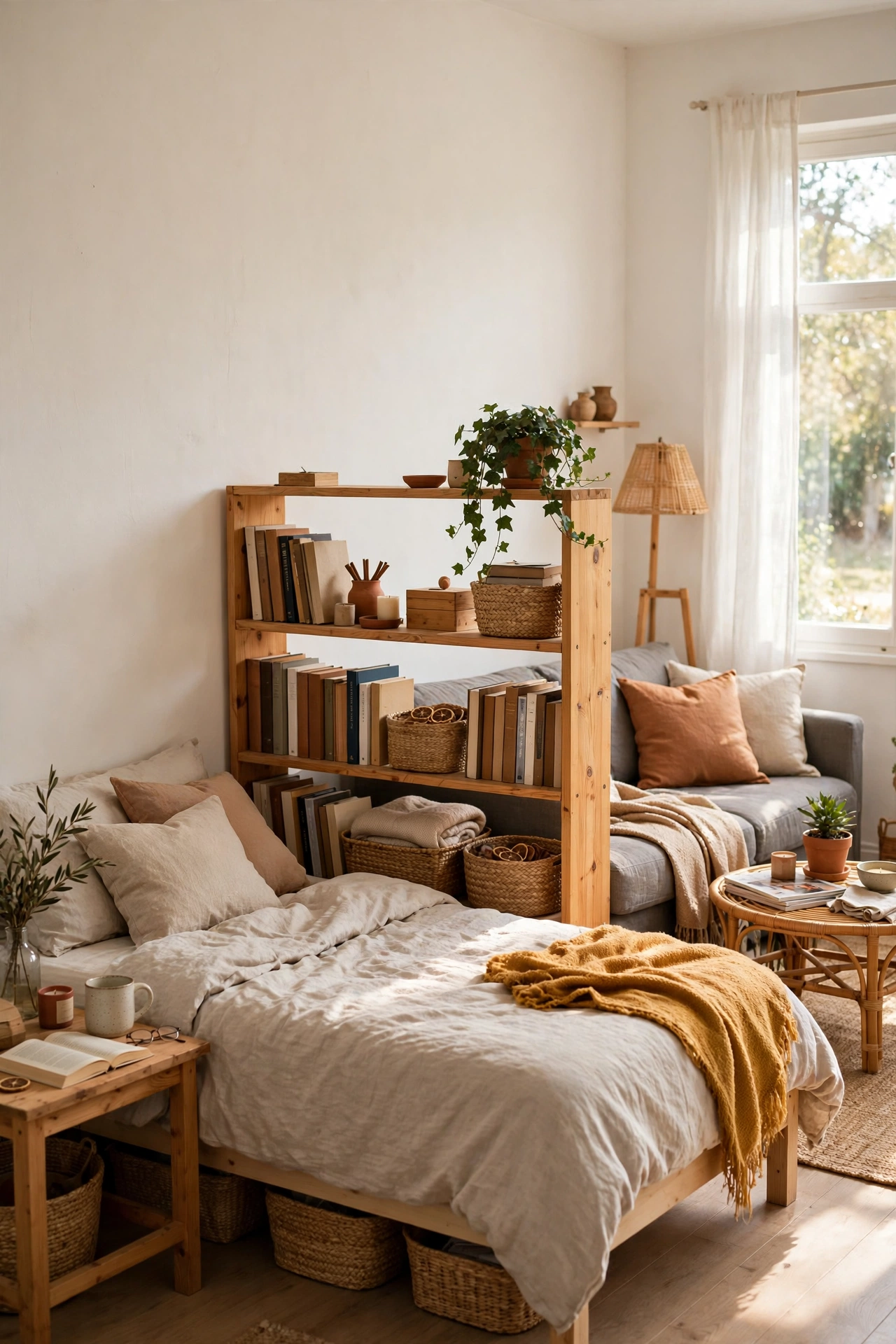
A low bookshelf placed with its back to the bed divides sleep from living without blocking light. Fill the lower shelves with books and baskets, keep the top shelf clear for a lamp, and leave a walkway on each side so the room still flows. The shelf gives you storage and a wall in one piece, and it moves with you when you leave. I tried this in a studio where a curtain felt too closed in, and the open top kept the room airy. The mistake to avoid is a tall shelf that blocks the window light and makes the bed side feel dark.
Cost: ~$55 | Time: 50 minutes
💰 Budget win: Buy the shelf secondhand and use baskets you already own to keep the cost down.
11. A Cozy TV Wall Nook
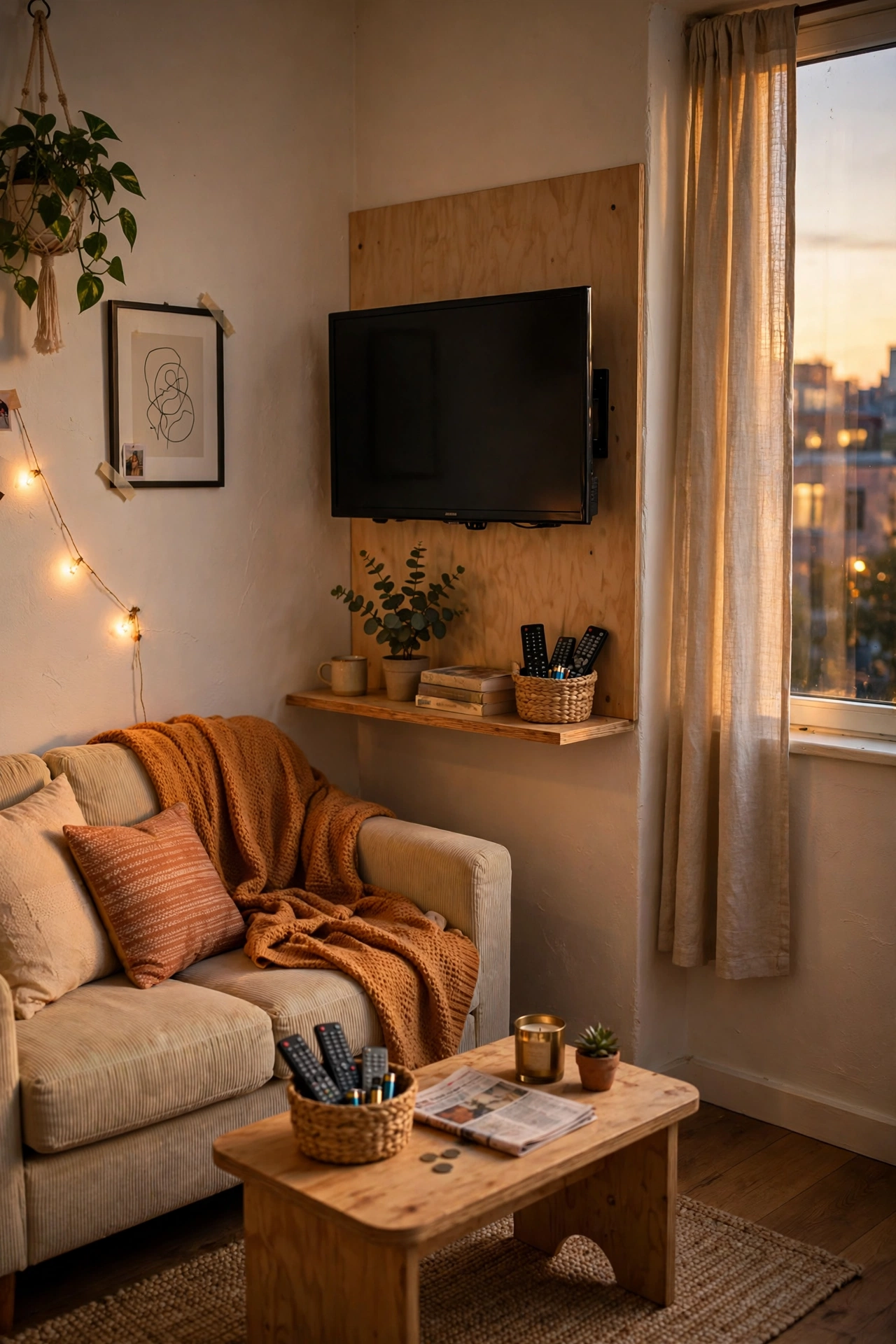
Mount the TV on the wall, or place it on a narrow stand, and keep the seating facing it in one tight group. A small media basket holds remotes and cables, a blanket draped over the sofa arm makes the nook inviting, and a dimmable lamp keeps evenings soft. Keeping the TV zone compact stops it from taking over the whole studio, which matters when the same room is also your bedroom. I tried this after my TV sat on a huge dresser that ate a whole wall, and swapping to a slim stand freed space for a chair. The mistake to avoid is a TV so large it dominates the room and makes conversation feel secondary.
Cost: ~$30 | Time: 45 minutes
💰 Budget win: A wall mount and a basket tidy the TV wall for less than a new media console.
12. A Plant Ledge Green Zone
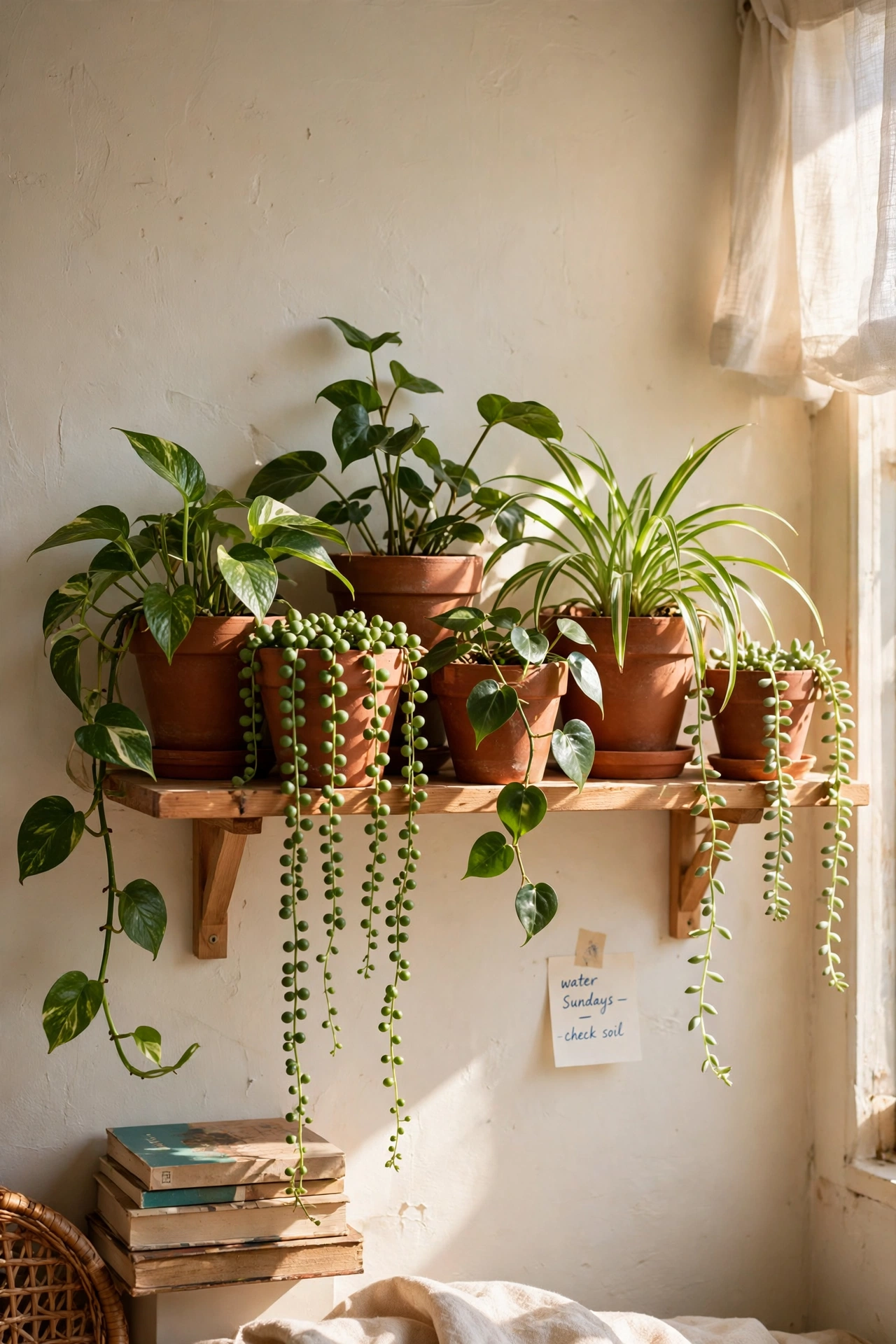
Group your plants on one ledge or shelf instead of scattering them across every surface, and they read as a garden zone rather than clutter. Use a sunny windowsill or a wall shelf, put trailing plants high and leafy ones low, and keep a watering can nearby so care stays easy. A plant zone brings life to a studio without taking floor space, and it gives you one spot to check when plants need water. I tried this after my plants lived on random counters, and grouping them made watering a five-minute job. The mistake to avoid is buying fussy plants for a dark corner, because they will struggle no matter how pretty they look.
Cost: ~$25 | Time: 30 minutes
💰 Budget win: Start with cuttings from friends and cheap terracotta pots, then add pricier plants slowly.
13. A Nightstand Charging Station
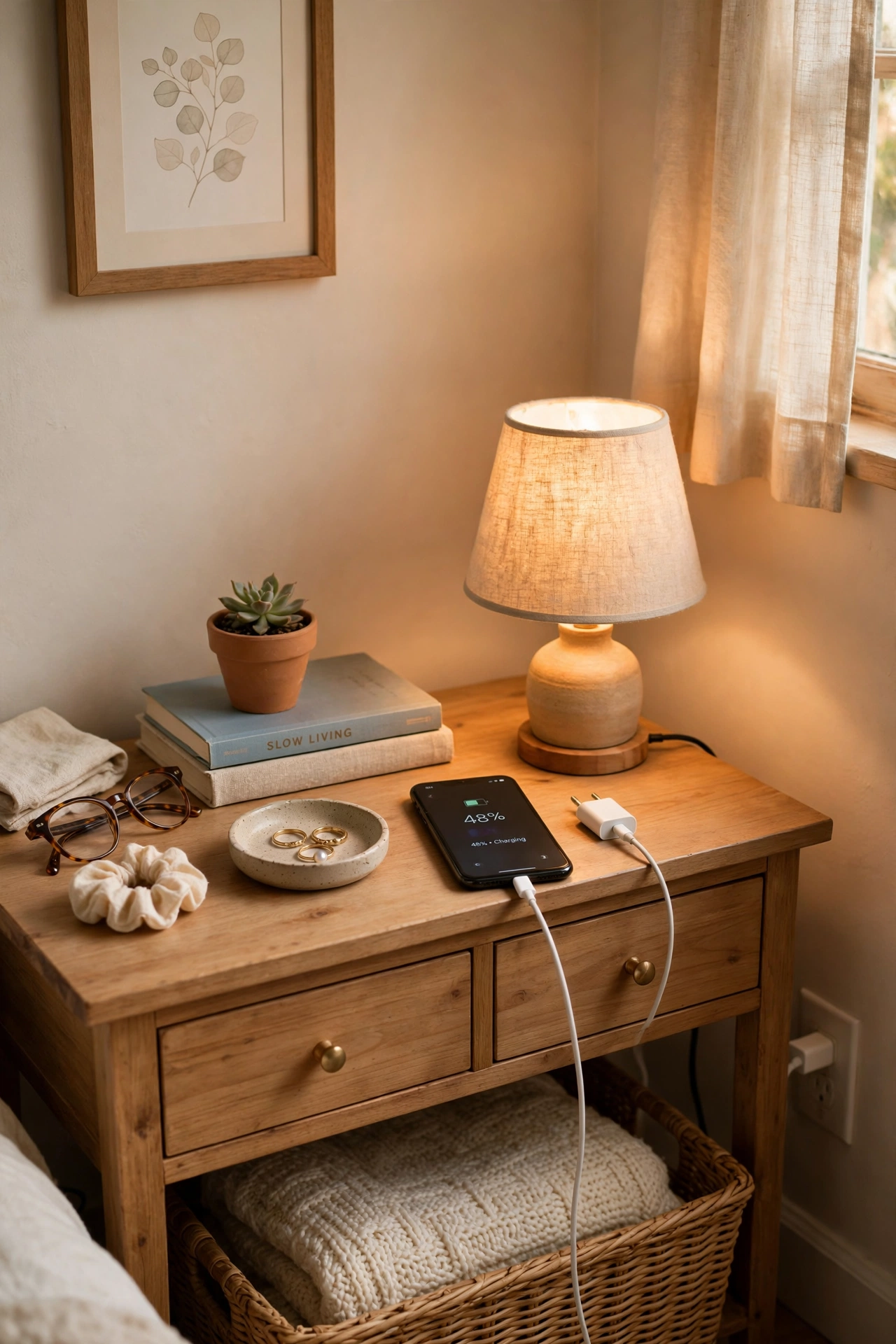
Turn your nightstand into a charging station with a small power strip tucked behind it, and your bed area stays calm. Keep one cable for your phone and one for a tablet or watch, coil the spares in a small pouch, and add a tiny dish for rings or earrings. The point is that charging happens here and nowhere else, so cables stop creeping across the floor. I tried this after tripping over a charger cable in the dark, and the pouch alone ended the tangle. The mistake to avoid is a strip with six cables plugged in, which just moves the mess from the floor to the drawer.
Cost: ~$15 | Time: 20 minutes
14. A Laundry Fold Station
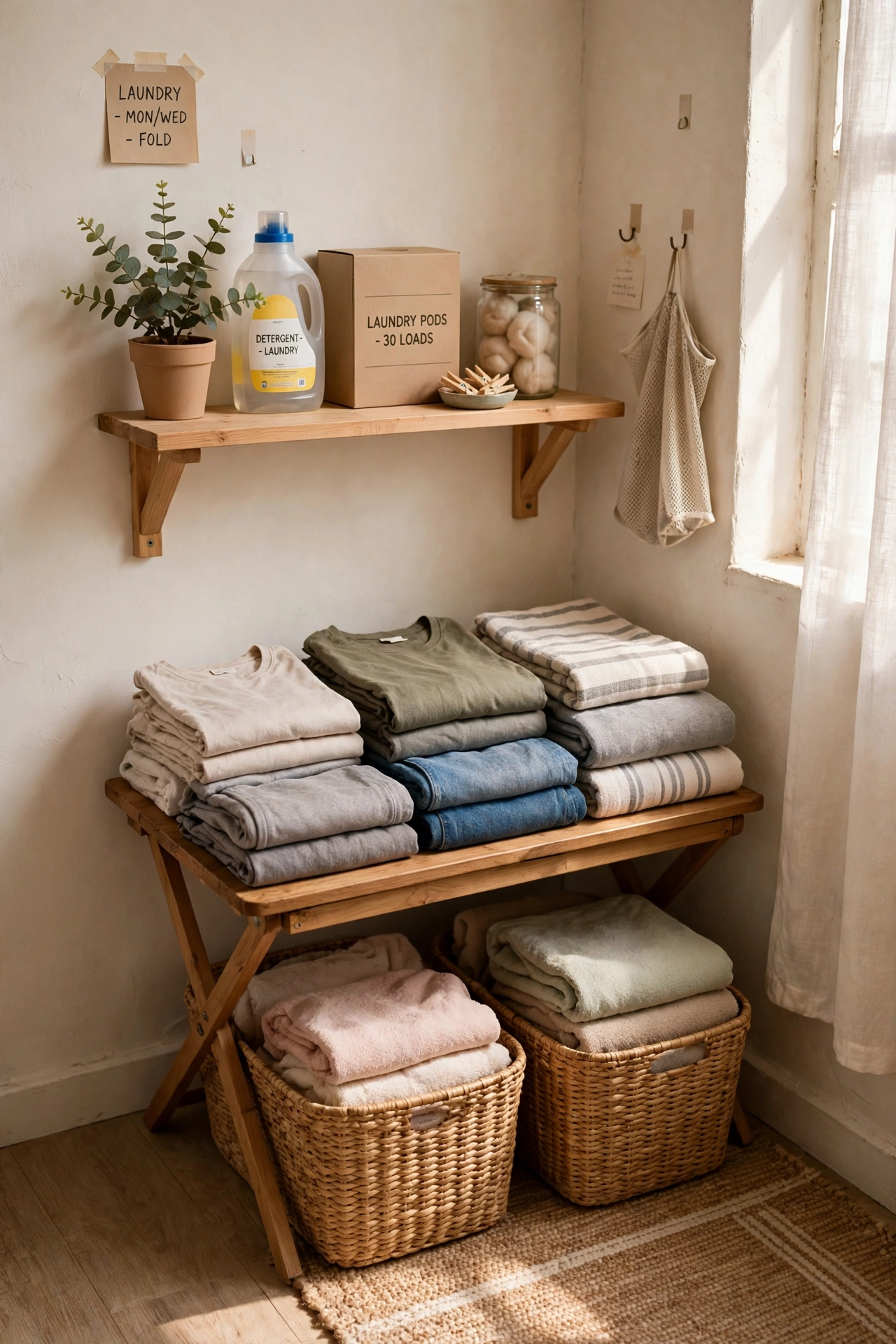
A folding surface near your hamper, even just a board over a basket, turns laundry from a pile into a process. Put clean clothes on the board, fold them straight into a basket sorted by owner or type, and put them away the same day. A small shelf above holds detergent and dryer sheets, so nothing wanders. I tried this after living out of a laundry basket for a month, and folding in one spot took ten minutes instead of an afternoon of dread. The mistake to avoid is a fold station with no basket nearby, because folded piles on a bed just get slept on.
Cost: ~$18 | Time: 25 minutes
💰 Budget win: A board over two baskets works as well as a folding table and stores flat when not in use.
15. A Hobby Table That Folds Away
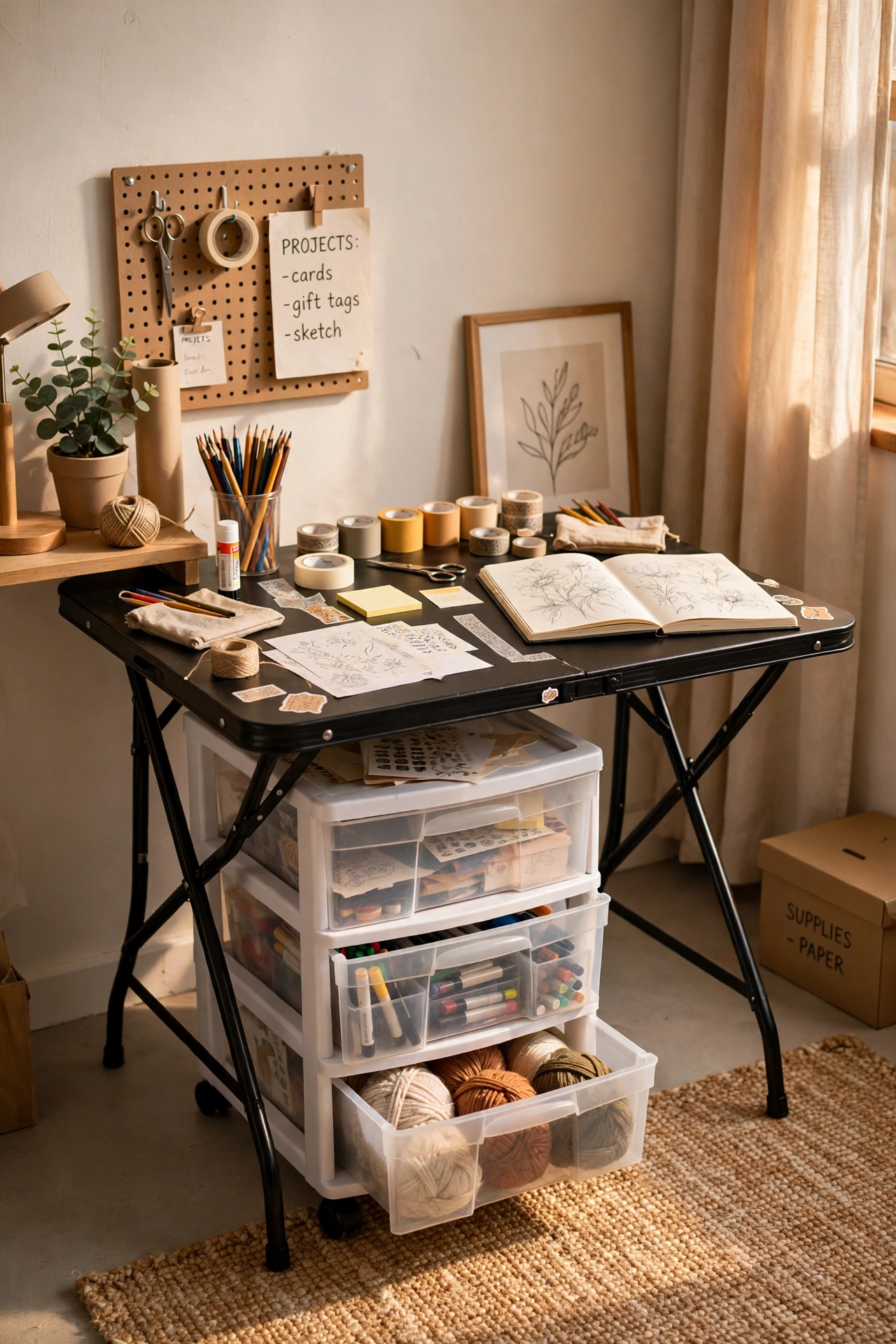
If you paint, sew, or build models, give your hobby a table that folds away when you are done. A card table or a wall-mounted drop leaf works, and a rolling bin underneath holds supplies so setup takes two minutes. Keep current projects in one box, and pack finished pieces away before you fold the table. This zone lets you enjoy a hobby in a studio without living inside it all week. I tried this with a puzzle table that stayed up for a month, and folding it away made the room feel twice as big. The mistake to avoid is a hobby box with no lid, because supplies will migrate everywhere.
Cost: ~$35 | Time: 30 minutes
(see also: 15-small-apartment-decorating-ideas-that-feel-like-home)
16. A Pet Corner With a Bed
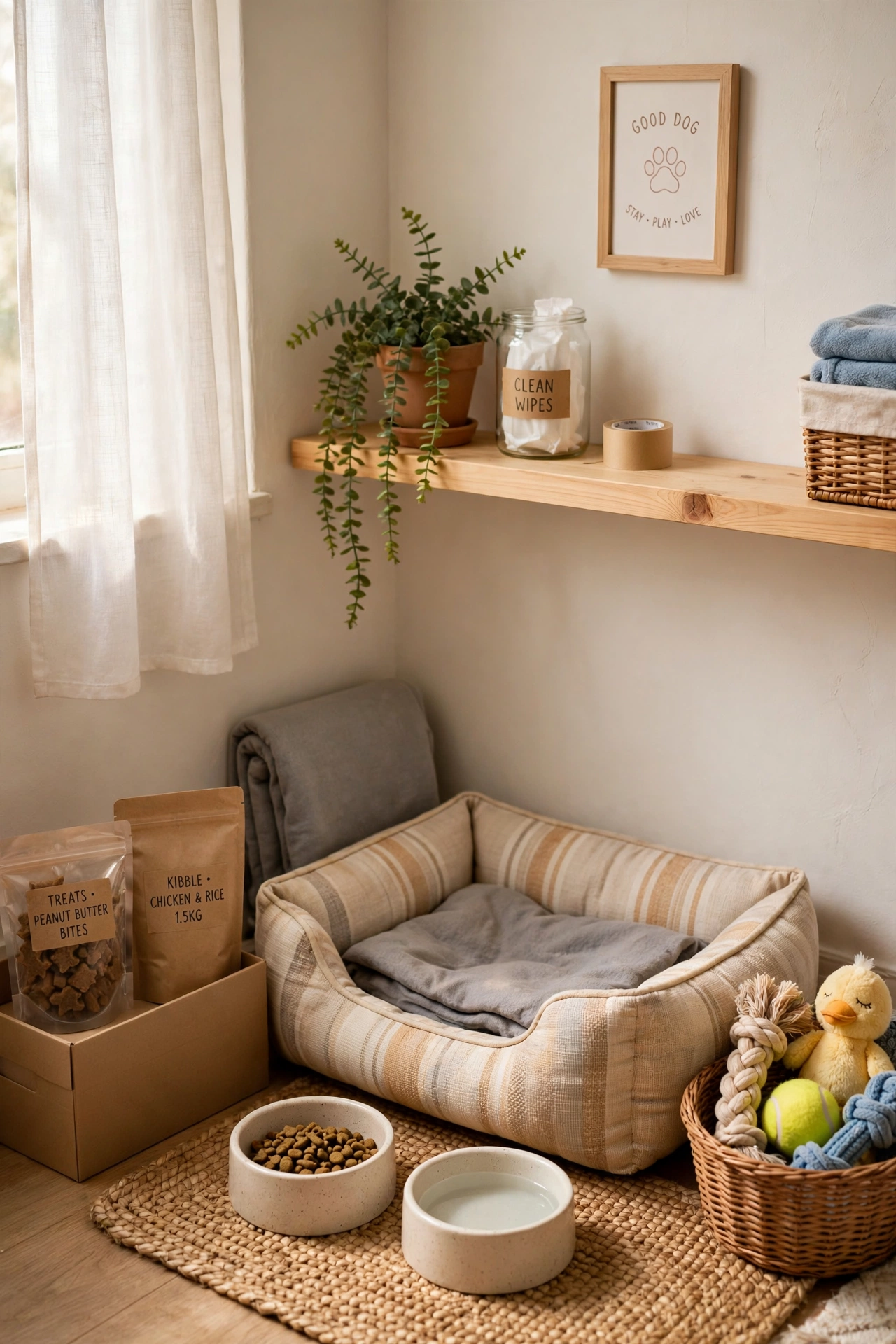
Pets need a zone too, and a bed in one quiet corner plus a mat for food bowls keeps their things contained. Put the bed near a wall, away from foot traffic, and keep toys in a small basket that you tidy each evening. A washable mat under the bowls protects the floor, and a hook nearby holds the leash. I set this up for a friend’s dog I was sitting, and having one pet corner stopped bowls and toys from spreading across the studio. The mistake to avoid is putting the bed in the busiest walkway, because a pet that gets stepped on will just move to your bed.
Cost: ~$28 | Time: 20 minutes
💰 Budget win: A washable pet bed and a dollar store mat keep this zone cheap and easy to clean.
17. A Breakfast Bar at the Counter
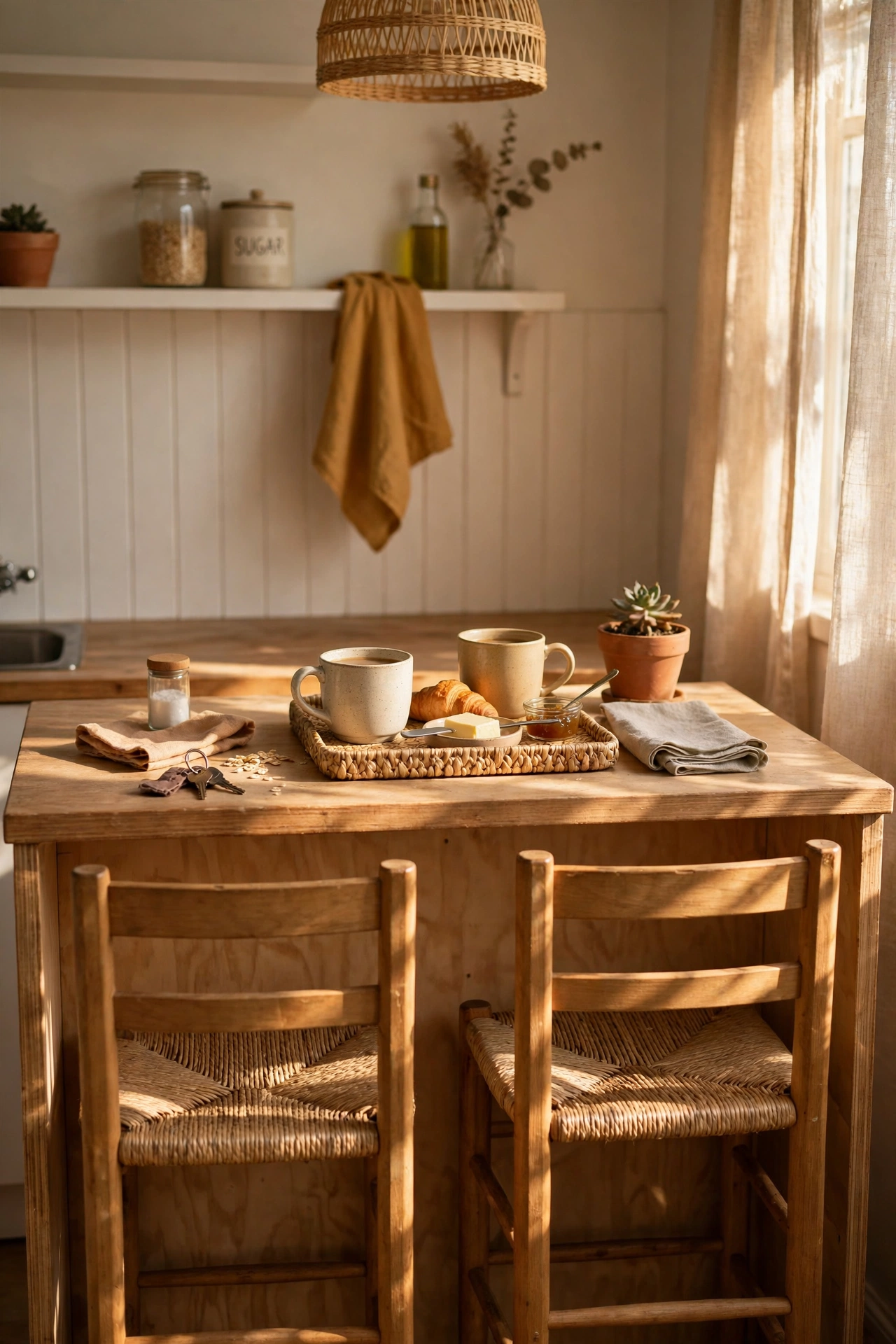
Two stools at a counter overhang, or a narrow shelf fixed to the wall, make a breakfast bar that doubles as extra prep space. Keep the bar clear except for a small tray with salt, sugar, and napkins, and sit there for morning coffee instead of eating over the sink. Bar stools that tuck fully under keep the walkway open, and a pendant light above marks the zone clearly. I tried this in a studio kitchen with no table, and breakfast became a small ritual instead of a rushed bite. The mistake to avoid is stools that are too tall, which turn a relaxing breakfast into a climb.
Cost: ~$45 | Time: 40 minutes
💰 Budget win: A wall shelf plus two secondhand stools costs far less than a dining set and fits a studio better.
18. A Closet Office Nook
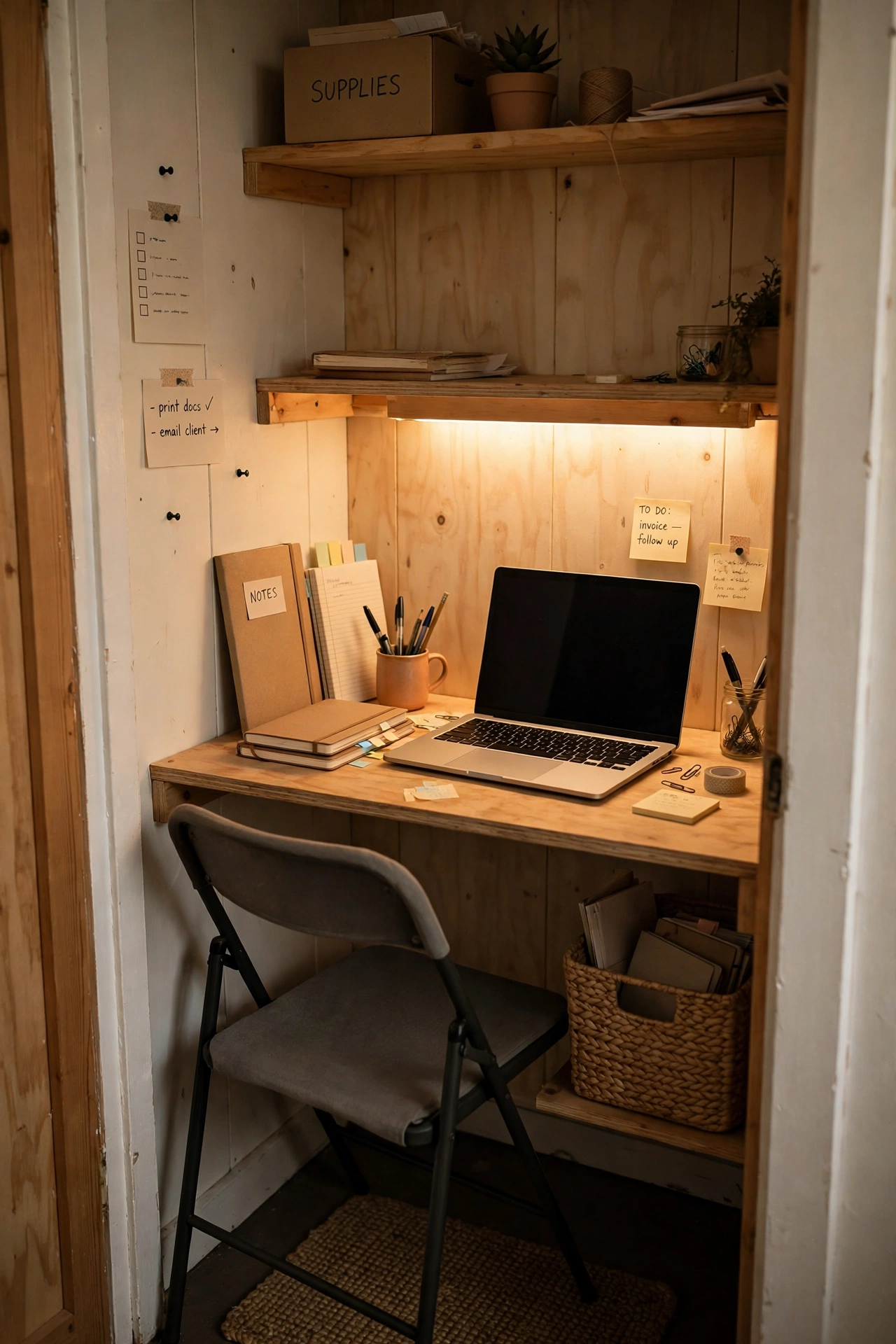
An unused closet can become a tiny office that closes away at night, which is perfect for a studio. Remove the door or keep it open, add a shelf at desk height and a small chair, and mount a light under the top shelf. Keep office supplies in a box on the shelf above, and close the curtain or door when work ends. I tried this in a closet barely wider than my shoulders, and having a door to shut on work changed my evenings. The mistake to avoid is a chair that does not fit through the closet opening, so measure before you buy anything.
Cost: ~$40 | Time: 60 minutes
💰 Budget win: A shelf board and a battery light turn a dead closet into an office for very little money.
19. A Meditation and Stretch Corner
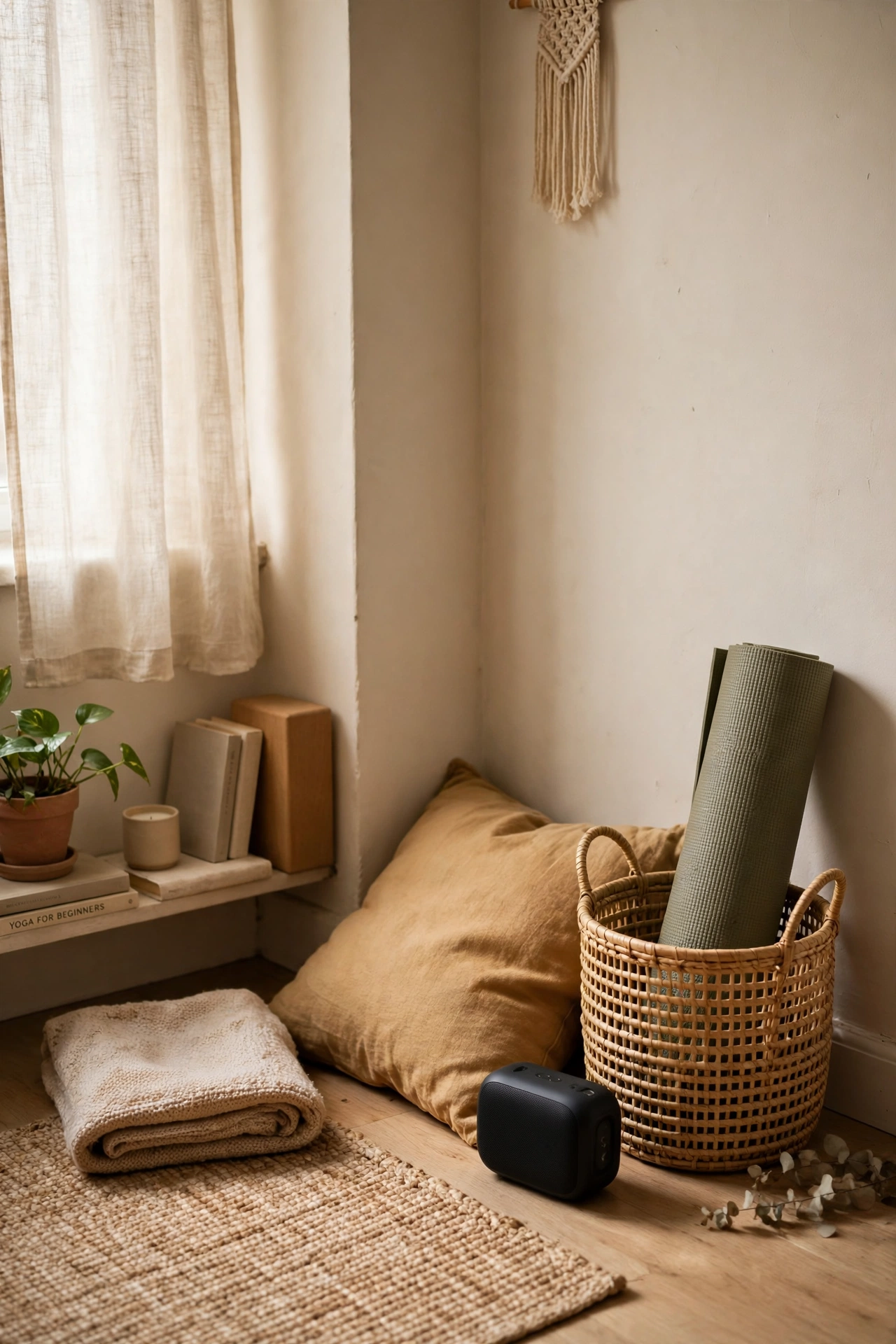
Roll out a mat in one quiet corner, add a cushion and a small speaker, and you have a stretch zone that invites you to use it. Keep the corner free of furniture, hang a calming print on the wall, and store the mat rolled in a basket so the space stays clear. Five minutes of stretching here in the morning feels different from stretching between boxes, because the corner signals your brain to slow down. I tried this after stretching in doorways for months, and the dedicated spot made the habit stick. The mistake to avoid is storing heavy boxes in the stretch corner, because you will stop unstacking them.
Cost: ~$22 | Time: 20 minutes
💰 Budget win: A basic mat and a cushion you already own are all this zone really needs.
20. A Guest Sleep Zone With a Daybed
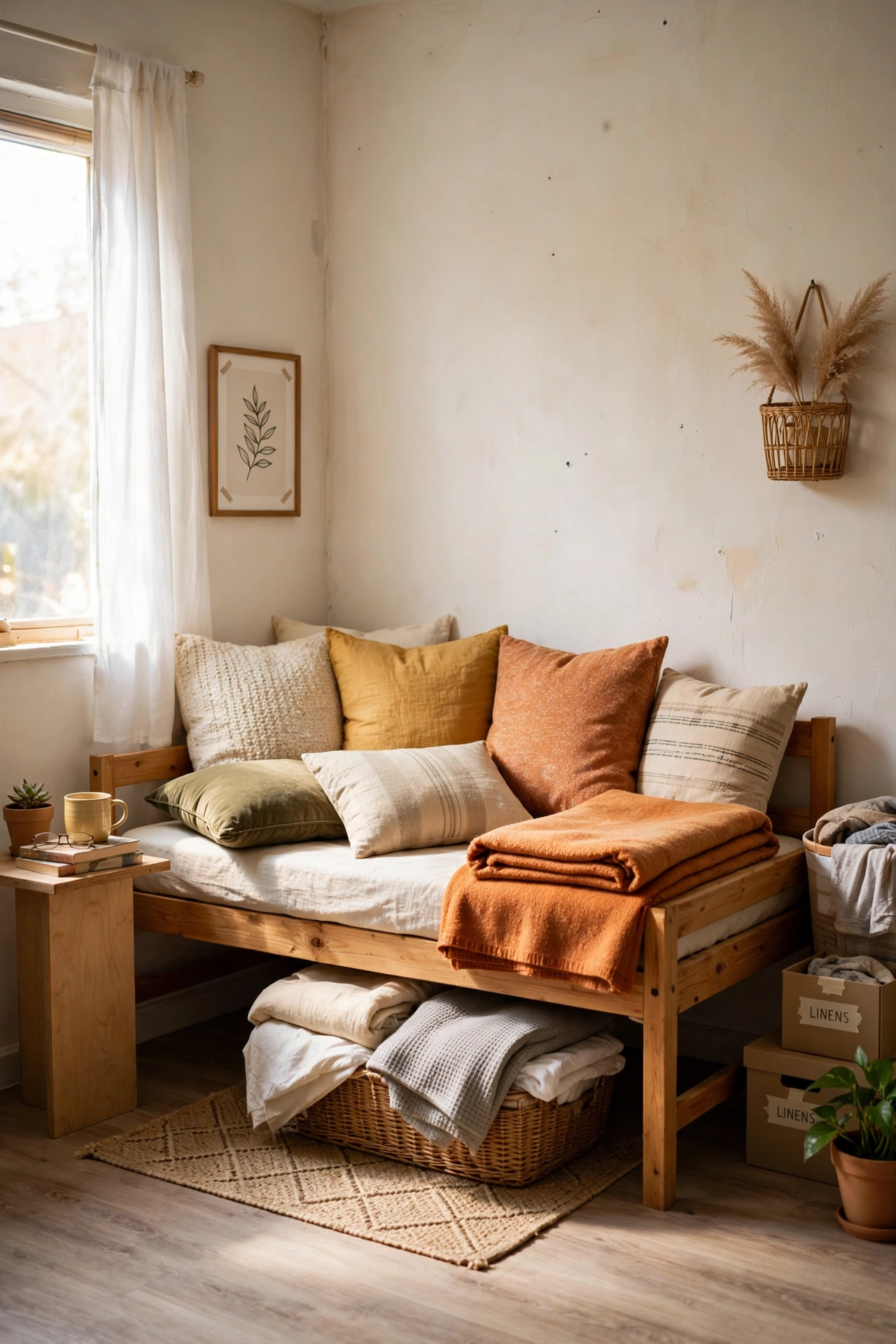
A daybed against one wall works as a sofa by day and a guest bed by night, which solves the studio guest problem neatly. Dress it with sofa cushions during the day, keep a folded blanket and a spare pillow in a basket underneath, and add a small lamp so guests can read. When friends stay over, pull off the day cushions, spread the blanket, and the zone becomes a bedroom. I tried this before a friend visited, and she slept better than on any air mattress I had offered before. The mistake to avoid is a daybed with no storage underneath, because spare bedding needs a home.
Cost: ~$60 | Time: 45 minutes
💰 Budget win: Save this idea if you host often, because a daybed replaces both a sofa and a guest bed in one buy.
21. A Gallery Wall Transition Zone
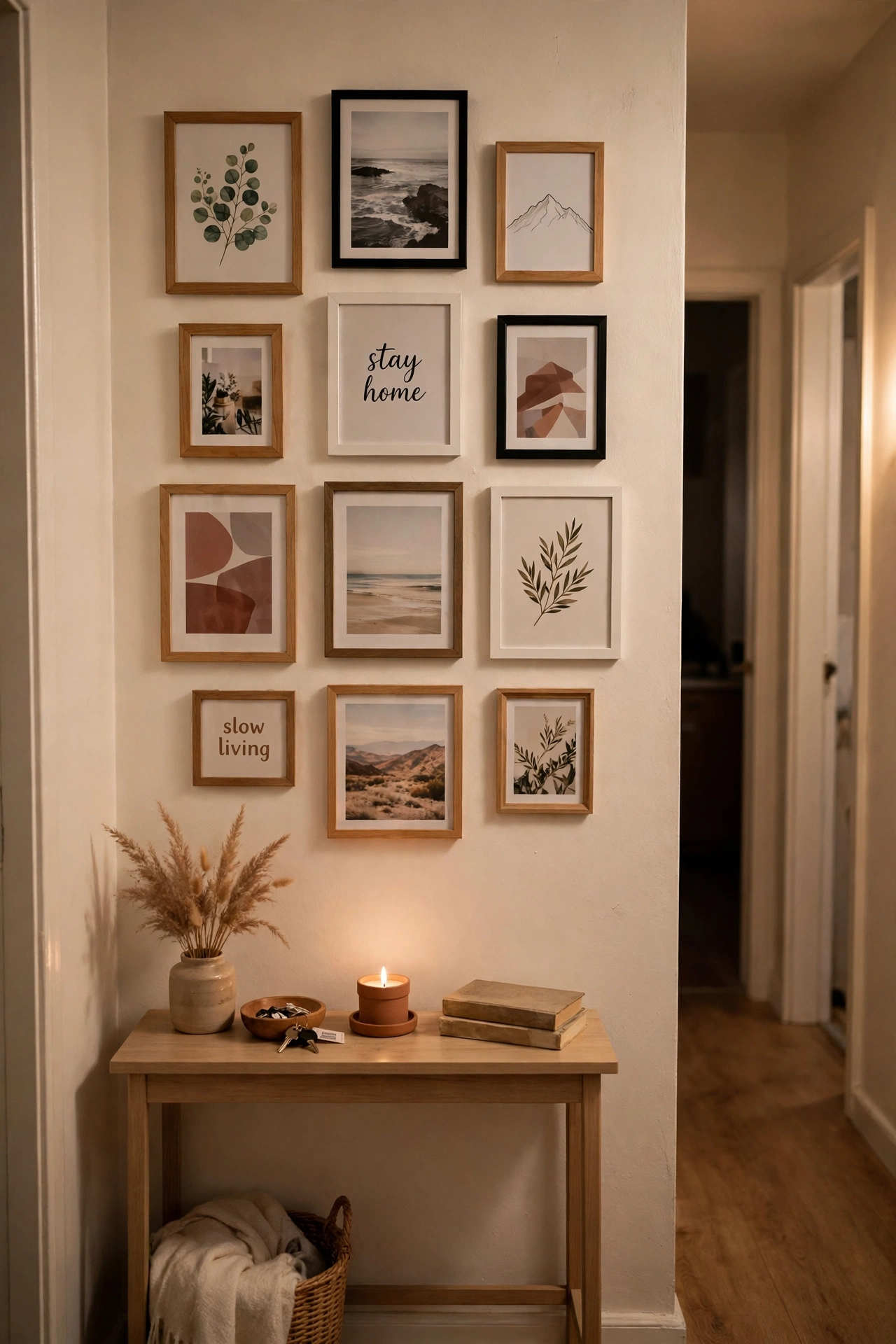
Use a gallery wall to mark the walkway between zones, so moving from living to sleeping feels like passing through a hallway. Hang frames in a loose grid along one wall, mix photos with prints, and keep the frames in one or two colours so the wall feels calm. A narrow console or bench below anchors the display, and a small lamp makes it glow at night. I tried this along the wall between my bed and my desk, and the visual break made each side feel like its own room. The mistake to avoid is hanging frames at random heights, which looks messy instead of intentional.
Cost: ~$30 | Time: 60 minutes
(see also: 21-room-divider-ideas-for-studio-apartments)
Your studio does not need more square feet, it needs clearer jobs for the feet you already have. Start with the rug, the curtain, and the entry tray, then add one zone a weekend until the room starts working for you. Pick the zones that match your real life, skip the ones that do not, and let the place feel bigger because everything finally belongs somewhere.
