19 Japandi Bathroom Ideas on a Budget
Last winter I walked into my bathroom half-asleep, stepped onto a cold tile floor, and thought, this room wakes me up in the worst way. It was not dirty or broken, just loud — too many bottles, too many colours, a shower curtain that shouted. That morning I started looking for Japandi bathroom ideas that would make the room feel quieter without a remodel. Japandi mixes Japanese calm with Scandinavian warmth, so it is really about fewer things, softer colours, and natural materials you can actually afford. You do not need a new vanity or new tiles. A warm mat, a wooden tray, and a calmer colour palette can change how the whole room feels by the weekend.
1. Pale Oak Bath Mat That Warms the Floor
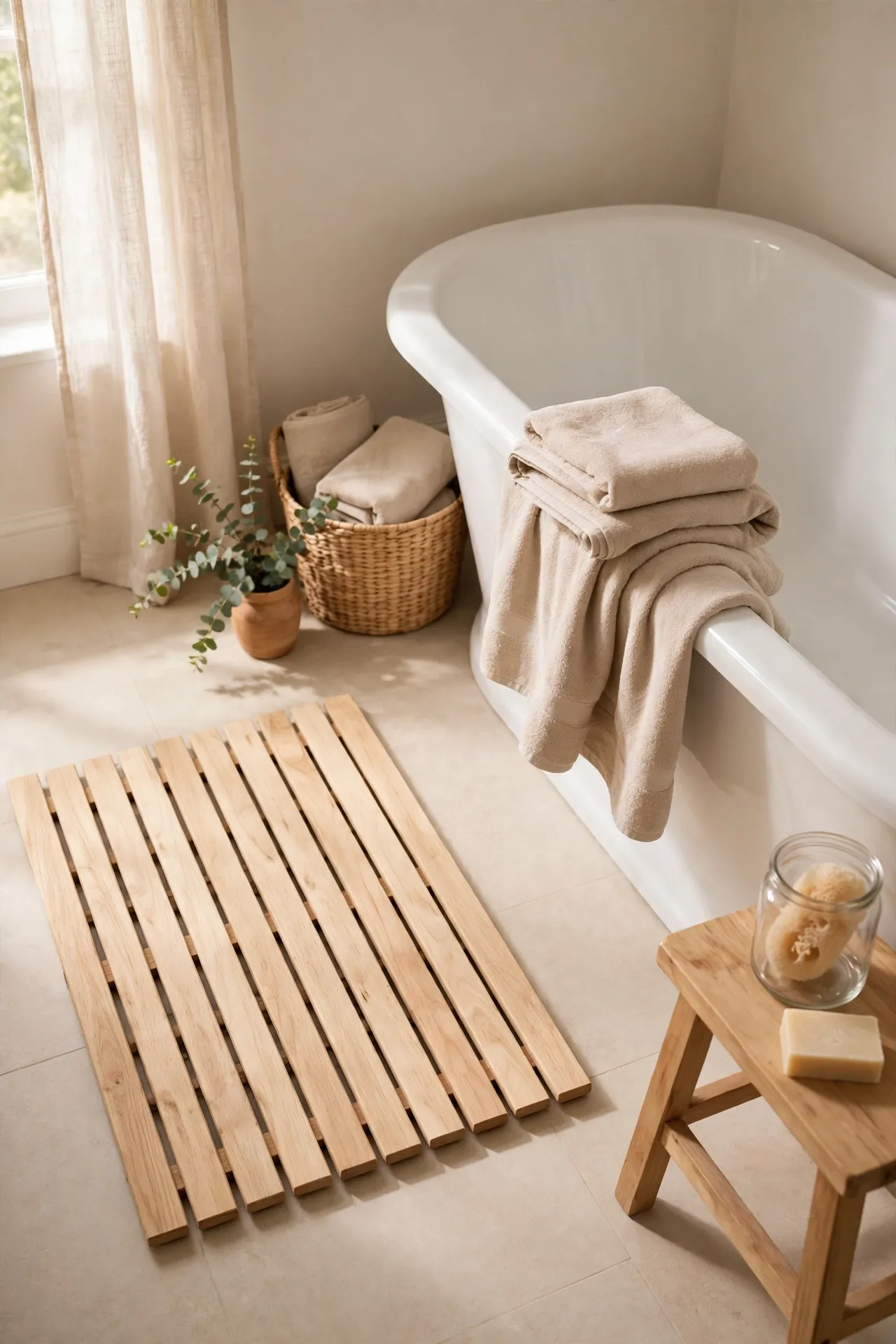
A pale oak bath mat is the easiest way to take the chill out of a bathroom floor. It looks like a little wooden deck under your feet, and it dries much faster than a thick fabric rug. First, measure the spot in front of your sink or tub so the mat sits flat and does not slide. Then place a thin non-slip pad underneath if your floor is glossy. Wipe it down once a week and let it air-dry after showers. I tried this in my own bathroom, and the mistake to avoid is buying one that is too small — it curls at the edges and feels wobbly. Get one that fits the space properly, and your mornings instantly feel softer and calmer.
Cost: ~$28 | Time: 10 minutes
💰 Budget win: Skip the matching wooden accessories for now — one good oak mat carries the whole look on its own.
2. Soft White Walls With Warm Undertones
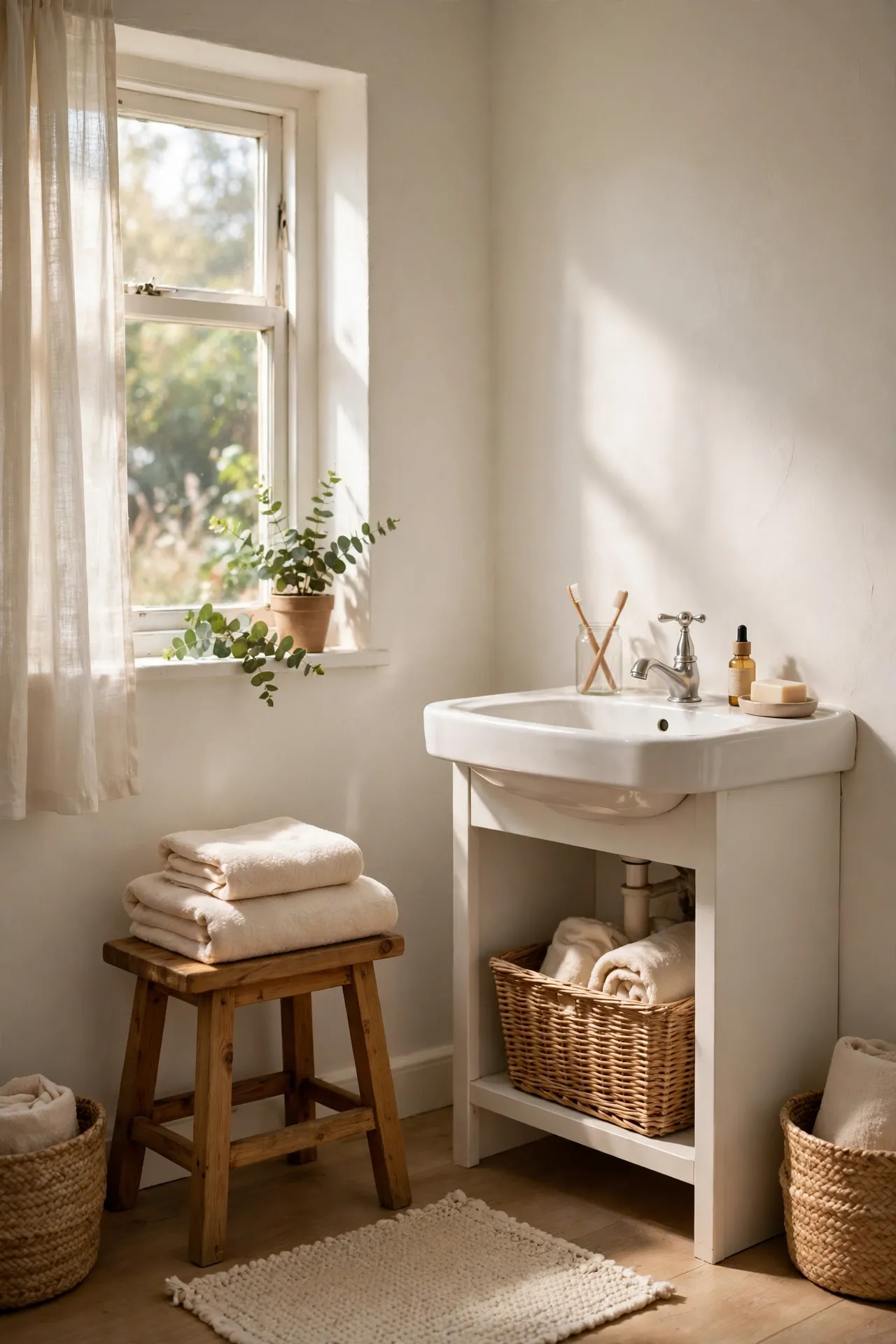
Bright, blue-white paint can make a small bathroom feel like a clinic, while a soft white with warm undertones feels like sunlight. Look for shades described as warm white, linen white, or creamy white, and test a swatch next to your tiles first. Paint one accent wall if you are short on time, or just repaint the upper half above the tile line. Use a small roller for smooth coverage and painter’s tape along the edges. I tried this and learned the hard way that testing matters — I once picked a white that turned pink in evening light. A warm white keeps towels, wood, and stone looking natural instead of harsh.
Cost: ~$35 | Time: 180 minutes
💰 Budget win: Buy one gallon and a good roller instead of a full paint kit — leftover paint covers touch-ups for months.
3. Bamboo Tray Across the Bathtub
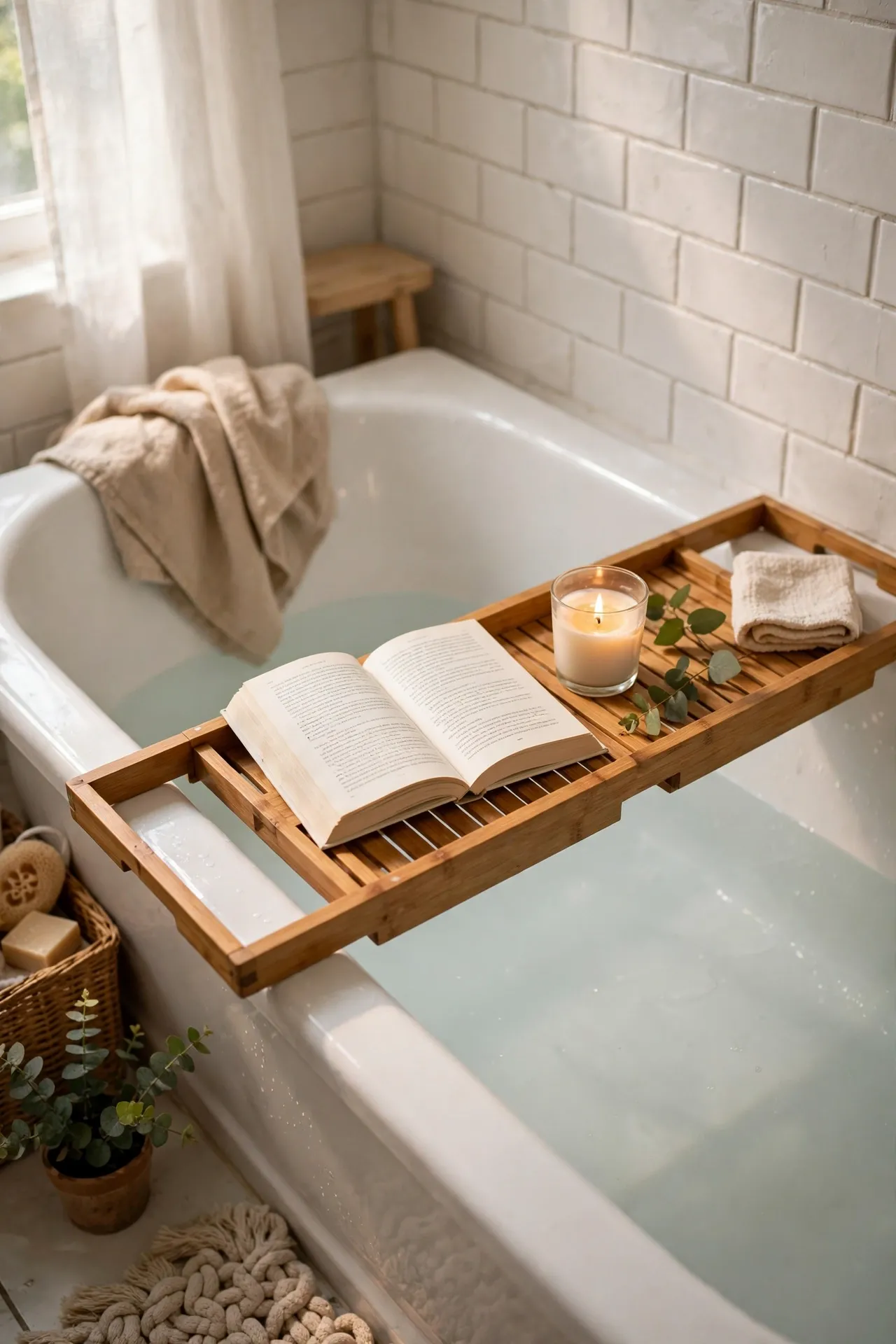
A bamboo tray turns an ordinary bath into something you actually look forward to. It stretches across the tub and holds a book, a candle, or a cup of tea without anything falling in. First, measure your tub width so the tray rests securely on both rims. Then check that it has adjustable sides or rubber grips. Place heavier items in the middle so it stays balanced. I tried this on a tired Sunday evening, and the mistake to avoid is overloading one side with a big mug — it tips, and you learn fast. Keep it simple: one candle, one book, and suddenly bath time feels like a small ritual.
Cost: ~$24 | Time: 5 minutes
💰 Budget win: Choose a plain bamboo tray over a spa-branded one — the wood is the same, the price is not.
4. Stone Soap Dish and Wooden Dispenser Set
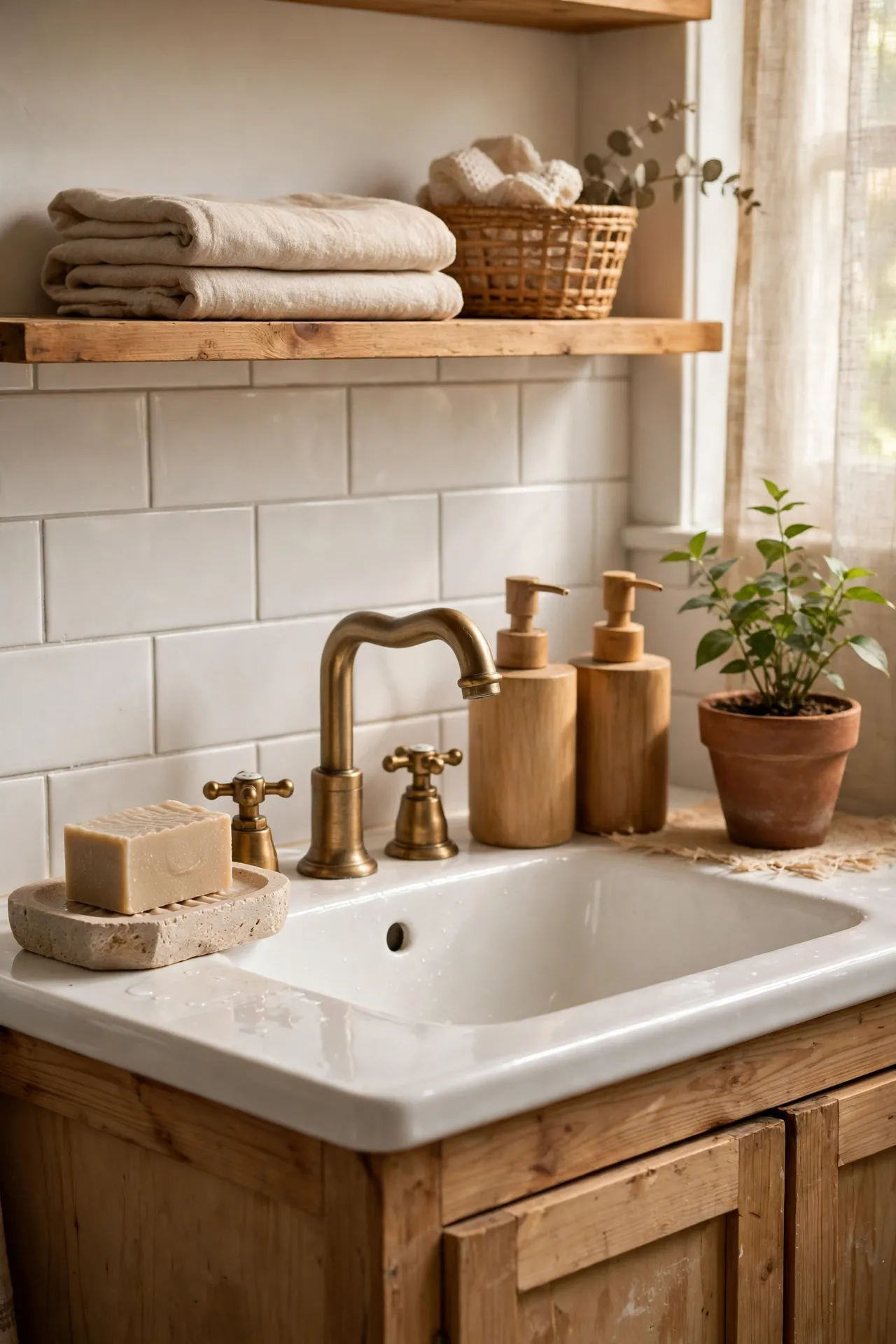
Swapping plastic bottles for a stone soap dish and a wooden dispenser set changes the sink area in minutes. The stone keeps the soap dry so it lasts longer, and the wooden pump bottles look tidy even when they are half empty. Start by clearing everything off the sink edge. Then place the dish on the left and the dispensers on the right, or whatever feels natural for your dominant hand. Refill them from larger, cheaper bottles you keep under the sink. I tried this and the mistake to avoid is buying dispensers with stiff pumps — test the pump action first if you can. Small, calm details like this make daily routines feel less cluttered.
Cost: ~$22 | Time: 15 minutes
💰 Budget win: Refill from bulk bottles instead of buying pretty mini bottles every month.
5. Linen Shower Curtain in Natural Beige
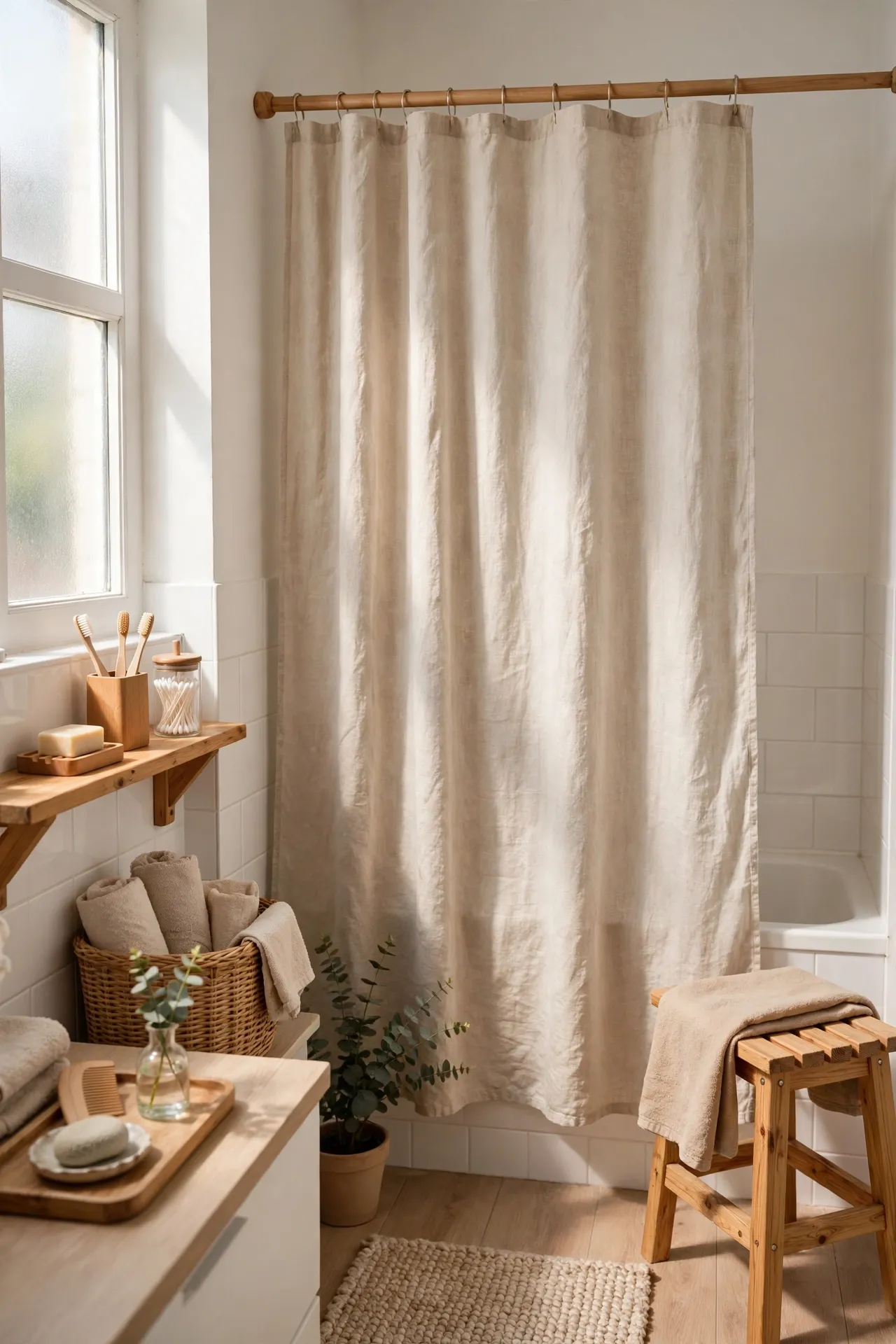
A linen-look shower curtain in natural beige softens the whole bathroom in a way plastic curtains never do. The fabric falls in gentle folds, lets light through softly, and pairs beautifully with wood and stone. Hang it on a sturdy tension rod if you do not want to drill holes. Use a clear inner liner behind it so the outer curtain stays dry and lasts longer. Wash the liner every few weeks to stop mildew. I tried this, and the mistake to avoid is skipping the liner — my first linen curtain got damp spots within a month. With a liner, it stays fresh, looks expensive, and costs far less than a remodel.
Cost: ~$30 | Time: 20 minutes
💰 Budget win: Buy the outer curtain in a neutral beige you can keep through any colour change later.
6. Low Wooden Stool Beside the Tub
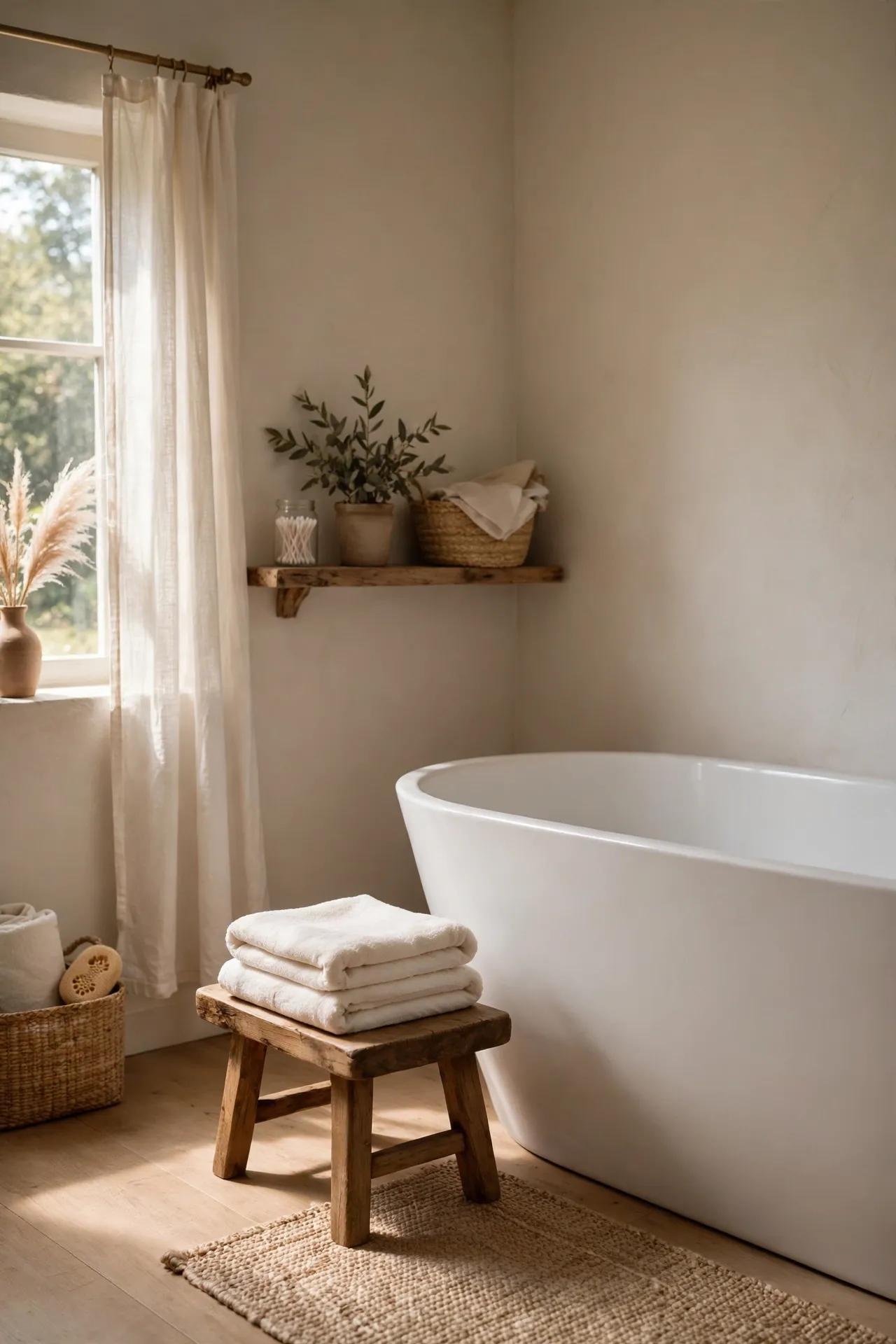
A low wooden stool beside the tub is one of those quiet Japandi pieces that does three jobs at once. It holds a towel, gives you a place to sit while you dry your feet, and adds warm wood without taking much space. Look for a stool made from teak, acacia, or bamboo that can handle humidity. Place it where it will not block the door or the towel rail. Wipe it dry after steamy showers so the wood stays in good shape. I tried this, and the mistake to avoid is picking a tall bar stool — it looks odd and wobbles on wet tiles. A low, sturdy stool feels grounded and useful every single day.
Cost: ~$32 | Time: 5 minutes
💰 Budget win: Check thrift shops and marketplace listings first — solid wood stools show up there for a few dollars.
7. Woven Basket for Rolled Towels
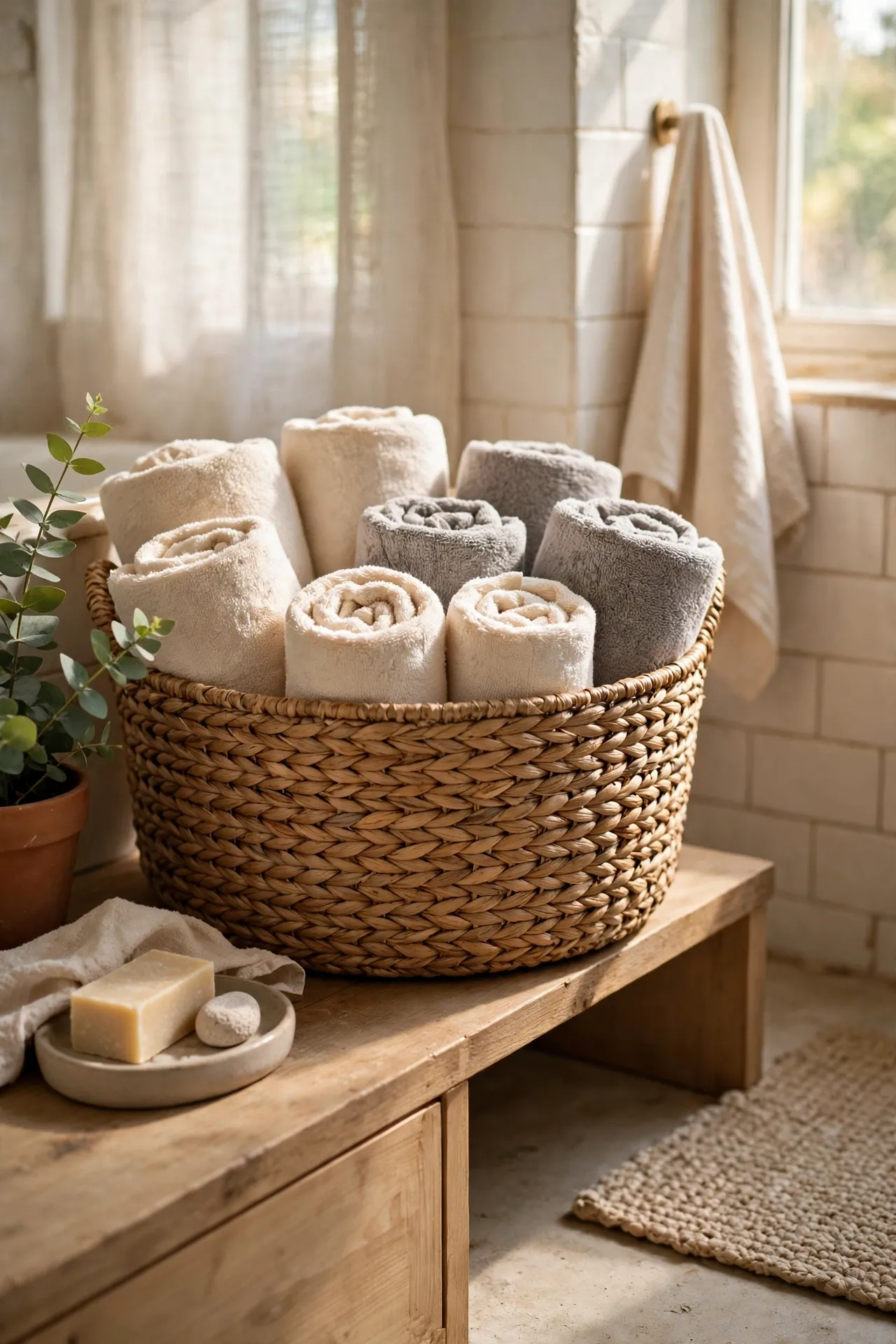
Rolled towels in a woven basket look tidy, feel like a hotel, and cost almost nothing to set up. Roll each towel tightly so they stack neatly, then place larger towels at the bottom and hand towels on top. Put the basket on the floor near the vanity or on a low shelf where you can reach it easily. If your bathroom is damp, choose a basket with an open weave so air can move through. I tried this, and the mistake to avoid is cramming in too many towels — they get musty and hard to pull out. Leave a little breathing room, and the basket becomes both storage and decoration. Pin this one — you’ll want it when you’re standing in the home aisle.
Cost: ~$18 | Time: 15 minutes
💰 Budget win: Use towels you already own — the basket does the styling work, not new towels.
8. Pebble-Textured Bath Rug in Sand
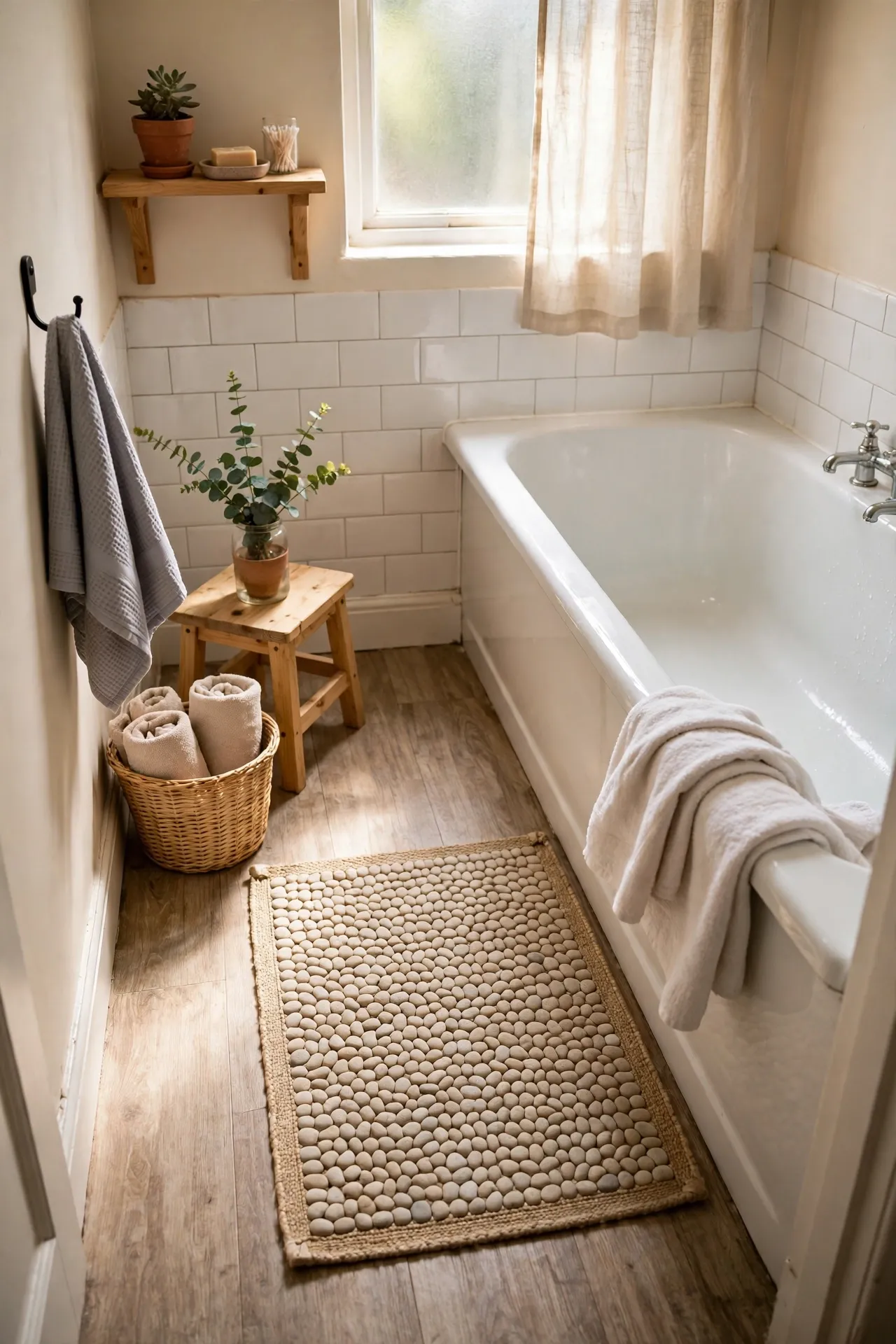
A pebble-textured bath rug in sand brings a natural, spa-like feeling underfoot without the price of real stone flooring. The nubby texture massages your feet gently and helps the rug grip the floor better than flat mats. Lay it in front of the tub or sink where you step out most often. Shake it outside weekly and machine-wash it on a gentle cycle when it needs refreshing. I tried this, and the mistake to avoid is choosing a rug without a non-slip backing — it bunches up and becomes a trip hazard on smooth tiles. A sand-coloured rug also hides dust and lint between washes, which is a small daily win.
Cost: ~$20 | Time: 5 minutes
💰 Budget win: One rug by the tub is enough — skip matching rugs by the toilet and sink.
9. Open Wood Shelf for Everyday Essentials
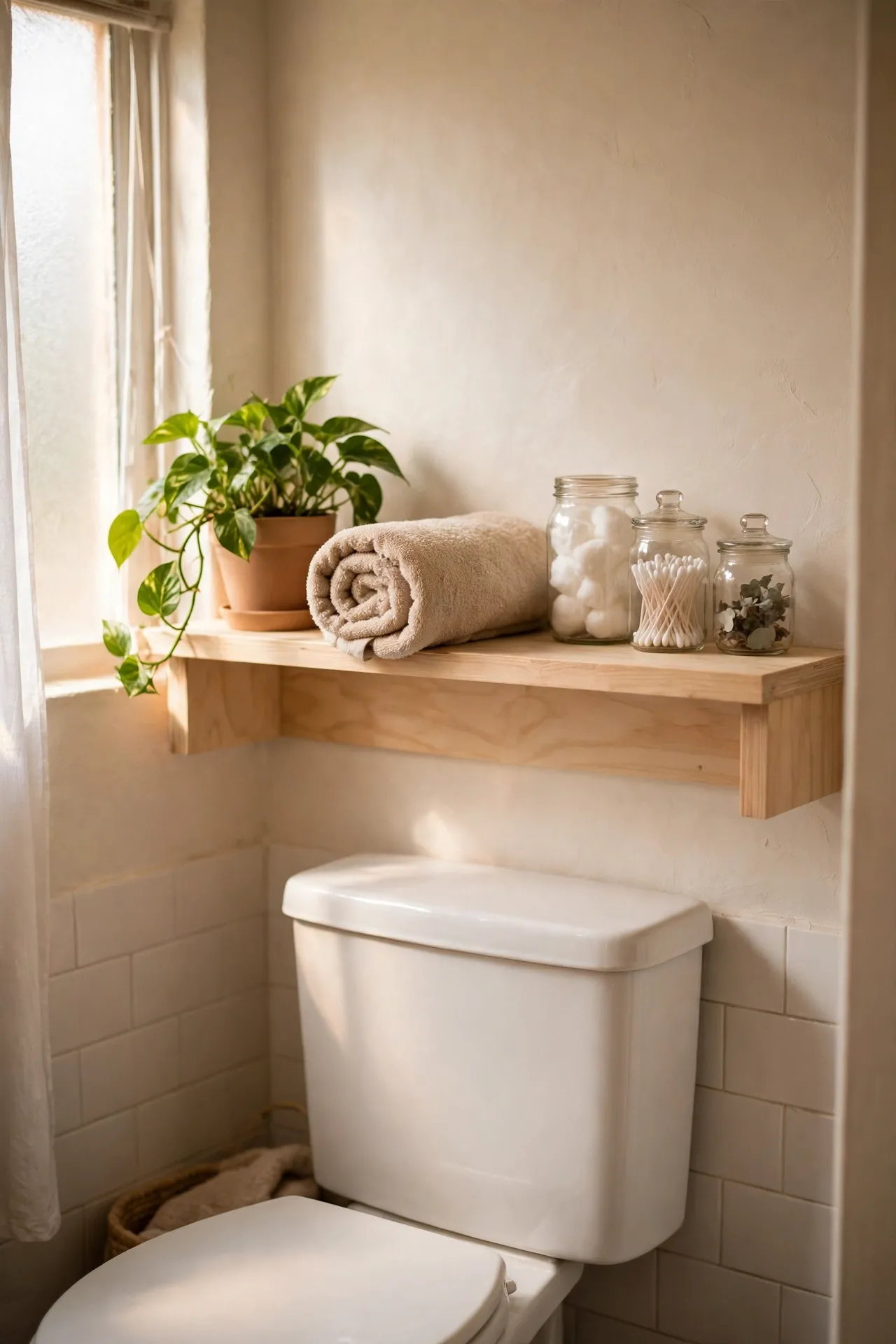
An open wood shelf above the toilet or beside the mirror keeps your everyday items visible but calm, which is the heart of Japandi style. Limit it to five or six things you actually use: a plant, a rolled towel, a jar of cotton pads, and maybe a candle. Install it with proper wall anchors so it holds weight safely, especially on tiled walls. Keep the shelf at eye level or slightly above so it does not feel crowded. I tried this, and the mistake to avoid is treating it like extra storage for everything — once it fills up, the calm disappears. Edit ruthlessly, and the shelf will make the room feel larger, not busier. For more small-space storage, see (see also: small-bathroom-ideas-under-100).
Cost: ~$26 | Time: 30 minutes
💰 Budget win: A single floating shelf costs far less than a cabinet and looks more intentional.
10. Ceramic Vase With a Single Eucalyptus Stem
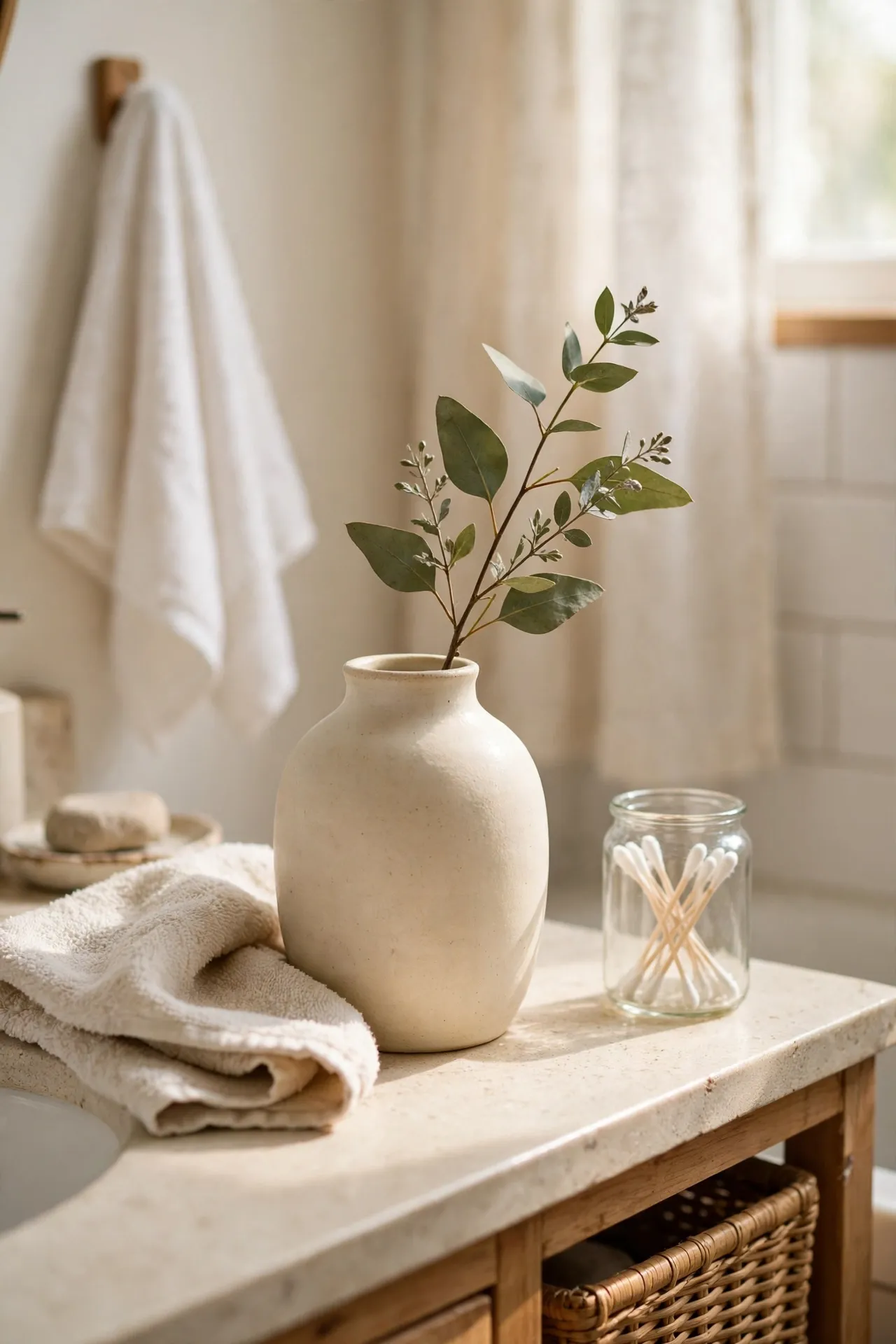
One ceramic vase with a single eucalyptus stem is all the decoration a Japandi bathroom needs on the vanity. The soft green-grey leaves add life without clutter, and the scent is gentle when the shower steams up. Choose a vase in cream, stone, or speckled beige that matches your towels. Trim the stem so it sits slightly above the vase rim, not towering over the mirror. Replace the stem every few weeks or use a good dried one for months. I tried this, and the mistake to avoid is adding three or four stems at once — it turns minimal into messy fast. One stem, one vase, and the whole sink area looks considered and calm.
Cost: ~$16 | Time: 10 minutes
💰 Budget win: Dried eucalyptus lasts for months, so one bunch covers many refreshes.
11. Warm LED Glow Behind the Mirror
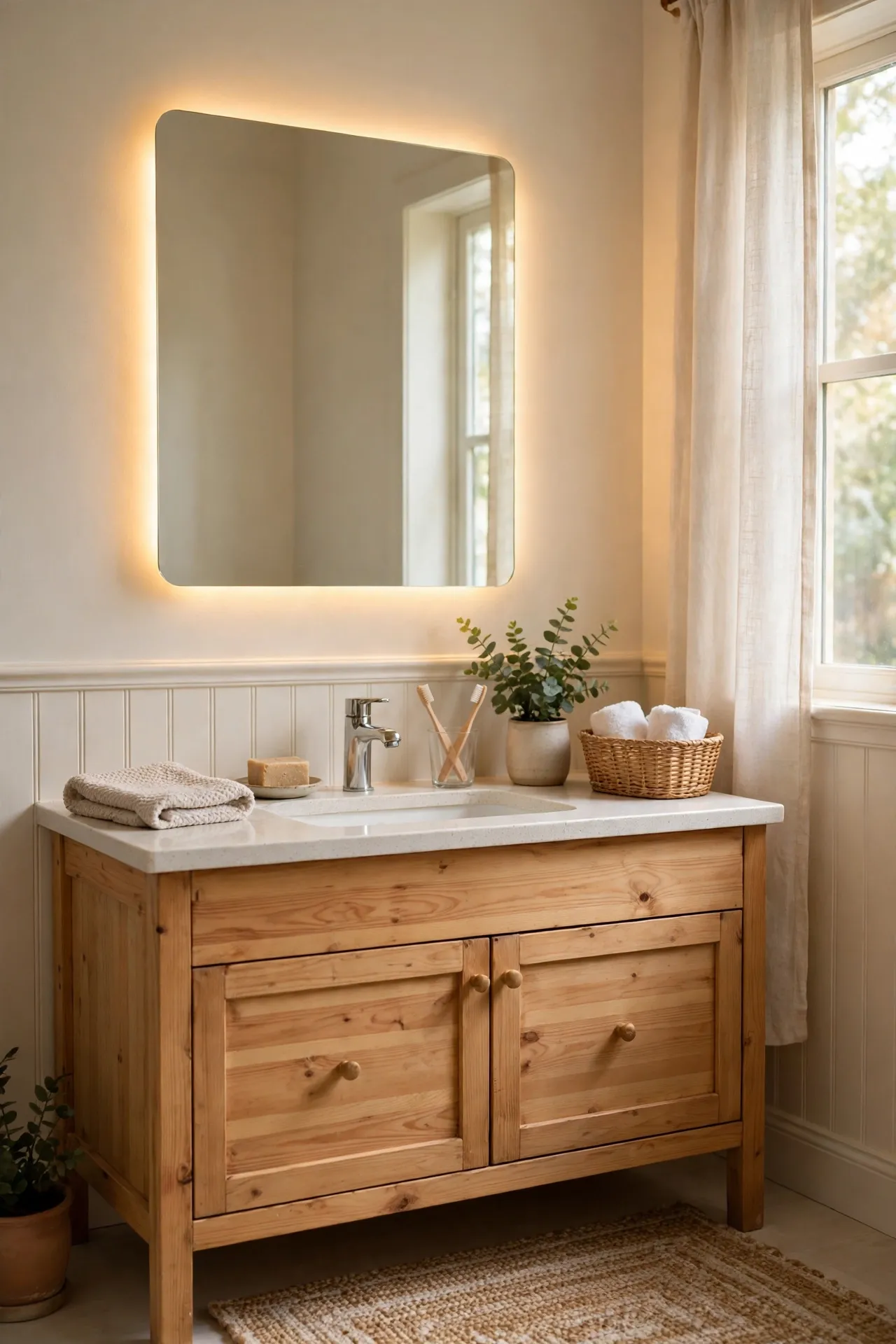
A warm LED strip behind the mirror gives your bathroom a soft evening glow that overhead lights never manage. The light bounces off the wall and makes the room feel larger and more relaxing, perfect for winding down. Stick the strip along the back edge of the mirror, keeping the wire hidden behind it. Choose warm white, around 2700K, not bright daylight white. Plug it into a small switch or a smart plug so you can turn it on easily. I tried this, and the mistake to avoid is using cool white LEDs — they make skin look tired and the room feel cold. Warm light changes everything for under twenty dollars.
Cost: ~$18 | Time: 25 minutes
💰 Budget win: LED strips use very little power, so the glow costs pennies a month to run.
12. Light Wood Frame Around a Plain Mirror
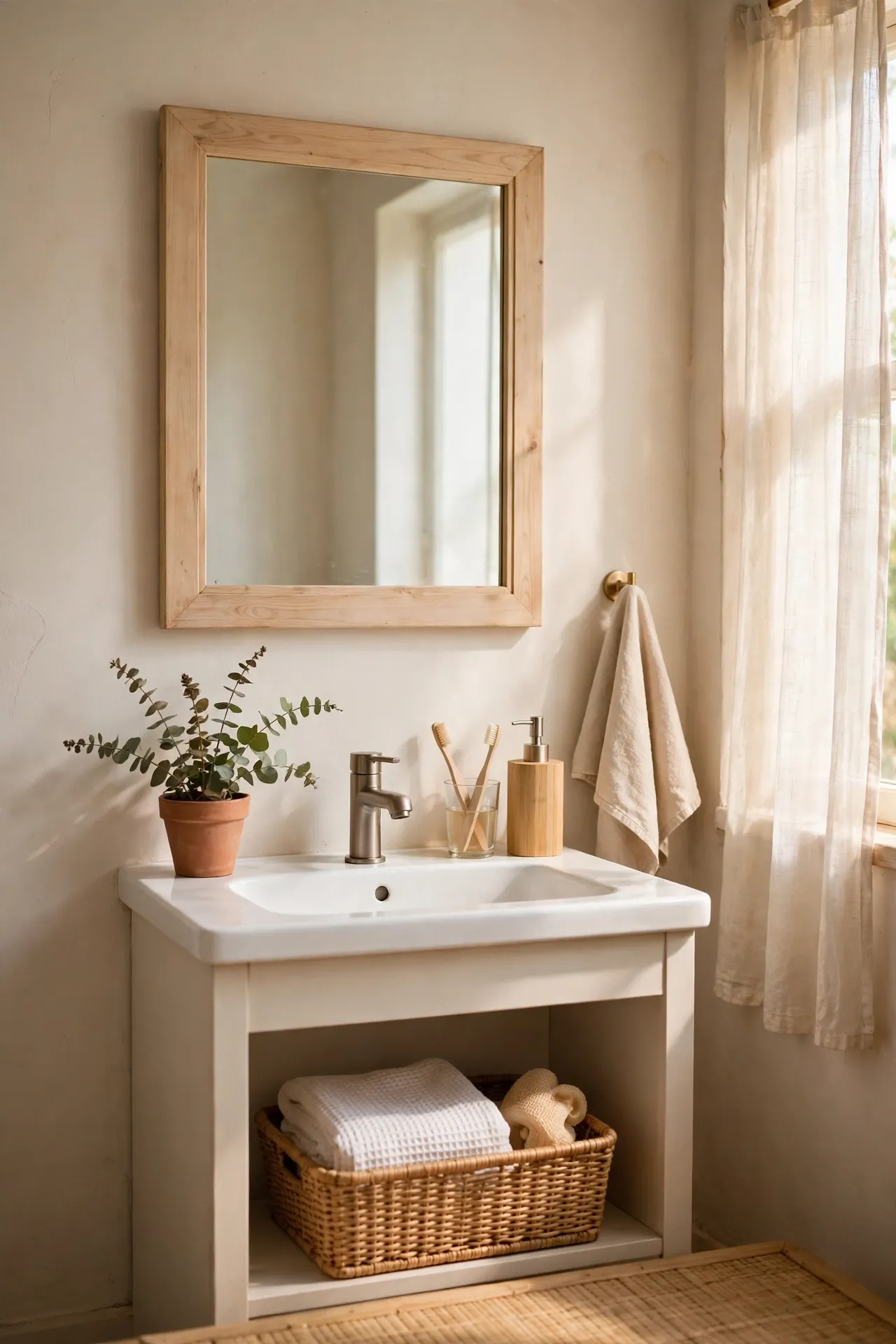
A plain builder mirror looks unfinished, but a light wood frame around it makes the whole vanity feel custom. You can buy thin wood trim from a hardware store, cut it to size, and attach it with strong adhesive or small nails. Sand the edges lightly and finish with a clear oil so the wood grain shows. Measure twice, especially the corners, and mitre them at 45 degrees if you can. I tried this, and the mistake to avoid is rushing the glue — I held one corner for only a minute and it slipped overnight. Tape the frame in place while it dries, and the result looks like a mirror that cost five times more.
Cost: ~$25 | Time: 60 minutes
💰 Budget win: Trim and adhesive cost a fraction of a new framed mirror.
13. Folded Towels in Cream and Stone Grey
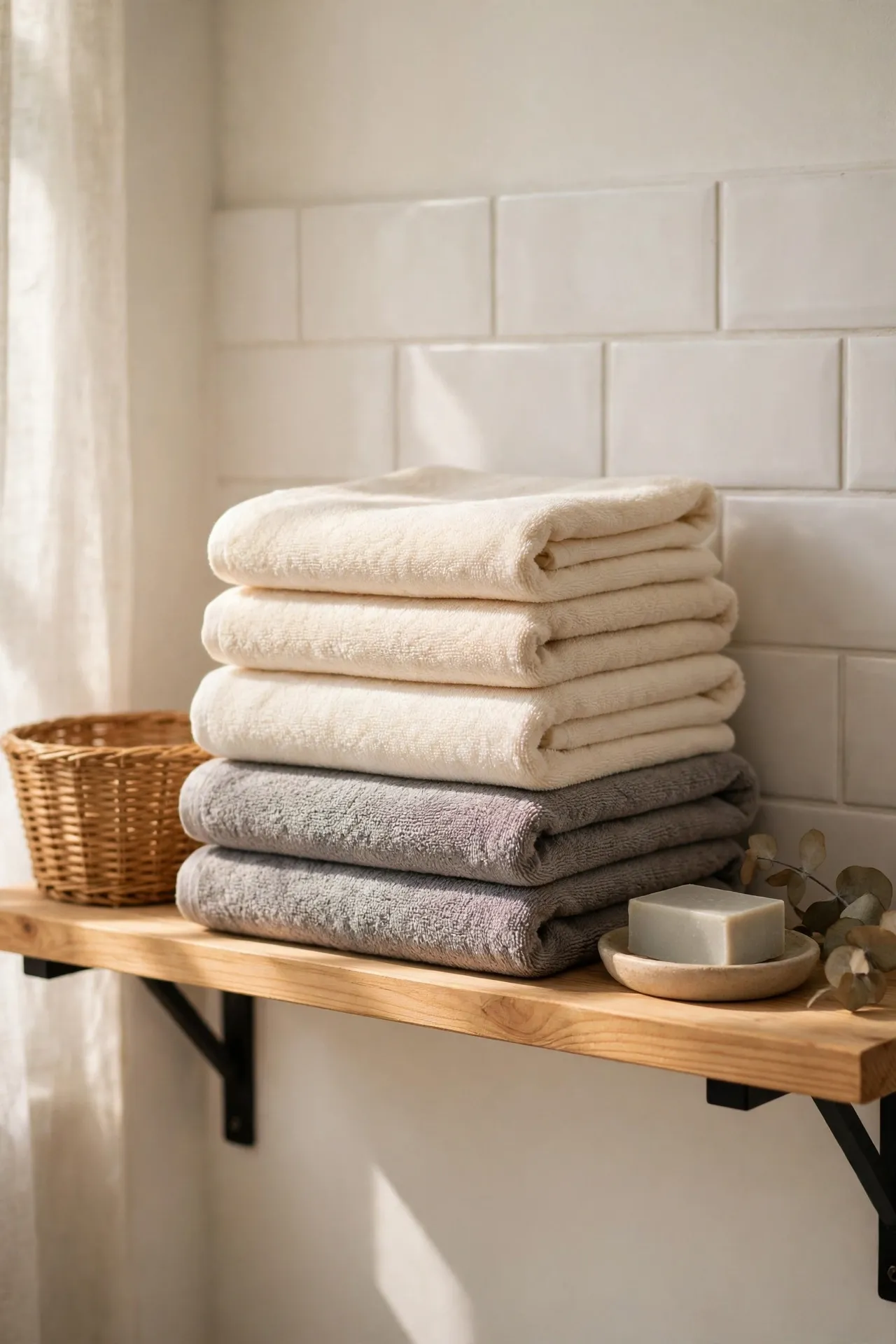
Folding towels in cream and stone grey, instead of a rainbow of colours, instantly calms a bathroom shelf. The palette matches wood, stone, and beige walls, so nothing competes for attention. Fold each towel the same way — in thirds, then in half — so the stack looks even. Place darker grey towels at the bottom and cream ones on top for a soft gradient. Keep one or two in use and the rest stored neatly. I tried this, and the mistake to avoid is mixing in old bright towels just because they still work — they break the palette. Move those to cleaning duty, and your open shelf will look like a quiet boutique.
Cost: ~$0 | Time: 20 minutes
💰 Budget win: No purchase needed — just refold and regroup what you already own.
14. Small Bonsai or Potted Fern on the Vanity
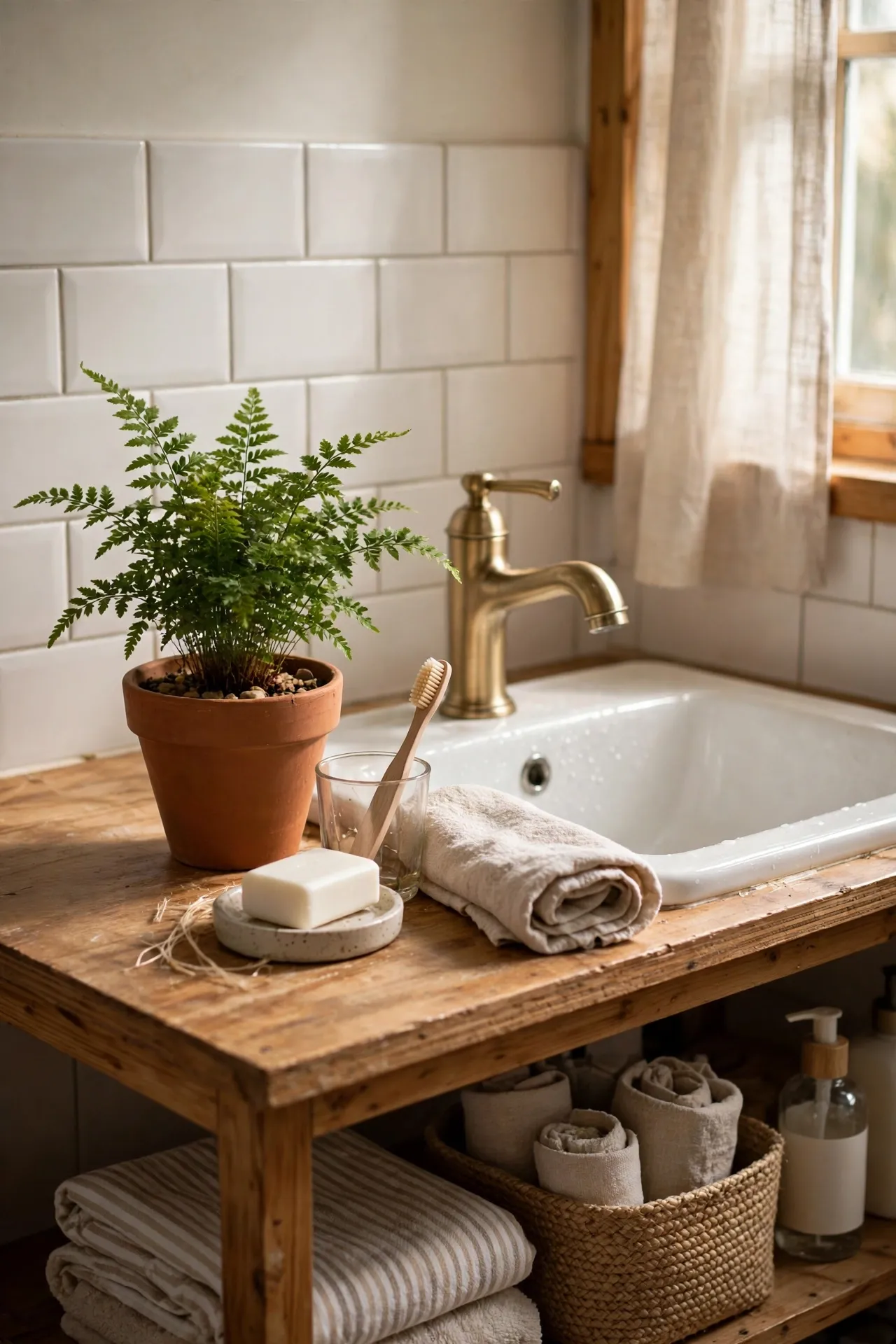
A small bonsai or potted fern on the vanity brings living green into a room that often feels hard and cold. Ferns love bathroom humidity, so they are a forgiving choice if you forget to water sometimes. Pick a pot in clay, stone, or light wood that fits the corner without crowding your toothbrush holder. Water sparingly and make sure the pot has drainage so roots do not sit in water. I tried this with a fern, and the mistake to avoid is placing it right under a dripping tap — constant splashes rotted the leaves. A quiet corner with indirect light is perfect, and the plant makes morning routines feel a little more alive.
Cost: ~$15 | Time: 10 minutes
💰 Budget win: A small nursery fern costs less than a bouquet and lasts far longer.
15. Beige Cotton Towels Instead of Bright White
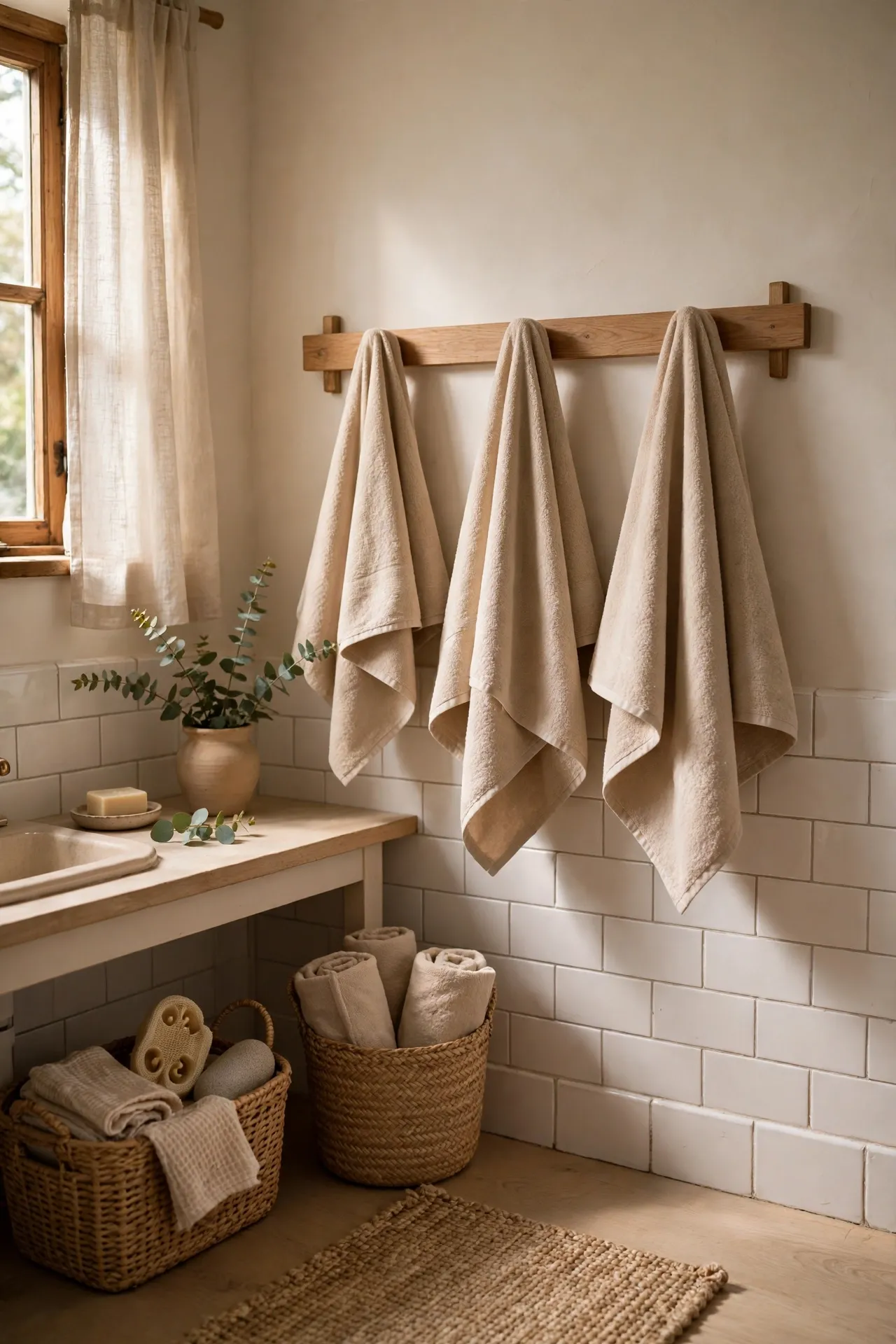
Bright white towels can look stark against warm wood, while beige cotton towels feel softer and more lived-in. The warm tone hides slight wear and matches a Japandi palette without any effort. When you replace towels, choose a mid-weight cotton that dries quickly and feels plush without being heavy. Wash new towels once before use to soften them and remove excess lint. I tried this, and the mistake to avoid is buying very dark beige that looks muddy in low light — a light sand or oatmeal shade is safer. Hang one over the rail and fold the rest, and the bathroom instantly feels warmer and less clinical. For a calmer overall scheme, see (see also: minimalist-bathroom-ideas-on-a-budget).
Cost: ~$24 | Time: 10 minutes
💰 Budget win: Replace towels two at a time instead of the whole set at once.
16. Sliding Wood Panel to Hide Clutter
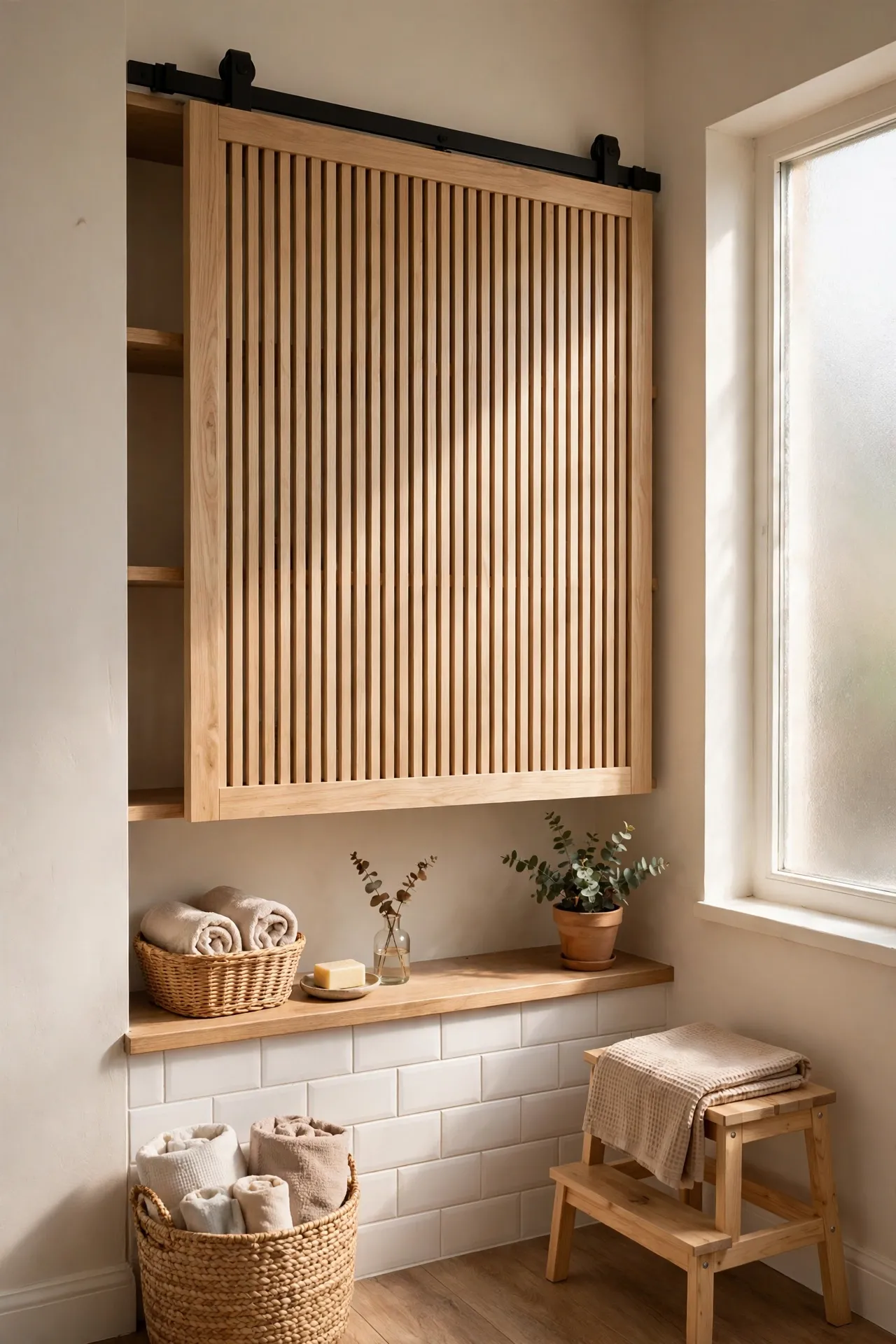
If your bathroom has an open shelf full of bottles, a sliding wood panel can hide the clutter while keeping everything reachable. It works like a little barn door on a short track, sliding left or right to reveal what you need. Measure the opening carefully and buy a panel slightly larger than it so no gaps show. Mount the track level, or the panel will slide on its own. I tried a version of this, and the mistake to avoid is using a heavy solid door on a weak track — it sags within weeks. A light slatted wood panel looks airy, hides the mess, and gives the room a crafted, Japanese-inspired touch.
Cost: ~$40 | Time: 90 minutes
💰 Budget win: Use a ready-made slatted panel instead of custom carpentry — the look is nearly identical.
17. Natural Stone Tray for Perfume and Skincare
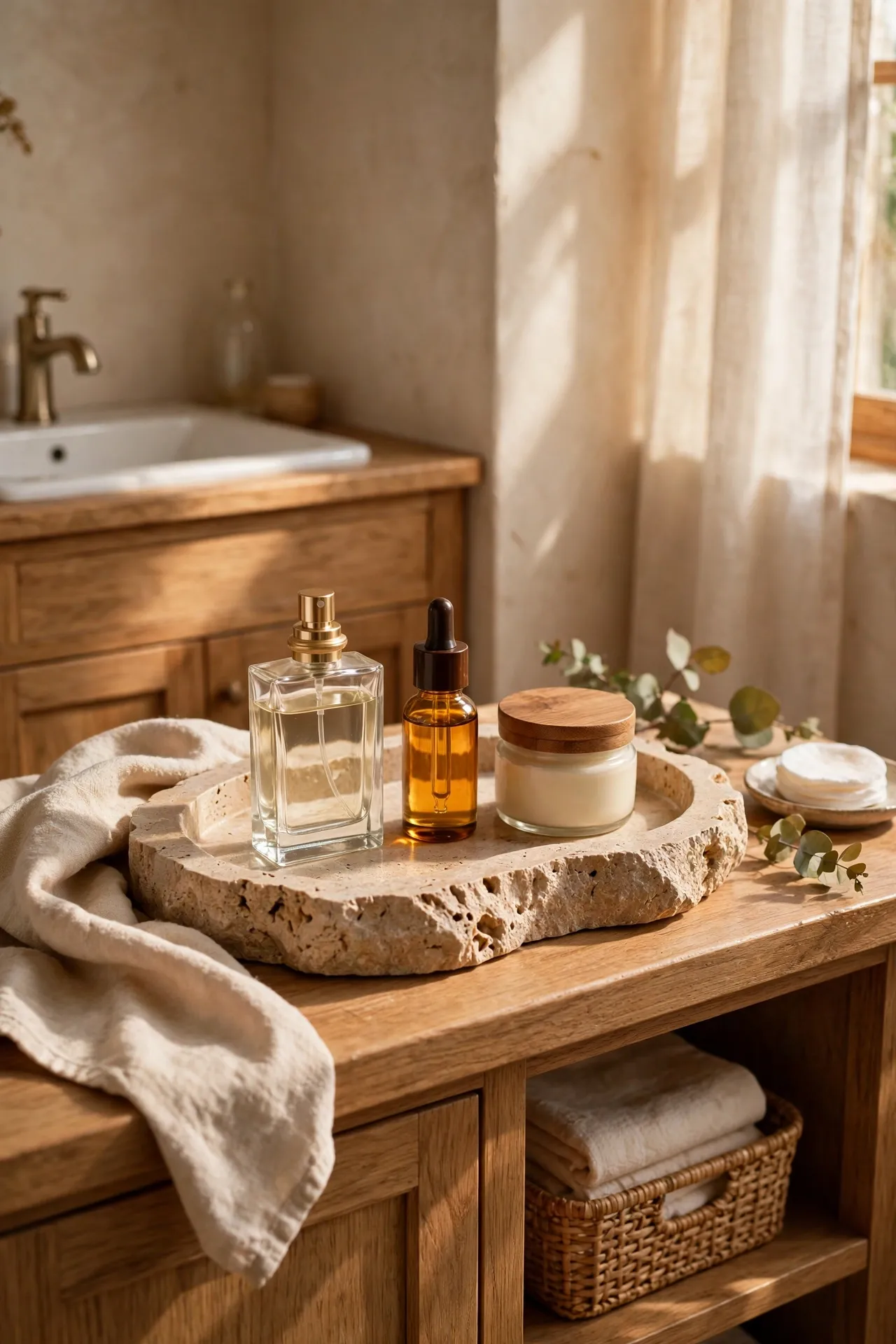
A natural stone tray turns scattered perfume bottles and skincare jars into a tidy little display. The heavy stone keeps bottles from tipping, and the tray catches drips so your vanity stays clean. Place it near the mirror but away from direct water splashes. Group taller bottles at the back and smaller jars at the front so you can see everything. Wipe the tray weekly with a damp cloth. I tried this, and the mistake to avoid is overfilling the tray — once it holds ten bottles, it stops looking calm. Keep five or six favourites on display and store the rest in a drawer. The tray makes getting ready feel slower and more intentional.
Cost: ~$20 | Time: 10 minutes
💰 Budget win: A marble-look stone tray from a discount store reads just as luxe as a boutique one.
18. Paper Lantern Pendant Over the Sink
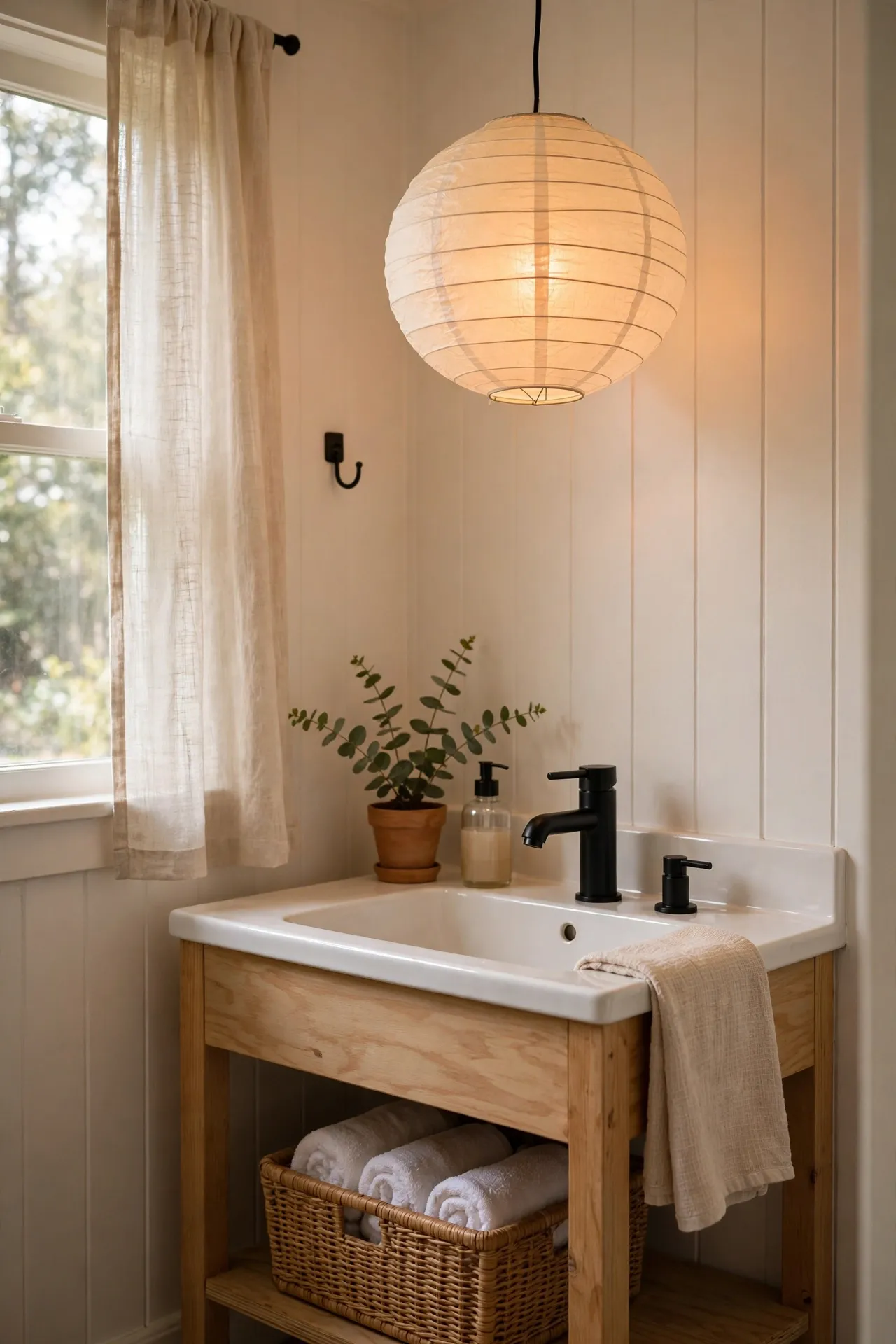
A paper lantern pendant over the sink gives soft, diffused light that flatters everyone and calms the room. Unlike a bare bulb, the paper shade spreads light evenly and hides harsh shadows. Hang it from an existing ceiling hook or a simple cord kit, keeping it high enough that it does not block the mirror. Choose a warm bulb and a lantern size that suits your vanity — too large overwhelms a small room. I tried this, and the mistake to avoid is hanging it too low over the sink, where steam and splashes damage the paper. Keep it above head height, and the lantern adds a gentle Japanese glow for very little money.
Cost: ~$22 | Time: 35 minutes
💰 Budget win: A paper lantern plus a cord kit costs less than most bathroom light fixtures.
19. Calm Scent Corner With Cedar and Citrus
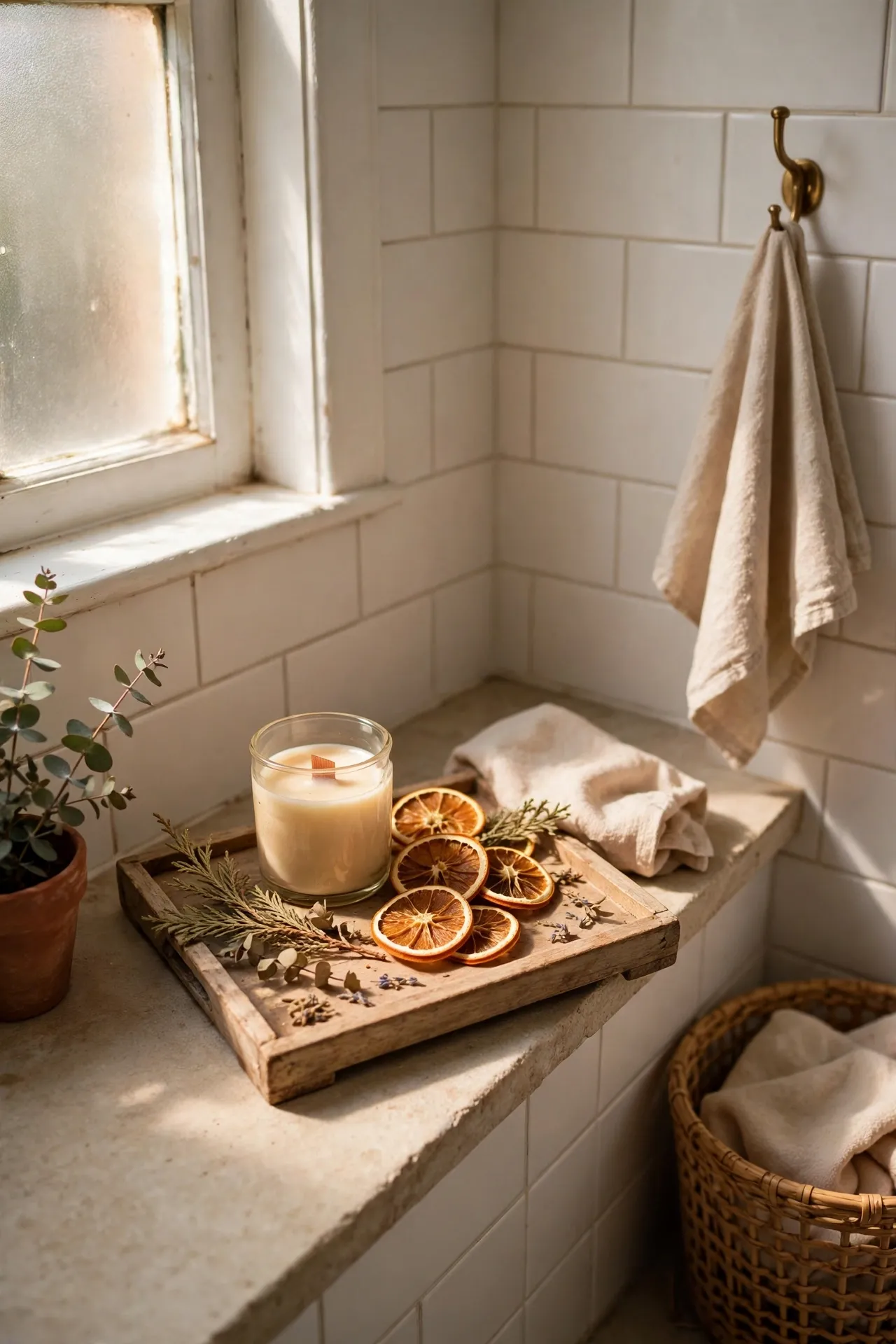
A calm scent corner with cedar and citrus finishes a Japandi bathroom without adding visual clutter. Place a small cedar block or a cedar-scented candle beside a dish of dried orange slices on a tray near the door. The cedar smells woody and clean, while citrus keeps it fresh rather than heavy. Refresh the orange slices every few weeks and keep the candle away from towels and curtains. I tried this, and the mistake to avoid is using a strong plug-in air freshener instead — it overpowers the room and fights the whole calm idea. A gentle, natural scent makes the bathroom smell like a retreat every time you walk in. For budget scent and storage pairings, see (see also: bathroom-decor-ideas-on-a-budget).
Cost: ~$14 | Time: 15 minutes
💰 Budget win: Dry your own orange slices in the oven instead of buying decorative potpourri.
Quick Questions, Answered
Can I get a Japandi bathroom look without replacing my tiles? Yes, absolutely. Most of the calm comes from colour, wood, and editing — a warm mat, beige towels, a wooden tray, and fewer items on display. Tiles fade into the background once the palette softens, so you rarely need to touch them.
What colours work best for a budget Japandi bathroom? Stick to warm white, beige, sand, stone grey, and light wood tones. Add one soft green from a plant for life. Avoid bright colours and heavy black accents, which pull the room away from that quiet, natural feeling.
How do I keep wood accessories safe in a damp bathroom? Wipe wood dry after steamy showers, choose humidity-friendly woods like bamboo or teak, and give pieces airflow instead of trapping them against wet walls. A quick oil finish once or twice a year also helps wood resist moisture and last longer.
You do not need a big budget or a full renovation to make your bathroom feel like a Japandi retreat. Pick two or three ideas from this list, start with the ones that fix what bothers you most each morning, and let the room get calmer one small change at a time. That quiet feeling builds faster than you think.
