17 Living Room Ideas for Small Apartments on a Dime
Small living rooms are where bad furniture decisions go to live forever, because there is no spare room to hide them in. I once bought a three-seater sofa for a room that could barely fit a two-seater, and I spent two years climbing around it. These living room ideas small apartment renters actually love are grouped by what they fix, so you can start with your worst problem: seating, storage, light, or the feeling that the room is closing in. Every idea costs very little.
Group 1: Seating That Fits the Room
Choose a Loveseat, Not a Three-Seater
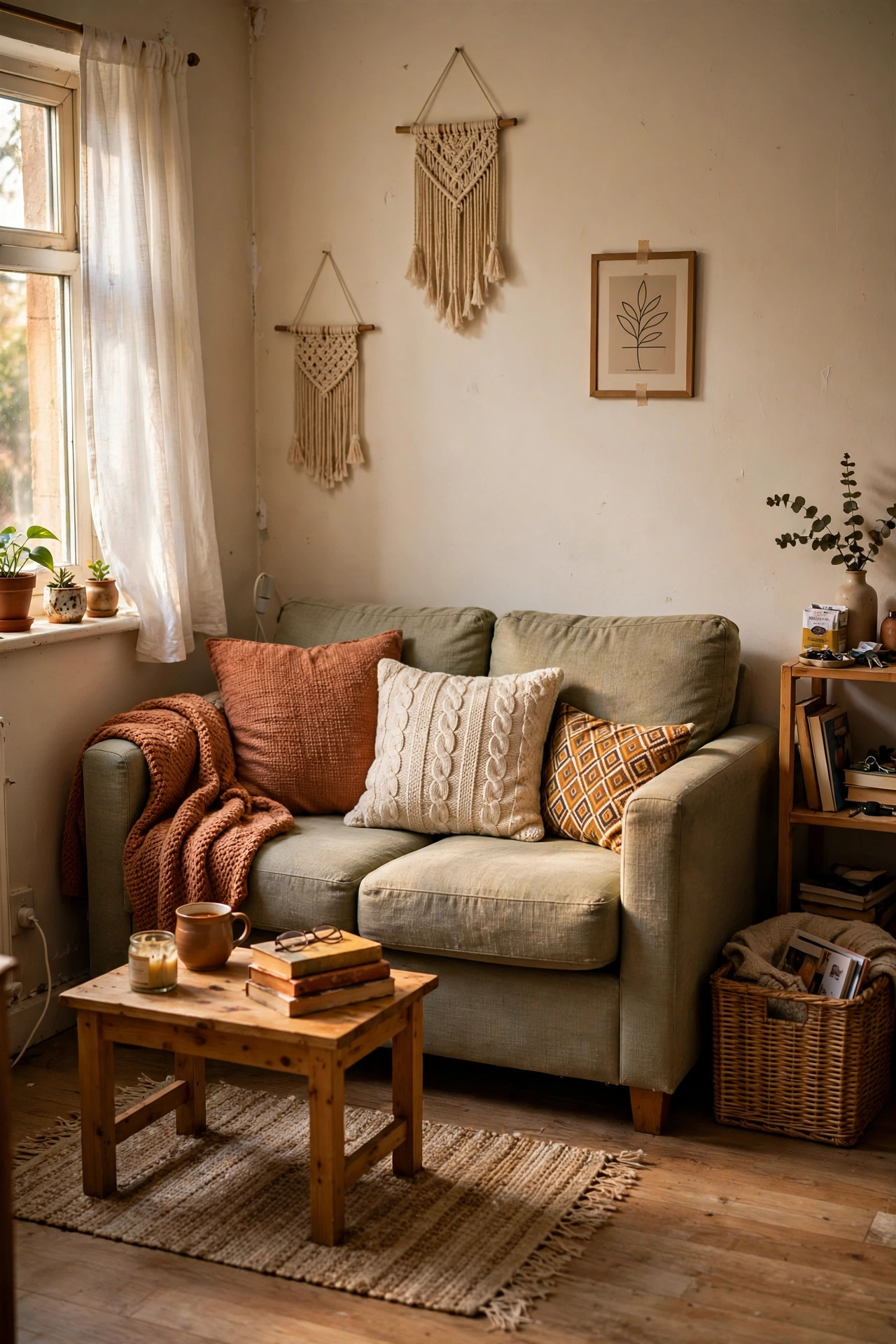
A loveseat seats two comfortably and leaves room for a side table and a walkway, while a three-seater in a small room eats everything. Measure the wall, leave at least two feet for walking past, and pick a loveseat with slim arms to maximise the seat. I downsized to a loveseat and suddenly my living room had a path through it. The mistake to avoid is buying for the guests you have twice a year instead of the life you live every day.
Cost: ~$250 | Time: 30 minutes
Add a Pouf That Doubles as a Table
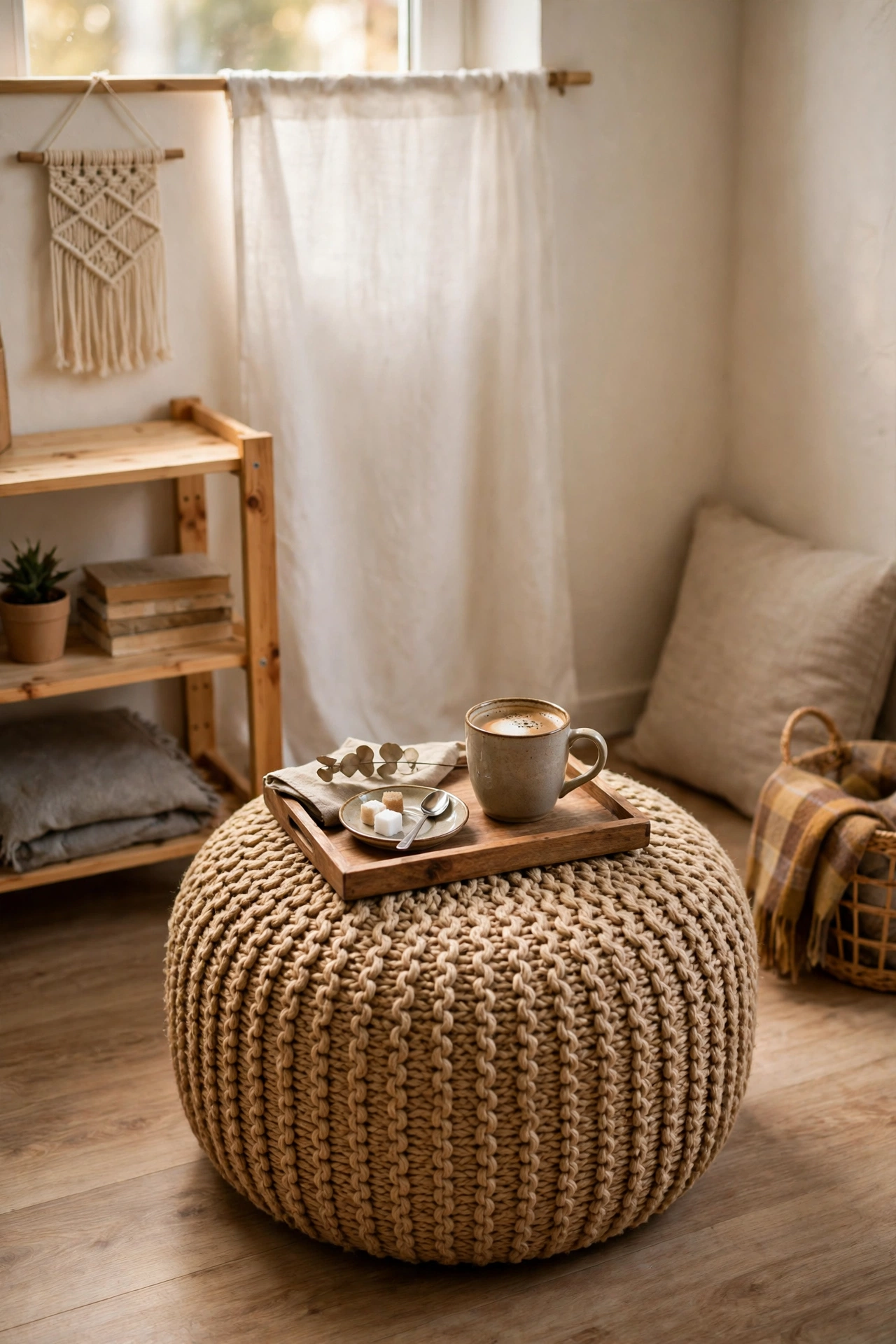
A firm pouf is a footrest, an extra seat, and, with a tray on top, a coffee table, all in one small cube. Pick one with a removable, washable cover, and keep a tray nearby for drinks. I use mine daily as a footrest and weekly as a seat when friends visit. The mistake to avoid is a soft, squashy pouf, because a tray slides straight off it and so does your coffee.
Cost: ~$35 | Time: 5 minutes
💰 Budget win: One pouf replaces a footrest, a spare chair, and a side table for a fraction of the price of all three.
Use Armless Chairs to Save Inches
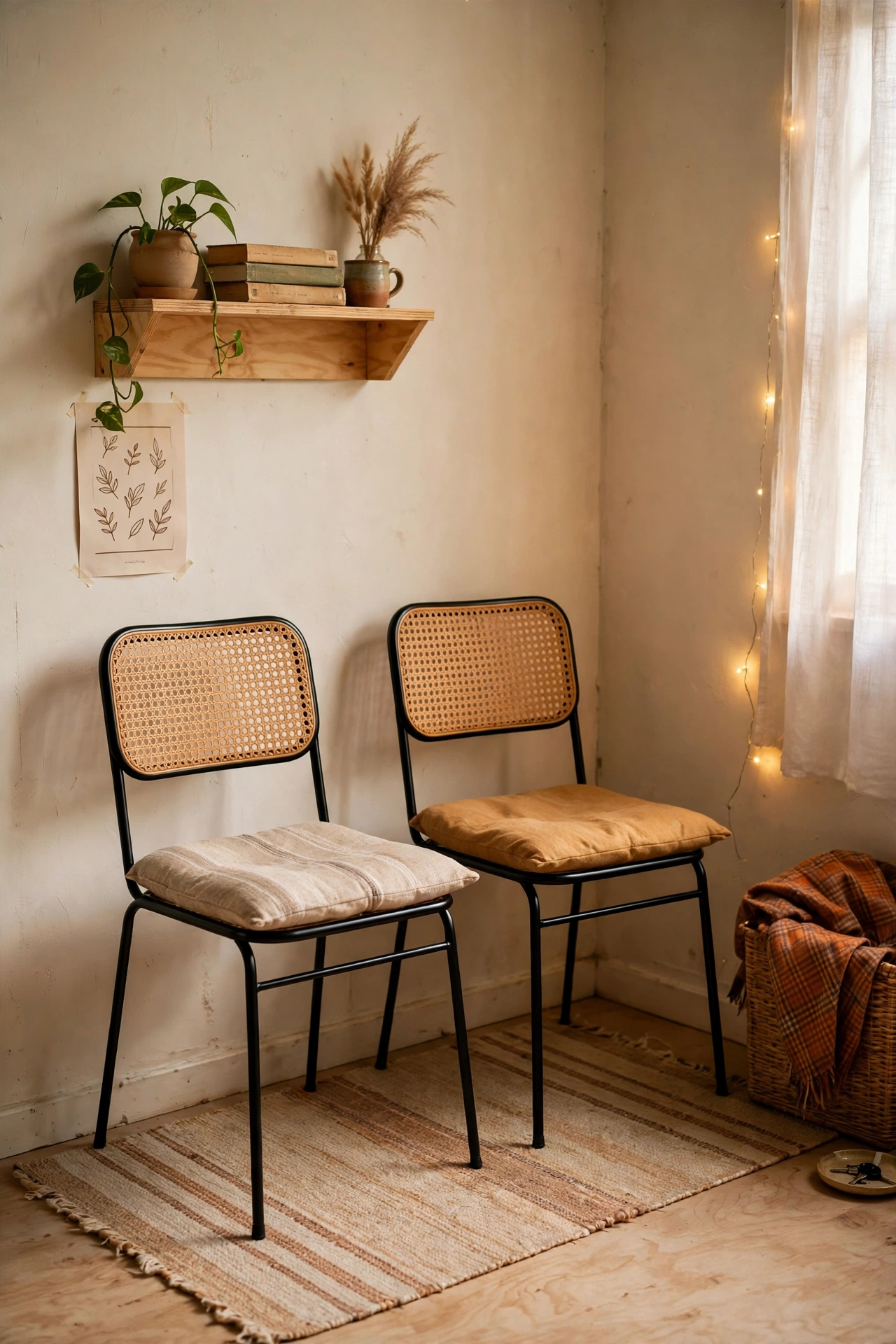
Armless accent chairs take up far less visual and physical space than big armchairs, and two of them can fit where one armchair would crowd the room. Choose chairs with slim legs and light upholstery so they do not loom. I swapped one bulky armchair for two armless chairs and gained both a seat and a walkway. The mistake to avoid is chairs so light they slide on hard floors, so add felt pads or a rug underneath.
Cost: ~$80 | Time: 15 minutes
Group 2: Storage Without Bulk
Mount the TV on the Wall
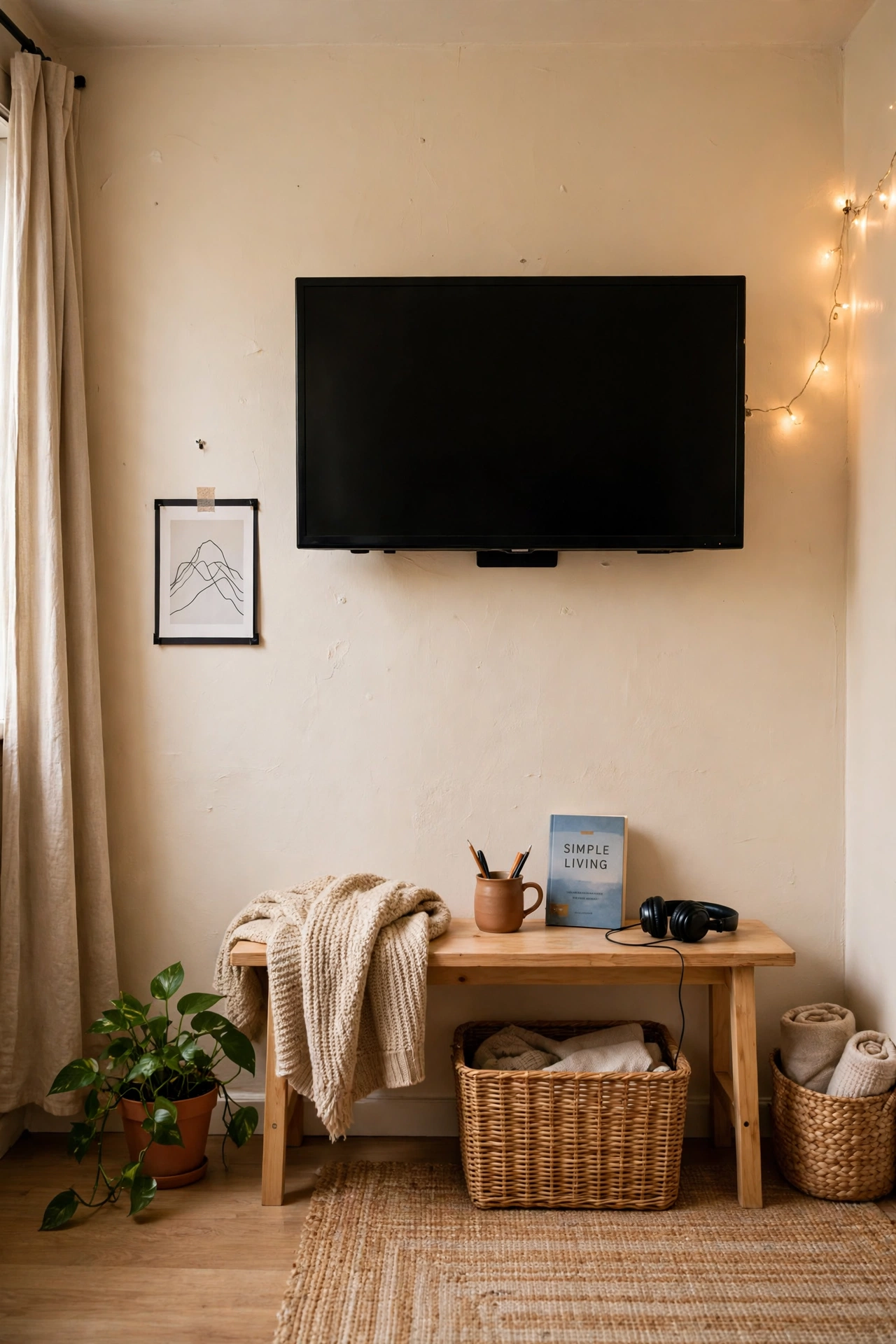
Wall-mounting the TV removes the need for a big media console and frees the whole wall below it for a slim bench or nothing at all. Use a mount rated for your TV’s weight, hide cables in a paintable channel, and hang it at eye level from the sofa. I mounted mine and gained a full shelf of floor space. The mistake to avoid is mounting it too high, because watching TV with your neck craned up gets old within a week.
Cost: ~$25 | Time: 60 minutes
Use a Slim Console Behind the Sofa
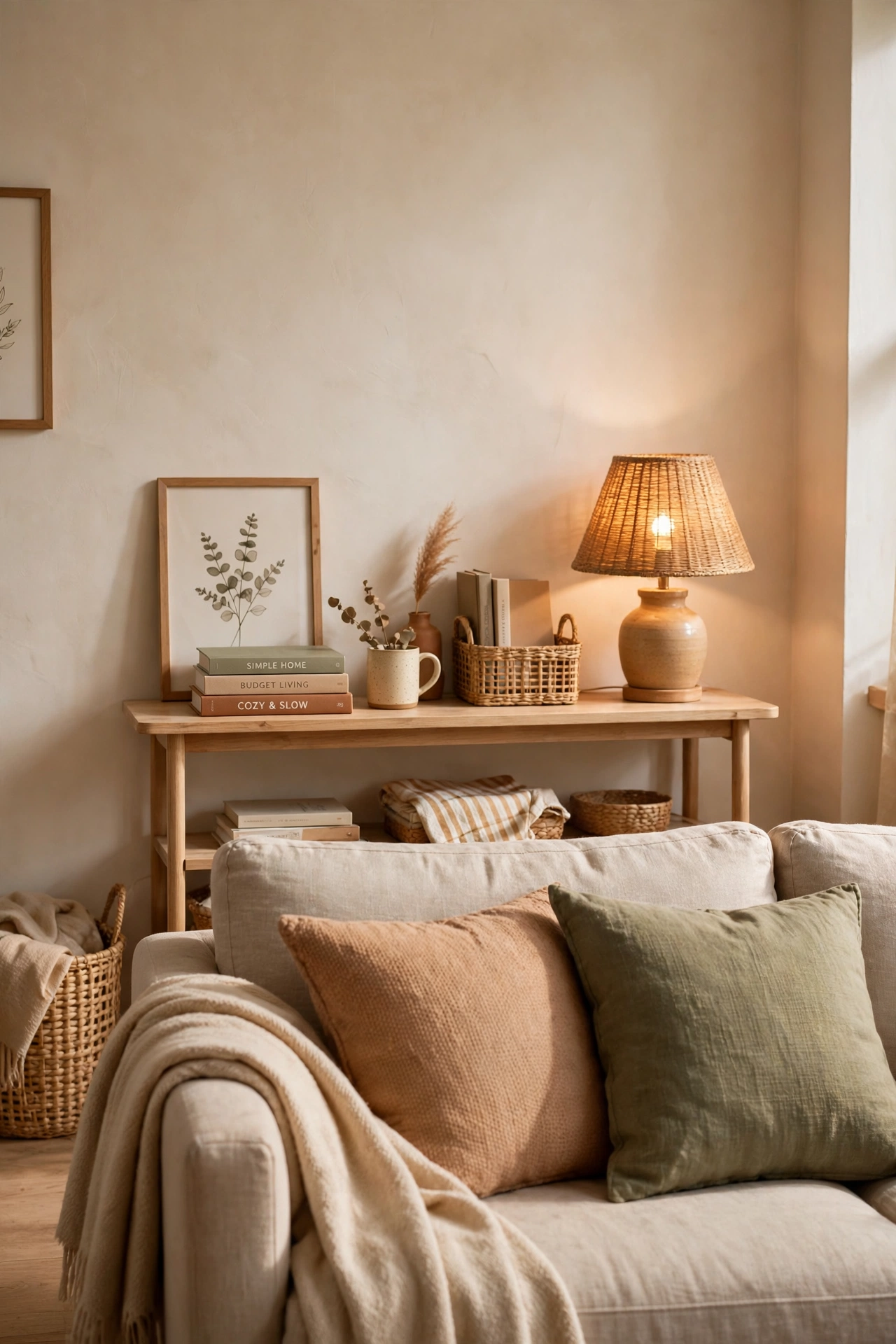
A slim console table behind the sofa holds lamps, books, and chargers in the dead space most rooms waste. Pick one no deeper than ten inches so it does not push the sofa too far into the room, and add baskets underneath for blankets. I put one behind my sofa and it became the charging station and the book return in one. The mistake to avoid is a deep console, because it eats the walkway behind the sofa and defeats the purpose.
Cost: ~$45 | Time: 20 minutes
(see also: 23-living-room-ideas-for-small-apartments-for-renters)
Hide Blankets in a Lidded Ottoman
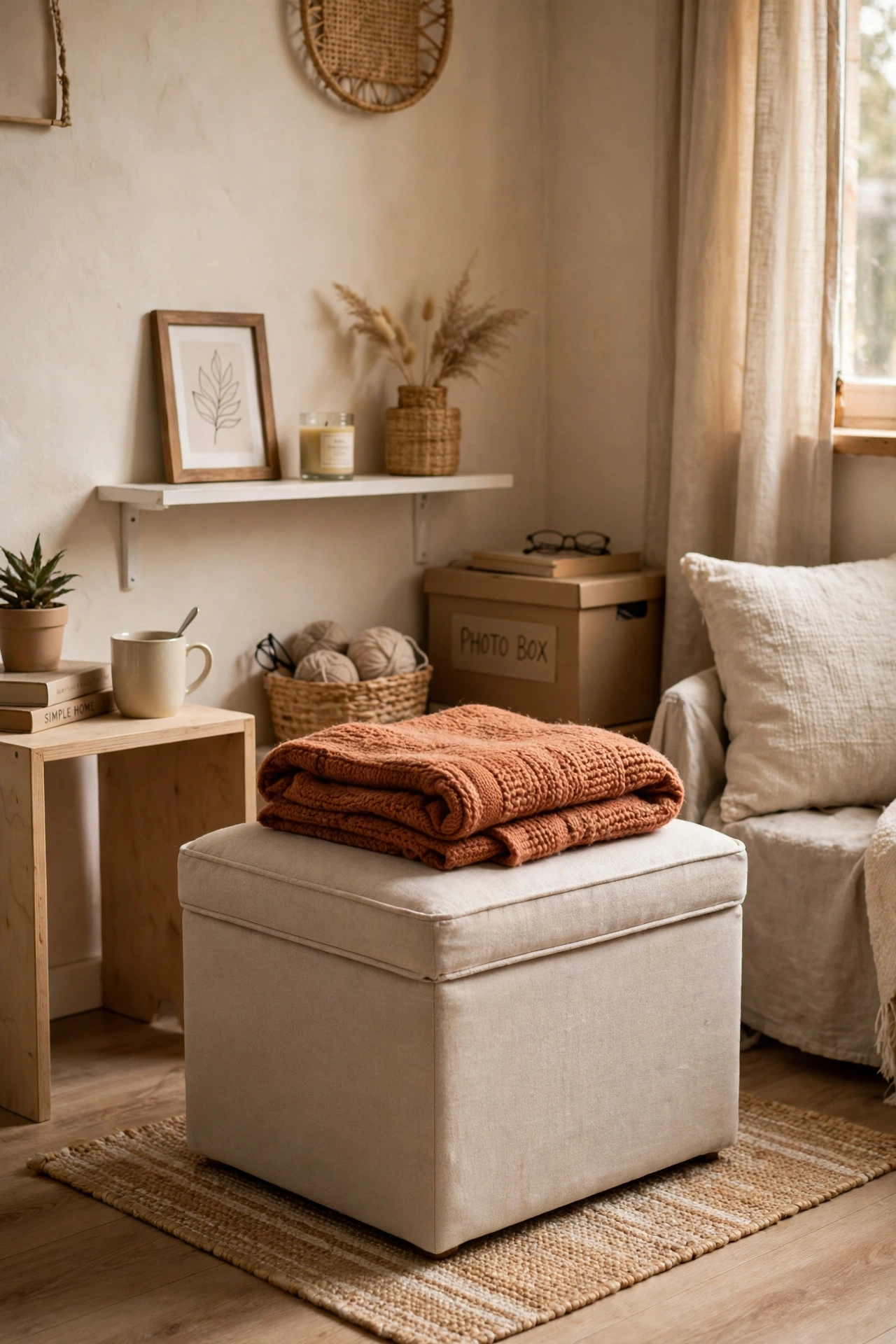
A lidded ottoman in front of the sofa hides blankets, remotes, and board games, and works as a coffee table with a tray on top. Choose one with a firm lid that can hold a tray steady, and keep the blankets you actually use inside, not the ones you keep “just in case”. I cleared a whole shelf by moving blankets into an ottoman. The mistake to avoid is an ottoman so big it blocks the walkway, because then it is furniture in the way, not storage. Save this idea if blankets are always on your sofa.
Cost: ~$50 | Time: 5 minutes
Float Shelves Instead of a Bookcase
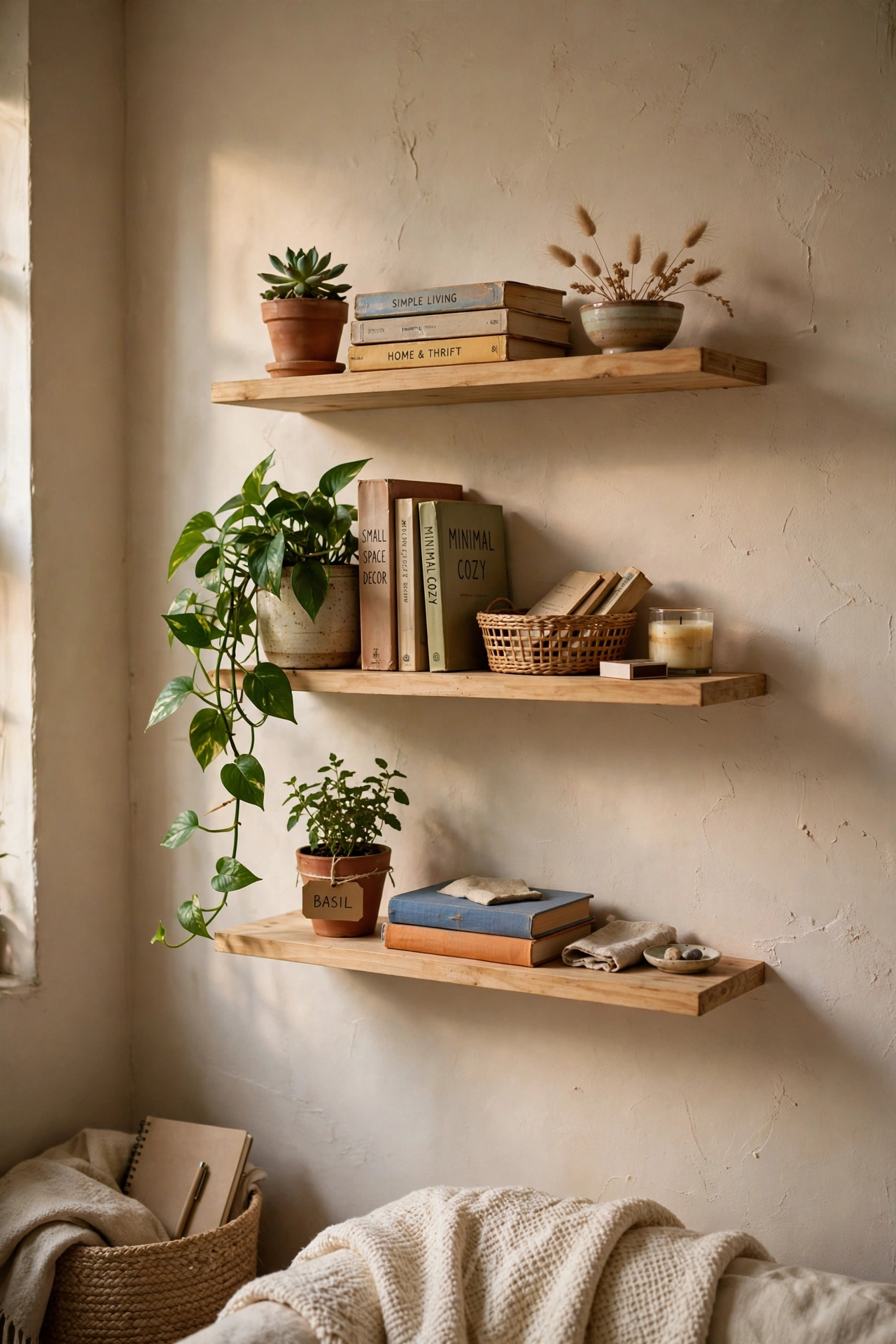
Floating shelves hold books and decor without the footprint of a bookcase, and they draw the eye up the wall. Fit two or three on one wall, keep heavy books low, and leave gaps so the shelves do not look crammed. I replaced a bookcase with shelves and gained floor space for a plant. The mistake to avoid is shelves loaded edge to edge, because they stop looking like storage and start looking like clutter.
Cost: ~$30 | Time: 60 minutes
Group 3: Light and Mirrors
Layer Three Small Lights, Not One Big One
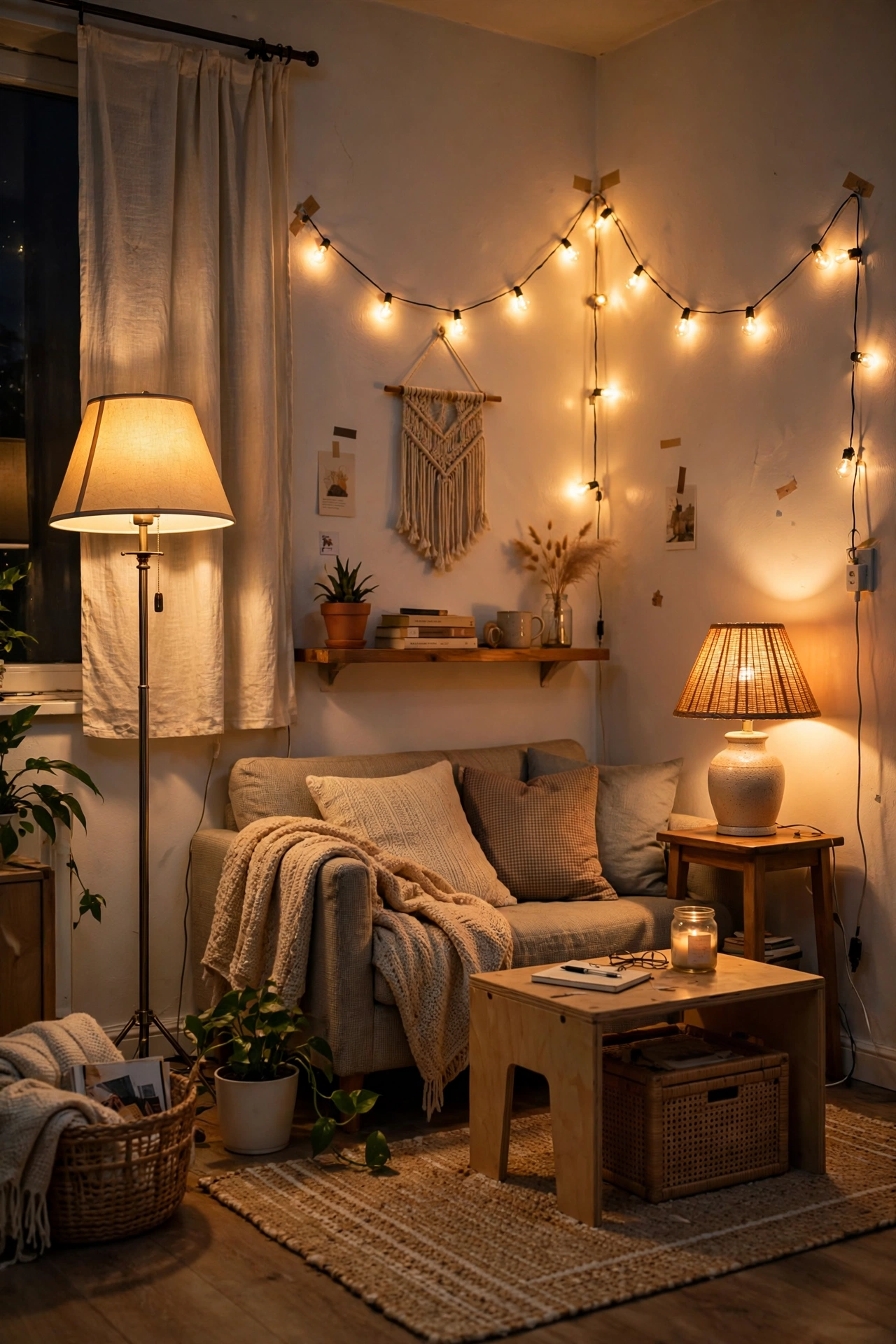
One harsh ceiling light makes a small room feel like an office, but three small lights, a floor lamp, a table lamp, and a string of warm lights, make it feel like a home. Place them at different heights and switch on only what you need. I layered mine over a weekend and the room felt warmer the same night. The mistake to avoid is three lights all at the same brightness, because layering only works when the levels differ.
Cost: ~$40 | Time: 30 minutes
Lean a Big Mirror Against the Wall
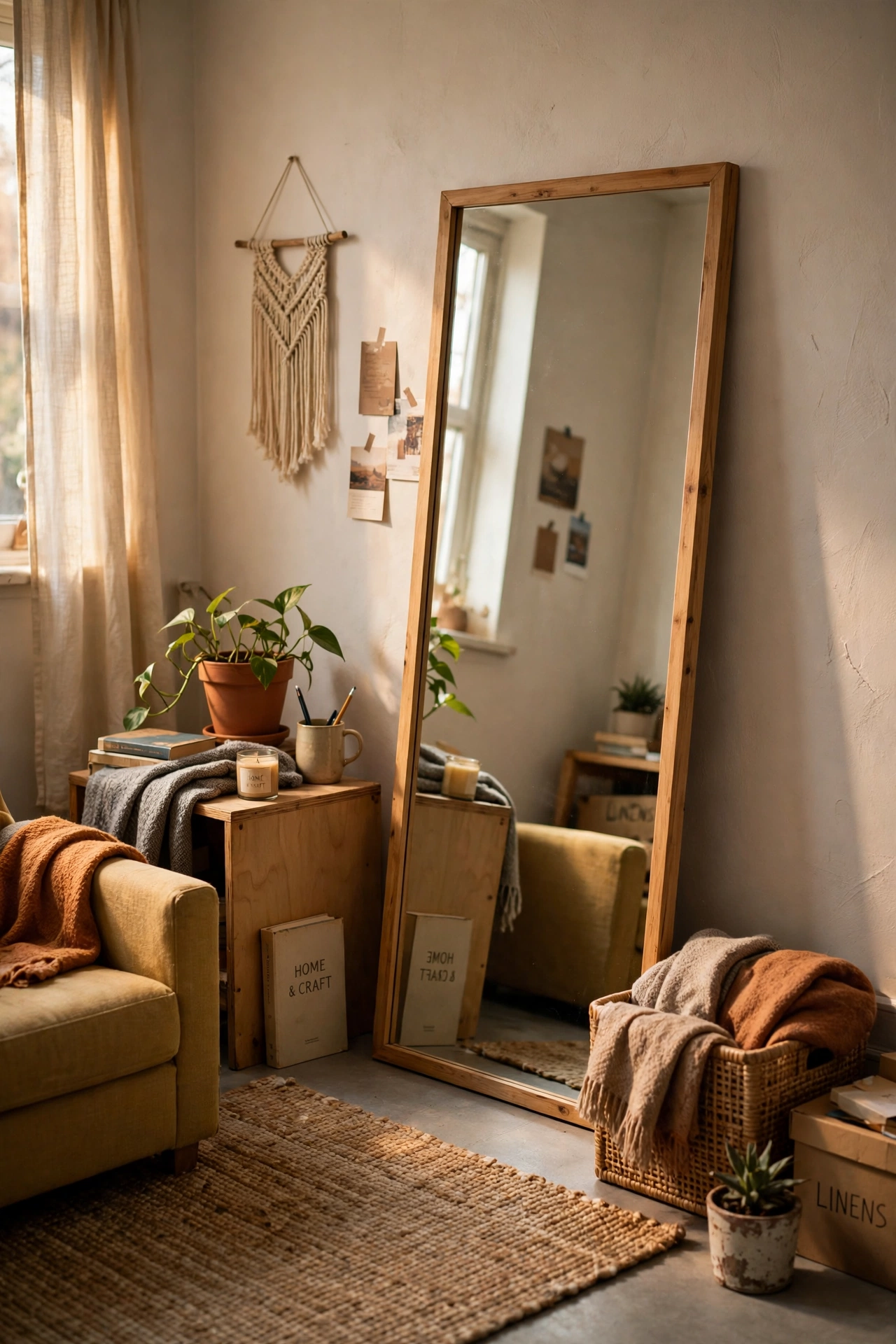
A large mirror leaning against the wall doubles the light and the sense of space, and leaning avoids drilling in a rental. Angle it to reflect a window or a plant, not a blank wall, and secure the top so it cannot slide. I leaned one in a corner and the room looked twice as deep. The mistake to avoid is a mirror facing the TV, because glare will ruin every film night.
Cost: ~$35 | Time: 10 minutes
Use Sheer Curtains to Keep Daylight
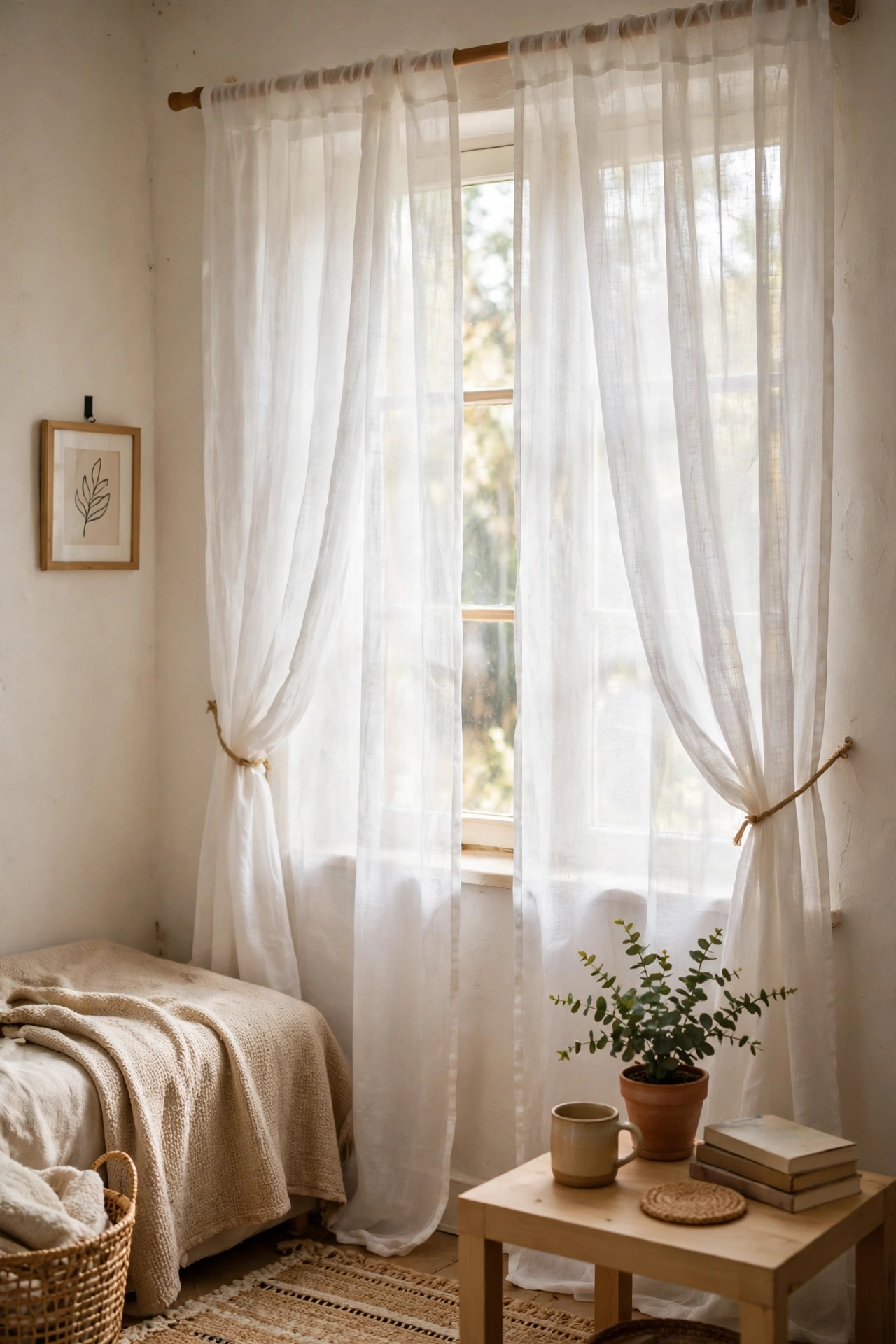
Sheer curtains give privacy without blocking daylight, which matters enormously in a small room. Hang them on a simple rod, let them fall to the floor, and layer a heavier curtain only if you need blackout at night. I swapped heavy drapes for sheers and the room brightened all day. The mistake to avoid is sheers so thin they offer no privacy at night when the lights are on, so test them after dark before committing.
Cost: ~$18 | Time: 20 minutes
Group 4: Making the Room Feel Bigger
Keep the Coffee Table Small and Round
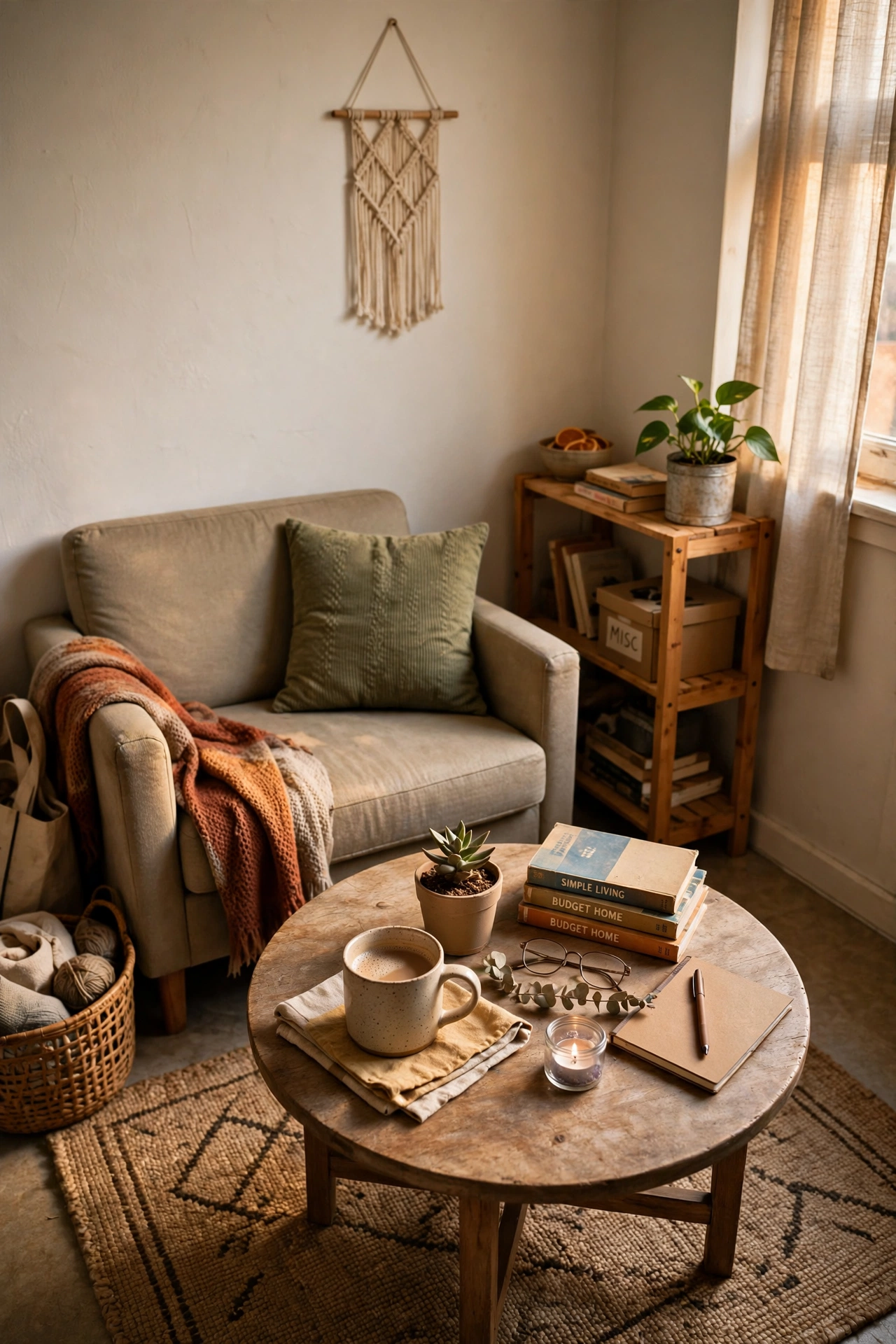
A small round coffee table is easier to walk around than a big rectangular one, and it has no sharp corners to bruise shins in a tight room. Pick one with a lower shelf for magazines, and keep only two or three items on top. I swapped a big rectangle for a small round table and stopped bruising my legs weekly. The mistake to avoid is a glass table in a tiny room with pets or kids, because fingerprints and nose prints show constantly.
Cost: ~$45 | Time: 10 minutes
💰 Budget win: A secondhand round table with a coat of paint costs less than a new one and looks just as good.
Choose Furniture With Visible Legs
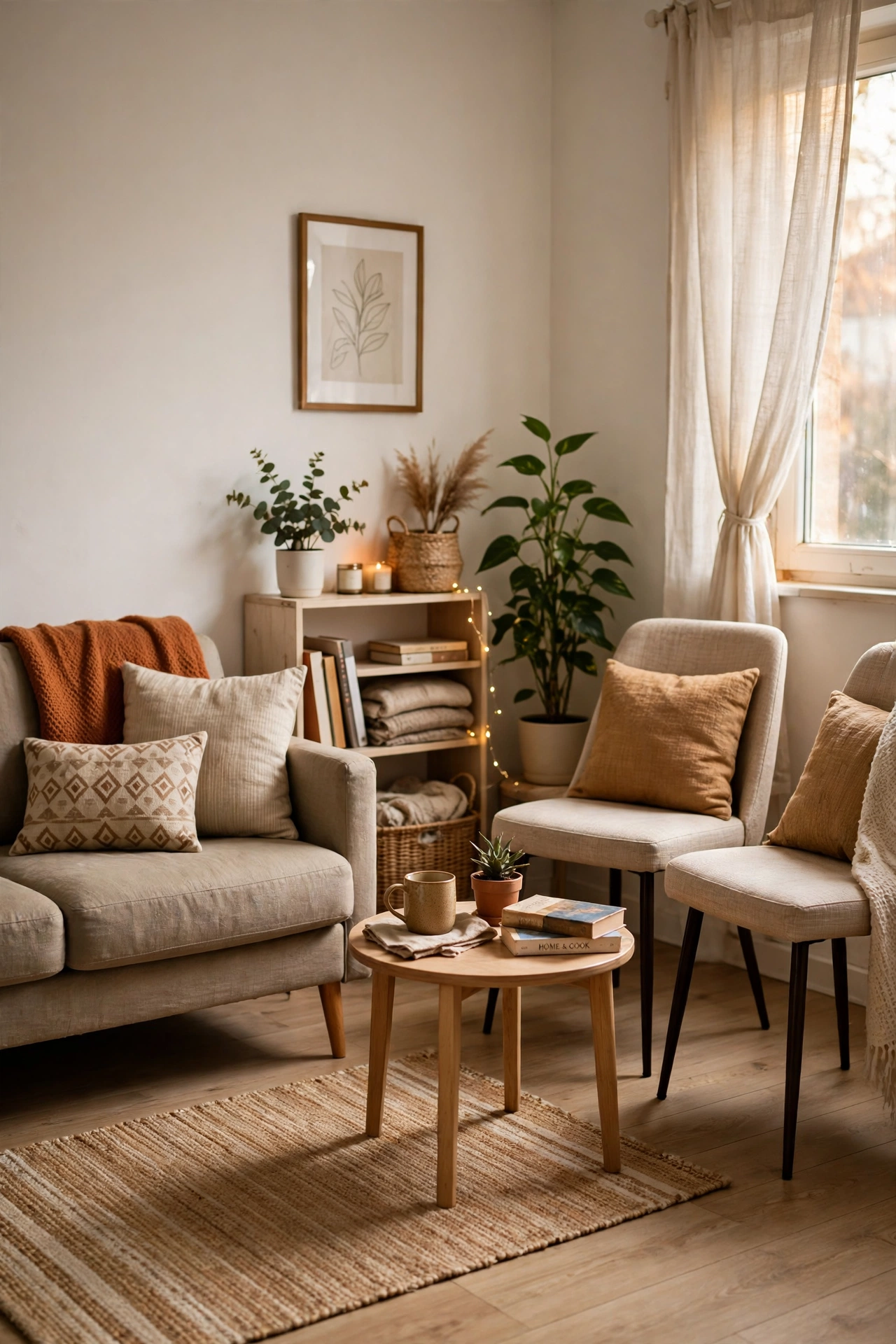
Furniture on legs lets you see floor underneath it, and visible floor makes a room feel bigger. Pick a sofa, chairs, and a console with slim legs, and avoid pieces that sit flat on the floor all around. I swapped a skirted sofa for one on legs and the room opened up visibly. The mistake to avoid is legs so thin they wobble under a heavy sofa, because style is not worth a collapse.
Cost: ~$0 | Time: 30 minutes
Use One Large Rug, Not Several Small Ones
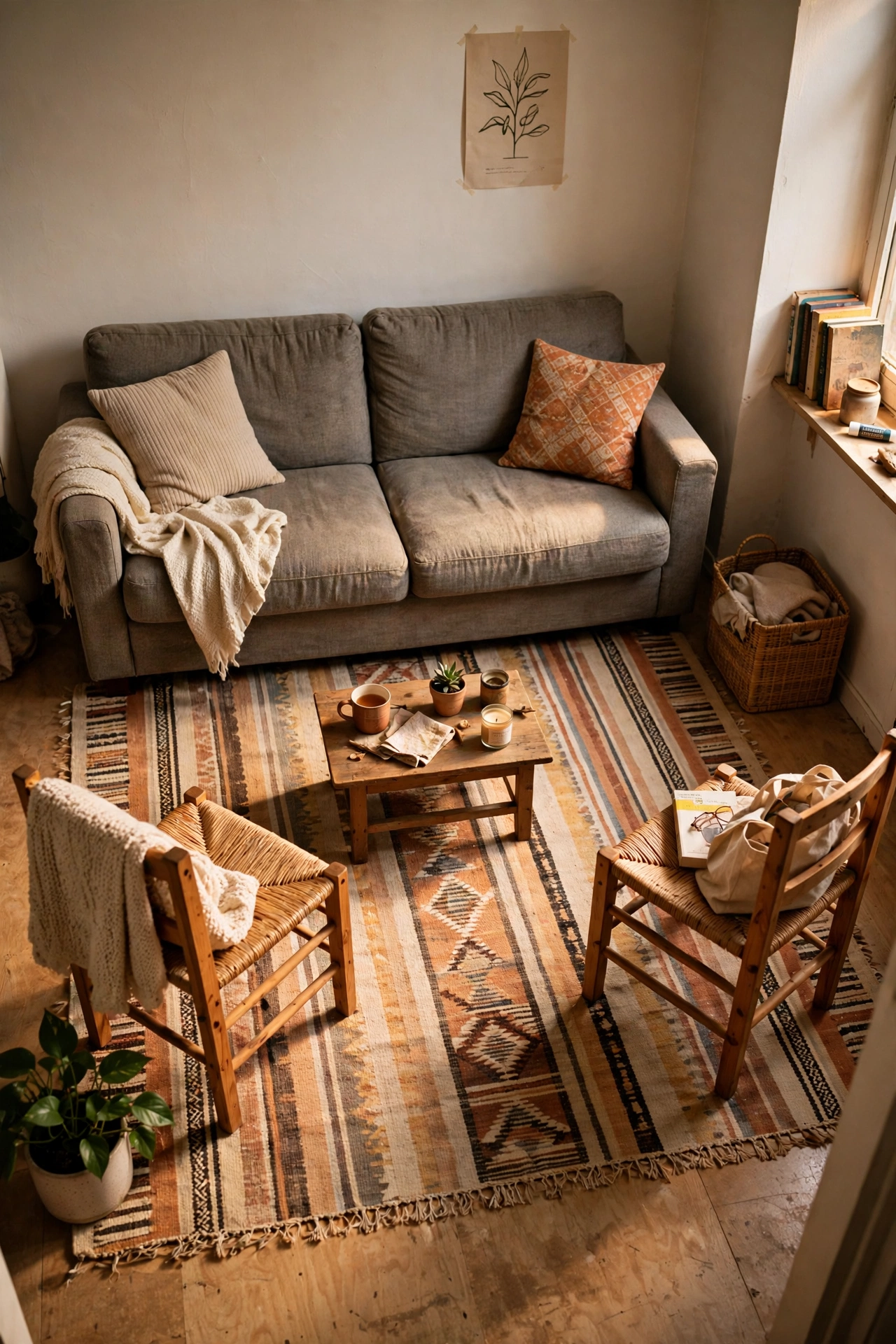
One large rug that sits under the front legs of the sofa and chairs ties the seating area together and makes the room feel bigger, while several small rugs chop it into pieces. Choose a flat-weave rug in a light colour, and leave a border of floor showing. I replaced three small rugs with one big one and the room finally looked like one space. The mistake to avoid is a rug so small it floats in the middle of the seating, because it looks like a postage stamp.
Cost: ~$60 | Time: 10 minutes
Paint the Walls and Trim the Same Colour
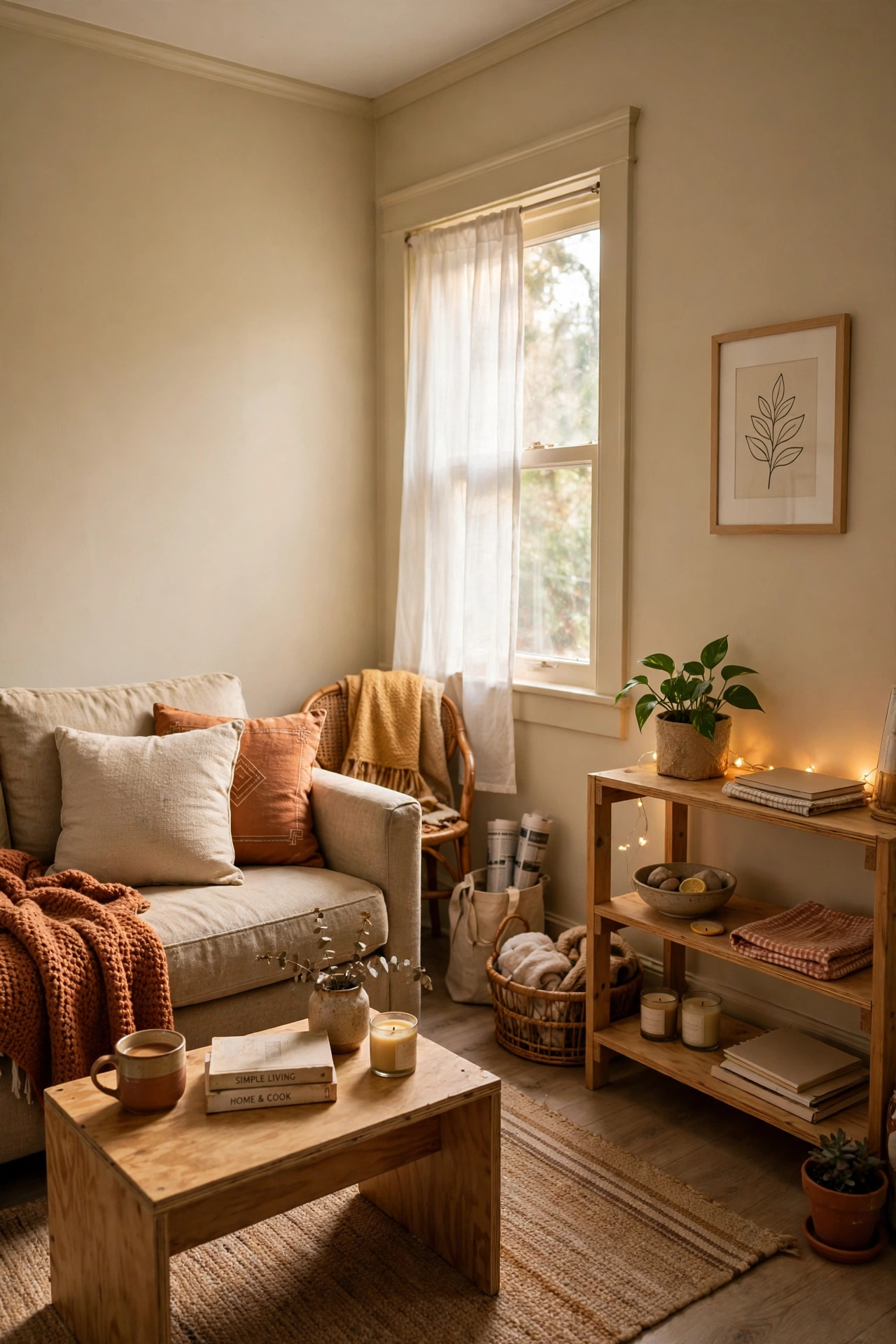
Painting walls and trim the same pale colour removes the visual lines that chop a small room into pieces, and the room feels taller and calmer. Use a satin finish on trim for durability and matte on walls, in the same shade. I did this in a tiny living room and the ceiling seemed to lift. The mistake to avoid is a dark trim with pale walls in a small room, because the contrast draws a hard line around the whole space.
Cost: ~$40 | Time: 120 minutes
Keep One Wall Completely Clear
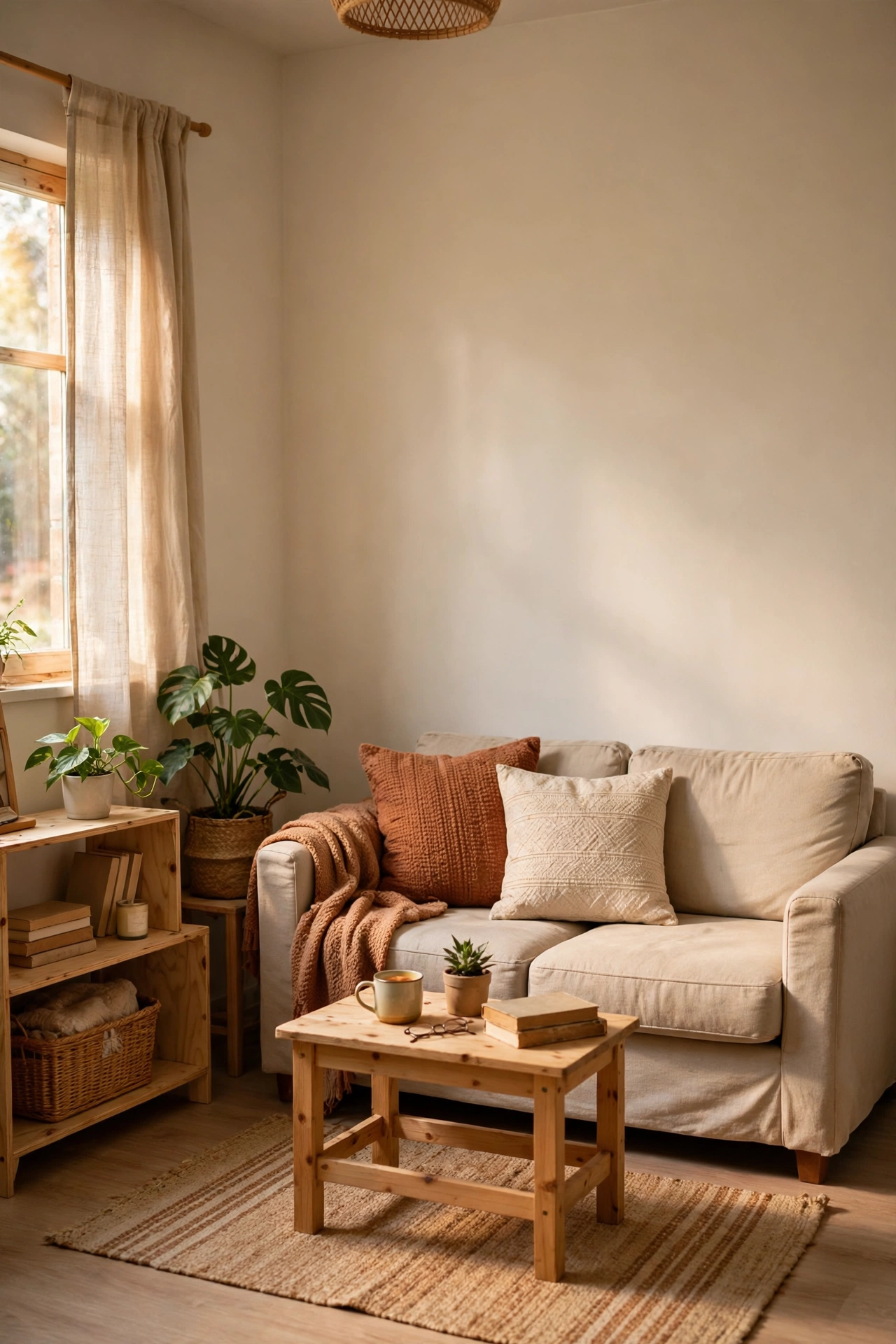
Leaving one wall completely clear gives the eye somewhere to rest, and a room with one clear wall feels calmer than a room with every wall decorated. Pick the wall you see least, take everything off it, and leave it empty on purpose. I cleared one wall in my living room and the whole room breathed easier. The mistake to avoid is filling the clear wall “just with one small thing”, because one thing becomes five within a month.
Cost: ~$0 | Time: 15 minutes
(see also: 17-cozy-small-apartment-ideas-that-feel-collected-not-cramped)
Rotate Decor Seasonally From One Box
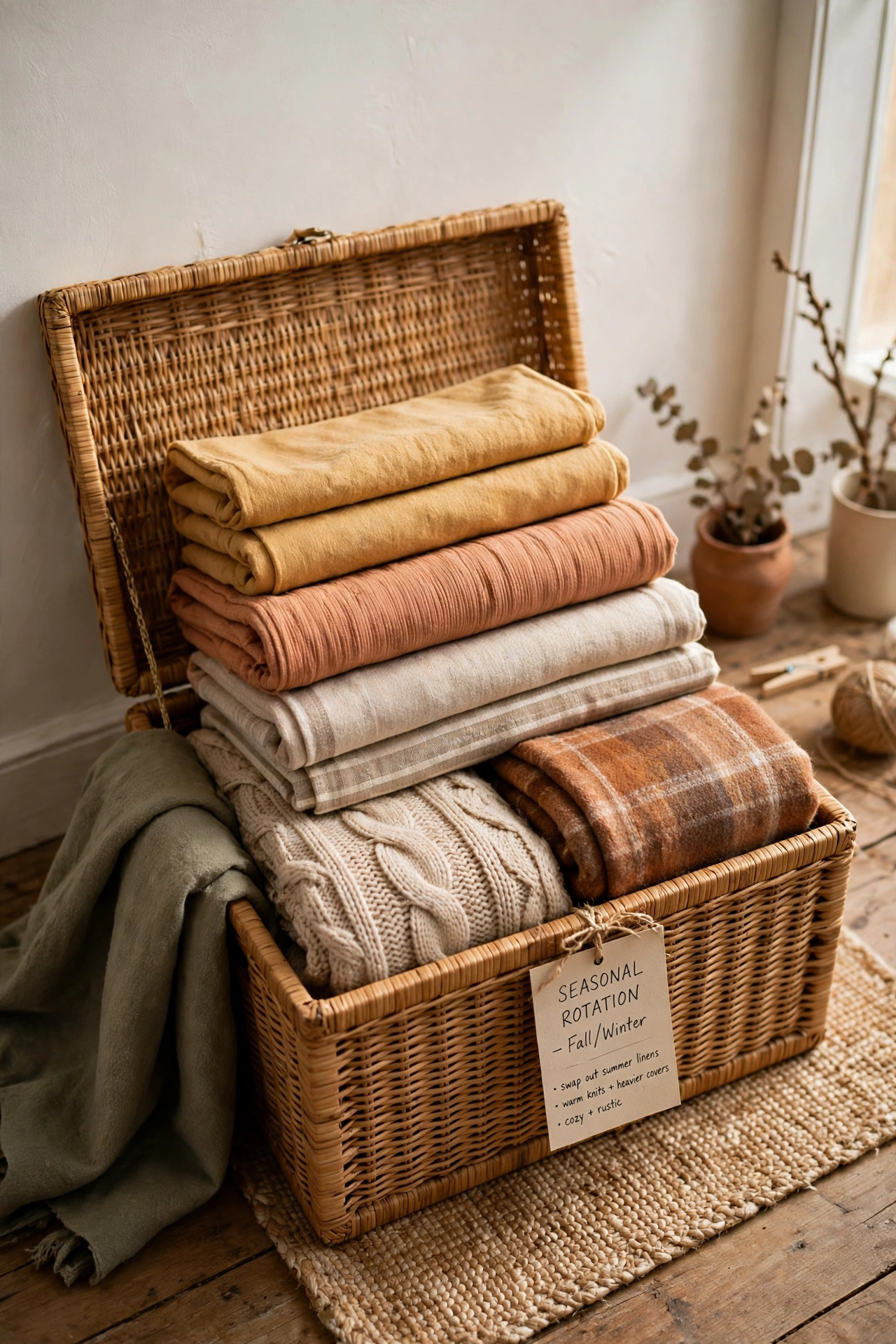
Keep all your seasonal decor in one box, and rotate a few pieces in and out instead of adding more each season. A box in a closet holds cushions covers, throws, and small ornaments, and swapping them refreshes the room without buying anything. I do a ten-minute swap each season and the room feels new four times a year. The mistake to avoid is a second box, because two boxes become a collection, and a collection becomes clutter.
Cost: ~$0 | Time: 10 minutes
End With a Weekly Ten-Minute Reset
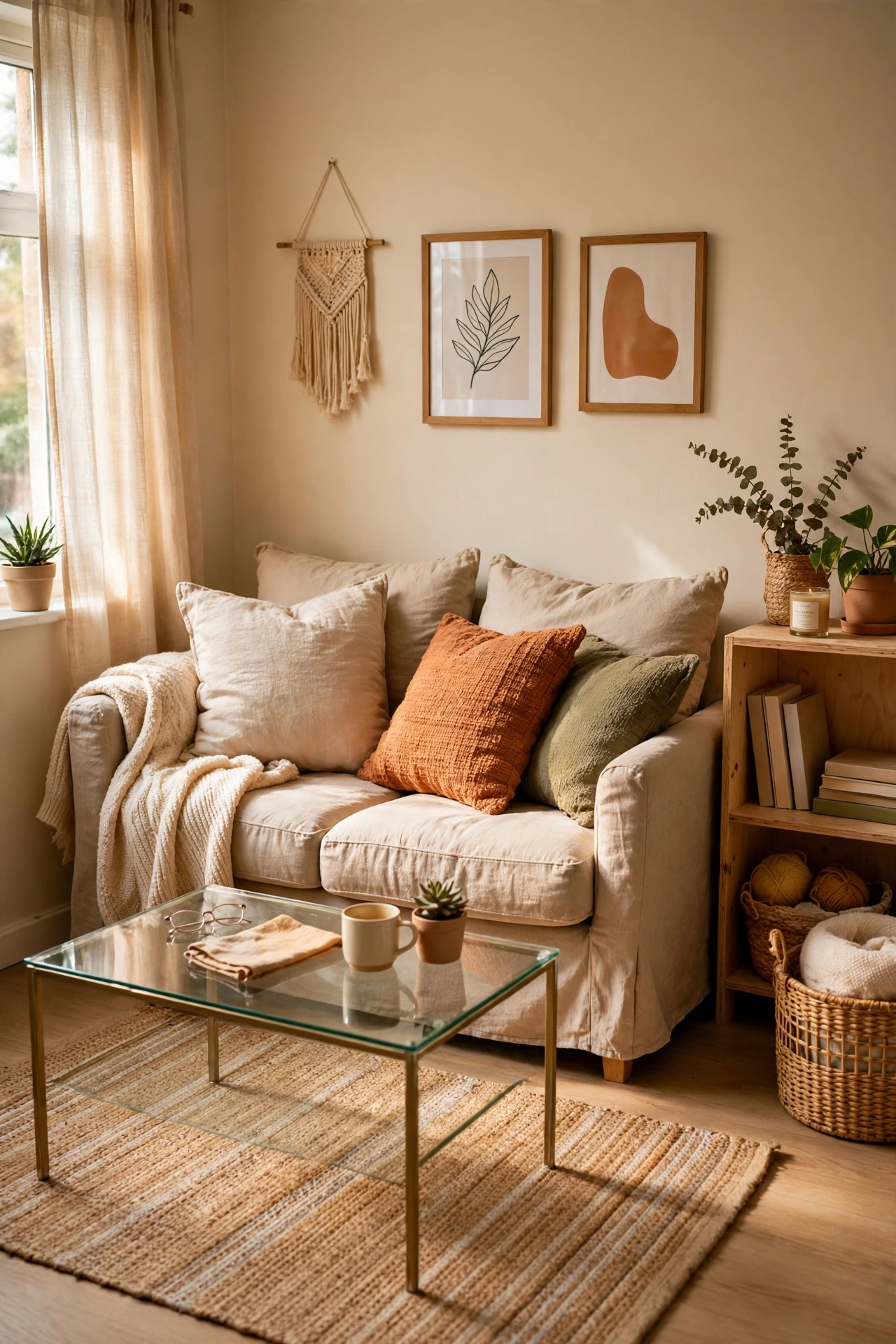
Small living rooms show mess fast, but they also tidy fast, so a ten-minute weekly reset keeps the room feeling spacious. Fluff cushions, fold throws, clear the coffee table, and put wandering items back where they belong. I do this every Sunday night and Monday starts in a calm room. The mistake to avoid is the monthly deep clean as your only tidy, because by then the room has been messy for weeks.
Cost: ~$0 | Time: 10 minutes
A small living room works when the furniture fits, the light is layered, and one wall is allowed to breathe. Start with the seating, because that is the mistake most people make first, and let the rest follow. Small rooms are not a punishment, they are an excuse to choose only what you love.
