15 Sage Green Bedroom Ideas for a Calm, Collected Space
15 Sage Green Bedroom Ideas for a Calm, Collected Space
My sage green bedroom started as an accident. I bought a $7 quart of mistinted sage paint for a different project, and on a whim rolled it onto my bedroom’s headboard wall. I stood back and felt my shoulders drop. A sage green bedroom does something to your nervous system: it is green enough to feel alive, gray enough to stay calm. I have since gone all in, and my bedroom is now the quietest-feeling room in my house.
These 15 ideas are every sage trick I have tried, from the $7 paint to the $4 thrift finds. I have noted real prices, real times, and the sage shade mistake that taught me to always test first. If your bedroom needs to feel calmer, this color is the answer.
1. Sage Accent Wall Behind the Bed
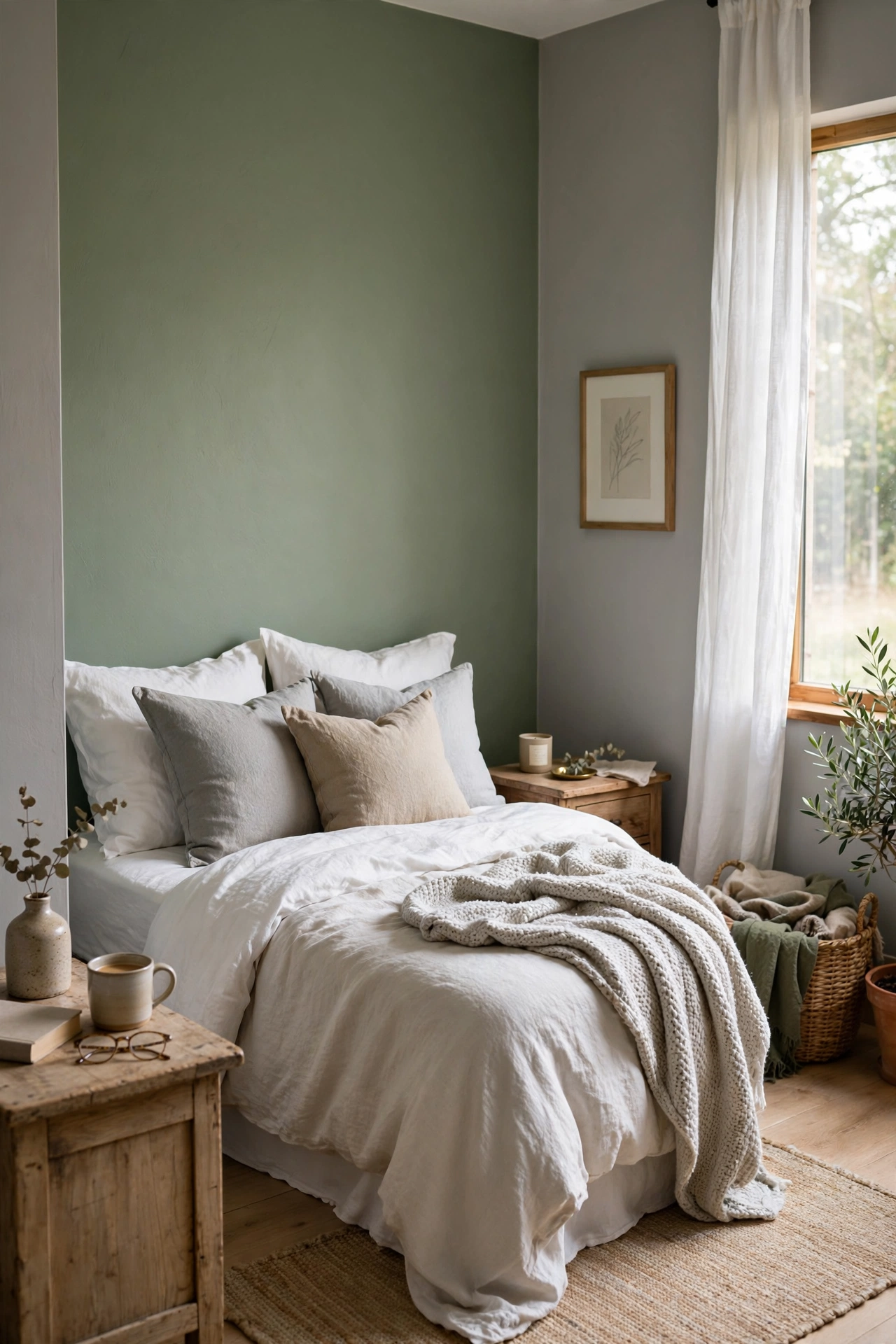
One sage wall behind the bed gives you the full color impact for the price of a quart. I used a $9 sage sample quart, two thin coats with a roller, edges cut in with an angled brush. The gray undertone in sage keeps it sophisticated, never nursery-like. Test the swatch in daylight and lamplight, because sage shifts. My first pick went minty under my bulbs. The second stayed soft all day. Ninety minutes of painting gave my bedroom its entire mood. It is still the best nine dollars I have spent on this house.
Cost: ~$9-15 | Time: 2 hours
2. Sage Linen Duvet Cover
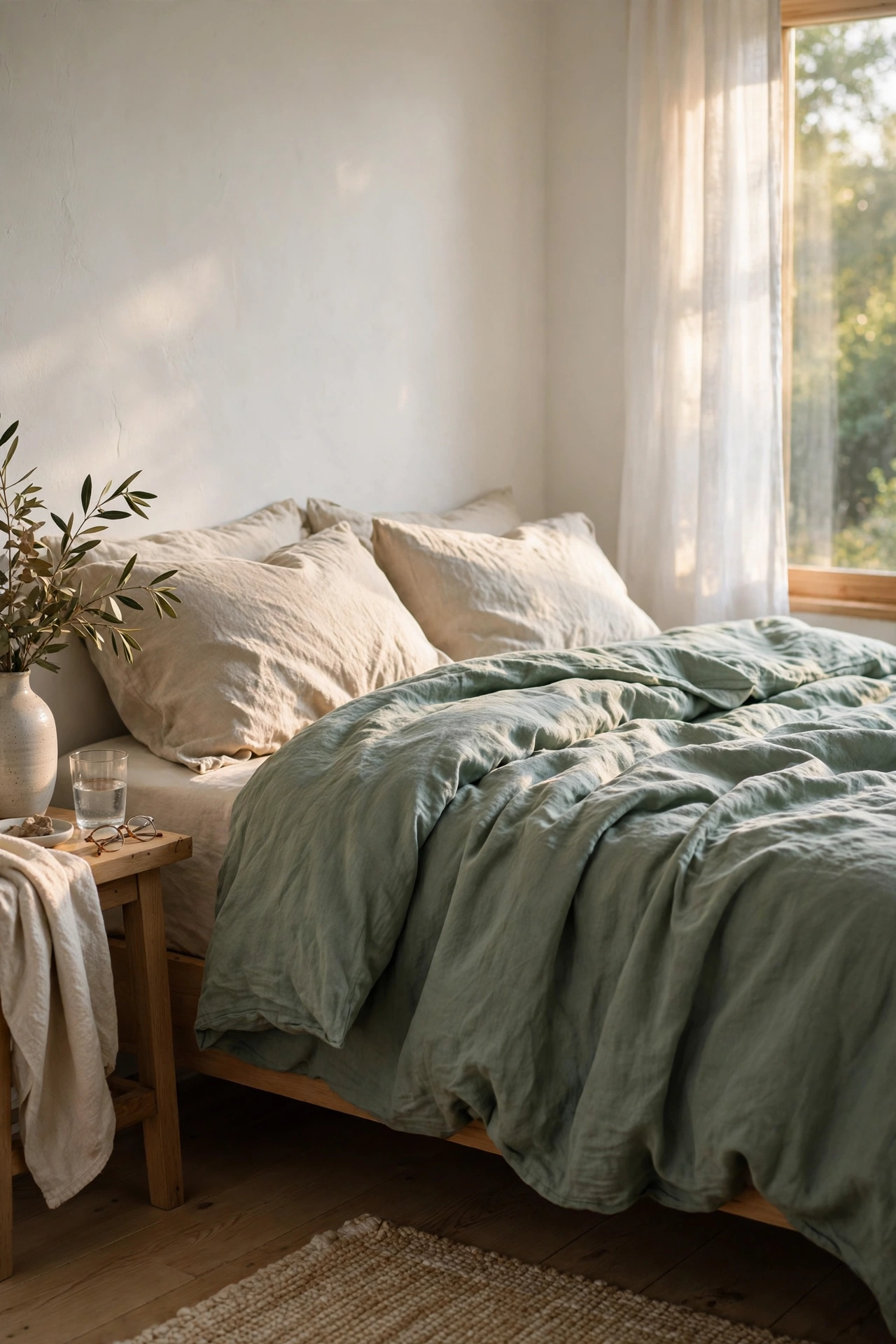
A sage linen-look duvet cover wraps the whole bed in calm. I found one for $30 and it made my white-walled room feel intentional overnight. The washed texture is key: flat sage can look dull, but the linen weave adds life. Wash it before judging the color, since it softens a shade. Mine looked slightly gray out of the package and perfect after one wash. Thirty dollars for bedding that makes the entire room feel like a deep breath. It is the color equivalent of a weighted blanket.
Cost: ~$28-38 | Time: 20 minutes
3. Thrifted Sage Armchair
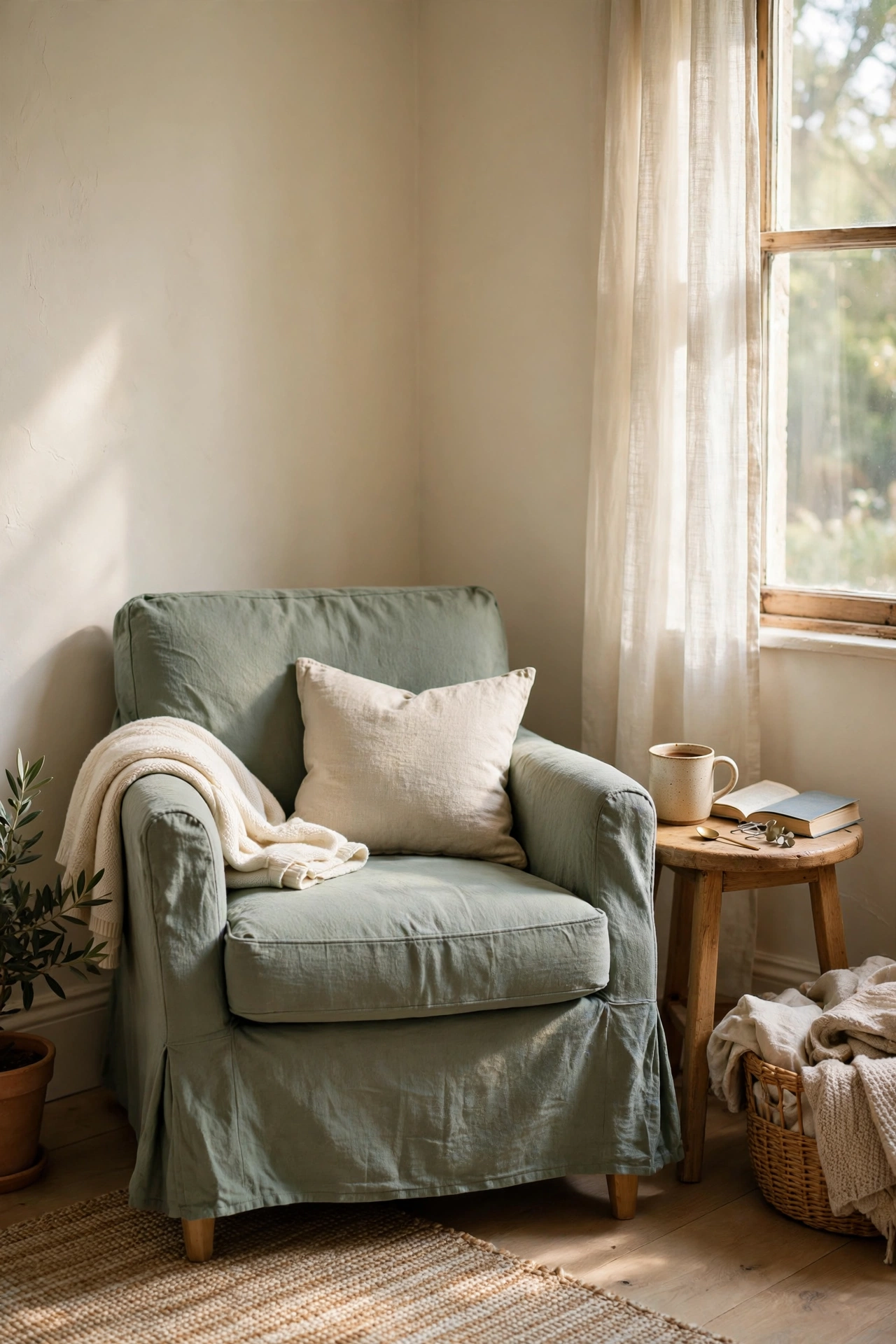
A sage armchair in the corner creates a reading nook that feels like a hug. I found a solid wood chair for $10 and covered it with a $20 sage slipcover. The slipcover route beats reupholstering by hundreds of dollars. Tuck the excess deep into the crevices for a tailored look. My chair is where I drink my morning coffee now. The sage against my cream walls is the prettiest corner in the house. Thirty dollars for the reading spot I never knew I needed.
Cost: ~$25-35 | Time: 45 minutes
4. Sage and Cream Layered Bedding
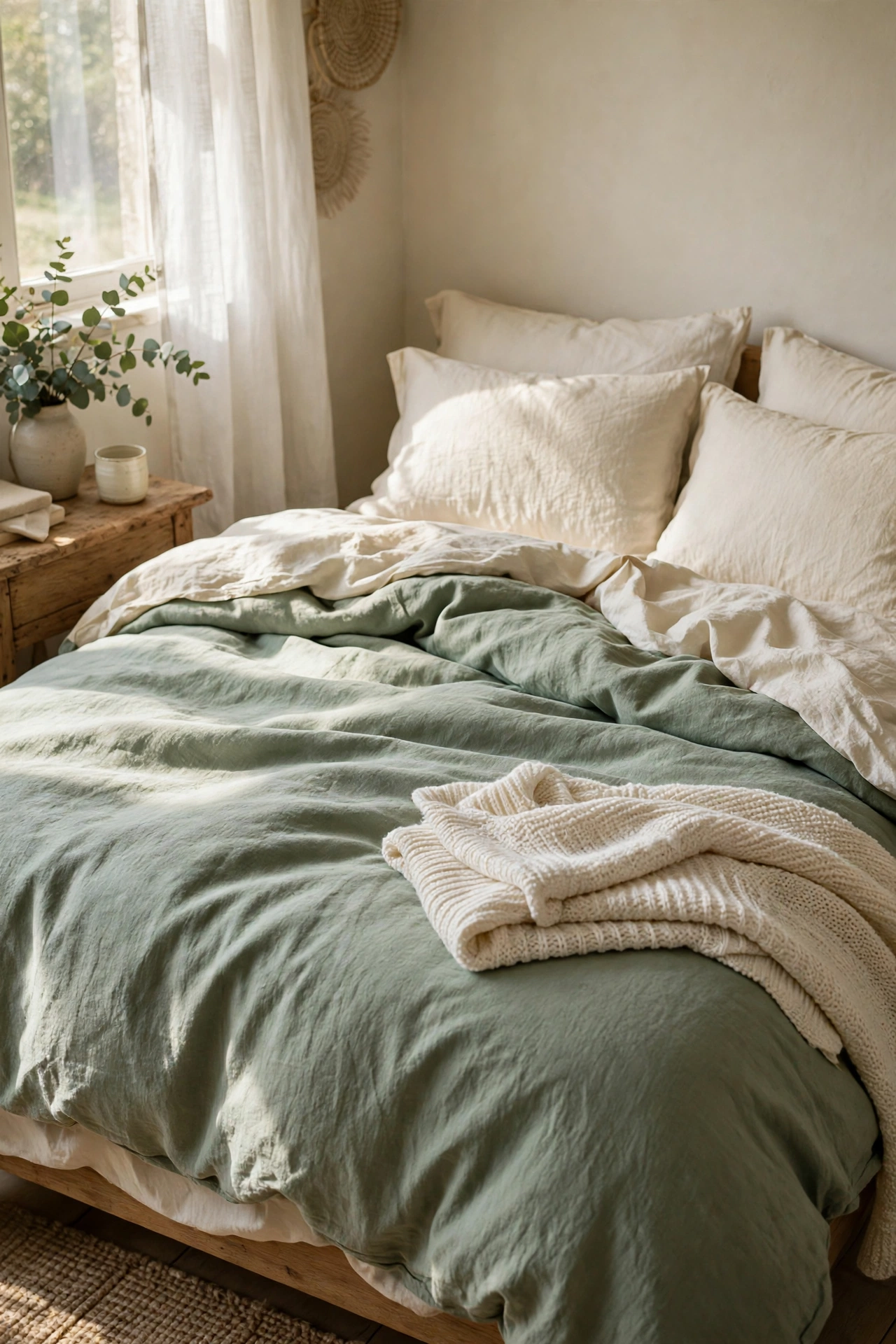
Layering sage with cream keeps the bed from feeling flat or heavy. I pair my sage duvet with cream sheets and an ivory throw folded at the foot. The tonal layering is what makes it look styled rather than just green. Keep the cream bright so it contrasts softly. My first attempt used all sage and the bed looked like a blob. Adding the cream layers gave it dimension. The combination photographs beautifully too. Layering costs nothing extra if you shop your linen closet first.
Cost: ~$0-20 | Time: 15 minutes
5. Eucalyptus Stems in Sage Tones
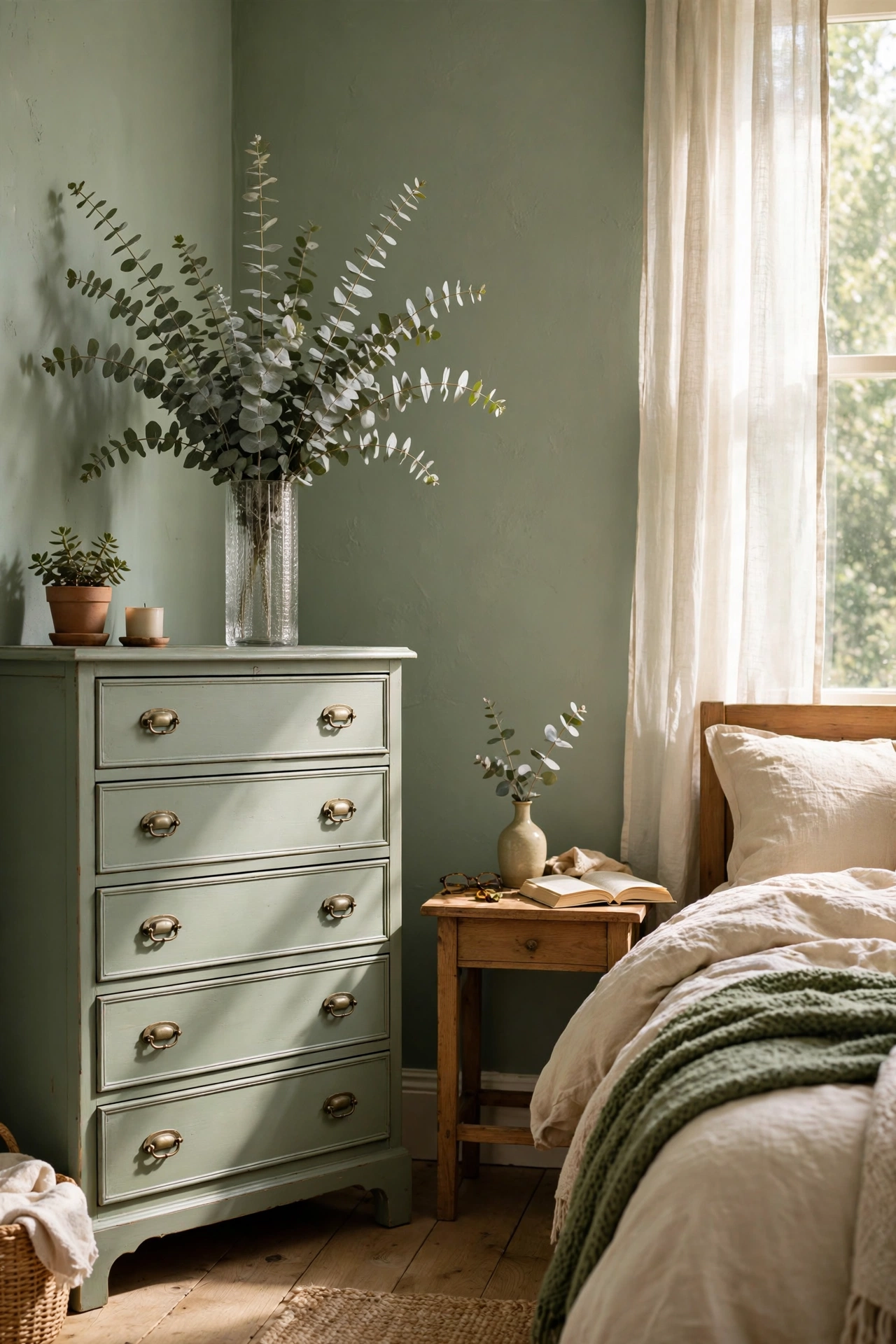
Real eucalyptus echoes sage walls perfectly and costs grocery-store money. I buy a $4 bunch monthly and split it between a tall vase on the dresser and a bud vase on the nightstand. The silvery green is sage’s natural partner. Trim stems at an angle and change water weekly for a month of life. My bedroom smells faintly fresh constantly. The live green against the painted sage creates a depth no print can match. Four dollars a month for the living accent that ties my whole palette together.
Cost: ~$4-8 | Time: 10 minutes
6. Sage Velvet Throw Pillows
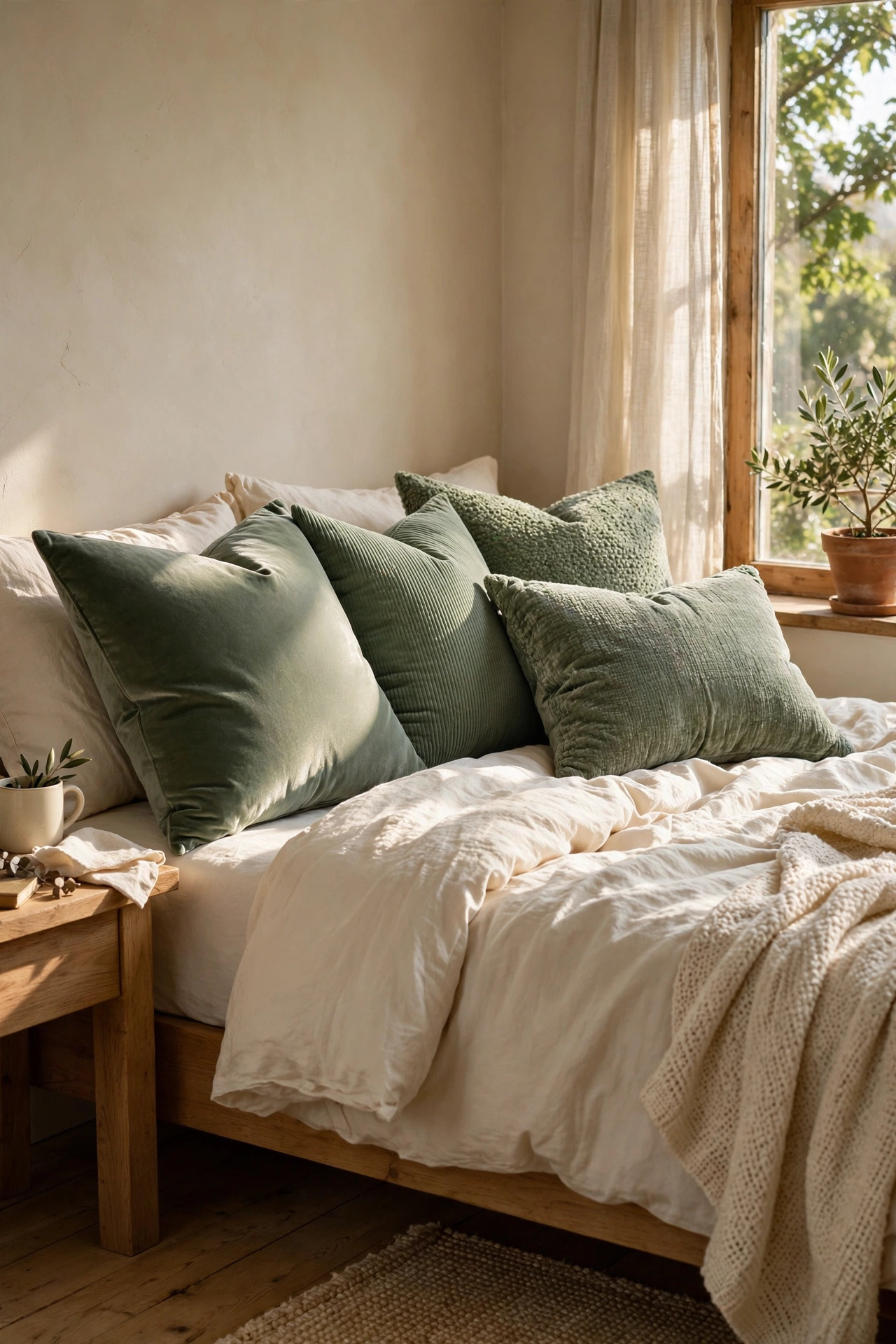
Two sage velvet pillows add the rich texture flat paint lacks. I found covers for $12 the pair and stuffed them with old inserts. Velvet catches light differently from every angle, which gives the bed dimension. Mix one velvet with one linen in a slightly different sage for depth. My first pair matched exactly and looked flat. The mixed textures made the bed look designed. Twelve dollars for the pillows that make my sage bed feel luxurious instead of just green.
Cost: ~$10-18 | Time: 10 minutes
7. Painted Sage Nightstands
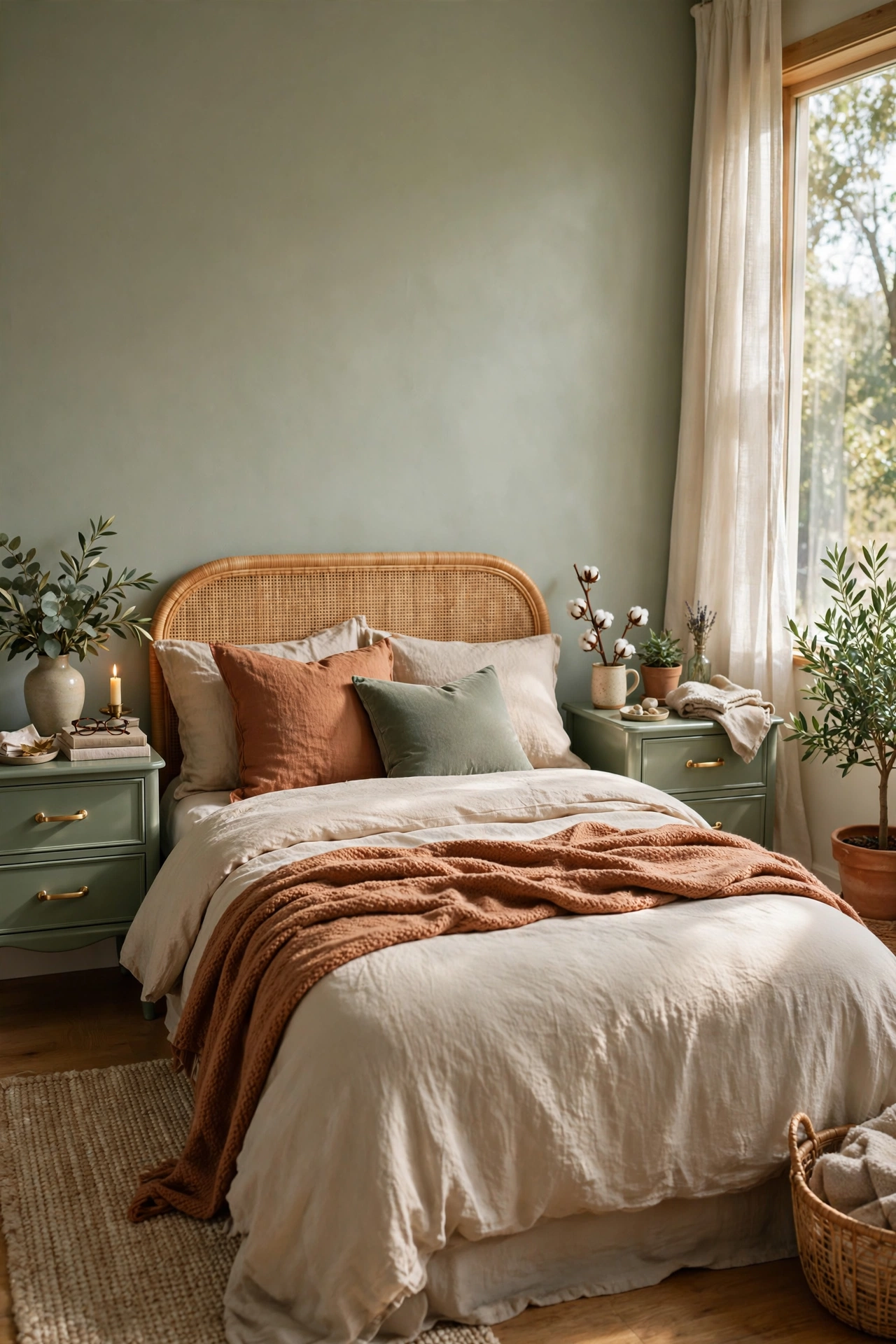
Painting nightstands sage ties the furniture into the wall color. I brushed two coats of sage satin paint on my thrifted nightstands for $10 in supplies. Satin finish is the sweet spot: flat shows marks, gloss looks cheap. Let them cure overnight before styling. My nightstands were orangey oak before, fighting the walls. The sage paint made them disappear into the palette beautifully. Ten dollars for furniture that now looks like it was always meant to be sage. I distressed the edges very lightly with sandpaper after curing for a soft vintage feel. The new brass knobs I added complete the look for just a few dollars more.
Cost: ~$8-15 | Time: 2 hours plus drying
Pro tip: Pro tip: sage has undertones that make or break it. Hold your swatch next to something truly gray and something truly green. If it leans minty, it will feel cold. If it leans olive, it will feel muddy. The sweet spot sits right in the middle. I keep my winning swatch taped inside a cabinet door so every future sage purchase matches.
8. Sage Botanical Print Gallery
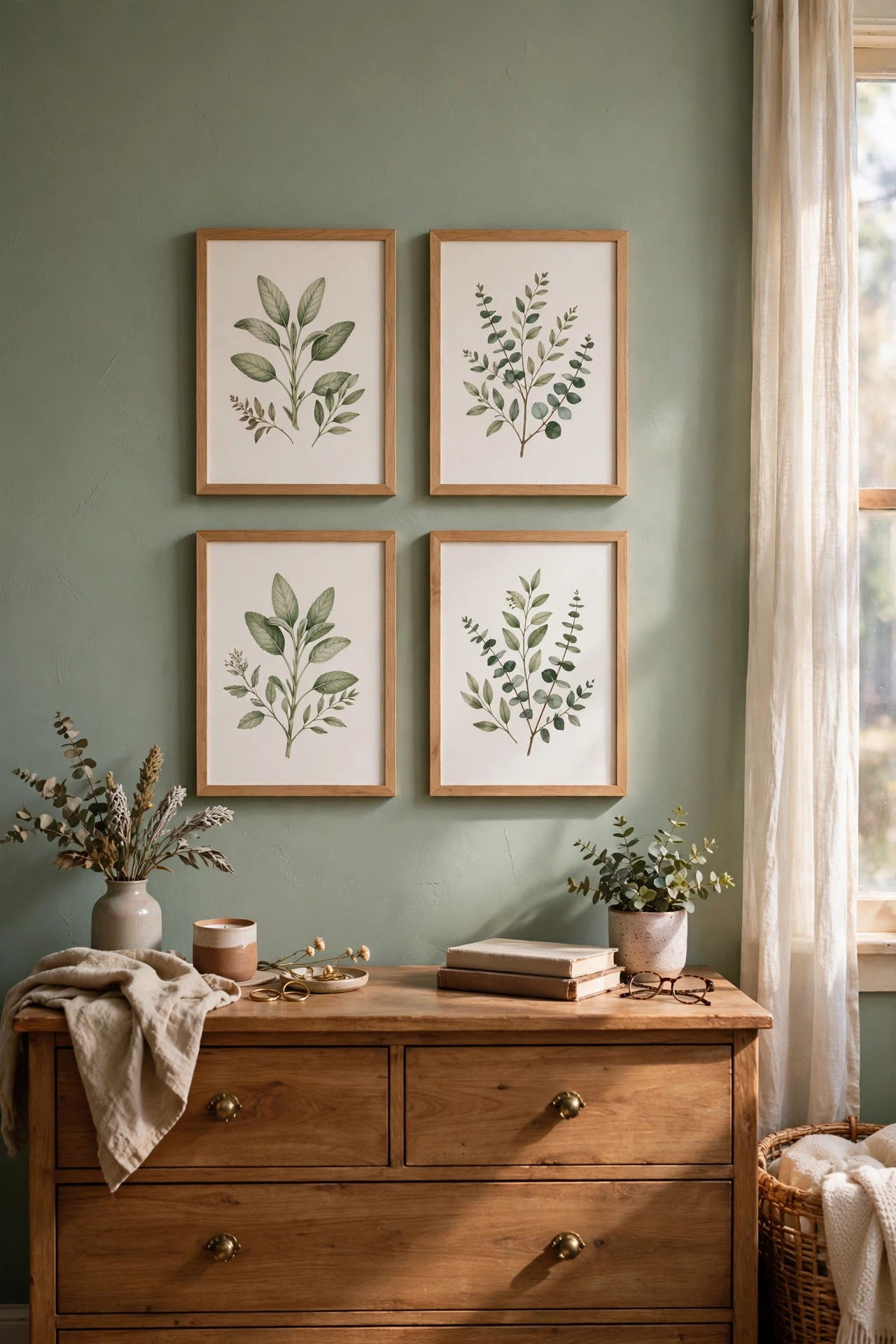
Botanical prints in sage tones extend the color up the walls. I printed four free botanical illustrations, tinted sage in a free photo app, and framed them in $3 thrift frames. The tight grid above my dresser took an hour. Keep the frames matching and the spacing tight. My first hang spaced them wide and they looked lost. Pulling them to two inches apart made them read as one piece. Fifteen dollars for the gallery wall that makes my sage palette feel complete and collected.
Cost: ~$12-20 | Time: 1 hour
9. Cream and Sage Area Rug
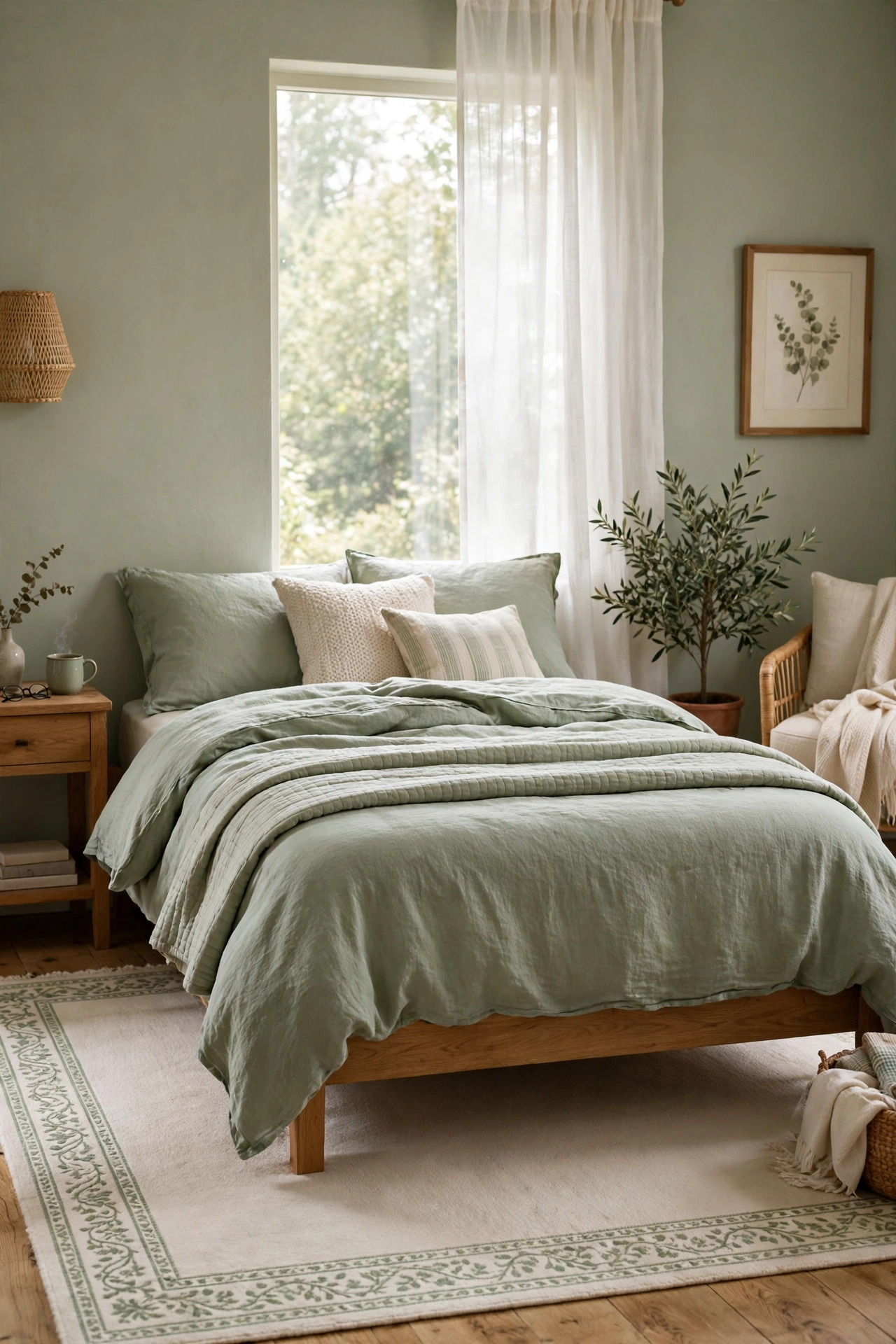
A rug with a sage pattern on cream grounds the bed in the palette. I found a 5×7 with a subtle sage motif for $38 on sale. The pattern adds interest without new colors. Center it under the bed with borders showing on three sides. My old gray rug clashed with the sage walls subtly but constantly. The sage-patterned rug unified the floor with the walls. Thirty-eight dollars for the foundation that makes the whole room feel like one thought.
Cost: ~$35-45 | Time: 20 minutes
10. Sage Curtain Panels
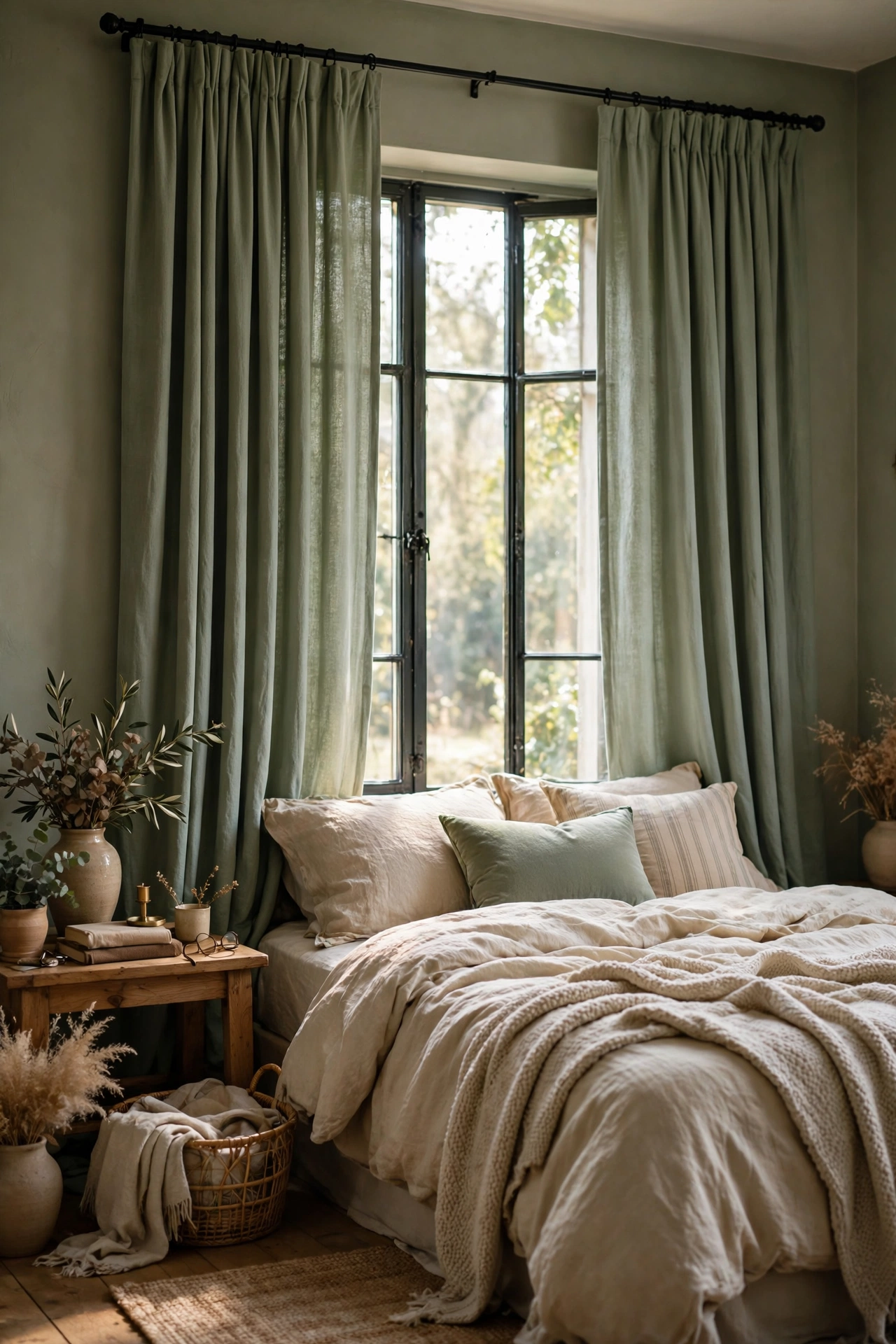
Sage curtains frame the window in your signature color. I found two panels on clearance for $20 and hung them high and wide. The color at the window balances the sage wall so neither side feels heavy. Steam them before hanging for a crisp fall. Mine hung wrinkled for a week and looked tired. Ten minutes with a steamer made them look custom. Twenty dollars for the window treatment that completes the sage envelope of the room. I hemmed mine an inch shorter so they just kiss the floor. The tailored length keeps them from collecting dust and makes the whole window look custom.
Cost: ~$18-28 | Time: 45 minutes
11. Woven Natural Textures
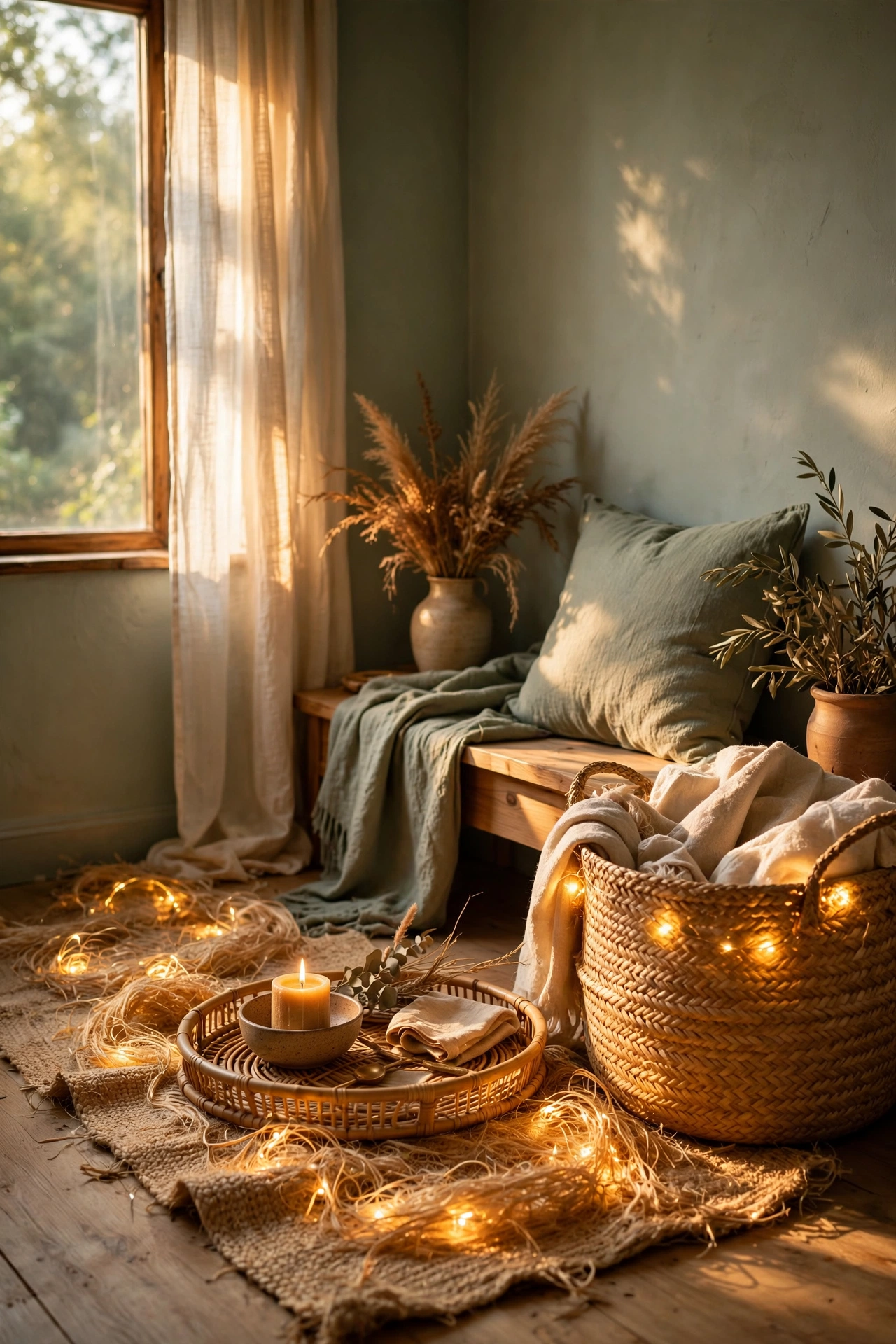
Jute, rattan, and seagrass warm up sage so it never feels cold. I added a jute rug runner, a rattan tray, and a seagrass basket for about $30 total. The golden natural fibers are sage’s best friend. My all-sage room felt a bit flat before the naturals arrived. The woven textures added the earthiness the color needed. Thirty dollars for the textural layer that keeps sage feeling organic and warm rather than painted and flat. I added a woven pendant shade last month to echo the baskets. The layered naturals make the sage feel sun-warmed, like a garden room rather than a painted box.
Cost: ~$25-35 | Time: 20 minutes
12. Brass Accents Against Sage
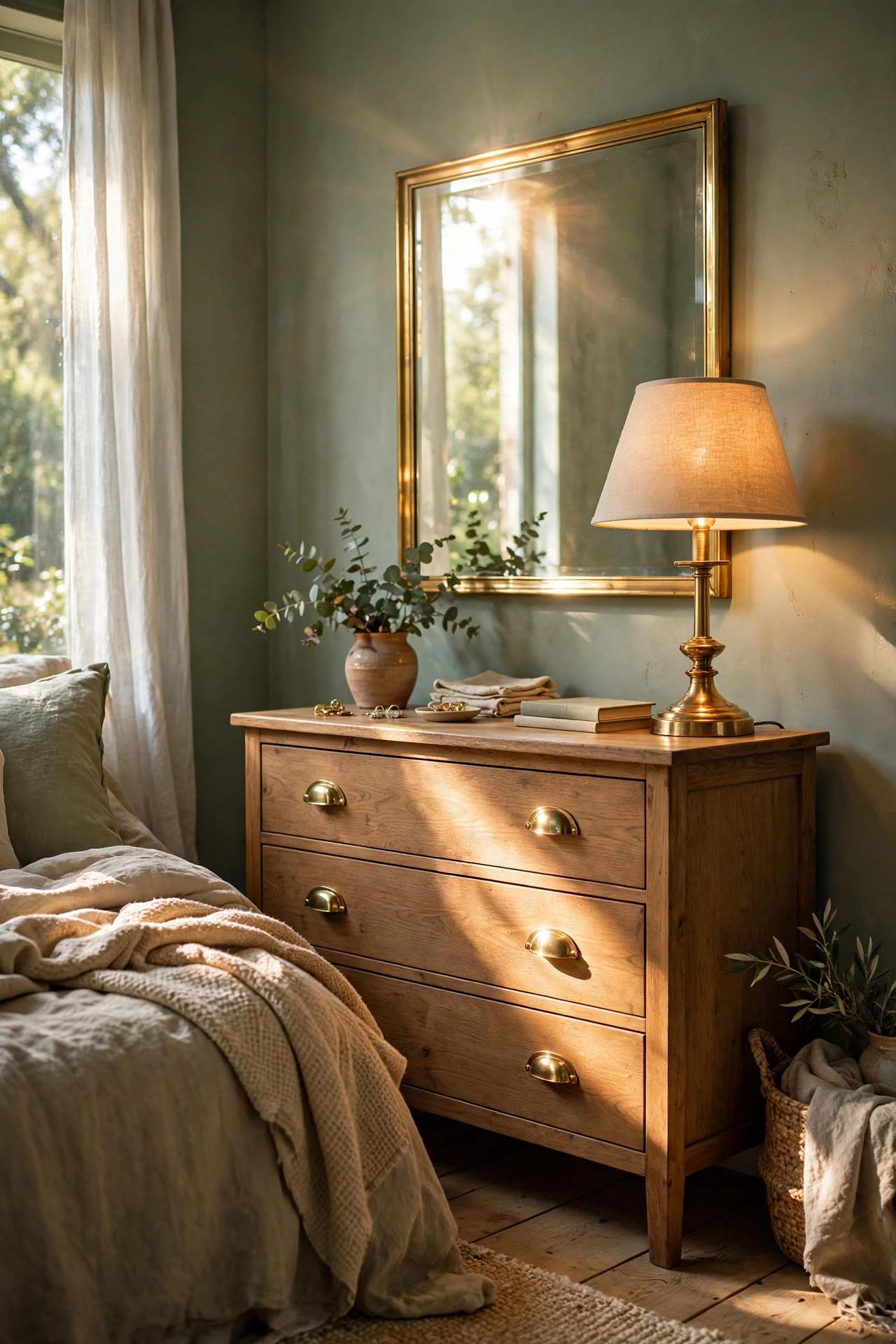
Brass glows against sage like jewelry on skin. I swapped my lamp base, mirror frame, and drawer pulls to brass tones for $22 using thrift finds. The warm metal lifts the muted green beautifully. Cool silver against sage looks clinical. My old chrome lamp stuck out like a sore thumb. The brass version melts into the palette. Twenty-two dollars for the metallic warmth that makes sage feel rich instead of flat. It is the contrast the color was waiting for.
Cost: ~$18-28 | Time: 1 hour
Pro tip: Pro tip: sage loves warm light. I switched every bulb in my sage bedroom to 2700K and the walls went from flat to glowing. Cool daylight bulbs turn sage gray and lifeless. The right bulb is a two-dollar upgrade that changes how the whole color reads after dark.
13. Sage Upholstered Bench
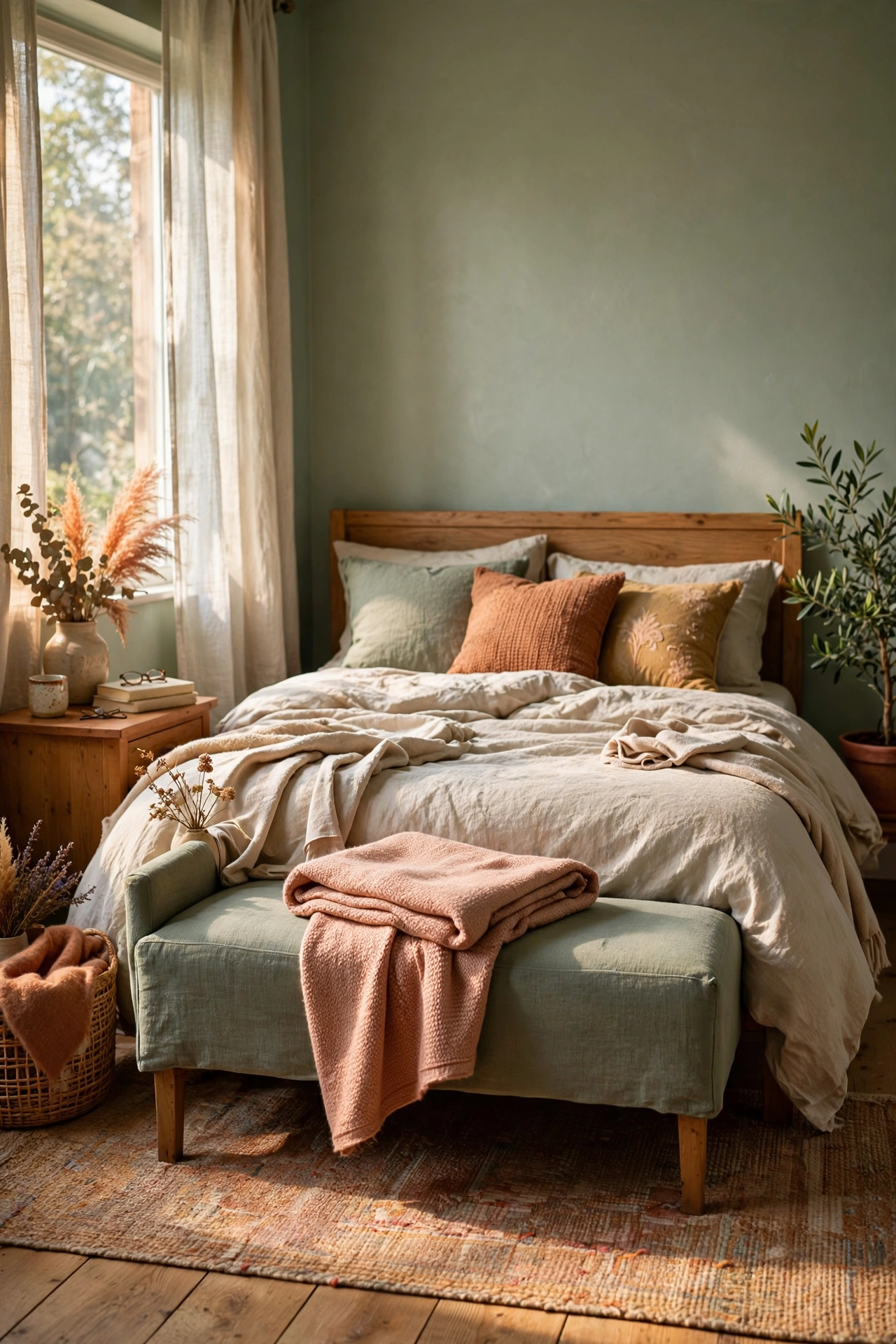
A sage bench at the foot of the bed extends the color through the room. I re-covered a thrifted bench with $14 of sage fabric, stapled tight underneath. The upholstered shape softens the foot of the bed. Pull the fabric drum-tight and staple every few inches. My first attempt was loose and wrinkled. Restapling tighter made it look professional. Fourteen dollars for the bench that carries the sage story from wall to floor. It holds my folded throw during the day.
Cost: ~$12-20 | Time: 1 hour
14. White Bedding Against Sage Walls
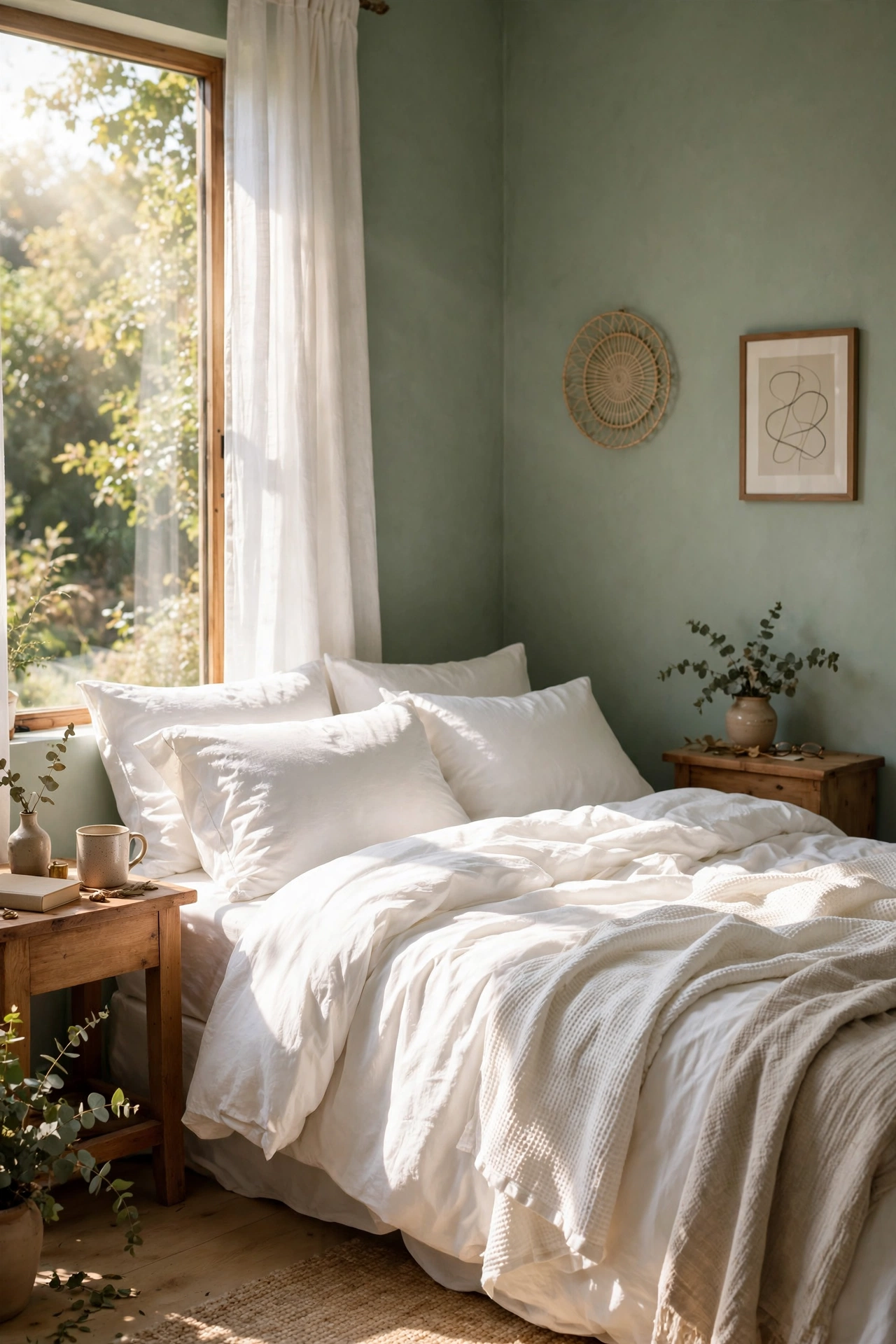
Crisp white bedding pops beautifully against sage walls. I keep my sheets and duvet cover bright white while the walls and accents carry the sage. The contrast keeps the room feeling fresh, not heavy. White bedding is also the easiest to bleach clean. My all-sage bedding attempt felt like sleeping in a forest. The white reset made the sage feel like an accent again. The high contrast is what makes both colors sing. Sometimes restraint is the boldest choice. I switched to white pillowcases too, keeping every textile near the face bright. The crisp white makes the sage walls look intentional and designed rather than dark.
Cost: ~$0-15 | Time: 15 minutes
15. Sage Painted Dresser
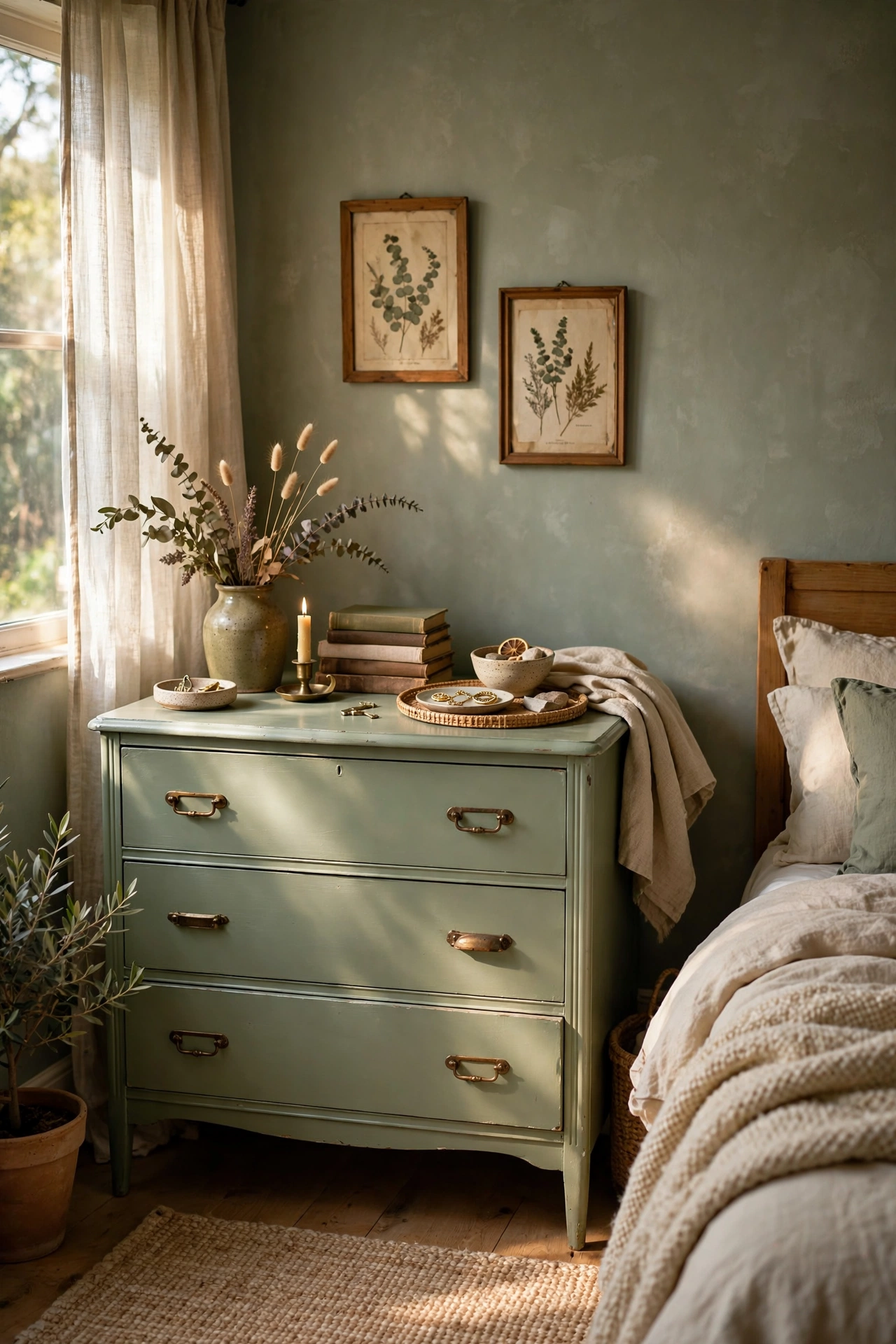
A sage dresser makes the biggest furniture piece part of the palette. I painted my thrifted dresser with two coats of sage satin for $12 in paint. The satin sheen keeps it from looking chalky. Remove the drawers and hardware before painting for clean edges. My dresser was dark brown before, a visual anchor dragging the room down. The sage paint lifted it into the palette. Twelve dollars for the furniture transformation that made my whole bedroom feel designed around the color.
Cost: ~$10-18 | Time: 3 hours plus drying
Quick questions, answered
What colors go with a sage green bedroom?
Cream, warm white, natural wood, brass, and soft gray are sage’s best partners. Avoid pairing it with bright white, which can make sage look dingy, or with cool grays that turn it muddy. Natural textures like jute and rattan warm it beautifully.
Is sage green too trendy for a bedroom?
Sage has gray undertones that keep it timeless, unlike brighter greens that date quickly. It has been a classic for decades in traditional homes. If you tire of it, sage pairs with so many neutrals that a refresh is just new bedding away.
How much sage is too much in a bedroom?
One wall plus textiles is the sweet spot for most rooms. All-sage everything can feel heavy and flat. Let cream, white, and wood break it up so the sage reads as a calm accent rather than a takeover. Balance is what keeps it serene.
What is the best sage paint shade for a dark bedroom?
Choose a sage with more gray and less green for low-light rooms, since dim light deepens green tones. Test the swatch on the darkest wall at night under your actual bulbs. A lighter, grayer sage keeps a dark bedroom feeling airy instead of cave-like.
📌 Calmed by sage? Pin this post now so you can save this idea for your own serene bedroom!
More calm color inspiration: (see also: 15-sage-green-living-room-decor-ideas-on-a-budget) (see also: 21-thrifted-bedroom-decor-that-look-designer) (see also: 15-sage-green-living-room-decor-ideas-that-feel-cozy)
