15 Minimalist Nursery Ideas
When I was expecting my first baby, every nursery photo I saw looked like a toy store exploded, and I panicked about the cost. Then a friend with three kids told me the truth: babies need almost nothing, and a calm room helps everyone sleep better. I built our minimalist nursery for under three hundred dollars, and it stayed peaceful even when the rest of the house did not. These minimalist nursery ideas focus on the few pieces that matter, soft colors, and storage that hides the chaos, so you can spend less and enjoy the baby stage more. Check our (see also: beige-kids-room-ideas) and (see also: navy-blue-kids-room-ideas) for color inspiration that pairs with this calm style.
1. White Crib With Simple Bedding
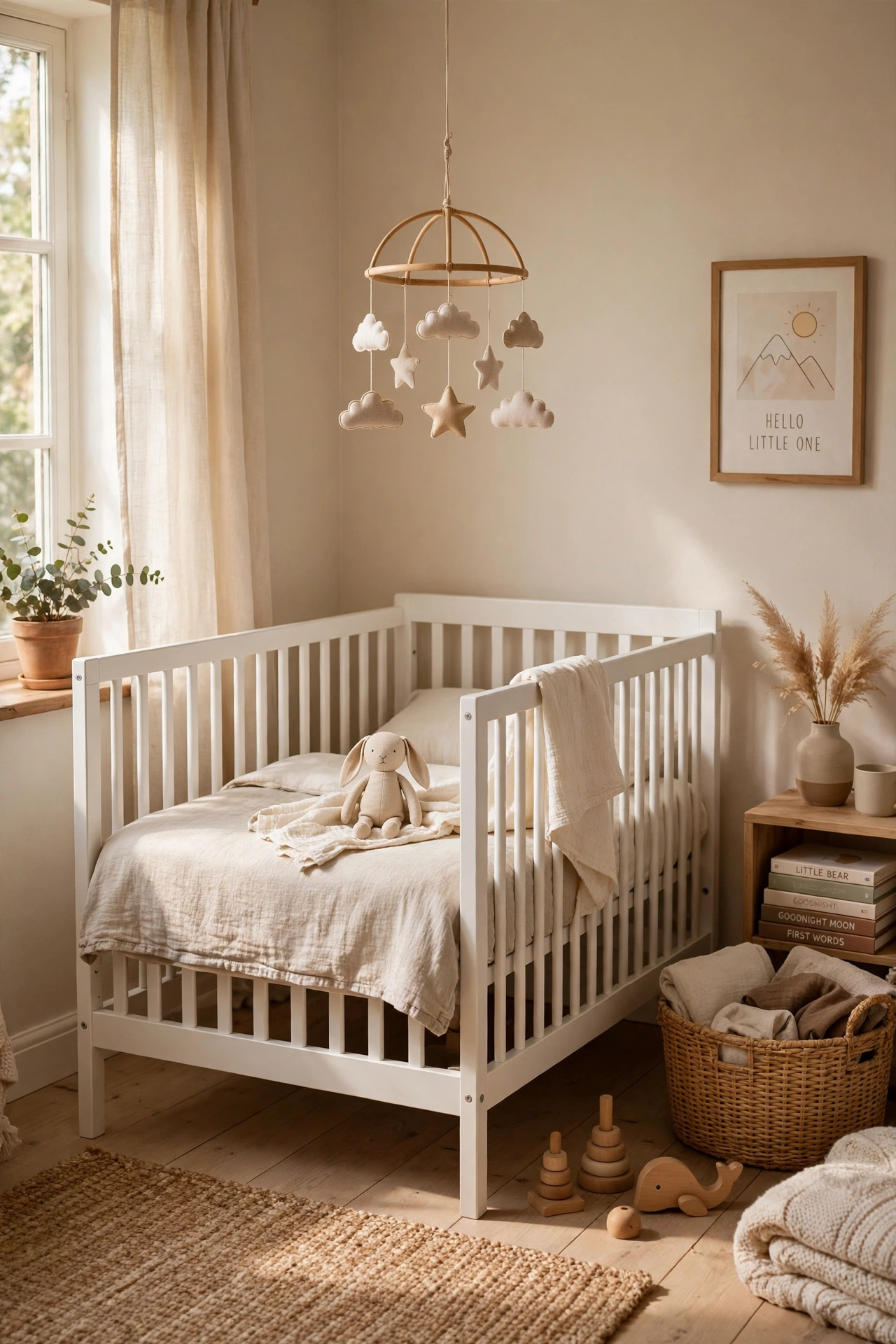
A plain white crib with one fitted sheet and a sleep sack is all a baby needs for sleep, and it costs far less than themed bedding sets. Choose a sturdy crib that converts to a toddler bed later, skip bumpers and pillows entirely for safety, and keep two fitted sheets in rotation for midnight changes. I bought our convertible crib secondhand for eighty dollars and it lasted through two kids. Wash sheets in fragrance-free detergent, since babies have sensitive skin and scented products cause rashes. Avoid crib sets with quilts and decorative pillows, since they are unsafe for infants and just gather dust.
Cost: ~$80 | Time: 45 minutes
2. Neutral Walls With One Soft Accent
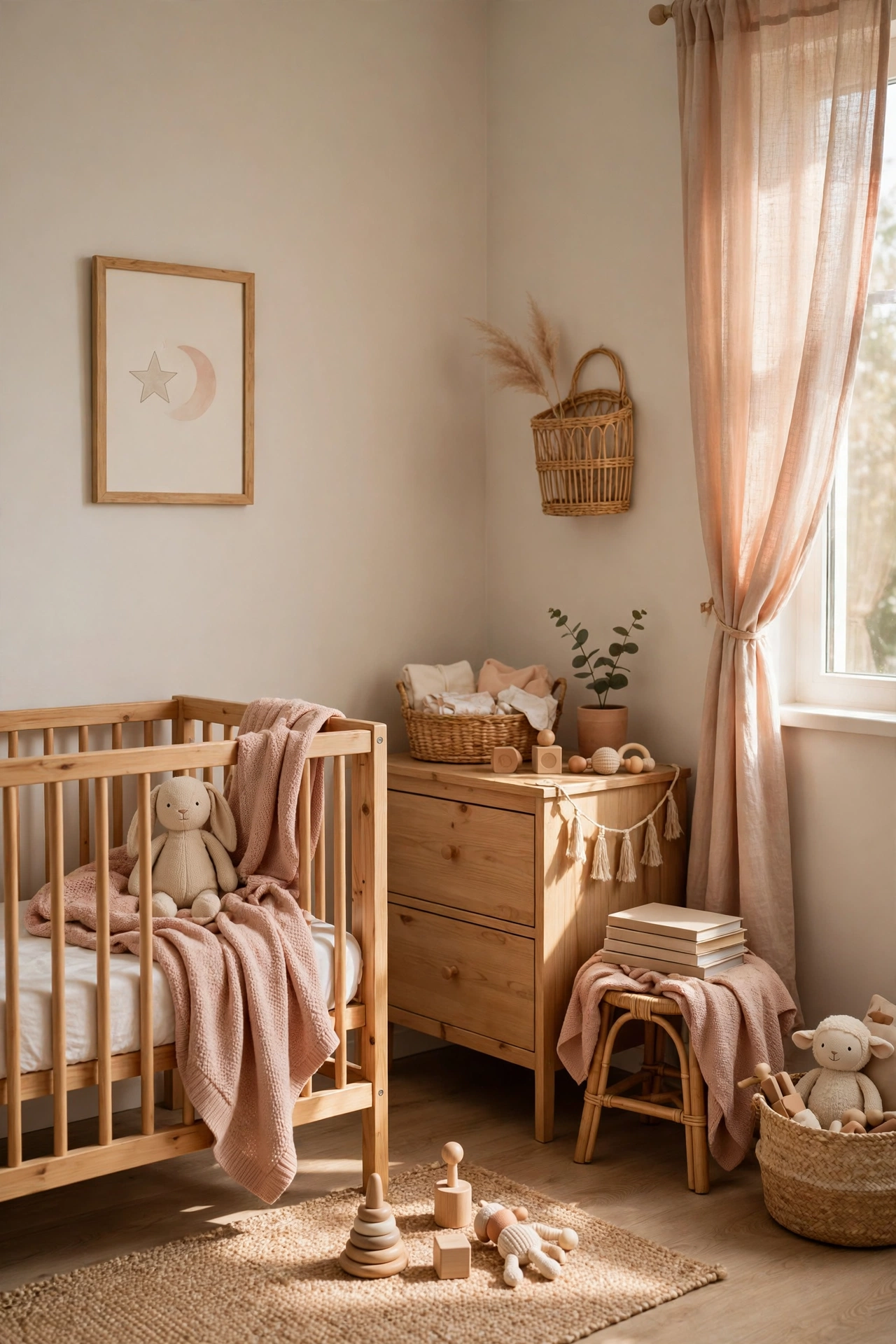
Paint the nursery walls a warm white or pale beige and add a single soft accent, like sage green on one wall or a simple wall decal, to keep the room calm. One gallon of paint covers an accent wall for about thirty dollars, and neutral walls mean you never have to repaint when your taste changes. I painted our nursery warm white with a sage accent wall and visitors always comment on how peaceful it feels. Use low-VOC paint and air the room out for a few days before the baby arrives. Skip bold character murals, since babies outgrow themes fast and repainting is a chore.
Cost: ~$30 | Time: 3 hours
3. One Basket Per Category
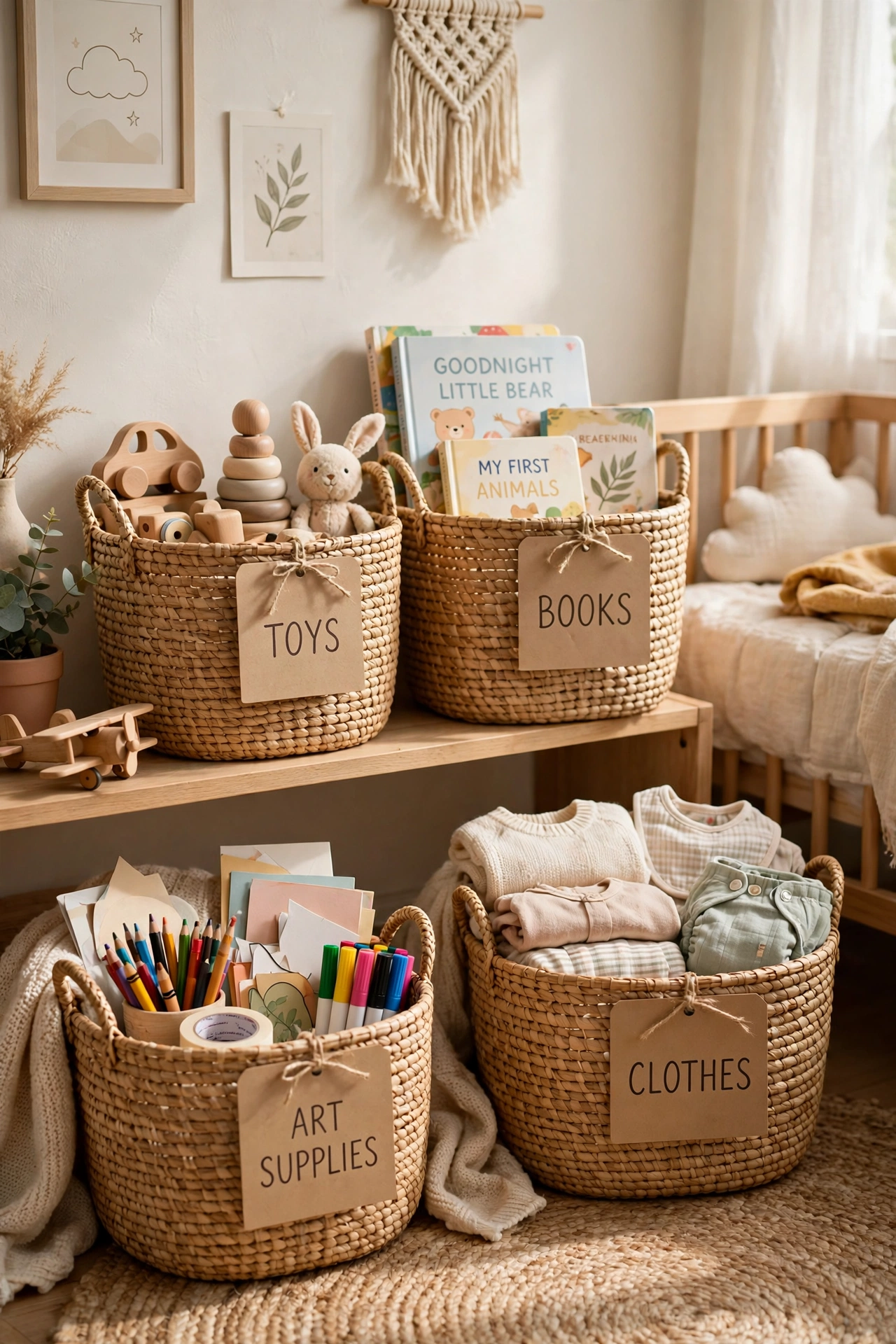
Give every nursery category its own basket: diapers, clothes, toys, and books each get one, and nothing else earns a spot. Buy four matching baskets from the dollar store, label them simply, and place them where you use them most. I kept a diaper basket by the changing table and a book basket by the rocking chair, and the room never looked cluttered even on chaotic days. Do a weekly basket check and remove anything that does not belong, or baskets slowly become junk bins. Avoid open shelving without baskets, since visible clutter defeats the whole minimalist idea.
Cost: ~$16 | Time: 20 minutes
4. Rocking Chair From the Thrift Store
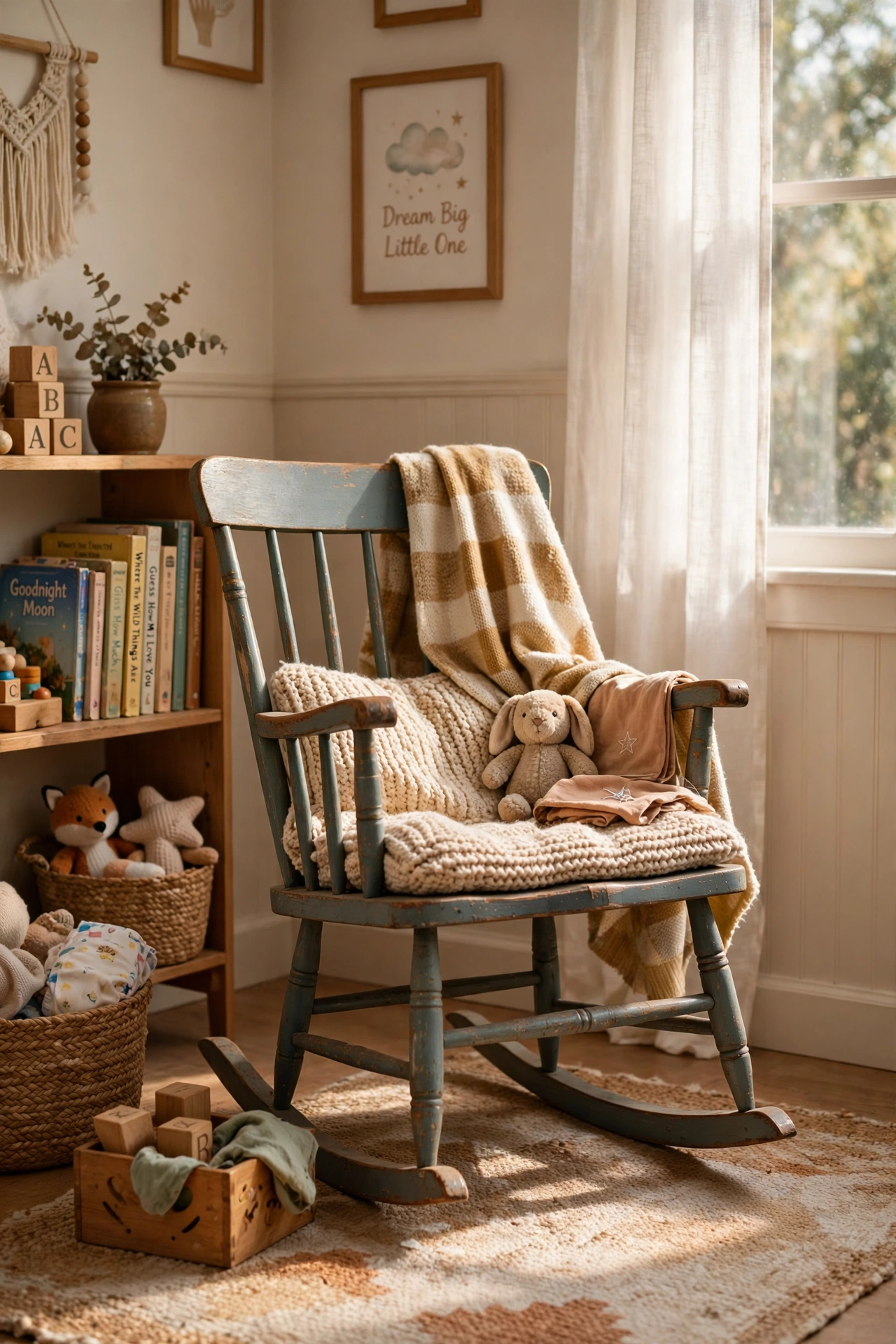
A thrifted wooden rocking chair with a simple cushion beats an expensive glider for both comfort and cost. Look for a sturdy frame that rocks smoothly, add a washable cushion for late-night feeds, and place it near a soft lamp. I found ours for twenty-five dollars, added a ten-dollar cushion, and rocked two babies to sleep in it. Test the rock before buying, since a chair that sticks or squeaks will drive you crazy at 3 a.m. Skip upholstered gliders with non-removable covers, since spit-up stains are inevitable.
Cost: ~$35 | Time: 20 minutes
5. Changing Station on a Dresser
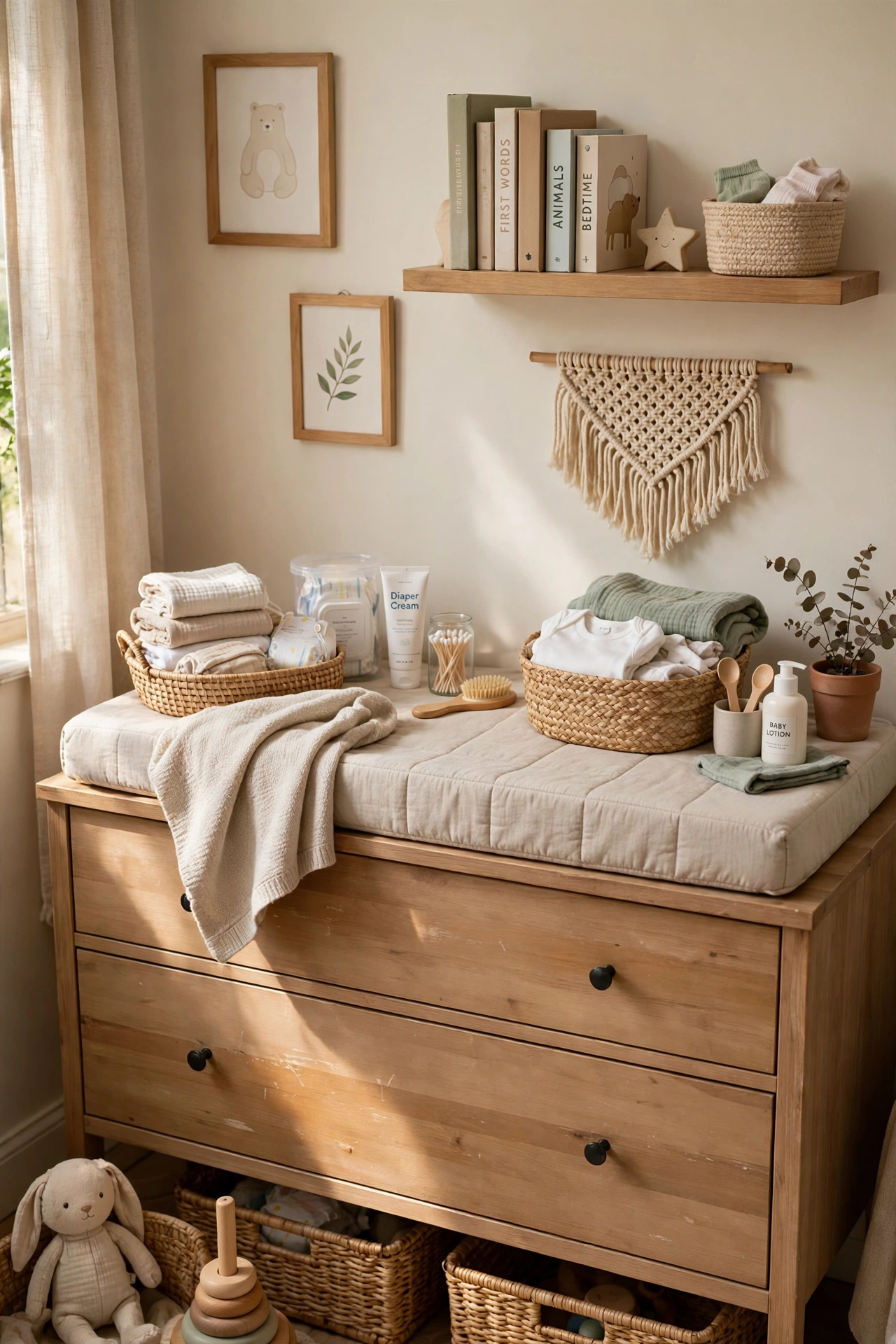
Skip the single-purpose changing table and put a contoured changing pad on top of a dresser you already own, saving money and floor space. Secure the pad with non-slip material, keep diapers and wipes in the top drawer, and you have a station that becomes regular storage later. I used our existing dresser and spent only eighteen dollars on the pad, which felt like a win. Always keep one hand on the baby during changes, since even newborns wiggle more than you expect. Avoid tall dressers without anchor straps, since climbing toddlers can tip them.
Cost: ~$18 | Time: 15 minutes
6. Soft Lamp Instead of Overhead Light
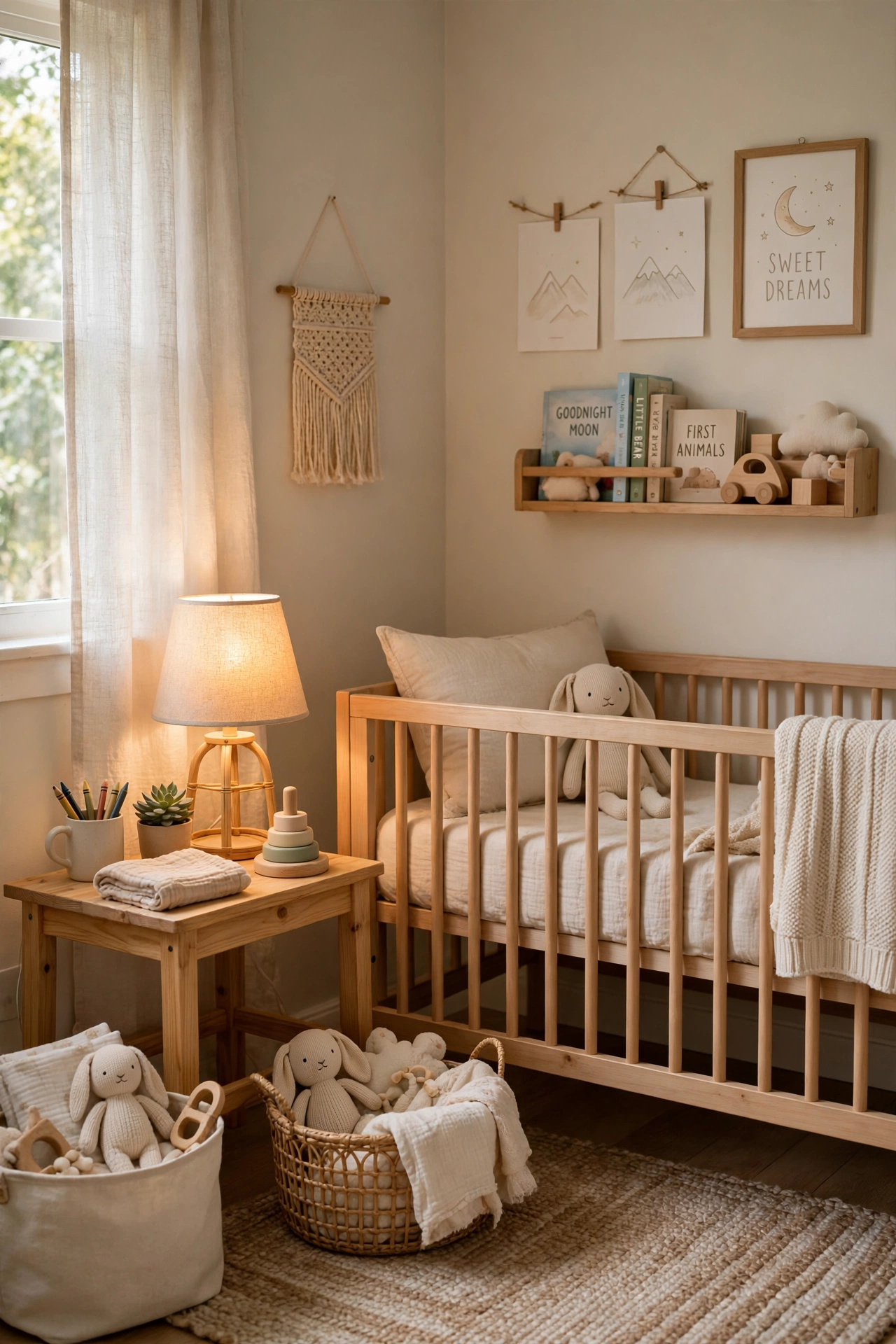
A small lamp with a warm bulb on a dimmer keeps nighttime feeds calm, since bright overhead lights wake babies fully and make resettling harder. Place the lamp across the room from the crib, use the lowest setting that lets you see, and add a timer so it switches off automatically. I used a twelve-dollar lamp with a warm bulb and our night feeds stayed drowsy and short. Avoid blue-white bulbs in the nursery, since they signal daytime to a baby’s brain. Keep cords tucked behind furniture so crawling babies cannot reach them.
Cost: ~$12 | Time: 10 minutes
7. Minimal Wall Art, One Piece Only
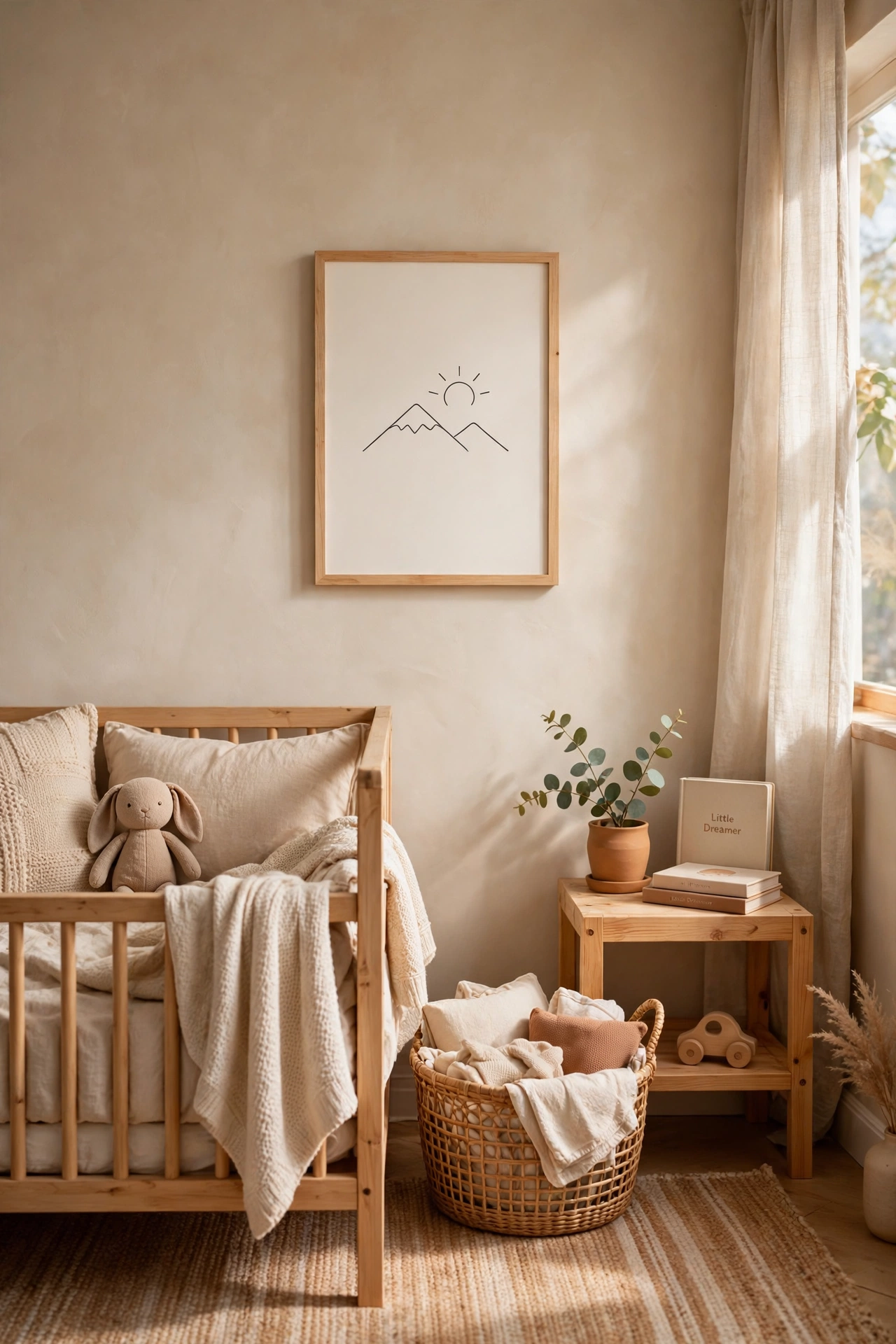
Hang one meaningful piece of art in the nursery instead of a gallery wall, and the room stays calm and uncluttered. Choose a simple print, a framed family photo, or a piece you made yourself, and hang it where you see it from the rocking chair. I hung a single watercolor a friend painted, and it became the room’s focal point without any visual noise. Keep frames lightweight and hung securely, since anything above a crib must be firmly fixed. Skip heavy framed art over the crib entirely, since falling art is a real safety risk.
Cost: ~$10 | Time: 15 minutes
8. Blackout Curtain in a Solid Color
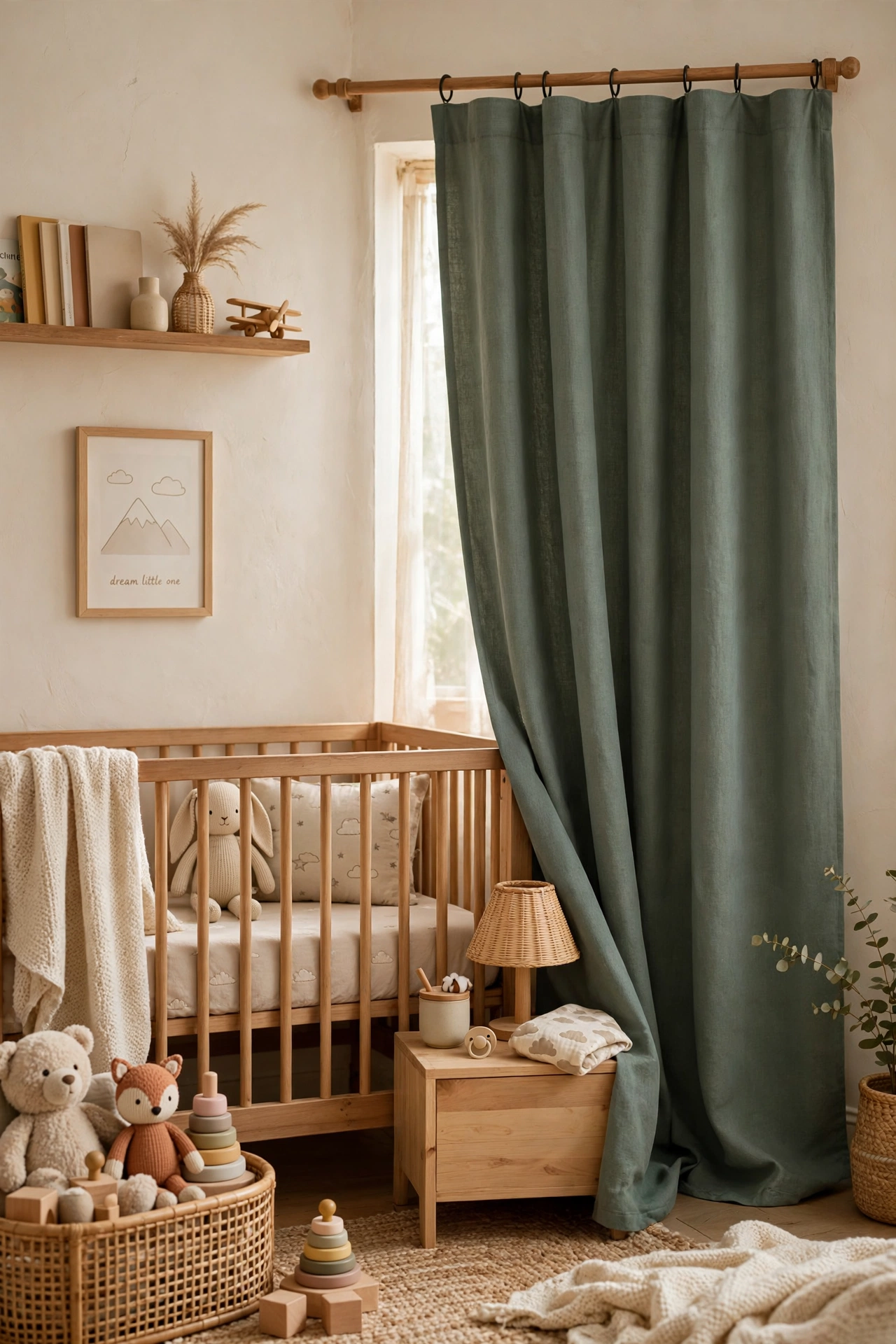
A single solid-color blackout curtain helps babies nap longer by blocking daylight, and a basic panel costs about fifteen dollars. Hang it on a simple rod, make sure it covers the full window with no light gaps at the edges, and choose a color that matches your neutral palette. I hung one panel in our nursery and nap lengths doubled within a week, which felt like magic. Use a rod that extends past the window frame so the curtain seals the sides. Avoid patterned curtains in a minimalist nursery, since they add visual busyness you are trying to avoid.
Cost: ~$15 | Time: 20 minutes
9. Floor Cushion Play Corner
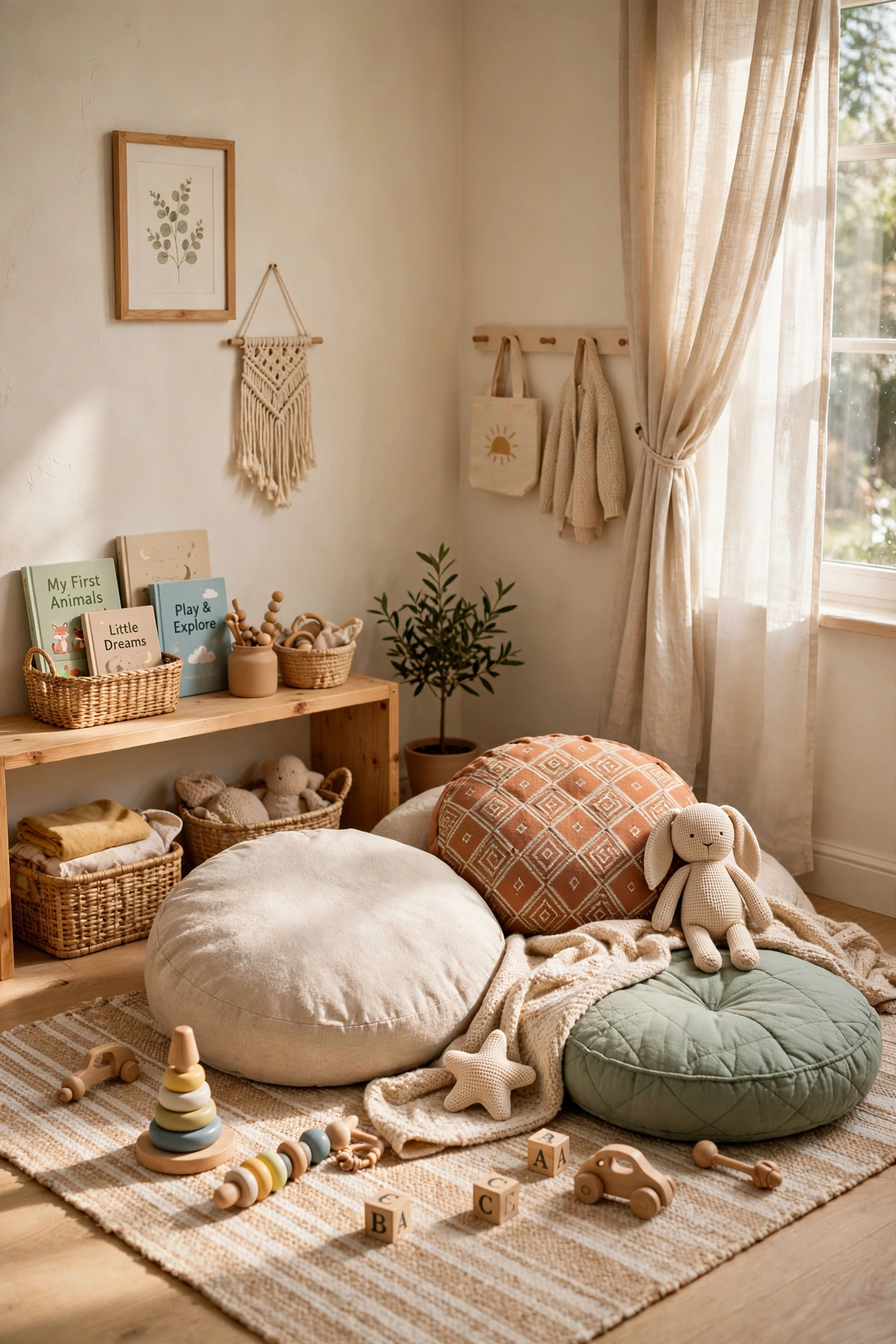
A single floor cushion and a small basket of toys create a play corner without filling the room with gear. Place the cushion in a corner, add three or four toys in the basket, and rotate them weekly so play stays fresh. I set this up for my daughter when she started sitting up, and she happily played there while I folded laundry nearby. Keep the toy count low, since too many choices overwhelm babies and scatter across the floor. Skip large activity gyms once your baby outgrows them, since they eat space for months.
Cost: ~$18 | Time: 10 minutes
10. Closet Organizer With Small Bins
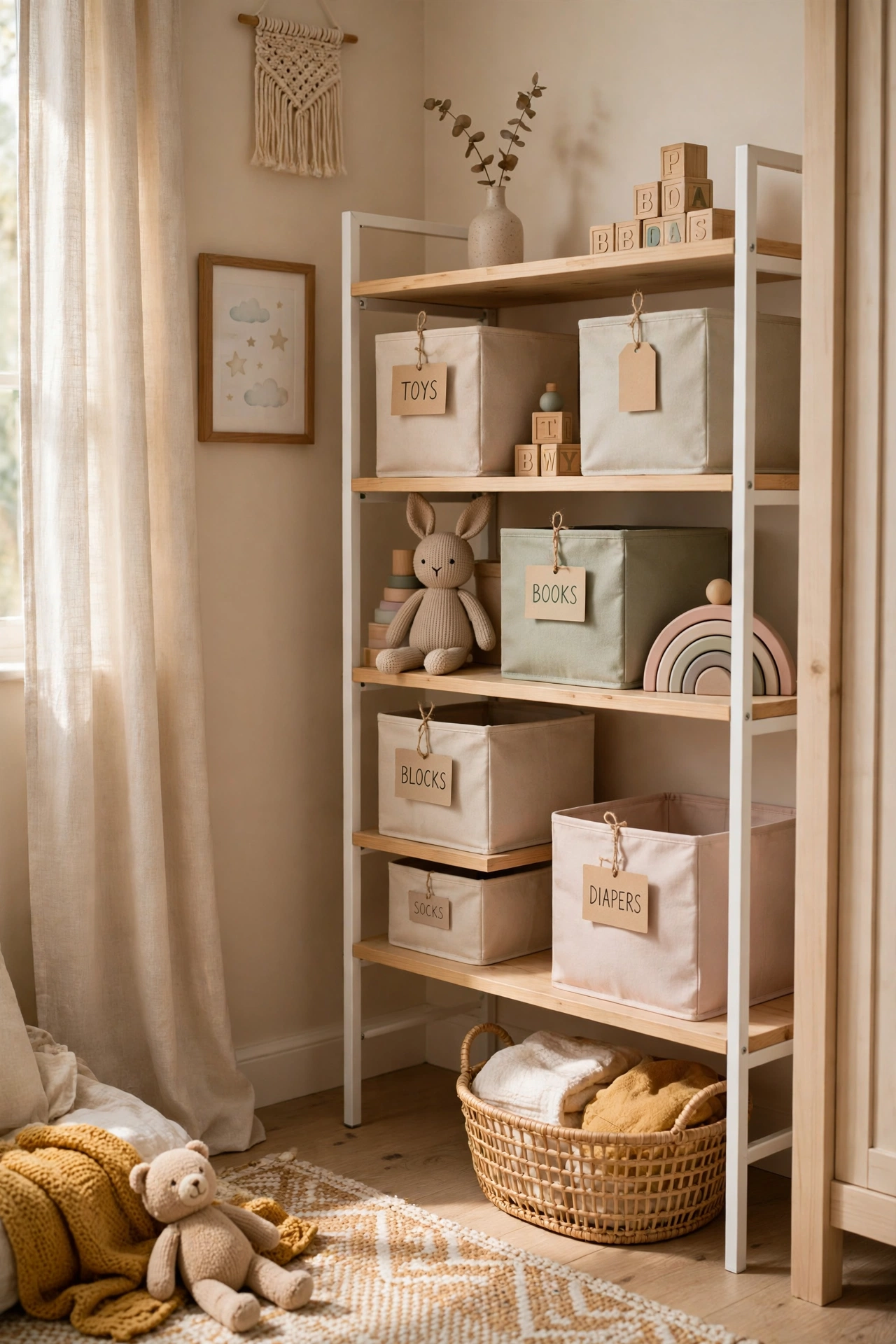
A hanging closet organizer with small bins sorts baby clothes by size, so you always grab the right outfit without digging. Hang the organizer on the closet rod, label bins by size from newborn upward, and move clothes up as your baby grows. I organized ours this way and morning dressing took two minutes instead of ten. Keep only the current size within easy reach, and store larger sizes in a labeled box on the top shelf. Avoid buying too many clothes in one size, since babies outgrow them in weeks.
Cost: ~$14 | Time: 30 minutes
11. White Noise App on an Old Phone
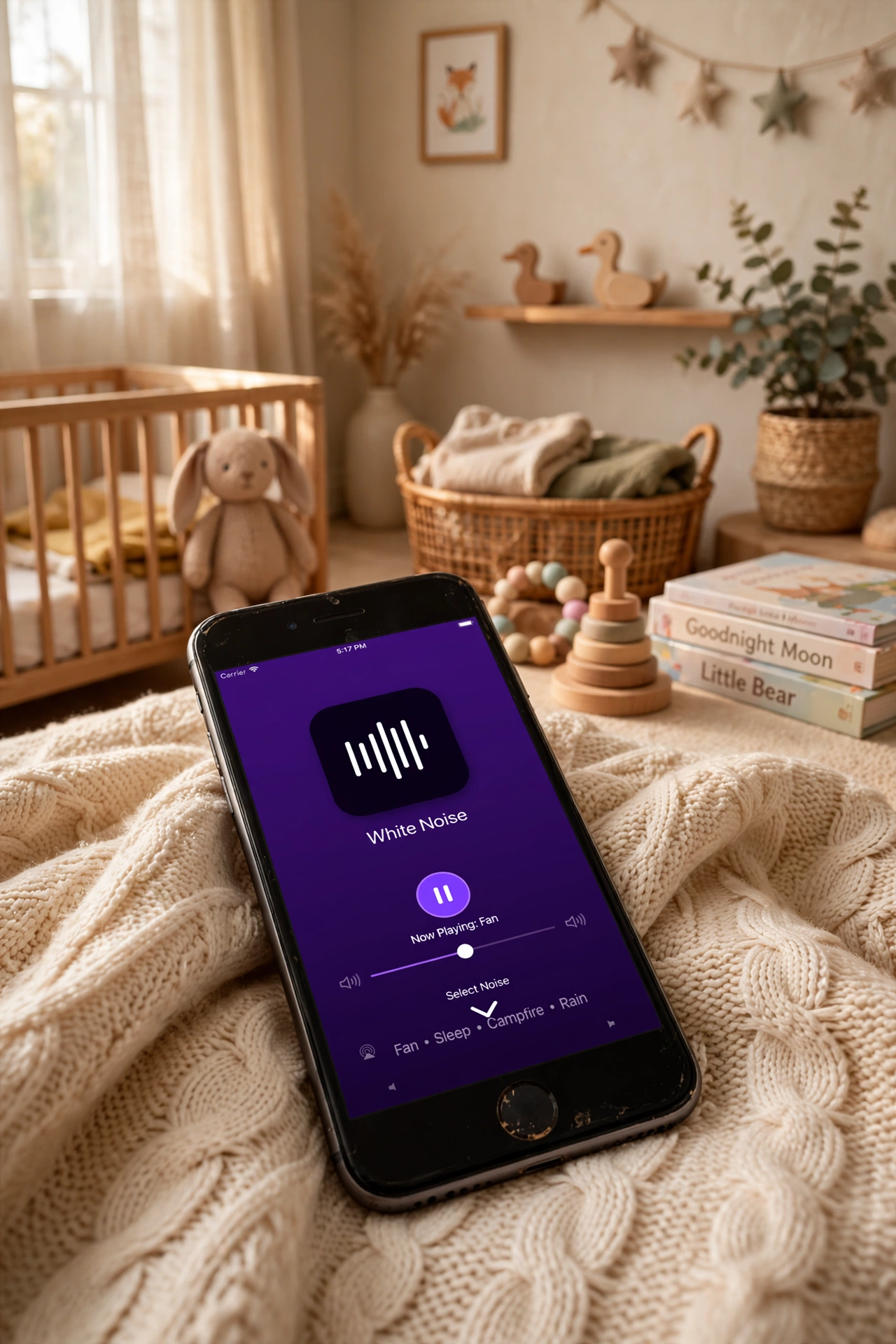
Use an old phone with a free white noise app instead of buying a sound machine, and you save twenty dollars with the same result. Place the phone across the room on a charger, choose a steady fan or rain sound, and set it to play all night. I repurposed my old phone this way and it worked perfectly through two babies. Keep the phone out of the crib and on airplane mode so calls do not interrupt sleep. Avoid placing speakers right beside the crib, since close loud sound is not safe for tiny ears.
Cost: ~$0 | Time: 10 minutes
12. Simple Bookshelf With Few Books
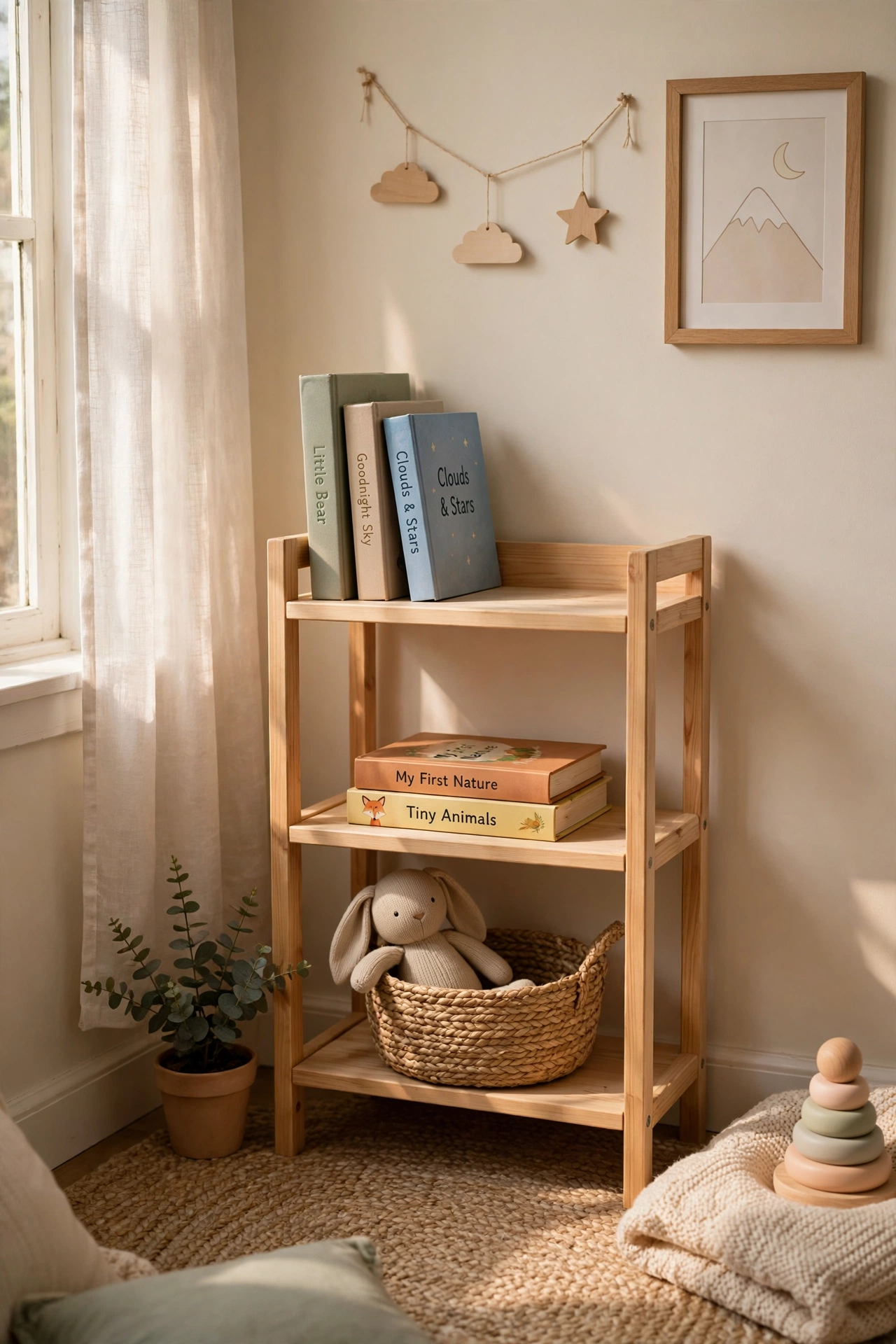
A small bookshelf holding ten to fifteen books beats a wall of shelves stuffed with toys, and it encourages reading from the start. Choose sturdy board books, display a few with covers facing out, and rotate titles monthly from a storage box. I kept a twelve-book shelf in our nursery and my kids learned to choose a story before bed without a pile of toys competing. Mount the shelf low so toddlers can reach books safely, and anchor it to the wall. Skip tall bookcases in nurseries, since climbing toddlers tip them over.
Cost: ~$20 | Time: 25 minutes
13. Washable Rug in a Calm Tone
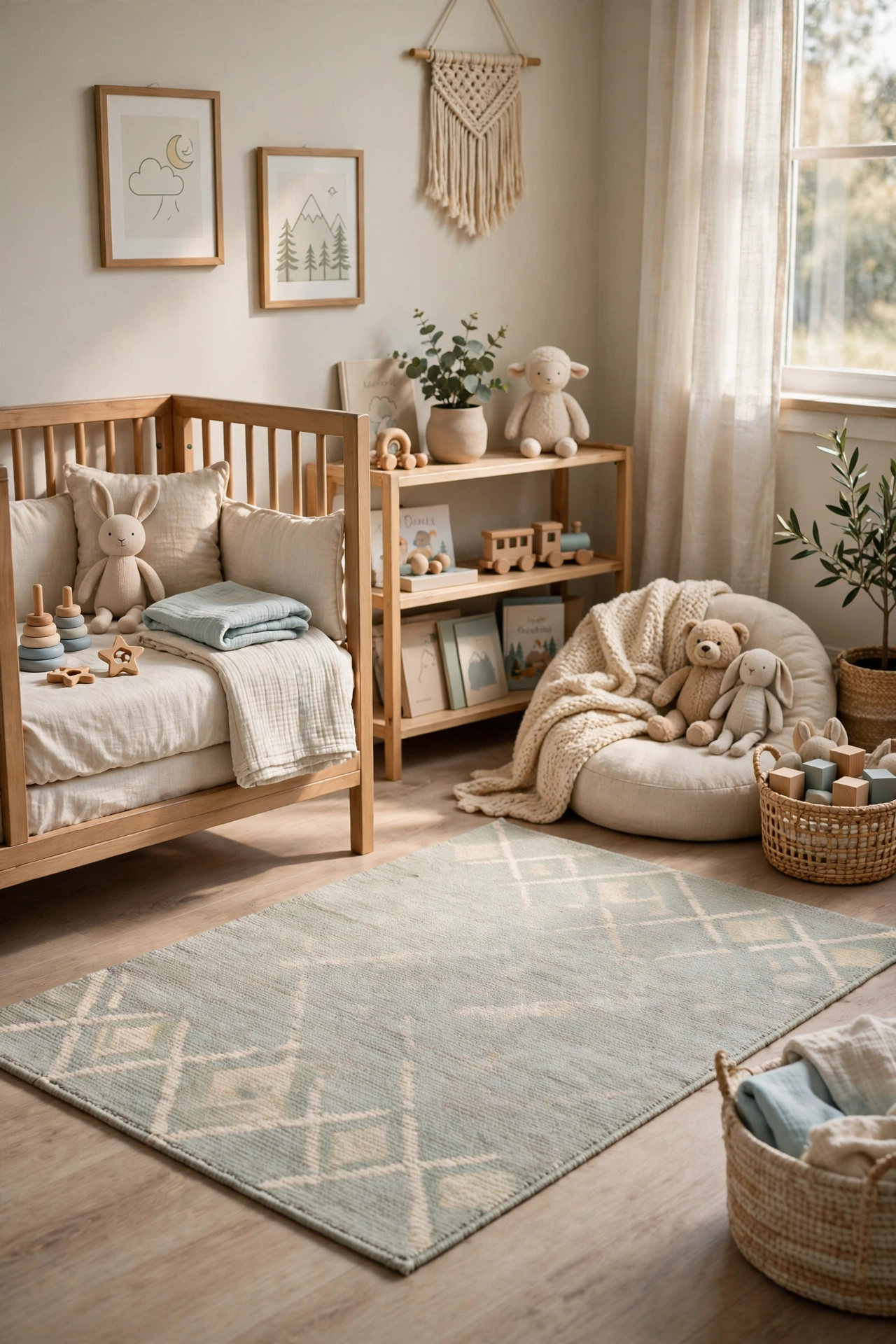
A washable rug in a calm tone softens the nursery floor and handles spit-up, diaper leaks, and snack messes without stress. Choose a machine-washable rug in cream or soft gray, sized to fit under the crib and chair area, and wash it monthly. I bought ours on clearance for thirty dollars and washed it more times than I can count. Use a non-slip pad underneath so the rug stays put on hard floors. Avoid high-pile rugs in nurseries, since they trap dust and are hard to clean properly.
Cost: ~$30 | Time: 15 minutes
14. One Growth Chart on the Wall
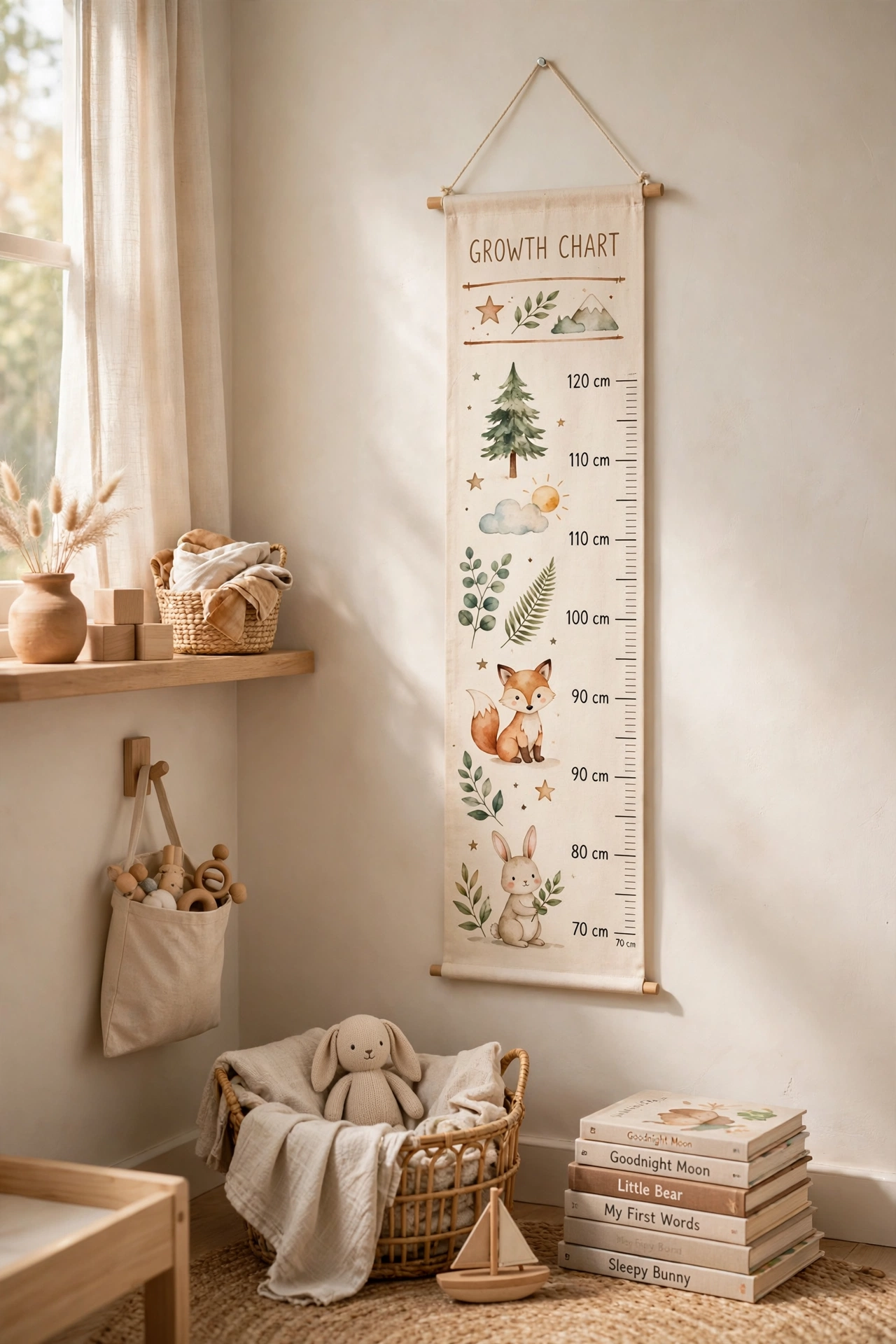
A simple wooden or fabric growth chart on the wall tracks your baby’s height without cluttering the room with decorations. Hang it on a door frame or a bare wall section, mark heights with dates, and watch it become a keepsake over the years. I hung a fabric chart in our nursery and marking milestones became a family ritual. Choose a chart that moves with you if you rent, since wall-painted charts stay behind. Skip adhesive charts on textured walls, since they peel and fall within weeks.
Cost: ~$12 | Time: 10 minutes
15. Weekly Five-Minute Nursery Tidy
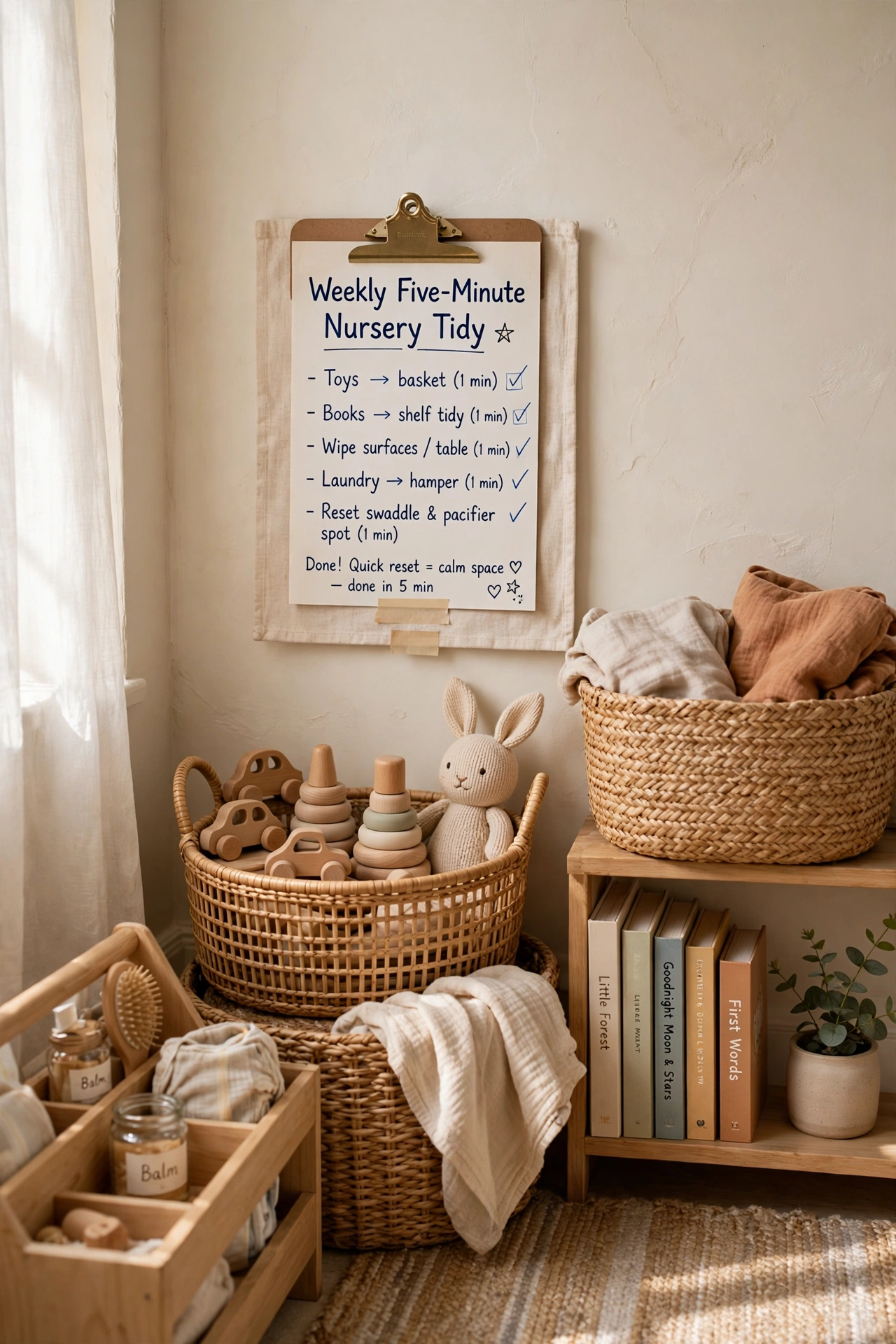
A five-minute weekly tidy keeps a minimalist nursery actually minimalist, since baby gear creeps in constantly. Set a timer, return out-of-place items to their baskets, toss outgrown clothes into a donation bag, and wipe the changing surface. I do ours every Sunday night and the room resets to calm in minutes. Keep a donation bag in the closet so outgrown items leave instead of piling up. Avoid buying new nursery gadgets on impulse, since most of them end up in the tidy pile within a month.
Cost: ~$0 | Time: 5 minutes
Frequently Asked Questions
How many items does a minimalist nursery really need?
A crib, a changing spot, a chair, storage baskets, and a light cover the essentials. Everything else is optional, and adding pieces slowly as you discover a real need keeps the room calm and your budget intact.
Is a minimalist nursery safe for babies?
Yes, and often safer, since fewer items mean fewer tip-over risks and less clutter near the crib. Keep the crib bare, anchor all furniture to the wall, and check that every item in reach is baby-safe.
Can a minimalist nursery still feel cozy?
Absolutely. Warm lighting, soft textures like a washable rug and a knit blanket, and one or two personal touches make a simple room feel warm without filling it with stuff.
Save this idea for your next weekend project.
