15 Entryway Mirror Ideas That Double the Light
If your entryway feels dark no matter how many lamps you add, the fix might not be more light at all. The best entryway mirror ideas work by catching the light you already have and throwing it back into the room, which is why a well-placed mirror can make a narrow hall feel twice as bright. I learned this the hard way in my own flat, where a mirror hung on the wrong wall did nothing, but the same mirror moved opposite the front-door glass changed the whole space overnight. Below are fifteen mirror styles that actually work in real entries, with honest costs and the mistakes I made so you can skip them.
1. Oversized Round Mirror Over a Console
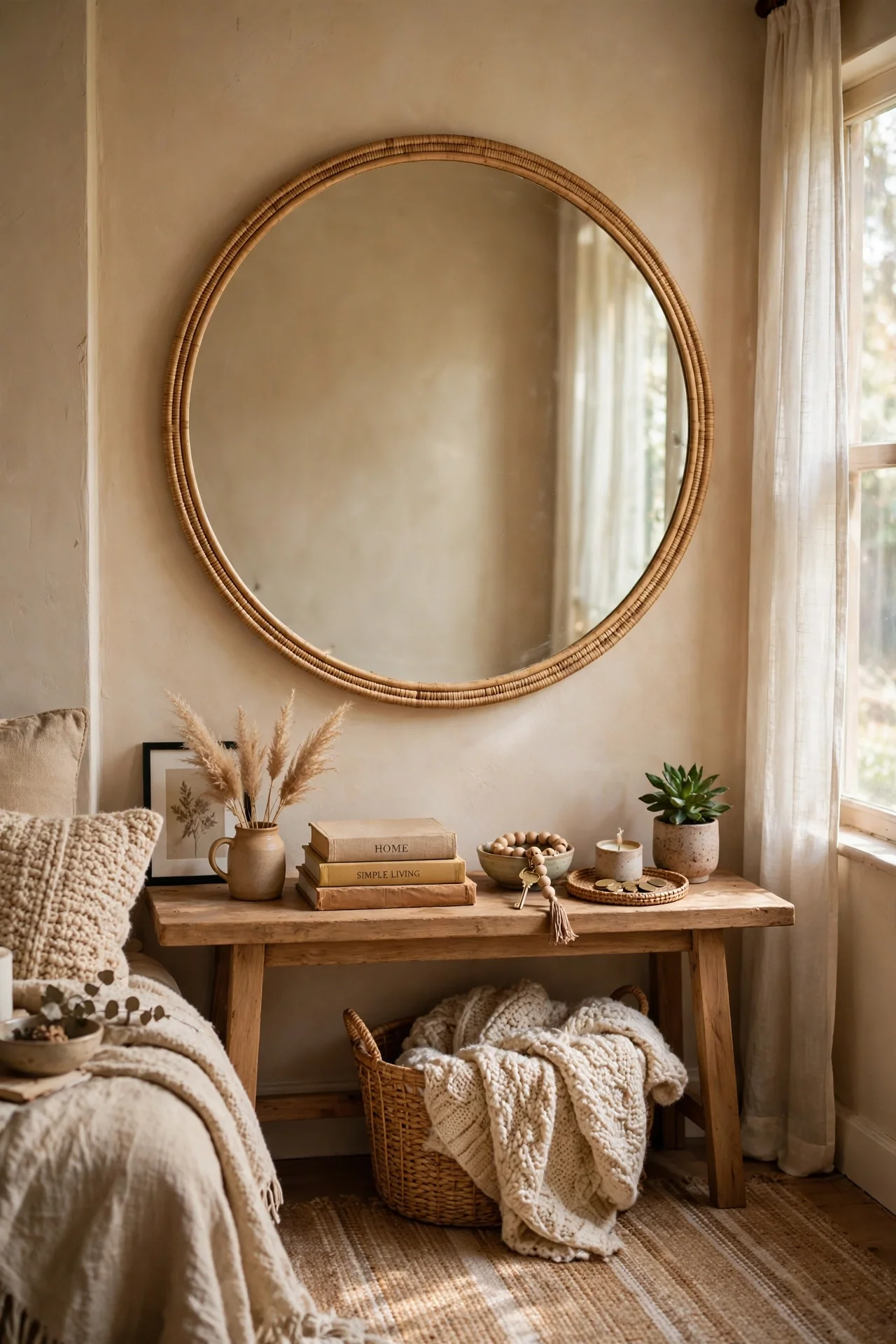
An oversized round mirror over a console is the classic entryway move for a reason: the big circle softens all the straight lines of the door frame and furniture, and the size means it reflects a real chunk of the room instead of a sliver. Hang it so its centre sits at about eye level, roughly 150 centimetres from the floor, and keep the console styling simple underneath so the mirror stays the star. Measure twice before you drill, because a heavy round mirror needs a proper wall anchor, and I once watched a cheap hook slowly bend under the weight over a weekend.
- Buy: a mirror two-thirds the width of your console.
- Skip: heavy ornate frames on plasterboard without anchors.
Cost: ~$38 | Time: 25 minutes
2. Arched Floor Mirror Leaning by the Door
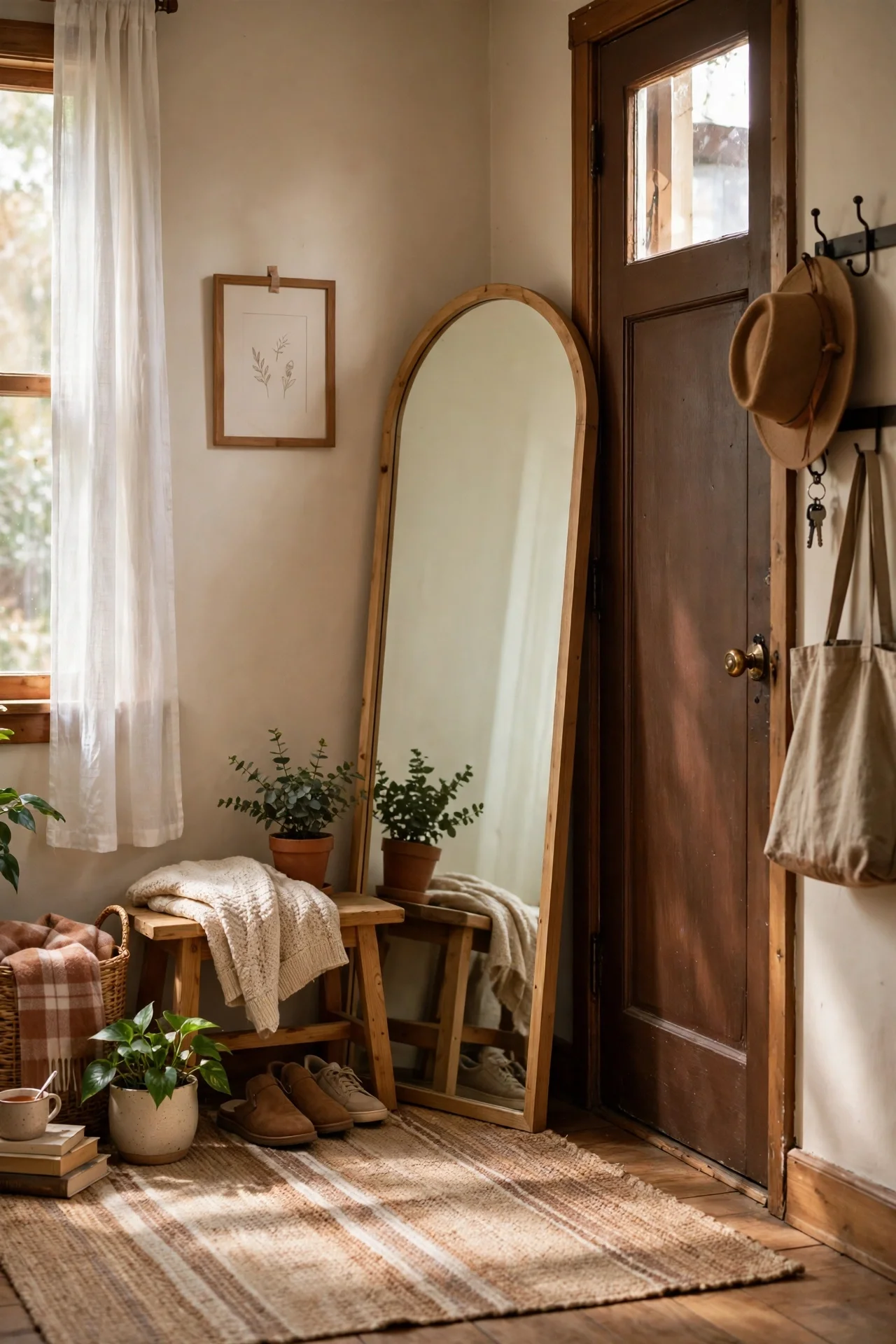
A tall arched mirror leaning against the wall gives you a full-length view without a single screw, which makes it perfect for renters and for anyone who rearranges furniture as often as I do. Lean it at a slight angle against a stable wall, never against a door that moves, and anchor the top to the wall with a discreet strap if you have kids or pets. The arch shape draws the eye upward, so low ceilings feel taller, and the full reflection bounces daylight deep into the hall. Place a small plant or basket beside it so it looks styled rather than just propped there.
- Buy: a mirror with a sturdy frame that stands steady on its own.
- Skip: leaning it on uneven floors or wobbly skirting boards.
Cost: ~$55 | Time: 15 minutes
3. Pair of Matching Rectangular Mirrors
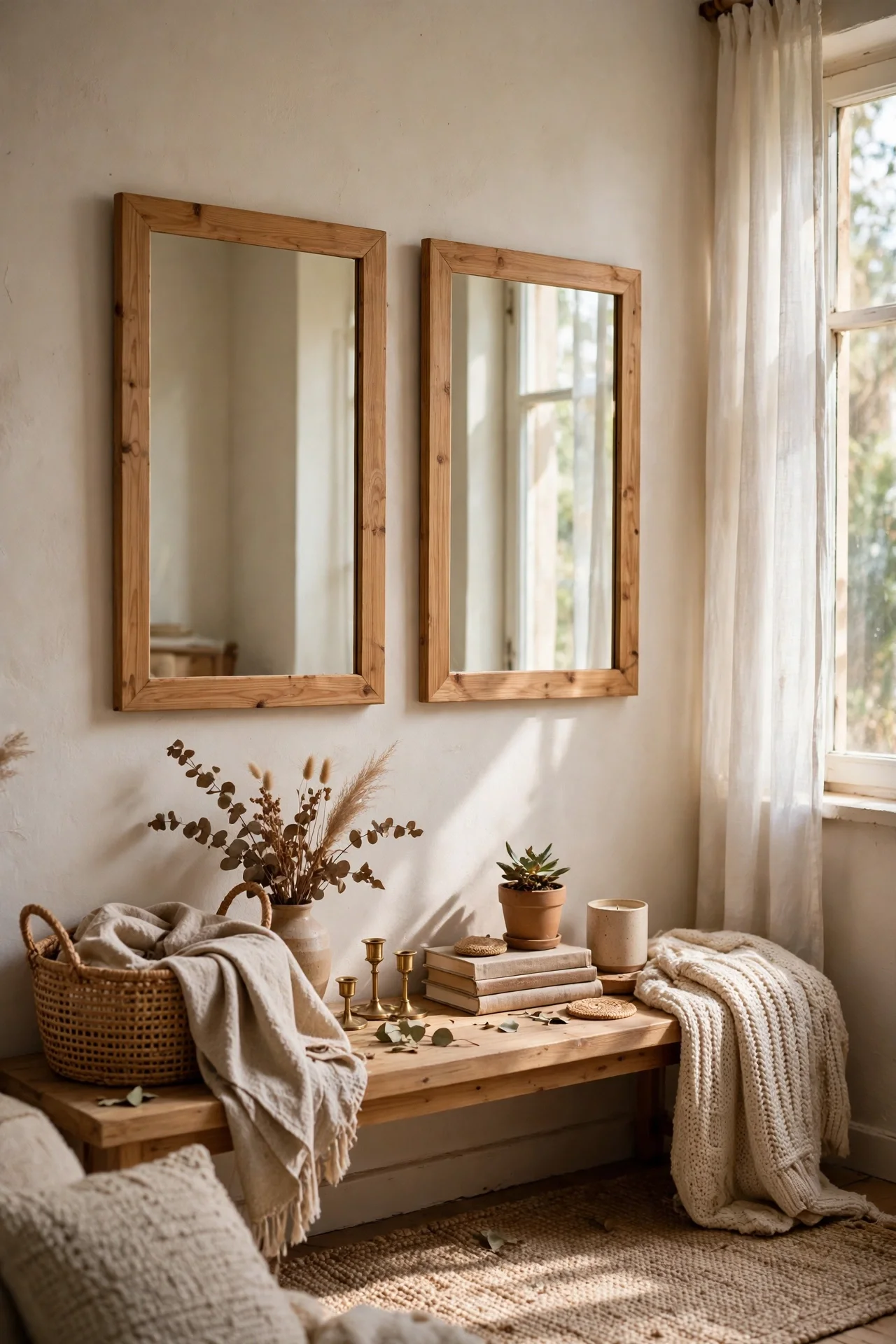
Two matching rectangular mirrors hung side by side bring a calm, symmetrical feel to an entryway, which works beautifully above a longer console or bench. Space them about ten centimetres apart and align their tops exactly, using a spirit level across both, since even a small tilt is obvious when mirrors sit together. The pair reflects light from two angles at once, so the hall feels brighter than one mirror alone would manage. I used this trick in a hallway with no windows at all, and visitors kept asking if I had added a new light fitting.
- Buy: identical mirrors, not just similar ones, for true symmetry.
- Skip: hanging them at different heights, which ruins the effect.
Cost: ~$44 | Time: 35 minutes
4. Sunburst Mirror as a Focal Point
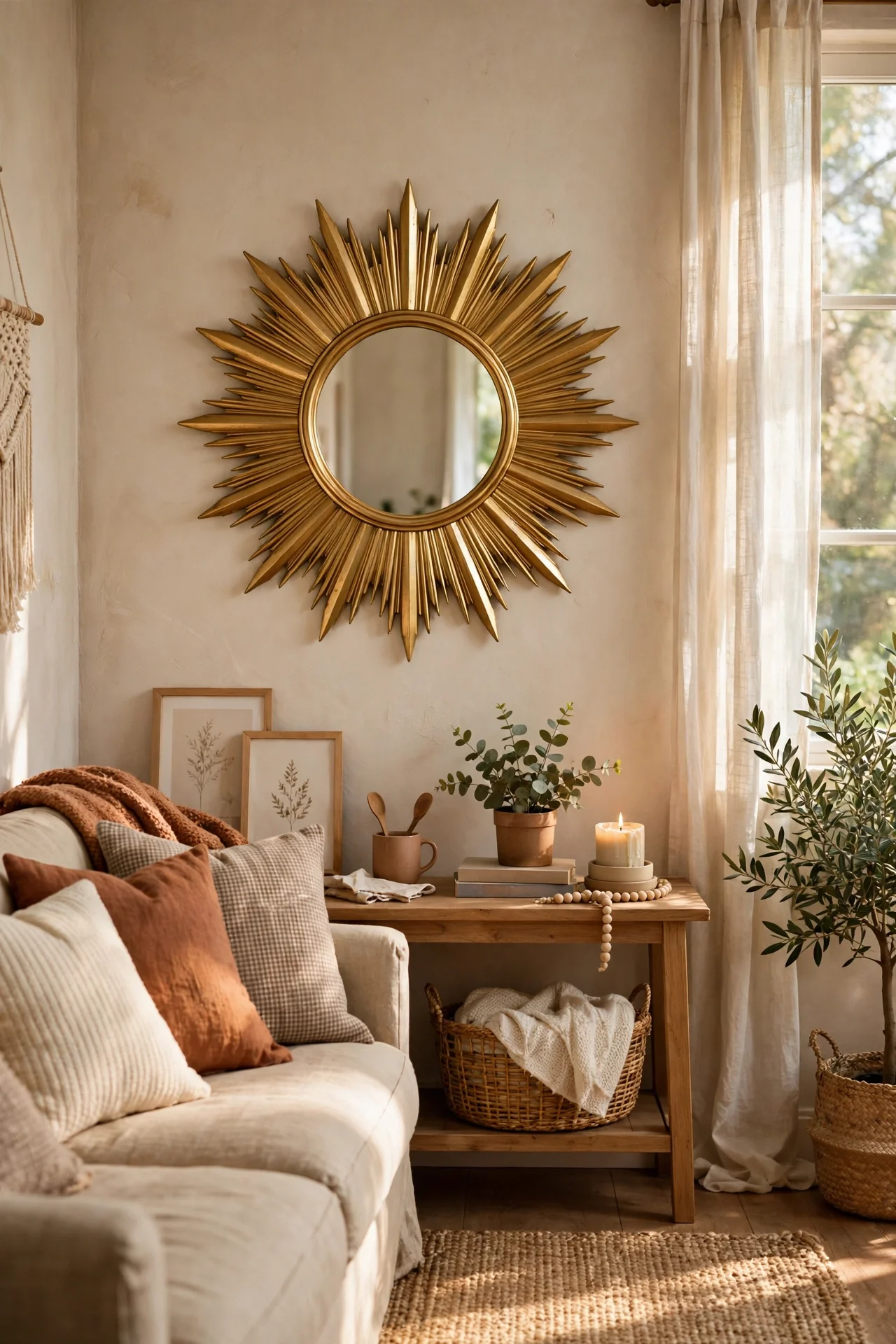
A sunburst mirror turns a plain entry wall into a talking point, because the rays catch light from every direction and throw little glints around the room all day. Hang it alone on the wall your eye hits first when you walk in, and keep everything else nearby very quiet, one small vase or a single hook, so the mirror does all the work. Choose a size that fits the wall with breathing room around it, not one that crowds the door frame. For more budget entry styling, see also (see also: 17-entryway-decor-ideas-under-50-that-feel-warm-and-welcoming). I bought a gold sunburst on sale and it is still the first thing guests mention.
- Buy: a sunburst sized to leave at least 15 centimetres of wall around it.
- Skip: pairing it with busy wallpaper, which fights the rays.
Cost: ~$32 | Time: 20 minutes
5. Mirrored Console Table for Extra Glow
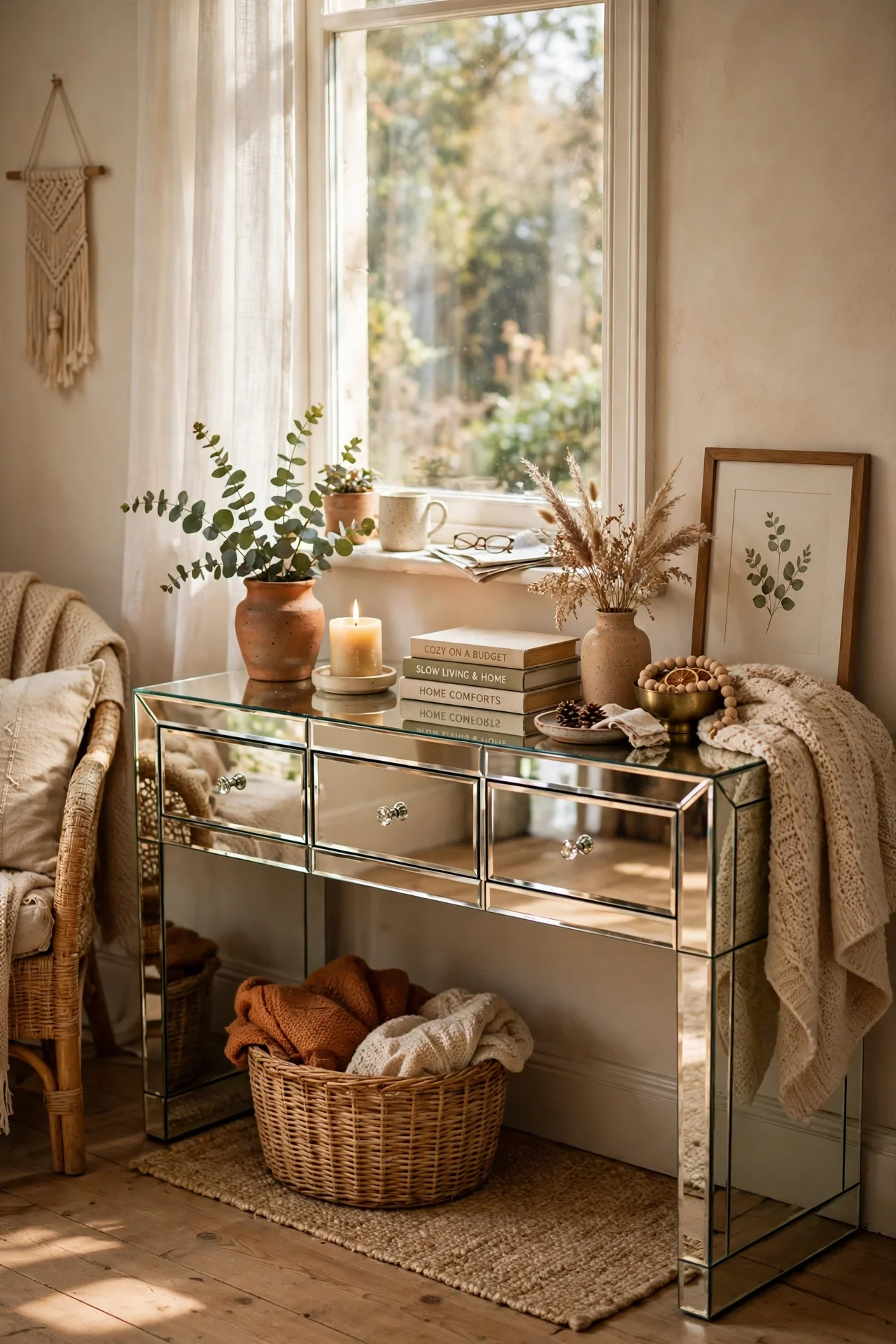
A mirrored console table doubles the light in a different way, by reflecting from below instead of from the wall. The mirrored top and sides catch lamplight and daylight and scatter it softly, which makes a dark corner feel brighter even before you hang anything above it. Style it lightly, because every object on a mirrored surface shows twice, so one tray, one small plant, and your keys are plenty. Wipe it with a microfibre cloth once a week, since fingerprints show up fast on mirror, and I keep a cloth in the console drawer for that exact reason.
- Buy: a console with mirrored panels, not full glass, for durability.
- Skip: overloading the top, which doubles the clutter too.
Cost: ~$68 | Time: 40 minutes
6. Gallery of Small Round Mirrors
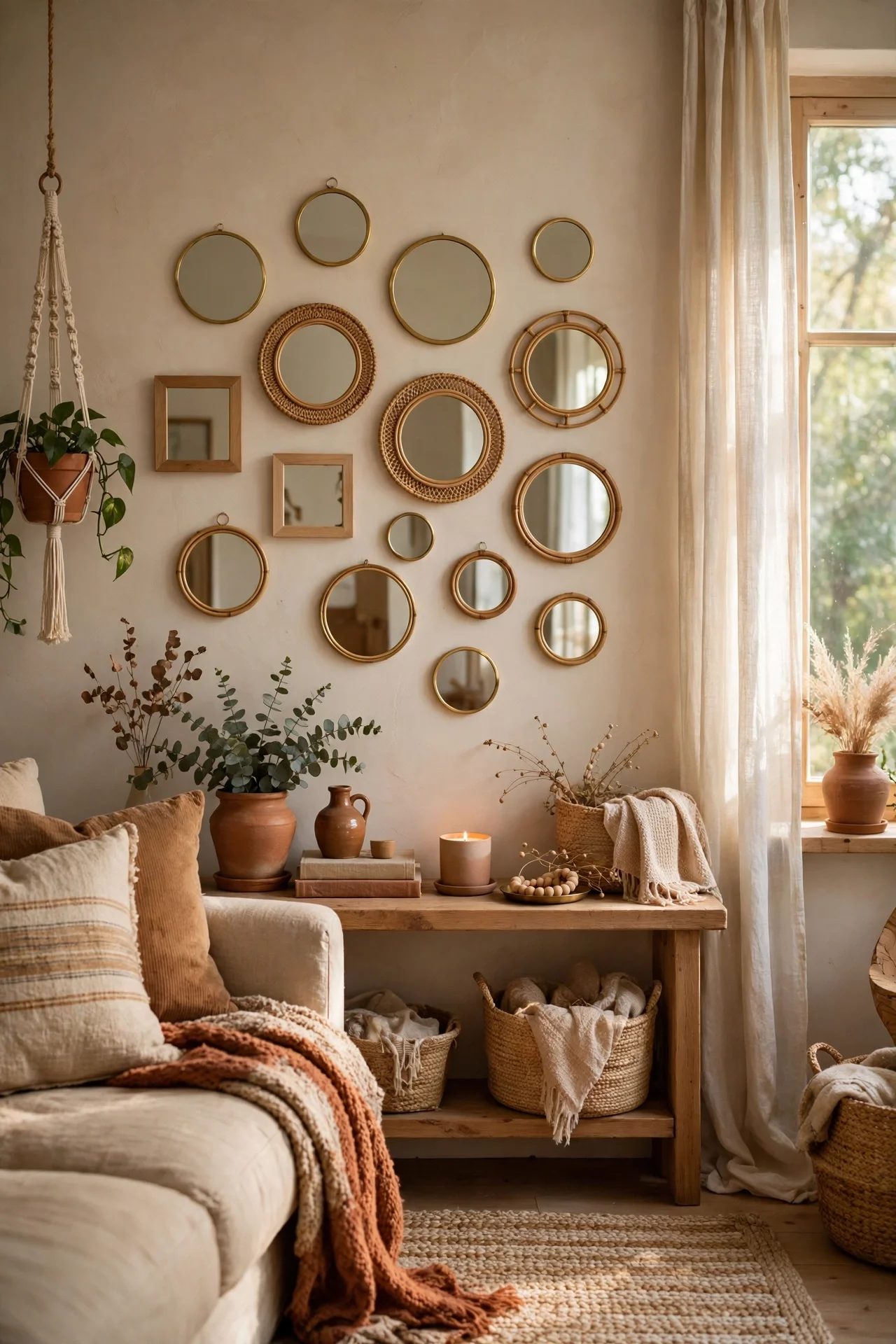
A gallery of small round mirrors works like a piece of art that also happens to brighten the room, and it suits narrow walls where one big mirror would overwhelm the space. Gather five to seven mirrors in mixed sizes but one finish, brass or black, and lay the arrangement on the floor first to get the spacing right. Hang the largest one slightly off-centre, then build outward with gaps of about eight centimetres between mirrors. The scattered reflections catch light from different angles, so the wall sparkles gently as you walk past, and I love how it changes through the day.
- Buy: a set of small mirrors in one finish for a pulled-together look.
- Skip: mixing gold, silver, and black frames in one group.
Cost: ~$36 | Time: 45 minutes
7. Antique Gold Frame Mirror for Warmth
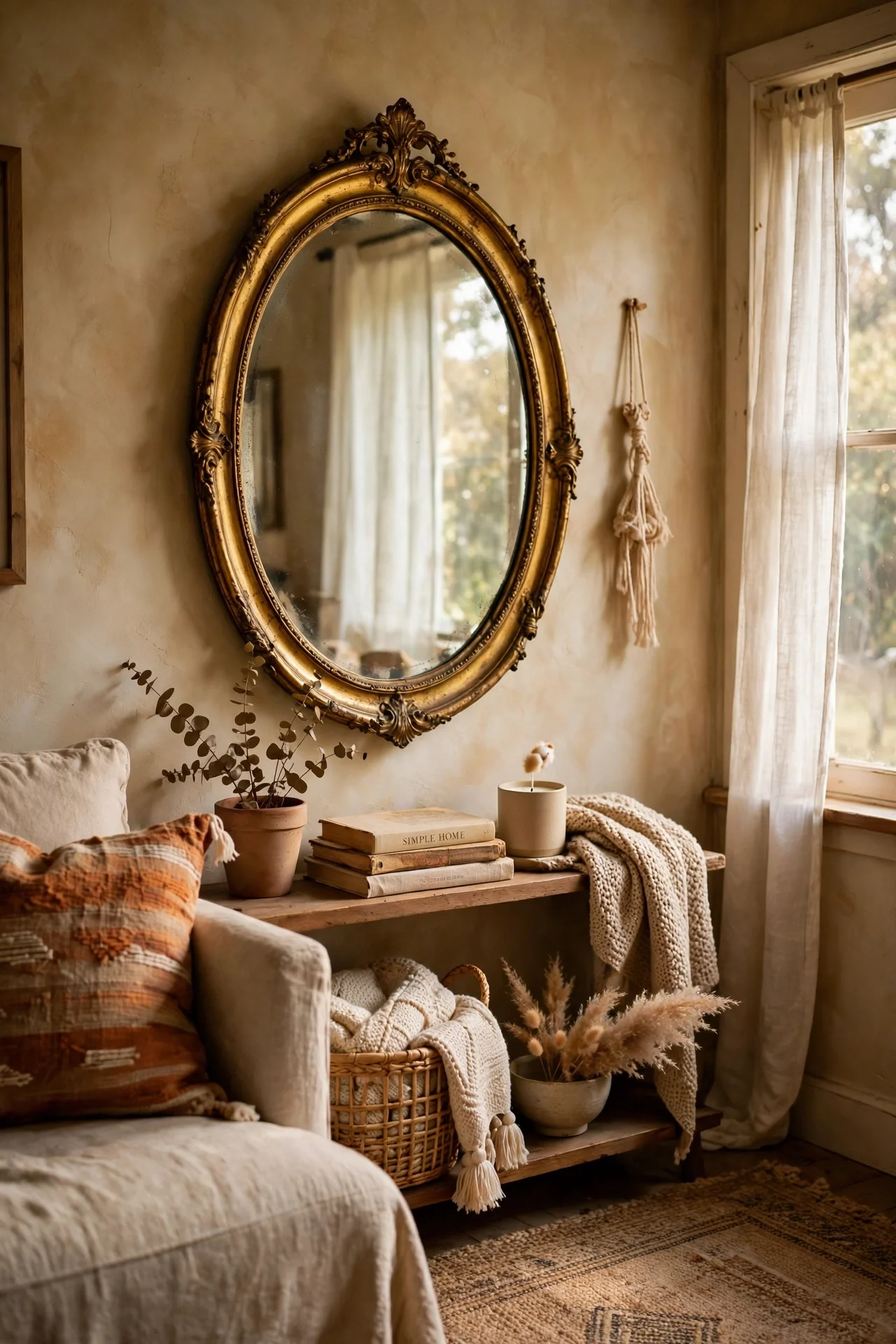
An antique gold frame adds warmth that a plain modern mirror cannot, especially in an entryway painted in cool whites or greys. Hunt thrift shops and online marketplaces for a solid frame with a little wear, since genuine patina looks far better than shiny new gold paint, and clean the glass properly before you hang it. Pair it with warm-toned wood and a cream runner so the gold feels intentional rather than random. I found mine for a few pounds with a cracked corner, turned the damaged side toward the wall, and nobody has ever noticed.
- Buy: a real wood frame with aged gold, even if it needs a clean.
- Skip: plastic gold frames, which often look cheap up close.
Cost: ~$28 | Time: 30 minutes
8. Full-Length Mirror Beside the Coat Hooks
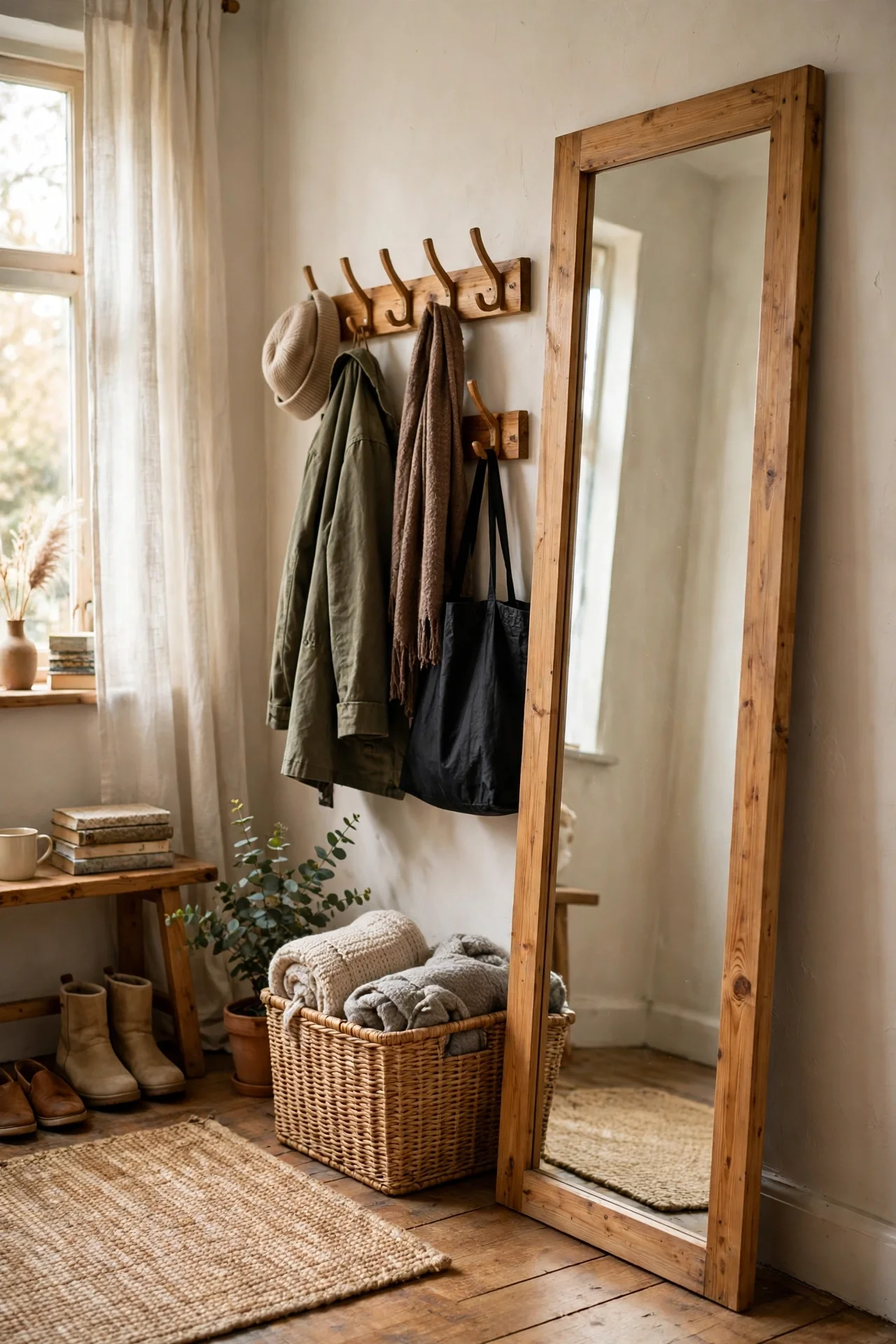
A full-length mirror beside the coat hooks is the most practical mirror in this whole list, because it gives you a last look before you leave the house. Mount it on the wall next to the hooks, not behind the door, at a height where you can see yourself from head to toe, and keep the hooks tidy so the reflection stays calm. The tall glass also stretches the wall visually, making a short hall feel longer, and it bounces light from the door glass straight back at you. Mine has saved me from leaving the house with a coat button undone more times than I will admit.
- Buy: a mirror at least 120 centimetres tall for a true full-length view.
- Skip: hanging it where the door swings across it.
Cost: ~$42 | Time: 25 minutes
9. Mirror Tiles on a Narrow Wall
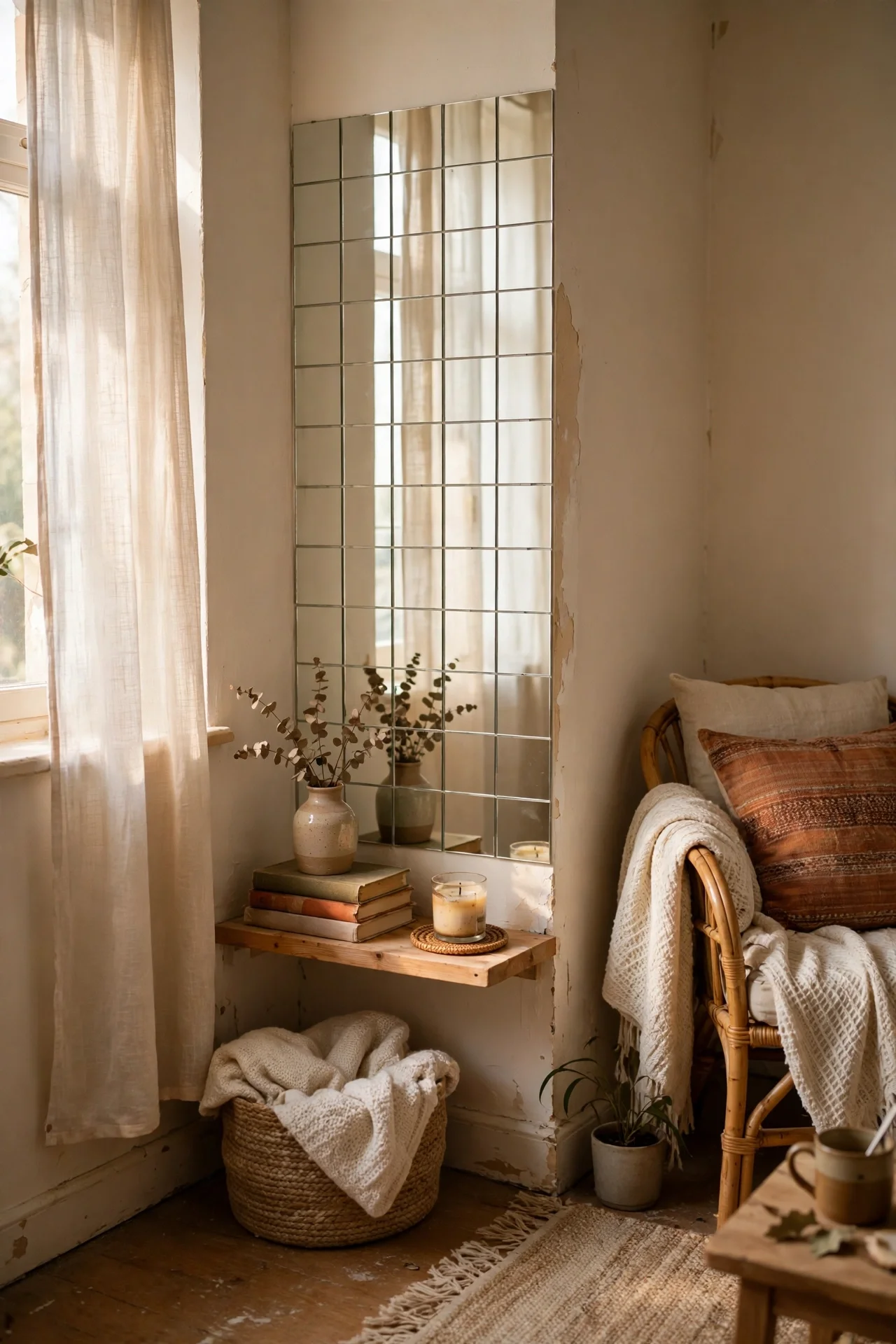
Mirror tiles are the budget answer for a narrow wall that needs light but cannot take a heavy framed mirror. Stick lightweight acrylic or glass tiles in a grid, using a level and spacers for even gaps, and cover the full height of the wall for the biggest brightening effect. The grid pattern reads as intentional design rather than a cheap fix, especially when the tiles are all the same size. Press each tile firmly and leave the adhesive to cure overnight before cleaning. I tiled a dark stairwell wall this way and the difference at night, with one small lamp on, genuinely surprised me.
- Buy: lightweight tiles with strong adhesive backing.
- Skip: cheap peel-and-stick tiles that warp in steamy halls.
Cost: ~$24 | Time: 60 minutes
10. Window-Pane Mirror Opposite a Window
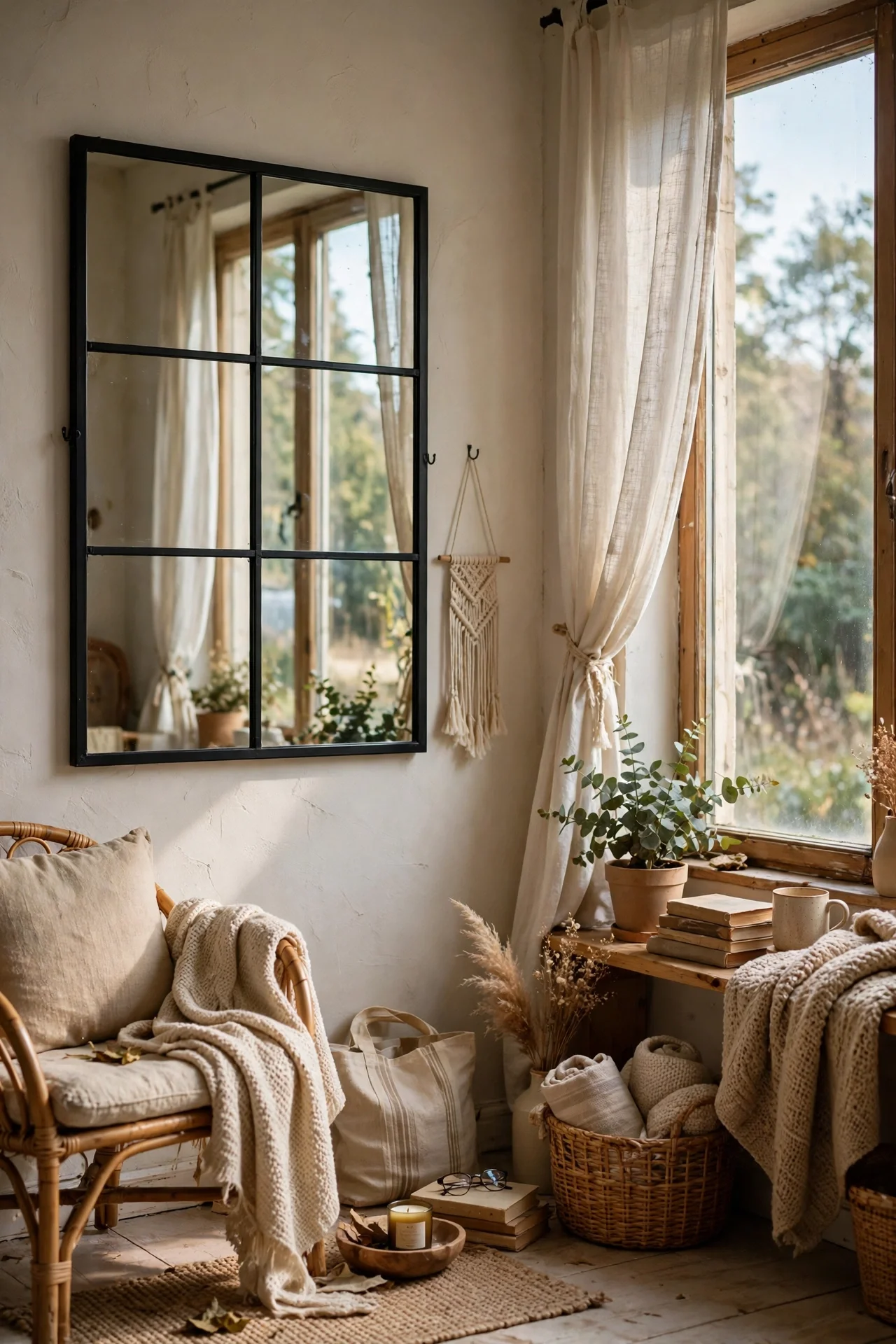
A window-pane mirror hung opposite a real window is the single best light-doubling trick I know, because it reads as a second window and reflects the actual view. Position it directly across from the window, or on the adjacent wall if the opposite wall is taken, and align its height with the real window for a convincing effect. The divided panes break up the reflection so it feels like architecture rather than a flat sheet of glass. For more small-entry ideas, see also (see also: 19-renter-friendly-entryway-ideas-on-a-budget). My hallway has no window at all, so I hung one opposite the glass front door instead, and it works just as well.
- Buy: a window-pane mirror close in size to your real window.
- Skip: hanging it where it reflects a blank wall or clutter.
Cost: ~$46 | Time: 30 minutes
11. Beveled Edge Mirror for a Polished Look
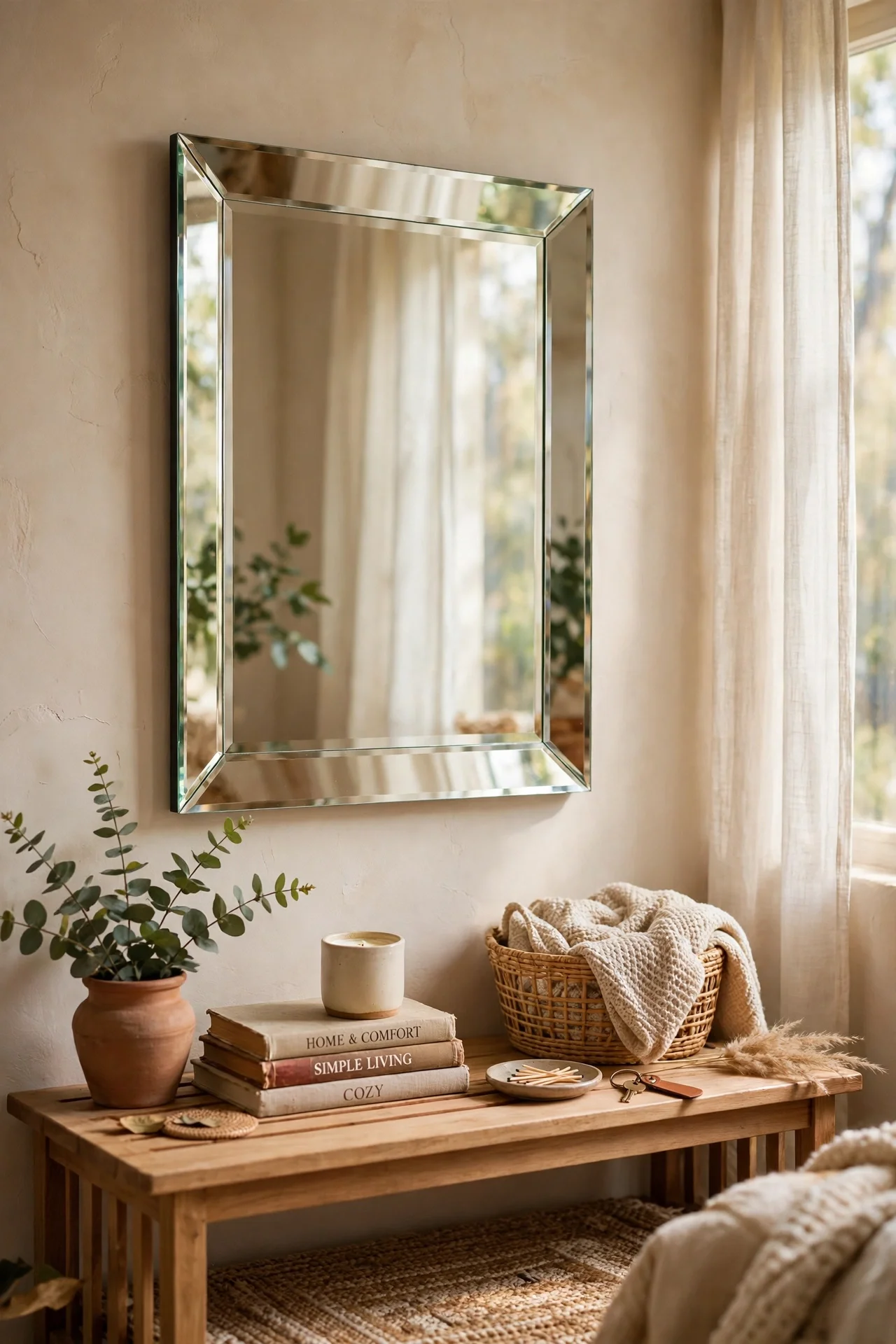
A beveled edge mirror looks polished without a frame at all, because the angled glass edge catches light and creates a subtle glowing border around the reflection. Hang a frameless beveled mirror above a simple console in a modern entryway, where the clean edge suits minimal styling and pale walls. Keep the wall behind it plain, since any pattern competes with the bevel detail, and clean the edges gently with a soft cloth. I chose one for a tiny city flat entry and it made the space feel finished in a way a basic flat mirror never had.
- Buy: a beveled mirror with a wide bevel for visible sparkle.
- Skip: busy walls behind it, which hide the edge detail.
Cost: ~$34 | Time: 25 minutes
12. Rustic Wood Frame Mirror for Texture
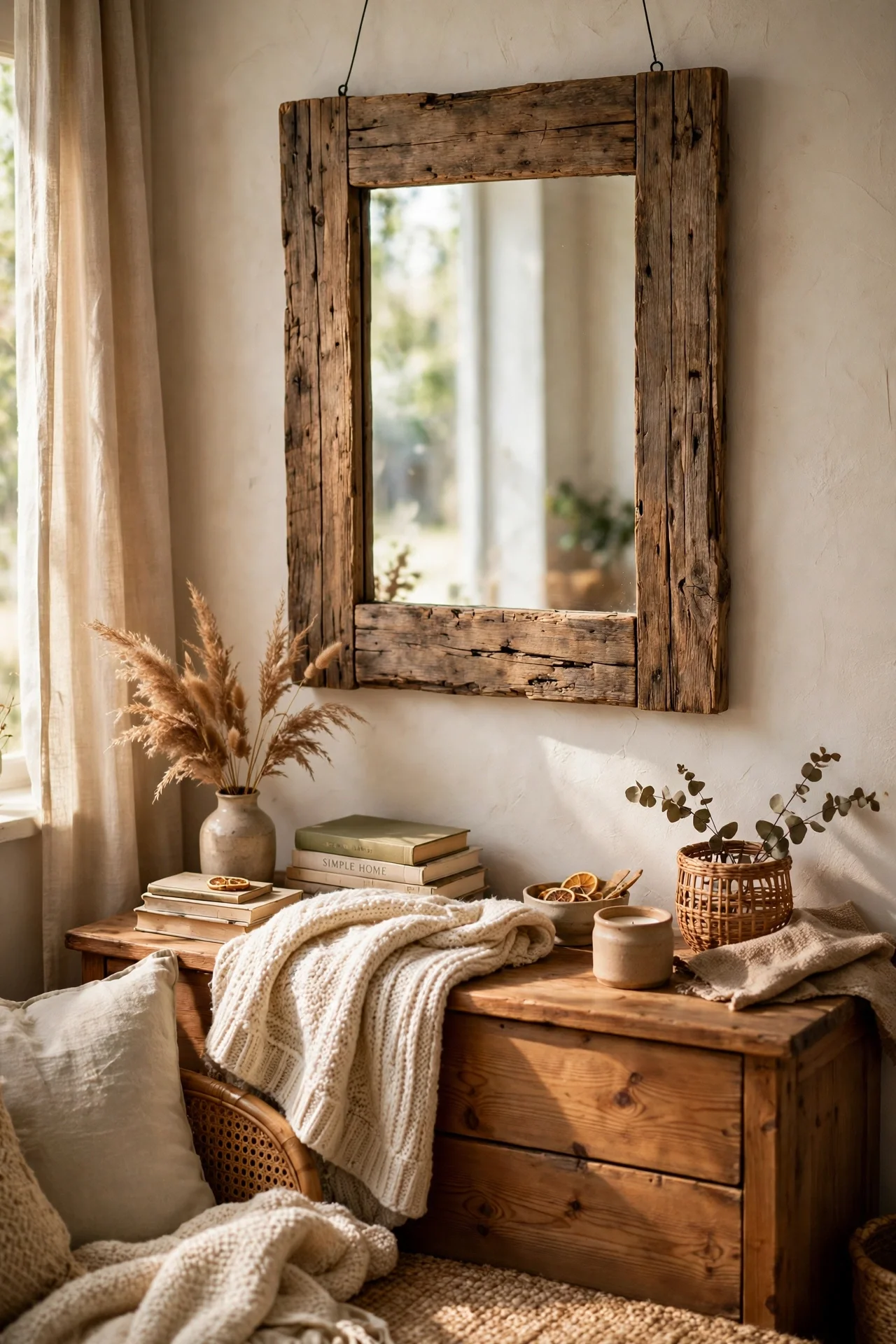
A rustic wood frame brings texture into an entryway that might otherwise feel flat and new, and it pairs beautifully with woven baskets and natural rugs. Look for reclaimed-look wood with visible grain, or make one by framing a plain mirror with inexpensive barn-wood trim from a hardware store. Hang it above a wooden bench or console so the wood tones echo each other, and add one green plant nearby to complete the natural feel. I built my frame in an afternoon with pre-cut trim and wood glue, and it still gets compliments years later.
- Buy: wood trim and a plain mirror if you want to build your own.
- Skip: dark stained wood in an already dark hall.
Cost: ~$30 | Time: 50 minutes
13. Mirror with a Shelf for Keys and Plants
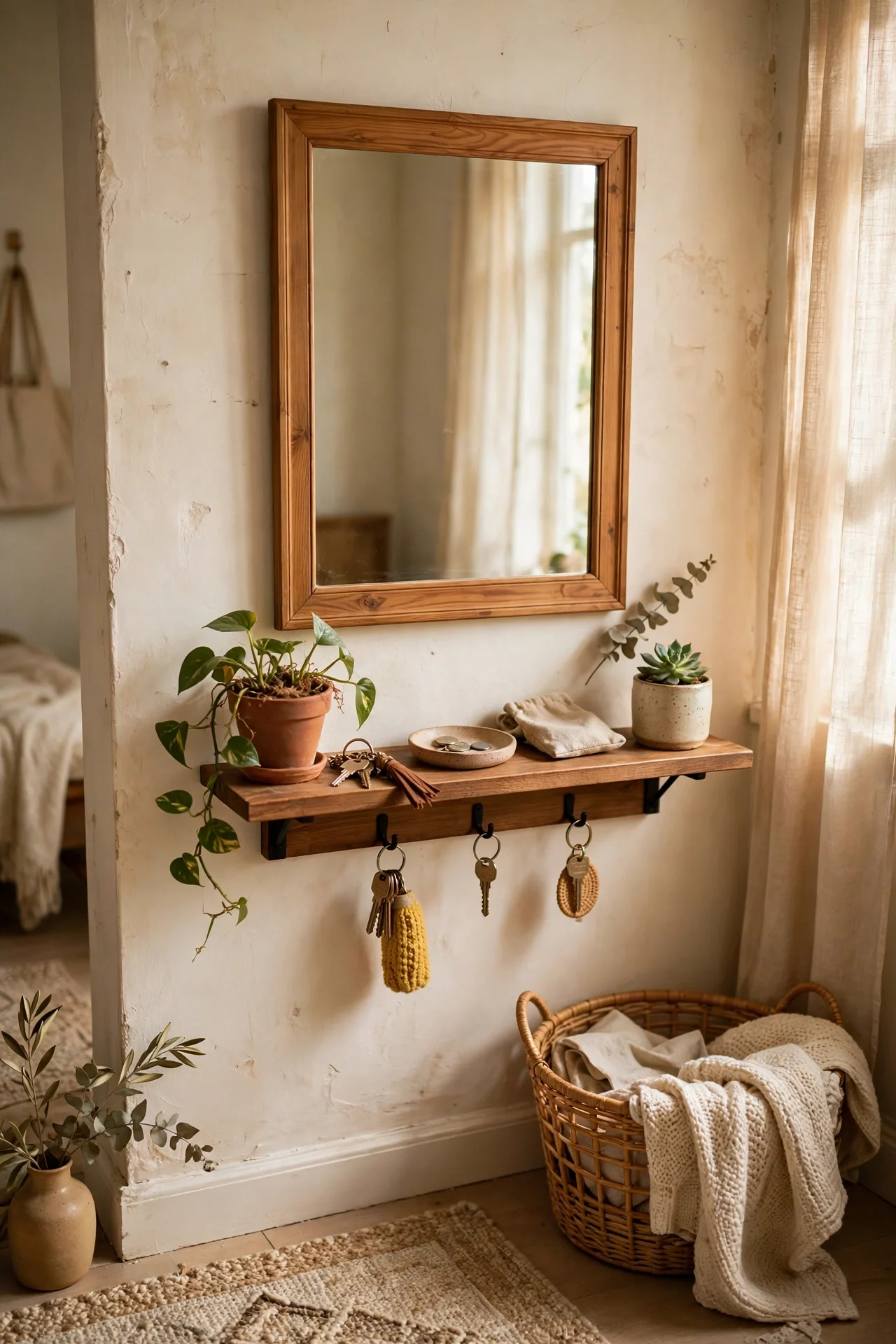
A mirror with a built-in shelf solves two entryway problems at once, giving you a reflection and a landing spot for keys, sunglasses, and a small plant. Mount it at a height where the shelf sits just below shoulder level, so you can drop things without thinking, and keep the shelf to three items maximum. The shelf also gives you a place for a tiny trailing plant, whose leaves soften the mirror edge beautifully. I keep my key bowl on mine and a pothos cutting in a jar, and the whole leaving-the-house routine now happens in one tidy spot.
- Buy: a mirror shelf rated for the weight you plan to put on it.
- Skip: overloading the shelf, which makes the mirror feel cluttered.
Cost: ~$26 | Time: 25 minutes
14. Black Metal Frame Mirror for Contrast
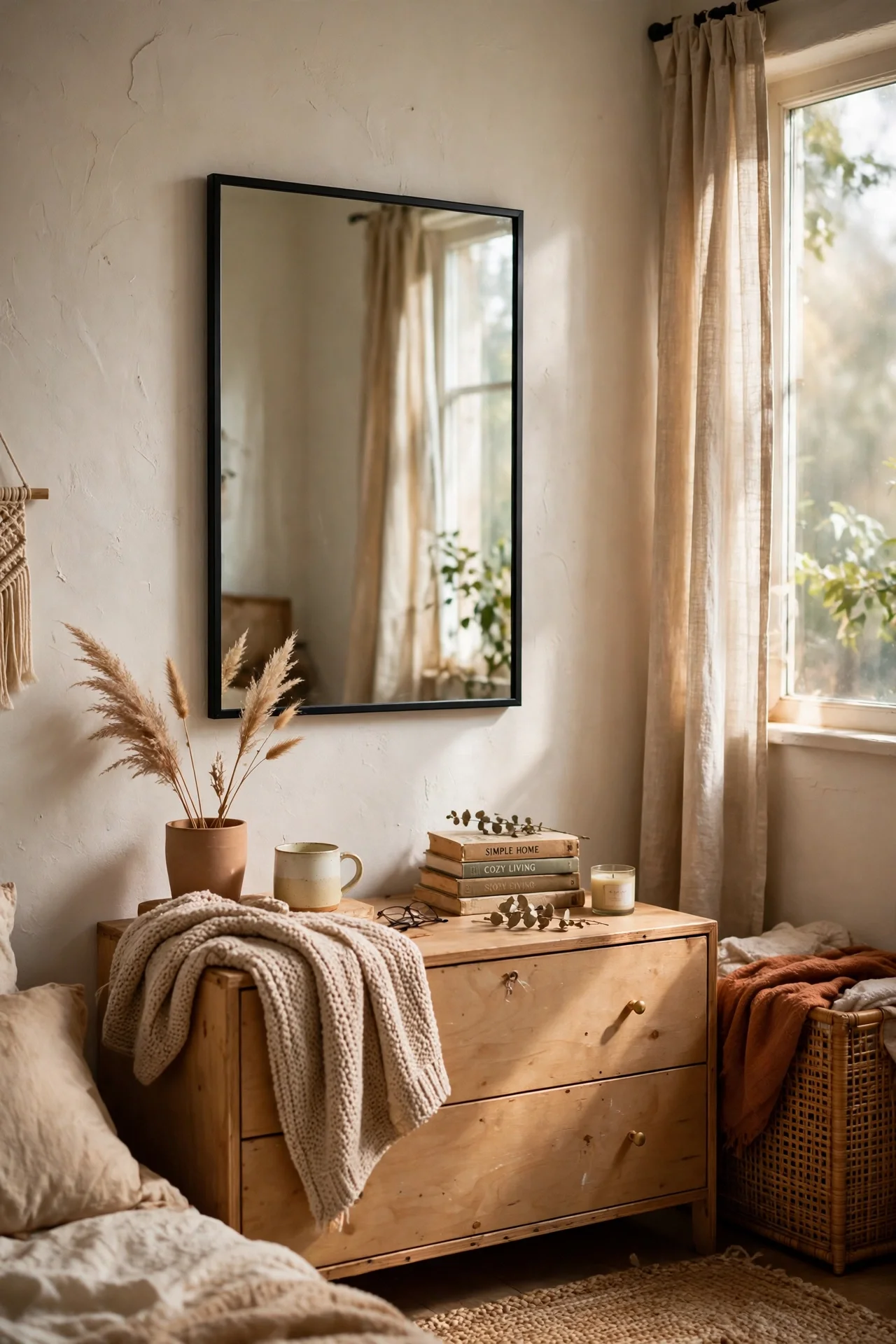
A black metal frame mirror adds crisp contrast that defines the entryway, especially against white, cream, or pale grey walls. The thin black line draws the eye and frames the reflection like a picture, which makes even a simple mirror feel designed rather than accidental. Pair it with black hooks or a black console base to tie the look together, but keep the rest of the styling light so the frame does not dominate. I swapped a gold frame for black in my own hall and the whole space instantly felt calmer and more modern.
- Buy: a slim black metal frame, not a chunky one, for small walls.
- Skip: pairing it with too many other black items at once.
Cost: ~$29 | Time: 20 minutes
15. Mirrored Wall Panels in a Tiny Entry
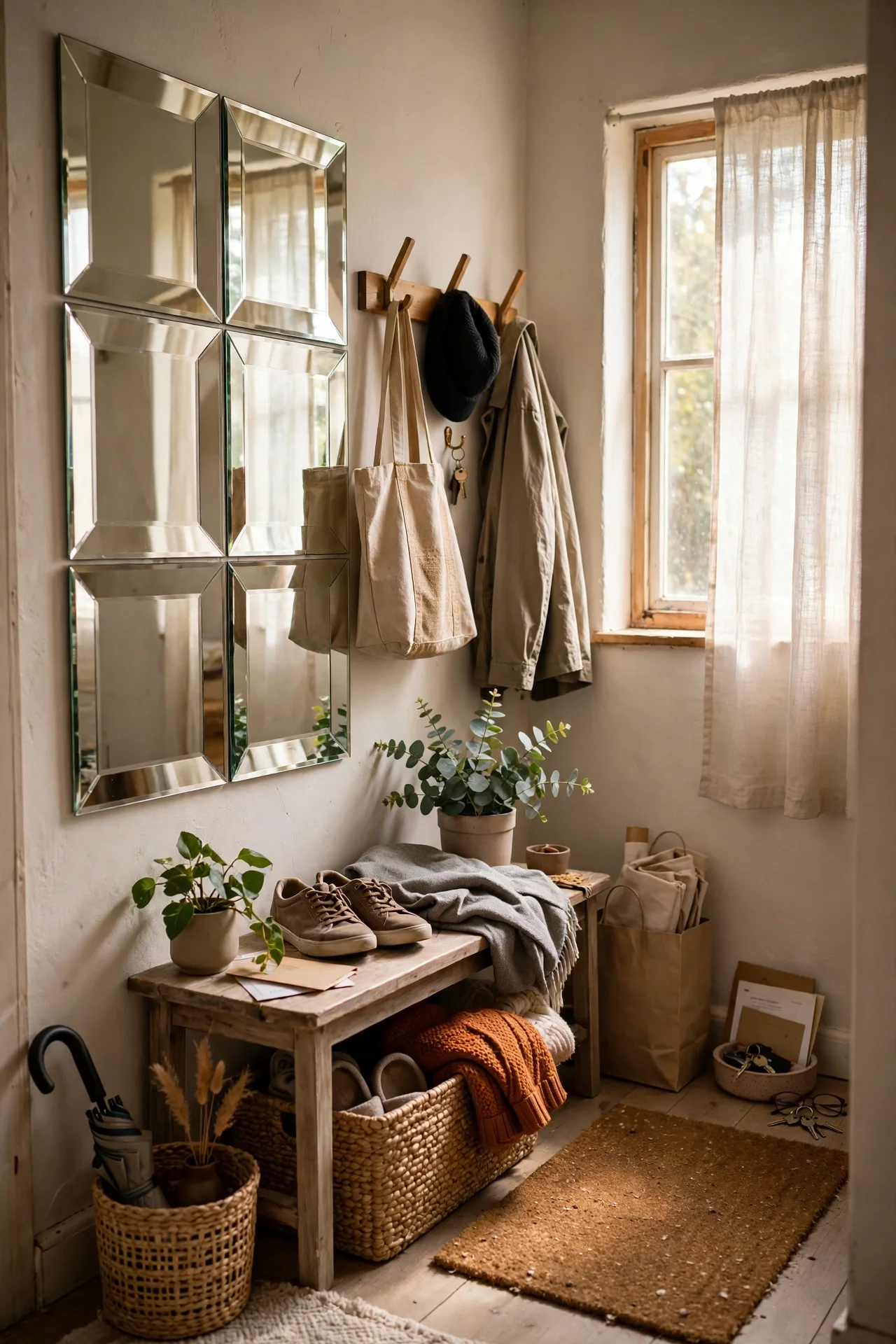
Mirrored wall panels are the boldest option here, and in a truly tiny entry they can be the most effective, because a full mirrored section visually doubles the whole space. Apply panels to one short wall only, floor to ceiling if you can, and keep the opposite wall simple so the room does not feel like a hall of mirrors. Use proper mirror adhesive and a level for every panel, since uneven panels show badly in reflection. I would not put panels on every wall, but one mirrored wall in a windowless entry changed how big the space felt overnight.
- Buy: panels cut to fit your wall, with mirror adhesive included.
- Skip: mirroring more than one wall in a small entry.
Cost: ~$52 | Time: 75 minutes
Quick Questions Before You Hang Anything
Q: Where should an entryway mirror go for the most light?
A: Opposite or beside a window or glass door, so it reflects real daylight instead of a blank wall.
Q: How big should an entryway mirror be?
A: About two-thirds the width of the furniture below it, and large enough to reflect your upper body at eye level.
Q: Can a mirror really make a small entry feel bigger?
A: Yes, when it reflects light and an open view; a mirror facing clutter will only double the mess, so tidy first.
Start with the wall that faces your door glass or nearest window, hang one mirror this weekend, and please save this post so you can try the next style when the first one is up.
