23 Minimalist Bathroom Ideas on a Budget
A minimalist bathroom is not an empty bathroom. It is a room where everything left in it earns its place, and everything else quietly leaves. These Minimalist bathroom ideas focus on that feeling — clear counters, soft colours, and storage that hides the chaos instead of displaying it. Most cost very little, because minimalism saves money by default: you buy less, you keep less, and the room looks better for it.
First, declutter before you buy anything: Do not spend a penny yet. These six steps clear the room so you can actually see what you have, and they cost nothing but an hour and a bin bag.
1. Empty Every Surface and Start From Zero
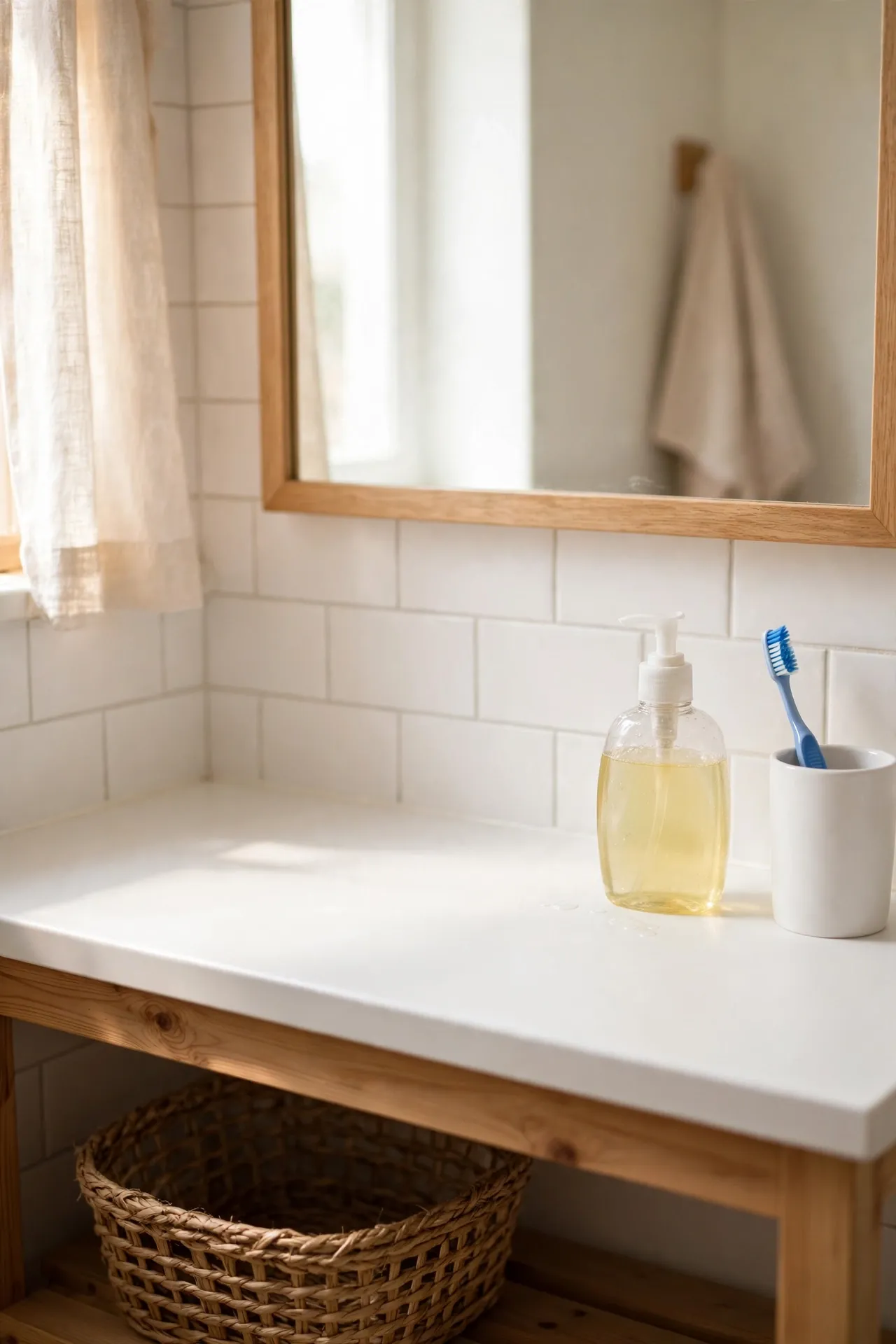
Take everything off the counter, the toilet tank, and the window sill, and put it in a box outside the bathroom. Clean all the surfaces properly, then only bring back what you use every single day — soap, toothbrush, one towel. Everything else stays in the box for a week, and if you do not reach for it, it does not come back. This reset sounds dramatic, but it is the fastest way to see your bathroom clearly for the first time in years. I tried this — the mistake to avoid is putting things back “just in case” on the same day, because that defeats the whole point. Live with the empty counter for a week first, then decide.
Cost: ~$0 | Time: 60 minutes
2. Do a One-In, One-Out Rule for Toiletries
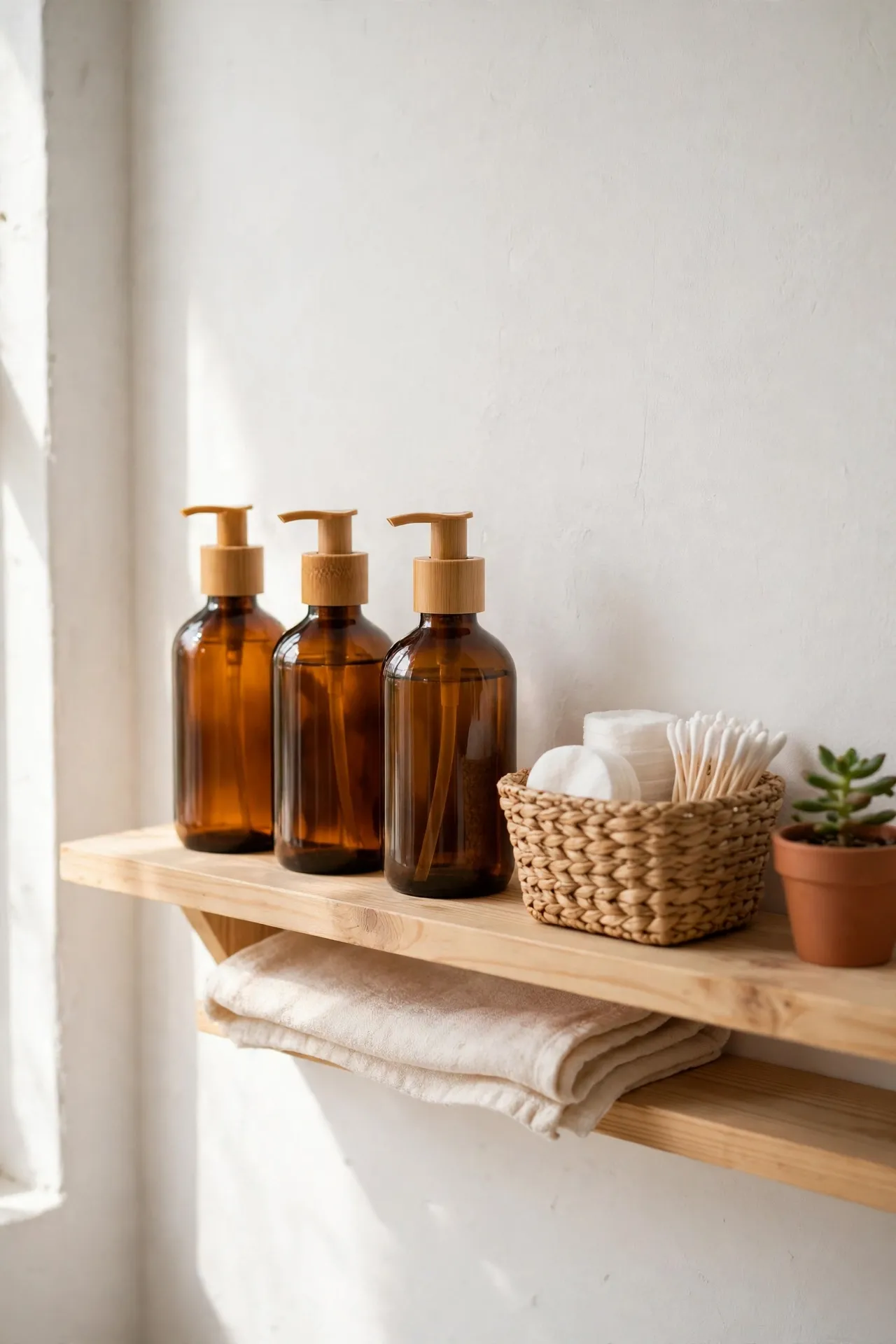
Minimalist bathrooms stay minimalist because of a rule, not a one-time purge, and the simplest rule is one in, one out. Every time a new shampoo, cream, or gadget comes in, something old leaves — finished, expired, or donated if it is still good. Keep a small bag under the sink for outgoing items, so the rule takes ten seconds instead of a whole declutter session. Check expiry dates twice a year, because half-used products are the main source of bathroom clutter. I started this rule after counting eleven half-empty bottles in my shower, and I have never gone back. The shower shelf has stayed clear ever since, without any extra effort.
Cost: ~$0 | Time: 15 minutes
3. Decant Everything Into Matching Plain Bottles
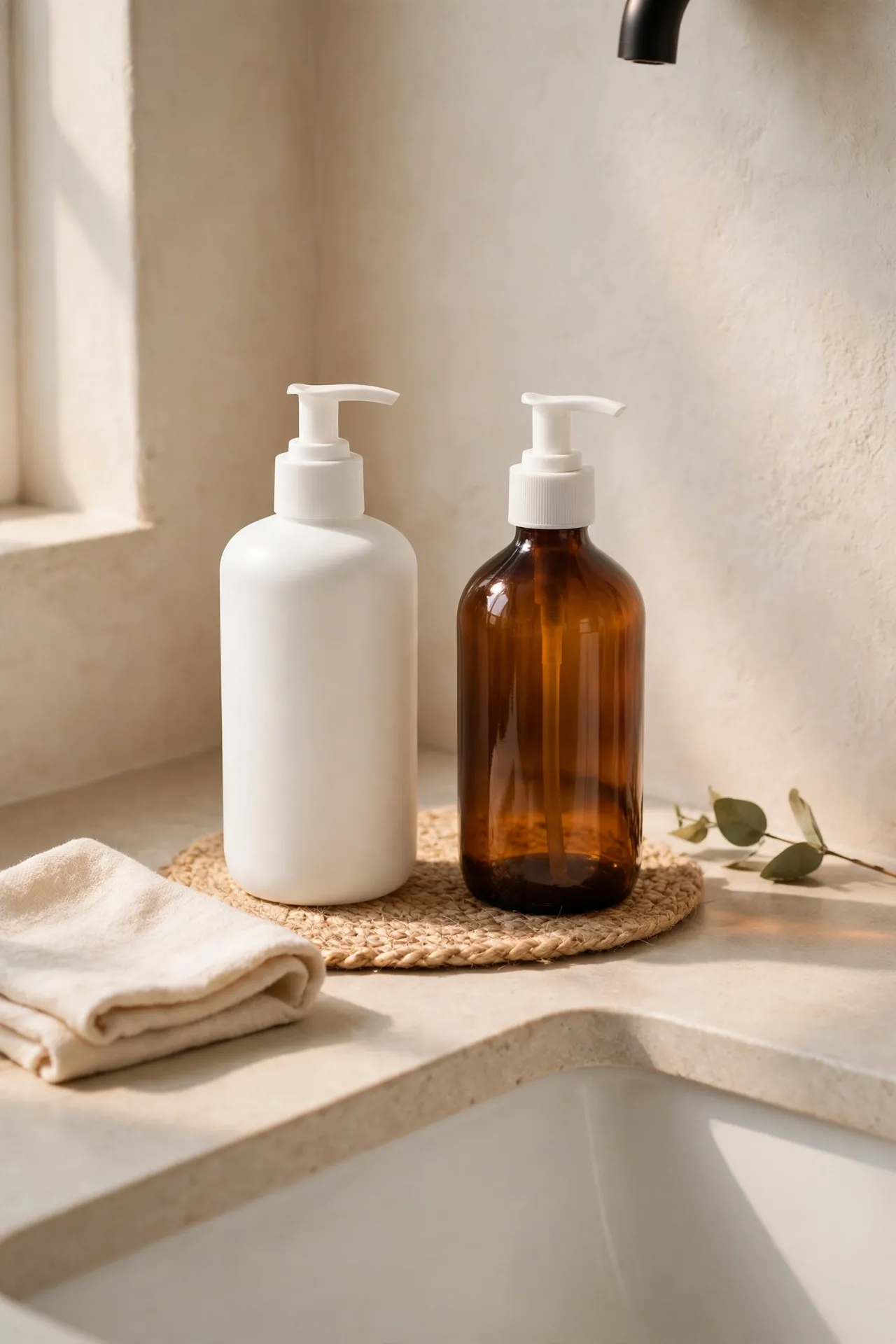
Ten different branded bottles in ten different colours will make any bathroom look busy, even if the room itself is tidy. Decant shampoo, conditioner, hand soap, and lotion into plain white, clear, or amber bottles with simple labels, and refill them from economy bottles stored out of sight. The visual noise drops instantly, and the bathroom feels calm rather than like a shop shelf. Use a funnel to avoid spills, and label the bottles clearly so guests do not wash their hair with body lotion. I tried this — the mistake to avoid is buying fancy dispensers before you know the sizes you need, because a pump that does not fit the bottle is useless. Measure first, then buy.
Cost: ~$18 | Time: 30 minutes
4. Keep Only One Towel Per Person on Display
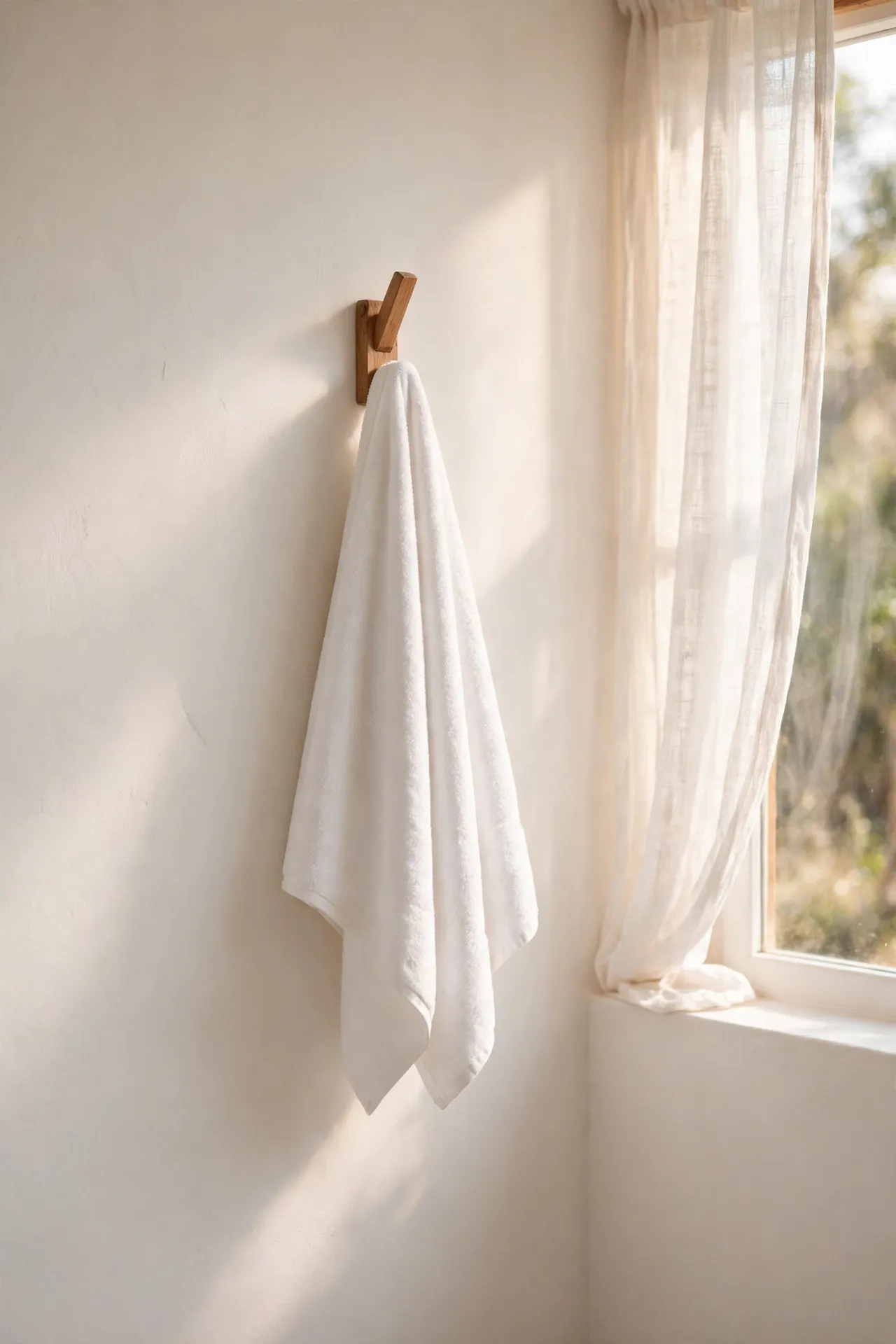
Four towels per person, draped over rails, doors, and radiators, is not minimalism — it is a laundry pile with extra steps. Keep one bath towel per person on a rail or hook, folded or hung neatly, and store the spares in a closed cupboard or a lidded basket. Choose towels in one neutral colour, white or warm grey, so they blend into the room instead of shouting from it. Wash them on a regular rota, and the single-towel rule will hold without any extra thought. My bathroom looked twice as big the day I took the spare towels off the rail, and nobody in the house even noticed they were gone. They were just taking up visual space.
Cost: ~$0 | Time: 15 minutes
5. Remove the Bath Mat Pile and Keep One Good One
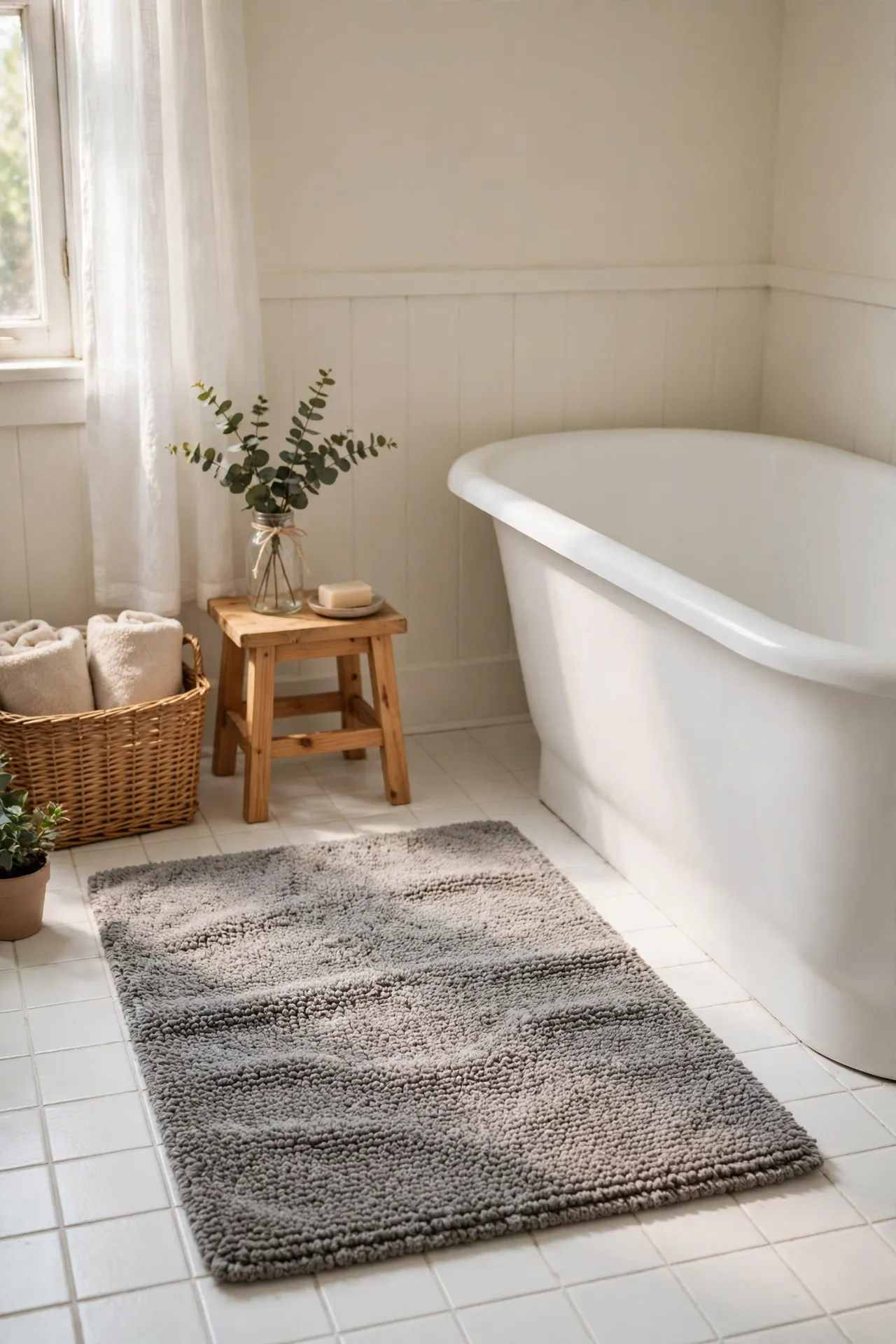
Layered bath mats, novelty rugs, and a toilet seat cover together make a small bathroom feel crowded before you even step inside. Remove all of them except one good, thick bath mat in a plain neutral colour, placed exactly where you step out of the shower. Hang it over the tub edge or a rail to dry between uses, and wash it weekly so it stays fresh and flat. A single mat grounds the room without competing with the floor, the tiles, or anything else. I tried this — the mistake to avoid is replacing three patterned mats with three plain ones, because the pile is the problem, not the pattern. One mat, well chosen, is all you need.
Cost: ~$14 | Time: 10 minutes
6. Clear the Shower Shelf to Three Items Only
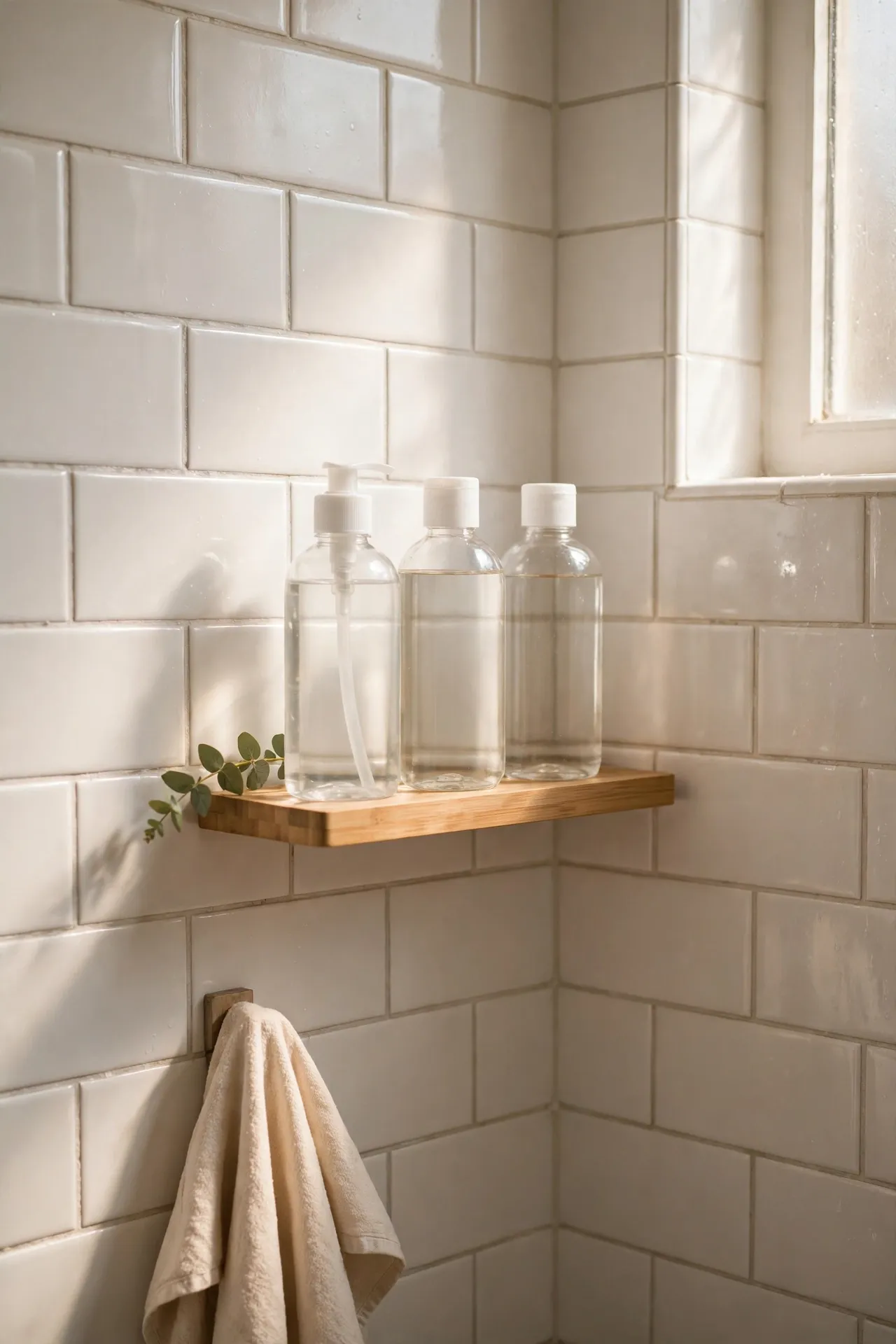
A shower shelf crammed with bottles is the first thing your eye lands on in the morning, and it sets a cluttered tone for the whole day. Limit the shower to three items: shampoo, conditioner, and one body wash or soap, all in matching bottles if you can manage it. Move treatments, masks, and extras to a small caddy that lives outside the shower and only comes in when you need it. Wipe the shelf down once a week so soap scum does not build up around the bottles. I keep my caddy on a bathroom shelf, and honestly, my showers feel calmer now simply because I am not staring at a wall of plastic. Three bottles, nothing more, nothing less.
Cost: ~$0 | Time: 20 minutes
Next, calm colours and surfaces: Once the clutter is gone, colour does the heavy lifting. These ideas keep the palette quiet and the surfaces easy to clean, so the calm lasts longer than a weekend.
7. Repaint in Warm White for a Softer Glow
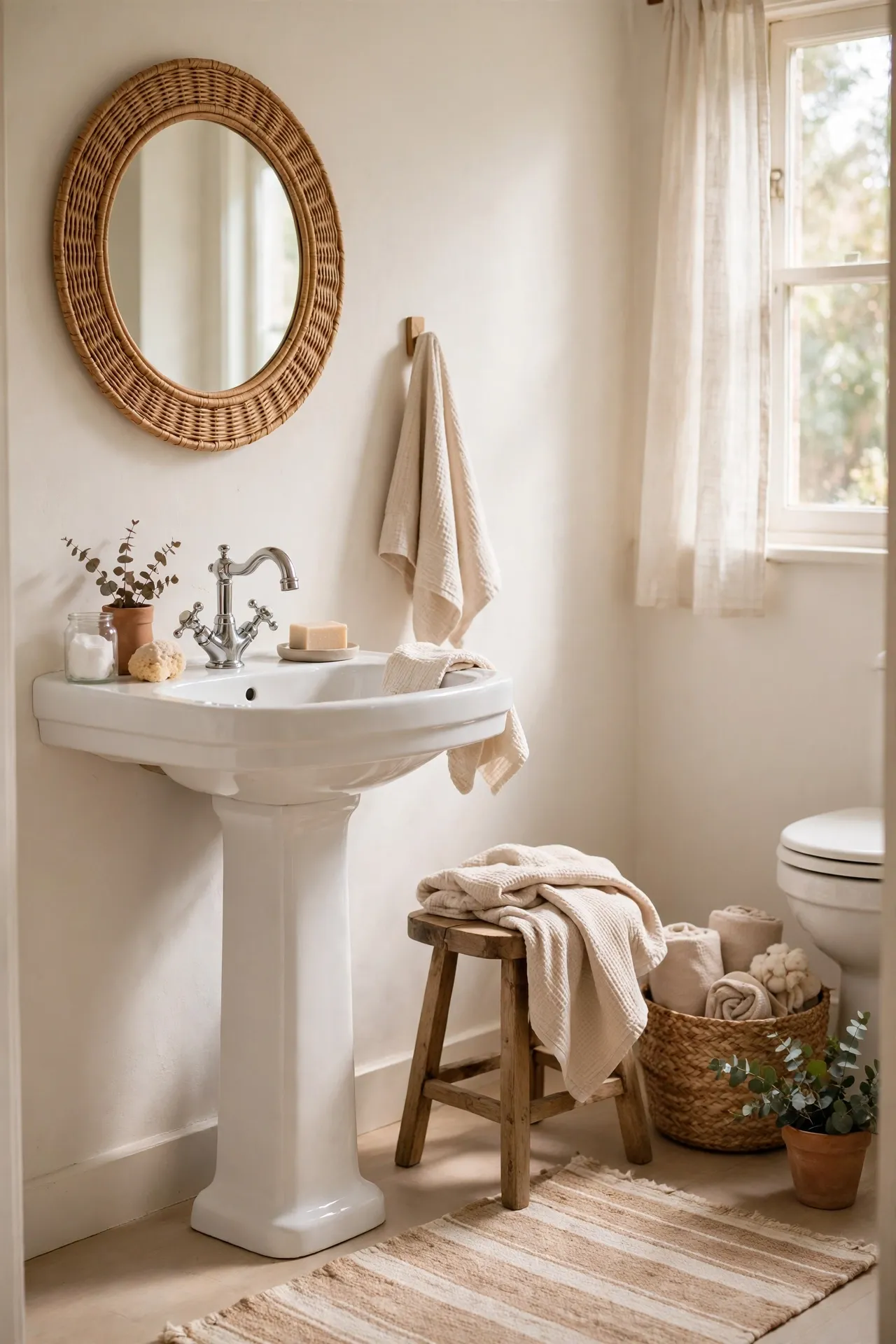
Bright, cold white can feel clinical, while warm white feels calm and soft, and the difference is just one paint tin. Choose a warm white with a hint of cream or oat, use bathroom-friendly paint with a satin or eggshell finish, and roll two thin coats over clean, dry walls. The room will glow in natural light instead of glaring, and every other neutral in the room will sit more comfortably beside it. Paint the ceiling the same colour to avoid a harsh line overhead. I painted my bathroom in one Saturday, and the whole space felt warmer that same evening, without changing a single fixture. For more paint ideas on a budget, see my (see also: budget-bathroom-tile-ideas-without-retiling) post for surface tricks that pair well with fresh paint.
Cost: ~$28 | Time: 4 hours
8. Stick to Two Neutrals Plus One Wood Tone
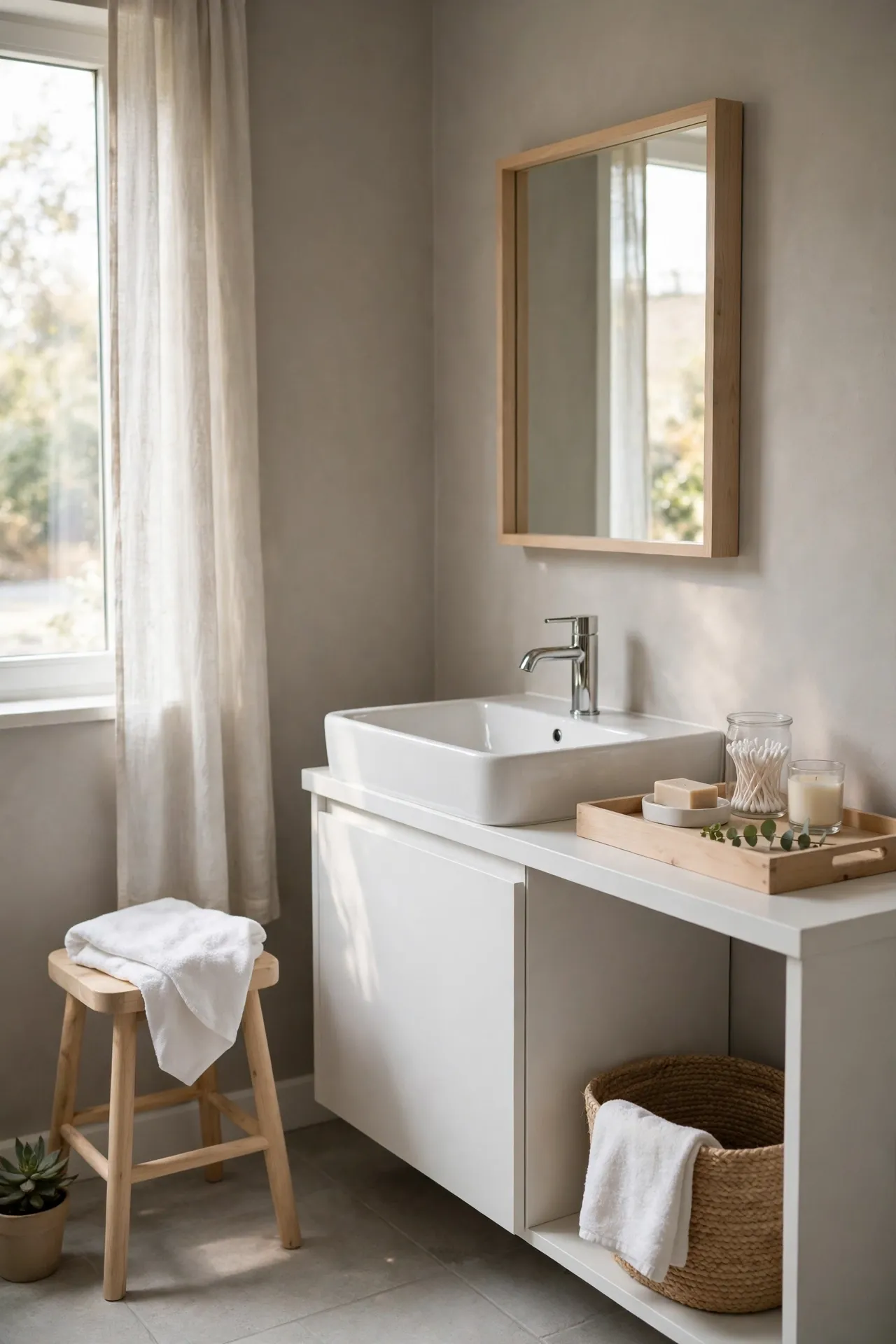
Minimalist rooms work because they limit choices, and a simple colour rule makes that automatic: two neutrals plus one wood tone, nothing else. Pick white and warm grey for the walls, towels, and accessories, then let natural wood — a stool, a tray, a soap dish — provide all the warmth. Remove anything that breaks the rule, or move it to another room where it fits better. This rule stops impulse buys from creeping back in, because you can check a new item against it in seconds. I tried this — the mistake to avoid is counting every shade of grey as a separate neutral, because five greys are not minimal. Two neutrals, one wood, done, and the room will thank you.
Cost: ~$0 | Time: 30 minutes
9. Swap Patterned Curtains for a Plain White Shade
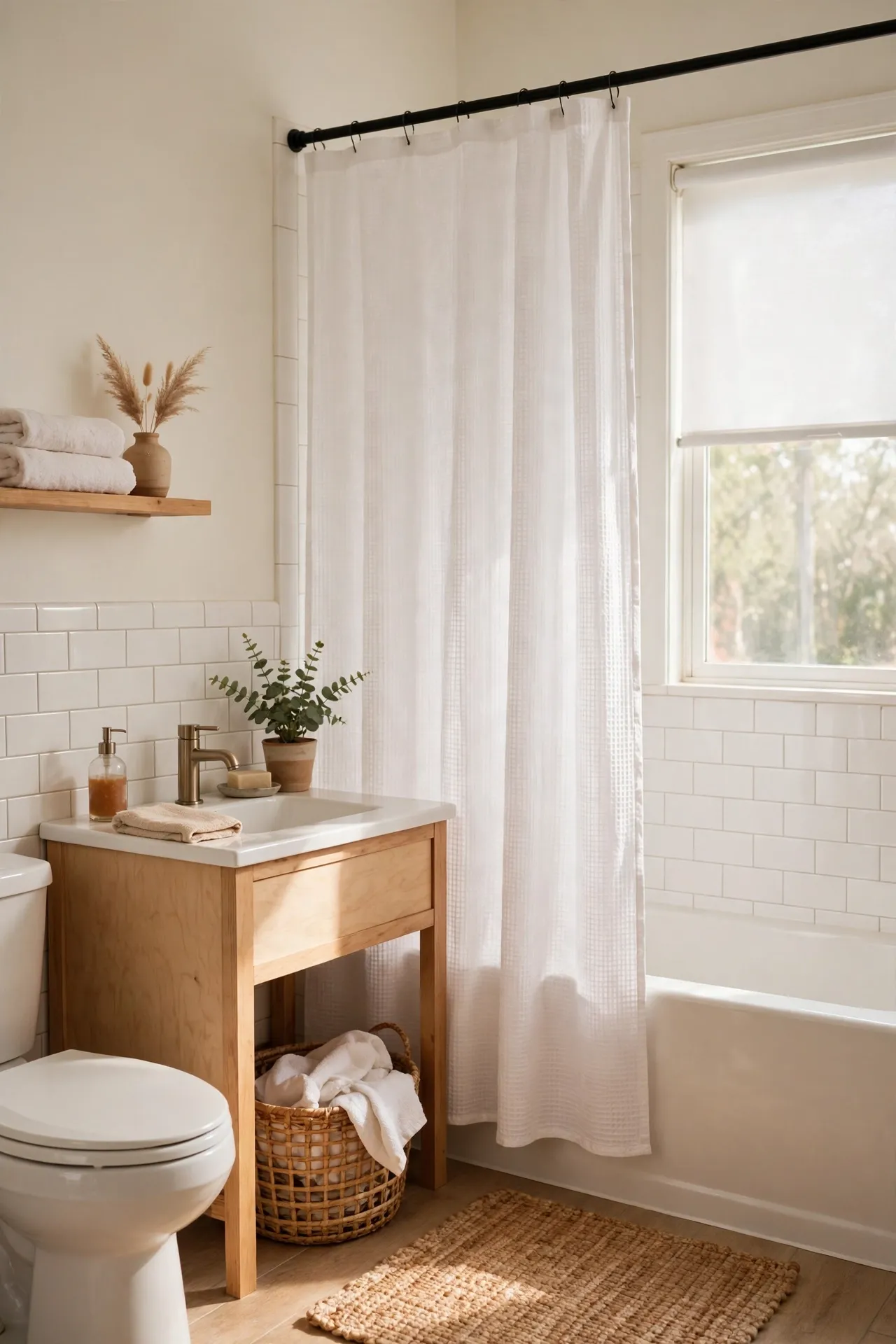
A patterned shower curtain or a fussy window curtain adds visual noise to the largest surfaces in a small room. Swap both for plain versions: a solid white shower curtain in a waffle or linen-look texture, and a simple white roller shade or cafe curtain on the window. The textures give the room interest without any pattern, and the white keeps light bouncing around the space. Hang the shower curtain high and wide, and keep the window treatment simple enough to wipe clean. I made this swap in under an hour, and the bathroom immediately felt taller and quieter. Plain does not mean boring here — it means your eyes finally get a rest.
Cost: ~$24 | Time: 30 minutes
10. Choose a Frameless Mirror for a Lighter Look
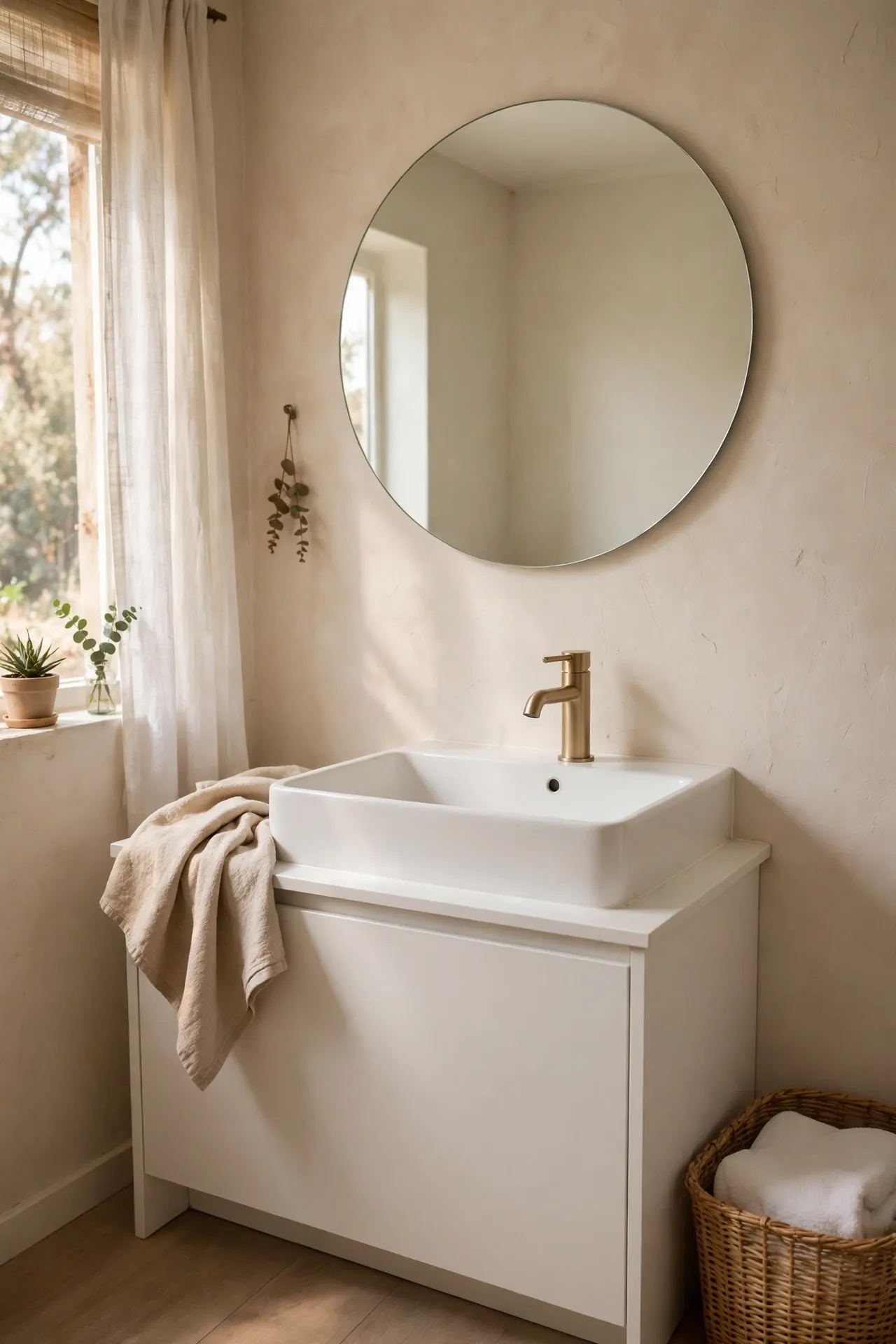
A heavy, ornate mirror frame fights a minimalist bathroom, while a frameless or slim-framed mirror almost disappears into the wall. If you cannot replace the mirror, remove an old frame or paint it the same warm white as the wall so it blends in. Hang the mirror at eye level, centred over the sink, and keep the area around it completely clear — no stickers, no magnets, no clutter. The clean reflection will make the room feel larger, because the mirror is doing its job instead of decorating itself. I swapped a chunky gold frame for a plain round mirror, and the vanity area looked twice as calm overnight. Sometimes removing a frame is the whole upgrade.
Cost: ~$35 | Time: 30 minutes
11. Refresh Grout and Seal It for Easy Cleaning
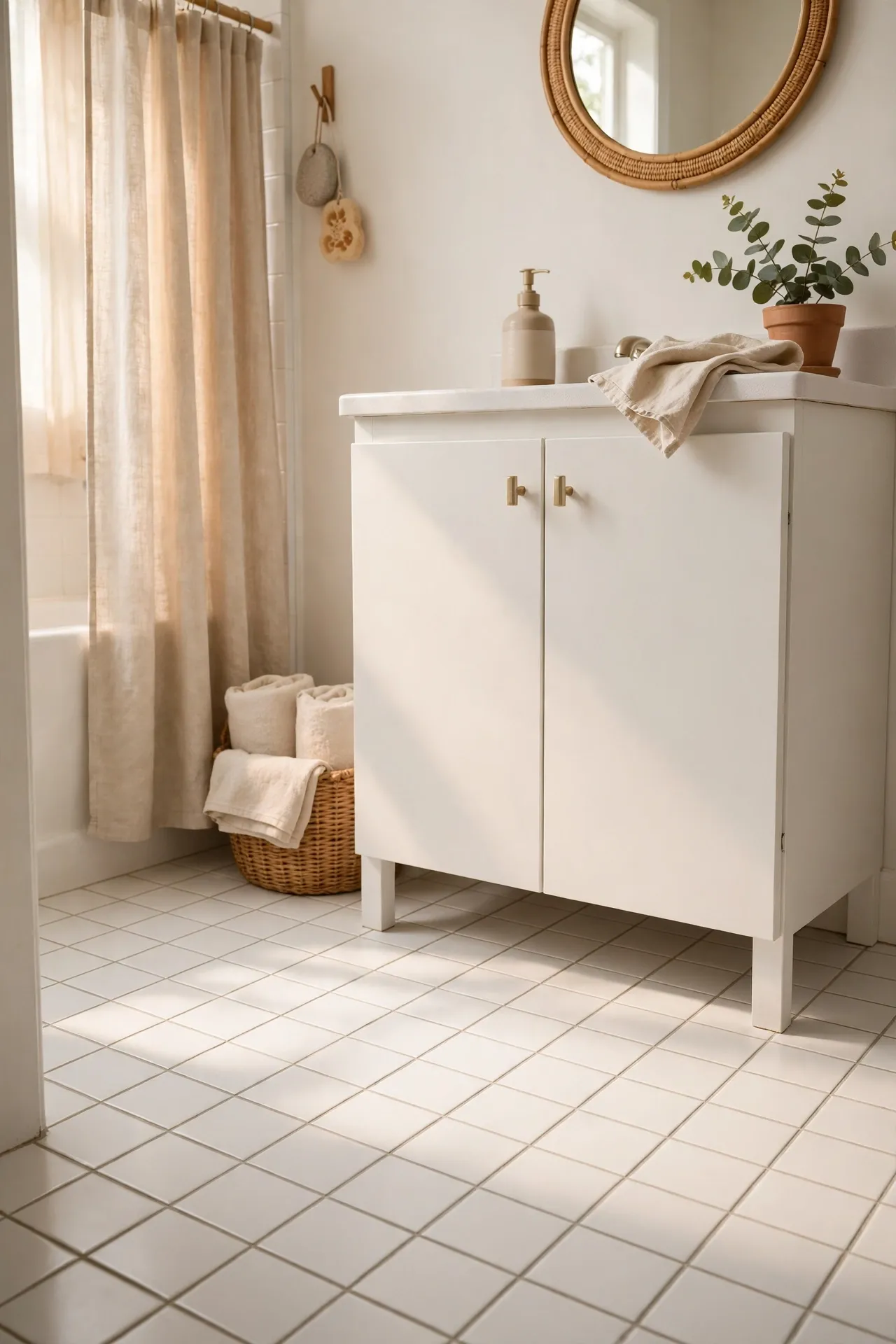
Minimalism falls apart when surfaces look grubby, and dirty grout is the fastest way to make a tidy bathroom look neglected. Scrub the grout lines with a baking soda paste, rinse thoroughly, and seal them once they are completely dry so future dirt wipes off easily. Work in small sections, ventilate well, and do the shower floor first, since that is where grime shows most. Sealed grout stays bright for months with just a weekly wipe, which means less scrubbing overall. I did this on a Sunday afternoon, and the white tiles suddenly looked new again, even though nothing else had changed. Clean surfaces are the real minimalist luxury, and they cost almost nothing.
Cost: ~$14 | Time: 2 hours
12. Use One Wooden Tray to Corral the Essentials
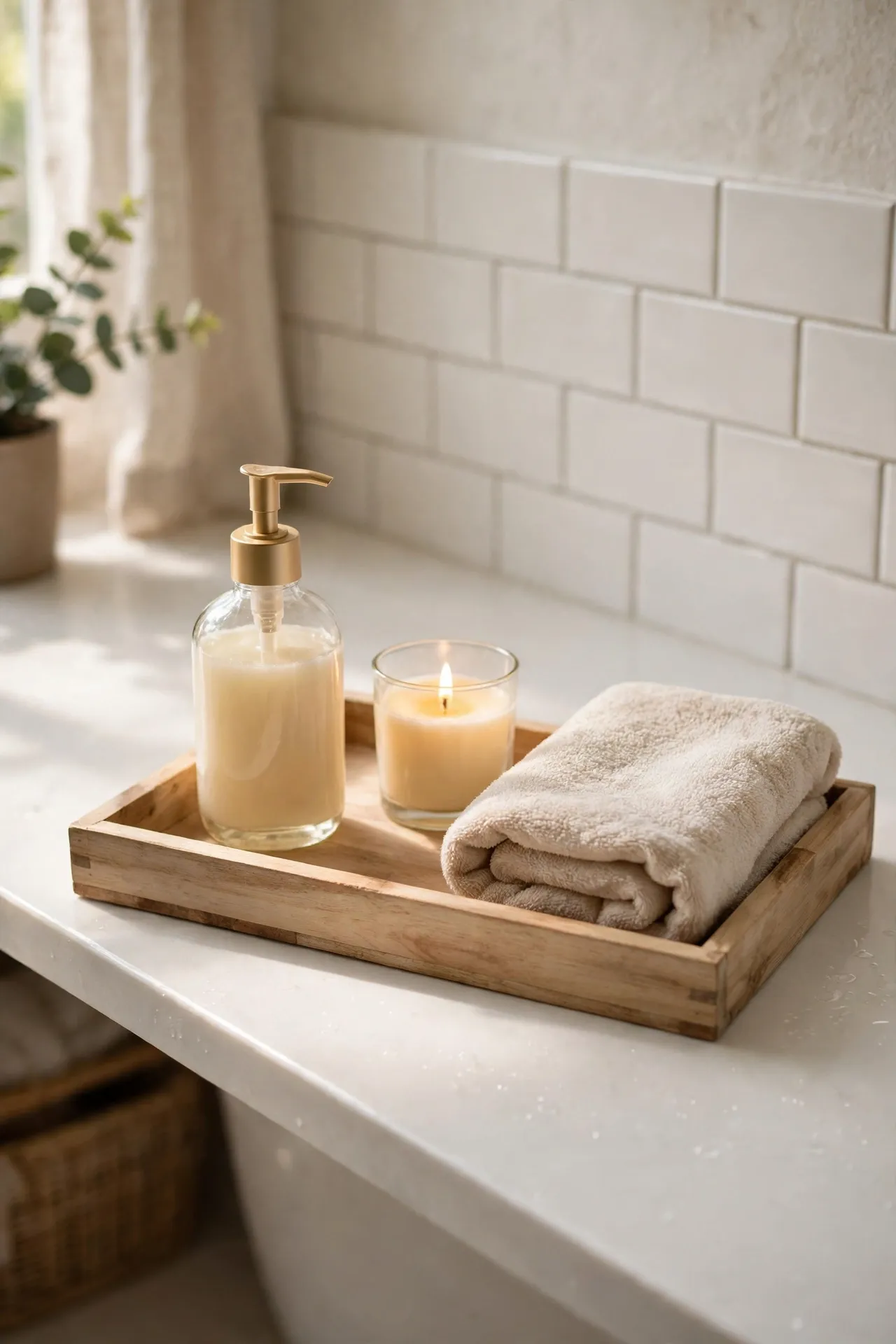
Even a minimalist bathroom needs a few daily items on the counter, and a single wooden tray keeps them from spreading everywhere. Place the tray beside the sink, and put only three things on it: hand soap, one small plant or candle, and a hand towel or soap dish. The tray edge creates a visual boundary, so the rest of the counter reads as empty, and you can lift the whole tray to clean underneath in seconds. Choose plain, untreated wood or a light bamboo finish, and avoid trays with patterns or bright colours. Save this idea for your next tidy-up — it is the easiest way to keep a counter clear without banning everything from it. I use mine daily, and the counter has stayed clear for months.
Cost: ~$12 | Time: 10 minutes
Then, hidden storage that actually works: Minimalism is not about owning nothing. It is about storing things where you cannot see them. These six ideas hide the everyday mess without a remodel.
13. Add a Slim Rolling Cart Inside a Cupboard
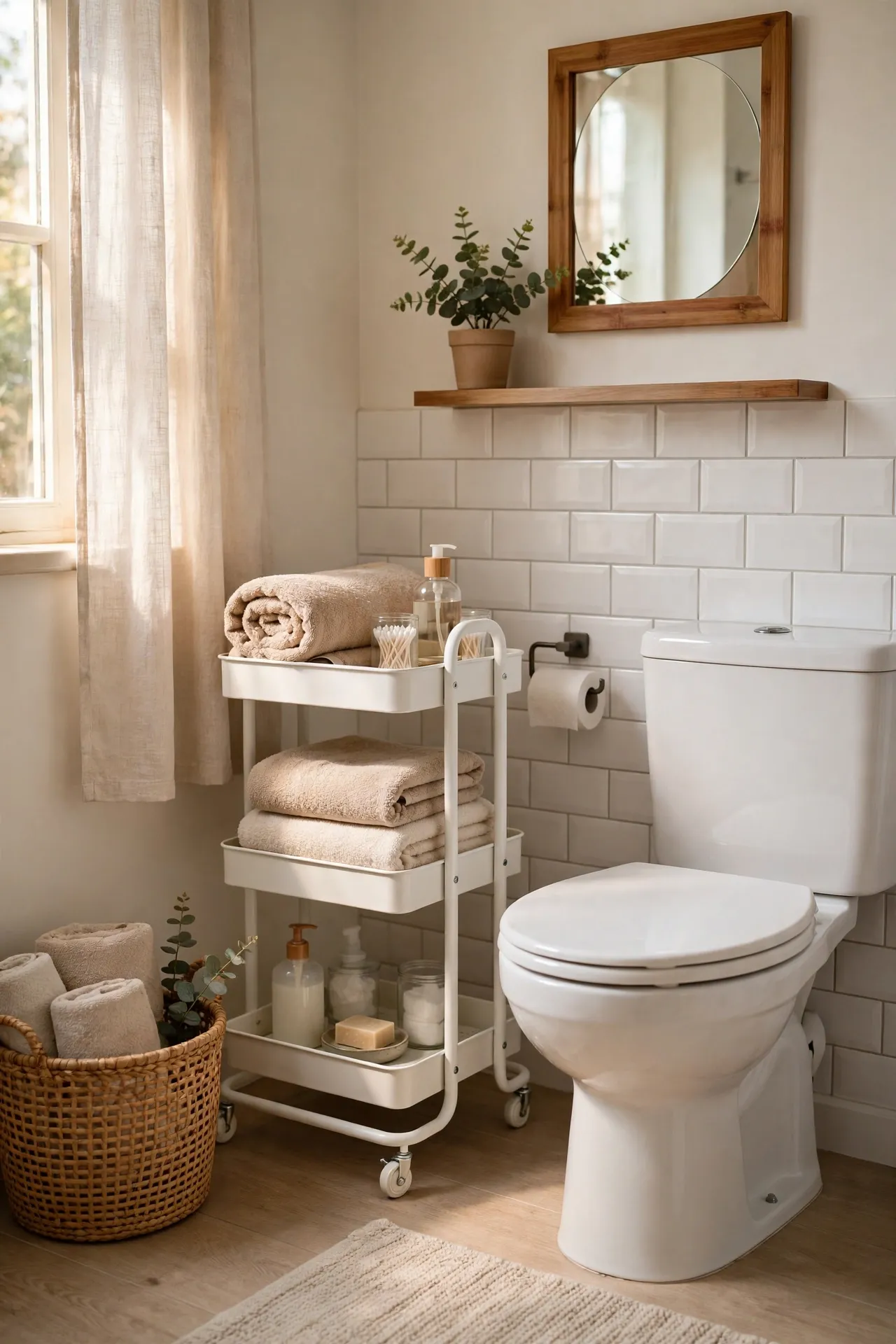
A slim rolling cart that slides into a cupboard or beside the toilet turns dead space into useful storage without adding visual clutter. Use it for spare toilet paper, cleaning supplies, and backup toiletries, all hidden behind a closed door when you are done. Measure the gap before you buy, because a cart that is even a centimetre too wide will sit in the hallway instead of the cupboard. Choose a plain white or clear cart, and label nothing — the point is that nobody sees it. I tried this — the mistake to avoid is filling the cart with things you never use, because hidden clutter is still clutter. Keep it to genuine backups, and review it every few months.
Cost: ~$20 | Time: 20 minutes
14. Hang Towels on the Back of the Door
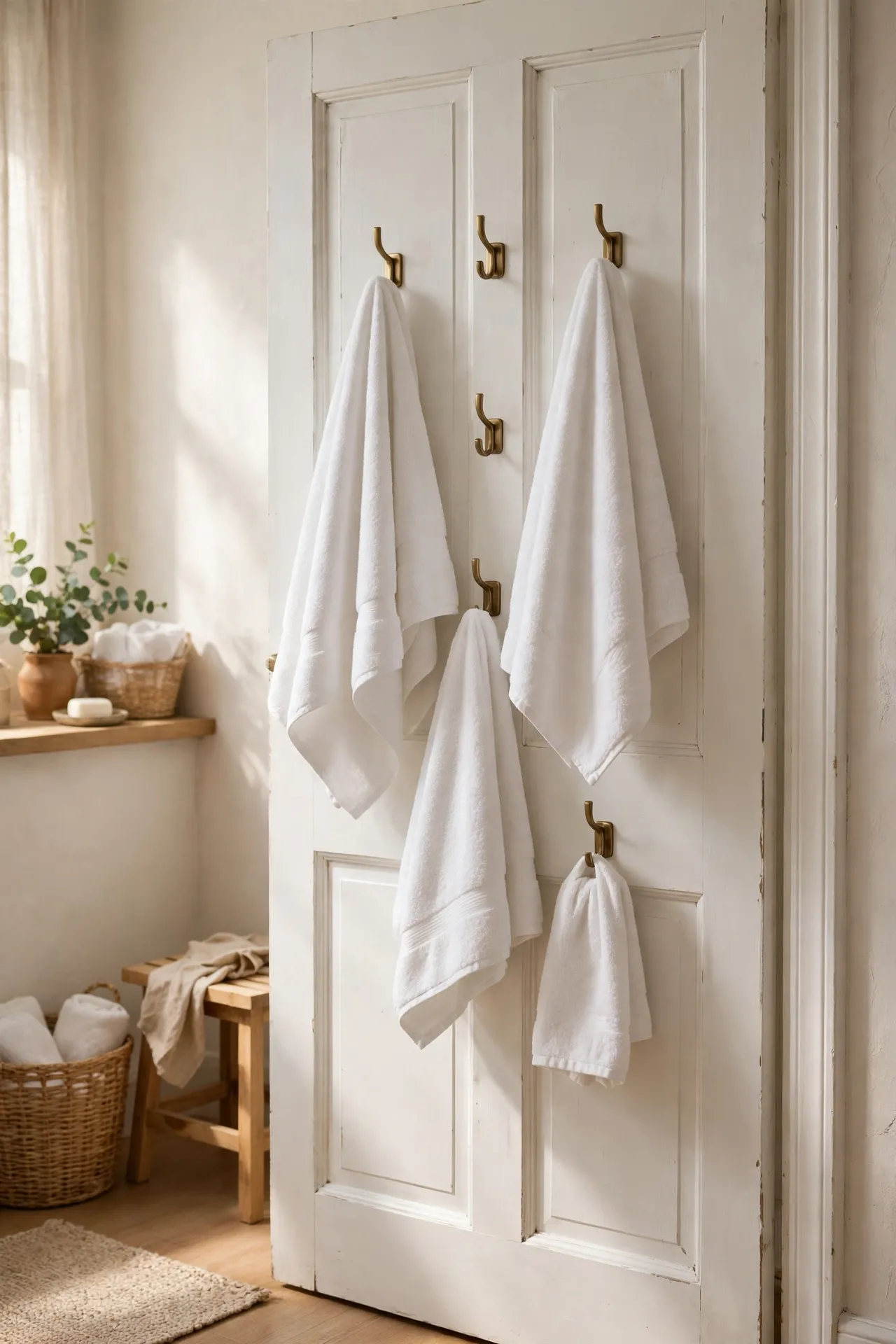
Towel rails take up prime wall space and keep towels permanently on display, while over-door hooks hide them in plain sight. Hang two sturdy over-door hooks on the bathroom door, one for each person, and fold towels neatly over them so they dry properly. The door is space you were not using anyway, and the towels disappear when the door is open against the wall. Choose hooks that fit your door thickness and do not scratch the paint, and avoid hanging more than two towels per hook. For more small-space storage tricks, see my (see also: small-bathroom-storage-ideas) roundup. I moved my towels to the door last year, and the main wall suddenly felt empty in the best possible way.
Cost: ~$10 | Time: 10 minutes
15. Use a Medicine Cabinet Instead of Open Shelves
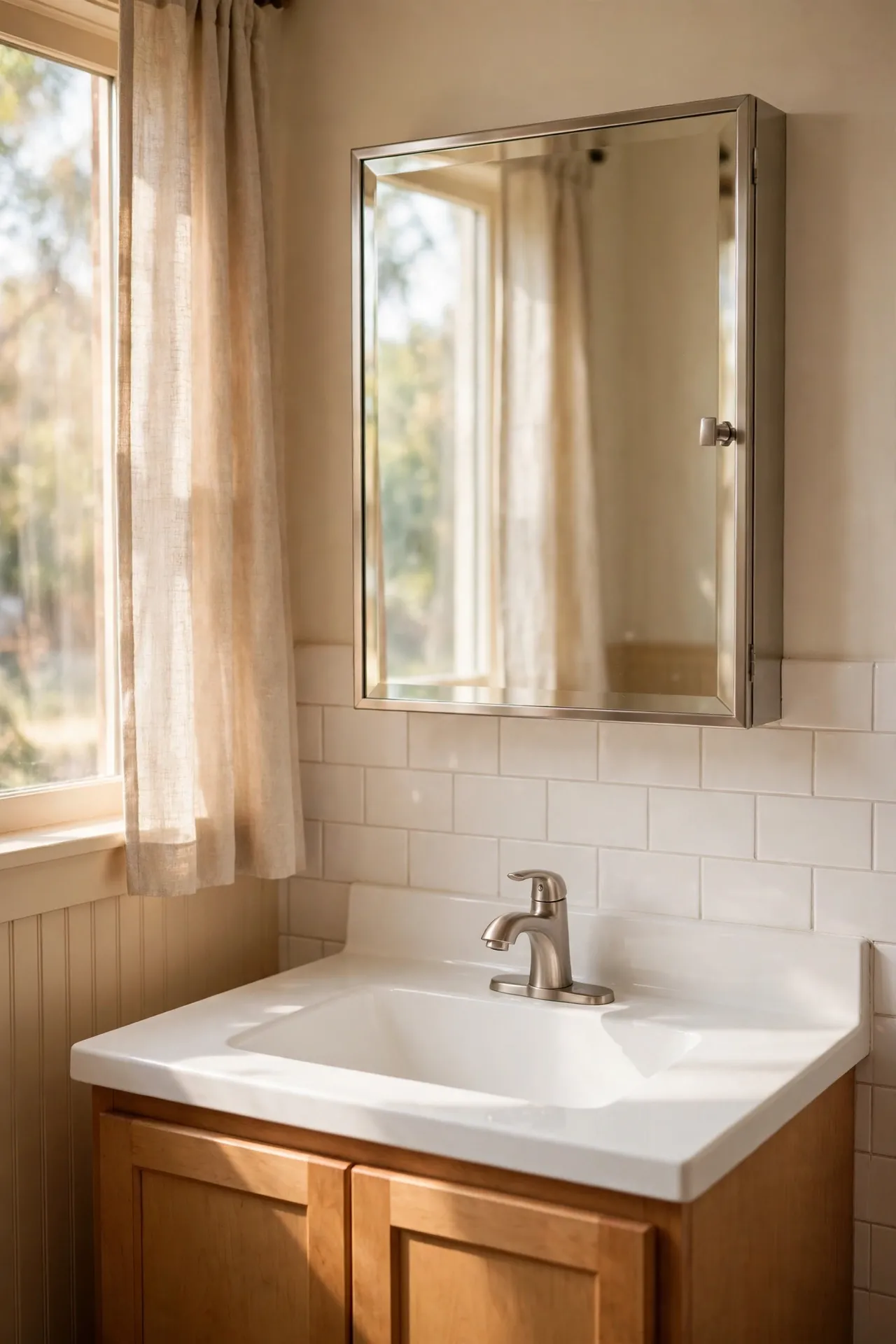
Open shelves look lovely in photos and chaotic in real life, because everyday toiletries are rarely photogenic. A mirrored medicine cabinet above the sink hides all of it behind a door that doubles as your mirror, keeping the counter completely clear. If you already have one, declutter it ruthlessly: keep daily items at eye level, backups below, and toss anything expired. If you do not have one, a surface-mounted cabinet installs with a few screws and no plumbing. Keep the cabinet interior tidy with one small tray per shelf, so things do not topple every time you open the door. My cabinet holds everything I used to leave on the counter, and the sink area has stayed bare ever since.
Cost: ~$45 | Time: 1 hour
16. Store Cleaning Supplies in One Lidded Box
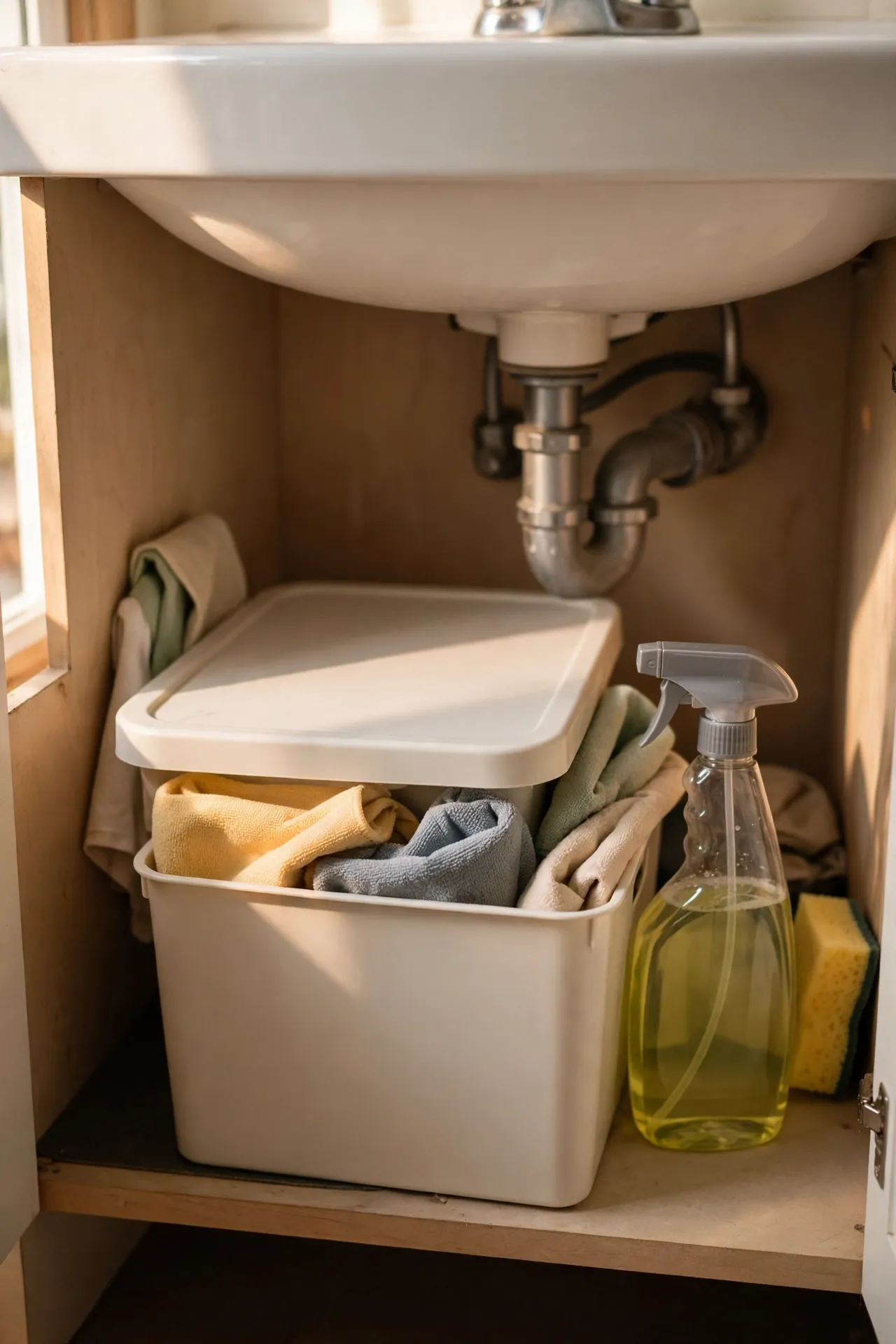
Cleaning bottles under the sink tend to multiply until the cupboard is unusable, which is why minimalist bathrooms need one strict container. Use a single lidded box or caddy for all bathroom cleaning supplies: one all-purpose cleaner, one grout brush, cloths, and a toilet brush if it fits. When the box is full, nothing new comes in until something is used up, which stops the collection from growing. Keep the box under the sink or on a high shelf, out of sight but easy to grab. I tried this — the mistake to avoid is buying a specialist cleaner for every surface, because one good cleaner handles most bathroom jobs. Simplify the supplies, and the storage simplifies itself.
Cost: ~$12 | Time: 20 minutes
17. Add Floating Shelves With Only Three Items Each
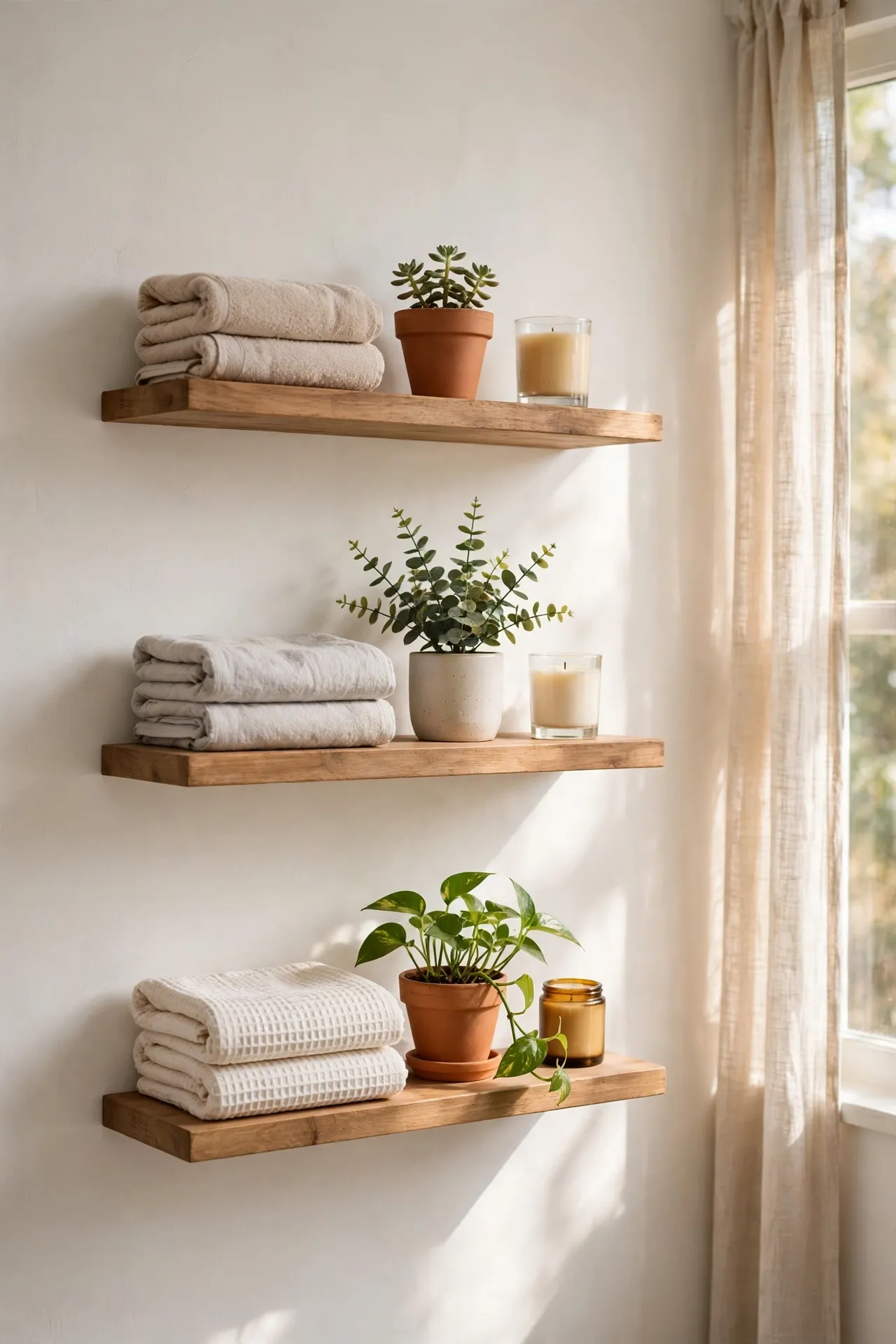
Floating shelves can be minimalist or chaotic, and the difference is a strict limit: three items per shelf, no more. Put up one or two slim wooden shelves above the toilet or beside the mirror, and style each with just three things — a rolled towel, a small plant, and a candle, for example. Leave plenty of empty space around each item, because the emptiness is what makes the shelf look calm. Dust the shelves weekly, since empty space shows dust faster than clutter does. I limited my shelves to three items each, and they went from looking like a shop display to looking like a quiet hotel bathroom. The rule feels strict at first, then it feels like freedom.
Cost: ~$25 | Time: 45 minutes
18. Hide the Laundry Hamper Behind a Curtain or Door
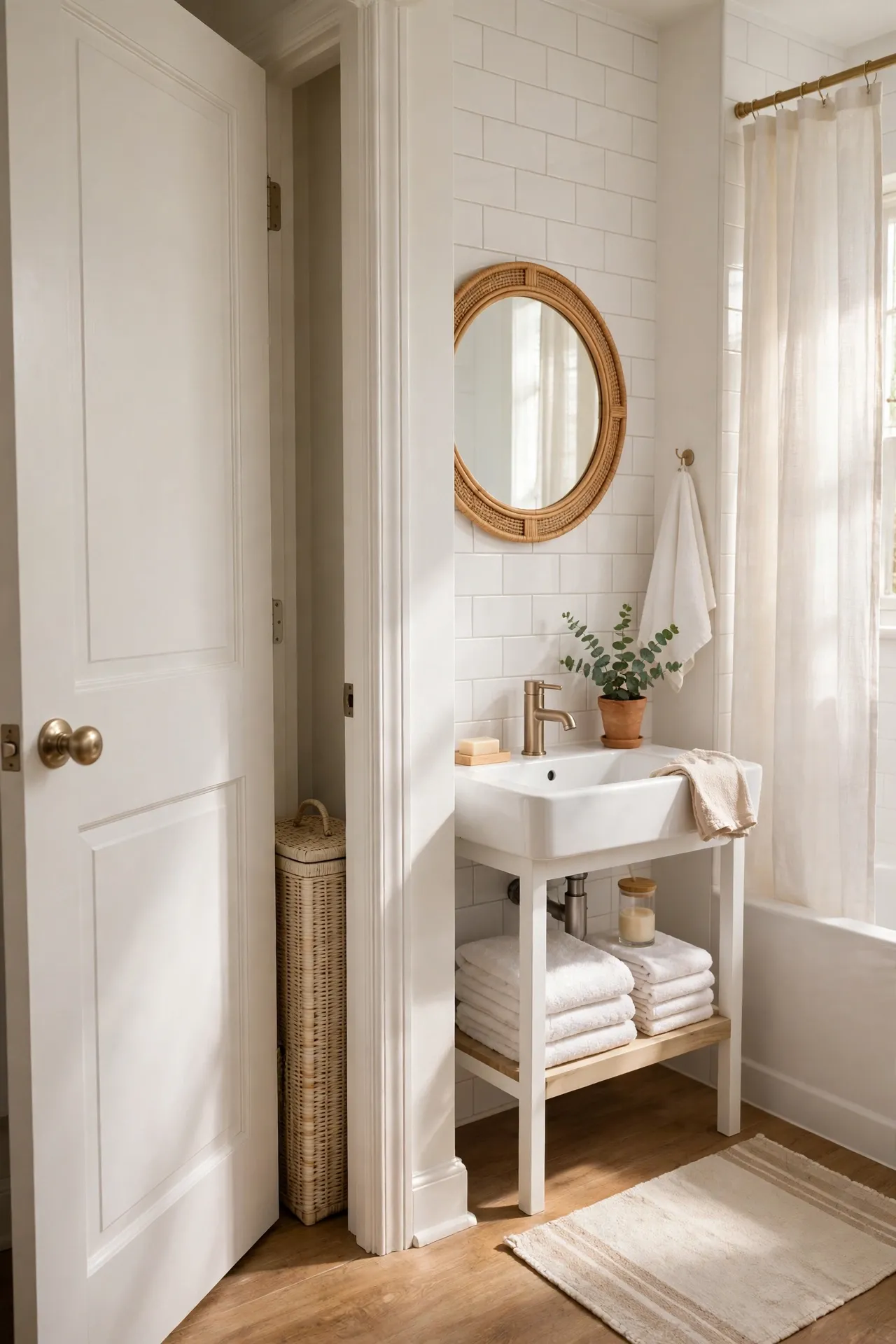
A laundry hamper in the bathroom is practical, but a pile of clothes on top of it is not minimalist. Use a lidded hamper that fits inside a cupboard, behind the door, or under a small curtain if there is no cupboard space. Choose a slim, plain hamper in white or natural cotton, and empty it on laundry day so it never overflows. If the hamper must stay visible, pick one with a lid and a clean shape, and keep nothing on top of it. I moved my hamper behind the bathroom door, and the room instantly felt tidier, even though the same clothes were inside it. Out of sight really does mean out of mind here.
Cost: ~$22 | Time: 15 minutes
Finally, calm finishing touches: The last five ideas are small, soft, and cheap — light, scent, and a single plant — the details that make a minimalist room feel warm instead of bare.
19. Switch to Warm, Soft Bathroom Lighting
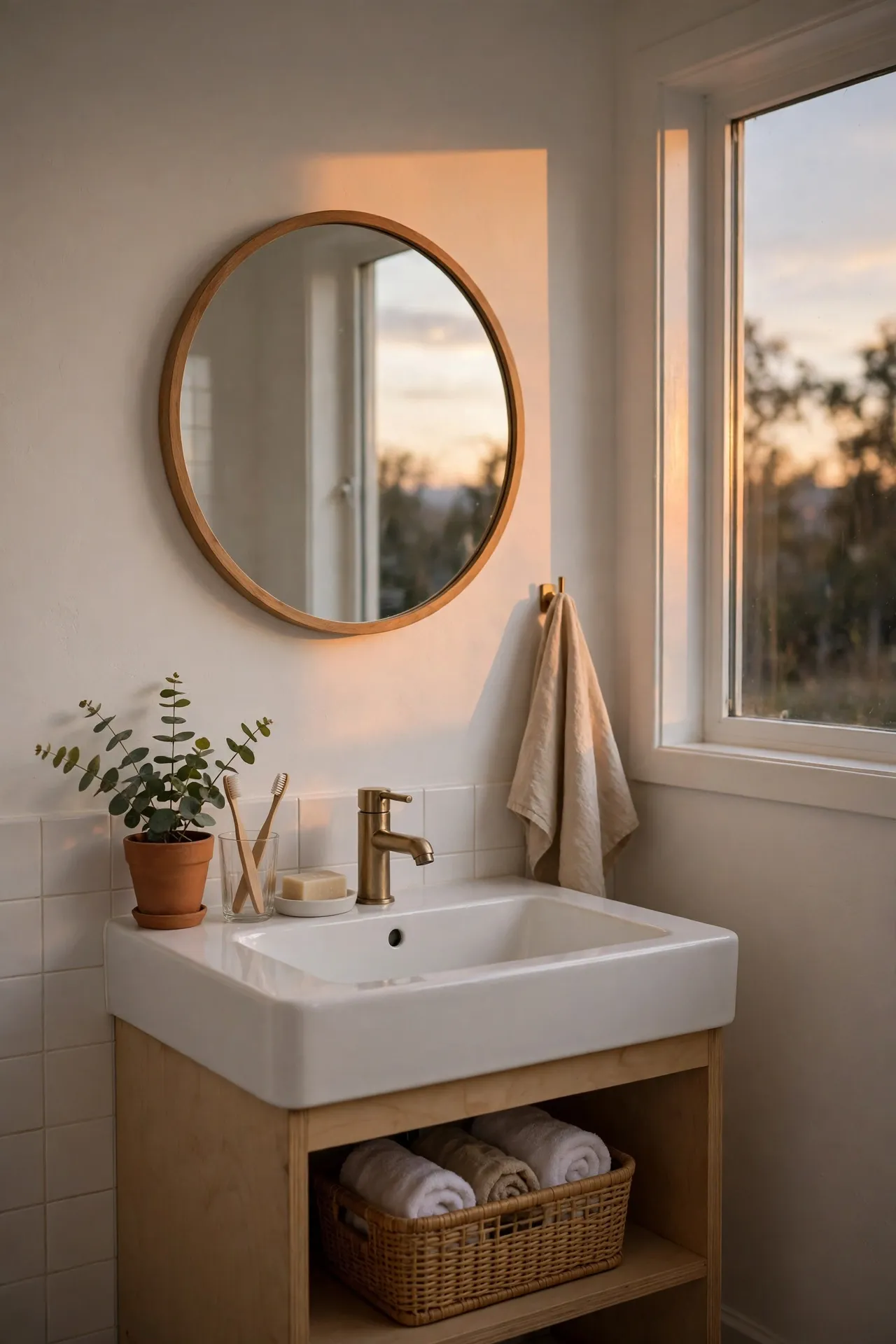
Harsh white bathroom lighting makes a minimalist room feel like a clinic, while warm light makes it feel like a retreat. Swap cool bulbs for warm white ones around 2700K, and use a frosted shade or a dimmer if your fixture allows it. The soft glow flatters skin, wood, and white tiles alike, and it makes early mornings feel gentler. Avoid mixing warm and cool bulbs in the same fixture, because the clash will be obvious and irritating. I changed two bulbs on a weekday evening, and the bathroom felt like a different room the next morning. Lighting is the cheapest mood change you can buy, and in a minimalist space, it matters even more because there is nothing else to distract you.
Cost: ~$10 | Time: 10 minutes
20. Add One Plant That Loves Humidity
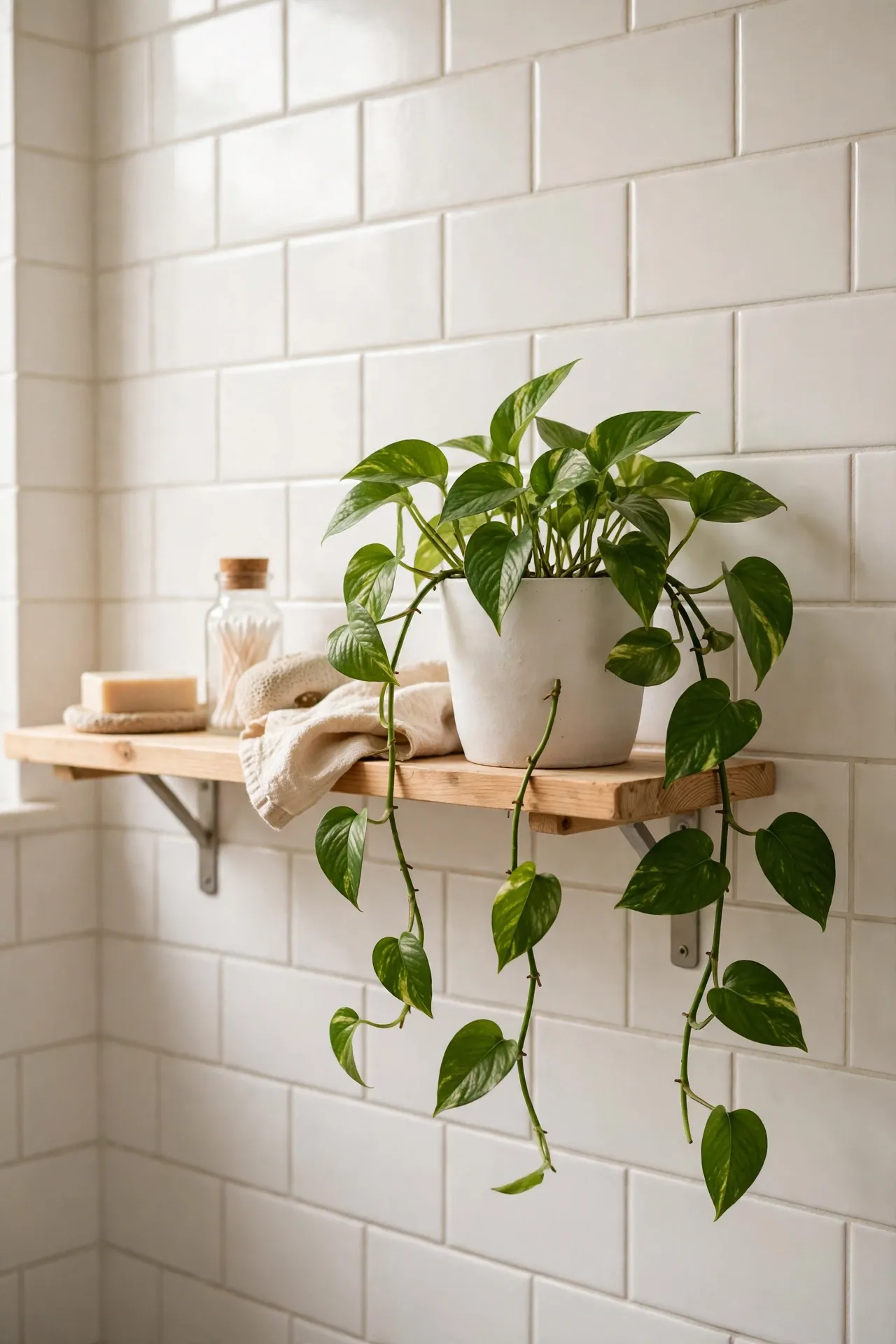
One plant is all a minimalist bathroom needs, and the right one will thrive on steam and neglect. Choose a pothos, a spider plant, or a peace lily in a plain white pot, and place it on a shelf or hang it where it can trail without blocking anything. The green softens the white and wood palette, and the plant makes the room feel alive without adding clutter. Water it only when the soil feels dry, because overwatering kills more bathroom plants than steam ever will. I tried this — the mistake to avoid is buying five plants at once and turning a calm room into a greenhouse. One plant, well placed, is the minimalist way, and it is far easier to keep alive.
Cost: ~$12 | Time: 15 minutes
21. Use a Single Scent, Not Five Competing Ones
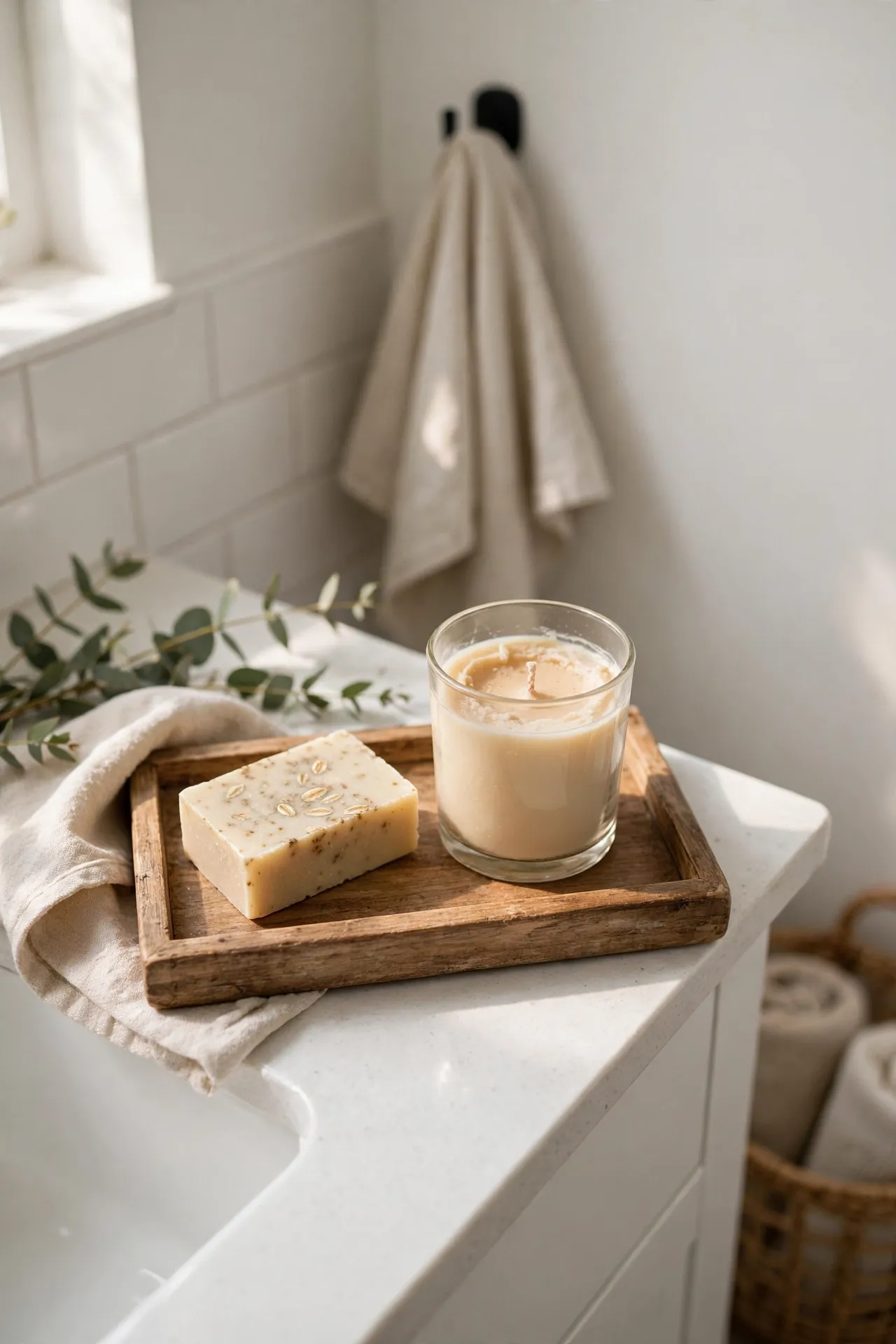
Five different air fresheners, candles, and soaps in one bathroom create a confusing smell, not a pleasant one. Pick a single scent you love — eucalyptus, cedar, or plain clean linen — and use it for hand soap and one candle or diffuser, nothing else. The room will smell intentional and fresh, instead of like a perfume counter after a spill. Keep the diffuser or candle on the wooden tray with the soap, so the scent sources sit together and look deliberate. I switched to one eucalyptus scent throughout, and guests started commenting on how fresh the bathroom smelled, even though I was cleaning less often. One scent, used consistently, beats a cupboard full of competing ones.
Cost: ~$15 | Time: 15 minutes
22. Keep a Small Stool for a Towel and a Book
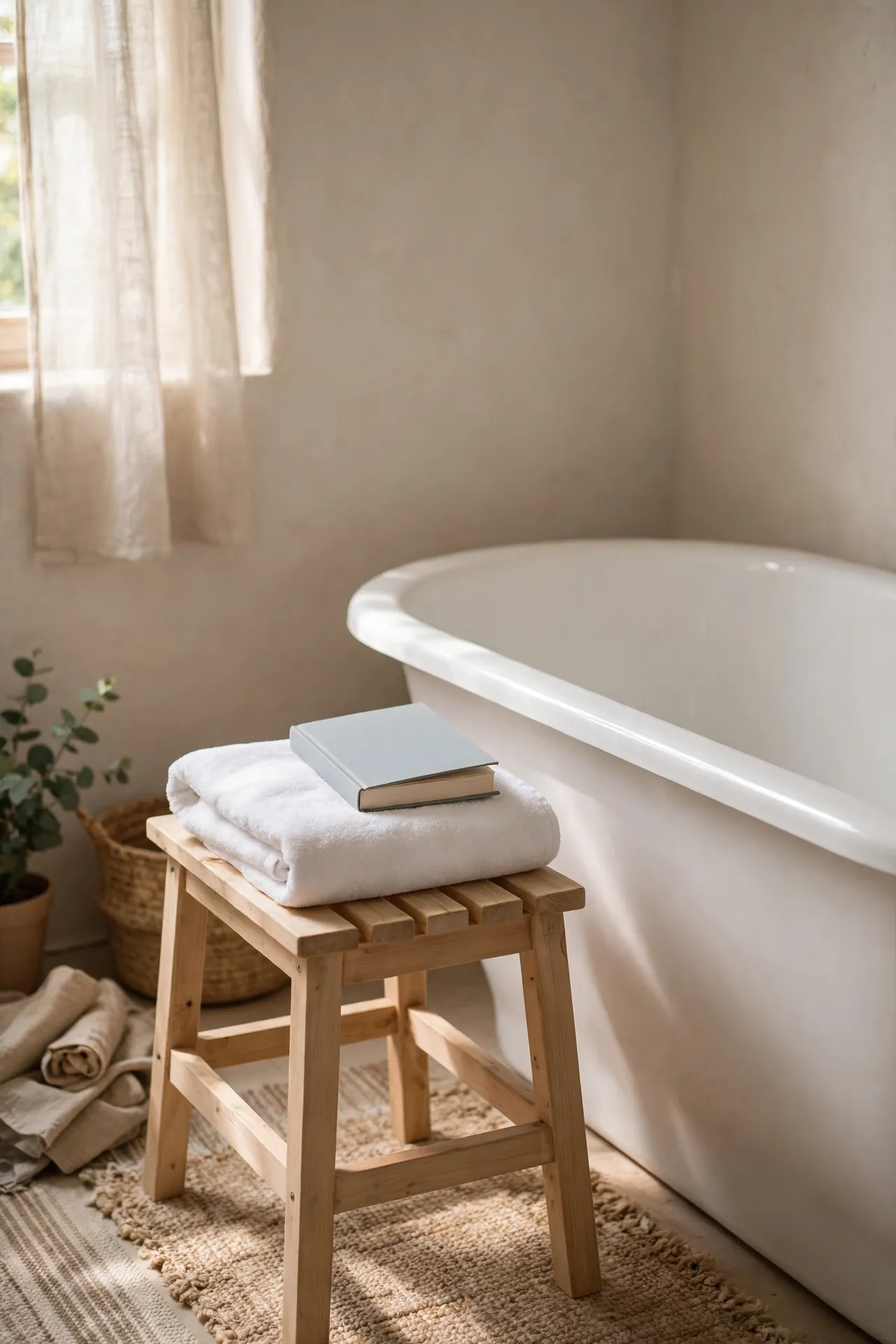
A small wooden stool beside the tub is the one piece of furniture a minimalist bathroom can justify, because it is useful and beautiful at once. Use it to hold a folded towel, a book, or a candle while you bathe, and nothing else — no pile of magazines, no extra bottles. Choose a plain, light wood stool that matches your tray and shelves, so it blends into the palette instead of standing out. When it is not in use, it should hold nothing at all, just sit quietly in the corner. For more budget finds that look high-end, see my (see also: dollar-store-bathroom-decor-that-look-high-end) ideas. I bought a secondhand stool for a few dollars, and it is now my favourite spot in the house on slow Sunday mornings.
Cost: ~$15 | Time: 10 minutes
23. Do a Weekly Ten-Minute Reset Ritual
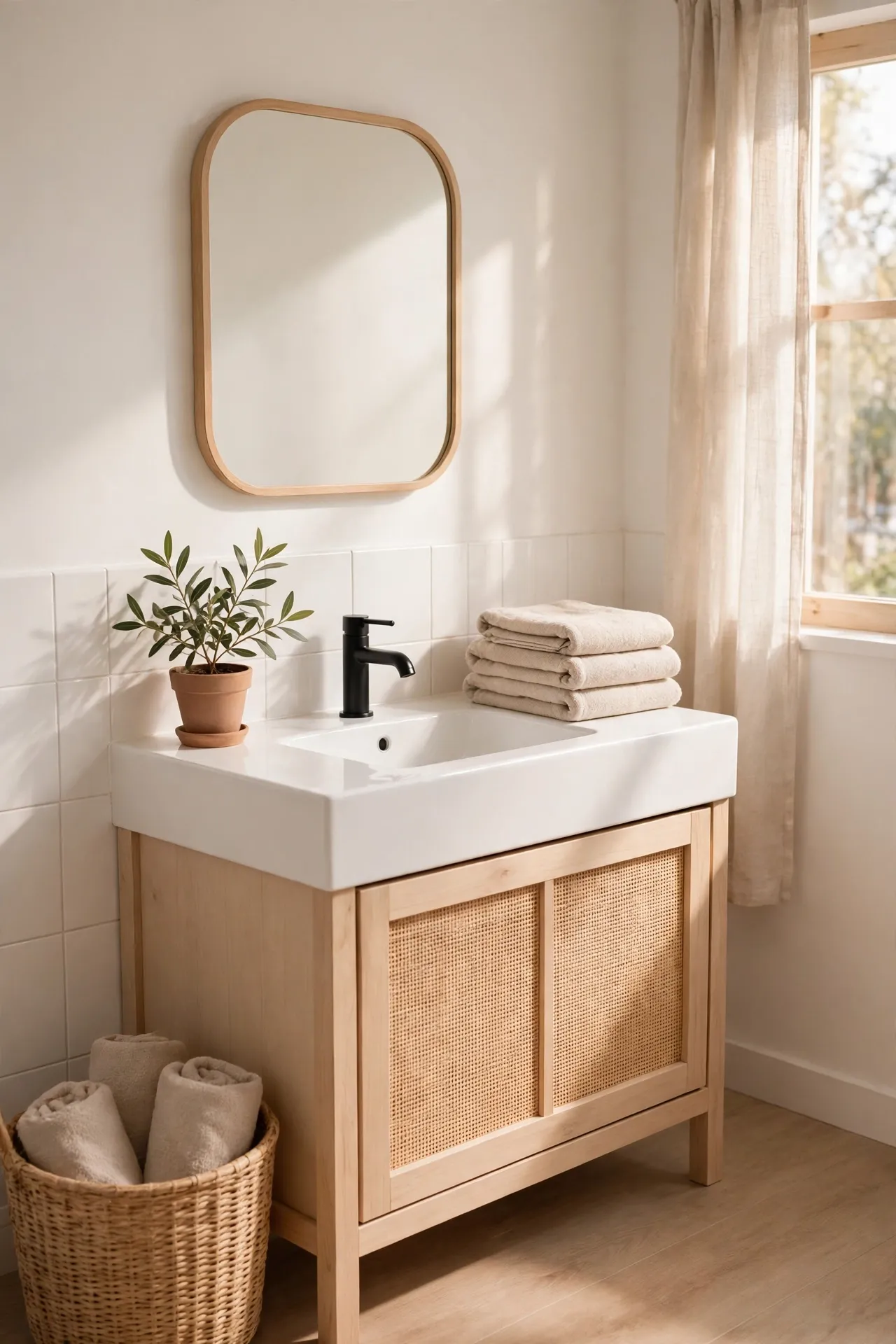
Minimalism is a habit, not a single declutter, and a weekly ten-minute reset is what keeps it alive. Once a week, walk into the bathroom with a small basket, remove anything that does not belong, wipe the counter and mirror, fold the towels, and put the basket back. Set a timer so the job stays short, and do it on the same day each week so it becomes automatic. This tiny ritual prevents the slow creep of clutter that undoes every other idea on this list. I do mine on Sunday evenings, and it has kept my bathroom minimalist for over a year now. Ten minutes a week is a small price for a room that always feels calm when you walk in.
Cost: ~$0 | Time: 10 minutes
Will a minimalist bathroom feel cold or empty? Not if you keep warm wood, soft lighting, and one plant in the room. Those three touches add warmth without adding clutter, so the space feels calm rather than bare.
How do I keep a minimalist bathroom minimalist with kids or housemates? Give everyone one hook, one towel, and one shelf space, and keep shared items in a closed cabinet. Clear rules stop clutter from creeping back, even in a busy household.
Do I need to buy new things to go minimalist? No — most minimalist changes are about removing things, not buying them. Start with decluttering, then only buy storage or bottles if a real problem remains after a week.
Minimalism on a budget is mostly about subtraction, not spending. Clear one surface today, pick one idea from each group this week, and let the calm build slowly. Your bathroom — and your mornings — will feel lighter for it.
